(Ben Sellers, Headline USA) Foodies have long touted the virtues of smoking salmon to draw out its distinctive flavor, but a group of international scientists may be onto an even bigger game-changer: feeding the fish cocaine.
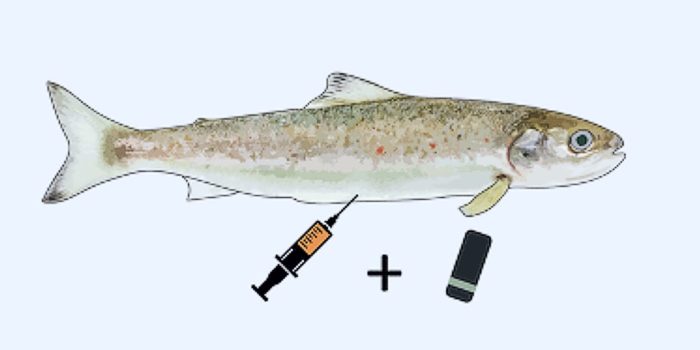
A study published in the 4/20 edition of the journal Current Biology revealed that juvenile salmon injected with the stimulant swam nearly twice as far in a week as those who kept their proverbial noses clean.
The purpose of the study, ostensibly, was to determine the impacts of global drug pollution as the Trump administration continues to blow up the boats of suspected narcotics smugglers coming from South America.
“Cocaine and its metabolites are increasingly being detected in aquatic environments worldwide,” said the study, led by researchers from the Swedish University of Agricultural Sciences in conjunction with a litany of partner institutions in Europe and Australia.
The experiment involved 105 wild Atlantic salmon who were placed in Sweden’s Lake Vattern. Their movements were then tracked after exposure to both cocaine and its leading byproduct, benzoylecgonine, which is created in the liver through the metabolism of cocaine.
The researchers concluded that the presence of cocaine may “disrupt the movement and space use of these fish in the wild” and warned that additional research may be needed to understand the “long-term effects on fish reproduction and survival.”
However, they downplayed any weirdness about the need to watch fish take drugs and have sex, insisting it was a totally normal phenomenon.
“The idea of cocaine affecting fish might seem surprising, but the reality is that wildlife is already being exposed to a wide range of human-derived drugs every day,” wrote co-author Marcus Michelangeli from Griffith University’s Australian Rivers Institute. “The unusual part is not the experiment, it’s what’s already happening in our waterways.”
The human implications of the study were not entirely clear, although Michelangeli hinted that drug pollution may manifest in all of the food that is consumed by and from certain regions.
“Where fish go determines what they eat, what eats them, and how populations are structured,” he said. “If pollution is changing these patterns, it has the potential to affect ecosystems in ways we are only beginning to understand.”
The researchers further noted that the findings were not limited simply to salmon.
“For example, muscle samples collected from wild Brazilian sharpnose sharks (Rhizoprionodon lalandii) contained a maximum of 107.5 ng g−1 of cocaine and 18.7 ng g−1 of benzoylecgonine,” they wrote.
In short, the study may ultimately forebode another nightmarish example of life imitating art.
Ben Sellers is a freelance writer and former editor of Headline USA. Follow him at x.com/realbensellers.