New Book Claims Iran Had Operatives in the U.S. Hunting Trump w/ Surface-to-Air Missiles

(Ken Silva, Headline USA) A forthcoming book about Donald Trump’s return to power makes a wild and unsubstantiated claim that Iran had operatives in the U.S. with access to surface-to-air missiles amidst as part of a possible conspiracy to assassinate him.

To date, the U.S. government has produced no hard evidence of an Iranian plot against Trump. A Pakistani man with ties to Iran was arrested last July for trying to hire an FBI informant as a “hitman,” and another Iranian told the FBI last year that his government was trying to kill Trump—but those cases appear highly dubious, and certainly didn’t pose any real threat to the President.

Nevertheless, former POLITICO and current Axios writer Alex Isenstadt is claiming that “law enforcement officials warned Trump last year that Tehran had placed operatives in the U.S. with access to surface-to-air missiles.”

“Trump’s team worried that the Iranians could try to down his easily recognizable personal jet — better known as “Trump Force One” — as it was taking off or landing,” Isenstadt wrote Monday in a preview of his book, “Revenge: The Inside Story of Trump’s Return to Power.”

According to Isenstadt, Trump’s security detail was so concerned about the Iran threat that it had him travel to an event on a decoy plan owned by Steve Witkoff, who’s now Trump’s envoy to the Middle East. Trump’s staff still rode on Trump Force One with co-campaign manager Chris LaCivita, while White House chief of staff Susie Wiles joined Trump on Witkoff’s plane, which was deemed the “Ghost Flight.”

“The boss ain’t riding with us today,” LaCivita reportedly told the group on Trump Force One. “We had to put him into another plane. This is nothing but a sort of test for how things may happen in the future.”

Staffers were reportedly unhappy about being used as bait.

“Campaign leaders tried to assure Trump aides they weren’t being used as bait. But if Iranian operatives had access to surface-to-air missiles, several aides wondered, why were they put on board?” Isenstadt wrote.

“The flight was a surreal experience, with ‘gallows humor galore,’ three aides later told me. ‘This was some serious sh*t,’ they said those onboard realized.”

Isenstadt’s Monday article comes after Trump said last week that he’s given his advisers instructions to obliterate Iran if it assassinates him.

“If they did that they would be obliterated,” Trump said last Tuesday in an exchange with reporters while signing an executive order calling for the U.S. government to impose maximum pressure on Tehran. “I’ve left instructions if they do it, they get obliterated, there won’t be anything left.”

Trump ordered the 2020 killing of Qassem Soleimani, who led the Iranian Islamic Revolutionary Guard Corps’ Quds Force.

The Associated Press contributed to this report.

Ken Silva is a staff writer at Headline USA. Follow him at x.com/jd_cashless.
Lawmakers Push Legislation to Abolish USAID Entirely

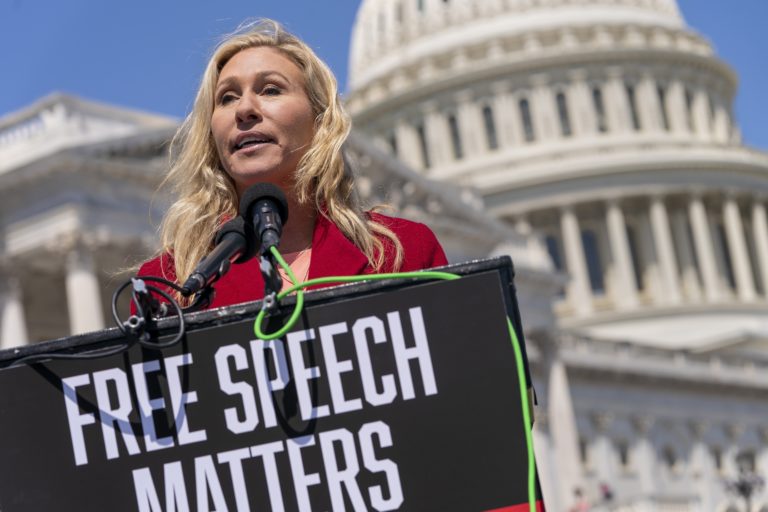
(Thérèse Boudreaux, The Center Square) U.S. Reps. Gregory Steube, R-Fla., and Majorie Taylor Greene, R-Ga., have each introduced bills that would immediately halt all federal funding to the United States Agency for International Development and transfer its essential responsibilities to the U.S. Department of State.

The legislation comes as USAID has paused its operations under a mandate from President Donald Trump, who on Feb. 3 appointed Secretary of State Marco Rubio to serve as the Acting Administrator of USAID. That same day, USAID staff were told not to report to the agency’s headquarters for work.

The Trump administration has been slashing what he says is wasteful government spending through the newly formed Department of Government Efficiency. Greene, who is heavily involved in DOGE, called USAID a “slush fund” when introducing her bill.

“I just introduced a bill to abolish USAID, the Democrats’ taxpayer-funded slush fund used to push their radical agenda at home and abroad,” Greene said. “As Chairwoman of the DOGE Subcommittee, I’ve launched the War on Waste—and USAID is a major culprit lighting over $40 BILLION on fire each year.”

USAID’s annual budget is decided by Congress, which receives the agency’s specific funding requests. The agency has come under fire for its involvement in coronavirus research in Wuhan, China, in 2019, its alleged funding of gender ideology initiatives in South America and Syria, and its sponsoring of armed terrorist groups, among other things.

“For too long, USAID has funneled billions of American tax dollars into bloated, inefficient foreign aid programs that are riddled with waste, corruption and ideological bias,” Steube said. “American taxpayers should not be forced to subsidize misguided globalist experiments that do nothing to strengthen our country or protect our interests abroad.”

The text of both bills reads “Beginning on the date of the enactment of this Act, no Federal funds may be made available to carry out any of the functions, duties, or responsibilities assigned or delegated to the Administrator of the United States Agency for International Development.”

Not all Republican lawmakers are on board, however. Many argue that abolishing or greatly curtailing USAID will cede America’s global influence to adversaries like China and Russia.

Rep. Don Bacon, D-Neb., a vocal advocate for U.S. support of global allies like Ukraine and Israel, suggested USAID reform rather than replacement.

“There’s a role for USAID to help the most needy and to advance our national security interests, but its leadership took their eye off of their real mission,” Bacon posted on X. “New leadership is needed to fix these embarrassments.”

Trump Fires Military Academy Board Members, Citing ‘Woke’ Infiltration

(Casey Harper, The Center Square) President Donald Trump on Monday announced he was firing the boards for the military service academies, citing an infiltration of “woke” ideology.

When President Joe Biden took office four years ago, he removed Trump appointees to the same boards.

“Our Service Academies have been infiltrated by Woke Leftist Ideologues over the last four years,” Trump wrote on TruthSocial, his social media site. “I have ordered the immediate dismissal of the Board of Visitors for the Army, Air Force, Navy, and Coast Guard. We will have the strongest Military in History, and that begins by appointing new individuals to these Boards. We must make the Military Academies GREAT AGAIN!”

Trump and his allies Elon Musk at the Department of Government Efficiency and Pete Hegseth at the Department of Defense have vowed to eradicate DEI.

Trump has signed executive orders shutting down DEI funding and eliminating DEI staff, one of a flurry of orders as he trims federal spending and entanglement with progressive ideology around gender and race.

Diversity, Equity and Inclusion policies have become widespread in the military, including the Pentagon and service academies.

As The Center Square previously reported, U.S. Sen. Marco Rubio, R-Fla., and Rep. Chip Roy, R-Texas, released a report during the Biden administration highlighting several examples of DEI policies in the military funded by taxpayers.

In one example, investigators discovered a slide show created for the Air Force Academy called, “Diversity & Inclusion: What it is, why we care, & what we can do.” The same presentation cautions cadets against using gendered language, including words like “mom” and “dad.”

The report also points to broad trend of critical race theory teaching at academies across military branches. For example, the report points to training materials lecturing West Point cadets on white privilege.

“The Chairman of the Joint Chiefs of Staff defended teaching CRT at U.S. Service Academies and testified to Congress about his desire to understand ‘white rage,’” the report said. “He argued that American taxpayer money should be spent to ensure cadets and midshipmen learn what ‘caused thousands of people to assault [the Capitol] Building and try to overturn the Constitution of the United States.’ The Biden Administration is choosing to focus on and fund the study of racial extremism even when – as the [“Countering Extremist Activity Working Group] showed – it is a virtual non-issue in the military.”

Private Jets Collide at Scottsdale Airport in Arizona, Killing 1 Person, Authorities Say

(Headline USA) One person was killed and others were injured when a private jet owned by Mötley Crüe singer Vince Neil collided with another jet Monday afternoon at the Scottsdale Airport in Arizona, authorities said.

Neil’s jet was landing at the airport when it veered off the runway and collided with another parked plane, Neil’s representative Worrick Robinson, IV, said in a statement. There were two pilots and two passengers on Neil’s plane, but he was not among them.

“Mr. Neil’s thoughts and prayers go out to everyone involved, and he is grateful for the critical aid of all first responders assisting today,” Robinson said.

The arriving jet veered off the runway and collided with the Gulfstream 200 jet that was parked on private property, according to Kelli Kuester, aviation planning and outreach coordinator at the Scottsdale Airport. It appeared that the left main landing gear of the arriving jet failed, resulting in the collision, she said.

Kuester said four people were on the arriving jet, which had come from Austin, Texas, and one person was in the parked plane.

Two people injured in the collision were taken to trauma centers and one was in stable condition at a hospital, Scottsdale Fire Department Capt. Dave Folio said. He said they were working to recover the body of the person killed in the collision.

“Our thoughts and prayers go out to everybody involved in this,” Folio said.

The runway has been closed and will remain closed “for the foreseeable future,” Kuester said.

Scottsdale Mayor Lisa Borowskysaid in a statement that she is closely monitoring the situation and is in touch with the airport, police and federal agencies.

“On behalf of the city of Scottsdale, we offer our deepest condolences to those involved in the accident and for those who have been taken to our trauma center for treatment,” she said. “We will keep all affected by this tragedy in our prayers.”

The airport is a popular hub for jets coming in and out of the Phoenix area, especially during big sports weekends like the Waste Management Phoenix Open golf tournament, which attracts huge crowds just a few miles away.

The Scottsdale collision comes after three major U.S. aviation disasters in the past two weeks. A commercial jetliner and an Army helicopter collided near the nation’s capital on Jan. 29, killing 67 people. A medical transportation plane crashed in Philadelphia on Jan. 31, killing the six people on board and another person on the ground. And last week a small commuter plane crashed in western Alaska on its way to the hub community of Nome, killing all 10 people on board.

Adapted from reporting by the Associated Press

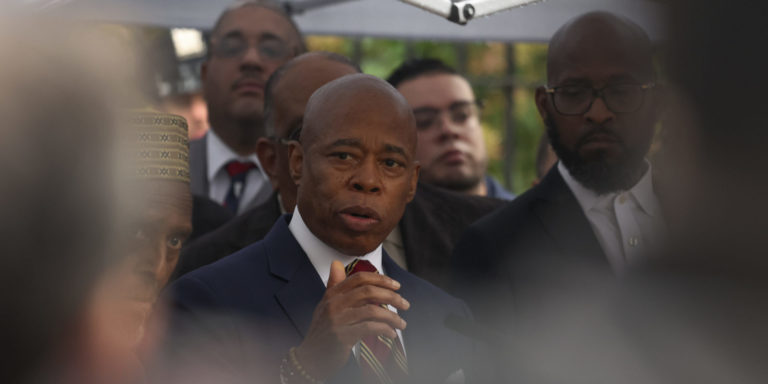
Justice Department Orders Charges against Adams Dismissed

The Justice Department is moving to drop federal bribery and corruption charges against New York City Mayor Eric Adams, citing the Democrat’s role in pushing back on crime and illegal immigration and suggesting the indictments were politically motivated.

In a memo to acting U.S. attorney for the Southern District Danielle Sassoon, acting Deputy Attorney General Emil Bove instructed the prosecutors to dismiss the charges “as soon as is practicable” if certain conditions are met, including a review of the case by state prosecutors. He left open the possibility that charges could be refiled after that review.

“There shall be no further targeting of Mayor Adams or additional investigative steps prior to that review, and you are further directed to take all steps within your power to cause mayor Adams security clearances to be restored,” Bove wrote in the memo, which was leaked to multiple news outlets.

Bove also said the prosecution was interfering with Adams’ reelection campaign and his “ability to support critical, ongoing federal efforts to protect the American people from the disastrous effects of unlawful mass migration and resettlement.”

In the memo, Bove said the decision to drop the charges against Adams “in no way calls into question the integrity and efforts of the line prosecutors responsible for the case” but suggested that the decision to target the mayor for prosecution was politically motivated.

“It cannot be ignored that Mayor Adams criticized the prior Administration’s immigration policies before the charges were filed, and the former U.S. Attorneys public actions created appearances of impropriety,” Bove wrote.

Adams was indicted in September on five counts of federal bribery, fraud and campaign finance violations that could have landed the former NYPD police captain in jail for decades if he was convicted. He pleaded not guilty to the charges, but the case was set to go to trial.

Damian Williams, the Biden-appointed U.S. attorney for the Southern District of New York who brought the charges against Adams, announced his resignation in December after Trump won the November presidential election.

Adams’s attorney, Alex Spiro, said the Justice Department’s order had “vindicated” the mayor’s claim of innocence and that “he never used his official position for personal benefit.”

“Now, thankfully, the mayor and New York can put this unfortunate and misguided prosecution behind them,” Spiro said in a statement. “As I said from the outset, the mayor is innocent—and he would prevail.”

However, the move was blasted by fellow New York City Democrats, including City Councilor Jessica Ramos—a potential mayoral candidate—who accused Adams of cozying up to President Trump to get the federal charges dropped.

“Eric Adams sold out New Yorkers to buy his own freedom, but he’ll never escape the label of worst mayor in NYC history,” she posted on social media.

EXCLUSIVE: New Report Reveals ANOTHER Secret Service Security Failure, This One at Butler Hospital

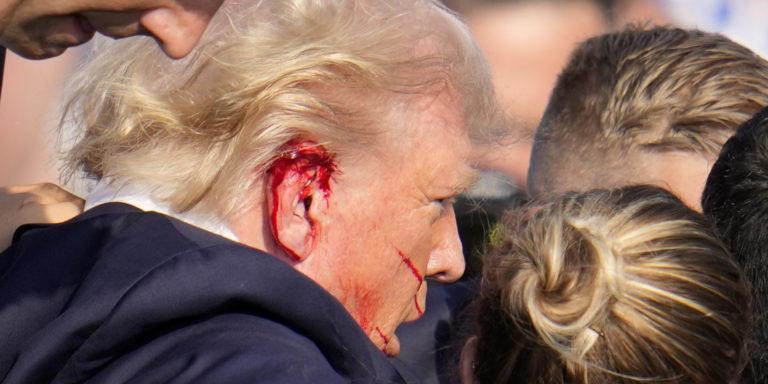
(Ken Silva, Headline USA) Headline USA has exclusively obtained the Butler County Department of Emergency Services’ after-action report, which details previously undisclosed security failures that took place at the July 13 assassination attempt against Donald Trump.

At the July 13 Trump rally, Butler County EMS was primarily focused on the heat-related medical issues experienced by hundreds of attendees. After the shooting, the EMS switched its focused to coordinating the medical response.

By all accounts, the Butler County EMS performed its duties competently. Its after-action report—which Headline USA finally obtained Tuesday after a lengthy legal battle—does identify some local areas that need improvement, while also revealing new Secret Service errors.

According to the after-action report, the Secret Service didn’t visit Butler Memorial Hospital before the rally. The report quotes a BMH official, whose name is redacted.

“With that, 4 (ish) years ago when there was a rally at the airport, the Secret Service did a site inspection here at BMH. That did not occur this time. Thankfully, I had the plan from that time and did meet with key staff members on my way to the event that day—apprising them of plan should anything occur,” the unnamed BMH official is quoted saying.

But while agents had a four-year-old plan, the EMS report discloses—for the first time publicly—that agents didn’t follow it.

“The SS member who brought the President here deviated from that plan and entered through the ambulance bay (should have been the emergency exit by ER Room 8) for whatever reason upon getting to the facility,” the BMH official said, according to the report.

The BMH official further explained that the Secret Service’s deviation may have allowed a patient’s family member to capture video of Trump’s motorcade outside of the hospital—suggesting that Trump was still vulnerable due to the Secret Service not following its own plan.

Along with revealing this new, previously undisclosed security failure at the hospital, the EMS after-action report also noted that the Secret Service’s command center was separate from the local communications trailer—a failure that has been well-documented through congressional investigations.

The EMS report described this failure in blunt terms: “We had the County Command Post trailer on site, which (should) have had Command staff from each agency inside working alongside and COMMUNICATING with one another, but we did not … Secret Service and PSP had their own command post, and all requests for emergency services from the secret service field staff went to Steve, who then had to relay it via radio to Operations.”

Additionally, the EMS report identified other previously undisclosed local areas of concern. Those concerns include the fact that the local Emergency Operations Center wasn’t properly activated. EOCs are supposed to be activated when a state or local emergency is declared, or when special events require resources beyond what local municipalities can handle.

According to an EMS official whose name was redacted, EOC activation was requested “due to the plethora of calls we received from Media, and family of victims/ unaccounted for rally goers.”

However, “Our request was denied due to no EMA representatives available being as they were all at the rally, and unable to leave the crime scene. That request being denied is simply unacceptable,” the EMS official said, according to the report.

The report also detailed how dispatchers were confused about the various call signs from all the different units who responded to Butler.

“It is understood that our command post knew the unit calls signs for accountability, however once the event turned to a critical incident, dispatchers overseeing the channels had no accountability, nor ability to send backup if requested during the attempted clearing of the building once inside of AGR,” the report said.

Headline USA initially requested the Butler EMS after-action report in December, after learning of its existence in interview transcripts released by the J13 House Task Force.

Butler County initially denied the open records request on the grounds that the after-action report was an investigatory document, and therefore not subject to public disclosure. Headline USA appealed the denial, and successfully argued that after-action reports have long been subject to disclosure under Pennsylvania law.

After this publication submitted its arguments in appeal, Butler County reversed its position and offered to provide the report—as long as it could redact the names of the officials quoted within. Headline USA agreed to those terms on Friday, and received the report hours ago.

Ken Silva is a staff writer at Headline USA. Follow him at x.com/jd_cashless.
ETFs Kick Off 2025 By Adding More Gold

(Mike Maharrey, Money Metals News Service) In January, European gold-backed ETFs charted the largest inflow of metal in more than two years, driving global ETF gold holdings higher to kick off 2025.

Gold-backed funds globally reported net gold inflows of 34.5 tonnes last month, adding $3 billion to their holdings.

Total assets under management (AUM) by gold ETFs globally reached $249 billion, a month-end record.

European funds added 39 tonnes of gold, totaling $3.4 billion. It was the largest increase in European ETF gold holdings since March 2022. For most of 2024, European ETFs shed gold.

Funds based in the United Kingdom and Germany led the way. Falling bond yields and the expectation of interest rate cuts this year in the UK created some tailwinds for gold. In Germany, political uncertainty ahead of earlier-than-scheduled parliamentary elections drove safe-haven demand, along with a pessimistic economic growth outlook and worries about U.S. tariffs.

Despite record-high gold prices, North American ETFs reported gold outflows for the second straight month in January, with a 5.9-tonne decrease in gold holdings. In dollar terms, North American gold ETFs lost $499 million in metal. According to the World Gold Council, record prices incentivized profit-taking after President Trump’s inauguration. There was a pickup in demand in the last week of January, but it wasn’t enough to offset outflows earlier in the month.

Asian fund reported modest gold inflows of 0.3 tonnes, totaling $57 million. Indian funds drove the increase with a record January. According to the World Gold Council, Indian investors “redirected cash to gold amid ongoing global uncertainty and further weakness in domestic equity markets.” This was offset by significant gold ETF outflows in China after stronger-than-expected GDP growth. This likely raised investor risk appetite and cooled expectations of further monetary easing.

Funds in other regions reported gold inflows of 1 tonne, primarily coming from activity in Australia and South Africa.

Gold training volumes increased in January, averaging $264 billion per day. That was a 20 percent month-on-month increase. This was primarily due to the surging volume on the COMEX.

Over-the-counter (OTC) volumes increased by 10 percent month-on-month in January.

Total net longs of COMEX gold futures ended January at 92 tonnes, a 25 percent month-on-month increase.

Inflows of gold into ETFs can have a significant impact on the global gold market by pushing overall demand higher.

ETFs are a convenient way for investors to play the gold market, but owning ETF shares is not the same as holding physical gold.

A gold ETF is backed by a trust company that holds metal owned and stored by the trust. In most cases, investing in an ETF does not entitle you to any amount of physical gold. You own a share of the ETF, not gold itself.

ETFs are relatively liquid. You can buy or sell an ETF with a couple of mouse clicks. You don’t have to worry about transporting or storing metal. In a nutshell, it allows investors to play the gold market without buying full ounces of metal at the spot price.

Since you are just buying a number in a computer, you can easily trade your ETF shares for another stock or cash whenever you want, even multiple times on the same day. Many speculative investors take advantage of this liquidity.

But while a gold ETF is a convenient way to play the price of gold on the market, you don’t actually possess any gold. You have paper. And you don’t know for sure that the fund has all the gold either, especially when the fund sees inflows. In such a scenario, there have been difficulties or delays in obtaining physical metal.


Mike Maharrey is a journalist and market analyst for MoneyMetals.com with over a decade of experience in precious metals. He holds a BS in accounting from the University of Kentucky and a BA in journalism from the University of South Florida.

Gold Surpasses $2900 Per Ounce

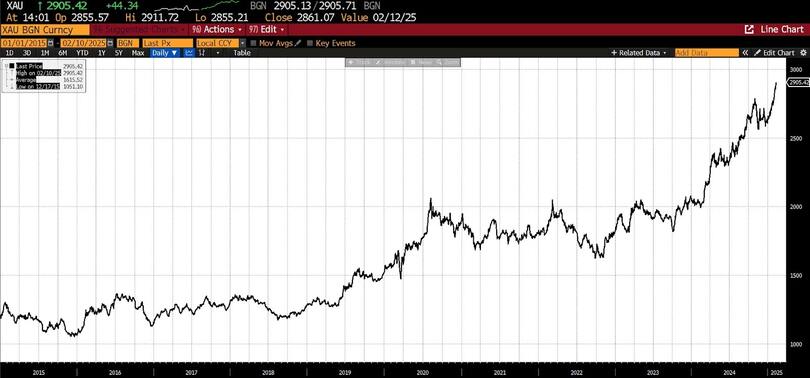
(Peter C. Earle, Money Metals News Service) Gold has surged to a new all-time high, breaking through $2,911.72 per ounce on a thick mix of domestic and foreign uncertainty, inflation concerns, and a shifting macroeconomic landscape. While bullion has historically served as a safe-haven asset, the latest rally is not merely a reaction to market turbulence but instead to a confluence of economic and financial factors that reinforce its role in global portfolios.

Gold price per oz, USD (Jan 2015 – present)

Gold Surpasses $2900 Per Ounce
Source: Bloomberg Finance, LP

One of the primary catalysts behind gold’s latest rally is the renewed threat of tariffs on steel and aluminum, announced by President Donald Trump over the weekend. Those tariffs, along with potential levies on the growing bloc of BRICS nations if they move away from the dollar usage, have heightened global economic uncertainty.

Additionally, US-China trade wrangling is continuing to push global capital toward gold. Since the February 2022 decision by the Biden administration to eject Russia from the international SWIFT payments system, many nations, including China, have been expanding their gold reserves in a strategic shift away from reliance on the US dollar.

In January alone, China’s central bank added to its gold holdings for the third consecutive month, and a newly approved pilot program will allow Chinese insurers to invest up to 200 billion yuan ($27.4 billion) directly in bullion. That development alone marks a significant demand-side development, possibly supporting sustained price appreciation.

Although higher interest rates traditionally weigh on non-yielding assets like gold, Federal Reserve policy has also played a role in supporting bullion prices.

Fed Chair Jerome Powell’s testimony this week is expected to reaffirm that although the US economy remains resilient, rate cuts are unlikely in the near term. This would typically be bearish for gold, as higher interest rates raise the opportunity cost of holding gold, but the prevalence of other factors in the economy suggests otherwise.

Indeed, a key factor keeping gold demand strong is uncertainty about the trajectory of inflation.

While the Federal Reserve is proceeding with its data-focused aims to bring inflation down to its 2 percent target, the University of Michigan consumer sentiment survey indicates that inflation expectations remain elevated. Investors are hedging against the risk that persistent inflation could continue to erode the purchasing power of fiat currencies, making gold a more attractive store of wealth.

There are technical factors boosting the gold price, as well. Exchange-traded funds (ETFs) backed by physical gold have seen significant inflows in recent weeks. The SPDR Gold Shares ETF (GLD) rose 1.7 percent on Monday alone, extending its six-week winning streak — the longest since the COVID terror in 2020.

Year-to-date, the ETF is up 10.8 percent, far outpacing the S&P 500’s 3.1 percent gain. Both institutional and retail investor interest in gold as a defensive asset is elevated.

Gold lease rate (August 2025 – present)

Gold Surpasses $2900 Per Ounce
Source: Bloomberg Finance, LP

Another important yet often overlooked factor in gold’s recent price action is the gold lease rate, which recently surged above 5 percent. Lease rates are the cost for borrowing gold in the London bullion market: as they rise, they reveal heightened demand for physical gold relative to available supply.

Although the rate has eased back to 3.5 percent, that level is still vastly higher than has been seen in many years. Furthermore, the premium for gold futures over spot prices is increasing as traders reposition holdings to evade US tariffs. There is a growing preference for securing gold in US markets, where trade policies are likely to have a more pronounced impact on supply chains.

Also, while gold has been rallying, US equities have experienced heightened volatility, although the S&P 500 remains range-bound between 6000 and 6100 with the VIX term structure flattening and VVIX (volatility of volatility) near 2025 lows hints at complacency. The likelihood that some news or announcement will drive equity indices out of their narrow range is an additional factor in gold’s record ascent.

On the topic of macroeconomic drivers, Wednesday, February 12th, will see the release of the January Consumer Price Index (CPI) report. If inflation data comes in hotter than expected, increased demand for gold as an inflation hedge may result. If, on the other hand, the CPI surprises to the downside, the Fed may reassess its policy stance, and substantial downward pressure on gold prices may ensue.

While trade policy remains the dominant theme in gold markets, investor sentiment toward inflation, interest rates, and equity volatility will continue to shape bullion’s trajectory. Given the combination of geopolitical risk, central bank buying, and strong ETF inflows, gold’s bullish momentum appears well-supported in the near term.

Whether the current rally is the beginning of an extended run or simply a fear-driven speculative surge depends upon how economic and policy developments unfold. In any case, gold’s many-millennia status as the ultimate safe-haven asset remains firmly intact.

Originally Published on AIER’s The Daily Economy.


Peter C. Earle is an economist who joined AIER in 2018. Prior to that he spent over 20 years as a trader and analyst at a number of securities firms and hedge funds in the New York metropolitan area. His research focuses on financial markets, monetary policy, and problems in economic measurement. He has been quoted by the Wall Street Journal, Bloomberg, Reuters, CNBC, Grant’s Interest Rate Observer, NPR, and in numerous other media outlets and publications. Pete holds an MA in Applied Economics from American University, an MBA (Finance), and a BS in Engineering from the United States Military Academy at West Point.

Harry and Meghan Implicated in Biden Crime Family Scheme

(Ken Silva, Headline USA) The Daily Mail reported Tuesday that Prince Harry and Meghan Markle’s charitable foundation made a $250,000 donation to an organization run by then-President Joe Biden’s daughter, Ashley Biden.

The couple’s donation to Ashley Biden’s “Women’s Wellness (Spa)ace” was disclosed in an impact report last December from Harry and Meghan’s group, Archewell.

The donation was reportedly made some time in the 2023-2024 tax year.

“It came at a time when the couple seemed to be intent on finding a way into the Biden family inner circle when Joe Biden was still President,” the Daily Mail noted.

Nile Gardiner, Director of the Margaret Thatcher Center for Freedom at the Heritage Foundation, told the Daily Mail that there should be ‘full transparency and oversight’ of the $250,000 donation from Harry and Meghan’s non-profit organization, Archewell.

Harry and Meghan’s Democratic affiliations had some speculating whether President Donald Trump would deport the former, given the reports that Harry may not have disclosed his admitted drug use in his visa application. However, Trump has shown mercy on the former prince.

 “I don’t want to do that. I’ll leave him alone. He’s got enough problems with his wife. She’s terrible,” Trump recently told journalist Miranda Devine.

Trump added, “I think poor Harry is being led around by the nose.” In the same remarks, the President also praised Harry’s estranged older brother and future king, Prince William, calling him a “great young man.”

Meanwhile, Ashley Biden and most of her family don’t have anything to fear from the Justice Department, even if Harry and Meghan’s donation may have been improper. That’s because President Joe Biden pardoned everyone in his family besides himself on his way out of office.

The Biden family was investigated by the House Oversight Committee for the last two years for pedaling Joe’s influence in exchange for foreign payments.

Through bank records, interviews from some 30 witnesses, whistleblower accounts and millions of documents, House Republicans uncovered a years-long practice by Hunter Biden and his associates to solicit foreign business deals using the family’s proximity to power in Washington.

In May 2023, for instance, the Oversight Committee released records revealing that more than 20 companies, 12 banks and nine Biden relatives were used in an alleged complex money-laundering scheme.

Ken Silva is a staff writer at Headline USA. Follow him at x.com/jd_cashless.

Chinese Insurers Set to Intensify China’s Gold Rush

(Jesse Colombo, Money Metals News Service) China’s futures traders have been the driving force behind gold’s extraordinary $400 surge in March and April 2024. However, these traders have been relatively quiet since then.

My theory is that as gold heats up again, they will return, triggering a parabolic rally to $3,000 and beyond.

Since then, a major development has emerged: China is now allowing insurance companies to invest in gold for the first time. This policy shift could unlock billions of dollars in new investment, providing yet another catalyst for gold’s record-breaking rally.

According to a Bloomberg article, ten major insurance firms—including PICC Property & Casualty Co. and China Life Insurance Co., two of China’s largest—have been granted approval to invest up to 1% of their assets in gold bullion under a newly implemented program that took effect last Friday.

This policy shift could inject as much as 200 billion yuan ($27.4 billion) into the gold market.

China’s decision to allow insurers to invest in gold may signal that authorities acknowledge the limited investment options in Asia’s largest economy. Amid a deepening property downturn and economic slowdown, this move underscores a shift toward alternative assets to enhance stability and diversification in the financial sector.

As Guotai Junan Securities stated in a published note, “Insurance companies lack options for mid- and long-term assets with stable yields.”

Notably, this policy adjustment marks gold as the first commodity that Chinese insurers have been explicitly permitted to invest in. Historically, China has restricted insurance funds from holding assets without “stable cash returns” while also capping their exposure to bonds and stocks. This latest move could open the door for broader institutional participation in the gold market, adding further momentum to its rally.

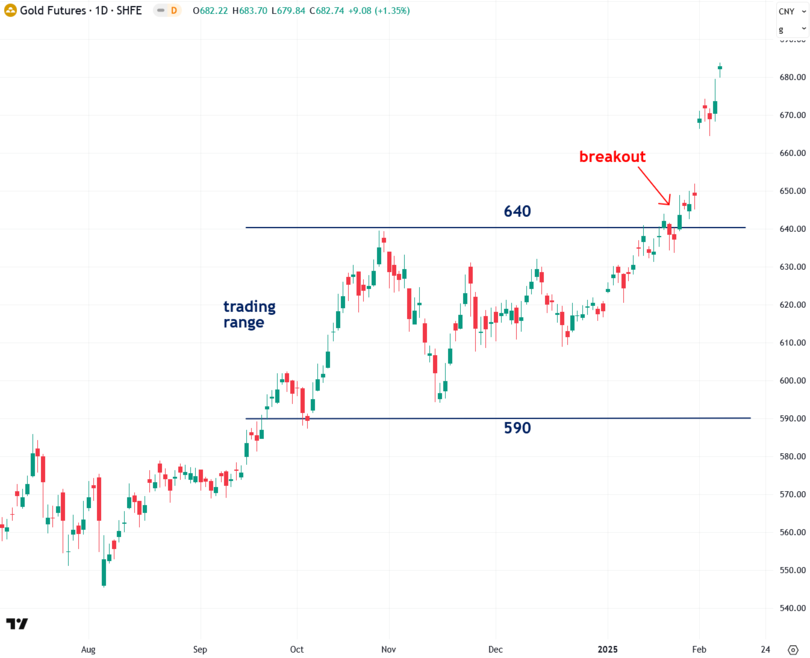
China’s gold benchmark—the Shanghai Futures Exchange gold futures—was already surging even before the new policy allowing insurers to invest in gold. This latest development is likely to add even more fuel to the rally.

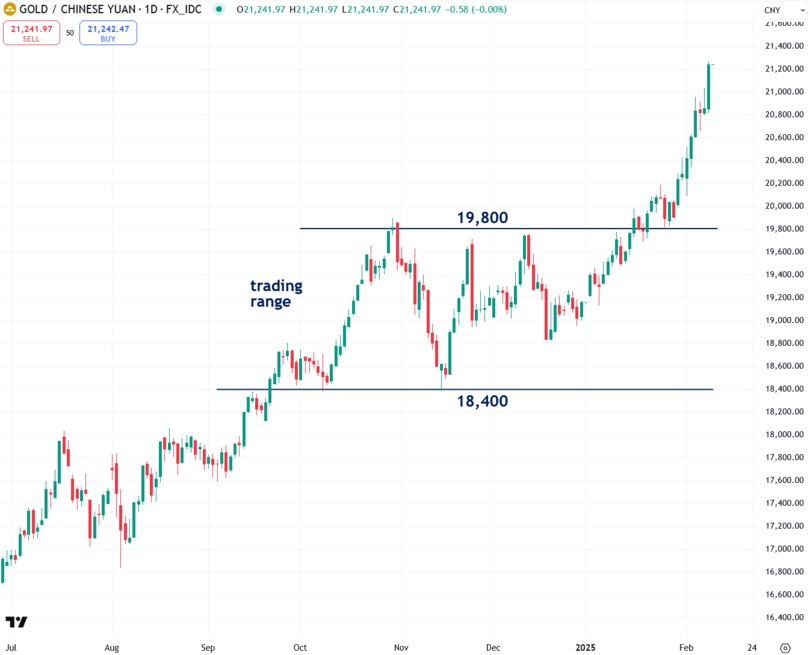
The futures contract had been trading within a 590–640 yuan per gram range but recently broke out, signaling what I believe could be the start of an even more explosive move driven in large part by Chinese futures traders, the same group that ignited gold’s $400 rally in spring 2024, while Western investors remained largely indifferent.

The trading range and recent breakout are also evident in the international spot gold price denominated in Chinese yuan, providing further confirmation of the bullish trend:

While Chinese futures traders have a history of aggressively going long on gold, China’s physical gold buyers—particularly jewelry buyers—have been more cautious in recent months due to soaring prices.

As a major gold importer, Chinese buyers often pay a premium to secure bullion. However, for most of the past six months, the so-called Shanghai premium flipped to a discount, signaling weak demand for physical gold as prices surged. This unusual shift suggests that high prices have deterred traditional buyers, even as speculative traders continue to drive gold higher.

“There’s an affordability issue,” said Philip Klapwijk, managing director of Hong Kong-based consultant Precious Metals Insights Ltd. “And then there’s just the general economic malaise, and the fact that consumers are not in a position to open their purses or wallets in the way they used to.”

Chinese mom-and-pop investors in physical gold are currently experiencing sticker shock after gold’s 42% surge in yuan terms over the past year.

However, my theory is that they will soon have to come to terms with the reality that this rally isn’t a temporary anomaly—it’s here to stay, driven by soaring global debt and the rapid devaluation of fiat currencies worldwide.

Once they realize that gold isn’t going to drop, I expect a wave of FOMO (fear of missing out) to take hold, pushing them to pile into physical gold more aggressively than ever. This buying frenzy will send gold prices to astronomical heights.

And it won’t just be China—I see this pattern playing out worldwide as more investors wake up to the new financial reality. That’s why now is the time to secure your physical precious metals—before the tidal wave of demand sends prices even higher.


Jesse Colombo is a financial analyst and investor writing on macro-economics and precious metals markets. Recognized by The Times of London, he has built a reputation for warning about economic bubbles and future financial crises. An advocate for free markets and sound money, Colombo was also named one of LinkedIn’s Top Voices in Economy & Finance. His Substack can be accessed here.