When To Sell Gold

(Clint Siegner, Money Metals News Service) Gold has outperformed most asset classes for the last 25 years. If you think about it, that is a pretty remarkable run.

Economic conditions varied widely, but gold held up better in tough times as well as during periods of growth. In all likelihood, no one who held gold through the past couple of decades regrets it.

Why has gold done so well, and when will that change?

Monetary policy has some bearing on the price over time, no question. But that does not mean selling gold when the Federal Reserve begins tightening is a good idea.

Investors would have, for example, missed the past three years where gold had some of its best performance — while the Fed hiked interest rates.

Price inflation and the gold price are well correlated. The cost of goods and services moved relentlessly higher over the past two and a half decades — similar to the gold price.

Yet there is still more to the story. The past three years, again, hint at something else going on as inflation slowed while gold accelerated higher.

The most important driver might be confidence.

Markets are complicated, and it can be dangerous to oversimplify. However, one trend has been remarkably steady over the past 25 years. Confidence has been in overall decline.

Trust Falling

People have lost trust in government, in banks, in other large multinational corporations, in their money – you name it.

Our institutions have been letting us down. Confidence, or the lack thereof, might just be the most fundamental driver there is in the gold market.

Swapping gold for other assets, such as stocks, will make the most sense when confidence has bottomed and begins to bounce.

The election of Donald Trump and the implementation of DOGE might be signals of a bottom in confidence. It’s fair to say roughly half of the nation feels the country is headed in a better direction.

However, the other half feels quite differently. And Congress has yet to join in the effort to rein in spending and limit government.

There is a lot of very difficult work that has to be done before trust is restored. And it isn’t cyclical in nature, like springtime inevitably following winter.

The last period when confidence was on the rise – and when gold underperformed other assets – was between 1980 and 2000.

What would it take for Americans to rebuild that level of political consensus? What are the core values this consensus will be built upon? What must banks and pharmaceutical companies do to reestablish the admiration of the public? Will people again share trust in the media and its interpretation of news events?

Trying to answer questions like these gives some sense as to how easy it will be for leadership to manage the confidence problem. It won’t be easy at all, and it isn’t a short-term project.

At some level, it appears investors instinctively understand. The gold price, at least thus far, is signaling that the bottom in confidence remains out of sight.


Clint Siegner is a Director at Money Metals Exchange, a precious metals dealer recently named “Best in the USA” by an independent global ratings group. A graduate of Linfield College in Oregon, Siegner puts his experience in business management along with his passion for personal liberty, limited government, and honest money into the development of Money Metals’ brand and reach. This includes writing extensively on the bullion markets and their intersection with policy and world affairs.


State Department OKs $310 Million Training and Sustainment Deal for Ukraine’s F-16s

(Dave DeCamp, Antiwar.com) The State Department has approved a potential $310.5 million arms sale to Ukraine for training and sustainment of the country’s fleet of US-made F-16 fighter jets, signaling that the Trump administration is preparing to provide long-term military support.

The Pentagon’s Defense Security Cooperation Agency (DSCA) said the sale will include aircraft modifications, upgrades, personnel training, maintenance, sustainment support, and other types of equipment.

Several of the US’s European allies have provided Ukraine with F-16 fighter jets, and the US, under the Biden administration, was involved in training Ukrainian pilots. A report from The War Zone just revealed that the US has been providing Ukraine with decommissioned, non-operational F-16 fighter jets.

A US Air Force spokesman told The War Zone that the Air Force has “supported the sustainment of European-donated F-16s to Ukraine by providing disused and completely non-operational F-16s to Ukraine for parts. These F-16s were retired from active US use and are not flyable. Importantly, they lack critical components such as an engine or radar and could not be reconstituted for operational use.”

The approval of the F-16 training and sustainment deal came a few days after the Trump administration moved forward with its very first arms sale for Ukraine by notifying Congress of its plans to approve the export of unspecified “defense articles” worth $50 million or more.

That first sale is being moved forward as a direct commercial sale (DCS), a deal where the State Department gives a private company permission to sell weapons directly to a foreign government. The F-16 training and sustainment deal is a Foreign Military Sale (FMS), which involves the US government in the sale.

The US-Ukraine minerals deal signed last week also signals that the US is planning to provide long-term military support. Under the agreement, future US military aid will count as a contribution to a joint US-Ukraine investment fund.

This article originally appeared at Antiwar.com.

Money Metals CEO Stefan Gleason: Building Trust in the U.S. Bullion Market

(Money Metals News Service) In a revealing episode of the Paydirt Podcast, host Peter Krauth of Silver Stock Investor sits down with Stefan Gleason, President and CEO of Money Metals Exchange, to explore the company’s rapid growth, its commitment to ethical practices, and where gold and silver prices may be headed next.

With nearly a million customers served, a billion dollars in assets under secure storage, and one of the largest depositories in the U.S., Gleason lays out how Money Metals is building trust in an industry often marred by deception and volatility.

The Origin Story of Money Metals

Money Metals Exchange was founded in 2010, driven by Gleason’s background in investing, publishing, public policy, and free market economics.

As a financial newsletter publisher, he had long warned subscribers about inflation and the importance of hard assets. But he saw a problem: many gold advertisers were pushing high-premium collectibles using bait-and-switch tactics.

Rather than subject his readers to those sellers, Gleason launched a bullion company that offered transparent pricing and real value.

Thanks to a loyal following and a clear value proposition, the company scaled quickly. Today, it operates out of Idaho with over 100 employees and ranks among the top three precious metals dealers in the United States.

Scams in the Precious Metals Industry: What to Watch For

Gleason is candid about the bad actors still present in the industry.

Chief among the issues is the “rare coin” trap—companies luring in buyers with aggressive sales tactics and celebrity endorsements, only to unload high-markup commemoratives that later sell for little more than melt value.

He also warns about dealers who delay delivery without cause, a major red flag, especially in today’s relatively calm market.

Some failures, like the $100 million collapse of First State Depository, resulted from poor oversight and outright fraud.

On a more global scale, organized scams from India and China are manipulating victims into buying gold and handing it off in parking lots under false pretenses. Money Metals has intercepted multiple attempts and flagged them to authorities.

Despite gold reaching an intraday high of $3,500 earlier this year, retail bullion demand in the U.S. has been modest.

Many long-time holders are selling into strength, creating an inventory surplus and pushing premiums to multi-year lows.

Money Metals has recently sold 1 oz Gold Krugerrands for just $39 over spot—roughly 1% over spot! Silver premiums are also down, with generic bars and rounds trading at just 5–8% over spot.

Gleason cautions against Silver Eagles, which remain overpriced due to inefficiencies at the U.S. Mint. He recommends bars and rounds instead, which offer more ounces for the same dollar.

Storage vs Delivery: What Buyers Should Know

While Gleason advocates for physical possession as a starting point, he says it’s not ideal for larger holdings.

Home storage involves risk—burglary, fire, or loss—and insurance can cost more than professional storage.

Money Metals Depository offers fully segregated storage, 24/7 video access, and detailed reporting, all for around 0.5% annually.

Most customers still choose delivery for initial purchases, but the ability to store and instantly liquidate metals is increasingly attractive for serious investors.

A Vault That Rivals Fort Knox

Based in Eagle, Idaho, the company’s new 37,000-square-foot facility includes almost 9,000 square feet of Class 3 vaults—the highest UL security rating.

That gives it more vault floor space than Fort Knox, though the latter has higher ceilings.

Currently, the vault holds around $1 billion in customer assets, with silver taking up the vast majority of the space due to its bulk.

Designed for growth, the facility is expandable by another 10,000 square feet, positioning Money Metals for the long term.

Checks, Audits, and Extreme Security

Gleason emphasizes that trust isn’t just built on promises—it’s built on process.

Money Metals performs daily, monthly, and annual audits, and is regularly inspected by external firms and the Idaho Department of Finance.

Every action in the facility requires dual control, with two staff members verifying every movement or adjustment.

In over a decade of operations, not one external audit has ever uncovered a discrepancy—not even a mislabeled coin date.

Lending Against Metals

To help clients access liquidity without selling their metals, Money Metals offers a unique lending service.

The Money Metals Gold Loan Program allows borrowers to access up to 75% of their metal’s value (gold or silver) at interest rates only slightly above those of a traditional home equity line of credit (HELOC).

Loans are only for investment or business purposes—not personal expenses—and are structured to avoid capital gains tax by keeping the metal intact.

If the loan-to-value exceeds 85%, customers must resolve the imbalance within three business days by adding collateral or repaying part of the loan.

Market Outlook: Gold, Silver, and the Ratio

The gold-to-silver ratio recently hit 100:1, a historic extreme. For context, the 20-year average is closer to 70:1, and it dropped to 32:1 during the 2011 silver bull run.

Gleason believes this gap makes silver a compelling opportunity.

He predicts silver could hit $50 in 2026 or sooner, especially if the $35 resistance level breaks. Gold, meanwhile, may consolidate in the short term but remains strong if the dollar continues to weaken.

For new investors, Gleason is clear: don’t wait.

Even with high prices, hard assets still offer long-term value in a fragile economic environment.

Pandemic Pandemonium and the Heist of the Century

The peak of COVID in 2020 brought unprecedented demand. Within days, order volumes increased five to tenfold and remained elevated for years amid inflation, war, and banking fears.

But the wildest story? A high-stakes gold heist orchestrated by inmate Arthur Lee Cofield from inside a Georgia maximum-security prison.

Using a smuggled phone, he stole $11 million through identity theft, bought gold, and chartered a private jet—all while behind bars.

Though Money Metals wasn’t harmed in the incident, and Charles Schwab apparently made the billionaire whole after his brokerage account was hacked and his photo ID was stolen, Gleason shared the story as a cautionary tale and a reminder of why strict controls are important.

Final Thoughts

This interview with Stefan Gleason offers more than a company profile—it’s a window into what ethical leadership looks like in the bullion business.

From transparent pricing and rigorous audits to advanced vaulting and intelligent lending options, Money Metals is setting a high standard in a volatile and often mistrusted market.

For investors seeking security, liquidity, and integrity, Gleason’s message is simple: trust is built one ounce at a time.

Trump Says He Wants ‘Total Dismantlement’ of Iran’s Nuclear Program

(Dave DeCamp, Antiwar.com) President Trump said in an interview that aired on Sunday that he wants the “total dismantlement” of Iran’s civilian nuclear program, a condition that’s a non-starter for Tehran.

“Total dismantlement. Yes, that is all I would accept,” Trump said on NBC News’ “Meet the Press.”

Trump suggested he might be open to allowing Iran to maintain a civilian nuclear program to produce energy, but sounded skeptical of the idea. “There’s a new theory going out there that Iran would be allowed to have civilian, meaning to make electricity, but I say, they have so much oil, what do they need it for?” he said.

Trump was asked about Secretary of State Marco Rubio’s recent suggestion that Iran could maintain a civilian nuclear program. “People are talking about that, and this is something that’s really pretty new in the dialogue … my inclination is to say, ‘what do you need that for? You have a lot of oil,’” he said.

When asked if he would only accept full dismantlement, the president said he would be “open to hearing” about Iran maintaining a civilian nuclear program but added that it could lead to “military.”

Rubio’s idea of an Iranian civilian nuclear program would involve prohibiting Iran’s ability to enrich its own uranium and rely on imported uranium, another condition Iran has said is non-negotiable.

In making his argument, Rubio falsely claimed that there are no non-nuclear armed states with civilian nuclear programs that enrich uranium. But several non-nuclear armed countries that are signatories to the Non-Proliferation Treaty have enrichment programs, including Japan, Brazil, and Germany.

“As a founding signatory to the NPT, Iran has every right to possess the full nuclear fuel cycle,” Iranian Foreign Minister Abbas Aragchi wrote on X on Friday. “Moreover, there are several NPT members which enrich uranium while wholly rejecting nuclear weapons.”

Aragchi added that “maximalist positioning and incendiary rhetoric achieve nothing except eroding the chances of success.”

Aragchi’s comments came after Rubio again demanded that Iran “walk away” from uranium enrichment.

Trump’s comments about the full dismantlement of Iran’s nuclear program align with Israeli Prime Minister Benjamin Netanyahu and Iran hawks in the US. “President Trump is right: Iran’s terrorist regime must dismantle its entire nuclear program,” Sen. Tom Cotton (R-AR) said on Sunday.

Negotiations between the US and Iran have been faltering as the fourth round of talks that were scheduled to be held on Saturday were postponed. President Trump has repeatedly threatened to bomb Iran if a deal isn’t reached, even though there’s no evidence Tehran is working to build a nuclear weapon, a fact recently reaffirmed by US intelligence agencies.

This article originally appeared at Antiwar.com.

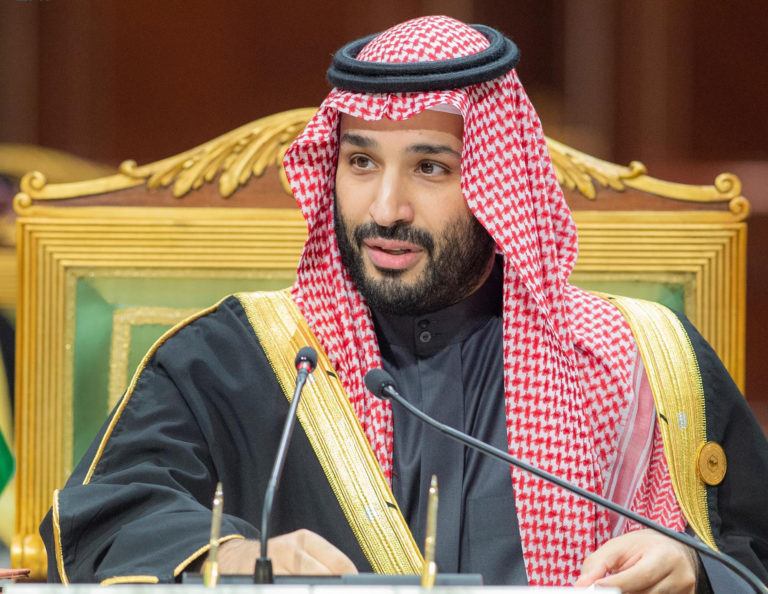
State Department Approves $3.5 Billion Missile Sale to Saudi Arabia

(Dave DeCamp, Antiwar.com) The State Department has approved a $3.5 billion sale of air-to-air missiles to Saudi Arabia ahead of President Trump’s planned visit to the country.

The Pentagon’s Defense Security Cooperation Agency (DSCA) said the sale includes 1,000 AIM-120C-8 Advanced Medium Range Air-to-Air Missiles, related equipment, and US government contracting services. The missiles can be fired by Saudi Arabia’s fleet of US-made F-15 fighter jets.

President Trump is scheduled to arrive in Saudi Arabia on May 13 and is expected to announce a series of new arms sales to the Kingdom. According to Reuters, he could unveil over $100 billion in weapons deals.

Axios has reported that, on May 14, Trump will attend a summit in Saudi Arabia of leaders from the Gulf Cooperation Council states, which include the UAE, Bahrain, Kuwait, Qatar, and Oman.

The visit to Saudi Arabia will mark Trump’s second foreign trip after his brief visit to Italy for Pope Francis’s funeral. According to Middle East Eye, the Saudis have made clear to the administration that they don’t want to discuss normalizing relations with Israel.

Saudi officials have made clear that normalization is off the table as long as the genocidal war in Gaza continues. “Saudi Arabia is serious not to be tricked into anything that regards Israel during the upcoming visit. It was made clear in DC,” an Arab official told MEE.

Trump maintained close ties with the Saudis during his first term, advancing major arms sales and providing support for the brutal Saudi-led war against the Houthis in Yemen. In 2019, Trump vetoed a congressional resolution to end US involvement in the war.

Trump is currently conducting his own bombing campaign against the Houthis in Yemen, which, like the Saudi campaign, has taken a huge toll on civilians.

This article originally appeared at Antiwar.com.

Trump Proposes $1.01 Trillion Military Budget for 2026

(Dave DeCamp, Antiwar.com) The White House released a budget plan on Friday proposing $1.01 trillion in military spending for 2026, a 13% increase from this year.

The proposal fulfills President Trump’s vow to bring the official US military budget to over $1 trillion for the first time. The increase in US military spending will include funding for President Trump’s plans for a major missile defense system for the US, which he has dubbed the “Iron Dome for America, which will likely kick off a new global arms race.

Despite the massive increase, Trump is facing pushback from some Republican hawks, who are complaining that the White House is relying on a reconciliation bill for some of the funds.

According to Sen. Roger Wicker (R-MS), chairman of the Senate Armed Services Committee, the White House is asking Congress for $892.6 billion in military spending for fiscal year 2026, which is about the same as the 2025 budget. The remaining $119 will be authorized under a budget bill that Congress is currently working on.

The budget bill will include $150 billion in military spending that can be spent over the next four years, but under the White House proposal, it will mostly be spent for the 2026 fiscal year. Sen. Mitch McConnell complained in a statement that the administration wasn’t asking Congress to appropriate the entire $1.01 trillion.

“It is peculiar how much time the President’s advisors spend talking about restoring peace through strength, given how apparently unwilling they’ve been to invest accordingly in the national defense or in other critical instruments of national power,” McConnell said. “Make no mistake: a one-time influx reconciliation spending is not a substitute for full-year appropriations.”

The pushback from leading Senate Republicans suggests that Congress may draft a higher military budget than Trump requested. “Fortunately, Presidential budget requests are just that: requests. Congress will soon have an opportunity to ensure that American power – and the credibility of our commitments – are appropriately resourced,” McConnell said.

The US has never officially had a $1 trillion military budget, but the actual cost of US military spending has exceeded $1 trillion for years. According to veteran defense analyst Winslow Wheeler, based on the $895 billion NDAA, US national security spending for 2025 was expected to reach about $1.77 trillion.

Wheeler’s estimate accounts for military-related spending from other government agencies not funded by the NDAA, such as the Department of Veterans Affairs. It also includes the national security share of the interest accrued on the US debt and other factors.

This article originally appeared at Antiwar.com.

SCOOP: Biden’s FBI Treated Pat Buchanan Book as Extremist Literature

(Ken Silva, Headline USA) Pat Buchanan worked for three U.S. Presidents, spoke at the 1992 Republican National Convention, and had his work published in numerous mainstream outlets—from the National Review to Rolling Stone.

But apparently, the FBI views Buchanan as a potential domestic extremist.

According to a new batch of FBI documents, agents found one of Buchanan’s book while searching the home of someone affiliated with the white nationalist group Patriot Front in September 2021. The agents seized the book, The Death of the West, and sent it to its media review team.

It’s not clear what happened after that, but the records indicate that agents viewed the book as potential extremist literature.

“During the search, a book authorized by Patrick J. Buchanan titled Death of the West: How Dying Populations and Immigrant Invasion Imperil Our Country and Civilization was found [REDACTED]. This book was taken and sent to the [REDACTED] media review team,” stated an FBI report from the search.

According to the FBI records, the person who owned the Buchanan book described himself as a “traditional Nazi” who “felt more animosity to black individuals than to anyone who was Jewish.” The person also denied that he was a Patriot Front member, describing himself as a lone wolf.

No charges resulted from the FBI’s investigation of Patriot Front. The 86-year-old Buchanan couldn’t be reached for comment.

The FBI’s September 2021 seizure of the book cam months after the Biden administration released its domestic terrorism strategy in June 2021, deeming white supremacists and militia members as the gravest threats to the country’s security.

It was later revealed that the Southern Poverty Law Center, a leftist organization with a long history of inflating the white supremacist terror threat, helped craft the Biden strategy. According to an article last June from the Daily Signal, the SPLC’s president, Margaret Huang, recently bragged to her donors about how the SPLC helped steer the country’s counterterrorism apparatus.

Under Biden, it was revealed that the FBI used SPLC “intelligence” to justify targeting traditionalist Catholics as potential domestic terrorists.

Additionally, DOJ emails made public in 2022 showed that federal prosecutors worked with the SPLC to stifle Georgia‘s efforts to maintain election integrity, Just the News reported at the time.

Ken Silva is the editor of Headline USA. Follow him at x.com/jd_cashless.

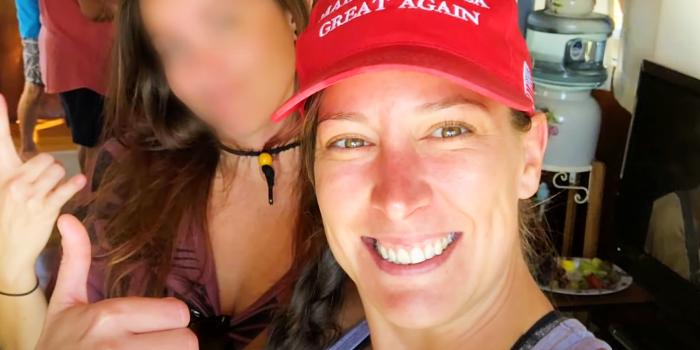
DOJ Settles w/ Family of Slain J6er Ashli Babbitt

(Luis Cornelio, Headline USA) The Justice Department has finally agreed to a preliminary settlement with the family of Ashli Babbitt, the Air Force veteran and Trump supporter who was shot and killed by a Capitol officer during the Jan. 6, 2021 protests. 

Babbitt, a 14-year Air Force veteran, was shot and killed by then-Capitol Police Lt. Michael Byrd while crawling through a window in the Capitol building during the Jan. 6 protests.

Byrd was controversially cleared of any wrongdoing by the department after a months-long internal investigation, despite public outcry. He has claimed that he acted with “the utmost courage” and “saved countless lives.”

However, earlier records obtained by Judicial Watch found that other officers at the scene did not see a weapon in Babbitt’s hands prior to the shooting and that they did not hear Byrd issue any verbal commands prior to the shooting. Lt. Byrd later confessed that he shot Ashli before seeing her hands or assessing her intentions or even identifying her as female.

The Babbitt family later sued the federal government, arguing that Byrd used excessive force. At the time of the shooting, Babbitt was attempting to climb through a broken window leading to the Speaker’s Lobby.  

Babbitt was just 35 years old. Her estate sought $30 million in the wrongful death lawsuit, which was filed in 2024. 

As reported by ABC News, Babbitt family attorney Robert Sticht confirmed in a legal filing on Friday that a formal settlement agreement will be signed within the next three weeks. 

Although the terms remain undisclosed, both sides informed federal Judge Ana Reyes that a resolution is imminent. 

Judicial Watch, the renowned conservative legal group representing the Babbitt estate, released a statement saying the “parties have agreed to work in good faith to narrow or resolve issues in this case.” 

“All we want is justice and we hope the Justice Department under President Trump would share that goal ultimately,” added Judicial Watch President Tom Fitton. 

The settlement comes just months after President Donald Trump issued sweeping pardons for more than 1,500 Jan. 6 protesters. Many had long affirmed they were politically targeted and abused by the Biden DOJ to make an example of them. 

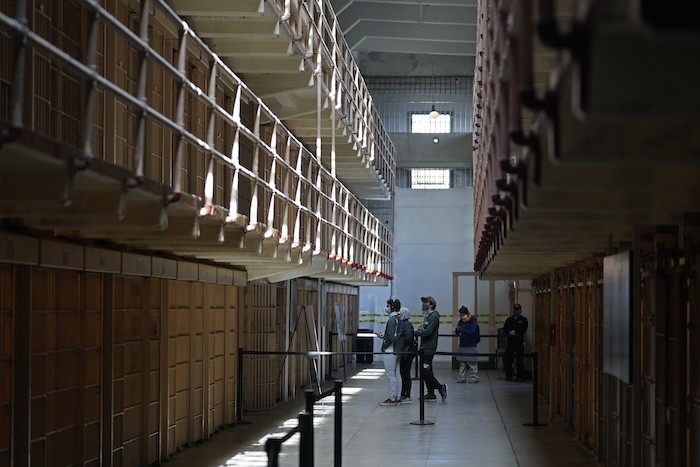
Trump Says He Will Reopen Alcatraz Prison

(Headline USA) President Donald Trump says he is directing his government to reopen and expand Alcatraz, the notorious former prison on a hard-to-reach California island off San Francisco that has been closed for more than 60 years.

In a post on his Truth Social site Sunday evening, Trump wrote that, “For too long, America has been plagued by vicious, violent, and repeat Criminal Offenders, the dregs of society, who will never contribute anything other than Misery and Suffering. When we were a more serious Nation, in times past, we did not hesitate to lock up the most dangerous criminals, and keep them far away from anyone they could harm. That’s the way it’s supposed to be.”

“That is why, today,” he said, “I am directing the Bureau of Prisons, together with the Department of Justice, FBI, and Homeland Security, to reopen a substantially enlarged and rebuilt ALCATRAZ, to house America’s most ruthless and violent Offenders.”

Trump’s directive to rebuild and reopen the long-shuttered penitentiary was the latest salvo in his effort to overhaul how and where federal prisoners and immigration detainees are locked up. But such a move would likely be an expensive and challenging proposition. The prison was closed in 1963 due to crumbling infrastructure and the high costs of repairing and supplying the island facility, because everything from fuel to food had to be brought by boat.

Bringing the facility up to modern-day standards would require massive investments at a time when the Bureau of Prisons has been shuttering prisons for similar infrastructure issues.

The prison — infamously inescapable due to the strong ocean currents and cold Pacific waters that surround it — was known as the “The Rock” and housed some of the nation’s most notorious criminals, including gangster Al Capone and George “Machine Gun” Kelly.

It has long been part of the cultural imagination and has been the subject of numerous movies, including “The Rock” starring Sean Connery and Nicolas Cage.

Still in the 29 years it was open, 36 men attempted 14 separate escapes, according to the FBI. Nearly all were caught or didn’t survive the attempt.

The fate of three particular inmates — John Anglin, his brother Clarence and Frank Morris — is of some debate and was dramatized in the 1979 film “Escape from Alcatraz” starring Clinton Eastwood.

Alcatraz Island is now a major tourist site that is operate by the National Park Service and is a designated National Historic Landmark.

Trump, returning to the White House on Sunday night after a weekend in Florida, said he’d come up with the idea because of frustrations with “radicalized judges” who have insisted those being deported receive due process. Alcatraz, he said, has long been a “symbol of law and order. You know, it’s got quite a history.”

A spokesperson for the Bureau of Prisons said in a statement that the agency “will comply with all Presidential Orders.” The spokesperson did not immediately answer questions from The Associated Press regarding the practicality and feasibility of reopening Alcatraz or the agency’s role in the future of the former prison given the National Park Service’s control of the island.

Former House Speaker Nancy Pelosi, a California Democrat whose district includes the island, questioned the feasibility of reopening the prison after so many years. “It is now a very popular national park and major tourist attraction. The President’s proposal is not a serious one,” she wrote on X.

The Bureau of Prisons currently has 16 penitentiaries performing the same high-security functions as Alcatraz, including its maximum security facility in Florence, Colorado, and the U.S. penitentiary in Terre Haute, Indiana, which is home to the federal death chamber.

Adapted from reporting by the Associated Press

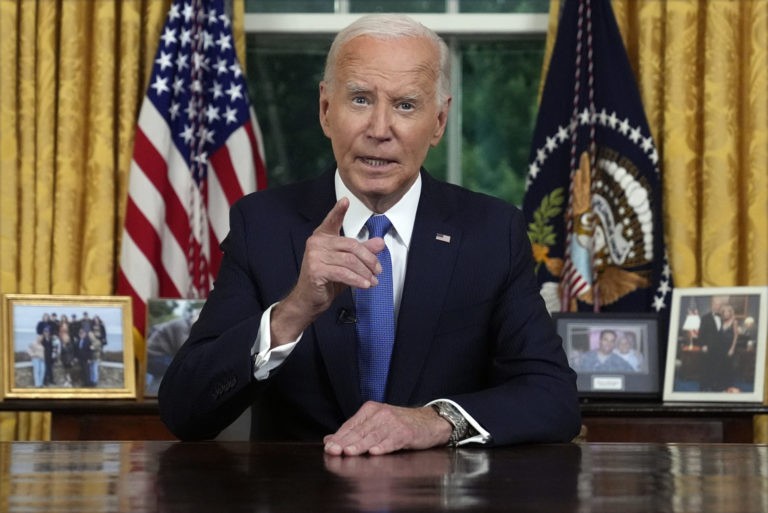
Book: Biden Didn’t Take Cognitive Test During the Last Year of His Presidency

(Ken Silva, Headline USA) President Joe Biden’s declining cognition may have been obvious to millions of Americans, but the White House apparently didn’t want to confirm it with an official test.

A forthcoming book titled, 2024: How Trump Retook the White House and the Democrats Lost America, reveals that Biden’s top aides opted against the President taking a cognitive test in February 2024.

“Mr. Biden’s aides were confident that he would pass a cognitive test, according to the book, but they worried that the mere fact of his taking one would raise new questions about his mental abilities,” the New York Times reported Sunday on the forthcoming book, whose authors include two of the newspaper’s reporters.

“At the same time, Mr. Biden’s longtime doctor, Kevin O’Connor, had told aides he would not take the 81-year-old president’s political standing into consideration when treating him,” the Times reported. “The discussion took place in February 2024, a few weeks before Mr. Biden’s final White House physical exam and a period preceding some of his most damaging public episodes.”

Trump has already taken the Montreal Cognitive Assessment test—a short screening test to assess different brain functions—and released its results last month. The test includes remembering a list of spoken words and listening to a list of random numbers and repeating them backward, among other questions.

Known as MoCA, it’s the same test Trump took in 2018 and later recounted in an interview in which he described reciting a list of words in order: “Person. Woman. Man. Camera. TV.”

Trump weighed 224 at his examination, down from 244 at that physical more than four years ago. Trump turns 79 on June 14.

Ken Silva is the editor of Headline USA. Follow him at x.com/jd_cashless.