Chinese Gold Imports Surge as Demand Continues to Grow

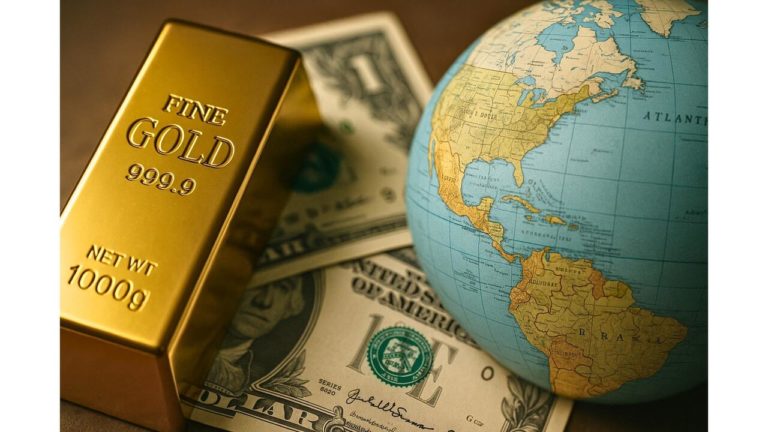
(Mike Maharrey, Money Metals News Service) Chinese gold imports hit an 11-month high in April as prices continued to surge to record levels.

According to the latest customs data reported by Bloomberg, gold imports reached 127.5 tonnes, a 73 percent increase from the prior month.

This comes in the wake of the People’s Bank of China raising gold import quotas to meet surging demand.

China ranks as the world’s largest gold market.

Over the past four months, the price of gold in yuan terms has climbed by 24 percent, the strongest January to April performance on record. The Shanghai Benchmark Gold Price rose 6.9 percent in April alone. It was the fifth consecutive monthly gain.

The Shanghai price premium averaged $37 in April. That was up significantly from a $2 average in March, reflecting growing demand.

The Shanghai Gold Exchange (SGE) reported gold withdrawals totalling 153 tonnes. This was up 27 percent month-on-month and 17 percent year-on-year.

Withdrawals of gold from the SGE represent wholesale demand.

Investment demand has been the primary driver for overall Chinese gold demand in recent months, even as price pressure has created headwinds for the jewelry market. According to the World Gold Council, “Continued robustness in bar and coin sales amid strong investor buying: gold remains a top-performing asset in China as US-China trade tensions intensified.

Meanwhile, Chinese gold-backed ETFs reported record inflows of gold in April. Holding surged by 65 tonnes, boosting total Chinese ETF gold holdings to 203 tonnes.

During the first four months of 2025, Chinese gold ETFs’ total assets under management jumped by 125 percent.

Chinese interest in gold-backed funds is a relatively new phenomenon. Physical gold has historically been the primary means of investment in the country, and even with the surging interest in ETFs, Chinese investors continue to gobble up physical metal. Gold bar and coin sales surged 12 percent to 124 tonnes in the first quarter.

China accounted for 38 percent of global Q1 bar and coin investment.

While physical gold investment surged in China (and Asia more broadly), it declined in the U.S., with gold coin and bar sales falling to the lowest level in five years.

A Chinese analyst with Jinrui Futures told Bloomberg that Chinese investors favor gold as a safe-haven asset and a long-term portfolio diversifier, especially when equities and bonds come under pressure.

“I expect investment and hedging demand in China to remain resilient as policy flip-flops in the U.S. create more uncertainty.”

Another analyst said ongoing de-dollarization is also driving gold investment. This could accelerate if the trade war continues to heat up.

“China may be encouraged to continue moving forward more actively to diversify its reserves away from the U.S. dollar and treasuries given that it is at the epicenter of the trade war. The desire to reduce exposure to the US may see China buying more gold to bolster its reserve.”

Metals market analyst Jesse Colombo points out that Chinese demand has been a big part of this gold rally from the beginning.

“Since last fall, I’ve been advancing a theory that China’s aggressive futures traders—who were behind gold’s initial $400 breakout one year ago that launched this bull market—would soon reassert themselves and help drive gold from around $2,500 to $3,000 and beyond.

“Sure enough, I’m pleased to report that my thesis is unfolding exactly as anticipated—evidenced by a surge in gold futures trading volume on the Shanghai Futures Exchange (SHFE), a renewed rise in Chinese domestic gold premiums over international spot prices, and gold now entering its parabolic, nearly vertical phase.”


Mike Maharrey is a journalist and market analyst for Money Metals with over a decade of experience in precious metals. He holds a BS in accounting from the University of Kentucky and a BA in journalism from the University of South Florida.
Reporter Obtains Alleged Anti-Israel Assassin’s Manifesto

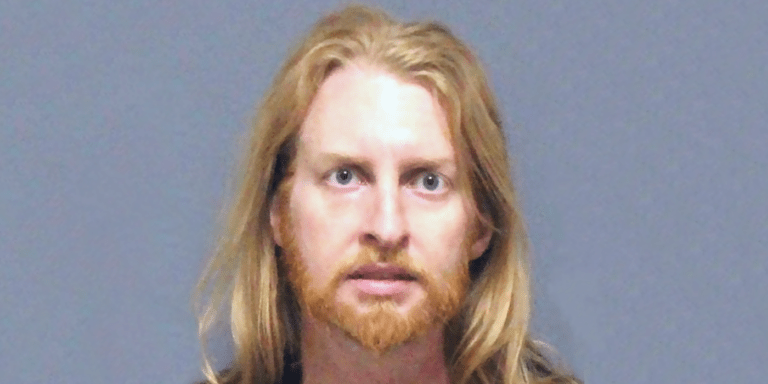
(Headline USAIndependent reporter Ken Klippenstein said in the early hours of Thursday that he’s obtained the manifesto of Elias Rodriguez, who allegedly shot and killed two staff members of the Israeli Embassy in Washington on Wednesday evening.

The purported manifesto appears to confirm the initial reports about Rodriguez—that he killed Yaron Lischinsky, an Israeli citizen, and Sarah Milgrim, an American, as an act of terrorism to draw attention to Israel’s ethnic cleansing of Gaza.

“An armed action is not necessarily a military action. It usually is not. Usually it is theater and spectacle, a quality it shares with many unarmed actions,” Rodriguez’s manifesto states at one point.

“Aaron Bushnell and others sacrificed themselves in the hopes of stopping the massacre and the state works to make us feel their sacrifice was made in vain, that there is no hope in escalating for Gaza and no point in bringing the war home. We can’t let them succeed. Their sacrifices were not made in vain,” the manifesto states.

“The impunity that representatives of our government feel at abetting this slaughter should be revealed as an illusion, then.”

‘In cold blood’

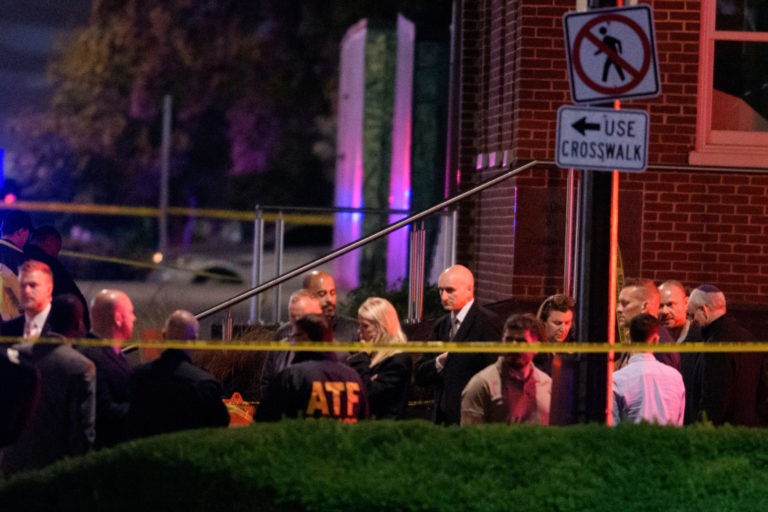
The shooting followed the American Jewish Committee’s annual Young Diplomats reception at the Capital Jewish Museum.

Lischinsky and Milgrim, who were reportedly about to be engaged, were leaving an event at the Capital Jewish Museum when the suspect, who had been seen pacing outside the museum, approached a group of four people and opened fire, Metropolitan Police Chief Pamela Smith said at a news conference.

Rodriguez, 31, of Chicago, then walked into the museum, was detained by event security and began chanting, “Free, free Palestine,” Smith said.

Last week, the Capital Jewish Museum was one of the local nonprofits in Washington awarded funding from a $500,000 grant program to increase its security. The museum’s leaders were concerned because it is a Jewish organization and due to its new LGBTQ exhibit, according to NBC4 Washington.

Israel’s devastating campaign in Gaza has killed more than 53,000 people, mostly women and children, according to local health authorities. The fighting has displaced 90% of the territory’s roughly 2 million population, sparked a hunger crisis and obliterated vast swaths of Gaza’s urban landscape.

Adapted from reporting by the Associated Press

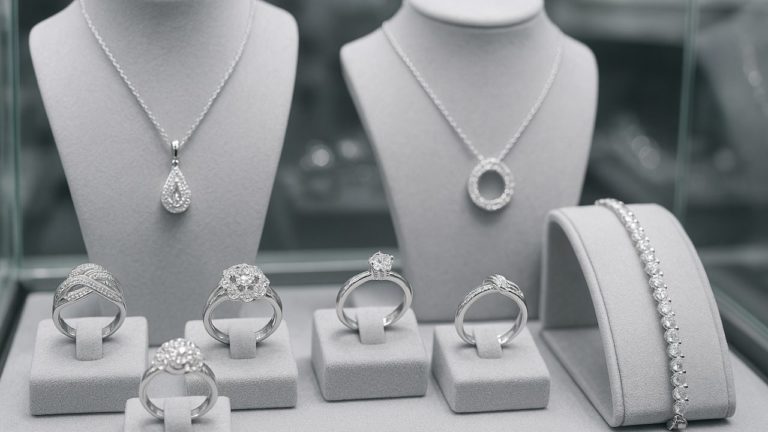
U.S. Market Helping Drive Silver Jewelry Demand Higher

(Mike Maharrey, Money Metals News Service) Silver jewelry demand is on the rise globally, another factor pushing the silver market to its fourth straight supply deficit in 2024.

The U.S. market is playing an important role in this trend.

Industrial silver demand set a record last year, but despite the increase in offtake, overall silver offtake declined by 3 percent to 1.16 billion ounces, primarily due to weak investment demand.

However, even with the slight decline, demand outstripped the silver supply for the fourth consecutive year. The structural market deficit came in at 148.9 million ounces. That drove the four-year market shortfall to 678 million ounces, the equivalent of 10 months of mining supply in 2024.

Silver jewelry demand grew by 3 percent to 208.7 million ounces in 2024.

According to the Silver Institute, India accounted for the bulk of these gains, driven by an import duty cut, a healthy rural economy, and the ongoing rise in purities.

The Silver Institute reported that improving exports to key Western countries also lifted silver jewelry demand. For instance, fabrication in Thailand grew by 13 percent.

“Western consumption was broadly steady, as positives, such as branded silver’s gains, balanced negatives, including cost-of-living issues.”

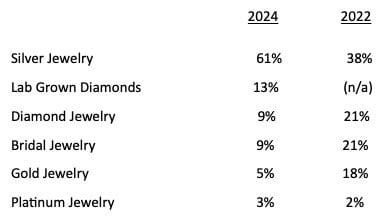
The Silver Institute recently released the results of a survey of U.S. jewelry retailers, finding that 53 percent reported marginally increased silver sales over the last survey period in 2022.

Meanwhile, 71 percent reported increasing their silver jewelry inventory last year, up from 61 percent in 2022. On average, they boosted their stock of silver jewelry by 15 percent.

Retailers reported that silver jewelry maintained the best margins during the holiday season.

Overall, silver jewelry accounted for about 31 percent of total jewelry sales, up from 28 percent in 2022.

The average store growth for silver jewelry sales was 20 percent in 2024, increasing from 14 percent in 2022.

Eighty-three percent of the retailers surveyed said silver was essential to their business, with 92 percent reporting optimism that silver jewelry sales will continue to grow for the next several years.

The survey also probed the reasons customers bought silver jewelry.

  • Affordability – 80 percent
  • Design options – 52 percent
  • It’s a precious metal – 43 percent
  • Versatility – 35 percent
  • Craftsmanship – 31 percent
  • Can be dressy or casual – 28 percent
  • Multiple pieces can be worn together – 28 percent
  • Pairs with white gold or platinum – 23 percent
  • Makes a great keepsake – 14 percent

The 20-40 age range bought the most silver jewelry, followed by the 41-50 age group.

Jewelry demand accounts for about 18 percent of total silver demand. While the amount of silver used in jewelry manufacturing pales in comparison to the demand for the metal in the industrial and tech sectors, it still consumes a significant amount of silver. Growth in demand for silver jewelry will likely contribute to increasing overall demand, putting further pressure on already limited silver supplies.


Mike Maharrey is a journalist and market analyst for Money Metals with over a decade of experience in precious metals. He holds a BS in accounting from the University of Kentucky and a BA in journalism from the University of South Florida.
Fiat vs. Sound Money: Why Gold Still Matters in a World of Paper Currency

(Money Metals News Service) In this week’s episode of the Money Metals Midweek Memo, host Mike Maharrey delivers a compelling explanation of what money really is—and why sound money, such as gold and silver, remains the superior store of value compared to fiat currency issued by governments.

What Money Really Is

Most people think of money as paper bills or digital numbers in their bank account. But those forms are only modern representations.

True money, i.e., sound money, Maharrey explains through the lens of the Austrian School of Economics, is a universally accepted medium of exchange that arises naturally through market activity—not by government decree.

In contrast to fiat currency, which is conjured into existence by central banks, sound money—typically gold or silver—emerges spontaneously over time because of its utility, scarcity, and historical acceptance.

The Problem with Barter

Barter systems suffer from what’s called the “double coincidence of wants.” If you make boats but need bread, you must find a baker who needs a boat.

That’s inefficient.

Money solves this by enabling indirect exchange.

Instead of trading goods for goods, you trade goods for money, which can then be exchanged for anything else.

Historically, societies gravitated toward commodities that could serve this function best—durable, portable, divisible, and scarce. Gold and silver naturally rose to the top.

The Rise of Fiat

Unlike gold and silver, fiat currency did not arise from the market. It is declared money by the state—fiat meaning “let it be done.” Initially, paper notes were redeemable for gold or silver. But over time, governments abandoned convertibility.

Today, fiat currencies like the dollar, euro, yen, and yuan are backed by nothing but political promises. This introduces instability because governments, left unchecked, will always choose to expand the money supply to fund their priorities. And they do so without the natural constraints that sound money imposes.

Inflation by Design

Fiat systems allow for virtually unlimited currency creation.

In 2020, the U.S. money supply grew by a staggering 19.1%. By comparison, the global supply of gold grows at a steady rate of just 1.4% to 2.2% per year.

Over time, this disparity leads to a decline in purchasing power.

Since President Nixon severed the dollar’s last ties to gold in 1971, the greenback has lost over 85% of its value.

What one dollar could buy then takes more than seven dollars today.

Meanwhile, the price of gold has surged from $35 an ounce to over $3,300.

This isn’t accidental. Inflation is baked into the fiat system.

Despite what central bankers claim, their goal isn’t to eliminate inflation—it’s to keep it just low enough that the public doesn’t revolt, but high enough to perpetuate government expansion.

As Maharrey puts it, inflation is not a flaw of fiat money; it’s the policy.

The Strength of Sound Money

Unlike fiat currencies, gold and silver cannot be printed at will. Their scarcity is fundamental. Aristotle laid out three key traits of good money: durability, portability, and divisibility. Maharrey adds a fourth—scarcity.

Gold and silver check every box.

They are resistant to decay, easy to carry, divisible into small units, and have been valued for millennia not only as money, but also as jewelry, ornamentation, and increasingly, industrial materials.

The Perth Mint demonstrates gold’s durability by melting and recasting the same 14-pound gold bar more than 65,000 times.

Try doing that with paper money.

Gold can be pressed into bars, coins, or even thin laminated goldbacks weighing just 1/1,000th of a troy ounce. It is useful in electronics, medicine, space technology, and telecommunications.

In the first quarter of 2025 alone, 80.5 tons of gold were used in industrial applications—far from useless.

Why Governments Prefer Fiat

Sound money limits government power. If currency is backed by gold, a government must acquire more gold to spend more money.

That’s a problem for politicians who prefer spending now and worrying later.

Fiat systems empower governments to fund deficits, wage wars, and expand welfare programs without immediate consequences.

Central banks enable this behavior through interest rate suppression and currency creation.

As Maharrey emphasizes, the Federal Reserve is the engine behind one of the largest governments in human history.

Governments claim to fight inflation, but in reality, they cultivate it. It is the tool that sustains their unchecked growth.

Every fiat currency in history has eventually failed.

The dollar, though dominant today, is following the same path.

Gold Is Real Money

Critics like Warren Buffett may scoff at gold, calling it unproductive or obsolete. But gold is neither.

Nearly half of global gold demand comes from jewelry.

It is also indispensable in computing, aerospace, medical diagnostics, and clean energy. It does not rot, rust, or degrade, and it remains valuable even when fiat currencies collapse.

Fiat money is smoke and mirrors. Gold is substance.

It is not dependent on anyone’s promise. It cannot be created out of thin air. It has stood the test of time—not because a government forced it on anyone, but because people freely chose it, over and over again, across cultures and centuries.

Choose Sound Money

You don’t have to accept the risks of a fiat system.

Even though we live in a world dominated by government-issued currency, you can preserve your wealth with sound money. Gold and silver offer a time-tested hedge against inflation, volatility, and the failure of political institutions. They don’t just represent money—they are money.

To begin securing your financial future with precious metals, contact Money Metals Exchange at 1-800-800-1865 or visit MoneyMetals.com to speak with a specialist.

You can also learn more about sound money via the Sound Money Defense League.

Real wealth doesn’t have to vanish with the next round of money printing. Sound money is still within reach—and it always will be.

Israeli Embassy Staffers Killed in Shooting Near Jewish Museum, FBI DC Office

(Headline USA) As U.S. public opinion about Israel hits new lows amidst the country’s ethnic cleansing of Palestine, two staff members of the Israeli embassy in Washington were reportedly shot and killed Wednesday evening near a Jewish museum.

Noem announced the deaths in a post on X after the shooting outside the Capital Jewish Museum, which is located steps away from the FBI’s field office in the nation’s capital.

Attorney General Pam Bondi said she was at the scene with former judge Jeanine Pirro, who serves as the U.S. attorney in Washington.

Danny Danon, Israel’s ambassador to the United Nations, called the shooting a “depraved act of anti-Semitic terrorism.” According to online pundit Nick Sorter, DC police reportedly said the shooter yelled, “Free Palestine!”  However, there hasn’t been any official confirmation about the shooter’s identity or motives.

Police offered no details late Wednesday night on a potential motive for the shooting. A news conference was expected later Wednesday.

“We are confident that the US authorities will take strong action against those responsible for this criminal act,” Danon said in a post on X. “Israel will continue to act resolutely to protect its citizens and representatives — everywhere in the world.”

Adapted from reporting by the Associated Press


Trump Rebukes South African President’s Genocide Denial w/ Damning Footage

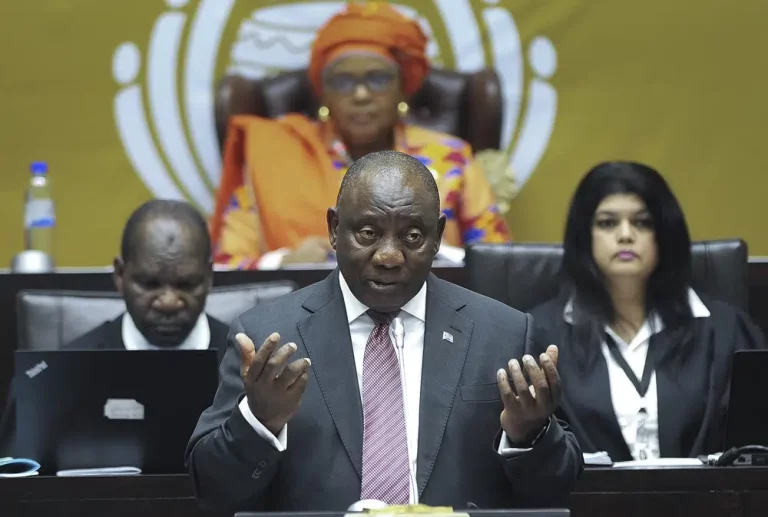
(Luis CornelioHeadline USA) President Donald Trump forced South African President Cyril Ramaphosa to confront disturbing footage of local politicians threatening violence against white South Africans, often referred to as Afrikaners.  

Trump’s move came during a Wednesday Oval Office meeting with Ramaphosa, attended by members of the legacy media. Ramaphosa, along with the left and the media, reject evidence that Afrikaners are facing persecution, described by conservatives as a genocide.  

 “If there was an Afrikaans farmer genocide, I can bet you, these three gentlemen would not be here, including my minister of agriculture,” Ramaphosa said.  

Trump remained silent, allowing Ramaphosa to deliver what appeared to be a rehearsed talking point, before correcting the record.  

“Turn the lights down,” Trump ordered, pointing to a staffer and a nearby TV. Seconds later, the screen lit up with footage showing South African officials and party leaders openly calling for violence against white farmers.  

Seemingly rattled by the evidence, Ramaphosa asked Trump about the location of the last clip.  

“South Africa,” Trump swiftly replied.  

“I need to find out,” the South African president muttered.  

Ramaphosa then tried to save face, claiming the rhetoric displayed on the videos did not constitute government policy.   

“What you saw, the speeches that were being made … one, that’s not government policy. We have a multiparty democracy in South Africa that allows people to express themselves, political parties to [pursue] various policies. In many cases, or in some cases, those policies don’t go along with government policy,” he replied.  

Trump did not let the line of defense slide, shooting back: “But you do allow them to take land.” To this, Ramaphosa claimed that no one can take land.  

“When they take the land, they kill the white farmer, and when they do, nothing happens to them. Nothing happens to them,” Trump stated, “How do you explain that?” 

Lawyers for Alleged Would-be Trump Assassin’s Son Don’t Want to Represent Him Anymore

(Ken Silva, Headline USA) Oran Alexander Routh, the son of alleged would-be Trump assassin Ryan Routh, was set to be sentenced on Thursday after pleading guilty to one count of possessing child pornography in January.

However, days before Oran’s sentencing, his lawyers asked to resign from his case—telling the presiding judge that the relationship between them and their client is damaged beyond repair. The sentencing has now been postponed.

The lawyers, Lisa Costner and Stacey Rubain, filed their motion to withdraw on Tuesday after meeting with Oran.

“The relationship between undersigned counsel and the defendant has reached a point where counsel believes that meaningful communication with the defendant has broken down and their continued representation of defendant would be pointless,” Costner and Rubain said.

“The defendant raises into question the effectiveness of undersigned counsel’s representation of defendant, which creates a conflict between defendant and counsel,” they said. “The undersigned are of the opinion that it is in the best interest of the defendant that counsel be allowed to withdraw in this matter and that the Court appoint substitute counsel.”

The motion from Oran Routh’s attorneys also come as both parties have filed their respective sentencing memoranda. Those memos have been sealed, so it’s unclear what penalty the Justice Department seeks against Routh.

Regardless of whether Routh’s attorneys are allowed to withdraw, his sentencing has been delayed so the judge can review the hundreds of pages of records that the two parties sent to him in recent days.

“The United States has filed a sentencing pleading which includes over 500 pages of attachments shortly before sentencing. The court will not be able to review the attachments in the time available. At the sentencing scheduled for May 22, 2025, the court will hear argument on the motion to withdraw,” Judge William Osteen said in a Wednesday order. “Regardless of how that issue is resolved, the sentencing will be continued to allow the court an opportunity to review the sentencing pleading filed by the United States.”

Law enforcement started investigating Oran for child pornography in late 2023, when the National Center for Missing & Exploited Children, or NCMEC, flagged a video allegedly on his phone. NCMEC passed that tip along to the Guilford County Sheriff’s Office, which visited his mother’s home last February. Law enforcement didn’t follow up until Oran’s father allegedly tried to kill Trump.

Oran faces up to 20 years in prison. His father faces trial for attempted assassination in September.

Ken Silva is the editor of Headline USA. Follow him at x.com/jd_cashless.

Pentagon Accepts Boeing 747 from Qatar for Trump’s Use

(Headline USADefense Secretary Pete Hegseth has accepted a gifted Boeing 747 aircraft from Qatar for President Donald Trump to use as Air Force One, the Pentagon said Wednesday.

The Defense Department will “work to ensure proper security measures” on the aircraft to make it safe for use by the president, Pentagon spokesman Sean Parnell said. He added that the plane was accepted “in accordance with all federal rules and regulations.”

Trump has defended the gift, which came up during his recent Middle East trip, as a way to save tax dollars.

“Why should our military, and therefore our taxpayers, be forced to pay hundreds of millions of Dollars when they can get it for FREE,” Trump posted on his social media site during the trip.

Others, however, have raised concerns about the aircraft being a violation of the Constitution’s prohibition on foreign gifts. They also have noted the need to retrofit the plane to meet security requirements, which would be costly and take time.

Trump was asked about the move Wednesday while he was meeting in the Oval Office with South Africa’s president. “They are giving the United States Air Force a jet,” Trump said.

The Republican president has presented no national security imperative for a swift upgrade rather than waiting for Boeing to finish new Air Force One jets that have been in the works for years.

Adapted from reporting by the Associated Press


Foreigner Extradited to America and Sentenced for USAID Fraud in Pakistan

(Ken Silva, Headline USA) The Justice Department announced Monday that Stephen Paul Edmund Sutton, 53, a United Kingdom citizen, pleaded guilty and was sentenced for his participation in a fraud scheme.

Sutton is presumably already back on a plane to the UK. He was extradited to the U.S. and sentenced to time served on Monday, and was to be deported as soon as he served his sentence.

Sutton was an employee of Prime Contractor, which was working on a $200 million USAID-funded power distribution program in Pakistan. According to the DOJ, Sutton and his co-defendant, Atif Gillani, created two shell companies, obtained multiple purchase orders for forklift and crane services, and funneled that money to themselves.

“As part of the scheme, his co-conspirator arranged for low-grade local vendors to provide the services for at least half the contract rates, and Sutton ensured that [Prime Contractor] paid the invoices despite suspicions raised by an accounts payable officer,” the DOJ said in a Monday press release. “[USAID] was defrauded of almost $100,000 and that for his part, Sutton received at least $21,000 in kickbacks.”

Gillani is also charged by indictment, and his case is “pending disposition,” the DOJ said Monday.

The case against Sutton comes days after the  founder of a U.S. government contracting firm pled guilty to bribing a USAID officer to receive some $500 million in contracts.

The government contractor, Walter Barnes, is the founder of PM Consulting Group, which now goes by the name Vistant. According to the DOJ, Barnes paid “various bribes” to receive the USAID contracts, including cash, iPhones, laptops, tickets to an NBA game, as well as benefits such as jobs for relatives.

Along with the cases against Sutton and Barnes, DOJ filed a criminal charge earlier this month against Yusuf Akoll, a former USAID senior procurement contract specialist.

According to the DOJ, Akoll formed a shell company in November 2020 to fraudulently obtained $16,666 in loans through the Paycheck Protection Program—the COVID-era program designed to help small businesses stay afloat.

USAID was shuttered and folded into the State Department earlier this year.

Ken Silva is the editor of Headline USA. Follow him at x.com/jd_cashless.

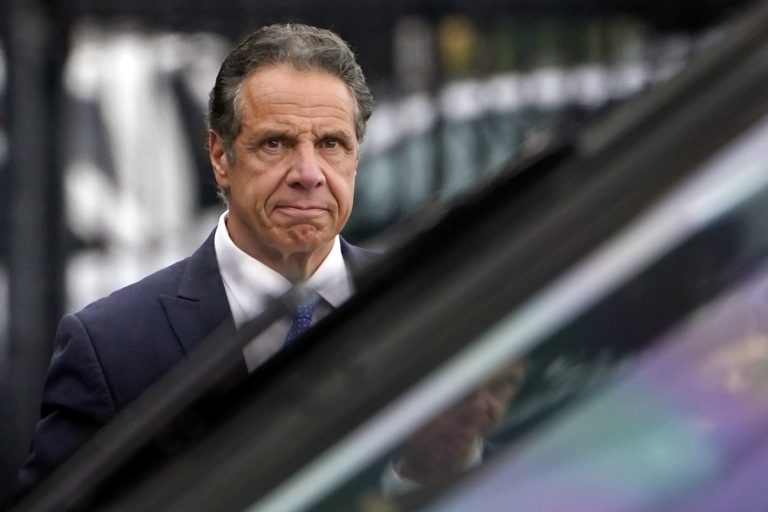
DOJ Investigating Former NY Gov. Andrew Cuomo for Lying to Congress

(Headline USAThe Justice Department has opened a criminal investigation into former New York Gov. Andrew Cuomo after congressional Republicans recommended that he be charged with lying over his handling of the COVID-19 pandemic, a person familiar with the matter said Tuesday.

The investigation by the U.S. attorney’s office in Washington follows a referral from Rep. James Comer, Republican chairman of the House Committee on Oversight and Government Reform, over statements Cuomo made to lawmakers investigating his management of the pandemic when the virus was spreading through nursing homes, the person said. The person was not authorized to discuss the investigation publicly and spoke on the condition of anonymity.

A spokesperson for Cuomo said Tuesday that the former governor was never informed of any such investigation.


The investigation was first reported Tuesday by The New York Times. The Justice Department declined Tuesday to comment. Spokespeople for the U.S. attorney’s office in Washington didn’t immediately respond to messages seeking comment.

According to last year’s House coronavirus subcommittee report, Cuomo had reviewed, edited, and even drafted portions of a purportedly independent and peer-reviewed New York State Department of Health report, which was used to support his deadly pandemic-era nursing home policies.

However, Cuomo told the subcommittee in his June transcribed interview that he had nothing to do with that report. Cuomo’s lie is why the House GOP wants him criminally charged.

“Andrew Cuomo is a man with a history of corruption and deceit, now caught red-handed lying to Congress during the Select Subcommittee’s investigation into the COVID-19 nursing home tragedy in New York,” Comer said earlier this year.

“This wasn’t a slip-up—it was a calculated cover-up by a man seeking to shield himself from responsibility for the devastating loss of life in New York’s nursing homes.”

The Cuomo administration came under significant scrutiny for a policy that at first required nursing homes to readmit recovering COVID-19 patients in an effort to avoid hospitals from becoming overwhelmed. That was on top of state fatality figures that significantly undercounted the deaths.

In June, an investigation into New York’s handling of the COVID-19 pandemic found former Gov. Cuomo’s “top down” approach of dictating public health policy through his office—rather than coordinating with state and local agencies—sewed confusion during the crisis.

In the state’s nursing homes, where some 15,000 people died, the administration’s lack of communication with agencies and facilities resulted in wasted resources and mistrust — not to mention anxiety for residents’ loved ones, according to the independent probe commissioned by current Gov. Kathy Hochul in 2022.

Cuomo resigned from office in August 2021, amid sexual harassment allegations, which he denies. Hochul, a fellow Democrat who had been Cuomo’s lieutenant, inherited the job and was reelected the follow year.

Adapted from reporting by the Associated Press