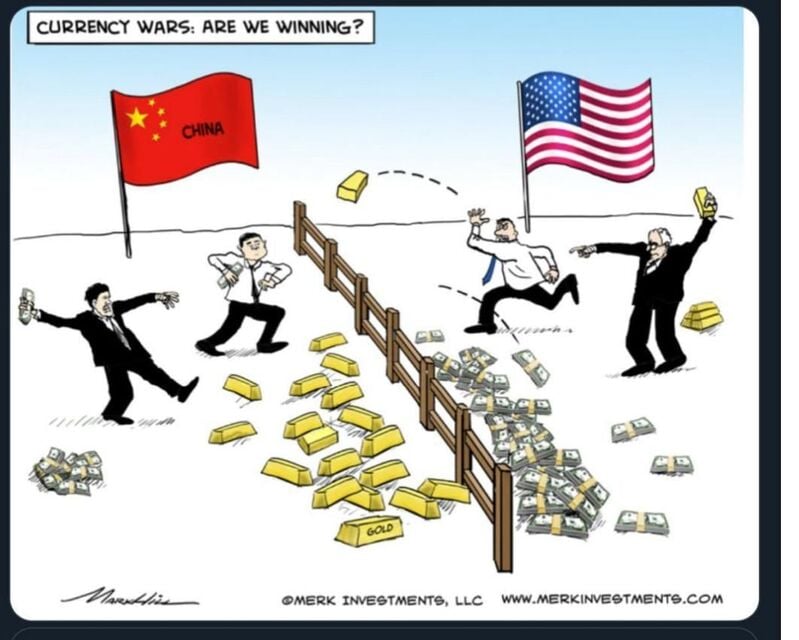
(Chris Powell, Money Metals News Service) Last week, the Federal Reserve seemed to take note of the increasing speculation about the possibility of revaluing U.S. gold reserves to improve the financial position of governments and central banks, enabling more money creation and debt reduction.
This took the form of a research study written by Fed economist Colin R. Weiss about gold revaluations undertaken by five countries in the last 28 years: Curacao/Saint Martin, Germany, Italy, Lebanon, and South Africa.
Weiss concludes that gold revaluation did the following:
Prevented the Banca d’Italia from having to report a loss in 2002.
Provided funds that could have been used by Germany to avoid a fiscal deficit that would have impaired the country’s entry to the European Monetary Union, but in the end, didn’t have to be used.
Created money for Lebanon to use to rebuild after its civil war, but did little to offset the country’s “larger structural challenges.”
Offset some minor losses for the Curacao/Saint Martin central bank.
It is too recent in South Africa to show that it has done much for that country.
Disappointingly, Weiss’s study does not cover the various gold revaluations undertaken throughout history by the United States. Stuart Englert reviews some examples here at MoneyMetals.com.
Nor does the Fed report address how the United States might use gold revaluation to reduce its huge, growing, and increasingly worrisome debt, which is the main point of interest in recent discussions of gold revaluation.
But the Fed may have concluded that simply acknowledging the gold revaluation issue is risky enough politically at the moment, what with the dollar showing signs of sustained weakness and with President Trump mocking Federal Reserve Chairman Jerome Powell practically every day while trying to hasten his replacement.
Weiss’s study is headlined “Official Reserve Revaluations: The International Experience,” and it’s posted at the Fed’s internet site here.
Chris Powell is a journalist in Connecticut, where he worked for the Journal Inquirer, a daily newspaper in Manchester, for 56 years, 44 of them as managing editor. He continues to write political columns for that paper and many others in the state. He frequently appears on talk radio programs on four Connecticut stations.
Powell is also secretary/treasurer of the Gold Anti-Trust Action Committee Inc. (GATA), which he co-founded in 1999 to expose and oppose the rigging of the gold market by Western central banks and their investment bank agents. He edits the GATA Dispatch, that organization’s daily electronic newsletter, and speaks on behalf of the organization at financial conferences in the United States and abroad.
He is a member of the Board of Directors of the Connecticut Council on Freedom of Information and was its state legislative chairman from 2004-2010.
(Mike Maharrey, Money Metals News Service) Gold inflows into ETFs through the first half of 2025 hit levels not seen since the pandemic, and that trend continued through July.
According to the latest data compiled by the World Gold Council, 22.8 tonnes of gold valued at around $3.2 billion flowed into gold-backed funds globally last month.
Gold-backed ETFs now hold 3,639 tonnes of gold, the highest level since August 2022.
July gold inflows pushed total assets under management by gold ETFs 1 percent higher to $386 billion, the second straight month-end record.
The World Gold Council noted that ETF gold inflows are on pace for their second-biggest year on record.
North American-based ETFs led the way in July, expanding their gold holdings by 12.5 tonnes, totaling $1.4 billion. This was a slight slowdown from the previous month. The World Gold Council attributed the ebb to “a short-term rebound in the dollar and a rise in rates, as expectations for future Fed cuts continue to be pushed further out.”
There was also some profit-taking as investors rotated from a safe-haven position back into equities after the announcement of U.S. trade deals with the EU and Japan.
European ETFs also reported strong gold inflows of 10.9 tonnes. UK-based funds dominated, while German funds reported outflows of gold.
According to the WGC, “Gold’s outsized strength in British pounds (GBP) attracted local investors: weaker-than-expected economic data and the cooling labor market, among other factors, kept the local currency on a back foot and contributed to rising safe-haven demand.”
Swiss and French funds also reported strong inflows amid tariff uncertainty before the trade deal was reached at the end of the month.
Rising bond yields in Germany created some headwinds for gold.
Asian funds reported a 0.8-tonne increase in gold holdings. Chinese funds shed gold as investor risk appetite increased. This was countered by gold inflows into Japanese and Indian ETFs.
Funds in other regions, including Australia and Africa, reported a 1.5-tonne outflow of gold.
ETFs are relatively liquid. You can buy or sell an ETF with a couple of mouse clicks. You don’t have to worry about transporting or storing metal. In a nutshell, it allows investors to play the gold market without buying full ounces of metal at the spot price.
Since you are just buying a number in a computer, you can easily trade your ETF shares for another stock or cash whenever you want, even multiple times on the same day. Many speculative investors take advantage of this liquidity.
But while a gold ETF is a convenient way to play the price of gold on the market, you don’t actually possess any gold. You have paper. And you don’t know for sure that the fund has all the gold either, especially when the fund sees inflows. In such a scenario, there have been difficulties or delays in obtaining physical metal.
Gold Trading Volumes
After hitting the highest semi-annual average on record in H1, gold trading volumes increased again in July, averaging $297 billion per day. That was a 2.3 percent month-on-month increase.
Over-the-counter (OTC) volumes averaged $154 billion per day last month, 2 percent higher than in June.
While OTC volumes were below the H1 average in July, they were still far above the 2024 average of $128 billion per day.
Exchange-traded volumes also rose last month, averaging $137 billion per day. A notable increase in COMEX activities was a primary driver.
Total net longs on the COMEX rose 12 percent month-on-month to 676 tonnes in July. Money managers increased their net gold longs by about 4 percent.
According to the World Gold Council, there has been some evidence of profit-taking over the last couple of months; however, “positioning now appears to have reset.”
Mike Maharrey is a journalist and market analyst for Money Metals with over a decade of experience in precious metals. He holds a BS in accounting from the University of Kentucky and a BA in journalism from the University of South Florida.
Through the first six months of the Iranian calendar year (March 21-September 20), Iran imported 43 tonnes of gold valued at $2.5 billion, according to a customs report. That was a sixfold increase compared to the same period the previous year.
According to the World Gold Council, Iranian gold imports exceeded 100 tons worth over $8 billion in 2024, representing roughly 11 percent of the country’s total imports.
According to Iran International, the increase in gold imports “may reflect broader efforts by the country to shield its economy from currency shortages and manage international trade amid sanctions.”
The Iranian English-language news site asserted, “Gold has become a key safe-haven asset in Iran as the country navigates sanctions, currency volatility, and political uncertainty.”
Former Iranian bank chief Hossein Mehri said gold “vaccinates” the Iranian economy against global sanctions, dismissing concerns over a possible snapback of sanctions under the 2015 nuclear deal.
“Even if this mechanism is activated, it does not mean the collapse of the country’s economy. For 46 years, we have withstood Western pressures, and the country has become, in a way, vaccinated against them.”
The Iranian government has encouraged the flow of gold into the country. According to media reports, officials have allowed some exporters to import gold instead of repatriating foreign currency.
Typically, exporters receive payment in a foreign currency, often the U.S. dollar. These foreign currencies are then held in the Iranian banking system as reserves. Instead, the government is allowing exporters to use foreign currency to buy gold, which is then held instead of foreign fiat. This enables Iran to more easily sidestep sanctions and manage its reserves.
It also creates economic security. While foreign governments can freeze assets denominated in their own currencies, they can’t freeze gold. It is money — recognized and accepted worldwide.
Iran has also used gold to conduct transactions. A sale of drones to Russia was partly paid for with bullion. According to documents obtained by hackers, Russia paid Iran approximately $1.75 billion in a deal for Shahed-136 drones. Part of the payment was made with several tons of gold ingots.
The Iranian people have also been gobbling up gold as they deal with their government’s monetary debasement. According to World Gold Council data, gold coin and bar purchases in Iran surged by 20 percent in the second quarter of this year. Meanwhile, gold jewelry demand grew by 12 percent. It was the only market that reported an increase in gold jewelry sales. Globally, gold jewelry sales fell 14 percent year-on-year in Q2 due to headwinds caused by record prices.
Gold jewelry is often used as an investment in Asian and Middle Eastern countries and is generally of higher purity than pieces sold in the West.
Despite their best efforts, the West has found it difficult to stop countries like Iran and Russia from using gold due to its fungible nature (easy to exchange) and the global demand for the precious metal.
Gold is money, and it is recognized as such everywhere. Even if they don’t want dollars or some other fiat currencies, everybody wants gold.
This is not to justify these countries’ wartime policies. It merely underscores the nature of gold as money and its important role in the global economy. When fiat currencies are cut off or fail, gold will always remain a viable alternative.
This is precisely why so many countries are accumulating gold at a rapid pace.
Official central bank gold demand topped 1,000 tonnes for the third straight year in 2024. To put that into perspective, central bank gold reserves increased by an average of just 473 tonnes annually between 2010 and 2021.
The pace of central bank gold buying picked up after the aggressive Western sanctioning of Russia. Other countries have noted the weaponization of the dollar and have taken steps to decrease their dependence on the greenback.
According to a report by the Atlantic Council, “In recent years, and especially since Russia’s invasion of Ukraine and the Group of Seven (G7)’s subsequent escalation in the use of financial sanctions, some countries have been signaling their intention to diversify away from dollars.”
Other countries have recognized the power of gold and the risk of holding dollars.
It’s a lesson individuals should take note of as well.
Mike Maharrey is a journalist and market analyst for Money Metals with over a decade of experience in precious metals. He holds a BS in accounting from the University of Kentucky and a BA in journalism from the University of South Florida.
(Headline USA) U.S. Border Patrol agents jumped out of the back of a rented box truck and made arrests Wednesday at a Los Angeles Home Depot store during an immigration raid that an agency official called “Operation Trojan Horse.”
Breaking: DHS arrives in Penske trucks at a Home Depot in McArthur Park area of LA for early morning immigration enforcement. The area was filled with migrants who scattered. DHS says MS 13 has a chokehold on this area, which is one reason they’re carrying out the highly… pic.twitter.com/hTskuM9Q4l
“For those who thought immigration enforcement had stopped in Southern California, think again,” acting U.S. Atty. Bill Essayli posted on the social platform X after the raid. “The enforcement of federal law is not negotiable and there are no sanctuaries from the reach of the federal government.”
Messages were sent to the U.S. Department of Homeland Security seeking details on the raid, including how many people were arrested. U.S. Border Patrol Sector Chief Greg Bovino reposted Fox News reports of Monday’s arrests on X, calling the action “Operation Trojan Horse.”
Photos on social media showed the moment the rear door of the rented Penske truck opened, revealing several uniformed agents with guns. A spokesperson for Penske Truck Rental said the company was looking into the use of its vehicles by federal officials, saying its regulations prohibit transporting people in truck cargo areas.
“The company was not made aware that its trucks would be used in today’s operation and did not authorize this,” spokesperson Randolph P. Ryerson said in an email. “Penske will reach out to DHS and reinforce its policy to avoid improper use of its vehicles in the future.”
(Morgan Sweeney, The Center Square) Apple will be investing another $100 billion in bringing its operations to the U.S., per an announcement from CEO Tim Cook and President Donald Trump Wednesday.
The tech giant already committed in February to a $500 billion investment expanding its presence in the U.S., part of a raft of large companies announcing large American investments as Trump began rolling out his tariff agenda.
“American innovation is central to everything we do,” Cook told reporters. “Our products are designed here. We are hiring and growing here. We support 450,000 jobs with thousands of suppliers and partners in all 50 states.”
The news comes as Trump continues ratcheting up tariffs on U.S. trading partners around the world. Trump has raised tariffs on other countries partly for economic reasons – to generate revenue for the U.S., to spark a renaissance in American manufacturing and to balance trade relations that have, according to the president, unfairly disadvantaged the U.S.
The investment is “more than ever before, it’s never even come close,” according to Trump. “There’s never been anything like it. Even you, that’s even a lot of money for you,” he quipped to Cook.
But the president is also using higher tariffs as a geopolitical tool to weaken global aggressors like Russia, whose assault on Ukraine hasn’t relented. Earlier Wednesday, he issued an executive order slapping India with an additional 25% tariff for buying Russian oil, which he sees as fueling the Kremlin’s war on Ukraine. Apple will reportedly be exempt from the hike.
As Trump announced initial figures for reciprocal tariffs in April, he also issued a memorandum exempting smartphones from reciprocal tariffs, but that doesn’t mean Apple and Samsung have been exempt from the president’s tariffs altogether.
Apple estimates that the taxes on imported goods cost the company $800 million in its second quarter and will cost an additional $1.1 billion by October. Most of Apple’s products are manufactured in China, Vietnam and India. However, the company also reported its largest quarterly revenue growth since December 2021 at the end of July, according to CNBC.
The president has also directly pressured Apple and Samsung to move more of their manufacturing to the U.S. or risk larger tariffs on their sector.
“For years, Americans have watched as many of our leading tech giants built their factories overseas and exported American jobs abroad, but under the Trump administration, we’re doing everything possible to make this the best place on earth to build a factory or grow businesses,” Trump said.
Apple’s $500 billion investment included plans to double its U.S. Advanced Manufacturing fund, build a new factory in Texas and start a manufacturing academy in Detroit, “accelerated investments in AI and silicon engineering” and team and facility expansions in Michigan, Texas, California, Arizona, Nevada, Iowa, Oregon, North Carolina and Washington.
Its $100 billion commitment includes “the ambitious new American Manufacturing Program, dedicated to bringing even more of Apple’s supply chain and advanced manufacturing to the U.S.,” according to a press release. “Through AMP, Apple will increase its investment across America and incentivize global companies to manufacture even more critical components in the United States.”
“This is the largest investment Apple has ever made in America, and anywhere else, and it’s just an honor to have you,” Trump said to Cook. “They’re coming home.”
(Dave DeCamp, Antiwar.com) Israeli Prime Minister Benjamin Netanyahu said on Wednesday that he hosted a delegation of House Republicans who were in Israel on a trip organized by the pro-Israel lobby group AIPAC, as members of Congress are flocking to the country amid their August recess.
“Prime Minister Benjamin Netanyahu, yesterday evening, met with an AIPAC-organized delegation of Republican members of the US Congress,” Netanyahu’s office said in a statement. “The Prime Minister briefed the members of Congress on the war in the Gaza Strip and commented on the issue of the humanitarian assistance and the mendacious campaign being waged by Hamas against the State of Israel.”
Netanyahu hosting a delegation of US Republican lawmakers (photo released by Netanyahu’s office)
AIPAC Tracker, a group that tracks donations to US lawmakers from pro-Israel lobby groups, identified 20 House GOP members from a picture posted online by Netanyahu’s office. US House Speaker Mike Johnson (R-LA) is also in Israel this week and visited illegal Jewish settlements in the Israeli-occupied West Bank, including one where he dined with Netanyahu.
According to Punchbowl News, about 20 House Democrats are also headed to Israel during the recess on an AIPAC-sponsored trip. The strong show of support for Israel from so many US lawmakers comes as Israel is regularly massacring over 100 Palestinians a day in Gaza, including many desperate people seeking aid, and Palestinians are starving to death in Gaza every day due to the US-backed Israeli blockade.
The 20 House GOP members identified in the photo with Netanyahu include House Majority Whip Tom Emmer (MN), Harriet Hageman (WY), Michael Baumgartner (WA), Julie Fedorchak (ND), Jeff Hurd (CO), Craig Goldman (R-TX), Josh Brecheen (OK), Randy Fine (FL), Marlin Stutzman (IN), Brandon Gill (TX), Abe Hamadeh (AZ), Derek Schmidt (KS), John McGuire (VA), Mark Harris (NC), Brian Jack (GA), Guy Reschenthaler (PA), Troy Downing (MT), Tony Wied (WI), Bob Onder (MO), and Jefferson Shreve (IN).
Johnson is leading a smaller delegation that includes Reps. Michael McCaul (R-TX), Nathaniel Moran (R-TX), Michael Cloud (R-TX), and Claudia Tenney (R-NY). According to Punchbowl, the Democrat delegation will be led by House Democratic Caucus Chair Pete Aguilar (CA) and Rep. Steny Hoyer (MD). Arkansas Governor Sarah Huckabee Sanders is also visiting Israel and joined Johnson in his visit to West Bank settlements.
(Headline USA) A sergeant shot five soldiers Wednesday at one the country’s largest Army bases before he was quickly tackled by other Fort Stewart troops, forcing a brief lockdown, officials said.
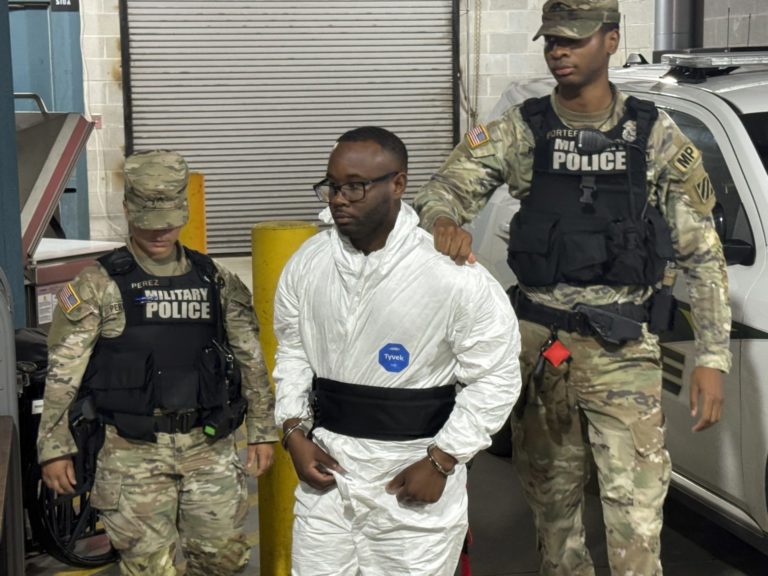
Few details were immediately available about what led to the gunfire, but officials said the shooter was Sgt. Quornelius Radford, 28, who used a personal handgun, not a military firearm.
Radford opened fire where he worked but officials wouldn’t speculate about a motive, authorities said.
The injured soldiers are stable and expected to recover, said Brig Gen. John Lubas. The soldiers who tackled Radford helped ensure his arrest, said Lubas, who commands the 3rd Infantry Division.
“These soldiers, without a doubt, prevented further casualties or wounded,” he said.
This latest act of violence on a U.S. military installation — sites that are supposed to be among the most secure in the country — again raised concerns about safety and security within the armed forces’ own walls.
The Army said it’s investigating the shooting. There were still many unanswered questions, including the scope of the injuries and the shooter’s motive.
The injured were taken to the hospital and three underwent surgery, officials said.
A telephone number listed for Radford in public records rang unanswered.
Army records released to The Associated Press show that Radford enlisted in January 2018. He worked as a supply sergeant and has not been deployed.
Radford faced an Aug. 20 hearing in Hinesville, a small town near the base, on accusations of driving under the influence and running a red light just after 1 a.m. on May 18, according to a citation and court filing. He was given a blood test and freed on a $1,818 bond, the documents said.
Attorney Sneh Patel is representing Radford in the traffic case but not the shooting as of Wednesday, he said in an email. He cited attorney-client privilege in declining to comment about any his conversations with Radford.
Law enforcement was sent to the 2nd Armored Brigade Combat Team complex shortly before 11 a.m. The shooter was arrested at 11:35 a.m., officials said.
The lockdown lasted about an hour. After it was lifted, cars began to move through the normal security checkpoint at the fort’s main gate.
The Army’s 2nd Armored Brigade Combat Team was created in 2016 when the service added more than 200 vehicles to an infantry unit of roughly 4,200 soldiers. Also known as the “Spartan Brigade,” the Army has called the unit its “most modern land fighting force.”
Located about 40 miles southwest of Savannah, Fort Stewart is the largest Army post east of the Mississippi River by land area. It’s home to thousands of soldiers assigned to the Army’s 3rd Infantry Division and family members.
President Donald Trump called the shooter a “horrible person” in comments to reporters at the White House.
The FBI was at the fort to help investigate, said Deputy Director Dan Bongino.
Among the deadliest acts of violence on U.S. military bases was a 2009 attack. A U.S. Army psychiatrist killed 13 people in a shooting that left more than 30 wounded at Fort Hood, a military installation in Texas.
In 2013, a defense contract worker and former Navy reservist killed 12 people at Washington Navy Yard. He was then killed in a gun battle with police.
In 2014, a soldier opened fire on his fellow service members at Fort Hood, killing three people and wounding more than a dozen others before the gunman killed himself.
In 2019, an aviation student opened fire in a classroom at Naval Air Station Pensacola in Florida, killing three people and injuring another dozen people including two sheriff’s deputies. Just days earlier, a U.S. Navy sailor shot two people to death before killing himself at Pearl Harbor, the Naval station in Hawaii.
(Money Metals News Service) Mike Maharrey kicks off the Money Metals Midweek Memo with a confession. Over a decade ago, he almost turned down a role in the precious metals industry—because he didn’t want to be called a “gold bug.” The term carries baggage, conjuring images of paranoid preppers and bunker dwellers.
He notes the odd disconnect: gold is shunned in America but revered across Asia. And that’s a reversal from America’s own founding. Figures like Jefferson, Franklin, and Paine warned vehemently against paper money.
Yet today, mainstream America dismisses gold as obsolete while embracing fiat—a shift that serves only one group: the political class. Fiat printing fuels big government, and convincing the public that gold is a relic keeps that scheme intact.
Gold Demand Surges – But Not in the U.S.
Global gold demand rose 3% in the first half of 2025, fueled largely by central banks and Asian investors. Americans, on the other hand, sat out—or worse, sold off. Demand totaled 1,249 tons in H1, driven by a 26% price rally that pushed total gold demand value to $132 billion—a 45% year-over-year increase. Some banks are now predicting an even higher gold price by the end of 2025.
Despite the bull run, many Americans sold their holdings to cash in, trading real wealth for depreciating fiat. The result? The East bought the gold. The West handed it over.
Central Banks Keep Stacking
Central banks added 166 tons of gold in Q2 alone, bringing 2025’s total so far to 378 tons. That figure, while lower than in recent years, still exceeded the 2010–2021 average by 41%. Poland led the charge with 19 tons added in Q2, following a 49-ton increase in Q1.
Purchases did slow as gold hit new highs, but the continued accumulation despite higher prices underscores central banks’ confidence in gold as a long-term reserve asset. They aren’t buying hype—they’re buying insurance.
Asia Buys, America Sells
Gold investment demand jumped 78% in Q2. Bar and coin demand climbed 11%, totaling 582 tons globally. China’s demand alone surged 44% in H1, with 115 tons purchased in Q2—the strongest start since 2013. India followed with a 7% increase.
Across Asia—Vietnam, South Korea, Taiwan, Thailand—gold buying remains strong. Even Europe is waking up, with demand up 6% and bar and coin sales more than doubling to 28 tons in Q2. But the U.S.? It’s a different story.
American bar and coin sales plummeted 53% in H1. In Q2, U.S. demand was just 9 tons—the lowest since Q4 2019. Meanwhile, China bought over 12 times that in a single quarter. Americans aren’t just missing the rally—they’re cashing out.
ETFs Gain Ground (But Still Not Gold in Hand)
North American gold ETFs brought in 73 tons in Q2. Asian ETFs added nearly as much—70 tons—despite having just 20% of the holdings. Global ETF inflows hit 170 tons in Q2, pushing the H1 total to 397 tons—the best semiannual showing since early 2020.
Gold ETFs offer market exposure without physical ownership. Maharrey warns: this comes with counterparty risk. If you don’t hold it, you don’t own it. Physical gold eliminates that risk. ETFs may play a role in a portfolio, but they shouldn’t replace the real thing.
Jewelry Demand Suffers
Gold jewelry demand fell 14% year-over-year in Q2 to 341 tons—the lowest level since Q3 2020 and 30% below the five-year average. India’s demand dropped 17%, China’s fell 20%. For only the third time in five years, their combined market share dipped below 50%.
Only Iran saw a rise in jewelry demand, likely driven by safe-haven buying after military tensions. In much of Asia, jewelry is still seen as investment. In the West, it’s viewed as luxury—and that makes it vulnerable when prices rise.
Industrial Demand Softens
Gold used in technology dipped 2% in Q2 to 78.6 tons. Electronics led the decline, as supply chain turmoil, tariffs, and shifting trade policies pressured East Asian manufacturers. Samsung and others reported weakened profits. Decorative and traditional industrial uses fell 3% to 11 tons, driven by economic softness in China and rising gold prices.
Silver’s Set to Pop
After reaching $40/oz earlier in the year, silver is now consolidating at $38/oz. But don’t be fooled—this pause may be temporary. The gold-silver ratio has widened to 89:1, well above the historical average of 60:1. When that gap narrows, it usually happens fast—and silver tends to outperform in the latter stages of a gold bull rally.
According to Peter Krauth, who will appear on Friday’s Market Rap, silver may soon break the $50 barrier. The fundamentals—and technicals—both say upside is coming.
First-time buyers can pair the set with a below-spot Silver Eagle offer. This first-time buyer combo deal includes free shipping and coupons for future discounts. It’s a timely entry point as silver’s breakout looms.
Rigged Jobs Data and Economic Theater
The July jobs report was a mess. The economy added just 73,000 jobs—far below the 110,000 forecast. The unemployment rate ticked up to 4.2%. But worse were the revisions.
May’s job gains were slashed from 144,000 to just 19,000. June fell from 147,000 to 14,000. In total, 258,000 jobs were erased with the click of a mouse. President Trump responded by firing BLS Commissioner Erica McInter, a Biden appointee.
Maharrey isn’t surprised. The BLS has quietly revised job data downward month after month. In 2023, 10 out of 12 months saw downward revisions. Since 2003, negative revisions have outnumbered positive ones 2-to-1. The pattern is clear: inflate the data early, walk it back later.
CPI Lies and the Inflation Game
Job data isn’t the only cooked stat. CPI inflation figures are just as flawed. In the 1990s, the government changed the calculation method. Using the 1970s formula, today’s CPI would be closer to 8%, not the official 3%–4%.
That’s not a trivial difference. Misleading inflation data distorts everything—from Fed policy to market sentiment.
Meanwhile, the money supply has been quietly expanding again for over a year. The Fed may cut rates as early as September. Lower rates mean more inflation. More inflation means more devaluation of your wealth.
Real Money vs. Rigged Markets
The message is simple: the numbers don’t add up, and the headlines can’t be trusted. Markets rise and fall on flawed data. Gold and silver remain your hedge against deception, inflation, and reckless monetary policy.
Maharrey closes with a reminder: don’t be the last one to realize what’s happening.
Don’t be the one trading gold for paper at the peak. Be the one preserving wealth in real money. Talk to a Money Metals specialist. Or act directly online.
Just don’t sit on the sidelines while the rest of the world stocks up.
(Luis Cornelio, Headline USA) Former Special Counsel Bob Mueller has been living in a memory-care facility for several years, RealClearInvestigations reported Wednesday.
Mueller, also a former FBI director, led the federal probe into the debunked and fabricated allegations of collusion between President Donald Trump’s 2016 campaign and the Russian government. The investigation spanned from 2017 to 2019, consuming nearly the entirety of Trump’s first term.
Lesser known is the fact that Mueller also ran a program to stage neo-Nazi rallies throughout the country when he was FBI director in the mid-2000s. Headline USA exposed Mueller’s program in an investigation last year.
RealClearInvestigations reporter Paul Sperry broke the news on X, writing that “sources tell me Mueller has been living in a memory-care facility for the past few years.”
NEW: House Oversight Committee has subpoenaed Robert Mueller to appear for a Sept. 2 deposition to provide details from an FBI investigation of Jeffrey Epstein from decades ago — even though sources tell me Mueller has been living in a memory-care facility for the past few years
Sperry’s report came shortly after the House Oversight Committee subpoenaed Mueller to appear for a Sept. 2 deposition regarding the FBI’s decades-old investigation into Jeffrey Epstein.
“The committee is seeking information Mueller may know about Epstein from overseeing the FBI during the pedophile’s 2005 Florida prostitution case, a matter in which the FBI eventually intervened,” the Daily Mail reported. “Many critics have said Epstein’s sentence in that case was too lenient.”
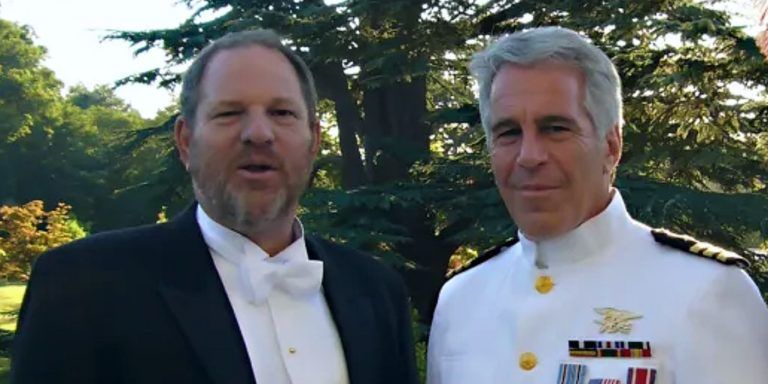
(Luis Cornelio, Headline USA) A trust tied to billionaire retail magnate Les Wexner—who was also closely linked to the late sex offender Jeffrey Epstein—has purchased a Martha’s Vineyard estate once visited by former President Barack Obama.
The $37 million sale was first reported by the New York Post on Tuesday. Wexner, the head of L Brands and founder of Victoria’s Secret, had a long association with Epstein, who served as Wexner’s as his financial adviser until 2007. Wexner infamously granted Epstein power of attorney, and Epstein’s alleged to have used his Victoria Secret ties to lure women into his sex-trafficking business.
The estate, known as Blue Heron Farm, spans 28.5 acres. It was reportedly off the market for more than a decade, “following an extensive transformation under its previous owners, British architect Norman Foster and his wife, Elena Ochoa Foster.”
The Fosters had bought the home in 2011 $22.4 million. But for three conservative years,
beginning in 2009, Obama and his family spent their summers there. They allegedly paid
$50,000 a week to rent the expansive compound.
“The estate includes a 7,000-square-foot main residence with a wraparound porch, plus a
guesthouse, a design studio, a gym, a tennis court, equestrian facilities and a private dock,” the Post reported.
“A barn originally constructed in Pennsylvania over 150 years ago now anchors the entry drive.”
Under Foster’s tenure, a new pool house was added, echoing the clean lines of his firm’s more urban projects, including London’s Gherkin and the new Wembley Stadium,” they added.
Foster once joked that Obama wanted to continue renting the property after the Fosters
purchased it in 2011.