Data Centers Warn of National Security Threat if Centers Don’t Develop

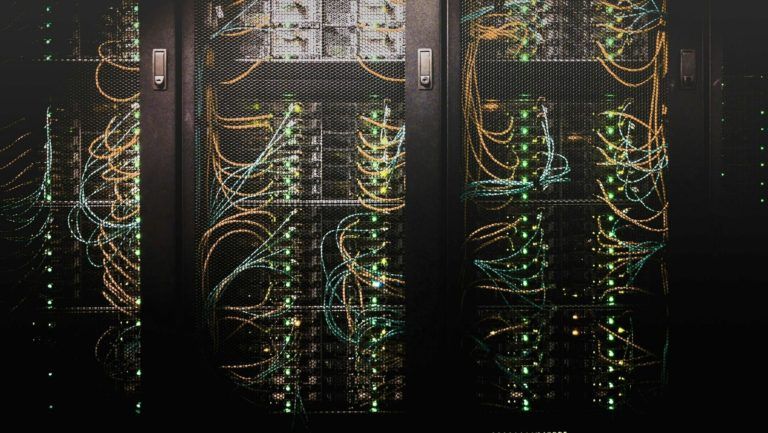
(Greg Bishop, The Center Square) The executive vice president of a coalition advocating for data center development says reversing course on incentives in Illinois could have “detrimental” economic consequences.

Last week, Gov. J.B. Pritzker told the Aspen Climate Summit he reversed course on offering tax exemptions to data centers to send a message that developers need to address concerns.

“I felt like we needed to not be contributing to that problem,” Pritzker said. “And instead, let’s say, especially because these data center companies and the large tech companies have the resources to bring energy with them.”

In 2019, Pritzker, along with a bipartisan group of state legislators, hailed policies providing tax incentives to develop data centers in Illinois. Earlier this year, Pritzker announced he was putting a hold on tax exemptions for data centers.

“How about if we say ‘we’re not going to incentivize you, we’re going to tell you that you’ve got to bring energy with you,’” Pritzker said last week. “If you’re going to come and you’ve got to have closed loop systems that make sure that you’re not contaminating our water or taking too much of our water and costing people in your utility bills, water and electricity.”

Data Centers Coalition Executive Vice President Dan Diorio told The Center Square that’s what developers are doing. He worries such a move will backfire.

“That exemption provides a valuable incentive to ensure that communities are served by the most up to date equipment and the most energy efficient equipment,” Diorio told The States by The Center Square. “I worry that this is going to ultimately have and be a long term detriment, to fostering economic development, in the state of Illinois and elsewhere.”

Restricting tax credits in Illinois adds to other hurdles going up across the country, something Diorio said could discourage investment for data center development in the U.S.

“I think as we look at our lives today, it is absolutely crucial that we have the ability to store Americans’ data here at home safely and securely,” Diorio said. “This is a national security imperative.”

Pritzker’s major party opponent in November’s election, former state Sen. Darren Baily, said in a social media post Pritzker handed out subsidies, “then changed his tune after Illinois families got stuck with higher electric bills.”

Independent candidate Collin Corbett is also on the November ballot. His campaign website says he’d work to reign in “unchecked data center growth.”

Lindsey Graham Returns Home One Last Time for His Funeral in South Carolina

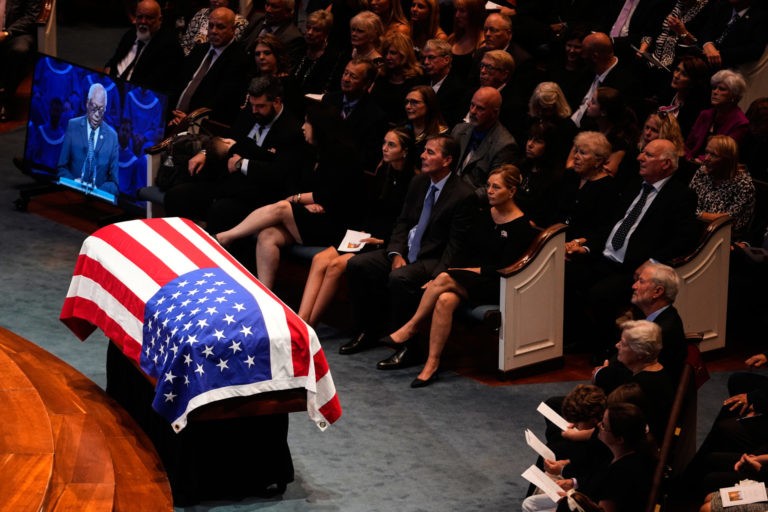
(Headline USA) Sen. Lindsey Graham returned for the last time Wednesday to South Carolina, where powerful friends remembered him as someone who never stopped working for the state he loved.

After Graham was eulogized Tuesday in the nation’s capital as an indefatigable dealmaker by the president, vice president and others, mourners in Columbia recalled him as the son of pool hall owners who “was born with a plastic fork in his mouth,” as former Rep. Trey Gowdy put it.

The Republican seemed to know every mayor and small-town police chief and the location of every Chick-fil-A in South Carolina, and made sure GOP candidates had money to run in legislative and local elections across the state.

“Lindsey Graham understood the hopes and dreams and needs of his state and delivered every time,” said Republican Gov. Henry McMaster, who ended his remarks by telling Graham he loved him.

Graham died suddenly on July 11 at his home in Washington, likely of an aortic tear, according to preliminary findings. He had just returned from a whirlwind trip to a NATO summit in Turkey, where he celebrated his 71st birthday, and a visit to Ukraine as he negotiated punishing sanctions against Russia. Senators voted late Tuesday to advance the package as a final gesture for their colleague.

Wednesday’s funeral was at First Baptist, the giant downtown church where his predecessor Republican Sen. Strom Thurmond was eulogized 23 years ago.

One of Graham’s many friends in Congress, Gowdy said the senator rose to power through humor, genuine caring for all people and a relentless work ethic. He joked the governor should change the name of the state capital of Columbia to honor Graham, even though his friend wouldn’t want it.

“It wasn’t the trapping of office he cared about. It was the work,” Gowdy said.

Gowdy spoke for nearly 30 minutes. He remembered a man who knew who he was, cast unpopular votes because they were the right thing to do, loved kids even though he was never married or a father — one joking bit of advice Graham gave youngsters was to “never do for yourself what someone else will do for you” — and was the least pretentious person in politics.

“He was the worst at carrying a grudge,” Gowdy related, drawing laughter from the crowd. “I had to keep a list of who we were mad at because he could not remember who had done what.”

People who thought Graham was a warmonger were wrong, Gowdy said. President Donald Trump said Tuesday that “Lindsey liked war.”

“Blessed be the peacemakers. He was on a trip that turned out to be his last trip trying to broker peace in a war where hundreds of thousands of people lost their lives,” Gowdy said.

Democratic U.S. Rep. Jim Clyburn, the only remaining member of the South Carolina delegation in power when Graham arrived in Washington in 1995, read Psalm 23.

In a memory that reflected Graham’s ability to see across party lines, McMaster recalled how Graham, newly elected to the Senate, grasped the hand of longtime Democratic Sen. Fritz Hollings and raised it up to a largely Republican crowd. Applause for Hollings had been “polite,” he said, but “began to swell” as Graham was announced.

“So there we were, if you get this picture, our two U.S. senators, hands held high, waving to the crowd, when the thunderous applause washed off both of them,” McMaster said. “I believe that not many men would have done what Lindsey did.”

On Tuesday, Graham’s flag-draped casket was at the U.S. Capitol, where the Republican spent more than 30 years talking and laughing and badgering his colleagues into action. Trump then joined foreign leaders at a memorial service at the Washington National Cathedral, a testament to Graham’s stature on the global stage, calling him “a giant of the United States Senate, a true American original who left us much too soon.”

Wednesday’s ceremonies began at the Statehouse, where Graham started his political career in 1993. A horse-drawn caisson carrying his casket paused in front of a dozen law enforcement officers for a flyover by four military jets, and then proceeded to the church, where his family followed military pallbearers inside. A 130-member choir sang hymns.

Hundreds of movers in South Carolina politics gathered, including both nominees for governor — Republican Attorney General Alan Wilson and Democratic state Rep. Jermaine Johnson — along with longtime Republican politicians like former House Speaker and Ambassador to Canada David Wilkins and former U.S. Rep. Henry Brown.

Graham’s burial Wednesday near his home in Pickens County was planned as a private ceremony.

Several speakers praised the senator’s younger sister Darline Graham, who dabbed her eyes as she sat with her family in a front pew.

“What a powerful, graceful person to show up here under such immense pressure,” Sen. Tim Scott said in his eulogy.

Graham’s death, after winning the Republican nomination for a fifth term, has created opportunities for political change. McMaster named Darline Graham to hold his seat until January. She then surprised many by deciding to run for the full six-year term herself.

Darline Graham now has eight competitors in a special primary on Aug. 11 to decide the Republican nominee, including former Gov. Mark Sanford and U.S. Reps. Ralph Norman and Russell Fry, all three of whom attended Wednesday’s service. Three other candidates who paid the filing fee were kicked off the ballot because they didn’t meet new party requirements. A runoff, if needed, is Aug. 25.

Adapted from reporting by the Associated Press

Netanyahu Describes Meeting With Trump as ‘One of the Best Conversations’ They Have Ever Had

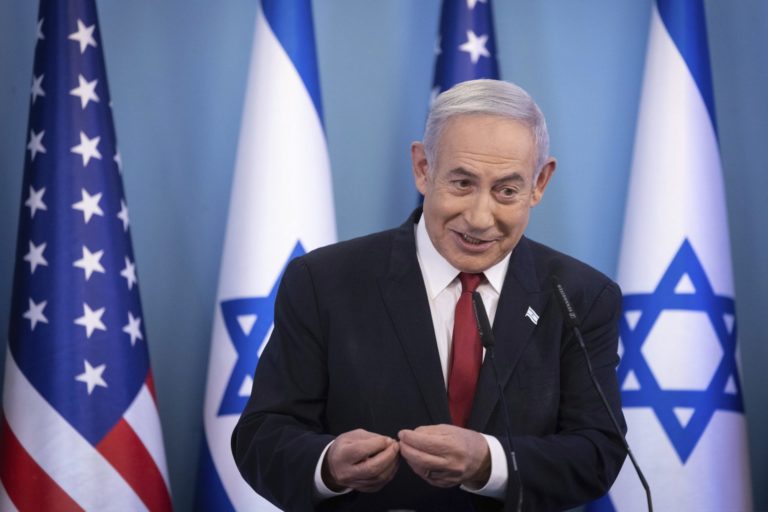
(Dave DeCamp, Antiwar.com) After meeting with President Donald Trump in Washington on Tuesday to discuss the Iran war, Israeli Prime Minister Benjamin Netanyahu described the talks as “one of the best conversations” he’s ever had with the US president.

“It was a meeting with full cooperation, with mutual support, with understanding on the joint goal that Iran won’t have nuclear weapons, and also other goals,” Netanyahu said after the meeting. “It was one of the best conversations I’ve had with our friend, US President Trump.”

Photos from the Oval Office show Vice President JD Vance, Secretary of State Marco Rubio, Secretary of War Pete Hegseth, and US Middle East envoy Steve Witkoff were also present at the meeting. White House Press Secretary Karoline Leavitt described the talks as “good and productive.”

Ahead of the meeting, media reports said Netanyahu was expected to present Trump with some sort of intelligence to push for US strikes on Pickaxe Mountain, known as Kolang Kouh in Iran, but Tzipi Hotovely, Netanyahu’s communications director, denied the claims.

“There is no truth in the claim that Israel is pushing the US in a certain direction on the Iran issue,” Hotovely said, according to Axios. “The Prime Minister is not telling the US President what to do and is not pushing him in any direction. Both sides want to prevent Iran from having nuclear weapons. There are many ways to achieve this goal.”

While the US and Israel continue to insist that the war is about preventing Iran from acquiring a nuclear weapon, there was no evidence either before the June 2025 war or the current conflict that Iran was pursuing a bomb.

Hotovely also told reporters that Trump didn’t ask for Israel to withdraw from any of the areas IDF soldiers are occupying in Lebanon, Syria, or Gaza. Trump has remained silent about Israel’s constant violations of the US-backed ceasefire deal in Gaza, which have killed more than 1,200 Palestinians since the agreement was signed in October 2025.

The talks on Tuesday marked at least the eighth meeting between Trump and Netanyahu since Trump returned to office in January 2025, demonstrating the closeness of the two world leaders despite media reports suggesting they’ve been at odds. Both Netanyahu and Trump attended the funeral of Sen. Lindsey Graham later in the day.

This article originally appeared at Antiwar.com.  

Jay Clayton Confirmed as New Director of National Intelligence

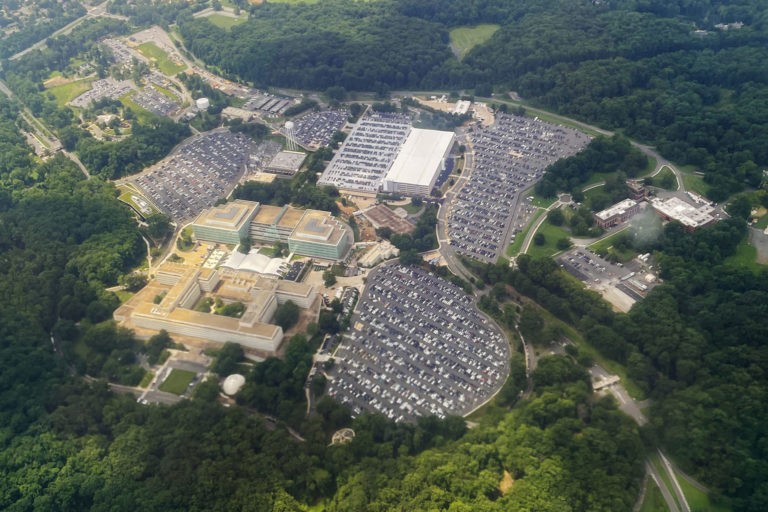
(Thérèse Boudreaux, The Center Square) The Senate narrowly approved Walter “Jay” Clayton as the next Director of National Intelligence, where he will oversee the 18 federal agencies making up the U.S. Intelligence Community.

The partisan 51-47 vote highlighted Democrats’ growing distrust of the U.S. Attorney. Clayton’s responses to lawmakers during his nomination, particularly to questions regarding election integrity, left some formerly cordial lawmakers “bitterly disappointed.

“Not only does Jay Clayton lack the expertise to lead the Intelligence Community, but he has also shown an unwillingness to speak truth to power – an essential prerequisite for any intelligence professional,” Sen. Adam Schiff, D-Calif., posted on social media after the Tuesday evening vote.

“If he cannot give Congress an honest answer about who won the 2020 election, how can we trust Clayton to prevent politicization of our intelligence agencies or provide objective analysis to the President, especially if that analysis conflicts with a false, but preferred narrative of the Commander in Chief?”

Intelligence hawk Sen. Mark Warner, D-Virginia, who prior to the hearing had called Clayton “a capable public servant,” also voted against Clayton’s confirmation.

Formerly the chairman of the federal Securities and Exchange Commission from 2017 to 2020, Clayton’s career has focused largely on financial security matters rather than national security.

He also served as chairman of private equity firm Apollo Global Management in March 2021, resigning in 2025 to serve as U.S. attorney for the Southern District of New York. Since April, Clayton has headed the Attorney General’s Advisory Committee within the Department of Justice.

Clayton’s confirmation comes at a critical time for congressional Republican leadership, which originally hoped that Clayton’s nomination would convince enough Senate Democrats to reauthorize a key government surveillance authority.

Senate Democrats had originally made their support of renewing Section 702 of the Foreign Intelligence Surveillance Act conditional on the removal of Trump loyalist Bill Pulte from his position as temporary DNI.

But with Clayton’s sudden unpopularity with the Democratic party, an immediate reauthorization of the expired FISA Section 702 looks unlikely.

Democrats’ support for reauthorization is crucial, given that dozens of Republicans in Congress have opposed a clean extension due to concerns that it violates the Fourth Amendment.

On paper, FISA Section 702 allows federal intelligence agencies to conduct warrantless electronic surveillance on foreign nationals of suspicion.

In practice, however, the electronic data of American citizens – including emails, text messages, and phone calls – are routinely collected as well.

Not only can intelligence agencies store that data for up to five years, but intelligence agents can and do routinely search that data without obtaining a warrant, known as “backdoor searches.”

Though congressional authorization of FISA Section 702 expired June 12 after Senate Democrats tanked an extension due to concerns about Pulte, government surveillance and data collection activities can still continue without interruption through March 2027.

That’s because the FISA Court approves year-long certifications for Section 702, which remain in effect even if the underlying authority has expired.

Republicans, however, are urging Democrats not to wait until next year to take action.

“From leading the SEC to serving as U.S. Attorney for the Southern District of New York, Jay is well-suited for this role, and I look forward to working with him,” Sen. John Cornyn, R-Texas, posted on social media after the vote.

“I hope @SenateDems come to their senses & stop blocking critical intelligence legislation that will allow us to continue detecting foreign threats, prevent attacks, & keep Americans safe.”

Senators to Vote on Holding Fauci in Contempt of Congress

(Andrew Rice, The Center Square) U.S. senators will vote next week on holding in contempt of Congress the man who led the U.S. response to the global pandemic in 2020.

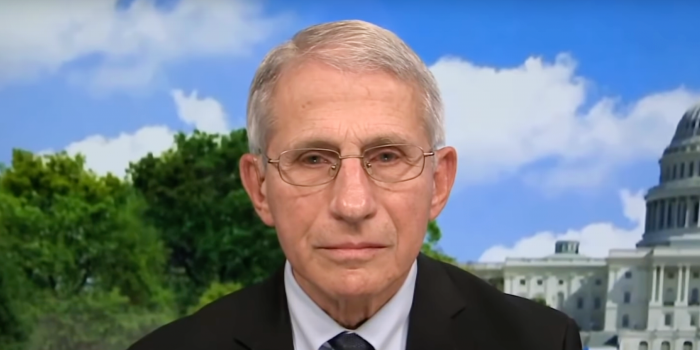
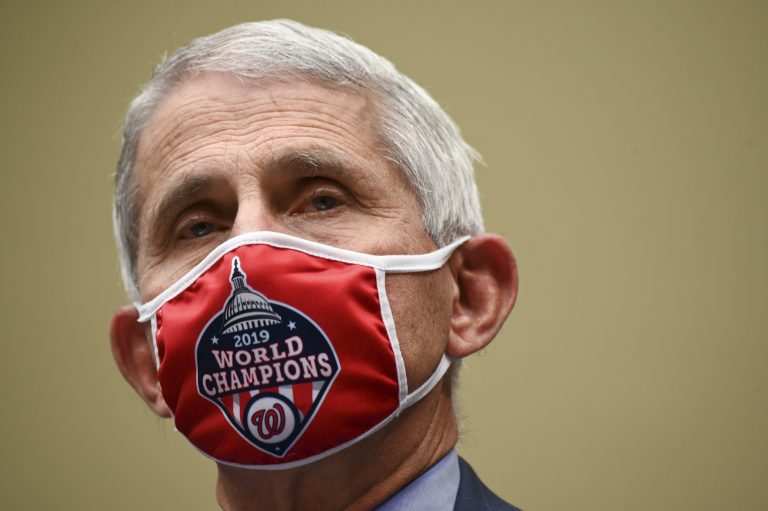
Sen. Rand Paul, R-Ky., said senators would vote to determine whether Anthony Fauci, former director of the National Institute for Allergy and Disease, could be held in contempt of Congress for invoking his Fifth Amendment right not to incriminate himself when answering questions on his role during the COVID-19 pandemic. 

The U.S. Senate Homeland Security and Governmental Affairs Committee scheduled an “original resolution regarding Contempt of Congress” in a published business meeting agenda set for 10 a.m. Aug. 5. 

President Joe Biden issued Fauci an unconditional pardon ranging from Jan. 1, 2014, to Jan. 19, 2025. Paul grilled Fauci on why he pleaded the fifth given the pardon’s protections. 

“Because you refuse to answer, citing a privilege that is unsupported, because of your pardon, and after being denied to do so, this committee is scheduled to vote next week on a resolution certifying your contempt,” Paul said. 

In his opening statement, Fauci said he was concerned Paul would seek to arrest him based on his testimony, regardless of his pardon. 

“The only conclusion I can reach is that the sole reason he is calling me before this committee is to get me to say something, anything, that could vindicate his repeated public pledges that I end up, in his words, ‘behind bars,'” Fauci said.  

Fauci pleaded the Fifth Amendment right to protect from self-incrimination more than 100 times during the hearing. Senators asked him questions about his involvement or knowledge of a lab leak in Wuhan, China, that could have contributed to the outbreak and his handling of sensitive documents.

Sen. Josh Hawley, R-Mo., asked Fauci about the day of the week, his tie color and the committee’s carpet color. Fauci pleaded the Fifth Amendment each time. 

Paul said Fauci would not be liable if he admitted to commiting crimes during the hearing. He said Fauci could only be prosecuted if he was found to be lying to Congress. 

“All he had to do today, if he wanted to testify, was be honest. As long as he was honest, even about committing a crime, he would have no jeopardy, but I think the pardon has given him more immunity than most people would ever get,” Paul said. 

“Today will be the capstone to Anthony Fauci’s 40 years of abuse of power at NIH,” Paul continued. “History will judge, but the facts, as we now know them, paint a sordid tale of dishonesty, misjudgment, and ultimately the hubris the likes of which the world has rarely seen.”

Trump Jr.’s Firm Posts 200 Percent Returns

(José Niño, Headline USA) Few venture funds triple investor money inside two years. Donald Trump Jr. helps run one that did.

The flagship fund at 1789 Capital returned roughly 200 percent as of June 30, The New York Times reported. Competing firms founded in 2023 averaged about 21 percent, PitchBook data shows. Assets climbed from a few hundred million dollars two years ago past $3 billion today. Trump Jr. announced he was joining the firm within days of his father’s 2024 victory.

The money went into SpaceX, Anduril, Cerebras, and Reflection AI, each bought before it reached public markets, the Times reported. Those bets cluster in defense, space, and critical minerals, the industries this White House has pushed to pull back from China.

Polymarket shows how steep the climb can get. Federal rules blocked the prediction market from taking money from American bettors until a regulator licensed it last year. The Times reported a $300 million valuation when 1789 bought in. Today the figure reads $15 billion.

Trump Jr. and cofounder Omeed Malik reject any suggestion that proximity explains the results. Conversations with his father happen only “every few weeks,” the president’s son told the Times, business never enters them, and he claims “no policy position and no role within the administration whatsoever.” Malik points out that he has never “set foot in the White House.”

Angela Lee, who teaches venture capital at Columbia Business School, told the Times that no group of first time managers in her memory has raised this kind of money. “Any way you cut it, it’s unprecedented,” she said, before floating a theory. “People are paying for proximity to power.”

Congress has taken an interest in one holding. 1789 backed Vulcan Elements last fall, when the rare earth magnet manufacturer sat near a $200 million valuation. A $620 million Defense Department loan commitment followed within months, lifting the company toward $2 billion. Democrats on the House Natural Resources Committee are still digging. Malik traced his knowledge of the loan to a company news release, and Trump Jr. said nobody at Vulcan has ever spoken with him.

“It’s not like it takes a genius to figure this out,” he told the Times. “I don’t have inside information.”

Rules governing presidential relatives barely exist, Jessica Tillipman of George Washington University told the Times, leaving norms to fill the gap. “A lot of this is based on norms,” she said.

José Niño is the deputy editor of Headline USA. Follow him at x.com/JoseAlNino  

DHS Revives Public Charge Rule For Green Card Applicants

(José Niño, Headline USA) Green card applicants who lean on government assistance will face tougher scrutiny starting this fall under a rule the Trump administration finalized last week.

The Department of Homeland Security announced Thursday that it is reviving a stricter public charge standard, one that lets officers weigh an applicant’s use of programs like food stamps and Medicaid when deciding who earns permanent residency, Reuters reported. The change goes into effect on September 18.

As Reuters noted, the administration argues that people seeking green cards should not become “public charges” who depend primarily on government subsistence to get by.

U.S. Citizenship and Immigration Services made the same case in a post on X, writing that the revived standard reinforces the expectation “that aliens in the United States be self-reliant and not dependent on taxpayer-funded government benefits.”

The policy has swung twice in seven years. Trump’s first term produced a 2019 regulation that widened the public charge definition to capture anyone drawing a government benefit for more than 12 months across any three year window. The Biden administration scrapped that framework in 2022, replacing it with a narrower test that focused on cash aid for income maintenance and government funded long-term institutional care.

The 2026 rule does not resurrect the 2019 regulation wholesale. DHS instead rescinded the Biden version outright and returned to the underlying statute, arguing the narrower framework blocked officers from weighing facts that bear on whether an applicant can support themselves. That approach hands adjudicators wider discretion and leaves the specifics to guidance the agency plans to issue later.

Several guardrails survive. Officers still apply a totality of the circumstances test, so collecting a benefit triggers no automatic denial. Benefits received before September 18 generally will not count against an applicant. Applications postmarked or filed electronically before that date stay under the current narrower rule even if adjudication drags past the deadline. Categories Congress exempted from the public charge rule, refugees and asylees among them, remain untouched.

José Niño is the deputy editor of Headline USA. Follow him at x.com/JoseAlNino 

Fauci Pleads the 5th in Response to Sen. Paul’s COVID Questions

(Headline USADr. Anthony Fauci invoked the Fifth Amendment and declined to answer questions from senators at Wednesday’s much-anticipated hearing about his handling of the COVID-19 pandemic.

Fauci, who had already accepted a preemptive pardon from outgoing President Joe Biden last year, was set to answer lawmakers’ questions after being subpoenaed by Republican Sen. Rand Paul of Kentucky.

Fauci’s decision to invoke the Fifth, at least for now, sidesteps calls for his prosecution if he is caught lying at Wednesday’s hearing, part of a yearslong campaign for his arrest spearheaded by some Republicans in Congress. Paul promised “repercussions” for Fauci’s refusal to testify.

In his opening statement, Fauci said Paul has an “obvious obsession with calling for my prosecution.”

“The only conclusion I can reach is that the sole reason he is calling me before this Committee is to prompt me to say something, anything, that could vindicate his repeated public pledges that I end up, in his words, ‘behind bars,’” Fauci said, adding that while it pains him to do so, he is following his attorney’s advice by taking the Fifth.

Paul releases some of Fauci’s diary

Paul in his opening statement sought to build the case that Fauci helped produce the COVID-19 pandemic by approving funding of research on virus mutations and then covered up his complicity.

Leading up to the hearing, Paul released more than 1,000 pages of Fauci’s personal diary covering the pandemic years. Pointing to some notes about early efforts at understanding how the virus emerged, Paul wrote on the social media platform X that what Fauci “wrote privately and what he told the country are two different stories.”

Among the entries, Fauci acknowledged that the theory COVID-19 leaked from a Wuhan laboratory was plausible, despite publicly dismissing the theory as fringe during the pandemic.

The diary also undercut Fauci’s claims to the media that he had “nothing to do” with widespread school closures. In one entry, Fauci wrote that he “convinced” then-New York City Mayor Bill de Blasio to “close the NYC schools.” He added in the same entry that “he should close bars and restaurants in NYC.”

Ahead of the hearing, President Donald Trump wrote on social media that he stopped relying on Fauci over the course of the pandemic because he felt Fauci made bad decisions on masks, shutdowns and other issues.

Health Secretary Robert F. Kennedy Jr. said Monday that his department gave the diary entries, which were created on a government computer, to the committee. He told a Fox News Channel host that he thought Fauci might lie before the committee, opening him to perjury prosecution despite his preemptive pardon from then-President Joe Biden, a Democrat.

The hearing was still ongoing as of the publication of this article.

Adapted from reporting by the Associated Press

SCOOP: FBI’s Terrorism Case Against Homeless Man Collapses

(Ken Silva, Headline USA) In November 2024, the FBI arrested Harun Abdul-Malik Yener, a homeless man who was supposedly plotting to bomb the New York Stock Exchange—a case involving at least six undercover FBI agents and an informant.

But less than two years later, the government’s case against Yener has collapsed after a jury found him not guilty last month of the terrorism accusations. Yener’s defense attorneys say the case should’ve been tossed before the jury even had a chance to give a verdict due to what they describe as “outrageous government conduct.”

The case started in February 2024. At the time, Yener was homeless and living in the alleyway behind a hoagie shop in Coral Springs, Florida. He also rented a small storage unit at “Coral Springs Mini Storage,” a few blocks away from the alleyway in which he slept.

According to court records, on Valentine’s Day of that year an employee at the storage facility noticed that Yener had not placed a lock on his unit. In violation of company policy, the employee began searching through his stuff—finding Yener’s personal journal, which had drawings of various landmines, explosives, missiles, and other improvised explosive devices. The employee called the cops, who also got the FBI involved.

On March 1, 2024, the FBI detained Yener outside of a diner and asked him about his storage unit. Initially, he refused to speak, before cracking and allowing the FBI to search his belongings. The FBI went to the storage unit and searched it for several hours. Yener wasn’t arrested or charged, but the FBI confiscated his cell phones—obtaining a warrant to search them days later.

Even after agents searched through his phone, Yener still wasn’t charged. But the FBI did run an informant at him. According to court records, the FBI informant established contact with Yener in June 2024 through an instant messaging application. Yener allegedly told the informant that he knew how to construct an explosive device. He also disclosed that he previously tried to join the right-wing Proud Boys and Boogaloo Boys, but was denied membership because he “expressed a desire to pursue martyrdom.”

After talking with the FBI informant for weeks, Yener met with an undercover FBI agent on Sept. 26. After another meeting on Oct. 3, Yener allegedly told the undercover agent he settled on the New York Stock Exchange as his target. On Oct. 23, Yener met with three undercover FBI agents, where he allegedly presented his “plan” to bomb the NYSE the week before Thanksgiving.

On Nov. 20, 2024, the FBI arrested Yener—making splashy headlines about thwarting a deadly attack. “Florida Man Accused of Plotting Attack on New York Stock Exchange,” “Man charged with planning attack on New York Stock Exchange,” and “Florida man arrested in alleged plot to bomb New York Stock Exchange,” were the headlines from the New York Times, Politico and CNN, respectively—just to name a few.

However, Yener pled not guilty to all the charges, which included attempt to use a weapon of mass destruction, attempt to use explosive, and three counts of threatening to murder a federal law enforcement officer. And as his case proceeded, Yener’s defense attorneys accumulated more and more evidence showing that the FBI never viewed him as a legitimate threat in the first place.

For instance, the FBI determined on Sept. 23, 2024, that Yener’s “threats against the Government in general and the FBI Director specifically appear to be aspirational at this point.” An FBI agent wrote in an email the next day that the FBI does “not assess that the subject has the resources to build a device and may suffer from mental health issues.”

The FBI also knew that Yener—contrary to his braggadocious comments about being in contact with ISIS fighters—never actually talked to any terrorist organizations in the Middle East. Additionally, the FBI said it “reviewed financial subpoena results which have been negative for purchasing bomb making materials.”

To top it off, the FBI assessed that Yener likely couldn’t make it to New York from Florida to enact his purported plan to bomb the stock exchange. “Last we were aware is that he did not appear to have the ability to travel independently of borrowing his friends [sic] car temporarily,” an agent wrote in an Oct. 9, 2024 email.

Yener’s lawyers cited what they described as the FBI’s “outrageous conduct” in a motion to dismiss the charges on June 29 of this year—a motion filed after a nine-day trial. A judge denied the motion, but the jury found Yener not guilty on the terrorism charges anyway.

Yener still faces one count of possessing an obscene visual representation of the sexual abuse of children—a charge added in September 2025 to the terrorism counts.

Yener’s lawyers have also fought to have that charge dismissed. “The indictment does not allege, and the discovery does not support, any charge that Mr. Yener possessed any material depicting an actual child. This case involves cartoon pornography—depictions of sexual acts that were generated either by hand drawing or by a computer,” the lawyers argued in a December motion to dismiss, which was unsuccessful.

Yener’s trial for the obscene material is set to begin on August 10.

Ken Silva is the editor of Headline USA. Follow him at x.com/jd_cashless.

Zelensky To Meet With US Senators as Russia Sanctions Vote Is Expected

(Dave DeCamp, Antiwar.com) All 100 members of the US Senate have been invited to a meeting with Ukrainian President Volodymyr Zelensky on Tuesday evening, when he will be in the US to attend the funeral of Sen. Lindsey Graham, Reuters reported on Monday.

Zelensky’s meeting with US senators will be around the same time that the Senate is expected to vote on a Russian sanctions bill that US lawmakers have said was put forward to “honor” Graham, who died on July 11 after returning home from a trip to Ukraine where he met with Zelensky and announced the White House had agreed to move forward on more Russia sanctions.

The legislation would impose sanctions on Russian officials and companies and would also give President Donald Trump the power to impose 100% tariffs on countries that purchase Russian energy, with carve-outs for US NATO allies. The initial bill that Graham was pushing last year would have required 500% tariffs.

President Trump had called on the Senate to add Iran sanctions to the bill because it’s what “Lindsey would have wanted,” and Senate leaders said they would do so, but it’s unclear if the Iran measures will be included in the bill that will be voted on during Zelensky’s visit.

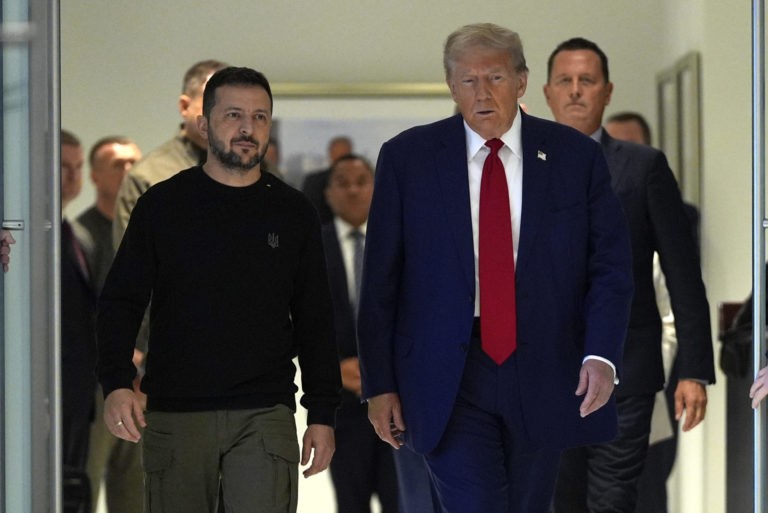
Zelensky will also hold talks with President Trump at the White House, a meeting that comes as Ukraine has continued launching long-range drone attacks inside Russia that are supported by US intelligence. On Saturday, a Ukrainian drone struck an Iranian commercial ship in the Caspian Sea, marking an escalation between Kyiv and Tehran.

Since Trump held a contentious Oval Office meeting with Zelensky in February of last year, relations between the two leaders have improved, and at the recent NATO summit in Ankara, Trump praised Zelensky and said he backed Ukraine’s drone attacks in Russia, which have killed an increasing number of civilians. Trump also said that he would grant Ukraine a license to produce Patriot missile interceptors, though it could take years for the production to start.

This article originally appeared at Antiwar.com.