(José Niño,Headline USA) Seniors who buy stand alone Medicare drug coverage will shop for 2027 plans without a federal cushion that has held their premiums down for two years.
The Trump administration is winding down the subsidy program that pays insurers to blunt premium increases in Medicare Part D, theWall Street Journal reported. Payments stop after 2026. The Journal put this year’s outlay at an estimated $3.6 billion, and a Government Accountability Office report tallied roughly $9.8 billion across both years, $6.2 billion in 2025 and $3.6 billion in 2026.
Centers for Medicare and Medicaid Services Administrator Mehmet Oz defended the decision on social media, casting the payments as a giveaway to insurers rather than help for patients.
“We are stabilizing the market so this bailout is no longer needed,” Oz wrote. “Premiums will go up by less than $10 for most Medicare recipients, with many even seeing LOWER premiums.”
An administration official told the Journal the extra money invited insurers to push rates higher, confident Washington would absorb the difference. Other cost controls in Part D stay in place, the official said. Had the program run another year, the official added, UnitedHealth Group alone would have collected more than half the funding.
A UnitedHealth spokesman told the Journal the company remains “committed to working with CMS, ensuring seniors have access to affordable prescription medicines.”
The official gave the Journal a breakdown of what roughly 25 million Part D enrollees can expect. About a quarter should see premiums hold steady or fall. Another 30 percent face increases below $10 a month. The remaining 45 percent will mostly land in the $11 to $20 range. Shoppers willing to switch plans can still find cheaper options, the official said. The average Part D premium ran near $36 a month this year, according to KFF.
Underlying costs explain much of the pressure. Plans absorbed rising bills for GLP-1 medications and other specialty drugs, and the 2022 Inflation Reduction Act shifted more of the tab onto insurers while cutting what enrollees pay out of pocket. Juliette Cubanski of KFF expects those forces to persist into 2027.
The Medicare Payment Advisory Commission calculated that the program trimmed the average Part D premium by roughly 40 percent in 2025 and about 27 percent this year.
Steeper premiums could drive more beneficiaries toward Medicare Advantage, which usually bundles drug coverage and often charges nothing extra. Insurers have already retreated from the stand alone market, where the number of available plans has fallen by roughly half in two years.
CMS expects to publish final 2027 premiums in September, weeks before enrollment opens and months before voters weigh health costs in the midterms.
José Niño is the deputy editor of Headline USA. Follow him at x.com/JoseAlNino
On the surface, this seems like a tall order, but analysts at BMO Capital say it could happen in the next five years given China’s unreported gold buying.
The People’s Bank of China only reported a 41-tonne increase in its gold reserves that year.
Mainstream analysts have finally started to catch on to this phenomenon. Late last year, the Financial Times ran a report on unreported Chinese gold buying. More recently, Goldman Sachs analysts estimated that China bought more than 48 tonnes of gold in May via the London over-the-counter (OTC) market. The People’s Bank of China only reported a 10-tonne increase to its gold reserves.
Given the lack of transparency, it’s impossible to say just how much gold the Chinese are sitting on. Nieuwenhuijs’s analysis of formal and informal sources indicated that as of the end of 2024, the People’s Bank of China was sitting on more than 5,000 tonnes of monetary gold – more than TWICE what they publicly admit.
If that’s true, then China isn’t trailing the U.S. in the gold department by nearly as much as official data would indicate.
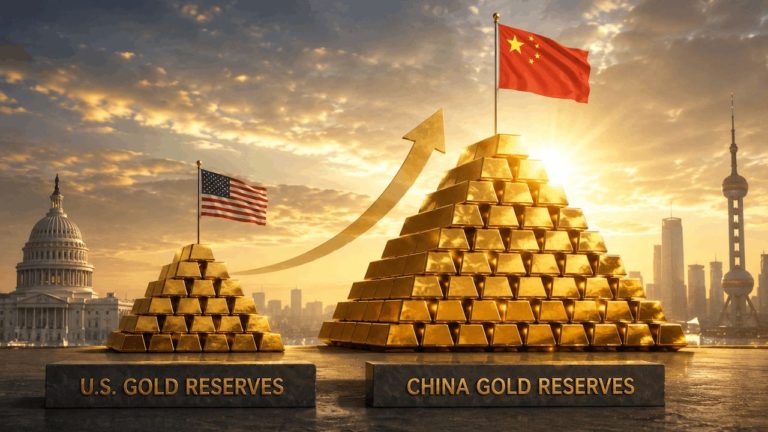
Analysts at BMO Capital estimate the People’s Bank of China holds 5,200 tonnes of monetary gold. That represents about 13 percent of the total above-ground gold supply.
Given the accelerated pace of buying, China could surpass the U.S. in gold reserves in less than five years, according to BMO analysts.
“China has another ~5 years of buying at current rates for the PBoC to reach the USA’s level of treasury reserves, but in total gold terms could surpass the U.S. much sooner.”
BMO analysts say this combination of aggressive central bank buying and Chinese investment demand will give China “more leverage in global pricing, enabled by its sheer scale of demand and growing futures and OTC market liquidity.”
As far as China’s broader strategy, BMO analysts say it’s difficult to determine the endgame.
“Unsurprisingly, China hasn’t disclosed its ultimate gold accumulation targets. But given its stated ambitions for economic expansion and RMB internationalization, our view is that achieving the U.S.’s level of holdings is an absolute minimum target, implying another ~2,500-3,000 tonnes of purchases, achievable in two to five years depending on method. Yet aspirations are likely higher still given the need to establish RMB credibility globally, with ongoing acquisitions (~$18bn to date) of overseas assets a key pillar of its strategy.”
BMO analysts noted that U.S. gold reserves represent around 5 percent of the M2 money supply. For China to reach that ratio, it would need to accumulate around 18,000 tonnes of gold.
Along with its central bank gold reserve aspirations, BMO analysts noted China is positioning itself to become a bigger player in the global gold market. Earlier this month, Hong Kong launched trial operations of its gold clearing and settlement system, putting the region in a position to challenge Western dominance of the global gold market.
A spokesperson said the government-owned clearing system will reportedly “mirror” the financial infrastructure used by the LBMA in London.
He said the company will offer “a comprehensive suite of services ranging from gold deposits and withdrawals to transaction settlements in the over-the-counter market in Hong Kong,” adding that a new gold price ticker – HAU – would be introduced to “ensure that Hong Kong gold prices are fully accessible to global market participants.”
BMO analysts said China hopes this initiative will attract more international gold trading activity and that it could shift more global gold pricing power from traditional Western centers toward China.
Mike Maharrey is a journalist and market analyst for Money Metals with over a decade of experience in precious metals. He holds a BS in accounting from the University of Kentucky and a BA in journalism from the University of South Florida.
(Mike Maharrey, Money Metals News Service) It appears a Kevin Warsh-led Federal Reserve will at least provide a bit of drama.
The Fed family fought, but it amounted to a lot of yelling and no punches thrown.
In what was anything but a foregone conclusion, the Fed elected to hold the federal funds rate steady at between 3.5 and 3.75 percent. However, the decision wasn’t unanimous. In what Warsh described as “a good family fight,” three committee members split from the 9-person majority to push for a quarter-point rate hike.
In summary, the Federal Reserve is talking a lot about fighting inflation, but it isn’t doing a lot to fight inflation.
Less Guidance, More Guessing
Warsh has indicated he will provide much less “forward guidance” than Jerome Powell. In other words, he doesn’t want the central bank to signal its intentions. So far, he has stuck to that commitment. There was genuine uncertainty in the market as to what the Fed would do. Some analysts even forecast a rate hike.
Cleveland Fed President Beth Hammack, Minneapolis Fed President Neel Kashkari and Dallas Fed head Lorie Logan all voted for a rate hike.
“I asked for a good family fight, and I got one,” Warsh said in his post-meeting press conference.
“Most of our discussion was on the big questions that matter to the conduct of monetary policy. We didn’t sort of hide from them. We weren’t scared of them. There was a lot more interaction between and among my colleagues. It was a real family fight.”
The official FOMC statement did little to signal how the Fed plans to move forward. The first statement issued by the Warsh-led committee dropped from more than 300 words under Powell to just 130. At the time, Warsh said forward guidance was “not well suited for the current policy conjuncture.”
“It’s a bit shorter, a bit simpler and it dispenses with some older language,” Warsh said of the first statement of his regime. “That statement just gives you the facts, as best we can judge it.”
Other than information about the vote, the July FOMC statement was identical to June’s.
“As before, the policy statement conveys just the facts. It’s steering clear of forecasting, a choice we consider especially prudent at these uncertain times,” Warsh said. “Uncertainty, however, does not mean a lack of clarity.”
This new lack of transparency has already frustrated some Fed observers. Capital Economics analysts criticized Warsh’s “vague” responses, saying they “make forecasting the Fed’s next move even trickier than it already was.’’
Warsh doesn’t seem to care.
“I understand the desire for rolling forecasts and commentary from this committee, but for our part, we need to observe market reaction to developments direct and unfiltered. I want to stress, of course, that decisions by this committee matter a great deal, and where necessary and appropriate, we will not hesitate to act.”
Still Talking Tough on Inflation
While the Fed didn’t deliver any policy changes, Warsh continued to insist the Federal Reserve is committed to returning inflation to the mythical “2 percent target.”
“You’ve heard this before, but we will deliver price stability.”
He emphasized that it won’t be a quick or easy fix.
“We have no magic wand. This isn’t something we’re going to be able to carry out in days or weeks.”
Warsh bristled at calling the Fed’s decision to hold rates steady “a pause.”
“I would characterize what we did as a review of the big hard questions, and I’d characterize it as a view of what our own homework is to try to resolve those questions in the period ahead.”
He went on to say that this is just the “beginning of the story,” not the end.
“We have begun a new chapter, and we understand that the five-plus years of inflation above target cannot be cured in nine weeks, or by a single month of modest price decreases. This Fed will not waver. Our credibility rests on performing our duties and delivering on our responsibilities.”
The Markets Have Their Doubts
The markets don’t seem to put much faith in Warsh’s rhetoric. They are looking for action. Having gotten none, interest rates on the long end of the Treasury yield spiked yet again after the policy announcement.
The rate on the 10-year Treasury yield rose 5 basis points to 4.657 percent. Meanwhile, the 30-year Treasury bond yield surged 9 basis points to 5.193 percent.
This indicates that investors have little faith in the central bank’s willingness or ability to anchor price inflation at 2 percent. As a CNBC report put it, “We think you’re going to keep short-term policy rates in check, and it’s going to create a ton of inflation later.”
Some analysts believe we are in the early stages of a secular bear market in bonds with higher yields on the long end of the curve no matter what the central bankers at the Fed do.
Over the last several weeks, Warsh has repeatedly said that “inflation is a choice.” FWDBOND chief economist Chris Rupkey said it appears to him the central bank is choosing inflation.
“If inflation is a choice, the Federal Reserve meeting today shows no sign of taking steps to bring it under control with its primary monetary tool, which is interest rates.”
This is indicative of rhetoric running face-first into reality. Warsh would undoubtedly love to drive price inflation back to 2 percent. But he must reckon with a massive Debt Black Hole dominating the global economy. High levels of debt don’t play nicely with higher interest rates. The central bankers at the Fed are in a Catch-22, and it isn’t going to resolve any time soon.
Ultimately, the Fed will have to choose. It can tackle inflation and risk popping the debt bubble and toppling the economy, or it can try to keep the economy limping along by looser monetary policy.
It can’t do both.
Historically, when push comes to shove, central bankers pick inflation when the rubber meets the road.
The Federal Reserve Is Still Running Quantitative Easing
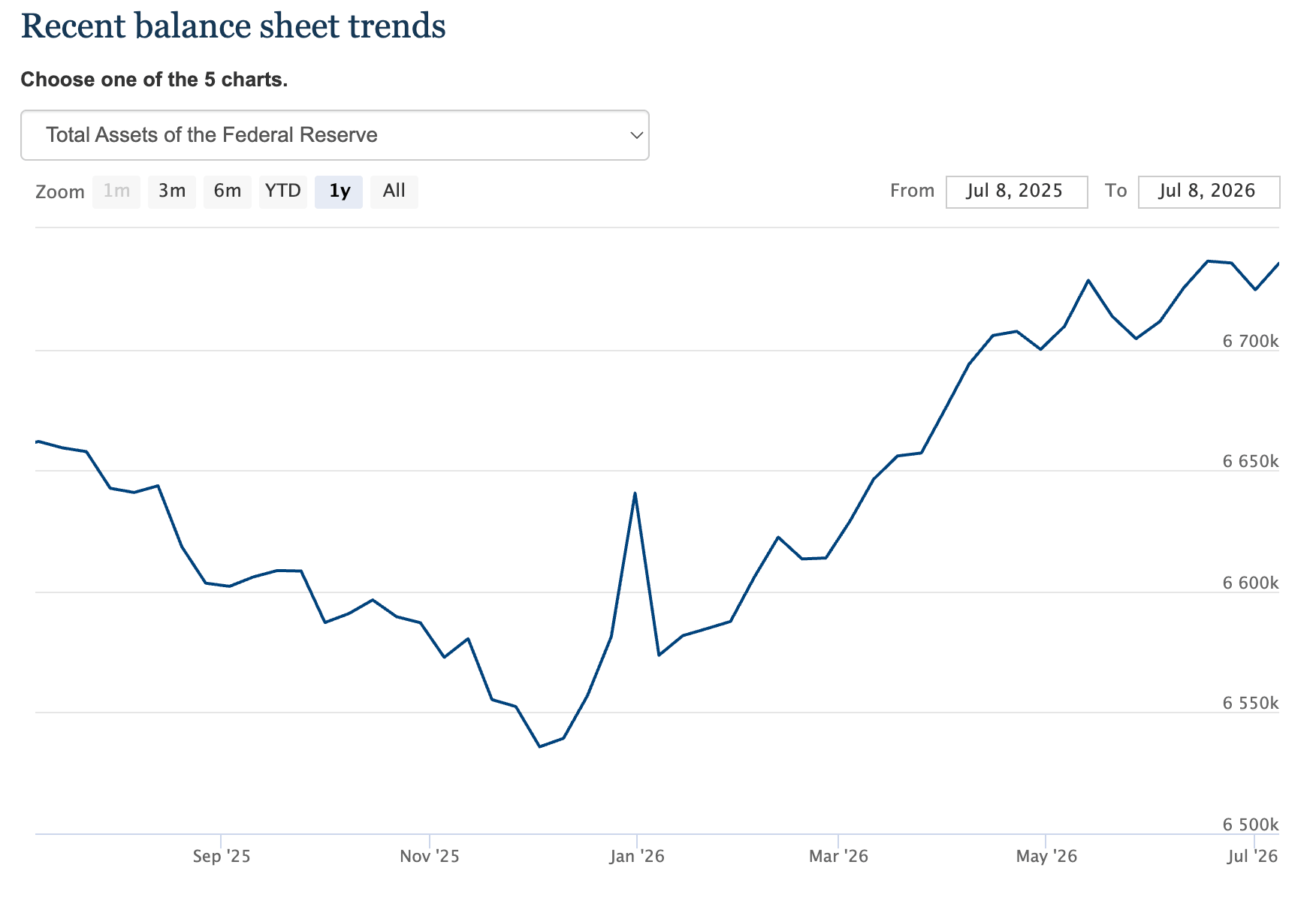
Underscoring the difficulties facing Warsh and Company, even as he talks tough about slaying inflation, his central bank continues to run modest quantitative easing operations (QE). This is indicated by the balance sheet, which is once again creeping upward.
When the Fed started hiking rates in 2023, it also began quantitative tightening (balance sheet reduction). The balance sheet hit its low at $6.54 trillion on December 1, 2025.
At the December meeting, the FOMC announced it would purchase $40 million in Treasury Bills on Friday (Bills are short-term Treasuries that mature in one year or less). From that point, purchases will “remain elevated for a few months” before they are “significantly reduced.”
Since then, the balance sheet has grown to $6.75 trillion.
Of course, you will not hear any central banker or mainstream pundit utter the words “quantitative easing.”
In fact, if pushed, they’ll almost certainly deny that they’re doing it. They’ll call it “reserve management,” or tell you they’re engaged in “technical operations” to keep the financial system’s plumbing moving.
However, an expansion of reserves is an expansion of reserves. You can call it QE. You can call it reserve management. You can call it tap dancing with unicorns.
In practice, the Fed is purchasing Treasury bills with money created out of thin air. This increases the money supply and puts downward pressure on Treasury rates. The balance sheet is growing; liquidity is increasing; risk asset bubbles are getting more air. This is exactly what QE does. So, call it what you want. If it walks like a duck…
So much for that commitment to fight inflation. Based on the central bank’s actions, it appears Warsh & Company are more committed to keeping the debt bubble inflated and the economy limping along.
Mike Maharrey is a journalist and market analyst for Money Metals with over a decade of experience in precious metals. He holds a BS in accounting from the University of Kentucky and a BA in journalism from the University of South Florida.
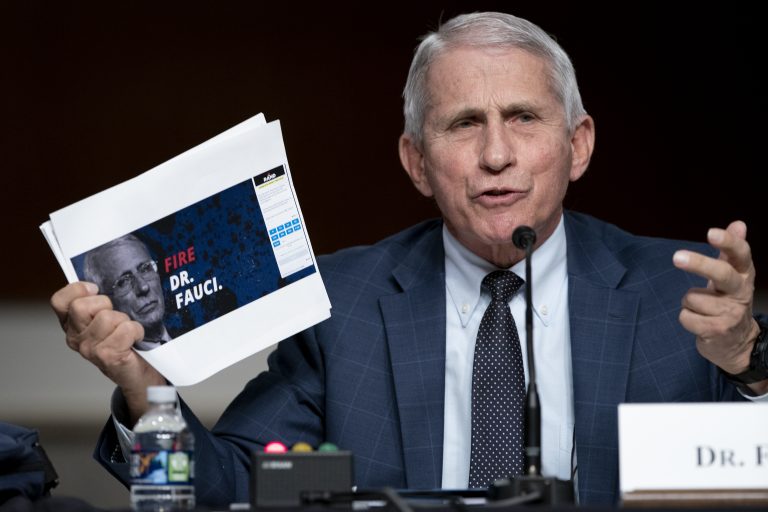
(Morgan Sweeney, The Center Square) After Wednesday morning’s congressional hearing with former National Institute of Allergy and Infectious Diseases Anthony Fauci where he declined to answer any questions and instead pleaded the Fifth Amendment, Florida Attorney General James Uthmeier announced he is launching an investigation into Fauci.
“Fauci’s lack of candor to Congress is unbelievable,” Uthmeier wrote on social media. “My office is launching an investigation into Dr. Fauci. It’s past time we get the truth of what happened during COVID.”
On the last day of his presidential term, former President Joe Biden granted Fauci a full and unconditional pardon for any offenses he may have “committed or taken part in” related to his governmental roles from Jan. 1, 2014, through Jan. 19, 2025, the day the pardon was signed.
The pardon protects Fauci from being prosecuted for any federal crimes he may have committed during that time period, but it does not protect him from state prosecutors.
Uthmeier is the first state attorney general to announce an investigation into Fauci, though as the Financial Times reported, others have threatened to since the pandemic.
Wednesday’s hearing came on the heels of Sen. Rand Paul, R-Ky., obtaining and releasing over 1,000 pages from Fauci’s pandemic-era diary. Congress has questioned Fauci before, but access to the former director’s written personal thoughts prompted Republican lawmakers to again challenge him on Capitol Hill. Paul said the diary provided evidence that Fauci’s private thoughts did not align with his public health decisions.
Fauci invoked his Fifth Amendment right to not incriminate himself to dozens of questions, including questions as simple as the color of his tie and the color of the carpet. Paul, the chairman of the committee holding the hearing, also had one of Fauci’s lawyers thrown out of the hearing for repeatedly trying to speak without his permission.
After nearly three hours of statements and questions from lawmakers, Paul wrapped up the hearing but said that senators would be voting next week on whether to hold Fauci in contempt of Congress.
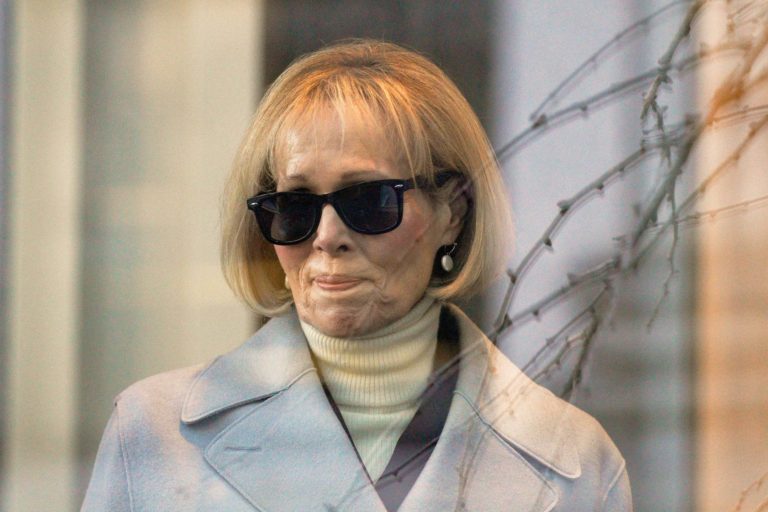
(Luis Cornelio, Headline USA) President Donald Trump and the Department of Justice on Wednesday urged the Supreme Court to vacate the $88.3 million judgment awarded to E. Jean Carroll, the woman who accused the president of sexual abuse.
In a petition for a writ of certiorari, Trump’s attorneys asked the justices to overturn the judgment, asserting it stemmed from comments he made while serving as president during his first term.
In the 334-page filing, the attorneys added that Trump enjoyed presidential immunity under a 2024 Supreme Court ruling.
They contended Carroll’s defamation claims are invalid because his statements fell within the scope of his official duties.
Trump and the DOJ also asked the court to remove Trump as the defendant and place the federal government instead. This move would effectively shield Trump from personal liability for the controversial damages awarded to Carroll, as reported by SCOTUSBlog.
“This is the first case in our nation’s history in which a court has imposed damages liability on a president for his conduct in office,” the lawyers affirmed.
Trump’s attorneys also urged the court to reconsider an earlier refusal to hear his appeal of the separate $5 million verdict awarded to Carroll. That sum followed a federal jury’s ruling that Trump was civilly liable for sexual abuse and defamation.
Another federal jury awarded Carroll $83.3 million in compensatory and punitive damages for purported reputational harm stemming from Trump’s statements about her.
Carroll alleged that Trump sexually abused her during an encounter at Bergdorf Goodman sometime between late 1995 and early 1996.
Trump has categorically denied the allegation.
Carroll later sued him for defamation after he publicly rebuked her claims as false.
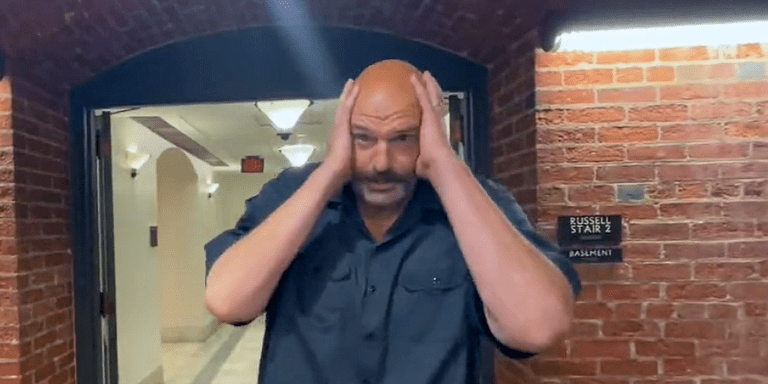
(Luis Cornelio, Headline USA) Sen. John Fetterman, D-Pa., attacked a left-leaning reporter who was questioning his support for Israel during a brief exchange at the U.S. Capitol on Wednesday.
Fetterman, who has been rumored to be considering a switch to the GOP, did not allow questions from Julian Andreone, a Capitol Hill reporter for Drop Site News, and instead attacked the lefty outlet itself.
Before Andreone could ask a question, Fetterman commented, “Oh, no, it’s like a race between who’s more pro-Hamas, Drop Site or Zeteo.”
He then added, “I just want your viewers to see how much I love to watch Israel eliminating the Hamas leadership. I know that upsets a lot of your viewers and a lot of your founders. But I think it’s a great thing.”
As Andreone attempted to ask a question about President Donald Trump, Fetterman cut him off.
“So there’s news coming out of me: I’m going to always back Israel,” the Democratic senator said, before shifting the attention to Drop Site News.
“The question is, where does your trash outlet come from, and who’s funding it? And if your founders think it’s appropriate to attack and kill Israeli civilians, that should really be the news overall,” he continued.
Fetterman added, “So I think the question is, why does this Drop Site love Hamas and Iran and Hezbollah so much? I think that’s really the news.”
As Fetterman walked toward an elevator, he asked Andreone: “Are you okay with taking your paycheck from these kinds of people?”
Andreone then attempted to ask whether Fetterman was “okay with Benjamin Netanyahu,” but the senator entered the elevator before the reporter could finish the question, and the doors closed on him.
Fetterman has become a rare voice within the Democratic Party in defending Israel’s decimation of Gaza following Hamas’ Oct. 7, 2023, terrorist attack.
Sen. John Fetterman refused to answer questions from Drop Site's Julian Andreone on Capitol Hill — instead launching into an unprompted defense of Israel, saying he loves "watching Israel eliminate the Hamas leadership" and demanding to know "why Drop Site loves Hamas and Iran… pic.twitter.com/cHJwWrC0re
(José Niño, Headline USA) Republicans face an unexpected threat in northeast Ohio, where a bitter feud between two of the state’s most prominent conservatives now shadows a seat the party long treated as secure. The New York Timesreported that domestic abuse allegations against Rep. Max Miller, R-Ohio, have alarmed President Donald Trump’s political operation as the midterm map tightens.
Miller, a second term Republican who rose through Trump’s orbit, faces accusations from his former wife, Emily Moreno, daughter of Sen. Bernie Moreno, R-Ohio. She says Miller burned her chest and stomach with hot water thrown from a skillet, held a gun to her head, shoved her into a wall, and fractured their toddler daughter’s collarbone. Court filings quote the child telling her mother, “Daddy kill you.”
Miller rejects every claim and has counter-attacked. He sued Moreno for defamation, accused her of “repeated false reports” to child protective services and law enforcement, and told the court he fears her “vindictive and unpredictable behavior.” In a Juneinterview with Spectrum News, he said his former wife “sadly isn’t all there.” Her lawyer Andrew Zashin disputes Miller’s assertions that she owns a handgun or carries a bipolar diagnosis. Miller has sued Zashin too.
Trump advisers privately worry Miller is damaging Republican prospects in a district the president carried by double digits in 2024, three people familiar with the discussions told the Times. Internal Democratic polling puts Miller a single point ahead of challenger Brian Poindexter. If the allegations hold up, Poindexter said, “Miller should be in jail, not worried about retaining a seat in Congress.” Democrats worry only that Republicans might swap Miller off the ballot before an August 5 deadline.
Miller waves off the danger. “Texas is turning blue like I’m losing my seat,” he texted a Times reporter, adding, “Take a hike.”
Campaign spokeswoman Abigail Angelos noted courts still grant Miller joint custody and said he will “vigorously defend his reputation against false and reckless allegations.”
Senator Moreno stays publicly quiet. His spokeswoman Reagan McCarthy said, “Senator Moreno’s top priority is the safety and well being of his daughter and granddaughter.”
José Niño is the deputy editor of Headline USA. Follow him at x.com/JoseAlNino
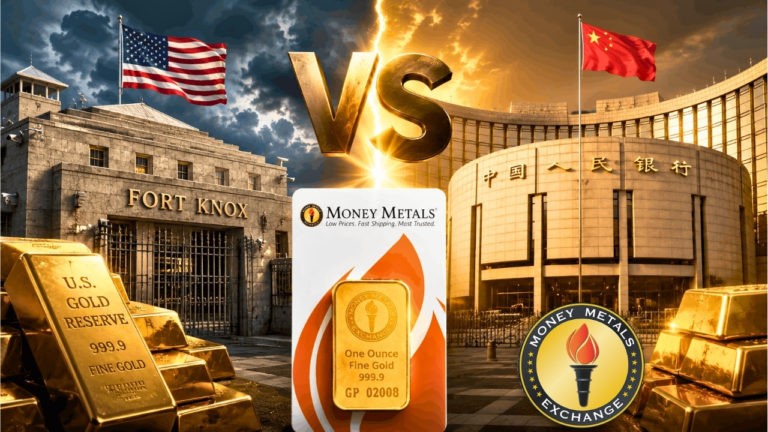
(Money Metals News Service) The United States officially reports holding 8,133.5 metric tons of gold, equivalent to roughly 261.5 million troy ounces. According to government figures, approximately 147.3 million ounces are stored at Fort Knox, while the remainder is held at the Denver Mint, the West Point Bullion Depository, and the Federal Reserve Bank of New York.
On the surface, the question of how much gold America possesses appears settled. However, Money Metals Midweek Memo host Mike Maharrey argues that the more important question is whether those official figures have ever been independently verified through a comprehensive audit.
The Case for a Full Fort Knox Audit
During a recent interview on Fox News with Jesse Watters, Treasury Secretary Scott Bessent stated that Fort Knox’s gold is “present and accounted for,” explaining that members of his staff and the U.S. Treasurer have visited the facility. Maharrey contends that while such assurances may reassure some observers, they do not replace the need for an independent audit.
Drawing on his accounting background, Maharrey explains that audits exist to detect honest mistakes, verify records, and provide accountability. Virtually every business that manages valuable assets relies on regular external audits to ensure transparency and maintain public confidence.
He argues that any institution responsible for billions of dollars in assets should welcome independent verification rather than discourage it. In his view, resisting routine audits raises more questions than it answers.
Why the 1974 Inspection Doesn’t Qualify as an Audit
Government officials have often pointed to inspections conducted during the 1970s as evidence that America’s gold reserves have already been examined. Maharrey argues that these events fall far short of accepted auditing standards.
In 1974, the Treasury opened only one of Fort Knox’s 15 vault compartments to members of Congress and the media during what Maharrey characterizes as a public relations event rather than a legitimate financial audit. Visitors observed stacks of gold bars and briefly handled some of the bullion, but no meaningful verification took place.
According to Maharrey, none of the bars were matched to serial numbers, weighed, assayed for purity, or reconciled against official inventory records. A true audit would require every bar to be counted, tested, documented, and independently verified before the results were released publicly.
Transparency Questions Continue Decades Later
Following the 1974 event, the Treasury conducted inventory procedures and installed tamper-evident seals on vault compartments. Maharrey argues these actions still did not meet accepted auditing practices.
He points to missing reports, the absence of publicly available assay records, incomplete transactional histories, and evidence that some vault seals have been broken and later replaced without new comprehensive audits. In his view, these shortcomings would not satisfy the standards expected of a professionally managed private bullion depository.
Rather than opposing an audit, Maharrey believes the government should embrace one. If the reported gold reserves are accurate, he argues, an independent examination would strengthen public confidence instead of undermining it.
Money Metals Emphasizes Independent Verification
Maharrey contrasted the government’s approach with the auditing procedures used at the Money Metals Depository in Eagle, Idaho.
According to Maharrey, the depository conducts both continuous internal audits and regular external audits performed by independent firms. Customer holdings are routinely verified, inventory is spot-checked, and clients may request an annual photograph of their segregated holdings to confirm that their precious metals remain securely stored.
He argues that transparency, accountability, and routine verification should be considered standard practice whenever valuable assets are entrusted to a storage facility.
Governments Continue Holding Gold Despite Fiat Currency
Although modern monetary systems are no longer backed by gold, Maharrey notes that governments continue maintaining substantial bullion reserves.
He argues that this creates an interesting contradiction. Public officials often emphasize that fiat currencies make large gold reserves unnecessary, yet central banks around the world continue accumulating physical bullion. According to Maharrey, their actions suggest that gold still plays an important strategic role within the global financial system.
China’s Official Gold Holdings May Be Only Part of the Story
China officially reports holding 2,346 metric tons of gold and has now increased its reported reserves for 21 consecutive months. In June, the People’s Bank of China announced a 15-tonne increase following a 10-tonne purchase in May, representing a noticeable acceleration in official buying.
Maharrey argues that these official figures likely understate China’s actual gold accumulation.
He cites research from Goldman Sachs estimating that China acquired more than 48 tonnes of gold through London’s over-the-counter market during May alone, despite officially reporting only a 10-tonne increase. Goldman ultimately adopted a more conservative estimate, concluding that China has likely accumulated approximately 80 tonnes of gold during 2026 so far—roughly double its reported purchases.
Evidence Suggests China Holds Far More Gold
Additional research cited by Maharrey indicates China’s actual reserves may be significantly larger than official disclosures suggest.
Money Metals researcher Jan Nieuwenhuijs previously estimated that China’s central bank quietly acquired approximately 570 tonnes of gold during 2024 while officially reporting purchases of only 41 tonnes. His research suggests that, since the Ukraine war began, China has been acquiring roughly five times more gold than it reports to the International Monetary Fund. Based on multiple sources, he estimates China’s monetary gold holdings could already exceed 5,000 tonnes.
The Financial Times later reported that China’s undisclosed purchases could exceed ten times its official figures, highlighting the country’s continued efforts to diversify reserves away from the U.S. dollar while supporting global gold demand.
China’s Gold Strategy Has Been Building for Years
Maharrey also referenced longtime analyst Jim Rickards, who argued more than a decade ago that China deliberately keeps large quantities of gold outside its officially reported central bank reserves.
Rickards wrote that after China announced a 604-tonne increase in 2015, much larger holdings remained under the control of the State Administration of Foreign Exchange (SAFE), with only gradual transfers appearing in official People’s Bank of China reserve reports. Maharrey says this strategy allows China to satisfy international reporting requirements while concealing the true scale of its gold accumulation.
Recent analysis has even suggested that, if current trends continue, China could surpass the United States in total gold holdings within the next five years.
The bank continues forecasting gold to reach $4,900 per troy ounce by the end of 2026, arguing that sustained central bank demand should provide long-term price support even if higher interest rates create short-term headwinds. Goldman also believes private investment demand could expand further if geopolitical risks continue increasing.
Maharrey notes that central banks have increasingly diversified reserves away from U.S. Treasuries and toward physical gold, reinforcing what he sees as gold’s enduring role as a reserve asset.
Federal Reserve Policy Remains a Near-Term Headwind
As the July Federal Open Market Committee meeting concluded, Maharrey observed that most investors expected Federal Reserve Chairman Kevin Warsh to leave interest rates unchanged, although some market participants had speculated about the possibility of another rate increase.
He argued that additional tightening could accelerate debt problems that have accumulated following years of quantitative easing, historically low interest rates, and nearly $5 trillion in pandemic-era monetary expansion.
While acknowledging that gold and silver prices may continue trading sideways in the near term, Maharrey believes the underlying monetary environment remains favorable for precious metals over the longer term.
Chinese Investors Continue Buying the Dip
Beyond central bank purchases, private Chinese demand has also strengthened.
China imported 173 tonnes of gold during the previous month, marking a two-year high. Maharrey cited Jinrui Futures analyst Zijie Wu, who said investors viewed recent price weakness as an attractive buying opportunity, while Chinese banks also increased purchases to utilize import quotas and replenish bullion inventories.
Maharrey concluded that regardless of near-term Federal Reserve policy, inflation continues reducing the purchasing power of fiat currencies over time. As central banks continue expanding their gold reserves and investors increasingly seek tangible assets, he argues that physical gold and silver remain important long-term stores of wealth.
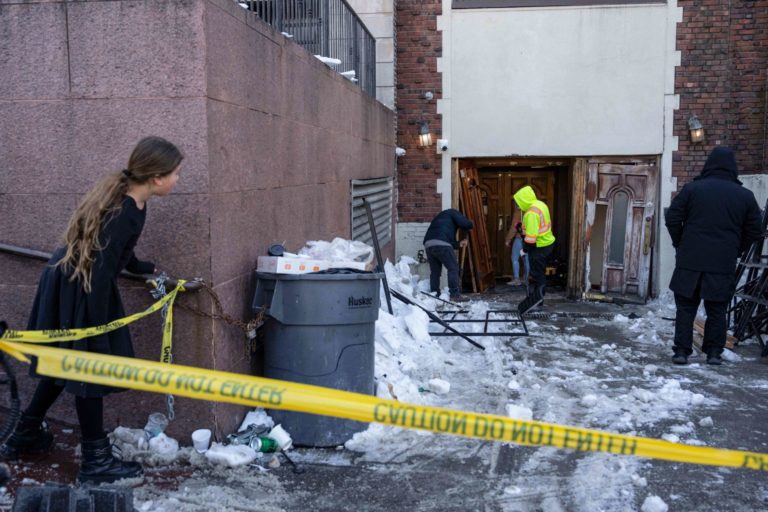
(Headline USA) A man was sentenced Wednesday to six months and a week behind bars for ramming his car into the Chabad Lubavitch world headquarters, the Jewish institution in New York where his lawyer said he’d been trying to win acceptance as he struggled with psychological issues.
Dan Sohail, 36, was sentenced in Brooklyn federal court by a judge who declined a recommendation by prosecutors that he force Sohail to remain behind bars for another eight months. The sentence clears the way for the New Jersey man, who has already spent six months in detention, to be released in about a week.
Prosecutors had sought a stiffer sentence as a wider warning to those who might attack Jewish interests amid a dramatic rise in hate crimes against the Jewish population.
Judge Eric N. Vitaliano said he was “somewhat saddened” to see that the Justice Department wanted him to be influenced at sentencing by a mistaken initial impression among the wider public that the Jan. 28 attack was a hate crime.
No one was injured when Sohail drove his car into the Chabad Headquarters’ side entrance five times, knocking the door off its hinges and destroying his car’s front bumper. Before he drove toward the building, he waived passersby away, a fact the judge mentioned at sentencing as he ordered him to pay $20,000 restitution.
The complex at 770 Eastern Parkway in Brooklyn includes a synagogue and offices, and was bustling with people at the time, authorities there said.
Prosecutors in their arguments prior to sentencing noted that “a staggering” 80 of 146 hate crime incidents across New York City since the start of the year were based on crimes against Jews and Jewish institutions.
Vitaliano said the government’s argument for a stiff sentence to send a deterrent message to the general public was in part based on the fact that the attack was initially cast as an “I-hate-the-Jews crime, or, worse, an act-of-terrorism crime.”
But he noted that federal prosecutors ultimately charged the Carteret, New Jersey, man with intentionally damaging religious property and Sohail pleaded guilty in mid-May.
The judge cited a psychiatric report he reviewed and said Sohail’s mental health challenges “played an important role” in his decision-making.
“This is a sad tale,” Vitaliano said.
Defense attorney Mia Eisner-Grynberg told the judge in court papers prior to the sentencing that Sohail was battling depression and post-traumatic stress disorder after a traumatizing childhood when he carried out the attack even as he “desperately sought belonging and understanding through his exploration of Judaism.”
She said Sohail attended the Chabad he eventually attacked and “found the rabbinical students there warm and welcoming.”
Eisner Grynberg said Sohail “danced with them” and followed their instructions to visit Israel, but he became erratic and extremely anxious after he returned to the United States and was “begging” members of the Chabad to assist him.
Driving the car into the building, she said, was “an irrational cry for help.”
Sohail did not speak at sentencing, but he thanked the judge at the end of the proceeding.
The crash occurred on the 75th anniversary of Rabbi Menachem Mendel Schneerson becoming the leader of the Lubavitch movement and prompted immediate concern in the city. Schneerson died in 1994, but remains a revered figure globally. There has been a near-constant police presence around the Chabad Lubavitch world headquarters for years.
The site was at the epicenter of the Crown Heights riots in 1991, when Black residents of the neighborhood attacked Jews after a child was killed by a car traveling in Schneerson’s motorcade. In 2014, a disturbed man entered the synagogue and stabbed a rabbinical student, wounding him, before being shot dead by police.
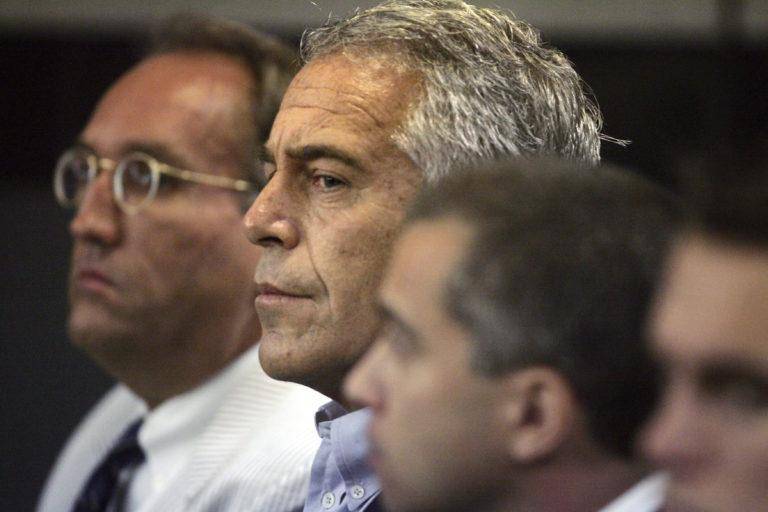
(Headline USA) Two people who attended a prestigious Michigan fine arts school reported conduct of a sexual nature by Jeffrey Epstein, a major donor, according to an investigation that also uncovered dozens of allegations spanning decades against nearly 50 other people.
Interlochen Center for the Arts operates a summer camp and performing arts school that draws students from around the world. It hired a law firm in 2024 to investigate reports of sexual abuse by faculty and staff. Subsequently, it expanded the work to include information about Epstein, the 66-year-old financier who killed himself in jail in 2019.
Interlochen removed Epstein’s name from a lodge after he was convicted of sex offenses in Florida in 2008. The building, renamed the Green Lake Lodge, was recently demolished after the U.S. Justice Department released millions of pages about him that had been compiled over the years.
Sanghavi Law Office says it collected 70 accounts from alumni alleging “physical conduct of a sexual nature” by 47 faculty and staff members affiliated with Interlochen from the 1950s through the 2010s, most before 2000.
“The information gathered during this investigation is, simply, devastating,” the 97-page report says, noting that alumni reported grooming, flirting, sexual touching and sex.
Interlochen said it has provided names of people accused of misconduct to Grand Traverse County authorities in northern Michigan to determine what steps, if any, might be taken. None are currently employed there, and more than a third are dead.
“We are deeply sorry for the harm experienced by members of our community and extend our apologies to those impacted by abuse at Interlochen,” president Trey Davey and board chair Barrett Rollins said in a letter to the community posted online.
“While the vast majority of the incidents described in the investigation took place many decades ago, and reports of abuse at Interlochen have significantly decreased over the past 25 years, the passage of time does not diminish the experiences of our alumni,” they said. “Sexual abuse committed by an adult in a position of power or trust against a student is wrong, then and now.”
Interlochen today “is fundamentally different from the institution described in this report,” Davey and Rollins wrote, with comprehensive safety policies and a changed culture.
Epstein, who played the bassoon, was an Interlochen camper in 1967. He donated more than $400,000 to the school between 1990 and 2003.
Two women told investigators that Epstein engaged in conduct of a sexual nature with them, one of them at the Interlochen lodge that bore his name.
He brushed against her body “over her clothes, in a manner in which he indicated was accidental,” according to the report.
Epstein also paid for her to visit him in New York while she was a student. She said “every time he was ‘handsy’ with her, she would freeze until he would stop,” the report states.
The other woman said she gave Epstein a massage at his home, according to the report, and he may have asked her to remove her top. She never had any further contact with Epstein or his girlfriend, Ghislaine Maxwell.
Outside of the school investigation, at least two Interlochen alumnae made allegations of grooming and abuse against Epstein and Maxwell, according to federal records and media reports. Their identities were not made public.
One testified against Maxwell in 2021 when she was convicted of sex trafficking. It’s unclear whether those women spoke to the law firm hired for the Interlochen investigation.