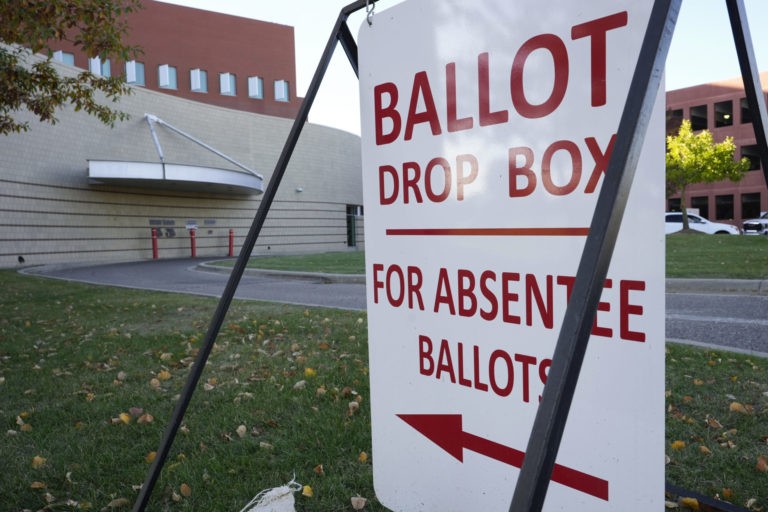
A new report from the group says eight states banned foreign funding of ballot issue campaigns this year, bringing the national total to nine. Six states also banned ranked-choice voting in 2025, bringing the total to 17.
Honest Elections Project Executive Director Jason Snead said states are responding to threats that undermine voter confidence.
“In 2025, states across the country took extraordinary steps to ban the foreign funding of ballot issue campaigns and ranked-choice voting, two of the biggest threats to election integrity and voter confidence facing the nation, and they did so in record numbers,” Snead said in a statement. “Meanwhile, liberal election attorney Marc Elias continues to argue that foreign nationals like Swiss billionaire Hansjörg Wyss have a right to influence American elections. Fortunately, he has lost at every turn. While there is still much work to be done in 2026 and beyond, this was a banner year for election integrity.”
Federal law prohibits foreign nationals from donating money to political candidates and PACs. However, many states lack similar protections for ballot measures. The report says the Sixteen Thirty Fund, a liberal funding group, has raised nearly $280 million from Wyss and spent $130 million on ballot measure campaigns in 26 states.
In 2025, Arkansas, Indiana, Kansas, Kentucky, Louisiana, Missouri, Tennessee, and Wyoming enacted bans on foreign funding of ballot issue campaigns. Wyoming was the first state to act this year, and Ohio adopted a similar ban in 2024.
On ranked-choice voting, Arkansas, Iowa, Kansas, North Dakota, West Virginia, and Wyoming all passed prohibitions this year. The report says that means 17 states have now outlawed the system since 2022.
The report notes that Republican trifecta states have enacted 405 election-related laws in 2025, compared to 224 in 2024.
Elias filed lawsuits against Ohio and Kansas to stop their bans on foreign funding. In both cases, courts upheld the state laws. In June 2025, a federal judge in Kansas rejected his challenge and let the ban stand.
Snead said people across the political spectrum should support Kansas and Ohio.
“This should not be a partisan issue,” he told The Center Square in a telephone interview. “It’s unfortunately become one in large measure because there’s so much money going into progressive groups and the left is addicted to this money and they’re willing to use it to advance their agenda.”
The report says other states could act in 2026. It highlights Michigan, Florida, Nebraska, Alaska, North Carolina, Montana and Arizona as places that have seen foreign-tied spending but have not yet passed bans.
“The clearest first step for a state like Florida to take is to pass a true and complete ban on foreign dark money in the ballot measure process, just what eight other states have done this year,” Snead said.
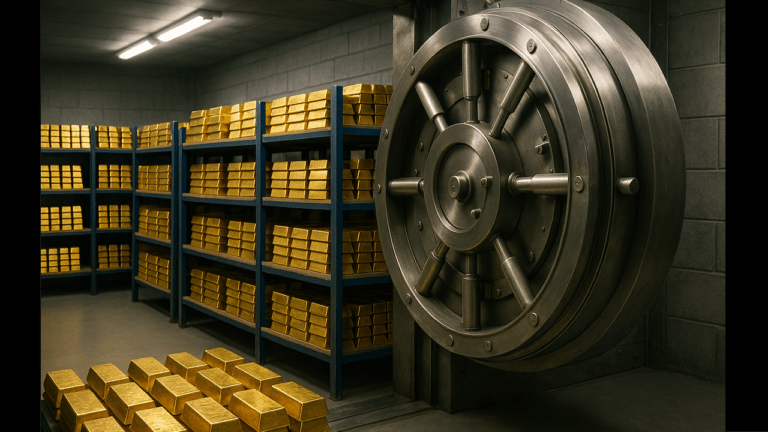
(Mike Maharrey, Money Metals News Service) Higher gold prices have put a damper on central bank gold buying, but the World Gold Council still categorized August purchases as “firm.”
Globally, central banks added 10 tonnes of gold to their reserves in August.
The slowdown in buying was evident in the second quarter. Central banks globally added 166 tonnes of gold to their reserves in Q2. That was a 33 percent quarter-on-quarter decline and the lowest quarterly demand since Q2 2022.
However, gold buying was still 41 percent above the quarterly average that was typical between 2010 and 2021.
The World Gold Council notes that while central banks tend to make reserve decisions strategically, they are not totally insensitive to prices.
“As such, gold’s rally so far this year, up 26 percent, to new record levels, has likely contributed to the slowdown in central bank buying. But that they continue to add gold in the face of a higher price underscores their continuing favorable attitudes towards gold as a strategic asset amid such uncertainty.”
In August, banks made smaller purchases, and several regular buyers were conspicuously absent.
Kazakhstan was the biggest gold purchaser in August, adding 3 tonnes of gold to its reserves. The Kazakh central bank has increased its gold holdings by 25 tonnes this year, ranking it third behind Poland and the State Oil Fund of Azerbaijan.
Turkey added 2 tonnes of gold to its holdings. The Turkish central bank has been a net purchaser for 26 consecutive months – since June 2023.
The Czech Republic has also been a regular purchaser, adding 1 to 3 tonnes monthly since March 2023. The Czech central bank increased its holdings by another 2 tonnes in August.
China has reported an increase in its official reserves for 9 straight months, adding 2 more tonnes in August. The People’s Bank of China has increased its official holding by 36 tonnes in that span.
Notice the emphasis on “official.”
China is one of the central banks that likely holds significantly more gold than it publicly discloses. As Jan Nieuwenhuijs has reported, the People’s Bank of China is secretly buying large amounts of gold off the books. According to data parsed by the renowned Money Metals researcher, the Chinese central bank is currently sitting on more than 5,000 tonnes of monetary gold located in Beijing – more than TWICE what has been publicly admitted.
Poland and India stood pat in August. Even so, Poland remains the biggest gold buyer so far in 2025.
Last year, National Bank of Poland Governor Adam Glapiński indicated the central bank plans to increase its gold holdings to 20 percent of its reserves.
While it does not show up in the buying statistics, Uganda announced a two-to-three-year pilot program to purchase gold domestically from artisanal miners/ Officials say the plan is to build official reserves and reduce reliance on traditional foreign assets.
Despite the slowdown in central bank buying, the World Gold Council remains bullish.
“We maintain our view that central banks will continue to add gold to their reserves. Our Central Bank Gold Reserves Survey 2025 shows that respondents overwhelmingly (95 percent) expect global central bank gold reserves to increase over the next 12 months, while 43 percent believe that their own gold reserves will also increase over the same period. Notably, none of the respondents anticipate a decline in their gold reserves.”
You can read more details about that central bank survey HERE.
On net, central banks officially increased their gold holdings by 1,044.6 tonnes in 2024. It was the 15th consecutive year of expanding gold reserves.
Last year was the third-largest expansion of central bank gold reserves on record, coming in just 6.2 tonnes lower than in 2023 and 91 tonnes lower than the all-time high set in 2022. (1,136 tonnes). 2022 was the highest level of net purchases on record, dating back to 1950, including since the suspension of dollar convertibility into gold in 1971.
To put that into context, central bank gold reserves increased by an average of just 473 tonnes annually between 2010 and 2021.
World Gold Council analysts expect the trend to continue, with buying “close to the range seen over the past three years on continued elevated trade-related risks and uncertainty premia in U.S. assets.”
The WGC also noted that “diversification” with “a reduction of U.S. assets” is one of the factors driving central bank gold buying. In other words, de-dollarization.
“We don’t see an end to this narrative unless there is a material shift in geopolitical tensions. The IMF has downgraded growth prospects in the U.S. more than in other major economies, citing policy uncertainty. This suggests that other countries may have leverage in negotiations, although these typically last months and years, not weeks. Hence, we don’t expect any near-term resolutions.”
Mike Maharrey is a journalist and market analyst for Money Metals with over a decade of experience in precious metals. He holds a BS in accounting from the University of Kentucky and a BA in journalism from the University of South Florida.
(Zachery Schmidt, The Center Square) State Sen. Jake Hoffman, R-Queen Creek, filed an ethics complaint against a Democratic colleague for what he calls her attempt to sabotage federal immigration enforcement in Arizona.
In his ethics complaint on Wednesday, Hoffman described the actions of state Sen. Analise Ortiz, D-Glendale, as “unbecoming of an elected official and embarrassing to the entire Arizona Legislature on a state and national stage.”
The actions in question are comments Ortiz posted on social media on Aug. 5 when she alerted people that U.S. Immigration and Customs Enforcement was conducting activity. The popular social media account Libs of TikTok posted a screenshot of Ortiz’s message on X.
After Libs of TikTok posted her message, Ortiz reposted its tweet saying, “Yep. When ICE is around, I will alert my community to stay out of the area.” After using profanity, she said she was not scared of “Trump’s masked goons.”
Responding to her social media posts, Hoffman said Ortiz put the “lives of American law enforcement at risk.”
Ortiz responded by stating, “Bring it on, Jake. ICE alerts keep people away from the area since these lawless thugs are gleefully disappearing people, including US citizens and lawful residents. You try to spin a false narrative but the people know the real threat to our safety is Trump.”
In addition to Hoffman’s complaint, Senate President Warren Petersen, R-Gilbert, released a press release after Ortiz’s social media posts condemning her actions.
The Democrat also replied to this, saying she will “not be intimidated.”
“I will alert our community to avoid the area when Trump’s masked thugs terrorize us all, regardless of citizenship. Trump doesn’t respect our laws nor our constitution. My duty is to keep people safe from his unconstitutional and authoritarian actions,” Ortiz explained.
Almost two weeks after Libs of TikTok posted its tweet about Ortiz, it followed up with another one discussing how the state senator and state Rep. Oscar De Los Santos, D-Phoenix, had donated to a crowdfunding campaign that was raising money for two men arrested by ICE. The state senator gave $50 while her Democratic colleague gave $100.
Libs of TikTok also posted a screenshot of De Los Santos advertising the crowdfunding campaign on social media.
Regarding Ortiz’s actions, the ethics complaint said she is “openly and brazenly advocating for lawlessness, even at the potential cost of violence against those charged with the solemn and already often dangerous duty of enforcing our nation’s laws.”
Hoffman called Ortiz’s behavior unacceptable for an elected official who is sworn to uphold the American and Arizonan constitutions.
The Republican asked the Arizona Senate Ethics Committee to investigate this matter and hold Ortiz “accountable for all violations of the law or the Senate Rules.”
As a consequence, Hoffman recommended expelling Ortiz from her position, but if there are not enough votes for this, he advocated removing the Democrat from her committees. On top of this, Hoffman said she should lose her office, parking spot, administrative staff support and unrestricted key access to the state Legislature.
In a statement to The Center Square, Ortiz said she reshared on Instagram a post about “masked, armed men” showing up “at a school in our community” to let her followers know about it.
“Now, Arizona Republicans are going to extreme levels of intimidation to block me from doing my job for the people of LD 24,” the state senator said, referring to the 24th Legislative District, which she represents. “They want police operations to happen in secret. They want Arizonans terrified to talk about what we are witnessing happening to our friends, family, and neighbors.”
Ortiz further accused the Trump administration of “violating the Constitution.” She also called the administration’s tactics “straight from the authoritarian playbook and eerily reflect the darkest moments in world history.”
“The future of our democracy depends on bravery. I choose to remain brave,” Ortiz noted.
Regarding this ethics complaint, state Senate Ethics Committee Chairwoman Shawnna Bolick, R-Deer Valley, sent a letter on Wednesday to the U.S. Attorney’s Office for the District of Arizona.
In the letter, she said Hoffman’s ethics complaint “alleges that Senator Ortiz engaged in actions that may implicate federal law, including interference with federal law enforcement operations.”
Due to the nature of these allegations, Bolick said, the state ethics committee did not have “jurisdiction to enforce federal law.”
(Sarah Roderick-Fitch, The Center Square) The House Committee on Oversight and Government Reform is launching an investigation into the “impact of the Biden Border Crisis” on Medicaid, saying it cost taxpayers billions.
As part of the investigation, committee Chairman Rep. James Comer, R-Ky., has sent letters to eight Democratic governors and state health commissioners seeking documents and communications regarding their “unprecedented expansion of taxpayer funded Medicaid benefits and services for illegal aliens,” citing figures from the Congressional Budget Office that show taxpayers spent more than $16.2 billion on Medicaid-funded emergency services “for illegal aliens during the first three years of the Biden Administration.”
In the letters, Comer underscored that the purpose of the investigation is to uncover instances of fraud and abuse within Medicaid regarding Biden’s handling of the border crisis during his administration.
“The Committee on Oversight and Government Reform is continuing its oversight of the Biden Administration’s open-border policies, their devastating social and fiscal impact on American citizens, and critical federally funded health care programs and services. Specifically, the Committee is investigating waste, fraud and abuse in several Medicaid programs due to the Biden Administration’s failure to enforce U.S. immigration laws and the resulting expansion of benefits for illegal aliens,” Comer wrote.
In addition, the chairman is asking Minnesota Gov. Tim Walz to “clarify” comments he made during an oversight committee hearing with ‘sanctuary’ state governors in June, claiming that “illegal aliens” didn’t receive Medicaid coverage in his state.
“During an exchange in the hearing, Governor Walz testified that illegal immigrants do not receive coverage under Minnesota Medicaid. Governor Walz’s statement is likely misleading based on the programmatic relationships between Minnesota’s Medicaid program, also known as Medical Assistance (MA), its counterpart Emergency Medical Assistance (EMA), and the MinnesotaCare program. Minnesota has co-mingled funds for the EMA and MinnesotaCare programs potentially enabling federal funds to cover illegal aliens under the MinnesotaCare program,” according to a release from the committee.
In February, The Center Square reported that the State of California was spending $9.5 billion on health care for undocumented immigrants as part of its 2024-2025 budget.
In addition to Walz, Comer sent letters to California Gov. Gavin Newsom, Colorado Gov. Jared Polis, Illinois Gov. JB Pritzker, Maine Gov. Janet Mills, New York Gov. Kathy Hochul, Oregon Gov. Tina Kotek and Washington Gov. Bob Ferguson.
Comer is requesting that documents and communications regarding the investigation spanning from Jan. 1, 2019, to the present be returned to the committee no later than Sept. 17.
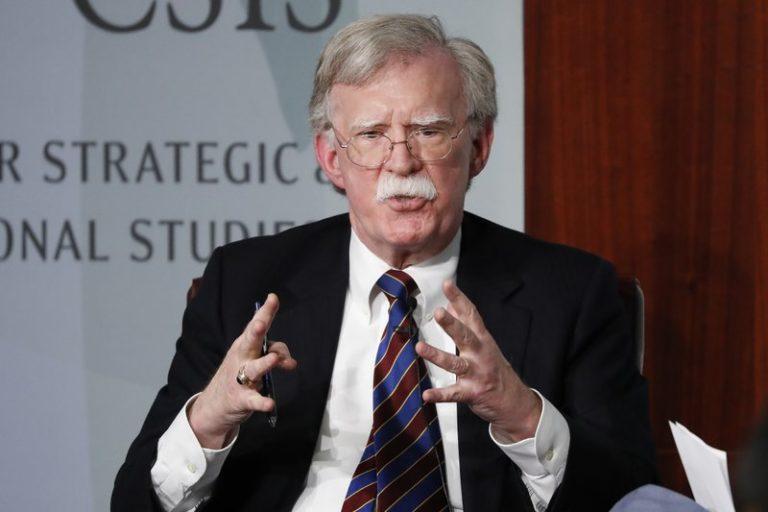
(Headline USA) The FBI seized phones, computer equipment and typed documents from the home of John Bolton as part of an investigation into whether President Donald Trump’s first-term national security adviser mishandled government secrets, according to court records unsealed Thursday.
The criminal investigation burst into view last month when agents searched Bolton’s home in Bethesda, Maryland and his office in the District of Columbia. The newly unsealed court records show that Bolton is under investigation for violating “gathering, transmitting to an unauthorized person, or losing, information pertaining to the national defense, and to conspiracies to commit such offenses”—in other words, for espionage. No charges have been filed.
A coalition of news organizations had urged a judge in Maryland, where the FBI had applied to a judge for a search warrant, to unseal records surrounding the search, citing a “tremendous public interest” that they said outweighed the need for continued secrecy.
Redacted documents were made public Thursday that shed new light on the investigation. Among them is a search warrant inventory showing that the FBI took from the home multiple phones, computer equipment, four boxes containing daily printed activities, typed documents in folders labeled “Trump I-IV,” and other materials.
George Conway may have inadvertently spilled the beans outside of John Bolton’s house:
“From what I’ve heard, John Bolton was always fastidious with classified… material.”
Why would George have any idea about Bolton’s handling of classified material? pic.twitter.com/CpL3GnWYDm
The court records also cite two criminal statutes underpinning the investigation, including laws that make it a crime to gather, transmit or lose defense information and the unauthorized removal and retention of classified documents or materials.
Bolton has not spoken publicly about the circumstances of the investigation since the search, and did not return a phone message left at a number listed for him.
Bolton, a notorious war hawk, served for 17 months as national security adviser during Trump’s first term, clashing with him over Iran, Afghanistan and North Korea, before being fired in 2019.
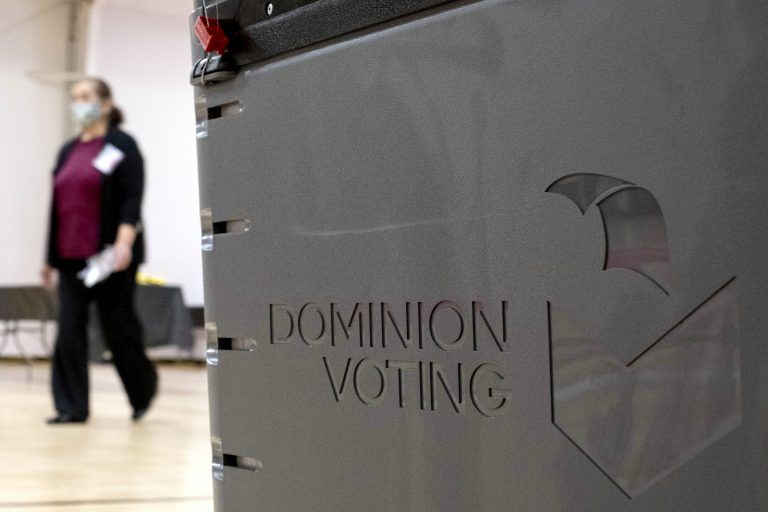
(Headline USA) The U.S. Department of Justice has requested access to voting equipment used in the 2020 election in two Missouri counties in what appears to be a wide-ranging effort to more closely monitor election processes around the country.
A DOJ official in August contacted the county clerks and asked for access to their Dominion Voting Systems equipment, according to a memo from the Missouri Association of County Clerks and Election Authorities that was shared Wednesday with The Associated Press.
Jasper County Clerk Charlie Davis declined, saying he no longer had the equipment. The memo said McDonald County Clerk Jessica Cole had the equipment, but also declined. In a statement quoted in the memo, Cole said state and federal law prohibits election officials from giving unauthorized access to election equipment.
The unconventional requests to a state President Donald Trump has won three times, first reported by the Missouri Independent, signal how the DOJ during Trump’s second term has sought a closer watch over how states run their elections. The president himself has sought broad authority over elections in the runup to the 2026 midterms that the Constitution does not give him.
Colorado-based Dominion has been frequently cited by those who claim that the 2020 election was stolen from Trump and who have asserted. Dominion has fought back against those claims by filing defamation lawsuits that have resulted in massive settlements: The conservative outlet Newsmax recently agreed to pay $67 million and in 2023 Fox News agreed to pay Dominion $787.5 million after the judge overseeing the case said it was “CRYSTAL clear” that none of the allegations against the company were true.
However, a forensic report last year showed cybersecurity flaws in Georgia’s Dominion voting machines.
Additionally, tech publication CyberScoop revealed in April 2024 that Dominion machines in Georgia suffered from a cyberattack, which forced local government officials to sever their connection with the state’s voter registration system in none other than Coffee County. Part of Fulton County DA Fani Willis’s election integrity case stemmed from Coffee County, due to a team led by Trump lawyer Sidney Powell allegedly accessing election equipment there in January 2021 in an attempt to prove fraud.
Despite the apparent vulnerabilities, Georgia still used Dominion last election. Officials said that overhauling the equipment would’ve been too much of a massive undertaking.
(Mike Maharrey, Money Metals News Service) Silver has rallied once again, breaking through the significant $ 40-per-ounce resistance level. It’s the first time silver has eclipsed $40 since 2011.
Since last Friday (Aug. 29), silver has gained over 5 percent.
What is driving this latest bull run?
Follow the Leader
Silver has followed gold higher over the last several days. The yellow metal surged to a record, breaking through the $3,500 level and pushing above $3,570 on Wednesday (Sept. 3).
Gold kicked off its rally last week after Federal Reserve Chairman Jerome Powell went dovish during his Jackson Hole speech, signaling a rate cut in September. The Fed Chair acknowledged downside employment risks “may warrant adjusting our policy stance” from its “current restrictive setting,” he said at his final annual speech in Jackson Hole, Wyo.
Lower rates are considered bullish for the metals, given that they are non-yielding assets. A lower rate environment means a lower opportunity cost for holding them.
There has also been a move into safe havens. Last week, a federal judge held that most of President Trump’s tariffs were unconstitutional. That has created a significant level of uncertainty in the markets.
Worries about Fed independence and some soft economic data contributed to the pivot to safe havens as well.
This is taking place in an environment that was already cautious. September and October have historically been rough months for stocks. While it may be nothing more than a self-fulfilling prophecy, the number of times it’s been mentioned in the mainstream financial media indicates it is on people’s minds.
Tight Silver Supply
More fundamentally, silver is getting a boost from tight silver supplies, particularly a decline in liquidity in the London market.
This started last summer when tariff worries drove a significant amount of metal out of London and into the U.S. According to Metals Focus, “Although silver was confirmed as being tariff-exempt in April, lingering trade uncertainties in particular, seem to have limited the return of silver to London.”
This occurred in a silver supply environment that was already tight. Demand outstripped the silver supply for the fourth consecutive year in 2024. The structural market deficit came in at 148.9 million ounces. That drove the four-year market shortfall to 678 million ounces, the equivalent of 10 months of mining supply in 2024.
When demand outstrips mining and recycling output, industrial users of the metal are forced to wade into the market to access existing stocks of silver. This pushes the price higher.
Industrial demand set a record for the fourth straight year in 2024.
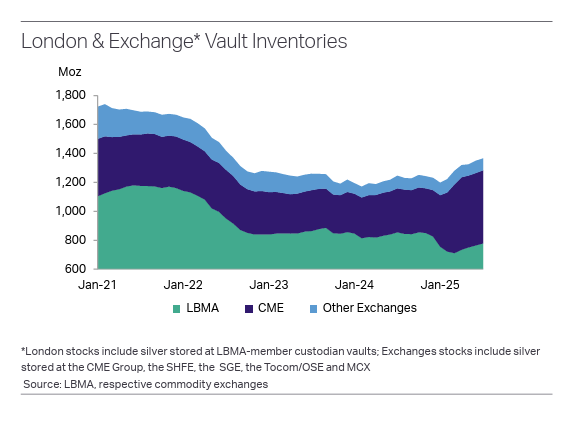
Even before the tariff-related outflows, physical silver was already moving out of London. Silver holdings peaked in 2021 at 1,180 million ounces. That was down 30 percent by the end of last year.
We’ve also seen outflows of silver from COMEX and Shanghai Futures Exchange vaults. Metals Focus notes that “release of these above-ground stocks has helped keep the physical market well supplied in recent years.”
Strong demand for physical silver in India has contributed to this drawdown in silver stocks. Silver jewelry and investment demand have remained strong despite a series of record highs in rupee terms. Demand is expected to remain robust as the country enters into wedding and festival season.
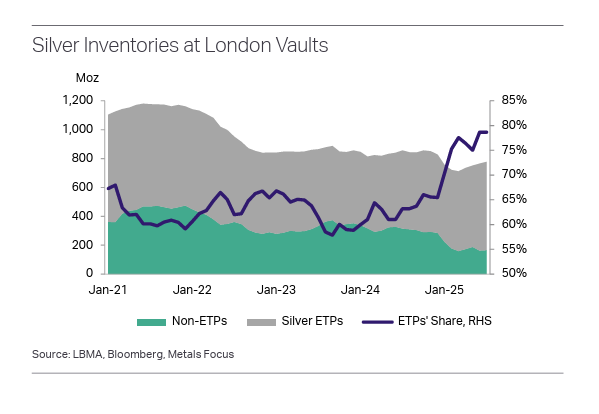
Metals Focus pointed out that even though there is plenty of silver in London, about 80 percent of it is held against physically backed silver ETFs. That’s the highest share since LMBA vault data became available in 2016.
“In other words, only 20 percent of London stocks (less than 170Moz) were available for lending or mobilization at end-July. With further ETP inflows recorded in August, this may help explain why physical supply has remained relatively tight.”
U.S. Investors Still on the Sidelines
While silver supplies continue to tighten, there is still plenty of untapped demand in the marketplace.
Despite rising prices, investor activity has remained subdued in key sectors, particularly in the U.S.
Both the CME and the Shanghai Futures Exchange reported declines in the number of silver futures contracts. Meanwhile, CFTC reports show that as of the end of August, net managed money longs were about 1/3 below June’s highs.
According to Metals Focus, “This decline in investor positioning can be partly attributed to elevated macroeconomic and geopolitical uncertainties throughout the year, which have diverted attention towards gold.”
Lower investor interest has also manifested in the physical market. Silver coin and bar sales have shrunk so far this year.
Silver Institute data shows that weak demand in the physical silver investment market is almost entirely being driven by Americans. Asian demand has been robust – especially in India, as already noted. European silver demand has shown signs of recovery, although it is coming off a relatively low base.
However, in the U.S., we’ve seen investors taking advantage of higher prices and selling to take a dollar profit. This is similar to the dynamic in the gold market, where U.S. investors have also remained on the sidelines.
According to the Silver Institute, retail silver investment is down about 30 percent in the U.S.
When U.S. investors finally get into the game, it could drive silver prices even higher.
“People will start looking at silver as a bargain, and even though it’s at $45 or $50 or $55, I think it’s going to gain momentum, and especially if it gets over that $50 price, I do think that we’re going to be challenging the $50 level by next year. So, we’ll see. And then if it breaks – and I think it breaks through that – it’s going to go quite a bit higher from there.”
Metals Focus also remains bullish on silver.
“Looking ahead, the factors constraining liquidity in the London market are likely to persist in the short-term, and so will continue to deliver price support. The investment case for silver (and gold) is also expected to remain compelling well into 2026. Anticipated interest rate cuts by the Fed from September onwards should reduce the opportunity cost of holding precious metals. Additionally, a global economic slowdown, concerns over the Fed’s independence, and rising anxiety about US debt levels should all support gold, and by extension, this will spill over into silver and drive further investment and eventually also price appreciation.”
Mike Maharrey is a journalist and market analyst for Money Metals with over a decade of experience in precious metals. He holds a BS in accounting from the University of Kentucky and a BA in journalism from the University of South Florida.
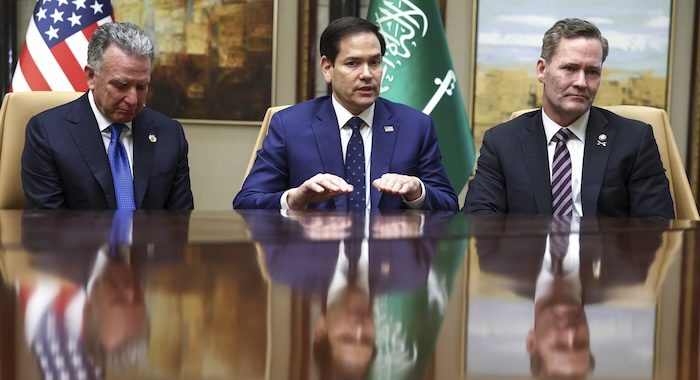
(Dave DeCamp, Antiwar.com) Israeli officials have told Axios that US Secretary of State Marco Rubio has signaled in private meetings that the US won’t oppose Israel if it moves to formally annex parts of the Israeli-occupied West Bank, something Israeli officials are considering doing in response to Western countries planning to recognize a Palestinian state.
US Ambassador to Israel Mike Huckabee previously told Axios that the Trump administration doesn’t yet have an official position on the possibility of annexing territory in the West Bank, but he has also made clear the administration won’t oppose the expansion of illegal Jewish settlements, which amounts to the de facto annexation of the territory they’re built on. Huckabee has also previously suggested that Palestinians in the West Bank could be moved to and that a Palestinian state could be carved out of a Muslim country.
Israeli Finance Minister Bezalel Smotrich, a West Bank settler himself, proposed a plan on Wednesday for Israel to annex 82% of the Palestinian territory. He said in a statement that the plan aims for “maximum territory and minimum Arab population.”
Map released by Smotrich’s office that shows the Palestinian population centers that wouldn’t be officially annexed by Israel, highlighted in yellow
According to a map Smotrich released, Israel would officially annex the vast majority of the West Bank while leaving six Palestinian population centers as islands that would be separated. The six cities include Ramallah, Nablus, Jenin, Tulkarem, Jericho, and Hebron.
Smotrich said that the Palestinians in the six islands would initially remain under the Palestinian Authority (PA), but then later form local administrations to prevent any sort of unified Palestinian entity in the West Bank.
Smotrich called on Israeli Prime Minister Benjamin Netanyahu to go through with the annexation. “And you, Mr. Prime Minister, will enter the nation’s history books for generations as a great leader who knew how to seize the moment, take advantage of the opportunity, and save Israel once and for all from the idea of dividing the land and the existential threat euphemistically called a ‘Palestinian state,’” he said.
According to The Times of Israel, Netanyahu is due to hold a meeting of his ministers on Thursday about the possibility of annexing territory in the West Bank in response to Western countries recognizing a Palestinian state.
The UAE warned on Wednesday that the Israeli annexation of the West Bank could undermine the Abraham Accords, under which the UAE normalized relations with Israel in 2020. “We call on the Israeli government to suspend these plans. Extremists, of any kind, cannot be allowed to dictate the region’s trajectory. Peace requires courage, persistence, and a refusal to let violence define our choices,” Lana Nusseibeh, a UAE official, told Reuters.
Speaking with reporters on Wednesday, Johnson told reporters that the convention was a “done deal,” while expressing his excitement.
Political parties used to hold midterm conventions in the 1970s and 1980s but later abandoned the practice to focus on general election conventions, Axios reported.
Trump had first floated the idea via Truth Social on Aug. 28, saying it would highlight Republican victories since he returned to office on Jan. 20.
“I am thinking of recommending a National Convention to the Republican Party, just prior to the Midterms. It has never been done before,” Trump wrote. “STAY TUNED!!!”
BREAKING: Trump floats a possible Republican National Convention before the midterm elections pic.twitter.com/EFSf4FMOku
Trump reportedly told Johnson he would brief Senate Majority Leader John Thune, R-S.D., and the Republican National Committee about the plan, Bloomberg reported.
RNC Committeeman Robin Armstrong endorsed the idea, telling KTRH: “This will be a way that we can tell people what the Republican Party has accomplished over the first two years of the Trump presidency, and I think it will help getting Republicans elected. So, I would be excited about it and in favor of it.”
Routh, who allegedly tried assassinating President Donald Trump at his Palm Beach golf course last September, is set to stand trial next week. Ahead of his trial, Routh tried calling a sexual partner as a character witness. Apparently, the unnamed lover would testify that Routh is peaceful because he refused to spank her ass in bed.
“[REDACTED] wanted me to spank/slap ass [hard] and I refused. I will not spank, choke or pull hair—NO,” Routh, who is representing himself, said in his list of intended witnesses.
Judge Aileen Cannon denied Routh’s request to call his former lover, calling it a “farce.”
🚨NEW: Alleged would-be Trump assassin Ryan Routh wanted to call a sexual partner as a character witness. The unnamed lover would apparently attest to Routh's peacefulness because he refused to spank her ass. Judge Aileen Cannon refused his request, calling it a "farce." pic.twitter.com/HVT7brMOj8
“This witness is somehow necessary, Defendant claims, because her sexual experience with Defendant evidences his purported peacefulness, gentleness, and nonviolence,” Cannon said. “No. Rule 17(b) is not a farce to bring about obviously ludicrous and absurd results in a court proceeding.”
Other witnesses Routh wanted to call included the Secret Service agent who shot at him, as well as Trump himself. Judge Cannon said the agent will already be testifying at the trial, while it’s too late to attempt to call Trump as a witness.
“And in any event, to the extent Defendant seeks to call President Trump as a witness to testify as to Defendant’s intent, it would be difficult to see the admissibility of any such evidence given the essential elements of Count 1, which focus “on the defendant’s intent rather than on the victim,” Cannon added.
The disclosure of Routh’s witness list—which also includes his son, who is a convicted pedophile; some of his former coworkers, and a slew of Middle East scholars—follows a motion in which he challenged Trump to a fight or a game of golf.
“I think a beatdown session would be more fun and entertaining for everyone. Give me shackles and cuffs and let the old fat man give it his worst,” he said in his recent motion.
“A round of golf with the racist pig. He wins he can execute me,” he said. “I win I get his job (sorry hillbilly Vance).”
To any reasonable observer, Routh’s recent legal moves might raise questions about his competency to stand trial. However, two doctors have deemed him fit to proceed.
Ken Silva is the editor of Headline USA. Follow him at x.com/jd_cashless.