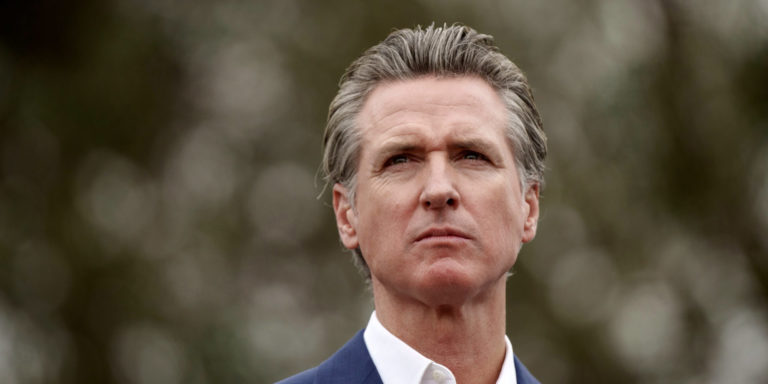
Newsom Asked. Donors Gave $347 Million. What Did They Get in Return?

(The Center Square) Some of the biggest checks in California politics never touch a campaign account. Most of them were written because Gov. Gavin Newsom asked for the money, totaling more than $340 million.

Elected officials are increasingly taking advantage of state laws that allow them to solicit unlimited sums of money from large corporations, unions, tribes or other special interest groups — even when those donors are seeking government contracts or involved in a government proceeding — so long as the money goes to a third party such as the politician’s favorite nonprofit.

Newsom didn’t invent California’s behested-payment system. He has simply used it more aggressively than any other elected official in state history.

Since taking office in 2019, Newsom has reported more than $340 million in behested payments. Records show he also directed more than $5 million as lieutenant governor. The next-largest total belongs to former Gov. Jerry Brown, who reported about one-tenth as much money.

California FPPC behested payments search results for Newsom
A California Fair Political Practices Commission database displays behested payment records associated with Gavin Newsom. Photo: California Fair Political Practices Commission Form 803 Database / Public records database

The arrangement is legal but only lightly regulated. Supporters say the money often goes toward good causes such as disaster relief. Opponents say it gives powerful donors another way to spend big at the request of politicians who can make decisions that affect their bottom line.

Among the beneficiaries: California Partners Project, a nonprofit founded by First Partner Jennifer Siebel Newsom. The nonprofit received 42 payments at the behest of the governor totaling $4.28 million – including $1.8 million from the Federated Indians of Graton Rancheria.

The tribe operates a major casino and has had significant gaming interests before state and federal officials. Newsom requested several large payments from the tribe to California Partners Project while the tribe was involved in battles over casino expansion and rival gaming projects. One of the tribe’s donations came at Newsom’s behest two weeks after the governor signed a new gaming compact between California and the tribe.

Some of this has been reported before. What has not been fully examined is the scale of Newsom’s behested-payment operation — and, donor by donor, what those contributors later sought or received from state government.

“No one is going to be upset that Meta is making a $1 million contribution to wildfire relief,” said Richard Briffault, a Columbia University law professor and campaign finance expert. “It’s hard to protest that, but if (A) it was the result of a solicitation from a governor, and (B) the governor does something for them? Then it’s an issue.”

Some of the biggest checks in California politics never touch a campaign account. Most of them were written because Gov. Gavin Newsom asked for the money, totaling more than $300 million.
Elected officials are increasingly taking advantage of state laws that allow them to solicit unlimited sums of money from large corporations, unions, tribes or other special interest groups — even when those donors are seeking government contracts or involved in a government proceeding — so long as the money goes to a third party such as the politician’s favorite nonprofit.
Gov. Gavin Newsom didn’t invent California’s behested-payment system. He has simply used it more aggressively than any other elected official in state history. Since taking office in 2019, Newsom has reported more than $343 million in behested payments. The next-largest total belongs to former Gov. Jerry Brown, who reported about one-tenth as much money.

‘That’s how the sausage is made’

California’s Political Reform Act was approved by voters in 1974 after the Watergate scandal. It includes strong language warning citizens about wealthy individuals and organizations using large sums of money to curry favor with politicians. It states public officials should conduct the public’s business “free from bias” and acknowledges previously “inadequate enforcement by state and local authorities.”

At the time, lawmakers hadn’t considered fundraising efforts by elected officials. Rules surrounding behested payments weren’t added to the California Political Reform Act until decades later.

Today, advocacy groups seeking greater transparency say it is nearly impossible to find a California politician willing to author a bill that would regulate themselves.

“It’s kind of the Wild West for behested payments,” said Sean McMorris, who manages the transparency and ethics program for California Common Cause. “These are powerful people directing the flow of money from special interests who need favors… It’s not going directly to the politician, but it is being directed by the politician.”

California Common Cause is a nonpartisan organization that has been seeking greater regulations around behested payments for years. McMorris believes lawmakers have written themselves a blank check.

“Even though you’re asking someone to contribute money to a good cause, you are still asking them to give money,” McMorris said. “That’s how the sausage is made… Even if it’s not an explicit quid pro quo, it doesn’t have to be. Both sides know how the game is played. Both sides know what the possible consequences are of giving or not giving.”

Who are the donors?

Newsom has previously warned Californians about “billionaires seeking to buy elections,” but behested payments don’t fall within the same rules as campaign donations.

A review by The Center Square has found that the largest donors of behested payments are rarely passive philanthropists with no government interests. Instead, they are often sophisticated organizations that employ lobbyists, monitor legislation, participate in regulatory proceedings, are engaged in lawsuits, or receive government contracts.

Facebook (aka Meta) has donated nearly $32 million at the behest of California’s elected officials, making it the largest donor in California’s Fair Political Practices (FPPC) database of behested payments.

The tech company has had extensive business with California officials before and after its donations, including but not limited to legal and regulatory fights against the California Attorney General’s Office. Facebook donated more than $26 million for COVID-19 relief in 2020. That same year, Facebook was under investigation for its privacy practices under the California Consumer Privacy Act, a landmark privacy law affecting companies that collect and monetize consumer data.

Records from the California Secretary of State’s Office show Facebook spent $1,566,147.78 on its lobbying efforts related to dozens of bills during California’s 2019-2020 legislative session. In some cases, the tech company focused its lobbying on “COVID-19 issues” and lobbied the governor’s office directly on “housing policy.”

Newsom later asked Facebook to contribute $650,000 to Enterprise Community Partners in 2021 to help Project Homekey with “housing for people experiencing homelessness,” as Facebook continued its lobbying efforts on housing. That same year, a federal judge dismissed a multistate lawsuit joined by California alleging monopoly conduct tied to Facebook’s acquisitions of Instagram and WhatsApp.

Facebook has not responded to a request from The Center Square for comment.

Gavin Newsom shakes hands with restaurant owner at Cuernavaca’s Grill in Bell, California.
California Gov. Gavin Newsom meets with restaurant owners at Cuernavaca’s Grill. Photo: Office of the California Governor / Courtesy of the Office of the Governor / Cropped from Original

FPPC records show Blue Shield of California and its affiliated entities have donated more than $21 million at the request of California’s elected officials, making it the second-largest donor. Blue Shield’s largest donation of $20 million was in 2020 to Enterprise Community Partners – at the request of Newsom – to support Project Homekey.

The Newsom administration later selected Blue Shield to serve as California’s third-party administrator for the statewide COVID-19 vaccine network in 2021. Blue Shield stated the company would perform the work “at cost,” would not profit from the state, and would bill only actual expenses supporting the vaccine network. The no-bid contract allowed Blue Shield to recover up to $15 million in non-staff expenses.

FPPC records show Blue Shield was also the recipient of $5,000 from the Asian and Pacific Island Legislative Caucus Foundation in 2015 at the request of California Attorney General Rob Bonta. At the time, Bonta was a member of the California State Assembly.

Mark Seelig, a spokesman for Blue Shield, declined an interview request from The Center Square and refused to answer questions related to Blue Shield’s government business at the time of its behested payments.

Instead of agreeing to an interview, Seelig emailed a statement touting Blue Shield’s transparency: “We regularly support candidates for public office from both major political parties who share our mission of improving healthcare access and affordability. Our contributions are fully and properly disclosed according to applicable laws.” 

“The politicians know very well who to go to,” McMorris said. “They’re not calling up an average person. They’re going to someone with a lot of money and someone who they know needs something from them… This whole behested payment thing doesn’t really work unless you can solicit people and entities who need things from you at the government level.”
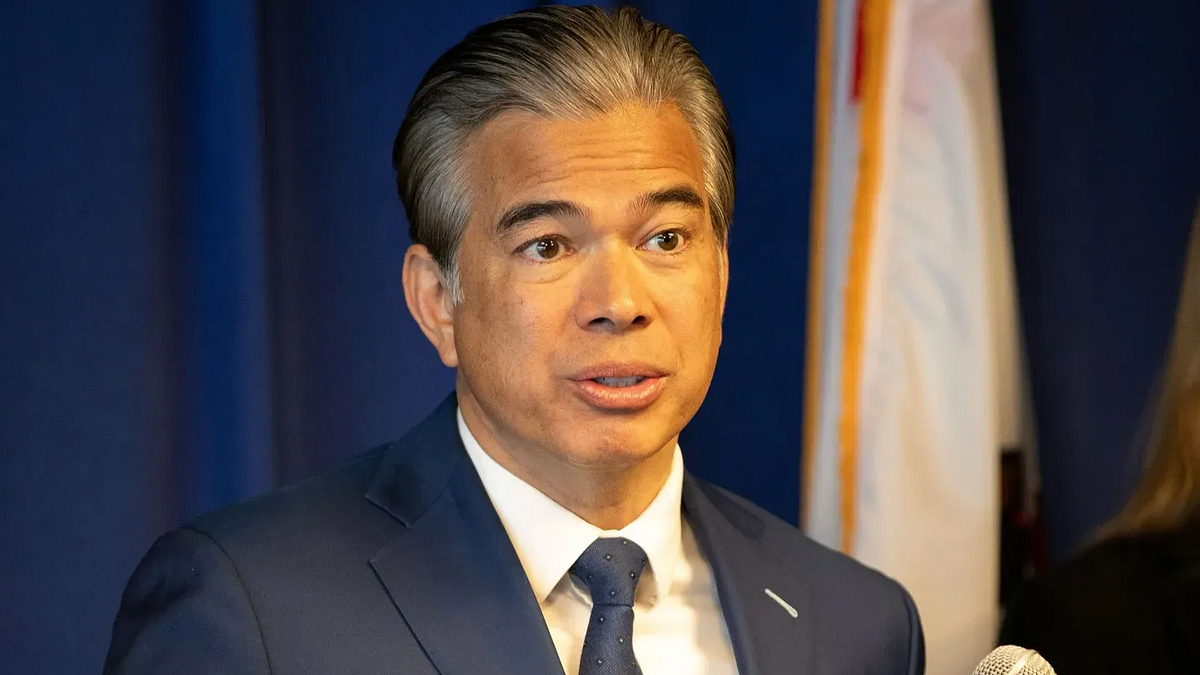
California Attorney General Announces Felony Weapons Charges

California Attorney General Rob Bonta speaks during a news conference, Feb. 18, 2025. Photo: State of California Department of Justice / Used with Permission.

Sierra Health Foundation, a Sacramento-based private philanthropy, and its separately-incorporated affiliate, the Center for Health Program Management, have operated on both sides of California’s behested payment system. Together, it has been the fifth-largest donor, giving nearly $14.9 million. It’s also one of the system’s largest recipients. FPPC records show state officials funneled $45.1 million into the organization through behested payments.

Newsom was responsible for nearly all of the donations moving in both directions. The nonprofit has been selected to administer government programs and receive state grants. A spokesperson has not responded to a request from The Center Square for comment.

Foundations commonly pool money and distribute it to community organizations. Although the practice is common, it raises more questions as the money becomes more difficult to track.

Newsom directed $381,820 from the nonprofit California Forward in 2022 and 2023 to pay former Los Angeles Mayor Antonio Villaraigosa for a newly-created infrastructure advisor position… that was never, technically, a state position. California Forward was listed as the only donor, at Newsom’s behest. The nonprofit was not required to disclose source donors who funded Villaraigosa’s salary.

Sarah Walsh, a spokeswoman for California Forward, stated she could not comment because “the decision-makers who were part of the project that resulted in behested payments are no longer at CA FWD.”

Briffault agrees it can be extremely difficult to follow the money and track down donors who might be trying to curry favor with politicians. He believes even the appearance of a conflict has previously been enough to dissuade politicians from soliciting money as aggressively as Newsom.

“A place like California? Almost any company or entity of this size is going to have business with the state,” Briffault said. “There’s no guarantee (of influence), but you could certainly think that’s what’s going on.”

Enforcement

FPPC rules specifically anticipate donors might have contracts or proceedings before a government agency. Rather than restricting behested payments in those cases, the law relies on disclosure to inform the public.

Newsom was recently fined $31,500 for his failure to timely file 36 behested-payment reports worth more than $5.5 million. The majority of those funds were raised for the California Fire Foundation.

Donors included BlackRock, PayPal, and Uber Eats.

Newsom also failed to timely report 18 other behested payment reports between 2019 and 2024, according to the FPPC. He was fined $10,500.

State law requires disclosure within 30 days. Newsom’s filings ranged from 64 to 229 days late.

The FPPC made no judgment about whether the donations themselves were appropriate, stating only that timely, transparent reporting “increases public awareness regarding potential attempts to influence.”

Last month, Newsom revealed he was under criminal investigation by the United States Department of Justice. He characterized the case as a personal attack and political intimidation tactic targeting the mother of his children.

“Anyone who has challenged Donald Trump has ended up on his hit list,” Newsom said. “Today, I proudly join that list… To get me, he’s coming after my wife, Jen.”

Newsom isn’t the first California politician to solicit payments for his wife’s nonprofit.

Google gave $500,000 in 2014 to a nonprofit employing Rob Bonta’s wife, Mia Bonta, at his behest. FPPC records show the donation to “Bring Me A Book” was meant to “support (an) early literacy initiative in the Bay Area for preschoolers through (the) use of technology.”

Records show Bonta also solicited several smaller donations for Literacy Lab, another nonprofit employing his wife. Two of the four donations were from Pacific Gas and Electric.

Bonta created his own nonprofit in 2017, the Bonta California Progress Foundation. FPPC records show he has funneled $122,500 into that nonprofit, which has also given money to Literacy Lab.

The case prompted Bob Stern, an original co-author of California’s Political Reform Act, to argue officials should be prohibited from directing money to an organization that employs their spouse.

California Attorney General Rob Bonta takes the oath of office, Jan. 6, 2023.
California Attorney General Rob Bonta takes the oath of office beside his wife, California Assemblymember Mia Bonta, Jan. 6, 2023. Photo: State of California Department of Justice / Used with Permission

Rob Bonta went on to become California’s attorney general. Mia Bonta went on to become a member of the California State Assembly.

Disclosure forms now ask officials to identify immediate family members who work for a nonprofit recipient of behested payments.

Both Newsom and Bonta have not responded to interview requests from The Center Square. Instead, Newsom’s chief deputy communications director emailed a statement broadly characterizing behested payments as “a lawful, bipartisan tool to support charitable and public-service efforts that benefit Californians (and that might otherwise be borne by taxpayers).”

The statement stopped short of addressing conflicts of interest or any specific payments made at Newsom’s request.
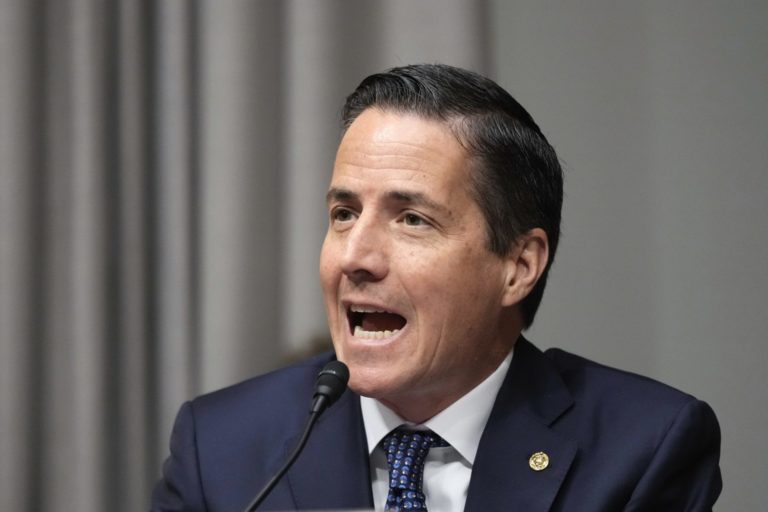

Sen. Bernie Moreno Says His Ex-Son-in-Law Max Miller Shouldn’t Be in the House

(Headline USAU.S. Sen. Bernie Moreno, R-Ohio, said his former son-in-law, U.S. Rep. Max Miller, R-Ohio, should not be serving in the House and should “seek professional help” as Miller defended himself against allegations of domestic abuse in a live video on X on Sunday.

Moreno, who has been publicly restrained in recent months as the bitter custody dispute has played out between Miller and his daughter Emily, said in a lengthy post: “If there are any basic standards of character required to hold elected office, Max Miller fails them. He should not serve in the House of Representatives.”

Moreno wrote that Miller “needs serious psychological help. He is a danger to my daughter, and I hold my breath every minute he has custody of my granddaughter.”

Miller, who has been endorsed by President Donald Trump, said Sunday that he will remain in his race for reelection before a Wednesday deadline to replace him. Democrats have seen a new opportunity in the northeast Ohio congressional seat as the Republican incumbent has faced mounting pressure over the domestic abuse allegations in a bitter and drawn-out custody battle with his ex-wife.

“I’m not dropping out of this race and I’ll win in November,” said Miller, who denied abusing his former wife and his daughter.

Asked on Sunday evening if Miller should resign, Trump said that “so far it’s accusations.”

“I’ll be looking at it,” Trump said.

Scrutiny of Miller has escalated in recent weeks

Accusations against Miller, who was a White House adviser during Trump’s first term, have been public for years but have recently drawn increased scrutiny as back and forth in the case has escalated.

Emily Moreno has said that Miller scalded, hit and threatened her while they were married. Miller denied those allegations in the video, as he has in the past.

“It’s incredibly upsetting,” Miller said, as he went through a list of the allegations.

Miller also said he had nothing to do with a broken collarbone on their 2-year-old daughter that led Emily Moreno to contact authorities. The pair, who were married in 2022 and finalized their divorce last year, have presented different theories about how the injury occurred, according to court filings and police reports detailed in an article in July in the magazine Mother Jones that first revealed the child’s injury.

Miller accompanied his announcement with the release of a voluminous cache of investigative and court documents, as well as audio and video clips, related to the custody dispute.

Spokesperson for Miller’s ex-wife says video was ‘shameful’

A spokesperson for Emily Moreno, Stefan Mychajliw, said Sunday that the video was “shameful.”

“No loving parent would have ever used their daughter as a PR pawn to save their own political career,” Mychajliw said. “Miller can lie and spin on X, but he cannot do so under oath in a court of law. We are confident that justice will prevail in court.”

Sen. Bernie Moreno’s statement on Sunday came after he had declined to comment on the specific allegations for months. Last week, a spokeswoman issued a statement saying the senator “will not litigate these matters in the media or respond to baseless public attacks.”

“Senator Moreno’s top priority is the safety and well-being of his daughter and granddaughter,” said the spokeswoman, Reagan McCarthy.

Potential GOP candidates eye Miller’s seat

The senator’s statement was prompting some hand-wringing behind the scenes in his home state, where Trump-endorsed candidates like Miller typically win with ease.

Miller’s Democratic opponent, Brian Poindexter, said no one facing such accusations “belongs in the halls of power.”

State Rep. Mike Dovilla, a U.S. Navy veteran and former presidential appointee to the Office of Personnel Management, and Kevin Coughlin, a former state senator and representative who ran for the U.S. House in 2024 and 2026, were among Republicans whose names were being floated should Miller drop his fall House bid, according to a high-ranking Republican who discussed the sensitive subject on condition of anonymity.

Democrats have recently called on Miller to resign, requested a congressional ethics investigation and suggested more help could be directed in the fall toward Poindexter.

Miller won reelection two years ago with just over 51% of the vote.

Adapted from reporting by the Associated Press

Trump Says He’s Holding Off on Attack That Would Have Inflicted ‘Military Terror’ on Iran

(Dave DeCamp, Antiwar.comPresident Trump said on Saturday night that he decided to hold off on launching major strikes on Iran that he said would have inflicted “military terror” on the country, which came after media reports said he was ready to significantly escalate the war.

“The USA is locked and loaded and ready to go against the Islamic Republic of Iran, at levels of Military Terror, Strength, and Power not seen since World War II. Despite this, we have just been asked by Iran, and other Middle Eastern Countries, to hold off any attack in that the perimeters of a deal has been agreed to,” the president wrote on Truth Social.

“This would include the Immediate, Complete, and Total OPENING OF THE HORMUZ STRAIT, and an end to Iran’s nuclear threat. Based on this request, I have agreed, for the future benefit of the WORLD and, likewise, the survival of a successful and prosperous Iran, to cancel the attack, subject to being able to rapidly make a DEAL,” he added.

So far, there have been no comments from high-level Iranian officials, but anonymous sources speaking to Iranian media denied Trump’s claim that Tehran had requested that the US hold off or that a deal had been reached to open the Strait of Hormuz.

“The Islamic Republic of Iran has reached no agreement on reopening the Strait of Hormuz, and the reports published in this regard are false,” an Iranian military source told Iran’s Fars news agency. “As long as the hostile actions and acts of malice by the United States continue, the Strait of Hormuz will remain closed.”

While Trump held off on escalating the war, US Central Command continues to enforce a blockade of Iranian ports. The Iranian military source said that transit through the Strait of Hormuz “will only be possible through the designated route, in coordination with the Islamic Revolutionary Guards Corps Navy and after obtaining permission to transit the Strait of Hormuz.”

Multiple times throughout the war, President Trump has threatened major escalations that would involve massive strikes on Iranian civilian infrastructure, but then backed down and claimed some sort of deal had been reached, only for Iranian officials to deny his claims.

This article originally appeared at Antiwar.com.

Washington Fires Force the Evacuation of 60,000 People

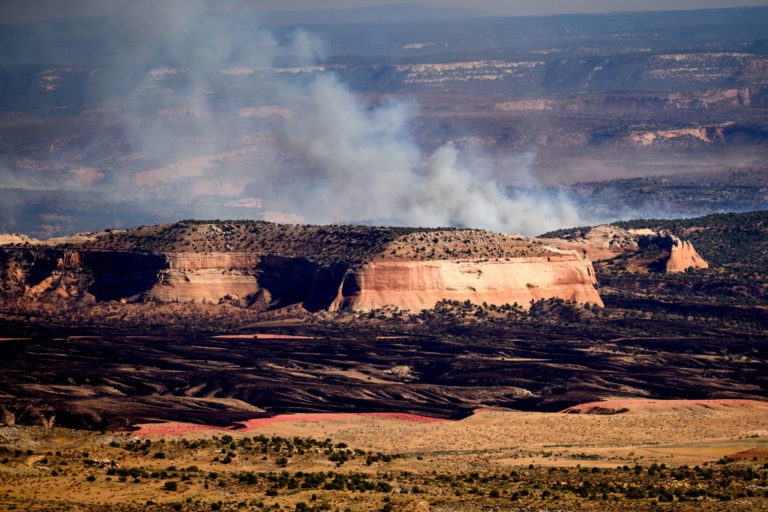
(Headline USAWildfires in eastern Washington state forced the evacuation of 60,000 people in the Spokane area while destroying at least 600 homes, businesses and other structures, authorities said Sunday.

The fires in and around Spokane, the state’s second largest city, burned about 8.2 square miles over the weekend and were among dozens of wildfires across the Western U.S. that stretched the ability of federal, state and local agencies to fight them.

A total of about 390 square miles has burned across the state, and some of the fires, including those in the Spokane area, have not been contained.

No one hurt or unaccounted for — so far

Fire and law enforcement officials said there had been no reports of injuries or people unaccounted for — but they stressed it was early in the response effort.

Officials also said that the evacuees in Spokane included patients at its U.S. Veterans Affairs hospital.

Video from the Spokane area showed buildings on fire, black smoke billowing up near neighborhoods, and the smoking ruins of homes, with only chimneys still standing. Several officials expressed concern that the area does not appear likely to get a break in coming days from the weather, which is expected to remain dry.

“We are not out of danger,” U.S. Sen. Maria Cantwell said during a news conference with federal, state and local officials in Spokane. “The next couple of days will be challenging.”

Investigators had yet to determine how the blazes started.

Grassland in flames in parts of Idaho and Oregon

Spokane was hardly the only place struggling to contain fires.

Crews using bulldozers and helicopters continued for a 10th day to fight a fire that has burned nearly 525 square miles of grassland in western Idaho and eastern Oregon. The area is home to cattle ranches, and authorities said the fire is threatening more than 600 homes and 800 other structures.

The weather in the area was expected to remain sunny — and dry — well into the week, with temperatures rising to more than 90 degrees Fahrenheit on Wednesday. Officials say the fire was caused by lightning.

The National Weather Service issued warnings about the air quality in eastern Washington, eastern Oregon, western and central Idaho and western Montana. It issued red flag fire warnings for parts of Utah and Montana and western Nebraska, and extreme heat warnings for the southern parts of Arizona, California and Nevada and northern Montana.

High winds make it hard to fight fires in Spokane area

While temperatures Sunday in Spokane were forecast to remain below 80 F, wind gusts from 35 mph to 45 mph had been expected by the afternoon, said Benjamin Cossel, public information officer for the federal response team from California called in Saturday night to deal with the fires.

“We have weather working against us, and we have terrain working against us,” Cossel said.

There were three fires in the Spokane area: the Old Trails Fire, the Fairview Fire and the Meadowview Fire. Washington Gov. Bob Ferguson declared a state of emergency Saturday, and the National Weather Service issued a “particularly dangerous situation” red flag alert for eastern Washington.

Cossel said that as it gets warmer during the day, cool air that’s closer to the ground and keeping winds at bay will rise, allowing those winds to move through the area. The Spokane River cuts through the city of about 229,000 people, and there are steep canyons on both sides that channel the wind.

“They push the fire through the canyons, up, up the slopes, and then outside the slopes and around,” he said. “It’s very, very hilly, very, very steep slopes, a lot of canyons that create really turbulent, really challenging sort of wind scenarios.”

Spokane sets up shelter for impacted residents

Authorities in Spokane set up a shelter at the city’s main convention center. About 400 people were staying there, officials said Sunday.

Spokane County Commissioner Chris Jordan said relatives of his were in an area affected by the fires and that they don’t know if their home is still standing. He said he spoke with them as they were leaving the home.

“They’re in their car and all they can see is smoke everywhere, and it was incredibly scary for so many people,” he said during the news conference.

Heather Rosenstrater, president and CEO of Avista Corp., the area’s electric and natural gas utility, said about 10,000 people were without power Sunday, down from a peak of 30,000. Avista needs to repair two transmission lines, she said, so it’s possible that demand for electricity over the next few days could cause outages.

Meanwhile, several larger fires continued to burn in less populated areas northwest of Spokane, including one about 80 miles from the city that has burned about 210 square miles. Another fire in eastern Oregon, about 70 miles to the northwest in the Stinkingwater Mountains, has burned about 336 square miles.

“The whole northwest is heavily impacted right now,” said Keila Vizcarra, the spokesperson for the federal team from California handling what’s been named the Big Grass Fire in western Idaho and eastern Oregon.

Adapted from reporting by the Associated Press

Pistol-Wielding Patriot Praised for Responding to Idaho Mass Shooter

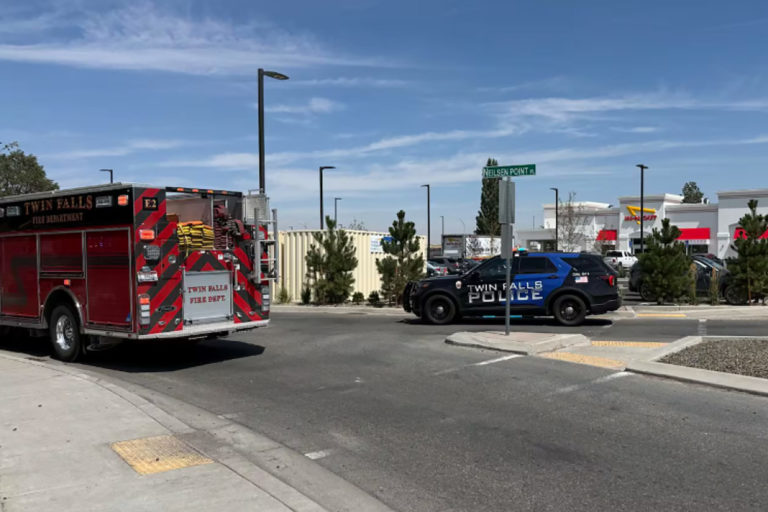
(Ken Silva, Headline USA) The suspect in a fatal shooting at a fast-food restaurant in Idaho died of a self-inflicted gunshot wound, police said.

The suspect was identified as 24-year-old Chad Williams.

Authorities said they are confident that Williams acted alone. In all three people died and seven were injured in the shooting at a recently opened In-and-Out Burger restaurant. Authorities said two of the injured were treated at a hospital and released, three were listed in stable condition and two were in critical condition.

Law enforcement’s identification of Williams came as rumors spread online that a citizen armed with a pistol stopped Williams’s rampage. Photos and videos are circulating of the citizen, identified as Jordan Salinas, returning fire at Williams. It’s unclear whether the person pictured with the pistol is indeed Salinas, or whether Williams was hit by him.

Salinas could not immediately be reached for comment.


Police were still trying to determine the shooter’s identity and motive, Twin Falls Police Chief Matthew Hicks said in a news conference earlier Saturday.

“We believe the threat to the community is over,” Hicks said. “It was a very chaotic scene.”

Ken Silva is the editor of Headline USA. Follow him at x.com/jd_cashless.

DNC Boss Clinging to Power as Critics Call for New Leadership

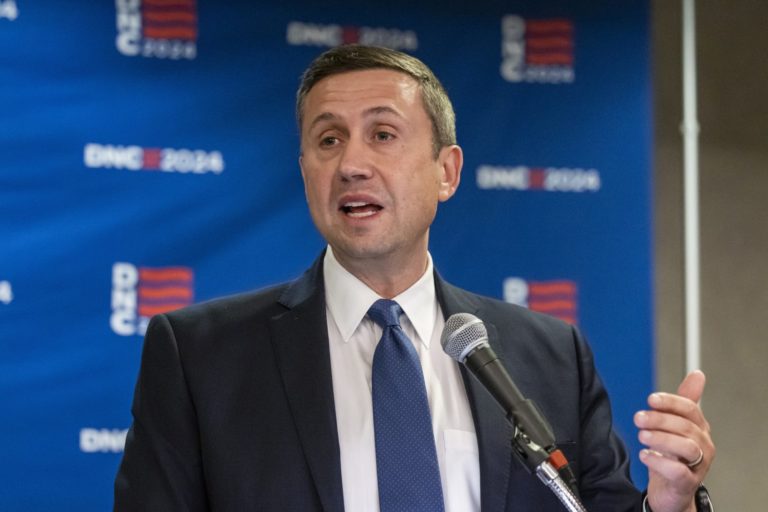
(Headline USAKen Martin is in survival mode.

Desperate to save his job as chair of the Democratic National Committee, he is avoiding media appearances, monitoring his critics’ social media posts and refusing — at least so far — to make any substantive changes at his troubled organization.

A half dozen state leaders and other committee members, most of whom spoke on the condition of anonymity to discuss internal conversations, described Martin as defensive and extremely distrustful of others, even some people on his own team, as calls for his resignation grow louder among Democratic operatives who lament his leadership decisions, lackluster fundraising and even his tendency to lash out in anger.

But there is no sign that the organization’s membership plans to replace Martin before the midterm elections in November, even as some wonder how much longer he can hold on. The drama threatens to undermine the party’s momentum in the battle to retake control of Congress from President Donald Trump’s Republican Party.

“I sense no movement from the DNC to make a change, and so that decision’s up to Ken. And he’s told me he’s in it, so I trust him on making that decision,” said Colorado Democratic Party Chair Shad Murib, a DNC member and strong Martin supporter. “What we’re seeing right now is a whole group of folks who live on Twitter and consultants fighting harder against Ken Martin than they’ve ever fought against Donald Trump.”

Martin did not grant an interview request. In a recent Substack post, Martin defended himself this way: “If the question is whether the Democratic Party will be ready to win — everywhere, at every level, in this election and for the decade ahead — the answer is a resounding yes.”

Martin’s critics are everywhere all at once and some want him out

As one of its most important responsibilities, the DNC is tasked with building out the party’s national infrastructure, including fundraising, to support the Democrats’ next presidential nominee. Yet few members of the next class of White House prospects are willing to speak out on Martin’s behalf.

Maryland Gov. Wes Moore, who has traveled to key states in recent weeks before a potential presidential bid, praised the DNC for embracing a new primary calendar that promotes more diverse states such as South Carolina and Nevada.

But Moore declined three separate times to answer directly when asked whether he has confidence in Martin heading into 2028.

“My confidence is in the people,” Moore told The Associated Press. “My confidence is in making sure that we have a system in place that actually allows the people’s voices to be heard.”

He said he is not looking for “wins on behalf of a political structure or party bosses.”

Others have been explicitly critical of Martin.

Shannon Watts, the former leader of Moms Demand Action and a member of the DNC’s finance committee in 2024, criticized Martin’s lack of communication with donors and key stakeholders. She said she was ready and willing to help Martin after he took over last year, but he never called.

She did, however, get a call from a DNC staffer urging her to delete a social media post that was critical of Martin. Such calls have become common occurrences in recent months.

“Ken needs to step aside. I think Ken knows he needs to step aside,” Watts said. “There’s a reason he’s worried he’s going to be fired and it’s because he’s not up to the job.”

Even those close to Martin, including senior members of the DNC leadership, privately complain that Martin is not doing more to maintain ties with committee members, donors and prominent outside officials. He was known for building strong relationships in his previous post as leader of the Association of State Democratic Chairs, which is largely why he was elected national chair.

His allies are baffled as to why he has not done the same in his new job. There are also lingering frustrations over how Martin handled the follow-up report on the 2024 election. He promised to release the document, then withheld it, then eventually made it public while saying it was too flawed to be helpful.

Dems look to a possible change but there’s no clear alternative right now

Few expect Martin to be replaced before the fall elections, largely because no clear alternative has emerged as the midterms loom. But members are looking toward the DNC’s winter meeting after the November contests — and before the 2028 presidential primary process begins in earnest — as the most likely time to make a leadership change.

Former Maryland Gov. Martin O’Malley has fielded calls to discuss a candidacy to replace Martin, according to a person with knowledge of the conversations who requested anonymity to discuss private discussions. O’Malley, who did not respond to a request for comment, finished a distant third in the DNC chair election last winter.

The growing chorus of criticism has shaken the confidence of Martin’s loyalists.

They were especially concerned about an essay this week by Rufus Gifford, the finance chairman for President Joe Biden’s reelection campaign, who warned that the DNC under Martin’s leadership was “spiraling toward irrelevance.”

“At this point, I think there is no saving Martin’s chairmanship. He is a good man with good intentions but simply not meeting this critical moment,” Gifford wrote on Substack. “As Democrats, the only solution is to acknowledge the problem and fix it. Now.”

One Martin ally likened the fallout from Gifford’s statement to the day after Biden’s disastrous debate performance that effectively forced him to abandon his reelection campaign.

Martin has stayed on the road but remained quiet

Martin got a lifeline this week from New York Rep. Hakeem Jeffries, the House Democratic leader, who said while campaigning in Pennsylvania that Martin “has my full support.”

Jeffries noted that Democrats have won the overwhelming majority of elections since Martin took over the DNC, which also coincides with Trump’s return to the White House. Jeffries also played down the party’s financial challenges.

Federal filings show that the DNC reported about $16.3 million in the bank with more than $18 million in debt at the end of June, compared with the Republican National Committee reporting more than $128 million in cash and no debt.

The DNC under Martin used the party’s Washington headquarters as collateral to secure a $15 million line of credit last fall. His critics seized on the decision as an example of financial mismanagement, although the building was used as collateral under former party chairs as well.

DNC officials note that the committee has actually raised more money under Martin than it raised in 2018, the last time the party did not have the White House in a midterm year.

“The current DNC has raised the most money of any DNC without the White House in the 198-year history of the Democratic Party,” Martin wrote recently on Substack.

While Martin has avoided national media appearances, which are considered a major responsibility for the chair, he has been traveling almost constantly to support party officials and key stakeholders across the country.

He visited six states over the past two weeks alone. This past week, for example, he met with civil rights leaders in Nashville, Tennessee, and mayors from across the country in Atlanta.

Kansas Democratic Party Chair Jeanna Repass said Martin should be praised for his commitment to strengthening state parties at a critical moment. Indeed, instead of hoarding the DNC’s cash, Martin is distributing it aggressively to needy state parties, just as he promised while campaigning for the chairmanship.

“This is a ridiculous conversation to be having right now,” Repass said. “If people don’t like Ken, they can have a conversation with him in two years. But right now, we all need to be behind the chair and keep our heads down and do our jobs.”

Adapted from reporting by the Associated Press

Democrat Congresswoman in Hospital after Serious Car Accident

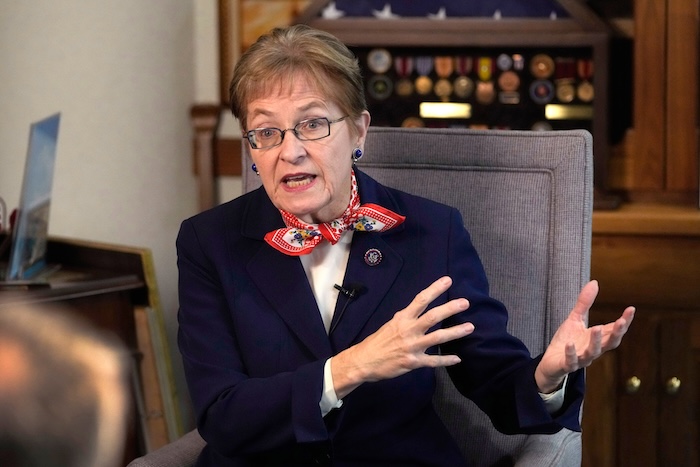
(Headline USAOhio Rep. Marcy Kaptur is being treated for non-life threatening injuries after a car accident in Toledo on Sunday morning, her office said Sunday.

Kaptur, 80, was a passenger in a vehicle headed to a church service “when the car she was traveling in was struck,” the statement from her office said. The statement said she is “active, alert” and “looks forward to returning to a full schedule soon.”

The House is on its summer recess so she was not expected in Washington this week.

Kaptur, the longest-serving woman in House history, is in a rematch for her closely watched seat against former state Rep. Derek Merrin. In 2024, she won by just more than the 0.5% margin that would have triggered an automatic recount, with a libertarian candidate snagging about 4% of the vote.

Her office said first responders from the Toledo police and fire departments arrived promptly on the scene and had “medical professionals helping to take care of those involved in the crash.” The statement said “we look forward to any additional information from Toledo Police as they investigate the accident.”

The Toledo Police Department’s traffic division did not immediately respond to a media query.

Adapted from reporting by the Associated Press

Dem. Frontrunner for Wisc. Gov. Has Concerning History of Mental Illness

(Ben Sellers, Headline USA) A newly resurfaced interview from 2023 shows that Francesca Hong, the frontrunner to win Wisconsin’s Democratic gubernatorial primary, has mental health issues.

Following the withdrawal of former Lt. Gov. (and failed 2024 Senate candidate) Mandela Barnes, the socialist-aligned Hong was enjoying a decisive lead going into the Aug. 11 Democratic primary to replace out-going Democrat Gov. Tony Evers.

Hong’s lead should concern conservatives for numerous reasons—not just because of her radical stances on issues like defunding the police, but also due to her history of recurring mental-health issues.

Hong, first elected to the state legislature in 2020, conducted an interview with Meal Magazine in 2023 to reflect on her experiences going from the owner of a ramen restaurant to the first Asian‒American in the Wisconsin Assembly.

She also spoke candidly about her mental illness, saying she had been institutionalized early in her adult life.

“At 18, I had a mental breakdown,” she told interviewer Steve Marsh.

“I didn’t actually walk at my high school graduation because I had been hospitalized for a week at a child psychiatric hospital,” she continued. “I just felt like nothing had meaning anymore. … And I found myself self-harming to feel something.”

She claimed that her desire to cut herself stemmed, in part, from the sense of isolation she felt as a first-generation American with Korean parents.

But her doctors seemed to think it was more of a psychotic mental imbalance.

“I was diagnosed with bipolar disease,” Hong said. “I was taking SSRIs and I’d overdosed on lithium. I didn’t know why I couldn’t connect with people deeper, and that pushes you into isolation.”

The disorder is clinically considered to be a “lifelong condition,” according to the Mayo Clinic.

It reared its head again in 2019, according to one X post in which Hong claimed to have had an anxiety attack at McDonald’s due to “old white people.”

Moreover, Hong reportedly cited the strains on her mental health as one of the factors that led to the 2024 closure of her restaurant, Morris Ramen, in downtown Madison.

But others noted that the restaurant was failing financially — due, in large part, to Hong’s insistence on paying a “living wage” by giving employees their “full salaries” during a partial COVID shutdown.

Hong and her then-husband, Matt Morris, relied on the Paycheck Protection Program to keep the restaurant afloat through the pandemic, but rising inflationary costs during the Biden administration took their toll, with employee salaries skyrocketing to a rate of $23-$25 per hour.

After the restaurant closed, Hong was sued by Capitol One over $30,000 in remaining debt. Her parents reportedly wound up footing the bill.

Critics now suggest Hong’s bipolarism is once again manifesting in her gubernatorial campaign, even though she may have gotten better at masking it.

Hong has been criticized for backpedaling on several alarming statements, including her prior public support for defunding police.

Showing clear hallmarks of dissociative disorder when questioned Tuesday about her stance on the controversial subject, she insisted that her Republican counterparts in the state Assembly were the real ones defunding the police.

A few days later, in an interview Friday with Fox News host Dana Perino, she claimed that the unpopular and inflammatory BLM slogan was simply dog-whistle language used by socialists to convey populist economic principles.

“I believe that as a democratic socialist, what that means is that I would like to put working-class people first over mega corporations,” she claimed.

She also insisted that “people can evolve.”

Hong went on to repudiate a key component of the Democratic Socialists of America platform that advocates for abolishing several branches of the federal government, including the U.S. Senate.

While she declared the position “nonsensical” during the Fox News interview, that was at odds with her past statements supporting the DSA proposals, according to constitutional law expert Jonathan Turley.

The mental health of candidates notably came into play in the 1972 presidential election, when Sen. Thomas Eagleton, D-Mo., was forced to withdraw as the Democratic vice-presidential candidate after his history of electroshock therapy became public. Republican incumbent Richard Nixon won in an epic landslide.

While the stigma over psychotic disorders has somewhat abated in recent decades, critics including the Daily Wire’s Matt Walsh and independent journalist Michael Shellenberger argued that the diagnosis should be “disqualifying when untreated.”

Ben Sellers is a freelance writer and former editor of Headline USA. Follow him at x.com/realbensellers.

Newsweek Admits ‘Trump Was Right’

(Ben Sellers, Headline USA) The typically anti-Trump publication Newsweek asserted on the cover of its Aug. 7-14 newsstand edition that “Trump was right” in an article about his military action to arrest ex-Venezuelan dictator Nicolas Maduro.

The cover illustration showed the U.S. president straddling the Gulf of America with one leg in the U.S. and another in the South American nation. It was a nod to a famous 1892 caricature of business magnate Cecil Rhodes, who helped to bring civilization to Africa but is, like Trump, now considered to be a controversial figure for his efforts.

Newsweek’s article on Trump likewise offered reluctant praise, although still couched and qualified with double-edged insults.

“The most tangible change for Venezuelans is that repression has diminished,” said Venezuelan opposition leader Gaby Arellano. “It has not disappeared, but it has decreased.”

The article noted that it was the U.S.’s ability to provide humanitarian aid that, thus far, had offered Venezuelans the greatest upside from newly normalized relations. A pair of massive earthquakes on June 24 killed at least 5,000 Venezuelans and did an estimated $20 million in damage.

“American aid is flowing into the country daily through channels the Chavista government spent years blocking,” noted Newsweek, referring to previous dictator Hugo Chavez, who first turned the oil-rich nation into a socialist wasteland in the early 2000s. “And by some measures Venezuelans trust the United States more now than they did before everything underneath them shook.”

Trump has also told Americans that the Venezuelan operation would help open up the free flow of oil reserves and keep rival superpowers such as China out of the Western Hemisphere.

Ben Sellers is a freelance writer and former editor of Headline USA. Follow him at x.com/realbensellers.

Leftist Activists Establish ‘Autonomous Zone’ in Madison

(Ben Sellers, Headline USA) Far-left activists with apparent ties to the Democratic Socialists of America recently established their own autonomous zone in Wisconsin’s capital city, Madison.

The tent cities have become a familiar sight in far-left cities where the destructive and disruptive occupation is openly encouraged by government officials.

Investigative reporter Andy Ngo noted that similar protests had occurred in Minneapolis and Seattle, both of which were ground zero for BLM riots during 2020’s ironically dubbed “summer of love.”

Seattle’s 2020 autonomous zone, alternately called the CHAZ and the CHOP, became a haven for lawlessness and, eventually, murder.

Wisconsin-based conservative activist Eric Bott, a regional vice president at Americans for Prosperity, alleged that the democratic socialist officials in charge of Madison’s municipal government were “providing financial support and protection” to the current insurrection.

The far-left occupiers purported to be demonstrating on behalf of Corey Ruiz, a serial criminal who was killed on July 22 after allegedly stabbing a police officer during an altercation.

Ruiz’s lengthy rap sheet included eight prior convictions over a 17-year period for charges including resisting, obstructing, threatening or injuring police officers.

Further feeding the perception that the insurrection was being conducted with the blessing and imprimatur of city officials was a press conference the day after Ruiz’s death, during which a group of activists, led by local real-estate agent Carlos LeMar Dixon, hijacked a police press conference.

Dixon, who is believed to be staging a write-in campaign for governor, previously admitted to stealing the campaign signs of rival candidates.

Ben Sellers is a freelance writer and former editor of Headline USA. Follow him at x.com/realbensellers.