House to Censure Republican Rep. Chuck Edwards for Conduct with Two Aides

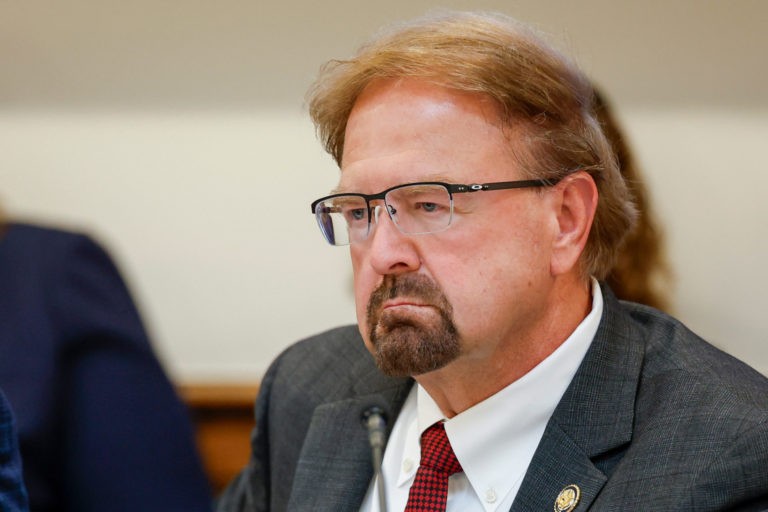
(Headline USA) he House Ethics Committee recommended Monday that the House censure Rep. Chuck Edwards, R-N.C., after finding that he engaged in persistent unprofessional and inappropriate conduct toward two young female aides in his congressional office.

A censure registers the House’s deep disapproval of a lawmaker’s conduct that does not meet the threshold for expulsion.

Edward has denied that any of his conduct was intended as a sexual or romantic advance, but the committee said his behavior would “lead a reasonable observer to interpret it as such.”

The committee highlighted numerous examples of actions it considered inappropriate, including Edwards providing the young women with lavish and recurrent gifts, making comments regarding their appearance and dress, inviting them to intimate dinners and vacations and sending notes regarding his affection. It found no evidence Edwards explicitly propositioned any person under his employ or engaged in any sexual activity with them.

“Both women were uncomfortable with his behavior (which they attempted to communicate) but were put in an untenable position by virtue of his status as their boss and a Member of Congress,” the Ethics Committee said in its report. “Representative Edwards was at minimum blind to that reality, and at worst, dismissive of the impact his inappropriate conduct had on the careers and well-being of two women on his staff.”

Members are prohibited from engaging in sexual harassment or making unwanted advances toward their subordinates. The committee said Edwards acknowledged at least some of the behavior at issue could be viewed as inappropriate. The committee said he also cooperated with the investigation. However, he has not acknowledged or taken responsibility for the harm he caused, the committee said.

The full House will have to vote before any censure would occur. Lawmakers are back in their home districts for almost the rest of the month, so that vote won’t occur for a few weeks at the earliest. The congressman’s office did not immediately respond to a request for comment about the Ethics Committee’s findings.

Adapted from reporting by the Associated Press.

Michigan Reports the First 2 US deaths Related to a Diarrhea-Causing Parasite

(Headline USA) Two people have died in the cyclospora outbreak in Michigan, state health officials announced Monday, the first deaths confirmed in the United States related to the microscopic parasite.

The Michigan Department of Health and Human Services said both people had underlying health conditions that may have been impacted by the intestinal illness and dehydration. The department said it would not provide additional information about the deaths.

Cyclospora is a microscopic, spherical parasite that commonly causes watery diarrhea “with frequent and sometimes explosive bowel movements,” according to the Centers for Disease Control and Prevention. Outbreaks tend to occur most often in the late spring and summer.

The CDC says the illness, called cyclosporiasis, is rarely deadly.

The heat-loving parasite infects the bowels and spreads through feces. In the past, people have been infected by consuming fruits or vegetables that were exposed to feces-contaminated irrigation water.

Cyclosporiasis is less common than other foodborne illnesses, including salmonella and E. coli. Many cases are never linked to a specific food or other source and, for years, few U.S. cyclospora outbreaks were reported. But the number started rising about a decade ago, with a particularly notable spike in 2018 and 2019.

Previously, 2019 saw the most reported U.S. cyclosporiasis cases, with about 4,700.

The Centers for Disease Control and Prevention said it is aware of more than 18,000 confirmed or suspected cases in the current surge. But CDC numbers can lag state reports, which suggest the number is more than 20,000 nationwide

Federal health officials have identified lettuce from Mexico served at Taco Bell locations in nine states as a source of the widespread outbreak. As of late July, the number of cases linked to the lettuce was 1,947, including at least 98 people who had to be hospitalized, according to the CDC.

The agency has said other “brands, restaurants, retailers, or distribution channels” could be tied to the outbreak as the investigation continues.

Adapted from reporting by the Associated Press

Authorities Seek a Motive in the Mass Shooting at an Idaho In-N-Out Burger

(Headline USA)  Investigators on Monday were trying to determine what led a 24-year-old man to open fire at an Idaho fast-food restaurant over the weekend, in an attack that left three people dead and seven others wounded before authorities say he killed himself.

Police Chief Matthew Hicks said Sunday detectives are confident that the gunman, identified as Chad Williams, acted alone in the shooting Saturday at an In-N-Out Burger in Twin Falls, a southern Idaho city of about 56,000 people.

He said Williams’ family is cooperating fully with the investigation.

An off-duty state trooper and a civilian fired on the attacker and diverted him from the restaurant, the chief said. Police haven’t disclosed their names or those of the victims. 

Twin Falls spokesperson Josh Palmer said Monday that police are still trying to identify next of kin.

Two of the wounded were treated at a hospital and released, three were listed as stable, and two others were in critical condition, police said Sunday.

An In-N-Out employee was among those killed, the fast-food chain’s owner, Lynsi Snyder, said in a statement. She didn’t identify the worker.

The restaurant, which opened July 24 as part of the California chain’s Idaho expansion, is in a busy shopping plaza, and hundreds of people were in the area when the shooting happened.

Lane Koehn, 34, said he was at a nearby stoplight when he saw someone with an AR-style rifle emerge from the drive-thru. A man with a pistol started firing at the shooter.

He then saw someone in an In-N-Out uniform drag a person, also wearing a uniform, bleeding from a gunshot wound to her chest across the parking lot. The employee, Koehn and the man with the pistol stayed until paramedics arrived for her.

“She was pretty bad off, but I don’t know. I hope she made it,” Koehn said.

He said the man holding the rifle fired at least three or four rounds, though it wasn’t clear if anyone in particular was targeted.

Video taken by a driver from across the street captured a shooter, who appeared to be dressed in black, walking up to a white car carrying a long rifle, opening the driver-side door and popping the trunk. The person then walked to the trunk and reached inside. At that point, the driver who shot the video left quickly, fearing that the man might be getting more weapons.

Nayeli Rodriguez, 40, of Burley, was inside waiting for food with her daughters when she heard shots from the kitchen. An employee said it was a shooting and told people to get down. Rodriguez said an older man tried to protect her and her daughters, and they were among the last to run outside.

“We were trying to get as far as we could and some angels let us in their car,” Rodriguez said via text message. “I left my car there in the parking lot.”

Adapted from reporting by the Associated Press

A Federal Judge Lets DHS Proceed with a Border Wall Through a Small Texas Town’s Levee System

(Headline USA) A federal judge is allowing the Department of Homeland Security to go ahead for now with plans to build a border wall through a levee system protecting a small Texas town on the border with Mexico, rejecting arguments by the town that the wall could lead to flooding.

The decision late Sunday marks a victory for the Trump administration as it races ahead with efforts to build a $46 billion wall along the U.S.-Mexico border from the Pacific Ocean to the Gulf of Mexico.

The town of Presidio, with a population of about 3,200 people, argued the wall could cause flooding and that the administration isn’t following the law as it rushes forward with its plans. The town’s development district sued earlier this year to stop the department from going forward with construction.

But the judge said in his ruling Sunday that they were unlikely to succeed on the merits of the case.

“For the foregoing reasons, despite the understandable concerns expressed by the plaintiff regarding the harms it and the plaintiff’s residents might sustain by the potential construction of the Smart Wall, the Court is compelled to deny the plaintiff’s motion for a stay,” wrote Judge Reggie B. Walton.

DHS has been charging forward with its wall-building plan with senior administration officials saying a first layer of the structure will be done by next year. In its push, the Secretary of Homeland Security has waived numerous regulations designed to protect the environment, wildlife, archaeological and Native American sites.

But the department has been running into opposition by landowners, environmental groups, Native American tribes and others who argue that the government’s rapid construction endangers environmental and religious sites and a way of life along the border. Opponents also question the urgency to finish the wall when migrant crossings from Mexico are already at extreme lows.

Lawyers for Presidio’s development district argued in a court hearing that the government’s plans could compromise the levee system protecting the town from flash flooding and that the government flouted a key act that requires it to seek permission from the Army Corps of Engineers before building on or near the levees.

“We are very disappointed that the court will allow this potentially disastrous construction to continue, but we remain committed to protecting the Big Bend area and those who rely on the threatened levees,” said the town’s development district in a statement Monday.

Presidio is protected by a series of berms and levees built in the 1970s and 1980s along the Rio Grande and tributaries to combat flooding.

In court documents, Presidio’s development district said Customs and Border Protection plans to “replace the earthen slope of the existing levee with a concrete wall, with 30-foot steel bollard panels installed on top.” The district said it asked the agency for more details but was told they can’t be shared due to “national security.”

The government has argued that there is no final plan for where the border wall will go or how it will be built. And the administration has maintained that it has the authority given to it by Congress to waive a vast swath of regulations to build the wall as it seeks to get the number of people crossing the border every day to zero.

In his ruling, the judge bolstered that argument, saying that it was clear “that Congress did not intend to limit the Secretary of DHS’s waiver authority.”

The government is also facing another lawsuit in Texas where an environmental group and a church preservation group have teamed up to oppose DHS’s plans.

Adapted from reporting by the Associated Press.

De-Dollarization Alert: China Set to Launch Alternative Global Payment System

(Mike Maharrey, Money Metals News Service) In another move that could speed up de-dollarization, China is set to launch a payment system using digital currency.

According to the Financial Times, the move could “reshape cross-border transactions, reduce reliance on the dollar, and draw Beijing closer to its ‘Belt and Road’ trading partners.

People familiar with the matter told the Times that the mBridge platform will be backed by central banks in China, Hong Kong, Thailand, and the UAE. A Hong Kong-based entity will oversee its operation. The blockchain-based platform will use central bank digital currency (CBDC).

In practice, participating central banks will issue wholesale CBDCs using a shared distributed ledger instead of moving bank deposits through multiple institutions.

According to analysts, mBridge has already processed around ¥470 billion in transactions.

Officials close to the matter say commercial banks could also use mBridge under the supervision of their central banks.

Sources said the fees for accessing mBridge will be half those of SWIFT and other international payment systems. Many smaller businesses will find the cost of mBridge appealing.

Weaponization of the Dollar

SWIFT once dominated international settlement. However, Institute of International Finance head of China research Gene Ma said it is fragmenting into a “system of competing networks,” with mBridge about to join the party.

The Society for Worldwide Interbank Financial Telecommunication (SWIFT) system serves as the global economy’s superhighway. In effect, it operates as a global financial messaging service, facilitating cross-border payments. As the SWIFT website puts it, “SWIFT is the way the world moves value.”

Since the dollar serves as the world reserve currency, SWIFT effectively facilitates an international dollar system.

After the invasion of Ukraine, the U.S. and its allies quickly imposed economic sanctions on Russia, and they escalated quickly. Officials initially indicated Russia would not be locked out of SWIFT, but a few days later, the United States, the European Union, the UK, and Canada issued a joint statement announcing SWIFT would disconnect “selected” Russian banks from the global payment system.

This weaponization of the dollar has many countries looking for alternatives that don’t involve the greenback.

China already operates a more traditional renminbi alternative to SWIFT known as CIPS. It reduces intermediaries and allows participating banks to clear RMB transactions more directly. The use of this system has surged since the beginning of the U.S.-Iran conflict. More than 100 countries have accessed the CIPS system to conduct cross-border transactions in yuan.

mBridge will complement CIPS.

Analysts say mBridge could further reduce dependence on traditional correspondent banking networks. Parties using the mBridge system will not need dollars, and settlements occur directly in participating digital currencies. This will allow participating parties to avoid traditional banking intermediaries and currencies.

As one analyst put it, CIPS upgrades today’s banking rails, while mBridge proposes building an entirely new set of rails for certain cross-border transactions.

Undercutting the Dollar

Guosen Securities chief financial sector analyst Wang Jian said mBridge could “strengthen China’s voice in the global monetary order and support the internationalization of the renminbi.”

It could also further undercut the dollar.

While mBridge won’t replace SWIFT and won’t likely knock the dollar off its perch as the global reserve currency, it could decrease global dependence on the greenback. And even a modest decrease in the demand for dollars could spell disaster for the U.S. economy.

Since the global financial system runs on dollars, the world needs a lot of them, and the United States depends on this global demand to underpin its bloated government. The only reason the U.S. can borrow, spend, and run massive budget deficits to the extent that it does is the dollar’s role as the world’s reserve currency. It creates a built-in global demand for dollars and dollar-denominated assets. This absorbs the Federal Reserve’s money creation and helps maintain dollar strength despite the Federal Reserve’s inflationary policies.

But what happens if that demand drops?

A de-dollarization of the world economy would cause a dollar glut. The value of the U.S. currency would further depreciate. At the extreme, global de-dollarization could spark a currency crisis. You and I would feel the impact through more price inflation, eating away at the purchasing power of the dollar. In the worst-case scenario, it could lead to hyperinflation.


Mike Maharrey is a journalist and market analyst for Money Metals with over a decade of experience in precious metals. He holds a BS in accounting from the University of Kentucky and a BA in journalism from the University of South Florida.


FBI Wants 158 Years to Disclose Records from Secret ‘Burn Bag Room’

(Ken Silva, Headline USA) The FBI wants roughly 158 years to produce nearly 1 million records from a secret room in the bureau’s headquarters, according to the transparency group Judicial Watch, which is suing for the records.

The secret room at FBI headquarters was revealed by FBI Director Kashyap Patel and then-Deputy Director Dan Bongino last year, shortly after they took office. Patel and Bongino said they found a trove of classified Russiagate records and other damning documents inside “burn bags” in a secret bureau room, which isn’t even in the blueprints of FBI HQ.

“There was a room [in FBI Headquarters], and we found stuff. A lot of stuff … hidden from us at least and not mentioned to us. And then found stuff in there. A lot is from the Comey era. We are working … right now to declassify,” Bongino said on Fox News in May 2025.

Upon Bongino’s disclosure, Judicial Watch filed a Freedom of Information Act lawsuit for the records in the previously hidden room. According to a status report filed last Thursday by Judicial Watch, the FBI wants to disclose 949,931 records at a rate of 500 per month—meaning it would take about 158 years to produce of all of them.

Judicial Watch and the FBI are scheduled to file a joint status report on Sept. 4 as they continue to dispute how the bureau is handling the group’s FOIA request.

The “burn bag” FOIA case is just one of a plethora in which the FBI is producing records at a rate that would take many years for complete disclosure.

In the 31-year-old Oklahoma City bombing case, for instance, the FBI was producing 500 pages of records per month in response to a 2024 FOIA lawsuit from Jesse Trentadue, who has been suing for documents about a CIA asset involved in the attack. In that case, a judge ordered the FBI to pick up its pace and start producing 2,000 pages per month.

In another case, the July 2024 Trump assassination attempt, the FBI revealed earlier this year that it has some 75,000 pages of documents about the alleged shooter, Thomas Crooks. Thus far, the FBI has made six productions of a few dozen records apiece—about 200 pages in total.

Meanwhile, the FBI continues to conceal records about sex criminal Jeffrey Epstein, the 9/11 terrorist attacks, and a slew of other cases.

Ken Silva is the editor of Headline USA. Follow him at x.com/jd_cashless.

Foreign Drunk Drivers Lose Visas Under Trump Crackdown

(José Niño, Headline USA) Foreign nationals who get arrested for driving drunk on American roads are now losing their visas, according to a report by John Binder of Breitbart News.

The State Department unveiled the policy this week and framed it around protecting the public. “The Trump Administration is keeping reckless foreign drivers off our streets by revoking visas and denying further travel to the United States,” officials wrote in a statement. “The State Department is keeping our streets safe from foreign nationals who drive impaired, disregard laws, and endanger Americans.”

Police recently booked one of the affected visa holders on drunk driving, disorderly conduct, resisting arrest with violence, and domestic violence charges, Breitbart reported.

“Outrageous and dangerous behavior that endangers American communities will never be tolerated,” officials wrote. “Visa revoked.”

Four more cases surfaced in a public post from the agency, and every one of them ended with the same two words.

A foreign national was arrested for aggravated DUI with a blood alcohol level nearly double the legal limit and a minor in the vehicle. Reckless behavior that puts a child’s life at risk on America’s roads is unacceptable. Visa revoked.

Another foreign national was arrested for DUI with a blood alcohol level more than 3x the legal limit. The driver then showed up drunk to a court-mandated DUI program. No more second chances for foreign visitors who put American lives at risk. Visa revoked.

A foreign national was arrested for DUI and causing injury to another person. Foreigners who threaten American lives aren’t welcome in the United States. Visa revoked.

One foreign national was arrested for driving with heroin and a blood alcohol level more than 3x the legal limit. Flagrant abuse of America’s hospitality won’t be tolerated. Visa revoked.

The agency credited the president directly for the shift. “Under President Trump, the State Department will continue to revoke the visas of foreigners who endanger our citizens and will always put the safety of Americans first,” officials wrote.

The Daily Signal broke the story first and put the number at five foreign nationals, reporting remarks from State Department spokesman Tommy Pigott. “These five foreign nationals disregarded our laws and put our citizens at risk through their dangerous and reckless actions on the road,” Pigott said. “We will not allow foreign nationals who violate the terms of their visa, break our laws, and endanger American citizens to remain in the United States.”

Breitbart pointed out that these driving cases land as Secretary of State Marco Rubio turns the same instrument on financial crime. Foreign nationals arrested and convicted of fraud are likewise losing visas under a push Pigott laid out on Breitbart News Daily in June.

José Niño is the deputy editor of Headline USA. Follow him at x.com/JoseAlNino  

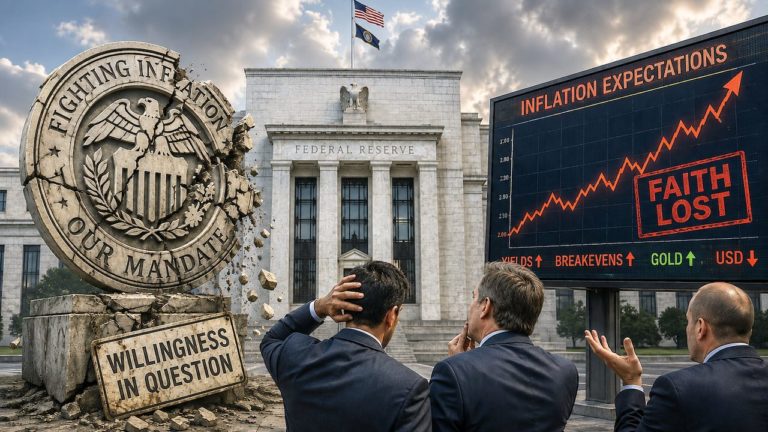
Yield Curve Twist Reveals Markets Losing Confidence in Fed’s Commitment to Slaying Inflation

(Mike Maharrey, Money Metals News Service) If you have a choice between believing the audio or the video, believe the video.

In other words, trust what you see if it’s different than what you hear.

Since Kevin Warsh stepped into his new role as chairman of the Federal Reserve, he’s been talking tough, insisting the central bank will not tolerate price inflation running hotter than the mythical 2 percent target. He doubled down on that messaging after the July FOMC meeting, saying, “You’ve heard this before, but we will deliver price stability.

But what has the Fed actually done?

Nothing.

Warsh & Company held interest rates steady in June and July. It was the fifth straight meeting without a rate change despite inflation remaining anchored well above the 2 percent target. And the central bank continues to run quantitative easing (QE) operations as evidenced by the expanding balance sheet. Since QE involves buying bonds with money created out of thin air, it is inherently inflationary.

The audio says this is a hawkish Fed. But the video tells a different story.

Believe the video.

The Fed’s Catch-22

I’ve been saying for months that the Fed will have a difficult time raising interest rates due to the Debt Black Hole dominating the economy. It’s easy to say, “We’ll fight inflation to our dying breath.” Engaging in that inflation fight when you know it will lead to the economy’s dying breath is a different matter.

The Fed remains in a Catch-22. It would undoubtedly like to hike rates and strangle price inflation once and for all. But it would also like to avoid crashing the economy.

And make no mistake. The economy is teetering on the edge. We have never reckoned with the malinvestments and bubbles created by the unprecedented monetary policy of the pandemic era, or even the money creation during the Great Recession. The economy is addicted to that easy money. That means it needs to cut rates to keep the debt bubble inflated.

It can’t do both.

Historically, the Fed has picked inflation over allowing the economy to sink (Think 2008 financial crisis and the pandemic). There’s no reason to think Warsh will be any different, his rhetoric notwithstanding.

The Markets Don’t Believe Warsh Either

I’ve been skeptical of Warsh from the beginning. Now the markets don’t seem to believe Warsh’s tough talk either.

Movement in Treasury yields indicates that investors don’t believe the central bank will follow through on its hawkish rhetoric.

After the Fed announced its decision to stand pat last week, yields on the long end of the curve spiked. The rate on the 10-year Treasury rose 5 basis points to 4.657 percent. Meanwhile, the 30-year Treasury bond yield surged 9 basis points to 5.193 percent.

This indicates that the markets believe the Fed is finished with rate hikes. As a CNBC report put it, “We think you’re going to keep short-term policy rates in check, and it’s going to create a ton of inflation later.

Reuters explained it this way:

“In this case, the twist that materialized around July 31 carried a clear message. Short-term yields, which are more sensitive to imminent Fed policy, stayed relatively anchored. Meanwhile, long-term yields pushed higher, reflecting expectations about sustained economic growth and persistent inflation rather than fears of additional rate hikes.”

Several mainstream analysts chimed in to argue the Fed’s inflation war is nothing more than a war of words. Citigroup global chief economist and former Fed employee, Nathan Sheets, said the markets appear to be voting “no confidence” in the Fed’s ability to control price inflation.

“He highlighted a problem and gave no strategy for solving it other than, ‘I’m a hawk, trust me,’ and the markets wanted more than that. I think part of it is if you lean too far into future ​hikes, then he’s disappointing the White House. And it is a balancing act between Warsh the hawk, which he is, and trying to stay on sides relative to 1600 Pennsylvania Avenue.”

Meanwhile, Warsh has hinted that the central bank may try to move the goalposts when it comes to calculating price inflation. Historically, the goal has been a Personal Consumption Expenditures Price Index (PCE) reading at 2 percent (The Fed likes the PCE because it understates inflation the most).

During his confirmation hearing, Warsh indicated that he preferred “trimmed averages” for price inflation.

As Reuters explained, in theory, this approach “trims off the fastest-rising prices and fastest-falling prices, leaving a more representative middle set of price changes that typically serves as a good indicator ​of where inflation is heading.

During his post-meeting press conference last week, Warsh again hinted that the central bank could set a new standard. Initially he insisted the PCE is “our number, we’re sticking with it.” But he added, “Who knows, come after next January, what we might say about strategy. I suspect the task forces might have something to add.”

Warsh has formed several task forces to evaluate the mechanizations of the central bank. His statement seemed to hint that the task forces may well move those goalposts.

Reuters summed it up, reporting that “the combination of Warsh’s repeated assertions of the ​need to tame inflation with no action to move it toward the 2 percent target and a hint that the goalposts themselves may change” was behind the recent jump in yields on the long end of the curve.

What Does This Mean for Gold and Silver?

Gold and silver had traded sideways over the last few months because the markets believed the Fed would hold rates higher for longer, and perhaps even hike, to take on persistent price inflation.

What happens if the market has lost faith in the Fed’s inflation-fighting credentials?

This twist in the yield curve also has implications for the dollar, signaling the possibility of a weaker dollar. Add to that the Treasury Department’s apparent willingness to buy yen to strengthen the Japanese currency, and we could see a persistently weakening dollar.

This is bullish for gold and silver.

While higher interest rates on the long end of the curve could be considered bearish (given that gold and silver are non-yielding assets), higher inflation is bullish because the metals are historically an inflation hedge.

Furthermore, it’s important to consider real interest rates, not just the nominal yields quoted on TV.

The real interest rate is simply the stated rate you see on the news adjusted for price inflation.

To calculate the real interest rate, you take the quoted interest rate and subtract CPI.

The Federal funds rate is currently set at 3.5 percent. When you factor in the CPI of 3.5 percent, the real rate is only 0 percent. (3.5-3.5=0).

Note that in a low-interest rate environment or if price inflation is particularly high, real interest rates can go negative.

For instance, if the CPI is 3.6 percent, the real interest rate would be -0.1 percent.

When you factor in real rates, it’s easy to see higher yields aren’t necessarily bearish for gold and silver. It may feel like you’re earning a good yield, but your gains are eaten up by inflation.

So, even if yields on the long end of the curve continue to rise (and they likely will if we are in fact in the early stages of a secular bear market in bonds), real yields will remain relatively steady, and perhaps even start to fall, as inflation continues to run hot.

And if the economy turns over and the markets collapse, the Fed will almost certainly rush to cut rates and ramp up QE.

Money Metals CEO Stefan Gleason explained how interest rates and price inflation interact in the real world.

Summing it all up, Warsh will undoubtedly continue to talk tough on inflation.

But remember, watch the video.

It appears that’s exactly what the markets are doing.


Mike Maharrey is a journalist and market analyst for Money Metals with over a decade of experience in precious metals. He holds a BS in accounting from the University of Kentucky and a BA in journalism from the University of South Florida.

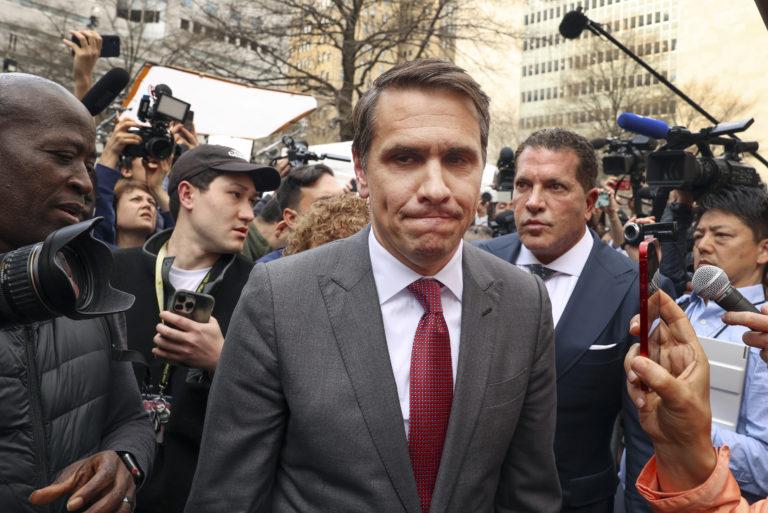
DOJ Rescinds Weaponization Fund in Exchange for Blanche Support

(Headline USAActing Attorney General Todd Blanche has issued a formal order terminating President Donald Trump’s $1.8 billion “anti-weaponization fund” to compensate conservatives persecuted during the Biden administration—a move that follows weeks of negotiations with two Republican senators who were blocking his nomination to become attorney general.

A spokeswoman for Texas Sen. John Cornyn, one of the senators holding up Blanche’s nomination, confirmed the deal, which comes ahead of a Tuesday confirmation vote for Blanche’s nomination in the Senate Judiciary Committee. The other GOP senator, North Carolina Sen. Thom Tillis, did not have immediate comment.

Blanche said at a June hearing that the Justice Department would not move forward with the fund to compensate those who believe they were unfairly prosecuted. But Cornyn and Tillis, both members of the Judiciary panel, have said they wanted to see the promise in writing before they endorsed Blanche’s nomination — especially as Trump continued to express support for the idea.

In a statement late Sunday, Blanche said the order came after “good faith discussions.”

“My team and I have met with committee members and Senators over the past several weeks and addressed any concerns or outstanding questions,” Blanche said.

DOJ order says ‘beyond any doubt’ that fund is dead

In a statement accompanying the order, the Justice Department said that “although the Acting Attorney General has repeatedly advised Congress through testimony, including under oath, as well as in written responses, that the Fund is not moving forward, and the Department has repeatedly represented to district courts that the Fund is not moving forward, today’s Order officially rescinds the May 18, 2026 Order.”

Since the settlement of the president’s lawsuit against the IRS was announced, “No Members were appointed; no funds were transferred; no process for receiving claims was established; no claims were paid,” the order says. “This order establishes, beyond any doubt, that there is no Fund.”

The document released by Blanche on Sunday night also limits the scope of another provision of the settlement that provided broad immunity for Trump and members of his family from tax audits.

The deal clarifies that the tax audit immunity agreement “applies by its terms only retroactively” to claims open at the time of the settlement and does not protect the president from examination of future tax filings.

Trump continues to express support for his settlement

The two sides have been negotiating for weeks, but Trump has said repeatedly during the talks that he thinks the fund should go forward and threatened to move forward with it if Blanche was not confirmed.

After the Thursday vote was delayed, Trump said in a social media post that he might pull Blanche’s nomination and resubmit it after Cornyn and Tillis leave office next year.

On Sunday evening, Trump said that people who had faced charges from the Jan. 6, 2021, Capitol protest and could have benefited from the fund had “their lives destroyed.”

“This would be a reimbursement for the pain that they suffered,” Trump said. “A lot of people like it.”

The Justice Department said the court’s demands were “unnecessary.”

Adapted from reporting by the Associated Press

Zelenskyy Wants Elon Musk’s Help to use Starlink to Strike Russia

(Headline USAUkrainian President Volodymyr Zelenskyy has pitched President Donald Trump and other American officials on helping Ukraine win permission from tech titan Elon Musk to use his Starlink satellite communications system to guide strikes inside Russia.

The push for expanded use of Starlink comes as Zelenskyy looks for alternate ways to mitigate the need for U.S. Patriot air defense systems to thwart the steady barrage of Russian missile and drone attacks on Ukrainian territory. The interceptors are in shorter supply as the U.S. and Israeli war against Iran continues to rage, and Trump on Friday appeared to back away from a recent commitment to give Ukraine a license to produce them.

Zelenskyy made the request directly to Trump in an Oval Office meeting this week during his whirlwind trip to Washington, according to one person familiar with the matter. He also told lawmakers later on Capitol Hill that he wanted Starlink to help with targeting inside Russia, according to a person in the room. Both officials spoke on the condition of anonymity to discuss the sensitive private discussions. Trump did not commit to Zelenskyy’s request.

Zelenskyy has been pushing to expand Starlink use for weeks

Musk has allowed the Ukrainians to use Starlink inside their own territory, including in Ukrainian regions occupied by the Russians, but has restricted use of the satellite system inside Russia.

Zelenskyy has been making the case for expanded use of Starlink with U.S. officials for at least several weeks. The White House, the Ukrainian Embassy in Washington and officials at SpaceX, which owns Starlink, did not immediately respond to requests for comment on Zelenskyy’s request. Zelenskyy’s efforts to get Musk’s permission to use Starlink to help with Ukrainian attacks inside Russia was first reported by The Atlantic.

Granting permission for an expanded use of Starlink could come with risk for Musk. The Associated Press reported in December that two NATO-nation intelligence services suspect Russia is developing a new anti-satellite weapon to target Musk’s Starlink constellation with destructive orbiting clouds of shrapnel.

The intelligence findings were shown to the AP on condition that the services involved were not identified, and the news organization was not able to independently verify the findings’ conclusions.

Russia views Starlink as a grave threat, the findings indicate. The thousands of low-orbiting satellites have been pivotal for Ukraine’s survival against Russia’s full-scale invasion, which began in February 2022.

Ukrainian leader also pitched US lawmakers during recent visit

Zelenskyy had traveled to Washington to attend Sen. Lindsey Graham’s memorial service and used the visit to check in with Trump and allies on Capitol Hill.

Zelenskyy visited the Capitol following his meeting with Trump in the White House earlier in the day. Senators said the requests the Ukrainian president made were similar to what he had told them earlier in July during a meeting at the NATO summit in Turkey.

“They need access to Starlink long term to make their longer-range and intermediate-range systems more accurate,” said Sen. Mike Rounds, a Republican from South Dakota, who is a member of the Senate Armed Services Committee.

“They prefer to be exactly on target, as opposed to, in the general area,” Rounds said. “He made that pretty clear.”

Zelenskyy spoke with lawmakers late Tuesday evening ahead of a Senate vote on a punishing new Russia sanctions package, which advanced toward a final vote expected next week.

Zelenskyy also reiterated Ukraine’s need for more U.S. Patriots and the previously discussed licensing agreement so Ukraine could start producing the system in house, said Rounds, who was part of the delegation of U.S. lawmakers at the NATO conference in Ankara.

“There was a consistency from what President Zelenskyy shared with us in Turkey two weeks ago to what he shared with us again once again, in terms of what their needs are,” Rounds said. “It’s pretty straightforward.”

Trump appears to edge away from Patriots licensing commitment

But Trump appeared to edge away from the earlier commitment to give Ukraine a license to make Patriots for its military needs during a gathering of his Cabinet at the presidential retreatat Camp David, Maryland, on Friday.

Trump at the NATO summit in Turkey declared “we’ll give them the right to make Patriots” to counter missile attacks from Russia in their more than four-year war.

The president told reporters on Friday that the licensing matter remains under discussion and said he hasn’t made a decision on it.

“We’re talking about it. But it’s a hard thing to give away that kind of technology,” Trump said.

Trump’s relationship has improved with Zelenskyy as Ukraine has gained strength on the battlefield with Russia in recent months. And Zelenskyy has sought to portray that his war with Russia is connected to the U.S. and Israel’s conflict with Iran.

U.S. intelligence has shown that Tehran provided Russia with drones to use against Ukraine. More recently, Russia has prepared to ship drones for Iran, including upgraded versions of the technology that Tehran originally supplied to Moscow after its invasion of Ukraine, according to U.S. and European officials.

Zelenskyy said ahead of this week’s visit to Washington that he’d share evidence with the United States that shows Russia is assisting Iran in targeting U.S. bases in the Middle East via satellite surveillance.

Zelenskyy also has been making the case to the Trump administration that his country is well positioned to help the U.S. counter Iranian drone attacks on U.S. bases in the Middle East and Gulf allies’ infrastructure.

“He has been very emphatic they are going to provide more aid to us in unmanned warfare, aerial unmanned warfare, which has been so instrumental in Iran — his people have been there, they’ve been providing technology and know-how — and they’re ready, willing and able to do it in even greater magnitude,” said Sen. Richard Blumenthal, a Democrat from Connecticut, who sits on the Armed Services Committee. “He was very emphatic on that point.”

Adapted from reporting by the Associated Press