Central Bank Gold Buying Accelerated Again in June

(Mike Maharrey, Money Metals News Service) Gold buying accelerated again in June as central banks took advantage of the softer price environment to add to their reserves.

According to the latest data compiled by the World Gold Council, central banks globally added a net 51 tonnes of gold to their reserves in May. That was up from 41 tonnes in May

The Gold Buyers

Poland has consistently led the world in gold accumulation over the last couple of years, and that trend continued in June. The National Bank of Poland added another 19 tonnes to its holdings.

So far this year, the Polish central bank has expanded its gold reserves by 82 tonnes.

The National Bank of Poland now holds 633 tonnes of gold, making up about 30 percent of its reserves.

Poland led central bank gold buying in 2025, adding 102 tonnes of gold to its holdings.

Late last year, the National Bank of Poland issued a statement saying it plans to purchase up to 150 more tonnes of gold, raising its holdings to a maximum of 700 tonnes.

NBP Governor Adam Glapiński said the increase in gold reserves would elevate Poland to an “elite” status.

“This will place Poland among the elite 10 countries with the largest gold reserves in the world.”

The Polish central bank already holds more gold than the European Central Bank. To put the country’s gold reserves in context, the NBP only held 14 tonnes of gold in 1996.

China has reported increases in its official gold reserves for 21 straight months, and it has ramped up the pace of accumulation. In June, China reported a 15-tonne increase in its official gold reserves. That follows a 10-tonne official purchase in May.

Year-to-date, the Chinese Central Bank has officially increased its gold holdings by 40 tonnes. China now officially holds 2,346 tonnes of the yellow metal, accounting for about 9 percent of its total reserves.

Notice the emphasis on “official.”

China is among the central banks that are likely to hold significantly more gold than they publicly disclose. As Jan Nieuwenhuijs has reported, the People’s Bank of China is secretly buying large amounts of gold off the books. According to data parsed by the renowned Money Metals researcher, the Chinese central bank is currently sitting on more than 5,000 tonnes of monetary gold located in Beijing – more than TWICE what has been publicly admitted.

The mainstream is finally taking notice. Last month, Goldman Sachs picked up on China’s undisclosed purchases, and analysts at BMO Capital estimated that Chinese gold reserves could surpass the U.S.’s within five years.

Uzbekistan sold gold in April but flipped back to buying in May, adding 9 tonnes of gold to its reserves. The Uzbeks remained in a buying mood in June, expanding its reserves by 9 tonnes.

The Uzbek central bank has primarily been in a buying mood this year. Despite April’s 1-tonne sale, Uzbekistan has increased its gold holdings by 412 tonnes. The country holds about 87 percent of its reserves in gold.

It is not unusual for central banks that buy from domestic sources, such as Uzbekistan and Kazakhstan, to pivot back and forth between buying and selling.

Speaking of Kazakhstan, its central bank increased its gold holdings by 7 tonnes in June, following a 7-tonne purchase in May. The Kazakhs have increased their gold reserves by 27 tonnes net this year. Its 368 tonnes of gold account for about 78 percent of its reserves.

The Monetary Authority of Singapore bought 4 tonnes of gold in May. It was the country’s first purchase since September 2025. It followed up with another 7-tonne expansion of its gold reserves in June.

The Czech Republic has been one of the most consistent gold buyers over the last few years. The trend continued in June with yet another 2-tonne purchase.

The Czechs have adopted a slow, steady approach, buying gold for 39 straight months. The country added 20 tonnes to its holdings last year. It now holds 81 tonnes of gold. Czech officials say they plan to increase gold reserves to 100 tonnes by 2028.

Other buyers in June included Jordan (3 tonnes), Ghana (1 tonne), and Georgia (1 tonne).

The Gold Sellers

The 63 tonnes in net gold purchases in June were reduced by 11 tonnes of net selling.

Russia was once again the largest seller in June, reducing its reserves by 9 tonnes. The Russian central bank has consistently sold gold this year as it copes with the impacts of economic sanctions and a wartime economy.

So far this year, the Russian central bank has reduced its gold reserves by 43 tonnes, to 2,292 tonnes.

After holding reserves steady in April, the Central Bank of Turkey sold 1 tonne of gold in May.

Turkey has been selling small amounts of gold to support its currency amid the U.S.-Iran War oil shock. The Turkish central bank decreased its gold reserves by 2 tonnes in June following a 1-tonne sale in May.

Turkey sold a large amount of gold earlier this year to backstop the lira.

The Big Picture

Looking at the trends, central bank gold buying moderated in 2025 but remained far above the recent historical average. Official net full-year buying came in at 863.3 tonnes. That was down 21 percent year-on-year, charting the lowest level since 2021.

However, although central bank gold purchases declined last year, they remained well above the 2010-2021 annual average of 473 tonnes.

Last year was the fourth-largest expansion of central bank gold reserves on record. The all-time high was set in 2022 (1,136 tonnes). It was the highest level of net purchases on record, dating back to 1950, including since the suspension of dollar convertibility into gold in 1971.

The surging gold price was likely a factor in slowing central bank gold accumulation. As the World Gold Council put it, the higher price prompted “a more cautious approach.”

“This highlights that central banks are not insensitive to price dynamics, even as their long-term strategic interest in gold remains firmly intact.”

In the latest World Gold Council survey, central bankers overwhelmingly said they expect global gold reserves to continue growing in the next 12 months. They seem to be putting their money where their mouths are. With prices moderating, it appears that several central banks are taking advantage of the recent correction to accumulate gold more quickly.


Mike Maharrey is a journalist and market analyst for Money Metals with over a decade of experience in precious metals. He holds a BS in accounting from the University of Kentucky and a BA in journalism from the University of South Florida.

What Is the PCE and Why Is It the Fed’s Favorite Inflation Gauge?

(Mike Maharrey, Money Metals News Service) When we talk about inflation, we usually focus on the Consumer Price Index (CPI). However, the Federal Reserve’s “preferred” inflation measure is the Personal Consumption Expenditure (PCE) index. What’s the difference and why does the Fed prefer the PCE?

The two price inflation measures rely on significantly different methodological approaches, and central bankers prefer the PCE because it understates price inflation more than the CPI.

Keep in mind that neither of these metrics measures “inflation” as historically defined by economists (a rise in the supply of money and credit). CPI and PCE measure price inflation (a symptom of monetary inflation).

CPI

As the name suggests, the CPI measures changes in prices paid by consumers. The Bureau of Labor Statistics produces CPI data utilizing household surveys and price collection.

To determine the (price) inflation rate, the BLS uses a “basket” of goods. They created various spending categories, including shelter, food, energy, healthcare, etc., using household surveys. Analysts collect around 80,000 prices from retailers and service providers each month and calculate the change in the price of that entire basket using a complex system of formulas and hedonic adjustments.

This basket of goods remains fixed, generally for about 2 years, and allows much less substitution between categories than the PCE. Even if the price of beef skyrockets, the formula generally assumes consumers will continue buying the same amount of beef until the next basket update.

Many economists prefer CPI for long-term planning because it doesn’t attempt to estimate substitution effects (an extremely subjective undertaking) and is rarely revised after publication, making it a more stable metric for contracts and cost-of-living adjustments.

However, the CPI has its limitations. We know the CPI understates price inflation because the formula was adjusted to do so in the 1990s.  Based on the formula used in the 1970s, CPI is closer to double the official numbers. So, if the BLS used the old formula, we’d be looking at CPI closer to 6 percent. And using an honest formula, it would probably be worse than that.

PCE

The PCE is a much broader measure of prices and is a component of GDP. This metric not only includes purchases made directly by households, but it also factors in purchases made on behalf of consumers, including employer-provided health insurance and spending by non-profit organizations serving households.

The Bureau of Economic Analysis generates the PCE report.

Instead of asking consumers what they buy, the PCE compiles data based on what businesses sold. It compiles information from a wide variety of sources, including Census Bureau retail surveys, manufacturer shipment data, hospital and physician revenues, utility revenues, airline ticket sales, and financial services, along with other business and government data.

Analysts use this data to estimate total consumer spending in each category. They then weight each category based on how much consumers actually spent by calculating current expenditure shares. They update the weight assigned to each category monthly.

Significantly, BEA analysts try to estimate the substitution effect when prices rise. Their formulas assume people will buy less beef when the price spikes, and the formula will reflect this assumption.

You can think of the difference between the CPI and the PCE this way:

  • CPI asks“How much more expensive is it to buy the same basket of goods and services?”
  • PCE asks“How much more expensive is it to maintain the same overall standard of consumption, even if consumers adjust what they buy?”

Why Does the Fed Love the PCE?

As I mentioned, the Federal Reserve prefers the PCE. It officially set 2 percent core PCE as its target in 2012.

Why?

Central bankers will tell you the PCE provides broader coverage of consumer spending, that its chain-weighting formula better captures evolving consumer behavior, that it is consistent with other data sets, including the GDP, and that the frequent revisions improve accuracy.

That all sounds good, but there’s a simpler explanation.

The PCE understates price inflation even more than the CPI.

In other words, it consistently tells a better inflation story. And central bankers like nothing better than a sanguine inflation story. If they can convince you inflation isn’t that bad, they can expand the money supply at a faster rate without you throwing a fit.

The PCE generally runs 0.2 to 0.4 percentage points lower than CPI over longer periods.

Both the CPI and PCE formulas create multiple opportunities to skew the numbers lower. Each assumption built into the formula was made up by a government functionary with a bias and agenda.

The PCE’s substitution metrics create a powerful way for number crunchers to skew the data and make price inflation look tamer than it is.

Never forget that government people have a vested interest in making inflation look as tame as possible. In their minds, inflation isn’t a bug. It’s a feature. Their ability to inflate the money supply lays the foundation for big government borrowing and spending. But monetary inflation comes with a nasty side-effect – price inflation. The better they can hide this monetary debasement, the longer they can get away with it without unpleasant political backlash from the citizenry.

Government number-crunchers also want to keep price inflation as low as possible because the PCE is used to “deflate” GDP. If price inflation is lower, it makes real growth look better.

Government data should always be taken with a grain of salt. Never assume that government number-crunchers are unbiased seekers of truth. The numbers may give us some sense of reality. And they are what we have, so we have to use them. However, the government always operates with an underlying propaganda motive. Keep that in mind as you digest the data and the spin.


Mike Maharrey is a journalist and market analyst for Money Metals with over a decade of experience in precious metals. He holds a BS in accounting from the University of Kentucky and a BA in journalism from the University of South Florida.
Trump Says a Migrant Invasion Would Follow a Democrat Victory in Midterms

(José Niño, Headline USA) President Donald Trump held up the breakdown along Spain’s frontier with Morocco as a preview of what awaits American voters if Democrats take back power, according to a report by Ben Whedon of Just the News.

Illegal aliens have flooded the Spanish exclave of Ceuta over the past several days, arriving from Morocco on foot and through the water. Spanish officials pegged the total at roughly 60,000 within a 24-hour stretch. Dozens lost their lives at the breakwater and offshore. Video of the crossings raced across social media and left leaders throughout the West demanding stronger borders, while Italy pressed for Spain to lose its place in the Schengen open borders zone.

The president brought up the footage himself on Friday.

“You know, I saw Spain yesterday, and I watched the catastrophe that took place,” he said during a Cabinet meeting. “It looks like an invasion of a country by hundreds of thousands of people, and that same thing’s going to happen to us if the Republicans don’t get elected, except worse.”

From there he cast the episode as a message his party should carry into November.

“We have the safest border in the world. If we’re not in office, our country will be invaded at levels that made Spain look small time,” he added. “And when I watched it, I said, ‘Boy, I said I’m going to say it’ because I knew you were going to be at Camp David. And I say that’s going to be a talking point for the midterms because when you look at what happened to Spain, they don’t know what to do, and it’s happening again today.”

Per Just the News, Trump wrapped up by swinging back to the record of the man who preceded him.

“That will look good compared to what’s going to happen to the United States,” Trump warned. “The biggest thing, the worst thing that Biden did is allowing 25 million people into our country, because many of those people are criminals. They’re murderers. A lot of 11,888. A lot of them are gone now. We got them out, but they allowed people to come into this country that you can’t allow to come into a country. “

Government records fall short of the total the president named. Across Biden’s four years in office, Customs and Border Protection tallied somewhere near 11 million encounters nationwide, a count that registers repeat crossers each time they turn up.

José Niño is the deputy editor of Headline USA. Follow him at x.com/JoseAlNino 

Feds Charge Four Foreigners Who Voted in New Jersey Elections

(José Niño, Headline USA) Federal prosecutors have brought criminal charges against four foreign nationals who cast ballots in New Jersey elections, and the Department of Homeland Security is now spotlighting the cases as evidence of a broader problem, according to a report by John Binder of Breitbart News.

DHS announced the crackdown Friday and tied it to a legislative push on Capitol Hill.

“These aliens illegally voted in American elections,” the Department of Homeland Security’s (DHS) Lauren Bis said. “New Jersey Governor Mikie Sherrill confirmed thousands of non-citizens are registered to vote in New Jersey. We need the SAVE America Act to ensure only Americans elect American leaders.”

Breitbart reported that Sherrill, a Democrat, acknowledged this month that a software error had placed thousands of foreign nationals on the state voter rolls. The governor put the figure at roughly 6,600 people wrongly registered through the Motor Vehicle Commission between June 2023 and June 2024, with fewer than 400 of them casting ballots. Sherrill blamed a vendor, ordered the names removed, and said no evidence shows the votes changed any outcome.

The four criminal cases run on a separate track. The U.S. Attorney’s Office for the District of New Jersey filed the complaints in the spring, and DHS publicized them again last week. Each defendant allegedly registered by falsely certifying American citizenship, then swore under penalty of perjury during naturalization that he or she had never voted.

Idan Choresh, 43, an Israeli national, allegedly voted in 2022. He entered the country in January 2001, obtained a green card in July 2020, and applied for citizenship in May 2025. Prosecutors charged him with voting by an alien in a federal election, making false statements to naturalize, and unlawful procurement of citizenship or naturalization.

Jacenth Emelyn Beadle Exum, 70, of Jamaica, allegedly voted in 2020. She arrived in July 2000, received a green card in July 2004, and won citizenship in August 2022. She faces a charge of making false statements to naturalize.

David Gboty Neewilly, 73, a Liberian national, allegedly voted in 2020 and 2024. He came to the United States in July 1998, received a green card in June 2014, and applied for citizenship in May 2025. He faces charges of voting by an alien in a federal election and making false statements to naturalize.

Abhinandan Vig, 33, an Indian national, allegedly voted in 2020 after arriving in June 2012. He applied for citizenship in March 2024 and faces a charge of unlawful procurement of citizenship or naturalization. All four remain presumed innocent.

Breitbart also noted that the White House released documents this month asserting that more than 250,000 foreign nationals sit illegally on the voter rolls of New Jersey, California, Pennsylvania, and Nevada alone.

José Niño is the deputy editor of Headline USA. Follow him at x.com/JoseAlNino 

Minnesota Assassin Makes First State Court Appearance

(Headline USAThe man serving two life terms plus 40 years after pleading guilty to federal charges related to killing a top Democratic lawmaker and her husband made his initial appearance Monday in state court where he faces similar charges.

The state case against Vance Boelter had been on hold pending resolution of the federal case.

Monday’s procedural state court hearing came less than two weeks after Boelter’s sentencing in federal court. He pleaded guilty to the federal charges related to the killing of former House Speaker Melissa Hortman and her husband, Mark, as well as critically wounding state Sen. John Hoffman and his wife, Yvette.

Boelter, 59, agreed to plead guilty to the federal charges in June, almost a year after the Minneapolis-area attacks, so federal prosecutors would not seek the death penalty.

Boelter told the judge at Monday’s hearing that over a span of eight years he had met with Minnesota elected officials in Washington, D.C., including U.S. Sen. Amy Klobuchar, the Minnesota Star Tribune reported.

“We have found no record of my ever meeting or speaking with this murderer who will be spending the rest of his life in prison,” Klobuchar said in an emailed statement. “This is the second time he has falsely brought me into his tormented web and no one should be giving him more attention.”

“Does this court have the authority to bring her in to testify?” Boelter asked Hennepin County Judge Juan Hoyos. “Or is she above the law?”

Boelter also told the judge that his rights had been violated during the 14 months he has been in federal custody, the Star Tribune reported. The judge told Boelter that any arguments he wants to make about his case could be made at future hearings by his attorney.

If convicted of the state charges, Boelter could face mandatory life in prison without the possibility of parole. Minnesota abolished capital punishment in 1911 and has never had a federal death penalty case.

In state court, Boelter faces two counts of murder for killing the Hortmans, four counts of attempted murder, impersonating a police officer and animal cruelty. The Hortman family’s golden retriever was gravely injured in the shootings and had to be euthanized.

Hoffman and his family also filed a personal injury lawsuit against Boelter in April.

Boelter’s next state court appearance is set for Sept. 2.

Adapted from reporting by the Associated Press

Arson Suspect Arrested as Wildfires Continue to Rage in Washington

(Headline USAA man from Spokane, Washington, was arrested and charged with setting one of the three devastating wildfires that are burning through the region.

The Spokane County Sheriff’s Office said Aaron F. Farinacci, 37, was arrested Monday and booked on suspicion of first-degree arson in connection with the Old Trails Fire, the largest of the three blazes around Spokane. His bond was set at $1 million.

Together, the fires have destroyed at least 700 buildings and forced some 67,000 people to evacuate around the state’s second-largest city. Authorities haven’t stated a possible cause for the other two fires.

The wildfires are still completely uncontained, fire officials said on Monday.

Sheriff says suspect was seen near where fire started

A tip from a community member who saw a nervous-looking man bent by the side of the road near some grass initially led authorities to Farinacci, though they released him after initial questioning, Sheriff John Nowels said Monday night.

Later, when major crimes detectives started investigating using body worn cameras and reports, they again identified Farinacci and determined that the fire had started where the witness had seen him, Nowels said. Farinacci had matches and a butane lighter when he was detained, Nowels said.

“As it happens in so many critical cases, it was citizens who were paying attention to their surroundings, being aware and willing to step up and say something that led to the relatively quick apprehension of Mr. Farinacci,” he said.

Farinacci’s first court appearance will be Tuesday, according to Spokane County Prosecutor Preston McCollam. It wasn’t immediately clear if he had an attorney who could speak on his behalf. He has been convicted of felony manslaughter in Arizona.

Some residents are returning to destroyed homes

The Old Trails Fire sparked Saturday northwest of downtown Spokane, eventually jumping over the Spokane River and ripping through neighborhoods.

Earlier Monday, some residents returned to find their homes leveled by wildfires that erupted across a parched landscape over the weekend, covering yards in charred debris. In some cases, only chimneys were left standing.

“There’s nothing to save,” Miriam Sim, 76, said Monday as she and her husband, Daniel Sim, surveyed the ruins of the home where they had lived since 2005.

“At our age, do we want to rebuild?” her husband asked.

Together, the three fires burned about 16 square miles (about 41 square kilometers) by early Tuesday. The sky filled with smoke and haze. Calmer winds and lower temperatures arrived to help firefighters, but it was expected to be hot and dry again by midweek.

In one Spokane neighborhood, blackened vehicles, a boat twisted by the heat and melted plastic recycling bins remained. Across the street, lawns were still green and houses were spared, as residents continued to run hoses or sprinklers to water their properties.

“Hundreds of people have completely lost their homes and farms, and many are prohibited from returning to their homes or neighborhoods as crews continue to extinguish smoldering embers,” the state’s entire congressional delegation wrote Monday in asking President Donald Trump to approve an expedited emergency declaration.

No deaths or major injuries have been reported so far

Cpl. Mark Gregory, a spokesperson for the Spokane County Sheriff’s Office, said the county initially received nearly 300 reports of missing people, but by Monday they had cleared all but 14.

Those outstanding reports more likely represented people who had not been in contact since evacuating than people who were truly missing or in danger, authorities said.

More than 1,000 firefighters, many from out of state, arrived by Monday, and that number was expected to double in the next few days.

The fires were among dozens across the Western U.S. stretching the ability of federal, state and local agencies to fight them. At least 390 square miles has burned across Washington, which has contended with severe drought and a paltry snowpack.

Authorities warned people not to fly drones near the burned areas, saying it could force them to delay aerial firefighting operations.

Homes, cars and possessions have been lost in flames

Angela and Wayde Deatherage, both 49, evacuated shortly after 3 p.m. Saturday with a son, grabbing a few bins of family photos and heirloom rings but not much else. Roughly 30 minutes later, their security camera was sending fire notifications to Angela’s phone.

Wayde Deatherage took some back roads and returned by early evening. He stopped at the end of the street and called his wife: “Our house is done.”

Deatherage, however, wasn’t done with his neighborhood. He propped a hose at another house so it sprayed the property. That home survived.

The couple returned to their property Sunday.

“It’s just ash,” Angela Deatherage said of the home where they had lived for nearly 22 years. “It’s like our house sunk down in the basement. … There’s just so much loss for so many people.”

Karen Faggioli, 61, figured she would be returning to her home. She recalled how other recent fires had been brought under control. But a relative texted her the bad news: Her house and three vehicles were destroyed. A daughter lost her nearby house, too.

“Why cry? What’s crying going to do? I’ve been through so many tragedies myself,” said Faggioli, who is recovering from breast cancer. “This is nothing. Like I told my granddaughter, ‘We’re strong — and now we get all new things.’ I’m emotionally numb.”

Adapted from reporting by the Associated Press

Hunter Biden Says Under Oath that His Family Is Broke

(Luis CornelioHeadline USA) Hunter Biden and his family are broke — at least according to his sworn testimony from February.

Hunter claimed in a newly unearthed deposition transcript that he has little assets and that his family cannot afford to pay off his legal bills, just two years after his father, former President Joe Biden, left office.

The deposition stems from a 2025 lawsuit filed by law firm Winston Taylor, which alleges Hunter owes it $17 million in unpaid legal fees. The firm represented Hunter during his criminal and congressional investigations.

“I don’t have any assets. I don’t own a car. I don’t own a phone,” Biden said in the deposition, according to The Washington Free Beacon.

“I don’t own anything of any value other than—and I don’t know the value of it—my paintings which I painted myself,” he added.

The disgraced former first son also testified he doesn’t “even have any other assets at all, stocks, bonds, anything like that, savings accounts.”

Hunter further claimed that his father and other relatives could not help foot the bill because they, too, were broke.

“My family doesn’t have any money, and it’s not their debt anyway,” he said, according to the Beacon.

The release of the deposition transcript comes just two weeks after Hunter secured a $1.7 million judgment in his defamation lawsuit against former Overstock CEO Patrick Byrne.

Ironically, attorneys from Winston Taylor represented Hunter in that case. They have since filed a lien asking the presiding judge to award the proceeds to the firm instead.

As previously reported by Headline USA, attorneys Shawn R. Obi and Scott M. Ahmad said they represented Hunter from Dec. 23, 2022, through March 12, 2025.

They alleged that Biden’s outstanding bill with the law firm “substantially” exceeds the $1.7 million judgment.

Hunter previously hinted at his financial struggles during his 2023 child-support dispute with the mother of his child, Lunden Roberts, who sought $20,000 in monthly payments. According to media reports, Hunter currently pays $5,000 per month.

Hunter also said in a separate defamation lawsuit against former Trump administration aide Garrett Ziegler that his once-lucrative painting business dried up after his father left office in 2025.

He cited his loss of income as to why he wanted to dismiss the lawsuit. In a court filing, Hunter declared that he had sold only one painting for $36,000 since late 2023.

He also claimed that his 2021 memoir, Beautiful Things, sold 1,100 copies over the weeks since its release.

Hunter’s current financial situation stands in stark contrast to the lavish lifestyle he enjoyed while his father served as vice president under former President Barack Obama.

According to congressional investigators, Hunter leveraged his proximity to his father by selling the appearance of political access in exchange for lucrative payments from foreign entities.

Although Hunter was never charged with acting as an unregistered foreign agent, he was indicted and ultimately pleaded guilty to nine federal tax offenses in 2024.

He ultimately avoided prison after his father issued a sweeping pardon covering any federal offenses he may have committed between Jan. 1, 2014, and Dec. 1, 2024.

Trump Stands Behind Miller Despite Moreno’s Allegations, Call for Resignation

(David Beasley, The Center Square) President Donald Trump on Monday did not call on an Ohio Republican Congressman to resign his seat even though the congressman’s former father-in-law – a Republican U.S. senator from Ohio – had done just over the weekend.

The congressman, U.S Rep. Max Miller is divorced from the daughter of U.S Sen. Bernie Moreno, R-Ohio. Moreno, over the weekend, called for Miller to step down from Congress, say he is a danger to the senator’s daughter and granddaughter.

“As a father and husband, I can tell you the last two years have been pure hell for my wife Bridget, our daughter Emily, me, and our entire family in the aftermath of Emily’s divorce,” Moreno wrote on X. “It has been horrific to watch this play out in full public view, all while knowing an innocent 2-year-old girl is caught in the middle. Our priority has always been protecting our daughter and our granddaughter. Out of concern for the safety of my family, I hoped to keep this matter private but Max Miller’s increasingly erratic and dangerous behavior has made that impossible. As he has admitted privately, Max Miller needs serious psychological help. He is a danger to my daughter, and I hold my breath every minute he has custody of my granddaughter.”

Miller denied the charges.

“If my daughter said the same thing to me, I personally wouldn’t wait two years before holding him accountable,” Miller wrote on X. “You know this isn’t true and the only reason you are speaking out now is to hide from your own media circus. This is all political.”

Republicans currently hold a narrow majority in the U.S House. With the November midterm elections approaching, it is uncertain whether the GOP would risk losing Miller’s seat.

Trump on Monday called Miller a “good person” and said the families are working on the allegations.

“It’s a very sad thing,” the president told reporters. “I know Max. He’s a good person. I mean, I always thought he was a very good person, and I’m going to let the families figure that out.”

US Central Command Looks for ‘New’ Ways To ‘Punish’ Iran as Trump Fails To Force Capitulation

(Dave DeCamp, Antiwar.com) A senior US military officer has asked analysts to come up with “new” ways to “punish” Iran, CNN has reported, as President Donald Trump’s war and recent airstrikes have failed to force the country into capitulation.

“We are looking for new creative and unconventional ways to pressure and punish Iran,” an officer in US Central Command’s intelligence branch said in an email to a group of military analysts, according to CNN’s sources.

When asked for a comment about the email, CENTCOM spokesman Capt. Timothy Hawkins told the outlet, “US Central Command has a long history of thinking and working in innovative ways.”

“Adm. Cooper, in particular, reaches out to members of our great team, regardless of rank, to achieve the highest levels of operational performance possible,” Hawkins added, referring to CENTCOM’s commander, US Navy Adm. Brad Cooper.

The Wall Street Journal recently reported that Cooper had proposed to Trump a two-week heavy bombing campaign to cripple Iran’s drone and missile capabilities. Chairman of the Joint Chiefs of Staff Gen. Dan Caine, the highest-ranking US military officer, was said to have warned of the risks due to the significant depletion of US air defenses in the war, and Iran would be expected to inflict more US casualties.

Trump has also been threatening to launch major strikes across Iran to destroy civilian infrastructure, including bridges, power plants, and desalination plants. Over the weekend, the president said that he decided to hold off on an attack that would have inflicted “military terror” on the country at levels not seen since World War II.

This article originally appeared at Antiwar.com.  

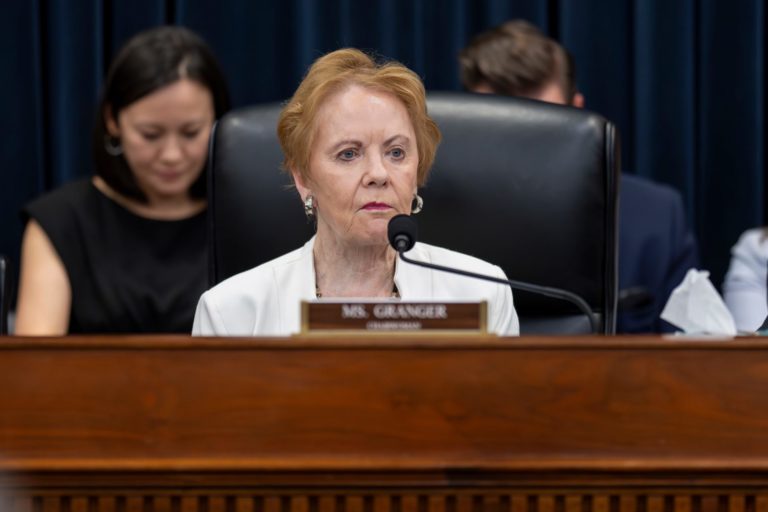
Kay Granger, First Republican Woman from Texas to Serve in the House, Has Died at Age 83

(Headline USA) Kay Granger, the first Republican woman from Texas to be elected to the U.S. House of Representatives and who served for nearly three decades, died Sunday at the age of 83, her son J.D. Granger said.

House Speaker Mike Johnson said in a post on X that throughout her career, Granger “broke barriers for women in public service.” He added that she “was a dear friend who will be greatly missed.”

Granger, who began her career as a high school teacher and a businesswoman, accomplished many firsts as a politician. She was the first woman elected mayor of Fort Worth, Texas, and the first Republican woman to chair one of the most powerful committees in Congress, the House Appropriations Committee.

First elected to the House in 1996, she did not seek reelection in 2024 and experienced worsening “health challenges” in her final months in Congress, according to a statement her office released in December 2024. Granger, who didn’t cast a vote in Washington after July 2024, didn’t specify or elaborate on those health challenges but said in the statement that frequent travel to Washington had become “both difficult and unpredictable” since early September of that year.

Granger graduated from Texas Wesleyan University in 1965 and considered a career in fashion design but followed her mother into teaching. She worked in the Birdville school district for nine years, teaching English literature and journalism, according to a profile compiled for the publication “Women in Congress, 1917-2006.”

A divorce would lead to a career change. To earn more money, Granger worked from home selling insurance. Her mother, Alliene Mullendore, who moved in with Granger after a stroke, helped keep an eye on the kids. Granger eventually built a successful insurance business that she managed for more than two decades.

“I was a high school teacher with three children, a 2-year and 6-month-old twins, and my husband left,” Granger told The Hill in a 2008 profile. “It’s the reason I talk so much to working mothers … you just fight your way through the day.”

Granger got her political start serving on Fort Worth’s zoning commission and then won office to the city council. She went on to win election as the city’s first female mayor, serving from 1991 to 1995.

Granger’s “Code: Blue” programs included citizen patrol initiatives that halved the rampant crime rate and partnerships with the private sector that drew major businesses to the city. Her resuscitation of Fort Worth’s flagging economic fortunes drew national attention.

In 1996, she was recruited by both parties to run for the House under their banner, and she won as a Republican.

Upon entering Congress, she was named to an advisory board that consulted then-House Speaker Newt Gingrich. She also received seats on three committees: Budget, House Oversight, and Transportation and Infrastructure. She resigned those assignments as part of accepting a seat on the Appropriations Committee.

On the committee, she focused on defense spending, including championing the production of the F-35 Joint Strike Fighter in Fort Worth.

When Republicans took charge of the House in 2023, Granger became the committee’s chair, where she sought to enact steeper non-defense spending cuts than the top-line numbers House Speaker Kevin McCarthy and President Joe Biden agreed to as part of avoiding an economically disastrous government default.

Adapted from reporting by the Associated Press