FBI Investigated Trump for Firing James Comey, New Files Show

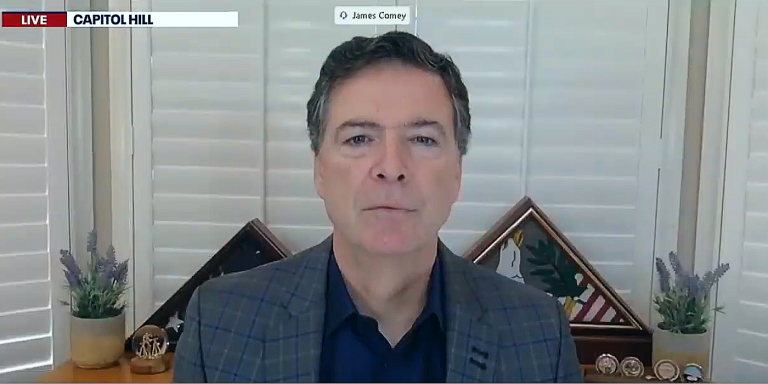
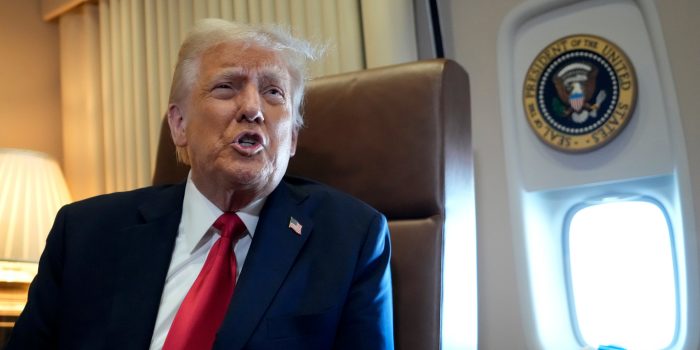
(Luis CornelioHeadline USA) Newly declassified files show that the FBI opened a criminal investigation into the fringe theory that President Donald Trump may have acted as a Russian agent shortly after he fired then-FBI Director James Comey.

The files, released by the White House on Wednesday, once again expose the aggressive steps the bureau took against Trump after he was sworn into office in 2017.

According to the files, the Trump-targeted probe, code-named “Oxferd Comma,” was launched within days of Trump’s dismissal of Comey on May 9, 2017.

The investigation appeared to lay the groundwork for Special Counsel Robert Mueller’s Russia probe, which overshadowed much of Trump’s first two years in office despite ultimately finding no criminal conspiracy.

According to the White House, the investigation was approved by then-FBI General Counsel James Baker and then-Assistant Director for Counterintelligence William Priestap.

Other documents also indicate that then-Acting FBI Director Andrew McCabe and then-Deputy Attorney General Rod Rosenstein were aware of the probe.

One of the files reviewed by Headline USA was prepared by the FBI’s counterintelligence division.

According to the file, the FBI asserted it had launched the probe based on “an articulable factual basis that reasonably indicates” that Trump “may be or has been, wittingly or unwittingly, involved in activities for or on behalf of the Government of the Russian Federation which may constitute violations of federal criminal law or threats to the national security of the United States.”

The document states the bureau sought to determine whether Trump “is or was directed by, controlled by, and/or coordinated activities with, the Russian Federation in a manner constituting a threat to the national security of the United States and/or a violation of federal criminal statutes.”

The investigation also sought to determine whether Trump and “others yet to be named obstructed and/or conspiracy [sic] to obstruct any associated FBI investigation.”

The newly released records add to a growing list of government files showing how Trump’s own federal government directly undermined his 2016 mandate.

Special Counsel John Durham, appointed in the last months of Trump’s first term, ultimately found that the FBI had little factual basis to open Crossfire Hurricane, which ran parallel to Oxferd Comma.

The Oxferd Comma investigation was ultimately closed on April 9, 2019, according to the White House. Mueller concluded his investigation less than three weeks earlier, on March 22, 2019.

The White House released the files in coordination with journalist John Solomon, who serves as chairman of the White House Government Transparency Task Force. He is currently on leave from his position as editor-in-chief of Just the News.

Democrat AGs Planned to Sue Trump Nearly 7 Months Before He was Reelected

(Adam Herbets, TJ Martinell and Mark Stricherz, The Center Square) Nearly two dozen state attorneys general banded together as early as April 2024 to plot litigation against President Donald Trump long before he was reelected, according to a confidential document obtained by The Center Square.

The document was signed approximately three months before President Joe Biden exited from the race and Vice President Kamala Harris became the Democratic nominee for president. It was signed nearly seven months before Trump was reelected by 2.3 million more votes than Harris, almost nine months before he was inaugurated.

State attorneys general have sued the Trump Administration nearly 100 times since January 2025. The coordinated effort appears to have a nickname: the “Project for Federal Accountability.”

Former Utah Attorney General Mark Shurtleff, who was a Republican when he was in office but now often votes for Democrats, said he believes the timing was unusual. He described signing similar documents during his tenure from 2001 through 2013, but not for any hypothetical lawsuits planned so far in advance of government action.

“That’s not normal at all,” Shurtleff said. “It’s a big selling point now. I get lots of emails from people running for attorney general, lots of texts and emails saying, ‘We’ve got to stop President Trump’ or ‘We’ve got to work together as state attorneys general. That’s why you need to give me money!’ and vice versa. It goes both ways… I don’t think that’s the best use of an attorney general’s time.”

Not all of the lawsuits have been joined by each attorney general, and some offices take the lead on different cases. At last count, California Attorney General Rob Bonta has participated in 82 lawsuits. Colorado Attorney General Phil Weiser has joined at least 75 lawsuits. Washington State Attorney General Brown has joined 70 lawsuits. Arizona Attorney General Kris Mayes has joined 46 lawsuits.

At a news conference on Tuesday, Bonta stated the lawsuits are “apolitical.” He announced the lawsuits have cost California taxpayers $19 million and that he will continue to file them as needed.

“If (Trump) doesn’t want to get sued, all he has to do is follow the law,” Bonta said. “I don’t think our cases are likely to be dismissed… Trump shows no sign of slowing down, so we will continue to sue him.”

So far, 11 cases have been closed in favor of the plaintiff and four cases dismissed in favor of the federal government, according to Just Security — a nonpartisan digital law and policy journal at New York University.

The document, titled “PRIVILEGED & CONFIDENTIAL COMMON INTEREST AGREEMENT,” also incorporated plans to withhold some information from the public surrounding the lawsuits, indicating the parties “wish to pursue their common interest concerning Federal Accountability issues and litigation(s) addressing such issues, while avoiding any waiver of the confidentiality of those privileged materials.”

At least 22 Democratic attorneys general appear to have signed the common interest agreement. Zero Republican attorneys general appear to have signed it.

Three Democratic attorneys general — in Oregon, Virginia and Wisconsin — have declined to say whether they signed the agreement. The Virginia Attorney General’s Office flipped from red to blue in January 2026.

One year earlier, Pennsylvania went the opposite direction. Voters elected a Republican to succeed a Democrat in January 2025. Pennsylvania Attorney General Dave Sunday has not responded to questions asking whether his state remains part of the common interest agreement.

When attorneys general have sued prior administrations, it was typically after the administration took action — not before. For example, Shurtleff pointed to a 2012 lawsuit challenging the Affordable Care Act (Obamacare) after its passage in March 2010. He was one of 22 Republican attorneys general who signed onto the case, which ended with a partial victory and partial defeat before the United States Supreme Court.

Seven attorneys general signed the common interest agreement on April 28, 2024, with District of Columbia Attorney General Brian Schwalb’s signature appearing first. California’s signature was left undated, and 13 other attorneys general joined in May or June 2024. Hawaii Attorney General Anne E. Lopez was the last known signatory on Nov. 12, 2024 — seven days after Trump won a second term.

Trump secured enough delegates to become the presumptive Republican nominee in March 2024.

The majority of attorneys general who signed the agreement have declined to comment or answer questions. Some have downplayed the timing of the agreement or otherwise minimized the extent to which they had been preparing for litigation against the Trump Administration.

“There is nothing particularly significant about that date,” wrote Richie Taylor, communications director for the Arizona Attorney General Mayes’ office. “The office has common interest agreements with Republican AG’s as well as Democratic AG’s depending on the litigation.”

Former Washington State Attorney General Bob Ferguson, who is now the state governor, announced one day after the election that his office had already been preparing potential litigation against Trump for “months.”

“We knew from our extensive experience during his first term that we would need to be prepared from day one if he was reelected,” Ferguson said at the time. “My team has gone line-by-line through Project 2025 and has been tracking remarks by Trump on the campaign trail… A concern I have is that Donald Trump, I believe, and his administration, may well be better prepared on their end.”

The Center Square reached out to Ferguson’s office requesting an interview for this story but did not receive a response.

Maryland Attorney General Anthony Brown said the planning began “as soon as it was clear that Trump was going to get the nomination.”

“We’re pleased that we responded before January 2025,” Brown told The Center Square in an interview. “We talked through a host of possibilities, and we wanted to be prepared, not to get caught off guard.”

Brown said none of the lawsuits were filed before the 2024 election, and the attorneys general were not circumventing the will of voters.

“I don’t think we were going after him, or any AG was, because he hadn’t been elected (yet),” Brown said in an interview.

Prominent Democrats who were not state attorneys general have supported the actions.

Sen. Tim Kaine, D-Virginia, described the planning efforts more simply and with more partisanship.

“Look where we are now,” Kaine told The Center Square in an interview at the Capitol. “(The Democratic attorneys general) did what Republican attorneys general did with President Obama’s stimulus plan in 2009: ‘everything he’s for, we’re against.’”

The “Project for Federal Accountability” nickname led directly to The Center Square’s discovery of the confidential document at the center of this report.

Additional records obtained by The Center Square show New Jersey Governor Phil Murphy added an additional $1 million to his state’s budget in fiscal year 2026 related to the Project for Federal Accountability. Budget records indicate the money was “essential” to fund two positions and to “provide critical support… to protect our residents from reckless and illegal actions by the federal government that harm New Jerseyans.”

New Jersey budget records indicate the previous costs of the lawsuits “have been negligible” because the Attorney General’s Office had been “relying on preexisting resources.”

Allison Inserro, a spokeswoman for New Jersey Attorney General Jennifer Davenport, declined an interview request from The Center Square.

After Trump’s election, New Jersey media reported on the state funding. Until now, no outlet has been able to uncover the national plan among attorneys general to sue Trump over hypothetical policies discussed during his campaign.

A bill passed last year in California, SBX1-1, authorized the California Department of Finance to appropriate $25 million for “federal accountability litigation.”

The Center Square first learned about the Project for Federal Accountability nickname from public records released by the Washington State Attorney General’s Office. Documents showed coordination between Democratic attorneys general through a “Rule of Law Working Group” and the “Project for Federal Accountability.”

Most of those records – hundreds of pages – were released entirely redacted by the Washington State Attorney General’s Office due to varying types of attorney work-product exemptions. The Center Square successfully appealed redactions showing the names of people on the original email and is continuing to appeal redactions.

Brown, the attorney general in Virginia, denied having any knowledge of the Project for Federal Accountability nickname in his interview with The Center Square.

The Republican Attorneys General Association has not commented.

O.H. Skinner, a former Arizona solicitor general and current executive director of Alliance for Consumers, has been critical of lawfare against Trump. He believes the timeline is “very revealing.”

“Whatever they said in public, they privately had at least a solid amount of confidence that Joe Biden was never going to win that election,” Skinner said. “They didn’t have a concern about federal overreach until they thought the other team was going to be in charge… They needed to plan ahead and endeavor to build a juggernaut if they wanted to have any hope of slowing down the president’s agenda.”

Legal experts across the United States have started to question whether records related to hypothetical lawsuits and hypothetical policies should be withheld from the public.

“Parties with the same interests need to be able to speak with their lawyers confidentially,” said Thomas Moukawsher, a retired judge in Connecticut. “But what is their common interest? We can’t establish what their common interests are. I don’t like it. If I was sitting as a judge on the case, I’d say you need to have something a little more specific. That’s just a little strange. ‘Federal Accountability?’”

Shurtleff said common interest agreements can be a standard way for attorneys general to try and prevent their litigation strategies from being made public when they coordinate across states. He believes attorneys general became significantly more partisan throughout his 12-year tenure in Utah.

“We would take on bipartisan issues all the time,” Shurtleff said. “But it became more combative over time, which I hated… I left in early 2013, just when it was starting to get nasty.”

State attorneys general filed 122 multistate lawsuits against the Biden Administration during his four years in office, according to data previously collected in 2025 by Marquette University. Not all of them were launched by Republicans. Six of the lawsuits were launched by Democrats and two were bipartisan.

Shurtleff believes the sheer number of lawsuits on both sides have gotten out of hand.

“It’s just horrible. It’s a big, huge waste of attorney general time and the good things that you could accomplish together,” he said. “It’s a shame. It’s way too much. I think it’s ridiculous.”


Senate Investigators Obtain a Copy of Fauci’s COVID-Era Phone

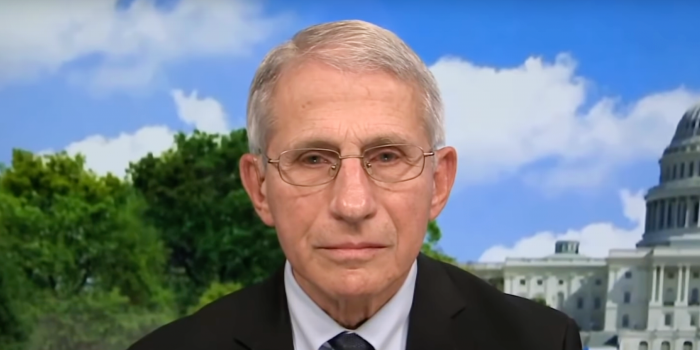
(Ken Silva, Headline USA) Sen. Ron Johnson, R-Wisc., announced Wednesday night that his Permanent Subcommittee on Investigations has obtained a copy of Dr. Anthony Fauci’s iPhone from when he oversaw the federal government’s response to the COVID-19 pandemic.

“Hopefully, this device will address many of the questions he refused to answer at last week’s hearing,” Johnson said on Twitter/X, referencing Fauci pleading the Fifth Amendment more than 100 times and declining to speak at last week’s Senate hearing—despite already having accepted a sweeping pardon from former President Joe Biden.

According to the Wall Street Journal, the copy of the phone was transferred by the Department of Health and Human Services to Johnson’s subcommittee. The news that the subcommittee obtained the phone broke ahead of Thursday morning’s vote to hold Fauci in contempt of Congress for his refusal to answer questions at last week’s hearing. The vote to hold him in contempt passed 8-5.

Posting about Fauci’s phone after the contempt vote, Sen. Rand Paul, R-Ky., said Thursday on Twitter/X that investigators have already found evidence of deleted records. Paul has since deleted that tweet.

The discovery of Fauci’s phone comes on the heels of the Senate Homeland Security Committee also releasing more than 1,000 pages of his personal diary covering the pandemic years.

Among the entries, Fauci acknowledged that the theory COVID-19 leaked from a Wuhan laboratory was plausible, despite publicly dismissing the theory as fringe during the pandemic.

The diary also undercut Fauci’s claims to the media that he had “nothing to do” with widespread school closures. In one entry, Fauci wrote that he “convinced” then-New York City Mayor Bill de Blasio to “close the NYC schools.” He added in the same entry that “he should close bars and restaurants in NYC.”

Ken Silva is the editor of Headline USA. Follow him at x.com/jd_cashless.

CBS Suppressing Interview on Jeffrey Epstein, Senate Report Says

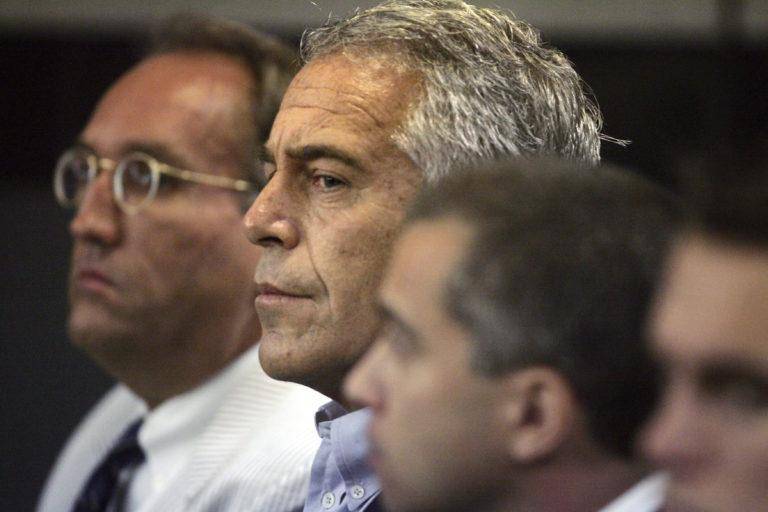
(Ken Silva, Headline USA) The Senate Finance Committee released a 67-page report Tuesday that details how big banks ignored millions of dollars in suspicious transactions made by deceased sex criminal Jeffrey Epstein. The report also says that CBS News is suppressing an interview on the subject.

Tucked away on page 62 of the report is a two-paragraph section about how CBS interviewed the Finance Committee’s ranking member, Sen. Ron Wyden, D-Oregon, about his ongoing investigation into Epstein’s finances. According to the report, the interview was conducted on March 26 by then-60 Minutes correspondent Sharyn Alfonsi.

“However, shortly after the taping of the interview with Senator Wyden, CBS News Leadership led by Bari Weiss made the decision to fire Sharyn Alfonsi. As a result, the interview with Senator Wyden will not be aired and it is unclear whether Bari Weiss and CBS News Leadership will allow the broader segment to ever be aired,” the report says.

CBS denied Wyden’s allegations.

“We are proud of our aggressive and extensive reporting on the Epstein scandal,” a spokesperson for CBS reportedly said in a statement. “That reporting continues. We air pieces when they are ready, and suggesting that an interview is being ‘suppressed’ for any reason is categorically false.”

The rest of the Senate report focused on how banks—including JP Morgan Chase, Deutsche Bank, and Bank of America—turned a blind eye to Epstein’s “suspicious wire transfers worth more than $1 billion,” as well as him withdrawing millions of dollars of cash “with no clear business purpose.”

Wyden said his report is a “ready-made roadmap for prosecutors” to take action, should they have the desire.

Ken Silva is the editor of Headline USA. Follow him at x.com/jd_cashless.

Minnesota Medicaid Fraud More than $1M Now Carries Prison Time

(Elyse S. Apel, The Center Square) Minnesota is increasing penalties for Medicaid fraud as state and federal officials continue prosecuting cases involving millions of dollars allegedly stolen from taxpayer-funded programs.

The Minnesota Sentencing Guidelines Commission recently approved a higher classification for a new Medicaid fraud offense created under a recently passed law, moving theft of more than $1 million from Severity Level 7 to Severity Level 8.

The change means offenders convicted of stealing more than $1 million from Medicaid will face a presumptive commitment to prison, regardless of their criminal history. A first-time offender convicted of a Severity Level 8 crime, which includes crimes like criminal vehicular homicide, faces a presumptive 48-month prison sentence.

These changes came after Attorney General Keith Ellison urged the commission in July to increase the severity levels. Ellison applauded the commission’s decision, which was released last week.

“I am pleased that the state of Minnesota is now treating the theft of money from Medicaid with the severity it deserves,” Ellison said. “Medicaid fraud robs Minnesota taxpayers, and it steals money meant to provide healthcare to our low-income neighbors.”

The change comes as Minnesota continues to deal with the fallout from dozens of high-profile fraud investigations—both on the state and federal level.

Just last week, four men pleaded guilty to defrauding Minnesota’s Medicaid-funded Housing Stabilization Services program of about $2.2 million. Prosecutors said the defendants submitted thousands of fraudulent claims and enrolled about 350 people for services that were never provided.

The HSS program was shut down after investigations revealed systemic fraud that allegedly siphoned millions of dollars from the Medicaid-funded program.

“Medicaid fraud is a serious offense with real consequences,” said U.S. Attorney for the District of Minnesota Daniel N. Rosen. “These defendants stole funds intended to support vulnerable Minnesotans who rely on housing and recovery services. Their guilty pleas underscore my office’s commitment to holding accountable those who exploit public programs.”

This is just one example of many out of Minnesota, which ultimately led to the federal government freezing more than $200 million in Medicaid funds to Minnesota last week.

“They violated the social contract that makes this country strong and makes our democracy function,” said U.S. Health and Human Services Secretary Robert F. Kennedy Jr. at a news conference in July.

The Minnesota Department of Human Services has released a website pushing back against federal claims about fraud in the state, which is estimated to total between $9 and $20 billion.

“The federal government’s mischaracterization and misrepresentation of Minnesota’s good faith efforts to fight fraud and improve our systems, makes it difficult to trust that our federal partners are really trying to help us better our systems, rather than penalize Minnesotans,” MDHS said on that website. “Medicaid is a foundation for our entire health care delivery system, and major funding losses threaten to destabilize care for all Minnesotans.”

The state’s new Medicaid fraud offenses are part of the Medical Assistance Protection Act, which was a bipartisan law championed by Ellison in the spring. It took effect Aug. 1.

Before the law passed, Minnesota treated all Medicaid fraud above $35,000 the same in regards to criminal penalties. That meant someone who stole $35,001 faced the same penalty structure as someone who stole several million dollars. The new law created new tiers for Medicaid fraud involving more than $100,000 and more than $1 million.

The law also expanded the Attorney General’s Office’s ability to investigate fraud by adding 18 positions to its Medicaid Fraud Control Unit, increasing staffing from 32 to 50 employees. The additional positions include 11 investigators, three attorneys and four support staff.

Ellison’s office said the expansion was needed as the unit has seen nearly triple the number of fraud referrals compared with previous years.

Currently, the unit receives 75% of its funding—$5 million—from the U.S. Department of Health and Human Services. The other 25% is funded by the state.

The law also expanded the state’s fraud statutes, adding Medicaid fraud to Minnesota’s racketeering law, extending the statute of limitations for certain cases and allowing the Attorney General’s Office to subpoena financial records during criminal Medicaid fraud investigations.

Ellison said these were all important steps to addressing fraud in the state.

“It’s a disgraceful crime, which is why I spent over a year working to pass my bipartisan bill increasing criminal penalties for Medicaid fraud and giving my team more tools and resources to crack down on fraudsters,” Ellison said. “I’m grateful to the Sentencing Guidelines Commission for their decision, and to Senator Johnson Stewart and Representative Norris for their partnership in passing this important legislation.”

Mamdani Critics Want to Bar Him from Sept. 11 Ceremonies

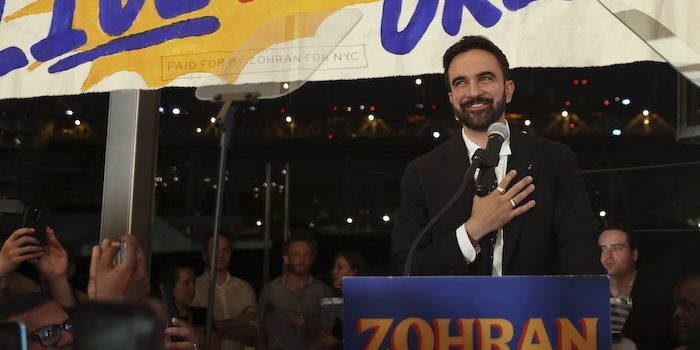
(Chris Wade, The Center Square) Nearly 80,000 people have signed an online petition calling for New York City Mayor Zohran Mamdani to be barred from attending events next month marking the 25th anniversary of the Sept. 11 terrorist attacks.

Relatives of Sept. 11 victims recently launched a petition urging the National September 11 Memorial & Museum not to permit Mamdani to attend the 25th anniversary of the 9/11 attacks planned for the former Twin Towers site in Lower Manhattan. More than 77,000 people have signed the change.org petition since it was posted online last month.

“For 9/11 families, this is not simply a public ceremony – it is a deeply personal day of mourning,” a summary of the petition states. “The presence of individuals whose words or associations are perceived as conflicting with the solemn purpose of the event risks detracting from that focus and causing additional pain.”

“Given these concerns, we respectfully ask that the organizers carefully consider whether Mr. Mamdani’s participation would align with the intention of the ceremony and the expectations of the families most directly affected by the tragedy,” the petition states.

Mamdani, New York City’s first Muslim mayor, has been criticized by Jewish groups over his alignment with pro-Palestinian groups, criticism of the Israeli government, and his use of the phrase “globalize the intifada,” which has been linked to acts of violence against Jewish people and acts of terrorism.

Several other similar online petitions have popped up in recent weeks, each calling on event organizers to block the mayor from participating in the ceremony.

Despite the criticism, Mamdani has said he still plans to attend the ceremony and stand alongside families and survivors during the 25th anniversary of the attacks that killed nearly 3,000 people and injured thousands more.

“I will proudly honor the families, the survivors, the first responders forever impacted by that horrific terror attack by standing alongside them at this year’s 9/11 commemoration – reaffirming that we will never forget the solemn day,” the mayor said in remark last week.

Michael LaRosa, a former spokesman for First Lady Jill Biden and special assistant to President Joe Biden, was among those who signed the petition. He said the 9/11 anniversary needs to be “free of politics.”

“Mayor Mamdani’s presence at Ground Zero will be a lightning rod that diverts attention away from the only people that morning belongs to: the victim’s of this heinous attack and their loved ones,” he said in a statement. “The Mayor and the organizers should do the right thing, keep the focus on the families, and keep the politics out.”

Declassified Docs Reveal Over 600k Voter Files Hacked; Prosecutors Declined Prosecution

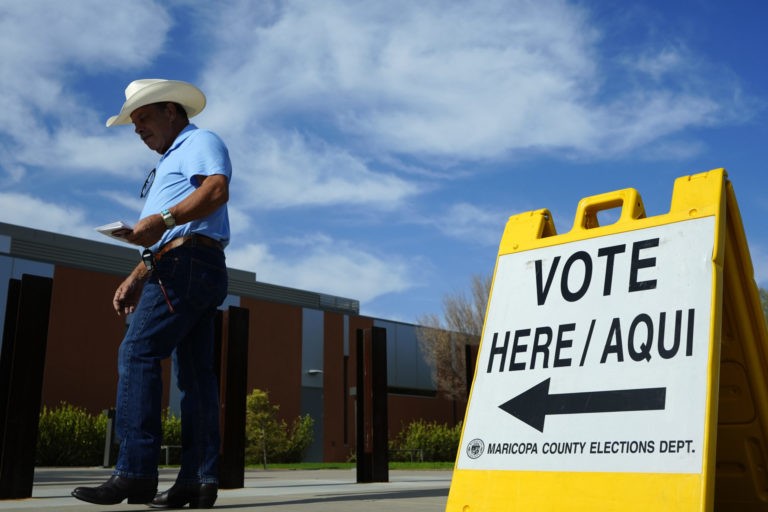
(Sarah Roderick-Fitch, The Center Square) More than 600,000 voter files in Arizona’s largest county were hacked before the 2020 elections, with prosecutors refusing to pursue charges, according to declassified documents released Thursday.

The case stems from a 2020 Maricopa County voter registration site, where a suspected hacker exploited the county’s voter records by “illegally” extracting 633,000 records, including 930 with sensitive information.

Following the incident, the FBI thoroughly investigated, handing over the information to the U.S. Attorney’s Office for the District of Arizona, the Arizona Attorney General’s Office, the Maricopa County, Arizona, Attorney’s Office and the Pinal County, Arizona, Attorney’s Office, but all declined to prosecute the case, leading to it being closed in 2023.

The suspect, who authorities said confessed, claimed to have discovered the vulnerability on Maricopa County’s voter registration record servers, using a PowerShell script to extract the data and store it at his home; however, he destroyed the files before an FBI raid.

A White House official told The Center Square that the suspect expressed remorse for the hacking and investigators don’t believe the suspect was working with any foreign agents, nor were any ballots or voter registrations altered.

According to declassified documents, the suspect “first discovered a vulnerability” on the county’s recorder’s office website “after entering his own voter registration information.” The suspect “noticed his voter ID appeared in the URL.” He continued by testing the “vulnerability by entering several seven-digit numbers into the URL path resulting in access to different … registration information.”

The suspect ran the PowerShell script “up until around November 2, 2020,” when the county “fixed their firewall.” The suspect admitted that “he probably would have continued the activity” if the issue hadn’t been fixed.

“[The suspect] knew Maricopa County was aware of his activity because his script provided an error message and could no longer generate requests. Between 1,000,000 and 2,000,000 voter registration records were extracted to text files stored on [the suspect’s] personal hard drives, which he estimated to be four gigabytes of data. Records were also saved to [the suspect’s] Google Cloud account,” according to declassified documents.

The latest revelation comes as the Trump administration moves to declassify a trove of documents and evidence highlighting election vulnerabilities, including hacking, exploration and foreign interference from adversaries such as China and Iran.

During a primetime address last month, President Donald Trump accused China of “illicit acquisition of 220 million U.S. voter files.”

“That information includes names, addresses, phone numbers, political party preferences, and other sensitive data that would be needed to register to vote and engage in other nefarious activities, which is exactly what was happening,” the president said during his address.

“This data loss presents on unprecedented election security nightmare. The intelligence event shows that China assigned a data exploitation unit specifically to this new project, compounding the travesty.”

Among the evidence, Trump claims China engaged in election meddling, accusing China of compromising “tens of millions of voters’ data in 18 states [which have] have been bought, stolen, or hacked by China.”

“Starting during the 2020 election cycle, China carried out what is believed to be the largest compromise of election data in history,” Trump added.

The president says the CIA obtained information pointing to China’s meddling in U.S. elections, claiming, “for many years Americans were blatantly lied to about the security of our election infrastructure, including voting machines and ballot county systems.”

He also accused the “deep state” within the federal government of burying the evidence.

In addition, Trump cited that the Department of Homeland Security found that approximately 278,000 non-citizens “are registered to vote in federal elections,” adding, “since Democrat states refuse to share their voter files, the real number is actually much higher than that.”

Trump warned that “hundreds of millions of U.S. voter files are in the hands of foreign governments. Our machines and ballot counting systems are exposed to hacking, manipulation and corruption.”

The Trump administration is using the evidence in a push for passage of the Save America Act, calling on Americans to pressure their members of Congress to approve the landmark legislation that would require voter ID and curb mail-in ballots. The legislation’s fate now lies in the hands of the Senate, with many Republican senators pushing to delay or cancel the August recess to pass the legislation ahead of November’s midterm elections.

Fauci Faces Florida Subpoena After Invoking the Fifth More Than 100 Times

(Luis CornelioHeadline USA) Florida Attorney General James Uthmeier on Wednesday followed through on his promise to investigate embattled Dr. Anthony Fauci after the former White House COVID czar repeatedly invoked the Fifth Amendment during a tense Senate hearing.

Uthmeier issued an investigative subpoena to Fauci as part of his ongoing probe into awards, professional opportunities, financial incentives, grants and other matters related to Fauci’s COVID-19 guidance.

Uthmeier was joined by West Virginia Attorney General John McCuskey and Louisiana Attorney General Liz Murrill.

Specifically, Uthmeier is seeking records related to a roughly $900,000 Dan David Foundation award Fauci received in 2021, including the application and documents explaining the basis for the award.

The subpoena came after Fauci declined to answer questions from Senate Republicans on the Senate Homeland Security and Governmental Affairs Committee during a hearing focused on his newly released government notes.

The notes, written by Fauci as he led the federal government’s response to the COVID-19 pandemic, appeared to reveal that some of his private views differed from positions he publicly promoted.

The notes also showed Fauci repeatedly pursuing media opportunities, awards and other forms of professional recognition while serving in public office.

The state investigation appears to focus in part on those awards and professional opportunities.

According to the Florida attorney general’s office:

“Those entries detail substantial awards including an approximately $900,000 Dan David Foundation prize, a NIAID research grant to the University of Florida Scripps Biomedical Research program, offers of named professorships and book deals, board positions, private foundation partnerships, and other professional and financial opportunities concurrent with his federal role and public recommendations impacting Florida.”

Fauci served as director of the National Institute of Allergy and Infectious Diseases from 1984 to 2022 and as chief medical adviser to former President Joe Biden.

“Government officials have a certain level of immunity in their official capacities, but if Fauci personally profited off of the ‘guidance’ he issued, that very well could have broken Florida law,” Uthmeier said.

McCuskey described Fauci’s refusal to answer questions from senators as “concerning.”

“The American people deserve to know if they or their elected leaders were misled or manipulated,” he added.

Meanwhile, Murrill vowed that the “truth will come out” in a statement.

Perez Hilton Hospitalized Following Self-Harm During Livestream

Content Warning: Graphic Images and Descriptions

(Luis CornelioHeadline USA) Perez Hilton’s family confirmed Wednesday afternoon that the celebrity blogger and entertainer was hospitalized after he appeared to self-harm during a livestream on a popular social media platform.

Hilton, whose legal name is Mario Armando Lavandeira, sparked concern on social media after he went live on TikTok and appeared to use a knife to inflict injuries on himself inside his Miami home.

Hilton’s family said in a statement posted on his website that their “focus right now is on his well-being.”

They added, “We kindly ask that you respect Perez’s privacy, as well as the privacy of his family, during this difficult time. If and when we are able to share any updates, we will do so with everyone as soon as we can.”

In screen recordings of the livestream reviewed by Headline USA, a bloodied Hilton appeared to speak incoherently while groaning during the incident.

He also appeared to place what appeared to be a knife against his neck, chest, abdomen, back and arms.

Hilton seemed to be nude at the time.

The Miami-Dade Sheriff’s Office said it deployed deputies to Hilton’s home after receiving “multiple calls regarding an individual who was live-streaming acts of self-harm on social media.”

Authorities did not directly identify Hilton by name in the statement.

The deputies said they did not immediately intervene to “reduce the likelihood of a suicide-by-cop encounter and minimize the risk of injury to the individual, deputies, and the public.”

Instead, deputies said that during mental health crises, they often prioritize “de-escalation by creating time, distance, and opportunities for communication.”

“At this time, deputies have tactically disengaged while continuing to monitor the situation,” they added.

Hilton gained popularity in the mid-2000s after adopting a name similar to businesswoman and entertainer Paris Hilton and mocking celebrities on his blog.

He has three children, all under the age of 14, who were born through gestational surrogacy.

Gold Flows Into ETFs Flipped Positive in July as Investors Buy the Dip

(Mike Maharrey, Money Metals News Service) Gold flows into ETFs flipped positive globally in July. After two consecutive months of outflows, every region reported positive flows of metal into gold-backed funds in July.

With Europe leading the way, gold ETFs reported net gold inflows of 23.5 tonnes in July, valued at $3 billion.

Assets under management (AUM) by gold-backed funds rose 1 percent to $530 billion. ETFs currently hold 4,068 tonnes of the yellow metal.

Year-to-date, ETFs have added a net 39 tonnes of gold to their collective holdings valued at $11 billion.

The World Gold Council pinpointed three factors driving the ETF turnaround in July:

  1. Diversification amid tech volatility
  2. Selective bargain hunting as prices fell
  3. Policy and geopolitical uncertainty, particularly an unclear monetary policy outlook and the ongoing war in Iran

European ETFs reported the second-strongest month of inflows this year in July, adding 17.3 tonnes of gold valued at around $2 billion.

Funds based in the UK and Switzerland led the surge.

According to the World Gold Council, it appears investors in Europe “rebuilt their positions” following a big selloff in June, as lower prices created buying opportunities.

“This mirrors the pattern seen earlier in the year, when European funds led the rebound following March’s sharp U.S.-led outflows, suggesting investors were willing to add exposure after periods of market weakness.”

Asian funds reported a 4.8-tonne increase in gold holdings valued at $116 million. Chinese funds led the way with investors seeking a safe haven.

The CSI 300 Stock Index recorded its worst month since January 2016. Meanwhile, falling local yields reduced the opportunity cost of holding gold.

Japanese-listed funds reported outflows as rising local yields diverted investor demand.

Indian funds reported modest inflows of $157 million.

North American funds reported inflows of just 0.3 tonnes valued at $71 million. The World Gold Council called it a “tentative recovery” after two months of significant outflows.

North America remains the only region reporting net gold outflows for the year.

Funds in other regions, including Africa and Australia, reported gold inflows of 1 tonne valued at $140 million. ETFs listed in South Africa and Australia led the way.

ETFs are a convenient way for investors to play the gold market, but owning ETF shares is not the same as holding physical gold.

ETFs are relatively liquid. You can buy or sell an ETF with a couple of mouse clicks. You don’t have to worry about transporting or storing metal. In a nutshell, it allows investors to play the gold market without buying full ounces of metal at the spot price.

Since you are just buying a number in a computer, you can easily trade your ETF shares for another stock or cash whenever you want, even multiple times on the same day. Many speculative investors take advantage of this liquidity.

But while a gold ETF is a convenient way to play gold’s price, you don’t possess any gold. You have paper. And you don’t know for sure that the fund has all the gold either, especially when it sees inflows. In such a scenario, there have been difficulties or delays in obtaining physical metal.

Trading Volumes

Global market liquidity averaged $356 billion per day in July, down 3.5 percent month-on-month.

Over-the-counter trading volumes also fell, ticking lower by about 3.4 percent to $205 billion per day.

Despite the decline, both LBMA volumes and Shanghai trading activity remained above their 2025 averages.

Total COMEX longs dropped modestly by 4.4 percent to 542 tonnes.

Managed money appears to be rebuilding its position, with longs adding 11 tonnes.

The World Gold Council described the current position as “near neutral.”

“Gold continues to be weighed down by the effects of the war in the Middle East, which has reinforced inflation risks and supported the dollar and yields, adding to the opportunity-cost headwind facing gold.”


Mike Maharrey is a journalist and market analyst for Money Metals with over a decade of experience in precious metals. He holds a BS in accounting from the University of Kentucky and a BA in journalism from the University of South Florida.