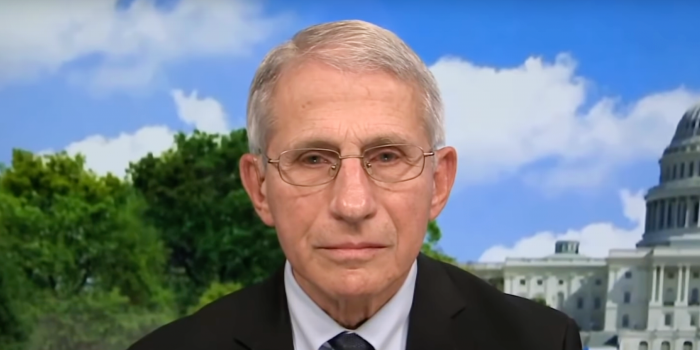
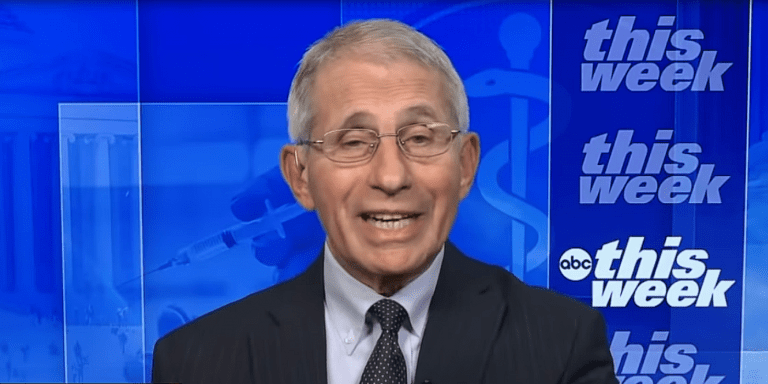
(Luis Cornelio, Headline USA) Florida Attorney General James Uthmeier on Wednesday followed through on his promise to investigate embattled Dr. Anthony Fauci after the former White House COVID czar repeatedly invoked the Fifth Amendment during a tense Senate hearing.
Uthmeier issued an investigative subpoena to Fauci as part of his ongoing probe into awards, professional opportunities, financial incentives, grants and other matters related to Fauci’s COVID-19 guidance.
Uthmeier was joined by West Virginia Attorney General John McCuskey and Louisiana Attorney General Liz Murrill.
Specifically, Uthmeier is seeking records related to a roughly $900,000 Dan David Foundation award Fauci received in 2021, including the application and documents explaining the basis for the award.
I joined John Roberts on Fox News to announce our subpoena to Anthony Fauci as we investigate his apparent self-dealing during COVID. pic.twitter.com/J4LAyPsyLl
— Attorney General James Uthmeier (@AGJamesUthmeier) August 5, 2026
The subpoena came after Fauci declined to answer questions from Senate Republicans on the Senate Homeland Security and Governmental Affairs Committee during a hearing focused on his newly released government notes.
The notes, written by Fauci as he led the federal government’s response to the COVID-19 pandemic, appeared to reveal that some of his private views differed from positions he publicly promoted.
The notes also showed Fauci repeatedly pursuing media opportunities, awards and other forms of professional recognition while serving in public office.
The state investigation appears to focus in part on those awards and professional opportunities.
According to the Florida attorney general’s office:
“Those entries detail substantial awards including an approximately $900,000 Dan David Foundation prize, a NIAID research grant to the University of Florida Scripps Biomedical Research program, offers of named professorships and book deals, board positions, private foundation partnerships, and other professional and financial opportunities concurrent with his federal role and public recommendations impacting Florida.”
Fauci served as director of the National Institute of Allergy and Infectious Diseases from 1984 to 2022 and as chief medical adviser to former President Joe Biden.
“Government officials have a certain level of immunity in their official capacities, but if Fauci personally profited off of the ‘guidance’ he issued, that very well could have broken Florida law,” Uthmeier said.
McCuskey described Fauci’s refusal to answer questions from senators as “concerning.”
“The American people deserve to know if they or their elected leaders were misled or manipulated,” he added.
Meanwhile, Murrill vowed that the “truth will come out” in a statement.
(Luis Cornelio, Headline USA) Perez Hilton’s family confirmed Wednesday afternoon that the celebrity blogger and entertainer was hospitalized after he appeared to self-harm during a livestream on a popular social media platform.
Hilton, whose legal name is Mario Armando Lavandeira, sparked concern on social media after he went live on TikTok and appeared to use a knife to inflict injuries on himself inside his Miami home.
Hilton’s family said in a statement posted on his website that their “focus right now is on his well-being.”
They added, “We kindly ask that you respect Perez’s privacy, as well as the privacy of his family, during this difficult time. If and when we are able to share any updates, we will do so with everyone as soon as we can.”
In screen recordings of the livestream reviewed by Headline USA, a bloodied Hilton appeared to speak incoherently while groaning during the incident.
He also appeared to place what appeared to be a knife against his neck, chest, abdomen, back and arms.
Hilton seemed to be nude at the time.
The Miami-Dade Sheriff’s Office said it deployed deputies to Hilton’s home after receiving “multiple calls regarding an individual who was live-streaming acts of self-harm on social media.”
Authorities did not directly identify Hilton by name in the statement.
The deputies said they did not immediately intervene to “reduce the likelihood of a suicide-by-cop encounter and minimize the risk of injury to the individual, deputies, and the public.”
Instead, deputies said that during mental health crises, they often prioritize “de-escalation by creating time, distance, and opportunities for communication.”
“At this time, deputies have tactically disengaged while continuing to monitor the situation,” they added.
Hilton gained popularity in the mid-2000s after adopting a name similar to businesswoman and entertainer Paris Hilton and mocking celebrities on his blog.
He has three children, all under the age of 14, who were born through gestational surrogacy.
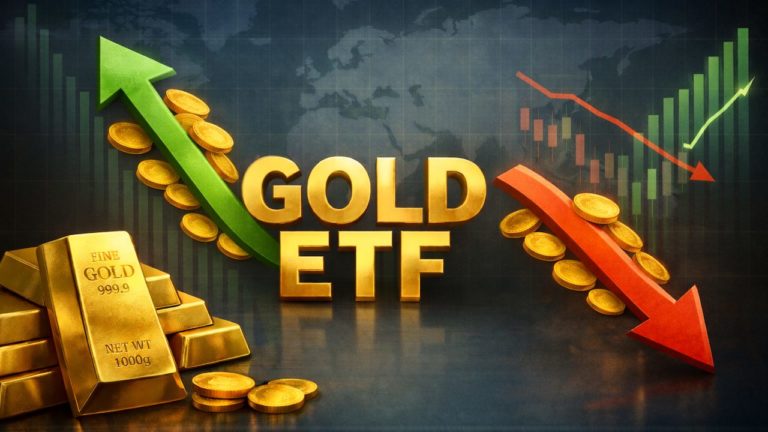
(Mike Maharrey, Money Metals News Service) Gold flows into ETFs flipped positive globally in July. After two consecutive months of outflows, every region reported positive flows of metal into gold-backed funds in July.
With Europe leading the way, gold ETFs reported net gold inflows of 23.5 tonnes in July, valued at $3 billion.
Assets under management (AUM) by gold-backed funds rose 1 percent to $530 billion. ETFs currently hold 4,068 tonnes of the yellow metal.
Year-to-date, ETFs have added a net 39 tonnes of gold to their collective holdings valued at $11 billion.
The World Gold Council pinpointed three factors driving the ETF turnaround in July:
Diversification amid tech volatility
Selective bargain hunting as prices fell
Policy and geopolitical uncertainty, particularly an unclear monetary policy outlook and the ongoing war in Iran
European ETFs reported the second-strongest month of inflows this year in July, adding 17.3 tonnes of gold valued at around $2 billion.
Funds based in the UK and Switzerland led the surge.
According to the World Gold Council, it appears investors in Europe “rebuilt their positions” following a big selloff in June, as lower prices created buying opportunities.
“This mirrors the pattern seen earlier in the year, when European funds led the rebound following March’s sharp U.S.-led outflows, suggesting investors were willing to add exposure after periods of market weakness.”
Asian funds reported a 4.8-tonne increase in gold holdings valued at $116 million. Chinese funds led the way with investors seeking a safe haven.
The CSI 300 Stock Index recorded its worst month since January 2016. Meanwhile, falling local yields reduced the opportunity cost of holding gold.
Japanese-listed funds reported outflows as rising local yields diverted investor demand.
Indian funds reported modest inflows of $157 million.
North American funds reported inflows of just 0.3 tonnes valued at $71 million. The World Gold Council called it a “tentative recovery” after two months of significant outflows.
North America remains the only region reporting net gold outflows for the year.
Funds in other regions, including Africa and Australia, reported gold inflows of 1 tonne valued at $140 million. ETFs listed in South Africa and Australia led the way.
ETFs are relatively liquid. You can buy or sell an ETF with a couple of mouse clicks. You don’t have to worry about transporting or storing metal. In a nutshell, it allows investors to play the gold market without buying full ounces of metal at the spot price.
Since you are just buying a number in a computer, you can easily trade your ETF shares for another stock or cash whenever you want, even multiple times on the same day. Many speculative investors take advantage of this liquidity.
But while a gold ETF is a convenient way to play gold’s price, you don’t possess any gold. You have paper. And you don’t know for sure that the fund has all the gold either, especially when it sees inflows. In such a scenario, there have been difficulties or delays in obtaining physical metal.
Trading Volumes
Global market liquidity averaged $356 billion per day in July, down 3.5 percent month-on-month.
Over-the-counter trading volumes also fell, ticking lower by about 3.4 percent to $205 billion per day.
Despite the decline, both LBMA volumes and Shanghai trading activity remained above their 2025 averages.
Total COMEX longs dropped modestly by 4.4 percent to 542 tonnes.
Managed money appears to be rebuilding its position, with longs adding 11 tonnes.
The World Gold Council described the current position as “near neutral.”
“Gold continues to be weighed down by the effects of the war in the Middle East, which has reinforced inflation risks and supported the dollar and yields, adding to the opportunity-cost headwind facing gold.”
Mike Maharrey is a journalist and market analyst for Money Metals with over a decade of experience in precious metals. He holds a BS in accounting from the University of Kentucky and a BA in journalism from the University of South Florida.
(Mike Maharrey, Money Metals News Service) Central bank gold buying has surged in recent years. Net central bank gold purchases rose from an average of 473 tonnes between 2010 and 2021 to nearly 1,000 tonnes over the last four years.
Emerging market central banks have dominated gold buying, driving the surge in gold reserves, but a developed economy central bank recently announced plans to begin expanding its gold reserves through a domestic buying program.
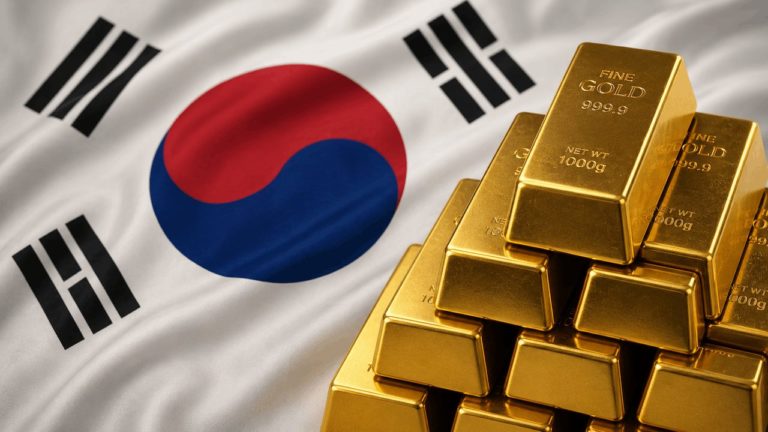
On Monday, the Bank of Korea said it has established a framework to purchase gold from South Korean miners at international spot prices.
The last time the Bank of Korea expanded its gold reserves was 13 years ago. The country currently holds just over 104 tonnes of gold, making up about 1.1 percent of the country’s total reserves.
Bank of Korea Reserve Management Group head Jeong Hee-sup said the central bank has also started purchasing gold ETF shares.
“With geopolitical risks becoming a persistent feature of the global environment, interest in gold as a safe-haven asset has grown significantly among central banks,” Hee-sup said.
He emphasized that the domestic gold purchases are part of a long-term strategy to expand the country’s gold reserves.
“We do not plan to make a large purchase all at once. We intend to gradually increase the share of gold according to medium- and long-term needs.”
The Korea Exchange and the Korea Securities Depository will facilitate the transactions, with domestic gold producer LS MnM and Korea Zinc supplying eligible gold.
The two Korean gold miners produce 4 to 5 tonnes of gold annually. Officials say the Bank of Korea will purchase some of that output “when market and reserve management conditions are favorable.”
The structure of the scheme will allow the Bank of Korea to settle the transactions in Korean won, meaning it will not have to dip into its foreign exchange reserves.
The gold will reportedly be stored in South Korea. Most of the country’s gold reserves are held in London vaults.
Analysts say that the move won’t likely impact the domestic gold price because the central bank plans to only buy gold intended for export at contract prices. However, it will mean less gold flowing into the global supply.
Central banks have been buying gold to lower their exposure to the U.S. dollar. Many countries have become wary of the U.S.’s weaponization of the currency and the fiscal irresponsibility of the federal government with its borrowing and spending out of control. During a central bank panel discussion in London last month, Hee-sup indicated that these concerns are top of mind in South Korea as well.
“Given gold’s role as an inflation hedge and its potential as an alternative to the U.S. dollar, it’s evident that gold should be considered one of the viable assets from a medium- to long-term perspective.”
Notably, South Korea holds far less gold than most developed economies. It was aggressively expanding its reserves between 2011 and 2013. As the Economic Times of India put it, “the timing appeared disastrous.”
The yellow metal peaked at $1,920 per ounce in September 2011, and then tumbled to $1,180 in 2013, a 38 percent decline. By 2015, the unrealized loss grew to 1.8 trillion won. The South Korean government and central bank faced heavy criticism for making a bad investment decision and ended its purchasing program in 2015.
At $4,000 an ounce per day, the decision looks pretty good. The 90 tonnes of gold purchased during that period are now worth about $7 billion more than the Bank of Korea paid for it.
As already noted, South Korea is part of a broader central bank gold buying trend.
Last year was the fourth-largest expansion of central bank gold reserves on record, at 863 tonnes. That was down 21 percent year-on-year, but still well above the 2010-2021 annual average of 473 tonnes.
The all-time high was set in 2022 (1,136 tonnes). It was the highest level of net purchases on record, dating back to 1950, including since the suspension of dollar convertibility into gold in 1971.
According to an Official Monetary and Financial Institutions Forum (OMFIF) report, this shift toward gold has been “driven by protection against geopolitical risk and growing doubts about the stability of the international monetary system.”
OMFIF head of research Andrea Correa said she thinks this trend will continue into the foreseeable future.
“Gold is not moving anywhere. Reserve managers of the central banks are still very bullish on gold. Despite the fact that the gold value itself keeps rising, they are still demanding it.”
Mike Maharrey is a journalist and market analyst for Money Metals with over a decade of experience in precious metals. He holds a BS in accounting from the University of Kentucky and a BA in journalism from the University of South Florida.
(José Niño,Headline USA) The United States has closed its doors to Irish nationalist commentator Keith Woods, and he lays responsibility for that at the feet of the Trump administration.
Writing on X this week, Woods walked through the timeline in apost under the pen name he uses in place of his given name, Keith O’Brien. During the Biden years, he said, he made several trips to America on the Visa Waiver Program, the ESTA system that spares most Irish citizens a consular interview. His renewal application came back rejected last summer.
“I then applied for a tourist visa and attended an embassy interview where an immigration officer read out an SPLC hit piece (an organisation currently under federal criminal prosecution) and asked me if I was an “ethnonationalist” and an “antisemite,” then refused my visa,” Woods wrote.
This clip is over a year old, but since it was made I have been refused entry into the U.S. by the Trump administration.
I traveled there multiple times under the Biden administration through the Visa Waiver Program using ESTA, which almost every Irish person receives easily… https://t.co/bewNFXAwIg
A secondmessage carried an image of the refusal notice. Woods took issue with the stated conclusion that he had not established why he wanted to travel, saying the interview covered his supposed extreme beliefs and the figures on the right he had spoken with online rather than his itinerary.
The notice I received after being refused a visa.
Regarding me not demonstrating the intent of my activities in the U.S., I wasn't actually asked questions about this beyond what extreme beliefs I supposedly hold, and what right-wing figures I have spoken to online. pic.twitter.com/alGPupYxkD
Other Europeans have met the same fate quietly since 2024, according to Woods.
“Most of them don’t even talk about Israel or Jews, so it seems they are banned solely because of their views on immigration,” he wrote.
The aside about the Southern Poverty Law Center checks out. Eleven counts spanning wire fraud, false statements to a federally insured bank, and conspiracy to commit concealment money laundering came down against the organization when a Montgomery grand juryindicted it in April. According to NPR, group entered anot guilty plea and is seeking dismissal, arguing the president is using the Justice Department against a critic.
Woods gained his following once Elon Musk reinstated accounts X had previously removed, and in 2023 he started the Ban the ADL push that reached the top of the platform’s worldwide trends. That same year the Irish Timescalled him a self-described raging anti-Semite with close ties to American nationalist personality Nick Fuentes.
No comment has come from the State Department or DHS, and no official has spelled out the legal basis for the refusal.
José Niño is the deputy editor of Headline USA. Follow him at x.com/JoseAlNino
(Andrew Rice, The Center Square) U.S. Senators advanced, in an 8-5 vote on Thursday, a contempt of Congress resolution that could refer Anthony Fauci to the U.S. Attorney’s Office in Washington, D.C.
Fauci testified before the Senate Homeland Security and Government Governmental Affairs Committee last week. He invoked his Fifth Amendment right to protect against self-incrimination more than 100 times during the hearing.
The Senate Homeland Security Committee has voted to hold Anthony Fauci in Contempt of Congress!
It’s a start!
Make him blow through his blood money on providing his legal defense in Washington DC and throughout the country with state prosecutions.
“Holding a witness in contempt is a serious thing, and it should be rare,” U.S. Sen. Rand Paul, R-Ky., said. “But the contempt power exists for precisely this circumstance,”
Paul’s resolution called for sending Fauci’s contempt vote to the U.S. Attorney’s Office in Washington, D.C., led by Jeanine Pirro. Paul could bypass a vote by the full Senate to advance the contempt resolution.
Republicans fiercly criticized Fauci for refusing to answer questions last week. Sen. Josh Hawley, R-Mo., said he asked Fauci the color of his tie last week to test whether he answered questions in “good faith.”
Hawley said Fauci needed to assert specific claims on his fear of prosecution to be adequately protected by the Fifth Amendment. He said Fauci did not display those fears in his answers to questions.
“He wouldn’t answer that betrays the fact that his invocation of the Fifth Amendment wasn’t tailored to anything; it was a predetermined, premeditated design,” Hawley said. “He had no interest and no intention of answering any of our questions. There’s no privilege for any of that.”
Republicans on the committee also pointed to Fauci’s pardon from President Joe Biden, an order that granted him aid from criminal prosecution over his activities leading the COVID-19 response.
“What he displayed last Wednesday was contempt for Congress, contempt for this committee, contempt for our investigation,” Sen. Ron Johnson, R-Wisc., said.
“Oversight is not a courtesy this committee extends or a favor a former official grants us; it is a constitutional obligation,” Paul said.
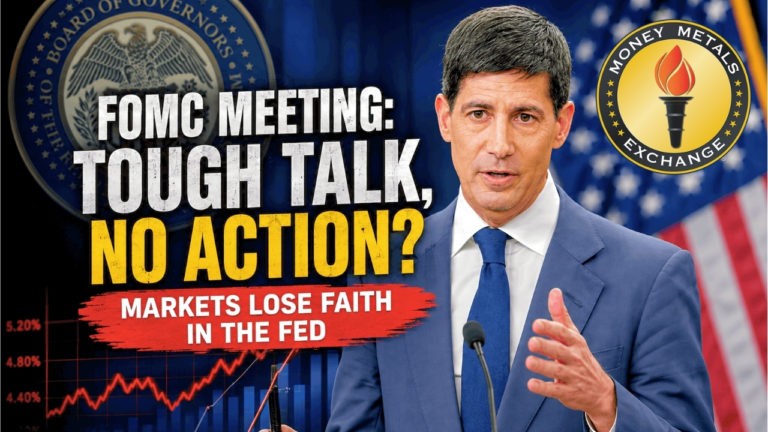
(Money Metals News Service) Federal Reserve Chairman Kevin Warsh continues to project a tough stance on inflation, repeatedly promising to restore price stability and keep inflation anchored at the central bank’s longstanding 2% target. But according to Mike Maharrey in this week’s Money Metals Midweek Memo, markets are beginning to judge the Fed by its actions rather than its rhetoric—and so far, they aren’t convinced.
Drawing on the old adage “less talk and more action,” Maharrey argues that while Warsh has made forceful public statements about fighting inflation, the Federal Reserve has yet to take any meaningful policy steps to support those promises. That disconnect, he says, is beginning to influence bond markets and could ultimately strengthen the case for owning precious metals.
Fed Holds Rates Steady Despite Internal Division
The Federal Open Market Committee (FOMC) concluded its July meeting by leaving the federal funds rate unchanged at 3.50% to 3.75%. Although the decision was widely anticipated, it marked the second meeting under Chairman Kevin Warsh and featured the first significant public disagreement within the committee.
Three policymakers—Cleveland Fed President Beth Hammack, Minneapolis Fed President Neel Kashkari, and Dallas Fed President Lorie Logan—voted in favor of a 25-basis-point rate hike, while the remaining nine members voted to keep rates unchanged. Warsh characterized the debate as a “good family fight,” emphasizing open discussion rather than unanimous agreement.
Despite the divided vote, Maharrey contends that the practical outcome remained the same: the Fed continued talking aggressively about inflation without actually tightening monetary policy.
A New Communication Strategy Leaves Markets Guessing
One of Warsh’s biggest departures from former Chairman Jerome Powell is his rejection of extensive forward guidance.
Under Powell, markets typically had a clear idea of the Fed’s intentions well before policy meetings. Warsh has intentionally abandoned that approach, shortening official FOMC statements from more than 300 words under Powell to roughly 130 words, arguing that policymakers should provide facts rather than forecasts.
Maharrey notes that while less guidance may give the Fed greater flexibility, it also creates greater uncertainty. Investors inevitably attempt to anticipate future policy, and when official guidance is sparse, markets become more volatile as participants fill in the blanks themselves.
Some economists have already criticized the new approach. Capital Economics argued that Warsh’s intentionally vague answers have made forecasting future Fed actions even more difficult.
Tough Inflation Talk Without Tough Inflation Policy
Throughout his press conference, Warsh repeatedly pledged that the Federal Reserve would restore price stability, insisting, “We will deliver price stability,” while acknowledging the process would take time and describing the July meeting as only “the beginning of the story.”
Maharrey, however, argues that those assurances ring hollow because the Fed has not raised interest rates at all under Warsh.
He contrasts today’s Fed with former Chairman Paul Volcker, who famously pushed interest rates to nearly 20% in 1980 to break inflation. By comparison, Maharrey says Warsh’s inflation-fighting credentials remain untested because no comparable policy action has accompanied the rhetoric.
Instead of falling, longer-term Treasury yields climbed. The 10-year Treasury yield rose 5 basis points to 4.657%, while the 30-year Treasury yield jumped 9 basis points to 5.193%. Maharrey interprets this move as a sign that investors increasingly believe the Fed is finished raising rates even though inflation risks remain elevated.
Reuters described the shift as reflecting expectations for persistent inflation rather than additional Fed tightening.
Former Federal Reserve economist Nathan Sheets, now Global Chief Economist at Citi, argued that markets are effectively casting a vote of no confidence in the Fed’s inflation strategy. According to Sheets, Warsh has identified the inflation problem without presenting a credible roadmap for solving it, while also facing political pressure from the White House, which has favored lower interest rates.
Balance Sheet Expansion Sends Mixed Signals
Maharrey also points to another contradiction in the Fed’s messaging.
While officials speak aggressively about controlling inflation, the Federal Reserve has continued expanding its balance sheet through bond purchases—effectively engaging in quantitative easing. He argues that these purchases help support Treasury markets at a time when demand for U.S. government debt has weakened, and federal borrowing continues to expand by hundreds of billions of dollars each month.
According to Maharrey, buying government bonds while simultaneously claiming to wage war on inflation sends conflicting signals and further undermines the Fed’s credibility.
Could the Fed Redefine Inflation?
Another concern raised during the episode involves how the Federal Reserve measures inflation itself.
Historically, the Fed has targeted 2% core Personal Consumption Expenditures (PCE) inflation. During his confirmation process, Warsh expressed interest in using trimmed averages, which exclude both the highest and lowest price changes in an effort to smooth inflation readings.
Although Warsh stated that PCE remains the Fed’s preferred measure for now, he also suggested that task forces reviewing Fed strategy could recommend changes after January.
Maharrey argues that altering the methodology rather than lowering inflation itself would amount to moving the goalposts, allowing policymakers to claim success without materially reducing inflation.
Implications for Gold and Silver
Maharrey believes precious metals have spent the past several months trading sideways largely because investors expected the Fed to keep interest rates higher for longer.
Gold has found support around $4,000 per ounce, recently rebounding toward $4,200 amid optimism surrounding the Strait of Hormuz reopening and weaker-than-expected employment data.
If markets continue losing confidence in the Fed’s willingness or ability to control inflation, Maharrey argues the environment could become increasingly supportive for both gold and silver through expectations of higher inflation, a potentially weaker U.S. dollar, and eventual monetary easing if economic conditions deteriorate.
Why Real Interest Rates Matter
A key part of Maharrey’s analysis centers on real interest rates, which subtract inflation from nominal yields.
Using current figures, he notes that with the federal funds rate at 3.5% and CPI inflation also at 3.5%, the real policy rate is effectively 0%. If inflation rises even modestly, real interest rates become negative despite positive nominal yields.
Because gold earns no yield, critics often argue that higher interest rates are bearish for precious metals. Maharrey counters that what truly matters is purchasing power. If inflation consumes all of an investor’s nominal return, the opportunity cost of holding gold becomes far less significant.
Inflation Metrics and the Case for Sound Money
The episode concludes with a discussion of inflation measurement.
Maharrey explains the distinction between the Consumer Price Index (CPI) and the Personal Consumption Expenditures (PCE) index, noting that the Fed prefers PCE because of methodological differences that generally produce lower inflation readings. He argues that neither index measures inflation in its classical sense, which he defines as expansion of the money supply rather than rising consumer prices alone.
Pointing to continued growth in the M2 money supply, Maharrey maintains that monetary inflation remains ongoing and that even achieving the Fed’s stated 2% inflation target still implies a steady erosion of purchasing power over time. He concludes that investors should consider holding physical gold and silver as long-term stores of value that cannot be devalued through monetary expansion.
(Headline USA) A California man who was arrested at President Donald Trump’s Los Angeles-area golf course was pretending to be part of the security detail preparing for Trump’s visit and had a stash of illegal weapons in his car and home, authorities said.
Jeanine John Taele, 38, was due in court Wednesday on a federal weapons charge but the hearing was cancelled. He is being held at a downtown LA jail on state charges, according to booking records and not yet in federal custody, said a spokesperson for the U.S. attorney’s office.
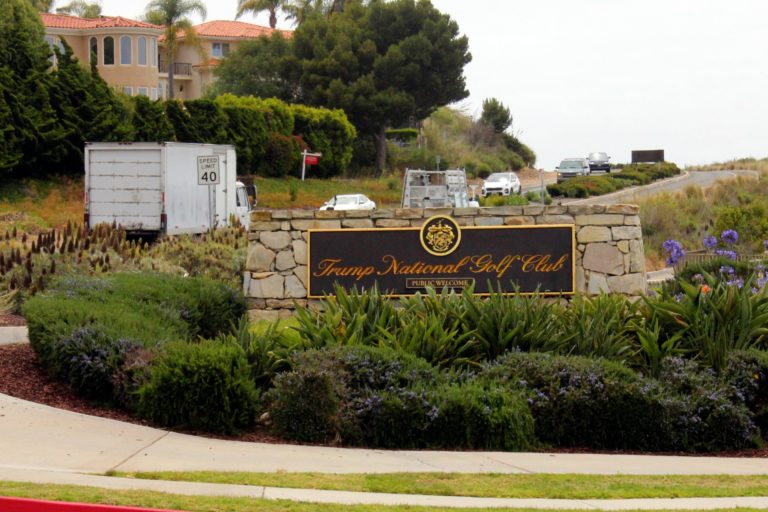
Taele was arrested Sunday at Trump National Golf Club in Rancho Palos Verdes, two days before Trump visited for a fundraising dinner.
Taele was first seen on the property Friday, walking throughout the course wearing an earpiece and taking photos and videos of federal agents’ activities as they conducted a security assessment, according to a federal criminal complaint.
Taele drove away but then returned to the course Sunday. He approached federal agents and said he was employed by the State Department and was there for a security detail. Taele said he had a loaded weapon in his vehicle and was arrested after it was searched, according to federal officials. Authorities also found a 16-round magazine with ammunition in his pocket.
He already appeared in court on state weapons charges and a second-degree robbery charge for an unrelated incident.
Taele is charged federally with possession of an unregistered short-barreled rifle that was found at this home, authorities said. The complaint alleges the firearm is an illegally modified AR-style rifle with a barrel that was cut down to 10 inches (25 centimeters) from 14 inches (35 centimeters).
The Los Angeles County Sheriff’s Department said a search of his pickup truck in the club parking lot turned up a loaded 9mm pistol, binoculars and a badge that read “security protection agent,” according to federal prosecutors.
Law enforcement searched his home in the nearby city of Downey on Monday and found a rifle and other firearms, magazines and ammunition, body armor and notebooks with “concerning statements,” federal authorities said. No details about the statements were released.
“Mr. Taele’s troubling behavior at the President’s public golf course merely days before the President was expected to arrive raised serious red flags for law enforcement,” Patrick Grandy, the assistant director in charge of the FBI’s Los Angeles office, said in a statement. “There is no room for error, particularly in light of previous attempts on President Trump’s life.”
In brief remarks about Taele’s arrest to Fox News on Tuesday, Trump said “only consequential presidents” are targeted, “and I am definitely consequential,” which he said brought him “a little solace.”
Taele was a corporal in the U.S. Marines who was deployed to Iraq in 2008 and Afghanistan in 2010 and worked as a warehouse clerk, according to the U.S. Marine Corps. He earned numerous commendations, including an award for good conduct, during his service from 2008 to 2016.
State records show Taele is a licensed security guard, with his most recent license issued in February of this year and expiring in 2028. Records also show several cancelled or suspended permits to carry a firearm as a security guard. State officials did not immediately respond to a request for more details about those permits.
The Los Angeles County public defender’s office, which is representing Taele in the state criminal case, did not immediately return an email seeking comment Wednesday. Family members could not immediately be reached for comment.
Last year a jury found a man guilty of trying to assassinate Trump at the president’s Florida country club. And while a candidate in 2024, Trump narrowly escaped an assassination attempt by a shooter on a roof at a campaign rally in Butler, Pennsylvania.
The report said that the missiles include the Army Tactical Missile Systems (ATACMS), surface-to-surface missiles that are fired from HIMARS rocket systems, and the Precision Strike Missiles (PrSM), a new missile that was used by the US in combat for the first time on February 28, the opening day of the war.
According to multiple investigations, the US likely used PrSM missiles in strikes that hit a sports hall in the Iranian city of Lamerd, killing 21 civilians, including four children. US Central Command denied responsibility for the strike, claiming it didn’t attack the area and that it was likely an Iranian missile, but six weapons experts all independently rejected the claim when asked about it by the BBC.
The ATACMS are among the munitions that the US has provided to Ukraine and have been used in attacks on Russian territory. Before the Biden administration took the escalatory step to send the weapons into the conflict, there were deliberations over whether the US had enough to spare, meaning the US military already didn’t have much of a supply before the Iran war.
According to Reuters, the US Army has said that the ATACMS are being phased out and that the idea is to replace them with the PrSM. Sources told the outlet that the US has used “virtually all” of the weapons in the current conflict with Iran, though they wouldn’t say how many the US military has left.
The US has also depleted much of its advanced air defenses, using about 60% of its Patriot missile interceptors and half of its THAAD interceptors in the conflict with Iran. While the depletion of military stockpiles presents a strategic dilemma for the Trump administration when it comes to continuing the Iran war, it’s also a boon for US weapons makers, which have landed huge contracts to dramatically ramp up munitions production.
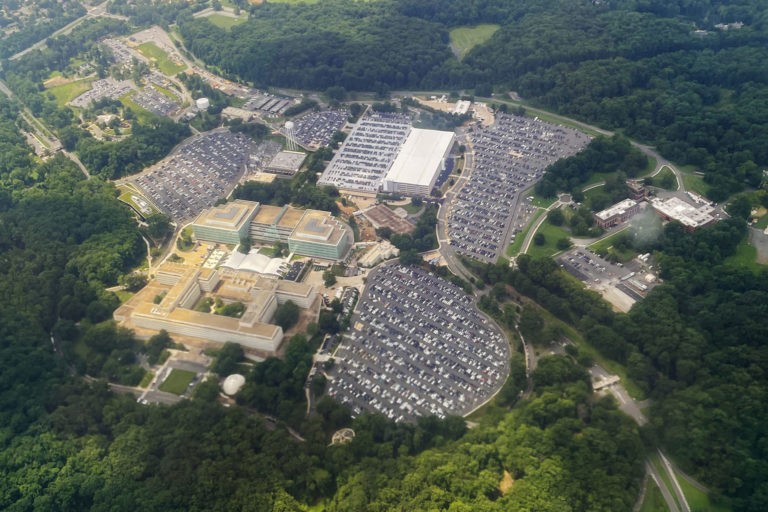
(John Weeks, Antiwar.com)Writing in POLITICO on Tuesday, Dasha Burns and Nahal Toosi reported that in recent months the US intelligence community has “sent spies and assets” to Cuba. Specifically, they reported the CIA has increased its presence on the island, which sits approximately 90 miles south of Florida.
Burns and Toosi based their reporting on interviews with “two people familiar with the Trump administration’s plans for the island,” who were left anonymous due to the “sensitive” nature of the information they provided. The authors said the CIA, White House, Defense Intelligence Agency, and the Office of the Director of National Intelligence all declined requests for comment.
The report claimed the Trump Administration does not believe it has to resolve the war with Iran before taking military action in Cuba and that the Cuban issue is a “huge priority” of Secretary of State and Acting National Security Advisor Marco Rubio.
While the accuracy of the inside information cannot be verified, nor whether its status is official or unauthorized, the claims are consistent with recent rhetoric and actions of the Trump administration, and the US did reportedly take similar action before the January 3 attack on Venezuela to abduct President Nicolas Maduro.
Rubio, who is of Cuban descent, has been very hands-on regarding Western Hemisphere geopolitics. After the attack on Venezuela, Trump vowed the US would be “running” the country for an indefinite transition period, and Rubio was given that brief within the administration. By all accounts, he is eager to add running Cuba to his area of responsibilities and not optimistic about diplomacy.
On July 20, his State Department published “Cuba: The Capital of 21st Century Communism.”
The nearly 100-page report described the Cuban state as “the center of a vast hemispheric network” intent on destroying the United States and collapsing Western Civilization.
The report depicted the small island nation as a subversive proxy of Russia, China, and Iran, as well as the true power behind several American leftist movements, including Antifa, Code Pink, and Black Lives Matter. It was part of a pattern of the US setting up pretexts for a potential attack on Cuba.
Government officials, from President Donald Trump on down, have described Cuba as a national security threat to the United States and the entire Western Hemisphere.
Washington has engaged in more than rhetoric. In June, massive sanctions were placed on Cuba that are forecast to create a “severe economic crisis.” Under the sanctions regime and a ramped-up oil embargo imposed after the attack on Venezuela, Cuba’s electrical infrastructure and healthcare system have collapsed, causing a major humanitarian crisis.
While crushing Cuba’s economy, Washington has also been sending aid to Cuban citizens run through nongovernmental organizations.
On July 21, the State Department announced “the first flight of humanitarian relief under Secretary Rubio’s historic commitment of $100 million in humanitarian assistance to the Cuban people, who are suffering from the consequences of the Communist regime’s kleptocracy, brutality, and economic incompetence.”