Trump Rips Pro-China Biden as He Announces Measures Against ChiComs

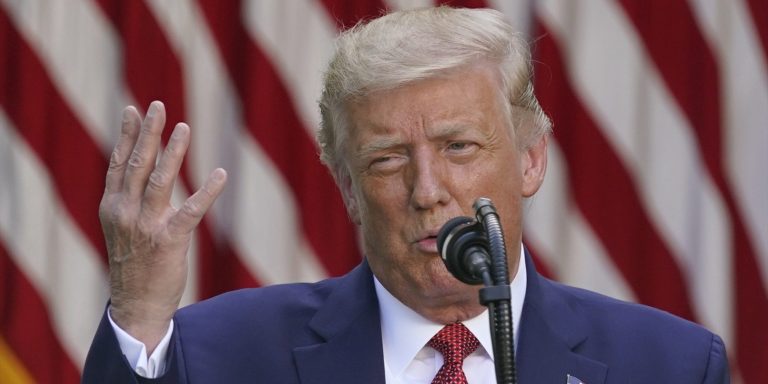
(Headline USA) President Donald Trump signed legislation and an executive order on Tuesday that he said will hold China accountable for its oppressive actions against the people of Hong Kong, then quickly shifted his policy speech into a political one, hurling broadsides against Democratic rival Joe Biden.

The legislation and order are part of the Trump administration’s stepped-up offensive against China for the Asian superpower’s exploitation of America and its effort to conceal details about the human-to-human transmission of the coronavirus from the world. The almost daily administration attacks on Beijing come as Trump points out Biden’s history as being soft on China.

“So Joe Biden and President Obama freely allowed China to pillage our factories, plunder our communities and steal our most precious secrets,” Trump said, adding, “I’ve stopped it largely.”

Trump said that as vice president, Biden advocated for the Paris Agreement addressing climate change; Trump withdrew the U.S. from the accord.

“It would have crushed American manufacturers while allowing China to pollute the atmosphere with impunity, yet one more gift from Biden to the Chinese Communist Party,” Trump said.

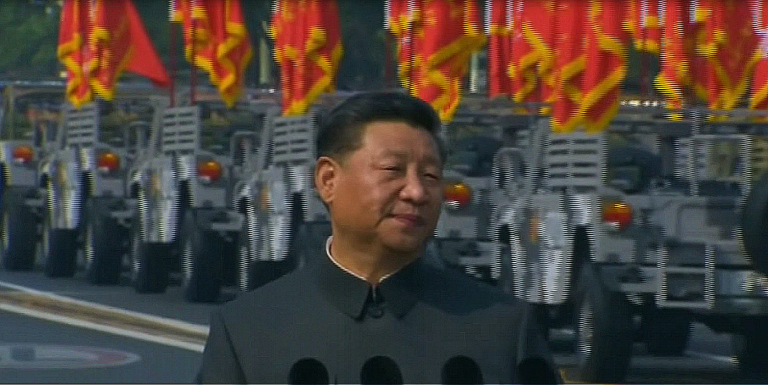
Trump talked up his own tough approach to Beijing. The two nations signed phase one of a trade deal, but since then, relations have soured and Trump told reporters in the Rose Garden that he has no interest in talking to Xi.

The legislation Trump signed into law targets police units that have cracked down on Hong Kong protesters as well as Chinese Communist Party officials responsible for imposing a new, strict national security law widely seen as chipping away at Hong Kong’s autonomy. The mandatory sanctions are also required to be imposed on banks that conduct business with the officials.

While he signed the bill into law, Trump issued a statement saying the administration would not view as binding certain sections of the law that the White House believes limit a president’s powers to conduct foreign policy.

Lawmakers from both parties have urged Trump to take strong action in response to China’s new national security law that erodes the “one country, two systems” framework under which Britain handed Hong Kong over to China in 1997. Hong Kong is considered a special administrative region within China and has its own governing and economic systems.

“This law gives my administration powerful new tools to hold responsible the individuals and the entities involved in extinguishing Hong Kong’s freedom,” Trump said. “Their freedom has been taken away. Their rights have been taken away, and with it goes Hong Kong in my opinion because it will no longer be able to compete with free markets. A lot of people will be leaving Hong Kong, I suspect.”

The executive order he signed did not appear to go beyond his administration’s previous determinations that Hong Kong is no longer eligible for preferential treatment from the United States. Trump said the order strikes those privileges but, in fact, the administration already has been in the process of eliminating them for nearly two months.

China called the legislation gross interference in its internal affairs and warned it would respond by imposing sanctions on related American individuals and entities.

“The American side’s attempts to obstruct the implementation of Hong Kong’s national security law will never succeed,” the foreign ministry said in a statement.

It said the law would ensure the long-term stability and prosperity of the semi-autonomous territory.

Secretary of State Mike Pompeo first made the determination in late May that China’s decision to impose a new national security law in Hong Kong meant the former British territory was no longer a democracy and so was no longer eligible for trade, commercial and other U.S. perks it had enjoyed. Just three days later, when Trump announced the U.S. was withdrawing from the World Health Organization because of Chinese influence, he echoed Pompeo’s determination and instructed his administration to immediately begin eliminating the preferences, which it did.

In late June, the administration barred Hong Kong from importing U.S. weapons, saying its purchase of items that have both civilian and military applications would be subject to the same licensing requirements as mainland China. Other actions in the works include suspending an extradition treaty with Hong Kong, something Australia has already done, as well as ending legal cooperation agreements, taxation accords and financial understandings that cover accounting rules for Chinese businesses that work in the U.S.

At the same time, the administration has pressed ahead with travel bans for Chinese, Hong Kong and communist party officials the U.S. believes are responsible for curtailing democracy in Hong Kong.

The administration also also gone after China by imposing travel bans on officials for repressing minorities in western China and hindering foreigners’ access to Tibet. On Monday, Pompeo announced that the U.S. had decided to reject outright virtually all Chinese maritime claims in the South China Sea, a determination that could lead to increased tensions in disputed, critical international shipping lanes.

Adapted from reporting by Associated Press.
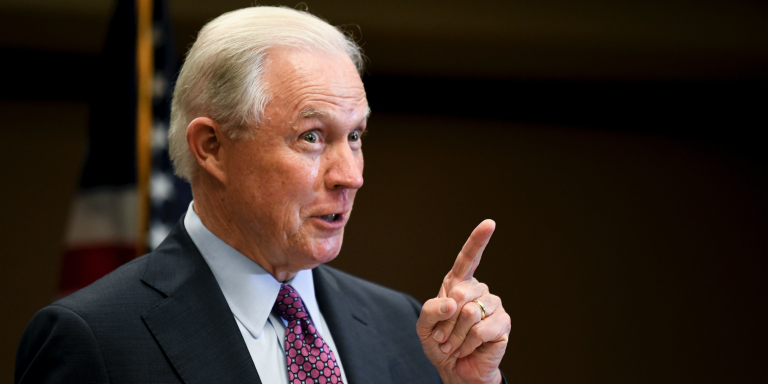
Tuberville Wins Ala. GOP Primary Against Sessions — Who Still Backs Trump

0

(Headline USA) Former U.S. Attorney General Jeff Sessions lost the Republican nomination for his old Senate seat in Alabama to former college football coach Tommy Tuberville on Tuesday, likely ending a long political career with a bitter defeat egged on by President Donald Trump.

Tuberville, 65, beat Sessions in Tuesday’s Republican runoff as Sessions fell short in his attempted comeback for a seat he held for two decades before resigning to become Trump’s attorney general in 2017.

Familiar to Alabamians from his decade as Auburn University’s head football coach, Tuberville won about 60% of the vote, according to unofficial returns, and is now positioned for a robust challenge against Democratic U.S. Sen. Doug Jones. With Alabama’s strong GOP tilt, the seat is likely Republicans’ best chance for a pickup as they try to maintain their thin Senate majority.

Sessions, 73, was wounded by Trump’s criticisms after he recused himself in the investigation into Russian interference in the 2016 presidential campaign. The first U.S. senator to endorse Trump during the GOP presidential primary campaign, Sessions insisted throughout his attempted comeback and again in defeat that he was required by law to recuse because he was a potential subject and witness given his campaign ties to the president.

“Let me say this about the president and our relationship: I leave with no regrets,” Session said on a small stage at a Mobile, Alabama, hotel, with his many grandsons looking on. “I was honored to serve the people of Alabama and I was extraordinarily proud of the accomplishments we had as attorney general.”

Sessions repeated that he was right to step away from the investigation.

“I did the right thing and I saved the president’s bacon in the process. Any other action to try to squelch an investigation in that environment would not have worked,” he said, adding that it ultimately led to Trump’s exoneration. “I leave elected office with my integrity intact.”

Despite all the brow beating, Sessions said Trump remains the right path for the GOP and the country.

“I think it’s time for this Republican Party to listen to the Donald Trump agenda…,” Sessions said Tuesday night, adding that the president can win a second term — as long as he “stays on message.”

Sessions was gracious to Tuberville, as well, pledging he’d work to help defeat Jones.

“He is our Republican nominee,” Sessions said. “We must stand behind him in November.”

Yet Sessions’s statements of loyalty to Trump and the party have never been enough for the president, who endorsed Tuberville after Alabama’s March primary. Trump declared at the time that Sessions had “let our Country down” and that Tuberville would be his “true supporter.” Trump continued the broadsides throughout the primary campaign, and he crowed Tuesday evening on Twitter shortly after The Associated Press called the race for Tuberville.

“Tommy Tuberville WON big against Jeff Sessions,” Trump wrote. “Will be a GREAT Senator for the incredible people of Alabama.”

Tuberville willingly embraced the dynamics, casting himself as an outsider and calling the former attorney general “weak” and “a disaster.” Those digs aside, Tuberville ran a risk-averse campaign, declining media interviews and Sessions’s challenges to debate.

In brief remarks to supporters Tuesday night, Tuberville looked to November with a message of cultural conservatism that mixed praise for Trump with accusations that Jones wants liberal “New York values” in Alabama. Without specifics, Tuberville said he’d fight for “the same God-given principles that my father and others members of the Greatest Generation fought for so many years ago.”

Jones, an Alabama native and former U.S. attorney known for winning convictions of Ku Klux Klansmen who bombed a Birmingham church and killed four Black girls in 1963, signaled that he won’t go down easily. Jones won a 2017 special Senate election aided considerably by Republican nominee Roy Moore. The former Alabama chief justice was twice removed from the bench for violating judicial canons and then accused during the Senate campaign of sexually molesting or harassing multiple teenage girls decades earlier.

Sessions tried to remind voters of his early decision to back Trump and argued he’d be most effective in advancing Trump’s agenda. When he wasn’t defending his loyalty to the president, Sessions focused on his long history in office and questions about Tuberville’s background.

“You know me,” Sessions told voters days before the runoff.

Adapted from reporting by Associated Press.

Richmond Dumps Confederate Monuments at Old Wastewater Plant

0

(Headline USA) At least some of the Confederate monuments that have been recently removed from places of prominence in Richmond, Virginia, are being stored on the grounds of a waste water treatment plant, photographs show.

Photos taken this week by The Associated Press and Richmond Times-Dispatch show a collection of statues and other large objects under tarps at the facility just outside the city’s downtown.

On July 1, Mayor Levar Stoney ordered the immediate removal of all Confederate monuments on city property in Richmond, the onetime capital of the Confederacy.

Stoney invoked his emergency powers, citing ongoing civil unrest and concerns that protesters would get hurt if they tried to pull down the enormous statues themselves.

His spokesman, Jim Nolan, did not immediately respond to an inquiry about the storage site Tuesday.

The only Confederate monument that remains on Richmond’s prominent Monument Avenue is a memorial to Gen. Robert E. Lee located on state property.

Virginia Gov. Ralph Northam has ordered that statue’s removal, but it has been at least temporarily blocked by a lawsuit.

The statues’ fate is not currently clear. A new state law that took effect July 1 allows local governments to remove statues on public property.

It contains a provision that says the local governing body must offer the monument “for relocation and placement to any museum, historical society, government or military battlefield” but also says the local government “shall have sole authority to determine the final disposition.”

The city council has scheduled a public hearing on the future of the monuments Aug. 3, according to the Times-Dispatch.

NeverTrump PACs Target Trump, Tucker Carlson, Key GOP Sens.

Getting rid of President Donald Trump is the fever-dream of every so-called NeverTrumper.

But smashing the anti-establishment threat that the president represents is what the small-but-loud NeverTrump elite is really about.

That means destroying anyone with traditional conservative values that oppose big government, according to the Washington Post.

“Dispatching Trump does not dispatch Trumpism,” said John Weaver of The Lincoln Project.

Weaver co-founded The Lincoln Project with rabid anti-Trumpers Rick Wilson and Steve Schmidt.

The group’s mission is not only to defeat the president, but also Republican senators and, thereby, to unify Congress and the White House under Democrat control.

Furthermore, they want to destroy Fox News host Tucker Carlson, as well as GOP Sens. Tom Cotton of Arkansas and Josh Hawley of Missouri.

“The next battle will be making sure those from his ilk do not get the next Republican nomination,” Weaver said. “Our task won’t be finished when Joe Biden takes the oath of office.”

NeverTrump zealotry is eyebrow-raising considering the “conservative” Lincoln Project and allied groups like Republican Voters Against Trump are solely committed to Democrat candidates, causes and interests.

Weaver, Wilson and Schmidt claim to be real conservatives, though they’ve done nothing but cash-in on progressive media and Democrat political projects since President Trump destroyed their GOP establishment networks in 2016.

Republican Voters Against Trump involves Bill Kristol, formerly prominent Republican thought-leader who recently announced his conversion to full-fledged Democrat.

Kristol, the longtime figurehead of the Weekly Standard, openly supported Hillary Clinton and helped found the anti-Trump website “The Bulwark” with funding from progressive billionaire Pierre Omidyar.

Washington, D.C. consultant Tim Miller also works Kristol’s “Republican” group. Miller was a senior advisor to Jeb Bush’s disastrous 2016 presidential campaign.  

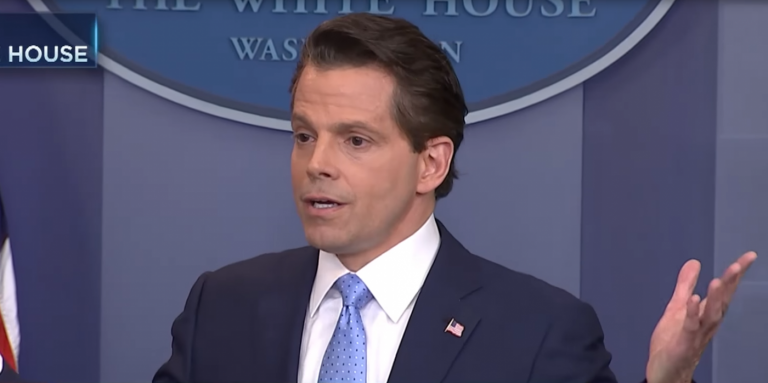
A third group, Right Side PAC, is gunning for Trump and Trump supporters with the help of Trump-reject Anthony Scaramucci.

The groups’ collective strategy involves fooling blue-collar workers and suburban women in swing states into supporting Democrats that are more likely to bow to left-wing radical mobs than to support traditional America.

“The White House declined to comment on the record, although privately both administration officials and outside allies are dismissive of the groups—especially the Lincoln Project—which they deride as ‘scam PACs’ run by ‘beltway swamp creatures whose candidates can’t win,’” the Post reported.

White House Teams w/ Big Tech for Alternate Career Path Campaign

0

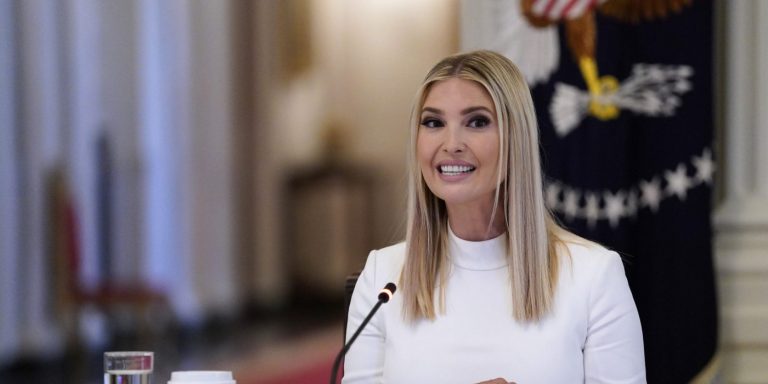
(Headline USA) Presidential adviser Ivanka Trump on Tuesday unveiled a White House-backed national ad campaign highlighting alternative ways to start a career, an initiative targeting students, mid-career workers and the millions of people who are now unemployed because of the coronavirus.

Called “Find Something New,” the campaign is backed by Apple Inc. and IBM Corp. It was quickly bashed on social media as being tone deaf and inadequate for the times.

The Trump administration has long emphasized skills-based job and vocational training as an alternative to two- or four-year college degree programs for high school graduates, arguing that college isn’t for everyone and that a degree isn’t required for many jobs.

The campaign had been in the works for some time, but gained new urgency after efforts to slow the coronavirus outbreak left millions of people unemployed.

Ivanka Trump said President Donald Trump has been talking about alternate career paths since the beginning of the administration, in part because of growing automation.

“Now as a result of COVID, people need to, unfortunately, in some cases, learn a completely new skill,” Ivanka Trump said, referring to COVID-19, the disease the virus causes.

She cast it as an opportunity for people to get on a “new trajectory” and said, “We want to facilitate that connection back to the workforce and make it as smooth as possible.”

Ginni Rometty, IBM’s executive chairman, said during the announcement that the campaign will help encourage companies to embrace “skills first” hiring — as her company has done.

“Don’t look just at a degree, but look at the skills someone has and let them get started,” she said.

Apple CEO Tim Cook said it was particularly important during a time of racial strife to connect people with resources that can help them find well-paying jobs and build lasting careers.

“That mission has never been more urgent than now,” Cook said.

GOP chair Ronna McDaniel tweeted: “Fantastic partnership between the private sector, @IvankaTrump and the Trump administration aimed at helping Americans find the right path for their career goals.”

The nonprofit Ad Council created the “Find Something New” campaign with IBM, Apple, members of the Business Roundtable and the White House’s American Workforce Policy Advisory Board.

A 30-second spot unveiled Tuesday features ordinary people talking about their experiences with career challenges and transitions. Among them are a fitness instructor who completed an apprenticeship program and became a welder after her gym went under, and a man who lost his job twice in one year, took online certification courses and now works as a tech consultant.

Tiffany Anderson, of Leander, Texas, says in the ad that she didn’t have a career plan after finishing high school, but became a phlebotomist after taking a medical course online.

“You will find something,” she says.

A companion website offers links to education and training options, including online and virtual learning.

Ads will appear nationwide across TV, digital and print platforms in time and space donated by various media companies, the Ad Council said.

More than 20 corporations and organizations, including Apple, IBM and the U.S. Chamber of Commerce, funded the campaign. The Ad Council declined to say how much it cost.

Adapted from reporting by the Associated Press

Left’s Eco-Activism Lets China Dominate in Rare-Earth Minerals

Environmental activists and climate change alarmists have a dirty secret. Achieving anything close to a fossil fuel-free society will heavily involve rare earth minerals—much more than now.

From lithium-powered batteries to uranium-fueled nuclear generators, these supposedly cleaner alternatives still require the exploration and cultivation of natural resources, particularly if the United States hopes to remain energy-independent.

But the same activists who oppose traditional forms of energy production—carbon-dioxide-emitting fuels that deliver cheap, reliable power to hundreds of millions of people—are also totally opposed to rare-earth mining in the U.S.

The effect of wanting a green future without trade-offs isn’t just nonsensical, according to energy advocate Power the Future.

It’s handing China vast leverage over the American economy and armed forces.

“By opposing greater U.S. production and development of REEs [rare earth minerals], green activists are fueling China’s dominance,” reads a new Power the Future study called, “The Fight For Rare Earths: How Green Extremists Ignore China’s Human Rights Record And Threaten U.S. National Security.”

The report is a clear warning that the hypocritical efforts of the American eco-left are actually aiding a hostile foreign adversary that has no intention of curbing its own environmental degradations.

“For them, China’s significant influence over REEs is irrelevant,” said the study.

“Their overarching concern is fomenting a green utopia, in the form of a ‘zero-carbon future,’ in which renewable technologies, e.g., wind, solar, electric vehicles, and electric batteries, will (they say) provide well-paying jobs, energy security, a cleaner environment, and protect the world from unchecked climate change,” it continued.

Despite their name, rare-earth minerals aren’t that rare. Rather, they are “constituent parts” of larger minerals and therefore difficult and expensive to mine.

Rare-earth minerals are vital components in more than 200 consumer products, including cell phones, flat-screen televisions, computer hard drives, car batteries and many common tech gadgets.

They’re also essential to creating solar panels, electric cars and other “green” items that the environmental-climate lobby insists on mandating to stop climate change.

Military tools and weapons crucial to U.S. national security further rely on rare earth minerals, including “significant defense applications” like electronic displays, guidance systems, lasers, and radar and sonar systems.

But with activists attacking mining and traditional energy at home, there’s nowhere to go but into the arms of the Chinese Communist Party.

The slide toward China has been gradually occurring for years with alarming results—and the increasing green-socialist radicalism of Green New Deal Democrats is making the problem worse.

“China controls the vast majority of both the mining and processing of these rare earths,” the report states, adding that China already provides 85-95 percent of the world’s REEs and that the U.S. imports 80 percent of its supply directly from China.

“China could cut off our supply of rare earths at any time… This dependence threatens our economy and national security, and if the eco-Left has their way, our energy supply,” the report continues.

According to the South China Morning Post, the CCP fired a warning shot last year.

“China’s rare earth producers, who control the lion’s share of the world’s output of the elements said they are ready to use their dominance of the industry as a weapon in the country’s year-long trade war with their customers in the United States,” the Post reported.

The “Fight For Rare Earths” study cited the radical activist group Earthworks as an example of the dangerous hypocrisy on the political left.

The group produced a dubious report that was promoted throughout an echo-chamber of friendly media organizations and allied Green New Deal politicians.

The authors claimed that a “transition to a 100% renewable energy system is urgently needed to meet the goals of the Paris Climate Agreement and increase the chance of keeping global temperature rise below 1.5 degrees.”

Not only was the science wrong, according to Power the Future, but the proposed renewable energy solution is a non-starter given the economic, national security and practical constraints.

“Green radicals have a big problem,” the “Fight For Rare Earths” study concludes.

“They can ignore China all they want, but their perfect renewable future depends on REEs—lots of them.”

US Budget Deficit Hits All-Time High of $864 Billion in June

0

(Associated Press) The federal government incurred the biggest monthly budget deficit in history in June as spending on programs to combat the coronavirus recession exploded while millions of job losses cut into tax revenues.

The Treasury Department reported Monday that the deficit hit $864 billion last month, an amount of red ink that surpasses most annual deficits in the nation’s history and is above the previous monthly deficit record of $738 billion in April. That amount was also tied to the trillions of dollars Congress has provided to cushion the impact of the widespread shutdowns that occurred in an effort to limit the spread of the viral pandemic.

For the first nine months of this budget year, which began Oct. 1, the deficit totals $2.74 trillion, also a record for that period. That puts the country well on the way to hitting the $3.7 trillion deficit for the whole year that has been forecast by the Congressional Budget Office.

That total would surpass the previous annual record of $1.4 trillion set in 2009 when the government was spending heavily to lift the country out of the recession caused by the 2008 financial crisis.

The June deficit was driven higher by spending on various government relief programs such as an extra $600 per week in expanded unemployment benefits and a Paycheck Protection Program that provided support to businesses to keep workers on their payrolls.

The report showed that the cost of the Paycheck Protection Program in June was $511 billion. That reflected a charge to the government for all the bank loans made under the program even though the government will not actually have to pay out funds until the banks determine whether the businesses met the criteria for having the loans forgiven. Those requirements include spending at least 60% of the loan amount on worker pay with the other 40% going to overhead costs such as rent and utilities.

Another reason for the surge in the June deficit was the government’s decision to delay tax payments this year until July 15. That decision mean that quarterly payments made by individual taxpayers and corporations will not be due until July 15 this year rather than June.

So far this budget year, revenues total $2.26 trillion, down 13.4% from the same period last year, while spending totals $5 trillion, up 49.1% from a year ago.

The CBO estimate of a $3.7 trillion deficit for this year could go higher depending on the course of the economy. The country fell into a deep recession in February, ending a record long expansion of nearly 11 years. The Trump administration is predicting that the economy will come roaring back in second half of this year but many private forecasters are concerned that a resurgence of virus cases could make consumers too fearful to resume spending, which drives 70% of the economy.

Congress which has already approved more than $3 trillion in a series of rescue packages, is scheduled to debate another support effort when it returns from recess on June 20. Democrats are pushing for an extension of the expanded unemployment benefits which will soon run out.

Nancy Vanden Houten, senior economist at Oxford Economics, said she was expecting that lawmakers would end up compromising on a new economic support package that would fall somewhere between a $3.5 trillion measure passed by the House but not taken up by the Senate and what is shaping up to be an opening offer by Senate Republicans for a package of about $1.5 trillion.

“The risk is that the deficit will be larger due to additional stimulus but, given the congressional timetable, the impact of the next package will likely be skewed to fiscal 2021, which starts Oct. 1,” she said.

Justice Ginsburg Back in Hospital w/ Possible Infection, Fever

0

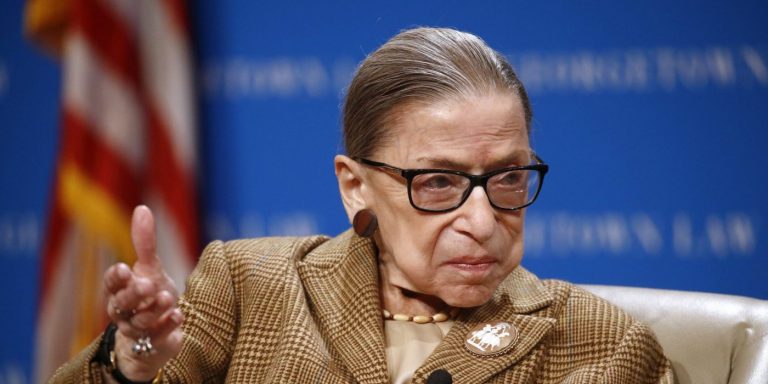
Justice Ruth Bader Ginsburg was being treated for a possible infection and was expected to stay in the hospital for a few days following a medical procedure, the Supreme Court said in a statement Tuesday.

The court said that the 87-year-old Ginsburg went to a hospital in Washington on Monday evening after experiencing fever and chills. She then underwent a procedure at Johns Hopkins Hospital in Baltimore on Tuesday afternoon to clean out a bile duct stent that was placed last August when she was treated for a cancerous tumor on her pancreas.

The statement said the justice “is resting comfortably and will stay in the hospital for a few days to receive intravenous antibiotic treatment.”

Ginsburg spent a night in the hospital in May with an infection caused by a gallstone. While in the hospital, she participated in arguments the court heard by telephone because of the coronavirus pandemic.

Ginsburg, who was appointed by President Bill Clinton and joined the court in 1993, has been treated four times for cancer. In addition to the tumor on her pancreas last year, she was previously treated for colorectal cancer in 1999 and pancreatic cancer in 2009. She had lung surgery to remove cancerous growths in December 2018.

Speaking at a news conference in the Rose Garden on Tuesday evening, President Donald Trump was asked about Ginsburg. He said he hadn’t heard she had been hospitalized. “I wish her the best. I hope she’s better,” he said.

Trump Admin Backs Off Deporting Foreign Students over COVID Closures

0

(Headline USA) Facing eight federal lawsuits and opposition from hundreds of universities, the Trump administration on Tuesday rescinded a rule that would have required international students to transfer or leave the country if their schools held classes entirely online because of the coronavirus pandemic.

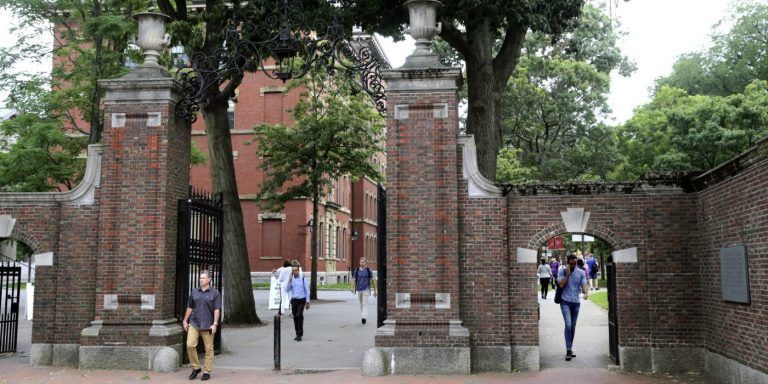
The decision was announced at the start of a hearing in a federal lawsuit in Boston brought by Harvard University and the Massachusetts Institute of Technology.

U.S. District Judge Allison Burroughs said federal immigration authorities agreed to pull the July 6 directive and “return to the status quo.”

A lawyer representing the Department of Homeland Security and U.S. Immigration and Customs Enforcement said only that the judge’s characterization was correct.

The announcement brings relief to thousands of foreign students who had been at risk of being deported from the country, along with hundreds of universities that were scrambling to reassess their plans for the fall in light of the policy. With the policy rescinded, ICE will revert to a directive from March that suspended typical limits around online education for foreign students.

ICE did not immediately comment on the decision.

Harvard President Lawrence Bacow called it a “significant victory.”

“While the government may attempt to issue a new directive, our legal arguments remain strong and the Court has retained jurisdiction, which would allow us to seek judicial relief immediately to protect our international students should the government again act unlawfully,” Bacow said in a statement.

MIT’s president said his institution also stands ready “to protect our students from any further arbitrary policies.”

“This case also made abundantly clear that real lives are at stake in these matters, with the potential for real harm,” President L. Rafael Reif said in a statement. “We need to approach policy making, especially now, with more humanity, more decency — not less.”

Under the policy, international students in the U.S. would have been forbidden from taking all their courses online this fall.

New visas would not have been issued to students at schools planning to provide all classes online, which includes Harvard. Students already in the U.S. would have faced deportation if they didn’t transfer schools or leave the country voluntarily.

Even if an outbreak had forced colleges to move all their classes online during the semester, international students would have been forced to transfer to a school with campus instruction or leave the country.

Immigration officials issued the policy last week, reversing the earlier guidance from March 13 telling colleges that limits around online education would be suspended during the pandemic.

University leaders believed the rule was part of President Donald Trump’s effort to pressure the nation’s schools and colleges to reopen this fall even as new virus cases rise.

The policy drew sharp backlash from higher education institutions, with more than 200 signing court briefs supporting the challenge by Harvard and MIT.

Colleges said the policy would put students’ safety at risk and hurt schools financially. Many schools rely on tuition from international students, and some stood to lose millions of dollars in revenue if the rule had taken hold.

Harvard and MIT were the first to contest the policy, but at least seven other federal suits had been filed by universities and states.

Rahul Lobo, 19, from Goa on the west coast of India, said he feels “an immeasurable amount of relief.”

“As it is, we’re living in very uncertain times, and the recent ICE policy just made things even more uncertain,” said Lobo, a rising junior at the University of Notre Dame.

“Suddenly I wasn’t worrying about whether I could get back to campus, but more whether I would even be able to finish my degree in four years.”

The American Council on Education, which represents university presidents, applauded ICE’s pullback of the rule. The group called the policy “wrongheaded” and said it drew unprecedented opposition from colleges.

“There has never been a case where so many institutions sued the federal government,” said Terry Hartle, the group’s senior vice president. “In this case, the government didn’t even try to defend its policymaking.”

Many opponents, however, were hesitant to call it a closed case.

Massachusetts’ Democratic attorney general, who is leading a separate lawsuit against the policy, warned that the Trump administration may attempt again to impose limits on international students.

“This is why we sue. The rule was illegal and the Trump Administration knew they didn’t have a chance,” Maura Healey said on Twitter. “They may try this again. We will be ready.”

Harvard and MIT argued that immigration officials violated procedural rules by issuing the guidance without justification and without allowing the public to respond.

They also argued that the policy contradicted ICE’s March 13 directive telling schools that existing limits on online education would be suspended “for the duration of the emergency.”

The suit noted that Trump’s national emergency declaration has not been rescinded and that virus cases are spiking in some regions.

Immigration officials, however, argued that they told colleges all along that any guidance prompted by the pandemic was subject to change.

They said the rule was consistent with existing law barring international students from taking classes entirely online.

Federal officials said they were providing leniency by allowing students to keep their visas even if they study online from abroad.

Adapted from reporting by the Associated Press

De Blasio’s NYC Sanctuary Policy is Freeing Violent Criminals

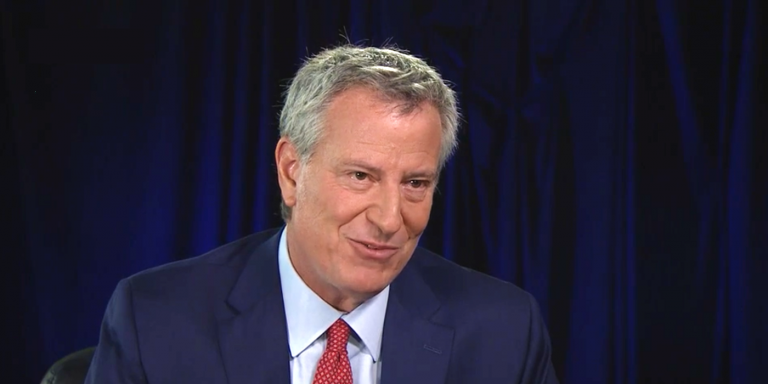
The New York Police Department arrests illegal alien criminals, and Mayor Bill de Blasio sets them free before Immigration and Customs Enforcement can take custody.

That’s New York City’s sanctuary policy, and it prioritizes some of society’s worst predators above their victims and the law-abiding public.

It also forces ICE to engage in dangerous manhunts—but thank goodness it does.

ICE officers arrested three convicted criminal illegal aliens last week after de Blasio’s sanctuary policy prevented the NYPD from honoring ICE detainers, or notifying federal immigration authorities when criminal aliens are being released from jail.

Alvaro Cuatate–Xochicale, 57, has pending charges for sexual abuse, sexual contact with an individual younger than 11 years old, sexual abuse and sexual contact with a person younger than 14 years old, subjecting another person to sexual contact without consent and unlawful dealing with a child.

But thanks to de Blasio, a May 12 ICE detainer was ignored and Cuatate–Xochicale was freed in advance of his criminal court proceedings, with the assumption he would show up.

Similarly, the NYPD had arrested Miguel Guzman–Reyna, 58, for third-degree assault and second-degree harassment.

He had previously been convicted for criminal possession of a loaded firearm. But Guzman–Reyna was released back to the streets after a May 11 ICE detainer was ignored.

Jonathan De Jesus-Lopez, 20, has a pending charge for grand larceny and was previously convicted for selling controlled substances in a school zone. His ICE detainer was also ignored.

But in all three cases, ICE officers were able to locate the dangerous criminals and take them into federal custody where they will now await the outcome of immigration hearings.

“What’s so troubling about New York’s sanctuary city policy is that it favors the criminals over citizens,” said Thomas R. Decker, ICE Emergency Removal Operation’s New York’s field office director.

“These three individuals clearly pose a significant threat to public safety, yet law enforcement agencies are prevented from doing the right thing, which is turning these criminals over to ICE in a safe, controlled environment,” Decker said.

“There is no justifiable reason to release drug dealers, violent criminals and sexual predators into American communities.”

Six other criminal illegal aliens were arrested last week in New York City as part of a coordinated effort to remove dangerous illegals despite the city’s sanctuary policy.

All had ICE detainers that were ignored. Their crimes included murder, rape, robbery and multiple acts of sexual assault on minor children.