(Bethany Blankley, The Center Square) As Americans celebrate Thanksgiving this year, many believe the first thanksgiving was held in Plymouth, Massachusetts, in 1621. However, the first Thanksgiving celebration was held two decades earlier in an area south of El Paso in 1598, historians in Texas argue.
The first national Thanksgiving proclamation was issued by the Continental Congress two years after independence in 1778. President George Washington designated Thursday, November 26, 1789, as a day of public thanksgiving and prayer, in the first presidential Thanksgiving Proclamation.
“Whereas it is the duty of all Nations to acknowledge the providence of Almighty God, to obey his will, to be grateful for his benefits, and humbly to implore his protection and favor – and whereas both Houses of Congress have by their joint Committee requested me to recommend to the People of the United States a day of public thanksgiving and prayer to be observed by acknowledging with grateful hearts the many signal favors of Almighty God especially by affording them an opportunity peaceably to establish a form of government for their safety and happiness,” the proclamation states.
Nearly 100 years later, President Abraham Lincoln issued a Thanksgiving Proclamation in 1863, which began a yearly national Thanksgiving holiday still celebrated today.
The national celebration began nearly 200 years after the first thanksgiving celebration was recorded in Plymouth Colony in what would become Massachusetts Bay Colony. In 1620, English Separatists left for the New World seeking religious freedom. Their destination was the colony of Virginia but a storm blew them to Cape Cod, where they arrived in November 1620. Of the 102 on the Mayflower who sailed, only half survived the bitter winter. After failed attempts at farming and with the help of native Indians, the remaining survived and celebrated their first harvest in the autumn of 1621.
Their first recorded Thanksgiving Day celebration was in 1623 after rain fell ending a drought. In 1668, the Plymouth Colony Court declared Nov. 25 as a “sollemne day of thanksgiving,” praising the “goodnes of God to us in the continuance of our civill and religious liberties, the generall health that we have enjoyed, and that it hath pleased God in some comfortable measure to blesse us in the fruites of the earth.”
However, thousands of miles away and decades earlier, the first thanksgiving was held along the banks of the Rio Grande River in what is now Texas, historians argue.
The celebration wasn’t among Protestant British pilgrims who’d reached the new world by sea, but among Roman Catholic Spanish conquistadors, priests and early colonists who traversed across a desert. The celebration was also in April, not November.
Under the direction of King Phillip II of Spain, Spanish conquistadors led expeditions into lands that are now Texas, New Mexico, Arizona and California and established colonies.
“The largest and most famous of the expeditions was that of Juan de Oñate, who reached the south banks of the Rio Grande in April 1598. On April 30, 1598, the hungry and thirsty travelers celebrated a Thanksgiving Mass and feast to celebrate the survival of their expedition. The feast included game by the Spaniards and fish by the natives of the region. This significant date is considered to be the ‘First Thanksgiving’ celebrated in the present-day United States,” the El Paso Mission Trail Association says.
Oñate’s expedition included several hundred people, including soldiers, their wives and children, several priests and 7,000 head of livestock. They embarked on a 50-day journey from Santa Barbara in northern Chihuahua across a desert with a goal of reaching what is now Sant Fe, New Mexico. But they didn’t make it. Just days before they reached their destination, they ran out of food and water.
“Both animals and humans almost went mad with thirst before the party” reached the Rio Grande River, the Texas Almanac states. “After recuperating for 10 days, Oñate ordered a day of thanksgiving for the survival of the expedition.”
“Some historians call this one of the truly important dates in the history of the continent, marking the beginning of Spanish colonization in the American Southwest,” the almanac states. It points out that as Jamestown and Plymouth colonies were being established in the early 17th century, hundreds of towns in the New World had already been established by the Spanish in what are now four southwestern U.S. states.
The “Great Colonizer,” Oñate, “brought the Spanish culture (and ultimately, that of Mexico) to what would become the Great Southwest shaping its growth and the development of the area for generations,” an historical marker in El Paso County, “The First Thanksgiving,” reads. “These historic events preceded the English colonies on the Atlantic Seaboard, the French colonization of Canada, and the Dutch settlements in the Hudson River area by several years.”
Since 1989, residents in the small community of San Elizario, Texas, south of El Paso, celebrate what they consider the first Thanksgiving on April 30 every year. The El Paso Mission Trail Association sponsors the celebration, including a reenactment at the Chamizal National Memorial.
(Luis Cornelio, Headline USA) One of the wealthiest members of Congress boasted about her own money Tuesday while urging colleagues to ban lawmakers from owning and trading stocks.
The lawmaker, Rep. Sara Jacobs, D-Calif., is the heir to the semiconductor giant Qualcomm, which has a market capitalization of nearly $180 billion. Her personal net worth has been estimated between $76 million and $100 million.
Jacobs referenced her wealth to compel her colleagues to support the “Restore Trust in Congress Act,” a bipartisan bill that seeks to ban individual stock ownership for members of Congress and their families.
Critics blasted the post as cringeworthy or tone-deaf, helping it rack up nearly 3 million views. Among those slamming Jacobs was former Rep. George Santos, who accused Jacobs of already holding millions in stocks.
“Start by selling your publicly traded stock holdings that are estimated to be close to $20,000,000.00!” he wrote. “When people like you start walking the walk the American people will take you seriously.”
Start by selling your publicly traded stock holdings that are estimated to be close to $20,000,000.00! When people like you start walking the walk the American people will take you seriously. 😒
Rep. Tim Burchett, R-Tenn., appeared to mock her pitch with the following friendly reply: “As one of the poorest members of Congress and a sponsor of the legislation, I welcome your support.”
Ohio state Rep. Brian Stewart, a Republican, slammed the post, saying, “It’s always the richest members of Congress who think members should work for free & have no way to make money, and, as a result, that only rich people should be members of Congress.”
One user replied, “I can get behind this bill, but kind of a funny way to flex being the nepo granddaughter of the founder of Qualcomm.”
The Restore Trust in Congress Act was introduced by Rep. Chip Roy, R-Texas, in September.
(Money Metals News Service) Host Mike Maharrey opens this Midweek Memo by joking that every day is Black Friday now. The episode drops on a Wednesday, yet he insists yesterday was Black Friday, tomorrow will be Black Friday, and last week probably was too.
He remembers when Black Friday meant one single day, the Friday after Thanksgiving, not a six-week marketing season stretching from early November into December. He admits nostalgia is part of it, but he still thinks we do not need to start the Christmas season the day after Halloween.
Even in this lighthearted mood, he pauses to thank listeners for tuning in. He encourages them to leave five-star reviews and share the show on platforms like Apple Podcasts and Spotify so the Midweek Memo can climb the algorithm and reach more people.
Inflation And Your Shrinking Dollar
A recent trip to Washington, D.C., brought the Federal Reserve back to mind for Maharrey. He mentions the Eccles Building, where Fed officials decide how much to devalue your money every few weeks, and uses that image to pivot into a discussion of inflation.
He quotes his friend Josh, who says it is “extremely helpful” to think of inflation as a decline in the purchasing power of the currency instead of just rising prices. Maharrey likes this because it shifts the question away from “why are prices going up” and toward “why is my money worth less.”
Traditionally, economists defined inflation as an expansion of the money supply and credit. That monetary inflation can show up as higher consumer prices, which we track with the CPI, and as asset price inflation in stocks and real estate. The exact mix depends on what is happening in the broader economy.
Maharrey argues that politicians, central bankers, academics, and much of the media have blurred this definition on purpose. When inflation is reduced to “prices are rising,” blame can be pinned on corporations, supply chains, or random shocks. When we frame it as money creation, responsibility lands on the central bank, the federal government, and their constant borrowing and spending.
Josh’s framing leads to a better question. Rather than asking why Safeway raised the price of milk, ask why two dollars no longer buys a gallon of milk. The resources and labor required to produce milk have not changed all that much. What has changed is the value of the money, steadily eroded by a central bank that keeps expanding the money supply, forcing down interest rates, and enabling ever more deficit spending.
For Maharrey, monetary expansion is the fuel for a huge warfare–welfare state. Without the Federal Reserve backstopping Washington with freshly created money and easy credit, the size and reach of the federal government would be nowhere near what we see today.
Thanksgiving, Christmas Creep, And The Lost Black Friday
From inflation, Maharrey swings back to the holidays. He has never enjoyed Black Friday crowds and turned it into a personal tradition to stay home. While people poured into malls and big box stores in the 1970s and 1980s, he avoided what he calls “too peopley” chaos.
The classic version of Black Friday required getting up before dawn, standing outside in the cold, and fighting for limited deals. Growing up in Kentucky, that often meant freezing temperatures on top of sleep deprivation. No discount laptop could lure him out the door at 5:00 a.m.
His mother and grandmother were the opposite. They were serious Black Friday shoppers who crammed most of their Christmas buying into one brutal day. He remembers them leaving before he woke up and returning around three or four in the afternoon, looking like they had just gone fifteen rounds with Mike Tyson.
Now Black Friday has melted into what he calls “Black November and beyond.” That bothers him even more because it tramples Thanksgiving, a holiday he genuinely enjoys and considers important.
He believes Thanksgiving serves a vital purpose. It pushes people to pause, recognize the good things in life, and, for religious listeners, offer thanks to God and remember that something greater than themselves exists. On top of that, it delivers all the perks. You can sleep in. You can watch the Macy’s Thanksgiving Day Parade, complete with floats, marching bands, and Santa’s finale. You can watch a full slate of football, with the Detroit Lions finally playing competitive games again. And then there is the food, from turkey and stuffing to corn pudding and sweet potatoes.
Maharrey jokes that the “war on Christmas” cannot end until Christmas ends its occupation of most of November. He is fine with Christmas music and decorations after Thanksgiving and usually starts his own Christmas playlist on Black Friday. This year, however, kittens in the house likely mean no Christmas tree at all.
Why The Day Is Really Called Black Friday
Maharrey then tackles the familiar claim that Black Friday gets its name from the moment retailers move “out of the red and into the black.” He calls that story a myth pushed by the retail industry to clean up the day’s image.
He traces the history as best we know it. In 1951, the journal Factory Management and Maintenance used “Black Friday” to describe workers calling in sick the day after Thanksgiving. Around that same period, Philadelphia police began using “Black Friday” and “Black Saturday” to describe the gridlock and crowds as the Christmas shopping season kicked off.
The nicer “out of the red and into the black” explanation did not appear until a 1981 article in the Philadelphia Inquirer, roughly thirty years after the term first surfaced. By then, retailers and public relations experts were clearly trying to rebrand a phrase that sounded negative.
He mentions a 1985 Philadelphia Inquirer story featuring Irwin Greenberg of Hess’s department store in Allentown. Greenberg was furious about the term and called it “sinful” and “disgusting,” asking why anyone would label a supposedly happy shopping day as “black.” Maharrey jokes that Greenberg must not have spent much time in his own store that day, given how tense and unhappy Black Friday crowds can be.
By the mid-1970s, the New York Times was using “Black Friday” to describe the busiest shopping and traffic day of the year. Traffic jams, long lines, irritable shoppers, and worn-out clerks show up again and again in the term’s history.
For Maharrey, the meaning is straightforward. They call it Black Friday because it is a miserable day to be in a store. He backs that up with his own experience in the 1990s at Toys R Us, when the Power Rangers craze triggered a physical fight between two women over the last must-have toy. He personally helped break it up.
Trading Black Friday Madness For Gold And Silver
After shredding the Black Friday myth, Maharrey jokes that listeners have two options. If they enjoy the chaos, they can dive in, but they should at least be polite while shoving people aside and use horizontal video when filming any brawls so the footage looks better.
If they hate crowds as he does, there is another path. Skip the mall and give real money instead of what he calls worthless paper from Washington, D.C. That means gold and silver. He points listeners to Money Metals’ Black Friday and holiday offerings at moneymetals.com.
At the top of the homepage, there is a holiday gift shop link that leads to Christmas-themed products, including a half-ounce silver ornament. These are genuine precious metals items, not disposable knick-knacks, and they make gifts that also serve as savings.
He reminds listeners that gold was one of the original Christmas gifts more than 2,000 years ago and is still prized and sought after today. That continuity underscores his broader message. Gold is real money and holds its value across centuries.
Maharrey also notes the “Specials” section of the site, where buyers can find discounted items and low-premium products. All of it can be ordered online and shipped directly or stored in the company’s depository, no crowds required.
The 2026 Sound Money Index
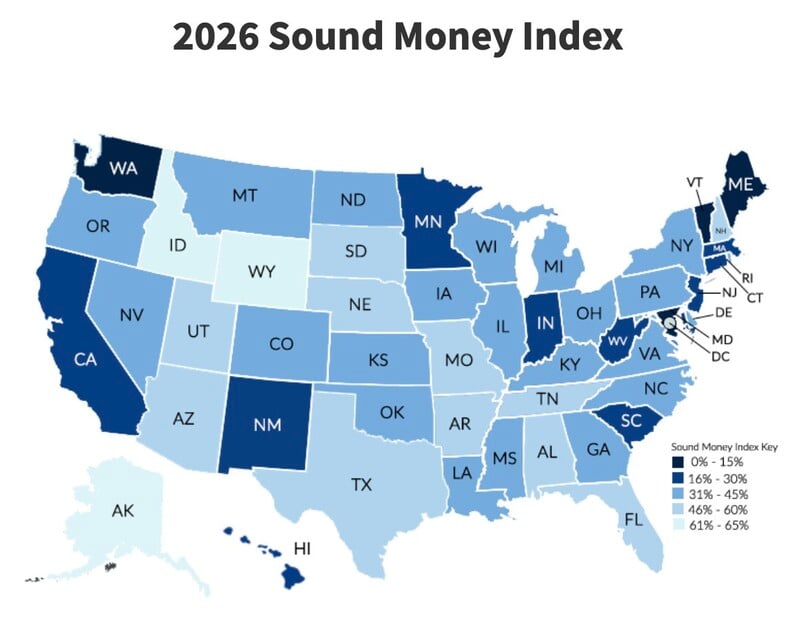
The episode then shifts from holiday shopping to public policy. Maharrey highlights the 2026 Sound Money Index, produced by the Sound Money Defense League in partnership with Money Metals. The Index ranks all 50 states using more than a dozen criteria to determine how friendly they are to sound money.
States receive points for pro sound money policies. About 42 percent of the score is tied to tax treatment, such as whether a state charges sales tax on gold and silver bullion or imposes income or gross receipts taxes on precious metals transactions. The remaining points reward actions like recognizing gold and silver’s constitutional role as money, allowing state reserves or pensions to hold metal, and enacting dealer and investor-friendly regulations.
Maharrey shares key results. Wyoming sits at the top of the 2026 rankings and has held that top position for some time. In the latest session, lawmakers passed SF96, sponsored by Senator Bob Ide, which puts the Cowboy State on a path to building state gold reserves with an initial ten-million-dollar allocation.
Idaho climbed from fourteenth in 2025 to second place in 2026 after passing new sound money legislation. Missouri jumped from twenty-third to third by enacting a bill that delivered broad reforms. At the bottom of the list sits Washington state, which ranks last and, in Maharrey’s view, holds the title of worst state in America for sound money this year.
Maharrey argues that this kind of state-level work is crucial. He is not optimistic about sweeping monetary reform coming from Washington, D.C., in the near future. Unless you are a powerful lobbyist, your calls to Congress rarely move the needle. Most people get a quick conversation with an intern and a generic email weeks later.
State politics look very different. Many state legislators rarely hear from their constituents on specific bills. He recalls a Kentucky lawmaker who told him he could go through an entire legislative session without hearing a single comment from a constituent about pending legislation. In that environment, thirty or forty calls on one bill can change votes.
That is why the Sound Money Defense League focuses on repealing state taxes on precious metals, recognizing gold and silver as money, easing barriers to their use in transactions, and encouraging states to hold metal in reserves. Those actions create a working alternative to the federal system, even if Washington continues to erode the dollar.
Maharrey is blunt here. Inflation is an intentional policy choice. Money creation is the engine that powers big government, and federal officials are not about to give up that tool voluntarily. But if states make it easier to buy, hold, and use gold and silver, individuals can protect themselves from the ongoing devaluation of their savings.
He directs listeners to soundmoneydefense.org, where they can follow bills, check their state’s ranking, and learn how to support legislation that pushes their state higher on the Sound Money Index.
Protecting Yourself With Real Money
Maharrey closes with practical advice. No matter where you live, he believes you should own real money in the form of gold and silver, because the federal government will not stop devaluing the dollar any time soon.
He notes that Money Metals can help both new and seasoned buyers. Listeners can call 1-800-800-1865 to speak with a precious metals specialist, ask about the best silver products, and find the lowest premium options. Those who dislike phone calls can use the online chat at moneymetals.com or order directly through the website if they already know what they want.
Customers can have metals shipped to their homes or stored in Money Metals’ state-of-the-art bullion depository in Eagle, Idaho, which offers added security and convenience.
Maharrey wraps up by inviting listeners to subscribe to the Midweek Memo and the Friday Market Wrap podcast, sign up for email news at moneymetals.com/news, and enjoy the Thanksgiving holiday. For anyone brave enough to face Black Friday crowds, he adds one last bit of advice. Try not to get into a fistfight over a toy.
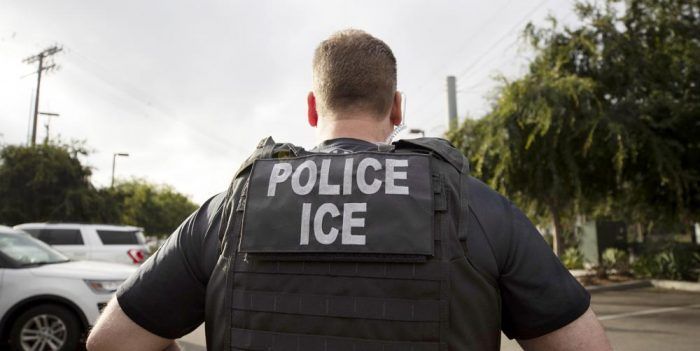
(Headline USA) Two brothers in Virginia have been arrested after an off-duty police officer overheard the men allegedly discussing plans to kill immigration officers, the U.S. Department of Homeland Security said Wednesday.
John Wilson Bennett and Mark Booth Bennett, both U.S. citizens, were arrested late last week on allegations they were planning to carry out attacks against Immigration and Customs Enforcement agents, the department announcement said.
It said the department began an investigation Nov. 17 with the Virginia Beach Police Department after an off-duty Norfolk, Virginia, police officer reported he heard the brothers allegedly discussing plans to “kill police officers and ICE agents.”
Mark Bennett also was overheard allegedly saying he was going to Las Vegas to meet with other people to purchase firearms to carry out the attacks, according to the department statement. It said Mark Bennett was arrested Nov. 19 at the Norfolk International Airport, where he was set to fly to Las Vegas. Later that day, it said, John Bennett, an assistant principal at Kempsville High School, was arrested in Virginia Beach.
Both of the men were charged with “conspiracy to commit malicious wounding,” according to court records.
“It’s chilling that a human being, much less a child educator, would plot to ambush and kill ICE law enforcement officers — offering such specifics as to getting a high caliber rifle that would pierce the law enforcements’ bullet proof vests,” said Tricia McLaughlin, assistant secretary for public affairs, in a statement.
The brothers and their attorneys could not immediately be reached for comment.
During a hearing last week in a court in Virginia Beach General District Court, their attorneys said the conversation was hearsay and that the brothers posed no threat to the community, according to Virginia news outlet 13 News Now. The attorneys said Mark Bennett was traveling to Las Vegas for a Formula 1 race before he was apprehended at the Norfolk airport, according to the news report.
They were released on home confinement under pretrial supervision, according to the news report.
McLaughlin’s statement highlighted what she described as a sharp increase in assaults and death threats against immigration officers, including cases of bounties being placed on their heads, threats to their families, stalking and online doxxing.
(José Niño, Headline USA) Newly obtained emails reveal Jeffrey Epstein orchestrated a behind-the-scenes campaign to discredit two prominent political scientists whose research exposed the influence of pro-Israel lobbying on U.S. foreign policy, according to a report by Dropsite News.
In March 2006, Harvard Kennedy School published a working paper by political scientists John Mearsheimer and Stephen Walt examining how pro-Israel advocacy groups shaped U.S. foreign policy.
The paper described a coalition of philanthropists, think tanks, and advocacy groups that routinely pulled American policy away from national interests. “No lobby has managed to divert U.S. foreign policy as far from what the American national interest would otherwise suggest,” the scholars wrote in the paper, which the London Review of Books ran.
The backlash was immediate and severe. News outlets labeled the authors antisemites, and the Anti-Defamation League denounced their work as an “anti-Jewish screed.” The Kennedy School removed its logo from the paper and distanced itself from the research.
In 2006, two academics, John Mearsheimer and Stephen Walt, wrote a paper called “The Israel Lobby,” which argued that a loose group of Israel supporters used their connections and financial resources to tilt US foreign policy in Israel’s direction.
Now, emails obtained by whistleblower organization Distributed Denial of Secrets reveal Jeffrey Epstein’s hidden role in orchestrating that backlash. The convicted sex offender gave feedback on talking points to discredit the professors and used his extensive network to spread allegations of antisemitism.
Dropsite News noted that during the first week of April 2006, Epstein received multiple drafts of an attack piece by Harvard law professor Alan Dershowitz, who also served as Epstein’s defense attorney. Dershowitz accused Mearsheimer and Walt of recycling “discredited trash” from neo-Nazi websites. Epstein responded: “terrific…congragulations (sic).”
Hours later, Dershowitz’s assistant asked Epstein to help distribute the attack piece. Epstein confirmed: “yes I’ve started.”
Despite holding no formal role, Epstein wielded significant power at Harvard. He donated over $9 million between 1998 and 2008 and positioned himself as a patron for high-profile academics including Dershowitz and Harvard president Larry Summers. Epstein also served as trustee for billionaire Leslie Wexner’s family office, which donated nearly $20 million to the Kennedy School between 2000 and 2006, per an announcement by The Harvard Gazette.
The campaign worked devastatingly well. The Chicago Council on Global Affairs canceled a scheduled talk by the pair in 2007. Other institutions demanded any appearances be “balanced” by pro-Israel speakers. Their mainstream platform narrowed for years.
“I’m not surprised to see these emails, because Dershowitz and Epstein were close and both have a passionate attachment to Israel,” Mearsheimer told Drop Site News.
During the same week Epstein coordinated attacks on the professors, he was also strategizing with Dershowitz about destroying the credibility of a 16-year-old girl who had accused him of sexual abuse.
The attacks continued after Mearsheimer and Walt expanded their work into a book in 2007.
Jeffrey Goldberg, writing in The New Republic, compared their perspective to Osama bin Laden’s and proclaimed it “the most sustained attack… against the political enfranchisement of American Jews since the era of Father Coughlin.”
In 2016, a decade after The Atlantic refused to publish the original article under public pressure, Goldberg was named its editor in chief.
José Niño is the deputy editor of Headline USA. Follow him at x.com/JoseAlNino
(Ken Silva, Headline USA) The man accused of shooting two West Virginia National Guard members just blocks from the White House is an Afghanistan national who reportedly worked with U.S. Special Forces and the CIA for roughly a decade.
FBI Director Kash Patel and Washington Mayor Muriel Bowser said the guard members were hospitalized in critical condition after Wednesday afternoon’s shooting. West Virginia Gov. Patrick Morrisey had walked back his statement Wednesday announcing the troops had died, saying he received “conflicting reports” about their condition.
Rahmanullah Lakanwal, the Muslim migrant suspected of launching the shooting ambush on National Guard troops near the White House, entered the U.S. in 2021 from Afghanistan under a Biden administration program.
The suspect who was in custody also was shot and had wounds that were not believed to be life-threatening, according to the Associated Press.
The 29-year-old suspect, Afghan national Rahmanullah Lakanwal, entered the U.S. in 2021 through Operation Allies Welcome, a Biden administration program that evacuated and resettled tens of thousands of Afghans after the U.S. withdrawal from the country, officials said.
For about 10 years prior to 2021, Lakanwal had been working with the U.S. government, including the CIA, in Afghanistan, according to Fox News.
“In the wake of the disastrous Biden withdrawal from Afghanistan, the Biden administration justified bringing the alleged shooter to the United States in September 2021 due to his prior work with the U.S. government, including CIA, as a member of a partner force in Kandahar, which ended shortly following the chaotic evacuation,” CIA Director John Ratcliffe reportedly told Fox News Digital.
BREAKING: RAHMANULLAH LAKANWAL, THE AFGHAN WASHINGTON D.C. NATIONAL GUARD SHOOTER WORKED WITH THE CIA
He was in the partner force in Kandahar, Afghanistan
The Biden initiative brought roughly 76,000 people from Afghanistan to the U.S., many of whom had worked alongside U.S. troops and diplomats as interpreters and translators. It has since faced intense scrutiny from Trump and his allies, congressional Republicans and some government watchdogs over gaps in the vetting process and the speed of admissions. Advocates say it offered a lifeline to people at risk of Taliban reprisals.
The suspect had been living in Washington state. Lakamal arrived in Bellingham, Washington, about 79 miles north of Seattle, with his wife and five children, said his former landlord Kristina Widman.
Wednesday night, in a video message released on social media, President Donald Trump called for the reinvestigation of all Afghan refugees who entered under the Biden administration.
“If they can’t love our country, we don’t want them,” he said, adding that the shooting was “a crime against our entire nation.”
Jeffery Carroll, an executive assistant D.C. police chief, said investigators had no information on a motive. He said the assailant “came around the corner” and immediately started firing at the troops, citing video reviewed by investigators.
“This was a targeted shooting,” Bowser said.
The Associated Press contributed to this report.
Ken Silva is the editor of Headline USA. Follow him at x.com/jd_cashless.
(Dave DeCamp, Antiwar.com) The White House has backed President Trump’s special envoy, Steve Witkoff, after Bloomberg received a recording of a call he held with Yury Ushakov, an aide to Russian President Vladimir Putin.
A transcript of the call, held on October 14, shows Witkoff and Ushakov discussing an upcoming phone call between Trump and Putin. Witkoff suggests that Putin should congratulate Trump on the Gaza ceasefire deal and discuss a “similar 20-point plan” for Ukraine.
“Hey Steve, I agree with you that he will congratulate, he will say that Mr. Trump is a real peace man and so and so,” Ushakov told Witkoff. Two days later, Putin and Trump spoke by phone, the day before Trump hosted Ukrainian President Volodymyr Zelensky at the White House.
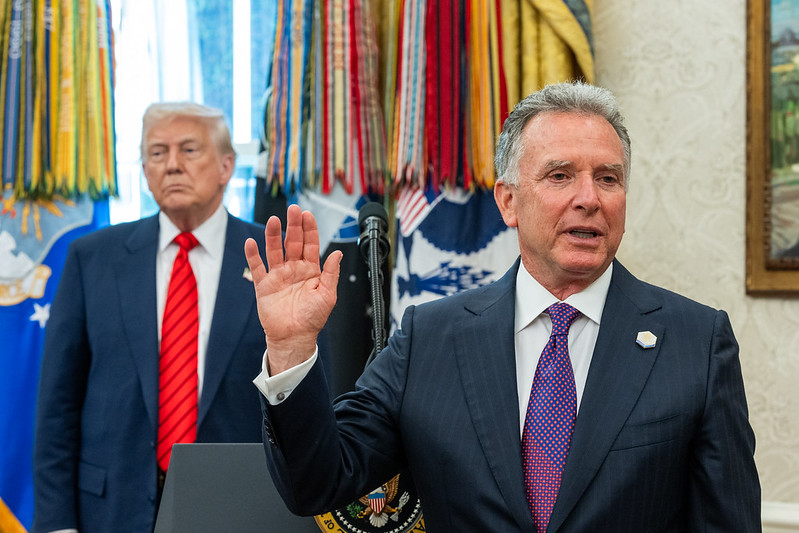
Steve Witkoff at his swearing-in ceremony at the White House on May 6, 2025 (White House photo)
When asked for comment on the report, White House communications director Steven Cheung told Bloomberg, “This story proves one thing: Special Envoy Witkoff talks to officials in both Russia and Ukraine nearly every day to achieve peace, which is exactly what President Trump appointed him to do.”
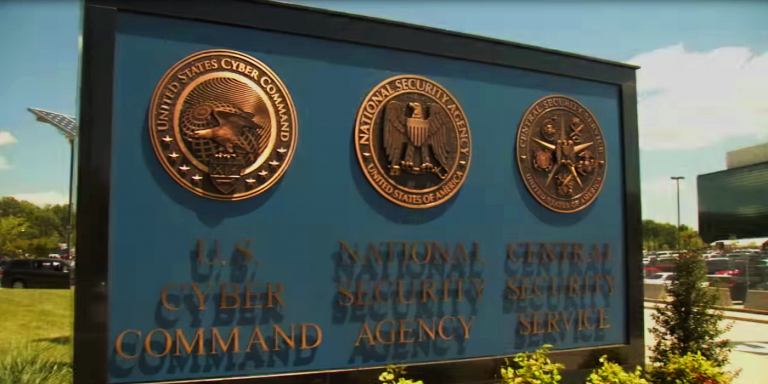
Journalist Glenn Greenwald, known for his reporting on the Edward Snowden leaks that revealed extensive surveillance programs run by the National Security Agency (NSA), noted on X that it was likely that the Witkoff-Ushakov call was leaked by the NSA. Bloomberg also obtained a recording of a call between Ushakov and Kirill Dmitriev, another of Putin’s advisers.
“Who is eavesdropping on Steve Witkoff’s calls with Russian officials to end the war in Ukraine, then leaking them to Bloomberg?” Greenwald wrote on X. “It’s the same thing the NSA did to Michael Flynn when he was negotiating with Russian officials. It’s the most serious leaking crime in the US Code.”
In another post, Greenwald added that the NSA was “using its powers not for what they’re intended — spying on foreign adversaries — but instead spying on American citizens and American officials, then leaking their conversations to sabotage the elected President’s policies.”
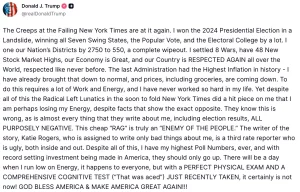
(Luis Cornelio, Headline USA) President Donald Trump minced no words when torching a New York Times reporter who co-wrote a hit piece questioning his health without a single shred of evidence.
The reporter, Katie Rogers, and her colleague Dylan Freedman pushed the story on Tuesday with the title, “Shorter Days, Signs of Fatigue: Trump Faces Realities of Aging in Office.”
In the piece, Rogers and Freedman claimed that Trump had trimmed his schedule and even nodded off during a press conference.
Trump took to Truth Social on Wednesday to slam the Times, writing: “The Creeps at the Failing New York Times are at it again.”
Singling out Rogers directly, Trump added: “The writer of the story, Katie Rogers, who is assigned to write only bad things about me, is a third rate reporter who is ugly, both inside and out.”
Trump acknowledged that aging is natural but warned that this is not the case for him yet.
“There will be a day when I run low on Energy, it happens to everyone, but with a PERFECT PHYSICAL EXAM AND A COMPREHENSIVE COGNITIVE TEST (‘That was aced’) JUST RECENTLY TAKEN, it certainly is not now!” the president added.
On X, critics piled on, noting that such negative media coverage was rarely seen during Joe Biden’s time in office as the oldest president in history.
For four years straight, Biden struggled to speak even when with teleprompters, wandered off stages and needed detailed notes during press conferences.
In fact, the Times helped the White House shut down negative coverage for years.
Rogers herself co-authored a 2023-piece characterizing Biden’s decline as nothing more than a “partisan cartoon of an addled and easily manipulated fogy promoted by Republicans.”
When video evidence of Biden’s decline repeatedly went viral on social media, the Times again ran cover for Biden, this time with a piece titled, “How Misleading Videos Are Trailing Biden as He Battles Age Doubts.”
This piece attacked “conservative news outlets” and Republicans for posting clips of Biden “that lacked important context and twisted mundane moments to paint him in an unflattering light.”
In 2022, the Times published an article headlined, “President Biden Is Turning 80. Experts Say Age Is More Than a Number,” parroting claims from purported experts declaring that Biden was fine.
That same year, a separate article titled, “At 79, Biden Is Testing the Boundaries of Age and the Presidency,” noted that Biden’s energy level was “impressive for a man of his age.”
These articles disappeared after Biden’s disastrous 2024 debate against Trump, when Democrats launched what insiders described as a “coup” to remove him from the presidential ticket.
Months after leaving office, Biden announced he was diagnosed with an aggressive form of prostate cancer that spread to his bones.
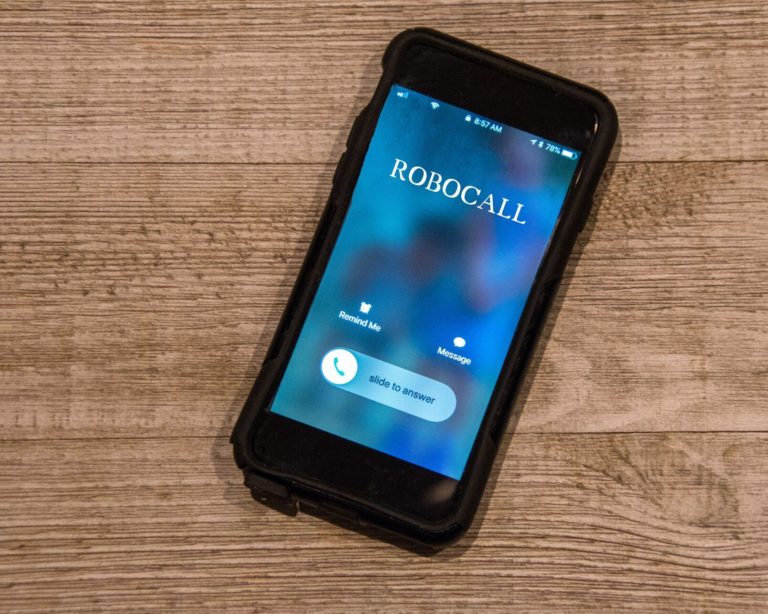
(Chris Wade, The Center Square) A Texas man will pay more fines after using an AI-generated copy of then-President Joe Biden’s voice that urged New Hampshire Democrats not to vote in the 2024 presidential primary.
The ruling by U.S. District Court judge Steven J. McAuliffe accepted a special magistrate’s report and recommendations that previously ordered Steve Kramer to pay $7,500 in damages with post-judgment interest to each of the three individual plaintiffs involved in the lawsuit. The judge ordered a default judgment against Kramer, who has refused to participate in the court proceedings.
The League of Women Voters, one of several groups that signed onto the lawsuit, praised the ruling and said it will prevent unscrupulous groups and individuals from using the technology to spread lies and misinformation.
“This victory sends a clear message: the right to vote is sacred, and new technology will not be a shield for those who seek to suppress it,” Liz Tentarelli, president of the League of Women Voters of New Hampshire, said in a statement. “The court’s decision affirms that deceptive, AI-generated robocalls designed to intimidate and confuse voters are a direct assault on our democracy and will not be tolerated.”
Kramer, of New Orleans, admitted generating a message sent to thousands of New Hampshire voters two days before the state’s Jan. 23, 2024, presidential primary. The message urged voters not to vote in the primary. Biden wasn’t on the New Hampshire ballot, because of a dispute between the state and national party over the primary date, but his supporters had organized a write-in campaign on his behalf.
“It’s important that you save your vote for the November election,” the recorded message told voters in Biden’s voice. “Your votes make a difference in November, not this Tuesday.”
In court, Kramer testified that the recording was a publicity stunt intended to highlight the potential harms of artificial intelligence platforms to political communication. He argued that because Biden wasn’t on the New Hampshire primary ballot, there was no harm done to the defendants.
A jury in a criminal trial held in June acquitted Kramer of 11 felony voter suppression charges, each of which was punishable by up to seven years in prison.
Lingo Telecom, the company that transmitted the robocalls, agreed to pay $1 million in a settlement with the Federal Communications Commission last year. Kramer was fined $6 million by the FCC but has told media outlets that he won’t pay the fine.
The federal court ruling comes as Congress considers a bill that would allow the Trump administration to preempt state regulations on artificial intelligence.
On Tuesday, a bipartisan group of attorneys general from New Hampshire and 35 other states sent a letter to Congress opposing the plan, warning of the rising online harm and the growing influence of artificial intelligence.
“If Congress is serious about grappling with how AI’s emergence creates opportunities and challenges for our safety and well-being, then the states look forward to working with you on a substantive effort,” they wrote.
(Dave DeCamp, Antiwar.com) Amid the US push toward a war to oust Venezuelan President Nicolas Maduro, Rep. Maria Salazar (R-FL) has made the argument that the US must “go in” to Venezuela so American oil companies can have a “field day” since the country sits on the largest proven oil reserves in the world.
“Venezuela, for those Americans who do not understand why we need to go in … Venezuela, for the American oil companies, will be a field day, because it will be more than a trillion dollars in economic activity,” Salazar, a Miami-born daughter of Cuban exiles, told Fox Business.
Salazar also said that the US must go to war with Venezuela because it has become the “launching pad” for people who “hate” the US, claiming Iran, Hezbollah, and Hamas are active in the country. In one of the more absurd claims she made in the interview, Salazar said Maduro was “giving uranium to Hamas, and to Iran, and to North Korea, and Nicaragua.”
Salazar’s third reason for going to war with Venezuela is the claim that Maduro is the leader of the so-called Cartel of the Suns, or Cartel de los Soles, a group that doesn’t actually exist. The term was first used in the early 1990s to describe Venezuelan generals with sun insignias on their uniforms who were involved in cocaine trafficking and were actually working with the CIA at the time.
Today, the Cartel of the Suns is used to describe a network of Venezuelan officials allegedly involved in the drug trade, but it doesn’t exist as a structured organization. Regardless, the US State Department has labeled the Cartel of the Suns a “Foreign Terrorist Organization” and claims Maduro is its leader, giving the administration a potential pretext to launch a war, though any attack on Venezuela without congressional authorization would be illegal, per the US Constitution.
Maria Corina Machado, a Venezuelan opposition leader and this year’s Nobel Peace Prize winner, has also been spreading false and unsubstantiated claims about Maduro and his government to get the US to invade. In an effort to appeal to President Trump, Machado has claimed that Maduro “rigged elections” in the US.