Pelosi Backed Obama’s Payroll Tax Cuts but Opposes Trump’s Extension

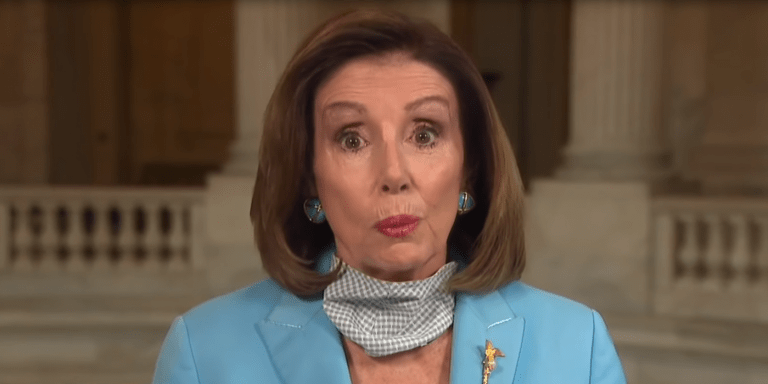
House Speaker Nancy Pelosi, D-Calif., blasted President Donald Trump for signing an executive order on Saturday to extend the temporary suspension of payroll taxes, although she praised former President Barack Obama for doing the same thing back in 2010.

After Trump signed his order deferring payroll taxes, which fund Social Security and Medicare, through the end of the year, Pelosi and Senate Minority Leader Chuck Schumer, D-N.Y., accused the president of “endangering” the well-being of senior citizens.

But Pelosi supported this same kind of unilateral payroll tax reduction when Obama was president—not once, but three times.

In 2010, Obama announced a payroll tax cut, from 6.2% to 4.2%, that was supposed to “create jobs and boost economic growth.”

Pelosi hailed the measure as a “victory for all Americans,” and supported congressional efforts to extend that tax cut a year later.

And when Congress extended the cut again, in 2012, Pelosi claimed that it was “necessary because our economy and our people need this boost.”

She even went on to argue that the tax cut would not endanger Social Security and Medicare.

“The [Social Security and Medicare] trust fund can handle that,” Pelosi told PBS.

Trump has similarly defended his executive order, arguing that the Americans affected by the coronavirus shutdown need all the help they can get.

But Pelosi has hypocritically dismissed the president, threatening to take him to court if necessary.

“The president’s meager, weak, and unconstitutional actions further demand that we come to an agreement,” she said.

The president, however, made it clear that unless Democrats return to the negotiating table and pass a bill to help struggling Americans, he will continue to take executive action.

“If Democrats continue to hold this critical relief hostage, I will act under my authority as president to get Americans the relief they need,” he said last week.

Trump Campaign Sues Key Iowa Counties Over Cheat-by-Mail Voting

(Headline USA) President Donald Trump’s reelection campaign has sued two Democratic-leaning Iowa counties that are making it easy to vote by mail during the coronavirus pandemic.

The Trump campaign, the Republican National Committee and other GOP groups filed the lawsuits Wednesday against elections officials in Linn and Johnson counties.

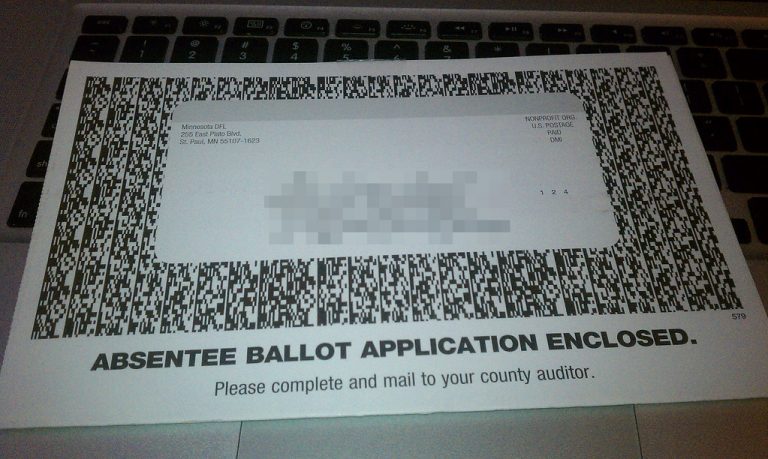
At issue are absentee ballot request forms that the counties are sending to registered voters with personal information already filled in, including their names, dates of birth and voting pin numbers. Voters just have to review, sign and return the forms to get ballots in October that they can mail back or drop off, avoiding crowded polling places.

Iowa Secretary of State Paul Pate, a Republican, last month told auditors in an emergency election directive that request forms mailed to voters must be blank in order “to ensure uniformity.”

Pate’s office has not taken any legal action to block the two counties’ mailings but said Thursday it is investigating their actions. Pate said that sending forms pre-filled with personal identifying information will give critics of absentee voting “an opportunity to question the validity of election results in those counties.”

The GOP lawsuits argue that the auditors are violating Pate’s directive by prepopulating the forms and that any ballots cast in response to the mailings may be subject to legal challenge.

They ask for court orders requiring the counties to contact tens of thousands of voters who have already requested absentee ballots and tell them they are invalid. Instead, those voters must be required to fill out new blank forms instead, the lawsuits argue.

A judge scheduled a hearing Monday on Trump’s request for a temporary injunction.

Democrats and voting rights groups called the lawsuits a baseless attempt to suppress voting during a pandemic that has already killed 950 people in Iowa.

“Officials should be credited for taking action to streamline the absentee ballot application process to help ensure that more voters are able to be heard this election season,” said Kristen Clarke, executive director of the Lawyers’ Committee for Civil Rights and Law.

She called the lawsuits part of a national GOP campaign seeking to restrict access to absentee ballots.

The Republican National Committee says that it has doubled its legal budget to $20 million and is currently involved in about 40 election-related lawsuits.

Linn County Auditor Joel Miller, a Democrat, said he acted within his authority by mailing prepopulated forms to 140,000 registered voters last month. About 40,000 requests for absentee ballots, which will be mailed to voters beginning Oct. 5, have already been received, he said.

Johnson County Auditor Travis Weipert, a Democrat, said that his office is sending forms to 92,000 registered voters, and has received thousands of ballot requests back.

Johnson County has long been Iowa’s most Democratic stronghold, with many young and liberal voters around the University of Iowa. Linn County, the state’s second largest, has been an important source of Democratic votes in recent elections.

Trump easily won Iowa in 2016 but lost the two counties by nearly 40,000 votes. Those who cast absentee ballots overwhelmingly backed Hillary Clinton while Trump narrowly won Linn County among Election Day voters.

The Trump campaign and GOP groups did not sue Republican-leaning Woodbury County, where the auditor sent prepopulated forms to 57,000 registered voters this month. Trump carried that county by 8,500 votes in 2016.

Auditors said the goal of prepopulating the forms was to prevent common mistakes, including leaving blank a voter pin number that few people know. Voters must provide either that number or a driver’s license number to get an absentee ballot under Iowa’s voter identification law.

A new law passed by the Republican-controlled Legislature blocks county officials from using their databases to fill in pin numbers and other missing information like they have in past elections. The law was passed days after Iowa’s June primary, which saw record turnout and heavy absentee ballot use.

The law requires auditors to contact voters by email or mail to fix errors, which critics call a needless bureaucratic hurdle that will stymie some seeking to vote absentee.

Miller said that he worried such individuals will be forced to put their health on the line by voting in person or be disenfranchised.

“I’m just trying to protect people in my community from the pandemic,” Miller said.

Republican supporters of the new law say that requiring voters to provide their personal information before getting an absentee ballot is a key election safeguard.

The League of United Latino American Citizens and Majority Forward have filed a lawsuit challenging the law, arguing it places “an undue burden on the fundamental right to vote.” But a judge said Wednesday he will not hear their request for a temporary injunction until Sept. 23, after the request forms will have been sent statewide.

Adapted from reporting by Associated Press.

NC Republicans Rebuke Whiny Cuomo for Claiming NY Can’t Afford Unemployment Benefits

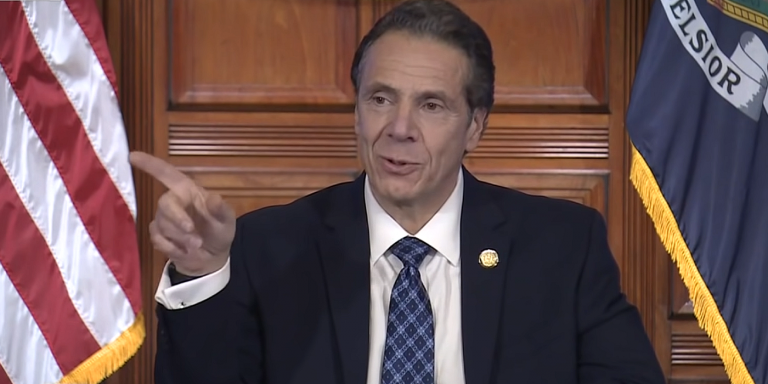
When New York Gov. Andrew Cuomo, who presided over the worst of all US coronavirus outbreaks in his home state, took it upon himself to advise the mayor of Savannah, Ga., about “best practices,” many saw it as hollow political grandstanding.

But if Cuomo, a Democrat, is sincere in his desire to learn and exchange knowledge with his fellow civic leaders, North Carolina legislators recently made Fredo‘s big brother an “offer he can’t refuse.”

Phil Berger, president pro tempore of the North Carolina Senate, proposed that Cuomo head to Raleigh next for some lessons in fiscal discipline.

Even under the stewardship of a radical leftist governor, lawmakers there have been able to maintain the necessary reserves in unemployment funding by not treating their tax coffers as a magic money tree.

“North Carolina’s population is about half of New York’s (although that gap is shrinking because so many New Yorkers are moving to North Carolina) but our tax burden is just one-third of New York’s,” Berger wrote.

“Despite the fact that we extract so much less revenue from our population, North Carolina was able to build an unemployment reserve that’s nearly twice as large as New York’s,” he continued.

Cuomo has been an outspoken contrarian when it comes to President Donald Trump’s policies for addressing the coronavirus pandemic and the resulting economic fallout that continues to hobble the US economy.

He and his media allies initially sought to posture New York’s COVID management as a parallel alternative to Trump’s leadership, often holding dueling press conferences.

But Cuomo abandoned those efforts after it came to light that his policy of forcing nursing homes to co-mingle healthy and infected COVID patients, as well as failing to properly sanitize New York’s public transportation for months, had been key factors in the state’s unprecedented outbreak, pushing a 10-percent death toll compared with one below 4 percent nationwide.

Although the country leads the world in officially confirmed cases due to its large population, data transparency and widespread testing, the national death rate has been consistently below the global average, and the recovery rate continues to rise as treatment improves.

Nonetheless, Cuomo has continued repeatedly to send mixed messages about the crisis and to scapegoat the president while deflecting from his own culpability.

Meanwhile, Congressional Democrats, hoping to milk the economic crisis for another three months through Election Day, have likewise refused to play ball on another round of economic stimulus checks.

As with prior relief packages, House Speaker Nancy Pelosi, D-Calif., and Senate Minority Leader Charles Schumer, D-NY, sought to use the funds as leverage to enact their agenda wish-list items, including a bailout of fiscally irresponsible blue states.

The White House’s chief negotiator, Treasury Secretary Steven Mnuchin, has said such a bailout remains the only point of contention in the GOP’s good-faith negotiations.

Yet, Congressional Democrats have rejected his overtures to continue the talks until their Republican rivals commit up front to spending another trillion dollars or more.

Trump, instead, circumvented Congress by enacting several of the essential measures through executive action, although Democrats now threaten to sue to block their enactment.

The president’s orders included the stipulation that states wishing to extend federal funding for unemployment benefits must commit to paying a quarter of the cost. Much of that is projected to come from money the federal government already provided in the earlier stimulus packages.

Some states, however, flouted federal guidelines by extending benefits and stimulus payouts to illegal immigrants from their state budgets and now seek the federal funds to offset those expenses.

Cuomo’s New York is one of the states that stands to gain the most from the bailout. Rather than prioritizing emergency preparedness, he depleted state reserves while promising free health care for illegals.

The state also refused federal grants last year that would have given millions to hospitals under the condition that the hospitals stop actively promoting abortion as a birth-control solution.

But the already astronomical taxes—driven home by Trump’s closing of state and local tax loopholes that had allowed wealthy New Yorkers to avoid paying their fair share—along with the irresponsible fiscal spending, high cost of living and the state’s mismanagement of the health crisis—collectively led to a mass exodus of those who once propped up Cuomo’s financial house of cards.

Cuomo has since grown desperate, even offering in a recent press conference to “cook” for 1-percenters who choose to return and help foot the tax burden.

It is a far cry from Cuomo’s bizarre earlier boasts that the Empire State routinely bailed out other cash-strapped states with its contributions to federal taxes.

Berger cheekily flipped the script on Cuomo in his recent letter.

“North Carolina does not need to rely on a federal bailout to cover our expenses or to increase unemployment benefits to our citizens,” he said, “and it does not seem fair that you expect North Carolina taxpayers to fund your profligate spending habits.”

TRUMP: GOP Could Lose the Senate Because of RINOs Who Don’t Support Me

President Trump predicted on Thursday that Senate Republicans who have not supported him or his agenda will lose their reelection bids in November.

Trump said he is confident that he will win reelection and that Republicans will retake the House.

But he admitted he isn’t as confident about the GOP’s chances in the Senate, and he said the NeverTrump senators who haven’t supported his administration are to blame.

“I believe we’re going to take back the House because Nancy Pelosi is stone-cold crazy. And I think we’re going to take the House and that’s upon — you know, I don’t make a statement like that very easily. But we’re going to take — otherwise, I’ll look very bad — but we’re going to take back the House,” Trump told Fox Business.

“We’re going to hold the presidency, and we’re fighting very hard in the Senate. I’ll be honest, the Senate is tough. We have a couple of people that aren’t as supportive of Trump as they should be, and those people are going to lose their elections. If they don’t support Trump, they lose their elections. It’s a simple element,” he continued.

Pointing to the recent Senate primary in Tennessee, Trump noted that the candidate he endorsed, Bill Hagerty, won his primary race.

“You have a few people that want to be cute, and I think they’re going to lose their elections, and that’s a problem for the Senate,” Trump said.

Recent polls prove Trump may be right.

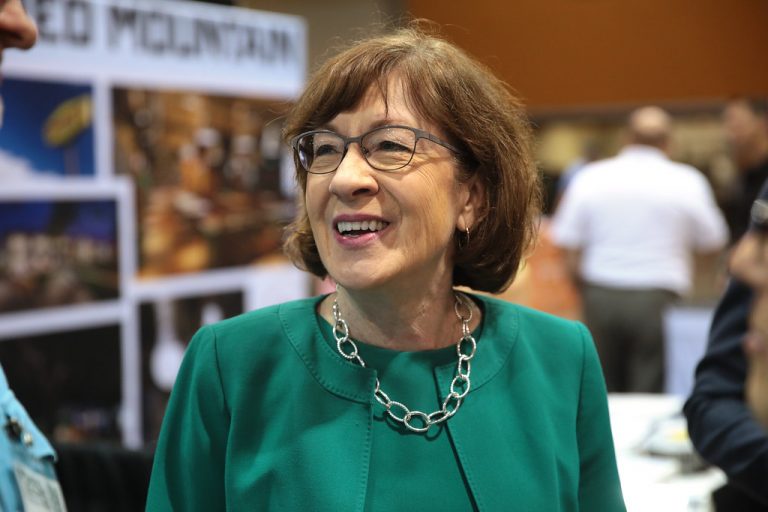
In Maine, for example, Sen. Susan Collins, R-Maine, who has been frequently critical of the president, lags behind her Democratic opponent.

Sara Gideon, the state’s Democratic House speaker, is leading Collins by five points, according to a recent survey by the Bangor Daily News.

“She has both defied President Trump and backed him to the hilt,” Quinnipiac University polling analyst Tim Malloy explained. “[She] faces the political challenge of her life.”

Let it Flow: Trump Administration Eases Showerhead Rules

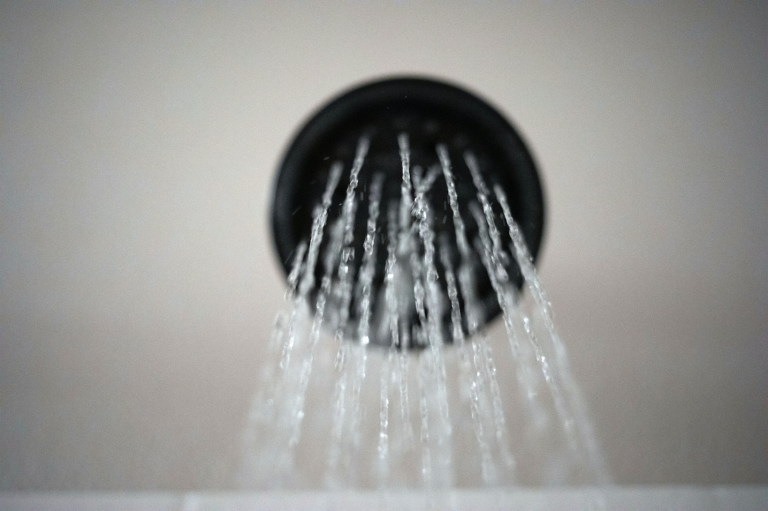
(Headline USA) The Trump Administration wants to change the definition of a showerhead to let more water flow, which could reduce the length of time Americans need to take their showers.

President Donald Trump has made increasing water flow and dialing back long held appliance conservation standards — from light bulbs to toilets to dishwashers — a personal issue.

But pro-mandate consumer and conservation groups said the Department of Energy’s proposed loosening of a 28-year-old energy law that includes appliance standards is silly, unnecessary and wasteful, especially as the West bakes through a historic two-decade-long megadrought — as though any water possibly conserved in other parts of the country would make a difference.

Since 1992, federal law has dictated that new showerheads shouldn’t pour more than 2.5 gallons of water per minute. As newer shower fixtures came out with multiple nozzles, the Obama administration unilaterally defined the showerhead restrictions to apply to what comes out in total. So if there are four nozzles, no more than 2.5 gallons total should come out between all four.

The new proposal Wednesday would allow each nozzle to spray as much as 2.5 gallons, not just the overall showerhead.

With four or five or more nozzles, “you could have 10, 15 gallons per minute powering out of the showerhead, literally probably washing you out of the bathroom,” said Andrew deLaski, executive director of the energy conservation group Appliance Standards Awareness Project.

On the White House South Lawn in July, Trump made the issue personal:

“So showerheads — you take a shower, the water doesn’t come out. You want to wash your hands, the water doesn’t come out. So what do you do? You just stand there longer or you take a shower longer. Because my hair — I don’t know about you, but it has to be perfect. Perfect.”

DeLaski and officials at Consumer Reports claim there’s been no public outcry or need for change. The Department of Energy’s own database of 12,499 showerheads showed 74% of them use two gallons or less water per minute, which is 20% less than the federal standard. No statistics were provided that addressed how much the average shower has increased, however.

“Frankly it’s silly,” deLaski said. “The country faces serious problems. We’ve got a pandemic, serious long-term drought throughout much of the West. We’ve got global climate change. Showerheads aren’t one of our problems.”

Energy Department spokeswoman Shaylyn Hynes said the 2013 Obama definition of showerhead clashes with what Congress intended and the standards of the American Society of Mechanical Engineers.

If the rule is adopted, Hynes said it would be “allowing Americans — not Washington bureaucrats — to choose what kind of showerheads they have in their homes.”

Officials at the industry group Plumbing Manufacturers International did not respond to a request for comment.

Appliance and plumbing energy and water conservation standards save consumers about $500 a year on energy bills, deLaski said, without providing evidence.

Adapted from reporting by Associated Press.

Rising GOP Star Madison Cawthorn Confronts Dem Rival’s Racist Smear Attack

0

(Headline USA) A young Republican congressional candidate in North Carolina says suggestions from his rival and others that he has an affinity for white supremacist causes are ridiculous and based on a lack of historical knowledge.

“I don’t run in those circles, so I don’t know those people,” Madison Cawthorn said in an interview with The Associated Press on Tuesday. “I think racism is disgusting.”

Cawthorn is running for the 11th Congressional District seat most recently held by Mark Meadows, President Donald Trump’s chief of staff.

Cawthorn once worked for Meadows and is a Trump supporter. The district, in the North Carolina mountains, leans Republican but is less so since a 2019 redistricting.

Cawthorn, 25, defeated Trump’s preferred candidate in an upset in the June GOP primary runoff. He would be among the youngest members of Congress ever if elected in November.

Democratic opponent Moe Davis and others posting on social media have questioned photos that Cawthorn posted of his 2017 visit to Adolf Hitler’s mountaintop chalet in southern Germany.

He wrote at the time that the trip to Eagle’s Nest, a popular tourist attraction, “has been on my bucket list for years. And it did not disappoint.” A Cawthorn post referred to Hitler both as “the Fuhrer” and “supreme evil.”

U.S. soldiers entered the Eagle’s Nest at the close of World War II to celebrate their victory over Hitler and Nazi Germany.

Cawthorn mentioned that such a celebration was portrayed in the television series “Band of Brothers.”

Expressing disdain for the Nazis, Cawthorn said they’d have had little use for a man with a disability—he is paralyzed from the abdomen down after a 2014 automobile accident in Florida.

Critics “want to try and twist it to where I am some kind of Nazi sympathizer, when I’m a man in a wheelchair … these cowards and these bastards would have killed me,” Cawthorn told the AP. He said he won’t take down the posts “because we’re not going to back down to this leftist mob.”

Davis, a retired Air Force officer and former chief prosecutor of military tribunals at Guantanamo Bay, Cuba, said Wednesday that the Eagle’s Nest photos, combined with Cawthorn’s use of other phrases or images that he contends are associated with white supremacy, are troubling.

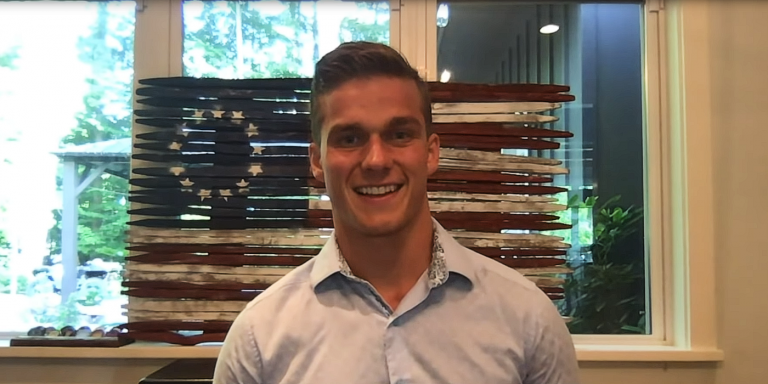
Among them: a campaign photo showing Cawthorn with a gun holster emblazoned with a Spartan-style helmet; a photo in which he appears in front of a “Betsy Ross” flag, an early U.S. flag with 13 stars; and the name of his real estate company, SPQR Holdings, with the SPQR being the abbreviation for a Latin phrase that translates to “the Senate and People of Rome.”

“If it was maybe one [incident] you could dismiss it as a coincidence,” Davis said in an AP interview. “When it’s four or five indicators, it tends to paint a pretty clear picture.”

But Mark Pitcavage, a senior research fellow for the Anti-Defamation League’s Center on Extremism, said the Betsy Ross flag, the SPQR abbreviation and Spartan helmet are not included in the league’s database of hate symbols.

Pitcavage said while there are examples of their use by white supremacists, or in the case of the helmet by antigovernment or firearms activists, they are used “just as much or more often by nonextremists than extremists.”

Without specifically evaluating Cawthorn, he said: “Based on those specific things, I don’t think someone can make a good case that the person [using them] is an extremist.”

Regarding the name of his real estate company, Cawthorn said he took Latin while home-schooled, and interprets the phrase denoted by SPQR as a call to combat consolidated power. He says it carries no racist intent on his part.

Fla. Sheriff Bans Masks for Deputies

0

A central Florida sheriff says his deputies won’t be allowed to wear face masks except under some conditions, and neither will visitors to the sheriff’s office.

Marion County Sheriff Billy Woods said in an email to staff that he had weighed both sides of the issue amid the ongoing coronavirus pandemic.

“Now, I can already hear the whining and just so you know I did not make this decision easily and I have weighed it out for the past 2 weeks,” Woods said in the message earlier this week.

He added, “We can debate and argue all day of why and why not. The fact is, the amount of professionals that give the reason why we should, I can find the exact same amount of professionals that say why we shouldn’t.”

In July, the federal Centers for Disease Control and Prevention asked Americans to wear masks against the virus. “There is increasing evidence that cloth face coverings help prevent people who have COVID-19 from spreading the virus to others,” the CDC had said.

On Wednesday, Florida reported 213 new coronavirus deaths. That brought its overall fatality total to 8,898 and its average daily deaths over the past week to 164. That’s down from the state’s peak rate of daily deaths of 185 a week ago. The peak rate for New York — a state of comparable population — was more than 760 in mid-April.

Woods, the Marion County sheriff, said exceptions to his mask prohibition will be made for deputies at jails, schools, courthouses, hospitals, nursing homes and when dealing with someone who is elderly or has COVID-19. In these situations, the mask should be removed when giving orders or commands to comply, the sheriff said.

At the sheriff’s office, masks won’t be allowed so that visitors can be easily identified and there is clear communication, the sheriff said.

The sheriff’s decision came as the county’s largest city, Ocala, about 80 miles northwest of Orlando, was debating implementing a face mask mandate.

The Ocala City Council passed an emergency ordinance last week requiring facial coverings inside businesses, but the mayor vetoed it. The council is considering a possible override of the veto.

Meanwhile in South Florida, a Miami Beach spokeswoman said the city has issued 288 violations citywide for lack of facial coverings since July 23. Violators have 30 days to pay the $50 fine and the civil citation cannot be appealed, spokeswoman Melissa Berthier said.

Adapted from reporting by the Associated Press

Jobless Claims Fall Below 1 Million for 1st Time Since Pandemic Started

0

(Headline USA) The number of laid-off workers applying for unemployment aid fell below 1 million last week for the first time since the pandemic intensified five months ago, yet still remains at a high level.

The Labor Department said applications fell to 963,000, the second straight drop, from 1.2 million the previous week. The decline suggests that layoffs are slowing.

“This great news on unemployment claims is further evidence that jobs are coming back at a record pace and the V-shaped recovery lives on,” said economist Stephen Moore, co-founder of the Committee to Unleash Prosperity.

All told, fewer people are also continuing to receive state jobless aid. That figure dropped to 15.5 million, from 16.1 million the previous week.

For months, the unemployed had also been receiving the $600 a week in federal jobless aid on top of their state benefit. But the federal payment has expired, and negotiations in Congress to extend that benefit, likely at a lower level of payment, have collapsed in rancor.

The supplemental federal aid had enabled many jobless Americans to afford rent, food and utilities, and its expiration threatens to weaken consumer spending and further slow the economy. Unemployment benefits have accounted for roughly 5% of national income since April, a larger share than even Social Security. The loss of the $600 has shrunk benefits for the average recipient by one-half to three-quarters.

Michelle Meyer, an economist at Bank of America Merrill Lynch, says that the loss of the additional aid will reduce Americans’ incomes by $18 billion a week.

“That’s a big hit to purchasing power,” she said.

Last week, President Donald Trump issued an executive order that would provide $300 a week in federal aid to the jobless to replace the expired $600-a-week benefit. But experts say it would take weeks for the states to implement that payment.

In addition to people who applied last week for state benefits, nearly 489,000 others sought jobless aid under a new program that has made self-employed and gig workers eligible for the first time. That figure isn’t adjusted for seasonal trends, so it’s reported separately.

But including that group, the Labor Department says 28.2 million people are receiving some form of unemployment benefits, though that figure may be inflated by double-counting by some states.

For states to set up systems to distribute a new $300 federal jobless benefit, their labor departments would need more guidance from the federal government, noted Michele Evermore, a senior researcher at the National Employment Law Project. The money, which is supposed to come from a federal disaster relief fund, would likely require states to hire more people and possibly contract with software vendors to establish a system to process the payments, Evermore said.

“I can’t imagine that this goes up in less than a month anywhere,” she said.

After the pandemic hit, Congress approved a $2 trillion aid package. Among other things, it provided the $600-a-week benefit and made self-employed and gig workers newly eligible for unemployment aid.

Both programs required the states to create new processing systems while handling a crush of benefit applications. That influx resulted in huge backlogs and left millions of the unemployed frustrated by their inability to access benefits. Washington state, for one, eventually called in National Guard troops to help process applications.

In the meantime, with confirmed virus cases still high, it’s not clear when business owners will be able to reopen or will have enough customers to rehire.

Adapted from reporting by Associated Press.

Biden–Harris Rollout Marred by Empty House, Power Outage, Delays

0

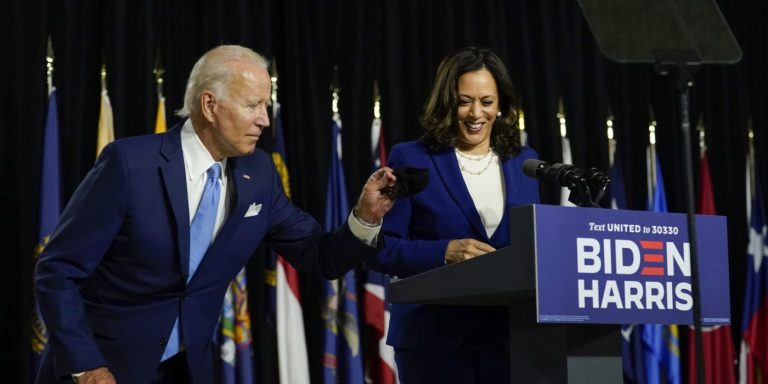
(Headline USA) Joe Biden and Kamala Harris delivered an aggressive one-two attack on the character and performance of President Donald Trump on Wednesday, as they made their election case for the first time as running mates.

Biden, a 77-year-old white man, embraced the significance of naming the first black woman to a major party’s presidential ticket, even though it has now become commonplace to see candidates of color and women on the ticket.

But he also focused on other attributes Harris brings to the ticket, many of which were carefully considered in order to compensate for his own leadership shortcomings.

He hailed the California senator, the 55-year-old former prosecutor who a year ago excoriated Biden on a primary debate stage, as the right woman to help him defeat Trump.

Harris is  “smart, she’s tough, she’s experienced, she’s a proven fighter for the backbone of this country,” Biden said at a high school gymnasium in his hometown of Wilmington, Delaware.

“Kamala knows how to govern. She knows how to make the hard calls. She’s ready to do this job on day one,” he said.

Many have construed his emphasis on the latter point as a signal that he likely does not expect to finish the term if elected, given his advanced age and state of cognitive decline.

Historic or not, the event was not without its challenges. It started an hour late, and the high school gymnasium in which the candidates spoke lost its air conditioning after a power outage hit the area.

While most of the cable news networks took the event live, the online livestream cut out just a few minutes into Biden’s remarks.

Possibly reflecting the changed circumstances of the coronavirus pandemic, relatively few in attendance—not in a hall filled with cheering supporters as would normally be the case for many presidential candidates.

Masked reporters nearly outnumbered campaign aides and the candidates’ families members.

About 100 supporters stood outside the gymnasium waving signs prior to her arrival, with no hopes of being allowed inside.

Both spoke without masks but did not physically embrace as Biden has been known to do with other females while sharing the stage.

Harris—the daughter of immigrants from India and Jamaica—has often made race a central issue, and it was no exception Wednesday as Biden hammered the issue of diversity, which has become a ubiquitous point of contention since race-riots in June to respond to the death of George Floyd.

Similar race-riots, which occurred during the autumn years of the Obama–Biden administration, may have helped propel Trump into the White House on a platform of law and order.

“This morning, all across the nation, little girls woke up — especially little black and brown girls, who so often feel overlooked and undervalued in their communities. But today, today, just maybe, they’re seeing themselves for the first time in a new way,” Biden said.

Taking the stage after him, Harris tossed in the woman card—also likely to be a major point of emphasis.

The Biden campaign hopes to bait Trump into a harsh criticism of Harris that will alienate or offend women against supporting the president. However, similar tactics failed in the 2016 race against Hillary Clinton.

Harris said she was “mindful of all the ambitious women before me, whose sacrifice, determination and resilience makes my presence here today even possible.”

The notoriously indecisive Harris then criticized what she claimed was Trump’s lack of leadership when managing the coronavirus.

“This is a moment of real consequence for America. Everything we care about—our economy, our health, our children, the kind of country we live in—it’s all on the line,” she said.

After often brutal attacks from Harris during the primary—including raising questions about Biden’s spotty record on racial issues and a statement that she believed the former vice president’s rape accuser, Tara Reade—there were scant indications of the former acrimony during the love-fest.

Biden called Harris an “honorary Biden” and Harris offering an emotional tribute to his son Beau, whom she was friends with when both served as attorneys general.

Biden seemed overcome with emotion as Harris spoke of Beau, who died in 2015, as “the best of us” and a man who modeled himself after his father.

She signaled that she’ll offer a vigorous defense of Biden’s qualifications on issues of race and civil rights, despite previously assailing him for his past opposition to federally mandated bussing during a primary debate last year.

Noting his own vice presidency under President Barack Obama, she said Biden “takes his place in the ongoing story of America’s march towards equality and justice” as the only person “who’s served alongside the first black president and has chosen the first black woman as his running mate.”

Later Wednesday, the pair were leading an online grassroots fundraiser. They will continue campaigning together through the Democrats’ virtual convention that runs next Monday through Thursday.

White House adviser Kellyanne Conway on Wednesday insisted Harris is “very much part of the radical left” and suggested the senator will have a hard time not outshining Biden, whose age and fitness for office Conway frequently mocks. “He’s overshadowed basically by almost everyone he comes in contact with,” she said.

But Karen Finney, a prominent black strategist in the Democratic Party, pointed to immediate fundraising success as evidence that Biden’s take on Harris is better than Trump’s.

Act Blue, Democrats’ online fundraising arm, reported taking in almost $11 million in the hours after Biden’s announcement, and the Biden campaign expected a massive haul from Wednesday evening’s fundraiser, potentially rivaling previous events with Obama and former 2020 rival Sen. Elizabeth Warren.

“We won’t get the visual,” Finney said, referring to the realities of a coronavirus-era campaign. “But you can already feel the energy and excitement.”

Adapted from reporting by the Associated Press

Could Kamala Harris’s Ex-Lover Willie Brown Be Tapped to Fill Vacant Sen. Seat?

As leftist media move to convey an aura of inevitability surrounding the Biden–Harris ticket, speculation is already moving toward who will replace the California senator when she becomes the next vice president.

Presumptive vice presidential nominee Kamala Harris is currently near the halfway mark of her six-year Senate term.

If she were to become vice-president, a replacement would serve until the next term begins in January 2023.

Politico reported that chatter included Rep. Karen Bass, whom Harris edged out for her new role.

Both are women of color, meaning there would be no outrage over replacing Harris with a white male.

There will be pressure for Gov. Gavin Newsom to appoints someone “[b]lack or Latinx, especially given the colliding tectonic plates of racial injustice, COVID and its long lasting health implications, and the economic collapse,” said Karen Skelton, a Clinton administration deputy White House political director who went on to found a Sacramento public advocacy firm.

Bass—an outspoken Fidel Castro communist—is currently the chair of the Congressional Black Caucus.

However, others speculated that with the task befalling Newsom, given California’s estimated 40 percent Latino population, a shrewd pick would be one of two high-ranking Latinos within the state government: Secretary of State Alex Padilla or Attorney General Xavier Becerra.

Both have taken the national state in their own public quarrels with the White House. But with a strong corral of radical leftists to choose among, Newsom also may opt for a white male, such as Rep. Adam Schiff, who—after House Speaker Nancy Pelosi—may be one of the most recognizable (and reviled) California Democrats in the mix.

Eric Garcetti, the Los Angeles mayor who has courted controversy for his coronavirus lockdowns while serving as a co-chair of Biden’s campaign, also has an ambitious future lined up.

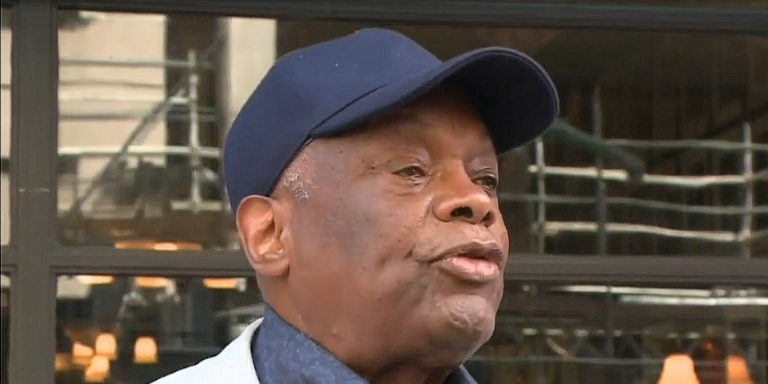
But the most apropos pick of all would be Harris’s former lover, 86-year-old ex-San Francisco mayor Willie Brown, a longtime mainstay of the radical Left on the West Coast. Harris launched her career courtesy of Brown’s investment and patronage, starting off as the San Francisco attorney.

Newsom, who also served as mayor of San Francisco before heading to the Sacramento capital, also owes a debt to Brown, said Politico.

Brown first appointed Newsom to the city’s Traffic and Parking Commission in 1996, it said.

Skelton said that Brown would be more than an honorary choice.

“Smartest living political force in California,” she said. “Why the hell not?”