Pension Funds Start Looking to Gold to Avert Disaster

Public and private pension plans face a dual crisis.

The first and most obvious threat to pensioners is that defined-benefit vehicles are severely underfunded.

By one estimate, pension systems taken as a whole are $638 billion in the red.

Some are in better shape financially than others.

But all pension plans will have to reckon with a second huge challenge going forward.

Namely, they are already entirely unable to meet their stated return objectives by owning conventional “safe” interest-bearing instruments such as Treasury bonds.

Fed Declares War on Savers

The Federal Reserve has effectively declared war on savers by vowing to hold short-term interest rates near zero, likely for years to come. Longer-term bond yields also plummeted to record lows (below 1% for most maturities) this year.

An ultra-low interest rate environment is survivable for investors only so long as rates keep falling, thereby generating capital gains on bond holdings that supplement their diminutive coupon payments.

But what happens when the great bond bull market, which has been intact for nearly four decades, reverses? It will be a disaster for the assets of pension funds.

They could reach for yield elsewhere by owning dividend-paying stocks. But an all-equity portfolio would be too volatile for their conservative investing mandate. Even the highest quality stocks got hammered during the virus-induced economic lockdown hysteria this spring.

Market volatility combined with rising liabilities has driven a 6% increase in total adjusted pension debt this year, according to Moody’s Investor Services.

Meanwhile, the Federal Reserve recently announced that it would be changing its 2% inflation “target” to an “average.” That gives central bankers the policy leeway to begin pushing inflation well above 2% for an extended period. (And let’s not forget the Fed also uses the U.S. Government’s grossly understated inflation statistics.)

Pension Plans CAN Hold Gold – But Only These Two Do

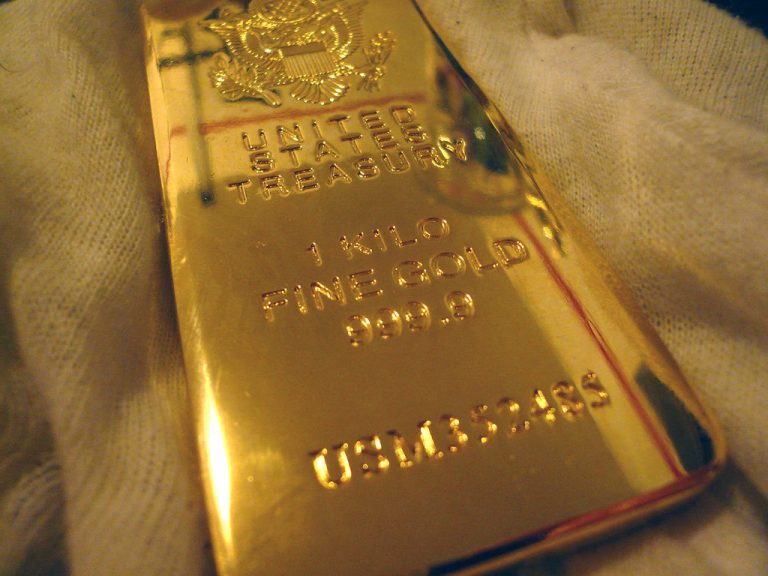
How can pension funds obtain protection from this threat? They can own gold.

Last week, Ohio’s $16 billion Police & Fire Pension Fund approved a 5% allocation to the monetary metal. This relatively small gold allocation provides at least some measure of portfolio diversification and could pay off in an outsized way if the gold market enters into a price-compounding mania phase.

Pension Jar Fund

Ohio will join Texas, through its Texas Teacher Retirement System, in having the only known public pension programs that hold precious metals.

Each fund appears to be targeting about $1 billion in gold holdings.

Others have been urged to do so, including by the Sound Money Defense League and Money Metals Exchange, whose Sound Money Index ranks all 50 states on whether they hold gold in their pension or reserve funds.

Wyoming, for example, considered and rejected the idea early last year when gold was trading at just $1,300/oz.

In a contentious Wyoming senate hearing in February 2019, the career deputy to the newly elected State Treasurer – having just turned in a staggering $300+ million loss on the state’s controversial investment in Third World debt – scoffed at gold while openly opposing his own boss who had just testified in favor of holding the monetary metal to protect the state.

Unfortunately, precious metals assets represent only about 0.5% of all savings and investments in the United States. The vast majority of pensioners and workers are thus vulnerable, like sitting ducks, to the threat of an inflation outbreak or a meltdown in the financial system.

The bias against gold runs deep, according to Larry Parks, Executive Director of the Foundation for the Advancement of Monetary Education (FAME): “Money managers, lawyers, actuaries, accountants, and other ‘fiduciaries’ recommend pension plans to not have gold in their portfolios. They say that gold is too risky and too volatile.”

But Parks says the opposite is true: “The real reason they try to discredit gold is that gold pays no fees, which is their principal concern. Thus, they have an inherent conflict of interest with pensioners, who are by law the sole plan beneficiaries. It is a scandal how pension trustees have been misled.”

A Secure Retirement Requires Physical Backup

Those who are now, or later will be, relying on a pension as their primary source of retirement income should develop a fail-safe backup plan.

The agency tasked with backing up pension programs, the Pension Benefit Guaranty Corporation, is itself underfunded and could quickly become insolvent in the event of a rise in pension failures.

Of course, the risk of a pension program failing to keep pensioners ahead of inflation is closer to a certainty.

Conventional institutional asset allocation models will be exposed as deficient and even dangerous when their stock and bond portfolios wilt under a period of possible stagflation – an economic trend that investors haven’t had to navigate since the late 1970s.

The ultimate hedge against a regime of currency depreciation and an environment of negative real returns on interest-bearing paper is physical precious metals.

As FAME’s Larry Parks advises, “If you want a secure retirement, you better own some physical gold.”

We would add that if you want the potential for some spectacular real gains in retirement above and beyond what gold delivers, you better own some physical silver as well…Original Source

Stefan GleasonStefan Gleason is President of Money Metals Exchange, a precious metals dealer recently named “Best in the USA” by an independent global ratings group. A graduate of the University of Florida, Gleason is a seasoned business leader, investor, political strategist, and grassroots activist. Gleason has frequently appeared on national television networks such as CNN, FoxNews, and CNBC and in hundreds of publications such as the Wall Street Journal, The Street, and Seeking Alpha.
Trump Visits Kenosha Against Wishes of Leftist Local Political Leaders

0

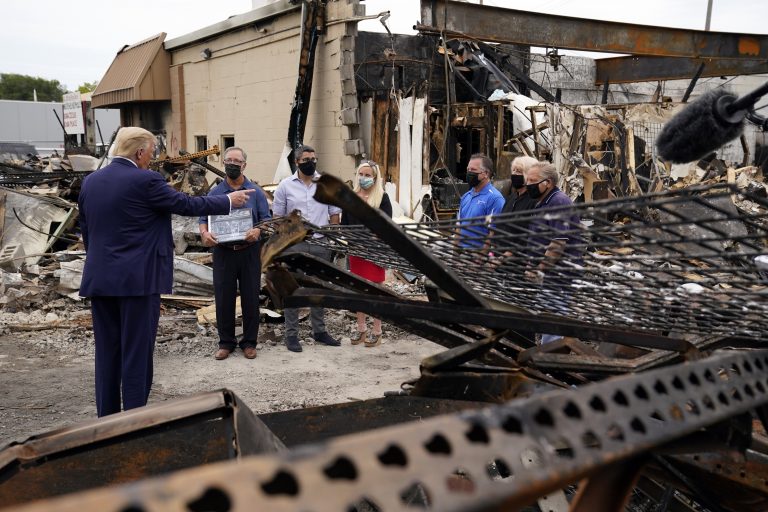
(Headline USA) President Donald Trump visited the destruction left by leftist rioters in Kenosha, Wisc., on Tuesday and declared it was enabled by Democratic leaders.

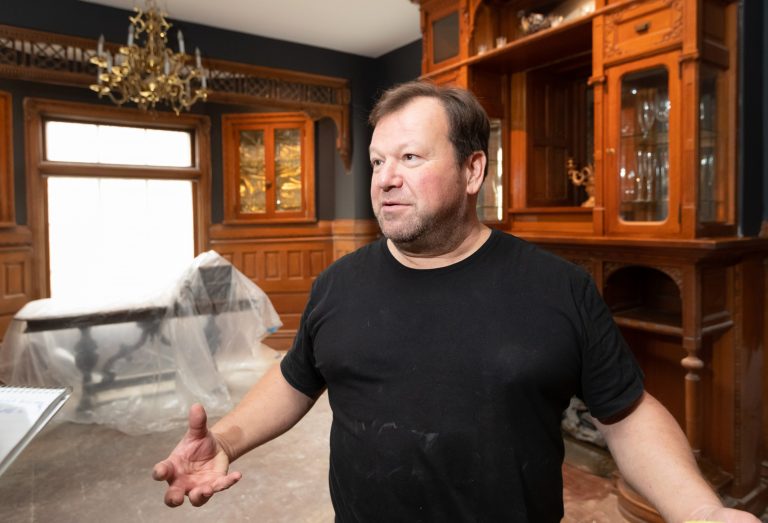
Soon after arriving in the city — a visit made over the objections of state and local leaders — Trump toured the charred remains of a block besieged by violence and fire. He spoke to the owners of a century-old furniture store that had been destroyed and blasted the Democrats in charge of Kenosha and Wisconsin.

“They just don’t want us to come in and then destruction is done,” said Trump, who has offered to send in federal enforcement. “These governors don’t want to call and the mayors don’t want to call. They have to ask.”

The city has been riven by protests since the Aug. 23 shooting of Jacob Blake, a black man who resisted arrest while allegedly wielding a knife, who was shot seven times from behind by police as he reached inside his vehicle. On the eve of his visit, Trump defended a teenage supporter accused of fatally shooting two men — likely in self defense — at a demonstration in Kenosha last week, and accused Democrat Joe Biden of siding with anarchists and rioters in the unrest.

Trump’s motorcade passed a mix of supporters, many holding American flags, and protesters, some carrying signs that read Black Lives Matter. As a massive police presence, complete with several armored vehicles, secured the area, barricades were set up along several of the city’s major thoroughfares to keep onlookers some distance from the passing presidential vehicles.

Wisconsin’s Democratic governor, Tony Evers — who belatedly deployed the National Guard to quell riots following the Blake shooting, in numbers fewer than local officials requested — had pleaded with Trump to stay away for fear of straining tensions further.

“I am concerned your presence will only hinder our healing,” Evers wrote in a letter to Trump. “I am concerned your presence will only delay our work to overcome division and move forward together.”

Biden has assailed Trump over the deadly protests that have sprung up — all of which have occurred in Democrat-run cities. But Trump has supported law enforcement and offered himself as the leader best positioned to keep Americans safe.

He insisted his appearance in Kenosha would “increase enthusiasm” in Wisconsin, perhaps the most hotly contested battleground state in the presidential race, as the White House said he “wants to visit hurting Americans.” The White House said Trump was not going to meet with Blake’s family. Blake’s family planned a Tuesday “community celebration” to correspond with Trump’s visit.

“We don’t need more pain and division from a president set on advancing his campaign at the expense of our city,” Justin Blake, an uncle, said in a statement. “We need justice and relief for our vibrant community.”

The NAACP said Tuesday neither candidate should visit the Wisconsin city as tension simmers. Biden’s team has considered a visit to Kenosha and has indicated that a trip to Wisconsin was imminent but has not offered details.

Biden, in his most direct attacks yet, accused Trump earlier Monday in Pittsburgh of causing the divisions that have ignited the violence.

Biden said of Trump: “He doesn’t want to shed light, he wants to generate heat, and he’s stoking violence in our cities. He can’t stop the violence because for years he’s fomented it.”

Trump, for his part, blamed radical troublemakers stirred up and backed by Biden. But when he was asked about one of his own supporters who was charged with killing two men during the mayhem in Kenosha, Trump declined to denounce the killings and suggested that the 17-year-old suspect, Kyle Rittenhouse, acted in self-defense.

After a confrontation in which he fatally shot one man, police say, Rittenhouse fell while being chased by people trying to disarm him. A second person was shot and killed.

“That was an interesting situation,” Trump said Monday during a news conference. “He was trying to get away from them, I guess, it looks like, and he fell. And then they very violently attacked him. … He was in very big trouble. He would have been — he probably would’ve been killed.”

After Trump’s defense of Rittenhouse, Biden laced into his response, saying without evidence: “Tonight, the president declined to rebuke violence. He wouldn’t even repudiate one of his supporters who is charged with murder because of his attacks on others. He is too weak, too scared of the hatred he has stirred to put an end to it.”

The president also suggested that some police officers “choke” when faced with challenging situations and offered an odd comparison, likening them to golfers who “miss a 3-foot putt.”

Protests in Kenosha began the night of Blake’s shooting, Aug. 23 and were concentrated in the blocks around the county courthouse downtown. The first three nights, more than 30 fires were set and numerous businesses were vandalized. There was an estimated $2 million in damage to city property, and Kenosha’s mayor has said he is seeking $30 million from the state to help rebuild.

Adapted from reporting by Associated Press.

POLL: Black Support for Trump Grows While Support for Biden Falls

Black support for President Donald Trump is nearly twice what campaign official believe it needs to be for Trump to win reelection, according to a new survey.

The poll, taken right after the Republican National Convention, found that 20% of black voters said they would vote for Trump in November.

Nearly 75% of black voters said the same of Democratic presidential candidate Joe Biden. But Biden’s support is much lower than it has been in past months, according to the John Zogby Strategies/EMI Research Solutions analysis.

Already facing scrutiny for a series of controversial comments that appeared to take for granted the black vote, Biden’s dropping support among the African–American community could be the result, in part, of the continued violence in Democratic-run cities.

Already, Biden’s numbers among young black voters are more than a dozen points below what former President Barack Obama’s were in 2008, and nine points below what Obama’s were in 2012.

“Biden should be pleased with his support among Democrats, women, and Hispanics but a lead of 75%-20% among blacks can spell real trouble,” noted the survey.

“A Democrat needs 90%+ and a high turnout among blacks. Could it be that Trump’s law and order message is hitting home among blacks who are worried about demonstrations getting out of control?” it wondered.

Perhaps taking their cues from the Democrats’ refusal to acknowledge the violence, Republicans made a strong appeal to minorities during the convention, with black conservatives, legal immigrants and victims of the Left-driven violence figuring prominently into the slate of inspiring speakers.

Trump’s recent gains among black voters prove that the RNC successfully won over hesitant voters, according to Marc Thiessen, a fellow with the American Enterprise Institute.

The many success stories shared during the convention helped destroy the Democratic narrative that Trump is a racist, because viewers were able to see Trump’s records on display for themselves, Thiessen wrote in an op-ed for the Washington Post.

“This is a side of the president that most Americans are never shown—and so Republicans used their stage to show it,” Thiessen wrote.

“They made a sustained, four-day push for African American votes, and the votes of every American who cares about racial justice,” he added.

Paris Dennard, the Trump campaign’s senior communications adviser for black media affairs, agreed with Thiessen and said Trump’s growing support among African Americans iss’t surprising given the difference between the two parties’ messages.

“After watching both political conventions make their best case, black Americans are giving President Trump a second look, and many a first look, because they are learning more about his record of achievement and Joe Biden’s old and new policies that work against the black community coupled with Biden’s consistently offensive bigoted comments,” Dennard told the Washington Examiner.

Appeals Court Blocks Release of Trump Tax Returns to NY Prosecutor

0

(Headline USA) A federal appeals court on Tuesday blocked a New York prosecutor from obtaining Donald Trump’s tax returns while the president’s lawyers continue to fight a subpoena seeking the records.

The three-judge panel ruled after hearing brief arguments from both sides.

Trump’s lawyers had asked for a temporary stay while they appeal a lower-court ruling that granted Manhattan District Attorney Cyrus Vance Jr.’s office access to Trump’s tax returns.

A lawyer for Vance’s office had argued that further delays would only impede their investigation.

“The question at this juncture is quite simple but also quite important,” Trump lawyer William Consovoy said. “Will the president be given an opportunity to appeal that ruling before his personal records are disclosed to the grand jury and the status quo is irrevocably changed?”

A hearing on the merits of Trump’s latest appeal will be held on Sept. 25 after both sides agreed to an expedited schedule — meaning it’s possible the matter could be decided before November’s election.

Trump’s lawyers appealed to the 2nd U.S. Circuit Court of Appeals last month after a district court judge rejected their renewed efforts to invalidate a subpoena issued to his accounting firm. Judge John M. Walker Jr. said at Tuesday’s hearing that the subpoenas cover 11 entities engaged in business dealings as far away as Europe and Dubai.

Trump has blasted the long-running quest for his financial records as a “continuation of the most disgusting witch hunt in the history of our country” and predicted the case would again end up before the Supreme Court.

The Supreme Court ruled last month that the presidency in itself doesn’t shield Trump from Vance’s investigation, but the high court returned the case to U.S. District Judge Victor Marrero’s courtroom to allow Trump’s lawyers to raise other concerns about the subpoena.

Trump’s lawyers then argued that the subpoena was issued in bad faith and overly broad, might have been politically motivated and amounted to harassment. Marrero rejected those claims. Consovoy told the judges Tuesday that the investigation was an “arbitrary fishing expedition.”

Carey Dunne, of the district attorney’s office, said Trump and his lawyers have long misrepresented the scope of the investigation as focusing primarily on hush money payments that were paid to protect Trump from adultery allegations. Vance’s lawyers have said they are legally entitled to extensive records to aid a “complex financial investigation.”

“The president has complained at every turn that we’ve not announced what the grand jury is looking at as if that itself is bad faith,” Dunne said. “But of course, what the grand jury is looking at is secret. We’re not allowed to make that public, which is what has led to his speculation about the grand jury scope. But none of this speculation is plausible.”

Even if Vance does get Trump’s tax records, those would be part of a confidential grand jury investigation and not automatically be made public.

Vance, a Democrat, began seeking the Republican president’s tax returns from his longtime accounting firm over a year ago, after Trump’s former personal lawyer Michael Cohen told Congress that the president had misled tax officials, insurers and business associates about the value of his assets. Cohen was convicted for committing perjury before Congress.

Congress is also pursuing Trump’s financial records, though the Supreme Court last month kept a hold on the banking and other documents that Congress has been seeking and returned the case to a lower court.

Adapted from reporting by Associated Press.

Barr Issues New DOJ Rules Regulating FBI’s Spying on Political Campaigns

Attorney General William Barr today announced the Justice Department’s plan to move forward with crucial reforms in the FBI’s process for spying on political campaigns.

The policies will further regulate the process for obtaining surveillance warrants via the Foreign Intelligence Surveillance Court, as well as implementing tighter oversight mechanisms.

“FISA is a critical tool to ensuring the safety and security of Americans, particularly when it comes to fighting terrorism,” Barr said in a DOJ press release.

“However, the American people must have confidence that the United States Government will exercise its surveillance authorities in a manner that protects the civil liberties of Americans, avoids interference in the political process, and complies with the Constitution and laws of the United States,” he continued.

“What happened to the Trump presidential campaign and his subsequent Administration after the President was duly elected by the American people must never happen again,” he said.

Barr said he issued two memoranda in consultation with FBI Director Christopher Wray.

The first memorandum establishes and Office of Internal Auditing within the agency, along with “aggressive compliance measures.”

The second memorandum directly addresses the FISA process, establishing stricter protocols for the accuracy of warrant applications, as well as oversight of any surveillance operations specifically targeting political campaigns.

That would include briefing a candidate that he or she was being targeted by foreign operatives before applying for a warrant.

Only after the FBI has approved in writing that the surveillance without a defense briefing was needed will agents be allowed to proceed with an application to the FISA courts.

Wray has, himself, come under scrutiny for the perception that he may have sought to cover for the agency’s prior actions under the leadership of former Director James Comey.

Many of the incriminating documents that exposed the Russia-collusion hoax remained classified until then-acting Director of National Intelligence Richard Grenell took direct action to release them.

Barr also has supported a sort of deep-state reckoning, notably appointing special prosecutor John Durham to launch a far-reaching criminal investigation into the possible conspiracy against the Trump administration.

Current Director of National Intelligence John Ratcliffe, who replaced Grenell, has pledged to continue cooperation with the Durham probe, which is expected to be in its final legs.

Wray suggested that the conclusion last December of an earlier internal audit of the FBI’s role in the “Crossfire Hurricane” sting operation and the FISA-approved spying on the Trump campaign had freed him to take further action.

“Since the Inspector General’s Crossfire Hurricane report was issued last December, I have made clear that it describes conduct that was unacceptable and unrepresentative of the FBI as an organization” he said.

“That’s why I immediately ordered more than 40 corrective actions, including foundational FISA reforms, many of which went beyond those recommended by the Inspector General,” he continued. “The FBI has been working diligently to implement these corrective actions.”

He lauded the additional reforms for building on those earlier efforts while preserving the controversial FISA process for allowing domestic surveillance.

“FISA is an indispensable tool that the FBI uses to protect our country from national security threats,” Wray said, “and Americans can rest assured that the FBI remains dedicated to continuously strengthening our FISA compliance efforts and ensuring that our FISA authorities are exercised in a responsible manner.”

Sen. Tom Cotton, R-Ark., a strong ally of President Donald Trump, was one of the first out of the gate to praise the new measures.

“Attorney General Barr continues to make necessary reforms to the Department of Justice’s FISA procedures,” he said.

“An FBI Office of Internal Auditing and new directives guarding against FISA abuses—common under James Comey and the Obama administration—will improve accountability and provide tools necessary to pursue justice and keep the American people safe,” he added.

Trump Calls on Big Ten Conference to Play Fall Football

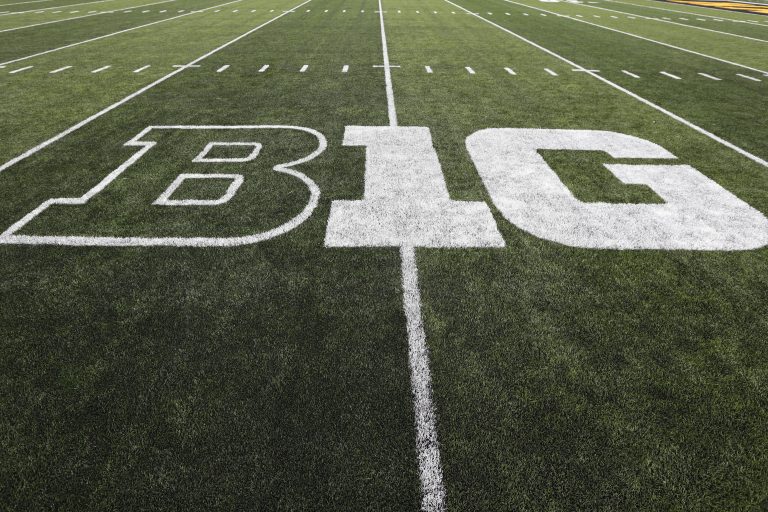
(Headline USA) The Big Ten Conference, already in court and under pressure from players and parents over its decision to cancel fall football, is now hearing from President Donald Trump.

Trump tweeted Tuesday that he had spoken with Big Ten Commissioner Kevin Warren about reinstating the fall season.

“Had a very productive conversation with Kevin Warren, Commissioner of the Big Ten Conference, about immediately starting up Big Ten football,” the tweet said. “Would be good (great!) for everyone – Players, Fans, Country. On the one yard line!”

The Big Ten did not respond to a message seeking comment.

The conference is filled with teams from battleground states that will prove critical in the upcoming election between Trump and Democrat Joe Biden.

The Big Ten announced Aug. 11 it would move its football season to the spring semester because of health risks associated with the pandemic.

The Pac-12 followed suit, joining the Mid-American Conference and the Mountain West. Other leagues are playing shortened seasons.

Warren has been under pressure for three weeks as the outcry against the decision has grown louder. Last week, a group of Nebraska players filed a lawsuit seeking a reversal, and demanded transparency about how the mostly public schools arrived at the decision.

The Associated Press and other outlets reported last week that Big Ten officials are working on multiple plans for staging a football season — including one that would have the league kicking off during the Thanksgiving weekend.

Soon after that, Trump brought up the state of college football.

“No, I want Big Ten, and all other football, back – NOW,” Trump tweeted then. “The Dems don’t want football back, for political reasons, but are trying to blame me and the Republicans. Another LIE, but this is what we are up against!”

Trump downplayed the seriousness of COVID-19 for college-aged football players.

“These are big, strong guys. They’ll be just fine,” Trump said Friday. “Big Ten. Get with it. Open up your season, Big Ten.”

Trump, before boarding Air Force One on Tuesday, again framed the debate over player and fan safety as a political one.

He said “the biggest headwind we have is that you have Democrats who don’t want to see it happen.”

Trump said he spoke with Warren and “we had a very good conversation, very productive, and maybe we’ll be very nicely surprised.”

Adapted from reporting by Associated Press.

Dem’ Nominee Who Admitted Sex Harassment REFUSES to Quit US Senate Race

(Headline USA) Embattled Nebraska U.S. Senate hopeful Chris Janicek doubled down Monday on his refusal to bow out of the race, despite relentless pressure from the state Democratic Party after he admitted to sending sexually offensive text messages about a campaign employee.

Janicek reaffirmed his pledge to stay in the race during a press conference at his Omaha cupcake bakery. The Democratic nominee has until 5 p.m. Tuesday to request that state officials remove his name from the ballot, but he made clear that he has no plans to do so.

The Nebraska Democratic Party disavowed Janicek in June after he was caught sending sexually offensive messages about a campaign employee in a group text with other staffers.

The female contract staffer was accidentally included in the message and filed a complaint with the party. Janicek has said he apologized to the woman in a phone call, in person, and in writing, and that she accepted his apology. The woman has disputed Janicek’s account, saying she doesn’t accept his apology and maintains that he should drop out of the race.

“The text message was wrong. It was inappropriate. It was disgusting. It was meant to go to one person,” Janicek said. “I apologized immediately for it, over and over, ad nauseam. The text message should never have been sent.”

Janicek is challenging Republican Sen. Ben Sasse, who seeks a second term. Janicek accepted the Democratic nomination in May after winning a seven-candidate primary race, but the odds of winning in November were against him in GOP-dominated Nebraska even before his party withdrew its support.

Janicek blasted the Nebraska Democratic Party in the press conference, noting that its membership has fallen to just 29% of the state’s registered voters. He said party officials met with him privately after his campaign employee filed the complaint and offered to let him drop out quietly, saying that he could cite health concerns as the reason.

Nebraska Democratic Party Chairwoman Jane Kleeb said that claim was untrue, and that the meeting with Janicek included eight party officers and their lawyer.

After the scandal broke, the state party’s state central committee voted to endorse Alisha Shelton, an Omaha mental health practitioner who ran unsuccessfully against Janicek in the Democratic U.S. Senate primary.

Party leaders voted to endorse Shelton as a replacement nominee, but state law prevents them from removing Janicek’s name from the ballot without his consent. And because of Nebraska’s “sore loser” law, Shelton can’t run as a write-in candidate because she lost to Janicek in the primary.

The state party then voted to back former Democratic U.S. Rep. Brad Ashford, who represented the Omaha’s 2nd Congressional District for one term. Ashford wasn’t a candidate in the Democratic Senate primary and thus would have been able to run as a write-in candidate. But days after the endorsement, he reversed course and announced that he wouldn’t run for the Senate seat.

In a statement Monday, party officials said they would support a nominee “whose values represent our party,” no matter what Janicek decides. Janicek “is shameful and has no support of the Democratic Party,” Kleeb said.

“Our party will make sure that voters across Nebraska have a strong choice in order to defeat Ben Sasse,” she said.

Shelton said the party deserves a nominee “with a moral compass,” who will listen to voters.

“Leaders are always willing to do the right thing, even if it is hard,” she said. “I am sad that Chris is not leading. Fellow Nebraskans are pleading with him to exit the race.”

Janicek ran for Senate once before, in 2018, but lost in the Democratic primary. He said he chose to run after having a heart attack in 2015 and getting slapped with more than $100,000 in medical bills that his insurance only partially covered.

Adapted from reporting by Associated Press.

NYTimes Gives Detailed Look at Portland Shooting, Peppered w/ Leftist Bias

0

Warning: Video Contains Graphic Violence

A New York Times article offered a detailed portrait retracing the steps of murder victim Aaron Danielson (aka Jay Bishop) at Saturday’s pro-Trump protest in Portland, prior to his shooting by a radical leftist thug.

True to form, the unabashedly biased Times insinuated, without evidence, that Danielson and his group were white supremacists and violent right-wing extremists, while giving a free pass to the rioters who murdered him in cold blood.

The Times engaged in victim-blaming, suggesting that Danielson was at fault for straying from the route of the Patriot Prayer group’s planned Trump 2020 Cruise Rally, daring to go into the heart of the city where violence has raged for three months with impunity.

“Patriot Prayer describes itself as a conservative Christian group but has attracted white supremacists and previously taken firearms to Portland protests that frequently became street brawls,” claimed the Times, although there is nothing to suggest that Danielson was wielding a weapon at the time of his murder.

Some evidence suggests that he was attempting to defend himself with over-the-counter pepper spray after rioters threatened him and appeared ready to mob him, including the armed assailant.

But the Times reported that Danielson’s companion, Zane Sparling, had a paintball gun and that the two brought knives, suggesting that they were, somehow, threatening their attackers.

One of several videos embedded in the article shows the members of the caravan passing by groups of protesters while using pepper spray and paintball against the onlookers, who hurled projectiles at them.

A leftist rioter appears to be armed with a large wooden board, and another carries what appears to be an improvised flame thrower, although the Times makes no note of that.

In a second video, the Times shows the rioters confronting the caravan an attempting to grab a Trump flag as a man who appears to be wearing the same outfit as the eventual shooter clutches at a vest pocket.

Police have since identified a suspect, Michael Forest Reinoehl, 48, of Portland.

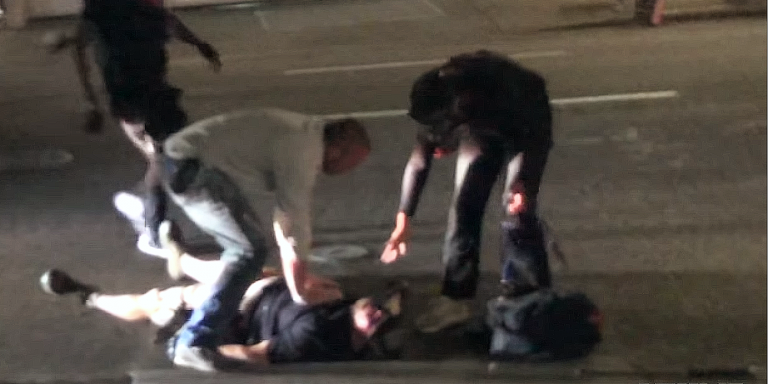
The shooting happens shortly thereafter, with the Times showing multiple videos. The shooter and another man first confront Danielson and call out, ““Hey, we got some right here. We got a couple right here.”

An accomplice of the shooter then appears to say, “He’s macing you. Pull it out.” (The Times here suggests the man says “He’s pulling it out.”)

The Times suggests that Danielson then sprays a pepper-spray like substance, although the visual and audio evidence do not clearly indicate that.

The article offers a statement from Pappas, who was featured in a Facebook interview with The WTF Files, saying that there was no prior confrontation with the assailants and they were unfamiliar.

But it closes with a statement of opinion from one of the protesters who live-streamed the shooting, which put the blame on law-enforcement for allowing the victims to exercise their free speech.

According to Justin Dunlap, “the Portland police should not have allowed the pro-Trump caravan to enter an area they knew would be occupied by opposing protesters,” wrote the Times.

DC Mayor ‘Dismayed’ by Prosecutors Ignoring Violent Rioters

0

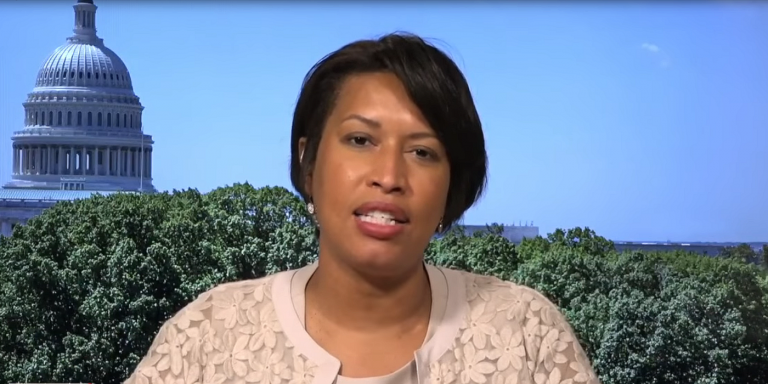
Muriel Bowser—the radical leftist mayor of Washington, DC—sought to flip the script on GOP-led criticisms of her colleagues in cities like Chicago, Portland and Seattle that have been racked by violence stemming from recent race-riots.

Several far-left cities have prosecutors—some of them backed financially by globalist mega-donors like George Soros—who have outright refused to arraign the rioters following their arrests on charges like looting, assault, arson and vandalism.

But those protests recently have taken a violent and dangerous turn, with deaths in Kenosha, Wisc., and Portland, Ore., over the weekend arising from clashes between opposing ideological groups.

Mayors like Portland’s Ted Wheeler have desperately tried to deflect blame to the Trump administration—first for sending in National Guard troops, which they claimed helped foment the violence, and now for failing to do enough to help address the problems.

But in Bowser’s case, the prosecutions largely fall under the purview of the federal Justice Department since the District, as the nation’s capital, contains considerable federal property.

According to Just the News, Bowser claimed in a missive posted via her Twitter account that U.S. Attorney Michael Sherwin had “declined to prosecute 41 of 42 rioting arrests made on August 13 and 14.”

She also criticized assaults on police officers—even as some blue-led states, like neighboring Virginia, have pushed to decriminalize such assaults.

“When violent criminals are not held accountable for setting fires, and destroying and vandalizing property, they are emboldened to escalate their criminal activity,” Bowser said, echoing the longstanding concerns of pro-law-and-order conservatives.

Sherwin’s office issued a statement in response, defending its work. Through Aug. 1, it said, it had brought forward charges in 121 criminal cases stemming from the riots.

“Most recently, over this past weekend alone, the office brought criminal charges against five individuals linked to protest-related violence—two of those cases involved assaults on police officers,” said the statement.

“Since the protests began, this office has never turned down a single case for prosecution in which there was sufficient evidence to support probable cause,” it continued.

It wasn’t entirely clear whether Bowser’s about-face was intended to make a broader political point or simply to deflect from her failures as tensions continued to escalate.

Bowser has faced criticism for hypocritically allowing mass demonstrations in violation of social-distancing guidelines while also targeting conservative groups and law enforcement with extra restrictions.

Following Trump’s speech at the Republican National Convention last week, public figures including Sen. Rand Paul, R-Ky., and Georgia state Rep. Vernon Jordan were accosted by rioters outside the White House.

Democrats nationwide seem to be losing the war of words as the images of the violence, paired with their inaction, reflect poorly in recent polls.

That spurred presidential nominee Joe Biden recently to halfheartedly denounce the rioting, following four days of utter silence during the Democratic National Convention, where Bowser was one of the featured speakers.

NYTimes: Vast Majority of COVID Cases Likely NOT Contagious

Nearly 90 percent of all coronavirus diagnoses in the U.S. were more than likely not contagious, according to a recent report by the New York Times.

Researchers found the vast majority of individuals who had tested positive for COVID-19 potentially carried such “insignificant” amounts of the virus that they weren’t even contagious.

That means that most of the 6 million Americans who have tested positive for the virus had its antibodies, but were likely not spreading it to others.

Dr. Michael Mina, an epidemiologist at the Harvard T.H. Chan School of Public Health, said the tests used by most hospitals and labs were much too sensitive, and therefore overstated the public risk of super spreaders.

These tests, called PCR tests, identify the virus’s genetic material, but do not report the amount of genetic material present, which is what determines how sick a person is, or whether that person can spread the sickness to others.

“We’ve been using one type of data for everything, and that is just plus or minus — that’s all,” Dr. Mina said. “We’re using that for clinical diagnostics, for public health, for policy decision-making … It’s really irresponsible, I think, to forgo the recognition that this is a quantitative issue.”

This is just the latest question that has been raised in regards to the coronavirus and our response to it.

Last week, the Centers for Disease Control and Prevention quietly updated its COVID-19 death numbers to indicate that only 6% of Americans classified as coronavirus deaths died solely from the coronavirus.

All other deaths were connected to underlying conditions or varying circumstances.

This means that the justification for the extended shutdowns are no longer viable, according to some critics.