Portland Mayor Bans Cops from Using Tear Gas During Riots

0

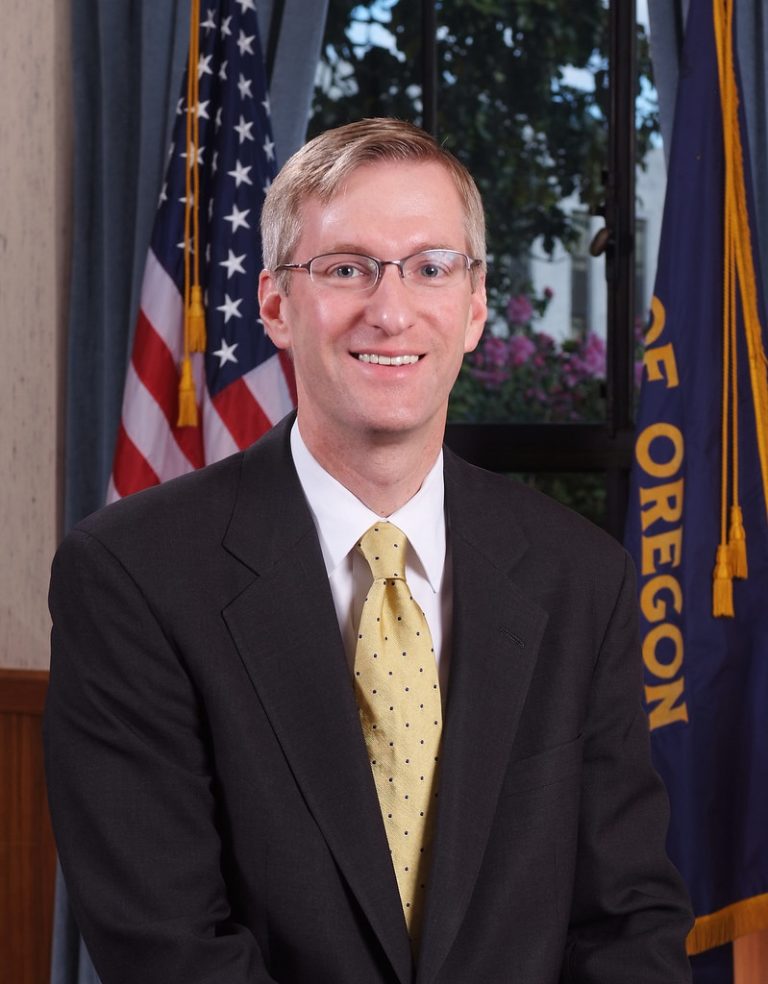
(Headline USA) The mayor of Portland on Thursday told police in Oregon‘s largest city to stop using tear gas for crowd control during the riots that have racked the city for more than three months since the death of George Floyd during a police confrontation in Minneapolis.

Mayor Ted Wheeler, a Democrat, was tear gassed when he went to a demonstration against the presence of federal authorities dispatched to the city to protect federal property.

Wheeler, who is also commissioner of police, said he still wants police to respond aggressively to prevent violence and vandalism.

Hundreds of people have been arrested since the riots started in May, but most have been immediately released to destroy again.

“I expect the police to arrest people who engage in criminal acts. I expect the District Attorney to prosecute those who commit criminal acts. And I expect the rest of the criminal justice system to hold those individuals accountable,” the mayor said.

Protesters want city officials to slash the police budget and reallocate that money to black residents and businesses.

Some demonstrators are also demanding the resignation of Wheeler, a white man and the scion of a timber company fortune.

In clashes with police, rioters have broken windows, set small fires, punctured police car tires, shined lasers in officers’ eyes and pelted them with rocks and frozen water bottles.

Wheeler recently moved out of his high-rise apartment after anarchists targeted the building, setting a fire in a business on the ground floor.

Adapted from reporting by Associated Press.

Hawley Bill Honors David Dorn; Provides Pay Raises to Local Cops

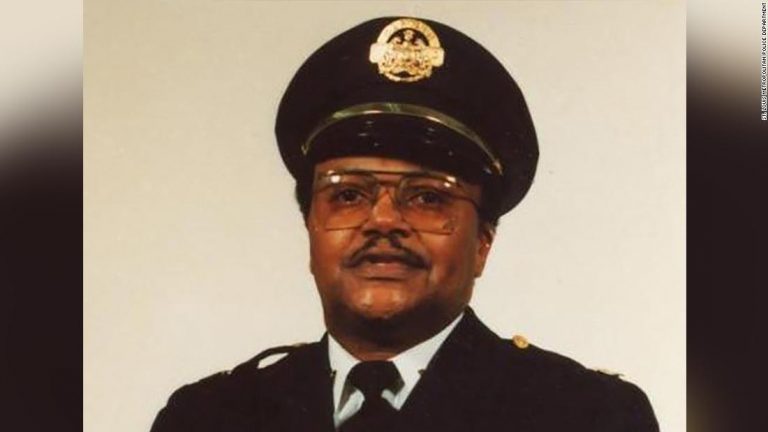
In honor of the late St. Louis police captain David Dorn, Sen. Josh Hawley, R-Mo., introduced legislation Tuesday would allocate federal money to give police officers a raise, according to a press release.

If the bill becomes law, then the David Dorn Back the Blue Act will amend the Omnibus Crime Control and Safe Streets Act of 1968 to give more money to the Justice Department.

The Attorney General would receive $15 billion to promote hiring and retaining police officers at the state and local level.

“Police departments across the country are under siege—underfunded, facing increased retirements, and struggling to make new hires,” Hawley said. “But as violence and rioting sweeps across American cities big and small, our courageous law enforcement officers are more vital now than ever.”

“Democratic politicians are bending to radical activists who want to defund the police. We should do just the opposite,” he said. “Our officers deserve a raise, not defunding. They deserve our unqualified support. And this bill would give it to them.”

With the money received from the Justice Department, state and local law enforcement agencies could increase the salary of officers, as long as they do not exceed 110 percent of median earnings in the local area.

Cities that are defunding their police departments would not be eligible to receive increased federal funding.

The Austin City Council cut the police deparment’s budget by one third or $150 million.

New York City cut its police department’s funding by $1 billion, and Los Angeles cuts its police budget by $150 million.

Hawley’s bill is named after David Dorn, who was murdered on June 2, 2020 while he defended a friend’s pawn shop during the Black Lives Matter-Antifa riots in St. Louis.

He served in St. Louis law enforcement for 38 years before retiring as police captain, then had a brief tenure as police chief in the town of Moline Acres.

The bill would increase state and local dependence upon the federal government and further disconnect local government from local funding sources.

Nebraska to End Nearly All Social Distancing Restrictions

0

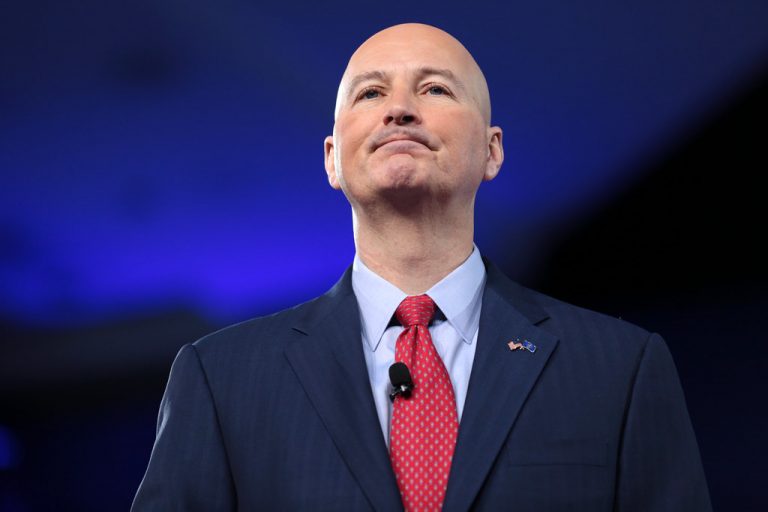
(Associated Press) Nebraska Gov. Pete Ricketts will end nearly all of his state’s social-distancing restrictions on Monday.

The new rules will still limit the size of large indoor gatherings, such as concerts, meeting halls and theaters, but will drop all other state-imposed mandates in favor of voluntary guidelines, as other conservative states have done.

“We are loosening the restrictions further on Sept. 14,” Ricketts said at a news conference.

State officials said they made the decision based on the availability of hospital beds and ventilators, in keeping with the Republican governor’s goal of not overwhelming medical facilities.

“The goal has always been to protect hospital capacity, and capacity remains stable,” said Ricketts spokesman Taylor Gage.

Nebraska’s hospitals have 36% of their regular beds, 31% of their intensive care unit beds and 81% of their ventilators available, according to the state’s online tracking portal. Those numbers have changed little in the last few months.

The new rules will apply statewide except in Lancaster County, which includes the state capital of of Lincoln, home to the University of Nebraska’s flagship campus.

They’ve already been in effect in 27 of Nebraska’s 93 counties, but those areas are overwhelmingly rural and have seen few confirmed cases.

Nebraska will also allow smaller indoor facilities, such as bars, restaurants, churches, gyms and hair salons, to operate with no formal restrictions.

State guidance still recommends limiting crowd sizes, but those guidelines aren’t enforceable.

Under the new rules, larger indoor venues such as concert halls can allow gatherings of up to 75% of their rated capacity, up from 50%.

Additionally, Ricketts said people who want a gathering of 500 people or more will have to get approval from their local public health director.

The state’s shift won’t affect mask requirements in Omaha and Lincoln.

Both cities still require people to wear face coverings in most indoor spaces when they aren’t able to stay at least 6 feet (2 meters) apart.

Lincoln-Lancaster County Public Health Director Pat Lopez has said her county won’t ease its restrictions this month because of a recent increase in cases driven by returning college students and the reopening of Lincoln Public Schools, the state’s second-largest school district.

“This is the time not only to stay the course, but also to redouble our efforts in Lancaster County,” Lopez said. “We need to do what is best for our community to overcome the impacts of this virus.”

Nebraska saw a sharp spike in cases on Tuesday and Wednesday, but that was the result of a glitch that slowed the reporting of test results.

For several days before that, the state’s public health data system wasn’t receiving results even though laboratories were processing tests.

Supposedly Reliable Steele Acted ‘Crazy,’ His FBI Handler Says

0

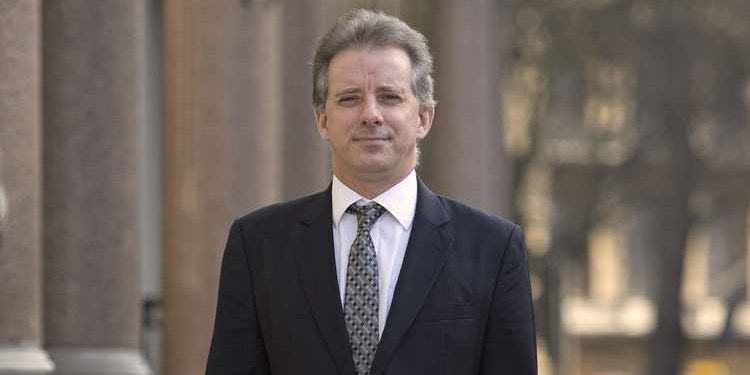
(Eric Felton, RealClearInvestigations) “Crazy” was the term the FBI agent used to describe the behavior of Christopher Steele, author of the now-debunked Trump-Russia dossier.

“I’ve seen crazy source-related stuff in 20 years in New York and this was one of the craziest,” the veteran agent testified to the Senate Select Committee on Intelligence.

Nevertheless, the FBI continued to rely on Steele’s allegations – that Donald Trump and his team were conspiring with Russians who possessed compromising information – to justify its surveillance of the Trump campaign. Without evidence to verify Steele’s claims, the FBI fell back on its assertion that the former British intelligence agent was reliable.

The previously unreported testimony of FBI agent Michael Gaeta is found on page 900 of the fifth and final volume of the Senate committee’s probe of Russian interference in the 2016 election. It raises new questions about the basis of the FBI’s investigation of the Trump campaign, Crossfire Hurricane, and the declarations it made to the FISA court in four separate applications submitted to spy on American citizens.

Gaeta had a long history with the London-based Steele, who had started his own firm, Orbis Business Intelligence, after leaving the British spy service MI6 in 2009. Between 2013 and 2016, the bureau had paid Steele $95,000 to pass along tidbits on Eurasian organized crime; Gaeta was his contact at the bureau. It was Gaeta whom Steele approached in July 2016 with wild and depraved stories of collusion and kompromat. Gaeta became the “handling agent” for Steele’s participation in Crossfire Hurricane. Among his tasks was to get Steele paid (a process that came along slowly) and to see to it that Steele didn’t violate the FBI’s rules on confidentiality.

This requirement for discretion created a conflict of interest for Steele, who was also being paid for the same information by the Washington-based firm Fusion GPS. Fusion, in turn was being paid by the Democratic National Committee and the Hillary Clinton campaign for opposition research on Trump. The Democrats wanted Steele’s information spread far and wide. They also wanted to be able to claim that the FBI was investigating the allegations. Paid FBI informants, however, are not allowed to tell anyone of their work for the FBI or of the bureau’s investigations.

Gaeta was astonished, then, when shortly before the 2016 election an article appeared in Mother Jones titled “A Veteran Spy Has Given the FBI Information Alleging a Russian Operation to Cultivate Donald Trump.” The sub-headline asked, “Has the bureau investigated this material?” Gaeta was convinced Steele was the source for the article and confronted him about it. Steele readily admitted he was behind the Mother Jones story.

The conversation that followed and its aftermath have been described before, but in bloodless ways that fail to capture the importance of that confrontation in determining Steele’s reliability and credibility. For example, a Justice Department inspector general report says “Handling Agent 1 advised Steele that he must cease collecting information for the FBI, and it was unlikely that the FBI would continue a relationship with him.”

‘Listen, is it about the money?’

Here’s how Gaeta recounted that conversation to the Senate: “Listen, is it about the money?” Gaeta asked Steele. “Because we have the money now. Is it about the money?”

The FBI had promised, but had yet to deliver to Steele, $15,000 for one meeting with Crossfire Hurricane agents. The bureau had further promised Steele he would be paid “significantly” for his Trump-Russia research.

Gaeta assumed at first a delay in payment had made Steele go rogue.

“Yes, I’m owed the money, but that’s secondary,” Steele told Gaeta. “I’m very upset about – we’re very upset – about the actions of your agency.”

By the “we” in “we’re very upset” one can reasonably infer that Steele was speaking about himself and his client, Fusion GPS head Glenn Simpson (whose client, not counting cutouts, was Hillary Clinton’s campaign).

The handling agent was shocked: “I had no idea what he was talking about.”

Before Gaeta could inquire further, Steele started railing about ”your Director” and his “reopening of the investigation.”

This was an apparent reference to former FBI Director James Comey’s decision to reopen the probe into Hillary Clinton’s private email server after 340,000 copies of State Department emails between Clinton and her close personal aide, Huma Abedin, were discovered on a laptop used by Abedin and her husband, Anthony Weiner. He was a disgraced congressman under investigation by the bureau’s New York office for sending sexually explicit messages and photos to an underage girl.

At which point it all became clear to the handling agent: “I’m now understanding that he did this because he was upset that the Director’s reopening of the investigation was going to negatively affect the election for Hillary Clinton.”

The handling agent described his reaction to Steele’s behavior as “surprise and disbelief.”  Gaeta told the Senate that Steele’s actions and attitude weren’t just “crazy source-related stuff,” but “one of the craziest” the veteran agent had seen in two decades of handling sources.

The words are significant: Steele’s behavior with the FBI has been characterized as a sort of professional disagreement, uncomfortable perhaps but not unreasonable. Gaeta’s blunt assessment casts things in a much harsher light and undercuts subsequent efforts by the FBI’s top officials to rehabilitate Steele in order to justify using his “reporting.”

Although it has been downplayed until now, Steele’s acting out – and his overtly declared partisan motivations — constituted a crisis for the bureau, so much so that the handling agent describes it in violent terms: “After that point – after everybody digests what happened,” Gaeta told the Senate committee, “[p]hones were ringing at that point; people’s ears were bleeding.”

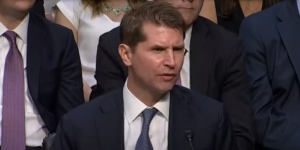
Bill Priestap
Bill Priestap / IMAGE: CSPAN via YouTube

Whose ears would those have been? Gaeta’s first call likely would have gone to Bill Priestap, assistant director of the FBI’s Counterintelligence Division. He had just been made Gaeta’s point of contact at FBI headquarters.

“Management said we were going to close him,” Gaeta told the Senate. “At that point it’s just obvious. That’s all you could do.”

The “management” was Priestap, according to Inspector General Michael Horowitz.

“Priestap decided that Steele had to be closed immediately.” Gaeta drew up the paperwork and Steele was removed from the list of official bureau sources on Nov. 17, 2016.

In the wake of Donald Trump’s election, President Obama ordered a multi-agency “Intelligence Community Assessment” of Russian interference in the presidential campaign.

James Comey, the director whose actions had prompted Steele to go outside the bureau in the first place, now pushed for Steele’s “reporting” to be included in the document, even though none of it had been corroborated. Comey called Director of National Intelligence James Clapper.

“I informed the DNI that we would be contributing the [Steele] reporting (although I didn’t use that name) to the IC [Intelligence Community] effort,” Comey reported in an email to his top deputies the next day. “I told him the source of the material, which included salacious material about the President-Elect, was a former [REDACTED] who appears to be a credible person.”

First in the list of recipients of Comey’s email was Priestap.

Priestap would have known from Gaeta that Steele’s behavior was among the “craziest” the handling agent had run into in two decades of source work. He would have known also that, by his own admission, Steele’s motivations were to promote Hillary Clinton’s campaign apparently by sabotaging Trump’s. Yet Priestap went along with Comey’s presentation of Steele as a credible source. More than that, Priestap promoted the idea of including Steele’s allegations in the intelligence assessment, himself writing to the CIA and describing the former British spy as “reliable.”

Finally, Priestap vouched for Steele’s reliability even though he later admitted to the Justice Department inspector general that he “understood that the information [from Steele] could have been provided by the Russians as part of a disinformation campaign.”

Steele cast as ‘person of integrity’

But that’s not how Steele’s materials were presented to the secret FISA court.

Shortly after the election, Priestap went with FBI agent Peter Strzok to London to see if they could rehabilitate Steele’s credibility by gathering the opinions of “persons who previously had professional contacts with Steele.”

They found some who described Steele as “smart” and a “person of integrity” But several lamented Steele’s “poor judgment” or “lack of judgment” and his habit of “pursuing people [with] political risk but no intel value.”

But because Priestap and Strzok did not find any former colleagues to say Steele made things up out of whole cloth, the Crossfire Hurricane team declared him to be credible for the purpose of justifying surveillance warrants.

The willingness of the assistant director for counterintelligence to misrepresent essential information is important because it was Priestap who was responsible for the official launch of the Crossfire Hurricane investigation in the first place.

Gaeta explained to senators just how serious and irrevocable a break it was to “close” a source: ”Once he’s closed, nobody is allowed – we can’t talk to him.”

In this case, that practice was not followed. Priestap’s apparent rationale was that the decision to close Steele as a source was not made because he offered unfounded claims but because he had violated confidentiality agreements by sharing them with the press. And so, the FBI continued to gather new “reporting” by Steele.

One of channels was David Corn, the Mother Jones reporter who had written the article about Steele’s accusations. Corn was a longtime friend of then-FBI General Counsel James Baker. Their children had gone to the same school years before and carpooled.

Corn gave Steele memos to Baker and then Baker passed them on to Priestap. Thus the strange situation in which an assistant director of the FBI forbade agents from talking to Steele because of the source’s indiscretion with Mother Jones and then proceeded to gather Steele materials through a back-channel relationship with Mother Jones.

Strange, yes, perhaps even crazy…Original Source

Rochester Chief the Latest in a Growing Wave of Black Police Resignations

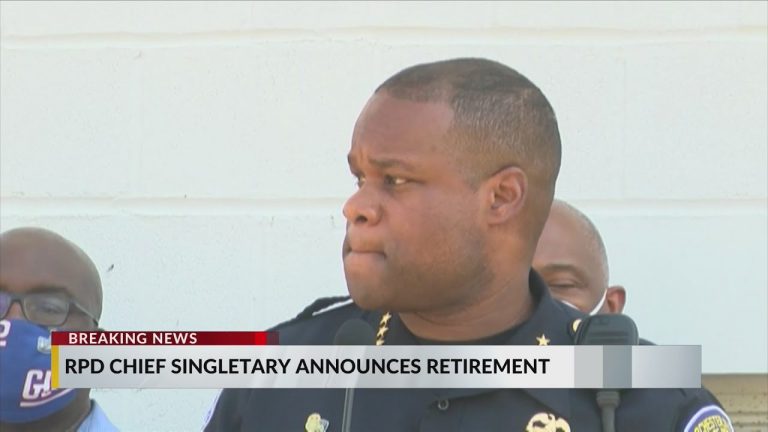
Rochester, New York’s police chief and two of his deputies resigned this week over the unfair treatment they’ve experienced from protesters and city officials in the wake of Daniel Prude’s death.

Rochester Police Chief La’Ron Singletary, who is African–American, explained during a press conference this week that he was resigning because his character was being maligned over the police department’s response to the death of Prude, who died in March after being restrained by police officers.

“As a man of integrity, I will not sit idly by while outside entities attempt to destroy my character. The events over the past week are an attempt to destroy my character and integrity,” Singletary said.

“The members of the Rochester Police Department and the Greater Rochester Community know my reputation and know what I stand for,” he continued. “The mischaracterization and the politicization of the actions that I took after being informed of Mr. Prude’s death is not based on facts, and is not what I stand for.”

Police Deputy Chief Joseph Morabito and Deputy Chief Mark Simmons also resigned.

Singletary’s departure is just the latest in a series of police chief resignations across the country.

Dallas Police Chief U. Renee Hall, who is also African–American, announced that she too would be stepping down amidst growing calls to reform the police department.

Hall did not offer a specific reason for why she was resigning, but Dallas Mayor Eric Johnson said her pending departure was not surprising.

Seattle Police Chief Carmen Best also left the force earlier this summer, citing efforts by city leaders to slash the police budget.

President Donald Trump blasted the Democratic officials who are forcing these black law enforcement officers out.

In Singletary’s case, the blame lies solely with New York Gov. Andrew Cuomo and Rochester Mayor Lovely Warren, according to Trump.

NC Officials Shocked That Minimum-Wage Hike Killed 177 School Positions

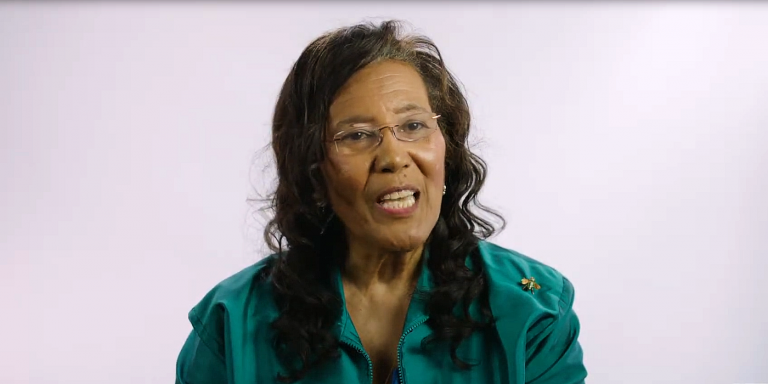
The Charlotte Mecklenburg Schools vice chair announced Tuesday that the district had to eliminate 177 job openings because of an increase in the minimum wage to $15 per hour, WBTV reported.

Vice Chair Thelma Byers Bailey said the Mecklenburg County Board of Commissioners forced CMS into cutting positions.

“These are the facts: While it is absolutely true that CMS did not fire a single individual because of these decisions by the county commission, it is also absolutely true that we had to eliminate 177 jobs,” said Byers Bailey.

“That’s 177 people who could be working at CMS, helping our students and making a difference,” Byers Bailey said. “But because of the county commission’s actions, we did not have the funding necessary to hire those people.”

The commissioners told the district in June that it would not receive $11.7 million in funding until it increased the minimum wage to $15 per hour, WBTV reported.

“Last Tuesday, more than two months after this board did as the county demanded, the commissioners released the funds,” said Byers Bailey. “Our valued employees will finally receive the raise that had been put on hold.”

CMS Superintendent Earnest Winston went to the Mecklenburg County Commissioners meeting last week to ensure that the district was on track to receive its funding.

Commissioner Trevor Fuller asked a question about layoffs and eliminated positions following the hike in the minimum wage.

The county manager told the commissioners that the district did not lay off any employees, though it did have to eliminate open positions. WBTV reported that the commissioners appeared confused that CMS had to make the cuts.

“I don’t know why the commissioners were surprised by this,” Byers Bailey said. “Some of these vacant positions included badly needed social and emotional supports, especially important during this pandemic.”

WBTV Reporter Chandler Morgan outlined the budget cuts in a tweet.

China Unloads Dollars as Gold Tests Support

Since posting new record highs in early August, the gold market has consolidated above $1,900/oz support.

A close below the $1,900 level would carry bearish implications for the near term.

Alternatively, a move back above $2,000/oz would likely be followed through to the upside with a rally to fresh highs.

Silver, in turn, could be expected to run to new multi-year highs above $30/oz.

These breakouts will happen eventually.

The relentless mega trend of dollar depreciation (i.e., inflation) ensures hard money will gain value versus fiat Federal Reserve notes.

The question is whether a deeper correction occurs first… or the major trend accelerates.

Inflation rates may be set to accelerate as the Fed aims for an “average” of 2%.

According to central banker logic, this requires pushing inflation above 2% for an unspecified period.

Holders of low-yielding U.S. dollar-denominated debt instruments should be quite concerned about the prospect of losing purchasing power.

The Chinese government apparently is.

The second-largest holder of U.S. Treasuries, worth over $1 trillion, is now gradually selling them.

Chinese economist Xi Junyang announced last week that the country would aim to hold $800 billion in U.S. debt “under normal circumstances.”

But, he added, “China might sell all of its U.S. bonds in an extreme case, like a military conflict.”

If major world powers dumped their Treasury holdings and stopped accepting U.S. currency in international trade, the U.S. dollar’s privileged status and value would collapse.

For now, the decline of the dollar appears likely to proceed at a more gradual pace.

There will likely even be mini rallies along the way.

Given the spate of bearish developments to hit the U.S. dollar over the past few weeks, it’s possible currency traders have grown too negative toward the buck in the very near term.

A counter-trend USD bounce would likely put downward pressure on precious metals prices.

Of course, gold and silver stand to gain against all fiat currencies that trade against the U.S. dollar.

So regardless of whether the dollar rises versus the euro or the yen or the yuan over any given period, it will not become any sounder of a currency – and will certainly not diminish the long-term case for owning physical precious metalsOriginal Source

Stefan GleasonStefan Gleason is President of Money Metals Exchange, a precious metals dealer recently named “Best in the USA” by an independent global ratings group. A graduate of the University of Florida, Gleason is a seasoned business leader, investor, political strategist, and grassroots activist. Gleason has frequently appeared on national television networks such as CNN, FoxNews, and CNBC and in hundreds of publications such as the Wall Street Journal, The Street, and Seeking Alpha.

White House, Trump Dispute Woodward Characterizations of Virus Response

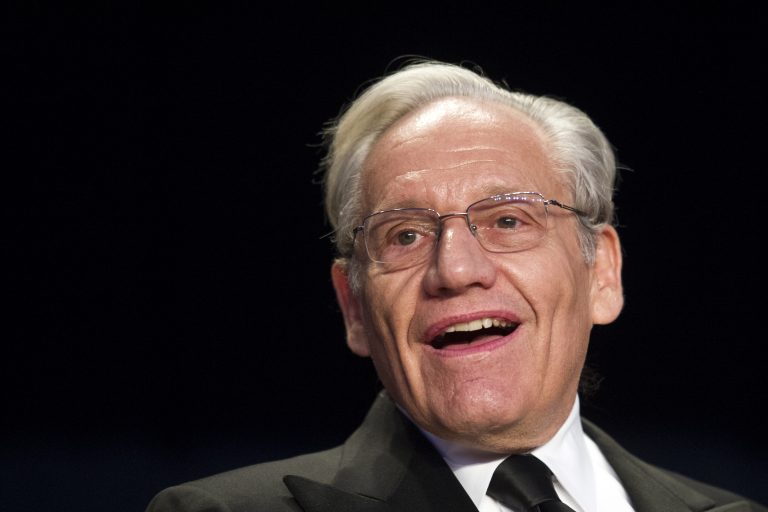
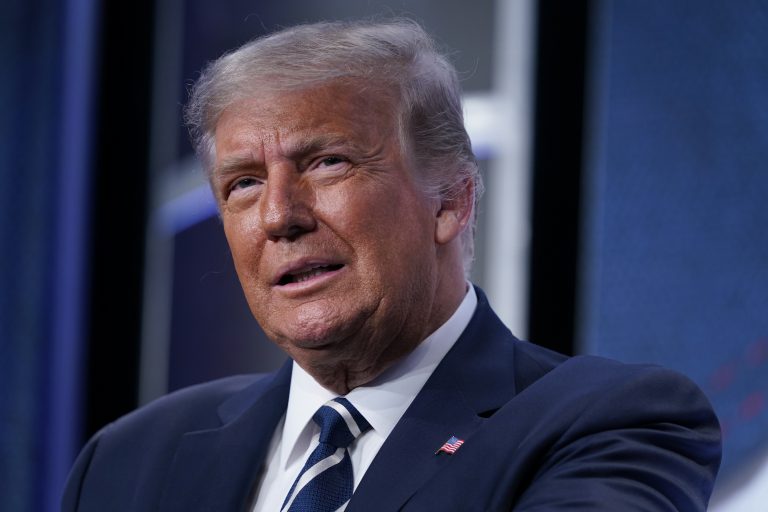
(Headline USA) President Donald Trump talked in private about the “deadly” coronavirus last February, even as he was declaring to America it was no worse than the flu and insisting it was under control, according to a new book by journalist Bob Woodward.

Trump said Wednesday he was just being a “cheerleader” for the nation and trying to keep everyone calm.

“I wanted to always play it down,” the president said. “I still like playing it down because I don’t want to create a panic.”

Trump, according to the book, acknowledged being alarmed by the virus, even as he was telling the nation that it would swiftly disappear.

In a Feb. 7 call with Woodward, Trump said of the virus: “You just breathe the air and that’s how it’s passed. And so that’s a very tricky one. That’s a very delicate one. It’s also more deadly than even your strenuous flus.”

“This is deadly stuff,” the president repeated for emphasis.

Just three days later, Trump struck a far rosier tone in an interview with Fox Business: “I think the virus is going to be — it’s going to be fine.”

Biden said Wednesday the book shows Trump “lied to the American people. He knowingly and willingly lied about the threat it posed to the country for months.”

“While a deadly disease ripped through our nation, he failed to do his job — on purpose. It was a life or death betrayal of the American people,” Biden said at a campaign event in Michigan.

Biden’s campaign pounced, releasing an ad late Wednesday featuring the audiotapes of Trump’s remarks. “And Trump knew all along,” the ad’s narrator says.

Speaking Wednesday at the White House, Trump acknowledged he downplayed the virus, insisting he was trying to buck up the nation and suggesting he was trying to avoid “gouging” on prices of needed supplies.

“The fact is I’m a cheerleader for this country. I love our country and I don’t want people to be frightened. I don’t want to create panic, as you say,” Trump told reporters. “Certainly, I’m not going to drive this country or the world into a frenzy. We want to show confidence. We want to show strength.”

Yet Trump’s public comments suggested he was steering people to ignore the reality of the coming storm. Woodward’s account details dire warnings from top Trump national security officials to the president in late January that the virus that causes COVID-19 could be as bad as the devastating influenza pandemic of 1918 — which proved to be unfounded.

On Feb. 25, just weeks before much of the country was forced to shut down because of the pandemic, Trump declared the virus “very well under control in our country.”

The Washington Post, where Woodward serves as associate editor, reported excerpts of the book, “Rage” on Wednesday, as did CNN. The book also covers race relations, diplomacy with North Korea and a range of other issues that have arisen during the past two years.

The book is based in part on 18 interviews that Woodward conducted with Trump between December and July.

“Trump never did seem willing to fully mobilize the federal government and continually seemed to push problems off on the states,” Woodward characterized in the book. “There was no real management theory of the case or how to organize a massive enterprise to deal with one of the most complex emergencies the United States had ever faced.”

White House press secretary Kayleigh McEnany said Wednesday: “The president has never lied to the American public on COVID. The president was expressing calm, and his actions reflect that.”

She said Trump’s actions show that he took COVID-19 seriously. She noted that the president put in place travel restrictions with China on Jan. 31 and said that some Democrats had criticized the move.

In an interview with Fox News on Wednesday, Dr. Anthony Fauci, the government’s top infectious disease expert, said Trump never “distorted” what Fauci had told the president.

“Often he would want to, you know, make sure that the country doesn’t get down and out about things, but I don’t recall anything that was any gross distortion in things that I spoke to him about,” Fauci said.

Woodward’s book is his second on the Trump White House. The first, published in 2018, portrayed Trump in an unflattering light, and the president fumed at staff that he was not interviewed for it, according to former White House officials and Republicans close to the White House. They were not authorized to speak publicly about private conversations and discussed the matter on condition of anonymity.

Trump was convinced that if he had talked to Woodward, it could have led to a more favorable depiction in the book, according to the officials. Trump had always held Woodward in high regard — he considered the journalist as the biggest star in the field — and told aides he must be interviewed if Woodward were to write again, the officials said.

Several Republican senators at the Capitol declined to comment on the new book, telling reporters they hadn’t yet read it, even when informed of key passages about the virus. “I just can’t, can’t comment on it,” said Sen. Rob Portman, R-Ohio.

“Could we all have done things differently? Yes, including Congress. We were all a little slow to recognize the severity,” Portman said.

Adapted from reporting by Associated Press.

Trump Releases List of 20 New Possible Supreme Court Picks

(Headline USA) Hoping to replicate a strategy long seen as key to his appeal among conservative voters, President Donald Trump on Wednesday announced he is adding 20 names to a list of Supreme Court candidates he’s pledged to choose from if he has future vacancies to fill.

The list includes a trio of conservative Republican senators: Ted Cruz of Texas, Tom Cotton of Arkansas and Josh Hawley of Missouri — all buzzed-about potential 2024 Republican presidential candidates — as well as Christopher Landau, the current ambassador to Mexico, and Noel Francisco, who argued 17 cases as the Trump administration’s top Supreme Court lawyer.

“Every one of these individuals will ensure equal justice, equal treatment and equal rights for citizens of every race, color, religion and creed,” Trump said as he made his announcement at the White House.

Trump tried to cast the list in contrast with judges who could be nominated if his Democratic rival, Joe Biden, wins in November, warning Biden would select “radical justices” who would “fundamentally transform America without a single vote of Congress,” even though Biden has never outlined his list of potential picks and the Senate must confirm any nominee.

“President Trump continues to keep his promise to prioritize the appointment of judges while Joe Biden continues to duck the issue and hide his list,” said Carrie Severino, president of the conservative Judicial Crisis Network.

The release, less than two months before the election, is aimed at repeating the strategy that Trump employed during his 2016 campaign, when he released a similar list of could-be judges in a bid to win over conservative and evangelical voters who had doubts about his conservative bonafides.

The list includes a number of people who have worked for Trump’s administration, including Gregory Katsas, whom Trump nominated to the U.S. Court of Appeals for the District of Columbia Circuit. Before that, Katsas served as a legal adviser on some of the president’s most contentious policies, including his executive orders restricting travel for citizens from countries deemed a terror threat, and his decision to end a program protecting some young immigrants from deportation.

Francisco, the former solicitor general of the United States, also defended Trump’s travel ban, his unsuccessful push to add a citizenship question to the U.S. census, and the decision to wind down the Deferred Action for Childhood Arrivals program that protects hundreds of thousands of young people from deportation. He also argued that a landmark civil rights law didn’t protect gay, lesbian and transgender people from employment discrimination, a position the court ruled against 6-3 earlier this year.

Also on the list is Daniel Cameron, the Kentucky Attorney General who is currently deciding whether to criminally charge three Louisville police officers in the March shooting death of Breonna Taylor, a 26-year-old black emergency medical technician who was killed when officers entered her apartment with a no-knock warrant during a drug investigation.

In response, Cotton tweeted that he was “honored” Trump had asked him to consider the role and “will always heed the call of service to our nation.”

“It’s time for Roe v. Wade to go,” he added, referring to the court’s landmark 1973 abortion rights decision.

Hawley, however, said he had already made clear to the president and his staff on multiple occasions that he had “no interest” in the role.

The high court is currently divided 4-4 between conservatives and liberals, with Chief Justice John Roberts a “swing” vote who often sides with the Left. While there is no current vacancy on the court, Ruth Bader Ginsburg, 87, has undergone cancer treatment, and three others members of the court are in their 70s and 80s.

Trump has already remade the federal bench for a generation, with the Republican Senate confirming more than 200 of his judicial nominees. And any vacancy in the highest court would give November’s winner — be it Trump or Biden — the ability to shape its future for decades to come.

Trump has stressed that power on the campaign trail, claiming the person who wins could have “anywhere from two to four, to maybe even five” Supreme Court justices to pick, though that would require an extraordinary level of turnover.

Trump released two lists with a total of 21 names of potential Supreme Court nominees during his previous presidential campaign and added another five names in 2017 after becoming president. Trump’s two nominees to the court, Justice Neil Gorsuch and Justice Brett Kavanaugh, were both drawn from the list.

For the president’s allies, the list —- which Trump finalized Wednesday — is seen as a way to excite his base as well as well as remind voters of what’s at stake come November.

“I think it’s very important way for the president to reaffirm his commitment to an issue that many conservatives and Republicans see as a priority,” said Leonard Leo, the longtime executive vice president of the conservative Federalist Society who helped with the Kavanaugh and Gorsuch confirmations. “This a great way to remind people of the legacy he’s already established for himself in this area.”

Trump’s rival for the presidency, former vice president Biden, has promised to nominate a black woman to the high court if given the chance.

Biden, too, has said he’s working on a list of potential nominees, but the campaign has given no indication that it will release names before the election.

Adapted from reporting by Associated Press.

Wisc. Gov. Has ‘No Regrets’ About Response to Kenosha Shooting

0

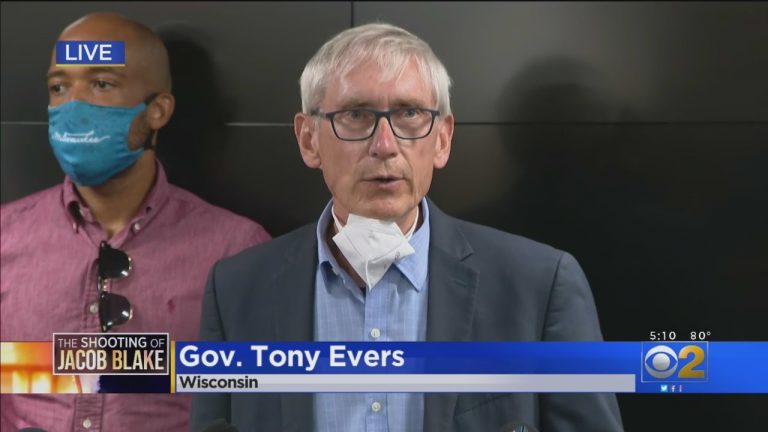
(Headline USA) Wisconsin Gov. Tony Evers said Wednesday that he has “no regrets” about how the state responded to riots that broke out in Kenosha following the police shooting of Jacob Blake.

Blake, who is black, was shot seven times from behind by white Kenosha police officer Rusten Sheskey on Aug. 23 after he resisted arrest and posed a threat. The incident sparked three nights of unrest that culminated with the shootings of three rioters by Kyle Rittenhouse, with evidence that he acted in self defense.

Evers called out a small number of troops from the Wisconsin National Guard early the morning of Aug. 24. The Democratic governor turned down an offer made Aug. 25 from the White House to send federal U.S. Department of Homeland Security troops.

President Donald Trump criticized Evers’s response, urging him to activate the National Guard after he had already done so.

“He made a pitch about, you know, ‘We have to get the National Guard on the ground,’” Evers said. “I said, ‘They already are. We’ve met every request.’”

A day later, after the shootings of the three rioters, two of whom died, Evers again spoke with Trump and the governor said they agreed to have the White House send other federal assistance, including officers from the FBI and U.S. Marshals.

“To say that we could have done anything different as it relates to working with the White House, I have no regrets because the only thing I said no to was Homeland Security and I knew that would not work out because of what I saw in Portland,” Evers said, referring to ongoing unrest in that Oregon city between rioters and federal officers. Riots have continued in Portland even after the presence of federal government was diminished.

During the unrest in Kenosha, an estimated $50 million in damage was caused to around 100 downtown businesses.

Evers defended his approach during a Milwaukee Press Club event where he took questions remotely from reporters.

The governor also called on Republicans who control the Legislature to “step up” and take action on criminal justice reform. Evers called a special session last week on nine policing bills, but Republicans took no action.

Adapted from reporting by Associated Press.