Feds Explored Possibly Charging Portland Officials for Inaction on Riots

0

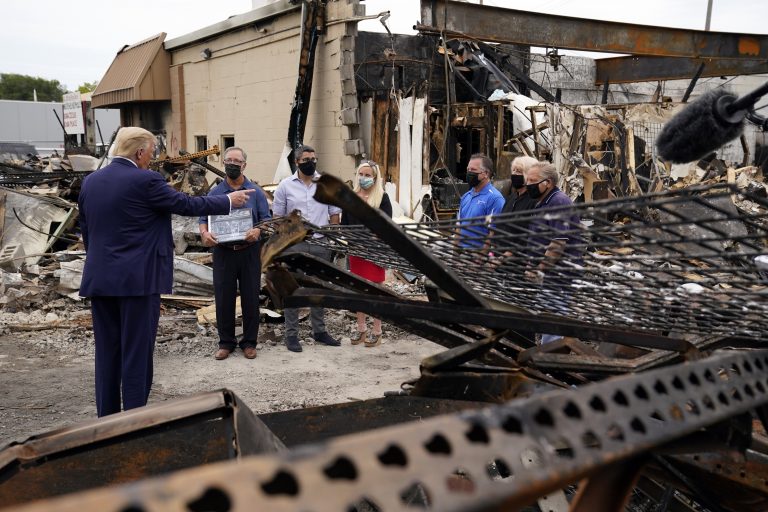
(Headline USA) The Justice Department explored whether it could pursue either criminal or civil rights charges against city officials in Portland, Oregon after clashes erupted there night after night between law enforcement and rioters, a department spokesperson said Thursday.

The revelation that federal officials researched whether they could levy criminal or civil charges against the officials — exploring whether their rhetoric and actions may have helped spur the violence in Portland — underscores the larger Trump administration’s effort to spotlight and crack down on riots.

For many nights, federal officials were told that Portland police officers were explicitly told not to respond to the federal courthouse as hundreds of rioters threw bricks, rocks and other projectiles at officers, and not to assist federal officers who were sent to try to quell the violence.

The department had done research on whether it could pursue the charges, spokesperson Kerri Kupec said.

She declined to comment on the status or whether charges would be brought.

But bringing criminal civil rights charges against city officials for the violence would likely present an uphill court battle for federal prosecutors.

Justice Department officials disputed news reports that Attorney General William Barr told prosecutors in the department’s civil rights division to explore whether they could bring charges against Seattle Mayor Jenny Durkan for allowing agitators to establish a “protest zone” — first known as “CHAZ,” then “CHOP” — this summer.

Durkan famously said in a TV interview that the zone could usher in a “summer of love,” which proved to be far from the truth.

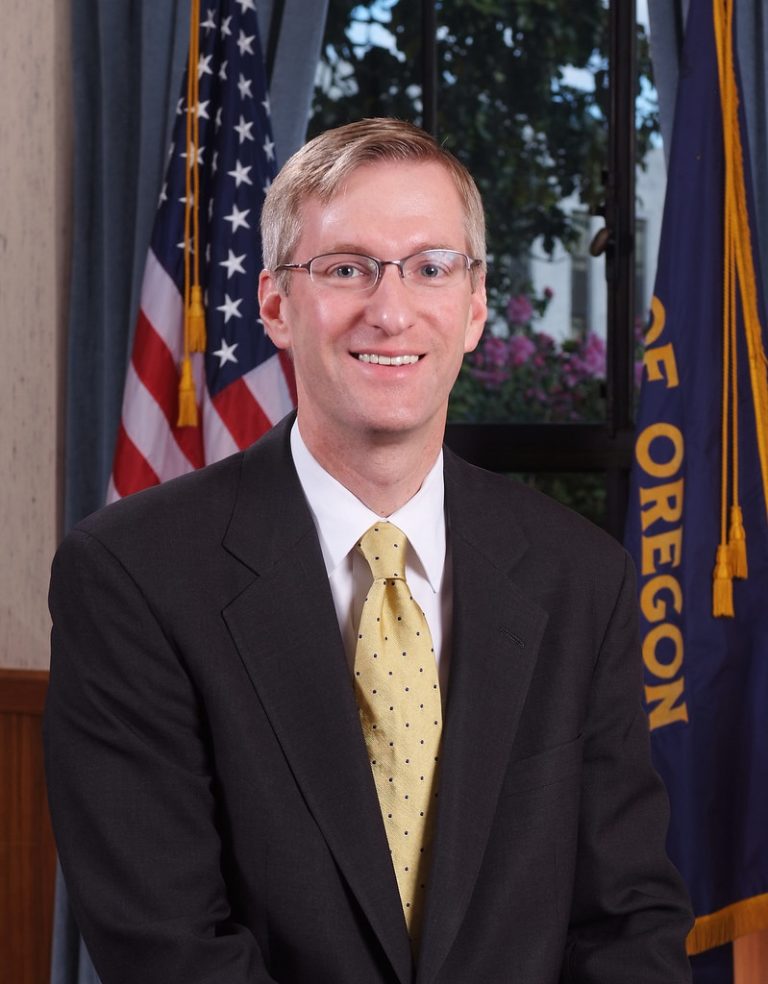
President Donald Trump has blamed the Democrats who control the major cities — and specifically pointed to Portland’s mayor Ted Wheeler — who he says have not done enough to stop nights of looting and riots in cities across the U.S. Trump has called Wheeler a “wacky Radical Left Do Nothing Democrat Mayor” and has said the city “will never recover with a fool for a Mayor….”

More than 100 people have been arrested in Portland on federal charges related to the riots in the last few months.

The FBI has said it was also shifting the agency’s resources to focus more heavily on violence and federal crimes committed during nearly three months of nightly riots in the city that end in vandalism, clashes with police and dozens of arrests — with many suspects released again and again to destroy and riot more by local district attorneys.

Adapted from reporting by Associated Press.

Trump Appeals Judges’ Block of His Order to Not Count Illegals for Redrawing Districts

0

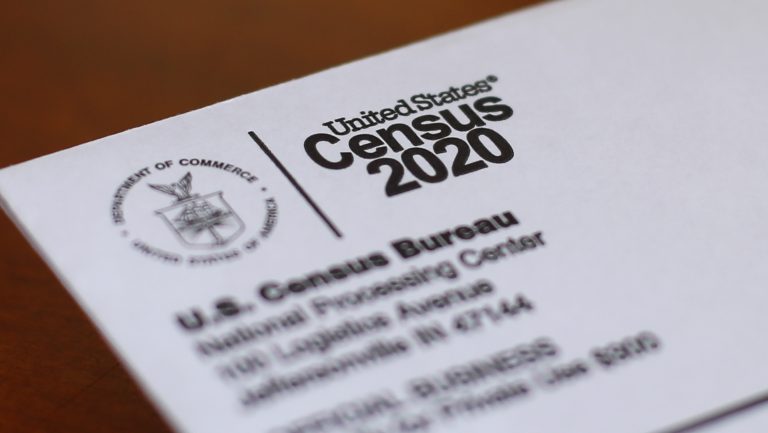
(Headline USA) A week after a three-judge panel blocked an order from President Donald Trump seeking to exclude people in the U.S. illegally from the numbers used to determine how many congressional seats each state gets, the Trump administration on Wednesday gave notice it intends to appeal.

It wasn’t immediately clear whether an appellate court or the U.S. Supreme Court will get the case next since the Trump administration filed notices for both courts.

Either way, the case is likely to end up at the Supreme Court.

A panel of three federal judges in New York last week said Trump’s order was unlawful.

The judges prohibited Commerce Secretary Wilbur Ross, whose agency oversees the U.S. Census Bureau, from excluding people in the country illegally when handing in 2020 census figures used to calculate how many congressional seats each state gets in a process known as apportionment.

The judges said that those in the country illegally qualify as people to be counted in the states they reside, even though they cannot vote.

Opponents of the order said it was an effort to suppress the growing political power of Latinos in the U.S. and to discriminate against immigrant communities of color.

They also said undocumented residents use the nation’s roads, parks and other public amenities and should be taken into account for any distribution of federal resources.

The numbers used for apportionment are derived from the once-a-decade head count of every U.S. resident that is set to end in two weeks.

The census also helps determine the distribution of $1.5 trillion in federal funding annually.

After Trump issued the order in July, around a half dozen lawsuits across the U.S. were filed by states, cities, immigrant advocates and civil rights groups challenging its legality and constitutionality.

The New York case was the first to get a ruling.

Adapted from reporting by Associated Press.

‘HEADHUNTERS’: Barr Takes Aim at Prosecutors Inside Justice Dept. He Leads

0

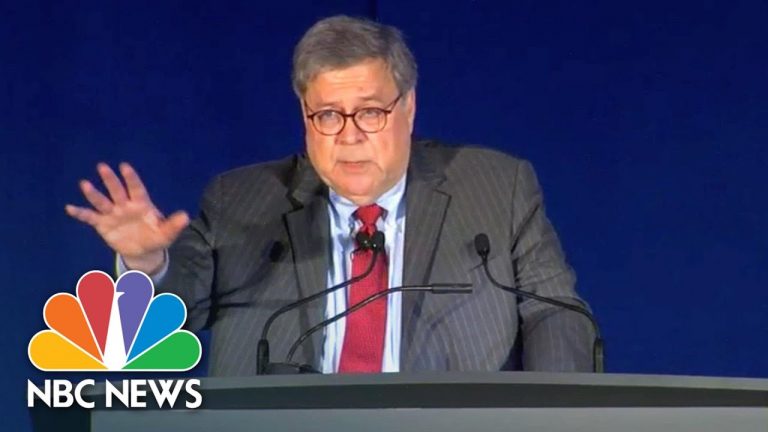
(Headline USA) Attorney General William Barr took aim at his own Justice Department on Wednesday night, criticizing prosecutors for behaving as “headhunters” in their pursuit of prominent targets and for using the weight of the criminal justice system to launch what he said were “ill-conceived” political probes.

The comments at a speech at Hillsdale College in Michigan put into context the approach and conduct of prosecutors who do the daily work of assembling criminal cases across the country. Barr has faced scrutiny for overruling the decisions of Justice Department prosecutors who work for him, including in criminal cases involving associates of President Donald Trump.

Rejecting the notion that prosecutors should have final say in cases that they bring, Barr described them instead as part of the “permanent bureaucracy” and suggested they need to be supervised — and even reined in — by politically appointed leaders accountable to the president and Congress.

“The men and women who have ultimate authority in the Justice Department are thus the ones on whom our elected officials have conferred that responsibility — by presidential appointment and Senate confirmation,” Barr said, according to his prepared remarks. “That blessing by the two political branches of government gives these officials democratic legitimacy that career officials simply do not possess.”

Barr warned that prosecutors can become overly attached to their cases in ways that lose perspective and judgment, listing a series of prosecutions — including under prior administrations — in which he said he believed the government had taken extreme positions.

“Individual prosecutors can sometimes become headhunters, consumed with taking down their target,” Barr said. “Subjecting their decisions to review by detached supervisors ensures the involvement of dispassionate decision-makers in the process.”

Barr’s comments appeared to be a thinly veiled reference to the fracas that arose ahead of the February sentencing of Trump confidant Roger Stone. In that case, Barr overruled the sentencing recommendation of the line prosecutors in favor of a lighter punishment. The move prompted the entire trial team to quit before Stone’s sentencing hearing. Barr has defended his intervention as in the interests of justice.

In May, he sought the dismissal of the criminal case against former Trump administration national security adviser Michael Flynn, who pleaded guilty as part of special counsel Robert Mueller’s Russia investigation to lying to the FBI. Barr’s request is tied up in a court fight.

Though Barr was accused of undue intervention on behalf of the president’s associates, he bristled in his speech Wednesday night at the idea that it was even possible for an attorney general to meddle in the affairs of a department that he leads.

“Name one successful organization where the lowest level employees’ decisions are deemed sacrosanct. There aren’t any,” Barr said.

He added: “Letting the most junior members set the agenda might be a good philosophy for a Montessori preschool, but it’s no way to run a federal agency. Good leaders at the Justice Department — as at any organization — need to trust and support their subordinates. But that does not mean blindly deferring to whatever those subordinates want to do.”

He also took a veiled swipe at members of Mueller’s team. He suggested that the Trump administration had been more successful than the Obama administration before the Supreme Court, and that one reason for that was that the Obama administration had some of the people who were later on Mueller’s team writing their briefs for the court.

That appeared to be a reference to Michael Dreeben, a highly respected lawyer who argued more than 100 cases before the Supreme Court, under both Democratic and Republican administrations, during a decades-long career in the Justice Department’s solicitor general’s office. Dreeben was a senior member of Mueller’s team.

Adapted from reporting by Associated Press.

Biden Pressured to Unveil List of Potential Court Picks

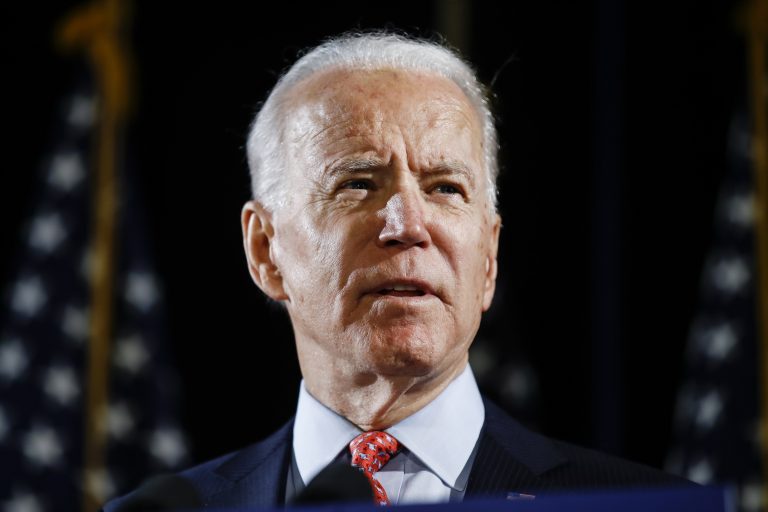
(Headline USA) Joe Biden is resisting calls from President Donald Trump and even some fellow Democrats to release his list of potential Supreme Court picks seven months after he pledged to name the first black female justice.

Some on the left suggest that outlining potential picks would help Biden build enthusiasm in the final weeks of the campaign, particularly after he already selected California Sen. Kamala Harris as his running mate, making her the first black woman on a major presidential ticket.

Trump, meanwhile, is eager to show that Biden would fill the judiciary with activist liberal judges.

Trump helped insert the Supreme Court into presidential politics in 2016 by taking the unprecedented step of releasing a list of potential nominees before he was elected, a move that helped rally the conservatives who ultimately carried him to victory.

But some of Biden’s allies say a list won’t provide the same payoff for him and could hurt him by distracting voters from their messaging that Trump’s handling of the coronavirus has been poor, and give the president fuel to show Biden’s choices are too far left.

“Why play into Trump’s hands?” asked Karen Finney, a prominent black Democratic strategist.

Delaware Sen. Chris Coons, a Biden protégé and confidant, pointed to the former vice president’s 36 years in the Senate and his brand as a liberal pragmatist as assurance enough for voters.

“He doesn’t need to issue some lists in order for Democrats to be comfortable that they know his values and his priorities,” Coons said, arguing that voters of all stripes know Biden would elevate “highly qualified, mainstream jurists.”

Still, the issue represents a familiar tightrope for Biden. He’s liberal establishment figure aiming for a broad ideological coalition to defeat Trump in an era when the loudest voices come from the political poles. On issues from health care to climate change, progressives hammer Biden — who has embraced government-controlled health care and the Green New Deal — as too incremental, while conservatives cast him as too liberal. A Supreme Court nomination is certain to amplify those dynamics.

Trump offered a preview last week, challenging Biden to match his list of choices while sketching a caricature of “radical justices” he insisted would gut Second Amendment rights, remove “under God” from the Pledge of Allegiance and declare the death penalty unconstitutional. Iowa Sen. Chuck Grassley, a former Senate Judiciary chair, followed up Wednesday by urging Biden not to “hide” his intentions for the court.

On the left, extremist group Demand Justice wants to match the right’s intensity on judicial politics, while a second group, She Will Rise, is raising awareness about the possibility of a black woman joining the high court.

Demand Justice has assembled a list of 17 black women it says would make ideal justices. The list includes law professors, leading civil rights attorneys and jurists from lower federal courts and state supreme courts. But there are no names as prominent as the headliners on Trump’s list: Texas Sen. Ted Cruz and Arkansas Sen. Tom Cotton.

Demand Justice has launched a $2 million ad campaign targeting voters in Arizona, Michigan, North Carolina, Pennsylvania and Wisconsin around the Supreme Court and Biden’s promise of a black female nominee. But executive director Brian Fallon argued that Biden could do more.

“Whatever good is achieved by making a general commitment like that would only be expanded and furthered if he put out some names of people he’s considering,” said Fallon, an adviser on Hillary Clinton’s 2016 presidential campaign.

Pew Research found in August that 66% of Biden supporters identified Supreme Court nominations as a “very important” issue, more than the 61% of Trump supporters who said the same. That’s a reversal from 2016, when Pew found Trump’s supporters were 8 percentage points more likely than Clinton’s to consider the court a key issue.

There were key differences in 2016. Most important was a vacancy: Justice Antonin Scalia, a conservative icon, had died and Senate Majority Leader Mitch McConnell refused to consider President Barack Obama’s nominee, Merrick Garland, who would have tilted the court’s majority to the left. There is no vacancy now, despite considerable attention on the health of Justice Ruth Bader Ginsburg, the liberal wing’s 87-year-old leader.

Further, Trump in 2016 faced distrust among many conservatives, including evangelicals, because of his support as a private citizen for Democratic politicians and public statements in favor of abortion rights and same-sex marriage. Trump turned that to his advantage by accepting help from the Federalist Society and other conservative legal advocates to compile a public list of would-be justices. He’s since nominated Justices Neil Gorsuch, who appeared on a preelection list in 2016, and Brett Kavanaugh, who appeared on a post-election list.

“Without that list, he wouldn’t have won,” Coons said.

There is some irony in Supreme Court politics being such a potentially prominent variable in Biden’s presidential hopes.

The conservative political movement on the judiciary blossomed after Biden, as Senate Judiciary chair, helped scuttle the nomination of conservative firebrand Robert Bork submitted by President Ronald Reagan in 1987. Biden angered some women four years later during the confirmation hearings of another conservative, Clarence Thomas, because of senators’ treatment of Anita Hill, who accused Thomas of sexual harassment. Biden voted against Thomas, but he was confirmed.

Even a 5-4 Supreme Court majority deciding the 2000 presidential election in favor of Republican George W. Bush over Democrat Al Gore did little to shift campaign dynamics concerning the court. All five justices in the majority were nominated by Republican presidents.

“Kitchen-table issues, health care and economics have always resonated more with our voters,” said Donna Brazile, a former Democratic Party chair and Gore’s campaign manager.

Fallon acknowledged, “much to my chagrin,” that it would be a first for Democrats to leverage the court as a key presidential issue more effectively than Republicans.

Finney said part of the challenge is the Democrats are mostly protecting existing precedent, while conservatives have spent decades trying to reclaim lost turf, from the Roe v. Wade decision legalizing abortion nationwide to decades of rulings on civil rights and the expansion of federal power. In short, it’s harder to get voters on the left to understand potential threats to rights they already take for granted.

“Republicans have been better at using fear as a motivator,” Finney said. A board member of NARAL, an abortion-rights group, Finney added: “I’ve had people say to me, ’Do we really need NARAL anymore? Aren’t our abortion rights safe?’ No!”

Another example: A divided Supreme Court in 2013 gutted key provisions of the Voting Rights Act, but Democrats didn’t make that an issue in 2016 even with the vacancy from Scalia’s death.

If there’s a shift in 2020, Finney predicted it won’t come from Biden or his promise of a historic nomination.

“Trump’s list is a motivating factor by itself,” she said. “There is no Democrat who wants to see Ted Cruz on the Supreme Court.”

Cruz said after Trump released his list that he had no interest in serving on the court, and prefers to remain in electoral politics.

Adapted from reporting by Associated Press.

Fed Up w/ Weak DAs, Barr Pushes Federal Prosecutors to Charge Rioters

0

(Headline USA) In a private call with federal prosecutors across the country, Attorney General William Barr’s message was clear: Aggressively go after violent rioters.

Barr pushed his U.S. attorneys to bring federal charges whenever they could, keeping a grip on cases even if a defendant could be tried instead in state court, according to officials The Associated Press says were on the call and spoke on condition of anonymity. Federal convictions often result in longer prison sentences.

The Trump administration’s crackdown has already led to more than 300 arrests on federal crimes in the protests that erupted following the death of George Floyd, after many cities with liberal district attorneys continue to re-release subjects to destroy over and over again.

An AP analysis of the data shows that many are accused of violent crimes like arson for hurling Molotov cocktails and burning police cars and assault for injuring law enforcement.

“The speed at which this whole thing was moved from state court to federal court is stunning and unbelievable,” said Charles Sunwabe, who’s representing an Erie, Pennsylvania, man accused of lighting a fire at a coffee shop after a May 30 protest. “It’s an attempt to intimidate these demonstrators and to silence them.”

The Trump administration has seized on the riots and an aggressive federal response to showcase what the president says is his law-and-order prowess, countering rising crime in cities run by Democrats.

Violence has indeed popped up in cities across the U.S., including Portland, Oregon, where clashes with law enforcement have lasted for weeks on end. Nights of looting and other unrest have occurred in other cities, including Rochester, New York; Minneapolis, Louisville, Washington, and Chicago.

Federal officials were also called into to Kenosha, Wisconsin, after widespread riots followed the shooting of Jacob Blake.

While Barr has gone after protest-related violence targeted at law enforcement, he has argued there’s seldom reason to open sweeping investigations into the practices of police departments. The Justice Department, however, has opened a number of civil rights investigations into individual cases. Barr has said he does not believe there is systemic racism in police departments.

Federal involvement in local cases is nothing new. Officials across the country have turned to the Justice Department for decades, particularly for violent crime and gang cases where offenders could face much stiffer federal penalties and there is no parole.

Police chiefs in several cities have pointed to the importance of their relationships with federal prosecutors to bring charges that can result in long prison sentences to drive down violent crime.

Even before the unrest earlier this year, the Justice Department was stepping in to bring charges in states where the government believes justice isn’t being fully pursued by local prosecutors. In January, for example, the department brought federal hate crime charges against a woman accused of slapping three Orthodox Jewish women in one of several apparently anti-Semitic attacks reported throughout New York during Hanukkah.

Most local prosecutors run by Democrat administrations have dismissed dozens of riot arrests, but earlier this week a Pennsylvania judge set bail at $1 million for about a dozen people in a Lancaster protest that followed the death of a knife-wielding man who charged at police.

Even some Democrats, including District of Columbia Mayor Muriel Bowser, have called for the Justice Department to pursue federal charges, going as far as accusing the Trump administration of declining to prosecute rioters. Washington’s Metropolitan Police Department had arrested 42 people one August weekend after a protest left a trail of vandalism. But prosecutors said the arrest paperwork didn’t identify specific crimes tied to each suspect.

The federal confrontation with Bowser seemed counterintuitive, though Trump has a history of squaring off against the Democratic mayor.

About a third of the federal riot-related cases are in Portland, for crimes such as assaulting a deputy U.S. marshal with a baseball bat, setting fires and setting off explosives at the federal courthouse and throwing rocks at officers.

Three purported “Boogaloo” members, who use the loose movement’s name as a slang term for a second civil war or collapse of civilization, were charged with possessing a homemade bomb and inciting a riot in Las Vegas.

An El Paso, Texas, man was accused of promoting hate speech, posting a video online with a racist epithet and making threatening comments to Black Lives Matter protesters while holding a military-style rifle at his feet. A Minnesota man was accused of helping burn down a police precinct headquarters there after Floyd’s death.

But other cases simply don’t belong in federal court, lawyers say.

In Seattle, 35-year-old Isaiah Willoughby, who’s accused of setting fire to the outside of a police precinct, faces a mandatory minimum of five years in prison if convicted of arson in federal court. He could be looking at around a year behind bars in state court, where his lawyer said the case belongs.

“This is city property that has been destroyed and you have a local prosecutors office that is ready and willing and able to charge these cases in state court, but the federal government is attempting to emphasize these protest-related crimes for whatever agenda they are seeking to pursue,” said assistant federal public defender Dennis Carroll.

Carroll accused federal authorities of using the cases to try to make the protests seem more violent and disruptive than they really were.

Adapted from reporting by Associated Press.

Trump Says He Can Talk GOP into Going for ‘Larger’ Virus Aid

(Headline USA) President Donald Trump parachuted into the coronavirus aid debate Wednesday, upbraiding his Republican allies for proposing too small of a relief package and encouraging both parties in Congress to go for a bigger one that would include his priority of $1,200 stimulus checks for most Americans.

But his top GOP allies in the House and Senate shrugged off the president’s mid-morning tweet for more aid. They also weighed in against a $1.5 trillion aid package backed by moderates in both parties that earned praise from the White House.

Trump, by evening, dug in.

“I like the larger amount,” Trump said during a press conference at the White House. “Some of the Republicans disagree, but I think I can convince them to go along with that.”

The president said he wants Americans to be given relief checks and thinks he’s getting “closer” to a deal.

Negotiations remain far apart. All the key players in the entrenched impasse over a COVID-19 rescue package instead focused their energies on finger-pointing and gamesmanship, even as political nervousness was on the rise among Democrats frustrated by a stalemate in which their party shares the blame. There remained no sign that talks between the White House and congressional Democrats would restart.

House Speaker Nancy Pelosi, D-Calif., says any deal will have to include far more than just another set of “Trump checks” and a handful of other priorities.

“All they want is to have the President’s name on a check going out. …. That’s all he really cares about,” Pelosi said. “We have to do more than just have the Republicans check a box.”

At issue is a potential fifth coronavirus relief package that would extend supplemental jobless benefits to replace a $600-per-week COVID unemployment benefit that expired at the end of July. It would also funnel more than $100 billion to help schools open, provide assistance to state and local governments, and funnel more money into a program that directly subsidizes business hit hardest by the pandemic.

The bipartisan spirit that birthed a $2 trillion aid package in March has evaporated. Many Republicans cite deficits and debt and are simply wary of another Pelosi-driven liberal wish list. As the talks progressed, Senate Republicans made their proposal smaller, moving further away from Democrats.

The smaller bill from Senate Republicans that Trump criticized did not include $300 billion for a second round of Trump-endorsed stimulus checks, which the White House said is a top priority. Senate Republicans worked for weeks with the White House to construct the very aid package Trump criticized.

“Go for the much higher numbers, Republicans,” Trump tweeted Wednesday morning.

“What the president was referring to was the $500 billion bill that passed the Senate,” said White House Press Secretary Kayleigh McEnany. “It didn’t include direct payments. He wants more than the $500 billion and he’s very keen to see these direct stimulus payments.”

Pelosi, for her part, is fending off a rebellion among some Democrats who fear that her hardball strategy is partly responsible for the deadlock and makes for bad politics. Some of her more moderate colleagues from Trump-friendly congressional districts have signed on to a new bill by the bipartisan Problem Solvers Caucus that totals $1.5 trillion, a measure that won praise Wednesday from White House Chief of Staff Mark Meadows.

“I thought it was very thoughtful and actually is in a way very meaningful if you’re looking at Republicans and Democrats coming together in a bipartisan way,” Meadows told reporters.

Meadows, however, spent much of August negotiating with Senate Republicans to produce the much smaller $650 billion measure. And it was clear the $1.5 trillion total is a non-starter with most Republicans.

“We’d have to see what’s in it, but I think it’s difficult,” said House Republican leader Kevin McCarthy, D-Calif.

Rep. Abigail Spanberger, D-Va., said Wednesday that worries among Democrats are not limited to frontline lawmakers in Trump-won districts like hers.

“The concern about being able to actually move forward with a relief package has been top of mind for just about every member of Congress that I’ve spoken to,” she said.

Pelosi says she’s willing to negotiate from a $2.2 trillion marker set last month, but Senate GOP leaders haven’t budged from a $650 billion measure that Democrats scuttled last week via filibuster. An earlier $1 trillion Senate GOP plan never gained momentum.

The No. 2 Senate Republican, John Thune of South Dakota, asked about Trump’s “higher numbers” tweet, told reporters that a good number of Senate Republicans might support a $1 trillion measure.

But “as you go upwards from there, you start to start losing Republican support pretty quickly,” he said.

Adapted from reporting by Associated Press.

HHS Spokesman Caputo Takes Leave Amid Democrat Uproar over COVID Messaging

0

(Headline USA) A Trump health appointee is taking a leave of absence after allegations of political interference in the federal coronavirus response, followed by a personal video that warned of election violence.

Michael Caputo has decided to take 60 days “to focus on his health and the well-being of his family,” the Department of Health and Human Services said in a statement.

Fiercely loyal to President Donald Trump, Caputo had been serving as the department’s top spokesman. He was installed by the White House in April during a period of tense relations with the president’s health secretary, Alex Azar.

Caputo, who has no health care background, was the subject of news reports last weekend that he tried to gain editorial control over a scientific weekly published by the Centers for Disease Control and Prevention. That was followed by reports about a video he hosted on his Facebook page in which he exposed government scientists as part of a “resistance” against Trump and warned that shooting would break out if Trump won the election and Democrat Joe Biden refused to concede. He is not alone in that prediction, as many expect new rounds of violence across the country should Trump win.

Caputo’s declarations came as Azar and other top health care officials are trying to convince skeptical Americans that science will have the final say in the approval of coronavirus vaccines. Sen. Patty Murray, D-Wash., had called for his resignation; Republican senators remained publicly silent.

Leaving the department is Paul Alexander, who was brought in as a policy advisor to Caputo on a temporary basis, the department’s statement said.

Rep. James Clyburn, D-S.C., who leads a special panel overseeing the government’s COVID-19 response, called the shakeup at HHS “an important first step.” Nonetheless, Clyburn said he has started an investigation into Caputo’s alleged effort to interfere with the CDC publication.

Caputo’s short tenure was marked by devotion to Trump, disdain for Democrats and the media, along with some scientists, as well as hints that he felt personally hounded by political enemies.

In an taxpayer-funded HHS podcast July 31, he spoke of having “a target on my back.” Caputo also accused Democrats in the government, along with the news media, of not wanting a vaccine so as to punish the president.

Caputo had once joked that “everything I learned about health care I learned from the Obamacare website,” and that “I’m science-stunted.”

His resume has taken him through Trump’s turbulent world in recent years, and he displayed a political operator’s instinct to trade punches.

An Army veteran with a background in media, Caputo played a leading role in Trump’s 2016 New York state Republican primary victory and later moved over to the national campaign.

Caputo is also the author of a recent book, “The Ukraine Hoax,” which claims the president’s “phony” impeachment was rooted in a vast conspiracy. Trump was acquitted by the Senate.

On the Amazon.com page where Caputo’s book is sold, it reads:

“The Democrats tried to undo President Trump’s 2016 election with Russia investigations and Ukraine impeachment. I know the president was right to ask Ukraine’s president for investigations because the Democrats are up to their necks in corruption there.”

At HHS, Caputo became closely involved with communications for Operation Warp Speed, the government’s effort to have coronavirus vaccines ready to ship to Americans once approved by the Food and Drug Administration.

Adapted from reporting by the Associated Press.

Sen. Committee OKs Subpoenas in Obamagate, Burisma Probes, Despite Romney’s Reluctance

0

(Headline USA) After weeks of back-and-forth inter-party wrangling within the Senate Homeland Security and Governmental Affairs Committee, Republicans voted 8-6 to approve subpoenas for several high-profile figures involved in Obama-era scandals.

The vote authorizes subpoenas of seven new individuals, including former Deputy FBI Director Andrew McCabe and Justice Department official Bruce Ohr.

Both played instrumental roles in elevating the now-debunked Steele Dossier from its origin as Democrat-funded opposition research to the primary basis for spying on Trump campaign officials and initiating a costly investigation that sought to undermine the Republican’s candidacy and presidency.

Also include among the newly authorized subpoenas were those relating to a separate investigation into Democrat Joe Biden’s son Hunter.

The vote came despite Utah Sen. Mitt Romney‘s sharply criticism earlier in the day that it was “not the legitimate role of government” to try and damage political opponents.

Romney, a longtime foe and critic of President Donald Trump, was the only Republican in either chamber of Congress to vote in favor of Trump’s impeachment in February.

Committee Chairman Ron Johnson, R-Wisc., said the panel will issue a report on Hunter Biden’s activities in Ukraine before the November election.

Johnson is leading the investigation into Burisma, a gas company in Ukraine that paid Hunter Biden to serve as a board member while Joe Biden was vice president and oversaw Obama administration policy with the nation.

Johnson insists that the investigation is not designed to hurt Biden. Democrats have tried to distract from the suspicious conduct and say the committee should instead be focused on the coronavirus pandemic.

In August, Johnson issued a more than 5,000-word open letter in which he sought to defend his Biden probe.

“I felt it was important to provide this explanation of my investigations because of the concerted and coordinated attacks on my efforts that I have interpreted as a ‘brush back pitch’ to deter my actions and preemptively marginalize my committee’s findings,” Johnson wrote.

While most Senate Republicans have been on board with Johnson’s inquiry, Romney, has repeatedly made clear he has concerns about politicizing the committee’s work.

The former 2012 Republican presidential candidate had his strongest words yet for what he called the “Biden-Burisma” investigation at a committee meeting Wednesday, saying that the probe from the “outset had the earmarks of a political exercise.”

Romney added: “Obviously, it is the province of campaigns and political parties’ opposition research, the media, to carry out political endeavors, to learn about or dust up one’s opponent. But it’s not the legitimate role of government or Congress, or for taxpayer expense to be used in an effort to damage political opponents.”

Johnson did not respond to the comments. But he had earlier withdrawn from the meeting’s agenda a vote to authorize an additional subpoena in the probe, a move that Romney praised.

A committee aide said that the subpoena was withdrawn because the witness, Ambassador Bridget Brink, had agreed to testify voluntarily. The aide requested anonymity to discuss committee work taking place behind closed doors.

Hunter Biden has denied using his influence with his father to aid Burisma.

But Republicans have question whether the younger Biden’s highly paid job created a conflict of interest for Joe Biden as the former vice president worked on Ukraine policy in the Obama administration. Trump has frequently mentioned Hunter Biden’s activities on the campaign trail.

Johnson’s committee, along with the Senate Judiciary Committee, is also looking into the origins of the Justice Department’s Russia probe. The committee voted a second time to issue subpoenas in that investigation.

Adapted from reporting by Associated Press.
DOJ Launches Criminal Investigation Into Bolton for Publishing Classified Info

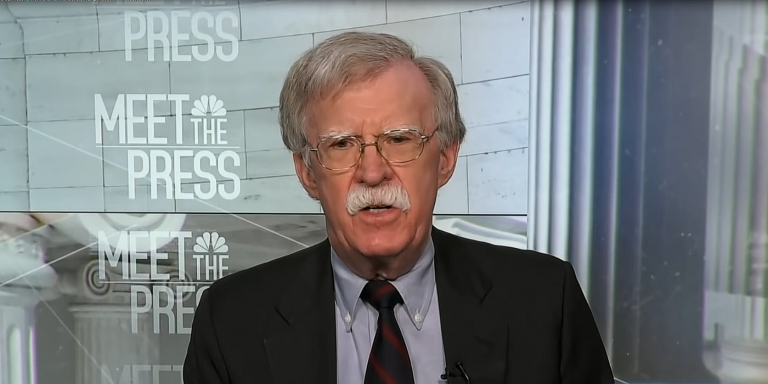
The Justice Department has launched a criminal investigation into whether former national security adviser John Bolton illegally released classified information in his recent memoir.

The DOJ convened a grand jury last week and subpoenaed Bolton’s publisher, Simon & Schuster, for records related to the writing of the tell-all, The Room Where it Happened, according to the New York Times.

The White House raised the alarm about Bolton’s book earlier this year, arguing that the memoir could severely affect critical national security issues.

The courts sided with Bolton, who has continued to deny any wrongdoing.

“We are aware of reports that grand jury subpoenas have been issued seeking information concerning the publication of Ambassador Bolton‘s recent book,” Charles Cooper, Bolton’s attorney, said in a statement.

“Ambassador Bolton emphatically rejects any claim that he acted improperly, let alone criminally, in connection with the publication of his book, and he will cooperate fully, as he has throughout, with any official inquiry into his conduct.”

The DOJ opened this criminal investigation at the behest of Director of National Intelligence John Ratcliffe, according to the Times.

Ratcliffe had joined the White House’s original efforts to stop the book’s publication, warning that the information Bolton planned to share could give the U.S.’s foreign adversaries an unwelcome advantage.

“The type of classified information in these passages is the type of information that foreign adversaries of the United States seek to obtain, at great cost, through covert intelligence,” Ratcliffe wrote in his signed declaration to the courts.

“Unauthorized disclosure of these types of classified information could reveal, in some instances, the limits and, in some instances, the capabilities of U.S. intelligence collection and would cause irreparable damage to national security.”

President Donald Trump has also blasted Bolton for using classified intel to turn a profit.

Los Angeles Angels Owner: It Is ‘Very Necessary’ to Reelect Trump

The owner of the Los Angeles Angels said on Monday that it is “very necessary” to reelect President Donald Trump.

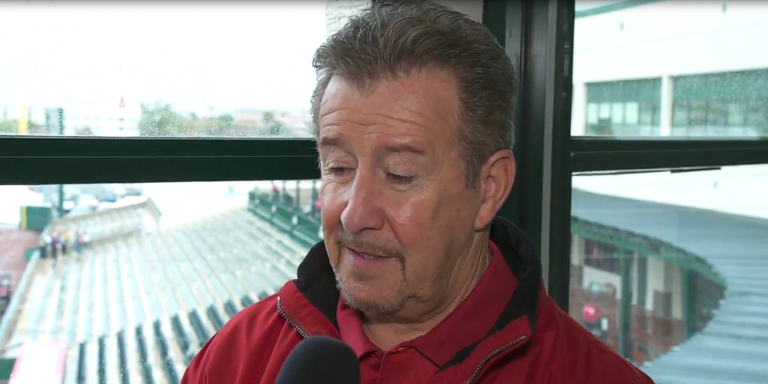
“We all know where we’ve been,” Arte Moreno, a Vietnam veteran and a fourth-generation Mexican American, said a recent Latinos for Trump event in Phoenix, according to the Arizona Republic.

“It’s necessary to focus on today and the future, and it’s very necessary to vote for President Trump,” he said.

Moreno said Trump’s economic leadership will help boost small businesses, citing his own experience as a businessman when he bought the Phoenix-based Outdoor Systems advertising in 1984 and sold it for $8.3 billion in stock in 1999.

All Americans should have access to that kind of opportunity, Moreno said.

Moreno has been a vocal Republican advocate for years. In 2017, he donated $5,400 to the Trump campaign. And since 2019, he and his wife have contributed nearly $43,600 to Republican candidates or political action committees.

The Trump campaign has been pouring time and money into Arizona, which is now considered a swing state, in order to win the Latino vote.

Recent polls prove that this strategy is working. Nearly one-third of Latino voters said they support Trump, according to a recent Pew Research Center survey.

Marie Lopez, 34, attended the event in Phoenix and said Trump’s position on immigration is much more attractive to Hispanic Americans than Democrats and the media suggest.

“When people hear about Trump and they say that he’s racist and things like that, he is for immigration but the right way,” she said.

“I am a first generation,” she continued. “My dad went through the immigration process to become a citizen. He always believed it was possible to do it the right way, and I think that’s important.”

Lopez said Joe Biden’s claim of being pro-immigrant was also a bunch of malarkey.

“Under Obama and Biden, they actually deported more Hispanics back to Mexico than Trump did, but things like that aren’t being said.” she explained.

Many Hispanic families are finding that “they’re more Republican than they think they are,” Lopez added.