Trump Admin: ‘Resounding Vindication’ from Independent Report on COVID in Nursing Homes

0

(Headline USA) The Trump administration is claiming “resounding vindication” from an independent commission’s report on the coronavirus crisis in nursing homes, supporting the argument that Democrat governors in several states failed to protect their most vulnerable residents.

People in long-term care facilities represent less than 1% of the U.S. population but more than 40% of the coronavirus deaths, according to the COVID Tracking Project, which has tallied 77,000 deaths among residents and staff.

The recommendations “follow the growing consensus over the past six months about what needs to be done to stem the cases and deaths in nursing homes,” said University of Chicago professor Tamara Konetzka, an expert on long-term care who reviewed the commission’s report.

“I would classify the CMS actions to date as a move in the right direction and better late than never,” she said.

Initially, blue-state governors including New York’s Andrew Cuomo, Michigan’s Gretchen Whitmer, New Jersey’s Phil Murphy and Pennsylvania’s Tom Wolf all supported policies that forced the facilities to comingle healthy residents with infected ones.

The states initially were some of the hardest hit by the pandemic, where the virus was able to incubate and spread despite the draconian lock-downs that many blue states implemented on the general population.

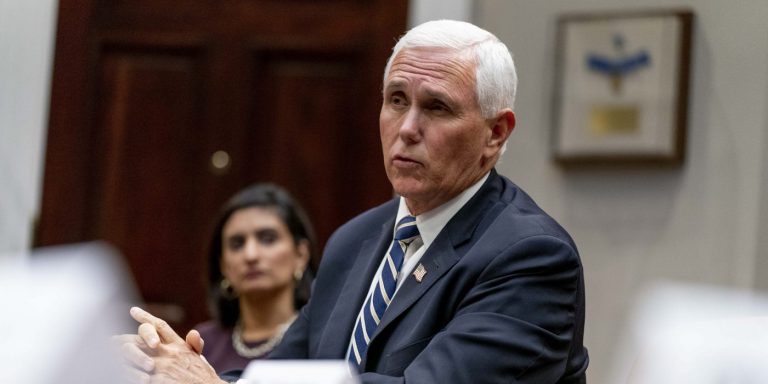
Vice President Mike Pence met with some of the commission members Thursday and called their report “a significant contribution to our ongoing effort to ensure the health and well-being of our seniors in nursing homes and long-term care facilities around the country.”

The commission was set up by the Centers for Medicare and Medicaid Services, or CMS.

Agency administrator Seema Verma called its findings “an invaluable action plan for the future and a resounding vindication of our overall approach to date.”

The report included 27 major recommendations in the commission report, signifying the ever-developing understanding of how to combat the virus by focusing on those who are truly at risk.

“There’s an enormous to-do list in front of us,” said Terry Fulmer, a commission member and president of the John A. Hartford Foundation, which works to improve care for older adults.

The administration says it has already acted, or made progress, on most issues flagged.

But the findings’ validation of the Republican president was not well received by all following months in which the Left has sought to bludgeon the president with an election-year campaign that second-guessed his every move.

Harvard professor David Grabowski, another member, complained that “there’s a sense of ‘mission accomplished’ ” coming from the administration and “that’s just not the case.”

“We were charged with providing a road map out of the crisis,” Grabowski said. “We weren’t asked to evaluate the CMS response or provide any kind of valuation as to how they have handled the pandemic.”

Fulmer also recycled some of the months-old attacks on Trump, insinuating that he—and not the state leaders—was caught unprepared for the onslaught.

“We need to get the real data that will tell us where we’re still lacking testing, [protective equipment], and appropriate staffing,” she said.

“We need to really watch the autumn flu season and really keep an close eye on any uptick with the virus—that’s what I’m most worried about,” she continued. “We don’t have a national policy that we are following so we can ensure we have quality across our entire nation, so we are looking for progress there.”

Among the top recommendations in the 186-page report:

  • establish a national testing strategy to replace the state-led nursing home tests. The administration has been shipping fast-test machines to facilities, but there’s concern about ongoing supplies, staff training, and other issues.
  • guarantee supplies of PPE, or personal protective equipment. Earlier this summer, 1 in 5 nursing homes faced PPE shortages. The commission called on the government to take responsibility, guaranteeing a three-month supply of high-quality gear for facilities. The administration says it has provided money for PPE and in August began shipping N95 masks to nursing homes that reported shortages.
  • safely resume family visits. Nursing homes have been in lockdown since mid-March, and that has taken a toll on the well-being of residents. Some facilities have started to allow visits again. The commission recommended a detailed template for how nursing homes can safely resume visitation. The administration says it has already provided guidance.
  • more help with infection control. Moving residents within a facility to separate those infected with COVID-19 is one of the main ways to contain outbreaks. But that can involve added costs and challenges. The commission said clearer government guidance is needed.

The ravages of the coronavirus in nursing homes have surprised and shocked many people.

Grabowski said research indicates that the virus gets into facilities from the surrounding communities, unwittingly carried by staff and visitors who may not yet have symptoms.

The commission concluded that the pandemic has exposed basic flaws in the nation’s oversight of nursing homes, which divides responsibilities among federal, state and local authorities.

That “resulted in a patchwork approach to infection prevention and control that many believe has contributed to our nation’s inability to contain the spread of the virus,” the report said, ignoring the pro-active policies of Democratic governors that promulgated the spread.

Adapted from reporting by the Associated Press
Comey to Testify Before Senate Judiciary Committee in Late September

0

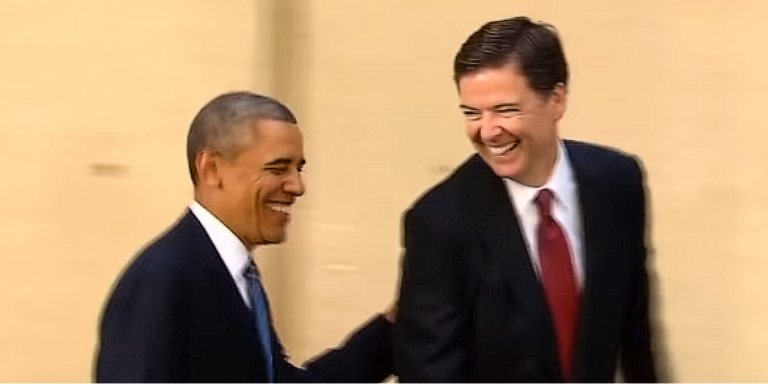
(Headline USA) Former FBI Director James Comey will testify before the Senate Judiciary Committee on Sept. 30, appearing just a month before the presidential election as Republicans have sought to bring closure to the travesty of 2016’s Russia hoax.

Comey, whom Trump fired in May 2017, will be a featured witness in Senate Judiciary Committee Chairman Lindsey Graham’s investigation into the origins of the Justice Department’s Russia probe.

Graham pledged in the immediate aftermath of the two-year Mueller investigation that he would turn the tables on seditious, partisan operatives in the FBI who engineered the effort to elevate unreliable opposition research from the Hillary Clinton campaign into a full-fledged counterespionage case against Trump’s campaign.

Not only did Comey’s FBI receive cart blanche to eavesdrop on Trump campaign officials after altering evidence in the FISA warrants, but they also were able to weaponize the very interrogation process and set perjury traps for officials like former national security adviser Michael Flynn.

Declassified documents have since shown that the conspiracy to undermine Trump’s campaign and early presidency took place at the highest levels.

That included meetings in which Comey conferred with then-President Barack Obama and then-Vice President Joe Biden—Trump’s current campaign rival—in the Oval Office.

Comey also acknowledged that he intentionally allowed the leaking of innuendo in order to trigger the appointment of his longtime friend and boss, Robert Mueller, as a special counsel investigator.

The president has long tried to discredit that nearly two-year-long, $30+ million investigation, which concluded in 2018.

Graham said he also invited Mueller to testify but that Mueller had declined.

Earlier this week it was revealed that the cell phones of Mueller’s entire investigative team had been wiped clean of data and information, or otherwise damaged or lost.

The Justice Department’s inspector general last year found multiple errors and omissions in the applications the FBI submitted to conduct surveillance on a former Trump campaign aide early in that investigation.

Democrats have insisted that the errors in the surveillance do not invalidate the Russia investigation, as the internal Justice Department report said the FBI was justified in opening the investigation and found no evidence that it acted with political bias.

They have also slammed Graham’s investigation, along with a separate probe by the GOP-led Senate Homeland Security and Government Affairs Committee, as an election-year attempt to bolster Trump.

Separate inspector general reports related to Comey’s leadership of the Trump-Russia investigation and the Hillary Clinton email probe identified significant errors in judgment but did not allege evidence of political bias on Comey’s part.

One report described him as “insubordinate” during the Clinton investigation while another found that he broke FBI rules in his handling of memos documenting conversations with Trump. The Justice Department declined to prosecute him.

Graham said Thursday that “the day of reckoning is upon us” when it comes to the beginning of the Russia probe. He said Comey would be “respectfully treated, but asked hard questions.”

The South Carolina Republican, who is also up for reelection, said he is also hoping to hear testimony from former acting FBI Director Andrew McCabe and former agent Peter Strzok.

Strzok was removed from the Russia investigation and eventually fired after it was discovered he had sent derogatory text messages about Trump.

McCabe, who became the interim director following Comey’s departure, was fired after evidence showed he had leaked classified information to the media and lied about it.

Adapted from reporting by Associated Press.

FBI Director Wray Disputes Evidence of Antifa’s Organization, Claims It is an ‘Ideology’

0

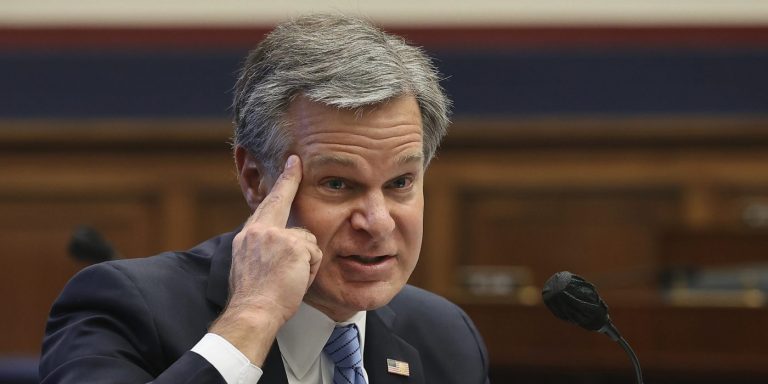
Countering prior witness testimony from Senate Judiciary Hearings, FBI Director Chris Wray told lawmakers Thursday that Antifa is an ideology, not an organization.

Wray’s claim put him at odds with President Donald Trump and many of the administration’s other law-enforcement officials.

Trump, with support from Wray’s boss, Attorney General William Barr, has called for the radical leftist organization to be designated as domestic terrorists, which would allow investigators, among other things, to track their mysterious funding sources.

Wray did not dispute that Antifa activists were a serious concern, calling them the “real thing” and saying the FBI had undertaken “any number of properly predicated investigations into what we would describe as violent extremism,” including Antifa.

But, he said, “It’s not a group or an organization. It’s a movement or an ideology.”

The hearing before the House Homeland Security Committee—established after the Sept. 11 attacks to confront the threat of international terrorism—focused almost entirely on violence by white supremacists and anti-government extremists.

But House Democrats, who led the hearing and framed the agenda, have long insisted that the threat of Antifa was a fantasy and have deflected on left-wing extremism by claiming right-wing radicals were the only true danger.

Wray sought to make clear the scope of the threats while resisting lawmakers’ attempts to steer him into politically charged statements.

When asked whether extremists on the left or the right posed the biggest threat, he pivoted instead to an answer about how solo actors, or so-called “lone wolves,” with easy access to weapons were a primary concern.

“We don’t we don’t really think of threats in terms of left, right, at the FBI. We’re focused on the violence, not the ideology,” he said later.

The FBI director said racially motivated white supremacists have accounted for the most lethal attacks in the U.S. in recent years.

“Within the domestic terrorism bucket, the category as a whole, racially motivated violent extremism is, I think, the biggest bucket within that larger group,” he said. “And within the racially motivated violent extremist bucket, people subscribing to some kind of white supremacist-type ideology is certainly the biggest chunk of that.”

However, the most lethal violence this year has come from anti-government activists, he added.

That, presumably, includes the Antifa attacks on law-enforcement, as well as recent mass shootings.

The committee’s emphasis on more domestic matters underscored the shift of attention by law enforcement at a time of intense divisions and polarization inside the country.

But Democrats also took the opportunity to invoke their go-to international boogeyman, Russia, yet again claiming the Kremlin was planning to interfere in the election on Trump’s behalf.

Intelligence agencies have warned that several bad actors, including Russia, China and Iran are all deeply involved in election-interference operations.

Wray affirmed the intelligence community’s assessment of Russian interference, which he said was taking the form of foreign influence campaigns aimed at sowing discord and swaying public opinion as well as efforts to denigrate Democratic presidential nominee Joe Biden.

He said that the U.S. had not yet seen targeting of election infrastructure like in 2016.

“What concerns me the most is the steady drumbeat of misinformation and sort of amplification of smaller cyber intrusions,” Wray said. “I worry over time that they will contribute over time to a lack of confidence of American voters and citizens in the validity of their vote.”

He added that would be “a perception, not a reality.”

Following the discrediting of the Left’s 2016 conspiracy theories about Russia collusion Trump has emphasized about intelligence officials’ assessment that China prefers Biden.

Department of Homeland Security Acting Secretary Chad Wolf had been scheduled to appear at the House hearing on worldwide threats but did not testify because of his nomination to be secretary, according to the agency.

The agency said in a statement ahead of the hearing that it would be “contrary to standard practice” to have him testify while his nomination was pending before the Senate.

Acting Deputy Secretary Ken Cuccinelli said in a statement that he was prepared to appear in place of Wolf, but that was rejected by the Democratic-controlled committee.

Rep. Bennie Thompson, the committee chairman, began the hearing by noting there is no law prohibiting the testimony of someone facing a confirmation hearing and that Wolf has given multiple media interviews since the president announced his nomination.

The Department of Homeland Security ignored a committee subpoena issued Friday for Wolf’s appearance, which the Mississippi Democrat said should “appall” any member of the committee.

Biden Readies ‘War Room’ of Celebrity Lawyers to Challenge Unfavorable Election Outcome

0

(Headline USA) Democrat Joe Biden appears ready to follow the advice of 2016 loser Hillary Clinton, who advised him last month not to concede “under any circumstances.

The former vice president is currently assembling a team of top lawyers in anticipation of court challenges to the election process that could ultimately determine who wins the race for the White House.

The Biden campaign described as the largest election “protection” program in presidential campaign history.

“We can and will be able to hold a free and fair election this November and we’re putting in place an unprecedented voter protection effort with thousands of lawyers and volunteers around the country to ensure that voting goes smoothly,” campaign general counsel Dana Remus said in a statement.

The legal war room will work to ensure that elections are properly administered and votes correctly counted, they claimed.

They also planned to combat alleged voter suppression at the polls, identify foreign interference and misinformation, and educate voters on the different methods available for casting ballots.

However, opponents have raised serious concerns that Democrats’ actual intentions are to interfere with the electoral process and use back-door strategies to thwart a Trump victory, regardless of the will of voters.

Recent “war games” led by the falsely named Transition Integrity Project, a George Soros-linked network of anti-Trump operatives, have suggested that far-left strategists are considering everything from withholding electors to threatening endless riots, secession or even a military coups if the outcome is anything but a Biden landslide.

But lawyers will play a key unsung role in the strategy. Already, election-stealing veterans like Perkins Coie attorney Marc Elias are challenging the state policies about mail-in voting and attempting to block third-party candidates from appearing.

Elias and his team have been designated to focus on protecting voter access and ensuring a fair and accurate vote count.

In states where the final tally appears to be within any shot of a reversal, they will likely wage challenges to have more rejected votes counted, or possibly even lead efforts to “discover” new votes.

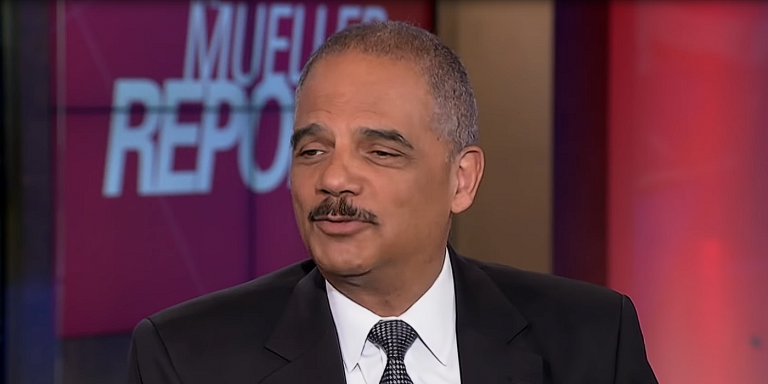
Former Attorney General Eric Holder will also play an outreach role on the question of voting rights, according to the campaign.

Bob Bauer, who served as general counsel to the Obama campaigns of 2008 and 2012, will work with Remus on voter “protection”—an issue that thousands of Democratic lawyers around the country are engaged in, according to the Biden campaign.

“Notwithstanding Donald Trump and his Republican allies’ hollow threats and constant misinformation, election officials around the country are working tirelessly to hold a free and fair and election, and we have an extraordinary national team in place to ensure that every eligible voter is able to exercise their right to vote and have their vote counted,”

The campaign is also creating a special national litigation team involving hundreds of lawyers that will include as leaders Walter Dellinger, a solicitor general in the Clinton administration, and Donald Verrilli, a solicitor general under Obama.

The Trump campaign countered that it had its own legal challenges ready to push back against any shenanigans from the left that would undermine confidence in the democracy’s electoral process.

As “Democrats continue their push to weaken reasonable rules preventing fraud—like voter ID and signature matching—President Trump and his campaign will continue to protect the integrity of the vote,” deputy manager Justin Clark said in as statement.

“Our team will continue to fight every day in the courtroom and on the ground to make sure that every eligible voter has the right to vote and that their vote is counted — once,” Clark said.

Adapted from reporting by the Associated Press
SELLERS: Trump’s Main Mistake Was Trusting Watergate Swamp-Creature Woodward

0

In June, the truth about the coronavirus finally became clear—or at least the mainstream-media’s narrative about it.

After three months of vigorous debate over lofty scientific concepts like herd immunity and mortality rates; concerns about the constitutional limits of authority; and whether financial ruin from mass lockdowns would exacerbate the existing crisis, all of the Right’s exhortations not to succumb to mob-driven fearmongering suddenly became moot.

For a few fleeting weeks, following the death of George Floyd, the press decided that the pandemic wasn’t newsworthy.

Instead, they shifted to cheering on race riots and mass gatherings of protesters—including the COVID-vulnerable demographic of low-income minorities.

No alarm bells sounded during Black Lives Matter demonstrations that swept most of the country’s urban centers.

Until then, it had been widely reported that the virus itself was racist, targeting susceptible individuals based on the color of their skin and not the content of their character.

Afterward, the leftist spin machine churned out a profound new corollary (albeit equally unscientific): that racism was, itself, a virus.

The Second Wave

It took President Donald Trump’s June 20 rally in Tulsa to snap the media back into carping on the skyrocketing number of confirmed COVID cases and the inevitable toll the virus would take on the November election.

Of course, it was too late to return the riot genie to its bottle. Much hemming and hawing ensued (beneath now-mandatory face coverings) about why COVID suddenly mattered again.

Throughout the blatant gaslighting, Trump remained committed to informing the public about his management of the virus and, in the process, taking his share of lumps—some justified, but most unjustified.

As the president told celebrity journalist Bob Woodward on Aug. 14, in the last of 19 interviews for Woodward’s newly published book, “Nothing more could have been done.”

Trump’s defense of his COVID response during the Woodward interviews seems inherently truthful.

At times, in the snippets that have been replayed on nightly talk-shows, he offers surprisingly candid glimpses of fear and frustration—concerns that the comforter-in-chief steadfastly refused to concede in his public messaging.

Yet, Trump’s cooperation with Woodward, including several calls the president initiated, shatters the perception that he spent his waking hours steeped in pseudoscience, hoaxes and conspiracy theories.

On the contrary, he seemed obsessed to a fault with offering full disclosure to the man whose reporting forced Richard Nixon to resign—somebody who not only would challenge him on facts but who was guaranteed to weaponize his words against him.

Deep Throat and the Deep State

In essence, Woodward is the epitome of deep-state resistance.

His Watergate success, glamorized on film by Robert Redford, hinged not on his own shoe-leather gumption but on his being fed scraps by an anonymous whistleblower.

That person happened to be Mark Felt, the associate director of the FBI, whose position was equivalent to that of disgraced former Deputy Director Andrew McCabe.

The mythos behind “Deep Throat”—whose identity Woodward and his coattail-riding, partisan-hack of a partner, Carl Bernstein, kept secret until Felt’s 2008 death—has taken on a new pall in light of seditious FBI hoaxes engineered by McCabe and others during the 2016 election.

Likewise, when the curtain is pulled back on Woodward, the legendary Washington Post journalist is revealed to be a stuttering hypocrite, preoccupied not with the public’s best interest but with finding a sensationalist angle to peddle his latest election-season pap.

Like many in the news industry, I was taught to lionize Woodward—and even passed on that lesson to journalism students of my own.

I have an autographed copy of All the President’s Men on my bookshelf, and I have respected Woodward’s overtures toward even-handedness, such as gently criticizing the Obama administration when doing so was hardly in vogue.

Yet, when pressed to defend his rationale for failing to go public in February with information he now claims could have saved lives—the true nature of the coronavirus as revealed to him by the president—Woodward gave himself a free pass.

By time he understood the implications of what Trump was telling him, he claimed, it was already too late to have an impact.

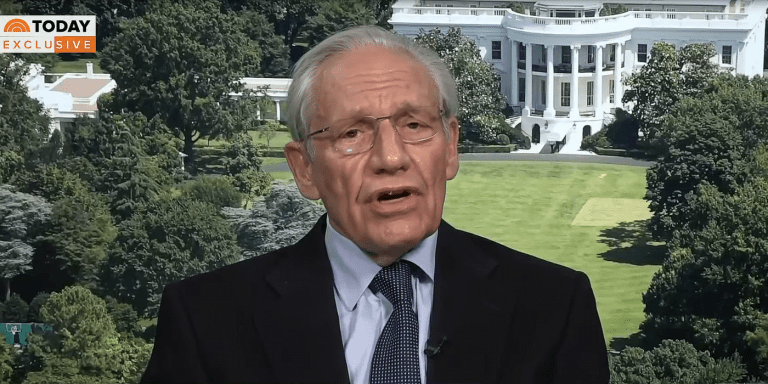
“If you look at what was known in February, the virus was not on anyone’s mind—no one was suggesting changing behavior,” he told the Today show.

“Then, when it exploded in March, as you know, there were 30,000 new cases a day,” he continued. “Publishing something at that point would not have been telling people anything that they didn’t know. They knew, very clearly, that it was dangerous.”

And yet, in mid-September, that Feb. 7 conversation—initiated by Trump—has suddenly become one of historical importance to Woodward.

In the words of Deep Throat, one need only “follow the money” to understand why.

Hindsight is 2020

Looking back, “it is one of those shocks for me, having written about nine presidents, that the president of the United States possessed the specific knowledge that could have saved lives,” Woodward told Today host Savannah Guthrie.

“Historians are going to be writing about the lost month of February for tens of years,” he sniped.

Trump, for his part, has echoed Woodward’s own excuses about the limited knowledge he possessed early on.

He has excoriated the Chinese government for covering up what it knew and for misleading the US and other global decision-makers into a false, cautiously optimistic sense of complacency.

In the opening scene of his book, Woodward dramatically zeroes in a Jan. 28 meeting where Trump’s national security team—duty-bound to present the worst-case scenarios— reportedly warned him of the coming pandemic.

But Woodward then fails to give the president full credit for the decisive actions he took in response.

In addition to mobilizing the Coronavirus Task Force and restricting flights from China, Trump also tried to warn one of the country’s most revered journalists, on the record, about the specific threat of the virus.

But to no avail. At the time, all talk was of Trump’s highly partisan impeachment hearings and Joe Biden‘s foundering fortunes in the early primary races.

Meanwhile, throughout February, and into March, Trump pressed for calm amid the growing alarmism, reassuring the public that his administration was doing all it could.

There is no reason to believe his intentions were nefarious in wanting to minimize the harm inflicted upon the country by avoiding a mass panic—not to mention the ensuing collapse one of the most robust economic booms in modern history.

But according to the journalist whose negligence contributed to the information lag, Trump should have been ginning up panic during his January State of the Union address.

If only the president had warned Americans then, perhaps House Speaker Nancy Pelosi might have linked arms in solidarity rather than ripping up his speech.

Democracy Dies in Darkness

Whatever armchair-quarterbacking, left-wing historians may write about the early days of the COVID response, Trump’s cooperation with Woodward may prove one of his biggest mistakes.

Rather than let clandestine leakers define his legacy (as happened in Woodward’s first anti-Trump screed), Trump seems naively to have trusted that by freely offering his own thoughts he would be able to shed light upon the fog of war that he has encountered in crisis upon crisis.

His confidence in his own rectitude and his commitment to honest, open government seem self-evident from his vantage point—one in which he still regards himself as a swamp-draining outsider facing down the antagonizing forces of Capitol Hill corruption.

But from where Woodward has long held court, deep within the bowels of the Beltway, Trump is the enemy at the gate—and he will defend his ivory tower with every weapon at his disposal.

Emails Confirming DOJ Wiped Lisa Page’s iPhone Raise More Questions of Obstruction

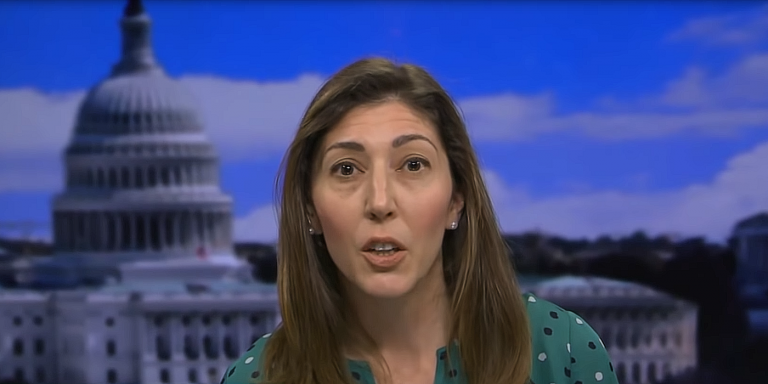
Documents released last week by the Justice Department about the mishandling of cell phones during the Mueller investigation indicated that a government iPhone issued to former FBI lawyer Lisa Page may not have been lost as the DOJ previously claimed.

The new materials came in response to a Freedom of Information lawsuit from conservative accountability watchdog Judicial Watch.

One prominent storyline to emerge was the special counsel’s office’s “accidental” wiping of 22 phones—including some belonging staffers of partisan prosecutor Andrew Weissmann—immediately prior to an investigation by DOJ Inspector General Michael Horowitz.

But according to the Epoch Times, the materials that the special counsel’s office didn’t lose may be as outrageous as what it did.

Page, the ex-mistress of counterespionage agent Peter Strzok, was booted off the Mueller team after the lovebirds’ anti-Trump texts were publicly revealed in an internal audit of the FBI’s handling of its Crossfire Hurricane operation.

Based on the limited scope of his probe, the inspector general ultimately concluded that, despite the damning texts, the FBI investigators’ political views did not interfere with their work.

Horowitz also noted, however, in a December 2018 report, that some of the materials—including Page’s iPhone—had been lost along the way.

Documents indicated that Page turned the phone in on July 14, 2017, along with all her other government-issued devices. Roughly two weeks later, on July 31, it was restored to factory settings, said the OIG report.

“The SCO [special counsel’s office] was unable to locate the iPhone previously assigned to Page, which had been returned to DOJ’s Justice Management Division (JMD),” it said.

“Subsequently, in early September 2018, JMD informed the OIG [inspector general’s office] that it had located the iPhone that had been assigned to Page,” it continued.

After the OIG took custody, it remitted it back to the special counsel’s office, which confirmed that it had been thoroughly wiped.

A “forensic review of the phone determined that it did not contain any data related to Page’s use of the device,” said the report, which noted parenthetically that the DOJ “routinely resets mobile devices to factory settings when the device is returned from a user to enable that device to be issued to another user in the future.”

Neither the special counsel’s office nor the DOJ claimed to have records of who received or handled the phone in that interim period, when policy dictated it should have been checked for records.

But the new batch of declassified emails reveals that a member of Mueller’s staff with the initials LFW acknowledged having possession of it on July 17, three days after Page was said to have returned it.

After Chris Greer, a member of the DOJ’s information office, asked whether a “delete request” should be submitted, the person responded, “I think we want to hold for just a bit to make sure she isn’t coming back.”

The message also indicated that a procedure was needed for getting documents off Page’s h: drive, revealing that her devices were not likely to have been accidentally mishandled.

“These irregularities with the phones of Mueller investigators are either sloppiness or the
deliberate destruction of evidence—and it’s probably not sloppiness,” Rep. Devin Nunes, R-Calif., the ranking member of the House Intelligence Committee who led the congressional inquiry, told the Epoch Times.

The conservative media outlet also interviewed key players—including “LFW” (whose name is redacted in the DOJ emails) and Page—but all of those involved said that the new revelation was consistent with previous accounts.

“Page’s phone notably never made it into the hands of the special counsel’s records officer,
who told the OIG that she never received the phone to examine it for any government
records that would need to be retained,” the Epoch Times surmised in its investigation.

Chris Farrell, director of investigations and research for Judicial Watch, speculated in an op-ed for the Daily Caller that any intentional phone-wiping could lead to criminal obstruction charges, perhaps as part of the DOJ’s ongoing investigation being led by US Attorney John Durham.

At the very least, Farrell said Durham’s official report must shed further light on the “sketchy practices” that Judicial Watch has uncovered through its independent efforts.

“It is beyond suspicious that all these phones and the evidence they held were accidentally disabled en masse just as the OIG was closing in,” he wrote.

“The story is too incredible, and the magnitude of the destruction is prima facie evidence of a coverup,” he continued. “This raises the more interesting question; what do these people have to hide?”

With Big Ten Reversal, Trump Poised to Score in Key Battlegrounds

0

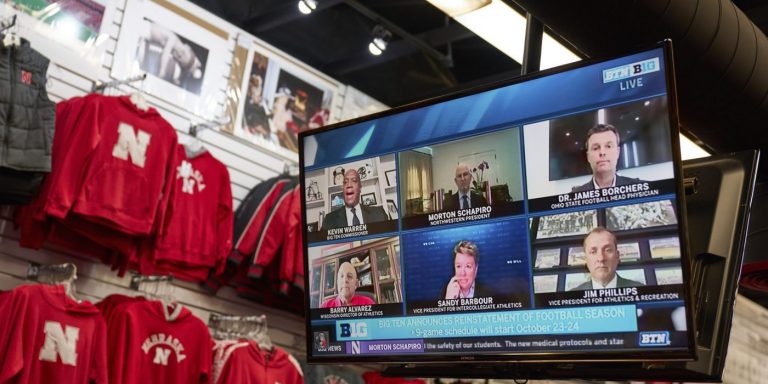
(Headline USA) President Donald Trump was quick to spike the ball in celebration when the Big Ten announced the return of fall football at colleges clustered in some of the Midwest battleground states critical to his reelection effort.

“I’m the one who got football back,” he said.

Trumps efforts to reverse last month’s decision to postpone fall sports in the conference during ongoing coronavirus pandemic were one of several factors that led officials to change course.

Some state officials were threatening to bring lawsuits alleging the conference and its schools lacked the proper permits to unilaterally cancel the season.

It also was under enormous pressure to restart the season from athletes, parents, coaches and college towns that rely on football Saturdays to fill restaurants and hotels and provide much-needed tax revenue.

Still, the president may have the most to gain from the positive developments.

Democrats, along with their left-wing media allies, frequently blame Trump’s freewheeling, confrontational and often polarizing style for a litany of crises, including the coronavirus and ongoing race-riots in major urban areas.

“There are voters who voted for him in 2016 who don’t want to vote for him this time—mostly because they don’t like him personally,” said Alex Conant, a Republican strategist.

“Those voters need to be reminded why they supported him in the first place,” Conant continued. “It’s issues like this where he takes a controversial position they agree with and delivers.”

For weeks, Trump allied himself with the effort. He publicly and privately prodded the conference to reverse its Aug. 11 decision to play football next spring.

When the conference announced Wednesday it would begin play Oct. 23 under strict coronavirus prevention protocols, Trump was eager to claim his share of the credit.

“I called the commissioner a couple of weeks ago and we started really putting a lot of pressure on, frankly,” he said at a news conference.

It is a moment that could help Trump on the margins in key states such as Pennsylvania, Iowa, Michigan, Minnesota, Ohio and Wisconsin where schools are now scheduled to play their first games less than two weeks before Election Day.

“It is the sort of thing that will excite Trump’s base to donate or harangue their friends to go out and vote for Trump or remind them to send in their absentee ballots,” said Karen Kedrowski, a political scientist at Iowa State University.

“In some of these states where the races are expected to be very tight, you might not have to move the needle much to help make a difference.”

His advisors argued that the Big Ten episode underscores how the president’s unconventional style—his Twitter rebukes and rhetorical bluster—gets things done.

“College football is an enormous part of fall Saturdays for millions of Americans, and it is coming back, thanks in no small part to the leadership of President Trump,” said Trump’s campaign manager, Bill Stepien.

“We know that Joe Biden would not have pushed for this, since he has looked for every reason to keep our country closed for as long as possible, because he believes it would help him politically,” he added.

The Big Ten reversal also syncs with Trump’s efforts to show the nation is on the glidepath to normalcy under his stewardship.

The president had criticized Democrats who “don’t want football back for political reasons” and accused Michigan’s Democratic Gov. Gretchen Whitmer of keeping Michigan and Michigan State off the field.

Whitmer’s draconian regulations were the source of repeated controversy during the peak of the lockdown, often going hand-in-hand with a clearly partisan agenda.

She notably was investigated for a no-bid contract with a Democratic consulting firm that the state’s health department granted to conduct contact-tracing.

Whitmer said the Big Ten decision to reverse course was made by members of the conference.

She said she had spoken with other governors about the prospect of allowing spectators to attend games but cautioned that COVID-19 “is still a very real threat.”

“If we want to preserve that as an option, we’ve got to be serious about masking up,” she said.

All 14 schools in the Big Ten have opted to scale back in-person learning and pleaded with students to stop parties and congregating in large groups as the U.S. death toll from the virus nears 200,000.

However, Big Ten officials cited improvement in same-day coronavirus testing capabilities as a key factor in their reversal.

Asked about Trump’s role in bringing about the about-face, Wisconsin coach Barry Alvarez said Trump made clear “the Big Ten was important to him.”’

“I think he drew attention to Big Ten football and had a solution,” Alvarez said. “So how much that had to do with us being back on the field, I don’t know that answer.”

After calling Big Ten Commissioner Kevin Warren on Sept. 1, Trump expressed confidence that players would be back on the field soon, tweeting that a return to play was “On the one-yard line.”

He later suggested Whitmer, as well as NeverTrump Republican Gov. Larry Hogan of Maryland and Democratic Gov. J.B. Pritzker of Illinois, were holding things up.

Biden, for his part, tried to lay the blame for canceled sports events squarely at Trump’s feet with an ad that aired days before Trump’s call to the Big Ten commissioner.

“Trump put America on the sidelines. Let’s get back in the game,” flashes on the screen with images of empty stadiums at the University of Michigan, Michigan State University and elsewhere.

Trump on Wednesday slammed the ad as “totally fake.”

While Trump repeatedly decried the Big Ten, until Wednesday he had far less to say about the postponement of fall sports by the Pac-12, which includes universities in Democratic-leaning California, Colorado, Oregon and Washington as well as battleground Arizona.

On Wednesday, Trump called on the Pac-12 to “get going” and resume play.

Adapted from reporting by the Associated Press
Intel Chief Ratcliffe Reverses Cancellation of Congressional Briefings after Pushback

0

(Headline USA) The Trump administration has agreed to provide in-person briefings on threats to the November election to key members of Congress, backing down from a decision last month to provide that information only in writing.

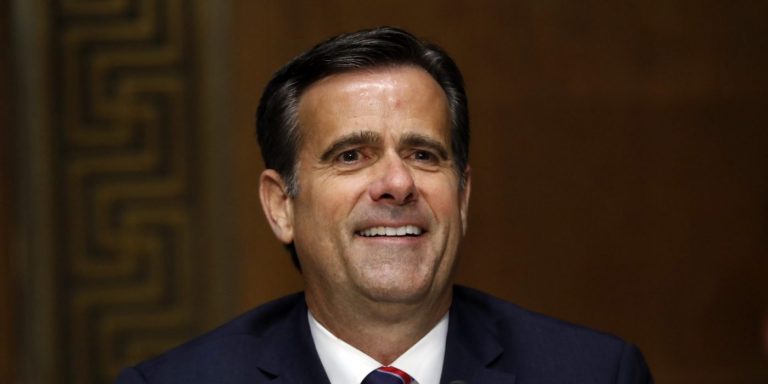
Director of National Intelligence John Ratcliffe announced the change in policy after Democrats apparently leaked sensitive—and incomplete—details from a meeting about foreign election interference.

But Ratcliffe agreed to resume briefings to the Senate and House intelligence committees after pushback.

Ratcliffe met with congressional leadership and the heads of the intelligence committees on Wednesday—a group called the “Gang of Eight” that receives the highest levels of intelligence.

He said he had shared with them his proposal on how the intelligence community will relay election updates in the future.

Reports suggest that the intelligence reports implicated Russia and China both as leading actors in foreign election-interference campaigns.

But Democrat leaks played up one specific aspect of it—a Russian campaign to spread misinformation to some pro-Trump members of Congress—as a way to smear their political opponents across the aisle.

Despite the partisan gamesmanship involving classified materials, committee members said the briefings were more important than ever as the 2020 presidential election approaches.

Acting Senate Intelligence Committee Chair Marco Rubio, R-Fla., and Virginia Sen. Mark Warner, the top Democrat on the panel, said in a joint statement Wednesday that Ratcliffe had reaffirmed that the panel will receive “briefings, including in-person, on all oversight topics.”

Rubio told reporters that he expects a briefing next week on election security, though he said he wasn’t sure of the timing.

A person familiar with the briefing said Ratcliffe’s office had accepted an invitation to brief the panel behind closed doors. The person discussed the meeting on condition of anonymity because it has not been publicly announced.

House Intelligence Committee Chair Adam Schiff, D-Calif., also said in a statement that Ratcliffe’s office had on Wednesday committed to the briefings “after extensive public criticism.”

Schiff said the panel was working to confirm a date and time.

Still, Schiff said, “these briefings for the intelligence committees must not obviate the need to keep all Members and the American people appropriately and accurately informed about the active threats to the November election.”

President Donald Trump and others have publicly speculated that Schiff, who also led the House’s partisan impeachment efforts against Trump, was behind the recent leaks.

“Whether it was Shifty Schiff or someone else, you have leakers on the committee who are doing bad things … and he got tired of it,” Trump said in defense of his recently appointed intel chief.

Adapted from reporting by the Associated Press
$1M Bail Cut for Some Held in Lancaster Over Riots After Police Shooting

0

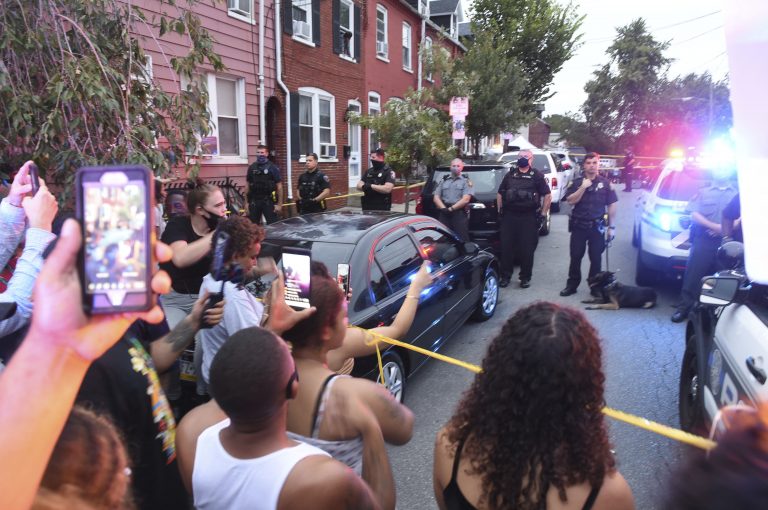
(Headline USA) Judges dramatically reduced bail amounts as high as $1 million Thursday that had been set this week for several people accused of crimes during riots in Lancaster, Pennsylvania, that included protests and vandalism to public buildings.

Bail for nine of 13 defendants was lowered, in several cases so they will not have to put up any money to be released, LNP reported.

Bail for two defendants was reduced from $1 million to $50,000 unsecured, clearing the way for their release pending trial, the news organization reported.

In other cases, defendants will still need to post bail of $25,000-$100,000, which means they may have to come up with a portion of it in cash to pay the bail bondsman.

The charges stem from unrest over the shooting by police of Ricardo Munoz, a Lancaster man who wielded a knife after his sister sought to have him committed for mental health treatment.

Police body camera video that was made public shows the 27-year-old Munoz charging at police with the knife before the officer shot and killed him.

Munoz had been awaiting trial on allegations he stabbed four people last year.

The charging documents filed by police over the rioters’ actions described them all as instigators, which defendants’ family members and supporters have in some cases hotly denied.

The protests Sunday night and early Monday were followed by rioting that caused damage to Lancaster’s police headquarters and other downtown buildings.

An arson fire blocked a downtown intersection.

Adapted from reporting by Associated Press.

Pa. Supreme Court Gives Dems THREE Extra Days to Get Mail-In Votes to Count

(Headline USA) Pennsylvania’s highest court gave the Democratic Party a series of victories Thursday, including one allowing repairs to glitches and gray areas in the battleground state’s fledgling mail-in voting law and another that kicked the Green Party’s presidential candidate off the November ballot.

The state Supreme Court, which has a 5-2 Democratic majority, granted the Democratic Party’s request to order a three-day extension of Pennsylvania’s Election Day deadline to count mailed-in ballots. And it ruled that the Green Party’s candidate for president did not strictly follow procedures for getting on the ballot in November and cannot appear on it.

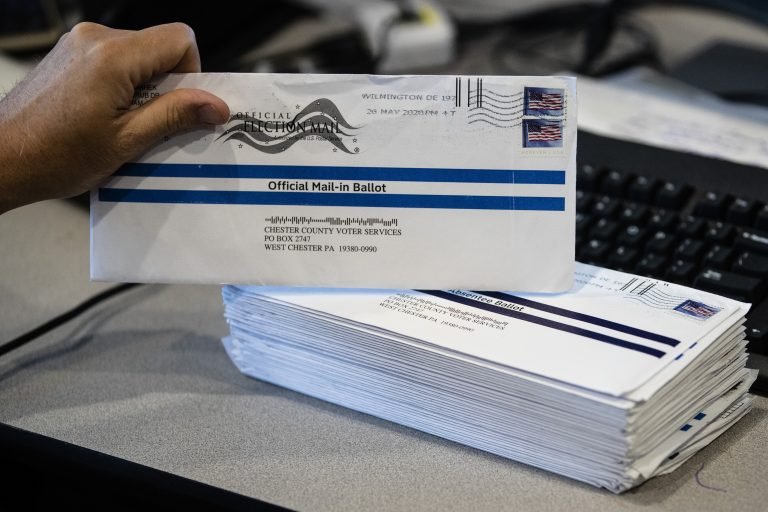
Ballots that are eligible to be counted must be postmarked by the time polls close and be received by county election boards at 5 p.m. on Nov. 6, three days after the Nov. 3 election. Republicans have opposed changing that deadline.

Most states make Election Day the deadline, but 18 states — about half of which backed President Donald Trump in the 2016 election — have a post-Election Day deadline.

The court’s ruling also authorized the use of satellite election offices and drop boxes by counties.

Areas with heavy concentrations of registered Democratic voters, Philadelphia and its heavily populated suburbs, are planning to use satellite election offices and drop boxes to help relieve the pressure from an avalanche of mailed-in ballots expected in the presidential election.

Republicans had sought to outlaw the use of such drop boxes or satellite election offices, saying they are not explicitly authorized under state law.

In a slightly earlier decision Thursday, the high court along the same partisan lines reversed a ruling by a Republican judge in a lower court on the candidacy of Green Party presidential nominee Howie Hawkins.

The court’s two Republicans agreed the Green Party did not meet the law’s requirements, but, in a dissenting opinion, said it might be possible to allow the Green Party to fix it retroactively.

The Hawkins and Biden campaigns did not immediately respond to requests for comment.

Democrats have long gone to court to keep Green Party candidates off the ballot, worried that they will siphon otherwise liberal voters in close contests against Republicans in the politically polarized state.

In this case, Democratic party activists challenged what they said were disqualifying irregularities in how the Green Party filed affidavits for the presidential candidate that is supposed to accompany paperwork with at least 5,000 voter signatures to get on the ballot.

A 2019 state law greatly expanded access to mail-in balloting in Pennsylvania and, fueled by concerns over the pandemic, more than 3 million voters are expected to cast ballots by mail in the Nov. 3 election.

That’s more than 10 times the number who voted by mail in Pennsylvania in 2016′s election, when President Donald Trump’s 44,000-vote victory over Democrat Hillary Clinton in Pennsylvania helped propel him to the White House.

Polls show a tight race between Trump and Democrat Joe Biden in Pennsylvania. Losing Pennsylvania could prove fatal to Biden’s chances of defeating Trump. No Democrat has won the presidency without winning Pennsylvania since Harry S. Truman in 1948.

The high court’s rulings come as Gov. Tom Wolf, a Democrat, and the Republican-controlled Legislature are at a stalemate over some of the issues, less than seven weeks before the election.

To a great extent, they are clashing over how to prevent vast numbers of ballots from being discarded and how to head off the specter of a presidential election result hanging in limbo on a drawn-out vote count in Pennsylvania.

The court also upheld the state’s poll-watcher law, which Trump’s campaign had sought to invalidate in federal court.

Under that law, poll watchers — a political party-appointed volunteer who sits inside of a polling place to monitor Election Day activity for perceived irregularities — must be a registered voter from the county.

Republicans say they are unable to muster enough poll watchers in Philadelphia, where one in five of Pennsylvania’s Democratic voters live.

Democrats charge that lifting the long-standing restriction would open the floodgates to voter intimidation in polling places.

Adapted from reporting by Associated Press.