GOP Sen. Reaffirms Pledge to ONLY Vote for SCOTUS Nominee Who Opposes Roe v. Wade

0

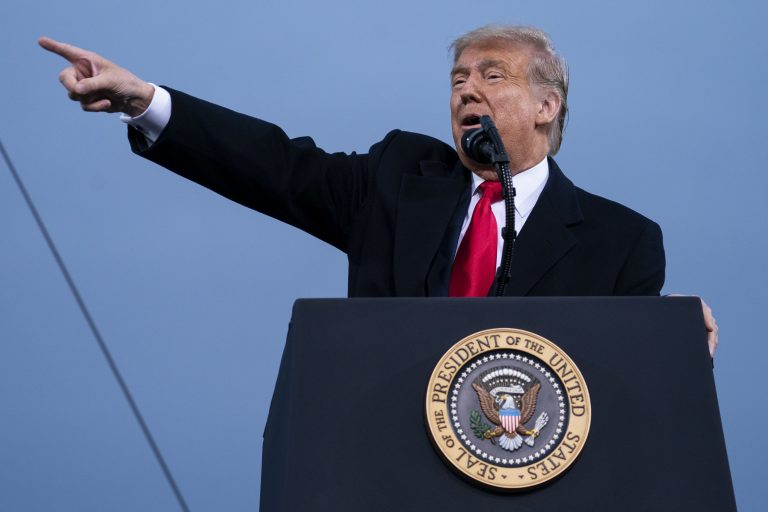
Sen. Josh Hawley, R-Mo., reaffirmed his commitment to vote for President Donald Trump’s Supreme Court nominee only if that candidate explicitly opposes Roe v.Wade, the high court’s decision that legalized abortion nationwide.

Hawley’s commitment to the pro-life cause could create complications in the confirmation process for Trump’s nominee. Securing a firm statement from a nominee about their position on specific court cases, especially about the most controversial Supreme Court case since Dred Scott v. Sandford, is often difficult.

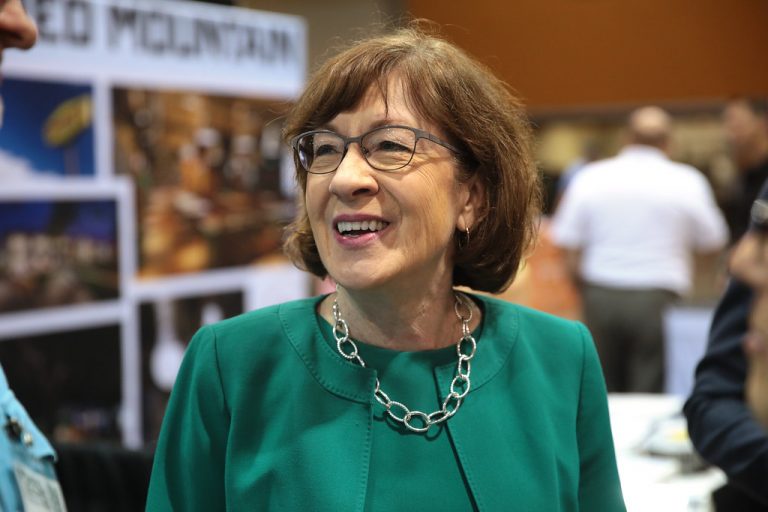
The support of two left-leaning, establishment Republicans for Trump’s eventual nominee is already in question.

Sens. Lisa Murkowski, R-Ala., and Susan Collins, R-Me., who both support abortion, said in statements that the Senate should wait until after the 2020 presidential election to vote on a Supreme Court nominee. They said the election’s winner should appoint the nominee, even if that means accepting President Joe Biden’s presumably left-wing nominee.

The Republicans can afford to lose only 4 votes in the Senate and still confirm Trump’s pick.

If the nominee does not vocally oppose Roe v. Wade, then Hawley could vote against confirmation, and the Democrats would need to strip away only one more Republican to defeat the candidate.

Senate Majority Leader Mitch McConnell, R-Ky., said the Senate will vote on Trump’s nominee, but he did not provide a specific timeframe or reveal whether the vote would occur before or after the Nov. 3 election.

Sen. Tom Cotton, R-Ark., likewise said the Senate would consider a nominee “without delay,” though he was not able to confirm that a vote would be possible before the election, Fox News reported.

Biden Begs GOP Not to Confirm New Justice; Pelosi Warns of Impeachment

0

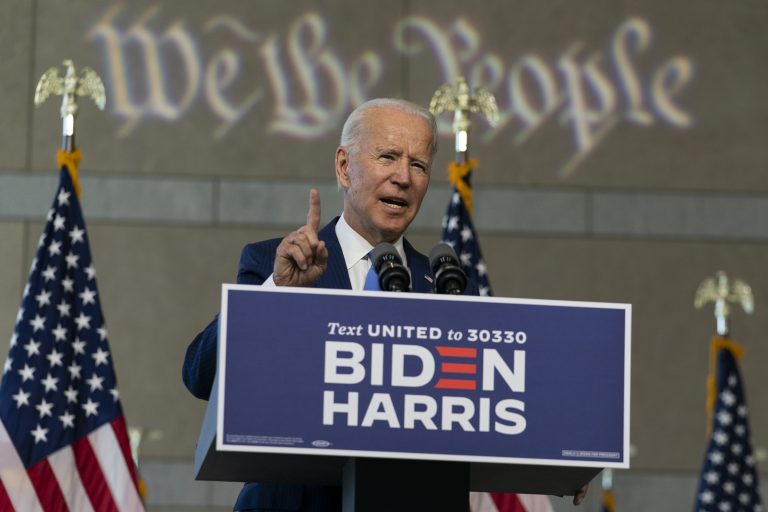
(Headline USA) Joe Biden on Sunday slammed President Donald Trump and leading Senate Republicans for trying to replace the late Justice Ruth Bader Ginsburg.

He urged more senators to stand with a pair of GOP colleagues who oppose the election-season nomination.

The extraordinary televised plea from the Democratic presidential candidate to Republican senators reflected the ferocious maneuvering that has followed Ginsburg’s death at 87 on Friday.

Trump has said he intends within days to name a woman to succeed the liberal icon, and Senate Majority Leader Mitch McConnell was moving ahead swiftly with plans for confirmation hearings and votes.

Just hours before Biden spoke, a second Republican senator, Lisa Murkowski of Alaska, joined Sen. Susan Collins of Maine in opposing efforts to fill Ginsburg’s seat before the next president is elected.

It takes four Republicans to break ranks to keep Trump’s nominee off the court.

Attention quickly focused on Sen. Mitt Romney of Utah, who voted to convict Trump on one count of impeachment, and Sen. Chuck Grassley of Iowa, a former chairman of the Judiciary Committee.

Biden acknowledged that those Republicans and others like them were his target audience when he warned that Trump’s plan was an “abuse of power.”

“Uphold your constitutional duty, your conscience,” said Biden, speaking in battleground Pennsylvania. “Let the people speak. Cool the flames that have engulfed our country.”

Just before Murkowski joined Collins, House Speaker Nancy Pelosi referred to the House having “options” she did not name to stall or prevent the Senate from confirming Ginsburg’s successor to the lifetime job.

“We have arrows in our quiver that I’m not about to discuss right now,” Pelosi said on ABC’s “This Week.”

The House has no formal role in the confirmation of Supreme Court justices. But Pelosi would not rule out a new round of impeachment proceedings that might divert the Senate’s attention. That route seemed unlikely.

Meanwhile, Murkowski raised by one the number of Republicans opposing a rush to confirmation.

“For weeks, I have stated that I would not support taking up” a potential nomination as the presidential election neared. “Sadly,” she said, “what was then a hypothetical is now our reality, but my position has not changed.”

Collins, meanwhile, said the next president should name Ginsburg’s replacement.

Republicans hold a 53-47 edge in the Senate. If there were a 50-50 tie, it could be broken by Vice President Mike Pence.

There is another potential wrinkle: Because Arizona’s Senate race is a special election, that seat could be filled as early as Nov. 30. If the winner is Democrat Mark Kelly, that would narrow the window for McConnell.

Trump has said he is obligated to act as soon as possible and had at least two women in mind for the seat.

Most Republicans concurred on the need for speed and one named a practical reason: The nine-member court, argued Sen. Ted Cruz of Texas, must be full if called upon to decide the outcome of a disputed presidential election.

But Biden and other Democrats said voters should choose the next president, who should pick Ginsburg’s successor. They said socialist healthcare and abortion rights are on the line.

“The last thing we need is a constitutional crisis that plunges us deeper into the abyss and deeper into the darkness,” he said. He acknowledged that if Trump wins, his pick should be approved.

But he added, “If I win this election, President Trump’s nominee should be withdrawn and as the new president I should be the one to nominate Justice Ginsburg’s successor.”

Nonetheless, the process for replacing her moved swiftly ahead.

On a call with McConnell, R-Ky., late Saturday, Trump mentioned two federal appeals court judges: Amy Coney Barrett and Barbara Lagoa, according to a person familiar with the private conversation who was not authorized to publicly discuss the call and spoke on condition of anonymity.

To the chants of “Fill that seat,” Trump told supporters at an event Saturday night in North Carolina that he would nominate a woman as soon as this week.

“We win an election and those are the consequences,” said Trump, who then seemed to signal that he’d be willing to accept a vote on his nominee during the lame-duck period after the election. “We have a lot of time. We have plenty of time. We’re talking about January 20th” — when the next president is inaugurated.

If the court were to take cases with eight justices, 4-4 ties would revert the decision to a lower court; for instance, the Affordable Care Act could then be struck down by a lower Texas court.

Adapted from reporting by the Associated Press.

Burlington, Vt. City Council May Create ‘Safe Injection Site’ for Junkies

0

(Associated Press) Leaders of Vermont‘s largest city have voted to consider creating a supervised injection site for people who use heroin and other illicit drugs to reduce overdoses and get more people into treatment.

The city council in Burlington voted unanimously Monday night in favor of a resolution asking the city attorney to analyze the legal challenges of creating an overdose prevention site, also called a safe injection or safe consumption site.

At such sites, people can use drugs under medical supervision.

Supporters say it can save lives by giving sterile needles, health care services and medical referrals to people with addiction, WCAX-TV reported.

At least a dozen countries, including Canada and many in Europe, offer such sites.

U.S. cities including Seattle and Boston have been debating allowing them.

The U.S. Justice Department say they violate federal law.

In February, plans to open what could have been the country’s first official medically supervised injection site in Philadelphia were put on hold amid opposition from a federal prosecutor and residents of the neighborhood where it would have been located.

Critics told the Vermont news station that they think such a facility in Burlington is potentially dangerous and counterproductive in trying to curb substance abuse.

Mayor Miro Weinberger said he supports looking into the option further.

“Certainly, between the need to pursue all options and the progress that safe consumption facilities have made in the Philadelphia area, certainly I support further exploration and possible new investment,” he said.

BLM Activists Pressure Lawmakers to Outlaw ‘Hair Discrimination’ Against Afros, Dreads, Cornrows

0

(Associated Press) A growing number of states are facing pressure to ban race-based discrimination against hair texture and hairstyles in schools and the workplace.

Advocates this week presented a draft proposal to New Mexico state lawmakers that would outlaw employers and schools from discriminating against Black and Native American women’s hairstyles. It’s the latest state targeted by a national campaign.

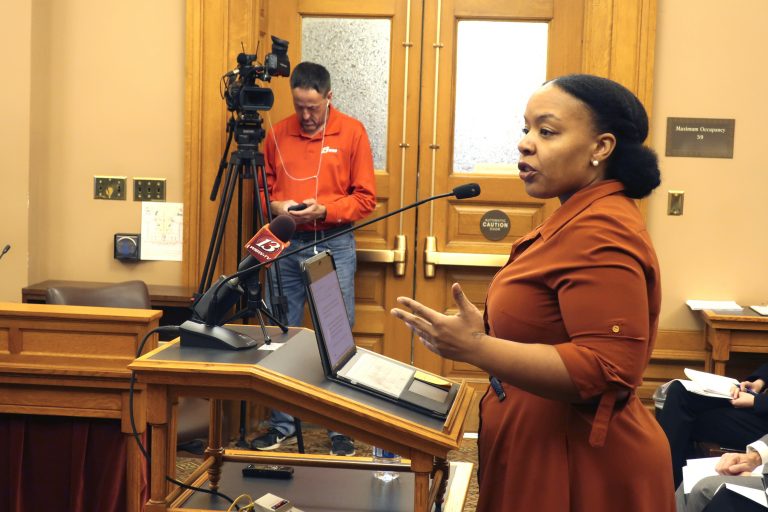
Devont’e Kurt Watson, a member of Black Lives Matter in Albuquerque, told New Mexico lawmakers on Monday that the state should amend its Human Rights law to protect people with Afros, cornrows, dreadlocks and headwraps. The state should also provide protections for Native Americans who face hair discrimination, he said.

“Passing the (the proposal) in New Mexico will have far-reaching implications to protect our diverse community from egregious acts of hatred,” Watson said. “Hair discrimination is racial discrimination.”

New Mexico Black Lawyers Association President Aja Brooks said job offers have been rescinded to Black women in other states because of hairstyles and that students in New Mexico and in other states have been told in class by teachers their hair was a distraction.

“Hair discrimination for people of color in New Mexico is real,” Brooks said.

The draft evaluated by a New Mexico legislative interim committee was the first step for a bill that is expected to be introduced in January. New Mexico’s Legislature is dominated by Democrats and the state has a Democratic governor.

Earlier this year, Democratic Washington Gov. Jay Inslee signed a bill that made Washington the latest state to pass a version of the CROWN Act.

It stands for “Create a Respectful and Open World for Natural Hair” and is part of a national campaign promoted by Dove, the National Urban League, Color Of Change and Western Center on Law and Poverty.

California, Colorado, Maryland, New York, New Jersey, and Virginia have already passed similar laws, according to people involved in the campaign.

Other states, such as Connecticut, have considered similar proposals but they have not passed.

Earlier this year, the American Civil Liberties Union of New Mexico sued the state’s largest school district and a former teacher over a 2018 episode where the teacher allegedly cut a Native American student’s hair during class on Halloween and asked another student if she was dressed as a “bloody Indian.”

The ACLU’s complaint against Albuquerque Public Schools and the former teacher, Mary Jane Eastin, claims she created a hostile learning environment and discriminated against McKenzie Johnson, who is Navajo.

The school district’s superintendent issued a public apology after the allegations emerged and told parents that Eastin would not return to Cibola High School, where she taught English.

School officials declined to comment on the lawsuit. Eastin’s attorney, Barry Berenberg, did not immediately respond to an email Tuesday seeking comment.

What Would a Contested Election Look Like? America Could End Up with President Pelosi

0

(Associated Press) Is it possible the election will be up in the air and we won’t have a president on Inauguration Day: Jan. 20, 2021?

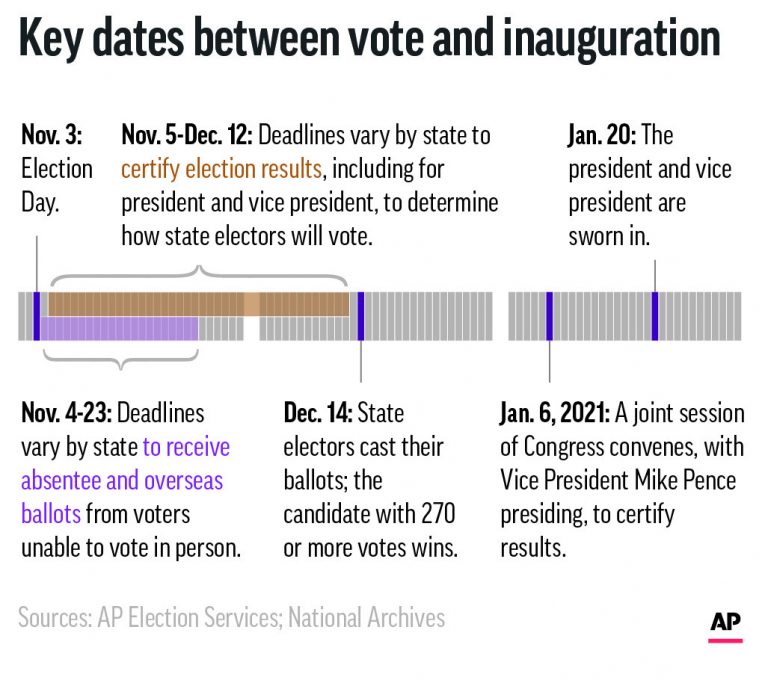
Even if the election is messy and contested in court, the country will have a president on Inauguration Day. The Constitution and federal law ensure it. Here’s what happens after voters go to the polls on Nov. 3:

First, states have more than a month to count ballots, including the expected surge of mail-in ballots, and conduct recounts if necessary. But states’ electoral votes have to be cast on Dec. 14.

Courts will be mindful of that in refereeing any disputes. During the 2000 election, the U.S. Supreme Court ultimately ended Florida’s vote recount, saying time had run out before electors were set to meet.

When the electors meet, the candidate who gets at least 270 of the 538 electoral votes wins. But what happens if election issues still prevent a winner from being named? The Constitution has an answer.

The 12th Amendment says that in that case, the House of Representatives elects the president and the Senate elects the vice president. The new Congress that enters in January is the one tasked with carrying out the so-called “contingent election.”

The president has only been selected this way once, in 1825. The winner was John Quincy Adams.

In a contingent election, House members have to choose among the three people with the most electoral votes. Each state delegation gets one vote, and 26 votes are required to win.

In the Senate, the choice is between the top two electoral vote-getters and each senator gets a vote, with 51 votes required to win.

What if that fails and the House hasn’t elected a president by Inauguration Day? Then the 20th Amendment takes over. It says the vice president-elect acts as president until a president is picked.

And if there’s no vice president selected by Inauguration Day? Well, then the Presidential Succession Act applies.

It says that the speaker of the House of Representatives, the Senate president or a Cabinet officer, in that order, would act as president until there’s a president or vice president.

Sen. Collins: Next President Should Select Supreme Court Justice

0

Sen. Susan Collins, R-Me., sided with Democratic presidential nominee Joe Biden in the argument about filling the Supreme Court seat that belonged to the late Justice Ruth Bader Ginsburg.

She said the person who wins the 2020 presidential election should choose the next Supreme Court nominee.

Collins did not explicitly state that she would vote against President Donald Trump’s nominee if the Senate held a vote on his or her confirmation prior to the Nov. 3rd election.

Ginsburg’s granddaughter said that her grandmother’s dying wish was for Trump and the Senate to forego nominating and confirming a new Supreme Court justice until after the election, Fox News reported.

“My most fervent wish is that I will not be replaced until a new president is installed,” said Clara Spera, Ginsburg’s granddaughter.

Collins, who campaigns on her credentials as a squishy, establishment RINO, has been a consistent crack in the Senate’s GOP majority.

She split from Senate Majority Leader Mitch McConnell, who said he would keep his pledge to hold a vote on Trump’s nominee, even in an election year.

“President Trump’s nominee will receive a vote on the floor of the United States Senate,” he said in a statement.

McConnell’s statement came as Trump tweeted his intentions to the Republican Party.

Trump Vows to Pick Woman Supreme Court Justice as Crowd Chants ‘Fill That Seat!’

(Headline USA) President Donald Trump on Saturday promised to put forth a female nominee in the coming week to fill the Supreme Court vacancy created by the death of Justice Ruth Bader Ginsburg.

Taking the stage at a North Carolina rally to chants of “Fill that seat,” the president said he would nominate his selection despite Democrats’ objections.

And, after conducting what he joked was a “very scientific poll” of the Fayetteville crowd as to whether supporters wanted a man or a woman, he declared the choice would be “a very talented, very brilliant woman.”

He added that he did not yet know whom he would choose.

“We win an election and those are the consequences,” said the president, who then seemed to signal that he’d be willing to accept a vote on his nominee during the lame duck period after the election. “We have a lot of time. We have plenty of time. We’re talking about January 20th.”

But one Republican senator already broke ranks. Maine’s Susan Collins, who is in a tough reelection battle, said Saturday that she believed replacing Ginsburg should be the decision of the president who is elected Nov. 3.

Three more defections from the GOP ranks would be needed to stop Trump’s nominee from joining the court.

At stake is a seat held by a justice who was a champion of the right to kill unborn children and spent her final years on the bench as the unquestioned leader of the court’s liberal wing.

Senate Majority Leader Mitch McConnell, R-Ky. vowed to call a vote for Trump’s nominee.

The impending clash over the vacant seat — when to fill it and with whom — scrambles the stretch run of a presidential race.

McConnell pledged to Trump in a phone call Friday night to bring the choice to a vote though he has not said if it would be before the election.

Democratic presidential nominee Joe Biden said any selection should come after Nov. 3.

“Voters should pick the president and the president should pick the justice to consider,” he said.

The president this month added 20 more names to his roster of potential court nominees, and aides in recent days have focused on a short list heavy on female candidates, according to four White House aides and officials close to the process.

They spoke on condition of anonymity because they were not authorized to publicly discuss private conversations.

Those under close consideration for the high court include three women who are federal appeals court judges: Amy Coney Barrett, beloved among conservatives and an early favorite; Barbara Lagoa, who is Hispanic and comes from the battleground state of Florida; and Allison Jones Rushing, who clerked for Justice Clarence Thomas and for Neil Gorsuch, when the current Trump-appointed justice was an appeals court judge.

At least one man, appeals court Judge Amul Thapar, has also been under consideration. A McConnell ally from Kentucky, he was Trump’s first nominee for Appeals Court judge.

McConnell, who sets the calendar in the Senate and has made judicial appointments his priority, declared unequivocally in a statement that Trump’s nominee would receive a confirmation vote.

Senate Democratic leader Chuck Schumer of New York convened a conference call with Democratic senators at midday Saturday, according to a person on the private call who was not authorized to discuss it publicly and spoke on condition of anonymity.

He told senators the “number one goal” must be to communicate the stakes of the confirmation vote.

Schumer also warned that if Republicans push through the nominee, “nothing is off the table” for Senate rules changes to come, the person said.

Ginsburg’s death seemed certain to stoke enthusiasm in both political parties as the election could now be viewed as referendum on the high court’s decisions, including the future of abortion rights.

Democrats raised more than $71 million in the hours after Ginsburg’s death, indicating her passing has already galvanized the party’s base.

Hundreds of mourners gathered for a second night outside the Supreme Court building, holding candles in honor of Ginsburg and listening to a succession of testimonies and rallying speeches.

Among the speakers was Sen. Elizabeth Warren, D-Mass., who eulogized Ginsberg as “an icon, a trailblazer and a friend” and accused McConnell of seeking to cynically hijack the confirmation process.

“Today Mitch McConnell and his henchmen think they can ram through a Supreme Court justice only 45 days before the election,” Warren said. “What Mitch McConnell doesn’t understand is that the fight has just begun.”

The average number of days to confirm a justice, according to the Congressional Research Service, is 69, which would be after the election. But some Republicans quickly noted that Ginsburg was confirmed in just 42 days.

John Fischetti, who waited in line more than two hours to enter Trump’s Fayetteville rally, said replacing Ginsburg would inflame tensions but was within the president’s rights.

“I would assume it would make everyone more energized,” Fischetti said of the political repercussions. “Trump’s people want him to always press forward.”

The next pick could shape important decisions beyond abortion rights, including any legal challenges that may stem from the 2020 election. In the interim, if the court were to take cases with eight justices, 4-4 ties would revert the decision to a lower court; for instance, the Affordable Care Act could then be struck down by a lower Texas court.

Biden has promised to nominate a Black woman to the high court if given the chance. His campaign reiterated Saturday that it would not release names before the election.

Adapted from reporting by the Associated Press.

Letter Containing Ricin Intercepted Before Reaching President Trump

0

(Associated Press) Federal officials intercepted an envelope addressed to the White House that contained the poison ricin, a U.S. law enforcement official told The Associated Press on Saturday.

The letter appeared to have originated in Canada, according to a statement from the Royal Canadian Mounted Police, which said it was assisting the FBI.

The letter was intercepted at a government facility that screens mail addressed to the White House and President Donald Trump, the U.S. official said. A preliminary investigation indicated it tested positive for ricin, a poison found naturally in castor beans, the U.S. official said.

The U.S. official was not authorized to discuss the ongoing investigation publicly and spoke on condition of anonymity.

Federal investigators were working to determine where the enveloped originated and who mailed it. The FBI, the Secret Service and the U.S. Postal Inspection Service were leading the investigation.

In a statement, the FBI said agents were working to investigate “a suspicious letter received at a U.S. government mail facility” and that there is “no known threat to public safety.”

A Navy veteran was arrested in 2018 and confessed to sending envelopes to Trump and members of his administration that contained the substance from which ricin is derived.

Authorities said the man, William Clyde Allen III, sent the envelopes with ground castor beans to the president, FBI Director Christopher Wray, along with then-Defense Secretary Jim Mattis, then-CIA Director Gina Haspel, Adm. John Richardson, who at the time was the Navy’s top officer, and then-Air Force Secretary Heather Wilson.

The letters were intercepted, and no one was hurt.

In 2014, a Mississippi man was sentenced to 25 years in prison after sending letters dusted with ricin to President Barack Obama and other officials.

Adapted from reporting by the Associated Press.

British Protesters Call Lockdowns ‘Tyranny’ & Romanians Compare Restrictions to Nazism

0

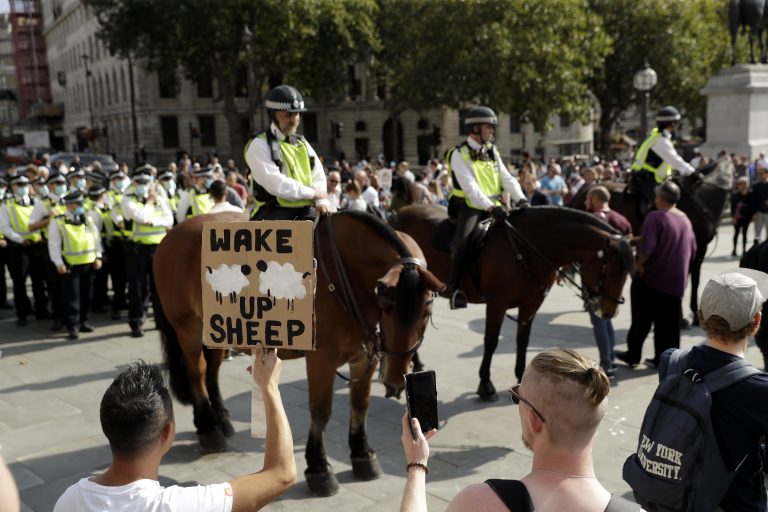
(Headlines) Protesters took the streets of London, Tel Aviv and other cities on Saturday to protest coronavirus restrictions, decrying how the tyrannical measures have dramatically affected daily life.

The British government recently banned social gatherings of more than six people in the hopes that it would help reverse a steep rise in COVID-19 cases and suggested that tougher restrictions could be coming.

Deaths and hospitalizations from COVID-19 remain low.

Saturday’s protest in Trafalgar Square, which was themed “Resist and Act for Freedom,” ended in clashes between demonstrators and London police, as officers tried to disperse hundreds of people holding banners and placards with anti-restriction messages such as “This is now Tyranny.”

London Mayor Sadiq Khan has warned that the city may add curfews, force pubs to close earlier and ban household visits to try to limit the city’s sharp rise in new cases.

“I am extremely concerned by the latest evidence I’ve seen today from public health experts about the accelerating speed at which COVID-19 is now spreading here in London,” Khan said Friday. “It is increasingly likely that, in London, additional measures will soon be required to slow the spread of the virus.”

In Israel, meanwhile, authorities ordered a full lockdown that began Friday and coincided with the Jewish High Holidays, which are typically celebrated with family gatherings and large prayer services.

Demonstrators in swimsuits gathered on a beach in Tel Aviv and waved black and pink flags connoting various protest movements.

In Australia, about 100 protesters gathered in the Melbourne beachside suburb of Elwood on Saturday before being scattered by police.

Police in the region have tried to dissuade lockdown opponents from protesting, but the rallies have become routine.

The Victoria police said in a news release that “the behaviour of these selfish few who choose to blatantly ignore the directions will not be tolerated.”

In Romania’s capital city, Bucharest, several hundred people protested against virus restrictions, including the mandatory use of masks in schools. About 2.8 million children in Romania began the school year Monday and schools took various precautions to try and prevent outbreaks.

Protesters in Bucharest’s University Square drew parallels between the protective measures against the pandemic and Nazi regimes. One of the speakers compared the measures to the torture of dissidents during communism.

The virulent language and comparisons echoed that of conservative protesters at rallies in dozens of U.S. cities earlier in the pandemic, including some who successfully pressured governors and local officials into lifting restrictions on businesses and social activities.

Adapted from reporting by the Associated Press.

Minneapolis to Name Portion of Chicago Ave. After George Floyd

0

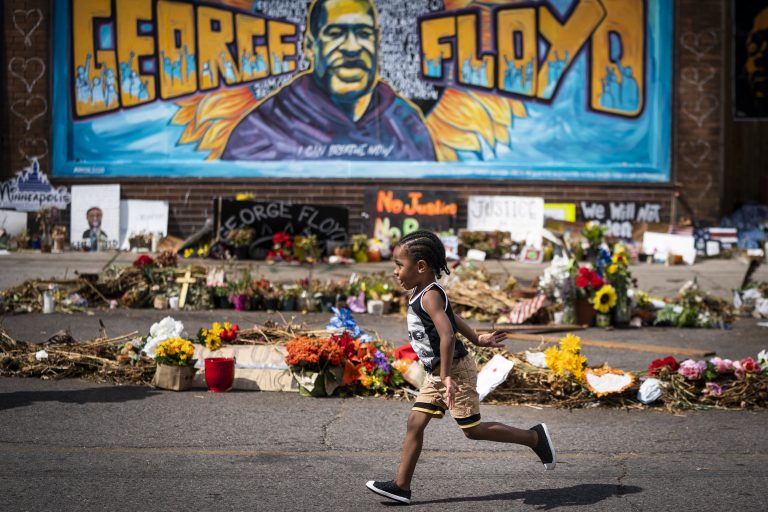
(Headline USA) A stretch of a Minneapolis street that includes the place where George Floyd was killed will soon be named in his honor.

Although the street will still be called Chicago Avenue, the city will refer to the blocks between 37th and 39th streets as George Perry Floyd Jr. Place, the Star Tribune reported.

The City Council approved the naming Friday, and Mayor Jacob Frey’s office said he would likely sign off on it as well.

Months after Floyd’s death, the intersection remains barricaded and now holds a memorial.

George Floyd lived as a criminal for most of his life, serving eight prison sentences for various crimes, including armed robbery. At the time of his death, he tested positive for fentanyl and methamphetamine.

A group of demonstrators has occupied the area, saying they will not leave until the city meets their demands, including funding for critical race theory training and a temporary property tax freeze for people within that zone.

The city had announced plans to reopen 38th Street this summer but backed off, avoiding a confrontation.

The city continues to work on a long-term plan for the intersection.

Adapted from reporting by the Associated Press.