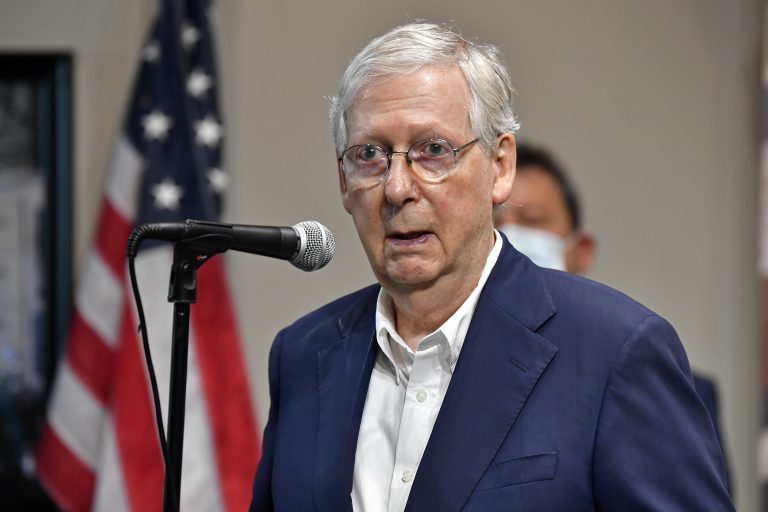
McConnell Vows Quick Vote on Next Justice; Biden Says Wait

(Headline USA) The death of Supreme Court Justice Ruth Bader Ginsburg just six weeks before the election cast an immediate spotlight on the crucial high court vacancy, with Senate Majority Leader Mitch McConnell quickly vowing to bring to a vote whoever President Donald Trump nominates.

Democratic nominee Joe Biden vigorously disagreed, declaring that “voters should pick the president and the president should pick the justice to consider.”

McConnell, who sets the calendar in the Senate and has made judicial appointments his priority, declared unequivocally in a statement not long after Ginsburg’s death was announced that Trump’s nominee would receive a confirmation vote in the chamber. In 2016, McConnell refused to consider President Barack Obama’s choice for the high court months ahead of the election, eventually preventing a vote.

The impending clash over the vacant seat — when to fill it and with whom — is sure to significantly affect the stretch run of the presidential race, further stirring passions in a nation already reeling from government handling of the pandemic, the resulting millions left unemployed, and a summer of race riots that have plagued many cities.

Trump, in brief remarks to reporters after learning of Ginsburg’s death, called her “an amazing woman who led an amazing life.” He had continued with a campaign speech in Minnesota for about an hour and a half after the nation — as well as aides and many in his audience with cell phones — had learned of her death.

Trump had noted in his rally speech that the next presidential term could offer him as many as four appointments to the nine-member court, whose members are confirmed for life.

“This is going to be the most important election in the history of our country and we have to get it right,” he added.

Biden said it must be up to the next president, whether himself or Trump, to choose a successor to be submitted for Senate confirmation.

“This was the position that the Republican Senate took in 2016, when there were nearly nine months before the election,” he said. “That is the position the United States Senate must take now, when the election is less than two months away. We are talking about the Constitution and the Supreme Court. That institution should not be subject to politics.”

A confirmation vote in the Senate is not guaranteed, even with a Republican majority.

It can take several months to vet and hold hearings on a Supreme Court nominee, and time is short ahead of the election, but quick confirmations have happened before — some in less than 60 days. Key senators may be reluctant to cast votes so close to the election. With a slim GOP majority, 53 seats in the 100-member chamber, Trump’s choice could afford to lose only a few.

McConnell did not specify the timing, but trying for confirmation in a post-election lame-duck session if Trump had lost to Biden or Republicans had lost the Senate would carry further political complications.

Democrats immediate denounced McConnell’s move as hypocritical, pointing out that he refused to call hearings for Merrick Garland, Obama’s pick, 237 days before the 2016 election. The 2020 election is 46 days away.

Senate Democratic leader Charles Schumer, in a tweet, echoed word for word what McConnell said in 2016 about the Garland nomination: “The American people should have a voice in the selection of their next Supreme Court Justice. Therefore, this vacancy should not be filled until we have a new president.”

Both Trump and McConnell have pointed to appointments to the federal judiciary, including two Supreme Court justices, part of their legacy. Trump said last month that he would “absolutely” try to fill a vacancy if one came up before the end of his first term.

“I would move quickly, ” Trump said in an interview with conservative radio host Hugh Hewitt. “Why not? I mean, they would. The Democrats would if they were in this position.”

While plans were still being formalized, Trump was expected to announce a choice sooner rather than later and may meet with members of his short list in coming days, according to a White House official not authorized to publicly discuss private conversations and spoke on condition of anonymity.

Trump last week added 20 names to his list of candidates he’s pledged to choose from if he has future vacancies to fill. He contrasted his list with unnamed “radical justices” he claimed would be nominated by Biden — who has refused to disclose his own potential choices — who would “fundamentally transform America without a single vote of Congress.”

Trump released a similar list in 2016 in a bid to win over conservative and evangelical voters who had doubts about his conservative credentials, and many believe it won him the election. Among those on his current list: Sens. Ted Cruz and Tom Cotton, former Solicitor General Noel Francisco and Judge Amy Coney Barrett of the 7th U.S. Circuit Court of Appeals, in Chicago, long a favorite of conservatives.

The average number of days to confirm a justice, according to the Congressional Research Service, is 69, which would be after the election. But some Republicans quickly noted that Ginsburg was confirmed in just 42 days.

Four GOP defections could defeat a nomination, while a tie vote could be broken by Vice President Mike Pence.

Among the senators to watch are Republicans Susan Collins of Maine, Lisa Murkowski of Alaska, Mitt Romney of Utah and others.

Collins is in a tight race for her own reelection, as are several other GOP senators, including Cory Gardner in Colorado. Murkowski and Romney have been critical of Trump.

Some Republicans, including Collins and Murkowski, have suggested previously that hearings should wait if a seat were to open. And because the Arizona Senate race is a special election, that seat could be filled as early as November 30 — which would narrow the window for McConnell if the Democratic candidate, Mark Kelly, hangs onto his lead.

In a note to his GOP colleagues Friday night, McConnell urged them to “keep their powder dry” and not rush to declare a position on whether a Trump nominee should get a vote this year.

“Over the coming days, we are all going to come under tremendous pressure from the press to announce how we will handle the coming nomination. For those of you who are unsure how to answer, or for those inclined to oppose giving a nominee a vote, I urge you all to keep your powder dry,” McConnell wrote. “This is not the time to prematurely lock yourselves into a position you may later regret.”

McConnell argued that there would be enough time to fill the vacancy and he restated his argument that the 2016 Senate precedent — in which a GOP-held Senate blocked Obama’s election-year nomination — did not establish a rule that applies to the Ginsburg case.

A top aide to a GOP senator confirmed the authenticity of McConnell’s email to his fellow senators, which was first reported by the Washington Post.

Under McConnell, the Senate changed the confirmation rules to allow for a simple majority. The Senate’s No. 2 Republican, Sen. John Thune, supported McConnell’s plan Friday night, though the Judiciary Commtitee chairman, Lindsey Graham, did not weigh in.

Obama called for Republicans to wait, saying “a basic principle of the law – and of everyday fairness – is that we apply rules with consistency and not based on what’s convenient or advantageous in the moment.”

The next pick could shape important decisions, including on abortion rights, as well as any legal challenges that may stem from the 2020 election. The 2018 hearings on Trump’s second pick, now-Justice Brett Kavanaugh, turned into a bitter partisan battle after unproven and unsubstantiated sexual assault allegations were made.

Biden has promised to nominate a black woman to the high court if given the chance. He has said he’s also working on a list of potential nominees, but the campaign has given no indication that it will release names before the election.

Democrats believe doing so would unnecessarily distract from Biden’s focus on Trump’s handling of the pandemic and the economy, while also giving the president and his allies fresh targets to attack.

Adapted from reporting by Associated Press.
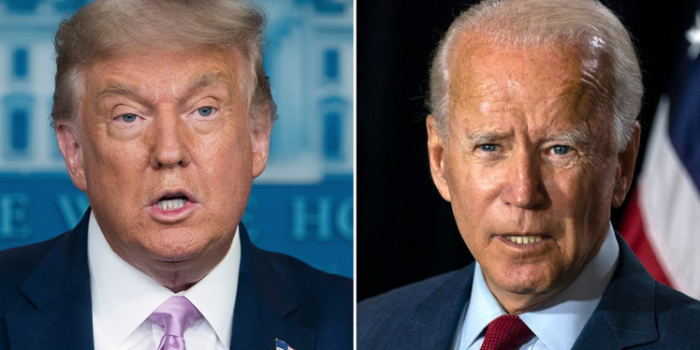
How Ginsburg’s Death Could Reshape the Presidential Campaign

(Headline USA) A presidential campaign that was already tugging at the nation’s most searing divides has been jolted by the death of Supreme Court Justice Ruth Bader Ginsburg, potentially reshaping the election at a moment when some Americans were beginning to cast ballots.

For months, the contest has largely centered on President Donald Trump‘s handling of the coronavirus, and on race riots that have infliction destruction on many of the nation’s cities.

But in a flash, Ginsburg’s death on Friday added new weight to the election, with the potential that Trump or his Democratic challenger, Joe Biden, could pick a successor who could decide abortion access, environmental regulations and the power of the presidency for a generation.

With early voting underway in five states and Election Day just over six weeks away, Democrats and Republicans were largely unified late Friday in praising Ginsburg as a leading legal thinker and advocate for women’s rights. But strategists in both parties also seized on the moment to find an advantage.

Facing the prospect of losing both the White House and the Senate, some Republicans viewed the Supreme Court vacancy as one of the few avenues remaining for Trump to galvanize supporters beyond his core of supporters, particularly suburban women who have abandoned the GOP in recent years.

“It’s hard to see how this doesn’t help Trump politically,” said veteran Republican strategist Alex Conant. “Biden wants this election to be a referendum on Trump. Now it’s going to be a referendum on whoever he nominates to the Supreme Court.”

Multiple Republicans close to the White House believe that Trump will likely nominate a woman.

Senate Majority Leader Mitch McConnell, R-Ky., pledged to quickly bring to a vote whomever Trump nominates. But he faces potential division within his own ranks, including from Sens. Mitt Romney of Utah, Lisa Murkowski of Alaska, Susan Collins of Maine and Cory Gardner of Colorado. Collins and Gardner are in particularly tight races for reelection this fall.

That’s fueling optimism among Democrats that the vacancy could drive home the significance of the election to their base.

“The implications for Senate races could be profound,” said Democratic strategist Bill Burton.

“The presidential race will see some immediate churn as activists on both sides will be newly energized,” he continued. “The persistent question will be whether huge protests around the Capitol and the country will inflame such vigorous energy that it leads to awful clashes.”

Biden, who has already pledged to appoint the first black woman to the Supreme Court, told reporters late Friday that “voters should pick the president and the president should pick the justice to consider.”

Democrats are enraged by McConnell’s pledge to move forward, especially after he blocked President Barack Obama from appointing a justice to replace Antonin Scalia nine months before the 2016 election. That decision cast a long political shadow, prompting Pete Buttigieg, the former South Bend, Indiana, mayor who mounted a spirited bid for the 2020 Democratic presidential nomination, to make expansion of the Supreme Court a centerpiece of his campaign. Biden rejected the idea.

Some Democrats privately concede that the Supreme Court vacancy could shift attention away from the virus, which has been a central element of Biden’s campaign.

Trump took the unprecedented step in 2016 of releasing a list of Supreme Court picks before he was elected, a move that was credited with unifying skeptical conservative voters to unite behind him. Republicans also believe that the high-profile debate over Trump’s last Supreme Court pick, Brett Kavanaugh, helped the GOP retain the Senate during the 2018 midterms, when the party lost control of the House.

The president, seeking to build the same type of energy that surrounded his 2016 bid, released another list of potential Supreme Court nominees last week.

But some Democrats said the political environment is already overheated, with partisan divides over everything from wearing a mask to curb the pandemic to addressing climate change. Ginsburg’s death, they say, may not change that.

“It’s already pretty ugly out there,” said Megan Jones, a Democratic strategist who worked for former Senate Majority Leader Harry Reid. “I do not know how this does not become a fight of epic proportions.”

Adapted from reporting by Associated Press.
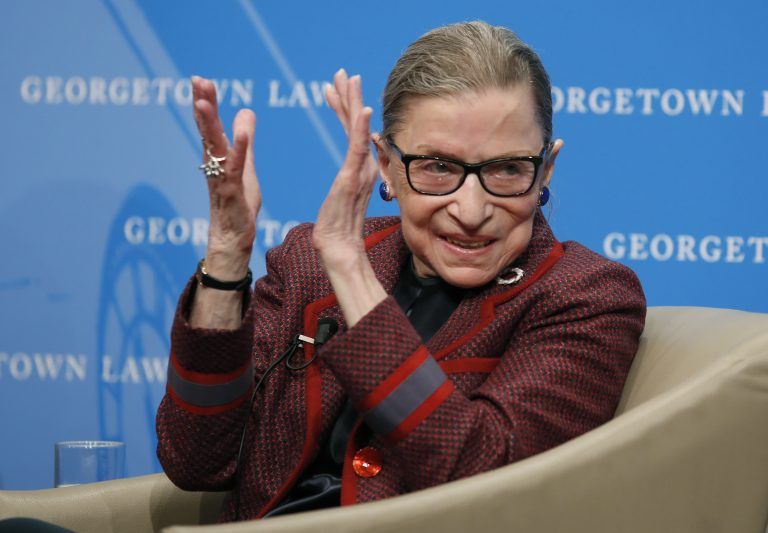
Justice Ruth Bader Ginsburg Dead at 87; Nation-Defining Nomination Battle Ahead

0

(Associated Press) Supreme Court Justice Ruth Bader Ginsburg, the court’s second female justice, died Friday at her home in Washington. She was 87.

Ginsburg died of complications from metastatic pancreatic cancer, the court said.

Her death just over six weeks before Election Day is likely to set off a heated battle over whether President Donald Trump should nominate, and the Republican-led Senate should confirm, her replacement, or if the seat should remain vacant until the outcome of his race against Democrat Joe Biden is known.

Chief Justice John Roberts mourned Ginsburg’s passing.

“Our Nation has lost a jurist of historic stature. We at the Supreme Court have lost a cherished colleague. Today we mourn, but with confidence that future generations will remember Ruth Bader Ginsburg as we knew her — a tireless and resolute champion of justice,” Roberts said in a statement.

Ginsburg announced in July that she was undergoing chemotherapy treatment for lesions on her liver, the latest of her several battles with cancer.

Ginsburg spent her final years on the bench as the unquestioned leader of the court’s liberal wing and became something of a rock star to her admirers.

Young women especially seemed to embrace the court’s Jewish grandmother, affectionately calling her the Notorious RBG, for her defense of the rights of women and minorities, and the strength and resilience she displayed in the face of personal loss and health crises.

Those health issues included five bouts with cancer beginning in 1999, falls that resulted in broken ribs, insertion of a stent to clear a blocked artery and assorted other hospitalizations after she turned 75.

She resisted calls by liberals to retire during Barack Obama’s presidency at a time when Democrats held the Senate and a replacement with similar views could have been confirmed.

Instead, Trump will almost certainly try to push Ginsburg’s successor through the Republican-controlled Senate — and move the conservative court even more to the right.

Ginsburg antagonized Trump during the 2016 presidential campaign in a series of media interviews, including calling him a faker. She soon apologized.

Her appointment by President Bill Clinton in 1993 was the first by a Democrat in 26 years.

She initially found a comfortable ideological home somewhere left of center on a conservative court dominated by Republican appointees. Her liberal voice grew stronger the longer she served.

Ginsburg was a mother of two, an opera lover and an intellectual who watched arguments behind oversized glasses for many years, though she ditched them for more fashionable frames in her later years.

At argument sessions in the ornate courtroom, she was known for digging deep into case records and for being a stickler for following the rules.

She argued six key cases before the court in the 1970s when she was an architect of the women’s rights movement. She won five.

“Ruth Bader Ginsburg does not need a seat on the Supreme Court to earn her place in the American history books,” Clinton said at the time of her appointment. “She has already done that.”

On the court, where she was known as a facile writer, her most significant majority opinions were the 1996 ruling that ordered the Virginia Military Institute to accept women or give up its state funding, and the 2015 decision that upheld independent commissions some states use to draw congressional districts.

Besides civil rights, Ginsburg took an interest in capital punishment, voting repeatedly to limit its use. During her tenure, the court declared it unconstitutional for states to execute the intellectually disabled and killers younger than 18.

In addition, she questioned the quality of lawyers for poor accused murderers.

In the most divisive of cases, including the Bush v. Gore decision in 2000, she was often at odds with the court’s more conservative members — initially Chief Justice William H. Rehnquist and Justices Sandra Day O’Connor, Antonin Scalia, Anthony M. Kennedy and Clarence Thomas.

The division remained the same after John Roberts replaced Rehnquist as chief justice, Samuel Alito took O’Connor’s seat, and, under Trump, Neil Gorsuch and Brett Kavanaugh joined the court, in seats that had been held by Scalia and Kennedy, respectively.

Ginsburg would say later that the 5-4 decision that settled the 2000 presidential election for Republican George W. Bush was a “breathtaking episode” at the court.

She was perhaps personally closest on the court to Scalia, her ideological opposite.

Ginsburg once explained that she took Scalia’s sometimes biting dissents as a challenge to be met. “How am I going to answer this in a way that’s a real putdown?” she said.

When Scalia died in 2016, also an election year, Senate Majority Leader Mitch McConnell refused to act on Obama’s nomination of Judge Merrick Garland to fill the opening. The seat remained vacant until after Trump’s surprising presidential victory.

McConnell has said he would move to confirm a Trump nominee if there were a vacancy this year.

Reached by phone late Friday, Sen. Lindsey Graham, R-S.C., the chairman of the Judiciary Committee, declined to disclose any plans. He said a statement would be forthcoming.

Ginsburg authored powerful dissents of her own in cases involving abortion, voting rights and pay discrimination against women. She said some were aimed at swaying the opinions of her fellow judges while others were “an appeal to the intelligence of another day” in the hopes that they would provide guidance to future courts.

“Hope springs eternal,” she said in 2007, “and when I am writing a dissent, I’m always hoping for that fifth or sixth vote — even though I’m disappointed more often than not.”

She wrote memorably in 2013 that the court’s decision to cut out a key part of the federal law that had ensured the voting rights of black people, Hispanics was “like throwing away your umbrella in a rainstorm because you are not getting wet.”

Change on the court hit Ginsburg especially hard. She dissented forcefully from the court’s decision in 2007 to uphold a nationwide ban on an abortion procedure that opponents call partial-birth abortion.

The court, with O’Connor still on it, had struck down a similar state ban seven years earlier.

The “alarming” ruling, Ginsburg said, “cannot be understood as anything other than an effort to chip away at a right declared again and again by this court — and with increasing comprehension of its centrality to women’s lives.”

In 1999, Ginsburg had surgery for colon cancer and received radiation and chemotherapy.

She had surgery again in 2009 after being diagnosed with pancreatic cancer and in December 2018 for cancerous growths on her left lung. Following the last surgery, she missed court sessions for the first time in more than 25 years on the bench.

Ginsburg also was treated with radiation for a tumor on her pancreas in August 2019. She maintained an active schedule even during the three weeks of radiation. When she revealed a recurrence of her cancer in July 2020, Ginsburg said she remained “fully able” to continue as a justice.

Joan Ruth Bader was born in Brooklyn, New York, in 1933, the second daughter in a middle-class family.

Her older sister, who gave her the lifelong nickname “Kiki,” died at age 6, so Ginsburg grew up in Brooklyn’s Flatbush section as an only child. Her dream, she has said, was to be an opera singer.

Ginsburg graduated at the top of her Columbia University law school class in 1959 but could not find a law firm willing to hire her. She had “three strikes against her” — for being Jewish, female and a mother, as she put it in 2007.

She had married her husband, Martin, in 1954, the year she graduated from Cornell University.

She attended Harvard University’s law school but transferred to Columbia when her husband took a law job there.

Martin Ginsburg went on to become a prominent tax attorney and law professor. Martin Ginsburg died in 2010.

She is survived by two children, Jane and James, and several grandchildren.

Ginsburg once said that she had not entered the law as an equal-rights champion.

“I thought I could do a lawyer’s job better than any other,” she wrote. “I have no talent in the arts, but I do write fairly well and analyze problems clearly.”

In Wake of Riots, Trump Gains Surprise Ground in Solid-Blue Minnesota

0

(Headline USA) A solidly blue state for the past half century, Minnesota became an unquestioned presidential battleground on Friday as President Donald Trump and Democratic challenger Joe Biden fought for working-class voters in dueling events that marked the beginning of early voting.

The candidates steered clear of the state’s most populated areas near Minneapolis to focus on blue-collar voters, some of whom shifted to Republicans for the first time in 2016.

Trump was headed to Bemidji, about 200 miles north of Minneapolis, while Biden campaigned in a suburb of Duluth, on the banks of Lake Superior and close to the Wisconsin border.

Since narrowly losing Minnesota in 2016, Trump has emphasized the state in hopes that a victory this year could offset losses in other states.

He has visited regularly and kept a close eye on issues of particular importance to rural corners of the state.

He’s reversed an Obama administration policy prohibiting the development of copper-nickel mining and has bailed out soybean, corn and other farmers who have been hurt by trade clashes with China.

More recently, he’s embraced a “law and order” message aimed nationally at white suburban and rural voters who may be concerned by protests that have sometimes become violent.

That’s especially true in Minnesota, where the May killing of George Floyd by a police officer sparked a national reckoning on racism.

Since Floyd’s death and the race riots that followed, Minneapolis has been devastated by skyrocketing violent crime rates as city officials have been at the forefront of calls to defund police.

David McIntosh, president of the conservative Club for Growth, which has produced anti-Biden ads, said Minnesota may help the Trump campaign build momentum.

“They’re looking beyond the poll numbers and seeing the potential there,” said McIntosh, a former congressman from Indiana. “It’s always smart strategy to go on offense somewhere.”

Trump’s path to Minnesota success likely depends on finding more votes in rural, conservative areas—running up the score beyond his 2016 tally.

It’s a strategy he’s trying to pull off in other states, and it depends on a robust field operation with the money and time to track down infrequent or first-time voters.

That could be a tall order since Minnesota already has one of the nation’s highest voter turnout rates.

“I don’t think they’re there,” said Joe Radinovich, a Democrat who lost a bid for a northern Minnesota congressional district in 2018.

Radinovich noted the major organizational challenge and expense in tracking new voters, making sure they’re registered and getting them to vote – especially during a pandemic.

“We have relatively high turnout already. Most people vote. I just don’t think it’s there. I think those people showed up in 2016,” he said.

In 2016, Trump won that district, which includes the Democratic city of Duluth, by 15 percentage points. But in the midterms two years later, Radinovich lost by just under 6 percentage points.

Still, Trump has spent more than a year building a sizable Minnesota ground game.

Republicans are out knocking on doors and interacting personally with voters in ways that Democrats mostly have not, preferring online operations because of the coronavirus.

The president’s reelection campaign announced this week a $10 million ad buy in a series of states, including Minnesota.

It has spent nearly $17 million on advertising in the state since last October, compared with almost $6.3 million for Biden over the same period, according to a review of Kantar/CMAG data by The Associated Press.

Adapted from reporting by the Associated Press

Biden Draws Crowd of 200 on Campaign Trail, Largest Real Audience Since March

0

Democrat presidential hopeful Joe Biden desperately tried to salvage the loss of another solid blue state while campaigning Friday in Duluth, Minnesota.

Biden met with passers by in the city’s downtown area, drawing a crowd of around 200.

It was the largest in-person crowd Biden has had since the pandemic exploded in March.

But Democrats warn that he still may have his work cut out for him.

Duluth Mayor Emily Larson said the Trump campaign has far outpaced Biden in local yard signs—an indication of strong enthusiasm in the state’s North Country.

“One of the things the Trump campaign has been very good about is visibility in Duluth, but also in areas around Duluth,” Larson said.

The city, birthplace of singer Bob Dylan, overlooks Lake Superior near the Wisconsin border.

Once a bustling industrial port, it has developed something of a boutique chic but still maintains the vestiges of its working-class routes.

Biden railed against Trump’s inability to control the pandemic, casting the president’s reluctance to embrace more serious social distancing safeguards as “negligence and selfishness” that cost American lives.

At a carpenter union’s training hall, he also emphasized his plans to boost American manufacturing.

“It’s time to reward hard work in America and not wealth,” Biden declared with roughly a dozen workers looking on.

“When the government spends taxpayers’ money, we should spend that money to buy American products made by American workers and American supply chains to generate American growth,” Biden said.

He promised to invest $400 billion in federal money over his first term to ensure more products are made in America.

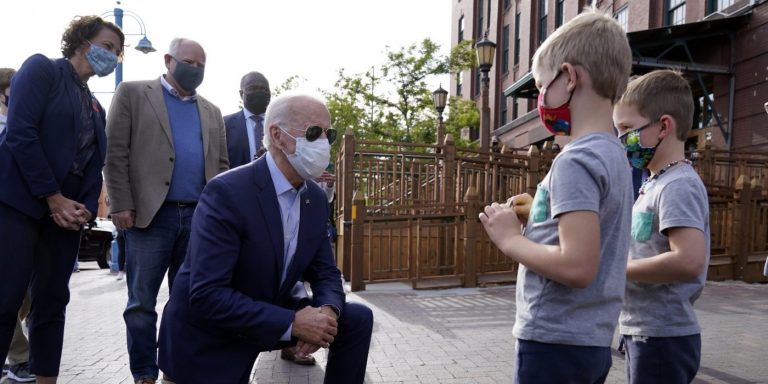
After Biden’s speech, his motorcade rolled into downtown Duluth, where he stepped out onto a brick plaza in front of Little Angie’s Cantina and Grill and began to elbow bump and chat with passersby.

One man yelled from a deck above the plaza, “Go home, Joe!”

Two women closer to Biden responded, “You are home, Joe.”

Adapted from reporting by the Associated Press

After Embracing Past Shutdowns, House Dems Take More Defeated Stance on Stopgap

0

(Headline USA) House Democrats on Friday prepared a temporary spending bill that is needed to avert a government shutdown at the end of the month — and that would allow lawmakers to leave Washington to campaign.

It’s a lowest-common-denominator, bare-minimum measure that befits a deeply polarized Congress. Even so, it took intense efforts at the highest levels of Washington to finish the package. It was set to be released Friday afternoon after a last-minute negotiating flurry.

Republicans denied Democratic requests involving the census and election administration grants. What remains is not controversial and includes provisions that would extend federal highway and flood insurance programs, along with a variety of other low-profile items.

And, as previously announced, the bill does not contain COVID-19 relief, leaving that issue in all likelihood for a post-election lame duck session — or for the next administration.

The temporary funding measure comes as some Democrats are increasingly upset that an impasse over coronavirus relief is reflecting poorly on the party and as President Donald Trump agitates for a deal that’s more generous than other Republicans would like.

Democrats have sought to use the shutdowns to their advantage in recent years, using their media echo chambers to blame the Republican Congress during the Clinton and Obama administration, and then to blame the White House during the prior shutdown of the Trump administration.

But with COVID-19 rescue negotiations dead in the water, the stopgap spending bill is likely to be the only measure of note that passes before the election.

Not long ago, such measures barely attracted notice, but there have been a handful of government shutdowns over the past few years. Congress has become so dysfunctional that crafting stopgap measures now requires more attention from top leaders.

Pelosi, D-Calif., and Treasury Secretary Steven Mnuchin negotiated the measure, which would keep the government open through Dec. 11. Democrats had proposed next February, apparently to avert any need to reconvene Congress after the election to deal with Trump, who they predict will lose his bid for a second term in November.

In conversations Friday, Pelosi and Mnuchin abandoned efforts to iron out wrinkles involving the census and election administration grants to states, though a heavily lobbied package to extend a number of health programs was included.

Aides involved in the talks said Pelosi initially denied an administration request to add normally routine flexibility to rules governing Trump’s farm bailout efforts, freezing his ability to dole out subsidy payments until after the election. That prompted Trump on Friday to blast his nemesis on Twitter: “Pelosi wants to take 30 Billion Dollars away from our great Farmers. Can’t let that happen!”

Pelosi relented at the last minute, the aides said. They spoke on condition of anonymity to publicly characterize behind-the-scenes dealings. Pelosi came away from the confrontation with a slightly higher food stamp benefit for families whose children are unable to receive free or reduced lunches because schools are closed over the coronavirus. The move came as a relief to farm-state Democrats such as Agriculture Committee Chair Collin Peterson, who faces a tough reelection race in Minnesota.

Democrats, meanwhile, were denied $400 million in grants to states to help them carry out elections this fall. Republicans also rejected a push by Pelosi to delay the once-a-decade apportionment of House seats after the census until the next administration.

The House is slated to pass the stopgap funding bill — called a continuing resolution, or CR in Washington-speak — next week. They are likely to then recess for the campaign.

Earlier this week, Pelosi said the House would stay in session until a COVID-19 deal was reached. Instead, lawmakers appear likely to leave Washington next week and be on 24 hours’ notice to return if there is a coronavirus relief deal to vote on.

Such a situation would surely create angst among Democrats who are increasingly vocal that Pelosi should do more to ease a weekslong standoff in bipartisan COVID-19 relief talks. Pelosi has staked out a hard line for a COVID-19 package of at least $2.2 trillion, while Republicans controlling the Senate aren’t willing to come close to that.

The resulting chasm would only be bridgeable if both sides were to make embarrassing retreats from their stubbornly held positions — something neither side has been willing to do. Instead, they have been devoting their energies to posturing and finger-pointing, much to the dismay of lawmakers who believe a flawed deal is better than none at all.

“We can argue about what the specifics of a plan should look like. But the important thing is that we get back to the negotiating table and hammer out a deal that can be passed into law,” said Rep. Stephanie Murphy, D-Fla. “Identify the things that you agree on and build from there to get recovery resources to the American people as soon as possible.”

Trump said this week that he wants his GOP allies to go for “higher numbers” that would permit another round of $1,200 direct stimulus payments that would be sent out under his name. Senate Republicans for the most part dismissed the idea.

While Trump is seen as pushing for a deal — any deal — his top negotiators on COVID-19 relief, Mnuchin and White House chief of staff Mark Meadows, have been taking a hard line with Pelosi.

Adapted from reporting by the Associated Press

MURDOCK: NSC Chief Robert O’Brien Racks Up Foreign Policy Wins for Trump

(Deroy Murdock, Headline USA) Today marks one year since National Security Advisor Robert C. O’Brien began his tenure.

His first anniversary highlights a string of successes that he has helped President Donald J. Trump deliver for the American people.

Their fruitful collaboration confirms Trump’s wisdom in tapping this attorney and veteran of at least 20 international arbitrations.

O’Brien, 54, arose on Trump’s radar in his previous post: Special Presidential Envoy for Hostage Affairs.

Often jetting to global hot spots, O’Brien helped free Americans who were kidnapped or unfairly detained. To date, Team Trump has liberated some 50 Americans previously trapped in 22 countries.

President Trump summarily sacked former National Security Advisor John Bolton on Sept. 10, 2019 after 17 months on duty.

Bolton disappointed many conservatives who had admired his deep thoughts. Alas, he ultimately detonated himself by repeatedly locking horns with the commander-in-chief, promoting his own views rather than arraying options for Trump, and attempting to sabotage the president in policy disputes by “using the news media against him,” according to Politico.

Trump slid O’Brien into Bolton’s smoldering shoes. “I have worked long & hard with Robert,” Trump announced via Twitter. “He will do a great job!

Trump first directed O’Brien to tighten the National Security Council. Its staff had ballooned 128 percent, from 105 under Bush–Cheney to 240 under Obama–Biden.

O’Brien has squeezed his roster from 180 professionals when he arrived and foresees 105 by late fall.

The newly svelte NSC stopped executing foreign-affairs operations. Instead, it resumed its traditional role: objectively to present the president choices and let him pick.

Under this framework, O’Brien and the NSC have supported President Trump as America’s international triumphs multiply:

  • In a stirring ceremony on Tuesday afternoon, the president and the leaders of Bahrain, Israel and the United Arab Emirates signed the Abraham Accords. Israel’s UAE peace treaty was its first in 26 years. Bahrain followed, just 29 days later.
  • O’Brien guided consultations that yielded an economic-cooperation accord between Kosovo and Serbia, including the latter’s recognition of Jerusalem as Israel’s capital.
  • O’Brien’s discussions with Turkey and the Kurds last fall let President Trump announce a ceasefire between these ancient enemies and prevent the former’s liquidation of the latter.
  • Thanks largely to O’Brien’s dialogue with Afghanistan, the president is withdrawing U.S. troops from that briar patch. Consequently, no American GI has been killed there since early February.
  • O’Brien has helped President Trump collect $130 billion, so far, in additional military spending from America’s NATO allies. By insisting that NATO members honor their public commitments to contribute 2 percent or more of GDP to collective defense, at least nine European nations have pledged an aggregate $400 billion through 2024.
  • Confirming that an NSC chief does more than negotiate, O’Brien assisted Trump with a key covert operation. Building on the president’s total eradication of the ISIS caliphate, which Obama-Biden let swell to the size of two New Jerseys, O’Brien coordinated U.S intelligence agencies and Special Forces to terminate ISIS founder Abu Bakr al-Baghdadi.
  • As an original member of the President’s Corona Virus Task Force, O’Brien helped initiate the life-saving Chinese and European travel bans. He also followed Trump’s instructions and nudged private companies to manufacture 120,000 ventilators, up from 10,000 stockpiled in April.

Veteran policy makers applaud O’Brien’s service to Trump.

John Lehman, President Ronald Reagan’s Navy secretary, praised O’Brien’s “grasp of geopolitics and the proper missions for each of the armed services and his proper grasp of the importance of ‘soft power.’”

Former Sen. Jim Talent, R-Mo., said, “The President trusts Robert’s competence and integrity, and Robert is very enthusiastic about the President’s ‘peace through strength’ vision for national security.”

Given the commander-in-chief’s growing international wins, the American people should elect him to a second term, so he can continue to advance U.S. interests.

If victorious, President Trump should keep Robert C. O’Brien, to help America and her allies stay free, safe, and prosperous for four more years.

Deroy Murdock is a Manhattan-based Fox News Contributor, a contributing editor with National Review Online, and a senior fellow with the London Center for Policy Research.

Murdock has known O’Brien since they both won college scholarships from the Washington Crossing Foundation in the early 1980s.

Bucknell University’s Michael Malarkey contributed research to this opinion piece. 

Liz Cheney: Russia and China Using Leftist Environmental Groups to Influence US Policy

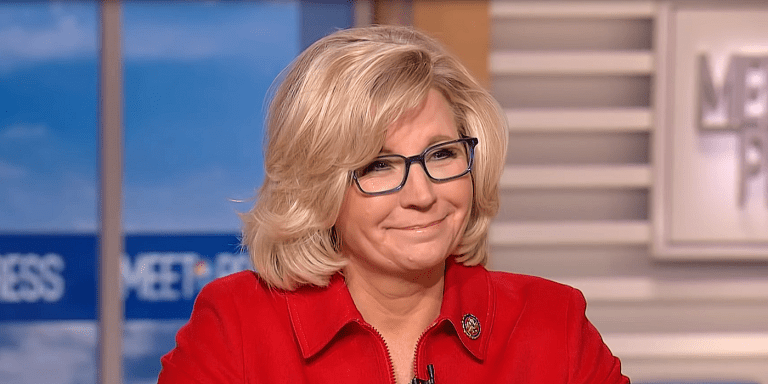
Rep. Liz Cheney, R-Wyo., asked the Justice Department this week to investigate some of the top leftist environmental groups, arguing that Russia and China are using them to influence U.S. policies.

In a letter to attorney General William Barr, Cheney said that the interests of environmentalists align with hose of foreign governments when it comes to energy policy.

Many have pushed to ban U.S. energy cultivation in areas like fossil-fuel exploration and natural-gas fracking, which would force the U.S. back into foreign-energy dependency.

Because these environmental groups contribute millions of dollars to U.S. political campaigns and spend even more filing lawsuits against policies they dislike, the federal government should ask whether the agenda these groups are pushing is malicious, Cheney said.

“Environmental groups are major contributors to U.S. political campaigns and have filed hundreds of lawsuits against the Trump Administration in an effort to advance their agendas,” she wrote.

“This robust political and judicial activism—combined with the fact that these groups often espouse views that align with those of our adversaries—makes it all the more critical that the Department is aware of any potential foreign influence within or targeting these groups,” she added.

Cheney specifically named the Natural Resources Defense Council, Sea Change and the Sierra Club as groups that could be subject to “Chinese and Russian attempts to influence environmental and energy policy in the U.S.,” the letter states.

A 2017 investigation by Reps. Randy Weber and Lamar Smith, both Texas Republicans, found that “entities connected to the Russian government” were giving thousands of dollars to Sea Change the Sierra Club.

Philanthropist Nat Simons, who helps run the Sea Change foundation, denied the allegations, as did Sierra Club legislative director Melinda Pierce.

The NRDC has a history of working with the Chinese Communist Party, Cheney noted, and has consistently praised the CCP for pushing China to become a “global environmental leader.”

“Malign influence efforts by Russia or China, whether related to U.S. energy policy or politics, are a threat to this nation and must be combated,” Cheney wrote.

Chris Rock: Dems Are to Blame For COVID Because of Failed Impeachment Sham

Actor and comedian Chris Rock blasted Democrats for allowing the coronavirus “pandemic to come in” by wasting their time trying to impeach President Donald Trump.

House Speaker Nancy Pelosi, D-Calif., and other congressional Democrats should have been paying attention to the virus and what it was doing to China in January and February, Rock told the New York Times.

Instead, they were staging impeachment hearings, even though they knew Trump would not be removed from office.

“It was totally up to Pelosi and the Democrats. Their thing was, ‘We’re going to get him impeached,’ which was never going to happen. You let the pandemic come in. Yes, we can blame Trump, but he’s really the 5-year-old,” Rock said.

Rock then went on to compare Trump to the main character in the Oscar-winning 1987 film “The Last Emperor,” about a child who became the ruler of China.

“There’s a kid and he’s the king—so, I’m like, ‘It’s all the Democrats’ fault,’ because you knew that the emperor was 5 years old,” Rock said.

“And when the emperor’s 5 years old, they only lead in theory,” he continued. “There’s usually an adult who’s like, ‘OK, this is what we’re really going to do.’”

Democrats have tried to argue that Trump is responsible for the coronavirus pandemic, and that the president cared more about the economy than about the human lives at stake.

Presidential candidate Joe Biden even claimed that Trump should step down over his coronavirus response during a CNN town hall on Thursday.

“This is all about one thing, the stock market. He doesn’t want to see anything happen,” Biden said.

“It’s all about his reelection,” he added. “It should be about the American people, and they’re in trouble.”

Clueless Minneapolis City Council: ‘Where are the Police?’

After voting to disband the Minneapolis Police Department and replace it with community-based, alternative forms of policing earlier this summer, the city council is now demanding that the police increase their presence in the city as crime continues to rise.

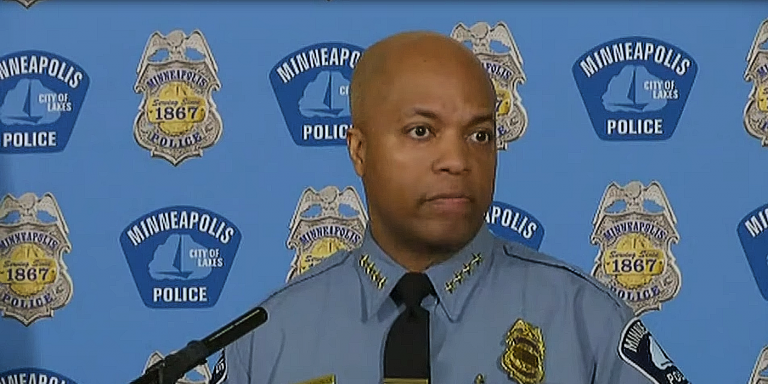
During a two-hour meeting with Minneapolis Police Chief Medaria Arradondo last week, the Democratic city council demanded to know why city police are not responding to the uptick in crime that Minneapolis has experienced in recent months, according to Minnesota Public Radio.

“Residents are asking, ‘Where are the police?'” Councilman Jamal Osman said, according to the outlet.

“That is the only public safety option they have at the moment: MPD,” he continued. “They rely on MPD. And they are saying they are nowhere to be seen.”

Council President Lisa Bender, who was one of the loudest ‘Defund the Police’ advocates, accused police of being “defiant.”

“This is not new,” she claimed. “But it is very concerning in the current context.”

The number of reported violent crimes—including assaults, robberies and homicides—are up compared to last year, according to MPD’s crime data.

In fact, more people have been killed in the city so far this year than were slain in all of 2019.

The city’s crime rate drew some unwelcome national attention after it was reported that two of the campaign workers for Lacy Johnson, the Republican running against Rep. Ilhan Omar, had been shot.

One of them, 17-year-old campaign volunteer Andre Conley, was killed Monday in a shooting outside a gas station.

Property crimes, too, like burglaries and auto thefts, are up. And incidents of arson have increased 55% compared to this time last year.

Council member Phillipe Cunningham blasted his colleagues for looking to the police for solutions when they called for the department’s abolition just a few months ago.

“What I am sort of flabbergasted by right now is colleagues, who a very short time ago were calling for abolition, are now suggesting we should be putting more resources and funding into MPD,” Cunningham said during the meeting.

The Minneapolis City Council’s resolution to disband the police department, which passed in June, fell apart later this summer after Democrats realized that it wouldn’t make for good policy.

“I think when you take a statement and then move into policy work, it gets more complicated,” Bender told the Minneapolis Star-Tribune.