Libs Go Nuts Over Feinstein Praise, Hug for Lindsey Graham

(Headline USA) It was the hug that may define — or doom — a long Senate career.

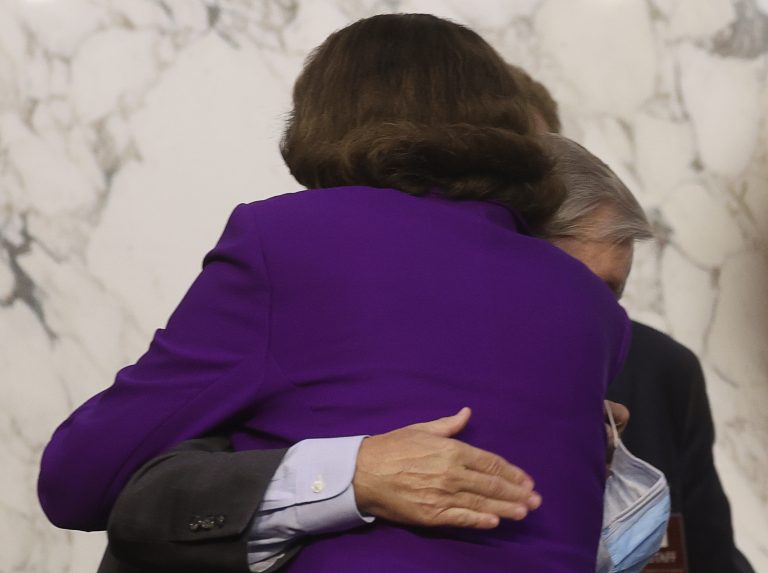
Democratic Sen. Dianne Feinstein of California embraced Republican Sen. Lindsey Graham at the close of confirmation hearings Thursday for President Donald Trump‘s Supreme Court nominee Amy Coney Barrett, publicly thanking the chairman for a job well done.

“This has been one of the best set of hearings that I’ve participated in,” Feinstein said at the Senate Judiciary Committee.

Calls for her ouster from Democratic leadership were swift, unequivocal and relentless.

“It’s time for Sen. Feinstein to step down from her leadership position on the Senate Judiciary Committee,” said Brian Fallon, the executive director of extreme radical group Demand Justice, which opposes all conservative nominees to the courts. “If she won’t, her colleagues need to intervene.”

Eli Zupnick, the spokesman for Fix Our Senate, said: “Senator Feinstein is absolutely wrong about what is happening in the Senate and in her Committee.”

He said in his statement that Republicans are trying to “jam” Barrett’s nomination through the Senate and it “should not be treated as a legitimate confirmation process.”

The response was not a knee-jerk reaction to an off-the-cuff moment between two longtime senators, but a slow-burning frustration among leading liberal advocates that the panel’s top Democrat is no longer the right fit for the job, with Feinstein adhering to quaint, outdated qualities such as civility and respect for colleagues.

Supreme Court confirmation battles have gone from bipartisan Senate fare to bare-knuckle brawls as Republicans led by Senate Majority Leader Mitch McConnell mounted an aggressive Trump-era campaign to transform the judiciary with conservative judges.

Trump has been able to install more than 200 judges on the federal bench and is now poised to seat his third justice on the Supreme Court.

Barrett is being moved to confirmation before the Nov. 3 election to replace the late liberal icon Justice Ruth Bader Ginsburg, shifting the court in a slightly more conservative direction, with wild card Chief Justice John Roberts a swing vote on key decisions. Rulings on abortion, gay marriage, health care and others are in sight.

Fallon, a former campaign operative for Hillary Clinton’s presidential campaign, said in a statement that Democrats can no longer be led on the Judiciary panel by someone who treats “the Republican theft of a Supreme Court seat with kid gloves.”

Feinstein, 87, has been taking it from all sides during Barrett’s nomination process.

Republicans attacked the senator for questioning Barrett’s Catholic faith three years ago when the then-Notre Dame Law School professor was undergoing confirmation proceedings for the 7th District U.S. Court of Appeals.

At the time, Feinstein said Barrett’s opposition to abortion must be rooted in her religion and questioned if it would influence her rulings on the bench, saying the “dogma lives loudly in you.”

It became a rallying point this week for Republicans defending Barrett’s faith, so much so that Graham praised the judge as an “unashamedly pro-life” nominee who could be a role model to other conservative women.

Feinstein avoided the trap and was careful during her questioning of Barrett not to probe her faith. Democrats were determined to avoid a repeat of the 2017 hearing. Also, their brutal, unsubstantiated attacks on now-Justice Brett Kavanaugh cost them dearly in the 2018 Senate races.

But as other Democratic senators seized the spotlight, utilizing the four days of hearings to lob attacks against Trump and his court nominee, Feinstein often took a more diplomatic approach. At one point she declared herself “impressed” with Barrett’s handling of questions. Eyes rolled.

Still, despite the complaints, Democrats have Feinstein to thank for a few key moments during the process.

It was Feinstein who drew a notable non-answer from Barrett when asked if she agreed with the late conservative Justice Antonin Scalia, her mentor, that the Voting Rights Act “perpetuated racial entitlement.”

And Barrett gave Feinstein a similar no comment when asked if she agreed with other conservatives who argue that Medicare, the senior health care program, is unconstitutional.

Feinstein’s office declined further comment, but pointed to the senator’s statement.

“Judiciary Committee Democrats had one goal this week: to show what’s at stake under a 6-3 conservative Supreme Court — and we did that,” Feinstein said, misrepresenting the court’s potential ideological makeup with Barrett. “We showed that Judge Barrett has a long history of opposing the Affordable Care Act and Roe v. Wade and represents the vote to overturn both.”

But those moments may be forgotten for the one that is now being remembered — all the more notable because it happened during the COVID-19 crisis, with neither senator wearing a mask.

It was the hug.

Adapted from reporting by Associated Press.
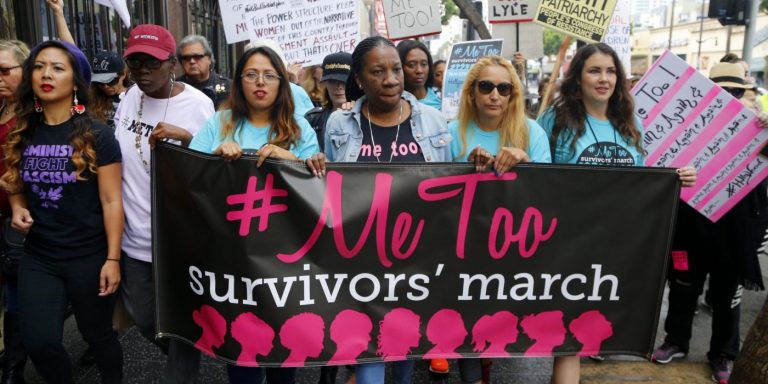
#MeToo Shifts Goal Posts for Biden: Plans to Focus on Racial ‘Inequality’ Instead of Rape

0

(Headline USA) The #MeToo movement hinted that it was putting its pro-female-empowerment agenda on the back-burner as it hopped on the racial-justice bandwagon.

When the hashtag went viral three years ago on Oct. 15, 2017, it sparked a global conversation about sexual harassment and assault that, in its wake, brought down many powerful men, most of whom were supporters and champions of left-wing politics.

But the elevation of former Vice President Joe Biden to the top of the ticket complicated things for many of its fiercest proponents.

His supporters and allies have scrambled to downplay one credible rape accusation, as well as countless instances—many of them documented visually—of Biden’s uncomfortable behavior around women and young girls.

Now, amid the ongoing race riots and Black Lives Matter protests, the #MeToo movement has set its misogynist house-cleaning efforts aside in favor of tackling “inequality” in race, claimed its founder.

When founder Tarana Burke thinks about the group’s future, she said her vision is clear.

That mission emerged years earlier—in 2006, when Burke, after a career of community service, began working directly with survivors, many of whom were young black girls and children of color.

“It sort of triggered something in me because I had experienced sexual violence myself as a child,” Burke said.

“What would my life have been like if somebody had intervened at 12, 14 or 16, even just to say that I deserve healing, and that I deserve wellness and wholeness and joy?” she asked.

“And so it started off trying to bring those messages, that idea of healing into these young women’s lives and using the power of empathy,” she said.

As the #MeToo movement marks the third year since it received global recognition, Burke is working to make sure it remains inclusive and reclaims its original intent: A focus on marginalized voices and experiences.

She sees that path forward through Dani Ayers, a 39-year-old black woman who quietly, yet with a bold vision, transitioned into becoming the movement’s CEO in July after joining the organization in 2018.

In a year marked by a nationwide reckoning over systemic racism and inequities that have disproportionately impacted black Americans, the #MeToo movement is now jointly led by two black women keenly aware of the inequality that has long existed in America—something they find both empowering and challenging.

“I think it’s a testament and it’s a representation of the fact that there are many movements that have been started by black women. The Black Lives Matter movement was also started by black women,” Ayers told the Associated Press in her first joint interview with Burke.

“It’s an opportunity to shine a light. We are absolutely centering black women and girls, people of color, queer, trans, disabled folks in our work because we know that solving and interrupting the issue of sexual violence in those communities means ending sexual violence everywhere.”

Several events are planned to mark the third anniversary, including the announcement of the new leadership structure and a survey of survivors that Burke and Ayers expect will reignite momentum behind the movement.

Their goal is to create a global network of organizations united behind the movement to end sexual violence.

But after a groundswell of support from celebrities, politicians, marches and more, they said it’s been challenging to keep the spotlight on the need for funding to continue the fight against sexual violence.

As black women, they said it’s frustrating that many don’t see the intersection of race and the sexual violence women of color endure.

“We’ve got to make that connection clear for folks,” Ayers said.

“We’ve seen money start to be pushed to black-led organizations and it needs to happen, but sexual violence has not seen that same funding support,” she said. “And I think it’s because folks don’t automatically understand the intersection of sexual violence and structural racism. And so we really have a lot of work to do.”

They also noted the Breonna Taylor case and the #SayHerName campaign, which brings attention to black women like Taylor whose cases go unheard or are silenced.

Burke said she herself has dealt firsthand with the erasure that black women often endure, when people failed to acknowledge the #MeToo movement was started and led by black women and people of color.

“I’ve heard people … not acknowledge that there is a black woman right now trying to hold this narrative, hold this work and push a narrative forward that is opposite of what we’ve heard in the news, about it being about Hollywood and white women, powerful white men, or powerful men, period,” Burke said.

“So as a black woman, I feel both the pride and the burden of carrying this kind of work forward,” she said.

The coronavirus pandemic has also presented unique challenges for the movement.

During the pandemic, the group has seen a 20% rise in intimate partner violence and increased concerns about child sexual assaults, Ayers said, so they’ve shifted toward offering virtual resources and programming, including a survey that revealed stark disparities.

“We’re hearing black survivors say, ‘I don’t have money to eat,’” Ayers said.

“The disparity is just growing as a result of the pandemic and we need to be able to talk about that, not only in a qualitative way but we need the data to be able to help those who have money understand where we need to be pushing resources and why.”

Ayers and Burke also recognize the power that survivors hold—especially in this moment as the nation is just weeks away from selecting its next president after a campaign fraught with divisiveness.

Burke late last year launched #MeTooVoter as a way to galvanize the millions who have supported the movement. Both Burke and Ayers view survivors as a significant voting bloc whose voices deserve to be heard.

While the group has not officially endorsed either candidate, the women said they have serious concerns about what another four years of President Donald Trump would mean for survivors of sexual violence.

“I think we are in a critical moment and survivors’ voices in this moment should be the loudest,” Burke said.

“If we look at the two candidates, for a lot of people, neither of them are their top choice,” she said.

“But this fight that we have will continue, not just for the next four years, it will continue for the next four decades. We have a person right now who won’t even get in the fight, who won’t even engage in the conversation,” Burke said. “I think survivors are lined up to get Trump out of office.”

But beyond the election, Ayers is hopeful about the work that remains.

“The survivors, they inspire me every day,” she said. “We’re creating a culture inside this organization that gives people the space to be who they are and to show up as their full selves. There are so many people working to end sexual violence and watching their work inspires me. So there is hope.”

Adapted from reporting by the Associated Press

Election Watchdog Urges Voters to Cast Ballots In Person; ‘Better than the Mail’

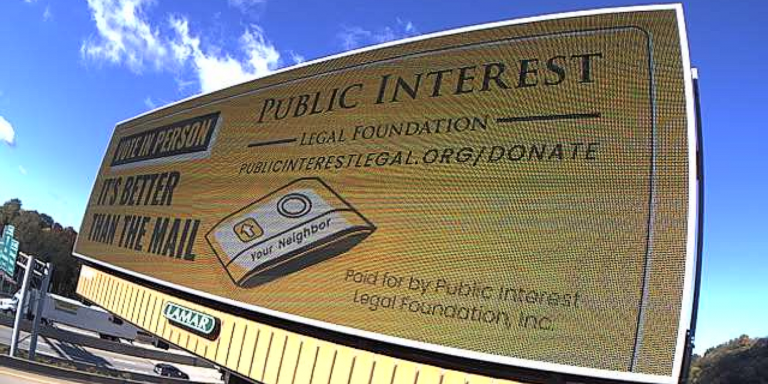
The Public Interest Legal Foundation launched a national billboard campaign to warn citizens against voting by mail and to encourage voting in person, according to a press release.

The billboards say either, “Vote in Person: It’s Better than the Mail,” or “Vote in Person: Protect Your Vote.”

“Voting in person is the gold standard to having your vote count,” said J. Christian Adams, PILF president and general counsel.

The billboards serve as a counter to the propaganda that currently lines America’s freeways, with messages warning citizens that it is not safe to vote in person because of a virus with low lethality for the vast majority of the healthy population.

PILF has focused its legal efforts on election integrity, including a Houston-area lawsuit to prevent Harris County from registering non-citizens to vote.

“Mail ballots disenfranchise voters because ballots are lost, completed with mistakes, and sometimes even stolen or thrown away,”Adams said. “We hope these billboards serve as a reminder of their in-person options that are proven to ensure votes are properly received and counted.”

There are billboards in Wisconsin, Pennsylvania, Michigan and other states.

Lawyers at the firm have 11 federal lawsuits that claim the United States cannot transition to universal mail-in voting because ballots would be sent to scores of dead, ineligible, or illegal voters.

Mail-in voting harms citizens, too.

An election model from Columbia Journalism Investigations estimated that one million mail-in ballots will be rejected this year due to unverified signatures, late arrival or missing signatures, as well as other errors.

“Our zealous defense of election integrity would not be possible without the support of those who care,” Adams said this June.

“Our extraordinary level of targeted action is only possible because Americans care about clean elections,” he added.

REPORT: Trump Outpacing Biden in Key Swing State Polls

While pundits projected Democrats would gain a decisive advantage in early voting, President Donald Trump is keeping pace with Democratic presidential candidate Joe Biden in three key swing states, according to multiple polls.

Voting has begun in several states, and data out of Michigan, Wisconsin and Ohio prove that registered Republicans are turning out for Trump at the same rate as registered Democrats, according to the Washington Examiner.

In Michigan, 40% of the 1 million early ballots that have been submitted are from Democrats, and 40% are from Republicans.

In Wisconsin, 40% of the 711,855 early ballots that have been submitted are from Democrats, and 38% are from Republicans.

More Republicans than Democrats have voted early in Ohio, with 45% of the 475,259 ballot returns coming from Republicans, and 43% coming from Democrats.

The data seem to suggest that Democratic voters aren’t the only ones coming up with alternative plans for casting their ballot amid the ongoing coronavirus panic.

However, Republicans are still behind in Florida, North Carolina, and Pennsylvania—states Trump needs to win, and states Trump will win, according to Susie Wiles, Trump’s campaign director in Florida.

“Voting in Florida is a marathon. And what you’re seeing is a bit of a sprint from the Democrats,” Wiles said.

“But we have far more high-propensity voters on our side,” she continued. “That should be noted in all the hype about the Democrats’ lead. We’re not finished. We’re turning our sights to early in-person voting and to Election Day.

These numbers also do not take into account actual Election Day turnout, which Trump is currently leading.

More than 63% of those who plan to vote in person on Election Day have said they plan to vote for Trump, according to an Axios survey last month.

Biden has been leading Trump in the national polls for months, but a RealClearPolitics average of battleground polling shows that Trump is actually performing better than he did in 2016 in Wisconsin, Pennsylvania, Michigan, Florida, North Carolina and Arizona.

He won those states to the shock of many four years ago, even though Hillary Clinton had a sizable pre-election polling lead in several of the states.

Meanwhile, Biden is performing poorly in states where Clinton did well four years ago. In Wisconsin, Michigan, and in North Carolina, Biden is polling worse than Clinton did — and Trump won all of those states in 2016.

Nationally, Trump is doing better than expected too. He has cut Biden’s 12-point lead in half over the past week, according to a recent Rasmussen survey.

In Rasmussen’s latest poll, Biden has only a five point lead. Compare this to last week, when Biden led Trump by 12 points, 52% to 40%.

Even Biden’s team has admitted that Trump will do better than the polls anticipate.

“There’s a big wave of Republicans coming. And frankly, that’s a data point that a lot of people tweeting about this fail to realize,” said Steve Schale, the head of the pro-Biden super PAC Unite the Country.

“The numbers are pretty staggering for us, and the return rates and the polling look good,” he said. “But there’s just a lot we don’t know.”

Justice Dept. Sues Former Aide to Melania Trump for Violating Non-Disclosure in Gossip Book

The Justice Department sued a former aide to First Lady Melania Trump, alleging that she published confidential details in violation of a nondisclosure agreement, The Epoch Times reported.

The lawsuit was filed on Oct. 13 in the U.S. District Court in Washington against Stephanie Winston Wolkoff, who served Melania from early 2017 until Feb. 26, 2018.

The Justice Department said Wolkoff did not let the White House review a copy of her book, Melania and Me: The Rise and Fall of My Friendship with the First Lady, before she published it.

Published on Sept. 1, Melania and Me relies on privately recorded conversations to harm the First Lady’s reputation.

The Justice Department seeks to ensure that Wolkoff does not profit from the book or any subsequent media adaptations of its content.

Wolkoff and Melania signed a “Gratuitous Services Agreement” in 2017 that prevented the disclosure of “nonpublic, privileged, and/or confidential information.”

“Ms. Wolkoff breached the GSA by disclosing her manuscript to Simon & Schuster, and causing it to be published, without having received written authorization from the Chief of Staff to the First Lady or the Office of White House Counsel,” the lawsuit states.

Wolkoff said she did not break the agreement’s terms since she did not disclose the information until after her employment ended.

“The president and first lady’s use of the U.S. Department of Justice to silence me is a violation of my First Amendment rights and a blatant abuse of the government to pursue their own personal interests and goals,” she said.

Melania’s chief of staff, Stephanie Grisham, responded to the allegations in the book.

“This book is not only wildly self-aggrandizing, it’s just not truthful,” she said.

“It is an exercise in bizarre twisting of the truth and misguided blame for the sake of self-pity,” she continued. “It’s unfortunate and concerning that she’s overstated their friendship and her very brief role in the White House to this degree.”

Portland Sues Trump Admin, Claims It Was Duped into Letting Police Be Deputized

0

(Headline USA) The cities of Oaklan, Calif., and Portland, Oregon have sued the U.S. Department of Homeland Security and the Justice Department, alleging that the agencies are overstepping constitutional limits in their use of federal law enforcement officers to tamp down on protests.

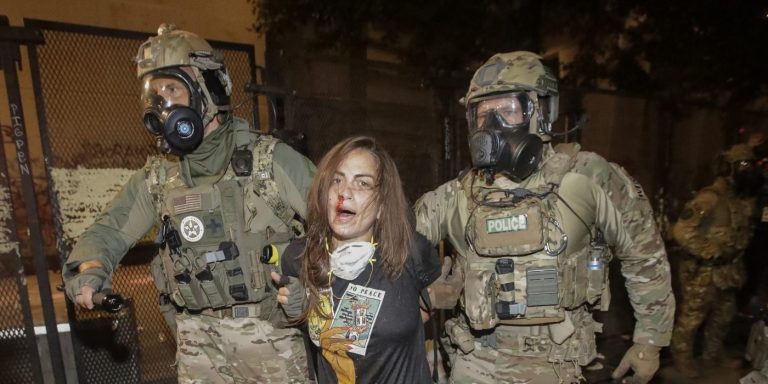
The lawsuit, filed late Wednesday in U.S. District Court in San Francisco, cites the deployment of U.S. agents this summer to quell protests in Portland and alleges the U.S. Marshals Service unlawfully deputized dozens of local Portland police officers as federal agents despite objections from city officials.

Last month, Portland agreed to have about five dozen of its police officers deputized as federal agents by the Marshals Service in advance of a rally planned in the city by the right-wing group Proud Boys.

The city anticipated potential clashes between left- and right-wing protesters. Troopers from the Oregon State Police and a local sheriff’s department were also deputized.

City leaders have since said that they believed the police officers would only be federally deputized for that weekend and sought to cancel the agreement after the rally was over.

But the U.S. Attorney for Oregon and the Marshals Service have refused to cancel the deputization, which officially expires on Dec. 31.

The lawsuit also alleges that the U.S. government has illegally erected a fence around the Mark O. Hatfield Courthouse, which is federal property, against the city’s wishes. The fence blocks a major bike thoroughfare that is city property, according to Portland officials.

The federal deputations have meant protesters arrested by local police could face federal charges, which generally carry stiffer penalties.

The move came as officials in Portland and other blue-run sanctuary cities for radical anarchists refused to dispatch local law-enforcement to handle the destructive race riots.

But the lawsuit claimed that use of federal agents in these ways is a major shift in policy and threatens the independence of local law enforcement.

The complaint cited the anti-commandeering doctrine of the Tenth Amendment, which says that the federal government cannot require states or state officials to adopt or enforce federal law.

The Justice Department declined to comment and the Department of Homeland Security didn’t respond to a request Thursday.

In the past, acting DHS secretary Chad Wolf has been a vocal defender of the administration’s response to the civil unrest in Portland

The Trump administration says the work of the federal agents is limited to federal property but “the activities in cities such as Portland instead reveal a distinct and meaningful policy shift to use federal enforcement to unilaterally step in and replace local law enforcement departments that do not subscribe to the President’s view of domestic ‘law and order.’”

The allegations of constitutional overreach focused on the federal government’s actions in Portland, but Oakland joined the lawsuit because of concerns that the Trump administration might send U.S. agents to Oakland or deputize police officers there as well, court papers show.

The far-left city, sandwiched in between San Francisco and Berkeley but with a less affluent population, has a long history of participating in violent riots.

Radical agitators have already announced their plans for sustained social unrest in the event that the outcome of the Nov. 3 election is anything but a decisive victory for Democrat Joe Biden.

U.S. Attorney for Oregon Billy J. Williams said in late September that more than 80 people had been charged with federal crimes related to the protests.

Adapted from reporting by the Associated Press

Flustered Dems Resort to Two-Word Attacks as Barrett Sails Through SCOTUS Hearings

0

(Headline USA) Republicans powered Supreme Court nominee Amy Coney Barrett closer to confirmation Thursday, pushing past Democratic objections and other priorities during the COVID-19 crisis in the drive to seat President Donald Trump’s pick before the Nov. 3 election.

The Senate Judiciary Committee set Oct. 22 for its vote to recommend Barrett’s nomination to the full Senate, with a final confirmation vote expected by month’s end.

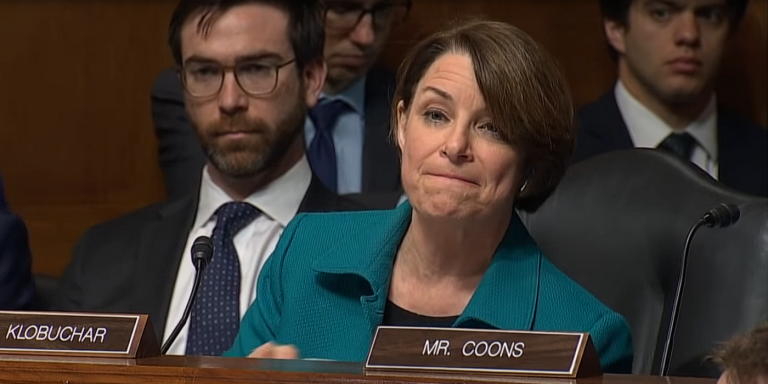
Stakes are high for all sides. Liberals pounced when top Democrat Sen. Dianne Feinstein of California hugged the chairman, Sen. Lindsey Graham, R-S.C., as days of hearings closed, praising his handling of the process. They called for her immediate removal from leadership.

After three days of desperate attacks, including hyped up claims that Barrett would do away with Obamacare and abortion and LGBT rights, many of the committee’s Democrats resorted to two-word statements.

“A sham,” said Sen. Amy Klobuchar, D-Minn.

“Power grab,” protested Sen. Richard Blumenthal, D-Conn.

“Not normal,” said Sen. Dick Durbin, D-Ill.

Republicans eager to fill the seat left vacant by the the death of Justice Ruth Bader Ginsberg countered that Trump is well within bounds—and they were confident that they have the votes to do it.

Sen. John Cornyn, R-Texas, said he understands Democrats’ “disappointment.” He said, “Their loss is the American people’s gain.”

Despite the near incessant efforts of Democrats to bait the unflappable Barrett into making broad political statements, the 48-year-old judge was careful during two days of public testimony not to tip her views on many issues.

Facing almost 20 hours of questions from senators, she declined to offer specifics beyond a vow to keep an open mind and take the cases as they come, telling senators that to do otherwise would violate the judicial cannon of ethics that she must abide by.

“It’s not the law of Amy,” the mother of seven told the senators at various times.

Barrett wasn’t present for Thursday’s hearing, which featured character witness testimony for and against her.

Among those testifying Thursday in support of Barrett’s nomination, retired appellate court Judge Thomas Griffith assured senators that Barrett would be among justices who “can and do put aside party and politics.”

But a coalition of civil rights groups opposed her nomination. Kristen Clarke, the president of the Lawyers Committee on Civil Rights, said the judge’s unwillingness to speak forcefully for the Voting Rights Act and other issues should “sound an alarm” for Americans with a case heading to the high court.

“Our nation deserves a justice who is committed to preserving the hard-earned rights of all Americans, particularly the most vulnerable,” Clarke testified.

Others testifying Thursday included Laura Wolk, the first blind woman to be a law clerk for the Supreme Court, who told senators that Barrett’s encouragement and support were life-changing.

“Her brilliance is matched only by her compassion,” said Wolk, who also spent a year as a law clerk for Barrett.

Adapted from reporting by the Associated Press

Conservatives Lash Back at Twitter, Facebook for Censoring Bombshell Biden Scandals

After the New York Post published a bombshell report on Wednesday detailing then-Vice President Joe Biden’s history of corruption, Facebook and Twitter banned circulation of the story in an attempt to suppress it.

But in a bizarrely ironic twist of fate, the left-leaning social-media platforms quickly became the focus of the story themselves, elevating the outrage among conservative critics to a new level and helping fuel even greater attention to the bombshell reports.

Users that shared the story on Twitter were locked out of their accounts, and were even prevented from sharing the link to the report in direct messages.

When confronted about this blatant act of censorship, Twitter executives claimed that the New York Post report violated a 2018 policy prohibiting the sharing of “content obtained without authorization.”

Another Twitter spokesperson told the Washington Examiner that the story was removed from the social-media platform because of its “lack of authoritative reporting.”

But many pointed out that if Twitter was trying to prevent people from reading the New York Post’s report, the social media giant accomplished the exact opposite.

Meanwhile some GOP lawmakers warned of an even greater backlash, telling Twitter that its actions may have legal consequences.

Several Republicans have echoed this warning, including Sen. Josh Hawley, R-Mo., who told Twitter CEO Jack Dorsey to be prepared to testify “under oath” about Twitter’s recent actions. The House Judiciary Committee also plans to subpoena Dorsey in the coming weeks.

Hawley further hinted that other actions may be taken to break up the monopolistic companies.

He also retweeted a statement from Ajit Pai, chairman of the Federal Communications Commission, pledging to take action after the uproar.

Because Twitter is a private company, it often receives the benefit of the doubt. But the egregious abuse of its platform to tip the political scales prompted renewed calls to revise or repeal Section 230 of the Communications Decency Act, which extends First Amendment protections to many online platforms that host user-generated content.

Facebook’s excuse wasn’t much better. A spokesperson for the company, Andy Stone, said blocking access to the New York Post story “is part of our standard process to reduce the spread of misinformation.” Now the New York Post’s report must undergo a “thorough” fact-checking before users can share it on the platform.

Several users pointed out that Facebook didn’t bother to similarly fact-check the many unverifiable claims made against President Donald Trump:

CUOMO: NYC Too Easy on Jews; Threatens to Hold Funds During COVID Lockdown

New York Gov. Andrew Cuomo threatened to pull state funding from local schools and governments that do not follow his coronavirus regulations.

Speaking specifically about several Orthodox Jewish communities in New York City that have defied the COVID-19 lockdown, Cuomo said he would “impound all funds” from these jurisdictions if they continue to violate his orders.

Cuomo, who has been widely criticized for his own policy failures in the COVID response, appeared to deflect blame onto his intra-party Democrat rival, New York City Mayor Bill de Blasio, suggesting he went too easy on the Jewish scofflaws.

However, de Blasio faced accusations of anti-Semitism during the virus’s peak for cracking down on  Jewish worshipers while permitting Muslims to gather in observance of their sacred holidays.

“If I had to do this all over again on lessons learned, I would have had the state take over or hire statewide enforcement, because the enforcement from the local governments is very uneven, especially when it’s politically sensitive,” Cuomo said, according to the New York Daily News.

“And that’s what we’re running into with a lot of these Ultra-Orthodox communities, who are also very politically powerful,” he added.

Schools and yeshivas—the education centers where Jews study holy scripture—found in violation of Cuomo’s order will be served notices to shut down, he said.

“I don’t like to do that. Budgets are tough all across the board,” Cuomo said. “I don’t know how else to get them to actually do the enforcement they need to do, so hopefully that will motivate them.”

Cuomo said he couldn’t specify how much money the state would restrict, but noted that the state government legally has the right to withhold all funds if necessary.

“We have the authority to impound all funds to a locality,” he said. “How much will we penalize them? It depends, and it will be to our discretion.”

The threat comes a week after the state issued a temporary limit on gatherings, schools and businesses in nine hot-spot zones, most of which are ultra-Orthodox communities.

Dozens of private yeshivas, however, have defied the order, and Cuomo insinuated that de Blasio had let them.

“They don’t want to do the enforcement. Why? Because it’s politically sensitive,” the governor said without mentioning de Blasio by name.

“The community we’re talking about today is a politically powerful community… so I understand they don’t want to incur the wrath and the political downside.”

Facebook, Twitter Beclown Themselves in Desperate Bid to Lay Cover for Bidens

0

Media and social-media companies—including Facebook, Twitter and the Washington Post —ensnared themselves in a farcical attempt to justify censorship after the emergence of damning data from Hunter Biden‘s abandoned laptop threatened to derail his father’s presidential campaign.

The Biden-backing companies issued an array of contrived excuses, including Twitter’s claim that the New York Post‘s bombshell violated a never-before-enforced 2018 policy that prohibited the sharing of ‘hacked’ information.

The Washington Post, meanwhile, claimed that Joe Biden had never pressured Ukrainian officials to fire a prosecutor investigating corruption at the Burisma energy company, despite a 2017 video in which the former vice president admits to doing precisely that.

Far from being esoteric and unverified, the video was widely referenced and circulated during President Donald Trump’s impeachment proceedings for alleged abuse of power after he asked Ukraine’s new president to reopen the investigation.

Nonetheless, Facebook cited the Washington Post‘s false claim about the Obama-era Ukraine scandal as justification for “reducing distribution” of the breaking story on its platform.

But with several other explosive storylines emerging from the laptop data on Thursday, it was clear that the dam was poised to burst on the media’s desperate censorship efforts.

Due to the attempts to tamp down the spread of the stories as unproven, the emergence of hard evidence to the contrary meant the outlets risked shattering the facade of neutrality—and also damaging their credibility by permitting the Biden campaign and its leftist allies to spread disinformation.

After the Washington Post‘s so-called lead fact-checker, Glenn Kessler, tweeted out the text of the Watergate-breaking paper’s new policy on hacked or leaked material, many were skeptical.

Some pointed to the paper’s silence over recent leaks of President Donald Trump’s tax information and those used to propel the FBI’s 2016 Russia hoax among countless examples of its duplicity in making exceptions to the rule that benefited left-wing narratives.

Others who were critical of the media response noted the eerily Orwellian quality of it all.

Still, Biden-backers continued to circle the wagons.

Twitter CEO Jack Dorsey did so sheepishly, admitting that the platform’s double-standard and lack of transparency while attempting damage control were, in fact, exacerbating the problem.

Even so, Twitter audaciously doubled-down on its efforts, going so far as to blacklist the official website of the House Judiciary Committee and label it as “spammy and unsafe” after ranking minority member Jim Jordan, R-Ohio, reposted the original article on the government-run site.

A Twitter representative later claimed it was done “in error,” Breitbart reported.

However, White House Press Secretary Kayleigh McEnany was also blocked, as were links to last month’s official investigative report by the Senate Homeland Security and Governmental Affairs Committee.

The backlash from Republican leaders against the platforms was severe, with Sen. Ted Cruz, R-Texas, saying the Twitter CEO would be receiving a subpoena from the Senate Judiciary Committee.

“We have seen Big Tech—we’ve seen Twitter and Facebook—actively interfering in this election in a way that has no precedent in the history of our country,” Cruz said in a statement alongside committee chair Lindsey Graham, R-SC.

The story seemed likely to easily eclipse the committee’s final day of hearings for Supreme Court nominee Amy Coney Barrett.

“The Senate Judiciary Committee wants to know what the hell is going on,” Cruz said.

“… Let me be clear: I don’t know if these New York Post stories are true or not,” he continued. “Those are questions Vice President Biden should answer. But Twitter and Facebook and Big Tech billionaires don’t get to censor political speech and actively interfere in the election.”

GOP Sens. Marco Rubio of Florida, Tom Cotton of Arkansas and Josh Hawley of Missouri also weighed in, urging the revision—or even the total repeal—of Section 230 of the Communications Decency Act.

Tech companies have long used the statute to claim free-speech protections by insisting that they are simply conduits rather than curators of user-generated content.

“The big-tech oligarchs have declared war on the Republican Party, and conservatives and I promise them, those in Silicon Valley: Winter is coming,” Cotton warned in a Thursday-morning interview with Fox News’s Maria Bartiromo.

Another Fox News host, Tucker Carlson, also railed against the suppression, describing it as an “in kind donation” to the Biden campaign and warning that the high stakes of inaction would, at the very least, cost Republicans the election.