(José Niño, Headline USA) Newsweek senior editor Josh Hammer is calling on President Trump and Vice President JD Vance to deliver an Oval Office address condemning Tucker Carlson, Nick Fuentes, and what he describes as rising antisemitism in conservative circles.
The controversy centers on Carlson’s October 27, 2025 interview with Fuentes on his podcast. The two-hour conversation garnered over 6 million views on YouTube and, as Headline USA previouslyreported, has generated backlash from legacy conservative institutions.
During the interview, Fuentes made several controversial statements, including calling himself “a fan” of Joseph Stalin, expressing that America needs to be “pro-White,” and discussing concerns about “organized Jewry in America.” Carlson notably did not push back on these points, which alarmed many mainstream pundits.
Chris Menahan of Information Liberationshared the X/Twitter clip on Thursday featuring Hammer, who is also host of The Josh Hammer Show and author of Israel and Civilization, calling for an Oval Office address condemning Carlson, Fuentes, “Groyperism,” and what he characterizes as “the rise of anti-Semitism” within conservative circles.
Menahan wrote that Hammer “is now demanding President Trump and VP Vance do an address from the Oval Office to ‘condemn’ Tucker Carlson, Nick Fuentes, ‘Groyperism,’ and ‘the rise of anti-Semitism.'”
In an interview with Jonathan S. Tobin, the editor in chief of the Jewish News Syndicate, Hammer expressed his concerns about Vice President Vance’s engagement with social media. He suggested Vance “spends a good amount of time on Twitter” and might see a “massive anti-Semitic, frankly anti-American constituency” to tap into.
Hammer expressed concern that Vance’s silence on these matters is “not ultimately sustainable,” particularly given that Fuentes has personally attacked Vance in “disgusting terms,” calling him a “fat race traitor” for marrying his Indian wife Usha.
“I would like to see both the vice president and the president say something about this,” Hammer stated. He wants “some sort of Oval Office sit-down, look into the camera, say something” to “condemn in no uncertain terms” Fuentes, Groyperism, and “the rise of antisemitism.”
Hammer clarified his expectations. “I’m not even asking necessarily for JD to say I formally renounced Tucker Carlson. That’s not gonna happen. My expectations are realistic,” he said.
According to a biography on Townhall, Hammer is a constitutional lawyer by training who clerked on a federal appeals court and serves as a research fellow with the Edmund Burke Foundation. He has been one of the most vocal conservative critics of what he sees as an anti-Western turn among certain figures in the MAGA movement.
Hammer has publiclycalled Tucker Carlson “absolutely anti-Semitic” and believes Carlson has “a deep abhorrence not just of Jewish people, but really of Western civilization itself” during an interview on John Anderson Media.
The bills – PROTECT Our Kids Act, CLASS Act and TRACE Act – essentially prohibit funding from foreign sources and reinforce protections for American students and families. All three passed with bipartisan support.
U.S. Rep. Dave Joyce, R-Ohio, introduced H.R. 1005, PROTECT Our Kids Act, which prohibits public schools from accepting funds from foreign sources and requires the schools to disclose contributions over $10,000.
Joyce called the legislation a safeguard against foreign interference in the classroom.
“American classrooms and what is taught in them should be guided by Americans, not by foreign influences,” said Joyce.
U.S. Rep. Bobby Scott, D-Virginia, opposed H.R. 1005, calling it unnecessary during his closing statements on the House floor Wednesday.
“[T]here is absolutely zero credible evidence that K–12 schools are under threat from misinformation or covert influence by authoritarian foreign governments in any meaningful way,” Scott said in a transcript sent to The Center Square. “This bill does nothing to improve our schools, close achievement gaps, or increase teacher pay. Instead, it burdens schools with bureaucratic red tape due to imagined covert influence from foreign governments.”
U.S. Rep. Kevin Hern, R-Oklahoma, introduced H.R. 1069, the CLASS Act, which blocks federal education funds from going to any public school that has received direct or indirect support from foreign sources.
“The threat of the CCP is real and growing, and we absolutely must do what we can to protect our children from anti-American brainwashing material funded by one of our greatest adversaries,” Hern told The Center Square in an email. “The 164 Democrats who voted against passing my PROTECT Our Kids Act and believe the CCP isn’t a threat to our education system are either willfully ignorant or too caught up in partisan politics.”
U.S. Rep. Aaron Bean, R-Florida, introduced H.R. 1049, the TRACE Act, which seeks to allow parents the right to request information about foreign influence in education.
“The TRACE Act puts parents back in charge, exposes foreign influence for what it is, and slams the door on hostile nations trying to reach America’s youth,” Bean said.
“The CCP uses our free and open society against us, bankrolling civil organizations … to sponsor exchange programs and curriculum that hide the truth about China,” Select Committee on China Chairman John Moolenaar, R-Michigan, said on the House Floor Wednesday.
House Republican Conference Chairwoman Lisa McClain, R-Michigan, said the measures reverse unchecked foreign influence under the Biden administration and emphasized that “federal funding is a privilege, not a right.”
In a ruling Friday, U.S. District Court Judge Sparkle L. Sooknanan denied the federal government’s motion to dismiss the case and has set a hearing for next week for the parties to discuss next steps in this case.
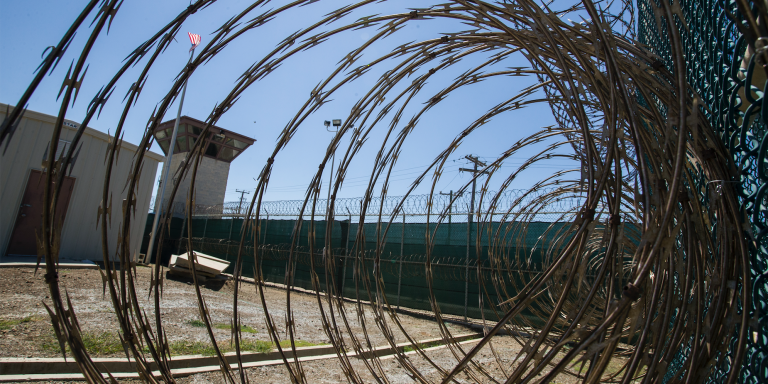
President Donald Trump in January announced his administration would use a detention center at Guantanamo to hold tens of thousands of the “worst criminal aliens,” as part of his wider immigration crackdown.
Between February and June, the federal government held around 500 immigrants at Guantanamo, according to Sooknanan, as authorities used the base as a way station for immigrants with final removal orders.
American Civil Liberties Union attorney Lee Gelernt, who argued the case, said in a statement Saturday that he hopes the ruling “will put an end to the Trump administration’s unlawful policy of sending immigrants to military bases in the middle of nowhere solely for the theatric value.”
The Department of Homeland Security did not immediately return a request for comment.
The ACLU and other advocacy groups have argued that transporting immigrants to Guantanamo is unlawful. The Trump administration has said it has broad authority to hold immigrants with final deportation orders at the facility.
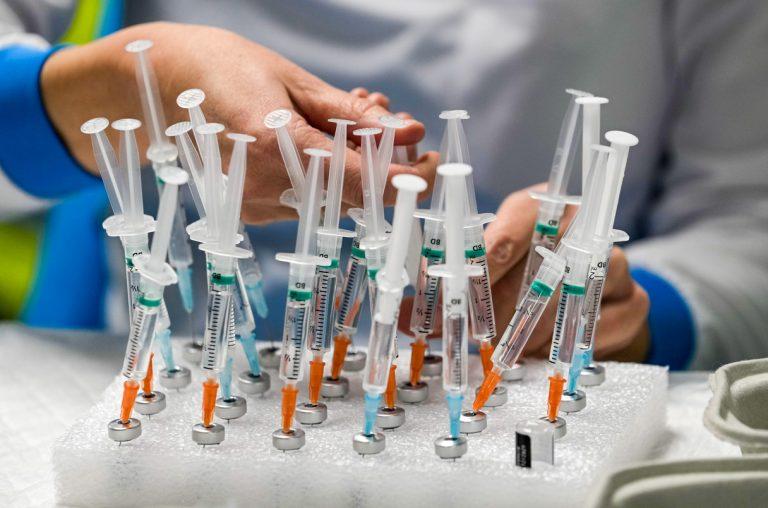
(Headline USA) A federal vaccine advisory committee voted on Friday to a recommendation that all U.S. babies get the hepatitis B vaccine on the day they’re born.
Several medical and public health leaders decried the actions of the panel, whose current members were all appointed by U.S. Health Secretary Robert F. Kennedy Jr.
“This is the group that can’t shoot straight,” said Dr. William Schaffner, a Vanderbilt University vaccine expert who for decades has been involved with the Advisory Committee on Immunization Practices and its workgroups.
Several medical societies and state health departments said they would continue to recommend them. While people may have to check their policies, the trade group AHIP, formerly known as America’s Health Insurance Plans, said its members still will cover the birth dose of the hepatitis B vaccine.
For decades, the government has advised that all babies be vaccinated against liver infection right after birth.
But Kennedy’s advisory committee decided to recommend the birth dose only for babies whose mothers test positive, and in cases where the mom wasn’t tested.
For other babies, it will be up to the parents and their doctors to decide if a birth dose is appropriate. The committee voted 8-3 to suggest that when a family elects to wait, then the vaccination series should begin when the child is 2 months old.
President Donald Trump posted a message late Friday calling the vote a “very good decision.”
Committee members said the risk of infection for most babies is very low and that earlier research that found the shots were safe for infants was inadequate.
They also worried that in many cases, doctors and nurses don’t have full conversations with parents about the pros and cons of the birth-dose vaccination.
The committee members voiced interest in hearing the input from public health and medical professionals.
Several members of Kennedy’s committee voiced discomfort with vaccinating all newborns. They argued that past safety studies of the vaccine in newborns were limited and it’s possible that larger, long-term studies could uncover a problem with the birth dose.
Republican Sen. Bill Cassidy, a liver doctor who chairs the Senate health committee, called the committee’s vote on the hepatitis B vaccine “a mistake.”
“This makes America sicker,” he said, in a post on social media.
The committee heard a 90-minute presentation from Aaron Siri, a lawyer who has worked with Kennedy on vaccine litigation. He ended by saying that he believes there should be no ACIP vaccine recommendations.
(Headline USA) A federal law enforcement operation at an Arizona taco shop resulted in a fracas on Friday, with agents deploying pepper spray as a group of protesters tried to stop authorities.
Two agents were injured, and U.S. Rep. Adelita Grijalva was in the vicinity as protesters were sprayed. The Democratic congresswoman from Arizona took to social media, claiming she was sprayed in the face and accused immigration enforcement officers of operating without transparency or accountability.
“While I am fine, if that is the way they treat me, how are they treating other community members who do not have the same privileges and protections that I do?” she said in a statement.
It was less than a month ago that Grijalva was sworn in as the newest member of Congress. She won special election in September to fill the House seat last held by her late father.
In a video posted to social media, Grijalva said she, two members of her staff and members of the media were harassed and sprayed by agents during what residents thoughts was a federal immigration raid, so interrupted “because they were afraid that they were taking people without due process, without any kind of notice.”
The video shows a staffer stepping in front of Grijalva, raising his arm and turning the congresswoman away as a federal agent sprays nearby protesters. Later in the video, as Grijalva continues walking in the street, a projectile is seen landing near her foot.
She said she did not know what substance she was sprayed with, but it was “still affecting” her with a cough.
Federal officials said Grijalva was not pepper sprayed and that agents with Homeland Security Investigations were targeting multiple Tucson restaurants as part of a years-long investigation into immigration and tax violations. Several search warrants were served across southern Arizona on Friday as part of the operation.
In a statement, Department of Homeland Security Assistant Secretary Tricia McLaughlin described the group gathered in Tucson as a mob. She said two agents were seriously injured during the clash and took issue with Grijalva’s account of what happened.
“If her claims were true, this would be a medical marvel. But they’re not true. She wasn’t pepper sprayed. She was in the vicinity of someone who (asterisk)was(asterisk) pepper sprayed as they were obstructing and assaulting law enforcement,” McLaughlin wrote. “Presenting one’s self as a ‘Member of Congress’ doesn’t give you the right to obstruct law enforcement.”
Authorities used yellow tape to cordon off the restaurant and its parking lot as agents removed boxes from the building early Friday. By mid-morning, protesters had gathered outside with signs and whistles.
Video shows Grijalva approaching the agents and asking where they were taking people. She told them to stop being aggressive.
Some in the group were hit with pepper spray as they tried to prevent federal vehicles from leaving the area.
Tucson police said federal tactical agents responded to extract investigative special agents from the area where the protesters were gathered. After deploying chemical munitions, police said federal agents then requested emergency support from local authorities to help with exiting the area.
(Ben Sellers, Headline USA) The far-left Atlantic admitted that Marxist educational policies designed to provide “each according to his needs” in elite universities were, in fact, lowering the bar and wreaking havoc in classrooms.
The article “Accommodation Nation,” published last week, acknowledged that a longstanding problem in the school system — student and parental abuse of so-called accommodations — was so widespread that the ostensible solution was becoming the source of a much greater problem.
This is a great piece with some mind-boggling statistics.
– At Brown and Harvard, more than 20% of undergraduates are registered as disabled – At Amherst: more than 30 percent – At Stanford: nearly 40 percent
“The University of Michigan has two centers where students with disabilities can take exams, but they frequently fill to capacity, leaving professors scrambling to find more desks and proctors,” the article said.
Meanwhile, at the University of Chicago — once home to constitutional law professor Barack Obama — “so many students now take their exams in the school’s low-distraction testing outposts that they have become more distracting than the main classrooms,” it said.
The shocking statistics revealed double-digit numbers of students at elite, Ivy League institutions now sought and demanded extra help for assignments and test-taking. That included 20% at Brown and Harvard universities, 34% at Amherst and nearly 40% at Stanford.
At one unidentified law school, 45% — nearly half of the future lawyers and judges who will be tasked with maintaining our sacred system of blind jurisprudence — identified as disabled.
The large majority of these disabilities result from mental issues such as ADHD, anxiety and depression — ailments that hardly existed in previous generations but have now presented clinical solutions for what once were considered character flaws.
“You hear ‘students with disabilities’ and it’s not kids in wheelchairs,” an anonymous professor told the Atlantic. “It’s just not. It’s rich kids getting extra time on tests.”
While the Americans with Disabilities Act has been around since the 1990s, a 2008 amendment by Obama and congressional Democrats broadened the definition of “disability” and asserted, for the first time, that students were protected by the ADA regardless of the impact of the so-called disabilities on their daily lives.
In turn, a cottage industry developed around diagnosing diseases based on dubious evidence, prescribing medications and forcing schools to provide specific accommodations for those disabilities.
“Many receive testing accommodations, extensions on take-home assignments, or permission to miss class” for minor mental-health issues, the Atlantic wrote. “… Other accommodations risk putting the needs of one student over the experience of their peers.”
That included “a student at a public college in California [who] had permission to bring their mother to class,” said the article. “This became a problem, because the mom turned out to be an enthusiastic class participant.”
Professors warned that the snowflake system was beginning to take a serious toll on the quality of students — and, hence, the quality of instruction.
“If we want our grades to be meaningful, they should reflect what the student is capable of,” said Steven Sloman, a Brown University professor of cognitive science. “Once they’re past Brown and off in the real world, that’s going to affect their performance.”
Then again, many employers also now ask applicants if they identify as having an unspecified disability, presumably to give those candidates an inside track into hiring as a trade-off for tax incentives and quota fulfillment.
Professors studying the phenomenon have noted that the alarming trend is more pronounced at highly selective schools, where ambitious helicopter parents are likely to exert undue influence on the admissions process.
“It feels in some ways like a badge of honor,” said one special-education worker about affluent parents seeking extra benefits for their children. “People are all talking about getting their children evaluated now.”
Robert Weis, a psychology professor at Denison University, said only 3-4% of students at community colleges required accommodations, according to a study by the Department of Education.
Moreover, while traditional learning disabilities tended to follow students throughout their academic path, starting early in childhood, many students now claiming disabilities at four-year colleges only received their diagnosis after graduating from high school.
“Studies have found that a significant share of students exaggerate symptoms or don’t put in enough effort to get valid results on diagnostic tests,” the Atlantic wrote.
The culture of identity politics pushed by leftist media and social-media influencers likewise is leading some healthy young people, increasingly alienated by screen culture, to believe that they are missing out by not having a disability.
“It’s almost like it’s part of their identity,” said Will Lindstrom, the director of the Regents’ Center for Learning Disorders at the University of Georgia. “By the time we see them, they’re convinced they have a neurodevelopmental disorder.”
The same phenomenon may be contributing to the surge in young people who now identify as transgender or falling somewhere on the LGBT spectrum. Unscrupulous doctors and parents projecting onto them a belief that they suffer from gender dysmorphia has led some to undergo life-altering gender-transition surgery.
Meanwhile, so-called disability advocates, whose livelihood depends on having their services reach and ever-growing customer base, see no issue with letting a few healthy people game the system.
“I would rather open up access to the five kids who need accommodations but can’t afford documentation, and maybe there’s one person who has paid for an evaluation and they really don’t need it,” said Emily Tarconish, a special-education teaching assistant professor at the University of Illinois at Urbana-Champaign. “That’s worth it to me.”
Ben Sellers is a freelance writer and former editor of Headline USA. Follow him atx.com/realbensellers.
Silver has blasted through levels that were psychological ceilings for more than a decade. As Maharrey notes, the metal finally broke above $50 an ounce in October and recently traded briefly above $59.
Both he and Krauth expected a much deeper correction after that kind of vertical move. Instead, the pullback was shallow and short-lived, and silver quickly resumed its climb.
Krauth admits he’s “a bit surprised” at how strong the market has been. He thinks more investors are now awake to the silver story and are buying even tiny dips, preventing the kind of brutal retracements that defined past cycles.
Rather than big crashes, this bull market may feature short, modest consolidations. So far, though, silver has barely given back any ground and has almost doubled this year.
Gold’s Surge Makes Silver Look Like the High-Torque Play
Part of silver’s strength is gold’s visibility. Gold has been trading between $4,100 and $4,200, more than double where it was just a few years ago, when it sat under $2,000.
Krauth says this move is pulling in people who never cared about precious metals before. A friend who doesn’t follow markets recently told him, “I don’t feel like I own enough gold,” and he suspects that impulse is spreading.
Once people see gold over $4,000, they start asking what else might run. Silver naturally becomes the “high-torque” alternative: much cheaper per ounce, but closely tied to the same macro drivers.
Maharrey points out that silver has almost doubled this year. For an asset most mainstream investors still ignore, that’s hard to overlook.
From 60/40 to 60/20/20
Institutional thinking is shifting as well. Krauth cites Morgan Stanley research suggesting the old 60/40 stock–bond portfolio is giving way to a 60/20/20 structure.
In that model, bonds fall from 40% to 20% of the portfolio. The freed 20% goes into gold and other precious metals.
Maharrey notes that most investors are nowhere near that kind of exposure. If someone has 2% in gold today, he says, they’re already above average.
The gap between actual allocations and a 20% precious metals target is enormous. Even moving a fraction of the way there would mean a wave of capital looking for a home in gold and silver.
Silver’s Optimal Slice vs. Reality
Silver’s under-ownership is even more extreme. Krauth references research from Oxford Economics that looked at silver’s role in portfolios over a couple of decades.
For a medium-risk portfolio, they found the optimal allocation to silver was about 6%. At that level, investors not only boosted returns but actually reduced overall volatility.
The real-world allocation was around 0.2%, and that was indirect exposure, not physical metal. To get from 0.2% to 6%, the average portfolio would need to increase its silver stake by roughly 30 times.
Even reaching a modest 2% exposure would require a 10x increase. Krauth doesn’t expect the world to hit the textbook optimum, but he argues that even a partial move in that direction would have “off the charts” implications for demand and pricing.
Commodities Near a 50-Year Extreme
Krauth also puts silver inside a broader commodity story. At a McGill University Mining Club event, he showed students a 50-year chart of the Goldman Sachs commodities index relative to the S&P 500.
Aside from a secular bottom around 2000, today’s level is near the lowest in half a century. That means commodities, including gold and silver, are historically cheap relative to stocks.
His message was straightforward: if you grasp what that ratio implies, you’re staring at one of the most compelling long-term opportunities in markets. Even a simple 20% allocation to commodities over the next decade, he says, could dramatically improve returns if stocks and bonds disappoint.
Inflation: 2% Is Gone – And 3–4% May Be the New Normal
Maharrey notes that, despite official claims, inflation doesn’t feel “under control” to most people. Money creation has resumed, and more dollars are chasing finite real assets.
Krauth breaks it down with numbers.
Before COVID, U.S. inflation averaged about 1.5%.
CPI then spiked to around 9% in 2022. Since early 2023, inflation has cooled, but it’s still averaging roughly 3%—double the pre-COVID norm.
The Federal Reserve still insists on a 2% target. Yet it is cutting rates even while inflation sits about 50% above that goal.
Markets see this as capitulation. Krauth argues that central banks have decided they would rather sacrifice price stability and the currency than deliberately crash the economy.
Maharrey quips that “3% is the new 2%.” Krauth goes further, suggesting that labor bargaining power, de-globalization, the energy transition, and surging defense spending could push us toward a world where 4% inflation effectively becomes the new 2%.
He sees strong parallels to the 1970s. But one key difference makes a Volcker-style solution impossible today.
Debt Kills the Volcker Playbook
In the 1970s, U.S. debt-to-GDP stood around 35%. Today, it’s closer to 125%.
Back then, Fed Chair Paul Volcker could hike interest rates to 18–20% to crush inflation. In today’s debt environment, Krauth says, that kind of move would wreck the economy within six months and risk serious unrest.
That constraint means real interest rates are likely to stay low or head lower over time. For gold and silver, that’s about as bullish as it gets.
As Maharrey titled a recent show, “Math Wins.” No amount of political messaging can override the arithmetic of debt, interest costs, and unfunded promises.
Physical Silver: The Global Shell Game
The conversation then shifts to the physical side of the market.
In October, a silver squeeze in London was driven largely by surging demand from India.
Maharrey notes that Money Metals itself shipped several pallets of 1,000-ounce bars to India. Metal moved from New York to London and then on to India to relieve the immediate shortage.
That shuffle eased the pressure in London but didn’t create new silver. Now, reports suggest emerging shortages in Shanghai.
Krauth calls it a “shell game.” You move metal from one shell to another, but at some point, one of those shells is simply empty.
He points to a chart of Chinese silver stockpiles going back to 2015. Inventories peaked around mid-2020 and have since fallen to roughly nine-year lows.
About a year ago, a major miner told him that half its production goes to China and half to the West. Chinese buyers were offering $2 over spot and paying two weeks ahead of delivery just to secure supply.
Krauth doubts that tightness has eased; he suspects it has only worsened. To him, it all points to a chronically tight physical market that is playing a bigger role in price discovery.
Five Straight Years of Deficits
Maharrey highlights another key fact: the silver market has logged five straight years of structural deficits. For five consecutive years, total demand has exceeded total annual supply.
Can miners catch up?
Krauth’s answer is no, not on any reasonable near-term timeline.
He cites Silver Institute projections from April that call for continued annual deficits over the next five years, including a new record shortfall somewhere in that period.
Mine supply peaked in 2016 at about 900 million ounces. It has since declined to roughly 830 million ounces, while demand has risen around 20%.
With supply falling and demand rising, price is the only real release valve. And bringing new supply onstream is slow: it typically takes 10–15 years from discovery to production.
Mergers and acquisitions don’t change total output; they just change who owns the mines. Recycling may tick up with higher prices, but Krauth believes large private hoards of silver will only come back at much higher levels, well beyond $50 or $60.
Maharrey adds one more striking number. If you sum the cumulative deficits of the last five years, including this year’s projected shortfall, you end up with a figure roughly equal to one full year of global mine output.
Why Silver Miners Could Be the Next Big Move
One of the puzzles in this bull market is the lagging performance of mining stocks. Silver has doubled this year, but many miners and ETFs have not delivered the expected leverage—yet.
Krauth thinks this is temporary. He cites work by Tavi Costa of Crescat showing that while major producers’ share prices have risen, their valuations have actually gotten cheaper because gold has risen even faster.
Price-to-earnings ratios for many miners have fallen as their stocks have gone up.
In other words, the sector’s value improved during the rally.
Krauth sees early signs of rotation from tech-heavy generalist portfolios into undervalued resource and precious metals names. He believes the next couple of years could bring “tremendous returns” in quality silver miners as this shift accelerates.
He closes with a comparison that sums up the opportunity. The entire publicly investable silver mining sector – explorers, producers, and royalties – is worth about $50 billion.
The publicly investable gold mining sector is roughly $950 billion. Silver miners are only about 5% of the size of gold miners.
When serious capital finally decides it wants exposure to silver mining, there will be very few names to absorb that flow.
Quoting Doug Casey, Krauth says it will be like trying to push the contents of Hoover Dam through a garden hose.
Maharrey signs off praising the book, promising to have him back in the new year, and quietly enjoying the rally on silver he bought years ago when it was trading around $12 an ounce.
(Nolan Mckendry, The Center Square) Louisiana investigators have fielded more than 20,000 tips on online child sexual abuse so far this year, already surpassing the state’s total for 2024, according to figures provided to The Center Square.
The tips have led to 457 arrests, with 70 child victims identified and 49 rescued. Officials say the numbers likely represent only a fraction of the true scale of abuse.
“Investigations have moved from being primarily proactive to almost entirely reactive due to the massive increase in reported Cybertips,” the Louisiana Internet Crimes Against Children Task Force wrote in an Oct. 23 memo.
According to the memo, the amount of tips increased from 809 in 2013 to over 6,000 in 2022, then jumped to over 13,000 in 2023.
“This is an increase of almost 1,200% over the past ten years,” the memo said.
“We are seeing a lot more of it, and I think that is a consequence of social media and the access that a lot of apps provide to predators,” Attorney General Liz Murrill told The Center Square.
The surge goes well beyond Louisiana. Over the last five years, annual tips to the National Center for Missing and Exploited Children climbed from 18.4 million in 2018 to 29.4 million in 2021. There were 32.1 million tips in 2022, an average of more than 80,000 every day, according to testimony from Michelle DeLaune, president and CEO of the organization, to the U.S. Senate Judiciary Committee.
Child sexual abuse material is “distributed repeatedly through thousands of search engines; social media; photo-sharing, file-sharing, and email services; and gaming and messenger apps,” DeLaune told the committee in February 2023. She said “virtually all” reports sent to her organization’s CyberTipline relate to content being “shared, stored, and distributed on the open web, not the dark web.”
Newer forms of abuse are driving some of the increase, she said, including “sextortion,” where offenders coerce minors into producing sexual images and then threaten to release them unless the child sends more material or pays money.
Financial sextortion cases jumped from 139 reports in 2021 to more than 10,000 in 2022, she said, with many cases involving teenage boys and, in some instances, victims dying by suicide after being blackmailed online.
To handle the backlog of tips in Louisiana, the Internet Crimes Against Children Task Force has increased its partnerships with local police and sheriff departments. Officers receive training, technical support and help from the state’s cybercrime team.
Each tip leads to basic research and digital legwork before it becomes a full-blown case. Investigators trace where the report originated, what platform was used and whether there is evidence of possession, production or active abuse. Cases involving a child who appears to be in immediate danger move to the front of the line.
A tip might come from a person or another law enforcement agency. In a recently filed lawsuit in Louisiana’s Eastern District Court, the National Center for Missing and Exploited Children provided a tip to the Louisiana Bureau of Investigation that led to an arrest of a New Orleans man who allegedly had 40 child pornography images.
The indictment said the suspect – already a registered sex offender for child pornography-related charges – accessed the internet through an Xbox gaming console along with his cellphone.
Predators often make contact with victims on a game or popular app, then “move them on to some other encrypted or other means of talking,” Murrill said.
In August, Murrill sued the gaming platform Roblox, alleging it lowered protection standards in order to attract more users. Roblox denied wrongdoing, calling any assertion that Roblox would intentionally put users at risk “simply untrue.”
Murrill’s office has also been broadcasting its crackdown more, by using blogs and social media to publicize charges and share photos of suspects.
In November, her office announced four arrests involving the sexual exploitation of minors, including two separate cases in which suspects were charged with dozens of counts of possessing child sexual abuse material involving children under 13.
Another case involved a New Orleans City Park police officer accused of using a social media app to contact a juvenile girl, allegedly transporting her to hotels in St. Landry Parish and attempting to impregnate her.
The nature of the work limits how quickly the state’s enforcement unit can grow. Investigators need advanced cyber-forensics skills and the fortitude to spend days combing through disturbing materials.
Victims may also have a harder time finding support services, Murrill said.
“We have victim advocacy groups that support minors and adults who have been victims of sexual assault and battery,” Murrill said. “But the numbers have gone up so much that I think they are definitely outflanking the resources that are there to support victims.”
Murrill said her office is building a centralized victim advocacy hub to allow families to click on a parish and see what services are available, as well as nearby options if their home parish has service gaps. She is pursuing federal grants to expand victim support services and investigations.
The overall goal, she said, is to teach parents and children how grooming works, what warning signs to look for and why “sending a photograph of yourself to somebody over an app or phone is never a private interaction.”
(Bethany Blankley, The Center Square) Illegal border crossings continued a downward historic trajectory in October and November, representing the lowest numbers ever reported at the beginning of a fiscal year in recorded U.S. history. The fiscal year goes from Oct. 1 through Sept. 30.
In October, 30,573 illegal border crosser apprehensions/encounters were reported nationwide – a massive drop from 142,742 in October 2024, 309,605 in October 2023 and 278,317 in October 2022, according to U.S. Customs and Border Protection data.
According to preliminary data for November, illegal border crosser apprehensions and encounters nationwide were slightly lower – 30,367.
The numbers include apprehensions made by Border Patrol agents nationwide between ports of entry and by CBP agents at ports of entry.
“Our focus is unwavering: secure the border, enforce the law, and protect this nation,” CBP Commissioner Rodney Scott said. “These numbers reflect the tireless efforts of our agents and officers who are delivering results that redefine border security. We’re not slowing down. We’re setting the pace for the future.”
The total encounters in October and November – 60,940 – are lower than all of the first two months of any fiscal year to date. The next lowest number was reported in fiscal 2012 of 84,293, according to CBP data.
Notably, the total number of illegal border crossers apprehended in the first 10 months of the Trump administration were less than the number of foreign nationals who illegally entered the country under the Biden administration in one month.
From Jan. 21 through end of November, there were 117,105 total illegal border crosser apprehensions along the southwest border, 37% less than the monthly average of 185,625 during the Biden administration, according to the data.
Border Patrol apprehensions averaged less than 10,000 a month at the southwest border since President Donald Trump took office, “a level of deterrence unmatched in modern border history,” Scott said.
Average apprehensions along the southwest border totaled 245 per day, less than 11 people per hour. That’s 95% lower than the daily average under the Biden administration, which saw the highest numbers in recorded U.S. history. From February 2021 through December 2024, Border Patrol agents faced a minimum of 5,110 apprehensions a day along the southwest border, according to CBP data.
In December 2023, at the height of the border crisis, with December being a normally slow winter month, 336 illegal border crossers were apprehended every hour. That’s more than the daily total of apprehensions under the Trump administration.
Every month and every year the greatest number of illegal border crossers were single adults, followed by single adults claiming to be in a family unit, and unaccompanied children, according to the data.
The data excludes “gotaways,” the official CBP term for foreign nationals who illegally enter between ports of entry to evade capture. They don’t make immigration claims and don’t return to Mexico or Canada. The majority have been found to have criminal records or were previously deported, authorities have said.
CBP doesn’t publicly release gotaway data. The Center Square exclusively obtained it from a Border Patrol agent every month, revealing that more than two million gotaways were recorded by Border Patrol agents during the Biden administration. The total is expected to be much higher because not all gotaways were reported.
As record numbers of illegal border crossers poured through, Border Patrol agents were pulled from the field to process them into the country contrary to federal law, creating a national security crisis, they argued.
Retired San Diego Chief Border Patrol Agent Aaron Heitke testified before Congress that Border Patrol agents across the southwest border were taken out of the field to process everyone into the country, including “groups of hundreds and thousands coming into the United States and turning themselves in.” The result was “80% to 90%, sometimes 100% of the agents on duty [were taken] away from” the southwest border. Hundreds of miles of the border were left unstaffed, unprotected and unpatrolled where there was “no agent presence for weeks and months at a time,” he said, The Center Square reported.
Foreign nationals “who did not want to be caught could simply walk in. … We have no idea who and what entered our country over this time.”
Under the Trump administration, Border Patrol agents were put back in the field, Biden administration policies were reversed and illegal border crossers aren’t being released but processed for removal.
(Catrina Barker, The Center Square) A renewed push to double H-1B visas is touted as a talent win, but critics warn it could reshape the tech market by driving down wages and edging out U.S. grads.
Illinois Congressman Raja Krishnamoorthi, D-Schaumburg, reintroduced the HIRE Act to double the H-1B visa cap from 65,000 to 130,000.
“To build the jobs and industries of tomorrow, America must stay at the forefront of innovation by strengthening our own workforce while continuing to welcome top talent from around the globe,” Krishnamoorthi said in a news release.
Simon Hankinson, senior research fellow at The Heritage Foundation, called the proposal “tone-deaf,” given the current job climate.
“We’ve got unprecedented graduate unemployment,” he said, estimating that rates for new graduates run from 10% up to 25%. “And at the same time, this guy is saying, ‘no, we need to double the number of foreign workers who are going to compete with these kids.’ I don’t understand where that comes from.”
Hankinson was asked whether Krishnamoorthi’s Indian heritage influences his position on expanding the program.
“I don’t like to go there,” he said. “Nikki Haley’s son is one of the biggest opponents of H-1B and he’s of Indian heritage … We have Indian Americans on both sides of this debate.”
According to Hankinson’s research, about 72% of all H-1B recipients are from India, and another 11% come from China, giving the two countries a combined 85% share of the program.
Hankinson warned that doubling H-1Bs would expand what he calls a “mass labor replacement program.” He noted that spouses of H-1B workers also receive work authorization, meaning the real number of incoming foreign workers would rise far beyond the bill’s stated increase.
“I think it’s a very bad idea, especially in this economy. We’ve got artificial intelligence eating up jobs. We don’t even know exactly which ones yet, but companies are already slowing hiring as they wait to see what AI will replace,” said Hankinson. “On top of that, we’re dealing with a very high unemployment rate even before factoring in AI.”
Hankinson also raised national security concerns, noting that Chinese workers in particular may carry additional risks related to technology theft.
“Some are just coming here to get jobs and live here permanently, but there is a subset of Chinese students and workers, and we have ample proof of this, who are here to steal our technology,” Hankinson told The Center Square.
He said with India, it’s mostly economic competition.
“They want to eat our lunch. Many of our big tech companies have workforces heavily populated by people from India who are eager to advance in the tech sector and compete for jobs,” said Hankinson. “India and China are competitors in industry and high tech, that’s no surprise, and that’s fine. But if we give them an inside lane and a competitive advantage that disadvantages American workers, that is counterproductive and short-sighted.”