DOJ Drags Feet on Epstein Files

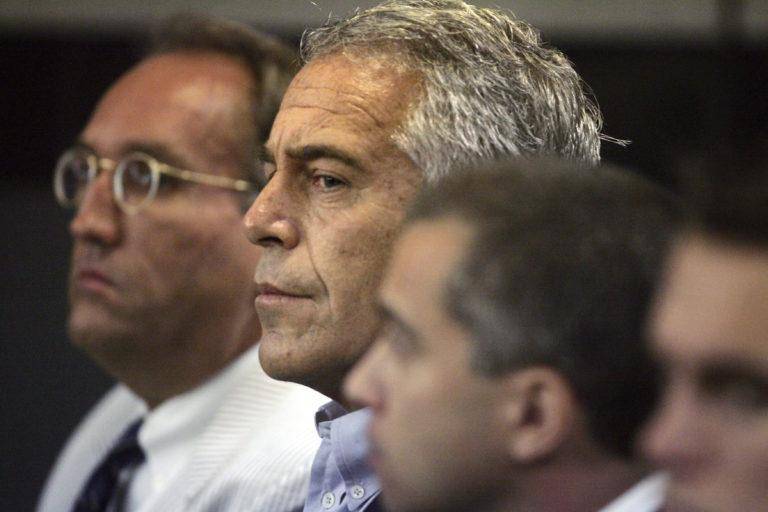
(Headline USA) The Justice Department said Wednesday that it may need a “few more weeks” to release all of its records on the late sex offender Jeffrey Epstein after suddenly discovering more than a million potentially relevant documents, further delaying compliance with last Friday’s congressionally mandated deadline.

The Christmas Eve announcement came hours after a dozen U.S. senators called on the Justice Department’s watchdog to examine its failure to meet the deadline. The group, 11 Democrats and a Republican, told Acting Inspector General Don Berthiaume in a letter that victims “deserve full disclosure” and the “peace of mind” of an independent audit.

The Justice Department said in a social media post that federal prosecutors in Manhattan and the FBI “have uncovered over a million more documents” that could be related to the Epstein case — a stunning 11th hour development after department officials suggested months ago that they had undertaken a comprehensive review that accounted for the vast universe of Epstein-related materials.

In March, Attorney General Pam Bondi told Fox News that a “truckload of evidence” had been delivered to her after she ordered the Justice Department to “deliver the full and complete Epstein files to my office” — a directive she said she made after learning from an unidentified source that the FBI in New York was “in possession of thousands of pages of documents.”

In July, the FBI and Justice Department indicated in an unsigned memo that they had undertaken an “exhaustive review” and had determined that no additional evidence should be released — an extraordinary about face from the Trump administration, which for months had pledged maximum transparency. The memo did not raise the possibility that additional evidence existed that officials were unaware of or had not reviewed.

Wednesday’s post did not say when the Justice Department was informed of the newly uncovered files.

In a letter last week, Deputy Attorney General Todd Blanche said Manhattan federal prosecutors already had more than 3.6 million records from sex trafficking investigations into Epstein and Maxwell, though many were copies of material already turned over by the FBI.

The Justice Department said its lawyers are “working around the clock” to review the documents and remove victims names and other identifying information as required by the Epstein Files Transparency Act, the law enacted last month that requires the government to open its files on Epstein and his longtime confidant Ghislaine Maxwell.

“We will release the documents as soon as possible,” the department said. “Due to the mass volume of material, this process may take a few more weeks.”

The announcement came amid increasing scrutiny on the Justice Department’s staggered release of Epstein-related records, including from Epstein victims and members of Congress.

Republican Rep. Thomas Massie, of Kentucky, one of the chief authors of the law mandating the document release, posted Wednesday on X: “DOJ did break the law by making illegal redactions and by missing the deadline.” Another architect of the law, Rep. Ro Khanna, D-Calif., said he and Massie will “continue to keep the pressure on” and noted that the Justice Department was releasing more documents after lawmakers threatened contempt.

After releasing an initial wave of records on Friday, more batches were posted over the weekend and on Tuesday. The Justice Department has not given any notice when more records might arrive.

Records that have been released, including photographs, interview transcripts, call logs, court records and other documents, were either already public or heavily blacked out, and many lacked necessary context. Records that hadn’t been seen before include transcripts of grand jury testimony from FBI agents who described interviews they had with several girls and young women who described being paid to perform sex acts for Epstein.

Other records made public in recent days include a note from a federal prosecutor from January 2020 that said Trump had flown on the financier’s private plane more often than had been previously known and emails between Maxwell and someone who signs off with the initial “A.” They contain other references that suggest the writer was Britain’s former Prince Andrew. In one, “A” writes: “How’s LA? Have you found me some new inappropriate friends?”

The senators’ call Wednesday for an inspector general audit comes days after Minority Leader Chuck Schumer, D-N.Y., introduced a resolution that, if passed, would direct the Senate to file or join lawsuits aimed at forcing the Justice Department to comply with the disclosure and deadline requirements. In a statement, he called the staggered, heavily redacted release “a blatant cover-up.”

Republican Sen. Lisa Murkowski of Alaska joined Sens. Richard Blumenthal, D-Conn. and Jeff Merkley, D-Ore., in leading the call for an inspector general audit. Others signing the letter were Democratic Sens. Amy Klobuchar of Minnesota., Adam Schiff of California, Dick Durbin of Illinois, Cory Booker and Andy Kim, both of New Jersey, Gary Peters of Michigan, Chris Van Hollen, of Maryland, Mazie Hirono, of Hawaii, and Sheldon Whitehouse of Rhode Island.

“Given the (Trump) Administration’s historic hostility to releasing the files, politicization of the Epstein case more broadly, and failure to comply with the Epstein Files Transparency Act, a neutral assessment of its compliance with the statutory disclosure requirements is essential,” the senators wrote. Full transparency, they said, “is essential in identifying members of our society who enabled and participated in Epstein’s crimes.”

Adapted from reporting by the Associated Press

Deranged Gunman Kills State Trooper Inside Delaware DMV

(Headline USAAfter a gunman shot a Delaware state trooper inside a DMV office near Wilmington on Tuesday, the wounded trooper pushed a nearby employee to safety before the gunman shot him again, killing him, authorities said. A police officer then confronted, shot and killed the gunman.

The trooper, who has not yet been named, was working an overtime assignment at the reception desk when the 44-year-old gunman walked in, approached the trooper and fired, state police said at a news conference Tuesday night.

The gunman and state trooper were transported to a hospital, where they died.

“We lost a brother, a son, a best friend, a coach, a husband and a father,” Col. William D. Crotty of the state police said at the news conference. “His last actions were that of a hero, a hero who saved lives today while sacrificing his own.”

The threat was over before 3 p.m., according to state police. A woman and second state trooper had minor injures not from gunshots.

“What happened today was an act of pure evil, and if not for the heroism of several troopers and other officers, the consequences could have been so much worse,” Delaware Gov. Matt Meyer said at the news conference.

The state DMV said it has closed its offices statewide.

Adapted from reporting by the Associated Press


Christmas Eve Eve Gold Rush: $4,500 Gold, $70 Silver, and a New Monetary Regime

(Money Metals News Service) Mike Maharrey kicks off this Money Metals Midweek Memo a day early, calling it a “Christmas Eve Eve” episode and warning up front that it will be shorter and more informal.

But even in holiday mode, he says he can’t ignore what’s happening in metals right now, because the move is getting hard to dismiss as “just another rally.”

Gold Over $4,500 and Silver Above $70: Bubble, or Something Else?

As he preps the show, Mike says gold is over $4,500 per ounce, and silver has nudged above $70. Gold slips slightly while he’s preparing, but he still frames it as another record-level moment.

The big question: are gold and silver surging because we’re in a speculative bubble, or because they’re signaling something deeper, possibly a monetary paradigm shift that most investors haven’t fully recognized yet?

The October Pullback Was Real, but It Wasn’t a Breakdown

Mike acknowledges corrections are normal in a bull market, and points to the late October pullback as a recent example.

He notes that the late-October correction trimmed about 9.8% off gold’s record at the time. It was shallow in magnitude and short in duration, followed by a fast recovery into new highs.

That resilience, he argues, doesn’t prove there can’t be deeper corrections ahead. But it does raise the possibility that this isn’t classic bubble behavior either.

Why the 1970s Comparison Only Goes So Far

Some commentators compare today’s gold trajectory to the late 1970s, especially 1979, which preceded gold’s major decline after the 1980 peak.

Mike reminds listeners what made that era different. Paul Volcker drove interest rates up to about 20% to crush inflation, and after the 1979 peak, gold gave up nearly two-thirds of its price during the long bear market that followed.

His point is simple – this isn’t the early 1980s, and he doesn’t see a “Volcker” waiting in the wings. If anything, he expects the next Fed chair to be more inclined toward easy money than Jerome Powell.

A Reuters Columnist Says the Quiet Part Out Loud

Mike anchors the “paradigm shift” argument to an article by Reuters columnist Edward Chancellor, calling it significant that this isn’t coming from fringe commentary.

He highlights Chancellor’s view that gold tends to “reset” under changing monetary regimes, citing shifts after the credit collapse of the 1920s, during the 1970s inflation, and again after the Fed cut rates in the early 2000s.

Mike then adds his own connective tissue: the pandemic-era response included roughly $5 trillion in quantitative easing, followed by tightening once the Fed conceded inflation wasn’t “transitory.”

Gold’s Unusual Behavior Since Late 2022

Conventional wisdom says gold should move inversely to real interest rates, meaning the stated rate minus inflation. Rising real yields should pressure gold because it’s non-yielding.

Mike says something changed in late 2022. Gold began advancing even as inflation pressures eased and inflation-adjusted bond yields rose. That’s atypical.

He cites the idea, also reflected in market commentary, that gold has evolved from a rates-sensitive trade into a fiscal risk hedge. That means it can rise with higher long-term rates when those rates represent sovereign stress.

Sanctions, Seized Assets, and the “Weaponization of the Dollar”

Mike argues the divergence has a clear catalyst – the U.S. and allies’ sanctioning of Russia after the invasion of Ukraine.

He focuses especially on the spring of 2024, when the Biden administration threatened to liquidate and sell about $300 billion in frozen Russian assets.

That, he says, broadcast a message to other countries. If reserve assets can be seized, it’s rational to shift toward something that can’t be confiscated, namely gold.

Central Banks Have Been Buying Over 1,000 Tons a Year

Mike emphasizes the scale. Central banks have reportedly bought over 1,000 tons of gold for three straight years.

He contrasts that with the prior baseline. Between 2010 and 2021, central bank reserves increased by an average of about 473 tons annually.

Even if buying slowed at points during record prices, he argues it remains strategic and relatively price-insensitive, and he notes that the last two months have shown the strongest central bank buying of the year.

Why This Doesn’t Look Like a Mania

Mike leans on Chancellor’s observation that the usual mania signals aren’t obvious.

He notes that speculators are distracted by cryptocurrencies and AI themes, while gold ETFs, despite record spot prices, are still about 10% below their 2020 pandemic peak.

That’s not the profile of everyone piling into gold at once, which is what you’d expect near the top of a classic bubble.

Debt, Deficits, and the Case for De-Dollarization

Mike says the U.S. fiscal picture is radically different from the late 1970s.

He cites Chancellor’s comparison. U.S. government debt was around 30% of GDP in the 1970s, but today it’s nearly four times higher. He also notes that over the past three years, the U.S. fiscal deficit has averaged roughly 6% of GDP, which he describes as about four times higher than the budget shortfall in 1979.

He adds a contemporary example that the federal government posted a $173.28 billion deficit last month, even with a major increase in tariff revenue. That undercuts the claim that tariffs will quickly close the fiscal gap.

“Inflation Is Here to Stay,” and Rate Cuts Are the Tell

Mike argues the Fed is determined to cut rates even in what he calls a persistent inflation environment, because the system can’t function under sustained higher rates given the scale of debt.

He dismisses the November CPI report as misleading and insists inflation is not an accident. It’s policy. Even “controlled” inflation, he says, still means planned currency devaluation over time.

His bottom line: the fiscal, financial, and geopolitical uncertainties pushing gold higher aren’t going away.

The Portfolio Shift: From 60/40 to “60/20/20”

Mike says the central bank shift hasn’t been matched by everyday investors, especially in the U.S., who often have little or no gold exposure.

He cites a claim attributed to Goldman Sachs – an “optimal” portfolio over the last 10 years would have held 50% of its assets in gold.

Then he points to what he calls a seismic shift in mainstream allocation thinking. Morgan Stanley CIO Michael Wilson is proposing a 20% allocation to gold, describing a “60/20/20” approach. That is 60% equities, 20% bonds, 20% gold, with gold replacing half of the traditional bond sleeve as a more resilient inflation hedge.

Mike stresses the mechanical implication. If typical portfolios currently have under 1% in gold, even moving to 2% or 3% would be enormous incremental demand, let alone 20%, stacked on top of central bank accumulation.

Holiday Wrap: A Gift Fit for a King

Mike closes with a seasonal pivot. If you’re still shopping, he suggests gold and silver as gifts fit for a king, pointing listeners to MoneyMetals.com gift ideas and encouraging them to call 1-800-800-1865.

He also describes a monthly accumulation option starting at $100 a month, plus alternatives like online chat or direct checkout, and mentions the ability to store metal in their facility.

He signs off thanking listeners, asking for shares and reviews, wishing everyone a Merry Christmas, and promising to return next week to wrap up the year.

US Military Blows Up Another Alleged Drug Boat in the Waters of Latin America

(Dave DeCamp, Antiwar.com) The US military has blown up another alleged drug boat in the waters of Latin America, according to a statement released by US Southern Command on Monday.

“On Dec. 22, at the direction of Secretary of War Pete Hegseth, Joint Task Force Southern Spear conducted a lethal kinetic strike on a low-profile vessel” in the Eastern Pacific Ocean, SOUTHCOM said.

The command claimed the vessel was being operated by “Designated Terrorist Organizations” and that it was “engaged in narco-trafficking operations,” but offered no evidence for the assertions. It said the strike killed a “narco-terrorist,” a term the Trump administration uses to justify executing people without trial for an alleged crime that doesn’t receive the death penalty in the US.

The bombing brings the total number of people extra-judicially executed since the campaign started in early September to 105. A total of 29 strikes have been launched, and 30 boats have been blown up, including 11 in the Caribbean and 20 in the Eastern Pacific.

The bombing campaign started in the Caribbean off the coast of Venezuela on September 2 as part of the US pressure campaign aimed at ousting Venezuelan President Nicolas Maduro and expanded into the Eastern Pacific at the end of October.

The Pentagon has never shown any evidence to back up its claims about what the boats it has bombed are carrying and has acknowledged to Congress that it doesn’t know all of the identities of the people it has been killing.

This article originally appeared at Antiwar.com. 


Explosion at a Pennsylvania Nursing Home Kills at Least 2

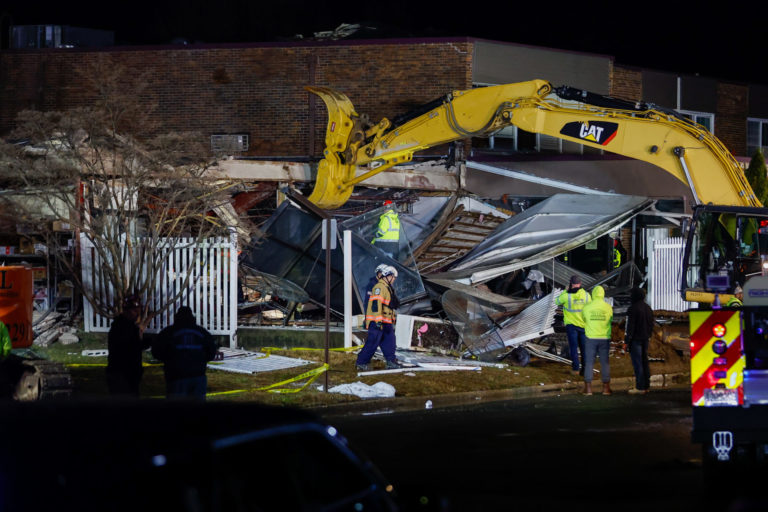
(Headline USA) A thunderous explosion Tuesday at a nursing home just outside Philadelphia killed at least two people, collapsed part of the building, sent fire shooting out and left people trapped inside, authorities said.

Pennsylvania Gov. Josh Shapiro said in a news conference several hours after the explosion that at least two had been killed after emergency responders braved the flames, a heavy odor of gas and a second explosion to evacuate residents and employees.

Fire officials said they were in “rescue mode” five hours later, with responders still digging by hand and using search dogs, earth-moving equipment and sonar to locate potential victims.

The explosion happened at Bristol Health & Rehab Center in Bristol Township, just as a utility crew had been on site looking for a gas leak.

A plume of black smoke rose from the nursing home, as emergency responders, fire trucks and ambulances from across the region rushed there, joined by earthmoving equipment.

Authorities did not identify those who died and did not know the total number of those injured after residents and employees were evacuated to a number of different hospitals.

Shapiro asked his fellow Pennsylvanians to take a moment to pray “for this community, for those who are still missing, for those who are injured, and for those families who are about to celebrate Christmas with an empty chair at their table.”

The town’s fire chief, Kevin Dippolito, said at the Tuesday evening news conference that there were five people still unaccounted for, but he cautioned that some may have left the scene with family members.

Dippolito described a chaotic rescue where firefighters found people stuck in stairwells and elevator shafts, and pulled residents out of the fiery building through windows and doors. Two people were rescued from a collapsed section of building, he said.

Firefighters handed off patients to waiting police officers outside, including one “who literally threw two people over his shoulders,” Dippolito said. “It was nothing short of extraordinary.” A second explosion erupted during the rescue, he said.

Bucks County emergency management officials said they received the report of an explosion at approximately 2:17 p.m. and said a portion of the building was reported to have collapsed.

Willie Tye, who lives about a block away, said he was sitting at home watching a basketball game on TV when he heard a “loud kaboom.”

“I thought an airplane or something came and fell on my house,” Tye said.

He got up to go look and saw “fire everywhere” and people escaping the building. The explosion looked like it happened in the kitchen area of the nursing home, he said. Tye said some of the people who live or work there didn’t make it out.

“Just got to keep praying for them,” Tye said.

Shapiro said a finding that the gas leak caused the explosion was preliminary.

The local gas utility, PECO, said its crews had responded to reports of a gas odor at the nursing home shortly after 2 p.m.

“While crews were on site, an explosion occurred at the facility. PECO crews shut off natural gas and electric service to the facility to ensure the safety of first responders and local residents,” the utility said in a statement.

Investigators from the Pennsylvania Public Utility Commission’s went to the scene. Finding that the explosion was caused by a gas leak won’t be confirmed until the agency can examine the scene, a utility commission spokesperson said.

Musuline Watson, who said she was a certified nursing assistant at the facility, told WPVI-TV/ABC 6 that, over the weekend, she and others there smelled gas, but “there was no heat in the room, so we didn’t take it to be anything.”

The 174-bed nursing home is about 20 miles (32 kilometers) northeast of Philadelphia. It is affiliated with Saber Healthcare Group, which said it was working with local emergency authorities. The facility had been known until recently as Silver Lake Healthcare Center.

The latest state inspection report for the facility was in October and the Pennsylvania Department of Health found that it was not in compliance with several state regulations.

The inspection report said the facility failed to provide an accurate set of floor plans and to properly maintain several stairways, including storing multiple paint buckets and a bed frame under landings.

It also said the facility failed to maintain portable fire extinguishers on one of the three levels and failed to provide the required “smoke barrier partitions,” which are designed to contain smoke on two floors. It also said it didn’t properly store oxygen cylinders on two of three floors.

According to Medicare.gov, the facility underwent a standard fire safety inspection in September 2024, during which no citations were issued. But Medicare’s overall rating of the facility is listed as “much below average,” with poor ratings for health inspections in particular.

Adapted from reporting by the Associated Press


2025: Hundreds of TdA Members Indicted in 10 Months, Including on Terror Charges

(Bethany Blanklely, The Center Square) In the 10 months after President Donald Trump designated Tren de Aragua as a foreign terrorist organization, more than 260 of its leaders and members have been federally indicted.

This month, five U.S. attorneys unsealed multiple indictments, including for terrorism, against more than 70 TdA members in Colorado, Nebraska, New Mexico, New York and Texas, the DOJ announced.

Trump designated TdA as an FTO for the first time in U.S. history in February and directed the Department of Justice and other federal agencies to eradicate it from the U.S. 

TdA, which means, “Train from Aragua,” referring to the Venezuelan state of Aragua, initially operated out of Tocorón Prison in Aragua. Its operatives have spread worldwide including into the United States under the Biden administration. 

Trump made the FTO designation after more than one million Venezuelans illegally entered the U.S. and TdA crime expanded in at least 22 states under the Biden administration, The Center Square exclusively reported. 

TdA members are committing terrorist acts, extortion, kidnapping, robbery, murder, drug trafficking, prostitution, sex trafficking, trafficking weapons and ammunition and partnering with a notorious cocaine trafficking organization and committing a range of financial crimes, the indictments allege.

Two major indictments were unsealed in New York and Texas charging TdA cofounders and top leaders with terrorism – the first charges of their kind, The Center Square reported.

In the Southern District of New York, alleged TdA mastermind Hector Rusthenford Guerrero Flores, 42, of Venezuela, was indicted on charges include racketeering, providing material support to terrorists, using and carrying firearms, machine guns, and destructive devices to commit drug trafficking. According to the indictment, he issued orders from Tocorón Prison, including “acts of violence and terrorism transcending national boundaries,” The Center Square reported.

Guerrero Flores escaped Tocorón Prison in 2012 and is currently at large. A reward of up to $5 million has been offered leading to his arrest and/or conviction.

In the Southern District of Texas, four Venezuelans, including two top leaders and two high-ranking members, were indicted on terrorism charges and on charges they orchestrated an international gold and narcotics smuggling enterprise using extortion and murder, The Center Square reported.

One has been arrested; three remain at large. Giovanni Vicente Mosquera Serrano, 37, a top TdA leader, is on the FBI’s 10 Most Wanted Fugitives List. Yohan Jose Romero, 48, another top TdA leader, and Juan Gabriel Rivas Nunez, 44, are fugitives. Rewards of up to $5 million have been offered for information leading to their arrest and/or conviction.

In the District of Nebraska, one major TdA leader was indicted: Venezuelan entertainer Jimena Romina Araya Navarro, accused of helping Guerrero Flores escape from Tocorón Prison. She’s been sanctioned by the U.S. Treasury Department and charged with providing material support to TdA, including related to a TdA ATM jackpotting scheme involving stealing from multiple ATMs in Nebraska. 

A federal grand jury in Nebraska returned two indictments charging 54 people with using malware to steal millions of dollars in the TdA ATM jackpotting scheme. Nearly half indicted, 22, were charged with conspiracy to provide material support to terrorists, bank fraud, money laundering and other crimes. In a separate indictment, 32 people were charged on 56 counts on bank fraud charges. 

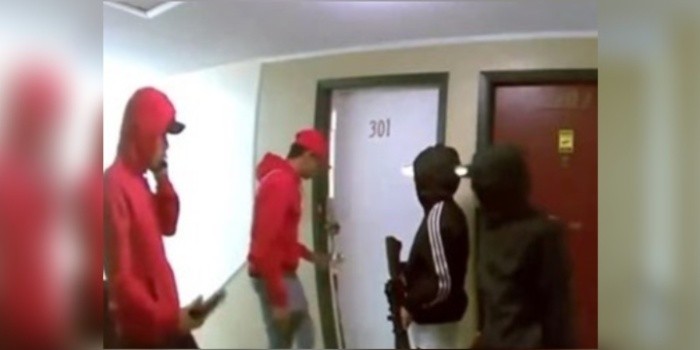
In the District of New Mexico, 11 alleged TdA leaders and members were indicted on racketeering charges, accused of “kidnapping, brutally interrogating, and strangling a victim in an Albuquerque apartment, before burying his body in a remote desert grave.”

The indictment describes in detail the brutal nature of the crimes, including ordered assassinations, strangling victims, taking pictures of bodies to confirm deaths, stuffing bodies in suitcases to transport them to be buried in the desert, and cleaning crime scenes attempting to eliminate evidence.

Some of the defendants were also  involved in a 2024 shootout at an Aurora, Colorado, apartment complex killing one, according to the indictment. Charges also include a range of weapons and narcotics offenses, including possession of cocaine, ketamine, methamphetamine, MDMA, fentanyl, marijuana and materials used to manufacture tusi, a popular narcotic in Venezuela.

In the District of Colorado, two alleged TdA leaders were indicted by a federal grand jury, charged with committing racketeering, robbery, extortion, kidnapping, money laundering, cyberstalking, using a firearm to commit the crimes, and controlled substance offenses. Others were charged in a jewelry store robbery in Denver. One defendant was sentenced to 240 months in prison on Dec. 17 after pleading guilty to charges including Hobbs Act Robbery and using a firearm during a June 2024 robbery.

The indictments stem from investigations led by the DOJ’s Joint Task Force Vulcan. The task force was created in 2019 by the first Trump administration to eradicate MS-13. It expanded this year to target TdA. 

Information about TdA fugitives may be reported to the FBI via WhatsApp or Telegram at 281-787-9939 or online. Texas is also offering rewards for information about TdA.

DOJ Says New Files Alleging Trump Abused Girl in 1990s ‘Unfounded’

(Thérèse Boudreaux, The Center Square)  When the U.S. Department of Justice released 30,000 more pages of files on Jeffrey Epstein, it also dropped an unusual warning to Americans: some of the files contain false allegations.

“Some of these documents contain untrue and sensationalist claims made against President Trump that were submitted to the FBI right before the 2020 election,” the DOJ posted on X on Tuesday. 

“To be clear: the claims are unfounded and false, and if they had a shred of credibility, they certainly would have been weaponized against President Trump already,” it added. “Nevertheless, out of our commitment to the law and transparency, the DOJ is releasing these documents with the legally required protections for Epstein’s victims.”

DOJ is in the process of releasing all documents related to sex trafficker Epstein and his close associate Ghislaine Maxwell after a legally-binding edict from Congress. The claims Bondi attacked are found within a three-page FBI report from 2020, which stands out from the rest of the trove for its allegations against Trump. 

The report documents a call made on Oct. 27, 2020, to the FBI from a man who used to be a limo driver in the 1990s. 

In the report, the man recalled how in 1997 he started dating a woman with whom he previously had a son with. The woman told him about a lady who had “invited her daughters to a fancy hotel and met Donald Trump and some of his friends.” The woman also often asked the man how to spell “Ghislaine,” he said, “implying Ghislaine had given her money and would give her additional money if needed.”

On a 1999 Christmas Eve visit to the woman’s house to visit their son, the man talked about his time as a limo driver, including the time in 1995 when he said he drove Trump to the Dallas Fort Worth airport. 

He claimed he overheard Trump having a “very concerning” conversation over the phone during the ride, where the name “Jeffrey” was continuously stated and Trump made references to “abusing some girl.”

As he talked about that incident, the man said he noticed a change in one of the people present in the room, whose demeanor went “stone cold.” The person proceeded to tell him that “Donald J. Trump had raped her along with Jeffrey Epstein” and that some girl with a funny name “took me into a fancy hotel or building, that’s how it happened.”

Due to redactions, it is unclear whether the person mentioned was the woman with whom he had a son or one of her daughters previously mentioned in the report.

The man said he advised the person that Christmas Eve to call the police, which she did the next day even after voicing fear that she would be killed for doing so. 

On Jan. 10, 2000, the man said he received a call notifying him of her death by a shot to the head, which officers at the scene believed could not have been the suicide that the coroner ruled it to be. The man concluded that he felt “the murder is a cover for Ghislaine.”

Ghislaine is serving a 20-year prison sentence. Epstein died in jail awaiting trial in 2019. 

Trump administration officials have dismissed the document as unfounded, questioning why the man waited 20 years to tell the FBI, and then exactly a week before the 2020 General Election between Trump and Joe Biden. 

Social media, however, has exploded, with more than 201,000 posts on social media platform X alone gathered under the header “DOJ Releases 30,000 Epstein Pages with Unfounded Trump Claims” only four hours after DOJ’s post.

Senate Minority Leader Chuck Schumer, D-N.Y., has already introduced a resolution to take legal action against the DOJ for failing to release all the files on time and heavily redacting many of them.

“The American people deserve full transparency,” Schumer said on X. “This Administration cannot be allowed to hide the truth.”

Brown University Faces Federal Probe Over Security Lapses

(Chris Wade, The Center Square) The Trump administration is probing whether Brown University violated a federal law that requires colleges to meet campus security standards in the wake of the recent mass shooting on campus. 

The U.S. Department of Education announced Monday that the Office of Federal Student Aid will be conducting an investigation to determine if the Ivy League school violated Section 485(f) of the Higher Education Act, also known as the Jeanne Clery Campus Safety Act, which requires colleges and universities to meet certain campus safety and security-related requirements as a condition of receiving federal student aid.

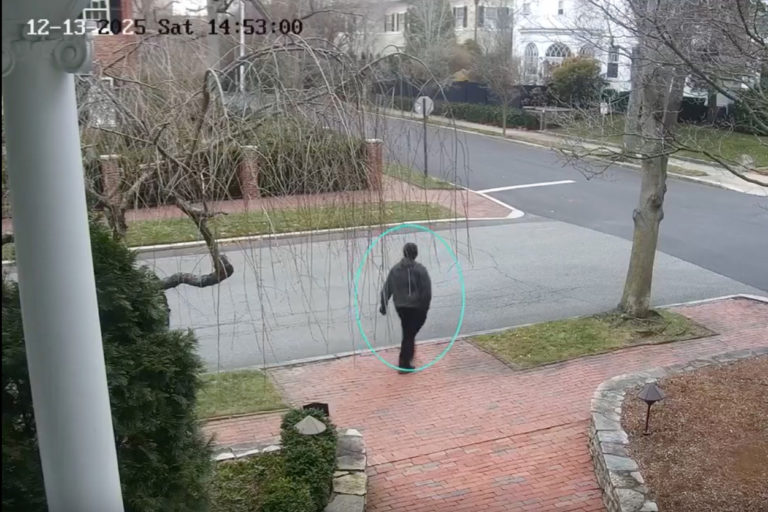
The probe comes after two students were killed and nine others injured on Dec. 13 when a lone gunman burst into an engineering building where students were taking exams. The shooter, later identified as former Brown graduate student Claudio Manuel Neves Valente, went on to kill a Massachusetts Institute of Technology professor at his home before turning the gun on himself in a storage facility in neighboring New Hampshire, authorities said.

Education Secretary Linda McMahon said the department investigation will determine if Brown “upheld its obligation under the law to vigilantly maintain campus security.”

“Students deserve to feel safe at school, and every university across this nation must protect their students and be equipped with adequate resources to aid law enforcement,” she said in a statement. “The Trump Administration will fight to ensure that recipients of federal funding are vigorously protecting students’ safety and following security procedures as required under federal law.”

In a statement about the investigation, the department cited eyewitness accounts from students and staff that Brown’s campus surveillance and security system “may not have been up to appropriate standards” which “allowed the suspect to flee while the university seemed unable to provide helpful information about the profile of the alleged assassin.” 

The federal agency said other accounts by students and staff suggested that the university’s emergency notifications about the active shooter were delayed, “raising significant concerns about their safety alert system.” 

“If true, these shortcomings constitute serious breaches of Brown’s responsibilities under federal law,” the agency said. 

Brown President Christina Paxson announced Monday that the university is convening a special commission to investigate campus safety and security, the events leading to the shooting and the overall response to the attack. 

More security cameras will be installed across the Providence campus, including at the Barus & Holley engineering building where the shooting occurred, she said in a letter to students, parents, faculty, and staff. 

Authorities say the six-day manhunt for the shooter had been hampered by a lack of usable surveillance video footage in the building, despite security cameras in the neighborhood.

In the meantime, Brown University Police Chief Rodney Chatman has been placed on leave, Paxson said. 

“For our students, staff, faculty, parents and alumni — I understand the anxiety, fear and stress following the shooting. I understand the gravity of the concerns about safety that follow a tragedy of the magnitude that Brown has suffered,” she said in a statement. “I want to assure you of Brown’s deep commitment to take every possible action to increase the safety and security of our campus, with the goal of protecting our community from future harm.” 

DOJ Epstein Release Raises New Questions

(Headline USAThe U.S. Justice Department has released tens of thousands more documents related to Jeffrey Epstein, a tranche that included multiple mentions of President Donald Trump but added little new revelatory information to the long-anticipated public file on the late financier and convicted sex offender.

The release is the most voluminous so far and comes after a massive public campaign for transparency into the U.S. government’s Epstein investigations.

Many of the mentions of Trump in the file came from news clippings, though it includes an email from a prosecutor pointing out the flights that Trump took on Epstein’s private jet during the 1990s.

The two men were friends for years before falling out. Trump has not been accused of wrongdoing in connection with Epstein. The Justice Department issued a statement that some documents contain “untrue and sensationalist claims” about Trump made shortly before the 2020 election.

Among the mentions of Trump in the latest batch of the Epstein files is a note from a federal prosecutor from January 2020 that said Trump had flown on the financier’s private plane more often than had been previously known.

An assistant U.S. attorney from the Southern District of New York said in an email that flight records the office received on Jan. 6, 2020, showed that Trump was on Epstein’s jet “many more times than previously has been reported (or that we were aware).”

The prosecutor who flagged the Trump mentions in the flight logs said they did so because lawyers “didn’t want any of this to be a surprise down the road.”

His travels on Epstein’s plane spanned the time that would likely be covered in any criminal charges against Epstein’s co-conspirator, Ghislaine Maxwell. Trump was listed as a passenger on at least eight flights between 1993 and 1996, and on at least four of those flights, Maxwell was also there, according to the email.

On one of those eight flights, in 1993, Trump and Epstein were the only two passengers listed in the flight logs. On another flight, the three passengers listed in records are Epstein, Trump, and a redacted individual, who was 20 years old at the time. Two other flights included two women — whose names were redacted in follow-up emails — identified as potential witnesses in a Maxwell case.

Several additional Trump trips on Epstein’s plane had been previously disclosed during Maxwell’s criminal proceedings.

Asked for comment about the email, the White House pointed to a Justice Department statement saying Monday’s release contained “unfounded and false” claims against the president submitted to the FBI shortly before the 2020 election, but they were nevertheless being released for full transparency.

The Justice Department specifically raised questions about the validity of a document mentioning Trump that was styled as a letter from Epstein to Larry Nassar, the sports doctor convicted of sexually abusing Olympic athletes. The department pointed out that it was processed three days after Epstein’s death.

Trump complained that the files were a distraction from the work he and other Republicans are doing for the country. 

Speaking during an unrelated event at his Mar-a-Lago home in Palm Beach, Florida, on Monday, the president blamed Democrats and some Republicans for the controversy.

“What this whole thing is with Epstein is a way of trying to deflect from the tremendous success that the Republican Party has,” Trump said.

He also expressed frustration about the famous people shown with Epstein in photos released by the Justice Department — people who he said may not have known him but ended up in the shot anyway.

“You probably have pictures being exposed of other people that innocently met Jeffrey Epstein years ago, many years ago. And they’re, you know, highly respected bankers and lawyers and others,” Trump said.

Well-known people shown in the files include former President Bill Clinton, the late pop star Michael Jackson and singer Diana Ross. The mere inclusion of someone’s name or images in files from the investigation does not imply wrongdoing.

The latest release also includes files that put the U.K.’s former Prince Andrew back in the headlines.

Among those documents is correspondence between Maxwell and someone who signs off with the initial “A.”

The email exchange includes other references that suggest Maxwell’s correspondent may be Andrew. He did not immediately respond to a request for comment.

The August 2001 email from someone identified only as “The Invisible Man,” said he is “up here at Balmoral Summer Camp for the Royal Family,” an apparent reference to the Scottish estate where the royal family have traditionally taken their late summer holidays.

“A” writes: “How’s LA? Have you found me some new inappropriate friends?”

The writer says he has left “the RN” and refers to the challenges of looking after “the Girls.” Andrew retired from the Royal Navy in 2001 and has two daughters.

Andrew, one of King Charles III’s younger brothers, was stripped of the right to be called a prince and his other royal titles and honors in October, amid continued publicity about his links to Epstein and concerns about the potential damage to the rest of the royal family. He is now known as Andrew Mountbatten-Windsor.

Andrew has repeatedly denied committing any crimes, including having sex with Virginia Giuffre, who alleged that she was trafficked by Epstein and had sex with Andrew when she was 17.

Monday’s release was the biggest dump yet, including nearly 30,000 more pages. The data released by the law’s Friday deadline contained a fraction of that amount, mostly photographs taken during FBI searches of Epstein’s homes.

The new cache includes news clippings, emails and surveillance videos from the New York jail where Epstein was held before taking his own life in 2019, much of which was already in the public domain.

The law called for the files to be released within 30 days, but the Justice Department has instead released them in stages starting Friday. Officials have said they’re going slowly to protect victims, though some women assaulted by Epstein have spoken out publicly to call for greater transparency.

Adapted from reporting by the Associated Press

Brown University Had Forewarning about Mass Shooter

(Ken Silva, Headline USA) A custodian who works at Brown University has told local media that he warned his school numerous times about a suspicious person who turned out to be the man who killed two students and wounded nine others in a Dec. 13 mass shooting.

The custodian, Derek Lisi, told Providence outlet WPRI on Monday that he remembers seeing the gunman, Portuguese national Claudio Neves-Valente, more than a dozen times before the attack.

“Lisi said he reported the individual as suspicious to Event Staff Services LLC, or ESS — a third-party security vendor for Brown — on three separate occasions,” WPRI reported on Monday.

“When he warned them Dec. 1, a staff member of that security company told him they were only present to cover an event. Lisi said the university’s Department of Public Safety might have been notified, but he doesn’t know if any other action was taken.”

Lisi made similar comments to the Boston Globe, which reached out to ESS President David Madonna for comment. Madonna reportedly said it’s not his company’s job to investigate suspicious people on campus.

“We have nothing to do with watching buildings,” he told the Globe. “Whenever there’s an event at Brown, they hire us to do ID check and capacity counts in their rooms.”

The custodian’s forewarnings represent the latest security lapse in the incident.

Much of the focus has centered on whether the Ivy League school removed security cameras in the building where the attack took place in response to concerns about protecting illegal immigrants from federal agents. Brown students and staff have also reported that the university’s emergency notifications about the active shooter were delayed.

The scrutiny over the school’s security has led to an investigation by the U.S. Department of Education, which said earlier Monday that officials are asking Brown for information to help determine if school officials violated federal campus safety and security requirements. This has included seeking security reports, audits, dispatch and call logs, and when emergency notifications have been utilized.

The Associated Press contributed to this report.

Ken Silva is the editor of Headline USA. Follow him at x.com/jd_cashless.