

Xi Follows Biden in Call for Infrastructure Spending to Rescue Economy

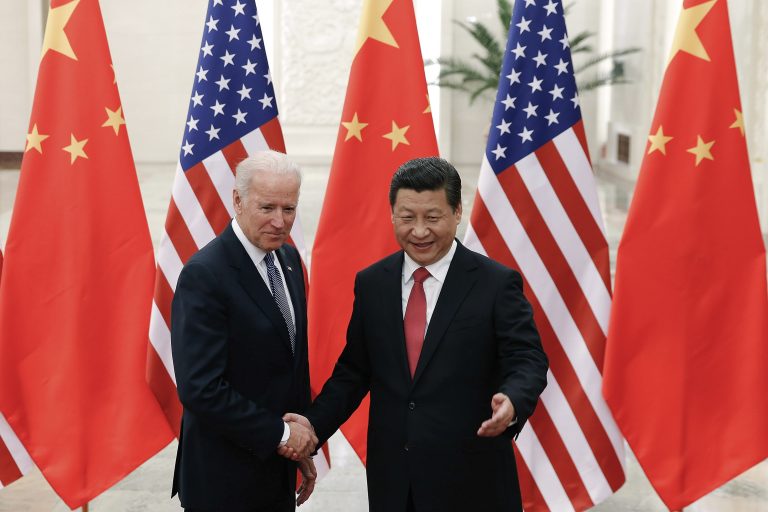
(John Ransom, Headline USA) After imposing a zero tolerance policy for COVID with draconian lockdowns, Communist Party Secretary Xi Jinping, has called for unprecedented infrastructure spending to save the economy that he’s nearly ruined.

“The [Tuesday’s] meeting suggests to us that Chinese policymakers have been increasingly aware of the strong growth headwinds from Covid restrictions and continued property downturn, and [are] thus becoming more determined to ramp up policy easing measures,” Goldman Sachs analysts wrote on Wednesday, according to CNN.

Previously, China was on an austerity kick, raising interest rates in order to cool down a hot real estate market that was seeing prices grow to levels unaffordable for ordinary Chinese.

“Houses are built to be inhabited, not for speculation,” Xi said, according to Bloomberg News, as China dealt with perhaps the largest real estate property bubble in the world history.

What rising interest rates didn’t do, however, in cooling down the Chinese property market, COVID may have finally accomplished, as Xi’s public call for further infrastructure spending sounds to Chinese ears like a fire company putting out additional alarms.

Previously, Chinese infrastructure spending for 2022 amounted to $2.3 trillion, reported Bloomberg. And it’s unclear how big of an increase Xi is looking for in a bid to save the economy, according to CNN.

While the $2.3 trillion figure is impressive, it has to be understood against a population of 1.4 billion people, and a country that largely remains rural agricultural, outside of the big cities.

Per capita, it’s about half what Joe Biden and the Democrats just passed for America which has simply fueled inflation and not sparked any economic recovery.

The biggest policy changes that party leaders could make for the benefit of the Chinese people would be to drop their zero-tolerance COVID policies that have seen cities with populations of over 20 million lockdown for weeks at a time, and work against any artificial stimulus that the Chinese government might add to the economy.

“Speeding up construction may also be difficult to accomplish as the government doubles down on its zero-COVID approach, as it has already locked down Shanghai,” said the Australian Financial Review.

“There are fears of a similar shutdown in Beijing as the city undertakes mass testing of its 22 million people,” AFR added.
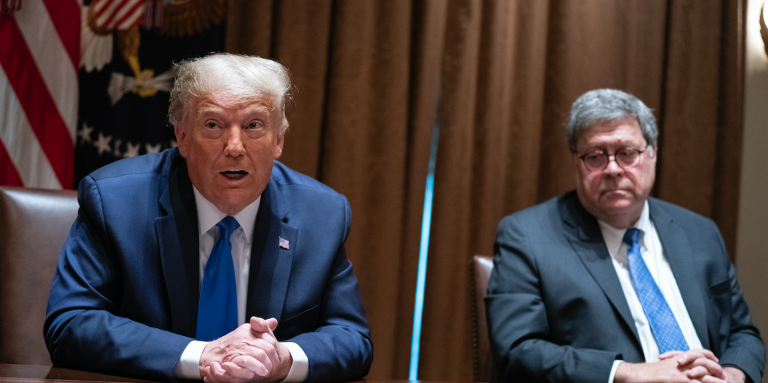

Barr: Big Mistake to Make Trump the 2024 GOP Nominee

(Molly Bruns, Headline USA) In an interview on Newsmax, former Attorney General Bill Bar said that former President Donald Trump should not be the Republican Party’s 2024 presidential nominee.

“Maybe your audience doesn’t want to hear this, but Trump ran weaker than the Republican ticket in Arizona, Wisconsin, and Pennsylvania,” Barr said, according to Breitbart. “75,000 Republicans went to the polls and voted straight Republican ticket in Arizona and didn’t vote for him, 60,000 in Wisconsin, 60,000 and Pennsylvania. That’s why he lost the election.”

Host Sean Spicer responded with a question.

“You say that you voted for Trump and obviously ’16 and ’20. would you vote for him again in ’24?”

“I’ve said I don’t think he should be our nominee, the Republican Party nominee,” Barr replied.

“I think Republicans have a big opportunity. I think it would be a big mistake to put him forward. But if he was the nominee, then I would vote for him over the Democrat.”

Barr also stated that he does not think Hunter Biden should be prosecuted over the contents of his infamous laptop, which has now been authenticated.

Spicer asked, “Twitter censored it, the media called it Russian disinformation… 51 former government officials went on record saying that it’s Russian disinformation. Are there any legal consequences to that?”

Barr said, “None that I can think of.”

“The intelligence officials suggesting that it was Russian disinformation in order to essentially keep a cork in it until after the election,” Barr continued.

“I do think that … given how close the election was … that probably affected the outcome, or, at least, there is a very distinct probability of that.”

Jack Dorsey, Twitter co-founder and former CEO, called the censorship of the New York Post on the initial publication of the laptop story a “mistake.”

Elon Musk, who recently made a massive bid to acquire the social media platform called it “incredibly inappropriate.”

Republicans in the House are setting up for a thorough investigation if they take control of the chamber after midterms.

While Barr agreed with Spicer that the Republicans can investigate the laptop further, he believes there is nothing they could find that would result in prosecution.

New Gas Pipeline Boosts Europe’s Bid to Ease Russian Supply

(Headline USA) Mountainous and remote, the Greek-Bulgaria border once formed the southern corner of the Iron Curtain. Today, it’s where the European Union is redrawing the region’s energy map to ease its heavy reliance on Russian natural gas.

A new pipeline — built during the COVID-19 pandemic, tested and due to start commercial operation in June — would ensure that large volumes of gas flow between the two countries in both directions to generate electricity, fuel industry and heat homes.

The energy link takes on greater importance following Moscow’s decision this week to cut off natural gas supplies to Poland and Bulgaria over a demand for payments in rubles stemming from Western sanctions over the war of Ukraine.

The 110-mile pipeline project is the first of several planned gas interconnectors that would give eastern European Union members and countries hoping to join the 27-nation bloc access to the global gas market.

In the short term, it’s Bulgaria’s backup.

The new pipeline connection, called the Gas Interconnector Greece-Bulgaria, will give the country access to ports in neighboring Greece that are importing liquefied natural gas, or LNG, and also will bring gas from Azerbaijan through a new pipeline system that ends in Italy.

It’s one of many efforts as EU members scramble to edit their energy mixes, with some reverting back to emissions-heavy coal while also planning expanded output from renewables.

Germany, the world’s biggest buyer of Russian energy, is looking to build LNG import terminals that would take years. Italy, another top Russian gas importer, has reached deals with Algeria, Azerbaijan, Angola and Congo for gas supplies.

The European Union wants to reduce its dependence on Russian oil and gas by two-thirds this year and to eliminate it completely over five years through alternative sources, the use of wind and solar power, and conservation.

Russia’s invasion of Ukraine is likely to accelerate changes in the EU’s long-term strategy as the bloc adapts to energy that is more expensive but also more integrated among member nations, said Simone Tagliapietra, an energy expert at the Brussels-based think tank Bruegel.

“It’s a new world,” he said. “And in this new world, it’s clear that Russia doesn’t want to be part of an international order as we think of it.”

Tagliapietra added: “The strategy — particularly by Germany — over the last 50 years was always one of engaging with Russia on energy. … But given what we are seeing in Ukraine and given Russia’s view of international relations, it’s not the kind of country with which we would like to do business.”

EU policymakers argue that while Eastern European members are among the most dependent on Russian gas, the size of their markets makes the problem manageable. Bulgaria imported 90% of its gas from Russia but only consumes 3 billion cubic meters annually — 30 times less than lead consumer Germany, according to 2020 data from EU statistics agency Eurostat.

The Greece-Bulgaria pipeline will complement the existing European network, much of which dates to the Soviet era, when Moscow sought badly needed funds for its faltering economy and Western suppliers to help build its pipelines.

The link will run between the northeastern Greek city of Komotini and Stara Zagora, in central Bulgaria, and will give Bulgaria and neighbors with new grid connections access to the expanding global gas market.

That includes a connection with the newly built Trans Adriatic Pipeline, which carries gas from Azerbaijan, and suppliers of liquefied natural gas that arrives by ship, likely to include Qatar, Algeria and the United States.

As many as eight additional interconnectors could be built in Eastern Europe, reaching as far as Ukraine and Austria.

The $250 million pipeline will carry 3 billion cubic meters of gas per year, with an option to be expanded to 5 billion. It received funding from Bulgaria, Greece and the EU, and has strong political support from Brussels and the United States.

On the ground, the project faced multiple holdups because of supply chain snags during the COVID-19 pandemic.

Greek Prime Minister Kyriakos Mitsotakis missed a tour of the site last month after contracting COVID-19. He spoke Wednesday with his Bulgarian counterpart, Kiril Petkov, to provide assurances of Greek support.

“Bulgaria and Greece will continue to work together for energy security and diversification — of strategic importance for both countries and the region,” Petkov later tweeted. “We both are confident for the successful completion of the IGB on time.”

Adapted from reporting by the Associated Press

NY Dems in Disarray after Court Rejects Gerrymandered Election Map

(John Ransom, Headline USA) New York Democrats remain in disarray after a ruling by the state’s top appellate court scuttled the gerrymandered map they hoped might help recoup congressional losses in the upcoming midterm election.

Despite losing a seat in the US census due to their radical taxation and authoritarian policies, Democrats doubled down, nonetheless, by adding four extra seats to their projected winnings. The election map created by the state legislature would have netted the party 22 out of the 26 US congressional districts, said Politico.

With a red wave that is projected to rival then-President Barack Obama’s loss of more than 60 seats in the 2010 midterms, the recent court defeat in Albany makes it all the more certain that Democrats will lose control of the House in November.

Now, even loyal party members are breaking Democrats’ longstanding pact of unity on messaging to admit that anxiety is starting to take hold once more, just as the Left had begun to recover from its collective four-year struggle with Trump Derangement Syndrome.

“I don’t think anybody’s gonna have to go to therapy as a result of it—but let’s put it this way: It’s not the kind of news that the Democrats wanted,” former Rep. Steve Israel, a New York Democrat and the one-time leader of the party’s congressional campaign arm, told Politico.

As the left-wing election analytics website FiveThirtyEight noted, the map drawn by Democrats was way out of proportion with how New York actually votes.

“President Biden got just 61 percent of the vote there in 2020,” said FiveThirtyEight, while the Democratic maps tried to restrict Republicans to just 15 percent of the congressional districts.

New York was the centerpiece for Democrats in a nationwide strategy that looked to help keep control of the US House by using redistricting.

Previously the redistricting maps nationwide had added 11 seats to Democrats while subtracting six seats from the Republicans for a net of 17.

With the New York high court’s rejection of the Democrat map, it means that Democrats have only added seven seats nationwide and Republicans have added one seat for a net of six, said FiveThirtyEight.

Of the three other states in which maps have yet to be finalized (Kansas, Missouri and New Hampshire), it is unlikely that any will lead to a major windfall for either party.

Amazingly, the Democrats actually believed that the court would ignore a 2014 constitutional amendment that New York voters pass that prohibited this type of gerrymandering.

Instead, the court put the redistricting process in the hands of a special master who will draw the boundaries, according to the Associated Press.

“It’ll force bipartisan cooperation and that’s what the people voted for,” former New York Republican Rep. John Faso told reporters after the decision, according to the AP.

Oklahoma House Sends Texas-style Baby Saving Bill to Governor

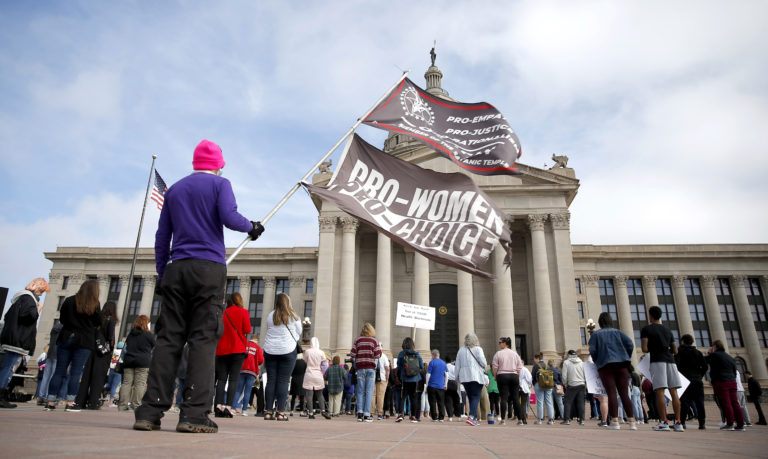
(Headline USA) The Oklahoma House gave final approval Thursday to a Texas-style abortion ban that prohibits the procedure after about six weeks of pregnancy.

The bill approved by the GOP-led House now heads to Republican Gov. Kevin Stitt, who is expected to sign it within days. The focus on protecting the lives of unborn babies is one of several culture-war issues conservatives in GOP-led states have embraced, like shielding youths from LGBTQ groomers, that drive the party’s base in an election year.

A coalition of Oklahoma abortion providers and abortion rights activists immediately filed separate legal challenges in state court to both the Texas-style ban and a separate bill Stitt signed earlier this month to make abortion a felony. Legal experts say it’s likely both measures could be temporarily halted before they take effect.

House members also voted Thursday to adopt new language prohibiting transgender students from using school restrooms that match their gender identity and requiring parental notification ahead of any classroom instruction on sexual orientation or gender identity.

“They’re all concerned about their elections coming up and making sure they have something they can put on a postcard to talk about,” said Rep. Andy Fugate, D-Midwest City.

The abortion bill, dubbed the Oklahoma Heartbeat Act, prohibits the procedure once cardiac activity can be detected in an embryo, which experts say is roughly six weeks into a pregnancy. A similar bill approved in Texas last year led to a dramatic reduction in the number of abortions performed in that state, with many women going to Oklahoma and other surrounding states for the procedure.

Like the Texas law, the Oklahoma bill would allow private citizens to sue abortion providers or anyone who helps a woman obtain an abortion for up to $10,000. After the U.S. Supreme Court allowed that mechanism to remain in place, other Republican-led states sought to copy Texas’ ban. Idaho’s governor signed the first copycat measure in March, although it has been temporarily blocked by the state’s Supreme Court.

Although Stitt already signed a bill this year to make performing an abortion a felony crime in Oklahoma, that measure is not set to take effect until this summer. But the ban approved by the House on a 68-12 vote Thursday has an “emergency” provision that allows it to take effect immediately after the governor signs it.

Abortion providers say it will immediately end most abortions in Oklahoma unless a court intervenes.

“The Oklahoma Supreme Court has repeatedly found that the state legislature’s extreme attempts to restrict abortion are unconstitutional, and these bans are some of the most extreme yet,” Nancy Northup, president of the Center for Reproductive Rights, said in a statement.

A separate bill that uses the Texas-style enforcement mechanism to ban all abortions, not just after cardiac activity is detected, passed the Senate on Thursday and heads to the House for consideration. The bills are among more than a half-dozen anti-abortion measures introduced in the Legislature this year.

Tony Lauinger, the chairman of Oklahomans for Life and a longtime anti-abortion advocate in the state, said he’s optimistic the measure will be deemed constitutional.

“It’s identical to the bill that was enacted by the Texas Legislature last year, and that bill has passed muster with the United States Supreme Court,” Lauinger said. “We are hopeful that this bill will save the lives of more unborn children here in Oklahoma as well.”

Adapted from reporting by the Associated Press

16 States That Want to Electrify USPS Fleet File Lawsuits

(Headline USA) California and 15 states that want the U.S. Postal Service to electrify its mail delivery vehicles are suing to halt purchases of thousands of gas-powered trucks as the agency modernizes its delivery fleet.

Three separate lawsuits, filed Thursday by the states and environmental groups in New York and California, ask judges to order a more thorough environmental review before the Postal Service moves forward with the next-generation delivery vehicle program.

Plaintiffs contend that purchases of fossil fuel-powered delivery vehicles will cause environmental harm for decades to come. A perpetual money pit, the postal service has struggled mightily to keep pace with the times, and critics argue any stall could prove serious. The lawsuits could further delay the Postal Service’s efforts to replace the ubiquitous delivery trucks that went into service between 1987 and 1994.

“Louis DeJoy’s gas-guzzling fleet guarantees decades of pollution with every postcard and package,” said Scott Hochberg, an attorney with the Center for Biological Diversity, referring to the postmaster general.

Attorneys general from 16 states — 14 of which have Democrat governors — sued in San Francisco. A separate lawsuit by leftist groups Center for Biological Diversity, Earthjustice, CleanAirNow KC and Sierra Club was filed in the same venue. Another was filed by the Natural Resources Defense Council and United Auto Workers in New York.

All three of them target the environmental review underpinning the Postal Service’s planned purchase of up to 165,000 next-generation delivery vehicles over the next decade.

California Attorney General Rob Bonta said it’s key to stop the process before it’s too late.

“Once this purchase goes through, we’ll be stuck with more than 100,000 new gas-guzzling vehicles on neighborhood streets, serving homes across our state and across the country, for the next 30 years. There won’t be a reset button,” he said.

The Postal Service defended the process it followed under DeJoy, a wealthy former logistics executive and Republican donor who was appointed by a board of governors controlled by then-President Donald Trump.

“The Postal Service conducted a robust and thorough review and fully complied with all of our obligations under (the National Environmental Policy Act),” spokesperson Kim Frum said Thursday in an email.

The Postal Service contract calls for 10% of the new vehicles to be electric but the Postal Service contends more electric vehicles can be purchased based on financial outlook and strategic considerations.

The percentage of battery-electric vehicles was doubled — to 20% — in the initial $2.98 billion order for 50,000 vehicles.

Environmental activists contend the Postal Service’s environmental review was inadequate and flawed, and that the contract represented a missed opportunity to electrify the fleet and reduce emissions.

The review process “was so rickety and riddled with error that it failed to meet the basic standards of the National Environmental Policy Act,” said Adrian Martinez, senior attorney on Earthjustice’s Right to Zero campaign.

Last seen waging a witch hunt legal vendetta against Trump, New York Attorney General Letitia James said the Postal Service used “fatally flawed decision-making” that led to an outcome that was “fiscally and environmentally irresponsible.” New York is among the plaintiffs.

If the parties can’t agree on a settlement, the lawsuit could drag on for months, possibly into next year, if there are appeals, said University of Richmond School of Law professor Carl Tobias.

The new gasoline-powered vehicles would get 14.7 miles per gallon without air conditioning, compared to 8.4 mpg for the older vehicles, the Postal Service said.

All told, the Postal Service’s fleet includes 190,000 local delivery vehicles. More than 141,000 of those are the old models that lack safety features like air bags, anti-lock brakes and backup cameras.

The new vehicles are taller to make it easier for postal carriers to grab packages and parcels that make up a greater share of volume. They also have improved ergonomics and climate control.

The states that sued are California, Connecticut, Delaware, Illinois, Maine, Maryland, Michigan, New Jersey, New Mexico, New York, North Carolina, Oregon, Pennsylvania, Rhode Island, Vermont and Washington.

The Bay Area Air Quality Management District in California, District of Columbia and city of New York joined that lawsuit, as well.

Adapted from reporting by the Associated Press

Biden Broke Promise to Have Weekly Lunches w/ Kamala

(Jacob Bruns, Headline USA) President Joe Biden has skimped on his promise to dine with his Vice President Kamala Harris once per week so that she can have more input, the Daily Caller reported.

When he first took office, the president made a public promise in an interview with People magazine that he would make sure Harris’ voice was heard by having lunch with her alone each week.

Biden claimed that he was going to resurrect the tradition that he and former President Barack Obama shared back during their good ole’ days.

“[Like] Barack and I, we have lunch alone once a week,” Biden said at the time. “That’s the deal when we’re [Harris and Biden] both in country, which we’ll be for a while because of COVID, and I see her all the time.”

But the good times were not to last, and Biden’s promises have not come to fruition.

Instead of a weekly private audience, Biden has only dined with Vice President Harris 23 times, and only two of those were private meals.

According to the New York Times’ Jonathan Marin and Alex Burns, Biden and Harris have just not hit it off in any substantial way.

They reported that the “weekly lunches lacked a real depth of personal and political intimacy.”

The strained relationship between Biden and Harris has been well-documented, and it may be behind many of the administration’s failures to achieve its ambitious agenda to “Build Back Better.”

Late last year, rumors even swirled that Biden was considering replacing Harris due to her problematic performance.

Capitol Hill correspondent Chad Pergram at the time reported that there were “whispers suggesting there could be some new high profile confirmation hearings on the horizon in the House of Representatives.”

“I got a message recently from someone who knows Capitol Hill very well,” Pergram said, “and they suggested I should familiarize myself with the process to confirm a vacancy for the vice president in the Senate and in the House.”

Kenosha Considers Honoring Antifa Activist Who Attacked Rittenhouse

(Molly Bruns, Headline USA) The Kenosha Parks Comission of Kenosha, Wisconson, is considering the planting of a memorial tree for Anthony Huber, one of the men Kyle Rittenhouse shot during the Black Lives Matter riots of 2020, Big League Politics reported.

Huber was shown chasing Rittenhouse on video before attempting to attack him, and was then killed in self defense.

The parks proposal was brought forward by members of the public, and met some opposition by other townspeople who said it would be inappropriate to honor a man who died while trying to incite violence.

The parks commission did not take action on the proposal, and tabled the topic until its next meeting. Members of the public have been encouraged to submit their feedback on the proposal via an online survey.

Hannah Gittings, who was Huber’s girlfriend, said she was surprised by the proposal but appreciated it.

“I think it would be good for people to have a place to go and reflect on what happened,” Gittings said. “And I think it would also be good for some healing in the community.”

Alderman Eric Haugaard voted to table the proposal due to an ongoing lawsuit between the city and Huber’s family, according to Fox News.

Former Kenosha alderman and investigative journalist Kevin Mathewson is worried that the commission is continuing to table the controversial proposal until attention it drops so they can pass it quietly.

Mathewson has described the commissioners as “toe-the-line, card-carrying Democrats who want to appeal to their districts.”

“I think those five members want the tree and the plaque to go up, but they don’t want the ramifications from the voters,” said Mathewson.

“It’s unprecedented what happened to our city a couple of summers ago,” Mathewson continued. “And to memorialize a man who lived a life of violence and crime, and who was one of the ones contributing to the rioting and looting is just unfathomable.”

“It was offensive to the city of Kenosha taxpayers even to consider it, in my opinion,” he added.


Biden Wants $33 Billion MORE to Fight Russia in Ukraine

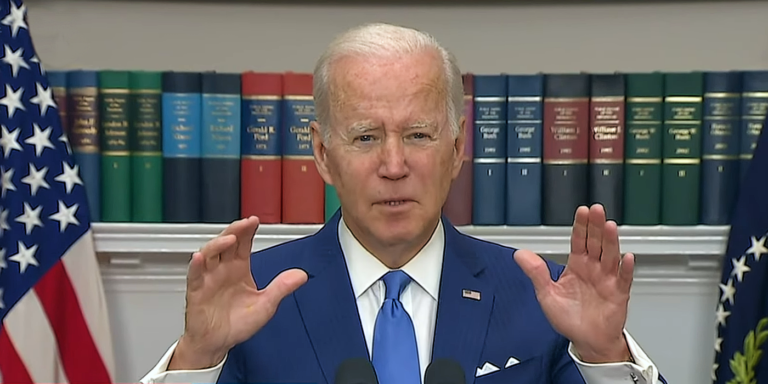
(John Ransom, Headline USA) President Joe Biden has upped the ante, literally, to fight Russia in Ukraine asking Congress for an additional $33 billion in US aid.

“We need this bill to support Ukraine in its fight for freedom,” Biden said at the White House after signing the request on Thursday, according to Reuters.

“The cost of this fight—it’s not cheap—but caving to aggression is going to be more costly,” added Biden.

The figure represents a 10-fold increase in the amount of financial aid that the US has committed to Ukraine, which was reported at $3 billion by USA Today, as of the middle of April.

Since then, the US has committed not only to financing the war effort, but also bolstering the notoriously corrupt Ukrainian government—an enterprise that Biden became intimately familiar with in the Obama administration, when his son Hunter served on the board of the Burisma natural gas company as it was investigated for financial crimes.

Previously, Ukraine president Volodymyr Zelenskyy had said that to continue the war against Russia he needed about $7 billion in aid every month to cover the salaries and pensions of Ukrainian public officials.

And as Treasury Secretary Janet Yellen noted, the initial aid was only just the beginning.

The new aid package would put Ukraine on more or less equal footing with Russia, which had about a $70 billion defense budget in 2021, according to the Stockholm International Peace and Research Institute.

The aid request includes $20 billion for military aid and security assistance, $8.5 billion dollars for economic assistance and $3 billion for humanitarian aid, reported DefenseNews.com.

It’s unclear where the $1.5 billion remaining money would be applied, but between Ukraine and the Bidens, that could just be tip money for Hunter.

Regrettably, some Senate Democrats have toyed with the idea of including the Ukraine military assistance with further COVID pandemic relief for Americans.

“[D]oing so could delay the passage of additional funds for Kyiv, as Republicans have refused to advance COVID-19 aid absent an immigration-related vote,” said Defense News.

The aid package represents over 20% of Ukraine’s GDP, according to data shared by the World Bank, and would mark more than a five-fold increase over Ukraine’s 2021 defense budget of nearly $6 billion.

The funding request means that the United States has committed long-term to defending Ukraine’s independence from Russia, according to Politico, and it will mark a significant change from the days when the Obama administration, under Secretary of State Hillary Clinton, claimed to be seeking a Russian “reset.”

“The high dollar amount requested also sends a signal to Russia that the United States intends to back Ukraine in the fight for the long run,” noted Politico.

“It will also likely boost Ukrainians who say they want to defeat Russia, not merely settle for a long-term stalemate,” Politico added.

Which exact military equipment will be shipped to Ukraine by the US remains unclear.

FCC Shuts Down Soros’s Attempt to Block Musk Deal

(Molly Bruns, Headline USA) A left-wing think tank funded by George Soros attempted to get the Federal Trade Commission, Federal Communications Commission and Department of Justice to block Elon Musk’s acquisition of Twitter.

Journalist Mona Salma found a statement written by the think tank, known as the Open Markets Institute, which claimed that the three agencies had “ample authority to block it,” according to the Western Journal.

FCC Comissioner Brendan Carr rejected the request.

“The FCC has no authority to block Elon Musk’s purchase of Twitter, and to suggest otherwise is absurd,” Carr wrote in a news release shared to his Twitter account.

“I would welcome the full FCC making it clear that we will not entertain these types of frivolous arguments.”

Carr made it clear that he was not speaking for the entirety of the FCC, which is supposed to have five members. Carr is one of two Republicans on the commission; there are also two Democrats, with the final seat remaining empty.

“The FCC has zero authority to block Musk’s purchase of Twitter,” Carr wrote. “And it is particularly frivolous to ask the agency to do so in the name of protecting free speech and open debate.”