

Trump’s Sway w/ GOP Voters Faces YUGE Tests in May Primaries

(Headline USA) Donald Trump’s post-presidency enters a new phase this month as voters across the U.S. begin weighing the candidates he elevated to pursue a vision of a Republican Party steeped in populism, responding to culture wars launched by leftists and questioning his loss in the 2020 campaign.

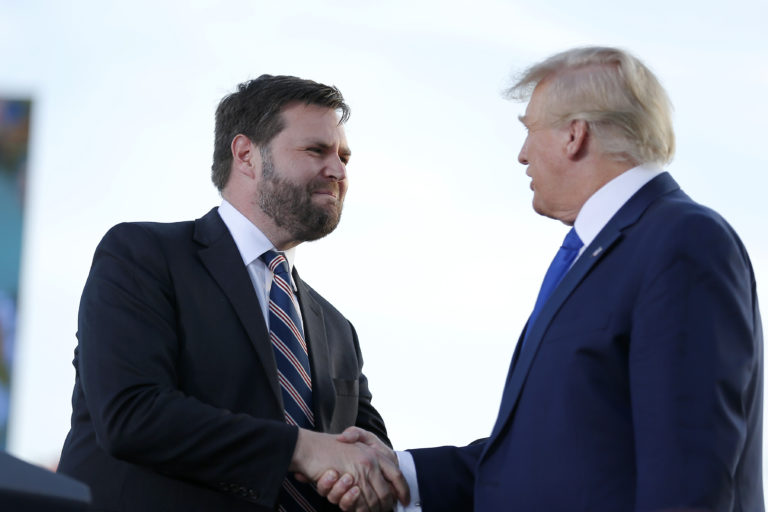
The first test comes on Tuesday when voters in Ohio choose between the Trump-backed JD Vance for an open U.S. Senate seat and several other contenders who spent months clamoring for the former president’s support.

In the following weeks, elections in West Virginia, Nebraska, Pennsylvania and North Carolina will also serve as referenda on Trump’s ability to shape the future of the GOP.

In nearly every case, Trump has endorsed only those who embrace his claims of election fraud and dig deeper on the U.S. Capitol protests last year.

“The month of May is going to be a critical window into where we are,” said Maryland Republican Gov. Larry Hogan, a Trump critic defending incumbent GOP governors in Georgia, Ohio and Idaho against Trump-backed challengers this month. “I’m just concerned that there are some people trying to tear the party apart or burn it down.”

Few states may be a higher priority for Trump than Georgia, where early voting begins on Monday ahead of the May 24 primary. He’s taken a particularly active role in the governor’s race there, recruiting a former U.S. senator to take on the incumbent Republican for failing to go along with his views on the election. For similar reasons, Trump is also aiming to unseat the Republican secretary of state, who he unsuccessfully pressured to overturn President Joe Biden’s victory.

While the primary season will play out deep into the summer, the first batch of races could set the tone for the year. If Republican voters in the early states rally behind the Trump-backed candidates, the former president’s kingmaker status would be validated, likely enhancing his power as he considers another bid for the presidency. High-profile setbacks, however, could dent his stature and give stronger footing to those who hope to advance an alternate vision for the GOP.

Texas Sen. Ted Cruz predicted a strong month of May for Trump and his allies.

“The voices in Washington that want him to fade into obscurity or to be silenced are engaged in their own form of wishful thinking,” Cruz said in an interview. “That’s not going to happen. Nor should he.”

As Republicans grapple with Trump, Democrats are confronting their own set of revealing primaries.

Candidates representing the Democrats’ moderate and progressive wings are yanking the party in opposing directions while offering conflicting messages about how to overcome their acute political shortcomings, Biden’s weak standing chief among them. History suggests that Democrats, as the party that controls Washington, may be headed for big losses in November no matter which direction they go.

But as Democrats engage in passionate debates over policies, Republicans are waging deeply personal and expensive attacks against each other that are designed, above all, to win over Trump and his strongest supporters.

Florida Sen. Rick Scott, who leads the GOP’s effort to retake the Senate, described the month of May as a brutal sorting period likely to be dominated by Republican infighting instead of the policy solutions or contrasts with Democrats he’d like to see.

“The primaries too often become sort of character assassinations,” Scott said in an interview. “That’s what has happened.”

He added, “Hopefully, people come together.”

No race may be messier than the Republican primary election for Georgia’s governor. Trump has spent months attacking Republican incumbents Gov. Brian Kemp and Secretary of State Brad Raffensperger. He blames both men for not working hard enough to overturn his narrow loss in the 2020 presidential election.

Georgia Republican Lt. Gov. Geoff Duncan, a frequent Trump critic who is not running for reelection, described Trump’s decision to back former Sen. David Perdue against Kemp an “embarrassing” waste of time that could undermine the GOP’s broader goals this fall.

Duncan predicted Trump would ultimately win some races and lose others this month, but he was especially optimistic about Kemp’s chances to beat back Trump’s challenge.

“If a sitting governor is able to defeat that whole Donald Trump notion by a huge amount — and others down the ticket — I think we’re gonna send a message that it’s gonna take more than a Donald Trump endorsement to call yourself a Republican,” he said.

For now, however, Trump is unquestionably the nation’s most powerful Republican as even those who find themselves on opposite sides of the former president are careful to note their loyalty to him. Cruz, who is backing opponents of Trump-endorsed Senate candidates in Ohio and Pennsylvania, downplayed any disagreement with him in an interview. Cruz noted he made his picks long before Trump did.

“For the four years he was president, Donald Trump had no stronger ally in the Senate than me,” Cruz said.

Six months before the general election, the Republican candidates in key primaries have already spent mountains of campaign cash attacking each other as Democrats largely save their resources — and sharpest attacks — for the November.

With early voting already underway in Ohio, a half-dozen Republican candidates in the state’s high-profile Senate primary and their allied outside groups have spent more than $66 million this year combined on television advertising as of last week, according to Democratic officials tracking ad spending. The vast majority of the ads were Republican-on-Republican attacks.

Mike Gibbons, a Cleveland real estate developer and investment banker, spent $15 million alone on television advertising as of last week. That includes an advertising campaign attacking Vance highlighting his past description of Trump as “an idiot.”

The pro-Vance super PAC known as Protect Ohio Values, meanwhile, has spent $10 million on the primary so far, including a recent barrage of attack ads casting Cruz-backed candidate Josh Mandel as “another failed career politician squish.”

On the other side, the leading Senate Democratic hopeful, Rep. Tim Ryan, has spent less than $3 million so far in positive television ads promoting his own push to protect Ohio manufacturing jobs from China.

The spending disparities in high-profile Senate primaries in Pennsylvania and North Carolina were equally stunning.

In Pennsylvania, where Trump-backed Dr. Mehmet Oz and former hedge fund executive David McCormick are locked in a fierce fight for the GOP nomination, the candidates and allied outside groups have spent more than $48 million on television advertising so far. Democrats spent just over $10 million.

And in North Carolina, Republican forces have spent more than $15 million on a divisive primary pitting Trump-backed Rep. Ted Budd against former Gov. Pat McCrory. Democrats, who have united behind former state Supreme Court Chief Justice Cheri Beasley, spent just over $2 million.

Similarly in West Virginia, staunch incumbent conservative Alex Mooney is pitted against Rep. David McKinley, who recently received an endorsement from Sen. Joe Manchin, a Democrat from West Virginia.

Michigan Sen. Gary Peters, who leads the effort for Democrats to keep the Senate majority, said Republicans are essentially creating the Democrats’ general election ads for them. He described the intensity of the Republican infighting in several states as “toxic for the character of the Republican candidates.”

“They’re trying to compete to see who is the Trumpiest of the Trumpsters,” Peters said. “They’re not talking about issues that people care about.”

At the same time, Peters acknowledged his own party’s challenges, particularly Biden’s low popularity. He said it would be up to every individual candidate to decide whether to invite the Democratic president to campaign on their behalf.

“I think the president can be helpful,” Peters said of Biden. But “this is about the candidates. They’re running to represent their state in the United States Senate. And they have to rise and fall by who they are as individuals.”

Adapted from reporting by the Associated Press
Several Top-Tier Candidates Gamble on Skipping Debates in Heated Races

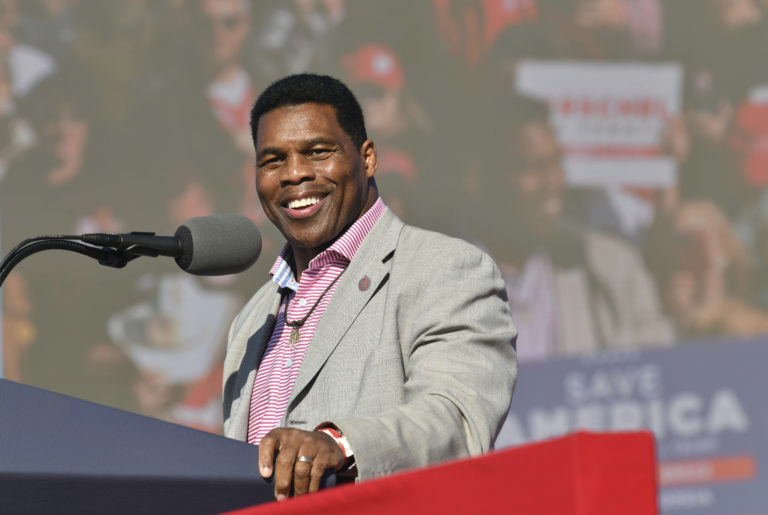
(Headline USA) Refusing to abide by a pre-set narrative that too often are egregiously stilted toward leftist candidates and against conservative ones, Herschel Walker is expected to skip a second debate against his Republican rivals for a crucial U.S. Senate seat on Tuesday after missing the first one.

Ted Budd has skipped four Republican primary debates in his bid for a U.S. Senate seat in North Carolina. GOP candidates for governor in Ohio, Nevada and Nebraska also have refused to engage with their opponents from the debate podium.

As the most competitive phase of the midterm primary season unfolds this week, many candidates for leading offices — often Republicans — are abandoning the time-honored tradition of debating their rivals before Election Day.

For some gaffe-prone candidates such as Walker, avoiding the debate stage reduces the chance of an embarrassing moment. For others, it’s an opportunity to snub a media ecosystem they find elitist and cast themselves in the mold of former President Donald Trump, who made a show of missing some debates during the 2016 campaign.

The Republican National Committee is already moving toward withdrawing from the 2024 presidential debates, though the ultimate decision will likely fall on whoever emerges as the party’s nominee.

Walker holds a commanding lead over his rivals heading into the May 24 primary. His campaign has not granted The Associated Press an interview despite repeated requests, including for this story. But after facing criticism from rivals at the first Georgia Republican Senate debate in April, including about his absence, Walker told north Georgia radio station WDUN-AM that his opponents were jealous.

“Because right now Herschel’s going to win that seat,” he said during an April 20 appearance on the program “Newsroom.”

“They can’t win it, so they’re going to the old politics where people are tired of that. They want what people are going to do for their state of Georgia, and they can’t do anything but complain.”

Walker on Monday released a policy platform, saying he wants to lower taxes, produce more oil and gas domestically, spend more on the military and provide mental health training to law enforcement officers and provide more mental health counselors in schools.

Though many of those who have skipped debates are Republican, some Democrats have followed a similar strategy.

In Pennsylvania, which holds primary elections on May 17, Democratic Senate candidate John Fetterman skipped a debate last month, saying he chose to participate in three other debates because they will have wider reach on television.

A spokesman for Budd, Jonathan Felts, has said instead of attending debates, Budd was focused on finishing his tour of North Carolina counties so he could speak directly to voters.

In Walker’s case, his reticence extends beyond debating. He doesn’t widely publicize his campaign stops and limits appearances mostly to conservative news outlets and friendly audiences. Campaign spokeswoman Mallory Blount said in an email last week that Walker had conducted more than 105 interviews.

“The suggestion that Herschel is not accessible is a lie,” she said. “He does interviews and takes questions from thousands of Georgians as he travels across the state every week.”

But when Walker does speak, awkward moments can ensue.

He has wrongly referred to the late congressman John Lewis as a senator and said the voting rights activist’s eponymous election bill — the John R. Lewis Voting Rights Advancement Act — “doesn’t fit what John Lewis stood for.”

Although that false narrative, the Lewis didn’t stand for legislation designed to favor one political party over another, could be a prime reason why Walker and others are staying clear of fake news outlets and debates.

Walker recently cast doubt on evolution at a church gathering by questioning why apes still existed if humans originated from them. And he told a reporter in January that asking whether he would have voted for a bipartisan infrastructure bill was “unfair” because he hadn’t been “privileged” to receive all the facts about the measure. The bill was signed into law in November.

“You’ve got to be an Alabama fan because you asked that question there,” Walker, a college football star at the University of Georgia, told the reporter for the news site The Daily Caller.

Walker did not graduate from the University of Georgia, but has said he did — a falsehood repeated initially by his campaign on a website promoting his Senate bid. He repeatedly made claims of voting fraud on his Twitter account following Trump’s loss to Democrat Joe Biden in the presidential election. In one tweet, he suggested people in several battleground states should be given the opportunity to vote again.

He also posted odd video messages, including one in which he said his takeaway from reading the Constitution the previous night was that “the people in Washington work for the American people, and we can demand and hold them accountable if we count all the legal votes.” He went on, “But if we start counting illegal votes, we then start working and depending on the government.”

In still another video, he said that anyone who wants to change the Constitution should be impeached because the Constitution has to stand. But then he added, “Maybe amend it a little bit. But we’ve all got to rejoice in who the Lord Jesus Christ is.”

Walker led the University of Georgia football team to a national title for the 1980 season and won the Heisman Trophy in 1982. His status as a Georgia sports legend, along with Trump’s endorsement, made him the GOP favorite as soon as he entered the race in August.

Still, limiting questioning and access may help avoid discussions about his turbulent past. Officers responding to a 2001 report that Walker was armed and scaring his estranged wife at a suburban Dallas home later noted that Walker “talked about having a shoot-out with police,” according to a police report revealed by the AP in February. In a protective order sought by his then-ex-wife in 2005, Walker was accused of repeatedly threatening her life.

Walker has been open about his long struggle with mental illness and acknowledged violent urges. His campaign has dismissed the report of a shoot out and blamed the media for highlighting it.

While skipping the GOP debates is unlikely to hurt Walker in the primary, a no-show strategy in the general election could be a different story, said Andra Gillespie, a political science professor at Emory University.

Walker may need to persuade some voters to win what would likely be a tight race, and that would require him to “perform” and answer questions, she said.

Asked on WDUN whether he would debate Warnock, Walker said he was committed to doing whatever it took to win.

“So Rev. Warnock better get ready because I’m getting ready,” he said.

Adapted from reporting by the Associated Press
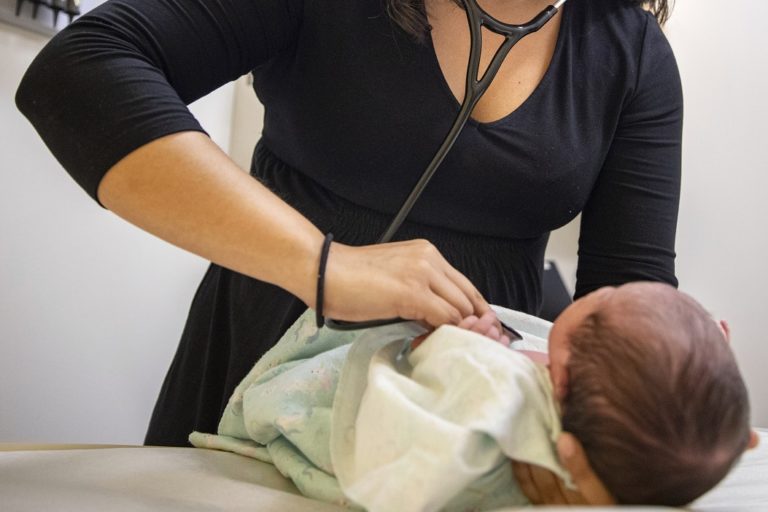
US Pediatricians’ Group Moves to Abandon Race-based Guidance

(Headline USA) For years, pediatricians have followed flawed guidelines linking race to risks for urinary infections and newborn jaundice. In a new policy announced Monday, the American Academy of Pediatrics said it is putting all its guidance under the microscope to eliminate “race-based” medicine and resulting health disparities.

A re-examination of AAP treatment recommendations that began before George Floyd’s 2020 death and intensified after it has doctors concerned that black youngsters have been undertreated and overlooked, said Dr. Joseph Wright, lead author of the new policy and chief health equity officer at the University of Maryland’s medical system.

The move echoes similar so-called race-based assessments that black communities were predisposed to higher rates of COVID because preexisting conditions were more common as a result of institutionalized racism.

The influential academy has begun purging outdated advice. It is committing to scrutinizing its “entire catalog,” including guidelines, educational materials, textbooks and newsletter articles, Wright said.

“We are really being much more rigorous about the ways in which we assess risk for disease and health outcomes,” Wright said. “We do have to hold ourselves accountable in that way. It’s going to require a heavy lift.”

Dr. Brittani James, a family medicine doctor and medical director for a Chicago health center, said the academy is making a pivotal move.

“What makes this so monumental is the fact that this is a medical institution and it’s not just words. They’re acting,” James said.

In recent years, other major doctor groups including the American Medical Association have made similar pledges. They are spurred in part by civil rights and social justice movements, but also by science showing the strong roles that social conditions, genetics and other biological factors play in determining health.

Last year, the academy retired a guideline calculation based on the unproven idea that black children faced lower risks than white kids for urinary infections. A review had shown that the strongest risk factors were prior urinary infections and fevers lasting more than 48 hours, not race, Wright said.

A revision to its newborn jaundice guidance — which currently suggests certain races have higher and lower risks — is planned for this summer, Wright said.

Dr. Nia Heard-Garris, head of an academy group on minority health and equity and a pediatrician at Chicago’s Lurie Children’s Hospital, noted that the new policy includes a brief history “of how some of our frequently used clinical aids have come to be — via pseudoscience and racism.”

Whatever the intent, these aids have harmed patients, she said.

“This violates our oath as physicians — to do no harm — and as such should not be used,″ Heard-Garris said.

Dr. Valencia Walker, a specialist in newborn care and health equity at Nationwide Children’s Hospital in Columbus, Ohio, called the new policy “a critical step” toward reducing racial health disparities.

The academy is urging other medical institutions and specialty groups to take a similar approach in working to eliminate racism in medicine.

“We can’t just plug up one leak in a pipe full of holes and expect it to be remedied,” said Heard-Garris. “This statement shines a light for pediatricians and other healthcare providers to find and patch those holes.”

Adapted from reporting by the Associated Press
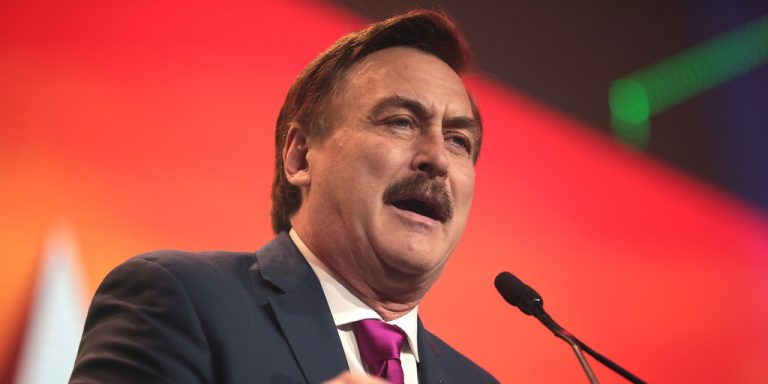
Mike Lindell Banned from Twitter AGAIN, Hours After Reinstatement

(Joshua Paladino, Headline USA) MyPillow CEO Mike Lindell created a new Twitter account on May 1 under the handle, @MikeJLindell, but the social media platform banned the new account after two hours.

Twitter banned Lindell about three weeks after the Jan. 6 “Stop the Steal” protest at the Capitol. The platform banned him for repeatedly violating its community guidelines about so-called election misinformation, the Post Millennial reported.

He believes that former President Donald Trump rightly won the 2020 election and that widespread election fraud and interference led President Joe Biden to an unearned victory.

“Hello everybody, I’M BACK ON TWITTER. My only account is @MikeJLindell! Please RT and FOLLOW to SPREAD THE WORD,” Lindell posted on Sunday.

Lindell had not tweeted in more than a year and three months.

“Hello everyone on Twitter, this is Mike Lindell,” he said on video, speaking from a private airplane. “I’m here to tell everyone about my new account here: @MikeJLindell.”

Twitter does not appear to have reinstated Lindell’s account, despite several reports to the contrary. Instead, Lindell created a new account.

Given the celebration among Twitter’s conservatives when Tesla CEO Elon Musk purchased the platform, it is likely that Lindell thought he could reenter a censorship-free website.

But Twitter never removed his ban, according to a spokesperson, so he was removed from the platform again. Lindell is “permanently suspended for violating the Twitter Rules on ban evasion,” the employee told Fox News.

Other conservatives have had newfound success on Twitter since Musk purchased it.

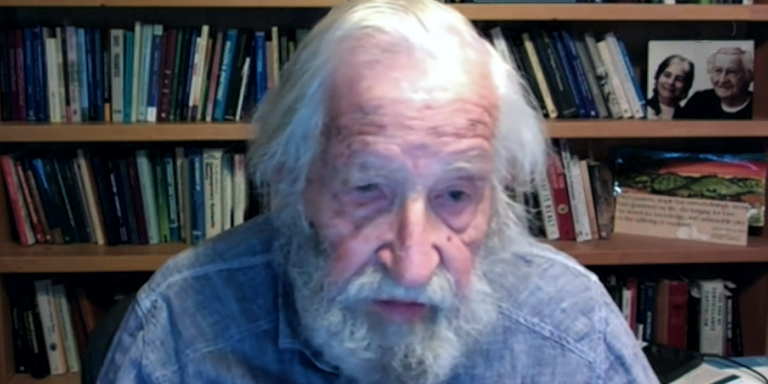
Leftist Scholar Noam Chomsky Admits Trump the Only One for Ukraine Peace

(Joshua Paladino, Headline USA) Anarchist academic Noam Chomsky, who taught linguistics at MIT, praised former President Donald Trump for being the “one statesman” who wants to see the Russo-Ukrainian War come to a quick and peaceful conclusion, Breitbart reported.

“Well, there is, fortunately, one statesman in the United States and Europe, a high political figure, who has made a very sensible statement about how you can solve the crisis,” he said in an interview with EduKitchen on YouTube.

Chomsky said that Trump wants to see leaders “facilitating negotiations instead of undermining them” and working toward “mutual accommodation,” rather than oppositional military alliances, among European and Eurasian nations.

Despite calling himself an anarcho-syndicalist or libertarian socialist, Chomsky often sides with the Left in political disputes. But he is consistently anti-war, and the Establishment has embraced the Russo-Ukrainian War as it did the wars in Afghanistan, Iraq, Syria, Libya, and Yemen.

Before revealing the name of the “one statesman,” Chomsky described Trump’s proposal for peace in Europe and Eurasia.

“He didn’t say it, but it was something like George H.W. Bush proposed in the early-90s after the collapse of the Soviet Union,” he said. “[He] proposed what they called a partnership for peace, which would be open for Europeans generally, Eurasians as well.

“It wouldn’t eliminate NATO, but he would live [up] to the promise that NATO would not expand to the east.”

Prior to the war, Russian President Vladimir Putin asked the United States, the European Union, and NATO for a guarantee that Ukraine would not join the Western alliance.

Western leaders refused the assurance, and President Joe Biden even insinuated that Ukraine would soon join NATO.

“So, going back to the one Western statesman, he didn’t mention all of this, but he suggested something similar. Move towards negotiations and diplomacy instead of escalating the war…His name is Donald J. Trump,” Chomsky said.

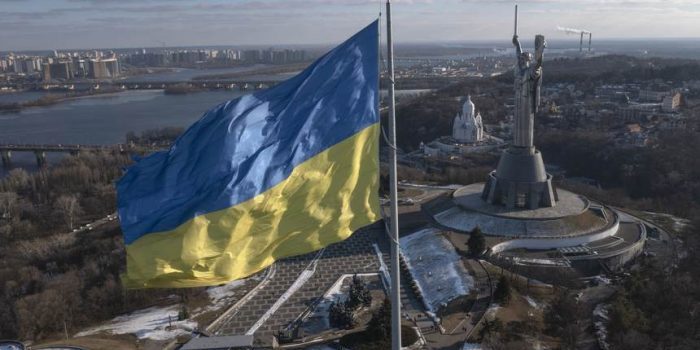
Ukraine Admits Ghost of Kiev Is Fake after Death Reported

(Molly Bruns, Headline USA) Following the Russian invasion of Ukraine, rumors about a legendary Ukrianian pilot known as the “Ghost of Kyiv” circulated, which have now been confirmed as false, Daily Caller reported.

The pilot was identified as Major Stepan Tarabalka, who was killed in combat in March. While Tarabalka was a distinguished war hero, he was not the “Ghost” —because there never was such a person, Ukraine said.

Ukrainian officials explained, “Hero of Ukraine Stepan Tarabalka is NOT ‘Ghost of Kyiv’ and he did NOT shoot down 40 planes,” according to the New York Post.

The official account for the Ukrainian Air Force claimed the Ghost of Kyiv was never a singular person, but a spirit of victory and determination among all of the pilots of the Tactical Aviation Brigade.

Many believe the misunderstanding was due to a translation mistake, as the words “spirit” and “ghost” are very similar in the Ukrainian language.

However, the Ukrainian government did contribute to this tall tale, posting comments encouraging the rumors.

“People call him the Ghost of Kyiv. And rightly so,” the government tweeted in February of the reputed mysterious figure, saying the pilot had “already become a nightmare for invading Russian aircraft.”

Many people were suspicious of the story from the beginning, claiming posted footage was from a video game.

Alaska Ripe for Theft by RINOs, Dems after New Policies Enacted

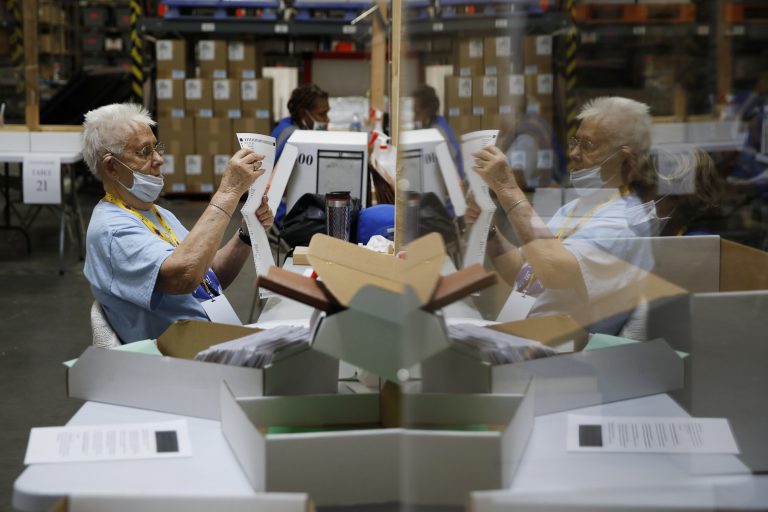
(Alex Tien, Headline USA) Due to a number of recently passed election laws in Alaska, the state may be headed for trouble, reported the Gateway Pundit.

In an unprecedented move, the northern-most state will not verify voter signatures in the state’s first ever mail-in election, occurring in June, the Alaska Watchman reported.

“There is no statutory authority to verify signatures, but voters will have to provide witness signatures,” an email from Alaska’s Division of Elections stated in March.

This will be the first time that Alaska has not conducted an in-person special election.

When asked why this was not possible, Lt. Gov. Kevin Meyer said that there was a paper “supply chain” shortage for and that there had been difficulty hiring the necessary 2,000 election workers that it takes to successfully conduct an in-person election.

Unfortunately, attempts at legislating safe and unbiased elections have completely fallen through.

“Multiple bills have been introduced in the current legislative session to address voter integrity issues, including voter signature verification, but they have languished in various House and Senate committee assignments.”

Several bills having to do with voter signature verification, including House Bill 96, have stalled and not seen any movement in the Alaska House of Representatives.

Alaska’s conservatives legislators should have seen this coming and done more to stop it. In October, two national election experts came to the state to warn the governor about the dangers of mail-in voting fraud.

Hans von Spakovsky, a senior legal fellow at The Heritage Foundation and a member of Trump’s Presidential Advisory Commission on Election Integrity, warned Alaskans that mail-in voting was the “tool of choice” when it comes to fraud because they are the easiest to steal and forage.


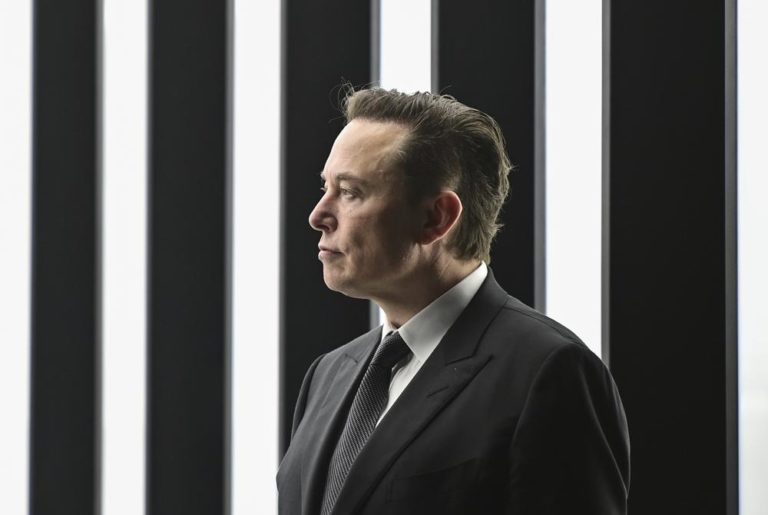
Musk Plans Big Cuts to Twitter Management, Including Crybaby Censor

(John McCann, Headline USA) Big changes are on the horizon at Twitter following Elon Musk‘s $44 billion acquisition. And that appears to be bad news for Twitter’s current management hierarchy.

Shortly before acquiring Twitter, Musk used his position as shareholder to highlight his reservations about the company, according to the Western Journal.

In his schedule 13D filing with the SEC, Musk stated: “If the deal doesn’t work, given that I don’t have confidence in management nor do I believe I can drive the necessary change in the public market, I would need to reconsider my position as a shareholder.”

When securing funds for the purchase, Musk reportedly told prospective lenders that he would be focusing on the company’s profitability. This would lead to cuts in both costs and jobs. Reuters also reported that executive salaries would also be reduced.

Musk’s plans could spell trouble for many at the company who he deems surplus for requirements. One of the first names on the chopping block is sure to be Twitter’s chief censor, Vijaya Gadde.

Using her position as chief legal officer and general counsel, Gadde was instrumental in Donald Trump’s removal from the platform, as well as suppressing the Hunter Biden laptop scandal during the 2020 election.

Musk appeared to have publicly targeted Gadde on Twitter by sharing a flowchart depicting Gadde’s appearance on the Joe Rogen podcast, in which she defended Twitter’s speech restrictions.

Gadde insisted that Twitter censors do not target accounts based on politics, stating: “Our platform promotes speech unless people violate our rules.”

Journalist Tim Pool, who was conducting the interview, countered her claim by pointing out that, “You have a pattern and practice of banning only one faction of people,” and cited a report from Quillette that provided evidence to his statement. Gadde insisted that politics didn’t come into her decision making.

Given Gadde’s penchant for censorship and her cost (she earned $21 million in 2021), she seems to be at odds with Musk’s vision for the platform going forward.

Many employees throughout the company may have to clean their desks out and seek greener pastures as change is on the way.


Netflix Axes Meghan Markle Kids Show Due to Low Ratings

(Jacob Bruns, Headline USA) Netflix, the flailing streaming service, cut actress Meghan Markle’s children’s show called “Pearl” as the company’s revenues continue to plunge to new lows, the Post Millennial reported.

The children’s show, which was “in the development stage,” was to depict a story loosely based on Markle’s childhood, especially on the power women that she looked up to throughout her childhood that helped inspire her to become a power woman herself.

Markle was to be the creator and the executive producer of “Pearl.” According to the Duchess of Sussex, the story was meant to create a fantasy-land in which young girls complete normal daily tasks.

Pearl, she said, would “weave together fantasy and history” while depicting “the adventures of a 12-year-old girl” as she tries to “overcome life’s daily challenges.”

The program was to be the first in a series of ambitious projects launched by Archewell Productions, the royal couple’s attempt at writing and producing stories. As of now, they have yet to produce shows for Netflix, or for any other streaming service.

“Markle and Prince Harry, her husband, established Archewell Productions in autumn 2020 in an effort to create scripted series, docuseries, documentaries, features and children’s programming. Pearl was expected to be the first animated series created by the production company,” the Daily Mail wrote.

Markle’s show is not the only one getting the ax as Netflix fails to draw subscribers. Three others–“The OA”, “Marco Polo” and “The Punisher”–will all be cancelled following their inaugural seasons due to streaming service’s financial concerns.

They also scrapped two other shows which were in development: Jeff King’s “Dino Daycare”, and the South Asian-inspired show “Boons and Curses.”

It has been speculated that Netflix has taken such a plunge due to its corporate wokeness, which it pushes with its content.

Critics, including billionaire Elon Musk, slammed the company’s incessant virtue signaling for leftist causes as the primary source of its subscription woes.

NYPD Veteran Convicted of Assaulting Officer in Capitol Protest

(Headline USA) A federal jury on Monday convicted a New York Police Department veteran of assaulting an officer during the U.S. Capitol protests, rejecting his claim that he was defending himself when he tackled the officer and grabbed his gas mask, after being punched by the officer.

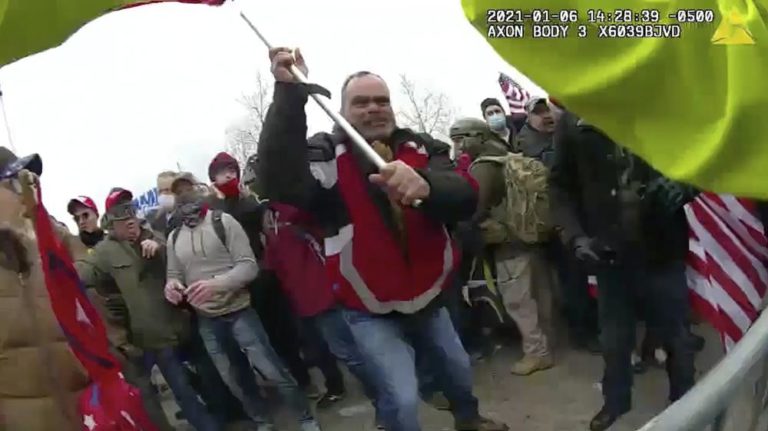
Thomas Webster, a 20-year NYPD veteran, was the first J6 defendant to be tried on an assault charge and the first to present a jury with a self-defense argument. Webster, who was wearing a face mask in court, showed no obvious reaction to the verdict finding him guilty of all six counts against him, one of which is punishable by up to 20 years in prison.

Webster, 56, testified that he was trying to protect himself from a “rogue cop” who punched him in the face. He also accused the Metropolitan Police Department officer, Noah Rathbun, of instigating the confrontation.

Rathbun testified that he didn’t punch or pick a fight with Webster as protestors stormed the Capitol on Jan. 6, 2021, disrupting Congress from certifying Joe Biden’s 2020 presidential election victory over then-President Donald Trump.

Webster’s jury trial was the fourth for a Capitol protest case. The first three defendants to get a jury trial were convicted of all charges in their respective indictments. A judge decided two other cases without a jury, acquitting one of the defendants and partially acquitting the other.

A grand jury indicted Webster on six counts, including a charge that he assaulted Rathbun with a dangerous weapon, a metal flag pole. Webster wasn’t accused of entering the Capitol on Jan. 6. He’s scheduled to be sentenced on Sept. 2.

Prosecutors asked for Webster to be detained pending sentencing, but the judge agreed to let him remain free until that hearing. He’ll be monitored with an ankle bracelet. The judge said it was a “close call” whether to jail him immediately but noted that he has complied with current conditions of release and doesn’t have any prior convictions.

Webster drove alone to Washington, D.C., from his home near Goshen, New York, on the eve of the Jan. 6 “Stop the Steal” rally. He was wearing a bulletproof vest and carrying a U.S. Marine Corps flag on a metal pole when he approached the Capitol, after listening to Trump peacefully address thousands of supporters.

Webster said he went to the Capitol to “petition” lawmakers to “relook” at the results of the 2020 presidential election. But he testified that he didn’t intend to interfere with Congress’ joint session to certify the Electoral College vote.

Rathbun’s body camera captured Webster shouting profanities and insults before they made any physical contact. Webster said he was attending his first political protest as a civilian and expressing his free speech rights when he yelled at officers behind a row of bike racks.

The body camera video shows that Webster slammed one of the bike racks at Rathbun before the officer reached out with an open left hand and struck the right side of Webster’s face. Webster said it felt as though he had been hit by a freight train.

“It was a hard hit, and all I wanted to do was defend myself,” Webster said.

Webster also said he believed Rathbun was coming after him and recalled thinking, “He’s gone rogue.”

Rathbun said he was trying to move Webster back from a security perimeter that he and other officers were struggling to maintain.

After Rathbun struck his face, Webster swung a metal flag pole at the officer in a downward chopping motion, striking a bike rack. Rathbun grabbed the broken pole from Webster, who charged at the officer, tackled him to the ground and grabbed his gas mask.

Rathbun testified that he started choking as the chin strap on his gas mask pressed against his throat.

“That’s not a position that anyone wants to be in,” Rathbun said.

Webster said he grabbed Rathbun by the gas mask because he wanted the officer to see his hands. During the trial’s closing arguments, Assistant U.S. Attorney Brian Kelly urged jurors to reject Webster’s self-defense argument.

“Don’t let the defendant off the hook for what he did that day,” Kelly said.

Defense attorney James Monroe said Webster had a right to defend himself against a “bad cop” who was using excessive force.

“Get behind the truth. And I’m talking about the whole truth,” Monroe told jurors.

Rathbun reported a hand injury from a separate encounter with a rioter inside the Capitol. He didn’t report any injuries caused by Webster, but jurors saw photos of leg bruises that Rathbun attributed to his confrontation with the retired officer.

A Metropolitan Police Department detective who investigated said Rathbun didn’t recall his encounter with Webster several days after the riot. Rathbun said seeing the body camera video refreshed his memory.

Webster faced counts of assaulting, resisting or impeding an officer using a dangerous weapon; civil disorder; entering and remaining in restricted grounds with a dangerous weapon; disorderly and disruptive conduct in restricted grounds with a dangerous weapon; engaging in physical violence in restricted grounds with a dangerous weapon; and engaging in an act of physical violence on Capitol grounds.

Webster retired from the NYPD in 2011 after 20 years of service, which included a stint on then-Mayor Michael Bloomberg’s private security detail. He served in the U.S. Marine Corps from 1985 to 1989 before joining the NYPD in 1991.

More than 780 people have been charged with riot-related federal crimes. The Justice Department says more than 245 of them have been charged with assaulting or impeding law enforcement. More than 100 officers were injured.

Adapted from reporting by the Associated Press