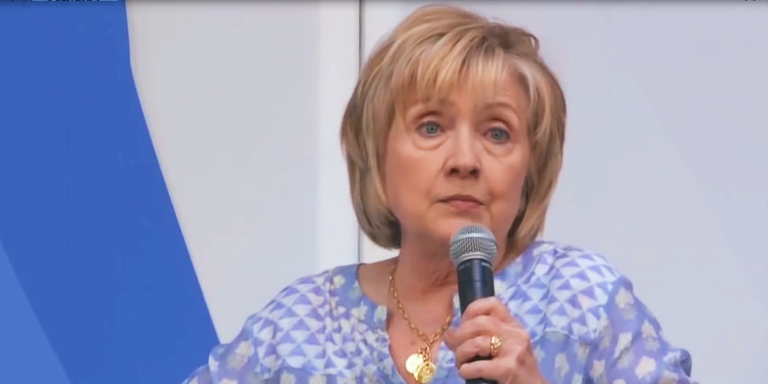
Potentially vital Clinton emails will be withheld from the jury as special counsel John Durham attempts to close in on Clinton and her cronies who propagated the Russia hoax.
Rodney Joffe, a tech mogul and Clinton ally, has been allowed to assume attorney-client privilege, being granted immunity in exchange for testimony against Sussmann, decided the federal judge who is presiding over the case.
The so-called privileged information was to push the Russia hoax on the mainstream media and the larger public. In other words, the now-concealed information that will not be made available to prosecutors was meant to be public all along.
Of the 38 emails in question, the court held that Clinton “had no valid basis to withhold 22.”
The emails were allegedly irrelevant to the case
Those emails, the court concluded, did not concern legal advice, but rather campaign strategy “with the press as part of an affirmative media relations effort by the Clinton Campaign.”
“That effort included pitching certain stories, providing information on background, and answering reporters’ questions,” the court added.
According to the Federalists’ Margot Cleveland, it was a major victory for Sussman when Durham’s attempts to present the withheld emails of Joffe, the Clinton campaign, and the Democratic National Committee were rejected.
They would apparently prove the connection between the various parties listed above.
The decision is bizarre considering that last week that same U.S. district judge Christopher Cooper ordered a key witness to testify and agreed to review memos that were submitted as evidence that the defense was attempting to cover up.
However, Cooper foreshadowed this decision, noting that he does not believe the memos between the Clinton campaign, Sussmann’s law firm and Fusion GPS should not be central to the case itself.
Cooper formally ordered the witness to “give testimony or provide other information which she refuses to give or to provide on the basis of her privilege against self-incrimination as to all matters about which she might be interrogated at trial and any proceedings ancillary thereto.”
(Alex Tien, Headline USA) Hunter Biden probably wishes his father had never run for president. Ever since Joe Biden decided to make a run at the Oval Office, the number of times his son, Hunter, has had his dirty businesses, crack addiction and disgraceful personal life exposed is too many to count.
Now it’s been reported that the grandfather of Hunter’s out-of-wedlock child, whom he has never met, delivered a gun to none other than Donald Trump, Jr., according to the Daily Caller.
Over the past few years, Hunter’s love life has been turbulent, to say the least. Beginning with an affair with his deceased brother’s wife, Hunter went on to divorce his wife of over 24 years, with whom he had three daughters.
In 2019, Hunter married a woman who he had only met six days prior.
Hunter then went on to father a child with Lunden Roberts, a woman who he claimed to have never met in his 2018 memoir. Roberts proved that Hunter was the father of their 3-year-old daughter through a paternity test.
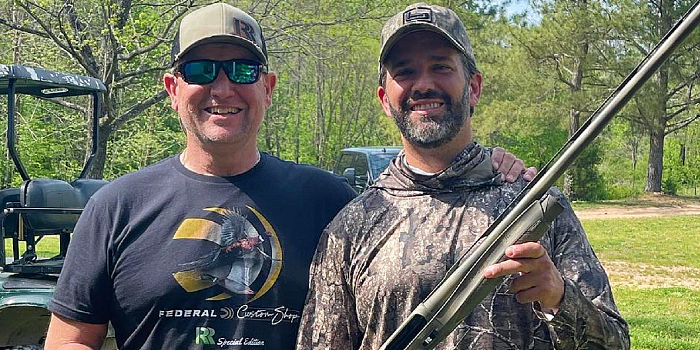
This week, Lunden’s father, Rob Roberts, personally delivered a custom gun to Donald Trump Jr., and the two appear to have formed a close friendship.
“I’m proud to have delivered a custom build to a man that needs no introduction,” Roberts’ May 3 post on his company’s Instagram page, “Rob Roberts Custom Gun Works,” stated.
“Good times buddy,” Trump Jr. commented, in response to the post.
Rob Roberts is also seen in a post with Don Trump Jr. visiting “Freedom Farms” earlier this month. Freedom Farms is a 2,000-acre hunting retreat in Tennessee, owned by Gary LeVox of Rascal Flatts.
(Alex Tien, Headline USA) Democrat leaders across the United States are hurrying to reset the narrative on abortion messaging, the Daily Wire reported.
The recent leak of Supreme Court Justice Samuel Alito‘s majority opinion overturning the infamous Roe v. Wade court case has totally exposed the wickedness of the radical Left.
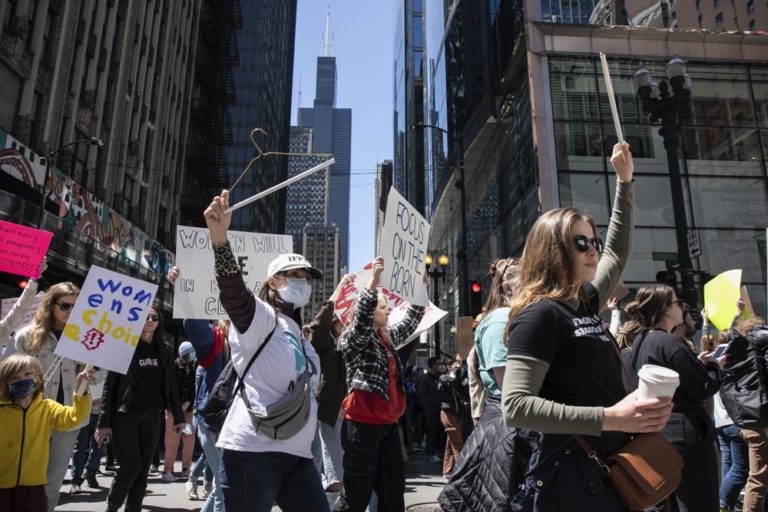
A number of protestors outside of the Supreme Court have been carrying coat hangers, a grisly reference to back-alley abortions that alarmists contend may still take place if Roe v. Wade is overturned.
Additionally, a number of leftist politicians and celebrities have gone completely off the rails in the wake of the leak.
Others have called for the Biden administration to resurrect its controversial court-packing initiative.
Now, many Democrat leaders are rushing to control the messaging used on abortion.
The Pro-Choice Caucus, lead by Reps. Dianna DeGette, D-Colo., and Barbara Lee, D-Calif., sent new messaging materials to House Democrats that outlined a number of words considered to be “harmful” in regards to abortion messaging.
The “harmful words” are to be replaced by “helpful words.”
Instead of using the word “choice”, the Pro-Choice Caucus is making a push for the word “decision” to be used. Additionally, the term “unwanted pregnancy” is out of favor. Instead, “unexpected pregnancy” is now seen to be more helpful to the pro-choice movement.
Another phrase to be done away is the concept of a “back-alley abortion.” The use of coat hangers is also being reduced.
Replacing “back-alley abortion” is “criminalizing healthcare,” as leftists attempt to craft more palatable language around the horrifying event of killing a human child.
CORRECTION: This piece identified Pennsylvania Attorney General Josh Shapiro as the presumptive Democrat Senate nominee. Shapiro is running for governor.
The presumptive Democrat senate nominee is current Lt. Gov. John Fetterman. Apart from the names, everything else remains accurate in context.
Foremost among them is Sean Hannity, who devoted a large portion of his Fox News show recently to tearing down this primary-race Cinderella story.
Hannity—known of late for his all-in endorsement of World War III in Ukraine and, before that, for his nonstop narcissist navel-gazing—is rumored to have been the driving force behind former President Donald Trump’s endorsement of celebrity doctor Mehmet Oz (a fixture on the Oprah Winfrey show for those who, like me, had never heard of him before).
RINOS ON THE CHARGE
One would love to have been a fly on the wall when Trump saw the internal polling and top-fold articles in diverse outlets from Politico to the Drudge Report to Breitbart, all noting Barnette’s recent apotheosis within the Keystone State’s GOP ranks.
The once and future president, whose own political viability may rest with his endorsement track-record in the upcoming races, no doubt read the Riot Act to figures like Hannity and former Director of National Intelligence Ric Grenell, who quickly leapt into action devising a despicable smear campaign.
Trump’s endorsement came during what appeared to be a two-person primary race, with GOP voters torn over whether Oz or wealthy, globalist investor David McCormick was the lesser of two evils.
However, Barnette emerged in the public eye following the scandalous leak of the Supreme Court’s decision to overturn Roe v. Wadeand send abortion back to the states. In a poignant and emotional video, she recounted her own experiences: of having been conceived out of rape to a mother who might have considered abortion but chose life instead.
Barnette has since faced attacks from multiple fronts, including accusations questioning her voting record, her résumé, military service and social-media history—with others, no doubt, already being planted.
Grenell promoted spliced-together clips that appeared to suggest her support for Black Lives Matter when, in fact, the full context made clear she was condemning it.
Hannity accused her of Islamophobia and homophobia for daring to say that former President Barack Obama seemed to have an unusal affinity for both Muslims and gays (which he did).
While there is a case to be made for what Hannity described as “vetting,” the viciousness and volume of the attacks would make most first-time candidates crumple.
Yet, not only has Barnette withstood the slings and arrows with unwavering poise, even calling on Hannity to schedule her and Oz for an on-show debate (to which Hannity lamely demurred), but the sheer pettiness of the attacks has worked even more in her favor.
Conservative influencers in the media like Jack Posobiec, JD Rucker and Todd Starnes have now rushed to Barnette’s defense in an effort to debunk the falsehoods.
Hey @jackposobiec@JDRucker – just spoke with the head of communications and marketing at Judson University in Illinois. She confirmed that @Kathy4Truth was an adjunct at the school. Perhaps folks should consider fact-checking before slinging mud.
Barnette’s rise mirrors, in some ways, President Joe Biden’s desperate and tone-deaf attempt to brand conservative critics this week as “ultra-MAGA,” which quickly backfired after right-wing deplorables mistook Brandon’s insult for a compliment.
Fittingly, Politico‘s piece on Tuesday was titled “‘Ultra-MAGA’ longshot roars into contention in key Senate race.”
Lest it be overlooked, though, Barnette’s identity as a conservative black woman—easy to forget among those who value the content of character over identity politics—is a factor of some enormity that would prove an asset in the general election and beyond.
With Oz and McCormick, both wealthy and privileged white men, presumptive Democrat candidate Josh ShapiroJohn Fetterman, who is Pennsylvania’s current attorney general lieutenant governor, may not think twice about revisiting some of the loathsome rhetoric and dirty tricks that the Tom Wolf administration deployed to secure the state for Joe Biden during the 2020 election.
But for him to do so against Barnette would show Shapiro’s Fetterman’s true colors as a racist, misogynist oppressor. And if Democrat cancel-culturists didn’t eviscerate him, Barnette’s no-nonsense blend of logic and emotion would find him running for the nearest groundhog hovel in Punxsutawney.
As the map currently stands, Barnette would then likely be the only black woman in the Senate and would, with the election of likely Georgia GOP candidate Herschel Walker (ousting incumbent Raphael Warnock) give the GOP a 3-to-1 advantage in minority representation in the Senate.
This symbolic milestone would be about much more than upsmanship, though.
The optimism generated by conservative minority candidates like Barnette, Virginia’s Winsome Sears, North Carolina’s Mark Robinson, Florida’s Byron Donalds, Utah’s Burgess Owens and others has not only helped to validate the movement’s broader populist appeal, but also to imbue it with a new and exciting energy.
Trump’s success in minority outreach may, in fact, be one of the most enduring legacies of his first term, even as other achievements are systematically dismantled by the current pretender-in-chief.
THE TRUE TRUMPIST
While Trump’s yes-men have lined up behind Oz for an unrelenting offensive between now and next Tuesday’s primary, the president himself seemed to buckle a bit with a statement released Thursday from his Save America PAC.
“Kathy Barnette will never be able to win the General Election against the Radical Left Democrats,” he began.
“She has many things in her past which have not been properly explained or vetted, but if she is able to do so, she will have a wonderful future in the Republican Party—and I will be behind her all the way,” he added.
Although Trump went on to reiterate his support for Oz, his diffidence was palpable.
Ironically, it seemed to evoke a familiar feeling—the gradual overcoming of deep-seated doubts and reservations that came with Trump’s own 2016 candidacy.
If anyone was positioned to be disloyal to the GOP, it was he—a longtime Democrat during the Bush years and notorious for being a switch-hitting pragmatist when his own interests were at stake.
Not surprisingly, the Bush neocons who held the party reins, hoping for a presidential hat-trick with Jeb, were quick to float the rumor that Trump might be a plant for the Hillary Clinton campaign—which even some otherwise highly intelligent individuals bought into.
Among those slow out the gate for the future prez was Barnette.
Although she has made conflicting statements about whom she voted for in the 2016 primary (if she voted in it at all), her tweets make clear that she needed some persuading.
@Mark60644 NO, we have #Cruz & #BenCarson. I like #Trump2016…he's a riot. But, he's nothing more than HEADLINES…very little substance.
It may be too late for Trump to switch his endorsement, but the truth is that a resounding victory for Barnette is the best way to prove that Trumpism is alive and well in Pennsylvania.
Not only do her ideals better reflect those that Trump strove to represent, but her status as an outsider candidate parallels his own.
And it was that, not Trump’s past appearances on Oprah, which drove voters in Pennsylvania and nationwide to elect him into office twice.
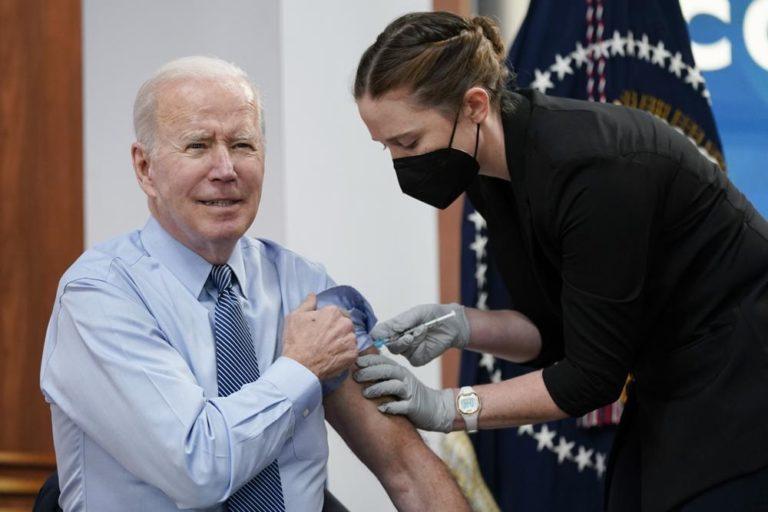
(Headline USA) The White House falsely claimed in a tweet on Thursday that COVID-19 vaccines were not available to the public until President Joe Biden took office.
When President Biden took office, millions were unemployed and there was no vaccine available.
In the last 15 months, the economy has created 8.3M jobs and the unemployment rate stands at 3.6% — the fastest decline in unemployment to start a President’s term ever recorded.
The White House confirmed as much in its own tweet about Biden receiving his second vaccine dose:
President-elect Biden received his second dose of the COVID-19 vaccine because he trusts scientists.
Our administration is committed to doing everything possible to ensure every American has all the information they need to get vaccinated. pic.twitter.com/9FzLEeqwOi
Yet, despite the fact that the White House’s claim is blatant disinformation, Twitter has not removed it or attached a warning label to it.
Even the Washington Post’s Glen Kessler admitted that the White House was lying:
Who’s manning the @WhiteHouse Twitter account? Delete this false tweet. Biden himself has said 8% of seniors had gotten the vaccine on the day he took office. Biden was one of them. —> https://t.co/ojDmn1DNIQhttps://t.co/V7z07DHQ90
(Molly Bruns, Headline USA) House Democrats have slowed the progress of what is purported to be a bipartisan bill to bring in additional security for the Supreme Court justices.
The Senate passed the emergency bill, but it was met with a lack of enthusiasm. Many of the House leadership have said they have yet to read the bill, which is a single page.
Representatives are now considering a different bill that would extend security to the clerks of the Supreme Court, of which there are about 40.
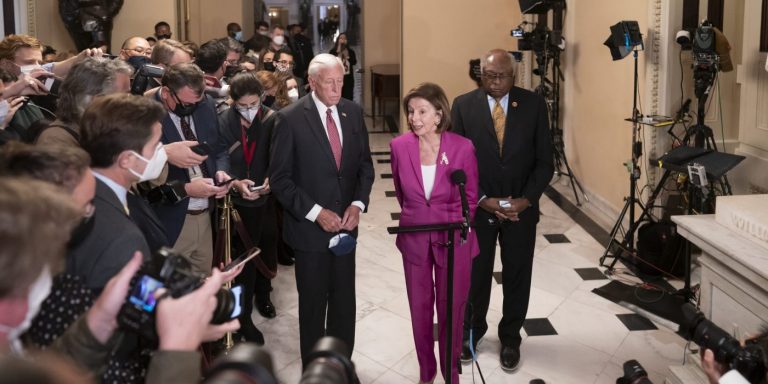
House Majority Leader Steny Hoyer, D-N.Y., said Democrats are “certainly going to look” at the bill but did not provide a time to expect the vote, the Washington Free Beaconreported.
House Democrat Caucus chairman Hakeem Jeffries, D-N.Y., said he had yet to read the bill.
“I assume the appropriate committee will review it,” said Jeffries, who is favored to become the next Democrat speaker.
The laziness of House Democrats looks incredibly bad, in the face of the eruption of protests outside of the Supreme Court and at the private residences of some of the justices.
Some of the protests have become violent, with a crisis pregnancy center in Wisconsin being firebombed.
Sen. John Cornyn, R-Texas, who coauthored the original legislation alongside a Democrat, insisted that taxpayer-funded police protection should not be given to clerks, as one of them likely leaked the court’s draft majority opinion causing the protests.
“This partisan bill in the House ignores the good faith work that was being done here in the Senate to build consensus, and expands this legislation to include divisive provisions like potentially extending police protection to the very person who leaked the draft opinion,” Cornyn said.
A Senate aide said that with the addition of security for Court clerks, the bill would have “no chance of passing in the Senate.”
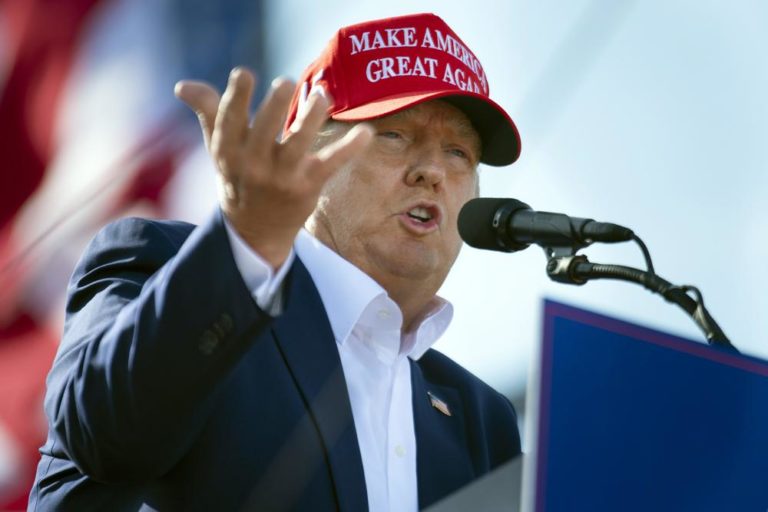
(Headline USA) Billionaire Elon Musk said this week that he would prefer a presidential candidate who is “less divisive” than former President Donald Trump in 2024.
Musk, who is in the midst of acquiring Twitter for $44 billion, made the comment on Thursday after saying he believes Trump should be allowed back on the platform.
Even though I think a less divisive candidate would be better in 2024, I still think Trump should be restored to Twitter
The Tesla CEO has begun weighing in on political issues recently, blasting the Left for embracing illiberal positions. He even took a shot at President Joe Biden this week.
Biden’s mistake is that he thinks he was elected to transform the country, but actually everyone just wanted less drama
Trump said last month that he will not rejoin Twitter, even if Musk does change the company’s content moderation policies. However, he also claimed on Friday that he does not think Musk’s acquisition of Twitter will be successful.
“There is no way Elon Musk is going to buy Twitter at such a ridiculous price, especially since realizing it is a company largely based on BOTS or Spam Accounts,” Trump said in a statement on his own social media platform, Truth Social.
Musk, however, reiterated that he remains committed to purchase.
(Chris Parker, Headline USA) When $300 billion worth of asset values are wiped out in just a few days, investors tend to take note.
That’s what happened to cryptocurrencies this week, reported DNYUZ. Bitcoin, the industry’s leader, has fallen by 20% in less than a week, leading to a total plunge in its value by 40% so far this year.
Some of the industry’s other leading currencies and platforms have also incurred significant losses.
The growing fear and anxiety of investors is reminiscent of the sentiments that preluded the financial crisis of 2008, with many now concerned that the crypto plunge could trigger America’s next great recession.
“This is like the perfect storm,” said Dan Dolev, an industry analyst.
Crypto markets have suffered similar setbacks in the past, but adoption of cryptocurrencies has since grown. So, has it become pervasive enough to cause a recession?
Currently, about 16% of Americans hold some form of cryptocurrency. A growing number of investment groups are adding cryptos to their portfolio, but they are not yet betting their livelihoods on it. Banks are also adopting cryptocurrencies, but largely to discourage customers from moving their money elsewhere.
Ultimately, given the newness of the technology and its potential to impact markets, it might be too soon to tell for sure. However, there are likely too few people and investment groups holding cryptos to cause a recession. It’s a newcomer that has only just begun to embed itself in the financial system. So, cryptocurrencies alone may not yet have the power to bring our economy into a recession.
When a disruptive technology begins to take hold of the mainstream, it typically endures periods of growing pains. The Dot-com boom of the early 2000s suffered from a similar pattern; investors poured large sums of money into startups claiming to specialize in the new technology, only to watch many of those startups collapse.
Similarly, one out of three crypto investors don’t understand the technology that they’re investing in. This, combined with the nascent nature of cryptocurrencies, may explain the panic among investors – and why it’s unlikely to be a sign of the next great recession.
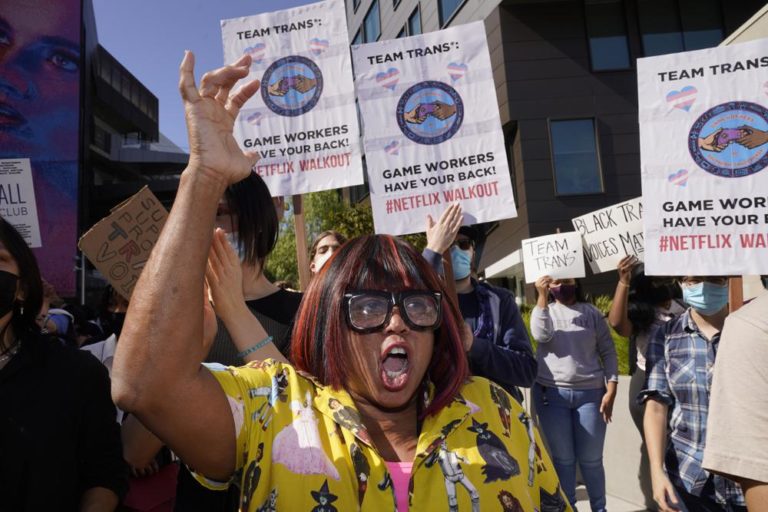
(Headline USA) Netflix reportedly told its woke employees this week to look for a job somewhere else if they want to censor and silence views with which they disagree.
The corporate memo sent to employees this week included a note on “Artistic Expression” that seems to be a reference to the controversy over comedian Dave Chappelle’s recent special. The memo said employes will not “censor specific artists or voices,” even if they feel their content is “harmful,” according to Variety.
“If you’d find it hard to support our content breadth, Netflix may not be the best place for you,” the memo read. “Entertaining the world is an amazing opportunity and also a challenge because viewers have very different tastes and points of view. So we offer a wide variety of TV shows and movies, some of which can be provocative.”
The memo added that Netflix will “support the artistic expression of the creators we choose to work with” and allow viewers to “decide what’s appropriate for them, versus having Netflix censor specific artists or voices.”
The move comes several months after woke Netflix employees revolted in the company over Chappelle’s comedy special, in which he made jokes about the transgender community. Netflix CEO Ted Sarandos refused to remove the special from the platform, but eventually apologized to offended employees who claimed Chappelle’s jokes were “harmful.”
“I should have led with a lot more humanity,” Sarandos said at the time.
“Meaning, I had a group of employees who were definitely feeling pain and hurt from a decision we made. And I think that needs to be acknowledged up front before you get into the nuts and bolts of anything. I didn’t do that. That was uncharacteristic for me.”
Netflix’s new policy could also be an attempt to win back many of the viewers that abandoned the platform due to its woke content.
(Headline USA) With a crumbling economy, soaring inflation, crippling baby formula shortage and deteriorating southern border crisis, the Biden administration is taking the first steps to release $45 billion to nationalize high-speed internet by roughly 2028, inviting governors and other leaders on Friday to start the application process.
Commerce Secretary Gina Raimondo is overseeing the distribution and said that universal access to broadband internet would be akin to the electrification of rural America during the 1930s, a recognition that the internet is a utility needed for U.S. residents to function in today’s economy.
“There’s more than 30 million Americans who don’t have internet,” Raimondo said. “And in this day and age without high-speed internet, you can’t go to school, can’t go to the doctor, can’t do simple things. And in this day and age without high-speed internet, you can’t go to school, can’t go to the doctor, can’t do simple things. Think of how many times in a day you Google something or go online.”
The funding is part of the $65 billion for broadband in the $1 trillion social engineering program in guise as infrastructure package that President Joe Biden signed into law last November. That bipartisan package is one of the rare policy achievements that the Democrat president is trying desperately to shill for votes ahead of the midterm elections, though it’s unclear how much the message will resonate when much of the country is focused on high inflation, rampant crime and soaring gas prices.
Former President Donald Trump has dismissed the infrastructure spending as “fake” even though the broadband spending was one of his own priorities, but didn’t include the hundreds of millions of dollars for cultural and social programs that obsess Biden. Trump’s Agriculture Department said in 2020 that it had invested $744 million on rural internet connectivity, a sum that was meaningful yet insufficient.
Raimondo is traveling to Durham, North Carolina. She’ll announce that governors can send their letters of intent to receive the broadband money, which comes from three programs totaling $45 billion. Each state would then get $5 million to help it consult with residents and write its plan.
The Commerce Department recognizes that internet needs vary by state. The money could be used to lay fiber optic cable, build out Wi-Fi hotspots or even reduce monthly charges in places where price is the main challenge, as the overall Biden economy edges closer to recession. After the administration’s announcement Monday that it would provide a $30 monthly subsidy to low-income households, Raimondo noted that states could use the additional money from these programs to make the service free to some users.
The allocations would also be influenced by the Federal Communications Commission this fall releasing new maps that detail where people lack internet service or are underserved. Governors and other leaders would then have six months to use this data to shape their final applications. States and eligible areas are guaranteed a minimum of $100 million, though the average payment would be closer to $800 million, according to rough estimates from the Commerce Department.
The goal is to have states lay out a five-year timeline to provide full internet access, while ensuring affordable internet access and promoting competition among providers. The federal government has not defined what qualifies as affordable, since that could be different around the country based on cost of living, and under Biden’s tenure almost nothing is affordable