Biden Makes Statement on Monkeypox, Talks Vaccines

(Headline USA) President Joe Biden said Sunday that recent cases of monkeypox that have been identified in Europe and the United States were something “to be concerned about.”

In his first public comments on the disease, Biden added: “It is a concern in that if it were to spread it would be consequential.”

The president was asked about the disease as he spoke to reporters at Osan Air Base in South Korea, where he visited troops before taking off for Japan to continue his first trip to Asia as president.

“They haven’t told me the level of exposure yet but it is something that everybody should be concerned about,” Biden said. He added that work was underway to determine what vaccine might be effective.

Jake Sullivan, Biden’s national security adviser, told reporters aboard the flight to Tokyo that the United States has a supply of “vaccine that is relevant to treating monkeypox.”

“We have vaccine available to be deployed for that purpose,” he said. Sullivan said Biden was getting regular updates on the outbreak.

Monkeypox is rarely identified outside of Africa, but as of Friday, there were 80 confirmed cases worldwide, including two in the United States, and another 50 suspected ones.

Although the disease belongs to the same virus family as smallpox, its symptoms are milder. People usually recover within two to four weeks without needing to be hospitalized.

The first case in the U.S. was a man who recently traveled to Canada. There is some speculation that his case may be connected to some small outbreaks in Europe.

“At this point in time, we don’t have any information that links the Massachusetts case to cases in the UK,” said CDC spokesperson Jennifer McQuiston.

Though it’s the only U.S. case the CDC is aware of, “I do think we are preparing for the possibility of more cases,” she said.

This case poses no risk to the public and the man who contracted the disease is in good condition.

MURDOCK: Biden’s Disregard of Terrorists at Border Doesn’t Eliminate Threat

(Deroy Murdock, Headline USA) “The fact is that our borders are not open,” according to Customs and Border Protection Commissioner Chris Magnus.

You could have fooled me.

Notwithstanding this unfounded claim by a member of Team Biden, Border Patrol agents confronted 234,088 illegal aliens in April. This is yet another record shattered by an administration that smashes all the wrong records, like China at a Greek wedding.

Between Feb. 1, 2021, and April 30, 2022, Border Patrol officers encountered 2,743,136 illegals on Joe Biden’s watch versus 709,399 during President Donald J. Trump’s last 15 months—up 387%.

Biden is expected to shred Trump’s Title 42 order as soon as it expires on Monday. Federal officials no longer will be able to use the COVID-19 emergency as a reason to deport illegal aliens nabbed on the southern frontier.

The Department of Homeland Security warns of a nonstop New York Marathon of illegal-alien crossings, as some 18,000 uninvited foreigners invade America daily. This extrapolates to 6.57 million illegal-alien entries annually.

What could go wrong?

Plenty.

More than 40 suspected terrorists have been stopped, under Biden, trying to break into America. Rep. Jim Jordan, R-Ohio, wondered how many of them might be here now.

“Have any of the 42 illegal migrants on the terrorist watchlist or no-fly list encountered on our southwest border been released into the United States?” Jordan asked Homeland Security Secretary Alejandro Mayorkas at an April 28 House Judiciary Committee hearing.

The eternally vigilant DHS chief replied: “I do not know the answer to your question.”

“Forty-two is 23 more terrorists than it took to perpetrate 9/11,” said Ira Mehlman of the Federation for American Immigration Reform.

He added: “This is further confirmation that the Biden administration is compromising national security in pursuit of an open-borders policy that has no public support outside of The Squad and their merry band of adherents.”

Mehlman also told me: “We should all be a lot more worried about terrorists who are taking advantage of the self-inflicted chaos and are among the 700,000 ‘got-aways’ whom CBP estimates have entered without getting caught since Biden took office. We obviously have no way of knowing anything about the people CBP didn’t ‘encounter,’ but it is reasonable to assume that our enemies are aware of our vulnerabilities and that they are exploiting the situation. Unfortunately, we may have to wait until something goes ‘Boom!’ before we find out.”

Beyond these suspected terrorists, who are so eager to come to America, others have been waived in via a program called Operation Allies Welcome. Most of them were granted entry after Biden’s shameful, deadly retreat from Afghanistan last August.

According to documents procured by Project Veritas, “numerous violent refugees, previously flagged by DHS for a wide range of offenses the agency describes as terrorism, are living in the United States.”

  • Nazir Ahmad Rahimi entered last Aug. 24, despite DHS’s warning that he “has engaged or is likely to engage in an unspecified violent terrorist act.” Last seen in Washington, DC, Rahimi is seemingly being held by ICE, but it has yet to deport him.
  • Ismael Jurat arrived Aug. 31. He soon joined the Terrorist Watchlist’s Category 15 for the “Armed and Dangerous” who “used Explosives/Arms.” Regardless, DHS gave him a work visa. Records show that he resides in California.
  • Anwarallhaq Wahidi came here, courtesy of Operation Allies Welcome. DHS declared him a Category 15 threat on Oct. 17. Ten days later, he scored a two-year work visa.

Thanks to this administration, terrorists are receiving work visas and enjoying the USA. The imaginary U.S.–Mexico “border” has lured 23 suspected or confirmed terrorists, while 19 others were intercepted at official ports of entry.

Among an estimated 700,000 “got-aways” who penetrated America’s boundaries without permission and then burrowed within, how many are terrorists? Who the hell knows?

If Joe Biden and the Democrats were any more relaxed about all of this, they would be comatose.

Deroy Murdock is a Manhattan-based Fox News Contributor, a contributing editor with National Review Online, and a senior fellow with the London Center for Policy Research.

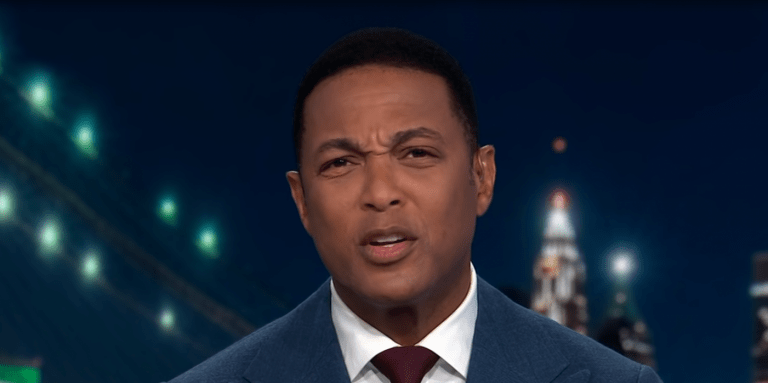
Megyn Kelly Claims CNN’s Lemon Bought Way Out of Assault Lawsuit

(Tony Sifert, Headline USA) Megyn Kelly has suggested that Don Lemon accuser Dustin Hice was paid to withdraw sexual assault allegations against the gay CNN anchor.

In August, 2019, Hice sued Lemon, saying Lemon in July 2018 had shoved his fingers into Hice’s face after putting his hand in his pants and rubbing his private parts.

In a statement from CNN at the time, Lemon denied the accusations.

“Don categorically denies these claims and this matter does not merit any further comment at this time,” the statement said.

Nearly three years later, Dustin Hice has dropped his suit against Lemon, claiming he had not accurately remembered the encounter.

Kelly, for her part, scoffed at the claim.

“It reads like a hostage statement,” she said.

Kelly went on to claim that Lemon must have paid off Hice.

“I have no reportable evidence for this, but I do have 10 years of legal practice under my belt . . . and I can tell you that no plaintiff issues a statement like that walking away from a case against a public figure, unless they’ve been paid to do so,” Kelly told her listeners.

Lemon’s lawyer denied the claim in a statement issued when the suit was dropped.

“This case was a crass money grab from its inception,” the lawyer wrote. “Mr. Lemon has never paid the plaintiff a dime over the course of this unfortunate spectacle.”

But, as Kelly pointed out, neither has Lemon sued Hice for defamation.

San Fran. Archbishop of Catholic Church Denies Pelosi Communion

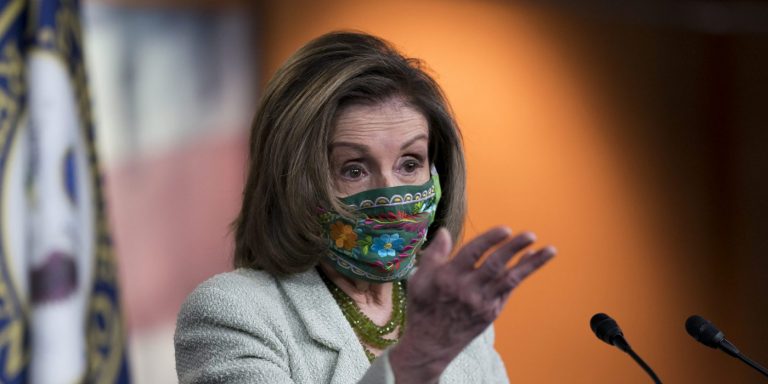
(Pamela Cosel, Headline USA) A conservative archbishop of the Catholic Church in San Francisco has finally denied House Speaker Nancy Pelosi the right to participate in taking communion due to her years-long stance in support of abortion, terming it a “scandal.”

Pelosi has often publicly stated that she is a “devout” Catholic, knowing full well that abortion goes against the teachings of the church.

Archbishop Salvatore Cordileone, 65, of Pelosi’s home church, announced Friday that he sent her a letter in early April taking away her right to communion once he learned that she is pushing to codify Roe v. Wade.

An unnamed person leaked a document of Supreme Court Justice Samuel Alito’s draft opinion of the court that indicated Roe would be overturned.

Cordileone wrote to Pelosi: “I am hereby notifying you that you are not to present yourself for Holy Communion and, should you do so, you are not to be admitted to Holy Communion, until such time as you publically (sic) repudiate your advocacy for the legitimacy of abortion and confess and receive absolution of this grave sin in the sacrament of Penance.”

“After numerous attempts to speak with her to help her understand the grave evil she is perpetrating, the scandal she is causing, and the danger to her own soul she is risking, I have determined that the point has come in which I must make a public declaration that she is not to be admitted to Holy Communion,” Cordileone wrote.

In contrast, the archbishop of Washington has not yet denied President Joe Biden the same right, though he, too, is a supporter of abortion and therefore, not in compliance with church tenets.

Pope Francis has stated that bishops of the church should not let their pastoral decisions mix with politics. At the same time, the Pope has clearly said that abortion is murder.

In June, 2021, the U.S. Conference of Catholic Bishops voted 168-55 to draft a document taking a stance against Biden, Pelosi and other Catholic politicians who support abortion rights, to be denied communion. Thus far, the Vatican has left it up to individual bishops to set their dioceses’ policies.

Archbishop Samuel Aquila of the Archdiocese of Denver agreed with his colleague in San Francisco and issued a letter of support. Likely other bishops will now gain the courage to talk publicly on this issue.

With leaders of the Catholic Church finally speaking in public against her, Pelosi will have to abide by the decision come Sunday. Instead of kneeling at the communion rail, likely she will now need to spend time in hiding in a confessional booth.

The question is: What took so long?

Oklahoma Passes Strongest Pro-Life Bill Yet

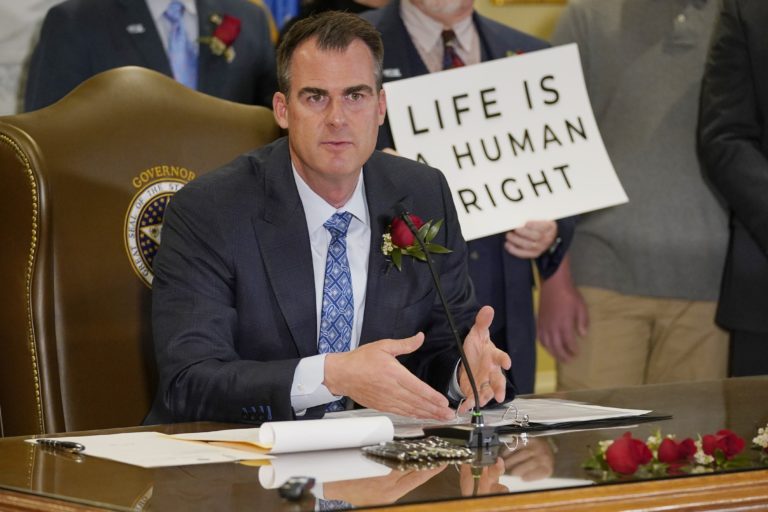
(Headline USA) Oklahoma lawmakers on Thursday approved a bill prohibiting all abortions with few exceptions, and providers said they would stop performing the procedure as soon as the governor signs it in the latest example of the GOP’s national push to save the lives of unborn babies.

Oklahoma lawmakers this year already passed a half-dozen anti-abortion measures, and while abortion providers across the country have been bracing for the possibility that the U.S. Supreme Court’s new conservative majority might further restrict the practice, that has especially been the case in Oklahoma and Texas.

Two of Oklahoma’s four abortion clinics already stopped providing abortions after the governor signed a six-week ban earlier this month, and an attorney for the two other independent clinics said Thursday they will no longer offer services once the bill is signed. The bill is likely to reach Gov. Kevin Stitt‘s desk early next week, and the first-term Republican running for reelection has already said he would sign any anti-abortion bill the Legislature sends to him. It would take effect immediately after he signs it.

“This bill could go into effect at any time, and once it does, any person can sue the clinic, the doctors, anyone else who is involved in providing an abortion in Oklahoma,” said Rabia Muqaddam, an attorney for the Center for Reproductive Rights, which is representing Oklahoma clinics in legal challenges against several proposed new anti-abortion laws.

The bills are part of an aggressive push in Republican-led states across the country to scale back access to baby-killing. It comes on the heels of a leaked draft opinion from the nation’s high court that suggests justices are considering weakening or overturning the landmark Roe v. Wade decision that legalized abortion nearly 50 years ago.

The bill by Collinsville Republican Rep. Wendi Stearman would prohibit all abortions, except to save the life of a pregnant woman or if the pregnancy is the result of rape or incest that has been reported to law enforcement.

“Is our goal to defend the right to life or isn’t it?” Stearman asked her colleagues before the bill passed on a 73-16 vote, mostly along party lines.

The bill specifically authorizes doctors to remove a “dead unborn child caused by spontaneous abortion,” or miscarriage, or to remove an ectopic pregnancy, a potentially life-threatening emergency that occurs when a fertilized egg implants outside the uterus, often in a fallopian tube and early in pregnancy.

With all of the state’s abortion clinics expected to stop offering services, it’s not clear where a woman who qualified under one of these exemptions would go to get an abortion because providers say many doctors would be afraid of running afoul of the law. Of course, with the leftist’s agenda to make abortion pills easily available, that shouldn’t pose a significant obstacle.

The bill does not apply to the use of Plan B, other morning-after pills or any type of contraception.

Because the bill defines an “unborn child” as a human fetus or embryo in any stage of gestation from fertilization until birth, it is not expected to apply to in vitro fertilization, which is when eggs are fertilized in a lab before being transferred into a woman’s uterus, said Dr. Eli Reshef, an Oklahoma City fertility specialist.

“(The bill) does not criminalize what we do,” Reshef said. “No matter one’s position on abortion, we are not concerned about the bill harming our particular profession.”

The bill is one of at least three anti-abortion bills sent this year to Stitt. Another abortion bill similar to a Texas bill passed last year that prohibits the procedure after cardiac activity can be detected in the embryo, which experts say is about six weeks, already has taken effect and has already dramatically curtailed the practice in Oklahoma. Another bill set to take effect this summer would make it a felony to perform an abortion, punishable by up to 10 years in prison. That bill contains no exceptions for rape or incest.

Like the Texas law, the Oklahoma bill would allow private citizens to sue abortion providers or anyone who helps a woman obtain an abortion. After the U.S. Supreme Court allowed that mechanism to remain in place, other Republican-led states sought to copy Texas’ ban. Idaho’s governor signed the first measure in March, although it has been temporarily blocked by the state’s Supreme Court.

After Texas passed its bill last year, there was a dramatic reduction in the number of abortions performed in that state, with many women going to Oklahoma and other surrounding states to kill their unborn babies.

There are legal challenges pending in Oklahoma to both the bill to criminalize abortion and the six-week Texas ban, both of which could still be halted, but the courts have so far failed to do so.

The number of abortions performed each year in Oklahoma has declined steadily over the last two decades, from more than 6,200 in 2002 to 3,737 in 2020, the fewest in more than 20 years, according to data from the Oklahoma State Department of Health. In 2020, before the Texas law was passed, about 9% of the abortions performed in Oklahoma were women from Texas.

In the first four months after Texas’ law took effect last September, abortions at clinics in the state dropped an average of 46% compared to the same span the year prior. But studies also found a sharp increase in the number of Texas women who were ordering abortion pills by mail and traveling out of state for abortions.

Adapted from reporting by the Associated Press

College Cancels Sonnets for ‘Being Products of White Western Culture’

(Chris Parker, Headline USA) Some of history’s most iconic literary minds are being canceled by a prominent British University in an effort to “decolonize the curriculum,” reported RedState.

A recent internal audit led the University of Salford in Manchester to remove sonnets from some of literature’s greatest minds for being a product of whiteness. The university claimed it was an important step in fighting oppression. 

They also went on to slam sonnets and traditional literary forms as “being products of white western culture.”

Instead, they hope to incorporate literary works that move away from lines. This includes works that use poor sentence and grammar structure, since, according to the university, “particular contemporary punctuation might be traced back to those who are Westernly white.”

This isn’t the first time that revered literary artists have been censored for their skin color. Abraham Lincoln, Charles Dickens, and Benjamin Franklin are just a few of the many great minds to get canceled.

Not even William Shakespeare is immune, although efforts to cancel him have faced severe backlash. 

Other higher-education institutions, including those closer to home, are adopting similar policies and ideologies. Indiana University–Purdue University Indianapolis recently hosted an event in which diversity of thought was labeled “white supremacist excrement.”

A professor from the University of California, Berkeley was quoted as saying “There is no virtue in whiteness, it is inherently violent.” 

University students are also calling for the removal of works from white artists.

Students from University College London went as far as demanding that Plato and Descartes be removed from the syllabus while insisting that the majority of philosophers in their courses should be from Africa and Asia.

There is growing concern over the potential censorship and policies that may stem from such drastic measures.

“It seems that if sonnets should be sacked because white people perpetrated them, there is much, much more to be removed from our increasingly-enlightened world,” said Alex Parker at RedState. 

Hillary Approved Russia Hoax, Former Campaign Manager Tells Court

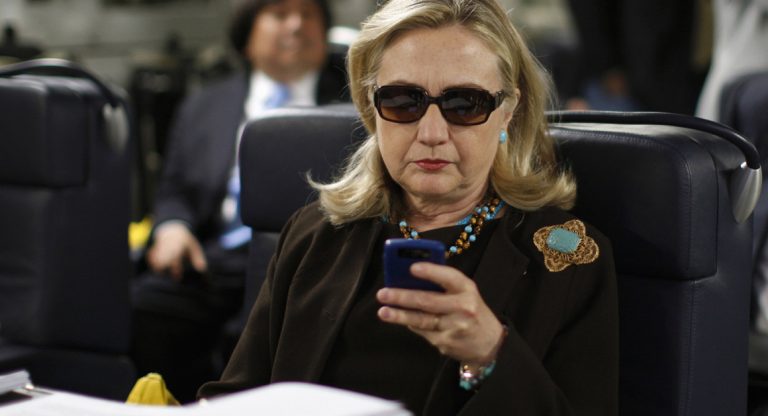
(Mark Pellin, Headline USA) In explosive testimony that has potential to dump the Original Deplorable in a trash heap that has been her scandalous and corrupt career, the campaign manager for Hillary Clinton’s 2016 presidential run testified in court Friday that Clinton approved spreading and promoting caustic and damaging disinformation about then-candidate Donald Trump.

Robby Mook said that releasing what is now known to be a totally debunked lie linking Trump to Russian agents through the Kremlin-backed Alfa Bank received approval from Clinton to push on a compliant media, reported the Daily Mail.

Mook’s damning testimony came during the ongoing trail of Michael Sussmann, who is accused of lying to the FBI concerning his role and affiliation with the Clinton campaign and pushing the Russia hoax.

Jake Sullivan, former senior advisor to the Clinton campaign and current White House National Security advisor, was also in on the approval-loop of releasing the Russia hoax story, Mook said.

“I discussed it with Hillary as well,” Mook told the court.

While unable to remember the exact substance of the conversation, Mook said, “but notionally, the discussion was, hey, we have this and we want to share it with a reporter.”

And share they did.

“We can only assume that federal authorities will now explore this direct connection between Trump and Russia as part of their existing probe into Russia’s meddling in our elections,” Sullivan – the hack currently advising the White House on national security — heralded in a press release one week before Election Day 2016.

The leftist media pounced and abetted in driving the false narrative.

Mook’s testimony contradicts the long-held assertions from Clinton that she had no connection to the Russia hoax, and could prove legally, politically and permanently damaging.

“Hillary is in deep trouble,” tweeted “2,000 Mules” filmmaker Dinesh D’Souza

“Get Hillary Clinton to testify under oath – IMMEDIATELY,” said Benny Johnson.

Oregon Primary Fiasco Raises More Red Flags for Mail-In Voting

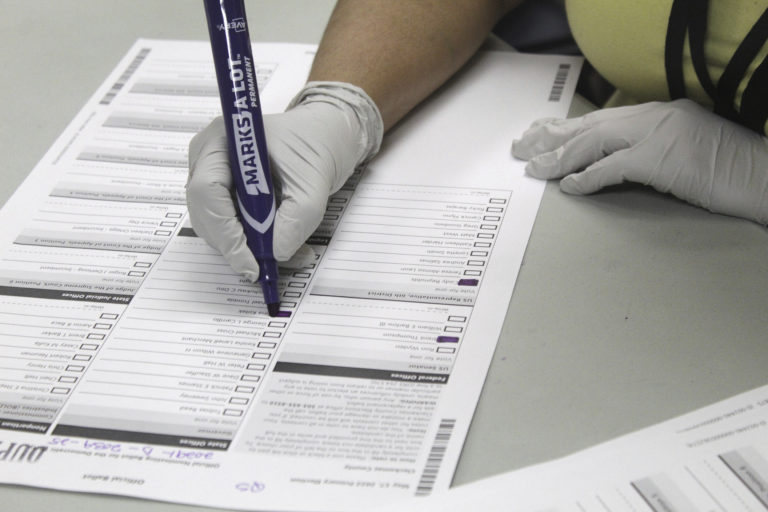
(Headline USA) Thousands of ballots with blurry barcodes that can’t be read by vote-counting machines will delay results by weeks in a key U.S. House race in Oregon’s primary election, a shocking development that is giving a black eye to a vote-by-mail pioneer state with a national reputation as a leader on voter access and equity.

The fiasco affects up to 60,000 ballots, or two-thirds of the roughly 90,000 returned so far in Oregon’s third-largest county. Hundreds of ballots were still coming in under a new law that allows them to be counted as long as they are postmarked by Election Day, and 200 Clackamas County employees were getting a crash course Thursday in vote-counting after being redeployed to address the crisis.

Elections workers must pull the faulty ballots from batches of 125, transfer the voter’s intent to a fresh ballot, then double-check their entries — a painstaking process that could draw the election out until June 13, when Oregon certifies its vote. The workers operate in pairs, one Democrat and one Republican, in two shifts of 11 hours a day.

The debacle has stunned Oregon, where all ballots have been cast only by mail for 23 years and lawmakers have consistently pushed to expand voter access through automatic voter registration, expanded deadlines and other measures. It’s also thrown into question a key U.S. House race in a redrawn district that includes a large portion of Clackamas County, which stretches nearly 2,000 square miles, from Portland’s liberal southern suburbs to rural conservative communities on the flanks of Mount Hood.

In the Democrat primary for Oregon’s 5th Congressional District, seven-term Rep. Kurt Schrader, a moderate, was trailing in the vote behind progressive challenger Jamie McLeod-Skinner. The outcome could have an outsized impact in November, with the possibility that voters could flip the seat for the GOP.

Hall said the problem came to light May 3, when workers put the first ballots returned through the vote-counting machine. About 70 or 80 ballots from each batch of 125 were spit out as unreadable because their barcodes were more faint and slightly blurred. It was too late to print and mail new ballots, she said.

But remember, Democrats want the public to believe mail-in voting is the fraud-free wave of the future.

As Election Day approached and ballots stacked up, Hall said she allowed elections workers to take the weekend off because just three people signed up to work Saturday or Sunday. “We have people mostly between the ages of 70 and 85” and they need rest, she said.

The secretary of state’s office said Hall declined help, saying Clackamas County could handle the situation. Hall told The Associated Press several county workers were assigned to the ballot problem May 11, a week after it surfaced.

Kathy Selvaggio, who lives in the county’s more urban and affluent suburbs, peered through the windows Thursday to watch the vote tally.

“Mail-in voting works, it works well here, but it does undermine my faith in (Hall),” said Selvaggio, who was there as a volunteer for the McLeod-Skinner campaign.

Hall said her department has discussed running test ballots from the printer before they were mailed out, but that her office had used the printer in question for 10 years with no issues.

“There’s lots of other tasks to do,” Hall, who is up for reelection in November, told AP. “I hate the fact that this happened with our ballots. It’s horrible. We need to be building trust with voters and this is not a trustworthy piece, but we are doing what we can.”

It’s not the first time Hall has come under fire in her elections role. In 2012, a temporary election worker was sentenced to 90 days in jail after admitting she tampered with two ballots. In 2014, Hall was criticized for using the phrase “Democrat Party” — a pejorative used by Republicans to demean DemocratsFkil — on a primary ballot instead of Democratic Party.

Oregon Secretary of State Shemia Fagan said she is “deeply concerned” by the most recent situation and her office issued a statement Tuesday calling the delay “unacceptable.” But state elections officials said Thursday that they had little authority over local county elections officials.

“The independence of county clerks is an important part of the electoral system and for now we are focused on supporting them,” said agency spokesman Ben Morris.

State law does not require county elections officials to run proof ballots through their machines before mailing them.

Christopher Stout, an associate professor of political science at Oregon State University, said he wouldn’t be surprised to see legislation to change that.

“I think all of these problems, of course, are bad in the short term,” he said. “But in the long term, they’ll lead to improvements, because people will see that those things are problems and they’ll find ways to make it better.”

Former Oregon House Minority Leader Christine Drazan was closely watching results trickle in from across the state Tuesday night. She was eventually declared the winner in the GOP gubernatorial primary the next night.

“I had understood going into election night that Clackamas County knew that this was a challenge,” Drazan said. “So the fact that we were not quite there on election night was just a fact that we had to accept and learn more about how the county was going to respond to that.”

She said voters concerned about the integrity of the process should come watch it in person.

“It should have been addressed earlier with this level of urgency, but it’s pretty rare to have a printing problem like this,” Drazan said.

Adapted from reporting by the Associated Press

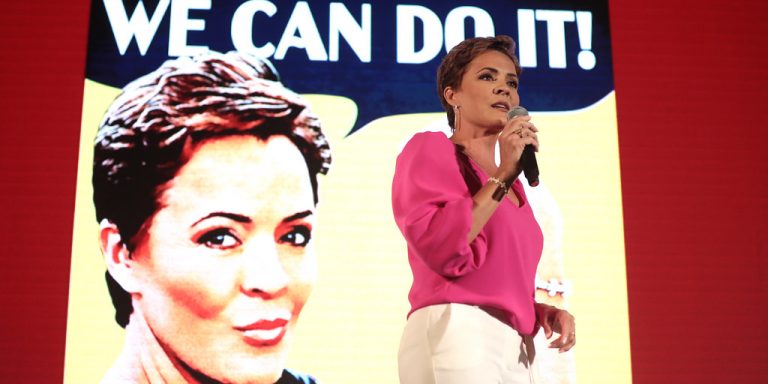
Ariz. Gov. Candidate Kari Lake Savages Biased Journo in True Trump Style

(Chris Parker, Headline USA) A tirade between Trump-endorsed Arizona gubernatorial candidate Kari Lake and a liberal reporter for the Arizona Republic failed so badly at denouncing the candidate’s campaign that the paper decided to scrap the entire story, reported the Gateway Pundit. 

The 20-minute interview included numerous accusations against the GOP candidate by a Left-leaning reporter for the paper. The conversation, which primarily focused on immigration and border security, began with a friendly tone but soon turned hostile. 

While the paper refused to publish the interview and story, Lake had her team record the exchange in its entirety.

In one exchange, the reporter accused Lake of dodging a question about her opinion on DACA, a proposal to give some young illegal immigrants a path to citizenship.

Lake replied by reminding the reporter that it’s not currently an issue: “I’m sharing my personal opinion. The Democrats had a chance to talk to the president, potentially make a deal, they walked away.

“My personal opinion is, I think the Democrats are despicable,” she said.

“They use large groups of the population, they dangle carrots in front of them, and they pull them back. That’s my personal opinion.” 

She also reminded the reporter on numerous occasions that DACA is a federal issue and Lake is running for state governor. She also asked the reporter for her personal opinion on the issue. The reporter deflected her request. 

The reporter also accused Lake of flip-flopping via a Facebook post. Lake reminded her that it was just a question being posed to other Republicans for their consideration – not actually discussing her opinion. 

Lake used her 27 years of journalism to help defend herself and her proposed policies. She even convinced the reporter to admit that the Arizona Republic had been pestering her for an interview (her campaign previously turned down numerous interview requests). She received an endorsement from Trump.

The paper also refused to publish her op-ed detailing her policies because it used the word “invasion” in reference to illegal immigration. That decision is what initially led Lake to refuse the paper’s requests for interviews. 

How did her media performance and Trump endorsement impact her campaign? So far, Lake has a double-digit lead in the primary race. 


Senate Sends $40B Ukraine Boondoggle to Biden for Signature

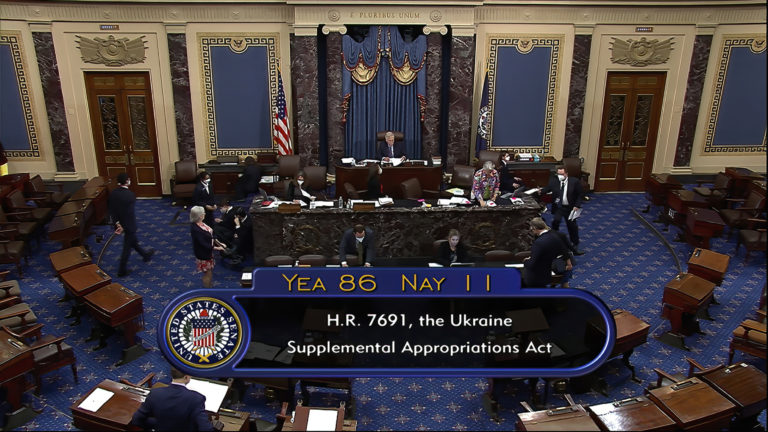
(Headline USA) The Senate has whisked a $40 billion package of military, economic and food aid for Ukraine and U.S. allies to final congressional approval, putting a bipartisan stamp on America’s biggest commitment yet to turning Russia’s invasion into a painful quagmire for Moscow.

The legislation, approved 86-11 Thursday was backed by every voting Democrat and most Republicans. While many issues under President Joe Biden have collapsed under party-line gridlock, Thursday’s lopsided vote signaled that both parties were largely unified about sending Ukraine the material it needs to fend off Russian President Vladimir Putin’s more numerous forces.

“I applaud the Congress for sending a clear bipartisan message to the world that the people of the United States stand together with the brave people of Ukraine as they defend their democracy and freedom,” Biden said in a written statement.

Ukrainian President Volodymyr Zelenskyy thanked the United States. “This is a demonstration of strong leadership and a necessary contribution to our common defense of freedom,” he said in his nightly video address to the nation.

With control of Congress at stake in elections less than six months off, all “no” votes came from Republicans.

The same thing happened in last week’s 368-57 House vote, fueling campaign-season Democratic demagoguery that a nationalist wing of the GOP was in the thrall of former President Donald Trump and his isolationist, America First preferences.

Senate Majority Leader Chuck Schumer, D-N.Y., called it “beyond troubling” that Republicans were opposing the Ukraine assistance, falling back on stale talking points by attempting to brand Republicans as extremist for their opposition to warmogering.

“It appears more and more that MAGA Republicans are on the same soft-on-Putin playbook that we saw used by former President Trump,” claimed Schumer.

Trump, who still wields clout in the party, has accused Biden of throwing money at Ukraine while mothers lack baby formula.

Senate Minority Leader Mitch McConnell, R-Ky., a strong backer of the measure, warned his GOP colleagues that a Russian victory would move hostile forces ever closer to the borders of crucial European trading partners.

That would prompt higher American defense spending and tempt China and other countries with territorial ambitions to test U.S. resolve, he said.

“The most expensive and painful thing America could possibly do in the long run would be to stop investing in sovereignty, stability and deterrence before it’s too late,” McConnell said.

Passage came as Secretary of State Antony Blinken said the U.S. had drawn down another $100 million worth of Pentagon weapons and equipment to ship to Kyiv, bringing total U.S. materiel sent there since the invasion began to $3.9 billion.

He and other administration officials had warned that authority would be depleted by Thursday, but the new legislation will replenish the amount available by more than $8 billion.

Overall, around $24 billion in the measure is for arming and equipping Ukrainian forces, helping them finance weapons purchases, replacing U.S. equipment dispatched to the theater and paying for American troops deployed in nearby countries.

There is also $9 billion to keep Ukraine’s government afloat and $5 billion to feed countries around the globe reliant on Ukraine’s now diminished crop yields. And there is money to help Ukrainian refugees in the U.S., seize Russian oligarchs’ assets, reopen the U.S. embassy in Kyiv and prosecute Russian war crimes.

The measure, which officials have said is designed to last through September, tripled the size of the initial $13.6 billion in Ukraine aid that lawmakers approved shortly after the February invasion.

The combined $54 billion price tag exceeds what the U.S. has spent annually on all its military and economic foreign assistance in recent years, and approaches Russia’s yearly military budget.

“Help is on the way, really significant help. Help that could make sure that the Ukrainians are victorious,” said Schumer, voicing a goal that seemed nearly unthinkable when Russia first launched its brutal attack.

If the war drags on, as seems plausible, the U.S. may have to eventually decide whether to spend more even as inflation, huge federal deficits and a potential recession loom. Under those circumstances, winning bipartisan approval of any future aid bill could become tougher, especially as November draws near and cooperation between the parties frays.

Several potential 2024 GOP presidential contenders voted for the measure, including Sens. Ted Cruz of Texas, Tom Cotton of Arkansas and Marco Rubio of Florida.

Another—Josh Hawley of Missouri—voted no. Ron Johnson of Wisconsin and Lisa Murkowski of Alaska, who perhaps face this fall’s toughest reelection races among GOP senators, backed the measure.

Three Democratic senators missed the vote. Chris Van Hollen of Maryland is recovering from what he’s called a minor stroke. Sherrod Brown of Ohio’s office said he woke up “not feeling well,” took precautionary tests at George Washington University Hospital, was resting at home and plans to return to the Capitol next week. Jacky Rosen of Nevada’s office said she was attending her daughter’s law school graduation.

Biden had proposed a $33 billion plan that lawmakers bolstered with added defense and humanitarian spending. He had to drop his request to include $22.5 billion more to fuel the government’s continued fight against the pandemic, spending that was opposed by many Republicans and got entwined in a politically complicating fight over immigration.

No Republican opposed to the legislation spoke during Thursday’s debate. After passage, Sen. Rand Paul, R-Ky., among the 11 conservatives who voted “no,” questioned whether voters would support the bill if Congress asked them to pay for it.

“I wonder if Americans across our country would agree if they had been shown the costs, if they had been asked to pay for it,” said Paul. “We simply borrow it. ‘Put it on my tab’ is what Congress says.”

Paul, who often opposes U.S. intervention and makes a habit of derailing bills on the brink of approval, had used Senate procedures to upend Schumer’s and McConnell’s plans to approve the Ukraine assistance last week.

Adapted from reporting by the Associated Press