Maricopa County IDs Election Workers Who Deleted Ariz. Audit Files

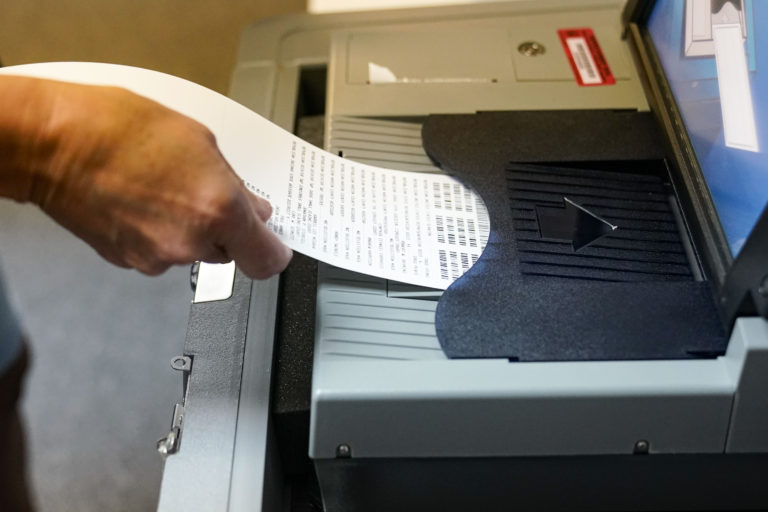
(Tony Sifert, Headline USA) The identity of a Maricopa County official who allegedly deleted election files in advance of a senatorial audit was reportedly revealed during a recent informational meeting hosted by the We The People AZ Alliance, Gateway Pundit reported.

According to the information made public at that meeting, a certain Brian Ramirez, who works as an administrative/operations specialist for the county, violated elections policy by accessing and deleting election data.

Election investigator Matt Vanbibber discovered that Ramirez, who was not authorized to access the material, used others’ credentials in order to hide evidence of electoral fraud from auditors.

“So basically, you have Brian entering the server room, and remember I told you he does not have badge access,” Vanbibber told attendees. “We The People actually collected server room logs from Maricopa . . . [and what] you see is Brian has Passarelli’s card in the server room, and he also has Charles Cooley’s badge as well.”

Ramirez was able to delete election data “before the voting machines were delivered to Senate auditors in compliance with a subpoena,” Gateway Pundit reported.

Attendees also heard a special message from Steve Bannon, who called into the conference to herald forthcoming investigations into voter fraud after the expected Republican landslide in the 2022 midterms in November.

“Trust me, when we take over the House in November . . . we’re going to have a massive investigation on J6, and that’s including adjudicating what went on on November 3rd and in the run-up to November 3rd, and the top of that is going to be Maricopa county in the state of Arizona,” Bannon said.

Bannon, who was recently found guilty of criminal contempt of Congress after ignoring subpoenas from the J6 Committee, has lately become the subject of gossipy revelations from President’s Donald Trump’s son-in-law, Jared Kushner.

According to CNN, in a new book detailing his time in the Trump White House, Kushner complains that Bannon accused him of “undermining the President’s agenda.”

Biden Preps to Declare Monkeypox a National Emergency

(Ezekiel Loseke, Headline USA) The Biden Administration is preparing to declare monkeypox a national health emergency, according to Politico.

The Health and Human Services is the agency responsible for making such a declaration. Far from an unbiased source, HHS stands to gain funding and staffing because of the announcement, per the government-run website on public health emergencies.

Politico’s anonymous sources said the announcement is expected soon, but the decision is not yet finalized.

The potential for a national emergency comes after New York City proclaimed monkeypox a Public Health emergency last week, as reported by NPR.

The United Nations also proclaimed monkeypox a global health emergency last week, and the United States leads the world in monkeypox cases.

Tom Inglesby, director of John Hopkins University’s Center for Health Security, told Politico that he supports proclaiming monkeypox an emergency.

Inglesby’s endorsement of emergency status comes despite his confession, “It isn’t an emergency posing a … high threat to the general population.”

Despite the public not being endangered, Inglesby frets that “it’s still moving … and has the potential to spread to additional vulnerable communities.”

“Vulnerable communities” may be code word for homosexual men.

As reported in July, “However, most of the concern [for contracting monkeypox] has been for those who engage in homosexual sex or those in the sex-trade industry who may come into contact with their bodily fluids.”

This concern is reflected in the preferential status homosexual men are being given with the monkeypox vaccine.

Newsweek reported Dr. Anthony Fauci recommended vaccinations for “people who are at risk through sexual networks or what have you,” which includes “the MSM population.” MSM is code for homosexual males.

The recent uptick in the rash of monkeypox outbreaks began in big cities following their pride-month bacchanalia.

Kavanaugh Would-Be Assassin Identifies as Tranny Female

(Jacob Bruns, Headline USA) Per newly-released court documents, Nicholas Roske, Supreme Court Justice Brett Kavanaugh’s would-be assassin, identifies as a transgender woman named Sophie, Summit News reported.

Court documents revealed that Roske was in the process of transitioning from male to female.

His social media accounts showed that he spent a great deal of time trying to find a romantic partner who was interested in a transgender.

He described himself as a “24 year old MtF college graduate” seeking “a woman to cuddle and watch movies with,” which could eventually turn into “making out” if things went as planned.

Roske also mentioned on several occasions that he was uncomfortable around other men.

His attempted assassination of Kavanaugh came soon after Supreme Court Justice Samuel Alito’s majority opinion in the recent Dobbs case was leaked earlier this year.

Kavanaugh’s address was shared online by militant abortion-activist cult Ruth Sent Us, but the group rejected Roske because of his skin color and sex.

Roske traveled to Kavanaugh’s home with a gun and a knife after the address was posted, with the dual aims of stopping “roe v wade from being overturned” while securing a liberal majority on the Supreme Court.

In a recently uncovered Reddit post, it was revealed that Roske had more extensive plans after killing Kavanaugh.

“I could get at least one, which would change the votes for decades to come, and I am shooting for 3,” said Roske.

“All of the major decisions for the past 10 years have been along party lines so if there are more liberal than conservative judges, they will have the power,” he added.

DeSantis Has Plan to Protect Floridians from Woke-Banking Scheme

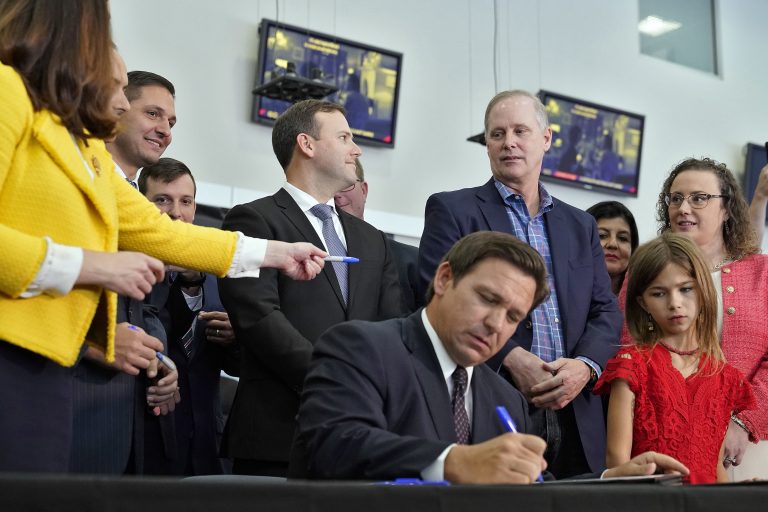
() Gov. Ron DeSantis last week announced a new plan to protect Floridians from the environmental, social, and corporate governance (ESG) movement. The plan includes proposed new legislation for the 2023 legislative session as well as administrative action.

The ESG movement “threatens the vitality of the American economy and Americans’ economic freedom by targeting disfavored individuals and industries to advance a woke ideological agenda,” DeSantis said.

“The leveraging of corporate power to impose an ideological agenda on society represents an alarming trend,” DeSantis said when announcing the new plan Wednesday.

“From Wall Street banks to massive asset managers and big tech companies, we have seen the corporate elite use their economic power to impose policies on the country that they could not achieve at the ballot box,” he added. “Through the actions I announced today, we are protecting Floridians from woke capital and asserting the authority of our constitutional system over ideological corporate power.”

According to Robeco Institutional Asset Management B.V., “ESG funds are portfolios of equities and or bonds for which environmental, social and governance factors have been integrated into the investment process. … Environmental factors include the contribution a company or government makes to climate change through greenhouse gas emissions.”

Mastercard, for example, created a personalized carbon footprint tracker in collaboration with Swedish fintech Doconomy. The Mastercard Carbon Tracking product was created as an “easy-to-use API [that] allows financial institutions and merchants to embed carbon tracking inside their own digital products,” it states.

ESG, many argue, is based on the social credit score first established in China, which restricts citizens’ movements and freedoms based on their scores.

When announcing the system, in 2014, the Chinese Communist Party said it was “an important component of the Socialist market economy system and the social governance system … keeping trust is glorious and breaking trust is disgraceful.”

“Trust” is defined by the Chinese government.

“China’s social credit system is an ambitious initiative to build a database that monitors individual, corporate, and government behavior across the country in real time.

According to the Chinese government, the system will use big data to build a high-trust society where individuals and organizations follow the law,” China Briefing reports.

Government authorities submit data on businesses directly through standard government inspections, which is integrated in the National Internet+ Monitoring System that analyzes the data to calculate ratings.

“Businesses are mostly assessed on standard regulatory and compliance criteria that they are already legally required to fulfill,” according to the report. “This includes paying taxes on time, holding requisite licenses, meeting product quality standards, and fulfilling environmental protection requirements,” among other industry-specific requirements.

In America, “woke elites use ESG investing to prop up far left policies, undermining our national security and raising prices for Americans,” state House Speaker Designate Paul Renner said.

The Florida House will fight “to stop woke financial titans who seek to dictate policy to Floridians regardless of our choices at the ballot box,” he said.

The 2023 legislative proposal would prohibit big banks, credit card companies and money transmitters from discriminating against customers based on their religious, political, or social beliefs, which have been identified as contributing to the score.

It will also prohibit State Board of Administration fund managers from considering ESG factors when investing state money and require SBA fund managers to only consider maximizing return on investment on behalf of Florida’s retirees.

The proposed bill also would amend Florida’s Deceptive and Unfair Trade Practices statute to prohibit discriminatory practices by large financial institutions based on ESG metrics.

DeSantis argues the metrics are arbitrary, based on political affiliation, religious beliefs, industry engagement, and ESG benchmarks.

Entities that violate Florida’s ban on ESG would be considered deceptive and engaging in unfair trade practices and be penalized, according to the law.

At the next State Board of Administration meeting, DeSantis said he’s also proposing an update to the fiduciary duties of the board’s investment fund managers to exclude ESG from the state’s investment management practices.

According to a fact sheet provided by the governor’s office, ESG investors “prioritize woke corporate ideals and non-financial factors as part of their investing process,” who are “corporate cartel elites who do not represent the will of the people, but rather their investment strategies on social causes and virtue signaling while driving up costs for consumers in the name of diversity and sidelining hardworking Americans by threatening their livelihoods.”

Work Resumes on Bipartisan Trump–Biden Border Wall

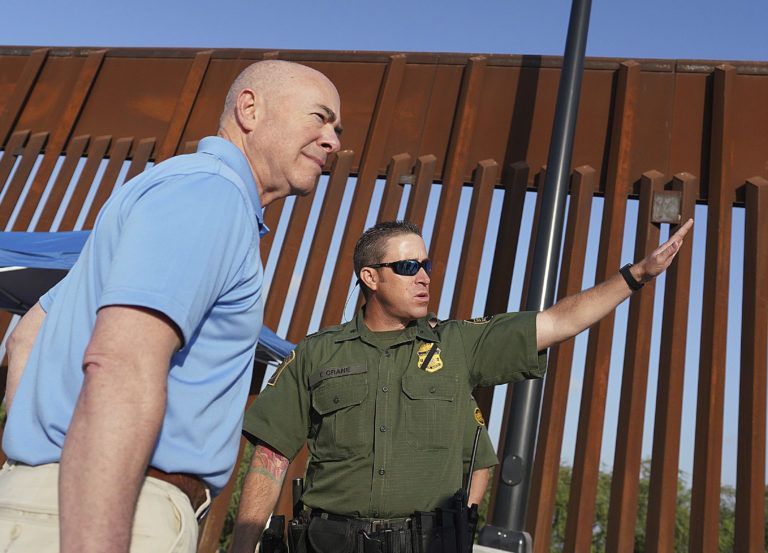
(The Center Square) The Department of Homeland Security has begun to close gaps in a border wall in Arizona after President Joe Biden pledged in January 2021 to not build “another foot.”

DHS says it plans to complete the Yuma Morelos Dam Project and close four wide gaps in the border wall near Yuma, Arizona, to “address operational impacts, as well as the immediate life and safety risks.”

The gaps are located in the former Yuma 6 project area, in the Yuma Border Patrol Sector. The project was previously funded by the Department of Defense’s (DOD) military construction appropriations and is now being funded through DHS’s FY21 appropriations.

“Due to the proximity to the Morelos Dam and the swift moving Colorado River, this area presents safety and life hazard risks for migrants attempting to cross into the United States where there is a risk of drownings and injuries from falls,” DHS said. “This area also poses a life and safety risk to first responders and agents responding to incidents in this area.”

Prior to construction, DHS will engage in standard environmental planning and “move as expeditiously as possible, while still maintaining environmental stewardship” once construction begins, it said.

The project was operational under the Trump administration but halted shortly after Biden came into office. On his first day in office, Biden issued 17 executive orders, including one pausing all border wall construction within a week.

The order left billions of dollars worth of work unfinished. Because the government was still under contract, not completing construction initially cost taxpayers $6 million a day. After construction crews were let go, the cost dropped to $3 million a day.

The president also returned $2.2 billion in border wall funds to the Department of Defense, which was reallocated to fund 66 projects in 16 countries, three U.S. territories, and 11 states.

According to a DOD memo, the majority of the funds, $1.26 billion, was allocated to secure the borders of other countries like Bulgaria, Germany, Hungary, Italy, Japan, Romania, Slovakia, Spain and others.

The Yuma Sector encompasses the southeast corner of Arizona, including 181,670 square miles of primarily desert terrain, and 126 miles along the U.S.–Mexico border from the Imperial Sand Dunes in California to the Yuma–Pima County line.

It’s traditionally been the third-busiest sector behind two sectors in Texas. In June, more than 23,700 people were apprehended entering the U.S. illegally.

Another 2,000 were recorded as gotaways—those who intentionally evade law enforcement after entering illegally without making immigration claims.

From January to June 2022, 160,482 people were apprehended in the sector, nearly four times more than the number apprehended from January–June 2021, according to CBP data.

The majority of the illegal foot traffic in the sector comes through the Morelos Dam. Since Biden’s been in office, hundreds of thousands of people from over 150 countries have flown to Mexicali, Mexico, then take a bus or taxi ride to Algodones, Mexico. They then walk across a concrete ledge on the dam to illegally enter the U.S.

Under new Biden administration policies, once they surrender to Border Patrol agents and are processed, many are released into Arizona instead of being deported or returned to Mexico to begin their immigration claim process.

When asked about the fact that walls work as a deterrent at a news briefing on Friday, White House Press Secretary Karine Jeane-Pierre said, “We are not finishing a wall. We are cleaning up the mess that the prior administration made. We are trying to save lives. This is what the prior administration left behind that we are now cleaning up.”

After overcoming legal challenges, the Trump administration built more than 450 miles of border wall in a short period of time. The Morelos Dam project had yet to be completed.

On July 1, Arizona Gov. Doug Ducey signed a $564 million border security bill into law allocating $335 million in state sales tax revenue to build and maintain a wall along the Arizona–Mexico border.

When signing it, he said Biden’s policies created “the worst border crisis in over 20 years” and Arizona was “standing up for the rule of law.”

Inflation Squeezes Food Banks and Food Pantries

0

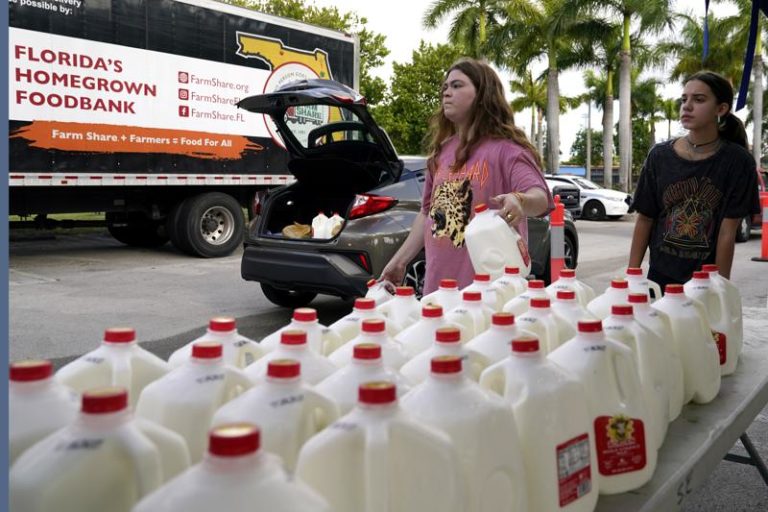
(Headline USA) Hunger is a problem in Illinois every summer. When schools are closed, families don’t have school meals to help feed their kids. Record inflation is compounding the issue.

Steve Ericson, executive director of Feeding Illinois, the state association for food agencies, told The Center Square that this summer, inflation is making Illinois’ food scarcity problem even worse.

“The cost of everything has gone up and the demand side for our network of agencies has also gone up. So that is a bad combination,” Ericson said.

Who is hungry in Illinois? The numbers are staggering, Feeding Illinois says on its website.

People out of work, the elderly, people with health problems. A high percentage of people who live in rural areas are experiencing food scarcity, Ericson said.

Before inflation, people on tight budgets had been coping. Inflation has made getting by tougher, he said.

“Budgets are just getting squeezed. We are all feeling it. The buying power of whatever income people [have] has decreased,” Ericson said.

The unemployed, the elderly, people with health problems, people from every walk of life are experiencing food scarcity. Rural counties have fewer residents but a higher percentage of people who live in rural areas are coping with food scarcity.

Illinois food banks are doing everything that they can think of to keep up with the demand for food, Ericson said.

“We’re turning over every stone,” he said.

Food banks and food pantries need cash and volunteers to help, he said. Feeding Illinois is much better at turning dollars into meals than the average grocery shopper.

“We can take a dollar of donations and turn it into somewhere between four and five meals,” Ericson said. “We can turn that dollar into a lot more food than people can ever get going to the grocery store, buying the food and then donating it.”

Feeding Illinois buys food in bulk quantities and realizes considerable savings that way, he said. That is where the need for volunteers comes in.

“To stretch our dollars, we are buying bulk food—including meat. But then we need people to help repack it into smaller units,” he said. “We are always looking for volunteers.”

Feeding Illinois has a farm to food bank program to connect food agencies with local farmers. By buying locally, and cutting transportation costs, food banks can realize savings and provide healthier fruits, vegetables, cheese, milk, meat and eggs to people in need, he said.

Vulnerable House Dems Zero-In on Abortion in Lead-Up to Midterms

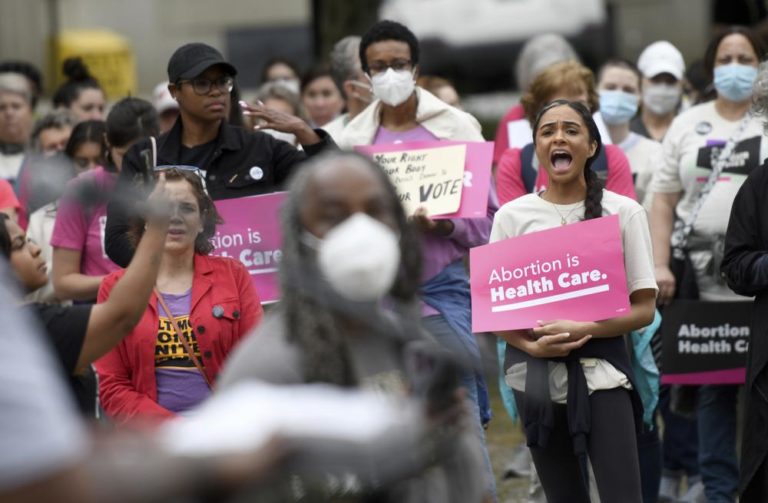
(Headline USA) A Democrat in a Republican state, U.S. Rep. Sharice Davids of Kansas is one of the most vulnerable incumbents seeking reelection this year. In the final months of her congressional campaign, she is focusing on Republicans’ strict opposition to abortion rights.

An online ad she released last week highlights how Amanda Adkins, the Republican favored to emerge from Tuesday’s primary for a rematch with Davids in November, opposed abortion without exceptions.

The ad points to Adkins’ support of an amendment to the Kansas Constitution on the ballot Tuesday that would make clear there is no right to abortion in the states.

“There were a lot of people who would not have known that I have an opponent who is extreme on this issue,” Davids said in an interview. “It’s not hypothetical anymore.”

Democrats are taking this as a sign of how the Supreme Court’s decision in June to repeal Roe v. Wade has scrambled the political dynamics heading into the fall elections, when control of Congress is at stake. A half-dozen vulnerable House members see the issue as one that could help them win in an otherwise difficult political climate.

In addition to Davids, these incumbents include Reps. Angie Craig of Minnesota, Cindy Axne of Iowa, Elissa Slotkin of Michigan, Abigail Spanberger and Elaine Luria of Virginia, and Susan Wilds of Pennsylvania.

They all face Republican opponents who support the high court’s abortion ruling. Some are contending with rivals who back efforts to ban abortion in all circumstances, including when the mother’s life is at risk.

It’s unclear whether the focus on abortion alone may be enough to mean reelection for many of these Democrats, who are running at a time of high inflation and frustration with President Joe Biden’s performance.

“In a close, toss-up election, which I think all of these are, it can make a difference,” said national pollster Christine Matthews. “It’s not going to be what drives everyone to make a vote choice, but it will drive some people to make a vote choice.”

Adapted from reporting by the Associated Press.

17-Year-Old Killed, 4 Hurt in Stabbings on Wisconsin River

0

(Headline USA)  A Minnesota teenager died and four other people were seriously hurt after being stabbed while tubing down a Wisconsin river, authorities said.

St. Croix County Sheriff Scott Knudson the victims and suspect, a 52-year-old Prior Lake, Minnesota man, were all on the Apple River when the attack happened Saturday afternoon.

Knudson said investigators were working to determine what led to the stabbings and whether the victims and suspect knew each other. They were tubing with two different groups that included about 20 people.

“We don’t know yet who was connected to who, who knew each other or what precipitated it,” Knudson said.

The knife attack happened on a difficult-to-access section of the river near the town of Somerset, Wisconsin, which is about 35 miles (56 kilometers) east of Minneapolis.

The suspect was arrested about an hour and a half later while getting off the river downstream.

“Thank goodness a witness had taken a photo of him,” Knudson told the Minneapolis Star Tribune. “Another witness located him at the exit of the tubing area, where he was taken into custody.”

A 17-year-old boy from Stillwater, Minnesota, died. Two of the other victims were flown to a hospital in St. Paul, Minnesota, and two others were taken there by ambulance.

The sheriff’s office said Sunday that the condition of all four surviving victims — a woman and three men in their 20s — ranged from serious to critical. They suffered stab wounds to their chests and torsos.

The sheriff’s office didn’t name the victims, but did provide a few details about them. The victims included a 20-year-old man and a 22-year-old man from Luck, Wisconsin; a 22-year-old man from Elk River, Minnesota; and a 24-year-old woman from Burnsville, Minnesota.

The name of the suspect wasn’t immediately released, but St. Croix County jail records show a 52-year-old man was being held without bond on suspicion of first-degree homicide, four counts of aggravated battery and four counts of mayhem.

California is Breaking its Own ‘Green’ Laws

California claims to know how much climate-warming gas is going into the air from within its borders. It’s the law: California limits climate pollution and each year the limits get stricter.

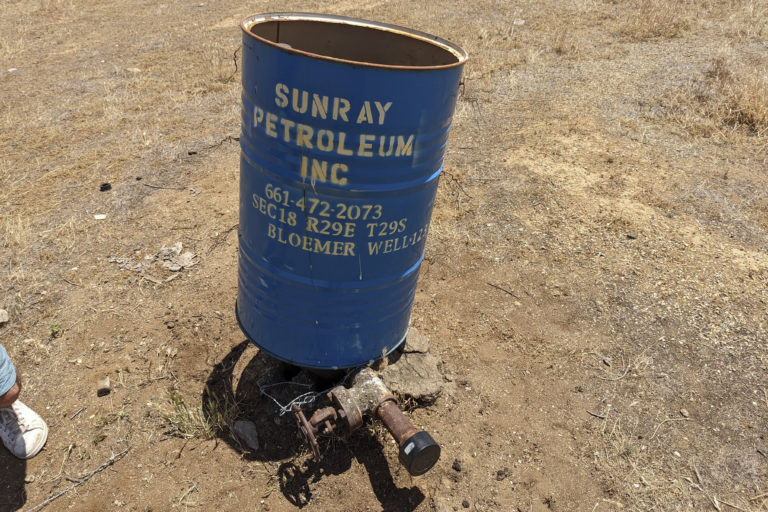
The state has also been a major oil and gas producer for more than a century, and authorities are well aware some 35,000 old, inactive oil and gas wells perforate the landscape.

Yet officials with the agency responsible for regulating greenhouse gas emissions say they don’t include methane that leaks from these idle wells in their inventory of the state’s emissions.

Ira Leifer, a University of California Santa Barbara scientist said the lack of data on emissions pouring or seeping out of idle wells calls into question the state’s ability to meet its ambitious goal to achieve carbon neutrality by 2045.

Residents and environmentalists from across the state have been voicing concern about the possibility of leaking idle or abandoned wells for years, but the concerns were heightened in May and June when 21 idle wells were discovered to be leaking methane in or near two Bakersfield neighborhoods. They say that the leaking wells are “an urgent public health issue,” because when a well is leaking methane, other gases often escape too.

Leifer said these “ridealong” gases were his biggest concern with the wells.

“Those other gases have significant health impacts,” Leifer said, “yet we know even less about their quantities than we do about the methane.”

In July, residents who live in the communities nearest the leaking wells protested at the California Geologic Management Division’s field offices, calling for better oversight.

“It’s clear that they are willing to ignore this public health emergency. Our communities are done waiting. CalGEM needs to do their job,” Cesar Aguirre, a community organizer with the Central California Environmental Justice Network, said in a statement.

Robert Howarth, a Cornell University methane researcher, agreed with Leifer that the amount of methane emissions from leaking wells isn’t well known and that it’s not a major source of emissions when compared with other sources.

Still, he said, “it’s adding something very clearly, and we shouldn’t be allowing it to happen.”

A ton of methane is 83 times worse for the climate than a ton of carbon dioxide, when compared over twenty years.

A 2020 study said emissions from idle wells are “more substantial” than from plugged wells in California, but recommended more data collection on inactive wells at the major oil and gas fields throughout the state.

Robert Jackson, a Stanford University climate scientist and co-author on that study, said they found high emissions from some of the idle wells they measured in the study.

In order to get a better idea of how much methane is leaking, the state of California is investing in projects on the ground and in the air. David Clegern, a spokesperson for CARB, said the agency is beginning a project to measure emissions from a sample of properly and improperly abandoned wells to estimate statewide emissions from them.

Some research has already been done, too, to find out how much methane is coming from oil and gas facilities. A 2019 Nature study found that 26% of state methane emissions is coming from oil and gas.

A new Senate proposal would provide hundreds of millions dollars to plug wells and reduce pollution from them, especially in hard hit communities.

Adapted from reporting by the Associated Press

Manchin Shies Away From Mainstream Democrats Ahead of Midterms

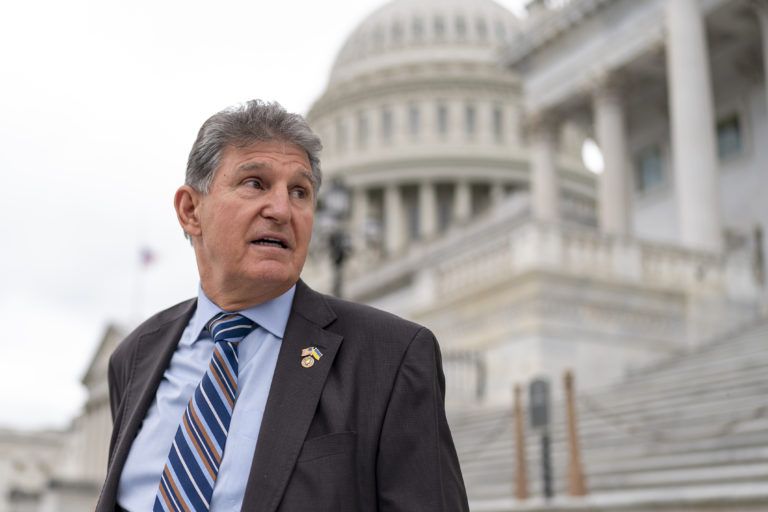
(Headline USA) Sen. Joe Manchin, one of the Democrats’ most conservative and contrarian members, declined on Sunday to endorse Joe Biden if the president seeks a second term in 2024 and refused to say whether he wants Democrats to retain control of Congress after the November elections.

Greanted, in a round of appearances on five news shows, the West Virginia senator did express hope that Sen. Kyrsten Sinema, D-Ariz., will back a Democratic package of climate, health care and tax initiatives that he negotiated. She joined Manchin last year in forcing cuts and changes in larger versions of the plan, and support from every Democrat in the 50-50 Senate — plus Vice President Kamala Harris’ tiebreaking vote — is needed to overcome anticipated unanimous Republican opposition in votes expected this week. Sinema has declined to tell reporters her stance.

“I would like to think she would be favorable toward it,” he said.

But beyond that, Manchin demurred when pressed about supporting his party or its nominee for president in upcoming elections.

“I’m not getting into 2022 or 2024,” he said, adding that “whoever is my president, that’s my president.”

Manchin said control of Congress will be determined by the choices of voters in individual states, rather than his own preferences. People “are sick and tired of politics,” he said, and want their representatives in Washington to put country over party.

The senator faces reelection in 2024 in a state where Donald Trump prevailed in every county in the past two presidential races, winning more than two-thirds of West Virginia’s voters. But in distancing himself from fellow Democrats, Manchin also tried to decry the rise of partisanship and suggested America’s path forward will need to move beyond traditional party-line politics.

His national TV interviews culminated a high-profile week in which his compromise with Senate Majority Leader Chuck Schumer, D-N.Y., revived a package of White House priorities on climate, health care, taxes and deficit reduction. Manchin had torpedoed a grander plan last December and previously lowered expectations about a substantial agreement being reached.

Both he and Sinema were previously aligned in opposing plans from Democratic senators to spend as much as $3.5 trillion on a climate and social justice bill. Sinema, however, was cut out of the most recent discussions on the bill, which would narrow the so-called carried interest loophole, bringing in $14 billion of the proposal’s $739 billion in new revenues. Sinema has previously opposed doing that.

Manchin said Sunday he did not brief Sinema or anyone else in the Democratic caucus on negotiations because of the risk that discussions would fall through. Acknowledging he has not tried to speak to Sinema since announcing the deal, Manchin said there were plenty of reasons she would be “positive about it.”

He said the plan, the “Inflation Reduction Act,” would help with manufacturing jobs, reduce deficits by $300 billion, lower prescription drug prices and accelerate the permitting process for energy production.

Sinema “has an awful lot in this piece of legislation the way it’s been designed as far as the reduction of Medicare, letting Medicare go ahead and negotiate for lower drug prices,” Manchin said.

He defended the 15% minimum tax on corporations with $1 billion or more of earnings as closing “loopholes,” rather than an outright tax increase.

“I agree with her 100 percent we’re not going to raise taxes, and we don’t,” he said.

Schumer wants Senate passage this coming week, though he acknowledged that timeline is “going to be hard” because it will take time for the chamber’s parliamentarian to make sure the bill conforms to Senate rules.

In the House, Democrats have a 220-211 edge, with four vacancies, leaving little margin for error for passage.

Manchin offered praise for Biden in regard to the bill because “you don’t do a bill this magnitude and this size without the president knowing what’s going on, the president being involved in, to a certain extent, but also giving approval.”

But in midterm elections, voters often reject the party that holds the White House and this year, Biden’s unpopularity and rising inflation are creating strong headwinds for Democrats.

Manchin demurred when asked whether he hoped Democrats would keep their majorities in Congress.

“I think people are sick and tired of politics, I really do. I think they’re sick and tired of Democrats and Republicans fighting and feuding and holding pieces of legislation hostage because they didn’t get what they wanted,” he said, adding, “I’m not going to predict what’s going to happen.”

Manchin appeared on NBC’s “Meet the Press,” CNN’s “State of the Union,” ABC’s “This Week,” “Fox News Sunday” and CBS’ “Face the Nation.”

Adapted from reporting by the Associated Press