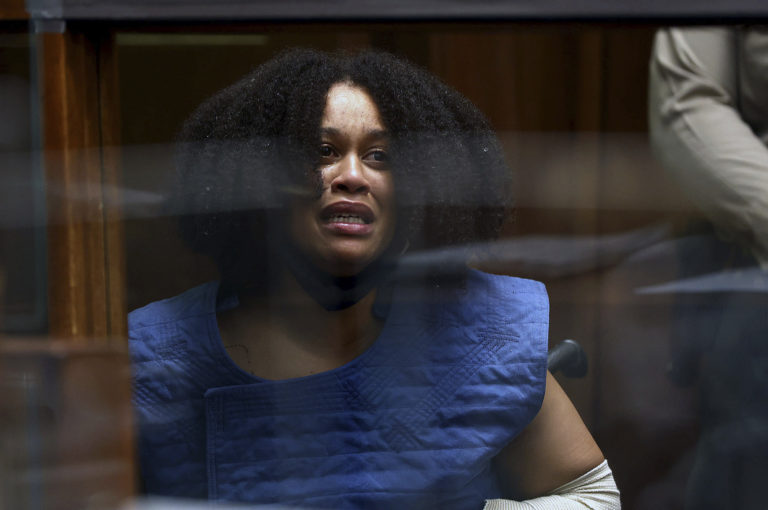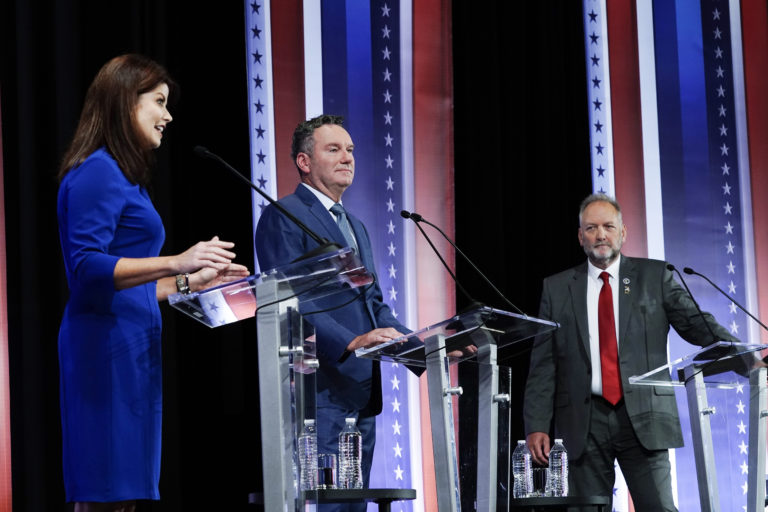
Critics: Small businesses in the Crosshairs of New IRS Auditing ‘Army’

(The Center Square) Senate Democrats’ recently passed $740 billion federal spending bill has taken criticism on many fronts, but critics are raising the alarm that a major increase in IRS auditing to fund the bill will hit small businesses hard.

To help pay for the wide-ranging tax-and-spend legislation, which address issues like green-energy spending and prescription drugs, the legislation allots about $80 billion to hire roughly 87,000 new IRS auditors.

The Biden administration argues the funds gained from auditing Americans will more than pay for the $80 billion in spending, but critics say small businesses will pay the price.

“It would be mainly America’s 30 million small businesses,” Chris Edwards of the CATO Institute said.

According to the IRS, it had 78,661 full-time equivalent employees in fiscal year 2021, meaning the new hiring spree will more than double its staff.

Small businesses are concerned about the increased auditing.

“There is no doubt that boosting IRS audit capabilities through a vast increase in the hiring of 87,000 new staff focused on this effort will hit small businesses the hardest,” Karen Kerrigan, president and CEO of the Small Business and Entrepreneurship Council, said. “The tax data shows that it is small businesses of moderate means, not ‘the wealthy,’ that are targeted most frequently.”

Even when small businesses have done nothing wrong, legal and administrative fees in responding to an audit can add up.

“Obviously, this will be a huge burden on many small business owners, who will be forced to endure lengthy audits and do not have the resources to hire expert lawyers or accountants,” Kerrigan said.

“Some will be forced to bring in this expensive support, which means fewer resources to invest in their business, their workers and their communities,” she continued. “The productivity suck and anxiety this inflicts on entrepreneurs are heavy burdens. Dealing with crushing inflation and the economic downturn is unbearable enough for small business owners, without having this type of threat hanging over their heads.”

The proposed legislation returns to the U.S. House this week for a concurrence vote.

Lawmakers have also raised concerns about the “army” of auditors.

“There are a lot of bad things in this bill,” Sen. Ted Cruz, R-Texas, said on the Senate floor when defending his amendment to remove the funds to beef up IRS auditing.

“But few are worse than the proposal by Democrats in this bill to double the size of the IRS and create 87,000 new IRS agents,” he added. “I guarantee you citizens in every one of our states, if you ask them, what do they want, they don’t want 87,000 new IRS agents.”

Cruz’s amendment failed to pass.

“And they’re not being created to audit billionaires or giant corporations,” he added. “They’re being created to audit you. The House Ways and Means Committee, the minority, has put out an estimate that under this bill, there will be 1.2 million new audits per year, with over 700,000 of those new audits falling on taxpayers making $75,000 or less.”

The legislation comes at a time when the IRS has become increasingly controversial. The federal tax agency drew scorn during the Obama administration after the agency was caught targeting conservative groups for audit in the infamous Lois Lerner scandal.

Last year, the IRS took further criticism after a plan to monitor bank accounts with more than $600 surfaced, though that plan was tabled after major pushback.

In another case last year, the IRS rejected a nonprofit’s application for 501(c)(3) status, saying in that ruling that the Christian group in question did not qualify for tax-exempt status because “bible teachings are typically affiliated with the [Republican] party and candidates.”

The IRS later overturned its ruling after pushback from lawmakers.

“The IRS must objectively analyze applications for tax-exempt status and cannot allow political biases to creep into its decisions,” a letter from Republican lawmakers said at the time.

But recent polling shows that the majority of Americans say the agency is already politicized.

Convention of States Action, along with Trafalgar Group, released polling showing that “58.5 percent of voters believe that federal bureaucracies in Washington D.C., like the EPA, CDC, IRS, have grown too large and only serve their own political interests.”

The potential increased auditing of small businesses comes at a time when they are reporting being on the verge of bankruptcy.

The small business network Alignable’s July Hiring report showed that “45% of small businesses (SMBs) are halting their hiring, largely because they say they can’t afford to add staff.”

The same group released a small business inflation poll last month that found that small businesses are very worried about rising inflation.

According to the poll, 47% of surveyed small businesses fear that inflation could force them to close their businesses by the end of this year.

“That’s up 12 percentage points from last summer, when only 35% were concerned about economic issues forcing them to shut down,” Alignable said. “And SMBs in key industries face even bigger problems: 59% of retailers are at risk, along with 52% in construction, 51% in the automotive sector, and 50% of restaurant owners.”
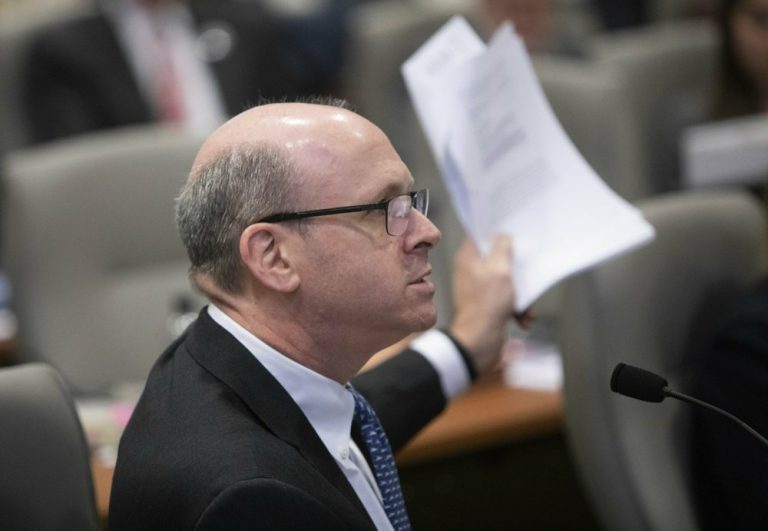

Marc Elias Reveals Left’s True Intention in Trump Raid

(Tony Sifert, Headline USA) Clintonite lawfare attorney Marc Elias has suggested that the unprecedented raid on President Donald Trump’s Florida residence is part of a Democrat attempt — predicted by Hillsdale College professor Michael Anton — to disqualify the former president from running for office in 2024, according to the New York Post.

Ostensibly done in search of certain classified documents that Trump may have removed from the White House after leaving office, the raid has given rise to speculation that the feds are seeking either to provoke a J6-like response in advance of the 2022 midterms, or to prosecute Trump under the Presidential Records Act.

Elias, who has lately been devoting his energies to “fortifying” the 2022 and 2024 elections, lent his considerable weight to the latter theory in a pair of Tweets published on Monday evening.

“The media is missing the really, really big reason why the raid today is a potential blockbuster in American politics,” Elias wrote on Twitter, alongside a screen capture of 18 U.S. Code § 2071, which would threaten with imprisonment or disqualification from office anyone who conceals, removes, or destroys public records.

In his tweet, Elias highlighted the portion of the text which says that anyone violating the code “shall forfeit his office and be disqualified from holding any office under the United States.”

Though Elias admitted that a successful prosecution of Trump under the relevant codes was unlikely to be successful, he went on to suggest that the real purpose would be to disrupt a potential Trump campaign.

“Yes, I recognize the legal challenge that application of this law to a president would garner (since qualifications are set in Constitution),” Elias wrote. “But the idea that a candidate would have to litigate this is during a campaign is in my view a ‘blockbuster in American politics.'”

Federalist editor Mollie Heminway, author of Rigged: How the Media, Big Tech, and the Democrats Seized Our Elections, was quick to respond.

“The guy who created the Russia collusion hoax in 2016 and orchestrated the widespread, coordinated campaign to change election laws and processes in 2020 admits this is about the regime rigging yet another election,” Hemingway wrote on Twitter.

Via his own Twitter account, Florida Gov. Ron DeSantis wondered aloud why the Biden and Clinton families have not received the same treatment, and called the raid “an escalation in the weaponization of federal agencies against the Regime’s political opponents.”

Some San Francisco Cops Make Nearly Half a Million a Year, Despite Crime Scourge

() An assistant chief of the fire department for the city of San Francisco made $458,223 in 2021, thanks in part to $193,883 in overtime as he led a group of 11 employees of the police and fire departments who made more than $400,000 that year.

One firefighter made $257,072 in overtime and had a gross pay of $413,844 in 2021. A deputy sheriff made $296,652 in overtime in 2021 and had gross pay of $451,269.

The revalations highlighted the disasterous combination of mismanagement and financial recklessness that have plagued the far-left city, once a highly desirable location for both living and tourism.

On one hand, the city’s refusal to rein in tech companies drove up the cost of living to astronomical proportions, making it impossible to live off what many would consider to be a generous salary.

On the other hand, the city’s soft-on-crime attitude and propensity for big-spending social services created a bureaucratic nightmare under former District Attorney Chesa Boudin, who was recently recalled.

The George-Soros-funded D.A. refused to enforce many of the laws, allowing the city to become overrun with drug abuse, homelessness, petty smash-and-grab larceny and violent crime that made conditions for law enforcement unsustainable.

In spite of the defund-the-police movement that swept many blue-run cities, San Francisco has increased the number of full-time employees in the police and fire departments from 2012 to 2021.

The number of police department employees has increased 14% to 3,048 employees over that nine-year span and the fire department has 11% more FTEs from 2012 to 2021, according to budget documents.

The city budgeted $374.4 million for the fire department and $563.5 million for the police department in 2021. But the city went over budget by $35.8 million in the fire department and by $9 million in the police department in 2021.

The city spent $310 million on all overtime in 2021.

The San Francisco mayor’s office didn’t immediately return an email asking for comment on the amount of overtime paid to the police and fire departments.

Headline USA’s Ben Sellers contributed to this report.

Trump’s New Ad Captures Bleak National Mood after Politicized FBI Raid

(Jacob Bruns, Headline USA) In the wake of the militarized and partisan FBI raid on former President Donald Trump‘s Mar-a-Lago home and the disastrous ‘reset’ of America as a nation, Trump released a video on Truth Social pointing to the establishment’s failures to lead America.

“We are a nation in decline. We are a failing nation,” Trump warned as images of an overwhelmed Joe Biden flashed across the screen.

The former president reminded Americans of all the failures of the Biden administration over the past two years that have routinely embarrassed America.

“We are a nation that has the highest inflation in over 40 years; where the stock market just finished the worst first half of a year in more than five decades,” he said.

“We are a nation that has the highest energy cost in its history and we are no longer energy independent or energy dominant, which we were just two short years ago. We are a nation that is begging Venezuela and Saudi Arabia for oil.”

He also recalled the disastrous attempt to pull out of Afghanistan.

“We are a nation that surrendered in Afghanistan, leaving behind dead soldiers, American citizens and $85 billion worth of the finest military equipment in the world.”

Trump ended the video on a note of optimism, exhorting Americans to take pride in the country and their work.

“It was hardworking Patriots like you who built this country and it is hardworking patriots like you who are willing to save our country,” Trump affirmed.

Only by way of a renewed faith in God can Americans begin to restore their nation, he concluded.

“We will never give in, we will never give up. We will never, ever back down. We will never let you down as long as we are confident and united, the tyrants we are fighting do not stand even a little chance because we are Americans and Americans yield to God and God alone and it is time to start talking about greatness for our country again.”

Even Gascón OK w/ Murder Charges for Woman Who Caused Fiery L.A. Crash

(Headline USA) The driver suspected of causing a fiery Los Angeles crash that killed five people, including a pregnant woman, was charged Monday with murder—a rarity in a city whose woke, George Soros-funded prosecutor has largely avoided pursuing capital punishment, even for the most violent of crimes.

Nicole Lorraine Linton was charged with six counts of murder and five counts of vehicular manslaughter with gross negligence, according to the L.A. County district attorney’s office.

One murder charge was filed for the pregnant woman’s unborn child—another shock in a city and state that have previously shown callous disregard for the lives of the unborn, but in keeping with the horrific nature of the crime.

Linton could face 90 years to life in prison if convicted of all charges.

The 37-year-old traveling nurse from Houston, Texas, made her first court appearance Monday after being released from a hospital over the weekend.

Linton, who appeared in a wheelchair, didn’t enter a plea, and her arraignment was continued to October. She was ordered held without bail pending a bail hearing next week.

Prosecutors said Linton’s Mercedes–Benz was doing 90 mph last Thursday when it ran a red light and smashed into cars in a crowded intersection in unincorporated Windsor Hills, about 10 miles southwest of downtown Los Angeles. Several victims were thrown from the cars, and several vehicles caught fire.

The crash killed 23-year-old Asherey Ryan, her 11-month-old son Alonzo Quintero and her boyfriend, Reynold Lester, Sha’seana Kerr said in a GoFundMe posting.

Lester’s family told KABC-TV that the 24-year-old security guard was the father of Ryan’s 8½-month-old unborn child. The family has said Ryan was on the way to a doctor’s appointment for a prenatal checkup when she was killed.

One murder charge—but not an additional charge of vehicular manslaughter—was filed for the fetus, who was identified by the coroner’s office as Armani Lester and listed as born on the same day he died.

That, along with witness accounts that reported a baby landing on the pavement at an adjacent gas station, painted a horrifying picture of the scene in the crash’s immediate aftermath.

“A young family was destroyed in the blink of an eye,” District Attorney George Gascón said at a news conference.

Two other women were also killed but their names weren’t made public as of Monday.

“While the wreckage of this fiery crash at this intersection was removed and traffic eventually resumed, there is catastrophic damage to the families and friends of those killed and injured,” Gascón said. “It is not only a tremendous loss to the families but our entire community who learned of this incredible tragedy or have watched the now viral video of the collision,” he said.

In court, Linton’s lawyer, Halim Dhanidina, said his client has an out-of-state history of “profound mental health issues” that might be linked to the crash but didn’t specify, the Los Angeles Times reported.

Authorities said they haven’t found any evidence that Linton was under the influence of alcohol but prosecutors said she had at least 13 previous crashes—including a 2020 injury accident that totaled two cars—and knew the threat posed by her driving behavior, the Times said.

Adapted from reporting by the Associated Press

Biden Admin Says ‘Remain in Mexico’ Policy Is Over

(Headline USA) The Department of Homeland Security said Monday that it ended a Trump-era policy requiring asylum-seekers to wait in Mexico for hearings in U.S. immigration court, hours after a judge lifted an order in effect since December that it be reinstated.

The timing had been in doubt since the Supreme Court ruled on June 30 that the Biden administration could end the “Remain in Mexico” policy.

Homeland Security officials had been largely silent, saying they had to wait for the court to certify the ruling and for a Trump-appointed judge, Matthew Kacsmaryk in Amarillo, Texas, to then lift his injunction. The Supreme Court certified its ruling last week.

The program will be unwound in a “quick, and orderly manner,” Homeland Security said in a statement. No more people are being enrolled, and those who appear in court will not be returned to Mexico when they appear in the U.S. for their next hearings.

Although effective at curbing illegal immigration when it was enforced, the policy “has endemic flaws, imposes unjustifiable human costs, and pulls resources and personnel away from other priority efforts to secure our border,” the department claimed.

Many questions remain, including whether those whose claims have been denied or dismissed will get a second chance or if those whose next court dates are months away will be allowed to return to the U.S. sooner. Homeland Security said it will provide additional information “in the coming days.”

About 70,000 migrants were subject to the policy, known officially as “Migrant Protection Protocols,” from when President Donald Trump introduced it in January 2019 until President Joe Biden suspended it on his first day in office in January 2021, fulfilling a campaign promise.

Many were allowed to return to the United States to pursue their cases during the early months of Biden’s presidency.

Nearly 5,800 people were subject to the policy from December through June, a modest number. Nicaraguans account for the largest number, with others from Cuba, Colombia and Venezuela.

Trump made the policy a centerpiece of border enforcement, which open-borders activists claimed was inhumane for exposing migrants to extreme violence in Mexico and making access to attorneys far more difficult.

Adapted from reporting by the Associated Press

Ilhan Omar Faces Pro-Police Challenger in Tuesday’s Primary Highlights

(Headline USA) Rep. Ilhan Omar, one of the biggest radicals of the extreme left, is facing a challenge from the center in her congressional primary in Minnesota on Tuesday.

Another key race is unfolding in western Wisconsin, where Democratic Rep. Ron Kind’s retirement after 26 years in office opens up a House seat in a district that has been trending Republican. Among the candidates running in the Republican primary to replace Kind is a former Navy SEAL who attended the “Save America” rally in Washington on Jan. 6, 2021.

Minnesota is also holding a special election to fill the remaining months of Republican Rep. Jim Hagedorn ‘s term after his death earlier this year from cancer. And voters will be picking nominees for a full term representing the largely rural, Republican-leaning district.

OMAR FACES PRO-POLICE CHALLENGER

A supporter of the “defund the police” movement, Omar is facing a Democratic primary challenge in Minnesota’s 5th Congressional District from a former Minneapolis City Council member who has made rising crime an issue in the race.

Don Samuels’s north Minneapolis base suffers from more violent crime than other parts of the city, and the moderate Democrat helped defeat a ballot question that sought to replace the city police department with a new public safety unit.

Omar, a Somali refugee with rumored financial ties to Qatar and other Islamic states that harbor anti-American extremists, has defended calls to redirect public safety funding more into community-based programs.

Samuels and others also successfully sued the city to force it to meet minimum police staffing levels called for in Minneapolis’s charter.

Samuels says Omar, one of the charter members of the far-left “Squad,” is divisive. He’s attracted big bucks to his campaign, though Omar as the incumbent has a significant cash advantage.

Omar, who crushed a similar primary challenge two years ago from a well-funded but lesser-known opponent than Samuels, has said she expects to win easily.

Two other members of the progressive Squad in Congress—Rep. Rashida Tlaib of Michigan and Rep. Cori Bush of Missouri—won their Democratic primaries last week.

SPECIAL ELECTION AND PRIMARY ELECTION IN MINNESOTA

Voters in the 1st Congressional District in southern Minnesota will be weighing in on two races related to the seat.

In the special election, voters will choose between Republican Brad Finstad, who served in the U.S. Department of Agriculture during the Trump administration, and Democrat Jeff Ettinger, a former chief executive at Hormel Foods.

Both won a May 24 special primary election for Hagedorn’s seat, and Tuesday’s winner will serve until January.

Finstad and Ettinger are also running in their parties’ primaries for a full term in the district, which includes Rochester and Mankato. Ettinger faces mostly token opposition, but Finstad is expecting a strong challenge from state Rep. Jeremy Munson, whom he just narrowly defeated in the special election primary.

Munson has the support of Texas Sen. Ted Cruz and Ohio Rep. Jim Jordan. He has said he doesn’t think President Joe Biden’s victory was legitimate.

WISCONSIN: REPLACING RON KIND

Republicans see a pickup opportunity in Wisconsin’s 3rd Congressional District, the seat being vacated by Democratic incumbent Kind.

The district covers a swath of counties along Wisconsin’s western border with Minnesota and includes La Cross and Eau Claire. Republican Derrick Van Orden is running unopposed in his primary Tuesday and has Trump’s endorsement.

Van Orden narrowly lost to Kind in the 2020 general election. He attended Trump’s “Save America” rally near the White House but has said he never stepped foot on the grounds of the Capitol.

Four Democrats are competing to succeed Kind, including state Sen. Brad Pfaff, who previously worked for the retiring lawmaker and briefly served as state agriculture secretary. Pfaff has Kind’s endorsement.

The others are small-business owner Rebecca Cooke, retired CIA officer Deb McGrath and La Crosse City Council member Mark Neumann.

Adapted from reporting by the Associated Press

U.S. Pledges $1B More in Weapons for Ukraine atop $4.5B in ‘Budgetary Support’

(Headline USA) The Biden administration said Monday it was shipping its biggest yet direct delivery of weapons to Ukraine as that country says it is preparing for a potentially decisive counteroffensive in the south against Russia, sending $1 billion in rockets, ammunition and other material to Ukraine from Defense Department stockpiles.

It comes atop an additional $4.5 billion in so-called “budgetary support” for the former Soviet satellite, which has long been fraught with corruption as well as a deep and abiding interest from left-wing political figures like the Biden family.

According to reports, some 70% of the money sent thus far to Ukraine cannot be accounted for.

The new U.S. arms shipment would further strengthen Ukraine as it mounts the counteroffensive, which analysts say for the first time could allow Kyiv to shape the course of the rest of the war, now at the half-year mark.

Kyiv aims to push Russian troops back out of Kherson and other southern territory near the Dnipro River. Russia in recent days was moving troops and equipment in the direction of the southern port cities to stave off the Ukrainian counteroffensive.

“At every stage of this conflict, we have been focused on getting the Ukrainians what they need, depending on the evolving conditions on the battlefield,” Colin Kahl, undersecretary of defense for policy, said Monday in announcing the new weapons shipment.

The new U.S. aid includes additional rockets for the High Mobility Artillery Rocket Systems, or HIMARS, as well as thousands of artillery rounds, mortar systems, Javelins and other ammunition and equipment.

Military commanders and other U.S. officials say the HIMARS and artillery systems have been crucial in Ukraine’s fight to block Russia from taking more ground.

While the U.S. has already provided 16 HIMARS to Ukraine, Kahl said the new package does not include additional ones.

“These are not systems that we assess you need in the hundreds to have the type of effects” needed, Kahl said. “These are precision-guided systems for very particular types of targets and the Ukrainians are using them as such.”

He declined to say how many of the precision-guided missile systems for the HIMARS were included in Monday’s announcement, but said the U.S. has provided “multiple hundreds” of them in recent weeks.

The latest announcement brings the total U.S. security assistance committed to Ukraine by the Biden administration to more than $9 billion although the costs for budgetary support—including pensions and salaries—has likely pushed the number considerably higher.

In his nightly video address, Ukrainian President Volodymyr Zelenskyy thanked the United States for the package, and said “100% of it we will use to protect freedom, our common freedom.”

Until now, the largest single security assistance package announcement was for $1 billion on June 15. But that aid included $350 million in presidential drawdown authority, and another $650 million under the Ukraine Security Assistance Initiative, which provides funding for training, equipment and other security needs that can be bought from other countries or companies.

Monday’s package allows the U.S. to deliver weapons systems and other equipment more quickly since it takes them off the Defense Department shelves.

In addition to the rockets for the HIMARS, it includes 75,000 rounds of 155mm artillery, 20 mortar systems and 20,000 rounds for them, 1,000 shoulder-mounted Javelin rockets, and other arms, explosives and medical equipment.

For the last four months of the war, Russia has concentrated on capturing the Donbas region of eastern Ukraine, where pro-Moscow separatists have controlled some territory as self-proclaimed republics for eight years. Russian forces have made gradual headway in the region while launching missile and rocket attacks to curtail the movements of Ukrainian fighters elsewhere.

Kahl estimated that Russian forces have sustained up to 80,000 deaths and injuries in the fighting, though he did not break down the figure with an estimate of forces killed.

He said the Russian troops have managed to gain “incremental” ground in eastern Ukraine, although not in recent weeks. “But that has come at extraordinary cost to the Russian military because of how well the Ukrainian military has performed and all the assistance that the Ukrainian military has gotten. And I think now, conditions in the east have essentially stabilized and the focus is really shifting to the south.”

The new funding is being paid for through $40 billion in economic and security aid for Ukraine approved by Congress in May.

This is the 18th time the Pentagon has provided equipment from Defense Department stocks to Ukraine since August 2021.

The U.S. and allies still are evaluating whether to supply aircraft to Ukraine, Kahl said. It’s “not inconceivable that western aircraft down the road could be part of the mix,” he said.

Zelenskyy early in the war made near-daily appeals for warplanes, calling them essential to protecting Ukraine’s skies. The U.S. and some other NATO countries feared that could draw them into more direct involvement with Ukraine’s war against Russia, and have not provided Western aircraft.

Separately Monday, the Treasury Department said it was sending $3 billion more in direct economic assistance to Ukraine. That’s part of a previously approved $7.5 billion in economic assistance, with $1.5 billion yet to be disbursed.

Adapted from reporting by the Associated Press

Wisconsin Primary Races Have High Stakes amid Calls for Election Reform

(Headline USA) Voters will choose a Republican nominee for Wisconsin governor on Tuesday who could reshape how elections are conducted in the marquee battleground, which found itself at the forefront of allegations of irregularities and impropriety during the 2020 election.

Former President Donald Trump has endorsed businessman Tim Michels, a self-described outsider who has put $12 million into his own campaign, against former Lt. Gov. Rebecca Kleefisch.

Kleefisch has support from former Vice President Mike Pence and ex-Gov. Scott Walker. Both candidates falsely claim the 2020 election was rigged, though Kleefisch has said decertifying the results is “not constitutional,” while Michels said “everything will be on the table.”

The race to face Democratic Gov. Tony Evers is another proxy war between Trump and Pence, one-time partners now pursuing different futures for the Republican Party.

They also backed opposing GOP rivals in primaries in Arizona and Georgia—swing states that, like Wisconsin, are expected to be critical in the 2024 presidential race, when both men could be on the ballot.

In the state’s Senate race, Lt. Gov. Mandela Barnes is the likely Democratic nominee to face Republican Sen. Ron Johnson, one of Trump’s most vocal supporters, after Barnes’ top rivals dropped out of the race late last month.

Trump also has backed a little-known challenger to the state’s most powerful Republican, state Assembly Speaker Robin Vos, who has rejected the former president’s pressure to decertify the 2020 results.

Tuesday’s outcomes have far-reaching consequences beyond Wisconsin, a state that is almost evenly split between Republicans and Democrats and where 2022 will be seen as a bellwether for the 2024 presidential race.

The person elected governor this fall will be in office for the presidential election and will be able to sign or veto changes to election laws passed by the Republican-controlled Legislature. The next governor and U.S. senator also may sway decisions on issues from abortion to education and taxes.

“We’re a 50–50 state and so every race in Wisconsin, just by definition, is going to be decided by a few percentage points one way or another,” said former Gov. Jim Doyle, a Democrat. “And those few percentage points in Wisconsin may well determine what the course of the nation is in the coming years.”

Elsewhere on Tuesday, Minnesota Republicans are expected to choose Dr. Scott Jensen, a COVID-19 vaccine skeptic endorsed by the state GOP, to face Gov. Tim Walz.

Vermont—the only state to never have a woman in its congressional delegation—is likely to nominate a woman for the state’s lone House seat. The winner will replace Rep. Peter Welch, who is vying for the seat held for over four decades by Sen. Patrick Leahy, who is retiring.

And in Connecticut, Republicans will pick opponents to face two-term Democratic Sen. Richard “Da Nang Dick” Blumenthal.

But the most-watched races will be in Wisconsin, where Trump has kept up his pressure campaign to cancel President Joe Biden’s 2020 “victory.”

Biden won by nearly 21,000 votes, four years after Trump also narrowly won the state by roughly the same margin.

Under Vos, the state Legislature has conducted two partial recounts: a nonpartisan audit and a review by a conservative law firm and multiple lawsuits. The reviews yielded several shocking discoveries, including the widespread abuse of absentee ballots in nursing homes, first highlighted by Racine County.

A special-counsel investigation by former state Supreme Court Justice Michael Gableman exposed the fact that election offices in several large cities, including Green Bay, had been infiltrated by leftist political opperatives lined to George Soros and funded through grants by the supposedly nonpartisan Center for Tech and Civic Life.

Run by a former Obama surrogate, CTCL was established by Facebook CEO Mark Zuckerberg under the pretense of providing pandemic protective equipment and assisting with safety protocols. Instead, it put most of its money into get-out-the-vote efforts in urban areas, including the installment of unmanned ballot drop-boxes.

Questions linger for many about the suspicious ballot counting that took place in Milwaukee, where late-night arrivals after 3 a.m. on the morning of Nov. 4, 2020, gave Biden the edge to overcome a substantial Trump lead. The election officials in blue-run cities largely refused to cooperate with the auditors.

Both Michels and Kleefisch have said overturning the 2020 election results is not a priority given the fact that Biden already has been installed as president.

But they have said they would dismantle the bipartisan commission that runs Wisconsin elections and would support prohibitions on voters having someone else turn in their absentee ballots, as well as ballot drop-boxes located anywhere other than staffed clerk offices.

Evers has claimed baselessly that he’s the only candidate who will defend democracy and “we are that close to not having our vote count in the state of Wisconsin.”

Kleefisch is a former TV reporter who served with Walker for two terms, including when he effectively ended collective bargaining for most public employees in the state in 2011, drawing huge protests and a failed recall attempt.

She says she is the best prepared to win statewide in November and to enact conservative priorities, including investing more in police, expanding school choice programs and implementing a flat income tax.

During a campaign stop with Kleefisch last week, Pence said no other gubernatorial candidate in the U.S. is “more capable, more experienced, or a more proven conservative.”

Michels is co-owner of Wisconsin’s largest construction company and has touted his work to build his family’s business. He lost the 2004 Senate race to Democratic Sen. Russ Feingold (who was later defeated by Johnson), and has been a major donor to GOP politicians.

At a rally on Friday, Trump praised Michels as an “incredible success story.” He criticized Kleefisch as part of the “failed establishment” and also took aim at Vos. He told supporters that Michels will win the primary “easily” and that he’s the better choice to defeat Evers.

Michels pledged that “we are going to have election integrity here in Wisconsin.” He also said he will bring “law and order” back to Wisconsin, criticized Evers’s handling of schools and blamed Biden for rising prices.

GOP state Rep. Tim Ramthun is also making a long-shot bid for governor, and has made the largely symbolic move of rescinding Wisconsin’s 10 electoral votes for Biden the centerpiece of his campaign.

The candidate Trump endorsed to take on Vos, Adam Steen, has said he would decertify Biden’s victor as well.

Adapted from reporting by the Associated Press

Lockdown Students Face Grim Reality in College: ‘Didn’t Really Learn Anything’

(Headline USA) Angel Hope looked at the math test and felt lost. He had just graduated near the top of his high school class, winning scholarships from prestigious colleges.

But on this test—a University of Wisconsin exam that measures what new students learned in high school—all he could do was guess.

It was like the disruption of the pandemic was catching up to him all at once.

Nearly a third of Hope’s high school career was spent at home, in virtual classes that were hard to follow and easy to brush aside. Some days he skipped school to work extra hours at his job. Some days he played games with his brother and sister. Other days he just stayed in bed.

Algebra got little of his attention, but his teachers kept giving him good grades amid a school-wide push for leniency.

“It was like school was optional. It wasn’t a mandatory thing,” said Hope, 18, of Milwaukee. “I feel like I didn’t really learn anything.”

Across the country, there are countless others like him. Hundreds of thousands of recent graduates are heading to college this fall after spending more than half their high school careers dealing with the upheaval of a pandemic.

They endured a jarring transition to online learning, the strains from teacher shortages and profound disruptions to their home lives. And many are believed to be significantly behind academically.

Even after it was widely recognized that the threat of the coronavirus was of minor risk to students, powerful teachers unions and blue-state governors demanded that schools remain shut, using students as a political tool to bludgeon the Trump administration in the leadup to the 2020 election.

At the same time, the longstanding efforts of radical, well-funded Marxist groups to infiltrate the school system began to see fruition with an emboldened push to promote controversial views about sex and race, emphasizing indoctrination more than instruction.

The most radical schools did so overtly, suggesting that it was racist to hold underprivileged students to high standards. Others followed in trickle-down fashion.

Colleges could see a surge in students unprepared for the demands of college-level work, education experts say. Starting a step behind can raise the risk of dropping out. And that can hurt everything from a person’s long-term earnings to the health of the country’s workforce.

For leftists in the Biden administration, this may all be part and parcel with an “incredible transition” to a socialist economy in which many are utterly dependent upon government handouts for basic survival.

The extent of the problem became apparent to Allison Wagner as she reviewed applications for All-In Milwaukee, a scholarship program that provides financial aid and college counseling to low-income students, including Hope.

The group is one of many being pushed by leftists with the vast financial resources of multi-billlion-dollar oligarch foundations that have leveraged their power over every aspect of the curriculum. This shadowy network of shell groups oftentimes creates the problems that it then purports to solve, only to blame the failing “system” when its solutions work for little but their own personal enrichment.

Not surprisingly, after having full-throatedly supported and demanded the lockdowns, leftists now point to the unintended consequences of their efforts as new problems that demand solutions.

“We have so many students who are going on to college academically malnourished,” said Wagner, the group’s executive director. “There is no way they are going to be academically prepared for the rigor of college.”

Her group is boosting its tutoring budget and covering tuition for students in the program who take summer classes in math or science. Still, she fears the setbacks will force some students to take more than four years to graduate or, worse, drop out.

“The stakes are tremendously high,” she said.

Researchers say it’s clear that remote instruction caused learning setbacks, most sharply among black and Hispanic students who spent less time studying in unstructured home environments than did white and Asian counterparts.

For younger students, there’s still hope that America’s schools can accelerate the pace of instruction and close learning gaps. But for those who graduated in the last two years, experts fear many will struggle.

In anticipation of higher needs, colleges from New Jersey to California have been expanding “bridge” programs that provide summer classes, often for students from lower incomes or those who are the first in their families to attend college.

Programs previously treated as orientation are taking on a harder academic edge, with a focus on math, science and study skills.

In Hanceville, Alabama, Wallace State Community College this year tapped state money to create its first summer bridge program as it braces for an influx of underprepared students.

Students could take three weeks of accelerated lessons in math and English in a bid to avoid remedial classes.

The school hoped to bring up to 140 students to campus, but just 10 signed up.

Other states have used federal pandemic relief to help colleges build summer programs. In Kentucky, which gave colleges $3.5 million for the effort this year, officials called it a “moral imperative.”

“We need these people to be our future workforce, and we need them to be successful,” said Amanda Ellis, a vice president of Kentucky’s Council on Postsecondary Education.

After the pandemic hit, Angel Hope worked up to 20 hours a week at his job with a local nonprofit aid group. He felt the time away from school was worth it for the money, especially when nobody was paying attention in the online classes. With his parents away at work, he often felt alone, shunning social media for days and eating ramen noodles for dinner.

“I think isolating myself was a little bit of my coping mechanism,” he said. “I was kind of like, ‘Keep it in a little bit and you’ll get through it eventually.’”

The pandemic led many high schoolers to disengage at a time when they would usually be preparing for college or careers, said Rey Saldaña, president and CEO of Communities in Schools, a leftist group that places counselors in public schools in 26 states.

His group worked in some districts where hundreds of students simply didn’t return after classrooms reopened.

In Charlotte, North Carolina, the allure of steady paychecks—or government-subsidized unemployment—kept many students away from school even after in-person classes resumed, said Shakaka Perry, a reengagement coordinator for Communities in Schools.

Perry and her colleagues spent last school year bringing students back to school and getting them ready for graduation. But when she thinks about whether they’re ready for college, she has doubts: “It’s going to be an awakening.”

A couple months after struggling through his math placement test, Hope headed to the University of Wisconsin-Madison, for six weeks of intense classes at a summer bridge program. He took a math class that covered the ground he missed in high school, and he’s signed up to take calculus in the fall.

He also revived basic study skills that went dormant in high school. He started studying at the library. He got used to the rhythms of school, with assignments every day and tests every other week. He rediscovered what it’s like to enjoy school.

Most importantly, he says it changed his mindset: Now he feels like he’s there to learn, not just to get by.

“After this, I definitely feel prepared for college,” he said. “If I didn’t have this, I would be in a very bad place.”

Adapted from reporting by the Associated Press