Top House Republican Says FBI Didn’t Have ‘Imminent National Security Threat’ to Justify Trump Raid

(Headline USA) The ranking Republican on the House Intelligence Committee said the FBI’s heavily redacted search warrant application contained no “imminent national security threat” to justify the agency’s raid on former President Donald Trump’s home.

“What’s missing in the allegations [is] some imminent national security threat that would justify raiding the president’s home,” Rep. Mike Turner, R-Ohio, told Fox News on Sunday.

Turner was responding to the unsealed warrant affidavit released by the Justice Department on Friday. The 38-page document was heavily redacted, but it did reveal some nuggets. 

The affidavit claimed the FBI previously found 184 documents marked classified – 25 were top secret, 92 as secret, and 67 as confidential – in Trump’s home. Those documents, however, did not warrant an “invasive” raid, Turner argued.

Sen. Roy Blunt, R-Mo., on the other hand, argued Trump was in the wrong for bringing the classified documents to his Mar-a-Lago home with him.

“I understand he turned over a lot of documents. He should have turned over all of them. I imagine he knows that very well now as well​,” Blunt told ABC News.

However, Blunt noted that the Senate Intelligence Committee, of which he is a member, was never informed about the missing classified documents, and argued the timing of the raid is suspicious.

“One of the things I was concerned about when I heard about this so-called raid or seizing of these documents was, why hadn’t the Intelligence Committee that I’ve been on for my time in the Senate and time in the House, why hadn’t we heard anything about this,” Blunt said. 

N.H. Gov. Slams Biden For ‘Insulting’ Republicans w/ ‘Semi-Fascism’ Smear

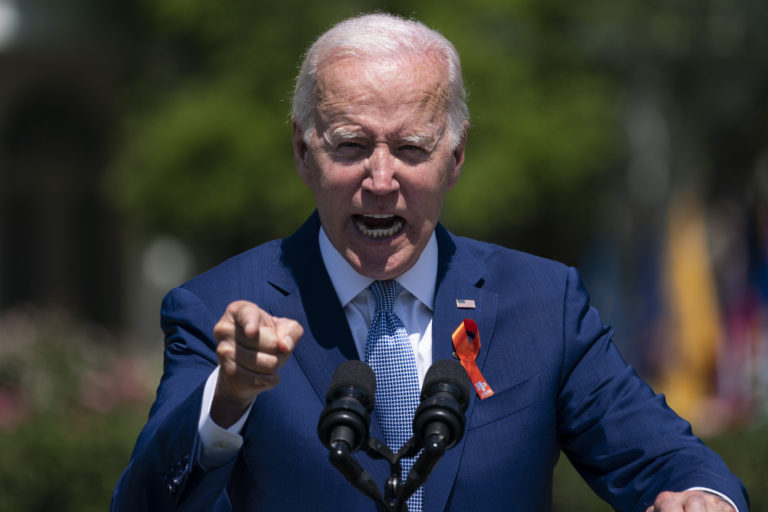
(Headline USA) New Hampshire Republican Gov. Chris Sununu slammed President Joe Biden this week for comparing former President Donald Trump’s MAGA movement to “semi-fascism,” calling it “insulting.”

“The fact that the president would go out and just insult half of America, because effectively half of America votes Republican, half of America ultimately votes Democrat,” Sununu told CNN this weekend.

“It swings a little bit one way or the other, but effectively call half of America semi-fascist, because he’s trying to stir up controversy, he’s trying to stir up this anti-Republican sentiment right before the election, it’s just — it’s horribly inappropriate,” he continued.

Voters “should be insulted” by Biden’s comments, Sununu said, because they were “insulting.”

“He should apologize,” he added.

The governor went on to condemn “extreme” rhetoric in both parties, citing Republicans’ tendencies to blast Democrats as “ultra-socialist communists.”

“So, when we allow ourselves just to talk in these extremes, we polarize the country,” he said.

“We bring people further apart. If I remember, this was the guy, the candidate at the time, that said he was going to bring everybody together. And then to call half of America fascists, come on.”

Speaking at a Democratic National Committee rally in Maryland last Thursday, Biden claimed Republicans have embraced an “extreme MAGA philosophy.”

“It’s not just Trump,” Biden said. “It’s the entire philosophy that underpins the – I’m going to say something: It’s like semi-fascism.”

Even after facing pushback for the remark, the White House decided to double down on it.

“I was very clear when laying out and defining what MAGA Republicans have done and you look at the definition of fascism and you think about what they’re doing in attacking our democracy. … That is what that is. It is very clear,” White House press secretary Karine Jean-Pierre said last week.

Lesbians Booted from Welsh ‘Pride’ Event after Trannies Complain

(Jacob Bruns, Headline USA) A squad of lesbians was booted from a Gay Pride event in Cardiff, Wales, after a nearly-violent confrontation with a group of transgenders, the Daily Mail reported.

A group of lesbian activists who call themselves “Get the L Out UK” posted a video of the lesbian vs. transgender showdown at the Cardiff pride event.

Event organizers claimed that the lesbian posse carried banners with them that contained anti-transgender messages such as “transactivism erases lesbians”, and also the vulgar message: “lesbians don’t like penises.”

The transgenders took issue with the lesbians and their signage, beginning a counter-chant, and preparing further response, which then nearly descended into chaos.

The near fight–which highlights the contradictions of radical feminism and sexual liberation–was broken up by the police before it could get started after law officers noticed the feminists “causing confrontation between different groups of people.”

“We’re lesbians,” the lesbians told the police as they tried to explain their activism. “It’s Cardiff pride.”

But the police had none of it, suggesting that “whatever you are… at the moment, is causing confrontation”, eventually forcing the lesbians to disperse “for other people’s safety.”

Central to the issue is the treatment of famous Harry Potter author J.K. Rowling, who, despite her support of nearly every globalist-, lesbian-, and gay-supporting policy, has been rejected by the Left for failing to hold the proper opinion of transgenderism.

In recent years lesbian and gay rights have also come into conflict with the Left’s love of diversity and multicultarism, since many foreign cultures despise lesbians and gays.

For example, as the United States and its globalist allies in Western Europe import Muslims at unprecedented rates, it becomes clear that many of those Muslims are unwilling to adopt American habits and customs, especially those surrounding sexual deviancy and a careless attitude toward traditional morality.

Twitter in Turmoil as Whistleblower Sheds Light on Security Ineptitude

(Headline USA)  A recent bombshell whistleblower report from Twitter’s former head of security alleges that the social media company has been negligently lax on cybersecurity and privacy protections for its users for years.

While worrisome for anyone on Twitter, the revelations could be especially concerning for those who use it to reach constituencies, get news out about emergencies and for political dissidents and activists in the crosshairs of hackers or their own governments.

“We tend to look at these companies as large, well-resourced entities who know what they’re doing — but you realize that a lot of their actions are ad hoc and reactive, driven by crises,” said Prateek Waghre, policy director at the Internet Freedom Foundation, a digital rights nonprofit in India. “Essentially, they’re often held together by cello tape or chewing gum.”

Peiter “Mudge” Zatko, who served as Twitter’s security chief until he was fired early this year, filed the complaints last month with federal U.S. authorities, alleging that the company misled regulators about its poor cybersecurity defenses and its negligence in attempting to root out fake accounts that spread disinformation. Among Zatko’s most serious accusations is that Twitter violated the terms of a 2011 FTC settlement by falsely claiming that it had put stronger measures in place to protect the security and privacy of its users.

Waghre said the allegations in the complaint about India — that Twitter knowingly allowed the Indian government to place its agents on the company payroll where they had “direct unsupervised access to the company’s systems and user data” — were particularly worrisome. He also pointed to an incident earlier this month where a former Twitter employee was found guilty of passing along sensitive user data to royal family members in Saudi Arabia in exchange for bribes.

The consequences of privacy and security lapses can range from inconvenience and embarrassment — such as when an Indiana State Police account was hacked and tweeted “poo-poo head” earlier this year — to much worse. In October 2021, a Saudi humanitarian aid worker was sentenced to 20 years in prison because of an anonymous, satirical Twitter account that the kingdom says he ran. It’s possible that the case is linked with the men accused of spying on behalf of the kingdom while working at Twitter.

As an advocate for dissidents and others detained in Saudi Arabia, Bethany Al-Haidari has been concerned for years about Twitter’s user privacy safeguards. The new whistleblower allegations make her all the more worried.

“Given what we know about how social media is used around the world, that is incredibly problematic,” said Al-Haidari, who works for The Freedom Initiative, a U.S.-based human rights group. The possibility of hackers or governments exploiting the alleged cybersecurity lapses at Twitter to get users’ identities, private messages or other personal information “is quite disturbing to me,” she said.

Chinese-Australian artist and activist Badiucao, who regularly publishes art that criticizes the Chinese Communist Party, expressed concern about the whistleblower’s allegations, noting that many users provide their phone numbers and emails to Twitter.

“Once that personal information is leaked, it could be used to trace your identity,” he said. Badiucao said he regularly receives death threats and propaganda from what appears to be bot or spam accounts.

But the artist plans to keep using Twitter, saying it’s probably the best option Chinese-speaking activists and artists have for a “shelter for free speech.”

Twitter says the whistleblower claims present a “false narrative” about the company and its privacy and data security practices, and that the claims lack context. “Security and privacy have long been company-wide priorities at Twitter and will continue to be,” the company said in a statement.

Despite the heightened concerns sparked by Zatko’s claims, none of the groups The Associated Press spoke to this week plan to stop using Twitter. Security experts say while the whistleblower’s claims are alarming, there’s no reason for individual users to delete their accounts.

High-profile Twitter users and world governments may be at greater risk than average users, experts say. In 2020, for instance, Twitter suffered an embarrassing hack by a teenager who accessed the accounts of then-President Barack Obama, Joe Biden, Mike Bloomberg and a number of tech billionaires including Tesla CEO Elon Musk and Amazon founder Jeff Bezos. Musk is currently embroiled in a battle with Twitter as he tries to back out of a $44 billion deal to buy the company.

Yet another security incident raised alarms for Jennifer Grygiel, a Syracuse University communications professor who follows Twitter closely. In 2017, a Twitter customer support worker deactivated then-President Donald Trump’s account for a few minutes during their last day on the job. While the account was restored quickly, Grygiel said, the incident showed how vulnerable Twitter was when it comes to governments, heads of state and military branches that use the platform.

“Am I surprised and shocked by the whistleblower’s allegations? I’m not,” said Trav Robertson, chair of the South Carolina Democratic Party, which uses Twitter to communicate with about 18,700 followers. But he argues that it’s especially important for people not to assume that “the constant attacks on our emails, our databases, our Twitter accounts, our Facebooks” are the new normal. “When we become desensitized to it, we fail to be proactive,” he said.

At the City of Denver’s fire department, public information officer JD Chism acknowledges concern over security issues. But the department has to weight that risk against the way Twitter has become integral to communicating emergencies to the public. The department’s Twitter feed hosts real-time updates on fires and consequent road closures and injuries, alongside retweets from other agencies warning of dangers such as flash floods.

For now, the department will keep using Twitter as it always has, Chism said, “It’s good for taking care of people, and that’s what we are here for.”

Adapted from reporting by the Associated Press

Russia to Hold Sweeping Joint War Games w/ China, Others

(Headline USA) Russia said Monday it will launch sweeping military drills in the country’s east that will involve forces from China — a show of increasingly close defense ties between Moscow and Beijing amid tensions with the West over the Kremlin’s action in Ukraine.

The Russian Defense Ministry said that the Vostok 2022 (East 2022) exercise will be held Sept. 1-7 in various locations in Russia’s Far East and the Sea of Japan and involve more than 50,000 troops, over 5,000 weapons units, including 140 aircraft and 60 warships.

The drills will be conducted at seven firing ranges in far eastern Russia and will engage troops from several ex-Soviet nations, China, India, Laos, Mongolia, Nicaragua and Syria.

The ministry said that units of Russian Airborne troops, long-range bombers and military cargo planes will take part in the drills along with other forces.

While first announcing the exercise last month, the Russian military emphasized that it’s part of planned combat training that is continuing despite Moscow’s military action in Ukraine. It hasn’t disclosed the number of troops engaged in what the Kremlin calls the “special military operation” there.

The ministry noted that as part of the maneuvers, the Russian and Chinese navies in the Sea of Japan will “practice joint action to protect sea communications, areas of marine economic activity and support for ground troops in littoral areas.”

The drills reflect increasing defense ties between Moscow and Beijing, which have grown stronger since Russia sent its troops into Ukraine on Feb. 24. China has pointedly refused to criticize Russia’s action, blaming the U.S. and NATO for provoking Moscow, and has blasted punishing sanctions imposed on Moscow.

Russia, in turn, has strongly backed China amid the tensions with the U.S. that followed a recent ego-trip visit to Taiwan by U.S. House Speaker Nancy Pelosi. Speaking earlier this month, Russian President Vladimir Putin drew parallels between U.S. support for Ukraine and Pelosi’s trip to Taiwan, charging that both were part of alleged American efforts to foment global instability.

Russia and China have held a series of joint war games in recent years, including naval drills and patrols by long-range bombers over the Sea of Japan and the East China Sea. Last year, Russian troops for the first time deployed to Chinese territory for joint maneuvers.

Putin and Chinese President Xi Jinping have developed strong personal ties to bolster a “strategic partnership” between the former Communist rivals as both Moscow and Beijing face increasing tensions with the West.

Even though Moscow and Beijing in the past rejected the possibility of forging a military alliance, Putin has said that such a prospect can’t be ruled out. He also has noted that Russia has been sharing highly sensitive military technologies with China that helped significantly bolster its defense capability.

While first announcing the drills last month, the Russian Defense Ministry emphasized that it’s part of planned combat training that is continuing despite Moscow’s military action in Ukraine. It hasn’t disclosed the number of troops engaged in what the Kremlin calls the “special military operation” there.

Adapted from reporting by the Associated Press

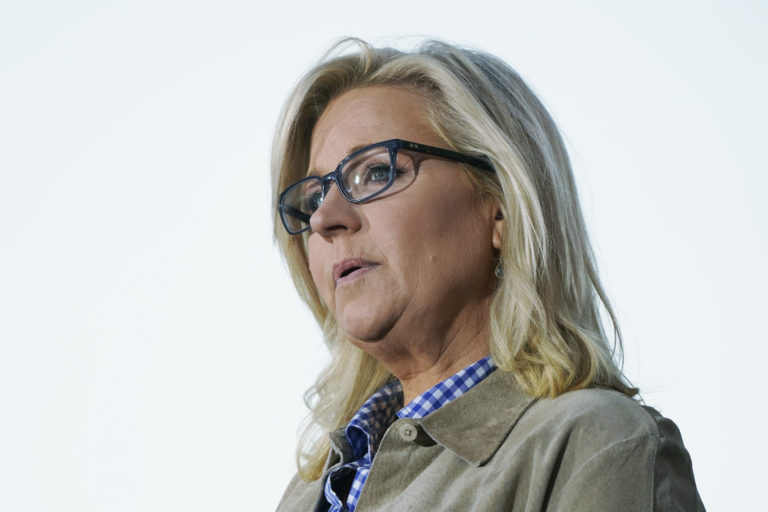
Liz Cheney’s Plans for Anti-Trump Spoiler Run Met w/ Deep Skepticism

(Headline USA) Rep. Liz Cheney, RINO-Wyo., in flashes of delusional grandeur described her blowout loss in the state’s GOP primary as the beginning of a more consequential step in her political career. She summoned Abraham Lincoln, who lost elections for the House and Senate and still went on to become one of the nation’s most accomplished presidents.

But in the days since, would-be supporters in key states have openly expressed skepticism about a Cheney presidential run, even one solely designed to block Donald Trump’s return to the White House.

In fact, Republican voters and local officials in three of the states that matter most in presidential politics — Iowa, New Hampshire and South Carolina — believe the soon-to-be-unemployed congresswoman has little path to relevancy in a 2024 presidential primary, never mind a path to victory. Some sympathizers fear she would actually help Trump if she runs.

Such is the colossal political challenge ahead for Cheney, a Republican seeking to transform a 37-percentage-point home-state loss into a national campaign to destroy Trump’s White House ambitions. There is no precedent for what she hopes to accomplish.

“The Republican Party is a lot more diverse than it’s given credit for, and there will be some number of people who find her, and her message, appealing, but that is far from saying that there would be a warm reception, or a large reception,” said Micah Caskey, a Republican state representative in South Carolina. “I don’t see a Liz Cheney candidacy as being viable.”

In the hours after she conceded her Wyoming congressional primary, which she lost by nearly 40 to Trump-endorsed Harriet Hageman, Cheney’s team transferred leftover campaign funds into a slush fund she named “The Great Task,” borrowing a phrase from Lincoln’s Gettysburg Address. She vowed to devote the weeks before the November midterms to defeating Trump loyalists who continue to promote the assertion that the 2020 election was stolen.

She will continue to play a leading role in the partisan J6 witch hunt, which is set to host another round of hearings in September after its first TV run was roundly panned as a flop.

Despite those factors, there has been little sign of enthusiasm for Cheney in the states most likely to decide the next GOP presidential nomination.

Voters were openly celebrating her loss at the Iowa State Fair, a must-stop for presidents and presidential contenders ever since the state began hosting the nation’s opening presidential primary contest a half-century ago.

“It’s celebration day at the Iowa Republican Party. Liz Cheney is outta here!” crowed Debra Wyna, a Des Moines-area GOP volunteer and 57-year-old retired salon owner. “Liz Cheney is a swamp monster.”

Other voters who stopped by the GOP booth were less pointed than Wyna but no less dismissive of Cheney’s political ambitions.

“I’m never going to vote for her because I believe she betrayed the Republican Party by voting to impeach President Trump,” said Janet Diers, a 67-year-old retired special education teacher from rural western Iowa.

Gentry Collins, a veteran Iowa and national Republican operative who opposes Trump, said he has “great respect” for Cheney, but he doesn’t see how she wages a viable campaign for president.

“Where do the votes come from? Maybe she aggregates the anti-Trump vote, but that’s not enough,” said Collins, a former political director for the Republican National Committee. “She’s my kind of Republican, but I don’t see an opening.”

It was much the same across New Hampshire, which traditionally hosts the nation’s second Republican primary contest.

While the state prides itself on ushering in presidential candidates every four years, Republican Gov. Chris Sununu, who has mocked Trump, declined an opportunity to welcome a prospective Cheney campaign when given the opportunity.

“The governor has given no thought or consideration as to who may or may not run for president in 2024,” Sununu spokesperson Ben Vihstadt said. “He is solely focused on the midterms in less than 100 days, and firmly believes every second spent speculating about 2024 is a waste of time.”

Early presidential primary jockeying has been underway for several months. And the first Republican presidential announcement could come any time. Trump is weighing whether to declare his presidential intentions before or after the midterms.

Republican presidential prospects have been flocking to Iowa and New Hampshire for months already. The visitors include former Vice President Mike Pence, former Secretary of State Mike Pompeo, Sen. Tom Cotton and former U.N. Ambassador Nikki Haley. Florida Gov. Ron DeSantis is another frequent name discussed by local Republican primary voters, though he has yet to make an appearance.

Cheney herself delivered a speech in New Hampshire late last year, declaring that Trump was at war with the rule of law.

Caskey, the South Carolina state representative, believes Trump may be vulnerable in a small Republican field, but a large Republican field would divide the anti-Trump vote and help Trump claim his party’s nomination again.

“I think Donald Trump is the odds-on favorite to win if he runs, but I don’t think he has an assured path to victory,” Caskey said. “I think the more candidates that get involved, the more likely it is that he succeeds.”

Matthew Bartlett, a veteran New Hampshire Republican operative who worked in Trump’s State Department but quit after the Jan. 6 insurrection, said there’s plenty of buzz across the state about presidential candidates — save one.

“Not one person is talking about Liz Cheney,” Bartlett said. “I don’t think she knows what she’s doing.”

Nationally, around 7 in 10 Republicans continue to support Trump. That number may have jumped in the days after the FBI executed a search warrant at his Florida estate, though critics note that Trump’s multiple legal entanglements could ultimately damage his standing. Cheney, meanwhile, is lumped near the bottom with Pompeo and Haley, among others, in early public polling.

Adapted from reporting by the Associated Press

N.Y. Rewards Convicted Drug Dealers w/ Priority Pot ‘Licenses,’ Cash and Stores

(Ezekiel Loseke, Headline USA) The state of New York has given convicted drug dealers priority in obtaining a license to sell recreational marijuana, provided them with start-up cash and given them subsidized access to a New York storefront.

Politico‘s report on the announcement sounded more like an advertisement for a lawsuit than a news article. It reads, “If you or a loved one have a pot conviction, you could have a new employment opportunity. New York will give you first dibs to sell marijuana, legally.”

New York is the first state to “offer its initial dispensary licenses solely to entrepreneurs with marijuana convictions,” according to Politico.

Chris Alexander, the executive director of New York’s Office of Cannabis Management, said that he thought hiring former drug dealers “means that we’re going to find a bunch of applicants who have gone through some significant challenges to still open and operate successful businesses.”

The state is doing more than granting criminals licenses to deal drugs. It is also subsidizing them. Politico reported, “If selected, the state will set up the applicants with a retail location and financing to help develop their storefronts.”

The financing is provided “from a $200 million Social Equity Cannabis Investment Fund,” as reported by Politico. The fund “was created to help finance the leasing and equipping of up to 150 dispensaries across the state.”

Alexander said that New York designed the application process to be simple; it doesn’t require attorneys, accountants, or expertise to complete. Indeed, he noted that “All of the things that we’ve identified over the years as barriers to entry, we’re trying to remove.”

Robert DiPisa, an attorney and head of a New Jersey Marijuana advocacy group, argued that “The whole point of this is to put them [the former drug dealers] on a pedestal.”

Canada Accused of Euthanizing 61-Yr-Old Man over ‘Hearing Loss’

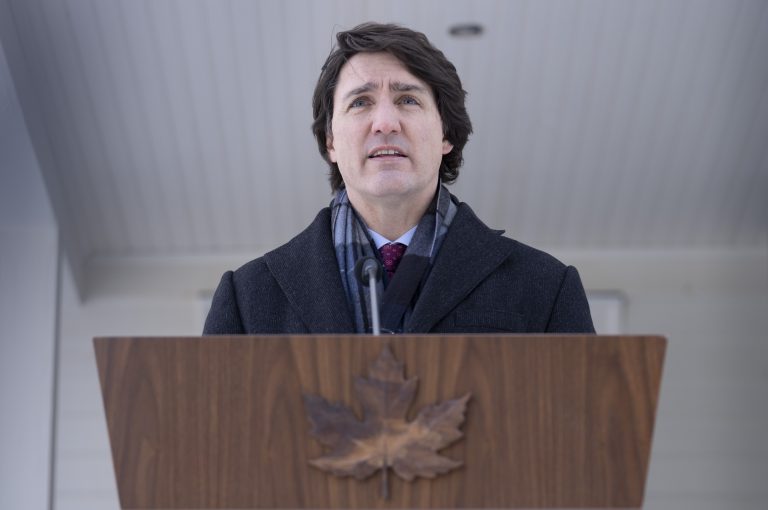
(Jacob Bruns, Headline USA) The nation of Canada, led by Prime Minister and COVID lockdown activist Justin Trudeau, has been accused of broadening its sweeping euthanasia policies to such a degree that they are killing people with state funds due to deafness.

According to recent reports, Alan Nichols, a depressed and deaf 61-year-old Canadian, was hospitalized in 2019 due to fears that he might be suicidal, Legal Insurrection reported. Nonetheless, Nichols showed spirit, asking his brother to come “bust him out” of the hospital so he could resume life as normal.

Yet within a month at the hospital, Nichols submitted a request to be euthanized due to hearing loss, with which the state gladly complied despite the concerns of his family.

Per the report, Nichols “was not taking needed medication, wasn’t using the cochlear implant that helped him hear,” and that hospital staffers “helped him request euthanasia.”

Canada’s euthanasia policy is designed to address basic parts of aging, such as hearing loss, vision loss, or general physical decline.

Though Trudeau bragged endlessly about saving lives via COVID lockdowns, his other policies are leading to death on a mass scale.

Euthanasia, which the state calls “assisted dying,” is the sixth leading cause of death in Canada. It was legalized in 2016 for those 18 and older, so long as they can prove that they are in severe pain, or that their death is impending.

An organization called “Dying with Dignity Canada” has pushed to lower the age limit even more, so that those 12 and over can commit state-assisted suicide.

“DWDC recommends that the informed consent of a competent parent or guardian be required for eligible minors seeking MAID who are 12 to 15 years of age inclusive, and that MAID assessors be required to consult a competent parent or guardian for eligible minors aged 16 and 17,” they wrote.

Canada’s laws have been condemned by none less than Pope Francis, who suggested that patients would simply be “administered death” rather than recieve real treatment.

Top GOP Sen. Warns of Riots if DOJ Tries to Indict Trump

(Jacob Bruns, Headline USA) Sen. Lindsey Graham, R-S.C., suggested that if former President Donald Trump is indicted due to the documents that he allegedly kept at his Mar-a-Lago home, there may be riots in the streets, Todd Starnes reported.

Graham, in an appearance on Fox News, warned the Left that the American people can only be pushed so far.

“If there is a prosecution of Donald Trump for mishandling the classified information after the Clinton debacle, which you presided over and did hell of a good job, there will be riots in the streets,” Graham told Fox News host and former Rep. Trey Gowdy.

Graham also noted that there is “no law,” and that there is an obvious “double-standard” where Hillary Clinton and Hunter Biden are allowed to get away with crimes of magificent scale, whereas Trump is indicted on bureaucratic slip ups.

“I worry about our country,” Graham added.

The recently unsealed search warrant suggested that Trump is under investigation for storing documents in the wrong place.

The “government is conducting a criminal investigation concerning the improper removal and storage of classified information in unauthorized spaces, as well as the unlawful concealment or removal of government records,” the warrant reads.

There is “probable cause to believe that evidence of obstruction will be found.”

In response, Trump claimed that he unclassified all documents being kept at Mar-a-Lago and denied any wrongdoing.

“The DOJ and FBI are practicing Election Interference at the highest and most dishonest level our Country has ever seen before, both in the Midterms, and the 2024 Presidential Election,” he wrote in a Sunday Truth Social post.

Trump and his legal team will apparently seek the aid of a special master to review the documents seized from his residence.

A Florida judge has approved the legal team’s request.

Oversight Republicans Probe Edu. Dept.’s Mishandling of COVID Relief Cash

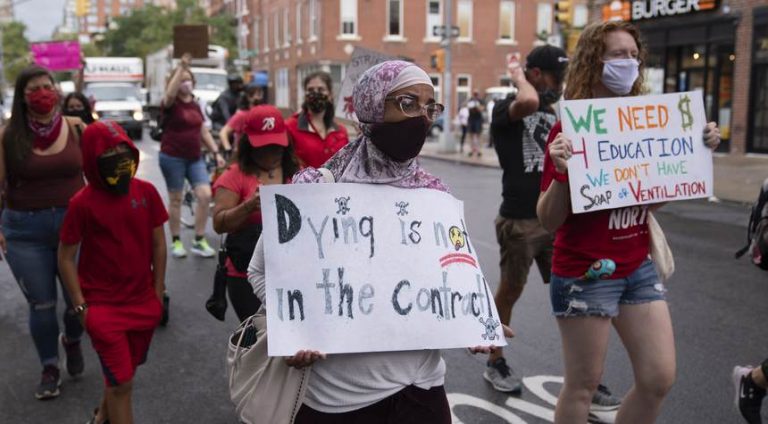
(The Center Square) Oversight Republicans have launched an investigation into how the U.S. Department of Education has handled billions of COVID-19 relief dollars, raising the alarm about the major learning loss experienced by students.

Republicans on the House Oversight Committee sent a letter to Department of Education Secretary Miguel Cardona demanding documents and answers as to why most of the money has reportedly remained unspent.

They also are requesting documents on whether teachers unions, which often pushed for a delay in reopening schools, had undue influence over federal guidance on school reopenings and thus worsened learning loss.

“We, and the American people, are due an explanation on how and whether the Department is addressing the negative effects of prolonged school closures on children enrolled in K-12 programs across the country in light of the appropriation by Congress of a total of $263 billion for the Education Stabilization Fund (ESF) over the course of three pieces of legislation,” the letter said.

“According to media reports, the vast majority of these ‘emergency’ funds remain unspent. Study after study shows the learning losses caused by prolonged pandemic school closures are compounding and preventing students from achieving academic success,” it added. “Committee Republicans plan to ensure the department is doing everything in its power to ensure states and school districts properly target funds to remedy the acute learning losses brought on by prolonged pandemic school closures.”

Lawmakers also point out that the U.S. Centers for Disease Control and Prevention worked with teachers unions on when to reopen schools. They formally requested all communications with teachers unions to find out the extent of their influence over the CDC’s decision making.

“Under the Biden Administration, the CDC went so far as to allow the American Federation of Teachers (AFT), a union that represents adults and not children, to modify the guidance to ensure schools did not fully reopen,” the letter said.

Studies show those closures had lasting negative impacts on students.

“Prolonged school closures and forced remote learning were abject policy failures,” the letter said.

“Across the board, we have witnessed sharp declines in reading and math scores from 2019 to 2021, though smaller declines in pass rates for students with access to more in-person instruction,” it continued. “Students whose classes were less disrupted in the 2020-21 school year lost only about 20 percent of math learning compared to losses of 50 percent for students who did not have access to in-person instruction.”

Republican lawmakers on the Select Subcommittee on the Coronavirus Crisis released a report in March detailing the “unprecedented access” given to teachers unions in writing COVID-19 guidance for schools. Teachers unions largely pushed for delaying reopening schools.

The news was particularly controversial since unions gave millions of dollars to Democratic candidates in 2020.

“Teachers’ unions, including AFT, donated more than $43 million to liberal groups and candidates during the 2020 election cycle,” the report said.

“The two largest unions—which both endorsed then-candidate Biden for President—have approximately 4.7 million members,” it continued. “[CDC scientist] Dr. [Henry] Walke’s testimony to the Select Subcommittee shows the Biden Administration rewarded their support with unprecedented access to the policymaking process for guidance on re-opening schools.”

American Federation of Teachers President Randi Weingarten has defended her cooperation with the CDC, arguing that she was obligated to advocate on behalf of teachers’ interests.