Federal Judge: Masked ICE Agents Violate Fourth Amendment

(Chris Dickerson, The Center Square)  A federal judge has ruled Immigration and Customs Enforcement’s practice of conducting arrests with masked, unidentifiable agents violates the Fourth Amendment’s prohibition on unreasonable seizures.

In a Feb. 19 opinion, U.S. District Judge Joseph E. Goodwin ordered the immediate release of petitioner Anderson Jesus Urquilla-Ramos, who was “arrested abruptly and without warning by a group of masked men purporting to be” ICE officers.

“Antiseptic judicial rhetoric cannot do justice to what is happening,” Goodwin wrote to begin his 34-page ruling. “Across the interior of the United States, agents of the federal government — masked, anonymous, armed with military weapons, operating from unmarked vehicles, acting without warrants of any kind — are seizing persons for civil immigration violations and imprisoning them without any semblance of due process.

“The systematic character of this practice and its deliberate elimination of every structural feature that distinguishes constitutional authority from raw force place it beyond the reach of ordinary legal description. It is an assault on the constitutional order. It is what the Fourth Amendment was written to prevent. It is what the Due Process Clause of the Fifth Amendment forbids.”

Goodwin has issued similar rulings in recent weeks, as have other federal judges in the district and across the country.

Urquilla-Ramos, a 21-year-old national of El Salvador, said he hadn’t broken any traffic laws, but an officer pulled him over because of a plastic cover on the license plate of the vehicle. He was detained at South Central Regional Jail in Charleston, but he never was cited or charged for a traffic violation.

“I will not pretend, through careful procedural language, that what is at issue here is a technical question of statutory interpretation,” Goodwin wrote. “The overarching issue is whether the federal government may deploy anonymous agents to seize persons on American streets and highways for civil violations, without warrants, without identification, and without any process before or after.

“The Constitution does not permit that. … In our constitutional republic, governmental force derives its authority from the Constitution. But that authority is not unlimited. The Government’s power is legitimate only because it is derived from the people and exercised through law by identifiable public officers answerable to the public and to the courts. The structure of the Constitution guarantees visibility.”

In his petition, Urquilla-Ramos says the group of masked men got out of an unmarked black Ford Explorer “without even a license plate” and arrested him. He said the stop, arrest and detention violated multiple constitutional, statutory and regulatory protections, including the Fourth and Fifth Amendments, the Immigration and Nationality Act and the Administrative Procedure Act.

At Thursday’s hearing, the government did not dispute the allegations in the petition.

Goodwin agreed Urquilla-Ramos’ rights under both the Fourth and Fifth Amendments were violated.

“Petitioner was arrested by unidentifiable, masked officers acting without a warrant, without articulable justification for concealing their identities, and with no mechanism by which he could identify those seizing him or meaningfully test the legality of their asserted authority,” he wrote. “In the absence of a warrant, individualized justification, or any means of contemporaneous attribution of the seizure to particular officers, the deployment of masked and anonymous agents to execute a civil arrest strips the seizure of the accountability the Fourth Amendment presupposes and renders it unreasonable. …

“The government’s mandatory detention of him is unlawful under the Fifth Amendment’s Due Process Clause and applicable statutory provisions.”

Goodwin wrote that the use of masked agents to affect a civil immigration detention under these circumstances is unreasonable and unconstitutional.

“In reaching this conclusion, I consider the court’s responsibility to interpret the Constitution, the philosophical foundation of our system of self-governance, the historical context of immigration enforcement, the historical context of the Fourth Amendment, the personal security the Amendment guarantees, the meaning of a “reasonable” search and seizure, and the government’s asserted interests in permitting masked law enforcement,” he wrote, adding the court has a responsibility to the Constitution.

“Our legal culture has developed a strange timidity about constitutional interpretation,” Goodwin wrote. “We often act as if constitutional meaning emerges only from the Supreme Court, as if district courts merely wait for appellate instruction before interpreting constitutional text.

“That approach inverts the Constitution. In arguments everywhere, lawyers reach for perfect case analogies and factual alignment as if the Constitution itself were somehow inaccessible. But the Constitution is not a compilation of case holdings. It is a text with meaning that existed before any court construed it, and it continues to bind government conduct whether or not a prior case has addressed the specific facts at hand.

“To be sure, precedent matters profoundly. When the Supreme Court or the Fourth Circuit has resolved a question, this court follows that resolution. When prior cases illuminate related questions, the court learns from them carefully. Precedent provides predictability, constrains arbitrary interpretation, reflects accumulated judgment, and promotes equal treatment. But it cannot replace the Constitution. When precedent directly resolves the question before me, that ends the inquiry. When prior cases provide clear guidance, I follow it.

“But when existing cases address different facts, different contexts, and different questions, the Constitution still applies. And the court must determine what it means through disciplined interpretation, not serial citation. This is especially true when the government employs practices so recent that doctrine has not yet addressed them. The absence of a case holding that warrantless, non-exigent, anonymous civil seizures in the interior of the United States violate the Fourth Amendment does not mean the Constitution permits them. It means the practice is new enough, and brazen enough, that no court has yet been required to state the obvious. This court is now required to say it.”

Goodwin says anonymous police stops must remain a rare exception and “must not be premised on anonymity for the mere sake of officer protection.”

“If that were so, all officers across America might take to the streets in masks, but that would run contrary to the transparency and accountability our democracy demands,” he wrote. “In a system of checks and balances, the policy of officer anonymity violates the Constitution by evading accountability and judicial review.”

Goodwin says today’s ICE’s operational practices “raise new constitutional concerns.”

“While undercover operations in organized crime or anti-terrorism units may justify limited identity concealment, routine immigration enforcement lacks such extraordinary circumstances,” he wrote. “When the public cannot readily determine who is acting under government authority, it is difficult to regard the actions as legitimate exercises of law enforcement power.

“The use of masks and other tactics that obscure official identity carries historical and semiotic weight. Authoritarian regimes have used masked security forces to intimidate and control populations. In this nation’s history, the Ku Klux Klan relied on masks to terrorize victims while concealing accountability.

“With this background in mind, the ICE tactics of anonymous enforcement in this case contravene the history, purpose and modern interpretation of the Fourth Amendment.”

Goodwin says there is no doubt Urquilla-Ramos enjoys Fourth Amendment rights. He entered the country as an unaccompanied minor and was placed under the care of the United States Department of Health and Human Services, through its Office of Refugee Resettlement. He was released from custody into the United States, where he maintains a pending asylum application, lawful work authorization, and a valid driver’s license. He has lived her for the past four years.

“Noncitizens may hesitate to assert their rights out of fear of government retaliation,” Goodwin wrote. “In practice, undocumented immigrants may endure unreasonable searches and seizures rather than risk asserting Fourth Amendment protections that may or may not apply.

In this way, the Fourth Amendment, intended by the Founders as a shield for individual liberty, is turned into a sword.”

Goodwin says the actions by masked ICE agents doesn’t just corrode the protections envisioned by the Founders. Instead, he says those protections have been “eviscerated.”

“The Founders recognized that freedom is imperiled not only when government actions lack legal justification, but also when those actions are carried out by agents whose authority is unchecked and whose actions cannot be traced. In this light, a warrantless, anonymous civil seizure like the one at issue here is merely a general warrant in modern dress.

“Masking and anonymization of officers, therefore, are fundamentally inconsistent with the historical understanding of the Fourth Amendment.”

He says allowing officers to conceal their identity effectively collapses the system.

“Officers are thereby emboldened to exercise their power in an arbitrary and oppressive manner,” Goodwin wrote. “And public trust is decimated.”

He said there is a practical danger to the practice as well, including documented cases of people posing as ICE agents to accost immigrants and even commit sexual assault.

“These incidents have generated widespread fear within immigrant communities, affecting routine activities such as sending children to school, grocery shopping and attending recreational events,” Goodwin noted. “Validating law enforcement conduct that invites impersonation and undermines public trust would contaminate Fourth Amendment principles.

“As we have seen, when officers are faceless and nameless, others can exploit that anonymity for personal gain or criminal acts. This approach poses a serious public safety risk, endangers personal security, and increases the danger of law enforcement work — because the public cannot distinguish officials from imposters.

“Individuals understandably refuse to cooperate when they cannot tell the difference between a government agent and a criminal actor. This is precisely the kind of insecurity the Framers sought to prevent when they enshrined personal security in the Fourth Amendment.”

Goodwin also says there are times when anonymity is necessary, such as an undercover officer infiltrating a criminal organization. But he says those cases are temporary and subject to later scrutiny.

“Accountability is deferred in those cases, not abandoned,” he wrote. “That is the critical distinction. What justifies concealment in genuine exigencies is that it is exceptional.

“Stops without identification must remain rare exceptions, not routine practice. …

“What is happening here bears no resemblance to those recognized exceptions. This is not an undercover operation. No specific danger has been identified that required these agents to be masked for this arrest. This is a deliberate choice to conduct routine civil immigration enforcement through masked anonymous agents operating without warrants across the interior of the United States.

“When concealment becomes policy rather than exception, the government has not invoked an exigency. It has abolished the rule that exigency was meant to qualify.”

The government’s justification for ICE officer masking is safety, but Goodwin finds that claim insufficient.

“A mask does not stop a bullet,” he wrote. “It does not deflect a blow. It provides no physical protection that the tactical equipment these officers already carry does not provide. A mask does one thing: it hides the face of the officer wearing it.

“On a public highway, in a civil arrest of a person suspected of no crime, the only purpose served by hiding an officer’s face is to prevent his identification. And preventing identification serves only to eliminate accountability. A law enforcement practice whose sole operational effect is the elimination of accountability is not a safety measure. It is a constitutional deficiency wearing the name of one.”

Goodwin says every public official who exercises power assumes some personal exposure as the price of legitimate authority.

“Judges sentence,” he wrote. “Prosecutors accuse. Officers seize. None is entitled to anonymity as a default condition of exercising state force. The officer who arrests a person stands in no different constitutional position than the judge who sentences him or the prosecutor who sought the conviction. All exercise delegated authority.

“All do so under their own names and in their own persons, because accountability is not a burden imposed on public officials as a matter of grace. It is the structural condition of their authority. Remove it and what remains is not law enforcement. It is force without a face, which is another name for the thing the Fourth Amendment was written to prevent.”

When someone cannot identify the agents who seized him, Goodwin says the seizure is “functionally unanswerable.”

“That is not a procedural gap,” he wrote. “It is the elimination of constitutional accountability itself. Masking during arrests is therefore not a neutral safety measure; it is a deliberate choice that transforms the nature of the seizure from lawful authority into anonymous coercion.”

He also says Urquilla-Ramos was not given due process.

“He was seized without warrant, given no notice of the basis for his detention and transported to a regional jail without any opportunity to be heard before a neutral decisionmaker,” Goodwin wrote. “What the government offered instead was a fait accompli: seizure, transport, imprisonment and the suggestion that review could be sought of a deprivation already complete, through mechanisms controlled by the detaining authority. That is not due process. It is the absence of it. …

“Treating the immigration process as ‘a game of detention roulette’ is inconsistent with the constitutional guarantee of due process.”

In closing, Goodwin says an “anonymous government is no government at all.”

“It cannot be held accountable,” he wrote. “A masked agent freely uses force without justifying his actions, and the public cannot name him to challenge his conduct.

“A regime of secret policing has no place in our society. Here, the government’s power is derived by the people, and the people must be able to identify the government when it acts to infringe on their liberty. Masks obscure government action and deprive the public of its Fourth Amendment protections.”

Urquilla-Ramos was represented by Omar Baloch of Raleigh, N.C., and by William Shane Wilson of Wilson Legal Group in Charleston. The federal respondents – President Donald Trump, Philadelphia ICE Field Office Director Brian McShane, U.S. ICE Acting Director Todd Lyons, Department of Homeland Security Secretary Kristi Noem and U.S. Attorney General Pam Bondi – were represented by Christopher R. Arthur and Matthew C. Lindsay of the U.S. Attorney’s Office in Charleston, and SCRJ Superintendent Christopher Mason was represented by Anthony D. Eates II and Holly J. Wilson of the West Virginia Attorney General’s office.

U.S. District Court for the Southern District of West Virginia case number 2:26-cv-00066

 

Gold Volatility and the Fed’s Next Chapter

(Money Metals News Service) Gold’s sharp swings and a new Federal Reserve chair are not separate stories. In a recent episode of the Money Metals podcast, Mike Maharrey sat down with Axel Merk, President and Chief Investment Officer of Merk Investments, to connect the dots between market turbulence and what may be a structural shift at the Fed.

Merk oversees more than $4 billion in gold and gold miners. From that vantage point, he sees not just price action, but the flows and psychology behind it.

(Interview Starts Around 8:05 Mark)

A Brutal Selloff in Context

As of February 19, during market hours, gold was still up more than 15% year to date, even after suffering one of the sharpest down days in years.

Merk pushed back on the idea that the selloff signaled a fundamental change. Instead, he described a leverage-driven unwind. Over the past year, speculators have returned to gold after chasing meme stocks, SPACs, and crypto during the prior cycle. When they pile in with leverage, reversals can be violent.

The first wave, in his view, was healthy. Weak hands were shaken out. Margin calls and higher margin requirements amplified the decline. Yet despite the volatility, his open-end product experienced inflows on down days. Retail investors, he noted, were buying dips rather than capitulating.

Demand Beneath the Surface

There is a common narrative that gold’s strength has been driven mainly by Asian demand, with U.S. investors largely disengaged. Merk’s experience suggests something more complex.

Volume in his exchange-traded gold product has picked up meaningfully. Net flows have leaned toward buying. On the physical side, wholesalers who had seen activity slow months earlier are now so busy that some are brushing up against insurance limits on daily shipments.

Institutionally, generalist investors from large fund complexes are beginning to attend meetings with mid-tier and smaller mining companies. That does not guarantee capital inflows, but it marks a shift. Gold may still be a niche market, but the marginal buyer matters. Because the market is small relative to Treasuries or equities, even modest reallocations can drive significant price moves.

Debt Goes Mainstream

The backdrop to this volatility is fiscal deterioration. Merk pointed to a Wall Street Journal cover story discussing rising national debt-to-GDP projections from the Congressional Budget Office.

While the CBO’s forecasts are often off in magnitude, the direction is clear. Deficits remain enormous. Structural spending is untouched. There is no credible path to fiscal restraint.

Concerns that once lived on the fringe are now entering mainstream conversation. Investors who never identified as “gold bugs” are increasingly aware of long-term purchasing power risks. Gold does not need to rally every day for that shift to matter.

The $8,000 Gold Debate

Responding to analysis from JP Morgan that floated an $8,000 gold scenario, Merk acknowledged the logic behind such projections.

If gold transitions from a crisis hedge to a more standard portfolio allocation, the impact could be dramatic. The precious metals market is small. Broad participation by so-called Main Street or large institutions would have outsized effects.

Merk noted that as early as 2005, he argued investors should diversify even their cash holdings. The erosion of purchasing power is gradual but persistent. Precious metals have remained a tool to hedge that risk across cycles.

Enter Kevin Warsh

The “next chapter” in the title becomes clearer with the appointment of Kevin Warsh as Federal Reserve Chair. Some observers blamed that announcement for gold’s selloff, arguing that Warsh would be more hawkish.

Merk disagreed. Rate-cut expectations did not materially change when Warsh was announced. The selloff, he argued, was driven more by leverage than by a sudden shift in policy outlook.

He described Warsh as a back-to-basics reformer. Warsh supported emergency measures during the 2008 crisis but resigned as a Fed governor when those measures were not unwound as he believed they should have been. He has criticized the Fed for facilitating deficits with prolonged zero-interest-rate policies and for drifting beyond core monetary policy into broader economic micromanagement.

At the same time, Warsh has spoken about a potential productivity boom. Interestingly, Jerome Powell began referencing productivity improvements in December, suggesting continuity rather than rupture. That continuity may explain why markets did not react violently.

Shrinking the Balance Sheet

Warsh has indicated interest in reducing the Fed’s balance sheet while allowing room for lower rates over time. Merk cautioned that the mechanics are complicated.

Both the Treasury and the Fed manage duration, creating inefficiencies. Swapping longer-duration bonds for T-bills could streamline operations but would not, by itself, shrink the balance sheet.

To truly reduce it, the Fed might need to move closer to its pre-2008 model, relying more heavily on open market operations to manage interest rates with a smaller footprint. The current system of paying interest on reserves, amounting to tens of billions of dollars annually, is politically sensitive.

Leadership matters, Merk argued. A chair who sets tone and expectations can influence communication strategy and internal discipline. Still, monetary policy cannot fix fiscal excess. At best, it can avoid amplifying it.

A Personal Gold Standard

Merk closed on a personal note that ties volatility and policy back to long-term strategy.

In 2003, he created a gold-based college savings plan, calculating how much gold to set aside annually to cover four years at an expensive university. Measured in gold, tuition effectively became cheaper over time.

Today, he owns several kilo bars, which he described as practical rather than glamorous. He also owns shares in a physical gold exchange-traded (gold ETF) product managed by his firm – Merk Investments.

For Merk, gold volatility and the Fed’s next chapter are interconnected. Market swings may grab headlines. Central bank leadership may shift. But the deeper story is about fiscal trajectory, monetary structure, and purchasing power over time.

DOJ Probes Three Michigan Schools Over Gender Instruction, Bathroom Policies

(Elyse Apel, The Center Square)  Federal civil rights investigators have opened inquiries into three Michigan public school districts over classroom content and student facility policies.

The probes target Detroit Public Schools Community District, Godfrey-Lee Public Schools and Lansing School District, the U.S. Department of Justice announced Wednesday.

Federal officials said investigators will examine whether the districts include sexual orientation and gender identity content in pre-K-12 classes and, if so, whether parents are notified of their right to opt their children out of that instruction.

The investigations will also assess whether the districts limit access to “single-sex intimate spaces,” such as bathrooms and locker rooms, based on biological sex. The Trump administration’s position emphasizes that Title IX protections are rooted in biological sex.

Assistant Attorney General Harmeet K. Dhillon of the Civil Rights Division said the department is responding to what they see as a growing trend.

“Supreme Court precedent is clear: parents have the right to direct the religious upbringing of their children, which includes exempting them from ideological instruction which conflicts with their families’ sincerely held religious beliefs,” Dhillon said. “And Title IX demands that we guard the safety, dignity, and innocence of our youngest citizens—our children—by ensuring that they have unfettered access to bathrooms and locker rooms of their biological sex.”

The investigations follow the Michigan State Board of Education’s adoption in November of a revised Michigan Health Education Standards Framework, which drew sharp debate across the state.

The updated standards include recommendations that students be taught about topics such as gender expression, sexual orientation and broader sexual health practices. The board approved the framework in a 6-2 vote despite opposition from Republican lawmakers, candidates, advocacy groups and some parents.

“I am proud of what we just did,” board President Pamela Pugh said following the vote. “We made safer spaces for students, all students.”

Many of the guidelines are new and were not found in the last Michigan Health Education Standards Framework, which was last updated in 2007.

The state argued in a statement following the approval that local districts still maintain control.

“As in previous versions, local control remains in place and parents retain the right to decide whether their children should participate in sex education instruction,” it said. “The standards remain consistent with Michigan law by providing for local school districts to notify parents in advance of any sex ed instruction.”

Critics argued that while the standards serve as guidance rather than requirements, they establish a concerning precedent for classroom instruction.

“Calling these standards ‘just guidelines’ doesn’t change the practical reality,” State Rep. Rachelle Smit, R-Shelbyville and Speaker Pro Tempore, told The Center Square in an exclusive interview in November. “Once Lansing sets a benchmark, local districts face strong pressure to adopt it, even when it clashes with the beliefs and needs of the communities they serve.”

Many opponents of the new framework have been particularly concerned with the inclusion of LGBTQ+ education guidelines. The guidelines were adopted for students as young as sixth grade, who are usually aged 11-12.

Now, the state recommends that schools for students in grades 6-8:

  • “Define gender identity, gender expression, and sexual orientation, and explain that they are distinct components of every individual’s identity.”
  • “Explain how biological sex, gender identity, and gender expression are distinct concepts.”
  • “Explain that romantic, emotional, and/or sexual attractions can be toward an individual of the same and/or different gender(s).”

The Civil Rights Division said their review will focus on whether the districts—which receive hundreds of thousands of dollars of federal taxpayer funding—are complying with Title IX and recent Supreme Court precedent. Dhillon said the department is committed to enforcing civil rights protections while ensuring schools respect parental rights and student privacy.

“This Department of Justice is fiercely committed to ending the growing trend of local school authorities embedding sexuality and gender ideology in every aspect of public education,” she said.

The Civil Rights Division emphasized the investigations are in their early stages and no findings have been made. In letters to the districts, officials said failure to comply could result in loss of federal funding. The districts have until April 6 to respond to the department’s request for information.


Haitian-Born Ex-Miami Mayor Faces Denaturalization Over Alleged Fraud

(Luis CornelioHeadline USA) The Trump administration has moved to strip the citizenship of a former North Miami mayor who allegedly became a naturalized U.S. citizen through unlawful means. 

Philippe Bien-Aime, also known as Jean Philippe Janvier, served as the Democratic mayor of North Miami from May 2019 until November 2022. The city is a hub for Haitian nationals, home to over 22,000 Haitian residents within a total population of roughly 60,000. 

According to the DOJ and USCIS, Bien-Aime obtained citizenship despite having a deportation order under his Janvier name and being ineligible for naturalization. 

He allegedly entered the U.S. under the Janvier name using a photo-switched passport and was placed in removal proceedings in 2001. 

At the time, the would-be North Miami mayor had appealed a final removal order but withdrew, suggesting he had returned to Haiti, according to USCIS. 

An investigation revealed Bien-Aime never left the U.S. and instead used the new name to marry an American citizen and obtain a green card, according to the federal government. 

USCIS also alleged the marriage was fraudulent, as he was already married to a Haitian citizen. 

“After making numerous false and fraudulent statements in adjustment and naturalization proceedings, he naturalized in 2006 under the Bien-Aime identity,” USCIS announced. 

The Trump administration said the fraud was discovered by comparing fingerprints from both applications. 

The case is being litigated in the U.S. District Court for the Southern District of Florida and is being led by U.S. Attorney Jason A. Reding Quiñones. 

Quiñones said in a press statement that the “fact that he later served as an elected mayor makes the alleged deception even more serious, because public office carries a duty of candor and respect for the rule of law.” 

Meanwhile, Bien-Aime referred questions to his attorney, Peterson St. Philippe, when asked for his reaction to the federal government’s accusations. St. Phillippe suggested in remarks to the Miami Herald that they would not be answering media questions. 

“We believe it is appropriate to address the allegations through the judicial process rather than through public commentary,” he said. “We trust that any reporting will reflect that the matter remains unresolved and that no findings have been made.” 

Oakland Mayor’s Car Thief Was Squatter, Security Refuses Comment

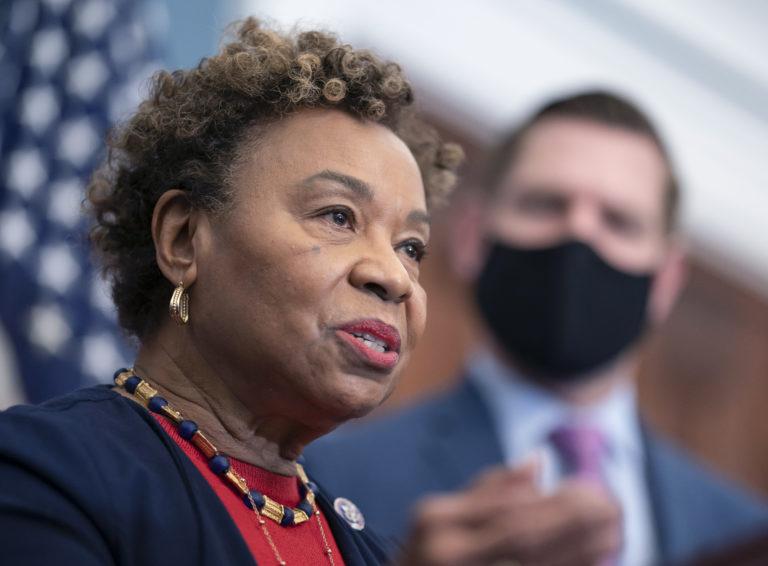
(Luis CornelioHeadline USA) The man accused of stealing Oakland Mayor Barbara Lee’s city-issued SUV had reportedly been squatting inside City Hall for days, even though taxpayers are paying $35.3 million for private security to patrol the complex.

ABC Security Services was responsible for securing City Hall over Presidents Day weekend, according to the New York Post’s California edition. Yet the suspect remained inside the government building undetected beginning Friday.

Headline USA contacted ABC Security Services on Friday evening to ask how the suspect went undetected and whether an internal investigation had been opened. A receptionist declined to answer questions, claiming that those authorized to speak with the media were “gone for the day.”

According to the Post, the suspect had holed up on City Hall’s 11th floor before snatching the keys to Lee’s city-owned $75,000 Ford Explorer directly from her office earlier this week. The vehicle was reported missing Tuesday.

The suspect reportedly “jimmied” a door near Lee’s office on Monday and exited City Hall through an unsecured parking lot entrance.

Photos published by the Post showed scratches on a door near Lee’s office. The outlet also noted that City Hall remains deserted, as many employees continue to work remotely years after the COVID-19 pandemic.

The Oakland Police Department said that the suspect was identified through security footage and was later arrested. Authorities have not publicly released his identity.

Headline USA attempted to contact the Oakland Police Department, but calls to headquarters were routed through an automated system that repeatedly looped without connecting to a representative.

The breach comes amid broader criticism of Lee, a longtime former member of Congress and supporter of policies aligned with the Defund the Police movement.

In a statement following the incident, Lee said, “No one in Oakland should have to worry about their car being stolen, whether they’re a resident, a city worker, or the Mayor.”

She added, “Public safety is a priority across our entire city.”

More Than 550 CDL Training Schools Shuttered

(Alan Wooten, The Center Square)  More than 550 training schools for commercial driver’s licenses have been closed, the U.S. Department of Transportation says.

Following 1,400 sting operations by 300 investigators across all 50 states, the Federal Motor Carrier Safety Administration found many lacked qualified instructors, had fake addresses, and did not properly train prospective drivers for things such as transporting hazardous materials.

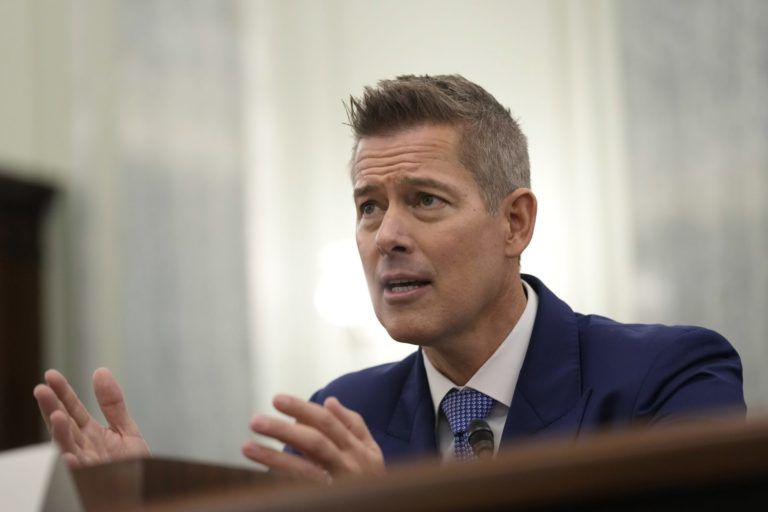
Transportation Secretary Sean Duffy said some teachers were licensed or permitted for school buses, not the trucks requiring CDLs they taught students to drive. Some driving instruction was in vehicles not matching the prospective CDL licensure.

Trucking associations told The Center Square the Transportation Department is to be commended.

The Commercial Vehicle Training Association, the nation’s largest association representing professional truck driver training programs, said through Chairman Jeff Burkhardt, “CVTA has been the tip of the spear in identifying noncompliant providers and pushing for meaningful federal oversight. Our ELDT Task Force has worked tirelessly to clean up this industry and help usher in a new era of safer roadways and greater opportunity in trucking. We commend Secretary Duffy and Administrator Barrs for transforming these long-standing concerns into real enforcement that protects the public and supports reputable schools.”

ELDT is an acronym for entry-level driver training.

From the 150,000-member Owner Operator Independent Drivers Association, President Todd Spencer in an email to The Center Square said, “Shutting down hundreds of sham trucking schools that fail to meet even basic federal standards is a significant step toward protecting the motoring public and defending the professionalism of America’s truck drivers.

“For years, CDL mills have fueled a destructive churn driven by the false narrative of a nationwide truck driver shortage. Rather than fix retention problems and working conditions, some in the industry chose to cut corners and push undertrained drivers onto the road. That approach has undermined safety and devalued the entire trucking profession.”

Proper testing was another common fault. While standards can fluctuate from state to state, some investigators had schools admitting failure to meet their respective state’s norms.

“We mobilized hundreds of investigators to visit these schools in person to ensure strict compliance with federal safety standards,” said Administrator Derek Barrs of the motor carrier administration. “If a school isn’t using the right vehicles or if their instructors aren’t qualified, they have no business training the next generation of truckers or school bus drivers.”

There were 109 training providers voluntarily removed from the Training Provider Registry upon hearing the sting operations were coming. There were 448 notices of proposed removals for schools failing to meet basic safety standards. Another 97 training providers are still under investigation for compliance.

“For too long, the trucking industry has operated like the Wild, Wild West, where anything goes and nobody asks any questions,” Duffy said. “The buck stops with me. Under President Donald Trump, my team is cracking down on every link in the trucking chain that has allowed this lawlessness to impact the safety of America’s roads. American families should have confidence that our school bus and truck drivers are following every letter of the law and that starts with receiving proper training before getting behind the wheel.”

Members of Tranny Death Cult Bailed from Jail

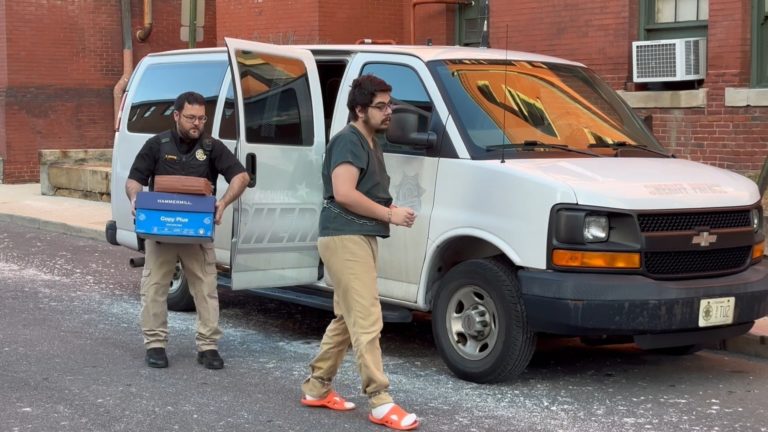
(Headline USA)  A member of a group known to outsiders as Zizians that is linked to six deaths was bailed out of jail in Maryland on Friday.

Police in Maryland connected Jack “Ziz” LaSota, Michelle Zajko and Daniel Blank to homicide investigations in California, Pennsylvania and Vermont after a landowner found them living in box trucks at the end of a snow-covered dirt road last February, according to court documents and pretrial testimony.

Blank was bailed out Friday at about noon after posting $15,000. Blank’s attorney Rebecca Lechliter declined comment. Zajko and LaSota remain in custody and are being held without bail.

Blank’s release includes conditions that he must live alone and submit to GPS tracking.

The deaths linked to the group reached six last year when a U.S. border agent was killed in Vermont. The three members were later arrested on trespassing and gun charges in the woods of western Maryland. Seven of the group’s members are jailed in three states, all awaiting trial.

Maryland state Trooper Brandon Jeffries wrote after their Feb. 16, 2025 arrests that all the “suspects involved are to be questioned regarding other crimes that have occurred across the country and have ties with the Zizians Cult.”

Called “Zizians” by outsiders, the young, highly intelligent computer scientists appear to share radical beliefs about veganism, animal rights, gender identity and artificial intelligence. Since 2022, members have been tied to the death of one of their own during an attack on a California landlord, the landlord’s subsequent killing, the shooting deaths of Zajko’s parents in Pennsylvania, and a highway shootout in Vermont that left the border agent and another Zizian dead.

Jury selection was supposed to start recently in Cumberland, Maryland, where LaSota, Zajko and Blank are charged with possession of LSD and possession with intent to deliver LSD, multiple gun violations, trespassing and hindering a police officer.

The trial was delayed until June, however, after Zajko, who also is charged with resisting arrest, fired her attorney, briefly represented herself and hired a new lawyer.

Adapted from reporting by the Associated Press

INVESTIGATION: 70% of Shreveport’s Accused Killers Have Prior Arrest Records

(Johnny Edwards, The Center Square)  Bullets tore through a Shreveport apartment, instantly killing a one-year-old child.

The two men charged with the murder had a long history of past convictions, including kidnapping, narcotics and weapons counts. Despite their criminal records they were not in prison and therefore, police and prosecutors say, fired the shots that killed Karter Martin two years ago on Feb. 11. Bullets pierced a door and window, also striking the child’s father, Isaiah Cooks, 27, who was critically injured but survived.

“If shots are fired at you, the bullets have no name on them,” Shreveport Police Chief Wayne Smith told The Center Square when asked about the case. “They’ll hit whatever is in their line of travel.”

Court records show the accused killers could have been put away long before the bullets flew. Both men were on probation at the time. One of them, Demond Baber, had been spared jail time on felony charges just 10 weeks before the shooting that killed Karter.

The baby’s killing points to a grim reality that plagues Louisiana and the nation and has some states rethinking their criminal codes. An investigation by The Center Square found recidivists – those repeat criminals who cycle in and out of jails and courtrooms – are behind the vast majority of northwest Louisiana’s homicides and those around the country.

Of 81 suspects charged with 2024 and 2025 murders in Shreveport and Caddo Parish, 70% had prior arrest records in local courts, The Center Square found. The statistic is similar but slightly higher than the national trend found the last time the issue was comprehensively studied. A 2006 report by the U.S. Justice Department’s Bureau of Justice Statistics examined 1990 to 2002 felony convictions in the nation’s 75 most populous counties. That analysis found 67% of murderers had an arrest record.

“There doesn’t seem to be very many first offenders that we run across,” Chief Smith said. “Most of the suspects will have continuous, multiple criminal records … The system, however it’s designed, is not effective in rehabilitating them or changing their behavior.”

Such was the case in dozens of 2024 and 2025 murder cases examined in Caddo Parish. Some examples:

  • Victor Bradley, 30, is accused of killing Tavarae Loneman and Erica Pitts, both found shot to death in a parked car in March 2024. Bradley had a prior record of drug possession, domestic abuse and theft. Three years before the killings he faced charges of aggravated assault with a firearm and carrying a concealed weapon by a person convicted of domestic abuse, but in a plea deal, he received just one year in prison and three years on probation. Court records show he almost had his probation revoked in 2022 over a marijuana arrest and failing to keep up with probation terms. That would have put him behind bars when the killings happened, but in a hearing Caddo District Court Judge Chris Victory opted to leave him on probation, court records show.
  • Brothers Kelvin Lewis, 39, and Larry Lewis, 45, face federal charges of killing pharmaceuticals delivery driver Billy Lee Jamison in a carjacking outside a Walgreens in January 2025. Three years earlier, Kelvin Lewis had been sentenced to one year for bringing contraband into a penal institution. Larry Lewis’ long arrest record includes drug possession, domestic abuse, theft and simple battery. At the time of the killing, records show he had narcotics and indecent behavior with juveniles charges pending in Caddo courts. In 2018, Larry Lewis pleaded guilty to misdemeanor counts of resisting an officer and criminal trespass in Shreveport City Court, receiving credit for time served.
  • Nicholas Alexander, 58, is accused of gunning down Vivian Police Officer Marc Brock as he executed a warrant for cyberstalking in November 2025. Alexander had a criminal record dating back more than three decades, having previously faced charges of assault, battery, and domestic abuse. The District Attorney’s Office dismissed an aggravated assault charge in 1997. For domestic abuse battery, a 2010 six-month sentence was mostly suspended, shortened to 10 days with Alexander placed on supervised probation for a year and a half.

But no killing in recent years illustrates the problem as starkly as the death of 1-year-old Karter at Stonevista Apartments in Stoner Hill. There were five suspects charged in connection with the case. Two men only faced firearms charges, one man had murder charges reduced down to a possession of stolen firearms charge. All five had been through Louisiana criminal courts before, four of them previously charged with violent offenses.

Deanthony Griffin, 29, the accused triggerman, was a repeat offender who pleaded guilty to simple kidnapping in 2020, sentenced to two years in prison for grabbing an ex-girlfriend by her hair and forcing her into a car.

Demond Baber, 24, also charged with second-degree murder, had been treated lightly in Caddo Parish District Court the prior November. With a possible mandatory prison sentence on narcotics and weapons charges stemming from an earlier incident, he pleaded down to a single “attempted” charge of carrying illegal weapons. He received no jail time.

With sweetheart deals like that, Lisa Reese Massingill said The Center Square’s findings don’t surprise her. Massingill runs the Facebook group Caddo Mama Bears, which tracks courts and crime and has become a sounding board for fed up residents.

“It has become so easy for (criminals) to commit a crime, and they don’t worry about consequences to their actions,” she said.

District Attorney James Stewart did not respond to an interview request from The Center Square for this story. DA spokeswoman Ivy Woodard said he was too busy to speak last week. But four days after Karter’s death in 2024, Stewart defended his office in a media interview, specifically his office’s handling of prior charges against the alleged triggerman.

Stewart told KSLA News 12 that in the simple kidnapping case, a more serious home invasion charge that could have put Griffin behind bars longer had to be dismissed, because the victim told investigators Griffin lived in the home. So there couldn’t have been a home invasion.

“I think that it’s certain people who want to target us because they don’t understand what we do,” Stewart told the TV station. “And we’re bound to follow the constitutional laws to go forward. If we don’t have the evidence, we can’t go forward.”

The Center Square examined 103 killings in Caddo Parish and Shreveport in 2024 and 2025, finding 67 cases where one or more person had been charged with murder or manslaughter. Arrest histories were compiled through District Court records, city court records in Shreveport and neighboring Bossier City, jail booking records, Louisiana prison records, police and DA’s office press releases, and statements by police and prosecutors quoted in local media. For some cases, the Shreveport Police Department and the Caddo Parish District Attorney’s Office assisted in confirming prior arrests.

The search found 48 of the 81 persons charged in killings (59%) had rap sheets that included violent prior offenses, felony and misdemeanor – including assault, simple battery, crimes against children, domestic abuse, armed robbery, resisting an officer and possession of dangerous weapons.

So of the 57 murder suspects with prior records, 84% had previously been arrested for violent offenses.

“It isn’t surprising,” Shreveport Mayor Tom Arceneaux, an attorney, said of The Center Square’s findings. “People don’t usually start at murder. They start at something else.”

Among the cases, Lederrick Gant, 38, is accused of killing his own mother, Sharon Gosey, with a .40-caliber pistol in April 2024. His background includes multiple arrests for simple battery and resisting an officer.

Jeremy Hill, 40, is charged with pulling a gun and killing Davante Johnson during an argument outside Enclave Apartments in July 2024. His prior arrests include flight from an officer, armed robbery and simple battery.

And Bradley Joel Weidner, 48, is charged with the December killing of Everett King Jr., whose body was found by fishermen under the Bayou Pierre bridge. Earlier that year Weidner had been sentenced to two years’ probation on narcotics charges out of Webster Parish, court records show. He also pleaded guilty to resisting an officer by flight in Bossier City Court, sentenced to a year on supervised probation with an order to attend an anger management course.

The victim under the bridge had been stabbed to death, according to the Caddo Parish Coroner’s Office.

Rafael Mangual, a fellow at the Manhattan Institute focusing on public safety, said he blames weak laws and inadequacies at all levels of the American criminal justice system for failing to isolate dangerous criminals from the law-abiding population.

“The nature of our violence problem is one that is rooted in repeat offending,” said Mangual, author of the book Criminal (In)Justice, which criticized the push for policing and sentencing reforms following the 2020 deaths of George Floyd, Breonna Taylor, and Rayshard Brooks. “Unfortunately, our system allows these individuals to cycle through the courts, the jails and the prisons multiple times over the course of their careers, really until they do the most terrible possible thing that they could do.”

For that reason, several state legislatures have been backtracking on some of the softer criminal justice policies of the 2010s, when reforms aimed at rehabilitation and keeping low-level offenders from taking up jail space swept the country. Louisiana is among those changing course, as are Tennessee, North Carolina, Florida and New Jersey.

In the early 2010s Louisiana had the nation’s highest incarceration rate with a state prison population approaching 40,000. In 2017, then-Gov. John Bel Edwards, a Democrat, signed off on a package of reforms that passed in the legislature with bipartisan support. Among other things, the new laws made more offenders eligible for parole, shortened maximum probation terms, reduced sentences for some nonviolent offenses, and reduced fines and fees. Nonviolent crime decreased and the state reportedly saved more than $150 million over several years through a reduced prison population.

Soon after Republican Gov. Jeff Landry took office in 2024, he called a special session to deal with violent crime. The Legislature approved two measures proposed by state Rep. Debbie Villio, R-Kenner – a truth-in-sentencing law requiring inmates to serve at least 85% of their original sentence, and another eliminating discretionary parole.

“For those of you who believe parole should be considered for a person 18 years or older who commits a heinous crime, we simply disagree,” Rep. Villio said at the Capitol during debate on the measures in 2024. “After justice reform, we still lead the nation in homicides for the 35th year in a row. We are still the fifth state in terms of crime. Members, don’t fall for the false narrative.”

Villio’s office did not respond to interview requests from The Center Square for this story.

The nonprofit JFA Institute has predicted the truth-in-sentencing measure could see the state’s prison population climb as high as 55,800 by 2034. It currently stands at about 31,000, an increase from 28,100 at the end of 2023, according to the state Department of Public Safety & Corrections. The Crime and Justice Institute predicts building more prisons could cost Louisiana taxpayers as much as $2 billon.

Already, corrections has asked for another $82 million in its budget to deal with the growing inmate population.

Wanda Bertram, spokeswoman for the Prison Policy Initiative, which opposes Gov. Landry’s new measures, said research does not bear out that longer prison sentences deter crime or lead to lower recidivism rates. She said governments waste taxpayer money by keeping offenders in prison longer than necessary.

“In my mind, small fluctuations in crime are neither a reason to all of a sudden radically change the kind of punishment that we’re giving to people who commit crimes, nor are they a reason to attribute success or failure to existing laws,” Bertram said. “You have to take the big-picture long view. And in the long view, we’re still at lows that we haven’t seen in over half a century.”

During the period The Center Square examined Shreveport’s homicides, murder numbers have been falling, mirroring national trends.

The Caddo coroner’s office reported 91 homicides in 2021, 52 homicides in 2022, and 83 homicides in 2023.

Discounting three police shootings and one killing in self defense, The Center Square counted 54 persons murdered in 2024, and 49 persons murdered last year.

Statewide, violent crimes have been on a downward trend since 2021, but the state’s overall crime rate is still 45 percent higher than the national average, according to the Council of State Governments Justice Center.

“Most people don’t believe some of the statistics. They believe they get skewed,” Massingill, who runs the Facebook group, said. “There are less homicides, but they hear gunshots every night in the city. They still don’t feel safe in their city.”

Trump Announces New Tariffs With ‘Certainty’ After Supreme Court Ruling

(Brett Rowland, The Center Square)  President Donald Trump announced a new round of tariffs on Friday after the U.S. Supreme Court invalidated most of the tariffs underpinning his economic agenda.

Hours after the Supreme Court reined in Trump’s use of a 1977 law to impose tariffs on imports from around the world, the president said he would use other laws to impose a 10% global tariff. He also said the ruling could allow for even higher tariffs under those other laws.

“Their decision is incorrect,” he said. “But it doesn’t matter because we have very powerful alternatives.”

The 10% levy on imported goods would be significantly lower for many countries that negotiated deals with Trump. The only country that got a 10% tariff was the United Kingdom. All other nations negotiated deals for 15% or higher. In return, those nations promised to invest in U.S. projects.

The president spent months warning that an adverse ruling would have sharp economic consequences. He changed course on Friday and said the new round of tariffs would keep most of his trade deals in place through other laws that allow more limited tariffs.

Treasury Secretary Scott Bessent said the administration will restructure the sweeping import taxes under other legal authorities.

“This administration will invoke alternative legal authorities to replace the IEEPA tariffs,” he said. “We will be leveraging Section 232 and Section 301 tariff authorities that have been validated through thousands of legal challenges.”

Trump also said he wasn’t looking for help from Congress. Instead, he will lean on executive authority to issue the next round of tariffs. He said several times that those tariffs would be certain. Asked whether the new tariffs would be limited to 150 days by law, Trump didn’t directly answer the question.

The high court decision effects Trump’s tariffs enacted under the 1977 International Emergency Economic Powers Act. Trump had used the law to impose tariffs on nearly every imported product from every country.

Americans ended up paying billions of dollars in taxes on those imports, according to recent research.

The Supreme Court, divided 6-3, held that the law didn’t give Trump expansive tariff powers to tax goods entering the country. Justices Clarence Thomas, Brett Kavanaugh and Samuel Alito dissented. The majority ruled that Trump’s tariffs violated the major questions doctrine, which holds that Congress must speak clearly when it grants significant powers.

“The Framers gave ‘Congress alone’ the power to impose tariffs during peacetime,” Roberts wrote for the majority.

FBI Informant Helped Run a Dark Web Site Selling Deadly Fentanyl

(Ken Silva, Headline USA) Lawyers for a man convicted of running a dark web drug market revealed Thursday that he had help from none other than the FBI.

The convict, Lin Rui-Siang, was sentenced to 30 years imprisonment on Thursday for his role in operating Incognito, a dark web site that facilitated more than $100 million in narcotics before it ceased operation in 2024—as reported Friday by tech publication WIRED. Before his sentencing, Rui-Siang’s lawyers filed court records detailing the FBI’s involvement in the illicit operation as part of a bid for leniency.

According to the lawyers, Lin was recruited by two other administrators in 2020 to help create Incognito. Two years later, an FBI informant replaced one of the administrators, and helped boost Incognito’s sales from about $1 million in total to over $103 million by March 2024.

“After [the FBI informant] got Incognito listed on DarkNetLive [REDACTED], the site’s orders increased by one hundred-fold,” Lin’s lawyers said in a Thursday filing. “Under the guise of [the informant], the FBI directly handled a substantial portion of Incognito’s operations—specifically, managing the sale of narcotics.”

According to the filing, the FBI informant was the one who pushed for Incognito to be a fentanyl hub.

“[Confidential Human Source]––backed by his FBI handlers––encouraged the sale of fentanyl on Incognito. Within months of joining Incognito, CHS tried to lift Incognito’s ban on fentanyl sales,” the filing says. “In a conversation with Mr. Lin on July 19, 2022, CHS argued that permitting fentanyl to be sold on Incognito was more consistent with the dark web’s ‘energy of free markets, allowing people to put whatever they want in their bodies it’s their choice.’”

The Justice Department, for its part, strongly disagreed with the defense’s characterization of the FBI informant’s actions. Prosecutors reportedly argued that “Lin cannot seriously dispute that the decision to allow opioid sales on Incognito was his own.”

On Thursday, Judge Colleen McMahon expressed skepticism about the FBI’s activity, but nevertheless said that Lin was still guilty of his crimes.

“I’m somewhat skeptical that the government, having infiltrated this operation, had to let it go on for as long as it did,” she said in the hearing, according to WIRED.

“The enormity of what you did outweighs any argument they could make, including the argument the government was complicit in this,” McMahon reportedly told Lin, adding that “the government is not on trial here.”

Lin has a pending appeal in the case.

Ken Silva is the editor of Headline USA. Follow him at x.com/jd_cashless.