Federal Judge Blocks Arizona Law Limiting Filming of Police

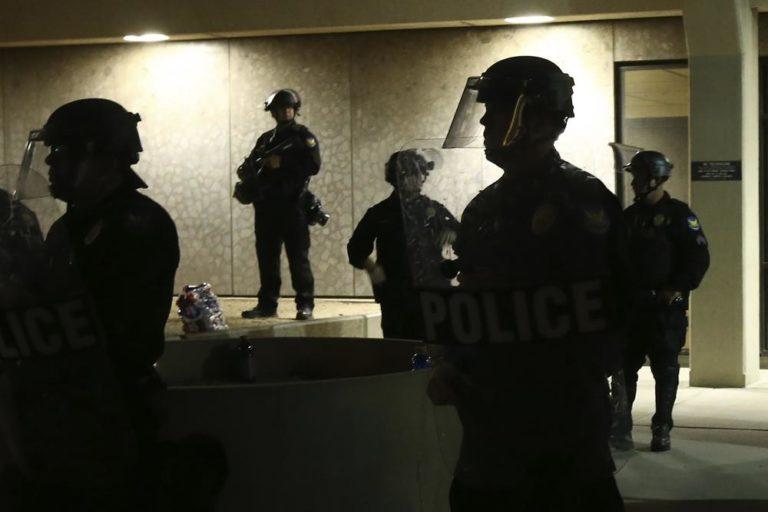
(Headline USA) A federal judge on Friday blocked enforcement of a new Arizona law restricting how the public and journalists can film police, agreeing with the American Civil Liberties Union and multiple media organizations who argued it violated the First Amendment.

U.S. District Judge John J. Tuchi issued a preliminary injunction that stops the law from being enforced when it is set to take effect on Sept. 24. The quick decision came after Republican Arizona Attorney General Mark Brnovich and the prosecutor and sheriff’s office in Maricopa County told the judge they did not plan to defend the law. They were named as defendants in the lawsuit filed last month.

The law was enacted by the Republican-controlled Legislature over unified opposition from Democrats and signed by GOP Gov. Doug Ducey on July 6.

It makes it illegal to knowingly film police officers 8 feet or closer if the officer tells the person to stop. And on private property, an officer who decides someone is interfering or the area is unsafe can order the person to stop filming even if the recording is being made with the owner’s permission.

The penalty is a misdemeanor that would likely incur a fine without jail time.

KM Bell, an ACLU attorney who lobbied against the bill at the Legislature and was in court Friday, said they were pleased the judge acted quickly.

“We are extremely gratified that Arizonans will not have their constitutional rights infringed and their ability to record the police criminalized by this law,” Bell said.

Bystander cellphone videos are largely credited with revealing some incidents of police misconduct — such as with the 2020 death of George Floyd at the hands of Minneapolis officers — and reshaping the conversation around police transparency. But Republican Arizona lawmakers say the legislation was needed to limit people with cameras who deliberately impede officers.

Tuchi gave the Legislature a week to decide whether it wants to defend the law. The ACLU and media groups are seeking a permanent injunction.

Republican Rep. John Kavanagh, a retired police officer who sponsored the law, said he was “taken by surprise” when Brnovich did not move to defend the law.

“I was assuming that the attorney general would do his job as the state’s attorney and defend a law passed by the state,” Kavanagh said. “We are trying to get together with the (House) speaker and the (Senate) president and see if the Legislature will defend it, but there’s also the possibility of some outside group possibly stepping up.”

Brnovich’s office is charged with defending state laws. But in this case, his spokesperson, Katie Conner, said that because the attorney general does not have enforcement authority in these types of cases, they were the wrong party to sue.

Matt Kelley, an attorney who represented the news organizations that sued, argued in his court papers that Brnovich is not correct. He noted that by law the attorney general can step in and enforce laws that county prosecutors normally would.

Kavanagh argued that allowing people to record police up close while they are doing enforcement, like making arrests or dealing with a disturbed person, could put officers in danger, and noted that he made several changes to address the concerns of the ACLU. Those include changing the restriction from 16 feet  to 8 feet.

“So I think this is unbelievably reasonable,” he said. “And if what’s causing the problem is my limiting it to just these law enforcement characters in all encounters, how ironic that trying to limit the scope of government reach is unconstitutional. But I guess that’s the world we live in.”

Kelley said that the law was very problematic. He praised Tuchi for quickly agreeing that the law did not meet the requirements needed to restrict First Amendment protections for filming law enforcement activities.

“There wasn’t anything in the law that said the person recording has to be interfering with law enforcement or harassing officers or otherwise doing something that would create a danger or a distraction,” Kelley said. “All it prohibited was simply standing there, making a video recording. And since that’s activity that’s protected by the First Amendment, this law was on its face unconstitutional.”

The original legislation was amended so it applies only to certain types of police actions, including questioning of suspects and encounters involving mental or behavioral health issues. It exempts people who are subject to the police interaction, or in a stopped car.

In similar cases, six of the nation’s dozen U.S. appeals courts have ruled on the side of allowing people to record police without restriction. Soon after the Arizona law was signed, the 10th Circuit Court of Appeals in Denver ruled that a YouTube journalist and blogger’s lawsuit against a suburban Denver police department could move forward. The blogger said an officer blocked him from recording a 2019 traffic stop.

The Phoenix Police Department, which oversees the nation’s fifth-largest city, has been criticized in recent years for its use of force, which disproportionately affects black and Native American residents.

Reporters and photographers said this law will make it nearly impossible to do their job, especially at massive events like protests. The outlets that sued include Phoenix Newspapers Inc., parent of The Arizona Republic; Gray Television; Scripps Media; KPNX-TV; Fox Television Stations; NBCUniversal Media; the Arizona Broadcasters Association; States Newsroom; Arizona Newspapers Association; and the National Press Photographers Association.

Adapted from reporting by the Associated Press
Kamala’s Step-Daughter Bares Breasts on NY Fashion Week Catwalk

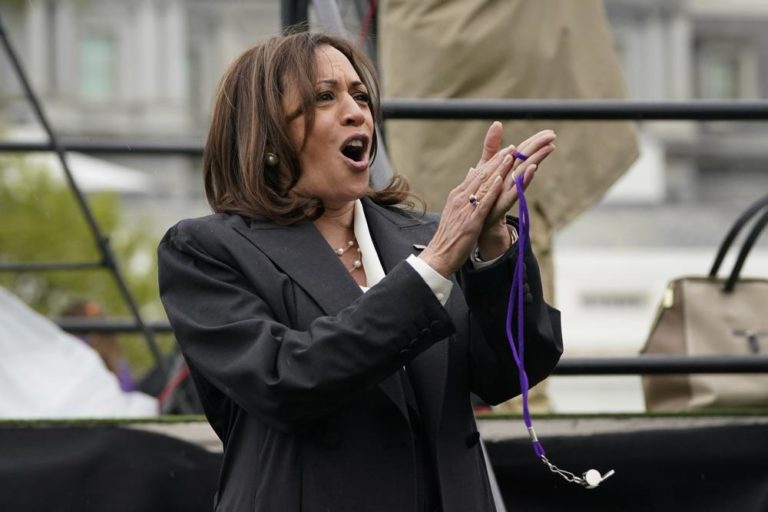
(Jacob Bruns, Headline USA) Vice President Kamala Harris’ step-daughter, Ella Emhoff, made the VP proud this weekend, strutting topless down the runway at New York fashion week, the Gateway Pundit reported.

Emhoff, 23, become a model the week following the inauguration, riding the coattails of her mother’s newfound fame. She has since modeled for numerous high-end brands, and has now taken to exposing herself in public.

Emhoff is the daughter of Douglas Emhoff, who holds the unfortunate title of being the first second gentleman in United States history. According to Wikipedia, he is also the first Jewish spouse of a vice president.

He was previously married for 16 years, but left his ex-wife in 2008–with whom he had two children–and married Kamala six years later.

The absence of a real mother seems to have damaged Ella in numerous ways. Instead of settling down to start a family, she has decided to try her hand in the fashion and modeling industry with the help of her family’s newfound fame.

Yet apparently the only way she could get attention was by exposing herself in public and on camera.

Upon becoming famous, Emhoff said she was shocked, calling it “just the wildest thing.”

She also suggested that she was never particularly good at her job, yet rose to the top anyway.

“Growing up, I never saw myself as someone stylish, at all! Obviously, I loved fashion and cared a lot about it,” she said. “But I was really into doing my own thing and being really comfortable in my own body, you know? I never saw myself as a ‘fashion person.’ ”

Of course, Ella is not the only one in the family to benefit from Kamala’s newfound status.

Despite a long history of oratorical stumbles, gaffes and unscripted embarrassments revealing her foolishness, Kamala’s 2019 book The Truths We Hold yielded $325,000 from royalties, and her children’s book Superheroes Are Everywhere raked in $130,000.

Border Patrol Sees Record Drug Seizures, Including Baby Wipes, Rainbow Pills

() U.S. Customs and Border Protection agents are seizing record amounts of fentanyl and meth in Arizona and Texas brought in by Mexican cartel operatives and foreign nationals trying to enter the U.S. illegally.

In just five separate inspections ahead of Labor Day weekend, for example, officers seized 625,000 pills in Nogales, Arizona, which borders Sonora, Mexico, said Michael Humphries, CBP director of the Nogales Port of Entry.

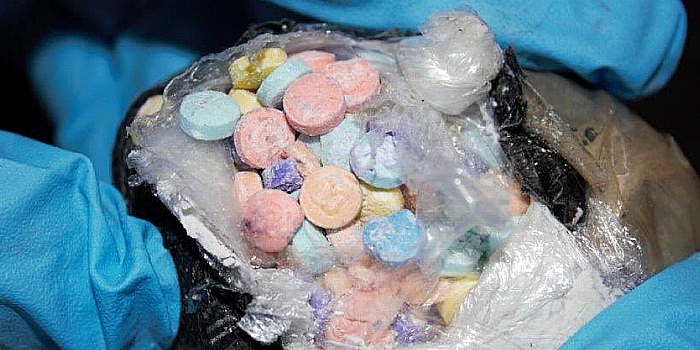
Among them, officers seized 12,000 rainbow-colored fentanyl pills, four pounds of fentanyl in powder form, 34 pounds of methamphetamine and five pounds of marijuana.

On Aug. 22, agents seized the second-largest amount of fentanyl in U.S. history at the Nogales Port of Entry.

Through an inspection of an 18-wheeler, they discovered in a trailer floor compartment 1.27 million pills and 104 pounds of cocaine. In the vehicle’s floor, they also found about 300,000 pills, two pounds of fentanyl powder, 13 pounds of heroin and 10 pounds of cocaine.

The record amounts confiscated were reported after seizures of fentanyl at the southern border jumped nearly 200% in July.

In that month alone, federal agents seized more than 2,100 pounds of the illicit drug, the highest amount seized in at least the last four fiscal years. It was up 202% from the 640 pounds of fentanyl seized in June.

In April, agents seized 1,300 pounds of the drug, according to CBP data.

In the El Paso Sector of Texas, CBP Director of Field Operations Randy Howe said agents in his sector alone confiscated more than 3,000 pounds of cocaine, 133 pounds of marijuana, made 42 arrests, and confiscated an estimated street value of $23.1 million worth of narcotics in seven days this month.

On Sept. 1, agents seized 545 pounds of cocaine at the Port of Laredo worth an estimated street value of $4 million.

Laredo officers also recently uncovered $11.8 million worth of cocaine that was described as a shipment of baby wipes.

A driver of a 2016 Stoughton trailer manifesting a shipment of baby wipes was identified for inspection at the Columbia-Solidarity Bridge attempting to enter Texas from Mexico. The driver was flagged by a canine and non-intrusive inspection system examinations.

Once officers inspected the cargo, they discovered 1,935 packages containing 1,532.65 pounds of cocaine.

Port Director Alberto Flores said the seizure “is a prime example of border security management and how it helps prevent dangerous narcotics from reaching our communities.”

But not all narcotics being smuggled into the U.S. are discovered.

Fentanyl is the leading cause of death of adults in the U.S. between the ages of 18 and 45. In 2020, 77% of all teen overdose deaths involved fentanyl, according to a study published by JAMA.

Two milligrams, the weight of a mosquito, is lethal. A teaspoon holds about 5,000 milligrams, enough to kill 2,500 people. One pound of fentanyl, or 453,592 milligrams, could kill 226,796 people.

Inspector General: Feds Didn’t Properly Vet All Afghans Who Entered U.S.

() The Department of Homeland Security and U.S. Customs and Border Protection “cannot be sure they properly screened, vetted, and inspected all evacuees” from Afghanistan admitted into the U.S. after the Biden administration withdrew U.S. troops last August, an Inspector General’s Office audit has found.

The report was released just before Sunday’s 21st anniversary of the Sept. 11, 2001, terrorist attacks, which prompted the U.S. to engage in a 20-year war in Afghanistan.

After American servicemen and women died in Afghanistan over two decades of war and after the administration withdrew from the country last year leaving Americans behind, the administration facilitated thousands of Afghans entering the U.S. who weren’t properly vetted, some of whom were deemed a “risk to national security,” the report found.

According to a 34-page redacted report, DHS “encountered obstacles to screen, vet and inspect all evacuees during the recent Afghan crisis.” The OIG made two recommendations for DHS to follow, which it rejected, and the White House disputed its findings.

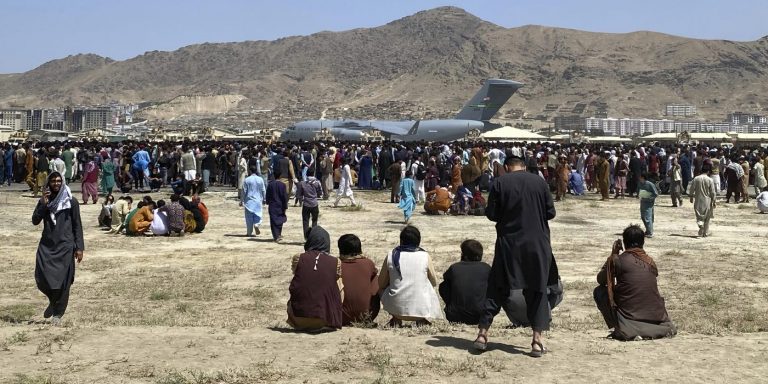
The U.S. admitted more than 79,000 Afghan nationals between July 2021 and January 2022 as the U.S. turned Afghanistan over to the Taliban. Homeland Security Secretary Alejandro Mayorkas was tasked with coordinating federal agency efforts to screen Afghans seeking refuge into the U.S. and admit or prohibit entry. The OIG conducted the audit to determine the extent to which DHS screened, vetted and inspected them.

After meeting with more than 130 DHS officials, the OIG determined DHS “encountered obstacles to screen, vet, and inspect all Afghan evacuees arriving as part of Operation Allies Refuge (OAR)/Operation Allies Welcome (OAW). Specifically, U.S. Customs and Border Protection (CBP) did not always have critical data to properly screen, vet, or inspect the evacuees.”

Some of the information used to vet them through federal databases, “such as name, date of birth, identification number, and travel document data, was inaccurate, incomplete, or missing.” The audit also determined that CBP “admitted or paroled evacuees who were not fully vetted into the United States.”

The OIG found that DHS didn’t have a list of Afghan evacuees “who were unable to provide sufficient identification documents,” or have “a contingency plan to support similar emergency situations.” As a result, it “may have admitted or paroled individuals into the United States who pose a risk to national security and the safety of local communities.”

The last U.S. troops left Afghanistan Aug. 30. During the evacuation, an explosion killed 13 U.S. Marines, the majority of whom were from California. Of the thousands of Americans left stranded in Afghanistan, at least 32 were from California including young students.

“The safety and the security of the American people is the highest priority for the U.S. Government,” the OIG report stated.

“Preventing criminals, suspected terrorists, or other nefarious actors from entering the United States requires thorough screening and vetting” int continued. “CBP’s use of incomplete or inaccurate data would not have yielded positive matches from intelligence databases if the individuals had derogatory records under a different name or DOB.”

The names, birth dates, identification numbers, and travel data processed for Afghans through federal databases were “inaccurate, incomplete, or missing,” and CBP processed evacuees with “questionable names and dates of birth,” yet still allowed them into the country.

Among them, 417 had unknown first names, 242 had unknown last names, and 11,110 had Jan. 1 as their birth date. The first of the year is typically assigned when an actual date is unknown, the report explained.

Likewise, 36,400 used a “facilitation document” that CBP couldn’t explain, 7,800 records had “invalid or missing document numbers,” at least 35 Afghans flew to the U.S. without proper clearance, and DHS failed to fingerprint 1,299 Afghans before they entered the U.S., according to the audit.

“DHS and CBP cannot be sure they properly screened, vetted, and inspected all evacuees. We found they paroled at least two individuals into the United States who may have posed a risk to national security and the safety of local communities and may have admitted or paroled more individuals of concern.”

DHS responded, saying, “CBP provided evidence to the OIG that all individuals were screened, vetted, and inspected” and “provided documentation and evidence that it (1) established recurrent vetting processes for all paroled Afghan nationals and (2) will carry out vetting for the duration of their parole period.”

It also said the “emergency situation was a rare and extraordinary evacuation effort, which involved multiple agencies.”

White House Press Secretary Karine Jean-Pierre said the report “did not take into account the key steps in that rigorous … and multi-layered screening and vetting process the U.S. government took before at risk Afghans were permitted to come to the U.S. … This report is not accurate.”

DHS requested the OIG consider its recommendations to be resolved and closed. The OIG said it “will close the recommendation when CBP provides evidence the Department confirmed the identification of all evacuees and screened and vetted them accordingly.

“CBP must show proof that every evacuee paroled into the United States during OAR/OAW went through recurrent vetting throughout their parole period” and DHS must develop “a contingency plan to better prepare for future similar emergency situations.”

South Carolina Senators Reject a Near-Total Abortion Ban

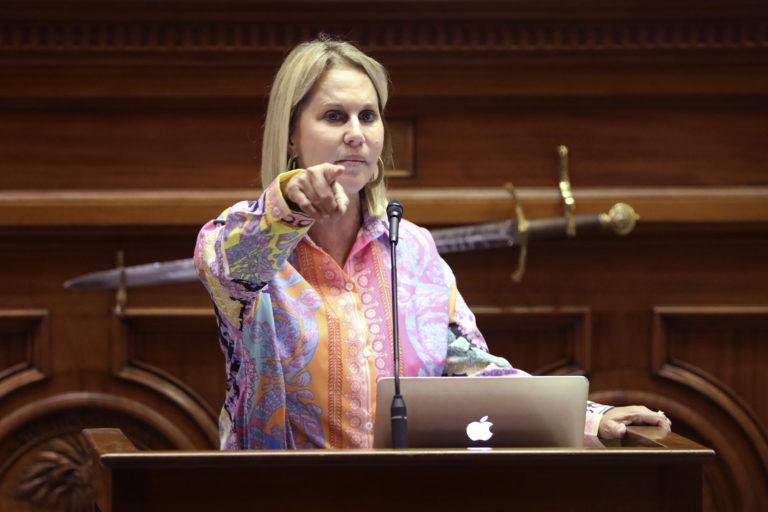
(Headline USA) South Carolina senators rejected a ban on almost all abortions last week after five Republicans refused to support it.

The meausre arose as part of a special session called in the aftermath of the U.S. Supreme Court decision that overturned the federal abortion mandate established by Roe v. Wade.

The 30 Republicans in the 46-member chamber had a majority to pass the ban, but did not have the extra votes to end a threatened filibuster by Republican Sen. Tom Davis.

Davis, the chief of staff for former Gov. Mark Sanford before being elected to the Senate in 2009, was joined by the three Republican women in the Senate, a fifth GOP colleague and all Democratic senators to oppose the proposed ban.

Davis said he promised his daughters he would not vote to make South Carolina’s current six-week abortion ban stricter because women have rights, too.

“The moment we become pregnant we lost all control over what goes on with our bodies,” Davis said, recalling what his daughters told him. “I’m here to tell you I’m not going to let it happen.

After a recess to work through their options, Senate Majority Leader Shane Massey conceded the abortion ban likely couldn’t pass.

“We were never going to pass a total abortion ban,” Massey said. “We never had the votes to pass even what the House passed.”

Senators did pass a few changes to the six-week ban, including cutting the time that victims of rape and incest who become pregnant can seek an abortion from 20 weeks to about 12 weeks and requiring that DNA from the aborted fetus be collected for police. The bill goes back to the House, which passed a ban with exceptions for rape or incest.

South Carolina’s six-week ban is currently suspended as the state Supreme Court reviews whether it violates privacy rights. In the meantime, the state’s 2016 ban on abortions 20 weeks after conception is in effect.

South Carolina’s General Assembly was meeting in a special session to try to join more than a dozen other states with abortion bans.

Most of them came through so-called trigger laws designed to outlaw most abortions when the U.S. Supreme Court threw out the constitutional right to end a pregnancy in June. Indiana’s Legislature passed a new ban last month that has not taken effect.

The debate started Wednesday with the three Republican women in the South Carolina Senate speaking back to back, saying they couldn’t support the bill unless the rape or incest exceptions were restored.

Sen. Katrina Shealy said the 41 men in the Senate would be better off listening to their wives, daughters, mothers, granddaughters and looking at the faces of the girls in Sunday School classes at their churches.

“You want to believe that God is wanting you to push a bill through with no exceptions that kill mothers and ruins the lives of children—lets mothers bring home babies to bury them—then I think you’re miscommunicating with God,” Shealy said before senators added a proposal allowing abortions if a fetus cannot survive outside the womb. “Or maybe you aren’t communicating with Him at all.”

Massey helped broker the compromise among Republicans that briefly returned the exceptions to the bill. He pointed out state health officials recorded about 3,000 abortions in 2021 within the first six weeks of a pregnancy.

“Heartbeat is great, but this I think is better,” Massey said. ”I don’t think abortion should be used as birth control.”

Senate Minority Leader Brad Hutto said Republican women stood up for all women in South Carolina, while Republican men let them down. He said Democrats didn’t want any changes to current laws.

“There may be a sentiment that this is the same as what we already had. It’s not. It’s worse in many regards,” Hutto said.

Republican Gov. Henry McMaster, who has said before he would be happy if there were no abortions in the state, thought the Senate version struck an appropriate balance, governor’s spokesman Brian Symmes said

“It is the governor’s hope that the House and Senate will soon come to an agreement and send a bill to his desk for signature,” Symmes said.

Republican Sen. Sandy Senn, who didn’t vote for the six-week ban in 2021, said a total ban would be an invasion of the privacy against every woman in the state.

“If what is going on in my vagina isn’t an unreasonable invasion of privacy for this legislature to get involved in, I don’t know what is,” Senn said.

Adapted from reporting by the Associated Press
MSNBC Anchor Doesn’t Buy VP’s Claims of the “Secure Border”

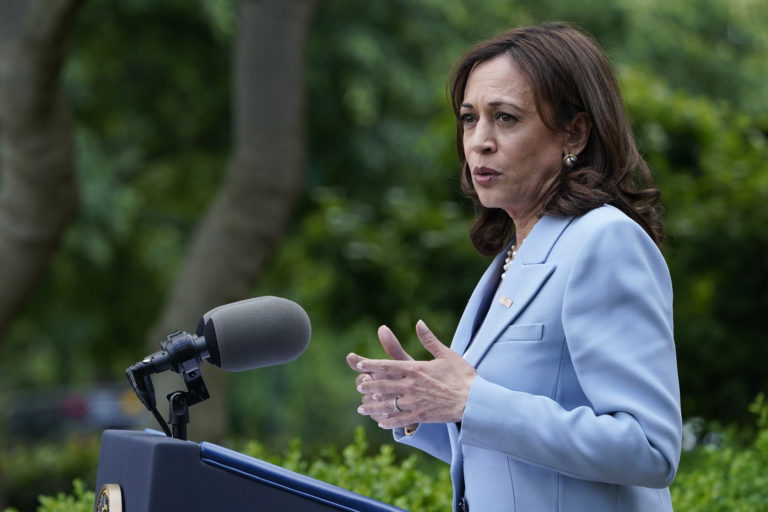
(Molly Bruns, Headline USA) In an interview with vice president Kamala Harris, MSNBC anchor Chuck Todd had difficulty swallowing the claim that the United State’s sourthern border is secure.

According to The Daily Wire, Harris was featured in a “Meet the Press” broadcast, where she asserted that while the immigration system is broken, the border is secure.

Historic numbers of migrants have been crossing the southern border since President Biden took office, a fact which Todd pointed out.

“Final topic here. We’re here in Texas, I want to ask you about the border. Would you call the border secure?” Todd asked.

“I think that there is no question that we have to do what the president and I asked Congress to do. The first request we made, pass a bill to create a pathway to citizenship,” Harris said.

“The border is secure, but we also have a broken immigration system, in particular over the last four years before we came in, and it needs to be fixed.”

Todd then pointed out that in 2022, 2 million people will have crossed the border. This will be the first time in American history this has happened.

“We have a secure border in that that is a priority for any nation, including ours and our administration,” Harris continued, pivoting then to attempt to blame the present situation on former President Donald Trump. “But there are still a lot of problems that we are trying to fix. Given the deterioration that happened over the last four years.”

Harris called for a “pathway for citizenship,” and agrued that the only reason this has not already been done is due to Republican leadership in border states.

“We also have to put in place a law and a plan for a pathway for citizenship for the millions of people who are here and are prepared to do what is legally required to gain citizenship. We don’t have that in place because people are playing politics in a state like this [Texas] and in Congress — by the way, you want to talk about bipartisanship, on an issue that at one time was a bipartisan issue. Both in terms of Republican senators and even presidents.”

California Bails Out Berkeley Journalism Program, Promises More Minorities

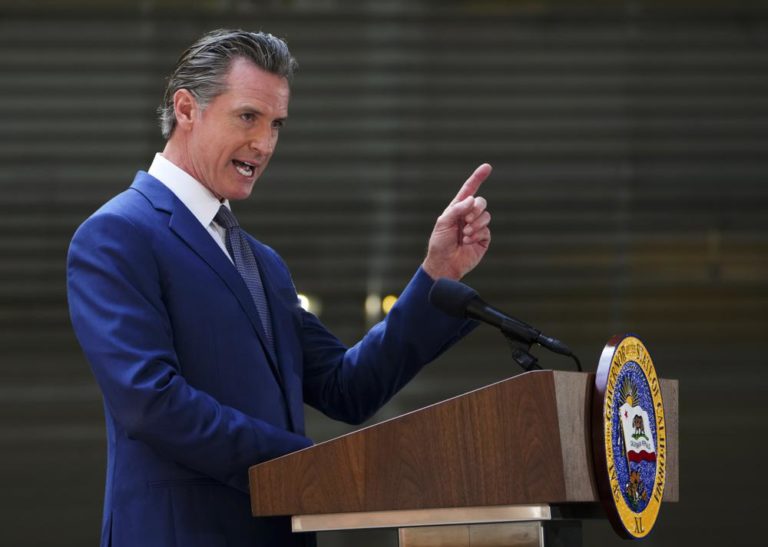
(Molly Bruns, Headline USA) California Governor Gavin Newsom has dedicated $25 million in state funds to UC Berkeley’s Graduate School of Journalism, in order to “support and strengthen local reporting in underserved and historically underrepresented areas across the state.”

According to The Post Millennial, Geeta Anand, dean of the program, explained why the money would be used in this particular way in a post on Twitter.

“We’ve got three reasons for taking this on,” she posted. “1: we all see the world through the prism of our own lived experiences. So, who our storytellers are matters. If we don’t have a diverse group of people becoming journalists, then we miss stories that matter.”

She goes on, touting the program’s scholarship programs and explaining that the influx of money will also forestall “corruption and disinformation.”

“Democracy is in trouble,” she wrote in a second tweet. “We need to put journalism to work to protect it.”

“That’s what this project aims to do by putting talented early career journalists into local news organizations around the state.

Anand concluded by saying that it is time for the government to invest in journalism as a “public good.”

“This may reset the debate about the role of the public sector in journalism,” Anand said. “Private philanthropy can only do so much, and billionaire owners aren’t a solution.”

“How states and communities can support journalism as a public good needs to be at the center of our thinking,” she concluded.

The spending raised eyebrows for several reasons—particularly the allocation of such a large sum of money when Californians are suffering under inflation.

Many also thought that government-funded journalism could lead to some problems.

Seattle Teacher Strike Persists, No Classes Monday

(Headline USA) Students in Seattle on Monday will miss a fourth day of school as teachers strike over pay and classroom support.

The school district Sunday afternoon announced the cancellation of Monday classes and said negotiations with the union were ongoing.

“We are optimistic an agreement will be reached soon so that students can begin school,” Seattle Public Schools said.

The strike began Wednesday, what was supposed to be the first day of school for the approximately 49,000 students in the district.

Striking teachers said their main concern was educational and emotional help for students, especially those with special needs or learning difficulties. The Seattle Education Association said 95% of its voting members approved the strike.

In Seattle, the school district had offered pay raises of an additional 1% above the 5.5% cost-of-living increase set by state lawmakers — far less than the union says it wants — plus one-time bonuses for certain teachers, including $2,000 for third-year Seattle teachers earning an English language or dual-language endorsement.

The union says it is opposing the district’s efforts to eliminate staffing ratios for special education students, saying that will mean more work for general education teachers and special education teachers alike.

Districts around the country have faced labor challenges as the pandemic put extraordinary stress on teachers and students.

Adapted from reporting by the Associated Press
SELLERS: Can 9/11 Help Reorient a Society That Has Lost Moral Bearings?

(Ben Sellers, Headline USA) What does it mean when we tell ourselves that the more things change, the more they remain the same?

Certainly, the one true constant in life is the impermanence of everything in it—a lesson that comes only with the wisdom of experiencing loss and transition.

To what extent, though, can we find solace in embracing such ephemerality?

With the latest anniversary of 9/11, I have found an interesting phenomenon beginning to emerge:

On one hand, the remembrance of that day’s events from 21 years ago remains a fixture of sorts—a cultural touchstone for those who lived through it.

And yet, the ever-evolving circumstances of the world around us help to shape further our understanding of its profound historical impact—at the risk of diminishing what it meant at the time.

AN EVOLVING LEGACY

The context in which we commemorate each 9/11 anniversary seems to add another layer to its significance in the dynamically unfolding narrative about rise and fall of the American Empire.

The 11th-anniversary 9/11 attack on America’s Libyan embassy in Benghazi, for example, revealed to us the callousness of the Obama–Biden–Clinton administration, which was more concerned over the political fallout than it was the loss of four lives—including that of Ambassador Chris Stevens, who likely died in a most horrific fashion.

“What difference, at this point, does it make,” asked then-Secretary of State Hillary Clinton in one of the GOP-led oversight hearings that followed.

Last year, on its 20th anniversary, 9/11 officially crossed over a midpoint for me. More years have now passed since the 2001 terrorist attacks than I had lived when they happened.

My youthful illusions of American exceptionalism and innocent naïveté regarding our government’s benign intentions, which first began to fade on that day, have forever vanished.

While tapping into the raw feelings of empathy, compassion and shared humanity that I wrote about in my first 9/11 column, two years ago, remains my top aspirational goal, it grows harder to do by the year.

When I posted that column, it was a time for hope in the face of fear. The pandemic had torn down all that we held dear—but like the Bruce Springsteen song I use in my perennial 9/11 tribute video on social media, there was a belief that we could, under the leadership of then-President Donald Trump, “rise up” out of the ruins.

That same year, America’s mayor, Rudy Giuliani, let us down big-time by failing to play his hand properly on the Hunter Biden laptop and by turning Trump’s legitimate post-election legal challenges into something of a clown show.

Since then, each passing day under the Biden administration feels like a new 9/11, but with all hope of deliverance and redemption beginning to dissolve.

FROM TERRORISTS TO TYRANTS

Last year’s 9/11 column fittingly came just weeks after the catastrophic withdrawal from Afghanistan, putting an end to the 20-year war than began with the 2001 terrorist attacks while conceding, for America and its Western allies, a resounding military defeat.

Still defiant, I resolved to begin a new tradition of listening to a 1964 speech by then-California Gov. Ronald Reagan about the need for vigilance and perseverance in the fight against a the Left’s encroaching radicalism.

The 30-minute speech chillingly foreboded the downward descent of Democrats from a party representing classical liberalism to a quasi-socialist authoritarianism.

But like the fight in Afghanistan, Reagan’s fight against tyranny now seems like a failed mission in the making against the divisive demagoguery of the Biden administration.

In November, Americans must endure another “United 93 election,” to borrow from Claremont Institute scholar Michael Anton’s famous 2016 column about the longshot gambit to stake the nation’s survival on Donald Trump as a sort of last resort.

But this time, it’s as if the United 93 hijackers have succeeded in persuading half the plane that those putting up the resistance are the true terrorists.

It feels as though the opportunity for desperate acts of last-minute heroism and self-sacrifice on behalf of the greater good has come and gone. All that remains is self-preservation.

THE END OF SOMETHING?

Fittingly, this year’s 9/11 anniversary comes amid the backdrop of even more epochal changes.

Last week’s passing of Queen Elizabeth II, following her 70-year reign, may not relate in any direct way to America’s political turmoil, but she was for many around the world a symbol of stability—a constant that tied us to our shared sense of history, of custom, grace, civility and dignity that were remnants of a bygone era.

Her death left us all as orphans in a world untethered from the noble qualities that once defined and united us.

Shockingly, far too many West-hating figures in the mainstream media used the opportunity to tastelessly attack the queen, turning Britain’s national mourning into a platform for spewing their own racial and cultural grievances.

The ramifications of this changing of the guard, so to speak—both with the United Kingdom’s leadership under King Charles III moving us closer to a globalist New World Order and with the eroding foundations of virtues like classical liberalism and democracy—put the world in shakier stead than many have ever witnessed in our lifetime.

While the economic conditions are the worst we have endured in 40 years, since the start of the Reagan administration, the current threats to freedom make the fate of our civilization now more precarious than it has been in at least 80 years, since before the queen’s coronation.

‘THIS TOO SHALL PASS’

In each prior case, when presented with such existential crises, great leaders have risen to deliver us.

Thus, we can do nothing else but maintain our trust that goodness and righteousness have a way of self-correcting when the path of humankind strays—provided we still know which direction we’re supposed to be going.

Perhaps it is not the nature of change that is constant in the world after all, but rather our ability to remember the past and keep it in perspective.

This year, I look not to Bruce Springsteen, nor Rudy Giuliani, nor the great leaders of our immediate past, like Ronald Reagan and Queen Elizabeth, to find my perspective on how to approach the future, but to a more distant history.

It was 163 Septembers ago that Abraham Lincoln, with the nation on the cusp of Civil War I, first popularized the phrase “this too shall pass” during an 1859 campaign stop at the Wisconsin state fair.

Lincoln attributed the phrase to Jewish folklore, vaguely alluding to the story of King Solomon, although there is no biblical reference to that phrase specifically.

“How much it expresses! How chastening in the hour of pride; how consoling in the depths of affliction!” the soon-to-be-Great Emancipator said.

“…And yet, let us hope, it is not quite true,” he continued. “Let us hope, rather, that by the best cultivation of the physical world, beneath and around us, and the intellectual and moral worlds within us, we shall secure an individual, social, and political prosperity and happiness, whose course shall be onward and upward, and which, while the earth endures, shall not pass away.”

For Lincoln, like the victims of 9/11 and the brave soldiers sent to avenge them, it would require the ultimate sacrifice to ensure that those words live on in our hearts and memories.

Although the circumstances may perpetually shift and present new, heretofore unseen threats and adversities, nothing can destroy our faith that such a society is attainable—unless we, ourselves, allow it to be lost.

Ben Sellers is the editor of Headline USA. Follow him at truthsocial.com/@bensellers.

Americans Face “Hardship” from Rising Inflation, Particularly Among Middle Class

0

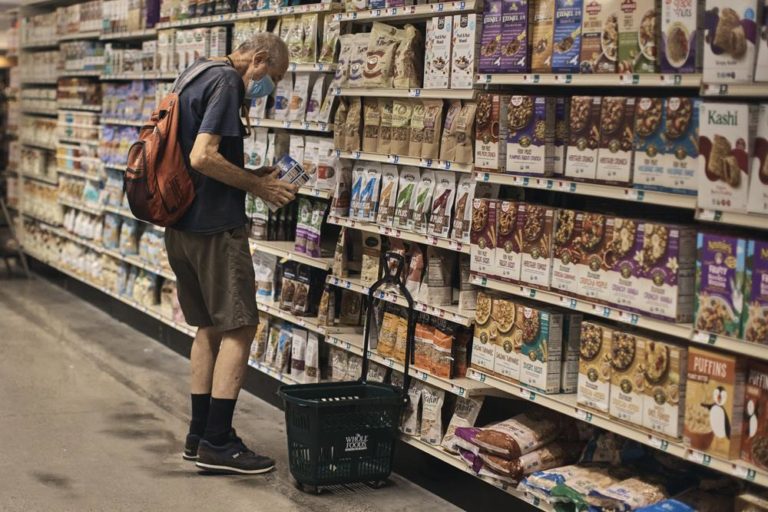
(Casey Harper, The Center Square) The majority of Americans say inflation is causing them financial hardship, according to a new poll.

While the Biden administration heralded a pause in the rise of inflation for July, a new Gallup poll indicates that Americans are feeling the pain more now than at the beginning of this year.

“A majority of Americans, 56%, now say price increases are causing financial hardship for their household, up from 49% in [Jan.] and 45% in [Nov.],” Gallup said. “The latest reading includes 12% who describe the hardship as severe and 44% as moderate.”

The survey was conducted Aug. 1-22 after that pause in inflation. More federal data will be released this month showing whether inflation took off again in Aug. or remained steady.

Inflation is reportedly hitting poorer Americans hardest.

“Lower-income Americans are more likely than others to be experiencing severe hardship – 26% of those whose annual household income is less than $48,000 say prices are causing severe hardship for their families,” Gallup said.

“That compares with 12% of middle-income Americans and 4% of upper-income Americans. Lower-income Americans are about as likely now as last fall to say they are experiencing either severe or moderate hardship – 74%, compared with 70% in Nov.”

The survey found middle-income Americans are feeling the pain as well.

“Middle-income [63%] and upper-income [40%] Americans remain significantly less likely than lower-income Americans to say they are experiencing hardship,” Gallup said.

“However, sharply more middle- and upper-income Americans are struggling now than were last [Nov.]. The increase has been greater among middle-income Americans – up 17 percentage points than among upper-income Americans – up 12 points.”

Americans are cutting back on spending, traveling less and trying to up their income to deal with the higher prices.

“The most common action, mentioned by 24% of those experiencing hardship, is to reduce spending, including buying less in general or buying only essential items,” Gallup said.

“Another 17% say they are traveling less or canceling vacations, while the same percentage indicate they are driving less or trying to use less gas.”

There are other common strategies for dealing with higher prices.

“[Strategies] are buying cheaper goods or generic brands of products [12%], eating out less [10%], buying fewer groceries or growing their own food [10%], staying home [8%] and cutting down on entertainment expenses [8%],” Gallup said.

“Seven percent say they have tried to increase their income by working more hours, finding a second job or looking for a new job. Three percent say they are delaying medical procedures or appointments, and another 3% are delaying home improvement or maintenance projects.”