(Headline USA) New Zealand Prime Minister Jacinda Ardern called this week for an international alliance to crack down on so-called “misinformation,” arguing that governments have a responsibility to restrict speech that those same governments have deemed dangerous.
Ardern compared “misinformation” to “weapons of war,” and claimed it is a “threat to our individual liberties.”
“What if that lie, told repeatedly, and across many platforms, prompts, inspires, or motivates others to take up arms. To threaten the security of others. To turn a blind eye to atrocities, or worse, to become complicit in them. What then? This is no longer a hypothetical,” she claimed.
The international community must create a common set of “rules, norms, and expectations” for how to deal with misinformation, she continued. This censorship wouldn’t be a “threat to our individual liberties — rather, it is a preservation of them,” she claimed.
The masses must be shown the benefits of the radical leftist way, for their own good.
“How do you tackle climate change if people do not believe it exists?” she asked. “How do you insure the human rights of others are upheld when they are subjected to hateful and dangerous rhetoric and ideology?”
Arder’s vision of a global censorship strategy is already being put into place by the World Economic Forum, which recently published a report warning of the evils of online “extremism, disinformation, and hate speech.”
The WEF proposed using artificial intelligence to help human-censors flag “harmful” posts that need to be suppressed.
“By uniquely combining the power of innovative technology, off-platform intelligence collection and the prowess of subject-matter experts who understand how threat actors operate, scaled detection of online abuse can reach near-perfect precision,” the WEF report explained.
The United Nations has already agreed to begin recruiting human censors for this project.
“So far we’ve recruited 110,000 thousand information volunteers,” UN communications director Melissa Fleming crowed on an October 2020 WEF podcast called “Seeking a Cure for the Infodemic.”
“We equip these information volunteers with the kind of knowledge about how misinformation spreads and ask them to serve as kind of digital first responders in those spaces where misinformation travels,” Fleming said.
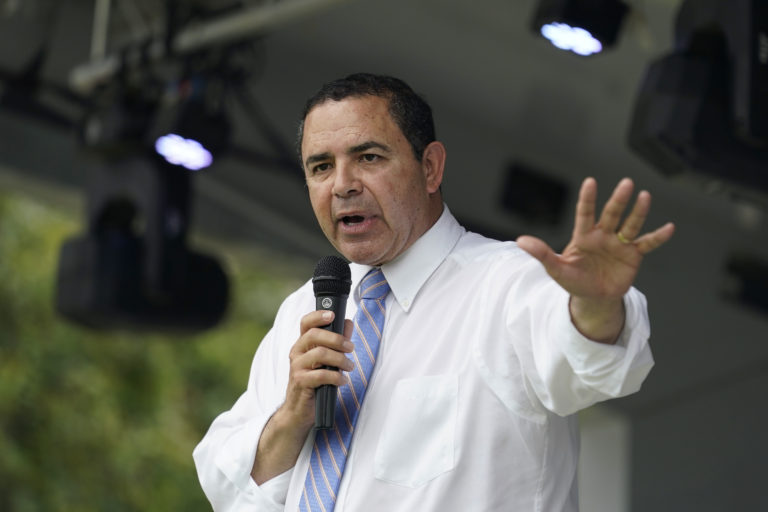
(Headline USA) Texas Democrat Rep. Henry Cuellar said this week that he has begged President Joe Biden to do more to secure the southern border, but has been ignored repeatedly.
Cuellar said illegal immigrants have been flooding into his district over the border, and has argued that the U.S. government needs to be much more aggressive in deporting migrants and turning them away if it wants to stem the surge that has been underway since Biden took office.
“I have tried and I have tried and I have tried” to get Biden to do more about the border crisis, Cuellar said. “For many years, I’ve said that we need to make sure we do the right thing at the border.”
“If you don’t deport people, they will see the border as a speed bump,” he continued. “We have to deport people. We have to deport people who aren’t supposed to be here.”
When asked why deportations under former President Donald Trump were fewer than under former President Barack Obama, Cuellar argued that it was “because of the repercussions.”
“You have to have the right repercussions,” he said.
The Texas Democrat stopped short of calling for a physical barrier at the border, but he did say he would like the Biden administration to invest in more personnel, technology and cameras in the area to assist with apprehending illegal immigrants.
“Playing defense on the one-yard line called the U.S. border is one thing,” he said. “We have to play defense on the 20-yard line.”
Since Biden took office, immigration officials have encountered more than 2 million illegal immigrants near the border. During Trump’s presidency in 2019, there were less than 1 million encounters at the border.
“Obviously the border is not secure,” Cuellar said, referring to Vice President Kamala Harris’s recent claim to the contrary.
(Headline USA) CNN’s purge continued this week with the network firing another 20 staffers originally assigned to its failed CNN+ streaming service that was axed earlier this year.
Multiple sources confirmed to the Daily Beast on Wednesday that CNN got rid of the remaining staffers attached to CNN+, including those working on the Interview Club, which claimed to offer subscribers “access to newsmakers like never before.” The staffers were reportedly told to look for work at other networks.
“Leadership has spent the past several months evaluating our business to ensure it is best positioned for the future,” a CNN spokesperson said in a statement. “CNN has opened more than 300 new jobs since May and will continue to align our resources with our greatest opportunities for growth.”
CNN+ was shut down in late April less than one month after launching. The network poured an estimated $300 million into the platform. Former CNN chief Jeff Zucker seemed to think it would be a gamechanger for CNN, but management decided the project was a waste of money and shut it down.
The network is planning to scale down in other ways as well. Management laid off a “small number” of people in its audio division, according to the New York Post, and have plans to cut back on its podcast operations as well.
CNN has also parted ways with a number of controversial partisan on-air figures, including Brian Stelter and Jeffrey Toobin. Host Don Lemon was also demoted from a primetime host to an early morning host.
The network’s recent attempts to appear more “centrist,” however, have fallen flat. Former Fox News host Chris Wallace’s new CNN show was a total flop with abysmal ratings and reviews, bringing in only 401,000 viewers.
Looking closer at the demographics, only 44,000 viewers from the 25-54 age group watched the pilot episode—that’s 36% of the 2022 average.
The cosmopolitan oligarch’s 2006 plan was called the “Secretary of State Project,” according to RedState. Soros’s project was a Political Action Committee focused on electing leftists to oversee elections in crucial swing states. Politico, in a remarkable show of honesty, called it an elections “firewall.”
Democrats are resurrecting this strategy in 2022 with the Super PAC, The Democratic Association of Secretaries of State. Politico reported that Democrats have spent over $11 million on Secretary of State races with DASS and that spending “will more than double by November 8th.”
Another group affiliated with DASS, Safe Accessible Fair Elections, is launching TV ads in the critical swing states of Michigan, Minnesota and Nevada.
One ad in Michigan is attacking Trump-backed Secretary of State candidate Kristen Karamo, per Politico. The ad doesn’t mention Karamo’s qualifications or fitness for the office but instead takes exception to her opposition to abortion and expressions of her Christian faith.
Another ad—in Minnesota—focuses on Kim Crockett‘s opposition to mail-in voting and skepticism about the legitimacy of the 2020 election results.
Yet another ad in Nevada is attacking Secretary of State Jim Marchant for his opposition to abortion.
This round of advertising, digital ads and donations to local and state Democrat parties in Arizona and Georgia are estimated to run around $25 million.
Other leftist organizations are also joining the expenditure race. According to Politico, the PACs End Citizens United and iVote have also pledged to spend big bucks in the Michigan and Nevada Secretary of State races.
Similar practices have already cast suspicion on the 2020 election in Georgia.
(The Center Square) – A new Siena College Research Institute poll released Wednesday shows Democrats losing support from New York independent and third-party voters.
There are some issues on which those likely voters still find common ground with Democrats, including 63% who oppose the Supreme Court’s decision earlier this year to overturn a constitutional right to an abortion.
However, 53% of independents and others also oppose the recent decision by President Joe Biden to cancel up to $20,000 in student loan debt. And when it comes to their preference for holding the majority in Congress next year, those likely voters prefer Democrats by a 46-42 margin; that’s narrowed significantly from August when the gap was 55-40.
Lower support from third-party voters will likely not matter much in New York’s statewide races as Democrats make up nearly half the electorate and hold a 2.5-to-1 voter registration edge over Democrats.
Where it may become a factor is in such races as congressional elections in New York City’s suburbs and upstate regions. According to state voter registration data, 61% of the registered voters are not Democrats in those areas.
Siena pollsters asked 655 likely voters what issues will determine how they vote in the Nov. 8 election. Half of the Republican respondents said the economy was the most critical issue, and 36% of independent and other voters also said the economy. For Democrats, only 18% consider the economy their most pressing issue.
The economy was either the primary or second issue for 69% of Republicans, 59% of others and only 39% of Democrats. The three groups were closer on what was considered the next major issue as 35% of Democrats, 34% of GOP members and 32% of others fear threats to democracy as a motivator for voting.
Other issues did not rank as highly.
“National gun policy, abortion and health care are important but second-tier issues for most voters,” Siena College pollster Steven Greenberg said in a statement.
Independents and others also break from Democrats when it comes to thinking about the direction of New York and the country.
While 58% of Democrats believe the state is on the right track, 56% of others feel the state is going the wrong way. Overall, only 41% of New Yorkers believe the state is on the right path, compared to 47% who do not.
New York Democrats aren’t as sure about the country’s direction, as only 45% believe the U.S. is on the right path, compared to 43% who disagree. Less than a quarter, 24%, of other voters believe America is on the right course, compared to two-thirds who do not.
Overall, only 31% like where the country is headed, compared to 59% who believe it’s going the wrong way.
Conducted from Sept. 16-25, the Siena poll has a 3.9% margin of error.
(The Center Square) – Republican lawmakers are questioning the Biden administration about cancel culture on college campuses and asking the question: why are federal taxpayer dollars funding it?
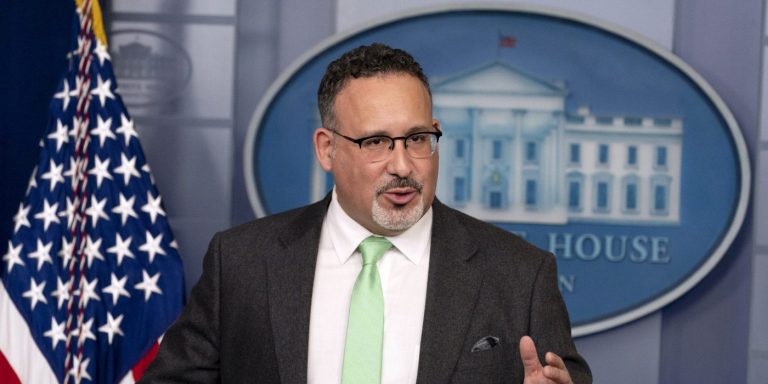
House Committee on Oversight and Reform Ranking Member Rep. James Comer, R-Ky., and House Committee on Education and Labor Ranking Member Virginia Foxx, R-N.C., sent a letter Wednesday to Education Secretary Miguel Cardona pointing to several instances of certain viewpoints being silenced and to find out “what actions, if any, the Department is taking to promote free speech and academic freedom on college campuses.
“We are conducting oversight over the U.S. Department of Education’s (the Department) administration of taxpayers’ dollars awarded to public and private colleges and universities under various federal programs,” the letter said. “Specifically, we are concerned many of these colleges and universities are undermining free speech and academic freedom on their campuses. Despite this problem, the Department does not seem to be engaged in promoting the free exchange of ideas within our colleges and universities.”
The push for accountability comes after a string of high profile speakers being pushed off campus as well as students facing consequences for unpopular opinions.
“Administrators at Yale Law School threatened to interfere with one student’s ability to pass the character and fitness examination for his bar license unless he apologized to a student group for an email,” the letter said. “St. Louis University disbursed student fees among student organizations discriminately, based on political or ideological affiliation. Certain faculty at University of Pennsylvania, Georgetown University Law Center, and Princeton University have been placed on administrative leave or faced threats of termination or indefinite ‘investigations’ for expressing their opinions outside the classroom on social media.”
The committee pointed out that in 2019 alone, major universities received billions of dollars in federal funds.
Georgetown University received roughly $370 million, Harvard University $1.1 billion, the University of Pennsylvania $830 million, the University of Southern California $1.1 billion and Yale University $620 million.
“In total for 2019, federal funds were remitted to public and private postsecondary education institutions in the form of federal student aid ($98 billion), grants ($41 billion), and contracts ($10 billion),” the letter said. “Additionally, since 2020, Congress pumped $76.2 billion in ’emergency’ funds into the Higher Education Emergency Relief Fund (HEERF) via the Coronavirus Aid, Relief, and Economic Security Act (CARES Act), the Coronavirus Response and Relief Supplemental Appropriations Act (CRRSAA), and the American Rescue Plan Act (ARPA).”
The same pattern has played out at private institutions as well.
“At University of Washington, a computer science professor was disciplined for refusing to include a controversial ‘indigenous land acknowledgement’ statement on his course syllabi,” the letter said. “In another case, it took a federal lawsuit for University of Michigan to disband its ‘bias response team’ which was dampening free speech by seeking out and reporting student conduct that was considered ‘hostile’ or ‘biased’ against certain groups. This past spring, disruptive student protesters shut down a speech by constitutional law scholar Ilya Shapiro at University of California, Hastings College of the Law.
“In fact, student protesters routinely try to disrupt and even shut down campus speakers. U.S. Senator Kyrsten Sinema, an instructor at Arizona State University, was harassed even in the bathroom by protestors who were upset with her voting record,” the letter said.
Lawmakers pointed out the Department of Education did not extend Trump administration’s free speech hotline for reporting violations.
The letter argues this level of government funding should come with accountability.
“For this reason, these institutions of higher learning should be havens of free speech. Instead, school administrators are undermining the very purpose of their institutions,” letter said. “The proliferation of cancel culture in American higher education threatens the ability of students and faculty to push themselves past their academic limits. The Department should be signaling to these institutions that academic freedom is paramount for the success of students, faculty, and society, and should help them see that limiting free speech is counter to the intellectual goals of academia.”
The Department of Education did not respond to a request for comment in time for publication.
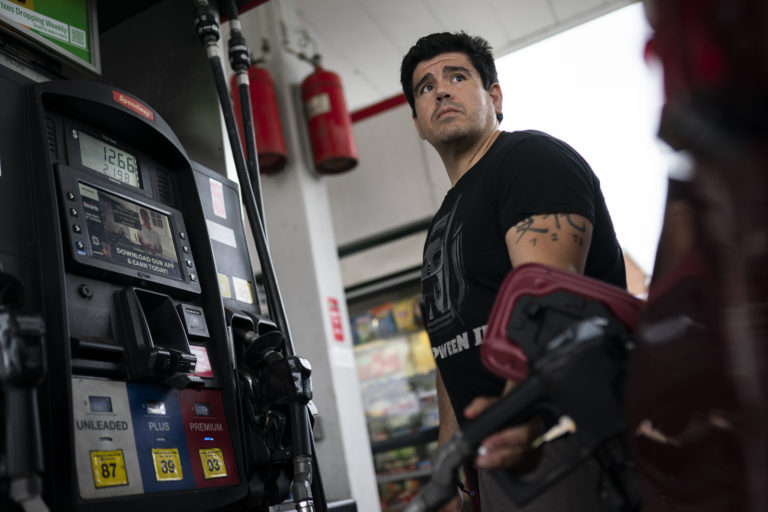
(The Center Square) – Gas prices are on the rise again just as the Strategic Petroleum Reserve hits a low point that many say is a problem.
Gas prices hit record highs in the middle of June, surpassing a national average of $5 per gallon before starting a steady downward trend for several consecutive weeks.
That streak ended last week, though, when gas prices began to tick back up. The current national average price for a gallon of regular gasoline is $3.77, up from $3.68 a week ago.
The Biden administration also touted the lower gas prices last Tuesday, but the very next day data showed they had begun to rise again.
“Folks, gas prices are now back to levels they were at in early March,” Biden wrote on Twitter. “That means nearly all of the increases since the beginning of Russia’s war in Ukraine have been wiped out.”
Last week, the Office of the Strategic Petroleum Reserve announced the sale of another 10 million barrels of oil, bringing their total to 165 of the 180 million barrels Biden authorized for release. Biden has touted the lower prices and the relief they’ve brought to Americans as prices have dropped.
Lawmakers, though, blasted Biden for using the petroleum reserves so extensively for short-term relief, saying he put the U.S. in a difficult position without addressing the root causes by encouraging more domestic oil production.
“The Biden Administration can’t continue to tap the Strategic Petroleum Reserve and simultaneously say we don’t have an energy crisis or a need to increase domestic energy production,” said U.S. Rep. Garret Graves, R-La. “Their self-imposed mistakes are weakening our energy security.”
Other critics pointed out an emergency could stress the already weakened reserves and put the reserves dangerously low.
“Less than two years into his term, [Biden] has released more oil from the nation’s Strategic Petroleum Reserve than all previous presidents combined, causing our supply to fall to a historic low,” U.S. Rep. Michael Burgess, R-Texas, said. “This is a national security threat, and it is unacceptable.”
The lower reserve level also spurred questions about whether Hurricane Ian, expected to potentially hit the site of several petroleum storage sites, will affect the availability of reserves especially if another emergency arises.
“I don’t have any concerns at this point that we’re going to have the ability to handle the fuel needs that we’re going to need in Florida,” FEMA Administrator Deanne Criswell said at a White House press briefing in response to those concerns. “We will continue to assess after the storm passes to see what the impacts are. We’ll make sure that we’re putting measures in place to support … any gaps that we might identify.”
The higher gas prices come just ahead of the midterms and could have a major impact on lawmakers seeking reelection. Gas prices had become a political cudgel used against Democrats, especially alongside soaring inflation, but the drop of those prices in recent weeks largely disarmed Republicans.
If gas prices continue to rise through election day, Republicans will have another weapon in their arsenal to use against the Biden administration and Democratic candidates.
“If you’re wondering why the Biden admin won’t be talking about gas prices today, it’s because they’ve now risen for the 6th day in a row after being artificially lowered by releasing our Strategic Petroleum Reserve,” said Jennifer-Ruth Green, a Republican running for Congress in Indiana.
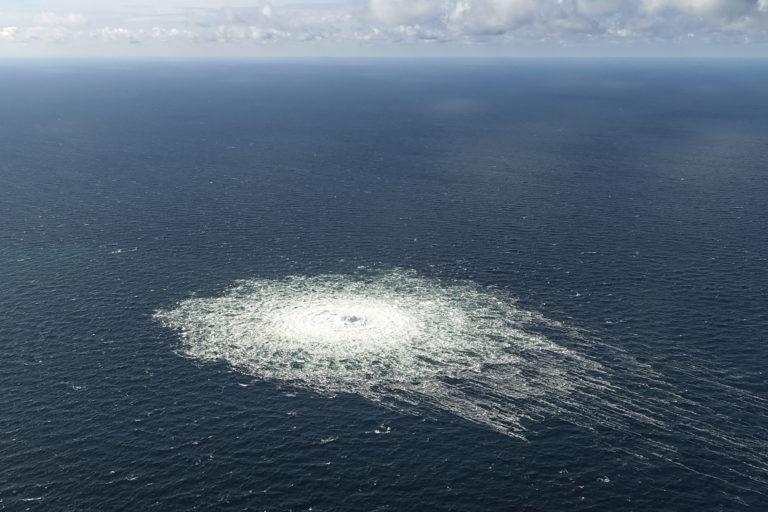
(Headline USA) Methane leaking from the damaged Nord Stream pipelines is likely to be the biggest burst of the potent greenhouse gas on record, by far.
The leaks, which sprang not long after pipeline owner Russia signaled plans to cut off the flow of energy to Germany, led to rampant speculation that Western forces or Russia itself may have intentionally sabotaged the lines.
Seismologists said Tuesday that explosions rattled the Baltic Sea before they were discovered.
Evidence of such a provocation would undoubtedly escalate the current conflict over the Ukrainian border to one of outright global warfare between nuclear superpowers.
“Whoever ordered this should be prosecuted for war crimes and go to jail,” said Rob Jackson, a Stanford University climate scientist.
On his Fox News show Tuesday night, Tucker Carlson presented evidence that the Biden administration may, in fact, have been the culprit—which some European nations, including Poland, appeared to reaffirm.
In addition to the potential for military escalation, the act will almost certainly drive up energy prices in Europe and create a ripple effect for global economies already underwater in the midst of a post-pandemic recession.
“Whatever the truth may be, the end result remains the same. Gas and electricity will be more expensive,” wrote conservative blogger JD Rucker, arguing that globalists may have coordinated the plot as a way to effect the long-sought “Great Reset” to the world economy.
“There will be a huge push to turn to ‘renewables’, talk about ‘‘climate catastrophe’, and maybe even be energy rationing and/or blackouts,” he continued. “People will freeze, starve and probably die this winter. That has always been part of the plan, what reason is there to think this ‘attack’ is anything but more of the same?”
Another undeniable impact will be the effect that the leaks have on the environment—ironic given that the primary suspects in the sabotage have long pushed for drastic measures to combat climate change by curbing greenhouse-gas emissions.
Methane seen bubbling at the ocean surface was an indication of “a strong upward flow,” according to Paul Balcombe, a member of the engineering faculty at the department of chemical engineering at Imperial College London.
The loss of pressure in the pipe likely meant a large amount of gas was already lost, he said. The impacts of the gas leak are still coming into focus, Balcombe said, but are likely to be significant.
“It would have a very large environmental and climate impact indeed, even if it released a fraction of this,” he said.
The leaks that were pumping huge volumes of methane into the Baltic Sea and atmosphere could discharge up to five times as much gas as was released by the Aliso Canyon disaster, the largest known terrestrial release of methane in U.S. history.
It is also the equivalent of one third of Denmark’s total annual greenhouse gas emissions, a Danish official warned Wednesday.
Two scientists looked at the official worst-case scenario estimates provided by the Danish government—778 million cubic meters of gas—for the Associated Press. They calculated that would be an equivalent of roughly half a million metric tons of methane. The Aliso Canyon disaster released 90-100,000 metric tons.
Andrew Baxter, a chemical engineer who formerly worked in the offshore oil and gas industry, and is now at the environmental group EDF thought the Danish estimate was likely too high. He had a more conservative estimate. But it was still more than double the Aliso Canyon disaster.
“That’s one thing that is consistent with these estimates,” he said, “It’s catastrophic for the climate.”
Kristoffer Böttzauw, head of the Danish Energy Agency, said emissions from the three leaks on the underwater Nord Stream 1 and 2 pipelines correspond to approximately 32% of annual Danish carbon-dioxide emissions. Danish emissions in 2020 were approximately 45 million tons of CO2.
Böttzauw, told a press conference that the agency expects the gas to be out of the pipes, that run from Russia to Germany, by Sunday.
“We believe that half the gas is out by now of one of the two pipes,” Böttzauw said. “We are talking about a huge spill of several million cubic meters of gas.”
The Danish agency statement added that its calculation was based on information from operators Nord Stream AG and Nord Stream 2 AG about the content of natural gas in the three pipelines that are leaking.
The incidents come as the EU struggles to keep a lid on soaring gas and electricity prices.
“As long as there is gas, it dangerous to be there,” Böttzauw said, declining to say when experts would be able to go down and see the pipes, which he said was made of 12-centimeter [5-inch] thick steel coated with concrete. They lie on the seabed between 70 and 90 meters [230 feet and 295 feet] deep.
The leaks all were in international waters. Two were within the Danish exclusive economic zone while the third is in the Swedish equivalent.
When the year began, Americans held $42 trillion worth of stocks in corporations and mutual funds, but new information from the Federal Reserve shows that the figure now stands at $33 trillion. Financial analysts expect another trillion dollars or so in losses.
The shock to the stock market, combined with rising interest rates and inflation, will make banks less likely to lend, households more likely to save and investors less interested in starting new projects.
Mark Zandi, chief economist of Moody’s Analytics, said the stock market’s drop will cause the American economy’s total output to decline by another 0.2%. That will make the current recession longer and deeper.
“The loss of stock wealth suffered to date, if sustained, will be a small, but meaningful headwind to consumer spending and economic growth in coming months,” Zandi said.
With the current recession and rising domestic and foreign tensions, Americans seem less committed to spending excess income and more interested in saving to hedge against inflation.
The wealthiest Americans were hit the hardest because about half of the nation does not own any stocks.
The wealthiest 10% of Americans lost 22% of their net worth, or $8 trillion, while the richest 1% accounted for $5 trillion of that loss.
To economists who have watched the largest monetary expansion in American history due to COVID-19 spending, the decline is expected and healthy. American stock wealth doubled from $22 trillion to $42 trillion during 2020 and 2021.
“The more you escalate the use of force, the more you take a chance of having possible injuries in some catastrophic failure of agents and civilians alike,” said Terry Turchie, former deputy assistant director of the FBI’s Counterterrorism Division, whose team arrested Theodore Kaczynski without a SWAT unit.
Turchie said in the past the FBI has not used SWAT teams to raid houses of people suspected of misdemeanors and non-violent offenses. Yet, for the Jan. 6 investigation federal law-enforcement agents keep showing up in tactical gear to arrest people for trespassing and obstructing Congress while in session.
The FBI has standards to determine when a SWAT unit should be used, such as when the suspect has a violent history and possesses a firearm, Turchie explained.
Not only does the current practice put citizens and agents in danger, it violates the FBI’s Domestic Investigations and Operations Guide.
Turchie said the FBI sometimes operates without SWAT units even in potentially violent situations “to keep the temperature down,” as he did with Kaczynski.
“This was a very, very violent terrorist, and he was becoming more unstable,” he said. “Even there, we didn’t use the SWAT team for the arrest.”
Former FBI Supervisory Special Agent Jeff Danik said the high-profile SWAT raids against former President Donald Trump and his officials have decreased trust in the agency.
“The No. 1 thing an FBI agent has to be able to do is talk to people, gain their trust and get them to cooperate,” he said. “And that’s true of witnesses, targets, subjects, foreign intelligence officers, even prosecutors. … Any kind of aura, where a person you contact comes in contact with you with some suspicion about you, it definitely hinders your job performance.”