Florida Medical Board Bans Trans Mutilations for Minors

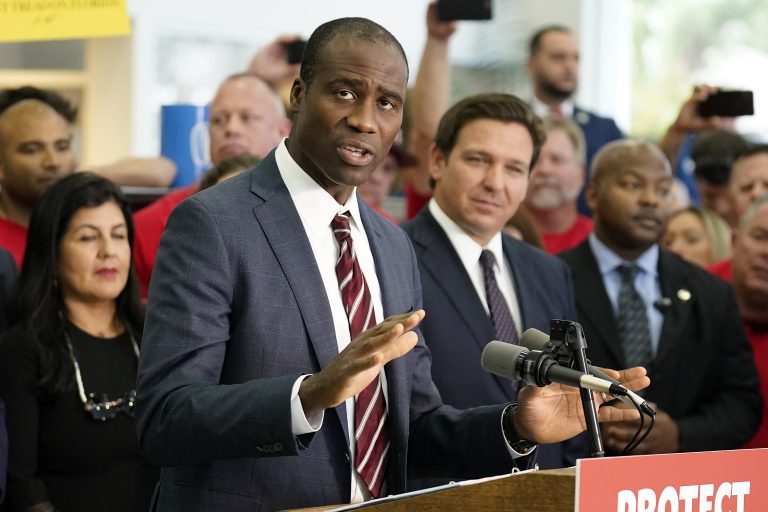
(Dmytro “Henry” Aleksandrov, Headline USA) The Florida Board of Medicine voted this week to ban the physical mutilation of minors in the state, a decision that sets the stage for a full ban that has received widespread public support and the backing of Republican Gov. Ron DeSantis.

The Board’s decision will block access to puberty blockers and hormone therapies and surgeries for people under the age of 18 who have “gender” dysphoria, even if they already have a prescription and are currently taking the drugs, reported the Daily Mail.

Board members made the decision after considering the irreversibility of the drugs and the growing number of people who regret their decisions and decide to “de-transition.” The Board’s recommendation will be forwarded to the full Medical Board, which is expected to adopt the rule as soon as next week.

Many people, including the ones who decided to “de-transition,” testified during the at times emotional meeting to ban the experimentation on children.

One of those people was Chloe Cole, a woman who decided to “change herself” because she was brainwashed by the leftists.

“I was introduced to inappropriate content, and an echo chamber of far-Left ideology, such as that sex and gender are separate, women are inherently victims, men are inherently superior and that dysphoric children need hormones and surgery in order to live,” she said.

Another woman said that while she was using testosterone she was diagnosed with PTSD and OCD, and even attempted to commit suicide.

She said her mental health has improved since she started the “de-transitioning” process, but she still has a disrupted menstrual cycle and other after-effects.

“I’m truly grateful I never got surgery because I’m happily married and 28 weeks pregnant,” she said. “But if I had gotten surgeries that I so desperately wanted as a teenager, that would’ve stolen this future from me.”

However, if a person decides to “de-transition,” the impact of the drugs on their hormones will remain throughout the rest of their lives.

“The scientific evidence supporting these complex medical interventions is extraordinarily weak,’ Dr. Joseph Ladapo, Florida surgeon general, wrote in a June letter.

“There is great uncertainty about the effects of puberty blockers, cross-sex hormones and surgeries in young people with gender dysphoria.”

Chloe Cole became one of the people who now needs to accept the irreversible damage of the “de-transitioning” process.

“Over 2 years post-op… my nipples leak fluid and they stain my clothes. I have no breasts. I want to be a mother someday and yet I can never naturally feed my future children,” she said. “My breasts were beautiful and now they have been incinerated for nothing.”

Despite the suffering of the people, the current standards of professional organizations are not based on science and medicine but on political ideology.

“We must do more to protect children from politics-based medicine,” Dr. Ladapo said.  “Otherwise, children and adolescents in our state will continue to face a substantial risk of long-term harm.”

Trump Tempers Return to Twitter, Pushes Truth Social

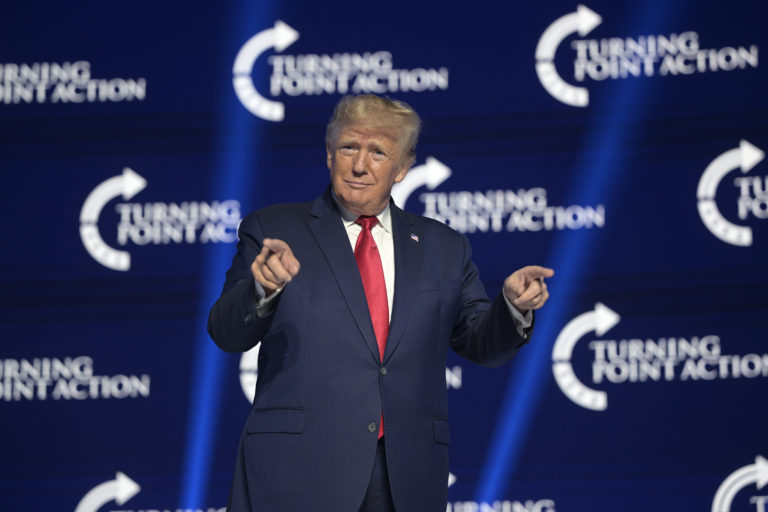
(Dmytro “Henry” Aleksandrov, Headline USA) Donald Trump wished Elon Musk the best with Twitter but said that, instead of returning to the platform, he will remain on Truth Social, according to Fox Business.

On Thursday, Musk completed his $44 billion acquisition of Twitter, writing in his post that “the bird is freed,” updating his bio to designate himself as the “Chief Twit” and firing a slew of company executives.

Despite his some of his previous comments about Musk, Trump wished him luck, but noticed that the platform probably won’t become successful without him, Trump said in an exclusive interview with Fox News Digital.

He also declined to say if he would ever use his reinstated Twitter account .

Even though Musk said that he would loosen content moderation practices for Twitter and would eliminate lifetime bans from the platform, Trump will remain on his platform.

“I want to stay on Truth — Truth is better,” he said. “I like it better, it is better to my eye, and last week, it was higher than TikTok. It was number one last week.”

Trump was permanently suspended from all mainstream social media platforms, including Twitter, after Jan. 6, 2021. People from Twitter justified their fascistic decision to ban Trump by saying that they wanted to stop “further incitement of violence.”

Trump noted that banning him from their platforms was a very big mistake for Big Tech, citing their recent loss of money due to a large number of people leaving their platforms.

“If you remember, 12 years ago, Twitter was a failed enterprise,” he said. “It was only when I got on that it became successful.”

After he was terminated from all of the platforms, Trump created Truth Social, which was launched earlier this year, and had tremendous success, being the No. 1 app downloaded in Google Play and Samsung Galaxy store.

Trump also hinted at a 2024 White House run and said that Truth Social would be his main platform should he launch a campaign.

“If I choose to run, I will only use Truth,” he said. “When I put out a Truth, it is all over the place.”

In his Friday Truth Social post, Trump said that his platform “has become somewhat of a [phenomenon].”

“I am very happy that Twitter is now in safe hands, and will no longer be run by Radical Left Lunatics and Maniacs that truly hate our country,” Trump wrote. “Twitter must now work hard to rid itself of all of the bots and fake accounts that have hurt it so badly. It will be much smaller, but better.”

“I LOVE TRUTH!” he added.

Judge Affirms Ariz. Watchdog Group’s Right to Monitor Drop-Boxes

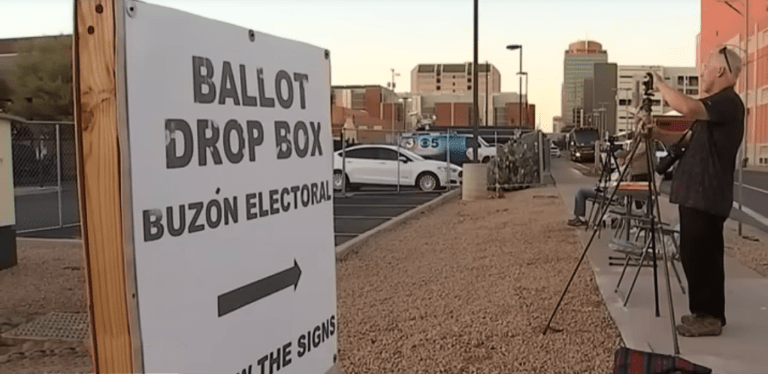
(Headline USA) A federal judge Friday rejected a leftist lawfare suit that attempted to bar a group from monitoring outdoor ballot boxes in Arizona’s largest county.

Watchers in Maricopa County—a hotspot for election fraud in the 2020 election—have shown up armed and in ballistic vests, although none have threatened legal voters with violence.

U.S. District Court Judge Michael Liburdi said the case remained open and that the Arizona Alliance for Retired Americans could try again to make its argument against a group calling itself Clean Elections USA. A second plantiff, Voto Latino, was removed from the case.

Local and federal law enforcement have been alarmed by reports of people, including some who were masked and armed, watching 24-hour ballot boxes in Maricopa and in rural Yavapai County as midterm elections near.

Some voters have complained alleging voter intimidation after people watching the boxes took photos and videos, and followed voters.

Arizona law states electioneers and monitors must remain 75-foot from a voting location.

Liburdi issued his ruling two days after a hearing on the first of two similar cases. The attorney for Clean Elections USA had argued that such a broad restraining order would be unconstitutional.

A second lawsuit involving charges of voter intimidation at drop boxes in Arizona’s Yavapai County has since been merged with the first one.

Sheriff’s deputies are providing security around the two outdoor drop boxes in Maricopa County after a pair of people carrying guns and wearing bulletproof vests showed up at a box in the Phoenix suburb of Mesa.

The county’s other 24-hour outdoor drop box is at the Maricopa County Tabulation and Election Center in downtown Phoenix, which is now surrounded by a chain link fence.

Arizona Attorney General Mark Brnovich, a Republican, has called on voters to immediately report any intimidation to police and file a complaint with his office.

Arizona Secretary of State Katie Hobbs, who also is the Democrat gubernatorial candidate claimed this week that her office has received six cases of potential voter intimidation to the state attorney general and the U.S. Department of Justice, as well as a threatening email sent to the state elections director.

The U.S. attorney’s office in Arizona has vowed to prosecute any violations of federal law but said local police were at the “front line in efforts to ensure that all qualified voters are able to exercise their right to vote free of intimidation or other election abuses.”

“We will vigorously safeguard all Arizonans’ rights to freely and lawfully cast their ballot during the election,” the office said Wednesday. “As the several election threat-related cases pending federal felony charges from alleged criminal activity arising out of our State show, acts which cross the line will not go unaddressed.”

Meanwhile, the Citizens Clean Elections Commission, an Arizona state agency, voted unanimously Thursday to have its legal counsel seek a court order if necessary to stop the monitoring group from using the “Clean Elections” name.

The commission created in 1998 to provide voters with nonpartisan elections information said it has been barraged with angry calls from people confusing it with the monitoring group.

The second lawsuit that was folded into the first case involves ballot boxes in Arizona’s Yavapai County, where the League of Women Voters alleges voters have been intimidated by Clean Elections USA, along with The Lions of Liberty and the Yavapai County Preparedness team, which are associated with the far-right anti-government group Oath Keepers.

Luke Cilano, a Lions of Liberty board member, said the organization had dropped its “Operation Drop Box” initiative on Wednesday “due to being lumped in with people who don’t adhere to the law and our rules of engagement.”

Cilano said the “official stand down order” to all members was in response to the pending litigation.

“Our goal is not to scare people and keep them from voting,” he said. “We love our country very much.”

Cilano said The Lions of Liberty is in no way associated with Clean Elections USA. He said his group is connected to the Yavapai County Preparedness Team, but the team was not involved in ballot box monitoring.

Adapted from reporting by the Associated Press

Analyst: GOP Being Underestimated in Election Polls by 5%

(Jacob Bruns, Headline USA) Polls generally favor Democrats because they are typically funded by leftist oligarchs who wish to mold public opinion in a certain manner.

And while mainstream media polls like USA Today have already concluded that Republicans hold a substantial edge in the upcoming midterms, those outside the corporate polling industry have said that Republicans are still being underestimated, the Daily Wire reported.

According to Mason-Dixon Polling Managing Director Brad Coker, pollsters who show a 4-point Republican edge across the nation are still underestimating the Republican advantage–a margin of 49%-44%.

“I think the ‘polling averages’ are going to end up (on average) underestimating the Republican margins by a net of 5%,” Coker said.

“I think the GOP will end up with 54 Senate seats. I don’t track House races district-by-district, but I generally think the Republican Party will net a gain of somewhere between 25 and 35 seats.”

He also noted that pollsters often fail because they only look at snapshot moments rather than the larger trends of American opinion.

“The correct way to interpret poll numbers is not to focus on what they are, but what they say. Over the last two weeks support for Republican candidates has been moving up, while support for Democrats has either dropped or remained frozen in place,” Coker said.

Former House Speaker Newt Gingrich, R-Ga., said that he expects a monumental Republican victory, which will be seen as a reprimand of Biden and his radical woke policies.

“I would say we’ll be between plus three and plus seven … in the Senate; and we’ll be between plus 20 and plus 50 in the House, with the most likely number being plus 44,” Gingrich noted.

“Almost everywhere in the country, races are showing the Republicans tightening up” due to Democratic failures to address crime, inflation, illegal immigration, and other problems that affect Americans on a daily basis.

Cell Phone Bans in Public Schools Are Trending Nationwide

(Seven years ago, the former New York City Schools Chancellor said the city’s decision to lift a ban on cell phones in schools was “common sense.”

Last week, the Philadelphia Board of Education approved a contract of up to $5 million with a company that makes locking phone pouches that allow educators to make classrooms phone-free.

The two decisions and the years between highlight the ongoing debate about the proper place for phones in school in the digital era.

Schools across the country continue to struggle with the devices more than 15 years after the release of the first iPhone. Concerns about distractions in class, fights in hallways and other behavior issues have prompted bans in some schools along with statewide legislation to address the issues.

Hopewell City Public Schools, which serve about 4,000 students in Virginia, started using locking phone pouches this fall after years of trying to curtail phone use.

“While we have attempted to accommodate student phones over the years and limit their use, we are finding that they are causing much more harm than help during the school day,” district officials wrote in a letter to parents.

The Philadelphia Board of Education, which serves more than 200,000 students, voted on Oct. 20 to approve a contract of up to $5 million with the company Yondr to implement its ban on cell phones. Yondr makes a phone pouch that locks when closed. The pouches can be unlocked at the end of the school day.

“With a cell phone free environment, schools can increase engagement in the classroom,” Philadelphia district officials wrote in school board documents. “Furthermore, the absence of cell phones during the day can help lead to less incidents of cyber bullying, reducing the number of students leaving the building and returning illegally by texting their friends, and a reduction in class cuts.”

Along with phone pouches, Yondr provides schools with support including planning and policy help and training for district employees. The San Francisco-based company has been working with school districts since 2014.

The pouch “helps eliminate the power struggle if a student is caught on their phone, instead of it being a barrage of back and forth excuses,” Julia Gustafson, the company’s director of education partnerships, said in an email to The Center Square.

Officials with Hopewell City Public Schools said they see the pouch as a compromise.

“Students continue to have their phones on them and be able to use them before and after school for emergencies or any other personal reasons as they have access,” Byron Davis, a district spokesperson, said in an email to The Center Square.

“They maintain their property and are not restricted from possession during the day, but are limited in that they cannot access phones while instruction and testing are the focus,” he added.

Davis said enforcing a ban on phones can create additional distractions.

“When you tell students to simply not have cellphones in class, that is something that still needs to be enforced, and without fair and consistent enforcement, a whole bunch of other problems can be created (e.g. distractions from learning, cheating on tests, coordination of violence, cyberbullying),” he said. “The practice Hopewell presently has effectively addresses the concerns while allowing for possession and before and after school use.”

Davis also said the district has plans in place in case of an emergency.

“Emergency protocols and communication methods already exist in the event there is a crisis on campus, however, on a case-by-case basis, school administration has the ability to unlock pouches and provide students access to their phones as appropriate,” he said.

The Enlarged City School District of Middletown in New York sent a letter to families noting the district’s new policy that “cell phones must be turned off and put away during the school day.”

The district’s policy means students “will not have access to their cell phones at any point during the school day,” including study hall and lunch periods, Superintendent of Schools Amy Creeden wrote in a letter to parents.

Students can use their phones before and after school and parents who need to contact a student at school were asked to call the school office instead of their child’s cell phone.

Most U.S. school districts have policies or practices to limit phone use during the school day, especially in class, but the policies can vary significantly by state, district and school. Nearly 77% of schools prohibited non-academic use of cell phones or smartphones during school hours as of 2020, according to the National Center for Education Statistics.

In California, lawmakers passed a law in 2019 that allows, but doesn’t require, school boards to enact policies to limit student smartphone use while at school, according to the California School Boards Association.

Utah Gov. Spencer Cox wants to “get cell phones out of our classrooms.” The Republican governor said he wants cell-phone free environments – not just turning phones off, but not carrying them.

In Michigan, a Republican lawmaker has filed a bill that would require school districts to adopt a policy that bans the use of cell phones by students during the school day starting in the 2022-2023 school year.

Before New York City lifted its ban in 2015, the city’s 1.1 million students were required to leave their cell phones at home. Many students opted to leave their phones outside the school building by paying a daily fee for private storage.

“Lifting the cell phone ban is about common sense, while ensuring student safety as well as high-level learning in our classrooms,” New York City Schools Chancellor Carmen Fariña said at the time.

After lifting the ban, the city’s new policy allowed for each school’s principal to develop a cell phone policy tailored for their students.

Americans Split on Ukraine Funding

(The Center Square) While the majority of Americans still support sending weapons to Ukraine in its fight against Russia’s invasion, they are unsure about handing over federal funds, according to a new poll.

Convention of States Action, along with the Trafalgar Group, released the poll, which found that 40.3% of those surveyed support sending Ukraine “weapons and money” and 30.5% support sending them “weapons but no money.”

The poll found only 24.9% said to send them “nothing at all.”

“Americans want to continue to help Ukraine defeat Putin, but when you look at the numbers, less than half of voters think that U.S. assistance should include sending more money to Ukraine,” said Mark Meckler, president of the Convention of States.

“Voters believe the U.S. is shouldering the burden of supporting Ukraine and seem to be questioning why we are sending billions overseas while our own economy slides deeper into recession,” he continued. “Our nation would benefit from hearing President Biden provide a clearly defined mission and role in the U.S. support to Ukraine, and reassurances that this will not just become a never-ending conflict that drains American resources and skyrockets our nation’s debt.”

The poll also found that 51.4% of those surveyed say that “considering the U.S. level of commitment to Ukraine, NATO and other European countries are not doing their fair share.”

The pollsters queried more than 1,000 likely midterm voters Oct. 8 through Oct. 11.

This survey comes as a shakeup of Congress in the midterm election could impact the extent of federal funding for Ukraine.

U.S. Secretary of State Antony Blinken announced earlier this month that U.S. military assistance to Ukraine surpassed $17.5 billion since Biden took office.

“We will continue to stand with the people of Ukraine as they defend their freedom and independence with extraordinary courage and boundless determination,” Blinken said in the announcement. “The capabilities we are delivering are carefully calibrated to make the most difference on the battlefield and strengthen Ukraine’s hand at the negotiating table when the time is right. We stand United with Ukraine.”

Louisiana Attorney Sues Biden Admin. over Student-Loan Amnesty

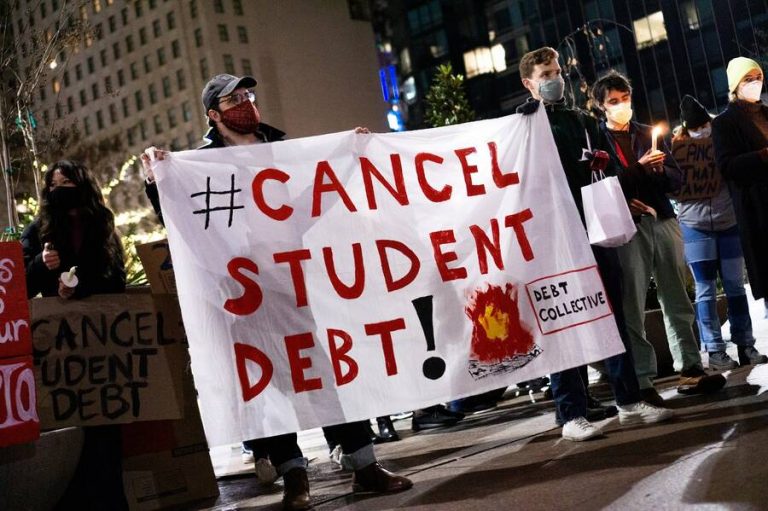
() A Louisiana attorney, assisted by a local policy group, is suing President Joe Biden over his plan to transfer hundreds of billions of dollars in student-loan debt from borrowers to U.S. taxpayers.

The lawsuit, filed by Tommy Badeaux in the U.S. District Court for the Eastern District of Louisiana in New Orleans with the Pelican Center for Justice and the Pelican Institute for Public Policy, accuses the administration of forgoing the separation of powers required by the U.S. Constitution by forgiving billions in outstanding student loan debt without action from Congress.

The lawsuit says that the Higher Education Relief Opportunities for Students Act of 2003, which was intended to provide student loan relief connected with military members involved in the Global War on Terror, was not intended to provide wholesale debt relief.

It also says that there was no public comment period, which is required after any preliminary regulatory action is posted in the Federal Register under the U.S. Administrative Procedures Act.

The attorneys in the case say that even though there have been several lawsuits filed against the Biden administration’s action on student loans on different grounds, their argument has an important legal combination on both the constitutional question and the Administrative Procedures Act.

“We believe very strongly in the legal argument for making both on the Administrative Procedure Act grounds and the constitutional grounds,” said James Baehr, the founder and special counsel for the Pelican Center for Justice. “Some of the other cases haven’t focused as much on the constitutional grounds or as much on the administrative procedure grounds and I think that ours accomplishes both.”

Badeaux is seeking a judgment setting aside the Biden loan forgiveness plan, a declaratory judgement that declares the debt cancellation unconstitutional and that his rights under the U.S. Administrative Procedures Act were violated, an injunction prohibiting the Biden administration from enacting its student loan debt cancellation policy and attorneys’ fees.

The lawsuit also cites a memo from then-General Counsel of the U.S. Department of Education, Reed Rubenstein, which said in January 2021 that the Secretary of Education didn’t have the “statutory authority to provide blanket or mass cancellation, compromise, discharge, or forgiveness of student loan principal balances, and/or to materially modify the repayment amounts or terms thereof, whether due to the COVID-19 pandemic or for any other reason.”

The lawsuit also cites statements by House Speaker Nancy Pelosi, D-Calif., and President-Elect Biden that both agreed that action by Congress was required to forgive or amend student debt obligations.

“The Supreme Court likes to say that we don’t hide elephants in mouse holes, meaning that whenever someone, whatever branch of government, is granted with authority to act, we don’t hide it there. We want it to be obvious,” Pelican Institute General Counsel Sarah Harbison said.

“It’s an important part of the separation of powers,” she continued. “And just like with the OSHA vaccine mandate lawsuit and with the Head Start vaccine and masking mandate, the administration pointed to obscure rules in OSHA and in the Head Start program, that has to do with air quality for example.”

Badeaux’s lawsuit won’t be the first time the Biden administration’s student loan debt cancellation plan was challenged in court. The program is on hold after the 8th U.S. Circuit Court of Appeals applied a temporary injunction on Oct. 21 after a lower court ruled against six state attorneys generals who sued to stop the plan.

“Kudos to Tommy, it’s a hard thing to stand up and sue the government,” Pelican Institute CEO Daniel Erspamer said. “But when they do wrong, when they don’t follow the rules, when, you know, certainly even as you notice, the president said this should go through Congress. Somebody has to stand up and say, ‘This isn’t right.'”

Kari Lake Destroys Fake News ‘Bulls**t Story’ about Katie Hobbs Break-In

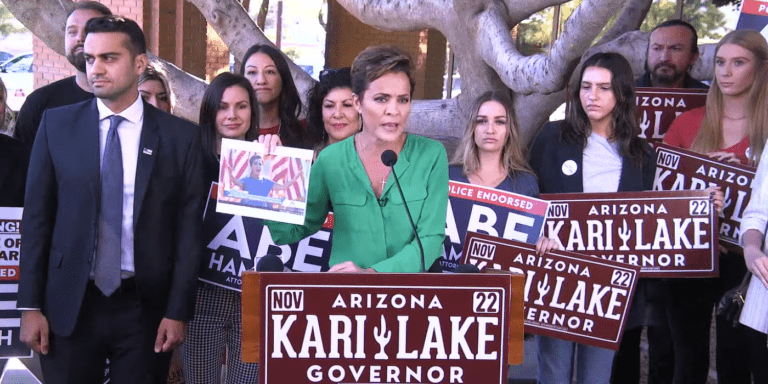
(John Weingarten, Headline USA) Republican Arizona gubernatorial candidate Kari Lake held what her campaign announced as an “emergency press conference” Thursday afternoon, during which she hammered mainstream media outlets for publishing a Jussie Smollett-like fake-news story about a break-in at the campaign headquarters of her opponent, Katie Hobbs . 

Hobbs lodged unsubstantiated claims that a recent petty burglary at her campaign office was a result of “Kari Lake and her allies … spreading dangerous misinformation and inciting threats against anyone they see fit.”

At Thursday’s emergency press conference, Lake described outlets like The Guardian, NBC, Axios, and Newsy as carrying water for the Democratic party by widely publishing her opponents’ fake-news allegations 13 days before the election.

She also drew comparisons to the suppression of the Hunter Biden laptop story before the 2020 election. 

“You refused to cover the evidence that was on that [Hunter’s laptop] and this time it’s the other way around,” Lake said. “You’re taking absolutely bogus stories and running with it, it’s absolutely fake news.”

Lake, 22-year veteran anchor for FOX 10 Phoenix, went on to hammer her former news peers as irresponsible and corrupt for running her opponent’s accusations without proper fact-checking. 

“She [Hobbs] put out a defamatory statement and you all ran with it,” Lake said. “You didn’t do your journalistic duty, it was malpractice of journalism like I’ve never seen before.” 

It appears likely that the burglary was not politically motivated, as Katie Hobbs claims, because the police have arrested a man in connection with the burglary, Daniel Mota Dos Reis, who happened to be arrested the day before for a separate commercial burglary. 

A recent FOX 10 poll shows Lake leading her opponent Katie Hobbs by 11 percentage points less than two weeks before the general gubernatorial election.

Ilhan Omar on Verge of Tears after Getting Heckled by Her Own Base

(Joshua Paladino, Headline USA) Rep. Ilhan Omar, D-Minn., choked back tears on Thursday as she defended herself from furious constituents who condemned her vote to fund Ukraine in its war with Russia.

At her town hall event, Omar heard resistance from progressives voters who expected her to be an “anti-war” Democrat.

Omar justified her vote to bankroll the Globalist American Empire’s war machine with appeals to dying children. Then she called the anti-war protesters “dangerous” Russian “propagandists.”

Far-left Democrats, who once resisted the Military–Industrial Complex, caved to the Democratic Party’s dominant neoconservative, pro-war wing this week.

Omar and the Progressive Caucus—in rare agreement with the America First movement—know what happens when the United States gets involved in foreign wars, yet she let her desire to keep power sway her vote.

Thirty representatives in the Congressional Progressive Caucus sent a letter to President Joe Biden that urged him to open peace negotations in the Russo-Ukrainian war. But after pushback, the Progressive Caucus withdrew the letter.

Two weeks ago, Progressive Democrats shouted down Rep. Alexandria Ocasio-Cortez, D-N.Y., for fueling the Russo-Ukrainian War and bringing the world closer to nuclear conflict.

Omar, who once loved to criticize American foreign policy, also denounced protesters who claim, with abundant evidence, that the United States shares blame for the conflict because it has been pushing Ukraine to join NATO despite Russia’s legitimate objections.

Russian President Vladimir Putin has long maintained that Russia cannot tolerate a nation dominated by the United States and NATO on its border.

Massive Learning Setbacks Show COVID’s Sweeping Toll on Kids

(Headline USA) The COVID-19 pandemic—and the accompanying lockdowns in mostly blue states—devastated poor children’s well-being, not just by closing their schools, but also by taking away their parents’ jobs, and adding chaos and fear to their daily lives.

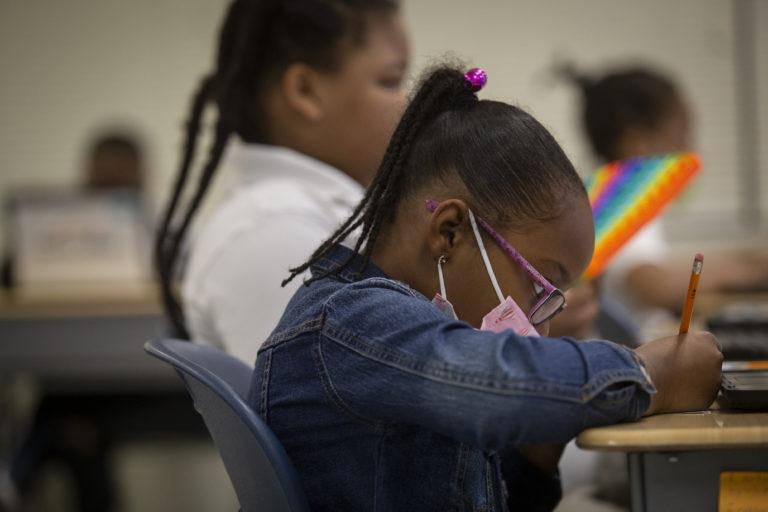
The scale of the disruption to American kids’ education is evident in a district-by-district analysis of test scores shared exclusively with The Associated Press. The data provide the most comprehensive look yet at how much schoolchildren have fallen behind academically.

The analysis found the average student lost more than half a school year of learning in math and nearly a quarter of a school year in reading – with some district averages slipping by more than double those amounts, or worse.

Online learning played a major role, but students lost significant ground even where they returned quickly to schoolhouses, especially in math scores in low-income communities.

“When you have a massive crisis, the worst effects end up being felt by the people with the least resources,” said Stanford education professor Sean Reardon, who compiled and analyzed the data along with Harvard economist Thomas Kane.

Some educators have objected to the very idea of measuring learning loss after a crisis that has killed more than 1 million Americans. Reading and math scores don’t tell the entire story about what’s happening with a child, but they’re one of the only aspects of children’s development reliably measured nationwide.

“Test scores aren’t the only thing, or the most important thing,” Reardon said. “But they serve as an indicator for how kids are doing.”

And kids aren’t doing well, especially those who were at highest risk before the pandemic. The data show many children need significant intervention, and advocates and researchers say the U.S. isn’t doing enough.

Together, Reardon and Kane created a map showing how many years of learning the average student in each district has lost since 2019. Their project, the Education Recovery Scorecard, compared results from a test known as the “nation’s report card” with local standardized test scores from 29 states and Washington, D.C.

In Memphis, Tennessee, where nearly 80% of students are poor, students lost the equivalent of 70% of a school year in reading and more than a year in math, according to the analysis. The district’s Black students lost a year-and-one-third in math and two-thirds of a year in reading.

For church pastor Charles Lampkin, who is black, it was the effects on his sons’ reading that grabbed his attention.

He was studying the Bible with them one night this fall when he noticed his sixth and seventh graders were struggling with their “junior” Bible editions written for a fifth-grade reading level. “They couldn’t get through it,” Lampkin said.

Lampkin blames the year and a half his sons were away from school buildings from March 2020 until the fall of 2021.

“They weren’t engaged at all. It was all tomfoolery,” he said.

Officials with the local district, Shelby County Public Schools, did not respond to multiple phone calls and emails requesting comment.

According to district presentations, Shelby County schools last year offered tutoring to the lowest-performing students.

Most students who received tutoring focused on English language arts, but not math. Lampkin said his sons have not been offered the extra help.

The amount of learning that students lost – or gained, in rare cases – over the last three years varied widely. Poverty and time spent in remote learning affected learning loss, and learning losses were greater in districts that remained online longer, according to Kane and Reardon’s analysis. But neither was a perfect predictor of declines in reading and math.

In some districts, students lost more than two years of math learning, according to the data. Hopewell, Virginia, a school system of 4,000 students who are mostly low-income and 60% black, showed an average loss of 2.29 years of school.

“This is not anywhere near what we wanted to see,” Deputy Superintendent Jay McClain said.

The district began offering in-person learning in March 2021, but three-quarters of students remained home. “There was so much fear of the effects of COVID,” he said. “Families here were just hunkered down.”

When schools resumed in the fall, the virus swept through Hopewell, and half of all students stayed home either sick or in quarantine, McClain said. A full 40% of students were chronically absent, meaning they missed 18 days or more.

The pandemic brought other challenges unrelated to remote learning.

In Rochester, New Hampshire, students lost nearly two years in reading even though schools offered in-person learning most of the 2020-2021 school year. It was the largest literacy decline among all the districts in the analysis.

The 4,000-student district, where most are white and nearly half live in poverty, had to close schools in November 2020 when too few teachers could report for work, Superintendent Kyle Repucci said. Students studied online until March 2021, and when schools reopened, many chose to stay with remote learning, Repucci said.

“Students here were exposed to things they should never have been exposed to until much later,” Repucci said. “Death. Severe illness. Working to feed their families.”

In Los Angeles, school leaders shuttered classrooms for the entire 2020-2021 academic year, yet students held their ground in reading.

It’s hard to tell what explains the vastly different outcomes in some states. In California, where students on average stayed steady or only marginally declined, it could suggest that educators there were better at teaching over Zoom or the state made effective investments in technology, Reardon said.

But the differences could also be explained by what happened outside of school. “I think a lot more of the variation has to do with things that were outside of a school’s control,” Reardon said.

Now, the onus is on America’s adults to work toward kids’ recovery. For the federal government and individual states, advocates hope the recent releases of test data could inspire more urgency to direct funding to the students who suffered the largest setbacks, whether it’s academic or other support.

School systems are still spending the nearly $190 billion in federal relief money allocated for recovery, a sum experts have said fails to address the extent of learning loss in schools.

Nearly 70% of students live in districts where federal relief money is likely inadequate to address the magnitude of their learning loss, according to Kane and Reardon’s analysis.

The implications for kids’ futures are alarming: Lower test scores are predictors of lower wages, plus higher rates of incarceration and teen pregnancy, Kane said.

It doesn’t take Harvard research to convince parents whose children are struggling to read or learn algebra that something needs to be done.

At his church in Memphis, Lampkin started his own tutoring program three nights a week. Adults from his congregation, some of them teachers, help around 50 students with their homework, reinforcing skills and teaching new ones.

“We shouldn’t have had to do this,” Lampkin said. “But sometimes you have to lead by example.”

Adapted from reporting by the Associated Press