Facebook Will No Longer Fact-Check Trump after 2024 Announcement

(Headline USA) Facebook’s parent company Meta announced this week that it will no longer fact-check former President Donald Trump in light of his 2024 bid for the White House.

Trump is still banned from Facebook, but because he is now a political candidate his statements will not be subjected to the platform’s third-party fact checks, Meta officials said in a memo obtained by CNN.

“Some of you have reached out seeking guidance regarding fact-checking political speech in anticipation of a potential candidacy announcement from former President Trump,” the memo read. “Political speech is ineligible for fact-checking. This includes the words a politician says as well as photo, video, or other content that is clearly labeled as created by the politician or their campaign.”

A candidate need not formally file with the Federal Election Commission to be considered a “politician,” the memo added.

“We define a ‘politician’ as candidates running for office, current office holders – and, by extension, many of their cabinet appointees – along with political parties and their leaders,” the memo states, noting that “if former President Trump makes a clear, public announcement that he is running for office, he would considered a politician under our program policies.”

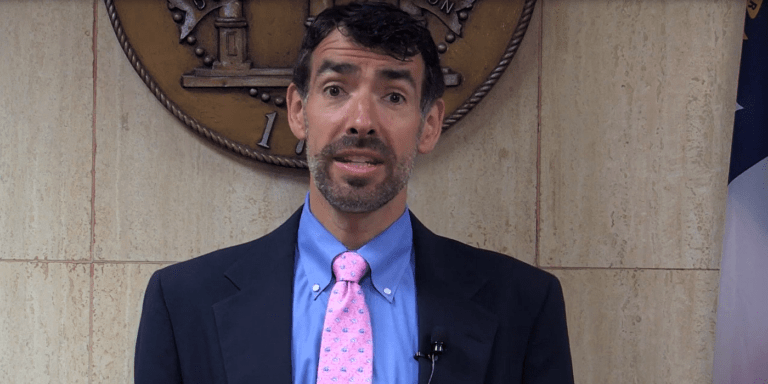
Andy Stone, a Meta spokesperson, said the decision shouldn’t come as a shock.

“A reiteration of our long-standing policy should not be news to anyone,” he said in a statement.

Trump announced on Tuesday night that he intends to run for the White House in 2024, and officially filed paperwork with the FEC to that extent. He touted many of the issues that he first ran on in 2016, including immigration, the economy and an America First foreign policy approach. He also blasted President Joe Biden for erasing the progress the country made under Trump’s administration.

“I will ensure that Joe Biden does not receive four more years,” he said. “Our country could not take that. And I say that not in laughter, I say that in tears. Our country could not take four more years. They can only take so much.”

Hidden Russian Code Found in Phone Apps Used U.S. Army and CDC

(Ezekiel Loseke, Headline USA) Hidden Russian code was discovered in apps used by the Centers for Disease Control and Prevention and the U.S. Army, as well in thousands of apps in Google and Apple digital products.

The code was the product of a Russian company named Pooshwush that identified itself as a firm located in either Washington D.C., California or Maryland but was, in fact, a Siberian company, according to Reuters.

Max Konev, the founder of Pushwoosh, denied hiding his company’s identity. He told Reuters, “I am proud to be Russian and I would never hide this.”

Pushwoosh published a statement denying deceptive practices, claiming it is “a privately held C-Corp company incorporated under the state laws of Delaware, USA. Pushwoosh Inc. was never owned by any company registered in the Russian Federation.”

Reuters asked for verification of these facts from the company but has not received confirmation.

Security researcher Zach Edwards, of the nonprofit Internet Safety Labs, explained the concern over Pushwoosh’s data compared to American big tech companies.

“The data Pushwoosh collects is similar to data that could be collected by Facebook, Google or Amazon,” he said. “The difference is that all the Pushwoosh data in the U.S. is sent to servers controlled by a company (Pushwoosh) in Russia.”

The U.S. Army used this application as an information portal on a base utilized for deployment preparations, according to Legal Insurrection. This means, of course, that data stolen from this application could leak U.S. Army troop movements and strategies utilized on the battlefield.

The Army reported removing the app in March for “security concerns.” Bryce Dubee, a spokesperson for the U.S. Army, said the Army experienced no “operational loss of data.”

After the Reuters story was published, the CDC applications were removed.

As was noted of a similar event with the company SolarWinds, this act of espionage is “like finding a burglar in your home that has been living in your house for [an unknown number] of months.”

STUDY: Sperm Counts Worldwide Are Half What They Were in 1970s

(Molly Bruns, Headline USA) A recently released study from the Hebrew University of Jerusalem found that sperm concentration has decreased dramatically since the 1970s, and researchers expected the decline to continue.

The study is built on information from a different study published in 2017 that gathered data on sperm concentration in men from Western countries, the Daily Wire reported.

The new study looked at nearly 60,000 men from 53 different countries across the globe. Researchers found that sperm concentration dropped 51% between 1973 and 2018.

Sperm counts dropped 1.2% per year between 1973 and 2000, but the rate of decline increased to 2.6% per year from 2000 to 2018.

Prof. Hagai Levine, the study’s lead author, described the decrease as “an amazing pace.”

“The key point that needs to be made is that this is desperately bad news for couple fertility,” said Prof. Richard Sharpe, an expert in male health at the University of Edinburgh.

“These issues are not just a problem for couples trying to have kids,” Sharpe added. “They are also a huge problem for society in the next 50-odd years as less and less [sic] young people will be around to work and support the increasing bulge of elderly folk.”

It is not clear why sperm counts to fell so quickly but scientists have theorized that fossil-fuel pollution may be a factor, or the adverse affects of obesity, poor diet, drinking and smoking.

Levine emphasized that no matter the cause, the new numbers are extremely alarming.

“I think this is another signal that something is wrong with the globe and that we need to do something about it,” he said. “So yes, I think it’s a crisis, that we [had] better tackle now, before it may reach a tipping point which may not be reversible.”

While climate alarmists argue that overpopulation is a threat to the earth itself, some have voiced concerns that declining birth rates pose a larger problem for humanity.

“A collapsing birth rate is the biggest danger civilization faces by far,” tweeted billionaire Elon Musk, who has 10 children with three different mothers.

“Far too many people are under the illusion that Earth is overpopulated, even though birth rate trends are so obviously headed to population collapse,” Musk added.

Activist Ga. Judge Claims He Makes the Law, Overrules Legislature on Abortion

(Molly Bruns, Headline USA) A judge in Georgia overturned a state heartbeat law banning abortion for prenatal children with a detectable heartbeat, around the fifth or sixth week of gestation.

According to the Daily Wire, Fulton County Superior Court Judge Robert McBurney ruled in favor of the SisterSong Women of Color Reproductive Justice Collective, who argued that parts of the law were unconstitutional since they were passed while the now-overturned Roe v. Wade precedent was still in effect nationally, establishing a federal abortion mandate.

It is not uncommon for states to establish their own laws, notwithstanding federal supremacy, in the event of such a reversal. Several states had abortion laws on the books from prior to the 1973 passage of Roe that reverted back in the aftermath of the Dobbs v. Jackson Women’s Health decision.

However McBurney decreed that he alone had the authority to determine the law and not the duly elected legislative and executive branches.

“What does this ruling mean?” McBurney wrote. “Most fundamentally, it means that courts—not legislatures—define the law.”

“If the courts have spoken, clearly and directly, as to what the law is, as to what is and is not constitutional, legislatures and legislators are not at liberty to pass laws contrary to such pronouncements,” he added.

McBurney picked apart he law, known as the Living Infants Fairness and Equality (LIFE) Act, in a 15 page report, declaring that it is unconstitutional to ban abortions before the child is “viable,” while insisting that the prior Roe standard remained the applicable case law.

“Everywhere in America, including Georgia, it was unequivocally unconstitutional for governments—federal, state, or local—to ban abortions before viability,” the report reads.

McBurney did not define viability in the report, making it unclear whether the child needs to simply be able to survive outside of the womb, whether the child must be able to live completely independently from its mother or whether a child in need of medical intervention post-birth would not be considered viable.

Andrew Isenhour, a spokesperson for Georgia Gov. Brian Kemp, made a statement regarding the judge’s sentiments.

“The personal beliefs of a judge will rule over the legislature and people of Georgia,” he said. “… We will continue to fight for the lives of Georgia’s unborn children.”

Isenhour also explained that the state filed a notice of appeal immediately following the ruling.

Noah Brandt, vice president of communications for pro-life non-profit Live Action, countered the judge’s ruling by arguing the constitutionality of the LIFE Act.

“The Supreme Court overturned Roe v. Wade through their decision in Dobbs, and therefore, state lawmakers have the constitutional prerogative to completely abolish the horrific scandal of abortion,” Brandt said.

“This judge is clearly wrong, and I suspect the ruling will be swiftly corrected by a higher court.”

Fed Uses FTX Crypto Scandal to Launch Its Own Digital Dollar

(Jacob Bruns, Headline USA) Taking advantage of the recently crippled cryptocurrency market, the United States Federal Reserve has decided to launch its own form of digital currency.

The Federal Reserve Bank of New York will begin a 12-week experiment, wherein it will practice the management and administration of a state-sponsored cryptocurrency, the Daily Wire reported.

A Federal Reserve press release informed that the bank will “experiment with the concept of a regulated liability network,” a way by which the federal agency will regulate “digital asset transactions that connect deposits held at regulated financial institutions using distributed ledger technology.”

As corporations that are effectively part of the state, Citi, Mastercard, BNY Mellon and Wells Fargo will join in on the scheme. Federal Reserve Chair Jerome Powell said earlier this year that his “mind is open” to a digital dollar.

He said at the time that he was “legitimately undecided” on whether the “benefits outweigh the costs” of digital dollars.

“We would want very broad support in society and in Congress,” he said. “It’s a very, very important initiative, and I do think we should ideally get authorization.”

The timing of the test is, of course, not coincidental. It unfolds concurrent with the downfall of FTX, which in less than a week went from the third-largest cryptocurrency exchange in the world to bankruptcy court.

The embattled cryptocurrency exchange, short billions of dollars, is seeking bankruptcy protection after the exchange experienced the crypto equivalent of a bank run. FTX, its affiliated hedge fund Alameda Research, and dozens of other companies filed a bankruptcy.

Standing by with a zeal for regulation was Sen. Elizabeth Warren, D-Mass., who has used the crisis to eagerly call for federal intervention.

“Too much of the crypto industry is smoke and mirrors,” Warren contended. “It’s time for stronger rules and stronger enforcement to protect ordinary people.”

Disney to Lay Off Employees after Billions in Operating Losses

(Jacob Bruns, Headline USA) The woke Disney Corporation is reeling as it suffers massive financial losses across the board, hitting both stockholders and employees.

According to a recently leaked memo from the entertainment industry giant’s CEO Bob Chapek, the company will engage in both a hiring freeze and massive layoffs, Zero Hedge reported.

“As we work through this evaluation process, we will look at every avenue of operations and labor to find savings, and we do anticipate some staff reductions as part of this review,” Chapek wrote.

“…I am fully aware this will be a difficult process for many of you and your teams. We are going to have to make tough and uncomfortable decisions” in order to make the company “more nimble,” he continued.

He also noted that the company will stop hiring as it reviews its procedures, looking to make them more efficient.

“We are limiting headcount additions through a targeted hiring freeze. Hiring for the small subset of the most critical, business-driving positions will continue, but all other roles are on hold. Your segment leaders and HR teams have more specific details on how this will apply to your teams.”

But rather than attributing the struggling company’s issues to its woke social policies and pro-LGBT propaganda, Chapek blamed “macroeconomic factors” out of Disney’s control.

The bad news for the entertainment giant comes after its stock price plummeted earlier this month and suffered its worst drop in over two decades.

“There is an increasing desire by our investor base to make sure there is something there, there, to get something out of it,” Chapek said at the time. “Our investors expect us to have a return on that investment.”

Chapek has seemingly put little thought into the probable reasons for his corporation’s decline, neglecting to see that streaming Satanic shows like the Little Demon might not secure American audiences.

The show follows a teenage girl, who is the spawn of Satan in human form, and can be streamed on Disney+.

Update: Swamp Turtle Mitch McConnell Overcomes Leadership Challenge

Update: Senate Republican leader Mitch McConnell was re-elected to his post Wednesday following reports that he could face an intra-party challenge from Florida Sen. Rick Scott, Fox News reported.

Original story below:

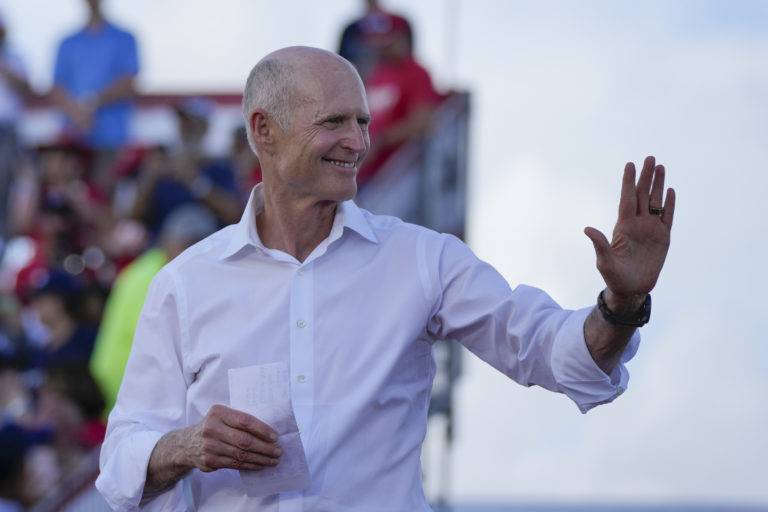
(Headline USA) Florida Sen. Rick Scott said Tuesday that he will mount a long-shot bid to unseat Senate Republican leader Mitch McConnell, following a disappointing performance in last week’s midterm elections, which largely fell at McConnell’s feet.

The announcement by Scott, who was urged to challenge McConnell by former President Donald Trump, came hours before the former president formally announced his comeback bid for the White House.

It escalated a long-simmering feud between Scott, who led the Senate Republican’s campaign arm this year, and McConnell over the party’s approach to reclaiming a Senate majority.

“If you simply want to stick with the status quo, don’t vote for me,” Scott said in a letter to Senate Republicans offering himself as a protest vote against McConnell in leadership elections on Wednesday.

Restive conservatives in the chamber have lashed out at McConnell’s handling of the election, as well as his iron grip over the Senate Republican caucus. The leadership vote was scheduled for Wednesday morning, though it could be postponed if Texas Sen. Ted Cruz succeeds with his effort to delay it until after a Georgia runoff election in December.

A delay could give leverage to Trump-aligned conservatives who are hoping their clout will grow after the outcome of races in Georgia, where former NFL star Herschel Walker is challenging Democratic Sen. Raphael Warnock; and in Alaska, where RINO Sen. Lisa Murkowski faces a conservative challenge from Trump-backed Kelly Tshibaka, who was well ahead in votes but could still fall due to the state’s new ranked-choice voting system.

It appears unlikely that their numbers could grow enough to put McConnell’s job in jeopardy, given his deep support within the conference. And Trump’s opposition is hardly new, as has been pushing for the party to dump McConnell ever since the Senate leader gave a scathing speech blaming the former president for the Jan. 6 uprising at the U.S. Capitol.

Still, it represents an unusual direct challenge to the authority of McConnell, who is set to become the longest-serving Senate leader in history if he wins another leadership term.

“We may or may not be voting tomorrow, but I think the outcome is pretty clear,” McConnell told reporters Tuesday. “I want to repeat again: I have the votes; I will be elected. The only issue is whether we do it sooner or later.”

Scott was one in a small group of senators who wrote a letter to the Republican caucus over the weekend asking for a delay in this week’s leadership elections “to have serious discussions within our conference as to why and what we can do to improve our chances in 2024.”

Republican senators debated the path forward during their regular party lunch on Tuesday. Inside the room, roughly 20 senators spoke.

Scott and McConnell traded what colleagues said were “candid” and “lively” barbs, sparring over the midterms, the quality of the GOP candidates who ran and their differences over fundraising. Senators made their individual cases for the two men.

Some members directly challenged Scott in McConnell’s defense, including Maine Sen. Susan Collins, who questioned the Florida senator’s management of the NRSC, according to a person familiar with the meeting.

Scott “disagrees with the approach that Mitch has taken in this election, and for the last couple of years he made that clear,” said Sen. Josh Hawley of Missouri, who has called for a delay and to oust McConnell. “Senator McConnell criticized Senator Scott’s management of the NRSC. I imagine we’ll hear more of that tomorrow.”

Among the many reasons Scott listed for mounting a challenge is that Republicans had compromised too much with Democrats in the last Congress—producing bills that President Joe Biden has counted as successes and that Democrats ran on in the 2022 election.

“I believe it’s time for the Senate Republican Conference to be far more bold and resolute than we have been in the past,” Scott said in the letter, sent to colleagues as the GOP meeting was still going on. “We must start saying what we are for, not just what we are against.”

But as the leader of the National Republican Senatorial Committee following a disappointing election, Scott is also an imperfect vessel to achieve the aims of frustrated Republicans and Trump.

“If you’re going to make this about assessing blame for losing an election, I don’t know how the NRSC chairman gets off the hook,” said North Dakota Sen. Kevin Cramer. “I think that would be the obvious problem he would have.”

The feud between Scott and McConnell has been percolating for months and reached a boil as election results trickled in. It showed there would be no Republican Senate wave, as Scott predicted, according to senior Republican strategists. They and others interviewed about the feud were not authorized to discuss internal issues by name and insisted on anonymity.

Operatives for the two men have traded barbs for more than a year over the handling of Senate Republican political strategy—or, in the view of some, the lack thereof.

The feuding started not long after Scott took over the party committee in late 2020, which many in the party viewed as an effort to build his national political profile and donor network ahead of a potential presidential bid in 2024.

Some were irked by promotional materials from the committee that were heavy on Scott’s own biography, while focusing less on the candidates who are up for election.

Then came Scott’s release of an 11-point plan early this year, which called for a modest tax increase for many of the lowest-paid Americans, while opening the door for cutting Social Security and Medicare, which McConnell swiftly repudiated even as he declined to offer an agenda of his own.

Staffers from Scott’s Senate committee moved into triage mode almost immediately, reaching out to Republican campaigns across the country to gauge their frustration while offering messaging help, according to senior Republican strategists with direct knowledge of the situation who viewed it as an “unforced error.”

“A strategic disagreement” is how Scott has characterized their divergent views.

In August, McConnell undercut Scott during a Senate GOP lunch. Shortly after Scott had made a request for committee donations from Republican senators, McConnell addressed the room and told the Senators to instead prioritize giving to Senate Leadership Fund, a super PAC controlled by longtime McConnell allies, according to two people familiar with the discussion.

Last week, McConnell’s super PAC cut Scott out of their efforts to boost turnout in the Georgia runoff, with the super PAC teaming up with Georgia Gov. Brian Kemp’s political operation instead.

The decision was driven in part by the fraying trust in Scott’s leadership, as well as poor finances of the committee, which was $20 million in debt, according to a senior Republican consultant.

For some Senate Republicans, however, the feud is irrelevant to their decision to support Scott.

“We got to have a plan for the American public and if we don’t we can expect much more of the same,” said Indiana Sen. Mike Braun, who is supporting Scott’s challenge of McConnell.

Adapted from reporting by the Associated Press

Control of U.S. House May Come Down to Calif. Mail-In Ballots

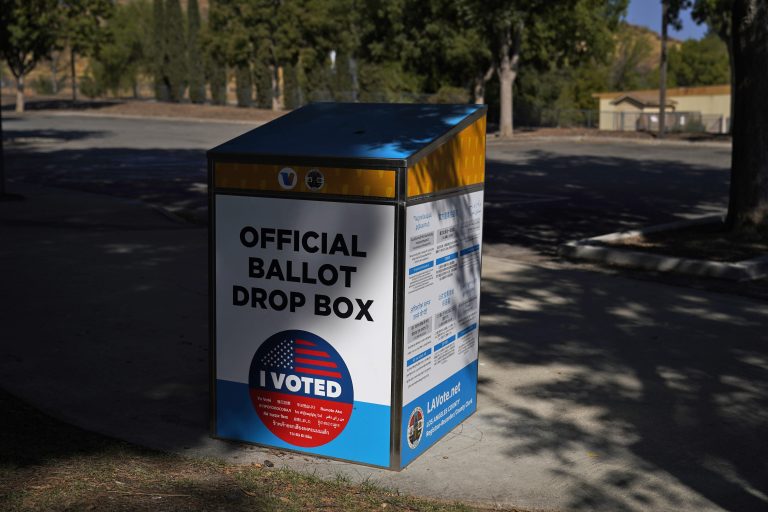
(, The Center Square) With Republicans on the cusp of controlling the U.S. House of Representatives, the balance of power could come down to California.

Fourteen U.S. House races remained too close to call as of Tuesday morning—10 of which are in California. Five seats were called for Republicans by the Associated Press on Monday night, propelling the party to 217 of the 218 seats needed for a majority.

With votes still being counted, the call could come down to results in California. The AP called CA-45 for incumbent Republican Rep. Michelle Steel and CA-41 for incumbent Republican Rep. Ken Calvert late Monday night.

Of the remaining seats left to call in California, one seat has been labeled “likely Republican” and three have been labeled a “toss up” by Cook Political Report, meaning the seats could go in favor of either Republicans or Democrats.

Cook labeled the race in CA-3 between Republican assemblyman Kevin Kiley and Democratic candidate Kermit Jones as “likely Republican.” The latest results show Kiley leading with 53% of the vote, a lead of around 10,000 votes. The race had not been called by the Associated Press as of Tuesday morning.

Of the seats designated a “toss up,” one is located in the Central Valley, where the latest updated vote count shows Democratic candidate Adam Gray has a slight lead over Republican challenger John Duarte in CA-13. Gray held 50.4% of the vote as of Tuesday morning, representing a lead of around 780 votes.

Duarte and Gray have been neck and neck as vote counts continue to trickle in. Late last week, Duarte was leading in the count, according to the Turlock Journal.

Other “toss up” races include CA-47 and CA-49, where Democratic incumbent Reps. Katie Porter and Mike Levin are fighting to retain their seats in Southern California. According to the latest count, Porter held 50.6% of the vote over Republican challenger Scott Baugh.

Porter’s Orange County seat voted for Biden in 2020, but after redistricting, about 60% of the district is new to her, according to Cook. There are over 176,000 ballots left to count, according to the Orange County Registrar of Voters.

In the fight to maintain his seat that straddles Orange County and San Diego County, Levin had a lead over Republican challenger Brian Maryott as of Tuesday morning, holding 52.5% of the vote. The race has not yet been called by the Associated Press.

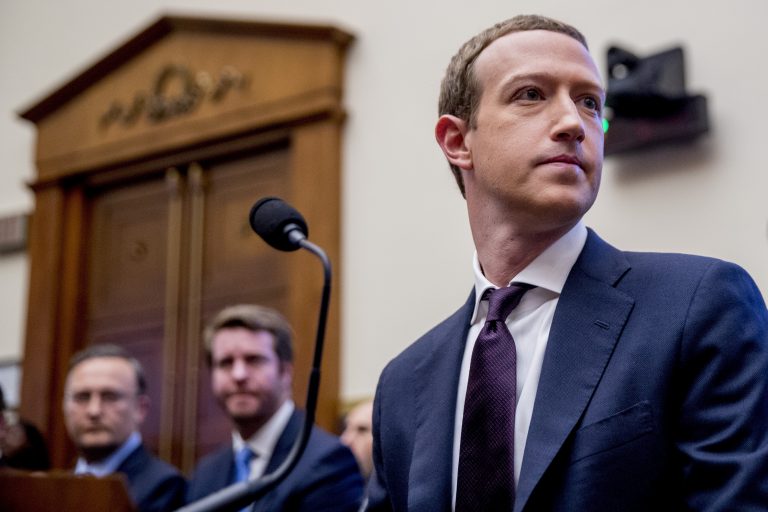
Texas AG Paxton Opens Probe of Zuckerberg’s 2020 Election Meddling

(, The Center Square) Texas Attorney General Ken Paxton issued a Civil Investigative Demand to the Center for Tech and Civil Life as part of an investigation his office launched to determine whether it “solicited donations under the pretext of protecting voters from Covid-19 while instead using the funds to support partisan electioneering efforts or election oversight roles normally left to state and local officials.”

CTCL, a self-described non-partisan nonprofit organization, according to the bios posted on its own website and other records, “is led by individuals with distinctly partisan backgrounds,” the AG’s office says.

CTCL’s founder and executive director, for example, Tiana Epps–Johnson, was among a group of inaugural Obama Foundation Fellows who previously was the Election Administration director for a progressive grassroots organization, the New Organizing Institute. She also worked on the Voting Rights Project for the Lawyers’ Committee for Civil Rights.

Her stated efforts have included combating “misinformation” about elections. Texas, Florida and other states have taken action to prevent Facebook and other tech companies from censoring Americans on their platforms based on their political, religious or other ideology.

CTCL received an estimated $350 million from the Chan Zuckerberg initiative, launched by Facebook founder Mark Zuckerberg and his wife Priscilla, to reportedly help election officials to “safely administer” elections nationwide. Among them were Texas’ two largest counties, Harris and Dallas, which received $9,663,446 and $15 million, respectively.

Both counties, controlled by Democrats, weren’t the only Democratic-controlled entities that received what was dubbed “Zuckerbucks.”

“Outside observers have noted that the vast majority of funds given to CTCL in swing states were sent to counties and precincts that overwhelmingly voted for Joe Biden,” Paxton’s office said.

According to an analysis of CTCL’s efforts by the Chicago-based Thomas More Society’s Amistad Project, “local governments, with the support of Zuckerberg and CTCL, are usurping the role of state governments in deciding the funding priorities for election spending, and demonstrate that private funds cannot be used to gain an undue advantage in these cities and counties in presidential battleground states and selectively targeted U.S. Senate and House races.”

“Charities cannot mislead their donors and misrepresent the purpose of their fundraising,” Paxton said when announcing his office’s investigation.

It was “the duty of state and county officials, accountable to the people of Texas, to ensure that elections are fair, safe, and free,” he added. “That duty cannot be usurped by outside entities who are not chosen by and cannot be accountable to the people of Texas.”

According to the CID, the CTCL is required to provide an extensive amount of documentation requested by the AG’s office by Dec. 8.

After concerns were raised about Zuckerbucks allegedly influencing the election in Texas’s largest counties, the state legislature passed a bill signed into law by Gov. Greg Abbott to limit private donations made to county officials to administer elections.

The new law also required the Secretary of State’s Office to audit four counties’ 2020 election processes and results. One included Harris, which already found numerous discrepancies with mail ballots and its drive through voting scheme. As a result, it and the AG’s office sent an election integrity task force to monitor the 2022 election in Harris County.

The Democratic-controlled county is once again embroiled in controversy after numerous problems were reported with the 2020 election and the 2022 primary election resulting in the county’s election administrator being forced to resign.

After the county spent $20 million on the 2020 election and another $54 million on new voting machines for the 2022 election, officials ran into multiple technical difficulties on Election Day.

The problems related to extensive delays and no access to voting in some locations, paper jams, running out of paper, issues with provisional ballots, among other complaints filed, and the county once again not counting votes by the statutory deadline.

Harris County is expected to be embroiled in multiple lawsuits and its handling of the 2020 election and its reported results continue to remain under investigation by the Secretary of State’s Office.

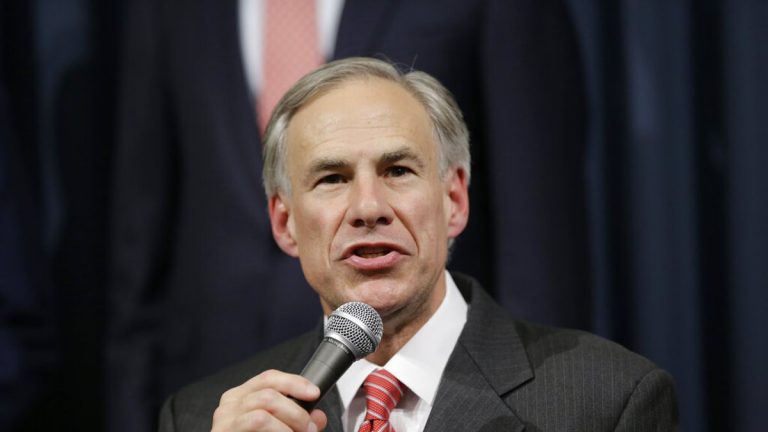
Abbott Tweet Sows Confusion over Plan to Declare Mexican Invasion

(, The Center Square) Numerous news outlets and social media pundits on Tuesday misreported that Texas Gov. Greg Abbott declared an invasion at the southern border. He did not, according to an analysis of available data by The Center Square.

Abbott tweeted from his personal Twitter account Tuesday content from a letter he sent to some Texas judges on Monday, without citing the letter or linking to it.

Some officials in Texas later explained to The Center Square that they found the tweet to be misleading and that they “jumped the gun” in response, misunderstanding its context.

In the tweet, Abbott said, “I invoked the Invasion Clauses of the U.S. & Texas Constitutions to fully authorize Texas to take unprecedented measures to defend our state against an invasion. I’m using that constitutional authority, & other authorization & Executive Orders to keep our state & country safe and includes the bullets listed in the letter.”

He did not include a link to the letter, however. The Center Square reported on the letter earlier Tuesday morning.

Abbott has yet to issue a formal invasion declaration. His office has not published such a declaration through an official news release or on the governor’s website.

There are two official statements that reference the invasion clause, one in a July 7 executive order and another in a letter he sent to some county judges on Nov. 14.

The Center Square obtained a copy of a letter sent to a border county judge on Monday and first reported on Abbott sending letters to the judges Tuesday morning.

The letter was in response to judges who’ve signed invasion declarations or resolutions calling on the governor to use his full authority to declare an invasion and repel it.

In his July 7 executive order, which the Nov. 14 letter cites, Abbott authorized the Texas National Guard and DPS officers to assist Border Patrol agents in apprehending illegal foreign nationals once they’ve entered Texas and to bring them to ports of entry, and to arrest illegal foreign nationals for committing state crimes.

If Abbott had invoked his constitutional authority on Tuesday, “he would have done so in an official document, not from a personal Twitter account,” national security expert and Navy JAG Jonathan Hullihan told The Center Square. “No document, no order. If he’s using the same authority he already invoked, why didn’t he repel the invasion in July?”

All executive orders Abbott has issued are signed, dated and have serial numbers. No invasion declaration exists that is dated or signed on Nov. 15, 2022, or any other date, a review by The Center Square found.

Abbott issued the July executive order two days after Kinney, Goliad and Terrell counties declared an invasion on July 5. So far, at least 33 counties have done so.

While many argue Abbott has done more than any governor to secure Texas’s border, his border security efforts through Operation Lone Star have not prevented caravans of 700 people at a time entering Texas every day, those supporting an invasion declaration argue. And if Abbott were repelling the invasion, he’d be busing them to the international bridges and to Mexico, not New York City, Washington, D.C., Chicago and now Philadelphia, the judges and others argue.

On the same day Abbott tweeted he was invoking the invasion clause, he also announced he was sending the first bus of illegal foreign nationals to Philadelphia. By doing so he contradicted himself, critics argue. Busing people who illegally entered the U.S. to Philadelphia is not repelling an invasion but facilitating illegal immigration into the U.S., they argue.

Abbott’s actions are also viewed as “a political stunt” by border security experts.

Abbott “has not invoked the full authority of an invasion declaration. Saying you’re being invaded but not blocking the invaders from coming is a hollow shell,” said Russ Vought, president of the Center for Renewing America in a joint statement with Ken Cuccinelli, the former deputy secretary of DHS and director of USCIS, who is now a CRA senior fellow.

“Until Governor Abbott removes illegals back across the border and out of the country, this will continue to be a P.R. stunt—and Texas and the U.S. are worse off because of it,” said the statement from Vought and Cuccinnelli.

Kinney County Attorney Brent Smith said he was “pleased with the Governor’s acknowledgement of an invasion occurring on our border with Mexico and we are hopeful that he will soon take all necessary steps in deploying state military and law enforcement to repel it.”

He also said Kinney County, which was the first to declare a disaster on April 21, 2021, and the first to declare an invasion on July 5, 2022, urged Abbott “to act without delay in securing the border by issuing a ‘Declaration of Invasion’ and invoking those constitutional authorities he cites in his November 14th letter to County Judges to secure our border and protect Texans.”

Former acting director of CBP Mark Morgan told The Center Square that for any declaration “to mean anything, the governor must provide DPS and the National Guard the authority to remove aliens directly back to Mexico without involving Border Patrol, CBP, or the federal government. He must also direct them to prevent illegal entry,” otherwise it won’t “have the impact needed.”

He also said, “While Operation Lone Star has been an effective enforcement tool, it hasn’t addressed the deadly results of the Biden Administration’s open border policies. Until consequences are applied to all those who illegally enter our sovereign borders, the crisis will continue.”