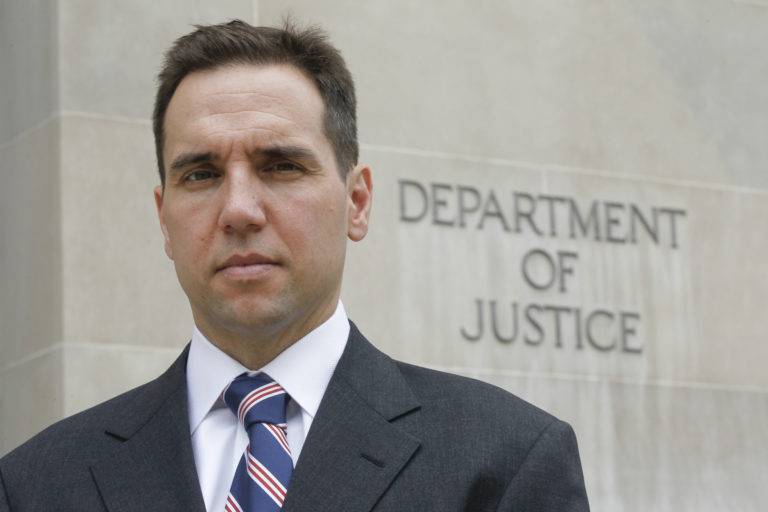
Special Counsel Overseeing Trump Probe Has History of Abuse, Overreach

(Molly Bruns, Headline USA) Attorney General Merrick Garland last week appointed Jack Smith—a Washington, D.C., swamp creature who has a history of harassing conservatives—as special counsel to investigate former president Donald Trump’s possession of classified documents and his involvement with the Jan. 6 protest at the U.S. Capitol.

The announcement naming Smith as special counsel came just two days after Trump’s declaration of his candidacy in the 2024 presidential election.

However, DOJ officials insisted that Smith would operate on strictly bipartisan lines.

“He’s an exquisite lawyer and an exquisite prosecutor,” said Lanny Breuer, who led the Justice Department’s criminal division at the time Smith was hired for the job.

“He’s not political at all,” Breuer further claimed. “He’s straight down the middle.”

But Smith’s history as a government official says otherwise, as the Daily Caller reported.

In 2010, when Smith was working as the chief of the DOJ Criminal Division’s Public Integrity Section, he called a meeting with former IRS official Lois Lerner “to discuss how the IRS could assist in the criminal enforcement of campaign-finance laws against politically active nonprofits.”

The meeting was a response to then-President Barack Obama’s criticism of the Supreme Court’s ruling in Citizens United vs. FEC, according to court documents.

Lerner resigned from the IRS in 2015 after receiving severe criticism for her targeting of conservative groups when either granting or rejecting tax-exempt status.

Smith also urged the IRS to be “vigilant to the opportunities from more crime in the… 501(c)(4) area.”

When selecting groups for audits, IRS officials working with Lerner chose organizations with the words “tea party,” “patriot” or “9/12” in their names, following Lerner’s meeting with Smith.

The IRS’s sudden rash of investigations into 501(c)(3) and 501(c)(4) tax-exempt nonprofits prevented them from engaging in the 2012 presidential race between Obama and Republican nominee Mitt Romney.

The agency admitted to the targeted approach in a 2013 interview.

After Lerner’s resignation, the House Oversight Committee hosted a hearing concerning the IRS’s targeted approach. She plead the Fifth Amendment and was held in contempt of Congress—although then-Attorney General Eric Holder, himself a member of the contempt of Congress club, opted not to file charges.

The report written by the House after the hearing also implicated Smith and his team in “serious conflicts of interest stemming from their interaction with the IRS.”

Smith also led the disastrous, politically motivated prosecution of former Republican Gov. Bob McDonnell of Virginia on charges of corruption for accepting gifts of money, a Rolex watch, designer clothes and extravagant vacations in 2014.

McDonnell was found guilty by a jury; however, the Supreme Court reversed his conviction in 2016 and all charges were dismissed.

“There is no doubt that this case is distasteful; it may be worse than that. But our concern is not with tawdry tales of Ferraris, Rolexes, and ball gowns,” Chief Justice John Roberts wrote in a report concerning the case.

“It is instead with the broader legal implications of the Government’s boundless interpretation of the federal bribery statute,” he continued. “A more limited interpretation of the term ‘official act’ leaves ample room for prosecuting corruption, while comporting with the text of the statute and the precedent of this Court.”

There is some suspicion that the lawsuit was a ruse to keep McDonnell, a successful Republican governor, from running in the 2016 presidential race.

Some political pundits also speculate that the overly broad prosecution of McDonnell helped flip the state’s 2013 gubernatorial race in favor of the Democrats, giving an edge to Democrat Terry McAuliffe, a longtime ally of Hillary Clinton, ahead of the 2016 campaign.

Thus, the decision to tap Smith ahead of the 2024 election in another politically tinged probe that may involve loose interpretations of the law would seem to fall squarely in his wheelhouse.

As special counsel, Smith will oversee two investigations into Trump: one investigation regarding whether the former President “unlawfully interfered in the transfer of power following the 2020 presidential election,” and the second pertaining to his possession of classified information discovered in an FBI raid on his Mar-a-Lago home.

Trump alleges that the FBI unlawfully seized materials subject to attorney–client privilege. He quickly sued to have the documents examined by a Special Master to determine whether they can be used the DOJ’s investigation.

Smith did not appear for Garland’s conference appointing him as special prosecutor, but he released a statement announcing his resignation from his former position at The Hague and promising to pursue the Trump investigation with “independent judgement.”

“I intend to conduct the assigned investigations, and any prosecutions that may result from them, independently and in the best traditions of the Department of Justice,” he said.

“The pace of the investigations will not pause or flag under my watch,” he added. “I will exercise independent judgement and will move the investigations forward expeditiously and thoroughly to whatever outcome the facts and the law dictate.”

Biden Admin Agrees to Fund Climate Reparations at UN Council

(Molly Bruns, Headline USA) The Biden administration entered into an agreement to help pay climate-change reparations on behalf of the world’s poorer countries at the United Nations COP27 climate conference.

The governments of 200 other world nations also agreed to the framework which sets up a “loss and damage” fund to funnel money toward countries facing droughts, hurricanes and other natural disasters.

The current form of the proposal is only a draft, according to the Daily Caller. Finer details, such as how much each country will be asked to contribute, will be decided at the 2023 COP conference.

“There is only an agreement to agree next year, which is not an agreement,” said Steve Milloy, a senior legal fellow with the Energy and Environmental Legal Institute. “This is a face-saving fake deal to keep stringing poor countries along in order to keep the Paris hoax alive.”

Biden’s administration initially argued against this kind of funding, encouraging the UN to search for other ways to support struggling countries.

Climate damages were the hot topic at COP27, with the debate dominating the 12-day conference, which ended Friday.

The European Union reportedly said it would only support such a plan if China—the world’s greatest polluter—would provide funding only for developing countries, guaranteeing that the Chinese government would not benefit from the policy.

The trans-Pacific superpower has actively sought to spread its influence elsewhere—notably in mineral-rich Africa and South America, where it sees the potential for future resource mining—while undermining Western influence and institutions.

Unlike their European counterparts, however, U.S. lawmakers did agree to the initial draft, and immediately followed that agreement by calling for a pledge to “phase down” the use of coal globally.

The COP27 conference overall was mired in controversy, with citizens around the world watching as the elite attendees did not even bother to hide their blatant hypocrisy.

Before the conference even started, climate delegates caught flack for arriving in Egypt on private jets.

“Leading by example? No way,” chided Rob Roos, member of European Parliament. “400 private jets at #COP27. Their attitude: ‘Do what I say, not what I do.’

The menu for the conference included top-dollar meat and fish dishes, including an angus beef medallion with sautéed potatoes for $100.

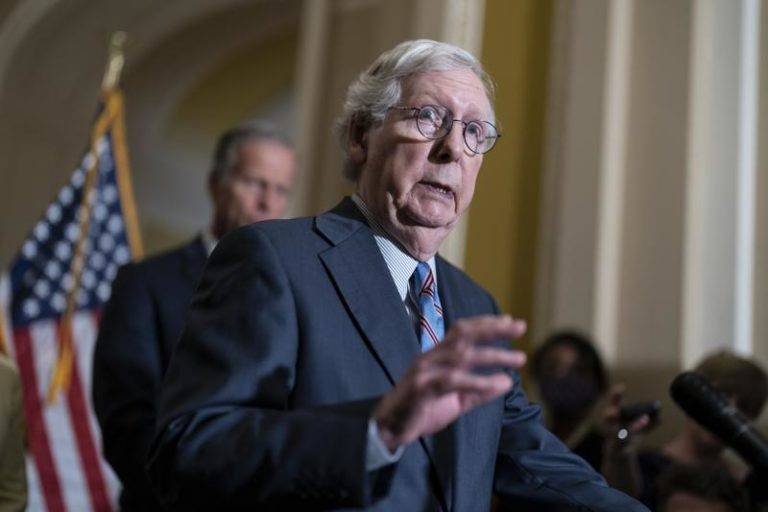
McConnell’s Too-Little, Too-Late Strategy Hurt First-Time GOP Candidates

(Headline USA) Trailing badly in his Arizona Senate race as votes poured in, Republican Blake Masters went on Tucker Carlson’s Fox News program and assigned blame to one person: Senate Minority Leader Mitch McConnell.

“You know what else is incompetent, Tucker? The Establishment. The people who control the purse strings,” Masters said before accusing the long-serving GOP leader and the super PAC aligned with him of not spending enough on TV advertising.

“Had he chosen to spend money in Arizona, this race would be over,” he continued. “We’d be celebrating a Senate majority right now.”

As both parties sift through the results of the midterm elections, in which the widely anticipated red wave largely fizzled out, Republicans are zeroing in on powerful RINOs like McConnell whose efforts actively undermine the overall party effort.

Last week, Sen. Rick Scott, R-Fla., who led the Senate GOP’s campaign arm, failed in his attempt to challenge McConnell for his leadership post while likewise blaming the 80-year-old GOP leader for a too-little, too-late strategy in disbursing funds after encouraging fellow senators to give to him instead of Scott.

But McConnell’s came pushed back by blaming the candidates themselves, claiming the core issue with the slate of political outsiders was candidate quality.

“This has become an existential and systemic problem for our party and it’s something that needs to get addressed if we hope to be competitive,” said Steven Law, a former McConnell chief of staff who now leads Senate Leadership Fund, a super PAC that spent at least $232 million on advertising to elect Republicans to the Senate this year.

“Our [donors] have grown increasingly alarmed that they are being put in the position of subsidizing weak fundraising performances by candidates in critical races. And something has got to give. It’s just not sustainable,” Law said.

With several high-profile candidates mounting their first-ever campaigns, many failed to raise the money needed to mount competitive races against deep-pocketed left-wingers backed by corporate special interests, as well as dark-money oligarchs like George Soros and FTX founder Sam Bankman–Fried.

That forced GOP leaders, particularly in the Senate, to make hard choices and triage resources to races where they thought they had the best chance at winning, often paying exorbitant rates to TV stations that, by law, would have been required to sell the same advertising time to candidates for far less.

The lackluster fundraising allowed Democrats to get their message out to voters early and unchallenged, while GOP contenders lacked the resources to do the same. Meanwhile, Democrats’ efforts to replace Election Day with Election Month ensured that their voting base had already cast ballots before the flaws in their own candidates became widely known.

In key Senate and House battlegrounds, Democratic candidates outraised their Republican counterparts by a factor of nearly 2-to-1, according to an Associated Press analysis of campaign finance data.

In Arizona, Masters was outraised nearly 8-to-1 by incumbent Sen. Mark Kelly, who poured at least $32 million into TV advertising from August until Election Day, records show. Masters spent a little over $3 million on advertising during the same period after Senate Leadership Fund pulled out of the race

Meanwhile, in Nevada, Sen. Catherine Cortez Masto raised $52.8 million compared to Republican Adam Laxalt’s $15.5 million. And in Pennsylvania, Democratic Sen.-elect John Fetterman took in $16 million more than his GOP opponent, Dr. Mehmet Oz. That’s despite the celebrity TV doctor lending $22 million to his campaign, records show.

Similar disparities emerged in crucial House races, including in Nevada, Pennsylvania and Virginia, helping to limit House Republicans to a surprisingly narrow majority.

When it came to purchasing TV ad time, Democrats’ fundraising advantage yielded considerable upside. Ad sellers are required, by law, to offer candidates the cheapest rate. That same advantage doesn’t apply to super PACs, which Republican candidates relied on to close their fundraising gap—often at a premium.

In Las Vegas, for example, a candidate could buy a unit of TV advertising for $598, according to advertising figures provided to the AP. That same segment cost a super PAC $4,500. In North Carolina’s Raleigh-Durham media market, a $342 spot cost a super PAC $1,270. And a $580 candidate segment in the Philadelphia area cost a super PAC nearly $2,000, the advertising figures show.

Republicans also found themselves playing defense in states that weren’t ultimately competitive.

J.D. Vance, who won his Ohio Senate race by more than 6 percentage points, was outraised nearly 4-to-1 by Democratic Rep. Tim Ryan. To shore him up, Senate Leadership Fund poured $28 million into the state. The group’s advertising ultimately accounted for about 70% of all Republican media spending from August until Election Day.

A similar situation played out in North Carolina, where the McConnell-aligned super PAC was responsible for 82% of the Republican advertising spending during the same period. GOP Rep. Ted Budd won by over 3% of the vote.

McConnell’s spending wasn’t the only area where GOP fundraising fell short.

Former president, while preparing for his own 2024 presidential campaign, gave his endorsement to many of the pro-MAGA conservatives, but he was parsimonious when it came to sharing some of the more than $100 million he’s amassed in a committee designed to help other candidates. He ended up spending about $15 million on ads across five Senate races, records show.

Meanwhile, the National Republican Senatorial Committee, led by Scott, often worked at cross-purposes with McConnell’s political operation.

Early on, Scott ruled out getting involved in primaries, which he saw as inappropriate meddling. McConnell’s allies, meanwhile, moved to fend off candidates they saw as poor general-election contenders, like Don Bolduc, a conservative who lost his New Hampshire race last week by nearly 10 percentage points. McConnell forces also defended Sen. Lisa Murkowski against Trump-backed challenger Kelly Tshibaka.

“Senate races are just different,” McConnell said in August. “Candidate quality has a lot to do with the outcome.”

In response, Scott took a shot at McConnell without mentioning him by name, suggesting in an opinion article published in the Washington Examiner that any “trash-talking” of Republican candidates was an “act of cowardice” that was “treasonous to the conservative cause.”

But his committee also struggled after making a series of bad bets, including a costly investment to boost the committee’s online fundraising.

An internal document obtained by the AP, which was previously reported by the New York Times, shows the committee invested $23.3 million to build out its digital fundraising program between June and January of 2021. But the NRSC raised just $6.1 million during that time—a deficit. Then, as inflation soared, the stream of cash from online donors slowed to a trickle.

That prevented the NRSC from spending as much on TV ads as in years past, even as Scott made bullish predictions of picking up as many as five Senate seats. The digital fundraising effort was a boon, however, for consultants, who collected at least $31 million in payments, disclosures show.

Some Republican senators are now clamoring for an audit of the committee. In an at-times heated Senate GOP lunch at the Capitol last week, Maine Sen. Susan Collins questioned Scott’s management of the NRSC.

Scott’s aides dismissed suggestions of financial impropriety and instead have accused McConnell of undercutting the committee.

During a Senate GOP lunch in August, Scott asked senators for donations to the NRSC, which is now at least $20 million in debt. Then McConnell addressed the room and told the senators to instead prioritize giving to Senate Leadership Fund, according to two people familiar with the discussion; they requested anonymity to describe it.

The interaction was part of a broader pattern by McConnell to sabotage the NRSC, said committee spokesman Chris Hartline.

“There was a very clear implication to donors that they should not give to the NRSC,” Hartline said. “And the result is it hurt our ability to boost our candidates and get their message out.”

McConnell allies, however, believe it was Scott who was using his post to burnish his own image at the expense of the party, potentially working to set himself up for a presidential bid, according to senior Republicans strategists. They were not authorized to discuss the McConnell allies’ conclusions and did so on condition of anonymity.

The gambit failed, as did Scott’s challenge of McConnell’s leadership position last week.

Faced with the prospect of solidifying their majority with another seat during a December runoff election in Georgia, Democrats were happy to offer unsolicited guidance to Republicans.

“My advice is to keep on doing what they are doing,” said Michigan Sen. Gary Peters, who led Senate Democrats’ campaign arm this year.

Adapted from reporting by the Associated Press

Lyft Drivers Spread the Gospel w/ Ride-Hailing Ministries

0

(Headline USA) One is an ordained pastor in Brooklyn, the other a single mother and children’s book author in New Jersey. Both drive for Lyft. Both share the word of God as roving preachers.

Pastor Kenneth Drayton and Tomika Reid try to inspire passengers through spiritual guidance on the road as part of what they see as mobile Christian ministries.

“You don’t always have to go to a church or sanctuary to experience the restoration and the power of God,” said Drayton, 61, a minister who also preaches at Mantels of Promise Ministries in Brooklyn.

He began to drive for Uber in 2015 after retiring from a career in the insurance industry. Listening to passengers who shared their stories on the road, he understood that his car could become an extension of the church.

“The car is such an ideal place to do this because it’s personal,” said Drayton, who now drives for Lyft. “I can share my faith and it’s so important because that’s what I live for.”

On a recent day, he began by praying in his impeccably clean 2017 Toyota Camry, and reciting Psalm 23 (“The Lord is my shepherd; I shall not want…”). On a break from driving in Manhattan, he reflected on how he reaches out to passengers.

He always plays classical music on his car stereo (his favorite is Mozart) to encourage a calm, pleasant mood. He begins with a greeting and a kind word.

His priority, he says, is to introduce passengers to Christ, but he’s respectful if they’re not receptive. They’re often Christian, but he has also spoken to atheists, Buddhists, Hindus, Jews and Muslims. Instead of trying to preach, he says he focuses his message on the love of God and tends to avoid doctrine.

“That’s been the conflict, the repellent for healing and transformation,” said Drayton. “It’s discussion and debates that have caused holy wars.”

Reid also stays away from doctrine and focuses more on sharing her personal story, hoping it can help others deal with their challenges. Like Drayton, she feels that the church goes beyond the brick and mortar.

“This is something that God put me in a position to do,” she said. “And I love it because I just love inspiring people and encouraging them to never give up.”

Losses have marked her life, including the death of her mother, sister and the fathers of her two daughters. She often retells her story to passengers.

“I wanted to give up, but because of my faith in God, I’m still here standing” said the 40-year-old single mother. “And I just want to use my story to encourage others never to give up, no matter what you go through.”

In 2017, she began driving for Lyft to support her daughters, who are now 14 and 20. In the backseat pocket of her 2019 Nissan Altima, she keeps the five books that she has written, including one for children on how to cope with the loss of a loved one.

Passengers often buy her books or tip her generously and she proudly keeps a five-out-of-five-star rating. She usually plays George Michael on weekdays and gospel music on Sundays when she’s working and can’t make it to church.

“When I hear people say, ‘You made my day,’ I know I can make an impact on people’s life,” Reid said. “It brings joy to me. It’s like I’ve turned my pain into a purpose to inspire others.”

Evangelism experts say ride-hailing can be conducive to talking about faith. Lyft’s guidelines do not expressly prohibit evangelism nor conversations about religion, but they do promote inclusion and forbid discrimination, including on race, gender, and religious grounds.

“It doesn’t come as a great surprise to me because thinking about Christianity, there’s a long tradition of using technology to spread the word of God,” said Robert Geraci, professor of religious studies at Manhattan College.

He cited examples, including how—shortly after space flight became possible—there were people talking about how to use satellites to spread the Gospel and how preachers have used TV for decades.

“Uber, Lyft becomes a mode of religious communication and not just a transportation strategy,” he said. “It’s also a religious strategy.”

People in customer-facing professions, such as driving for ride-hailing apps, often strike up conversations about life and its challenges, said Ed Stetzer, executive director of the Wheaton College Billy Graham Center.

“In a world where interpersonal interaction is less common—our bank tellers are now all ATMs—faith sharing is less common. So people are finding creative ways,” said Stetzer, who is also dean of the school of Mission, Ministry, and Leadership.

“That’s what Christians have done for centuries, long before ride-share apps.”

Adapted from reporting by the Associated Press

Failing Disney Brings Back Ex-CEO Iger for Reset after Culture-War Flop

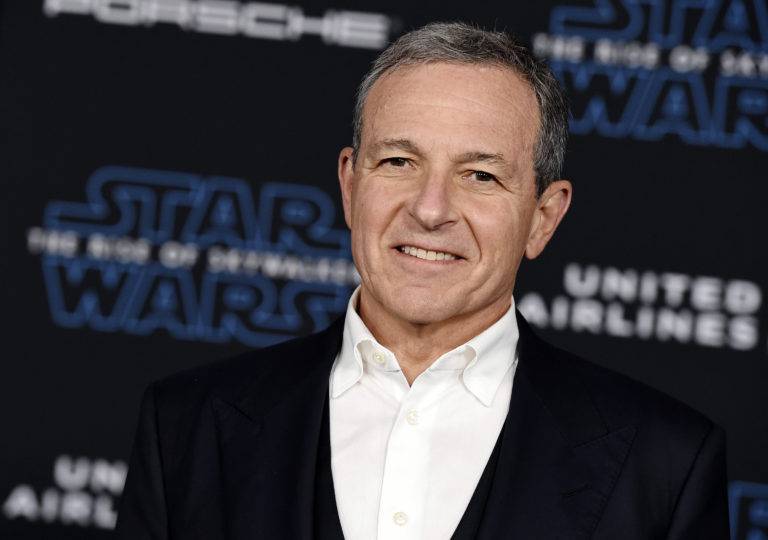
(Headline USA) The Walt Disney Company has tapped its former CEO Bob Iger to return to head the company for two years, firing his successor Bob Chapek in a move that stunned the entertainment industry.

“The Board has concluded that as Disney embarks on an increasingly complex period of industry transformation, Bob Iger is uniquely situated to lead the company through this pivotal period,” Susan Arnold, Disney’s chairman, said in a statement.

Iger has the “deep respect of Disney’s senior leadership team,” she said. She added that he was “greatly admired by Disney employees worldwide.”

Chapek is leaving after the company posted lower than expected earnings in the last quarter. There are reports of plans for major layoffs as the company maneuvers to improve its profitability.

Disney’s share price recently experienced its worst one-day drop in more than two decades. At Monday’s opening it was at about the level it was at when Iger stepped down as CEO in early 2020, having closed at $91.80 pm Friday. That’s about half its peak of just over $200 a share in March 2021.

The most obvious reason for the decline may be Disney’s controversial decision to wade into the culture war over LGBT indoctrination by attacking Florida’s anti-groomer law.

That spurred a backlash not only from Gov. Ron DeSantis and the GOP-led legislature, who revoked Disney’s special status for its flagship Orlando-area theme park, but also drove boycotts from outraged parents nationwide after board members were caught admitting that they secretly injected woke political message into children’s programming.

As a face-saving measure, industry insiders claimed the reason for the financial failure was Chapek’s cost-cutting measures and sometimes blunt approach to talent, while noting that theme-park regulars had been unhappy with price hikes.

Chapek was criticized for his handling of Scarlett Johansson’s lawsuit last year over her pay for Black Widow, an unusually public conflict between the studio and a top Hollywood star. The 2021 Marvel film was released simultaneously in theaters and through Disney+ for a $30 rental.

Arnold thanked Chapek for leading the company through the pandemic, while enthusing over Iger’s stature within the company, which he led for 15 years before his ouster in early 2020.

“The company’s robust pipeline of content is a testament to his leadership and vision,” the company’s statement said.

Iger said in the statement that he was “thrilled” to return and “extremely optimistic” about Disney’s future.

“I am deeply honored to be asked to again lead this remarkable team, with a clear mission focused on creative excellence to inspire generations through unrivaled, bold storytelling,” said Iger, who is 71.

He replaced Michael Eisner as CEO in 2005 and the former TV weather man won over Wall Street and Hollywood with bold acquisitions and public displays of respect for the creative community and the company’s storied history.

During his 15 years at the helm, Disney absorbed Pixar, Lucasfilm, Marvel and Fox’s entertainment businesses, then launched its Disney+ streaming service.

Currently, Disney+ now is ad-free, but in December it will launch a new tiered service in December for U.S. subscribers. The basic Disney+ service that costs $7.99 per month will run ads. A subscriber who wants no ads will have to upgrade to a premium service that starts at $10.99 per month, a 38% increase over current prices.

Disney said it ended its fiscal year with more than 235 million subscribers to its streaming services. That was above analysts’ expectations of 231.5 million.

Adapted from reporting by the Associated Press

N.C. Lawmakers Preparing to Protect Kids from Genital Mutilation

(Headline USA) Persistent efforts by North Carolina’s legislature to protect children from genital mutilations promises hope for parents trying to save their kids.

After Republicans swept most state-level elections this month, North Carolina gender benders are bracing for the possibility of new or reintroduced legislation seeking to prevent gender mutilation. Such a bill could survive Democratic Gov. Roy Cooper’s veto if Republicans hold their projected numbers.

The hope is felt elsewhere, but it is particularly intense in North Carolina, which provided the blueprint for the present wave of nationwide anti-genital mutilation legislation when, in 2016, legislators passed a bill to prevent men from using women’s public restrooms and prevent municipalities from enacting new anti-discrimination ordinances.

Republicans gained a supermajority in the North Carolina Senate and fell one seat short of a supermajority in the House. The outcome narrowly preserves Cooper’s veto power if Democrats approach override votes as a united front.

But GOP House Speaker Tim Moore told reporters Nov. 9 that he views House Republicans as having “a governing supermajority” because some moderate Democrats have voted with them in the past.

While Moore said the party hasn’t solidified its priorities for the long session beginning in January, Senate leader Phil Berger is already reconsidering a Parents’ Bill of Rights, which passed the Senate this year but didn’t get a vote in the House before the session ended.

Touted by GOP senators as a toolkit to help parents oversee their children’s education and health care, the bill included provisions to bar instruction about sexual orientation and gender identity in K-3 curricula and require schools to alert parents prior to any change in the name or pronoun used for their child.

“As far as a Parental Bill of Rights, parents have made it clear that they are not happy with some of the things that are going on in our public schools,” Berger said. “A number of members who supported that bill when it passed the Senate this past year are coming back. I suspect that there will be good support for moving forward with that again.”

Among the motions lawmakers introduced last session but didn’t pass was a bill preventing minors from receiving genital mutilation surgeries, and another restricting the ability of boys to compete against girls in school sports. Mitchell County Republican Sen. Ralph Hise, sponsor of the former, did not respond to messages inquiring whether he plans to reintroduce the bill.

In neighboring Tennessee, the GOP-controlled legislature announced after Election Day that its first priority will be to ban medical providers from altering a child’s hormones or performing surgeries that enable them to present as a gender different from their biological sex.


Adapted from reporting by the Associated Press

Senate Judiciary Committee Looking into Repeated Leaks of SCOTUS Cases

(Headline USA) The chairman of the Senate Judiciary Committee said his panel is reviewing “serious allegations” in a report that a former anti-abortion leader knew in advance the outcome of a 2014 Supreme Court case involving health care coverage of contraception and after the 2022 leak of the Dobbs v. Jacksons Women’s Health case.

The report Saturday in The New York Times followed the stunning leak earlier this year of a draft opinion in the case in which the high court overturned Roe v. Wade, ending constitutional protections for abortion. That decision was written by Justice Samuel Alito, who is also the author of the majority opinion in the 2014 case at the center of the new report.

In the Times story, Rev. Rob Schenck said he learned the outcome of the Burwell v. Hobby Lobby Stores case weeks before the decision was made public. In a 5-4 decision, Alito wrote that some companies with religious objections can avoid the contraceptives requirement in President Barack Obama’s health care legislation.

Schenck, who previously headed the group Faith and Action, has said in other recent stories in Politico and Rolling Stone that he was part of a concerted effort to forge social and ministry relationships with conservative justices.

In the Times story, Schenck said the information about the Hobby Lobby decision came from Gail Wright, a donor to his organization who was part of the outreach effort to the justices and who had dined with Alito and his wife.

Wright herself denied obtaining or sharing any information in an interview with the Times.

The New York Times also published a letter Schenck said he wrote Chief Justice John Roberts in July alerting him to the alleged breach years ago. Schenck wrote that he thought the information might be relevant as part of a probe into the leak of the abortion decision.

Sen. Dick Durbin, D-Ill., the chairman of the Senate Judiciary Committee, said in a statement Saturday that the committee is “reviewing these serious allegations,” and he called on fellow members of Congress to pass a bill that would require the high court to adopt a code of ethics.

Two fellow Democrats, Sen. Sheldon Whitehouse of Rhode Island and Rep. Hank Johnson of Georgia, who chair courts subcommittees, issued a statement calling the Times report “another black mark on the Supreme Court’s increasingly marred ethical record” and said they “intend to get to the bottom of these serious allegations.” They too urged passage of a code of ethics.

The Times’ story included an emphatic denial by Alito that he’d disclosed the outcome of the case. The court released Alito’s full statement to The Associated Press:

“The allegation that the Wrights were told the outcome of the decision in the Hobby Lobby case, or the authorship of the opinion of the Court, by me or my wife is completely false. My wife and I became acquainted with the Wrights some years ago because of their strong support for the Supreme Court Historical Society, and since then, we have had a casual and purely social relationship.

“I never detected any effort on the part of the Wrights to obtain confidential information or to influence anything that I did in either an official or private capacity, and I would have strongly objected if they had done so. I have no knowledge of any project that they allegedly undertook for ‘Faith and Action,’ ‘Faith and Liberty,’ or any similar group, and I would be shocked and offended if those allegations are true,” it said.

Schenck’s Faith and Action group became Faith & Liberty after becoming part of the Liberty Counsel in 2018.

Oregon Sheriff Sues to Block Unconstitutional Gun Control Law

0

(Headline USA) An Oregon gun rights group and a county sheriff have filed a federal lawsuit challenging an unconstitutional gun control law which is one of the strictest gun control laws in the nation.

The Oregon Firearms Federation and Sherman County Sheriff Brad Lohrey filed the lawsuit Friday in U.S. District Court contending the measure scheduled to take effect Dec. 8 is unconstitutional because it violates the Second Amendment right to “keep and bear arms.”

The lawsuit seeks to prevent the measure from taking effect.

Democratic Gov. Kate Brown and Democratic Attorney General Ellen Rosenblum are named as defendants in the lawsuit.

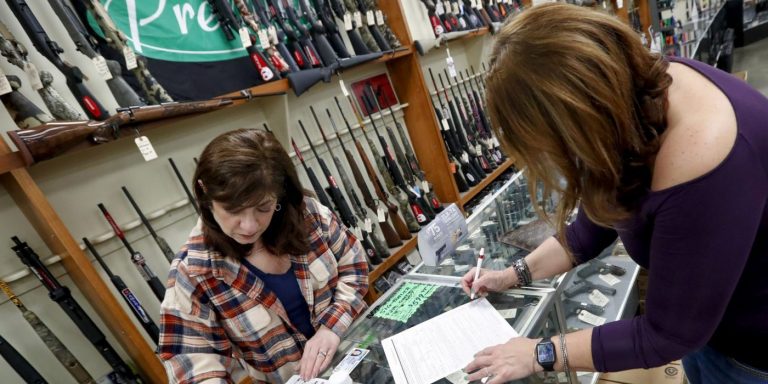
Oregon voters earlier this month approved the measure that requires residents to obtain a permit to purchase a gun, bans large-capacity magazines over 10 rounds except in some circumstances and creates a statewide firearms database.

The lawsuit states that many best-selling handguns and rifles come standard with magazines that hold more than 10 rounds.

“Millions of law-abiding Americans own firearms equipped with magazines capable of holding more than 10 rounds of ammunition,” the lawsuit states. “There is nothing unusual or novel about this technology.”

The ban on large-capacity magazines would not apply to current owners, law enforcement or the military.

To qualify for a permit under the measure, an applicant would need to complete an approved, in-person firearm safety course, pay a fee, provide personal information, submit to fingerprinting and photographing and pass a federal criminal background check. The permits would be processed by local police chiefs, county sheriffs or their designees.

Proponents of the measure say it would reduce suicides — which account for 82% of gun deaths in the state — mass shootings and other gun violence.

Opponents, including the left-wing Socialist Rifle Association, say it would infringe on constitutionally protected rights and could reduce gun access among marginalized communities and people of color if law enforcement agencies are the arbiters of the permitting process. They also say permitting fees and the cost of the firearms course could also be barriers to access.


Adapted from reporting by the Associated Press

Arizona AG Opens Investigation into Maricopa County Election Irregularities

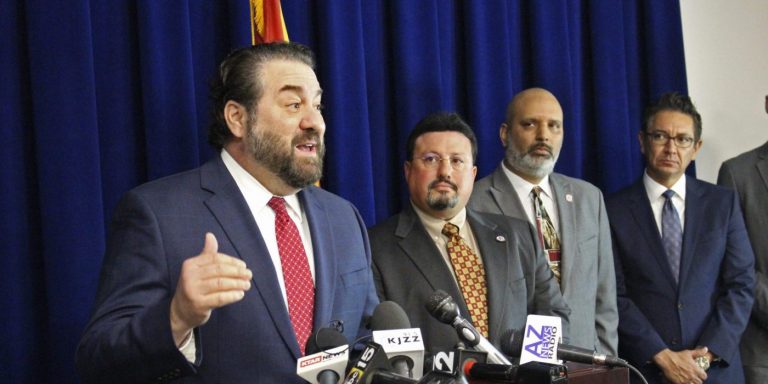
(Ezekiel Loseke, Headline USA) Mark Brnovich, Arizona‘s attorney general, has opened up an official investigation into Maricopa County‘s election irregularities, despite his previous comments attacking people skeptical of the 2020 election.

Jennifer Wright, an Assistant Attorney General for Mark Brnovich, wrote a letter to the Maricopa County Attorney’s office, according to Just the News.

The letter begins by acknowledging that the AG’s office has received hundreds of complaints “pertaining to issues related to the administration of the 2022 General Election in Maricopa County.” These complaints are believed to be substantial. They “raise concerns regarding Maricopa’s lawful compliance with Arizona election law.”

The AG’s office is also concerned with violations of other election laws based on official statements made by county officials.

Accordingly, Brnovich’s office “formally requests Maricopa formally respond to and address the following concerns that have been raised.”

The first complaint is that the ballot tabulators could not read ballots printed on sight because of an improper setting on the “ballot-on-demand-printers.” Election workers have formally testified to the proper functioning of the machines the night before the election, but “the tabulators began experiencing problems reading ballots printed by the BOD printers within the first thirty minutes of voting.” The AG requests a log of all events and the methods used by technicians during poll visits on election day that have been reported to initiate issues with the voting machines.

The letter argues that the ballots that were not counted were mishandled and inappropriately mixed with other stacks of votes so that they were untraceable. The letter reports that, “we have received a sworn complaint from an election observer indicating that more than 1700 “Door 3″ non-tabulated ballots from one voting location were placed in black duffle bags that were intended to be used for tabulated ballots.”

The next issue is with apps allowing voters to vote more than once. The letter reads, “Chairman Gates publicly stated that voters who had already checked in to e-Pollbook, but were having difficulties voting could “check out” of that voting location, and would be able to nonetheless vote in another voting location.”

The letter demands a response to its inquiries before Maricopa County submits its election results to the Arizona Secretary of State.

The response is promising but surprising from Brnovich, who has said election skepticism was “horse s**t.”

WaPo: Trump Must be ‘Purged’

(Dmytro “Henry” Aleksandrov, Headline USA) Trump must be “purged” from American politics because of his America First agenda, according to a propaganda article from the Washington Post.

Even though Fareed Zakaria, the author of the piece, thinks that some RINOs [Republicans In Name Only] come out against Trump, he said that many people support him.

“It is heartening to see some important Republican figures come out against Donald Trump,” he wrote.

“But it’s worth noting that many embraced him when he proposed a Muslim ban, tried to extort Ukraine’s president, was impeached and tried to overturn an election.”

Zakaria then suggested that Trump may stop being popular among conservatives and lose the 2024 presidential elections to people like Mike Pence, Mike Pompeo and Liz Cheney.

Zakaria also talked about Ron DeSantis, the only person right now who has at least a chance of beating Trump in the 2024 elections. He suggested that in 2024, DeSantis will be fighting for “Not Trump” voters, without realizing that people who would vote for DeSantis couldn’t possibly be “Never Trumpers.”

The propagandist then suggested that Republicans, instead of supporting Trump, must “put an end to its moral cowardice and finally and frontally confront the cancer within” by saying that Trump is a demagogue who tries to undermine American democracy, even though the United States is a constitutional republic.

He also cited a “fascinating” essay from Sheri Berman who wrote that in many Western European countries, right-wing populist parties were forced to accept the leftists’ positions. Berman then said that America is an outlier because conservatives still have power in this country.

To conclude Berman’s point, Zackaria called American conservatives extremists.

“… in the United States, the Republican Party, having opted for extremism in the wake of the Trump revolution, has been far more willing to go along with his dictates, with a slate of almost 300 election deniers as candidates in the midterms,” Zakaria wrote.

He then used a quote from Berman who also pushed the “American democracy talking point” by saying that it is declined in the United States but not in Western European countries.

“Freedom House and other groups that track democratic development, such as V-Dem, have noted a marked decline in the strength of American democracy but have found no similar decline in Western Europe,” she wrote.

After that, Zackaria claimed that some countries — including Hungary, Turkey and the United States — have weak democratic institutions, which results, in his opinion, in demagogues changing parties rather than the other way around. Zakaria has a solution that leftists would like.

“To fend off the threat, Republican leaders must act to purge their party (and country) of extremism. Even after the midterms, Trump and Trumpism will not magically vanish.”