Biden Offers $36B in Taxpayer Funds to Cover Teamsters’ Pensions

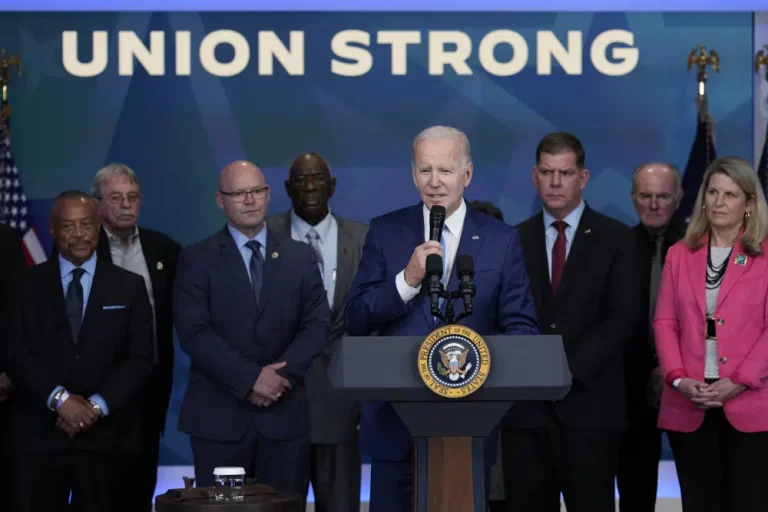
(Headline USA) President Joe Biden announced on Thursday that he plans to spend $36 billion in taxpayer dollars to bail out the Teamsters union’s pension plan, which is projected to run out of money by 2025.

The Central States Pension Fund is facing insolvency and is spending $2 billion per year more than it is taking in from contributions. Right now, the fund has $7.4 billion in assets, according to its most recent quarterly financial report. 

Teamsters union officials have blamed the fund’s financial woes on rising costs and a drop in the number of active workers participating in the fund.

A White House fact sheet previewing Biden’s announcement said the administration’s bail out would ensure 350,000 union workers have their benefits through at least 2051. Without the funds, the White House claimed, the benefits could be cut by as much as 60%.

“Ensuring that workers and their families enjoy the retirement security they earned through a lifetime of work is a central part of President Biden’s economic plan,” the White House said. “President Biden is building the economy from the bottom up and middle out, including helping to ensure a dignified retirement for all American workers and their families.”

Biden plans to fund the bailout through the American Rescue Plan Act, which was passed in March 2021. 

“Union workers and their families are finally able to breathe a huge sigh of relief, knowing that their hard-earned retirement savings have been rescued from steep cuts,” assistant labor secretary for employee benefits security Lisa Gomez told CNBC.

Critics of the move have blasted it as an attempt by Biden to get back in the good graces of organized labor after he encouraged Congress to pass a law forcing rail workers to accept a deal that many of them disliked.

They also slammed Biden for rewarding the Teamster union’s fiscal mismanagement and forcing American taxpayers to bear the cost.

“Joe Biden is spending $36 billion of YOUR tax dollars to bailout big unions that have failed to properly manage their money,” said Sen. Marsha Blackburn, R-Tenn.

School’s Dean Caught Bragging about Showing ‘Dildos,’ ‘Butt Plugs’ to Kids

(Headline USA) The dean of students at a Chicago private school bragged about bringing LGBT activists into classrooms to indoctrinate students and teach them about “queer sex,” according to a bombshell report from Project Veritas.

Joseph Bruno, dean of students at Francis W. Parker School, was caught on tape with an undercover Project Veritas reporter touting his efforts with LGBT activists to expose minors to sexual material.

“So, I’ve been the Dean for four years. During Pride—we do a Pride Week every year— I had our LGBTQ+ Health Center come in [to the classroom]. They were passing around butt-plugs and dildos to my students—talking about queer sex, using lube versus using spit,” he said.

Bruno said he also invited a drag queen to come in and “pass out cookies and brownies and do photos.” The drag queen, whose name is Alexix Bevels, “just hung out in my classroom, hung out in my office,” he said.

When asked about students’ reactions to the sexual material, Bruno said, “They’re just, like, passing around dildos and butt-plugs. The kids are just playing with ‘em, looking at ‘em…They’re like, ‘How does this butt plug work? How do we do – like, how does this work?’”

“That’s a really cool part of my job,” he added.

Bruno was also asked whether he received parental complaints due to the inappropriate nature of the demonstrations.

“No,” he replied. “It’s queer sex.”

As to the school trustees, Bruno said, “They don’t know. I wouldn’t even like run it by them. Like, why would I run it by them?”

After the video was published on Twitter, Francis W. Parker school deleted its Twitter account entirely.

DOJ Launched Spurious Probe of Biden Rape Accuser Tara Reade’s Twitter

(Jacob Bruns, Headline USA) After accusing then-candidate Joe Biden of sexual assault leading up to the 2020 election, former Biden aide Tara Reade is now under investigation at the hands of Biden’s Department of Justice.

Just before the 2020 election Reade had accused Biden, whose infamous motto is “believe all women,” of sexually assaulting her in a senate building on Capitol Hill in 1993 when she worked for him.

“His hands were down my shirt and up my skirt,” she said in an interview at the time.

Read also filed a police report in April of 2020 with the Washington Metropolitan Police Department, but the matter has since been dropped.

But Reade, challenging the powers that be, is now paying for speaking out. Biden’s DOJ has subpoenaed Twitter for information regarding her account, the Daily Caller reported. Twitter must apparently provide “all subscriber information” to a grand jury later this month.

Reade addressed the matter, noting that it is obvious why the DOJ was coming for her.

“Other than coming forward about Joe Biden, there would be no reason for” the subpoena, Reade said.

Twitter attorney Hayden Schottlaender said that the company “intends to comply” with the court’s order.

“As I mentioned, Twitter intends to comply with this subpoena on December 16, 2020, unless it receives notice from you that a motion to quash or otherwise invalidate this subpoena has been filed,” Schottlaender wrote to Reade.

“If you do file any such motions, please send a copy directly to me at this email address. If, on the other hand, you have no concerns with Twitter producing the requested data, please similarly let me know,” he added.

The recent smear is just the latest in a lengthy media campaign to undermine Reade’s credibility for good.

Immediately following the accusations, the legacy media rushed to Biden’s aid by publicly attacking her character, with some outlets like the New York Times even failing to report on the matter for weeks.

White House Continues to Accuse Georgia of ‘Voter Suppression’ Despite Warnock Win

(Headline USA) The White House continued to insist this week that “there was suppression” of voters in Georgia despite Democrat Sen. Raphael Warnock’s win on Tuesday.

White House press secretary Karine Jean-Pierre was asked during a press briefing on Wednesday whether President Joe Biden still believes Georgia’s election integrity law, which was passed in 2021, is akin to “Jim Crow,” given the fact that Warnock won by a significant margin during his run-off election.

“The president … called it ‘Jim Crow in the 21st century‘ and a blatant attack on the Constitution. So does he still see it that way?” Fox News’s Jacqui Heinrich asked.

“There was suppression,” Jean-Pierre replied. “We saw that throughout the Georgia election. So that is something that was reported on. So I leave it to those reports. But even with that, the American people came out.”

Another White House spokesman doubled down on Jean-Pierre’s claims, pointing to a statement from Warnock’s campaign that alleged long voting lines on the day of the run-off.

“There will be those both in our state and across the country who will point to our victory tonight and try to use it to argue there is no voter suppression in Georgia,” Warnock said in a speech on Tuesday.

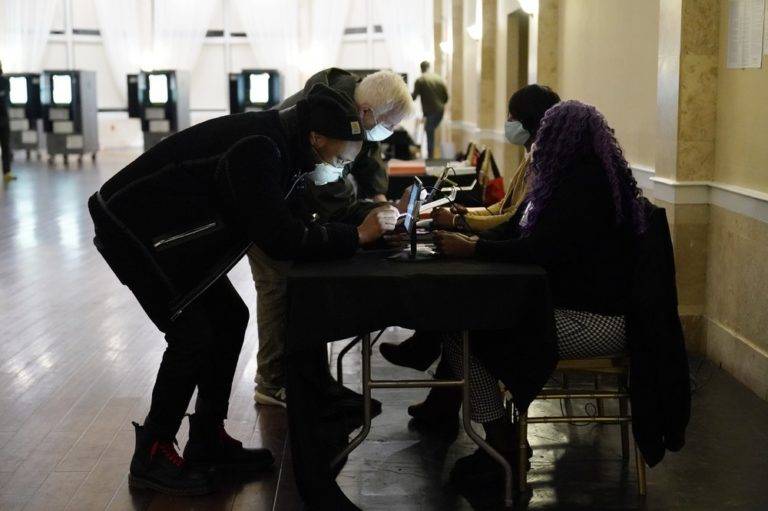
“Let me be clear: The fact that millions of Georgians endured hours in lines, and were willing to spend hours in line — lines that wrapped around buildings and went on for blocks, lines in the cold, lines in the rain — is most certainly not a sign voter suppression does not exist.”

Georgia’s election integrity law has been smeared by Democrats even though it expanded early voting by adding a second mandatory Saturday and allowing counties to extend early voting times beyond normal business hours. However, because the law also included provisions requiring a photo ID to get an absentee ballot, Democrats have claimed it is unfair.

DeSantis Raises $59M in Hurricane Relief after Biden Withholds Funds

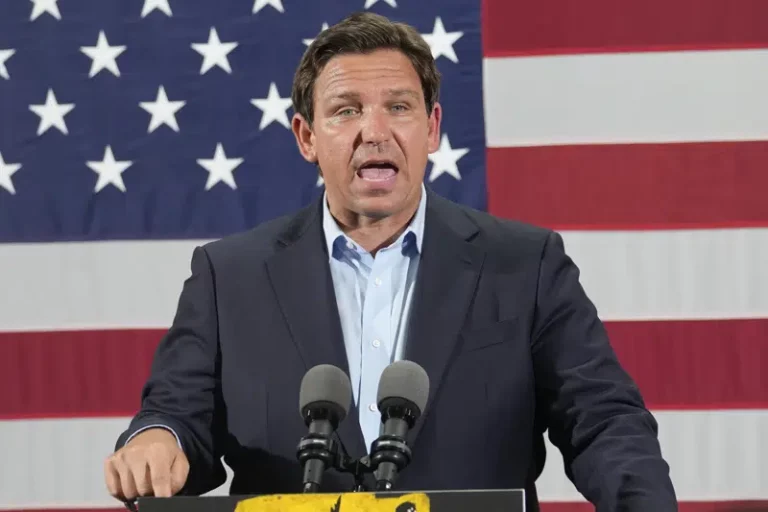
(Molly Bruns, Headline USA) After being snubbed by the Biden administration, the Florida Disaster Fund raised nearly $60 million in Hurricane Ian relief funding, according to an announcement by the state’s Republican Gov. Ron DeSantis.

The state of Florida contributed $25 million in funding to help rebuild the state; donors gave $35.2 million for a total of $59.2 million.

According to the Daily Wire, state funding will largely be put towards the purchase of building materials and gifted funds will help conduct home repairs via approved nonprofit organizations.

The Florida Disaster Fund will also serve people in need of “transportation, food assistance, housing aid, clothing, and household goods.”

“We are providing building materials and supporting nonprofit organizations to provide repairs so impacted residents can move back into their own homes,” DeSantis said. “Floridians are resilient, and the state stands by them every step of the way as they continue their recovery.”

The glad tidings come after the state was denied emergency funding by the Federal Emergency Management Agency due to “limited authority,” according to DeSantis.

After the denial of the state’s funding request, DeSantis hosted a public press conference calling out the federal government, saying they would “not going to take no for an answer,” and vowed to find a way to “cut through bureaucracy.”

FEMA also reportedly rejected the request because of their “inability to confirm that authorizing this policy expansion would achieve the intended outcomes for disaster survivors,” according to a letter to the Director of the Florida Division of Emergency Management.

The agency did eventually provide $3.3 billion in federal support to the both the state and private households, according to a FEMA press release.

The Florida Disaster Fund, which is technically a private charity, was founded to provide financial assistance to state communities during emergencies.

Florida’s First Lady, Casey DeSantis, started the fundraising effort according to a statement from Florida officials.

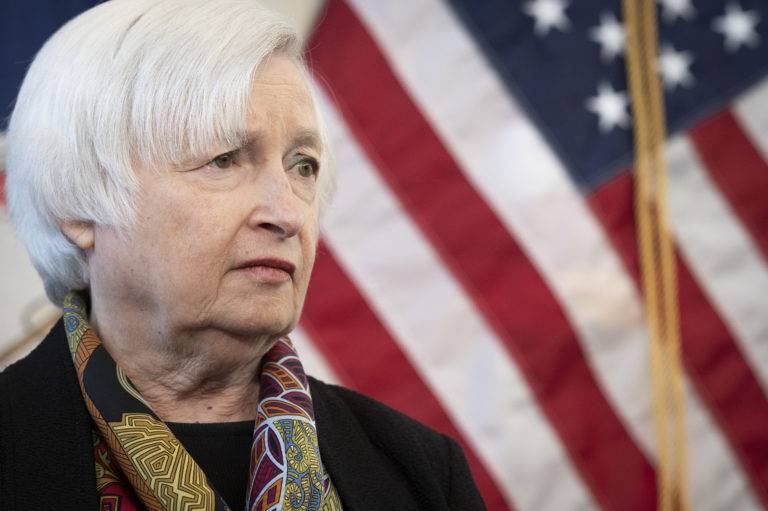
Treasury Sec. Yellen Adds Signature to Currency She Helped Inflate

(Headline USA) For better or worse, faith in the U.S. dollar has often hinged in part on what Treasury Secretary Janet Yellen says.

On Thursday, the focus will be on what she writes, as the government churns out its first currency bearing her signature.

Yellen’s signature on the new currency will appear alongside the name of U.S. Treasurer Lynn Malerba, the first Native American in the role. The bills are expected to be delivered to the Federal Reserve in December and will be in circulation next year.

“This is really not about me or Treasurer Malerba,” she said. “To me, these notes represent the hard, ongoing work of the Treasury Department to strengthen our economy and advance our economic standing around the world.”

Yellen loops her capital “J” and “Y,” with the rest of her name flowing in a haste that suggests handwriting might not have been her top priority in school.

Her stewardship of a disastrous economy during the Biden administration, including repeated efforts to gaslight over the inflationary conditions and the current recession, has also led some to wonder whether economics was a priority.

As the first woman to serve as Treasury secretary, Yellen’s success has been linked largely to identity politics rather than merit.

She has since admitted, reluctantly, that she underestimated the staying power of inflation, even though other common-sense economic forecasters saw it coming a mile away.

The failure is the culmination of an unremarkable tenure as one of the top officials in charge of setting the country’s financial policy, which included a span in which she presided over remarkable stagnation during the Obama administration in spite of near-zero interest rates for his entire presidency.

Although she made her reputation as a stoic chair of the Federal Reserve, she now finds herself at the forefront of far-flung, deeply controversial efforts to use economic levers to help finance Ukraine’s war with Russia, push a dramatic shift in the energy sector toward the climate-change agenda, and oversee plans to weaponize and nearly double in size the IRS.

That puts Yellen, someone seemingly unqualified to perform even basic functions as an economist, at the center of domestic and global politics, inviting new levels of pressure and second-guessing by friends and foes.

Even as Yellen planned to watch the fresh bills carrying her signature roll out at the Bureau of Engraving and Printing’s Western currency facility in Forth Worth, Texas, her celebratory remarks were to dwell on Biden administration’s political talking points, trying to justify the case for continuing the very same policies that have failed up to this point.

She maintains that recent federal-spending packages have positioned the U.S. “to capitalize on a wave of economic opportunities for the American people, including in communities often overlooked.”

As has been the case with many of Biden’s Cabinet officials, she occupies an increasingly politicized role in which Congress and foreign governments matter as much as the financial markets.

When Sen. Tim Scott, R-S.C., at a May congressional hearing told Yellen she was “harsh” for speaking about the positive economic impacts of abortion access for women, she replied, “This is not harsh, this is the truth.”

She also has challenged the view that havens for hidden cash lie outside the U.S., instead arguing that the U.S. has become the “best place” to hide illicitly obtained money.

Yellen generated some tension with the White House this year when she veered somewhat from Biden’s insistence that his $1.9 trillion in coronavirus aid package did not contribute to inflation. Republican lawmakers have drawn on analyses by major economists such as Harvard University’s Larry Summers to say that the sum was excessive and sparked inflation.

Yellen acknowledged on CNN in May that she had been “wrong then about the path that inflation would take.”

Biden said he had been apprised of the possible risks of inflation when putting together the relief package, but he told the Associated Press in an interview that “the idea that it caused inflation is bizarre.”

Yellen has also used her platform as a top government official to warn that despite women’s advancements in the workplace, a glass ceiling prevents many from advancing to the very top positions.

Adapted from reporting by the Associated Press

NYTimes Staff Stages 24-Hour Walkout amid Union Negotiations

0

(Headline USA) Hundreds of journalists and other employees at the New York Times began a 24-hour walkout Thursday, the first strike of its kind at the newspaper in more than 40 years.

It comes despite the announcement from other far-left media outlets—including the Washington Post, CNN, BuzzFeed, Gannett and NPR—that they would be forced to cut staffs and services due to the economic downturn.

But many suspect that the fake-news companies’ complicit conduct in a series of gaslighting ventures by the Democrat Party to secure its political power—among them the cover-up of the Hunter Biden laptop scandal and collusion with corrupt health officials in helping to censor important COVID-19 health information—may have pushed the outlets’ lack of credibility past its tipping point.

As the Left’s flagship propaganda-pusher, the Times‘s internal struggles and the failure of Congress to pass a recent media-bailout package may be seen as further indications that the Fifth Estate’s downward spiral is approaching its terminal velocity.

Even as left-wing journalists continue to do meet fewer and fewer of their job obligations—such as conducting well-sourced, fact-based reporting that is objective and transparent—they are demanding more and more in return for their obeisance to the elite establishment.

Newsroom employees and other members of the NewsGuild of New York said they were fed up with bargaining that has dragged on since their last contract expired in March 2021.

The union announced last week that more than 1,100 employees would stage a 24-hour work stoppage starting at 12:01 a.m. Thursday unless the two sides reach a contract deal.

The NewsGuild tweeted Thursday morning that workers, “are now officially on work stoppage, the first of this scale at the company in 4 decades. It’s never an easy decision to refuse to do work you love, but our members are willing to do what it takes to win a better newsroom for all.”

Negotiations took place Tuesday and some of Wednesday, but the sides remained far apart on issues including wage increases and remote-work policies.

On Wednesday evening the union said via Twitter that a deal had not been reached and the walkout was happening. “We were ready to work for as long as it took to reach a fair deal,” it said, “but management walked away from the table with five hours to go.”

“We know what we’re worth,” the union added.

But New York Times spokesperson Danielle Rhoades Ha said in a statement that they were still in negotiations when they were told that the strike was happening.

“It is disappointing that they are taking such an extreme action when we are not at an impasse,” she said.

It was unclear how Thursday’s coverage would be affected, but the strike’s supporters include members of the fast-paced live-news desk, which covers breaking news for the digital paper. Employees were planning a rally for that afternoon outside the newspaper’s offices near Times Square.

Rhoades Ha told the Associated Press the company has “solid plans in place” to continue producing content, including relying on international reporters and other journalists who are not union members.

In a note sent to guild-represented staff Tuesday night, Deputy Managing Editor Cliff Levy called the planned strike “puzzling” and “an unsettling moment in negotiations over a new contract.”

He said it would be the first strike by the bargaining unit since 1981 and “comes despite intensifying efforts by the company to make progress.”

But in a letter signed by more than 1,000 employees, the NewsGuild said management has been “dragging its feet” bargaining for nearly two years and “time is running out to reach a fair contract” by the end of the year.

The NewsGuild also said the company told employees planning to strike they would not get paid for the duration of the walkout.

Members were also asked to work extra hours get work done ahead of the strike, according to the union.

The New York Times has seen other, shorter walkouts in recent years, including a half-day protest in August by a new union representing technology workers who claimed unfair labor practices.

In one breakthrough that both sides called significant, the company backed off its proposal to replace the existing adjustable pension plan with an enhanced 401(k) retirement plan.

The Times offered instead to let the union choose between the two. The company also agreed to expand fertility treatment benefits.

Levy said the company has also offered to raise wages by 5.5% upon ratification of the contract, followed by 3% hikes in 2023 and 2024. That would be an increase from the 2.2% annual increases in the expired contract.

Stacy Cowley, a finance reporter and union representative, said the union is seeking 10% pay raises at ratification, which she said would make up for raises not received over the past two years.

She also said the union wants the contract to guarantee employees the option to work remotely some of the time, if their roles allow for it, but the company wants the right to recall workers to the office full time. Cowley said the Times has required its staff to be in office three days a week but many have been showing up less often in an informal protest.

Adapted from reporting by the Associated Press

POLL: Biden’s Approval Still in Gutter, Despite Another Odds-Defying Election

(Headline USA) Despite his party’s better-than-anticipated performance in the midterm elections, President Joe Biden is facing consistently critical assessments of his failed leadership and stewardship of the national economy.

For skeptics, the disconnect would seem to point to a repeat of the vote fraud in states like Arizona, Nevada and Pennsylvania that helped secure the key battleground states for the president in 2020 after a campaign that found him spending much of his time in the basement of his Wilmingon, Del., home and drawing lackluster crowds when he did resurface.

As in 2020, all three states enjoyed odds-defying victories for senatorial candidates who had trailed in polls prior to Election Day but benefitted largely from disproportionate support from advance mail-in voting.

But even leftist outlets like the Associated Press continue to show public disdain for the president, who has become emboldened to continue his radical leftist agenda after performing a feat that his recent, more popular Democratic predecessors, Bill Clinton and Barack Obama, failed to do in keeping congressional turnover at a minimum.

A new poll from the AP–NORC Center for Public Affairs Research found that only 43% of U.S. adults said they approve of the way Biden is handling his job as president, while 55% disapprove. That’s similar to October, just weeks before the Nov. 8 elections that most Americans considered pivotal for the country’s future.

Only about a quarter said the nation is headed in the right direction or the economy is in good condition. Both measures have been largely negative over the course of the year as inflation tightened its grip, but were more positive through much of Biden’s first year in office.

Mishana Conlee said she tries to be optimistic about the coming year, but she thinks things are going to the gutter because “our president is incompetent” and not mentally fit for the White House.

The 44-year-old in South Bend, Indiana, said she’s frustrated about rising expenses when she’s living paycheck to paycheck as a dietary aide at a nursing home.

“The more I work, I just can’t get ahead,” Conlee said. “That’s just all there is to it.”

While the trillion-dollar spending sprees on Biden’s watch are seen by objective, common-sense economic experts as the primary cause of inflation, Conlee said she doesn’t blame Biden for the state of inflation, but “I feel like he’s not doing anything to change it,” said Conlee, an independent who voted for former President Donald Trump. Biden’s “not doing us any good.”

Democrats, however, continued to push a false narrative that the economy was not only healthy but robust. Moreover, they used dishonest tactics like the budget-reconciliation process to railroad through controversial spending packages with little or no GOP support, further compounding the inflationary crisis, while claiming legislative victory.

“I don’t understand why his approval ratings are so low,” said 56-year-old Sarah Apwisch, highlighting the administration’s multibillion-dollar spending sprees in “infrastructure” and computer-chip technology.

Apwisch recognizes that it’s been “a tough year” and that prices are higher, but she’s hopeful because of the midterm results as a Republican-turned-Democrat who worries about the “Make America Great Again” movement’s influence on the GOP.

“We’re headed in the right direction,” said the Three Rivers, Michigan, resident who works for a market research company’s finance department. She is eager to see Democrats press forward on a wide-ranging agenda, including codifying abortion.

Even as Republicans took control of the House, Democrats defied historical precedent to stunt GOP gains and even improve their Senate majority, which was cemented with this week’s runoff win for Sen. Raphael Warnock, the lone Democrat in Georgia this year to be elected statewide.

Glen McDaniel of Atlanta, who twice voted for Warnock—ostensibly in separate elections—claimed the Biden administration has moved the country forward and weathered the economic storm as well as possible.

“I think that this administration has done as much as they can” to fight inflation, the Democrat said.

But McDaniel, a 70-year-old medical research scientist, also thinks the nation faces “social headwinds” that he wants Biden and the party to prioritize.

“I think that the Democrats can be a little bit more aggressive,” he said, listing a series of Democrat talking points.

The poll shows majorities of Democrats and Republicans alike think things in the country are on the wrong track, likely for different reasons.

But Democrats have shown renewed faith in Biden, boosting his overall job approval rating from a summer slump. Even so, the 43% who approve in the new survey remains somewhat depressed from 48% a year ago and much lower than 60% nearly two years ago, a month after he took office.

Seventy-seven percent of Democrats, but only 10% of Republicans, approve of Biden.

AP-NORC polling this year showed Biden consistently hit for his handling of the economy.

As in recent months, the new poll shows only a quarter of U.S. adults say economic conditions are good, while three-quarters call them bad. Nine in 10 Republicans, along with about 6 in 10 Democrats, say the economy is in bad shape. Ratings of the economy have soured amid record-high inflation, even as Biden touts falling gas prices—artificially buoyed, for now, by his decision to tap into the Strategic Petroleum Reserves that were replenished during the Trump administration—and a low unemployment rate at 3.7%.

Joshua Steffens doubted that the job market is as good as indicators show. The 47-year-old in St. Augustine, Florida, said he has been unemployed and struggling to find an information technology job since September.

“Even though they’re trying to claim that things are looking good,” Steffens said, “in the trenches, it definitely does not appear that it’s so accurate.”

Biden’s shopping and vacationing, captured on broadcast news, is “tone deaf,” said the Republican, who called the president “a habitual liar.”

Steffens said he and his wife are experiencing rising expenses for electricity and groceries, and relying on his wife’s income has “put a strain” on their holiday shopping. He doesn’t think Biden is handling high inflation well.

“If he has policies that he’s trying to push through, then they’re not working currently,” Steffens said.

The poll of 1,124 adults was conducted Dec. 1-5 using a sample drawn from NORC’s probability-based AmeriSpeak Panel, which is designed to be representative of the U.S. population. The margin of sampling error for all respondents is plus or minus 3.8 percentage points.

Adapted from reporting by the Associated Press

Biden Trades Notorious Russian Arms Dealer for Pot-Smoking WNBA Player

0

(Headline USA) In another telling sign of America’s wayward priorities under the Biden administration, a pot-smoking, gender-ambigious basketball player was exchanged for a notorious Russian arms dealer, even as U.S. taxpayers funnel hundreds of billions of dollars worth of weaponry to Ukraine in its war against the rogue Vladimir Putin regime.

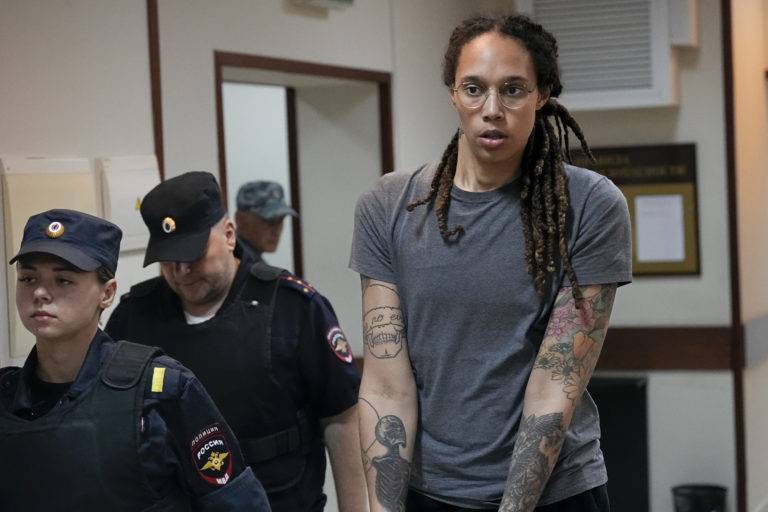
Russia freed WNBA star Brittney Griner on Thursday in a dramatic high-level prisoner exchange, with the U.S. releasing Viktor Bout, American officials said.

Griner is a two-time Olympic gold medalist whose monthslong imprisonment on drug charges brought unprecedented attention to the population of wrongful detainees.

Bout, nicknamed the “Merchant of Death,” inspired the 2005 Nicholas Cage drama Lord of War.

However, the swap carried a heavy price—and left behind an American jailed for nearly four years in Russia.

“This was not a choice of which American to bring home,” Biden insisted in his speech announcing the trade, and the decision to snub Russian prisoners like US Marine veteran Paul Whelan—as well as 61-year old teacher Marc Fogel.

Whelan’s family released a statement in response, reported ZeroHedge.

“I can’t even fathom how Paul will feel when he learns,” said the statement.

“Paul has worked so hard to survive nearly 4 years of this injustice,” it continued. “His hopes had soared with the knowledge that the US government was taking concrete steps for once towards his release.”

Biden’s authorization to release a notorious Russian felon underscored the escalating pressure that his administration faced to get Griner home, particularly after the recent resolution of her criminal case and her subsequent transfer to a penal colony.

The swap was confirmed by U.S. officials with direct knowledge of the negotiations who were not authorized to publicly discuss the deal before a White House announcement and spoke on condition of anonymity. Biden spoke with Griner on the phone Thursday while her wife, Cherelle, was in the Oval Office. The president was to address reporters later in the morning.

Russian and U.S. officials had conveyed cautious optimism in recent weeks after months of strained negotiations, with Biden saying in November that he was hopeful that Russia would engage in a deal now that the midterm elections were completed.

A top Russian official said last week that a deal was possible before year’s end.

Even so, the fact that the deal was a one-for-one swap was a surprise given that U.S. officials had for months expressed their their determination to bring home both Griner and Whelan, a Michigan corporate security executive jailed in Russia since December 2018 on espionage charges that his family and the U.S. government has said are baseless.

“How do you continue to survive, day after day, when you know that your government has failed twice to free you from a foreign prison?” said the statement from the Whelan family.

“I can’t imagine he retains any hope that a government will negotiate his freedom at this point,” it continued. “It’s clear that the US government has no concessions that the Russian government will take for Paul Whelan. And so Paul will remain a prisoner until that changes.”

In releasing Bout, the U.S. freed a a former Soviet Army lieutenant colonel whom the Justice Department once described as one of the world’s most prolific arms dealers.

Bout was serving a 25-year sentence on charges that he conspired to sell tens of millions of dollars in weapons that U.S officials said were to be used against Americans.

Griner’s arrest in February made her the most high-profile American jailed abroad. Her status as an openly gay black woman, locked up in a country where authorities have been hostile to the LBGT community, infused racial, gender and social dynamics into her legal saga and made each development a matter of international importance.

Her case not only brought unprecedented publicity to the dozens of Americans wrongfully detained by foreign governments, but it also emerged as a major inflection point in U.S.–Russia diplomacy at a time of deteriorating relations prompted by Moscow’s war against Ukraine.

The exchange was carried out despite deteriorating relations between the powers. But the imprisonment of Americans produced a rare diplomatic opening, yielding the highest-level known contact between Washington and Moscow—a phone call between Secretary of State Antony Blinken and Russian Foreign Minister Sergey Lavrov—in more than five months.

In an extraordinary move during otherwise secret negotiations, Blinken revealed publicly in July that the U.S. had made a “substantial proposal” to Russia for Griner and Whelan. Though he did not specify the terms, people familiar with it said the U.S. had offered Bout.

Such a public overture drew a chiding rebuke from the Russians, who said they preferred to resolve such cases in private, and carried the risk of weakening the U.S. government’s negotiating hand for this and future deals by making the administration appear too desperate.

But the announcement was also meant to communicate to the public that Biden was doing what he could and to ensure pressure on the Russians.

Besides the efforts of U.S. officials, the release also followed months of backchannel negotiations involving Bill Richardson, the former U.S. ambassador to the United Nations and a frequent emissary in hostage talks, and his top deputy Mickey Bergman. The men had made multiple trips abroad in the last year to discuss swap scenarios with Russian contacts.

Griner was arrested at the Moscow’s Sheremetyevo Airport in February when customs officials said they found vape canisters with cannabis oil in her luggage. She pleaded guilty in July, though still faced trial because admitting guilt in Russia’s judicial system does not automatically end a case.

She acknowledged in court that she possessed the canisters, but said she had no criminal intent and said their presence in her luggage was due to hasty packing.

Before being sentenced on Aug. 4 and receiving a punishment her lawyers said was out of line for the offense, an emotional Griner apologized “for my mistake that I made and the embarrassment that I brought on them.” She added: “I hope in your ruling it does not end my life.”

Her supporters had largely stayed quiet for weeks after her arrest, but that approach changed in May once the State Department designated her as unlawfully detained. A separate trade, Marine veteran Trevor Reed for Konstantin Yaroshenko, a Russian pilot convicted in the U.S. in a cocaine trafficking conspiracy, spurred hope that additional such exchanges could be in the works.

Whelan has been held in Russia since December 2018. The U.S. government also classified him as wrongfully detained. He was sentenced in 2020 to 16 years in prison.

Whelan was not included in the Reed prisoner swap, escalating pressure on the Biden administration to ensure that any deal that brought home Griner also included him.

Adapted from reporting by the Associated Press

Police Chief Rips San Fran Officials for Pulling Plug on Killer Robocops

(Mark Pellin, Headline USA) In response to fierce public backlash, the San Francisco Board of Supervisors this week reversed course on its decision to approve the use of killer robots deployed by police.

In a city besieged by soaring crime rates, violent open-air drug markets and roving gangs, San Francisco Police Chief William Scott ripped city leaders for caving to a public outcry that painted what he claimed was a misleading, hysterical version of the killer robot program.

In a statement to Bay Area news station KRON4, Scott said the false narrative “is a distraction from the real issue, which is having the tools necessary to prevent loss of innocent lives in an active shooter or mass casualty incident.”

The board of supervisors originally approved a measure that would have allowed robots to “only be used as a deadly force option when risk of loss of life to members of the public or officers are imminent and outweigh any other force option available to SFPD.”

Police wanted official permission to use its robots to hunt and kill targeted suspects that have been deemed too dangerous to be pursued by humans. Officials said the department’s existing 17 robots, which are remote-controlled, had never been used to attack anyone.

None of which seemed to matter when headlines of killer police robots sparked public protests, which ultimately led city officials to revoke the robots’s licenses to kill.

“I do not think removing the immediacy and humanity of taking a life and putting it behind a remote control is a reasonable step for a municipal police force,” wrote supervisors board member Gordon Mar. “I do not think robots with lethal force will make us safer, or prevent or solve crimes.”

Officers working the front lines in a city that has devolved into a cesspool of crime and daily violence disagreed.

“We want to use our robots to save lives – not take them,” Scott said. “To be sure, this is about neutralizing a threat by equipping a robot with a lethal option as a last case scenario, not sending an officer in on a suicide mission.”