Union Fights Signal Danger Ahead for Bidenomics

(By Susan Crabtree, RealClear Wire) Just a few hours before President Biden tied his political fate to the economy, embracing the term “Bidenomics” in a Chicago speech Wednesday, he was still trying to dispel worries about a looming recession. A reporter asked Biden, before he boarded Marine One, whether he believed the worst of inflation was over.

“Let me put it this way: I’ve been hearing every month there’s going to be a recession next month,” the president responded. “Two-thirds of economists and the major leaders in the banks think we’re not going to have a recession. I don’t think so either.”

The exchange underscores the fragile state of the economy that most Americans and independent analysts find concerning. Federal Reserve Chairman Jerome Powell said he expects more interest-rate increases ahead as inflation remains “well above where it should be.” Meanwhile, only 24% of voters believe the country is on the right track, with 38.3% approving of Biden’s handling of the economy, according to RealClearPolitics’ poll average.

The White House this week put a far glossier spin on its inflation record, asserting that wages have gone up during Biden’s tenure and that the inflation rate has been cut in half from where it was a year ago – lower than any other wealthy Group of 7 nation, according to Biden’s Council of Economic Advisers.

Republicans dismissed the claims as brazen gaslighting, pointing out that inflation spiked after Biden took office, rising from 1.4% in January 2021 to 5.4% by June 2021, and 7.5% right before Russia invaded Ukraine, peaking at 9.1% in June 2022 before demand slowly began to sink it to its current 4%.

While Democrats and Republicans spent the week debating whether Biden’s policies have helped or hurt the middle class, other economic signs were flashing red, warning of danger ahead. Biden has long blamed the spike in inflation on a temporary COVID hangover and bottlenecks that snarled supply lines, which he said have smoothed out over time as employees have returned to work.

Now several fights, led by the Teamsters Union’s aggressive new president, Sean O’Brien, could throw kinks into the nation’s shipping and trucking logistics in a matter of weeks. During his Wednesday remarks, Biden repeated his promise to be the most pro-union president in history and said that under his watch, Americans’ support for unions is at its strongest level in 60 years.

“We are making it easier to empower workers by making it easier to join the union,” he told the audience of about 200 supporters.

Earlier this month, the president held his first reelection rally in Philadelphia at an event hosted by the AFL-CIO and attended by 2,000 cheering union members. The massive AFL-CIO and 17 other unions, including the American Federation of Government Employees, announced their early endorsements of Biden’s reelection.

While continuing his pro-union drumbeat, regularly sprinkling his speeches with pledges to protect “good-paying union jobs,” Biden is pointedly avoiding discussing several looming union threats to disrupt crucial supply chains and likely upend progress on inflation. The Teamsters ramped up their rhetoric this week after voting to authorize strikes at two of the nation’s largest trucking fleets if new labor deals are not struck by the end of next month.

Teamsters working for shipping giant UPS are threatening to strike on Aug. 1 if their demands for better pay and working conditions aren’t met. If the current negotiations break down, some 340,000 warehousing, transportation, and delivery workers could walk off the job in what would be the largest U.S. strike in 60 years. UPS brown vans deliver more than 19 million packages a day.

The workers want higher pay; the elimination of so-called two-tier wages, where newer workers are paid less than older employees for the same job; the removal of surveillance cameras from delivery trucks; and more full-time positions.

The rhetoric between the two sides escalated this week when O’Brien demanded that UPS provide a tentative contract agreement that its leadership can support within the next week after UPS reportedly returned to the bargaining table Tuesday without an updated counteroffer to present to the union.

“When we say the current contract expires July 31, that means we want a new contract in place starting August 1,” O’Brien said in a statement this week. “Not in six months. Not next spring. We demand a historic new contract August 1 with more money in our pockets immediately.” Warning that a nationwide UPS strike is imminent, O’Brien added, “UPS has wasted enough time and hoarded these record profits. Our members want what they have earned.”

Just two weeks ago, Teamsters at TForce Freight, representing more than 7,000 truck drivers and delivery workers nationwide, voted to authorize a strike with the same July 31 deadline for negotiations. TForce Freight operates in the less-than-truckload, or LTL, shipping market, which handles smaller loads that can be broken down into units less than 150 pounds.

At the same time, the union is battling another large LTL trucking employer, Yellow Corp., over a restructuring plan to modernize its operations to compete in the U.S. $58 billion LTL market. Yellow, which has struggled financially for years, says it needs to re-engineer its business plans and consolidate terminals to compete in an industry dominated by non-union companies. The need is particularly urgent because the company must refinance $1.3 billion in debts from loans maturing next year or face bankruptcy.

Nick Vyas, director of the Center for Global Supply Chain Management at the University of Southern California’s Marshall School of Business, said allowing the strikes to take place and Yellow to fail could have a devastating impact on the economy, particularly because the boom in online shopping and home delivery, which began during the pandemic, is still going strong.

Vyas worries that organized labor is focused on extracting short-sighted demands and resisting “transformative forces” while making their employers less competitive overall, even forcing some U.S. companies that have been in business for 50 or 100 years to fail or transition out of certain industries.

“The unionized companies that provide better wages, benefits, and a better lifestyle for their employers could disappear, and you will have a marketplace based on smaller non-unionized companies that will cater to consumer needs,” Vyas told RealClearPolitics. “At the end of the day, it’s like putting a rock in the middle of a stream of water. The water will find a way to go around … consumers are not going to slow down their demand for technological innovations and faster service.”

In 2020, Yellow received a $700 million pandemic relief loan in exchange for the federal government assuming a 30% equity stake in the company. A bankruptcy could leave American taxpayers with more financial burden from the company and a loss of 30,000 unionized trucking jobs.

The Teamsters have vigorously opposed Yellow’s plans to require some workers to take on additional dock work, loading and unloading freight, among other changes. After an eight-month impasse, Yellow filed suit against the Teamsters this week, arguing that it had the right under its labor contract to implement the restructuring plan. The carrier is seeking $137 million in damages for what it argues is a breach of contract. “Without these crucial reforms, which are standard practice in the industry today, Yellow will not survive,” the company said in a statement.

O’Brien fired back, accusing Yellow of filing a baseless allegation because its management has failed the company and can no longer live up to the contract terms it agreed to. “This lawsuit is a desperate, last-ditch attempt to save face,” said Teamsters General Secretary-Treasurer Fred Zuckerman.

The company argues it’s simply trying to stay afloat, repay its loans from the federal government and save the jobs of its 30,000 workers while continuing an undisrupted supply chain to hundreds of thousands of its customers across the country. “Driving Yellow out of business will badly damage the supply chain, lessen competition and raise the price of shipped goods and feed inflation,” the company said Tuesday in announcing the lawsuit.

“We do not take this action lightly, but the Union’s leadership has left us with no choice,” Yellow’s management said in a statement. “For many months, we have made good faith efforts to meet with the IBT to propose a path forward that works for all parties, but they refuse even to meet, let alone engage in honest talks.”

The complaint said the Teamsters had backed the company’s modernization effort for years and approved the first of the effort’s three phases. The union, however, reversed course when O’Brien became president and pledged to take a “militant approach” in blocking the restructuring. In the lawsuit, Yellow said it reached out to Biden to try to broker a deal, but O’Brien rejected the White House’s efforts. A White House spokesperson acknowledged engaging with both parties but declined to comment on the legal dispute.

“We are assessing any potential impact on supply chains and workers,” the spokesperson told RCP.

It’s a delicate situation for Biden, who would like to add the Teamsters to his roster of labor endorsements, but who rubbed some union members the wrong way for his role in brokering a deal to avert a disruptive rail strike just before Christmas last year. Some union members were disappointed by the negotiated terms and still hold Biden accountable.

While Biden wants strong union backing for his reelection, he’s also trying to lure more companies and manufacturing back to the U.S. after decades of businesses moving offshore for cheaper labor and less regulation.

“The president should tone down narratives about just being pro-labor,” Vyas argued. “Instead, he needs to show he’s doing the right thing to keep the country and its infrastructure and manufacturing base competitive.”

On Wednesday, Biden said his government investments in infrastructure, which most Republicans opposed, were already increasing manufacturing jobs here at home. Under his leadership, he said, U.S. products, such as semiconductors, and even whole industries that had moved offshore have started to return.

“We went from producing 40% of those chips down to 10%,” he told the crowd. “Not anymore. Bidenomics is going to grow those jobs and products right here at home. I mean it. It’s not a joke.”

In the coming weeks, as the Teamsters and trucking industry battles come to a head, Biden won’t so easily remain on the sidelines avoiding the political or economic fallout. The state of the economy often determines whether first-term presidents stick around for four more years. As it stands now, voters are skeptical, the economy is shaky, and the White House’s big “Bidenomics” embrace just tied the president even more closely to its trajectory.
SCOTUS Overturns Schools’ Affirmative Action as Violation of Equal Protection Clause

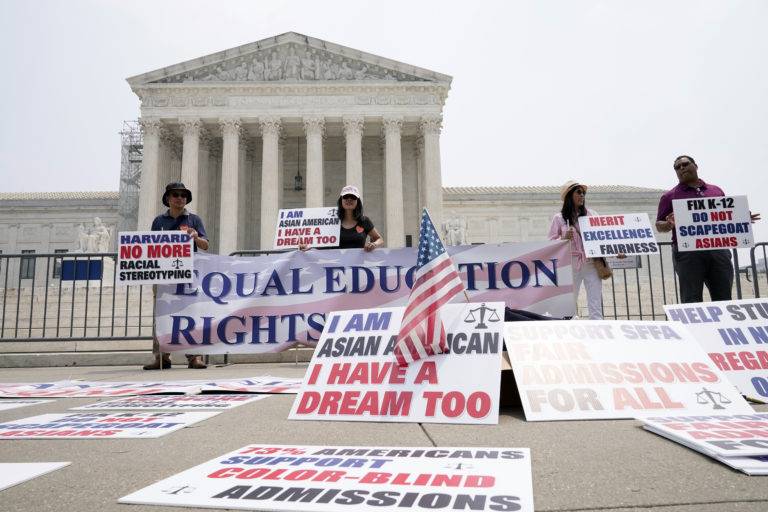
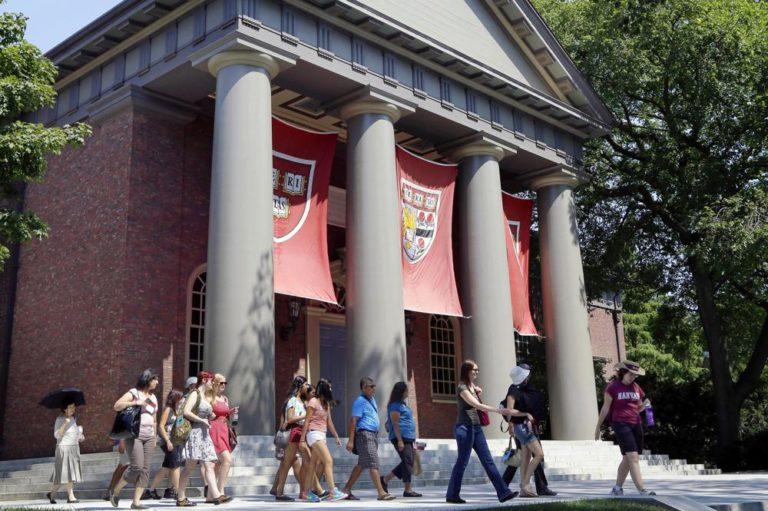
(Robert Jonathan, Headline USA) The U.S. Supreme Court ruled Thursday that affirmative action admissions policies at the college and university level were unconstitutional.

“Ending racial preferences in college admissions is an outcome that the vast majority of all races and ethnicities will celebrate,” said Edward Blum, the founder and president of Students for Fair Admissions, in a statement reacting to the decision.

Blum’s organization was responsible for bringing the pair of lawsuits that challenged the racist policies at Harvard University and the University of North Carolina.

“A university doesn’t have real diversity when it simply assembles students who look different but come from similar backgrounds and act, talk, and think alike,” he said.

Unlike the North Carolina redistricting case decided Tuesday, in which Chief Justice John Roberts’s nuanced majority opinion that gave rise to more questions than answers, Thursday’s ruling on affirmative action seemed definitive.

The 6-3 decision, which effectively overruled the 20-year-old Grutter v. Bollinger, is apt to be considered the biggest landmark of the current session, due to end Friday with another anticipated bombshell over the Biden administration’s student-loan amnesty.

Like last year’s Dobbs decision, which overturned the longstanding Roe v. Wade precedent on abortion, the ruling is also likely to incur the wrath of leftists, who have aggressively sought to undermine the legitimacy of the court throughout the intervening year, even as some of the right-leaning court’s decisions have broken in their favor.

Not so on Thursday, as the high court’s majority determined that race-based educational entry policies throughout the U.S. violated the the Equal Protection Clause of the 14th Amendment, which requires equal application of the law.

“Eliminating racial discrimination means eliminating all of it,” Roberts wrote in the majority opinion. “And the Equal Protection Clause, we have accordingly held, applies ‘without regard to any differences of race, of color, or of nationality’—it is ‘universal in [its] application.'”

In the ruling, Roberts asserted, in part, that protocols based on cosmetic diversity were unlawful.

“[T]he student must be treated based on his or her experiences as an individual—not on the basis of race,” he wrote.

“Many universities have for too long done just the opposite,” he continued. “And in doing so, they have concluded, wrongly, that the touchstone of an individual’s identity is not challenges bested, skills built, or lessons learned but the color of their skin. Our constitutional history does not tolerate that choice.”

The full high-court action—comprising 237 pages, which included three concurring opinions and two dissents, as well as the majority opinion—contained a lot to unpack for legal pundits, stakeholders and Americans in general in the hours and days ahead.

“Thursday’s 6-3 decision will force a reworking of admissions criteria throughout American higher education, where for decades the pursuit of diversity has been an article of faith,” the Wall Street Journal reported.

It remained to be seen how, and to what extent, colleges would “rework” their polices.

“I expect that colleges and universities are already working on the circumvention of the decision,” George Washington University law professor Jonathan Turley wrote on Twitter. “They can use essays to identify race, even encouraging students to share any struggles with discrimination.”

Whether connected or not, some previously announced that they were dropping the SAT or other standardized testing results from potential student evaluations.

Ahead of the ruling, several major media outlets, including Politico, reported that schools likely would begin using household incomes and ZIP codes as factors to replace race-based considerations.

Headline USA’s Ben Sellers contributed to this report.

NYTimes Admits DeSantis Was RIGHT about Martha’s Vineyard Migrants

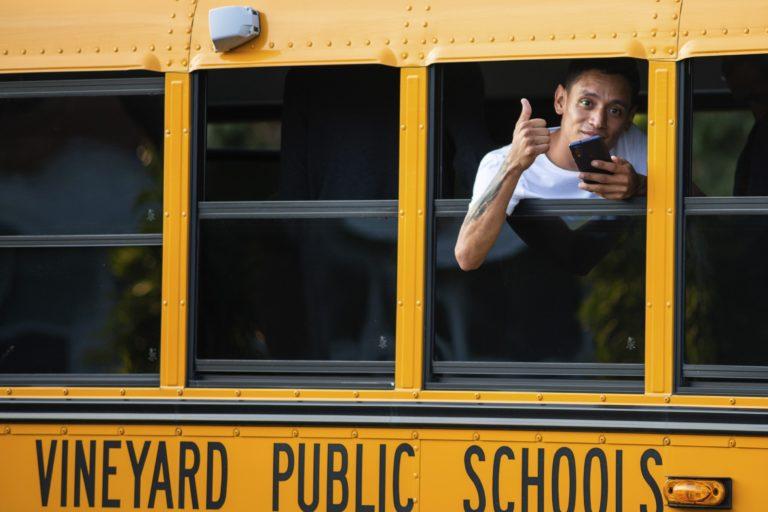
(Molly Bruns, Headline USA) A recent report from the New York Times admitted that several of the illegal immigrants sent to Martha’s Vineyard by Florida Gov. Ron DeSantis in September 2022 remained on the island and, by all accounts, have no intentions to leave.

DeSantis flew 50 illegal immigrants from Texas to the Massachusetts haven, which is home to many of our nations elites—including, but not limited to, former President Barack Obama, the Clinton family, actor Bill Murray and talk show host Oprah Winfrey.

Residents welcomed and quickly dismissed many of the illegals from the island, moving them to a nearby military facility.

According to the Daily Caller, the migrants who opted to stay in the area and work for locals have been doing very well for themselves.

Deici Cauro, 25, came from Venezuela and started working as a landscaper on the island. Her brother Daniel, 29, and her cousin Eliud Aguilar, 28, started a painting and roofing company as well.

“I did not even know where Martha’s Vineyard was. And now I feel welcomed by everybody here. I’m working, making friends and this is home for me now,” Cauro said. “We came here to work in any job, no matter how hard. We are just happy to be living here.”

Activists accused DeSantis of using the migrants as political props and claimed there was no work for the migrants in the wealthy commune.

This appears to be false for those migrants who could obtain legal work status in the States.

Migrants who struggled to find work found shelters to temporarily house them—another luxury Martha’s Vineyard residents promised was an impossibility.

More recently, DeSantis flew a couple of planes of illegal immigrants to Sacramento, Calif. as part of his “Unauthorized Alien Transport Program.”

Democrat Gov. Gavin Newsom responded angrily to the news, launching a kidnapping investigation into the flights. However, DeSantis’s team checked all the boxes, having the migrants sign waivers and vocally confirm that they had received fair treatment and traveled of their own volition.

NBC Scrambles for Cover after Blaming Conservatives for Creepy Groomer Chant

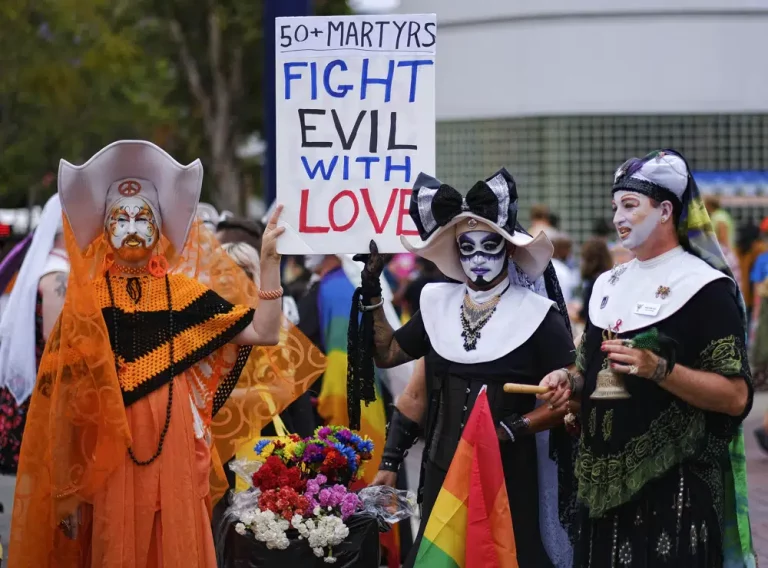
(Jacob Bruns, Headline USA) After LGBT activists chanted that they are coming to groom the children of conservative parents at a recent “pride” parade, an NBC journalist attempted to blame conservatives for the radical but honest chant, Revolver reported.

“We’re here, we’re queer, we’re coming for your children,” the child groomers proclaimed, with some of them dancing topless in the crowd, according to a video posted on Twitter.

Rushing to the defense of the grooming activists was NBC journalist Tyler Kingkade, who penned an op-ed for NBC’s “out and proud” section, suggesting that the chant is really a good thing.

According to Kingkade, the degenerates were just having fun, and often chant threatening things in order to mock conservatives.

In the past, they have chanted: “Kill, kill, kill, we’re coming to kill the mayor,” and made jokes about pubic hair and sex toys during marches.

People at drag marches, according to the report, tend to sing a song titled “God is a lesbian.”

Kingkade also interviewed Brian Griffin, the original organizer of the NYC Drag March, for his piece, noting that people at such events just say things–whatever things they want to say.

“It’s all just words,” Griffin claimed, dowplaying the serious nature of the threats to conservatives and their children. “It’s all presented to fulfill their worst stereotypes of us.”

Kingkade further argued that the “coming for your children” chant is acceptable because it has been used for years at pride events. The “queer community,” he claimed, uses the chant to “regain control of slurs against LGBTQ people.”

This proves, according to Kingkade, that “right-wing activists” are using the video “to weaponize an out-of-context remark” in order to “further stigmatize the queer community.”

His argument was supported by Karla Jay, the first female chair of New York’s Gay Liberation Front and a professor emerita at Pace University, who claimed that “you can’t blame the victims here, and that’s what the right wing is doing.”

Racial Discrimination in Military Kept Intact by SCOTUS Ruling

(Ken Silva, Headline USA) The Supreme Court on Thursday struck down affirmative action in college admissions, declaring race cannot be a factor and forcing institutions of higher education to look for new ways to achieve diverse student bodies.

Conservatives and other observers are celebrating the ruling as a win for racial equality and meritocracy.

However, the SCOTUS decision keeps intact the U.S. military’s ability to racially discriminate. Chief Justice John Roberts made that clear in a footnote to his decision.

Roberts noted that SCOTUS was urged to review race-based admissions policies at the country’s military academy. But Roberts and his colleagues declined to conduct this review on the grounds that the military academies weren’t a party to the case before them.

“No military academy is a party to these cases … and none of the courts below addressed the propriety of race-based admissions systems in that context,” Roberts said.

“This opinion also does not address the issue, in light of the potentially distinct interests that military academies may present.”

Thursday’s SCOTUS decision stems from challenges to race-based admission policies at Harvard and the University of North Carolina, the nation’s oldest private and public colleges, respectively.

Chief Justice John Roberts said that for too long universities have “concluded, wrongly, that the touchstone of an individual’s identity is not challenges bested, skills built, or lessons learned but the color of their skin. Our constitutional history does not tolerate that choice.”

Justice Clarence Thomas, — the nation’s second black justice, who had long called for an end to affirmative action — wrote separately that the decision “sees the universities’ admissions policies for what they are: rudderless, race-based preferences designed to ensure a particular racial mix in their entering classes.”

In a separate dissent, Justice Ketanji Brown Jackson — the court’s first black female justice — called the decision “truly a tragedy for us all.”

The vote was 6-3 in the North Carolina case and 6-2 in the Harvard case.

Former President Donald Trump, the current GOP presidential frontrunner, wrote on his social media network that the decision marked “a great day for America. People with extraordinary ability and everything else necessary for success, including future greatness for our Country, are finally being rewarded.”

Former President Barack Obama said in a statement that affirmative action “allowed generations of students like Michelle and me to prove we belonged. Now it’s up to all of us to give young people the opportunities they deserve — and help students everywhere benefit from new perspectives.”

The Associated Press contributed to this report.

Ken Silva is a staff writer at Headline USA. Follow him at twitter.com/jd_cashless.

Quasi-Pornographic AI Titles Dominate Amazon’s Young Adult Best-Seller List

(Jacob Bruns, Headline USA) Amazon’s Young Adult romance section best-seller list has been dominated by nonsensical and quasi-pornographic artificial intelligence-produced novels, Vice reported.

As of Wednesday, Amazon appeared to be in the process of removing dozens of titles that had secured spots in the section’s “top 100” by way of “click farming”—that is, hiring low-wage workers to click links over and over again to boost a product’s views.

Titles include the likes of When the three attacks, Apricot bar code architecture, The journey to becoming enlightened is arduous, Department of Vinh Du Stands in Front of His Parents’ Tombstone and Jessica’s Attention.

Caitlyn Lynch, an independent author, suggested that AI has fundamentally altered the way that Amazon works.

“The AI bots have broken Amazon,” Lynch wrote in a tweet on Monday.

According to Lynch, only 19 out of the top 100 books in the “Best Sellers in Teen & Young Adult Contemporary Romance eBooks” section were written by living authors during a recent review of the site.

All of the others were allegedly written by artificial intelligence bots.

Many of the books contained poorly-written and raunchy passages. The opening lines of Apricot bar code architecture, for example, were: “Black lace pajamas, very short skirt, the most important thing, now this lace pajamas are all wet.”

The first page also contained allusions to being “sexy,” and the book as a whole included long chapters of incomprehensible dialogue.

Lynch predicted that AI-generated novels “will absolutely be the death knell for [Kindle Unlimited] if Amazon cannot kill this off,” because writers will pull their books from Amazon in search of markets that actually promote writing and are not vulnerable to the practice of click farming.

For others, however, the development raised deeper questions about what constitutes literary and artistic merit.

And some readers were intrigued to find out what the newly banned books might actually contain that was so problematic that Amazon had to deplatform them.

Cyberhacking ‘Furries’ Are Latest Addition to Trans-Terrorism Movement

(Molly Bruns, Headline USA) A hacking group of “gay furries” known as SiegedSec claimed it had “defaced” government websites and gained access to several servers in five different states—Texas, Nebraska, South Dakota, Pennsylvania and South Carolina—in defense of transgender rights.

According to the Daily Dot, the announcement from the hacking group was titled “be gay do crime,” and detailed the different areas of each state’s websites it planned to hit.

“We have proudly defaced the South Dakota Boards and Commissions website! We left little special messages across their site,” the group wrote.

“Unfortunately, they have now fixed the defacement,” it continued. “Since it seems South Dakota didn’t appreciate our gift, we will offer gifts to someone else. We’ve hacked and leaked documents from the Nebraska Supreme Court Intranet and South Carolina Criminal Justice Information Services.”

The group also sent a broadcast from the Pennsylvania Provider Self Service administration panel. It also managed to access 15,000 child-care records, but claimed it would not leak them due to the sensitive nature of the documents.

It ended the announcement by claiming it would “give Texas another gift soon.”

Despite the great amount of attention the attack drew, the hackers took away very little private information.

The Texas Behavioral Health Executive Council said the group took away only a list of information on licensed medical practitioners, which was already available in the public domain.

The file from the Nebraska Supreme Court Intranet included the names and personal phone numbers of several probation officers within the state.

The attacks were part of an ongoing campaign against states that passed laws prohibiting genital-mutilation surgeries, cross-hormone therapy and other abusive cross-sex treatments for minors.

“Trantifa” has been launching violent threats against their opposition with greater frequency since GOP governors started taking action against the destructive agenda.

“They view the U.S. as systemically racist, that it’s subjugated queer people, and that states passing laws against child mutilations is part of a trans genocide,” journalist Julio Rosas told the Daily Mail. “And they’re fighting back.”

Nonetheless, hacking experts such as Brett Callow, a threat analyst at cybersecurity firm Emsisoft, expressed skepticism of SiegedSec’s claims.

“It shouldn’t be assumed that SiegedSec’s motivation is as straightforward as they say,” Callow told the Daily Dot. “Hacking photos of potholes and other fairly non-sensitive data seems like a very odd way of protesting a state’s policies.”

TSA Can’t Rape Passengers with Impunity, 9th Circuit Rules

(Ken Silva, Headline USA) The 9th Circuit Court of Appeals ruled this week that the Transportation Security Administration doesn’t have legal immunity to rape airline passengers—overturning a lower court decision that had squashed a sexual assault lawsuit against the TSA.

The 9th Circuit’s Tuesday decision stems from an incident on June 30, 2019, when a TSA officer allegedly sexually assaulted Michele Leuthauser at the Harry Reid International Airport in Las Vegas.

“Leuthauser was directed to stand on a floor mat with footprints painted on it to show where to place her feet. Leuthauser alleges that [the TSA officer] directed her to spread her legs far more widely than the footprints indicated,” the 9th Circuit said in its decision, recounting the facts of the case.

“[The TSA officer] then conducted a pat-down during which [the officer] slid her hands along the inside of Leuthauser’s thighs, touched her vulva and clitoris with the front of her fingers, and digitally penetrated her vagina. She asserts that she suffered symptoms of emotional distress, including shortness of breath, uncontrollable shaking, and nausea.”

Leuthauser sued the TSA and the officer over the matter, but a lower court tossed out her lawsuit.

A judge ruled that TSA officers are not “investigative or law enforcement officers” under the Federal Tort Claims Act, and therefore have sovereign immunity and can’t be sued in federal court.

The 9th Circuit overturned that decision Tuesday, ruling that federal law “plainly provides that [TSA officers] are officers of the United States empowered by law to execute searches for violations of Federal law.”

“We hold that TSOs fall within the ordinary meaning of the proviso’s definition of investigative or law enforcement officers,” the appeals court said. “Therefore, sovereign immunity does not bar Leuthauser’s claims for battery and intentional infliction of emotional distress.”

Privacy advocates have celebrated the 9th Circuit’s decision as a victory that will help prevent TSA abuse.

“The case decided today by the 9th Circuit will now return to the U.S. District Court in Las Vegas for much-belated consideration of the claim against the TSA and its officers,” said Ed Hasbrouck, a consultant to the nonprofit Identity Project.

“Kudos to Jonathan Corbett, who has represented the plaintiffs in each of these cases,” Hasbrouck added.

“Coals for Christmas to the TSA for continuing to argue for impunity for its staff to one Circuit Court after another, despite the growing weight of precedent against the agency and, perhaps more importantly, the moral repugnance of arguing that any agents of the government should be entitled to assault or rape members of the public with impunity.”

Ken Silva is a staff writer at Headline USA. Follow him at twitter.com/jd_cashless.

Common Household Medical Device Has Users Fearing New Risk of ‘Biden Face’

(Ben Sellers, Headline USA) A bleary-eyed President Joe Biden emerged from his daytime nap on Wednesday only to make double headlines, both for his muddled words and his alarming appearance.

When asked whether Russian President Vladimir Putin had been weakened by recent events—namely a staged coup by one of his longtime confidants that helped shore up Russian military support, root out potential defectors and stealthily recenter his base of military power in Belarus—Biden appeared not to recall what country his geopolitical nemesis was the leader of.

“It’s hard to tell, but he’s clearly losing the war in Iraq, he’s losing the war at home and he’s become a bit of a pariah around the world,” Biden said.

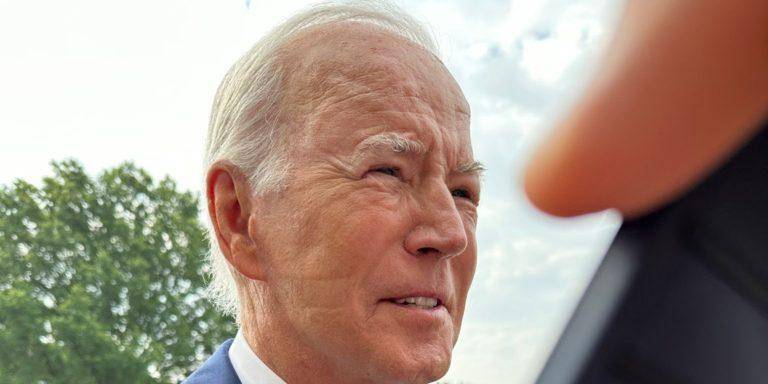
The 80-year-old president—believed to have undergone Botox injections, a facelift and other cosmetic rejuvenation treatments in the past—also appeared extra wrinkly during the impromptu presser.

According to CNN, the extra lines in his face were indentations from the straps of a CPAP (continuous positive airway pressure) machine, which he recently began using to treat sleep apnea.

Despite having just enjoyed a relaxing weekend at the presidential retreat, Camp David, with his son Hunter and a team of lawyers, Biden seems to have been struggling to maintain his normal sleeping routine, said White House spokesman Andrew Bates.

“Since 2008, the president has disclosed his history with sleep apnea in thorough medical reports,” Bates said. “He used a CPAP machine last night, which is common for people with that history.”

In fact, CNN noted that Biden began using the device several weeks ago, according to an unnamed official.

His condition notwithstanding, CNN insisted that “Biden’s physicals have all indicated he is fit to serve as president.”

Still, some social-media users questioned why the indentations remained on his face much later in the day than would have been expected for normal CPAP use.

At least one Twitter user couldn’t help but note the comparison with another well-known ruler who relied on a mask for assisted ventilation.

According to the American Medical Association, some 30 million Americans may suffer from some form of sleep apnea, which may develop over time due to the partial or complete collapse of airways while sleeping, often as a result of age or weight gain.

However, only around 6 million people have been diagnosed with the condition, said the AMA.

It is unclear whether Biden’s public struggles with sleep apnea may help raise additional awareness about it and encourage more people to consult with their physicians about their own sleep struggles—or if the fear of contracting “Biden face” as a side effect might make the treatement worse than the disease.


Ben Sellers is the editor of Headline USA. Follow him at twitter.com/realbensellers.

SCOTUS N.C. Redistricting Case More Complex than Media, Dems Pretend

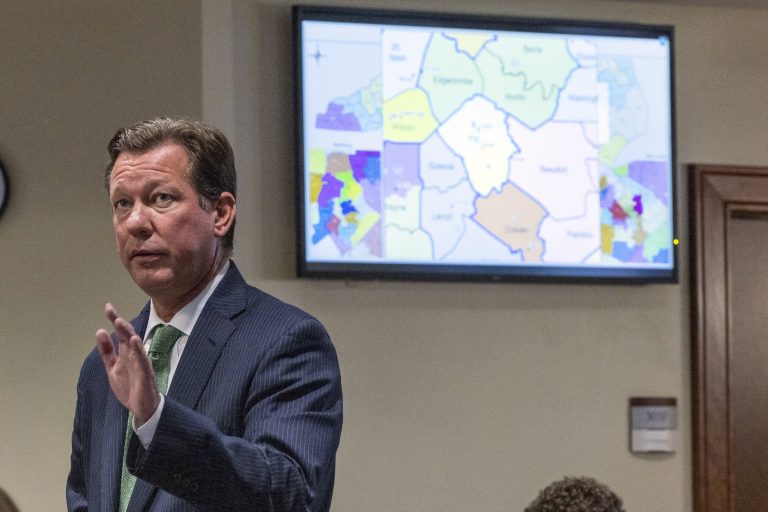
(Robert Jonathan, Headline USA) The corporate media is portraying the U.S. Supreme Court decision in the North Carolina redistricting case as a big defeat for the GOP.

However, the court’s decision on Tuesday to affirm the relatively recent authority of state courts to review legislative redistricting maps and, if necessary, force them to be redrawn, may, in fact, be more nuanced.

The full ramifications of the Moore v. Harper decision are yet to play out, but it could prompt more courthouse activity in 2024 and beyond that might cut both ways—although radical Democrats are much more adept at engaging in lawfare.

As Chief Justice John Roberts wrote for the majority in the 6-3 decision, which included the court’s three leftists and its three centrists, the issues in the case “are complex and context specific,” which is hardly a recipe for clarity.

Sometimes the only real winners in this kind of scenario are the lawyers and their billable hours. Moreover, Roberts is known for trying to achieve a consensus on the high court across ideological lines, the downside of which is narrow or vague decision-making.

“Americans hoping for a clear ruling that would reduce disruptive litigation ahead of the next election will be disappointed,” the nonpartisan Honest Elections Project said in statement about the decision.

“But in the final analysis, Moore v Harper may wind up being a crucial buffer against the Left’s endless campaign to get courts to rewrite election laws for partisan gain.”

The case found its way to the high court after the-then Democrat-controlled North Carolina Supreme Court tossed out the congressional map created by the GOP-controlled legislature because of what the state justices deemed partisan gerrymandering.

Republican officials appealed the ruling to the Supreme Court.

In short, the North Carolina case revolved around whether state courts can second-guess politicians, i.e., nullify redistricting maps created by North Carolina’s General Assembly, particularly given the U.S. Constitution’s Election Clause.

That clause, Article 1, Section 4, of the Constitution reads that “The Times, Places and Manner of Holding Elections for Senators and Representatives shall be prescribed in each State by the Legislature thereof…”

In the run-up to this week’s decision, the left was hyperventilating that the conservative Supreme Court was ready to adopt the so-called independent state legislature theory as a power grab.

“The Elections Clause does not insulate state legislatures from the ordinary exercise of state judicial review,” Roberts declared in legalese, however, more than implying that the courts do have a role to play.

In analyzing the outcome of Moore v. Harper, “a majority of the justices rejected the idea that the independent state legislature theory gives state legislatures broad power over federal elections, without any role for state courts in supervising the exercise of that power,” the SCOTUS Blog summarized.

In the decision, Roberts went on to write that “In sum, our precedents have long rejected the view that legislative action under the Elections Clause is purely federal in character, governed only by restraints found in the Federal Constitution…”

That authority at the state court level is not open-ended, Roberts also seemed to suggest in a somewhat contradictory passage, but at the same time, federal courts could also jump into these disputes.

“State courts retain the authority to apply state constitutional restraints when legislatures act under the power conferred upon them by the Elections Clause,” Roberts’ opinion asserted.

“But federal courts must not abandon their own duty to exercise judicial review. In interpreting state law in this area, state courts may not so exceed the bounds of ordinary judicial review as to unconstitutionally intrude upon the role specifically reserved to state legislatures.”

As a practical matter, this could further muddy the waters in certain circumstances, resulting in more legal wrangling in court between Democrat and Republican attorneys.

Influential constitutional law scholar Jonathan Turley quipped about the left’s dire warnings, “Nothing fuels election fundraising like abject fear…In fairness to some of the less bombastic critics, the acceptance of the independent state legislature theory would have produced a radical change in how elections are handled in the United States.”

The George Washington University law professor added that “the independent state legislature theory was based on a good-faith but clearly minority view” of an interpretation of the Election Clause language.

In dissent, Justice Clarence Thomas pointed out, among other things, that the controversy was moot and should not have led to his colleagues rendering a decision in the first place.

He also described the Roberts ruling as merely “advisory” in nature.

After the 2022 elections, Republicans gained control of the North Carolina Supreme Court, which overturned the earlier decision.

“Some legal experts said Tuesday’s decision gives federal courts, including the Supreme Court, a bigger role to play in second-guessing state actions on election law, with few guidelines,” the Washington Post reported about the decision that otherwise won praise from Democrats and civil rights groups.

According to Roberts, when it comes to federal election law, “state courts may not transgress the ordinary bounds of judicial review.”

The North Carolina legislature, which is starting from scratch in drawing up new district boundaries, remains in GOP hands.

The ruling limits “state courts’ ability to wrest control of elections law from state legislatures,” The Federalist noted.

“The ruling does not, however, entirely stymie activist attempts to use courts to override elected legislators’ decisions about election law,” the news outlet cautioned.