Suspected Terrorism-Funder Arrested After Being Released Into U.S. at Border

(By Bethany Blankley, The Center Square) Another foreign national who entered the U.S. illegally and was released into the country by the Biden administration had an extensive criminal record and was wanted in Venezuela for financing terrorism.

In April 2021, Border Patrol agents arrested a Venezuelan national for illegal entry near San Luis, Arizona, according to U.S. Immigration and Customs Enforcement. He was charged with inadmissibility under U.S. immigration law and issued a notice to appear before an immigration judge with the Justice Department’s Executive Office for Immigration Review (EOIR).

When he was given the notice to appear, he was released on parole into the U.S. pending the outcome of his scheduled immigration hearing.

Four months after he was released into the U.S., in August 2021, a criminal court in Valencia, Venezuela, issued an arrest warrant for him for “charges of continuous fraud, money laundering and association regarding organized crime and financing of terrorism.” Venezuela’s international criminal warrant was the only reason he was arrested because its warrant alerted ERO Chicago officials to his fugitive status.

Two years after he was first apprehended in Arizona by Border Patrol agents, he was again arrested August 8, 2023, by U.S. Customs and Border Protection’s Enforcement and Removal Operations Chicago’s Fugitive Operations Team, according to a news release by CBP ERO.

“ERO Chicago is committed to apprehending those who mistakenly believe they can commit crimes and unlawfully hide from justice here,” ERO Chicago acting Field Office Director LaDeon Francis said. “Those who engage in fraud and funding terrorism must be held accountable for their crimes – especially those who have also openly violated our federal immigration laws.”

When ERO Chicago officials began looking for the Venezuelan man, they then confirmed he was living in ERO Chicago’s area of responsibility. Agents located and detained him without incident, they said. The Venezuelan national is currently in ICE custody pending removal proceedings.

This is not the first time a foreign national with ties to terrorism has been released into the U.S. A recent Inspector General report found that a known, suspected terrorist was allegedly released by Yuma Station Border Patrol agents in Arizona because “ineffective practices and processes for resolving inconclusive matches with the Terrorist Watchlist led to multiple mistakes.”

The only reason he was caught was because he was flagged through a Transportation Security Administration airport screening in California when he tried to board a plane heading to Tampa, Florida.

The OIG found that he was released into the U.S. without first confirming that he was on the Terrorist Screening Dataset, otherwise known as the Terrorist Watchlist.

The reason he was released, one Yuma official admitted to the OIG, is because agents were too busy processing a flood of illegal foreign nationals into the country with a station at full capacity, meaning there was nowhere to hold him, and he was released.

Despite agents being overwhelmed with historically high illegal border crossings, agents are still apprehending known and suspected terrorists, according to CBP data. This fiscal year as of July 18, when the data was last updated, Office of Field Operation agents apprehended 61 KSTs at ports of entry at the southwest border. Border Patrol agents apprehend 140 between ports of entry.

Apprehensions of KSTs at the southwest border are significantly lower than apprehensions at the northern border, which total 324 fiscal year to date.

At both borders combined, 525 known, suspected terrorists have been apprehended this fiscal year into July.

Feds Waste $7 Billion on Near-Empty Offices

(By Adam Andrzejewski, RealClear Wire) The U.S. government spends about $7 billion each year to rent millions of square feet of office space that is all but left empty, according to the Wall Street Journal.

The Journal cited a recent Government Accountability Office report, which studied the usage of government office buildings. They surveyed 24 federal agencies between January and March 2023, and found these offices were only about 20% occupied on average. The GAO assumed these buildings were a representative sample of all federal office space.

Even with an ever-growing number of bureaucrats, recent remote work policies have left federal offices as ghost towns.

Agencies across the board reported low office utilization, with the bottom quarter of surveyed offices averaging about 9% attendance, and none of the 24 agencies reported a utilization above 50%.

The low office utilization is partially because of work-from-home policies instituted during the pandemic that were never updated. Even before the pandemic, however, these buildings were substantially below capacity. One agency claimed even if they had full attendance, their buildings would only be 67% full.

The federal government leases about 511 million square feet of office space each year, costing about $7 billion to rent, operate and maintain. Congress tried to address this bloat on a bipartisan basis in 2016 with the Federal Property Management Reform Act, but little action has been taken since its passage.

Private businesses with extra office space quickly stop leasing unused space to save money. Sadly, even after legislation meant to solve the problem passed, the federal government continues to use taxpayers’ money to rent deserted offices that may never reach full capacity.

House GOP Investigates State Department Atheism Grants

(By Susan Crabtree, RealClear Wire) The Biden administration, which came under fire earlier this year for an internal FBI memo targeting anti-abortion Catholic activists as “potential” domestic terrorists, is facing new questions from top House Republicans over its decision to fund a program promoting atheism overseas.

Rep. Mike McCaul, a Texas Republican who chairs the House Foreign Affairs Committee, and Rep. Chris Smith, a New Jersey Republican who heads the panel’s human rights subcommittee, are reviving a nearly year-long inquiry into a 2021 State Department grant they say is designed to expand the influence of atheists and humanists in the Middle East and North Africa.

The GOP House members argue that the program could be violating the Establishment Clause of the Constitution, which bars the use of tax dollars to promote theocracy or a specific religion.

McCaul, Smith, and Rep. Brian Mast, a Florida Republican, last week sent a letter to Erin Barclay, the State Department’s acting assistant secretary for the Bureau of Democracy, Human Rights and Labor Affairs, and Rashad Hussain, the U.S. ambassador-at-large for international religious freedom. The letter accuses both officials of “continued noncompliance” with their document requests regarding the atheism program.

“We write once again to ask why it is in America’s interest to promote atheism overseas and why the department refuses to provide certain documents that shed light on that misguided decision,” they wrote.

The trio specifically took issue with the State Department’s April 2021 decision to solicit bids for a $500,000 grant titled “Promoting and Defending Religious Freedom Inclusive of Atheist, Humanist, Non-Practicing and Non-Affiliated Individuals.” The funding notification states that the recipients’ programs should be designed to impact two to three countries across South and Central Asia or the Middle East and North Africa.

“By not adhering to a predominant religious tradition, many individuals face discrimination in employment, housing, in civil and criminal proceedings, and other areas, especially in the context of intersectional identities,” the funding opportunity states.

The notice also outlines the program’s objective as an effort “to combat discrimination, harassment, and abuses against atheist, humanist, non-practicing and non-affiliated individuals of all religious communities by strengthening networks among these communities and providing organizational training and resources.”

In several countries across those regions, blasphemy and anti-conversion laws prohibit insults to the prevailing religion and are often abused when allegations are made against religious minorities, atheists and other non-believers.

While the State Department grant is designed to assist persecuted religious minorities and those who choose not to believe in a higher power, McCaul, Smith, and Mast are concerned that the program promotes the interest of one specific religious tradition – humanism – as opposed to those of all faith-based minorities.

The grant eventually went to Humanists International, or HI, an organization aimed at promoting humanism, an outlook and system of thought attaching prime importance to human effort rather than divine or supernatural powers.

In early June, the State Department told McCaul, Smith, and Mast that its Office of Religious Freedom and the human rights bureau “do not provide funds to any organization with the aim of using such funds to promote or advance specific religious ideologies or beliefs.”

In their most recent letter to the Department, the House critics assert that “even a cursory look into the operations and mantra of Humanists International calls the agency’s claim into question.” On HI’s website, the organization requires all of its member organizations to pay dues and support its five objectives, the first of which is “the advancement of humanism,” the Republicans point out.

In HI’s grant application, it specifically states that it will award sub-grants for “organizing events and seminars to promote the positive aspects of humanism and other ethical non-religious worldviews,” including atheism, added McCaul, Smith, and Mast.

The State Department, which announced a shift away from prioritizing religious freedom over other human rights concerns at the beginning of the Biden administration, defended its grant solicitations.

“This [funding opportunity] solicited programs to promote respect for freedom of conscience and the human rights of nonbelievers and others to live without repression and in their societies on account of their beliefs or non-beliefs,” a State Department spokesperson told RealClearPolitics.

“We welcome Congressional interest in our efforts to ensure that all people around the world are free to live their lives in accordance with their conscience and beliefs and will continue to engage with the committee – having already turned over hundreds of pages of documents, hosted two briefings for the committee, one as recently as today, and had the ambassador-at-large testify before the committee in July,” added the spokesperson, who requested anonymity.

Besides promoting humanism and atheism overseas, HI has close ties to member organizations that engage in U.S. litigation to promote humanism domestically, the GOP trio pointed out. These organizations include the American Humanist Association, or AHA, which shares a Washington, D.C. office with HI and American Atheists.

“Far from advancing religious freedom, AHA often takes actions that are antithetical to the idea of religious freedom,” the Republicans argued in their letter to Barclay and Hussain. “HI’s close association with AHA speaks volumes about the true objectives of HI and should be of grave concern to the department.”

The inquiry includes a series of questions and requests for transcribed, sit-down interviews with agency officials. If the agency continues to stonewall these specific requests, McCaul threatened to use his panel’s subpoena power to compel the interviews and responses.

The clash between the House Republicans and State Department officials over the atheism program underscores a deeper conflict over the Biden administration’s decision to shift priority away from helping overseas populations persecuted for their religious beliefs to a broader human rights focus.

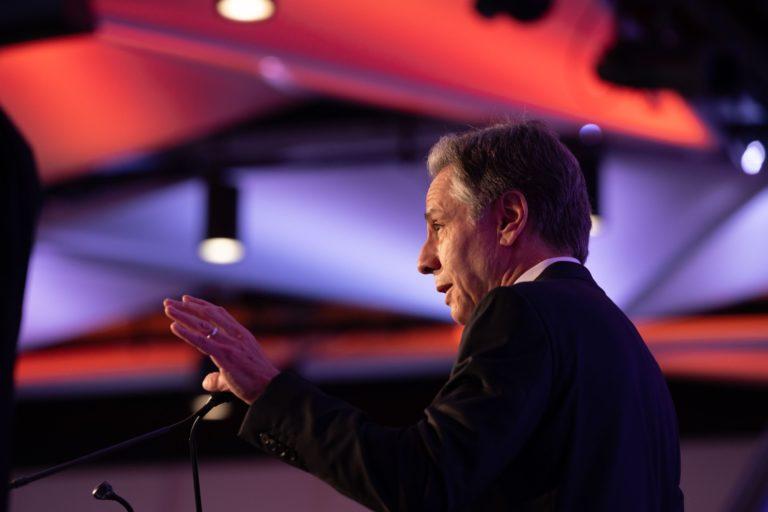
In late March, Secretary of State Antony Blinken announced that shift, which includes a focus on the rights of immigrants and refugees, victims of human trafficking, LGBTQ individuals, and women’s access to abortion, birth control, and other reproductive options. Blinken faulted the Trump administration for what he characterized as an “unbalanced” emphasis on religious liberty over other concerns.

“Human rights are also co-equal. There is no hierarchy that makes some rights more important than others,” Blinken said during remarks at the State Department’s release of its 45th annual report on the status of human rights around the world. “At my confirmation hearing, I promised that the Biden-Harris administration would repudiate those unbalanced views. We do so decisively today.”

Even before Blinken’s statement, administration policies were reflecting the impact of this shift in priorities. Two days into the Biden administration, USAID rejected a project planned in Nigeria dedicated to providing a detailed accounting of Christian and Muslim persecution by jihadist terrorists Boko Haram and militant Fulani herdsmen and others.

Thousands of Christians, as well as some Muslims opposed to Islamic extremism, have been killed in Nigeria over the last several years in what some leading human rights activists have labeled a “slow-motion genocide.”

Nigeria, Africa’s most populous nation, is the most dangerous place in the world to be a Christian, even though Christians make up nearly half of Nigeria’s population of 200 million. According to the religious freedom watchdog Open Doors International, more than 5,000 Christians were killed in Nigeria last year alone, accounting for nearly 90% of Christian deaths worldwide.


ANOTHER Democrat-Led ‘Sanctuary City’ Wants to Ship Its Illegals to the Suburbs

(By Andrew Hensel, The Center Square) Chicago Mayor Brandon Johnson says the city of Chicago has had conversations with suburban leaders in Cook and other counties about the possibility of moving migrants into their communities.

Thousands of migrant families have arrived in Chicago over the past year. City officials have placed many in police stations, YMCAs and Daley College.

Johnson said the city is looking at other towns to help with housing migrants.

“We’ve had conversations with mayors across not just Cook County but the surrounding counties, and we have had tremendous feedback,” Johnson said. “We see some real support on the horizon.”

Johnson said conversations will continue in the coming days and weeks.

“Looking forward in the days to come that these collaborative efforts that we have been organizing will begin to see some dynamic come to fruition,” Johnson said.

About 12,000 migrants have arrived in Chicago from the southern U.S. border in the past year.

Maggie Rivera of the Illinois Migrant Council explained what else these families would need if they were moved into the suburbs.

“Being in the suburbs, for instance, if you bring them to Woodstock where we have no public transportation other than the Metra that runs to Chicago, that would be something that would have to be strategized,” she said.

Rivera also told The Center Square that she has heard from families about a specific issue that could continue in the suburbs.

“I hear from a lot of the people in the shelters that we are at. They are always complaining about not getting enough food,” Rivera said. “When there are families that have teenagers or growing kids, that will always be an issue.”

Just this month, Johnson said Chicago would remain open for those who wish to come there, reaffirming the city’s stance as a “sanctuary state,” or a jurisdiction with lax local enforcement of federal immigration laws.

“Here’s what I am committed to doing, honoring the law of being a sanctuary city and building systems of care that provide a pathway with dignity for individuals who are seeking refuge here in the city of Chicago,” Johnson said.

So far, city and state taxpayers have set aside $94 million for migrant housing. The state budget has $550 million in taxpayer subsidies for health care of migrants over the age of 65.

Populist Country Music Sensation Oliver Anthony Appears to Be a 9/11 Truther

(Ken Silva, Headline USA) It’s been mere days since Virginia-based country singer Oliver Anthony “Rich Men North of Richmond” took the internet by storm, and detractors are already looking to smear the overnight sensation—including by painting him as an anti-Semitic conspiracy theorist.

“It brings me no pleasure to report that the ‘Rich Men North of Richmond’ guy’s playlist is public and he thinks Jewish people are responsible for 9/11,” a Twitter account with the handle @GravitysRa1nbow posted on Monday, referencing Oliver’s YouTube channel.

The channel links to multiple videos that question the Israeli government’s foreknowledge of the Sept. 11, 2001, terrorist attacks.

Anthony responded to the Twitter attack Tuesday by confirming that the YouTube channel is his.

“That’s fascinating, but what about the chip video?” he said, apparently referencing another video on his YouTube channel, this one of a potato chip spinning to the song “Funkytown” for more than an hour.

The attack on Anthony seemingly backfired, as dozens of 9/11 researchers rushed to his defense.

The researchers noted that the 9/11 videos Anthony has on his YouTube channel are derived from legitimate news sources.

For instance, one of the videos shared by Anthony is a series of Fox News reports from late 2001 about an intelligence operation the Israelis were operating on American soil in the months before 9/11.

“A handful of active Israeli military personnel were detained in the wake of 9/11, some of which failed polygraph tests when asked about surveillance activities in the U.S.,” the Fox News report by former correspondent Carl Cameron said in its opening.

“There is no indication the Israelis were involved in the 9/11 attacks, but investigators suspect that the Israelis may have gathered intelligence about the attacks in advance and didn’t share it,” it said.

Another video shared by Anthony features an interview with Richard Gage, the president of Architects & Engineers for 9/11 Truth.

In the interview, Gage talks about how World Trade Center leaseholder Larry Silverstein took insurance policies out on his buildings months before they were attacked.

Yet another video posted by Oliver investigated the “dancing Israelis”—the five Israeli men seen photographing themselves and seemingly celebrating near the World Trade Center buildings as they were still ablaze on Sept. 11, 2001.

All told, none of Anthony’s videos contain anti-Semitic theories about 9/11—though they do raise legitimate questions about the Israeli government’s involvement in the attack.

Israel aside, new information about possible CIA and Saudi Arabian involvement in 9/11 has recently come to the forefront.

In March, veteran national security reporter Seth Hettena published a government document citing two unnamed FBI agents who allegedly said that the CIA was monitoring and attempting to recruit two of the 9/11 hijackers in the lead-up to the attack.

Anthony isn’t the only rising star in the conservative movement to question the official 9/11 narrative. GOP presidential hopeful Vivek Ramaswamy recently came under fire for doubting the 9/11 Commission’s findings.

“What I’ve seen in the last several years is we have to be skeptical of what the government does tell us. I haven’t seen evidence to the contrary, but do I believe everything the government told us about it? Absolutely not,” Ramaswamy said in an interview aired earlier this month. “Do I believe the 9/11 commission? Absolutely not.”

Ken Silva is a staff writer at Headline USA. Follow him at twitter.com/jd_cashless.

FBI Arrests 17-Year-Old for Alleged Terrorism Plot

(Ken Silva, Headline USA) The FBI announced Monday that it has arrested a 17-year-old male in Philadelphia for supposedly plotting to carry out an ISIS-inspired terrorist attack on American soil.

The 17-year-old’s arrest follows two separate but similar FBI operations against 18-year-olds earlier this year. In both of the latter two cases, it has since been revealed that the teenagers both have mental health issues and that FBI informants were targeting them online for years.

In this latest case announced Monday, the FBI has released few details and has withheld the 17-year-old’s name.

The Philadelphia District Attorney’s Office released a statement on the matter, alleging that the teenager was plotting a deadly attack.

Law enforcement was apparently monitoring the boy’s social media communications with the “Katibat al Tawhid wal Jihad,” which was designated by the U.S. State Department as a global terrorist organization.

According to the DA, the teenager was trying to build a bomb.

The DA said U.S. Customs and Border Protection provided records revealing 14 international shipments of military and tactical gear to the juvenile’s address.

“The juvenile is further alleged to have received messages related to construction of improvised explosive devises (IEDs) and to have purchased materials online such as chemical cleaners that are used to construct IEDs, as well as outdoor or tactical gear,” the DA said.

“On August 7, 2023, FBI special agents surveilling the juvenile observed him purchasing materials that can be used to make IEDs, and recovered from his household trash materials including electric wiring that can be used to construct IEDs.”

The boy has been charged with Weapons of Mass Destruction, Criminal Conspiracy, Arson, Causing/Risking Catastrophe, Attempt to Commit Criminal Mischief, Possession of an Instrument of Crime, and Recklessly Endangering Another Person.

The DA said more details about the case will be made available if it’s transferred to adult criminal court.

The FBI’s special agent in charge of its Philadelphia office, Jacqueline Maguire—who shot and killed a dog earlier this year—claimed that her office’s operation saved lives.

“I think it’s very fair to say that lives were saved because of this investigation,” she said in the DA’s press release.

“Investigations like this one—with the amazing work that continues and the successful mitigation of such a significant threat—are exactly why we do what we do, and yet another reminder of what a privilege it is to serve with such dedicated colleagues.”

However, other FBI terrorist operations involving teenagers have proven to be less than life-or-death situations.

In June, for instance, the FBI announced that it arrested 18-year-old Mateo Ventura for intending to support ISIS. However, Ventura’s father, accused the FBI of entrapping his son.

“He was born prematurely, he had brain development issues. I had the school do a neurosurgery evaluation on him and they said his brain was underdeveloped,” Ventura’s father, Paul Ventura, told The Intercept in June.

“He was suffering endless bullying at school with other kids taking food off his plate, tripping him in the hallway, humiliating him, laughing at him.”

The next month, the FBI arrested 18-year-old Davin Meyer as he was about to board an airplane, ostensibly to travel to the Middle East to join ISIS.

Like the Ventura case, Meyer’s mother has accused the FBI of entrapment.

“I bet my life he would never do that without that encouragement [from FBI informants],” she said last month at a detention hearing, describing how her son communicated with at least two FBI informants in chat rooms from last November until he was arrested.

Ken Silva is a staff writer at Headline USA. Follow him at twitter.com/jd_cashless.

WaPo Columnist Admits Georgia Indictment May Be ‘One Too Many’

(Headline USA) Liberal Washington Post columnist Ruth Marcus admitted in an article this week that Fulton County’s indictment of former President Donald Trump may be “one too many.”

Trump was indicted Tuesday for the fourth time in as many months, for an alleged conspiracy in Georgia to commit racketeering, forgery, solicitation of violation of oath by a public officer and more. 

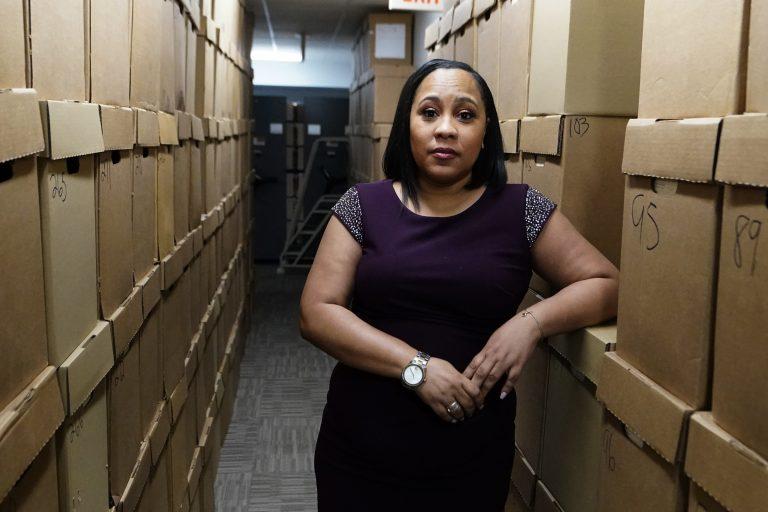
Fulton County District Attorney Fani Willis’s 13 counts against the former president brought his running total up to 91 charges, including a lawfare attack filed by Manhattan District Attorney Alvin Bragg and two separate cases from corrupt Justice Department special counsel Jack Smith.

Willis, who campaigned on a platform of prosecuting the Republican president, also indicted 18 other alleged co-conspirators—including former New York City Mayor Rudy Giuliani and former White House chief of staff Mark Meadows—for a total of 41 charges.

Marcus noted in her column that, legally speaking, Willis had the right to pursue a case against Trump, even though her charges overlapped with Smith’s federal indictment of Trump for alleged election interference.

However, she pointed out that Willis’s lack of “professionalism” in holding a late-night press conference to announce the charges—and the fact that she is an elected Democrat—raised red flags.

“But there is a concern about piling on here. Why stop at Georgia?” Marcus wrote.

“The federal indictment sets out conduct in six other states in which Trump and his co-conspirators allegedly sought to overturn the election results,” she continued. “Will he be prosecuted in those states too? At some point, it becomes unfair—yes, even to Trump, to go state by state.”

Marcus said she would “rather stick with the judgment and experience of federal prosecutors making certain that voters across the country have their voices heard.”

Those familiar with the U.S. Constitution, such as legal scholars Jonathan Turley and Alan Dershowitz, both moderate liberals, have argued that the very foundation of both the state and federal cases is “unfair” since they rest on actions that were, heretofore, entirely legal—and, indeed, have been previously used by Democrats to contest elections, including the 2000 and 2016 presidential races and the 2018 Georgia gubernatorial race.

Democrats, meanwhile, may be growing more nervous about the possibility of prosecutorial overreach, which has seen Trump’s popular support in the GOP only become stronger with each indictment as the shock value reaps diminishing returns.

Many speculate that due to their dubious legality, the cases are likely to be overturned by a higher court—possibly the Supreme Court—in the unlikely event that they succeed. A Republican victory in the next presidential election would also likely yield a presidential pardon for the two federal indictments.

Trump blasted the Georgia indictment on Tuesday as “the FOURTH ACT of Election Interference on behalf of the Democrats in an attempt to keep the White House under Crooked Joe’s control and JAIL his single greatest opponent of the 2024 election” in a statement posted via his Truth Social network.

“Nineteen people were indicted, and the whole world is laughing at the United States as they see how corrupt and horrible a place it has turned out to be under the leadership of Crooked Joe Biden,” he added.

Headline USA’s Ben Sellers contributed to this report.

Oakland’s Soros DA Hires Boyfriend for Six-Figure Job, Despite Past FBI Shakedown Probe

(Headline USA) Pamela Price, the George Soros-backed district attorney for California’s Alameda County (including Oakland), is under fire for reportedly hiring her boyfriend, who was once investigated by the FBI for shaking down local businesses.

Price hired Antwon Cloird as a “senior program specialist” in her office this year, awarding him a $115,502 per year salary. She brought him on without disclosing her relationship with him, even though the relationship has been an “open secret” in the office, according to the Mercury News.

Price’s failure to disclose her relationship with Cloird could be a violation of California’s employment nepotism policies, which prohibit an “employee’s use of influence or power to hire, transfer, or promote an applicant or employee because of a personal relationship,” according to Will Swaim, the president of the California Policy Center.

It is unclear whether the law was in effect when current U.S. Vice President Kamala Harris first got her start in San Francisco politics as a consort for then-Mayor Willie Brown during the mid-1990s.

Nepotism notwithstanding, Cloird’s new gig also raised questions about his past. The former political activist came under investigation after city officials discovered he sought money from local businesses to “facilitate” and “expedite” permits. 

In 2015, for example, Cloird allegedly told a local meat packer to pay him $5,000 to “expedite” permits. 

Later that year, he allegedly demanded $20,000 from a restaurant owner for his help securing a liquor license for the business. The restaurant owner told city officials he felt he had to pay Cloird the sum, because “otherwise [Cloird] will bring a bunch of people to speak against [the restaurant].”

Price’s office defended the hiring of Cloird, calling him a “valued member of the team” in a statement.

“Antwon Cloird is a valued member of the team whose distinguished work and accomplishments in communities throughout the Bay Area are well documented,” Price spokeswoman Patti Lee said.

Price is currently facing a recall effort over her failure to sufficiently prosecute criminals.

In Oakland alone, robberies have increased by 14% since last year, prompting residents to speak out at a contentious town-hall meeting last month.

“Two kids beat the s*** [out] of me in front of my house last Monday night,” said one North Oakland resident in her 50s during the meeting. “Down on the pavement. Punching me, kicking me, dragging me through the street.”

HUYLER: Afraid of Imminent Economic Collapse? It’s Runaway Public Spending, ‘Stupid’

(Jerome Huyler, Headline USA contributor) American capitalism has had its ups and downs, as in the country’s long succession of boom-and-bust business cycles.

Periods of robust economic growth were interrupted by devastating financial panics that struck suddenly in 1792, 1819, 1837, 1857, 1873, 1893 and 2007. And then came the Great Depression of the 1930s, “stagflation” in the late-1970s, the savings-and-loan crisis of 1987, and a sub-prime housing meltdown that sparked a “Great Recession” by 2008.

Could the country be barreling headlong toward another severe crisis? Ominous signs suggest as much.

  1.  Developers have built super-size, urban and suburban office towers. Now, with so many working from home and so much unrented office space, could pending mortgage defaults precipitate a nation-wide banking crisis? The Federal Reserve will likely lend lending institutions billions more to avoid yet another nationwide bank run.
  2. History has a way of repeating itself. First, government undertakes a project of great “national importance,” then generous subsidies begin flowing to well-connected businesses. Completed in 1869, by 1873, the publicly-subsidized Union and Central Pacific railroads went bust. The bold adventure to bind the nation together precipitated a five-year depression that spread grievous hardship across the land. Shortly after opening its doors, thanks to a $500 million Congressional grant, the Obama-era Solyndra Corp filed for bankruptcy and closed its doors. How many publicly-subsidized ESG companies will survive, once they have to sink or swim on their own?
  3. The country’s already colossal, $31+ trillion accumulated public debt could, one day, make wary foreign governments and private investors reluctant to purchase additional Treasury bonds. Again, the Treasury will have to raise the interest rates to find buyers for its bonds and keep the government afloat. As interest rates rise, economic activity naturally falls.
  4. How long will it be before a crime-ravaged, deep-blue city or county is caught between a fleeing middle-class tax base and its “need” to feed, clothe, educate, house and heal an ever-expanding out-of-work/immigrant population? What will become of all other municipal bond offerings once that city or county defaults on its debt obligations.

What if we could act today to avoid the hardship and suffering tomorrow may bring? What reforms should we seriously ponder?

Loud voices call for steep tax cuts. They correctly point out that the JFK, Reagan and Trump tax cuts stimulated economic activity and produced more, not less, tax revenue.

Nevertheless—BAT or VAT, FAIR or FLAT—tax reform won’t fix a thing. There’s no safe way to pay for a runaway welfare state and the level of public spending it demands. Every penny a government spends has to be financed.

As public programs multiply and expand, more and more revenue is needed. But rather than imposing a crushing tax burden on their constituents, politicians prefer to pass that burden onto future generations. So the country goes ever deeper into debt.

The money borrowed is not available for new commercial or industrial projects. The huge sums government “invests” in the market also distort the pace and direction of capital investment. The annual interest payments governments must make (now in excess of $400 billion) take more money out of productive circulation.

Then shouldn’t we press for immediate, “across-the-board” budget cuts? No, we shouldn’t. Not every service governments perform is essential. Some are, many aren’t. It will do no good to throw the baby out with the bathwater.

The real question that demands our attention is where can public spending be substantially cut? What programs can be downsized or eliminated, and what agencies, bureaus and Cabinet departments can be closed?

The hot headlines of the day aside, these are the vital questions Americans need to ponder. But the deepest question is this: What must government do for us and what must we be allowed and expected to do for ourselves—and our neighbors in need?

Indeed, how limited was limited government originally meant to be? And there is no time to dawdle, for as Gerald Ford advised back in 1976: A government that is big enough to give you anything you want, is big enough to take everything you have.

Jerome Huyler is a former assistant professor (Seton Hall University) with a PhD. in political science, and the author of Locke in America: The Moral Philosophy of the Founding Era. He lives in Brooklyn, N.Y.

Fulton County’s Publication of Indictment Before Vote Opens Avenue for Dismissal

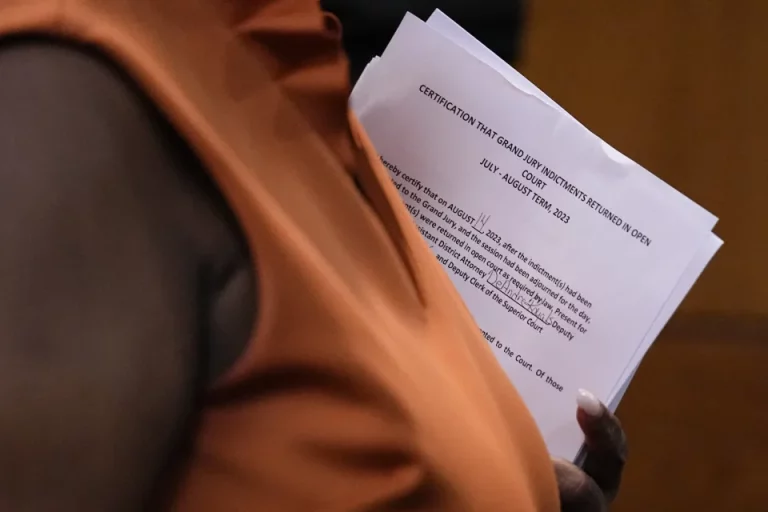
(Headline USA) Hours before a Georgia grand jury handed down an indictment charging Donald Trump and 18 allies over efforts to overturn his 2020 election loss late Monday, a mysterious document posted on the court’s website erroneously suggested the former president had already been charged before the file was quickly deleted.

The posting of the case before grand jurors voted on the indictment—and officials’ failure to explain what happened—gave the former president yet another opening in court and on the campaign trial to paint Fulton County District Attorney Fani Willis’s case as tainted and the criminal justice system as rigged against him.

Already, it follows several other alarming questions about Willis’s own motives and those of others attached to the case.

The George Soros-backed DA, who was elected in 2020, campaigned on a platform of indicting the then-president. Willis then used as the basis for her investigation a phone call Trump made to Georgia Secretary of State Brad Raffensperger a day after she, herself, took office.

She was forced to drop part of the probe after accusations of ethical violations that included campaigning with the opponent of one of the state officials she potentially hoped to implicate in her wide-reaching indictment.

And in February, a previous grand-jury foreman raised questions about the integrity of the probe by conducting a series of unhinged interviews with national media in which she made clear her personal biases and those of the jury.

Following the most recent scandal surrounding the leaked indictment, the Fulton County Clerk Che Alexander did little to tamp down speculation, refusing to say how the erroneous filing got online or publicly rule out whether it could have been the result of a hack.

“Trump’s lawyers will try to jump on it, as they jump on every possible avenue of defense, and argue that someone leaked it just to embarrass him,” said Jeffrey Jacobovitz, a Washington criminal defense attorney, attempting to cast the corrupt prosecution as the victims for posting a predetermined indictment.

The confusion over the document thrust the newly sworn in Fulton County courts clerk into the spotlight as reporters descended onto the Atlanta courthouse to get a glimpse at the witnesses called in to testify before the grand jury hearing Willis’s sprawling case.

Hours later, cameras followed as the clerk, Che Alexander, handed a stack of indictments— which included the 2020 election case—to Superior Court Judge Robert McBurney.

Shortly after Reuters reported Monday afternoon that the erroneous filing was posted online, Alexander’s office released a statement calling the document “fictitious,” and claimed documents without official case numbers “are not considered official filings and should not be treated as such.”

But the document that appeared online did have a case number—though it differed from the one ultimately listed on the indictment later handed down.

Asked late Monday specifically about the document, Willis said, “I can’t tell you anything about what you refer to.”

The filing posted earlier Monday listed 13 counts against Trump, including Georgia’s Racketeer Influenced and Corrupt Organizations, or RICO, solicitation of violation of oath by public officer and false statements and writings. The final charges, unsealed hours later, against Trump were identical.

The indictment, however, includes charges against not only Trump, but a slew of allies—including attorneys John Eastman and Rudy Giuliani.

It’s the fourth criminal case against the Republican former president, who has characterized all the cases against him as a bid to hurt his 2024 bid to return to the White House.

Trump legal team has already suggested it would allege prosecutorial misconduct.

“This was not a simple administrative mistake,” but is “emblematic of the pervasive and glaring constitutional violations which have plagued this case from its very inception,” lawyers Drew Findling, Jennifer Little and Marissa Goldberg said in a statement after the indictment was released.

“The events that have unfolded today have been shocking and absurd, starting with the leak of a presumed and premature indictment before the witnesses had testified or the grand jurors had deliberated and ending with the District Attorney being unable to offer any explanation,” they added. “In light of this major fumble, the Fulton County District Attorney’s Office clearly decided to force through and rush this 98-page indictment.”

Trump himself quickly capitalized on the scandal, writing in an email before the indictment came down: “The Grand Jury testimony has not even FINISHED – but it’s clear the District Attorney has already decided how this case will end.”

Legal experts said the filing was likely a list of potential charges prosecutors were presenting to the grand jury ahead of Monday’s vote that somehow was accidently uploaded on the court’s website.

“The grand jury doesn’t sit around and write indictments, it’s presented to them,” said Clark Cunningham, a Georgia State University law professor. “Presumably before this morning, they had drafted an indictment—there’s nothing wrong with that.”

And experts said that while Trump may use the apparent mistake in an effort to undermine the integrity of Willis’s investigation on the campaign trail, it’s unlikely to ultimately have an impact in the courtroom.

“Unfortunately errors happen in today’s world with things being done online,” said Stanley Twardy, Jr., a former U.S. attorney for Connecticut. “I don’t think this is something that is going to create issues.”

Jacobovitz agreed, adding: “I do not think any argument related to that will be meritorious.”

Prosecutors draft indictments and present them to the grand jury, which meets in secret and ultimately decides whether to hand charges down. Grand juries—made up of people randomly drawn from the community, like juries that decide trials—are designed to safeguard against politically motivated prosecutions, but they’ve long been criticized by some as little more than a rubber stamp for prosecutors.

Alexander was sworn in as the courts clerk less than two months ago to replace Tina Robinson, who retired in June after 16 years in the role. Alexander appears to have previously campaigned for Willis in her bid for a judgeship in 2018.

Her Instagram page includes multiple photos of Willis and her campaign posters, including one with a caption that said Willis “has truly been an inspiration to me and countless others” and included #realfriends.

Pressed about the document before the indictment was handed down, Alexander said: “I mean, I don’t know what else to say.”

Adapted from reporting by the Associated Press