Pennsylvania Court Says State Police Can’t Hide How It Monitors Social Media

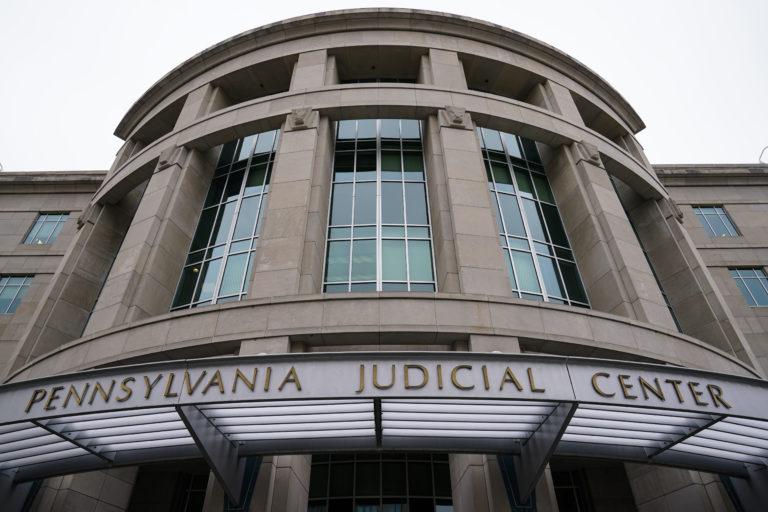
(Headline USA) Pennsylvania’s Supreme Court ruled Tuesday that the state police can’t hide from the public its policy on how it monitors social media.

Advocates for civil liberties cheered the decision. The law enforcement agency had argued that fully disclosing its policy for using software to monitor online postings may compromise public safety.

All four Democrat justices supported the majority decision, which said the lower Commonwealth Court went beyond its authority in trying to give the state police another attempt to justify keeping details of the policy a secret. Tuesday’s order appears to end a six-year legal battle.

A state police spokesperson said the agency is reviewing the court decision.

Andrew Christy, a lawyer with the ACLU of Pennsylvania, said the ruling “sort of puts law enforcement on the same playing field as all government agencies. If they have a legal justification to keep something secret, then they have to put forth sufficient evidence to justify that.”

People need to know what police are doing in order to decide if it’s appropriate, he argued.

“Ultimately that relies on the voters understanding what law enforcement is doing so that then, through their elected representatives, they can rein them in when they’re acting in a way that doesn’t comport with what the public wants,” Christy said.

Justifying what the majority opinion described as heavy or complete redactions on every page of the nine-page regulation, the head of the state police’s bureau of criminal investigations argued that greater transparency about the policy would make its investigations less effective.

The state Office of Open Records held a private review of the blacked out material and and ruled that making the policy public would not be likely to harm investigations, calling the social media policy processes strictly internal and administrative in nature.

Redacted sections addressed the use of open sources, what approval is required, when to go undercover and use an online alias and how to verify information. State police also blacked out the entire section on using social media for employment background investigations.

A panel of three Republican Commonwealth Court judges reversed the Office of Open Records’ ruling that the policy should be disclosed without redactions, saying in May 2018 that the state police investigations chief based his analysis about the risk of exposure on his own extensive experience.

The majority decision issued Tuesday said Commonwealth Court should not have given the state police a new opportunity to lay out the supposed public safety risks. The majority ruled that Pennsylvania’s Right-to-Know Law does not permit Commonwealth Court to order additional fact-finding not sought by state police.

“If PSP had requested the opportunity for additional fact-finding, our disposition today may have been different,” Justice David Wecht wrote for the majority.

The open records law has a timely and efficient process that should be followed, he added, noting that “six years already have passed.”

“If and when appellate review is allowed to serve as a reset button based upon a court’s ill-defined policy concerns, there is no limiting principle, and the judiciary’s claims to neutrality and ordered decision-making vanish,” Wecht wrote.

In a dissent, Justice Sallie Mundy said the lower court identified a question of fact that was unresolved: “whether there was a connection between the text of the document and risks articulated in the agency’s affidavit” about public safety. She and Justice Kevin Brobson, who joined her dissent, are the high court’s two Republicans.

Adapted from reporting by the Associated Press
Iran Unveils Armed Drone Resembling U.S. MQ-9 Reaper, Threatens Israel

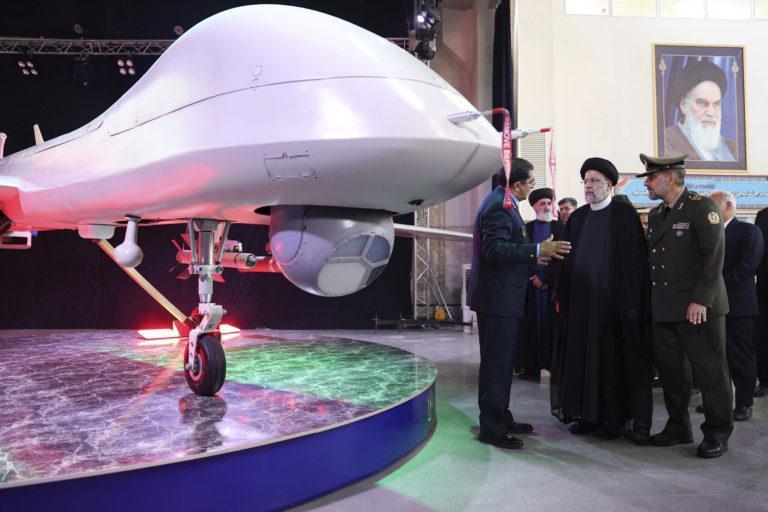
(Headline USA) Iran’s Defense Ministry unveiled a drone on Tuesday resembling America’s armed MQ-9 Reaper, claiming that the aircraft is capable of staying airborne for 24 hours and has the range to reach the country’s archenemy Israel.

Iran’s state-run IRNA news agency published a photograph of the drone, called the Mohajer-10, on display at a conference marking Defense Industry Day with what appeared to be smoke-machine fog underneath it.

“Mohajer” means “immigrant” in Farsi and has been a drone line manufactured by the Islamic Republic since 1985.

IRNA said the drone is able to fly up to 24,000 feet with a speed of 130 mph, carrying a bomb payload of up to 660 pounds. It also said the drone could carry electronic surveillance equipment and a camera. Iran’s hard-line President Ebrahim Raisi, a protégé of Supreme Leader Ayatollah Ali Khamenei, also viewed the drone on Tuesday.

“Today, we can firmly introduce Iran as an advanced and technologic nation to the world,” Raisi said in comments aired on state television.

He reiterated Iran’s stance about friendly relations with “all countries in the world,” adding that Iran’s armed forces will cut off any hand that reaches out in an attempt to invade Iran, state TV reported.

The Associated Press could not immediately verify the claims about the drone’s capabilities, though an arm of state television shared a video of it taking off from a runway. Long-range drones like the Reaper also require ground stations and satellite communications.

Officials in Israel, which flies its own long-range, high endurance drones, did not immediately respond to a request for comment Tuesday.

Iran has in the past captured U.S. drones or pieces of them, but there’s no evidence that it has taken a General Atomics’ Reaper, which is flown by the U.S. Air Force and allied American nations as a “hunter-killer” drone that can operate at high altitudes for long hours and follow a target before attacking. North Korea in July showed off drones mirroring the Reaper, possibly designed from publicly available information about the aircraft.

In December 2011, Iran seized an RQ-170 Sentinel flown by the CIA to monitor Iranian nuclear sites after it entered Iranian airspace from neighboring Afghanistan. Iran later reverse-engineered the drone to create their own variants.

In 2019, Iran shot down a U.S. Navy RQ-4A Global Hawk in the Strait of Hormuz amid high tensions over its collapsed nuclear deal with world powers.

The Reaper also carries special significance for Iran, as one reportedly carried out the 2020 strike in Baghdad that killed Qassem Soleimani, a top Iranian general in its paramilitary Revolutionary Guard.

Iran separately said it had provided two types of ballistic missiles to its army and the Guard on Tuesday, including one named for Soleimani.

Iran has unveiled a series of drones it describes as capable of long-endurance flights over the last several years. It remains unclear how they’ve been used in combat.

But other Iranian drones have been a key element of Russia’s continued war on Ukraine. Tehran has offered a series of contradictory explanations about the drones, first denying they supplied them to Moscow and then claiming they sold drones only before the war began. However, the volume of drones used in the conflict show a steady supply by Iran of the bomb-carrying weapons in the war.

In June, the White House said Iran is providing Russia with materials to build a drone manufacturing plant east of Moscow as the Kremlin looks to lock in a steady supply of weaponry.

Adapted from reporting by the Associated Press
Video Shows Distressed, 98-Year-Old Mother of Kansas Newspaper Publisher During Raid

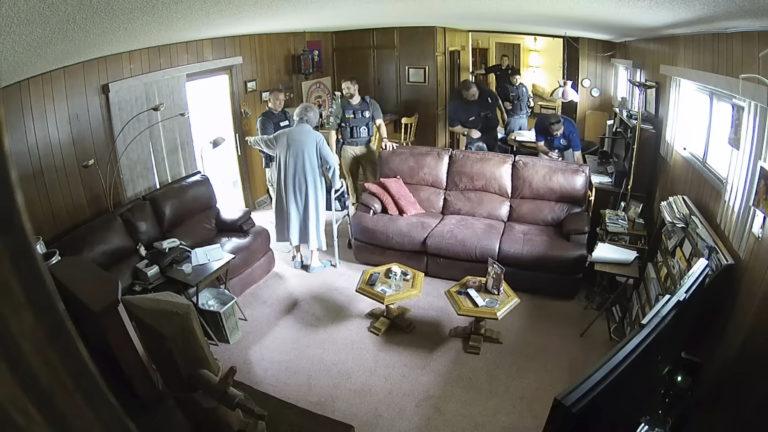
(Headline USA) Newly released video shows the 98-year-old mother of a Kansas newspaper publisher confronting police officers as they searched her home in a raid that has drawn national scrutiny, at one point demanding: “Get out of my house!”

Video released by the newspaper Monday shows Joan Meyer shouting at the six officers inside the Marion, Kansas, home she shared with her son, Marion County Record Editor and Publisher Eric Meyer. Standing with the aid of a walker and dressed in a long robe or gown and slippers, she seems visibly upset.

“Get out of my house … I don’t want you in my house!” she said at one point. “Don’t touch any of that stuff! This is my house!” she said at another.

The raids of the newspaper and the homes of the Meyers and a City Council member happened on Aug. 11, after a local restaurant owner accused the newspaper of illegally accessing information about her. Joan Meyer died a day later. Her son said he believes that the stress contributed to her death.

A prosecutor said later that there was insufficient evidence to justify the raids, and some of the seized computers and cellphones have been returned. Meanwhile, the initial online search of a state website that the police chief cited to justify the raid was legal, a spokesperson for the agency that maintains the site said Monday.

The raid on the Record put it and its hometown of about 1,900 residents in the center of a debate about press freedoms protected by the First Amendment to the U.S. Constitution and Kansas’ Bill of Rights.

It also exposed divisions in the town over local politics and the newspaper’s coverage of the community, and put an intense spotlight on Police Chief Gideon Cody, who led the raids after the newspaper had asked questions about his background.

“As far as Chief Cody goes, he can take his high horse he brought into this community and giddy-up on out of town,” Darvin Markley, a Marion resident, said during a Monday afternoon City Council meeting. “The man needs to go. He needs to be fired.”

Cody did not attend Monday’s meeting or respond to email and cellphone messages seeking comment. He said in affidavits used to obtain the warrants that he had probable cause to believe that the newspaper and City Council member Ruth Herbel, whose home was also raided, had violated state laws against identity theft or computer crimes.

Both Herbel and the newspaper have said they received a copy of a document about the status of the restaurant owner’s license without soliciting it. The document disclosed the woman’s license number and date of birth, which are required to check the status of a person’s license online and gain access to a more complete driving record. The police chief maintains they broke state laws to do that, while the newspaper and Herbel’s attorneys say they didn’t.

Herbel, the city’s vice mayor, presided over the City Council’s meeting Monday, its first since the raids. It lasted less than an hour, and Herbel announced that council members would not discuss the raids — something its agenda already had said in an all-caps statement in red followed by 47 exclamation points. She said the council will address the raids in a future meeting.

While Herbel said after the meeting that she agrees that Cody should resign, other City Council members declined to comment. Mike Powers, a retired district court judge who is the only candidate for mayor this fall, said it’s premature to make any judgments.

Meyer said the newspaper plans to file a lawsuit over the raid of its offices and his home.

Meyer has noted that among the items seized were a computer tower and personal cellphone of a reporter who was uninvolved in the dispute with the local restaurant owner — but who had been investigating why Cody left a Kansas City, Missouri, police captain’s job in April before becoming Marion police chief.

Legal experts believe the police raid on the newspaper violated a federal privacy law or a state law shielding journalists from having to identify sources or turn over unpublished material to law enforcement.

The Kansas Bureau of Investigation continues to examine the newspaper’s actions.

Adapted from reporting by the Associated Press
Texas Supreme Court Shuts Down Houston Effort to Stall Election Reforms

(Headline USA) A new Texas law that aims to reform election management in the perennially fraudulent Democrat stronghold of Houston and its surrounding county will take effect as scheduled next month despite a lawsuit seeking to overturn it, the state Supreme Court ruled Tuesday.

Officials in Harris County, which is the state’s most populous, had sought to put the law, which abolishes its elections administrator’s office, on hold.

Last week, a judge in Austin temporarily blocked enforcement of the law after calling it unconstitutional. The judge’s order was short-lived, as the state attorney general’s office appealed the decision to the Texas Supreme Court.

In its brief order, the high court denied Harris County’s request to stop the law from taking effect Sept. 1. It also ordered oral arguments in the lawsuit to take place Nov. 28.

The new law stemmed from problems during November’s elections in Harris County, including paper-ballot shortages and delayed poll openings.

But the 2022 issues, which also included the late discovery of roughly 10,000 uncounted primary ballots, were far from an isolated incident. The county also saw several scandals emerge following the 2020 election, including both failed and successful attempts at illegal ballot-harvesting.

Surrogates linked to Rep. Sheila Jackson Lee, D-Texas, also were caught in damning audio recordings attempting to solicit the votes of non-residents and dead people.

The new law is expected to return the county’s elections oversight to the tax assessor and county clerk, which are both elected offices currently held by Democrats. Nonetheless, some Democrats are attempting to claim that it is part of an effort by GOP lawmakers to make it harder for minorities to vote.

Moreover, Harris County officials have complained that the new law will not give them enough time to prepare for November’s mayoral election in Houston.

Democrats accused Republicans of singling out the county because, like other large urban areas around the state, it has increasingly voted Democratic.

Adapted from reporting by the Associated Press
Fruit Grower Who Opposes Gay Marriage Wins Case over Farmer’s Market Ban

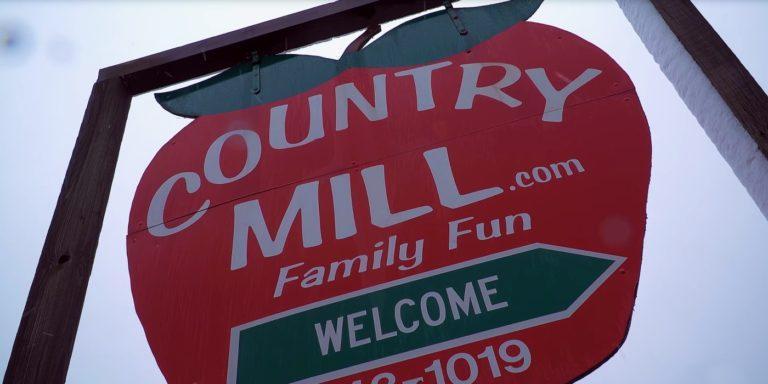
(Headline USA) The rights of a Michigan fruit grower were violated when a city barred him from a seasonal market because of his opposition to same-sex weddings at his orchard, a judge said.

East Lansing’s decision to exclude Steve Tennes and Country Mill Farms in 2017 “constituted a burden on plaintiffs’ religious beliefs,” U.S. District Judge Paul Maloney said Monday, applying a U.S. Supreme Court precedent to the case following the ruling earlier this year in 303 Creative v. Elenis.

Both plaintiffs were represented by Alliance Defending Freedom, which focuses on litigation involving religious liberty, free speech and parental rights.

“Plaintiffs were forced to choose between following their religious beliefs and a government benefit for which they were otherwise qualified,” Maloney said.

Tennes grows apples and other fruit in Eaton County, 22 miles away from East Lansing. He also had made his farm available for weddings.

But Tennes wasn’t allowing same-sex weddings, citing his religious beliefs. When he expressed his views on Facebook, he said he wasn’t invited back to the East Lansing market for the 2017 season.

Maloney issued an injunction that year, ordering the city to reinstate him while Tennes’s lawsuit moved forward.

“He serves and welcomes everyone to his stand. No one is ever turned away,” attorney John Bursch said Tuesday.

East Lansing cited its non-discrimination ordinance and vendor rules in barring Tennes from the market. But the judge found problems.

“The city has not demonstrated a compelling interest in excluding plaintiffs” from the market,” Maloney said. “The city’s non-discrimination ordinance tolerates the same discrimination in other situations.”

East Lansing is reviewing the opinion and will be exploring options, spokeswoman Carrie Sampson said.

Bursch said he now hopes to reach an agreement with the city and close the case.

Adapted from reporting by the Associated Press
Trump Says He Will Surrender Thursday on Fulton County Charges

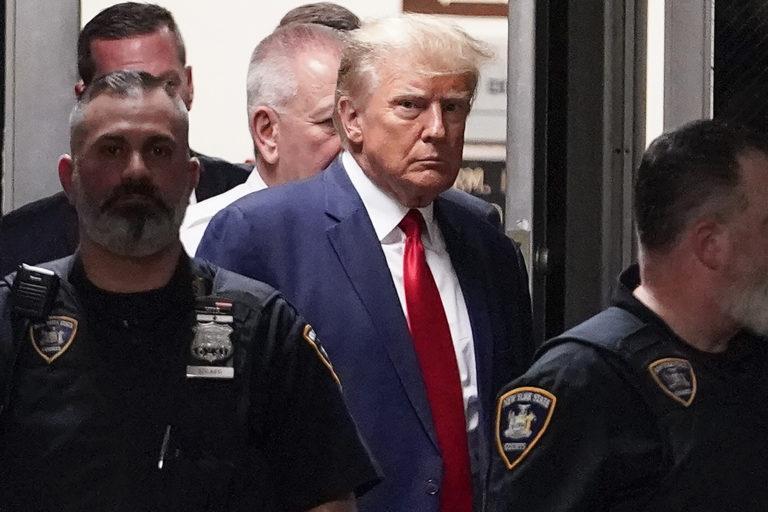
(Headline USA) Former President Donald Trump says he will surrender to authorities in Georgia on Thursday to face charges in the case accusing him of illegally scheming to overturn his 2020 election loss in the state.

“Can you believe it? I’ll be going to Atlanta, Georgia, on Thursday to be ARRESTED,” Trump wrote on his social media network Monday night, hours after his bond was set at $200,000.

Trump went on to ridicule the excessive bail, pointing out the unlikelihood that he would pose a flight risk for the politically motivated prosecution that many suspect is intended—along with several others—to derail the GOP frontrunner’s 2024 re-election campaign.

The arrest will be Trump’s fourth in as many months. Since April, he has had what has seemed like an endless procession of bookings and arraignments in jurisdictions across the country. His appearances in New York, Florida and Washington, D.C., have drawn enormous media attention, with news helicopters tracking his every move.

Trump’s announcement came hours after his attorneys met with prosecutors in Atlanta to discuss the details of his release on bond.

The former president is barred from intimidating co-defendants, witnesses or victims in the case—including on social media—according to the bond agreement signed by Fulton County District Attorney Fani Willis, Trump’s defense attorneys and the judge. It explicitly includes “posts on social media or reposts of posts” made by others.

Trump has been railing against Willis since before he was indicted, and singled out Georgia Gov. Brian Kemp—a NeverTrump Republican who rebuffed his efforts to challenge the disputed 2020 election outcome—by name in a social media post Monday morning.

The agreement also prohibits the former president from making any “direct or indirect threat of any nature” against witnesses or co-defendants, and from communicating in any way about the facts of the case with them, except through attorneys.

The order sets Trump’s bond for the Racketeer Influenced and Corrupt Organizations—or RICO—charge at $80,000, and adds $10,000 for each of the 12 other counts he is facing.

Willis set a deadline of noon Friday for Trump and his 18 co-defendants to turn themselves in to be booked. The prosecutor has proposed that arraignments for the defendants follow during the week of Sept. 5. She has said she wants to try the defendants collectively and bring the case to trial in March of next year, which would put it in the heat of the presidential nominating season.

A Trump spokesman did not immediately respond to a request for comment on the filing. A phone message seeking comment was also left for an attorney for the former president.

Trump’s appearance in Georgia will come a day after the first Republican primary debate, which he has decided to skip.

He is expected to turn himself in at the Fulton County jail, which has long been plagued with problems. The Department of Justice last month opened a civil rights investigation into conditions, citing filthy cells, violence and the death last year of a man whose body was found covered in insects in the main jail’s psychiatric wing. Three people have died in Fulton County custody in the past month.

Peter Strzok, the corrupt former FBI agent who once was tasked with leading a criminal investigation of his own into Trump under false pretenses, gleefully celebrated the perceived shift in circumstances, although Trump and many of his supporters consider the current lawfare attacks to be part of the same continuum of partisan prosecutorial misconduct that began with Strzok’s “Crossfire Hurricane” operation in July 2016.

The Fulton County Sheriff’s Office said in a news release Monday afternoon that when Trump surrenders there will be a “hard lockdown” of the area surrounding the jail.

But Trump is not expected to spend much time there.

When defendants arrive at the building, they typically pass through a security checkpoint before checking in for formal booking in the lobby.

During the booking process, defendants are typically photographed and fingerprinted and asked to provide certain personal information. Since Trump’s bond has already been set, he will be released from custody once the booking process is complete.

Unlike in other jurisdictions, in Fulton County, arraignments—where a defendant first appears in court—are generally set after a defendant completes the booking process and do not happen on the same day.

Booking a former president, who still has 24-hour Secret Service protection, has created myriad security and logistical issues in other jurisdictions.

In his past appearances in a New York state court and federal courts in Miami and Washington, Trump was not handcuffed while in custody. He was also not required to pose for a mugshot, with officials instead using existing photographs of the former president.

Georgia officials have said Trump will be treated like others charged with crimes in their state.

“Unless somebody tells me differently, we are following our normal practices, and so it doesn’t matter your status, we’ll have a mugshot ready for you,” Fulton County Sheriff Patrick Labat said at a news conference earlier this month.

The mugshot is likely to prove politically useful for Trump, whose support among his Republican base has only been more entrenched with each legal effort to undermine him based on spurious charges that, in two cases, the George Soros-backed district attorneys have themselves campaigned on.

In a post on Monday, Trump called the Fulton County district attorney “crooked, incompetent, & highly partisan.”

Bond was also set Monday for three lawyers who were indicted along with Trump. For each of them, the bond for the RICO charge was set at $20,000, with varying amounts for the other charges they face. John Eastman and Kenneth Chesebro each had a bond set at $100,000, while Ray Smith’s bond is $50,000.

Bail bondsman Scott Hall, who was accused of participating in a breach of election equipment in rural Coffee County, had his bond set at $10,000.

Other defendants include former White House chief of staff Mark Meadows; Trump attorney and former New York City Mayor Rudy Giuliani, and a Trump administration Justice Department official, Jeffrey Clark.

The Georgia indictment came just two weeks after Justice Department special counsel Jack Smith charged Trump in a separate case alleging a vast right-wing conspiracy to overturn the election. Besides the two election-related cases, Trump faces a federal indictment accusing him of illegally hoarding classified documents as well as a New York state case charging him with falsifying business records.

Adapted from reporting by the Associated Press
Is Biden Preparing for War in Syria?

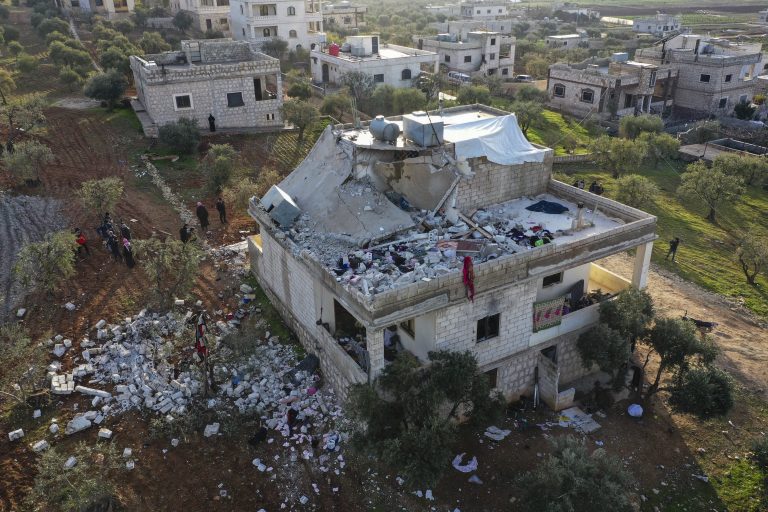
(Ken Silva, Headline USA) Middle Eastern media are reporting the arrival of U.S. troops in recent days, fueling speculation that President Joe Biden is looking to resume a war that his predecessor, Barack Obama, began in Syria more than a decade ago.

According to reports, the troops are landing in Iraq. Officials there are telling the public that the Americans are en route to Syria.

U.S. Army Gen. Matthew McFarlane reportedly said last week that the remaining troops in Iraq and Syria are there simply to fight ISIS and other terrorists. Officially, there are still 2,500 troops in Iraq and about 900 in Syria.

However, the latest troop movements come at a time when Biden is also deploying at least 3,000 troops to the Persian Gulf to confront the Iranian navy.

The U.S. military has also reportedly readied some 2,500 light-infantry troops for deployment to Iraq and Syria in mid-July.

Given that Iran and Syria are both Russian allies, some observers suspect that Biden’s Middle Eastern deployments have less to do with fighting terrorism, and more about continuing his proxy war against Vladimir Putin.

“Due to ongoing tensions with the Russian air force operating in Syria, Washington significantly reinforced its occupation bases with heavy artillery and hundreds of fighters from their Kurdish and Sunni proxy militias,” noted The Cradle, an outlet that covers geopolitics in the Middle East and Africa.

Obama initially entangled the U.S. in Syria in 2011 via the then-secret Operation Timber Sycamore, which entailed the CIA funneling weapons and equipment to “moderate” rebels fighting against Syria’s pro-Russian government, led by President Bashar al-Assad.

As we now know, most of those “moderate” rebels turned out to be groups such as al-Qaeda’s al-Nusra Front. Moreover, many of the CIA weapons were diverted to ISIS, which is why Donald Trump said, “Obama founded ISIS,” on the campaign trail in 2015 and 2016.

When Trump took power in 2017, he sought to end the U.S. involvement in Syria—but he was resisted by the national security state at every turn.

When Trump initially ordered troops to leave Syria, it prompted the resignation of both Defense Secretary James Mattis and Brett McGuirk.

And in an act of treason, Pentagon and State Department officials frequently lied to Trump about the troop levels in Syria throughout his presidential tenure.

“We were always playing shell games to not make clear to our leadership how many troops we had there,” outgoing diplomat Jim Jeffrey told Defense One in November 2020.

“When the situation in northeast Syria had been fairly stable after we defeated ISIS, [Trump] was inclined to pull out,” Jeffrey added at the time.

“In each case, we then decided to come up with five better arguments for why we needed to stay. And we succeeded both times. That’s the story.”

U.S. officials even tried to blame Assad for gassing his own people in an attempt to coax Trump into overthrowing Syria’s government. Thankfully, whistleblowers from the Organisation for the Prohibition of Chemical Weapons, or OPCW, came forward to expose the U.S. deep state for engaging in essentially a false flag attack by manipulating evidence to implicate Assad in the gassing.

With Trump out of power and Biden’s proxy war in Ukraine going poorly, perhaps the pro-war regime in Washington DC is pivoting back to fighting other Russian allies in the Middle East. The Washington Post encouraged Biden to do so in an opinion column last month.

“In the past, Biden has expressed the view that the United States should lead the international diplomacy on Syria and use pressure to stop Assad from slaughtering civilians with impunity,” the Post columnist Josh Rogin said on July 6.

“Even after all this time, it’s still the right thing to do.”

Ken Silva is a staff writer at Headline USA. Follow him at twitter.com/jd_cashless.

Biden’s New Gun-Control Strategy: Revoke Dealers’ Licenses

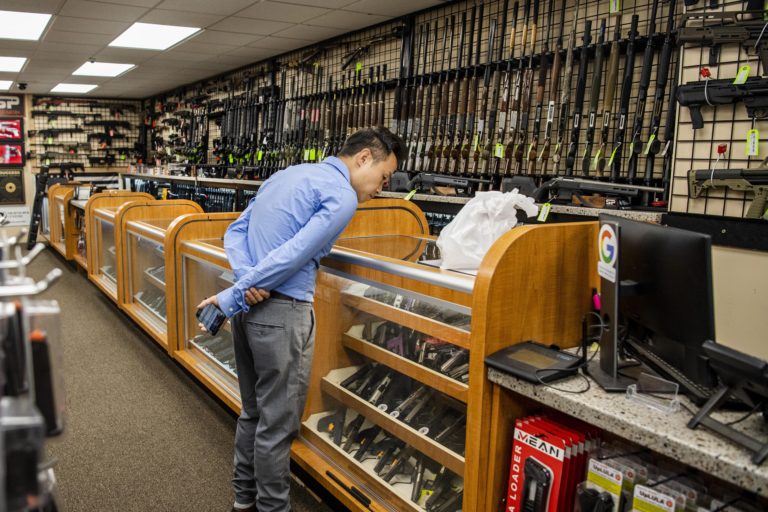
(Headline USA) President Joe Biden’s Bureau of Alcohol, Tobacco, Firearms and Explosives has ramped up efforts to revoke the licenses of gun dealers this year in what appears to be a back-door effort to restrict access to guns.

The ATF has revoked the licenses of 122 gun dealers across the nation since October – a new record, according to the Wall Street Journal. From 2021-2022, the bureau revoked 90 licenses. From 2020-2021, it revoked just 27. And under the two previous presidential administrations, the number of revoked licenses never exceeded 81.

The crack down is part of BIden’s “zero tolerance” policy, which he announced in 2021. The guidance states ATF has “zero tolerance for willful violations that greatly affect public safety and ATF’s ability to trace firearms recovered in violent crimes.” The policy adds that “Revocation” of licenses for violations “is the assumed action.”

Anthony Navarro, a firearms dealer impacted by the revocation policy, said the ATF is essentially forcing him out of business.

“We were making $1 million a year, now it’s less than $100,000,” he said. “This policy is designed to be a backdoor violation of the Second Amendment.”

Navarro’s license was revoked last year over errors customers made on background check forms – errors that did not prohibit them from legally purchasing firearms, he said.

Another gun store in North Dakota said it lost its license, but said the ATF never explained which rules it violated. The store has since filed a lawsuit against the ATF, accusing the agency of being “wielded as a political weapon.”

Gun Owners of America slammed the policy as an attempt to “weaponize ATF’s bureaucracy against the entire Second Amendment industry.” 

Biden’s ATF officials, however, defended the actions as a necessary step toward “accountability.”

“We’ve taken steps to hold accountable those few dealers who are engaging in these willful violations,” ATF Director Steven Dettelbach said in a statement. “They’re not going to have the privilege of being a gun dealer anymore.”

Democrats Slammed for Climate-Destroying Stunt Ahead of GOP Debate

(Headline USA) The Democratic National Committee planned to fly a banner attacking the “MAGA base” outside the first GOP 2024 presidential primary debate on Wednesday.

As eight Republican presidential candidates take the stage in Milwaukee, Wisconsin, this week, a banner that reads, “GOP 2024: A Race for the Extreme MAGA Base,” will be flown around the venue by a plane, trailing an atrocious carbon footprint in its wake.

Democrats have also booked billboards near the venue to tout the supposed accomplishments of President Joe Biden and Vice President Kamala Harris. The billboards’ messages include, “Record number of new jobs,” “Lowering costs,” “Updating our nation’s roads and bridges,” and “Protecting a woman’s right to choose nationwide.”

The DNC has also booked a “war room” to respond to claims the GOP candidates make during the debate.

“We’re not going to take the bait at every turn, because that’s not a recipe for success,” a Biden campaign official told Politico. “You’ll see us chime in if we feel like we need to respond directly to something that is egregious.”

Critics pointed out the hypocrisy of Democrats chartering a plan to fly a banner for several hours while lecturing average Americans about climate change.

“So a silly carbon emitting stunt from the folks who reprimand the rest of us for driving to the grocery store. Seems legit,” one Twitter user wrote.

Candidates including Florida Gov. Ron DeSantis, entrepreneur Vivek Ramaswamy, former United Nations Ambassador Nikki Haley, former Vice President Mike Pence and Sen. Tim Scott, R-S.C., will be on the debate stage on Wednesday.

Notably missing will be former President Donald Trump, who announced this week that he does not intend to participate in the event.

“The public knows who I am & what a successful Presidency I had,” Trump said on his social media app, Truth Social. “I will therefore not be doing the debates.”

Still on Tahoe Time: Biden Catches Cat-Nap While Meeting w/ Maui Survivors

(Headline USA) Despite having had back-to-back vacations at Rehoboth Beach, Delaware, and Lake Tahoe, California, a jetlagged President Joe Biden appeared to fall asleep Tuesday while meeting with survivors of the devastating wildfires that ravaged the Hawaiian island of Maui.

It was one of several gaffes that have unfolded over a two-week span feeding the perception that Biden had little regard for the victims of the natural disaster, many of whom are likely to have been children home alone during the workday.

While just over 100 fatalities have been confirmed as of Wednesday, the final death toll is believed to be closer to 1,000.

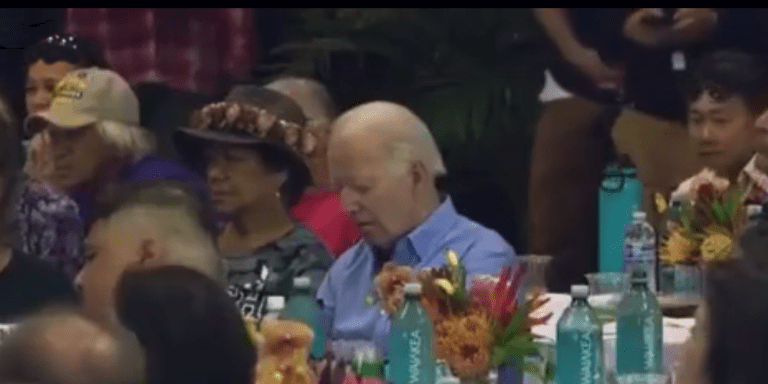
During a Tuesday night dinner, however, Biden was caught on camera shutting his eyes while listening to a speaker discuss the devastation. He was the only one in the room with his head bowed and eyes closed, and seemed to snap out of it after briefly nodding off.

This isn’t the first time Biden has fallen asleep at a public event. Shortly after he took office, the president attended the COP26 climate conference, where he appeared to doze off during the opening speeches.

More recently, he had a brief nap while conducting a one-on-one diplomatic meeting in July with Israeli President Isaac Herzog.

Biden has been blasted for his response to the tragedy in Maui, which he initially refused to even comment on.

Critics have also taken issue with “tasteless” jokes he made while visiting the site of the wildfire.

“You guys catch the boots out here? That’s a hot ground, man,” he said, pointing to the boots on the paws of a cadaver dog, which is trained to find human remains.

Also during his visit, he claimed to have “a little sense” of what the residents of Maui are going through because of a small kitchen fire in his Delaware home almost 20 years ago.

“I almost lost my wife, my ’67 Corvette and my cat,” he said.

Many Maui residents made it clear that they did not want Biden on their island. When he arrived on the island, his motorcade was met with chants of “Go home, Joe!” from angry locals with signs that read “No Comment.”

“I don’t want him here,” Lahaina resident Jay Awan said. “He’s just coming to Maui to look good in front of the cameras.”

Some also offered more obscene reactions.