Bank of America Shuts Down Accounts of Conservative Christian Charity

(Dmytro “Henry” Aleksandrov, Headline USA) Woke Bank of America shut down the account of a conservative Christian charity that helps orphans in Uganda while telling people that “religious beliefs are not a factor in any account-closing decision.”

Indigenous Advance Ministries, a non-profit that is based in Memphis, Tenn., filed a complaint to the state attorney general’s office after it became concerned that the bank closed its account because the bank disagreed with the non-profit’s “religious views,” the Daily Mail reported.

The organization has had a bank account with Bank of America since 2015. On its website, the non-profit unapologetically stated that people who work for the organization are Christian, pro-life — from conception to natural death — and oppose same-sex relationships.

Bank of America sent a letter to the non-profit on Apr. 24, 2023, in which the bank said that the accounts of the organization were being shut down within 30 days.

“Upon review of your accounts, we have determined you’re operating in a business type we have chosen not to service at Bank of America,” the bank wrote.

Indigenous’s representatives repeatedly asked for an explanation about the closure and received a follow-up letter only one month later, in which the bank stated that the organization’s “risk profile no longer aligns with the bank’s risk tolerance.”

The organization added that it had $270,000 in its deposit account at the time.

After receiving backlash, a spokesperson for the bank said that the closure was related to a part of Indigenous’s operations that includes debt collection, which is a “clear violation” of the bank’s policies.

However, when the bank was asked to share the exact part of its policies that says it doesn’t service debt collection agencies, it was unable to do so.

The non-profit is currently being represented by the legal advocacy group Alliance Defending Freedom, which pointed out that the bank explained the account closures only after the Mail contacted the bank and started asking questions.

“Americans should not have to fear losing their bank accounts because of their political or religious beliefs,” Jeremy Tedesco, ADF senior vice president of corporate engagement, said.

“Yet instances of banks canceling accounts due to people’s speech or religion appear to be on the rise.”

Biden Could Face Imminent GOP Probe over Maui Deadly Failure, McCarthy Hints

(Luis Cornelio, Headline USA) Speaker of the House Kevin McCarthy, R-Calif., unleashed a scathing critique of President Joe Biden’s handling of the Maui wildfire catastrophe during his visit to a New York 5G manufacturing facility. 

“We’ve got disasters going off in this country. We saw the devastation that has happened in Maui, the need to go there,” McCarthy stated referring to the wildfires in Hawaii. “But I’m very concerned about the response.” 

“We still have hundreds of individuals that are missing,” he continued, questioning the federal government’s delay. “I think there’s gonna have to be a congressional investigation in response of what happened. How could we lose that many Americans in today’s age?” 

The House speaker then drew attention to a controversial statement made by Biden at Rehoboth Beach, during which Biden declined to comment to a reporter’s question on the deaths that had just devoured Maui last week. 

“And the federal response seems very delayed,” McCarthy declared. “The president’s response to have ‘no comment’? That’s unacceptable. So I’m going to work with committees too to look at investigating what went on so that never happens again as well.” 

Footage of the terse interaction between Biden and the reporter quickly drew widespread criticism from prominent conservative leaders. Matt Walsh, a popular podcast host, took to Twitter to slam Biden as a “scumbag.”

Adding to the uproar, Maui resident Ella Sable Tacderan lambasted the president just days before his Hawaii visit. During an interview with CNN, Tacderan voiced a concern that Biden had been ignoring the catastrophe as he vacationed at a Lake Tahoe luxury mansion owned by leftist Democratic donor Tom Steyer.

“It’s really affecting me because where’s the president?” the Maui resident asked. “He decides to come here this week to come here next week.”  

Later in the interview, she added, “Aren’t we Americans, too? We’re part of the United States. Why are we being pushed aside? Why are we being ignored?” 

McCarthy has previously voiced partial support for launching an impeachment inquiry against Biden, citing his alleged obstruction of an investigation from House Republicans on the reported bribery bombshell and alleged political interference in the criminal probe of Hunter. 

“The thing that holds up whether we’ll do an impeachment inquiry: Provide us the documents we’re asking,” McCarthy said during an interview on Tuesday. “The whole determination here is how the Bidens handle this.”

‘No Soup for You!’: Canned Goods, Solar Panels Become Latest Victims of Bidenomics

(Mark Pellin, Headline USA) On top of skyrocketing interest rates, soaring back-to-school costs, ongoing pain at the pump and crippling consumer credit-card debt, a comfort-food favorite has become the latest casualty of the Biden regime’s misguided policies.

This time around, the pain is expected to flow from the administration’s decision to slap new tariffs “on can-making metal imported from China, Germany and Canada, a move that food companies say could lead to higher prices for some canned foods,” according to MishTalk.

“Chinese products would be subject to the highest tariffs of the three countries—a levy of 122.52% of their import value,” the outlet reported.

The tariff hike originated at the behest of “a petition from the United Steelworkers union and Ohio-based Cleveland-Cliffs, which owns one of the few remaining tinplate plants in the U.S. They said cheap steel imports were hurting U.S. steelmakers and domestic jobs,” the Wall Street Journal reported earlier this month.

Biden’s Commerce Department launched an investigation that found overseas steelmakers “sold their tinplate products in the U.S. at unfairly low prices, justifying new import duties.”

While good for Big Steel and labor unions, the new tariffs threaten the viability of small businesses and ultimately will cost consumers, said Rick Huether, whose family has for decades owned Independent Can.

The company “has survived the Great Depression, the Great Recession, two world wars, and 16 presidential administrations,” Huether wrote in a Fox News opinion piece when the tariffs were still being considered. The family-owned business isn’t sure it can make it through this particular presidential administration, he said.

“A study by Trade Partnership Worldwide forecasts that three years after the tariffs kick in, U.S. can production would decline by nearly 20%. That would force canning companies to cut manufacturing jobs by nearly 30%,” Huether wrote. “Further downstream, the decline in domestic can production would pressure U.S. food manufacturers to cut nearly 40,000 union and non-union jobs.”

With the new tariff triggered, Huether noted that Independent Can “won’t be the only ones in trouble. Their plan threatens tens of thousands of U.S. manufacturing jobs and would increase the price of canned goods across the country.”

Consumer groups also warned that the “new levies will mean higher prices for canned soups, vegetables and other products at a time when food prices have already been driven upward by inflation.”

The move comes in the wake of a Biden tariff binge that also included new hikes on solar panel companies who were reportedly dodging tariffs on Chinese-made goods, which was rooted out by the Commerce Department investigation that began last year.

“The U.S. Department of Commerce is out of step with the administration’s clean energy goals, and we fundamentally disagree with their decision,” said Abigail Ross Hopper, head of the Solar Energy Industries Association, as reported by NPR.

“It will take at least three to five years to ramp up domestic solar manufacturing capacity and the global supply chain will be vital in the short-term.”

The result has led to higher prices across the board, asserted MishTalk’s Mike Shedlock.

“Not only does Biden demand more clean energy, he also demands consumers pay the maximum amount for it, despite that being counterproductive to the main goal,” wrote Shedlock, who also noted that another new Biden regulation is set to trigger price hikes for all government projects. “Today we can add solar panels and soup to the list.”

“The Consumer Brands Association, a trade group representing companies such as Campbell Soup and Fresh Del Monte Produce, estimated new tariffs, if applied aggressively, could raise the prices of canned food by up to 30%,” the Journal reported.

Mark Pellin is an editor at Headline USA. Follow him at twitter.com/sabrepaw70.

Small Businesses Feel Pain of Inflation-Driven Interest Rates

(By Casey Harper, The Center Square) Small business owners are feeling the pain of inflation-driven interest rate hikes, another difficulty for those owners to overcome as they continue to recover from the COVID-19 pandemic-era shutdowns.

A rash of federal spending and an increase in the money supply in recent years have fueled inflationary pressures. Prices soared during the beginning of the Biden administration, making it hard for Americans to make ends meet.

To push down inflation, the U.S. Federal Reserve hiked interest rates nearly a dozen times to the highest level in 22 years. As The Center Square previously reported, The U.S. Bureau of Labor Statistics’ Producer Price Index, a key marker of inflation, has increased nearly 17% since President Joe Biden took office. Wages, meanwhile, have not kept up.

Now, inflation has largely slowed its rapid increase, but the new interest rates have made borrowing money much more expensive.

“Congress spent trillions upon trillions in recent years both in its irresponsible response to the pandemic and simply for further bloated increases for federal programs and agencies,” Joel Griffith, an economic expert at the Heritage Foundation, told The Center Square. “The central bank—the Federal Reserve—printed nearly $5 trillion, in part to finance this deficit spending. These newly created dollars flowed into the economy at a rapid pace. More dollars chasing too few goods sparked inflation.”

The average mortgage prices last week hit 7.09%, the highest in two decades. This time last year, the average rate was about 5.13%. Interest rates on business loans have risen as well.

“In addition, when banks lend out these dollars, the money supply increases even further,” Griffith said. “By raising interest rates, the Fed hopes to curtail demand for these loans— lessening the inflation they the Fed itself helped create.”

Recently released survey data gives a window into the impact of those policies, reporting that many small business owners cite interest rates as a major problem.

“Over half (58%) of small business owners who borrowed or tried to borrow reported high interest rates as their largest complaint in accessing financing,” the National Federation of Independent Business said.

NFIB’s monthly survey of business owners shows that the percentage who cite interest rates as their biggest concern has ticked up as well.

Those businesses are also generally concerned about the banking sector, which has seen multiple bank collapses and fear of a domino effect.

“The health of the financial system is essential to small business operations,” said Holly Wade, Executive Director of NFIB’s Research Center. “While most owners are currently satisfied with their ability to borrow, the escalating cost of financing associated with high interest rates is a significant issue for many.”

Virginia AG: School Boards Must Adhere to Youngkin’s New Policies Protecting Trans Students, Empowering Parents

(Headline USA) Republican Virginia Gov. Glenn Youngkin’s new model policies for the treatment of transgender students are in line with federal and state nondiscrimination laws and school boards must follow their guidance, the state’s attorney general said in a nonbinding legal analysis released Thursday.

“The Model Policies ensure that all students are treated with dignity and that parental involvement remains at the center. These policies are fully compliant with the law, and school boards across the Commonwealth should support and implement them,” Attorney General Jason Miyares, also a Republican, said in a statement.

The advisory opinion from Miyares comes as a growing number of school boards across the state are responding to the administration’s guidelines, which were finalized last month after a lengthy review and deal with issues ranging from athletics to students’ pronoun use in the classroom being changed often without parental knowledge or consent.

Some school boards in red-leaning areas of the state have begun to adopt policies consistent with the governor’s. Others, mostly in blue areas, have said they plan to defy them.

For instance, Fairfax County Public Schools—the state’s largest district—recently told parents it had no plans to change its guidelines for transgender students, which do not align with Youngkin’s.

A similar dynamic, in political reverse, played out under previous Democrat Gov. Ralph Northam’s administration. The Department of Education told local districts at the time that they assumed “all legal responsibility for noncompliance” and did not even track which divisions were meeting the standards, the Virginia Mercury reported at the time.

Youngkin has been making the case in recent public appearances that school boards have no choice but to fall in line. But he has declined to say exactly what tools his administration thinks it has to attempt to get noncompliant districts on board. The 2020 state law that led to the creation of the model policies is silent on enforcement.

Pressed Wednesday on the issue when speaking with reporters, he responded: “Just stand by.” He went on to add that he expects school boards “fully to get to the right place.”

Miyares’ 10-page opinion was issued later that day and released publicly Thursday morning. It addresses a handful of questions that have been raised about the legality of the guidelines and whether they are in alignment with the U.S. Constitution or state or federal law.

Miyares wrote that the athletics policies—which say participation should be based on biological sex rather than gender identity—are not in conflict with the Virginia Human Rights Act’s prohibition against discrimination on the basis of gender identity.

The model policy “draws no distinctions of any kind on the basis of gender identity,” rather both sides of the classification, biological males and biological females, include trans students and treat them like other students of the same sex, the opinion says.

Regarding the section dealing with student identification in the classroom, including pronoun selections, it says: “Because the model policy ultimately vests the decision of pronoun reference with a student’s parents, [the policy] does not discriminate on the basis of sex.”

The previous Northam era-guidance said schools should let students use names and gender pronouns that reflect their gender identity without “any substantiating evidence.”

The opinion also addresses the legal case of Gavin Grimm, the former Virginia high school student whose lawsuit over his district’s transgender bathroom ban led to a ruling that the policy was unconstitutional.

Miyares found that the policies are not in conflict with the 4th U.S Circuit Court of Appeals ruling, which “does not impose a blanket rule forbidding sex-separate facilities in all situations, let alone govern policies related to athletics, access to information, or pronoun usage.”

In conclusion, the analysis found that the model policies “offend neither the Equal Protection Clause, Title IX, nor the [Virginia Human Rights Act].”

“School boards therefore must adopt model policies consistent with those developed by the Department,” it said.

In a statement, Youngkin said the attorney general’s opinion “reaffirms our model policies.”

Adapted from reporting by the Associated Press

Rally-Sized Crowd of Trump Fans Gather Outside Fulton County Jail Ahead of His Expected Arrest

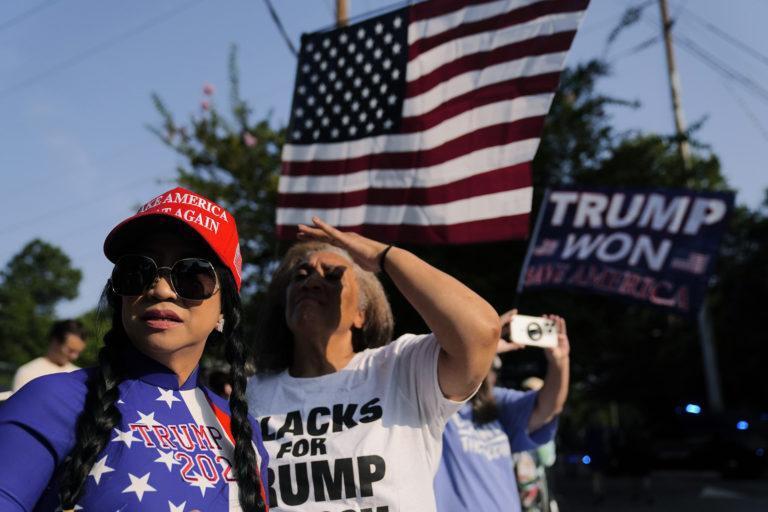
(Headline USA) Hours before former President Donald Trump was expected to turn himself in at the Fulton County Jail on politically weaponized charges related to his efforts to challenge the highly disputed 2020 election outcome, dozens of his supporters had already gathered Thursday morning outside the facility.

And the crowd grew steadily as the day progressed.

It will be the fourth time this year that Trump, the early front-runner in the 2024 Republican presidential primary by a long shot, is booked on criminal charges. But unlike his previous arrests, which happened in courthouses just before initial appearances before a judge, this time he will be turning himself in at a notoriously troubled jail.

Also different from his previous surrenders: authorities are expected to take a booking photo of the former president. It’s all part of a process that critics said is a dog-and-pony show crafted by Soros-backed Fulton County DA Fani Willis, who for years has craved a Trump mugshot and perp walk.

Trump and 18 others were indicted last week on RICO charges for daring to question the validity of the 2020 tilt, which Joe Biden allegedly won despite spending a majority of his campaign huddled in a basement. Many of the others charged turned themselves in at the jail earlier in this week, including Rudy Giuliani, Sidney Powell and Jenna Ellis on Wednesday and John Eastman on Tuesday.

Fulton County Sheriff Pat Labat has said Trump, and the others in this case, will be treated like anyone else — notably saying at a news conference earlier this month: “Unless somebody tells me differently, we are following our normal practices, and so it doesn’t matter your status, we’ll have a mugshot ready for you.”

But the scene outside the jail was anything but normal Thursday.

It included supporters of the former president such as Cliff MacMorris, 66, from Naples, Florida, who held a flag that read, “Trump Won Save America.”

He and his wife, Georgine, spent the night in Atlanta.

“You don’t have the right to persecute somebody unjustly,” Cliff MacMorris said.

His wife said the indictments against the former president were politically motivated because of the four years of “prosperity, safety, freedom” that Trump achieved in the White House.

“They must be worried about him for some reason,” she said.

Sharon Anderson, 67, from east Tennessee, was outside the jail for a second straight day. She had spent the night in a car with the air conditioning running.

“I’m here to support Donald J. Trump. I want him to see some of the millions that show up at the polls for him.”

She said the indictments against Trump had only strengthened her support for him. The former president questioned the election results, which isn’t a crime, she said.

While the crowd was mostly made up of Trump supporters, 64-year-old Laurie Arbeiter, who is from New York City, wore a shirt that said “Arrest Trump” and carried more than 50 black-and-white signs with her, including ones that read “Convict Trump” and “Trump is a Traitor.” She said she’d also traveled to other places where Trump was indicted.

As midday temperatures hovered near 90 degrees, sheriff’s deputies in vests toweled off and sought shade under a tree.

The main Fulton County Jail, also known as the Rice Street Jail, is located in a traditionally industrial part of northwest Atlanta where warehouses are currently being redeveloped for retail and residential use. It’s set back from the street by a long, tree-lined driveway that leads to a parking lot in front of the jail’s imposing façade.

On most days, the public and news media are free to drive right up to the front of the jail and news cameras have captured the arrivals and departures of many high-profile people who have been booked into the jail. But with the booking of a former president looming, the driveway off the main street in front of the jail has been closed off for days, with no reporters or cameras allowed within viewing distance of the building.

Security tightened further on Thursday. While cars had been allowed on the Rice Street side of the jail a day earlier, sheriff’s deputies cut off vehicle traffic on Thursday. They also set up barricades to keep protesters and media back. Some deputies wore vests and covered their faces with black masks. They formed a line along the street.

Scores of supporters of the former president were already there by mid-morning, some waving flags with Trump’s name. Members of a group called Blacks for Trump hurled racial slurs at black sheriff’s deputies. But the demonstration was otherwise peaceful early on.

While others who are booked in there spend months or even years in the facility awaiting indictment or trial, Trump is not expected to spend time at the jail once he is booked. The jail is plagued by crumbling infrastructure and overcrowding. On Thursday morning, the jail housed 2,618 people, above its capacity of 2,254, according to data from the sheriff’s office.

The U.S. Department of Justice last month announced a civil rights investigation into jail conditions in Fulton County, citing violence, filthy conditions and the death last year of a man whose body was found covered in insects.

Adapted from reporting by the Associated Press

Ramaswamy Raises $450K in First Hours After Republican Debate

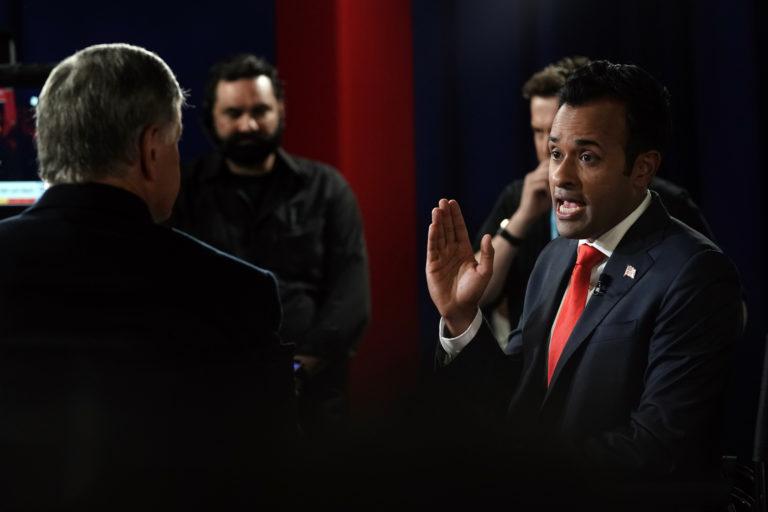
(Headline USA) Despite being outgunned Wednesday night by a Tucker Carlson interview of Donald Trump that crushed mainstream media ratings, the first Republican presidential debate provided an opportunity for candidates to make their cases directly to a national audience, and some of that attention is translating into fundraising boosts.

Biotech entrepreneur Vivek Ramaswamy has taken in $450,000 since Wednesday night’s debate, with an average donation of $38, campaign spokeswoman Tricia McLaughlin told The Associated Press on Thursday.

Ramaswamy, a political newcomer who occupied center stage in the absence of current GOP front-runner Donald Trump, scored several memorable moments during the debate, criticizing some rivals as “super PAC puppets” who were using “ready-made, preprepared slogans” to attack him.

Ramaswamy, has largely been self-funding his campaign and raised more than $7.7 million in the second quarter, finishing with more than $9 million on hand.

At least one candidate, South Carolina Sen. Tim Scott, made a direct fundraising appeal onstage Milwaukee, asking viewers in his closing remarks to go to his campaign website “for more information or to make a contribution.”

Former President Donald Trump, who is the early front-runner for the nomination, skipped the debate.

Other campaigns didn’t immediately respond to messages Thursday about their post-debate fundraising, but some donors are talking.

After being briefed in Milwaukee by top campaign staffers for Florida Gov. Ron DeSantis, donor Hal Lambert said he was pleased with his chosen candidate’s performance.

“Everyone’s extremely happy,” Lambert said in an interview. “I think he did extremely well. I think he stayed out of the bickering on stage.”

Jay Zeidman, a Houston-based venture capital executive and DeSantis fundraiser, said he was “excited” and “motivated” after the debate as he made fundraising calls Thursday.

“Last night helps reiterate the point that this governor is building a campaign to last and that despite the headline of the day or the poll of the day, that we know we’re in a really good spot and have nowhere to go but up and believe that the former president has nowhere to go but down,” Zeidman said.

A handful of candidates had gotten creative in their fundraising appeals in order to meet the Republican National Committee’s 40,000 minimum unique donor requirement for debate participants. Some of the ploys worked, such as North Dakota Gov. Doug Burgum’s giveaway of $20 “Biden Relief Cards” in exchange for donations as low as $1.

Adapted from reporting by the Associated Press

Slain Marine’s Family Plans to Refile Lawsuit Accusing Alec Baldwin of Defamation

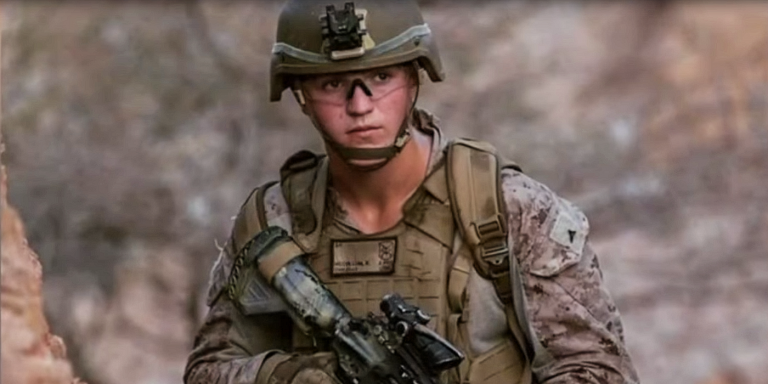
(Headline USA) A lawyer for the family of a Marine killed in Afghanistan said Thursday that a new version of a lawsuit accusing actor Alec Baldwin of unleashing his social media followers against them will soon be filed after a federal judge dismissed the original lawsuit but invited the family to rewrite it and submit it again.

Attorney Dennis Postiglione, representing the sisters and widow of Lance Cpl. Rylee McCollum, said he’ll meet a Sept. 12 deadline set by the judge to renew allegations that Baldwin subjected family members to online threats and harassment after he posted and commented on a photo shared online by one of McCollum’s sisters, Roice McCollum, who had been in Washington during the Jan. 6, 2021 uprising.

Earlier this week, Judge Edgardo Ramos in Manhattan dismissed the family’s defamation lawsuit, which sought $25 million in damages, but he invited a refiling of the lawsuit to correct deficiencies and renew claims of defamation and intentional infliction of emotional distress.

In tossing out the original lawsuit, Ramos made various conclusions in Baldwin’s favor, including that his comments were protected by the First Amendment, that actual malice was not sufficiently alleged and that private messages, comments and social media posts did not support defamation claims.

Postiglione said in an email that a rewritten lawsuit will be filed by the deadline that will address issues the judge raised.

He added: “Without getting into specifics, we disagree with the analysis by the Court but believe an amended Complaint will address the issues presented.”

Baldwin had donated $5,000 to the family after learning of the death of Rylee McCollum in a bombing at the airport in Kabul in August 2021, just weeks before his daughter was born. Baldwin had contacted Roice McCollum via Instagram, according to the lawsuit.

In January 2022, Baldwin saw that Roice McCollum posted a picture of demonstrators from former President Donald Trump’s rally taken on the day Congress counted the Electoral College votes from the 2020 presidential election, the lawsuit said.

Baldwin told Roice McCollum he would share her photo with his 2.4 million Instagram followers and wrote: “Good luck,” according to the lawsuit.

Roice McCollum said in the lawsuit that she “did not take part in, nor did she support or condone the rioting that erupted” at the Capitol, and was cleared of any wrongdoing after meeting with the FBI.

A lawyer for Baldwin did not immediately respond to a request for comment.

Adapted from reporting by the Associated Press

Legal Activist Who Sank Affirmative Action Targets Racism at Steele Dossier Lawfirm

(Robert Jonathan, Headline USA) The conservative activist who successfully challenged race-based college admission preferences all the way to the U.S. Supreme Court is taking the legal fight to what is generically known as Big Law.

Edward Blum is the founder and president of Students for Fair Admissions, the winning plaintiff in the landmark cases that, in June, ended decades of affirmative action policies at Harvard University and the University of North Carolina (and by extension, the entirety of academia) ruling that they violated the Equal Protection Clause of the 14th Amendment.

In separate federal filings, Blum’s companion nonprofit organization, the American Alliance for Equal Rights, is now suing two international law firms, Perkins Coie and Morrison & Foerster, in Dallas and Miami federal court, respectively.

Many will recognize Perkins Coie as the notorious law firm representing high-powered left-wing clients including the Democratic National Committee and the Hillary Clinton campaign, which played an active role, via its former lead election lawyer, Marc Elias, in pushing the Russia-collusion hoax and the Steele dossier.

The prosecution of attorney Michael Sussmann by former special counsel John Durham brought publicly to light that the FBI had long maintained its own private office within the Perkins Coie headquarters in Washington, D.C.

Both prestigious firms allegedly sponsor internal fellowships that are racially exclusionary and, as such, purportedly violate Section 1981 of the Civil Rights Act of 1866, which prohibits discrimination in private contracts.

“The federal lawsuits accused both law firms of unlawfully discriminating against white candidates by limiting which law students could be considered for paid fellowships designed in part to help support the recruitment of people of color,” according to Reuters.

In the Dallas lawsuit, AAFER argued that “[t]he law abhors racial discrimination” and that [t]he lawyers who help administer that law are supposed to abhor it too … Yet Perkins Coie has been racially discriminating against future lawyers for decades.”

Very similar language appeared in the Miami filing as it related to the Morrison & Foerster allegations.

The complaint also insisted that “This kind of rank discrimination was never lawful, even before SFFA v. Harvard held that colleges cannot use race in admissions.”

In a statement, Blum asserted that “Excluding students from these esteemed fellowships because they are the wrong race is unfair, polarizing and illegal. Law firms that have racially-exclusive programs should immediately make them available to all applicants, regardless of their race.”

He added that “Race and ethnicity are attributes, not accomplishments. It is the hope of this organization, as well as most Americans, that these law firms end these racial restrictions and open these fellowships to all qualified applicants.”

Perkins Coie touts its commitment to diversity, equity and inclusion on its website, as well as promoting environmental, social and governance strategies.

Morrison & Foerster appears to embrace a similar commitment and also provides an ESG resource center on its website.

Ironically perhaps, many law firms have advised their corporate clients to carefully review their DEI programs in the aftermath of the Supreme Court affirmative action ruling, even given though it is technically inapplicable to big business.

Given the industry’s almost unlimited resources, cases against Big Law could be tied up in the courts for years before a final resolution, assuming a settlement doesn’t occur along the way.

In the meantime, the AAFER lawsuit seeks a judgment that includes a court order preventing the two high-profile law firms from considering race as a factor in fellowship eligibility and instead requires race-neutral protocols.

Report: DEA ‘Accidentally’ Paid a Scam Artist $50,000

(Ken Silva, Headline USA) The Drug Enforcement Administration was tricked earlier this year into giving a $50,000 of cryptocurrency to a scam artist posing as someone with the U.S. Marshals Service, according to a report from Forbes.

Citing an FBI search warrant it obtained, Forbes reported Thursday that the DEA seized in May over $500,000 in the dollar-linked cryptocurrency Tether from two Binance accounts it suspected were being used to funnel illegal narcotics proceeds. The funds were placed in DEA-controlled accounts, Forbes said.

Because the funds were cryptocurrency, an online scammer was able to watch the DEA’s movements on the blockchain—a decentralized ledger that records all the transactions of a given cryptocurrency.

According to Forbes, the scammer quickly set up a cryptocurrency address that matched the first five and last four characters of the Marshals account. The swindler tehn “airdropped” the fake address into the DEA’s account by dropping a token into the DEA account so it looked like the test payment made to the Marshals.

“The idea here was to basically trick the DEA into thinking the scammer’s address was actually the Marshal’s service’s address. Crypto addresses are so long that people usually just copy and paste instead of typing them fresh each time,” explained Forbes reporter Thomas Brewster.

“The scammer in the DEA case got lucky, as the agency sent just over $55,000 to the scammer in a single transaction,” Brewster said.

“When the Marshals noticed what happened and alerted the DEA, the latter contacted Tether operators to freeze the fake account so the scammer couldn’t withdraw the crypto. But Tether officials said the money had already gone.”

The FBI is now reportedly hot on the scammer’s trail.

Forbes said  investigators haven’t identified the person, but they have found two Gmail accounts he used. They’re hoping Google will have more information on the crypto robber.

“Whoever is behind the hack, they’ve been shifting large sums of Ether in recent months,” Forbes added.

“A search on Etherscan Ethereum blockchain explorer showed the scammer’s wallet currently contained nearly $40,000 in the currency, but that it had received $425,000 since June. In the last three weeks, over $300,000 of that has been moved to seven different wallets.”

The DEA declined to comment, as did the FBI, which filed the warrant and is leading the investigation into the theft.

Ken Silva is a staff writer at Headline USA. Follow him at twitter.com/jd_cashless.