Court Rules Pennsylvania Must Count Faulty Ballots Ahead of 2024

(Luis Cornelio, Headline USA) A federal court has mandated that Pennsylvania must count all mail-in ballots, even those with missing or incorrect dates, marking a pivotal decision ahead of the 2024 presidential election.  

This Tuesday ruling, led by U.S. District Judge Susan Paradise Baxter, emerged amid a struggle within the local Democratic Party to bolster their campaign footing. 

Baxter’s verdict favored a lawsuit spearheaded by civil rights groups, many of which are commonly associated with left-leaning ideologies, including the NAACP, the League of Women Voters of Pennsylvania and Make the Road PA.

Baxter contended that the act of discarding or disqualifying ballots due to improper or missing date markings violated federal civil rights, asserting that such actions were essentially “erecting immaterial roadblocks” to voting. 

This order effectively overturns a 2019 state election law, empowering county boards to reject mail-in ballots lacking accurate exterior envelope dates. The court deemed this law as violating the Materiality Provision of the Civil Rights Act. 

Baxter rebuffed the arguments presented by the defendants, including Pennsylvania Secretary of the Commonwealth Al Schmidt, a Republican, and the 67 county boards of elections.

Schmidt defended the law, contending that it did not impede the right to vote but rather sought to address procedural aspects. Notably, the Pennsylvania Supreme Court had upheld this law before the 2022 midterm elections. 

According to a report from the leftist Democracy Docket, ballots affiliated with the Democratic Party comprised approximately 68% of the discarded ballots during the 2022 elections. This resulted in around 7,600 uncounted mail-in ballots across a dozen counties, the outlet lamented.

This ruling comes two months after Gov. Josh Shapiro, a Democrat and staunch ally of unleashed a new universal voter registration system, a move celebrated by the Democrats. The system automatically registers all residents possessing a state ID or driver’s license to cast their votes. 

Moreover, the Pennsylvania Democratic Party finds itself grappling with a precarious financial situation, as outlined in a critical report by Politico. The report depicts the party as being in a state of disarray, confronting minimal funds in preparation for both the 2023 and 2024 elections.

Nearly Half of Americans Think U.S. Wasting Too Much on Ukraine Aid

(Headline USA) As lawmakers in Washington weigh sending billions more in federal support to Kyiv to help fight Russia, close to half of the U.S. public thinks the country is spending too much on aid to Ukraine, according to polling from the Associated Press-NORC Center for Public Affairs Research.

Those sentiments, driven primarily by fiscal conservatives in the GOP, help explain the hardening opposition among lawmakers on Capitol Hill who are rebuffing efforts from President Joe Biden to approve a new tranche of Ukraine aid, arguing that the money would be better spent for domestic priorities as many continue to deal with the catastrophic dual effects of inflation and interest rate-hikes in the Biden economy—largely the result of unfettered government spending and devaluation of currency.

Yet opposition to aid is down slightly from where it was a month ago in another AP-NORC poll. Now, 45% say the U.S. government is spending too much on aid to Ukraine in the war against Russia, compared with 52% in October. That shift appears to come mostly from Republicans: 59% now say too much is spent on Ukraine aid, but that’s down from 69% in October.

The difference may be a perceived drawdown in Ukraine aid as new House Speaker Mike Johnson has generally opposed it.

Johnson has signaled some willingness to compromise on Ukraine packages that are tied to military spending on Israel.

Nonetheless, the Republican resistance to continued Ukraine aid remains strong, both in Congress and among their constituents.

“I understand the citizens need help, but I feel like we’re spending way too much money on Ukraine when we have our issues here, on our own soil, that we need to deal with,” said Eric Mondello, 40, from Fountain, Colorado.

Mondello pointed to needs such as health care for veterans and homelessness in communities.

“I understand the U.S. has been an ally to others, but I feel like, let’s take care of our people first,” he said.

More than one-third (38%) of U.S. adults say that current spending is “about the right amount,” which is up slightly from last month (31%).

Among Republicans, nearly 3 in 10 (29%) say the current spending is about right, up from 20% last month.

Paula Graves, 69, is among those who says the amount of spending for Ukraine is the right amount due to the perceived threat posed by Russian President Vladimir Putin.

“Putin, he’s straight up evil. I don’t think there should be any question in anyone’s mind,” said Graves, of Clovis, California. “He’s a dictator. He’s infringed on human rights, he’s a very scary person and if Ukraine falls to him, who’s next? What country’s next?”

Graves, who says she is not affiliated with a political party but leans more conservative, said she believes the U.S. has a leadership role on the global stage and added: “I think we definitely need to put America first, but I don’t think that needs to be first and only.”

The White House has been repeatedly pressing lawmakers to pass Biden’s nearly $106 billion emergency spending package that he proposed in October, which includes more than $61 billion specifically for the war in Ukraine.

The rest of Biden’s request has aid for Israel as it battles Hamas, money for various priorities in the Indo-Pacific region and additional resources to help manage migration at the southern border—although not necessarily to enforce border security.

On Ukraine, the Biden administration is increasingly warning that the well of aid is running dry.

In an unannounced visit to Kyiv on Monday, Defense Secretary Lloyd Austin said Ukraine’s effort to defeat Russian forces “matters to the rest of the world” and pledged that U.S. support would continue “for the long haul.”

That message was reinforced at the White House.

“As President Biden has said, when aggressors don’t pay a price for their aggression, they’ll cause more chaos and death and destruction,” John Kirby, spokesman for the National Security Council, told the White House press briefing Monday. “They just keep on going, and the cost and the threats to America and to the world will keep rising.”

However, others are skeptical that the war is yielding any sort of measurable progress and suspect that the lack of oversight and defined objectives may have something to do with the fact that little of the money is actually going into the war effort at all.

Instead, some argue that the war in Ukraine—which has been a steady conflict since 2014, even before Russia’s 2022 incursion—has already been lost and that what remains is a massive money-laundering operation to funnel funds from the pockets of taxpayers through the corrupt Ukrainian regime and back into the Democratic National Committee, as well as corporate and private profiteers.

Congress has rebuffed the White House efforts at bolstering Ukraine support at least twice in recent months. First, it ignored a roughly $40 billion supplemental request before a Sept. 30 funding deadline. Then last week, it passed a stopgap funding measure that keeps the government operating through early next year, but with no additional Ukraine aid.

In the Senate, a small bipartisan group is working on legislation that would combine fresh Ukraine assistance with stricter border measures to address concerns from Republicans that the U.S. was focused on needs abroad at the expense of issues closer to home.

A broad majority of senators remains supportive of Ukraine aid, with Senate Minority Leader Mitch McConnell, R-Ky., being one of the most stalwart supporters despite the isolationist strain in his party.

South Dakota Sen. John Thune, the No. 2 Republican in the Senate, said lawmakers will continue to work on the Ukraine-border package over the Thanksgiving break and won’t wait until mid-January—when Congress faces another government funding deadline—to act.

The big question mark is in the House, where Johnson—who had voted against Ukraine aid as a rank-and-file conservative—has spoken broadly of the need to counter Russian aggression yet faces unruly GOP lawmakers who have shown more hostility to continued support for Kyiv.

Johnson, too, is insisting that additional Ukraine aid be paired with tougher border measures, although it is far from certain that any immigration agreement that clears the Democrat-led Senate could pass the GOP-controlled House.

Half of U.S. adults are extremely or very concerned that Russia’s influence poses a direct threat to the United States. Democrats (53%) and Republicans (51%) are similarly concerned about Russian power – but Democrats are more likely than Republicans to see Ukraine as a nation of shared values to the U.S. and to support more aid for Ukraine.

About half of the public (48%) endorses providing weapons to Ukraine (57% among Democrats, 42% among Republicans). About 4 in 10 favor sending government funds directly to Ukraine (54% for Democrats, 24% for Republicans).

Americans have grown slightly more likely to say the U.S. should take “a less active role” in solving the world’s problems, compared with a September poll from AP-NORC and Pearson.

Slightly fewer than half (45%) now say the U.S. should be less involved, up from 33% in September. Just 16% of Democrats now say the U.S. should take a more active role, down from 29% in September.

Peter Einsig, a Republican from Tulsa, Oklahoma, said he still believes the U.S. has a role to play abroad, but that he remains concerned about excessive government spending and federal debt.

Yet Einsig said he would be more inclined to support aid to Ukraine if there were more oversight into how the money was being used abroad, as well as a timeline of how much longer the U.S. would be providing support.

“We don’t have transparency on where the money is really, really going,” said Einsig, 40. “It’s a big lump sum.”

Four in 10 U.S. adults say Ukraine is an ally that shares U.S. interests and values. That view is most common among Democrats (53%), who are much more likely than independents (28%), Republicans (29%) and Americans overall to see Ukraine as a nation with similar values and needs.

About half of Republicans say Ukraine is a partner that the U.S. should cooperate with, but say it is not a nation that shares U.S. values.

The poll of 1,239 adults was conducted Nov. 2-6, 2023, using a sample drawn from NORC’s probability-based AmeriSpeak Panel, designed to represent the U.S. population. The margin of sampling error for all respondents is plus or minus 3.9 percentage points.

Adapted from reporting by the Associated Press

Fani Willis Tries to Have Trump’s Black Co-Defendant Jailed over Social-Media Criticism

(Headline USA) The Georgia judge overseeing the Fulton County “RICO” case against former President Donald Trump and others declined a request from the radical, woke district attorney overseeing the case to revoke the bond of one of the co-defendants.

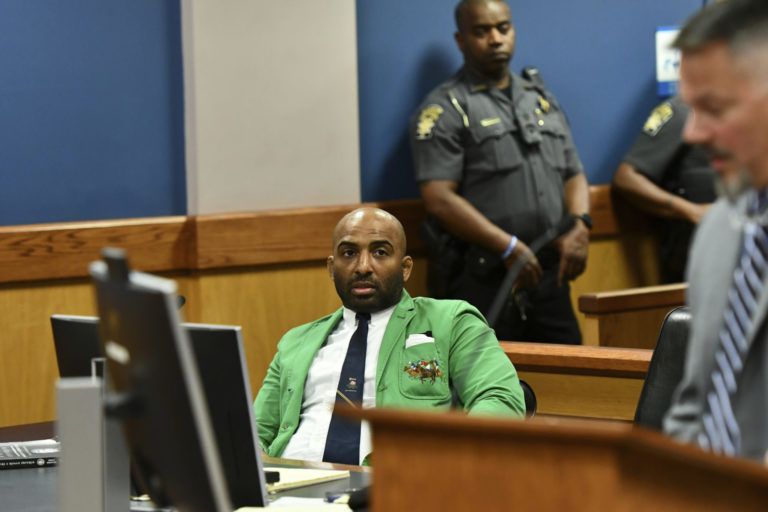
However, Superior Court Judge Scott McAfee did impose stricter bond conditions after Fulton County District Attorney Fani Willis complained about the social media posts of defendant Harrison Floyd that mentioned witnesses and co-defendants.

Willis—who has been busy on the speech circuit, including a recent Washington Post banquet where she signaled her plans to milk the Trump trial beyond the January 2024 inauguration—made a rare appearance in the courtroom to argue for the revocation of Floyd’s bond.

Willis filed a motion last week asking McAfee to revoke Floyd’s bond. In her first in-person appearance in this case since the indictment, she argued in court that Floyd has been attempting to intimidate and contact likely witnesses and his co-defendants in violation of the terms of his release.

Floyd’s lawyers argued that his social media posts are constitutionally protected speech and that he was in no way trying communicate with or intimidate any witness or co-defendant.

McAfee said there is no constitutional right to bail and that bond orders can contain conditions that curtail a defendant’s rights, but he also noted that people are generally allowed to publicly criticize the merits of the case but cannot cross a line. He said Floyd appears “very boldly willing to explore where that line is” in this case.

McAfee said he did believe there had been a “technical violation” of Floyd’s bond conditions but that not all violations merit revocation.

McAfee said he didn’t believe that Floyd’s posts amounted to intimidation, pointing out that they didn’t include posting of personal information or any explicit wording that something should be done about the people he mentioned. But he said the question was much closer when it comes to whether Floyd was trying to directly or directly communicate with witnesses or codefendants, noting that the people did end up seeing his posts.

“I think the public safety interests raised as a result of today’s hearing indicate that his actions have a consequence,” the judge said.

After discussion with the lawyers, and over some objections from Floyd’s attorneys, McAfee signed a modified bond order proposed by prosecutors.

The new bond conditions say Floyd shall have “no contact” with or do anything to intimidate any co-defendant, witness or person named in the indictment.

They also prohibit him from making any public statement about any of those people and from posting anything about them or contacting them in any way on social media. That includes not interacting with a post by any other user that would violate the order if he had been the one who posted it.

Floyd attorney Chris Kachouroff complained that the order would effectively “muzzle” his client. McAfee said rushing to modify the order while sitting there could cause problems but that he was open to modifying the terms in the coming weeks.

“I think what the judge did was fair,” Kachouroff said after the hearing. “I don’t like it, but he’s within the realm of reason.”

Some have accused the Fulton officials of racism and prosecutorial harrassment for singling out Floyd, a leader in the organization Black Voices for Trump.

Floyd is the only black man among the 18 people accused along with the former president of participating in a wide-ranging racketeering scheme related to his efforts to challenge the disputed outcome of the 2020 election.

Willis, who is also black, is the daughter of a radical ex-leader of the Black Panther Party who had a long-running relationship with domestic terrorist and Communist Party Leader Angela Davis.

Although Willis campaigned in her own 2020 election on her plans to prosecute Trump, the case rests largely on a phone call Trump made to Georgia Secretary of State Brad Raffensperger the day after she took office. Critics have said the call has been deliberately misconstrued by Trump critics in what amounts to another spurious lawfare attack.

In a post on his Truth Social network Tuesday, Trump pointed out that Fulton County had recently acknowledged more than 3,000 duplicate ballots.

The county also appears to have illegally destroyed a number of ballots in the election’s aftermath.

The charges against Floyd relate to allegations of harassment toward Ruby Freeman, a Fulton County election worker accused of election fraud after video emerged showing her and coworkers surreptitiously scanning ballots at Fulton County’s State Farm Arena after poll watchers and media had been sent home under false pretenses.

Floyd took part in a Jan. 4, 2021, conversation in which Freeman was told she “needed protection” and was pressured to admit she had participated in election fraud, the indictment says.

Four defendants have accepted plea bargains in the case include promises to testify in any trials. Trump and the others have pleaded not guilty. No trial date has been set, but Willis last week asked McAfee to set it for Aug. 5, 2024.

Floyd was the only defendant in the case who spent time in jail after his indictment because he’s the only one who didn’t have a lawyer reach an agreement on bond conditions before he turned himself in at the Fulton County Jail.

The conditions of his release include not communicating directly or indirectly about the facts of the case with any of his co-defendants or any known witnesses.

“He can publicly criticize me all he wants. I don’t value his opinion. It doesn’t matter,” Willis said. “But what he may not do is publicly do things that intimidate witnesses, and so that needs to be clear.”

She called three witnesses during Tuesday’s hearing—an investigator in her office, a high-ranking official in the Georgia secretary of state’s office and an attorney for Freeman. She walked them through numerous posts Floyd had made on social media.

The investigator testified that he had communicated with a lawyer for Jenna Ellis, a co-defendant who struck a plea deal last month.

After video of a deposition leaked, Ellis—a one-time Trump loyalist—was harshly criticized for having accepted large amounts of money from a pro-Trump defense fund when it became clear that her testimony intended to throw the former president under the bus.

Ellis’s lawyer said he had seen Floyd’s post accusing her of lying and believed that it was meant to harass or intimidate her, or to encourage others to do so.

Gabriel Sterling, a top secretary of state’s office official who strenuously defended the legitimacy of the state’s 2020 vote count, said he had seen Floyd’s posts insulting him and Raffensperger. But he said posts like that are “par for the course” for a public official.

Freeman’s lawyer, Von Dubose, said a service his team pays to monitor threats to Freeman and her daughter had noticed a spike in such activity related to Floyd’s posts. Floyd’s attorneys disputed that the threat activity in that report could be reasonably attributed to his posts.

They also noted that while Trump’s bond order specifically puts limits on certain social media posts as part of his bond conditions, Floyd’s does not. They argued that Floyd’s posts were protected speech and that attempting to communicate with anyone by tagging them on social media is analogous to shouting to someone across a crowded stadium.

They also argued that Floyd didn’t attack Freeman and views her as a favorable witness for his defense.

Adapted from reporting by the Associated Press

Utah Republican Celeste Maloy Wins Special Election to Replace Chris Stewart

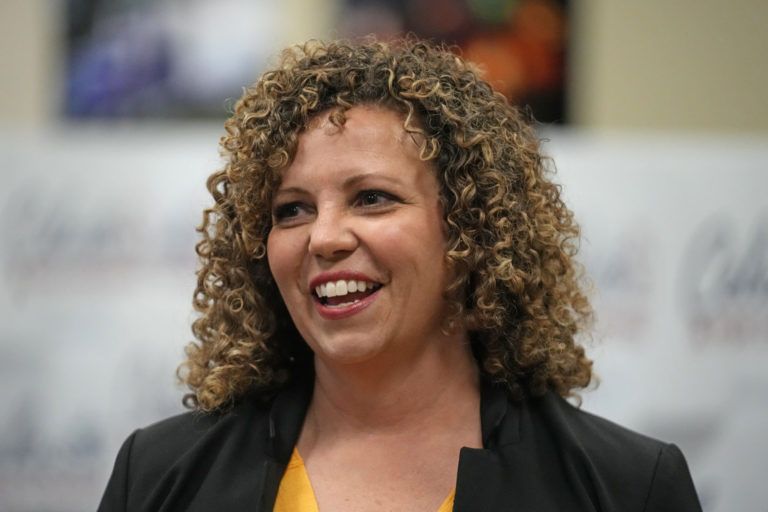
(Headline USA) Republican Celeste Maloy won a Utah special election Tuesday to replace her former boss, retiring Rep. Chris Stewart, in a race that will put a woman back among Utah’s five-member congressional delegation for the first time since the departure of Tea Party darling Mia Love in 2019.

Maloy beat state Sen. Kathleen Riebe, who as minority whip is the Utah Senate’s second-ranking Democrat.

“I think the fact that a girl from a teeny-tiny town with an unknown name and no budget can jump into a congressional race is a sign that the American Dream is alive and well,” said Maloy Tuesday night. “And I hope other people see me, and realize that.”

Stewart resigned in September after 10 years in Congress because his wife is ill.

Maloy was Stewart’s chief legal counsel. She had Stewart’s endorsement and that of former Rep. Rob Bishop, R-Utah, and was favored to win in the reliably Republican 2nd District, which sprawls from Salt Lake City to the state’s western and southern edges.

A southern Nevada native and current resident of southwestern Utah, Maloy campaigned on improving security on the U.S.–Mexico border, reining in what she calls “out of control” federal spending, protecting religious freedom and putting Utah more in control of natural resources on its federal lands.

In a schizophrenic state known equally for its RINOs and its staunch fiscal conservatives, Maloy will enter a House of Representatives controlled by Republicans who in recent months have been roiled by infighting over government spending.

“I know Congress is a bit of a mess right now, and I feel like I can go and be helpful and be a good solid member who is even keeled and low drama,” Maloy said after her victory.

While she thinks the heated debates over spending are good, she said she’s hoping she can be “a uniter in the conference.”

She will join Utah’s three other Republican U.S. House members. The state’s two U.S. senators are also Republican.

Maloy dominated Riebe in fundraising, bringing in almost $600,000 and spending more than three-quarters of that over the seven months leading up to the election. Riebe brought in half that amount and spent about 90%, according to candidate reports filed with the Federal Election Commission.

After her loss, Riebe said she was focused on the smaller victories of her campaign.

“I feel really good about … building the base of the Democratic Party and trying to turn this state purple.”

A six-term congressman and U.S. Air Force veteran, Stewart set off a Republican scramble to fill his seat after his announcement in May he was resigning. At a Republican convention in June, Maloy was the top vote-getter among more than 10 candidates seeking the job.

Maloy went on to ride a wave of rural support and win a three-way Republican special primary Sept. 5, beating former state Rep. Becky Edwards and businessperson Bruce Hough.

The primary was a rare gauge this year of how Republican voters feel about a string of indictments against Donald Trump. Maloy, a Trump supporter, beat Edwards, a critic of the former president.

Maloy highlighted her experience working for Stewart in an Oct. 26 debate with Riebe.

“I’ve been working for this district. I’ve been solving issues that people in this district have called their congressman about and asked for help,” Maloy said in the debate. “Congress is struggling right now. … We really need somebody to get into this state who knows how Congress works.”

Adapted from reporting by the Associated Press

Online Chattering Class Jumps to Conclusions about Rainbow Bridge Explosion

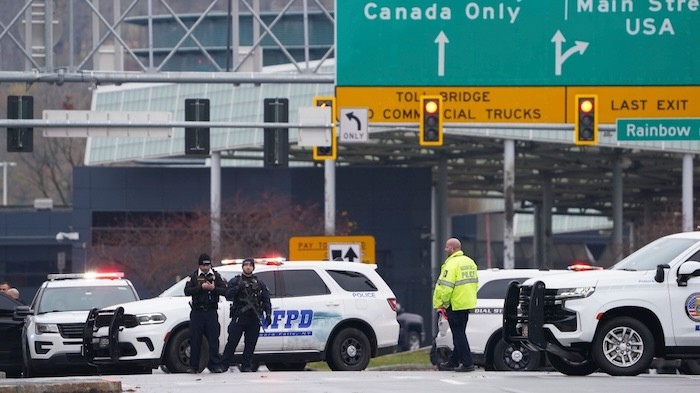
(Ken Silva, Headline USA) A vehicle exploded at a checkpoint on the American side of a U.S.-Canada bridge in Niagara Falls Wednesday, leaving two people dead and prompting the closing of four border crossings in the area, authorities said.

There was no immediate information the cause of the explosion, but it sparked speculation on both sides of the border.

And after the FBI reportedly deemed the incident as a likely terrorist attack, online pundits were quick to point fingers.

Deep state operative Robert Spencer, who runs the group Jihad Watch, dubiously claimed that an Iranian passport was found near the explosion. This claim—which cited an anonymous Twitter user named Pegida Canada—was quickly picked up by conservative pundit Laura Loomer.

Other Twitter users roasted Loomer for sharing apparent disinformation, noting that similar claims were made about a 9/11 hijacker’s passport somehow being found in the World Trade Center rubble.

“Strongest materials on earth: 3. Diamonds; 2. Graphene; 1. Passports of alleged terrorist suspects,” joked comedian Sean McCarthy.

But elsewhere, another account named “Mats Nilsson” claimed that a Yemeni passport was found outside the burning car.

Meanwhile, others joked that right-wingers would be blamed.

The two deceased people were in the vehicle, a law enforcement official told The Associated Press. The official was not authorized to discuss details of the investigation publicly and spoke to the AP on condition of anonymity.

The blast happened on the U.S. side of the Rainbow Bridge, which connects the two countries across the Niagara River. Three other bridges between western New York and Ontario were quickly closed as a precaution, and the Buffalo-Niagara International Airport began security checks on all cars and told passengers to expect additional screenings.

The FBI’s field office in Buffalo said in a statement that it was investigating the blast, and investigators with the Bureau of Alcohol, Tobacco, Firearms and Explosives were also responding to the scene.

Photos and video taken by bystanders and posted on social media showed thick smoke, flames on the pavement and a security booth that had been singed by flames.

Videos showed that the fire was in a U.S. Customs and Border Protection area just east of the main vehicle checkpoint.

Speaking to WGRZ-TV, Mike Guenther said he saw a vehicle speeding toward the crossing from the U.S. side of the border when it swerved to avoid another car, crashed into a fence and exploded.

“All of a sudden he went up in the air and then it was a ball of fire like 30 or 40 feet high,” Guenther told the station. “I never saw anything like it.”

U.S. Attorney General Attorney General Merrick Garland and New York Gov. Kathy Hochul had been briefed on the situation, their offices said.

The Niagara Falls Bridge Commission reported that all four of its crossings — the others are Lewiston, Whirlpool and Peace Bridge — were closed.

About 6,000 vehicles cross the Rainbow Bridge each day, according to the U.S. Federal Highway Administration’s National Bridge Inventory. About 5% is truck traffic, according to the federal data.

The bridge, constructed in 1941, is just over 1,440 feet (439 meters) long and has a main span constructed of steel, according to the data.

The Associated Press contributed to this report.

Ken Silva is a staff writer at Headline USA. Follow him at twitter.com/jd_cashless.

Whitmer Kidnap Inmate Threatened With ‘The Hole’ as Appeal Deadlines Loom

(Ken Silva, Headline USA) Of all the unjust convictions in the plot to kidnap Michigan Gov. Gretchen Whitmer, Paul Bellar’s might be the most egregious.

After discouraging his cohorts from committing violence against politicians, the 25-year old Army veteran left the Michigan militia scene and moved back to South Carolina in July 2020—before the kidnapping plot was even contrived by the FBI’s own informants. Nevertheless, Bellar was arrested months later and found guilty last year.

By all accounts, Bellar looks to have a strong case for appeal—if he meets next month’s filing deadline.

However, Bellar, Joe Morrison and Pete Musico have been transferred to out-of-state prisons, where they can’t talk to their lawyers or access court records and Michigan law books—as Headline USA reported last month.

To top it off, Bellar could now be headed to “the hole” at FCI Schuylkill in Pennsylvania for a minor infraction. Bellar’s father, Tom Bellar, informed Headline USA of this fact on Tuesday, expressing fears that his son will miss his crucial appeal deadline due to the restrictive conditions.

According to Tom Bellar, his son had asked about the whereabouts of his former cellmate.

“They transferred his roommate, which was the only guy he truly trusted. In a phone call to his older sister, he said, ‘Hey, your address is the only one I know, so I gave it to him. If he writes you a letter, can you let me know he’s OK. I want to make sure he’s OK,’” the father said.

“They said inmates can’t mail each other. He was told by his case worker that he’s getting punished.”

The Bureau of Prisons indeed restricts inmates from mailing each other, but Bellar said he never was informed of this rule. Nevertheless, he expects a severe punishment for his infraction.

Tom said his son might either be sent to solitary confinement or have his communications restricted. Either punishment could affect his ability to meet next month’s appeal deadline, he said.

Intervention by Michigan Judge Thomas Wilson could be the only hope for Bellar, who otherwise will have to serve the remainder of his seven-year sentence if he doesn’t appeal in time. Musico and Morrison, who are in similar situations, face 12-year and 10-year prison sentences, respectively.

At a hearing last month, Wilson asked Michigan prosecutors why the Whitmer inmates were transferred out of state. Prosecutors have until Dec. 1 to give a reason.

“Non-violent first-time offenders being sent to another state already makes no sense, but the state apparently needed 40 days to make up an excuse,” Bellar’s father said.

Ken Silva is a staff writer at Headline USA. Follow him at twitter.com/jd_cashless.

Court Lets Calif. Share Gun Owners’ Personal Info w/ ‘Researchers’

(Headline USA) A state appeals court ruled that California can continue providing personal information of gun owners to researchers to study gun violence, reversing last year’s decision by a lower court judge who said such data sharing violates privacy rights.

In 2021, Democratic Gov. Gavin Newsom signed a law allowing the state’s Department of Justice to share identifying information of more than 4 million gun owners in California with qualified research institutions to help them better study gun violence, accidents and suicides.

The information — which the state collects with every firearm sale to perform background checks — include names, addresses, phone numbers, and any criminal records, among other things. Under the law, researchers can use the information and make their findings public, but can’t release any identifying information of gun owners.

In response, gun owners and organizations sued the state, arguing that the disclosure of their information violates their privacy rights. San Diego County Superior Court Judge Katherine Bacal ruled to temporarily block the law last October.

But on Friday, a three-judge panel of the California Court of Appeals for the Fourth District found that the lower court failed to consider the state’s interest in studying and preventing gun violence in its analysis before halting the law. In the opinion, Associate Justice Julia C. Kelety sent the case back to the lower court and said the preliminary injunction must be reversed.

Lawyers representing the gun owners and firearms groups suing the state didn’t immediately respond to calls and an email seeking comment.

The Friday ruling came months after a federal judge refused to block the law in a separate lawsuit.

The data sharing law is among several gun measures in California that are being legally challenged. In October, a federal judge overturned the state’s three-decade-old ban on assault weapons again, ruling that the law violates constitutional rights.

California Attorney General Rob Bonta said once the data sharing ruling is implemented, the state will resume providing this information to researchers.

“The court’s decision is a victory in our ongoing efforts to prevent gun violence,” Bonta said in a statement.

He added: The law “serves the important goal of enabling research that supports informed policymaking aimed at reducing and preventing firearm violence.”

Garen Wintemute, who directs the California Firearm Violence Research Center at University of California, Davis cheered the recent ruling. The center has been working with the state on studying gun violence.

“The court’s decision is an important victory for science,” Wintemute said in a statement. “For more than 30 years, researchers at UC Davis and elsewhere have used the data in question to conduct vital research that simply couldn’t be done anywhere else. We’re glad to be able to return to that important work, which will improve health and safety here in California and across the country.”

Adapted from reporting by the Associated Press
Records Implicate George H.W. Bush in the JFK Assassination

(Ken Silva, Headline USA) From the Soviet Union and Cuba to former President Lyndon Johnson and the mafia, researchers are still debating exactly who or what was behind the assassination of President John F. Kennedy exactly 60 years later.

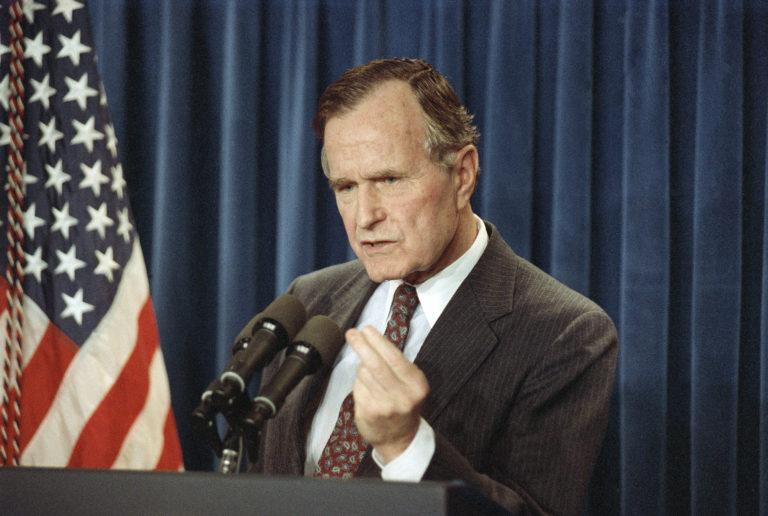
However, a confluence of evidence has accumulated over the decades that implicates a key player often overlooked: former President George H.W. Bush, who has largely been memorialized by mainstream media as a mild-mannered public official with a strong moral compass.

The research about Bush’s ties to the Kennedy assassination has largely been spearheaded by investigative journalist Russ Baker, who wrote a history on the Bush family titled Family of Secrets: The Bush Dynasty, America’s Invisible Government and the Hidden History of the Last Fifty Years.

Where Was Bush on Nov. 22?

One of the reasons Baker investigated Bush’s involvement in the JFK plot was because Bush bizarrely never gave a good account for his whereabouts on Nov. 22, 1963. Throughout his career, Bush would tell media who asked him that he was “somewhere in Texas” on that fateful day.

“George H. W. Bush may be one of the few Americans of his generation who cannot recall exactly where he was when John F. Kennedy was shot,” Baker wrote of the situation.

“At the time Bush was the thirty-nine-year-old chairman of the Harris County (Houston) Republican Party and an outspoken critic of the president. He was also actively campaigning for a seat in the U.S. Senate at exactly the time Kennedy was assassinated right in Bush’s own state.”

But Bush’s fuzzy memory aside, it turned out that he was right where Kennedy was shot, in Dallas, the day before—and likely the morning of—the assassination, according to Baker.

“On the evening of November 21, 1963, Poppy Bush spoke to a gathering of the American Association of Oil Drilling Contractors (AAODC) at the Sheraton Hotel in Dallas,” Baker wrote in Family of Secrets.

“It is also likely that both Zeppa and the Bushes actually spent the night in Dallas—and that they were in Dallas the next morning: the day that Kennedy was assassinated.”

Why Did Bush Call the FBI?

Along with the suspicious timing, it turned out that Bush called the FBI on the day of the assassination to identify a possible suspect: then-GOP activist James Parrott.

The FBI investigated Parrott and quickly cleared him of any involvement—so why would Bush implicate him? Baker thinks Bush called the FBI that afternoon to establish an alibi that he was in Tyler, Texas.

“Bush called in a pointless tip about an innocent fellow to an FBI agent whom he knew, and whom he knew could be counted on to file a report on this tip—out of what may have been hundreds of calls, some of them not even worthy of documenting,” Baker wrote.

“And, after a cursory investigation, the tip was confirmed as useless. But the call itself was hardly without value. It established for the record, if anyone asked, that Poppy Bush was not in Dallas when Kennedy was shot.”

Once CIA, Always CIA

Then, there’s Bush’s supposedly short career in the CIA. According to mainstream accounts, Bush was made CIA director for one year in the 1970s to help clean up and restore trust in the agency in the wake of the Watergate scandal and the revelations from the Church Committee.

But Bush was likely a deep-cover CIA asset since the 1950s, according to Baker and others.

Citing a CIA memo discovered by JFK researcher Jerry Shinley, Baker made the case that Bush’s oil company, Zapata Oil, was actually a CIA front group.

To top it off, a Nov. 29, 1963, memo from then-FBI Director J. Edgar Hoover—unearthed by a reporter in the 1980s—directly stated that “George Bush of the Central Intelligence Agency” was involved in a briefing of the bureau’s investigation into the assassination.

“[We have been] advised that the Department of State feels some misguided anti-Castro group might capitalize on the present situation and undertake an unauthorized raid against Cuba, believing that the assassination of President John F. Kennedy might herald a change in U.S. policy… [Our] sources know of no [such] plans,” Hoover wrote in the memo.

“The substance of the foregoing information was orally furnished to Mr. George Bush of the Central Intelligence Agency and Captain William Edwards of the Defense Intelligence Agency.”

In a rare public statement from the CIA, the agency claimed in the late 80s that the George Bush mentioned in Hoover’s memo was actually a George William Bush, who had worked in 1963 on the night shift at the Langley, Virginia, headquarters.

The CIA claimed at the time that it couldn’t locate this other, mystery Bush, but he was eventually tracked down by a nonprofit group seeking records on Bush’s past . When asked about being a part of a JFK assassination briefing, this other Bush categorically denied any knowledge of such an event.

“I do not recognize the contents of the memorandum as information furnished to me orally or otherwise during the time I was at the CIA,” he said in a sworn depiction related to the non-profit group’s Freedom of Information Act lawsuit.

“In fact, during my time at the CIA, I did not receive any oral communications from any government agency of any nature whatsoever. I did not receive any information relating to the Kennedy assassination during my time at the CIA from the FBI. Based on the above, it is my conclusion that I am not the Mr. George Bush of the Central Intelligence Agency referred to in the memorandum.”

With the elder Bush having died in November 2018, he likely took his involvement in the nefarious JFK plot to the grave. Commenting in the wake of Bush’s death at the time, Baker lamented that mainstream media continues to whitewash his background.

“Bush, who died November 30 at age 94, is being remembered with nostalgia as emblematic of a supposedly more civil and genteel era, when US leaders put country first,” Baker wrote at the time. “But George H.W. Bush and his associates had a profound effect in shaping a power equation — mostly in ways they sought to obscure — that protected and advanced their interests.”

Ken Silva is a staff writer at Headline USA. Follow him at twitter.com/jd_cashless.

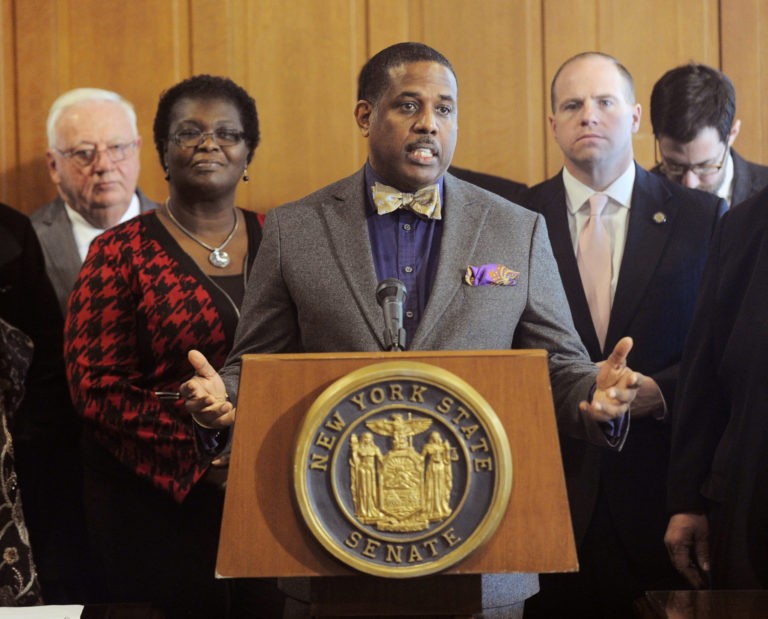
Democrat N.Y. Sen. Snared by Sex-Assault Law Passed to Target Trump

(Headline USA) A law passed by the New York legislature as part of its sweeping effort to target then-President Donald Trump with a barrage of lawfare attacks has ensnared yet another of the very legislators who helped to pass it. 

State Sen. Kevin Parker, a lawmaker from Brooklyn, has been accused in a lawsuit of raping a woman early in his legislative career when he went to her home to discuss disaster relief efforts for Haiti.

The lawsuit, filed Friday, accuses Parker of assaulting the victim in 2004, during his first term. The woman said she had been working with Parker to coordinate the delivery of items and donations to Haiti after a devastating flood that affected the country and other neighboring Caribbean Islands.

The suit was filed under the Adult Survivors Act, a special state law that created a yearlong suspension of the usual time limit for accusers to sue.

New York’s state legislature first undertook the effort to craft the ASA in 2019. Among those lobbying for it was E. Jean Carroll, a Manhattan socialite and former gossip columnist who planned to file her highly dubious rape allegation—dating back to the mid-1990s—against then-President Trump.

Although many women had made allegations of having sexual encounters with Trump over the years, Carroll was the only one known to have filed suit under the law, which is due to expire after Thanksgiving. Her case succeeded, despite several holes in her account, due largely to the favorable judge and jury. It remains to be seen whether it will hold on appeal.

The law, which was signed in May 2022 by Gov. Kathy Hochul, was passed overwhelmingly by the legislature, with Parker voting in favor for it then and in an earlier attempt to pass it during the 2021 session that went before the Senate but did not go before the Assembly.

A spokesperson for Parker, a Democrat, did not immediately comment when asked about the lawsuit.

The allegations against Parker were “extremely disturbing and we take them very seriously,” said Mike Murphy, a spokesperson for the Senate’s top Democrat, Majority Leader Andrea Stewart–Cousins.

“We will take appropriate action as more information is learned,” Murphy added.

The woman said in the lawsuit that the assault happened after Parker came to her apartment to pick up photos from a visit she had made to Haiti. Parker represents part of Brooklyn with a large Caribbean and Haitian community.

After they finished discussing her work, the woman stood up to say goodbye when Parker grabbed her wrists, took her down a hallway to her bedroom, made a sexual comment, and then raped her, the lawsuit said.

The woman’s lawyer, Bob Hilliard, said in a statement that she “survived unspeakable sexual abuse perpetrated by Senator Parker—and continues to suffer from the trauma that only survivors of unwanted sexual assault can fully understand.”

The Associated Press generally does not name people who say they have been sexually assaulted unless they come forward publicly.

In 2005, Parker was arrested and charged with third-degree assault after punching a traffic agent who gave him a ticket for double-parking, according to news reports from that time.

In that same year, a former aide accused Parker of threatening her after she publicly complained that he shoved and hit her when she worked for him.

Parker was also convicted of misdemeanor criminal mischief charges in 2010 after he chased a New York Post photographer and damaged their camera.

New York state government has struggled for years with allegations about sexual harassment and misconduct by politicians.

In 2021, former Gov. Andrew Cuomo, a Democrat, resigned over a barrage of sexual assault allegations, in which one of his accusers had claimed he had groped her, though the criminal charges were later dropped.

In 2013, former Assembly member Vito Lopez, a Brooklyn Democrat, resigned over sexual harassment allegations that Assembly leadership had been covering up with secret payments.

Adapted from reporting by the Associated Press

60 Years Later: Last Surviving Witnesses Recount JFK Assassination

(Headline USA) Just minutes after President John F. Kennedy was fatally shot as his motorcade rolled through downtown Dallas, Associated Press reporter Peggy Simpson rushed to the scene and immediately attached herself to the police officers who had converged on the building from which a sniper’s bullets had been fired.

“I was sort of under their armpit,” Simpson said, noting that every time she was able to get any information from them, she would rush to a pay phone to call her editors, and then “go back to the cops.”

Simpson, now 84, is among the last surviving witnesses who are sharing their stories as the nation marks the 60th anniversary of the Nov. 22, 1963, assassination on Wednesday.

“A tangible link to the past is going to be lost when the last voices from that time period are gone,” said Stephen Fagin, curator at the Sixth Floor Museum at Dealey Plaza, which tells the story of the assassination from the Texas School Book Depository, where Lee Harvey Oswald’s sniper’s perch was found.

“So many of the voices that were here, even 10 years ago, to share their memories—law enforcement officials, reporters, eyewitnesses—so many of those folks have passed away,” he said.

With their passing, the mystery surrounding the shooting grows farther from ever being revealed, although their remain thousands of classified documents that may yet hold the answers.

The openly seditious actions of deep-state operatives during the Trump administration have led many—including JFK’s eldest nephew, Robert F. Kennedy Jr.—to question their assumptions about the collective narrative that has developed over six decades. Prominent ex-Fox News host Tucker Carlson has also brought newfound skepticism to mass audiences.

Nonetheless, the window is closing for those with firsthand knowledge to come clean, leaving behind only what recorded documents have to offer. That may be what prompted former Secret Service agent Paul Landis to break his silence in a September interview with the New York Times, which cast doubt on certain elements of the “lone gunman” account.

Filmmaker Mary Haverstick recently put forward the possibility that Jerrie Cobb, a prominent female aviator, may have been the mysterious “Babushka Lady” with a clear shot of Kennedy using a gun concealed in her camera, the Telegraph reported.

Nonetheless, countering the mythology that has developed around that fateful day in Dallas would be a mammoth task given the sacrosanct aura that the memory of it still carries for some.

Simpson, former U.S. Secret Service agent Clint Hill and others are featured in JFK: One Day in America, a three-part series from National Geographic released this month that pairs their recollections with archival footage, some of which has been colorized for the first time.

Director Ella Wright said that hearing from those who were there helps tell the “behind the scenes” story that augments archival footage.

“We wanted people to really understand what it felt like to be back there and to experience the emotional impact of those events,” Wright said.

People still flock to Dealey Plaza, which the presidential motorcade was passing through when Kennedy was killed.

“The assassination certainly defined a generation,” Fagin said. “For those people who lived through it and came of age in the 1960s, it represented a significant shift in American culture.”

On the day of the assassination, Simpson had originally been assigned to attend an evening fundraising dinner for Kennedy in Austin. With time on her hands before she needed to leave Dallas, she was sent to watch the presidential motorcade, but she wasn’t near Dealey Plaza.

Simpson had no idea that anything out of the ordinary had happened until she arrived at the Dallas Times Herald‘s building, where the AP’s office was located. Stepping off an elevator, she heard a newspaper receptionist say, “All we know is that the president has been shot,” and then heard the paper’s editor briefing the staff.

She raced to the AP office in time to watch over the bureau chief’s shoulder as he filed the news to the world, and then ran out to the Texas School Book Depository to track down more information.

Later, at police headquarters, she said, she witnessed “just a wild, crazy chaotic, unfathomable scene.”

Reporters had filled the hallways where an officer walked through with Lee Harvey Oswald’s rifle held aloft. The suspect’s mother and wife arrived, and at one point authorities held a news conference where Oswald was asked questions by reporters.

“I was just with a great mass of other reporters, just trying to find any bit of information,” she said.

Two days later, Simpson was covering Oswald’s transfer from police headquarters to the county jail, when nightclub owner Jack Ruby burst forth from a gaggle of news reporters and shot the suspect dead.

As police officers wrestled with Ruby on the floor, Simpson rushed to a nearby bank of phones “and started dictating everything I saw to the AP editors,” she said. In that moment, she was just thinking about getting out the news.

“As an AP reporter, you just go for the phone, you can’t process anything at that point,” she said.

Simpson said she must have heard the gunshot but she can’t remember it.

“Probably Ruby was 2 or 3 feet away from me but I didn’t know him, didn’t see him, didn’t see him come out from the crowd of reporters,” she said.

Simpson’s recollections are included in an oral history collection at the Sixth Floor Museum that now includes about 2,500 recordings, according to Fagin.

The museum curator said Simpson is “a terrific example of somebody who was just where the action was that weekend and got caught up in truly historic events while simply doing her job as a professional journalist.”

Fagin said oral histories are still being recorded. Many of the more recent ones have been with people who were children in the ’60s and remembered hearing about the assassination while at school.

“It’s a race against time really to try to capture these recollections,” Fagin said.

Adapted from reporting by the Associated Press