Planned Parenthood Got $1,78M in Tax Dollars for Murdering Babies

(Dmytro “Henry” Aleksandrov, Headline USA) A recently released report from the U.S. Government Accountability Office [GAO] revealed that Planned Parenthood took $1,78 billion from the taxpayers’ pockets for murdering unborn babies.

The report that documented the amount of federal funding received by certain baby murderers was requested by 142 congressional Republicans led by Sen. Marsha Blackburn, R-Tenn., Rep. Chris Smith, R-N.J. and Rep. Vicky Hartzler, R-Mo., in January 2022.

The U.S. government used taxpayers’ funds to subsidize the domestic and global abortion industry, according to the GAO.

The amount of federal funding received by certain abortion providers between 2019 and 2021 was documented by Federal Funding for Certain Organizations Providing Health-Related Services.

Among the organizations were PP, International Planned Parenthood Federation [IPPF], MSI Reproductive Choices and at least four U.S. abortion slaughterhouses which received a combined total of $1.89 billion through grants, agreements, loans and programs like Medicare, Medicaid and Children’s Health Insurance.

PP, which was responsible for the deaths of over 1 million unborn babies between 2019 and 2021, received the biggest paycheck — $1.78 billion.

Rep. Smith, who is also a co-chairman of the Congressional Pro-Life Caucus, said that while the PP was receiving an enormous amount of money, Americans were struggling during the COVID-19 hysteria, according to Life News.

“This [amount] included $90.14 million in forgivable loans through the Paycheck Protection Program — money that could have gone to struggling small businesses, many of which were forced to close,” he said.

Smith then continued criticizing PP.

“Federal taxpayer dollars should not be funneled to big abortion corporations like Planned Parenthood, which has killed over 9.3 million unborn children since 1970, including 1.11 million between 2019-2021. This money would have been better spent helping the businesses that were forced to close or providing comprehensive medical support for both women and children,” he said.

Sen. Blackburn also bashed the baby-murdering organization.

“It is appalling that big abortion providers are continuing to receive billions of dollars in federal taxpayer funding. While small businesses struggled to make ends meet during the pandemic, Planned Parenthood illegally siphoned over $90 million from the Paycheck Protection Program, specifically designed to help our mom-and-pop shops keep their doors open,” she said.

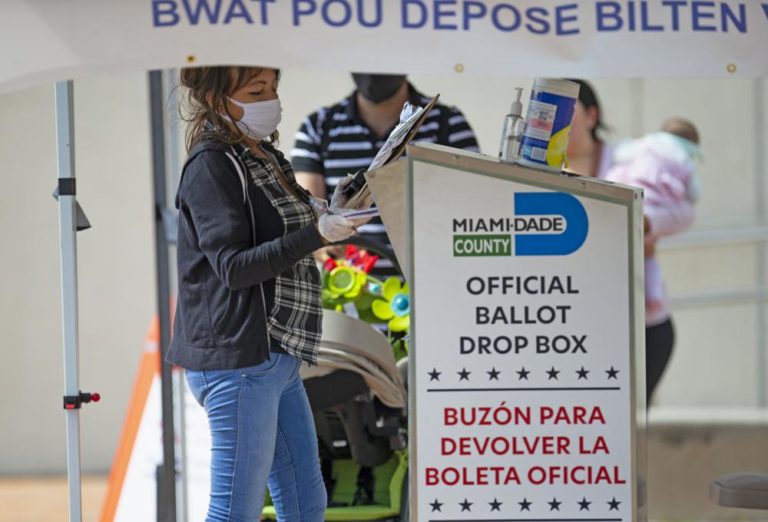
Fla., Texas Consider Removing Biden from Ballot over Corruption, Open Border

(Jacob Bruns, Headline USA) Republicans in both Florida and Texas are considering removing President Joe Biden from the 2024 Democratic primary ballot due to his family’s corruption as well as the border crisis that has ensued under his watch, Townhall reported.

After the activist Colorado Supreme Court made an arbitrary decision this week to boot former President Donald Trump off the ballot, claiming he had engaged in an “insurrection,” Florida Gov. Ron DeSantis, one of Trump’s main opponents in the GOP primary, noted that the decision could be replicated by red states against Biden.

“There was no trial on any of this,” DeSantis said. “They basically just said, what, you can’t be on the ballot? I mean, how does that work?”

He cited Biden’s several “constitutional violations” as potential grounds for removal from the ballot.

“Could we just say that Biden can’t be on the ballot because he let in 8 million illegals into the country and violated the constitution, which he has?” DeSantis asked.

“Can we just say, oh, well, they have money coming to Hunter?” he added, in reference to the president’s troubled son, who faces several indictments and ongoing investigations of his own.

Texas’s Republican Lt. Gov. Dan Patrick echoed DeSantis, citing Biden’s border crisis in particular.

“Seeing what happened in Colorado [Tuesday night] makes me think — except we believe in democracy in Texas—maybe we should take Joe Biden off the ballot in Texas for allowing 8 million people to cross the border since he’s been president, disrupting our state far more than anything anyone else has done in recent history,” Patrick said told reporters.

Former Trump attorney Jenna Ellis—herself no stranger to left-wing lawfare attacks after being charged in the Fulton County, Ga., racketeering case—suggested that Colorado Republicans should vote to remove Biden from the ballot as well, the New York Post reported.

“What is absolutely wild about this opinion from the Colorado Supreme Court is that it contains no limiting principle,” Ellis offered.

“Republicans should immediately file suit in Colorado to remove Biden from the ballot, citing his failure to secure the border and allowing an invasion falls within the Court’s broad definition of ‘engaging in insurrection,’” she added. “Challenge this nonsense.”

In response to the partisan debacle, Trump’s campaign issued a statement accusing the “Soros-funded” attempt to “interfere in an election on behalf of Crooked Joe Biden.”

They also claimed that Democrat leadership is in a “state of paranoia” over the “growing, dominant lead President Trump has amassed in the polls,” and therefore needs to “stop the American voters” from determining the next president.

Portland Antifa Rioters Seek Payday from Federal Gov’t for Helping Sow 2020 Discord

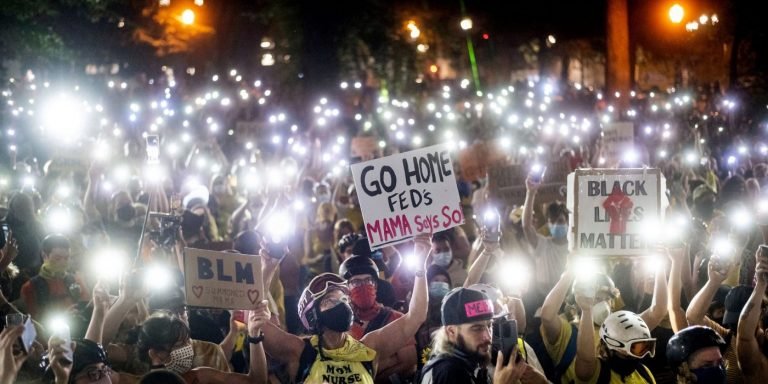
(Headline USA) Portland rioters who participated in the weeks of nightly disruptions during the summer and fall of 2020—including the vandalism and destruction of a federal building—have filed a new lawsuit against law enforcement alleging negligence and battery.

Despite the parallels with the Jan. 6, 2021, political protest at the U.S. Capitol—for which the main offense was also the vandalism of a federal building, although it lasted roughly four hours—it is likely that the disposition will be drastically different for the left-wing anarchists.

While the Justice Department has prosecutred more than 1,200 Jan. 6 political dissidents, few faced any serious political accountability in the Portland riots, and a massive payday likely looms from a settlement with the deep-blue municipality, following the trend of cities like New York and Denver.

In July 2020, “the federal government unleashed unprecedented and sustained violence and intimidation on the people of Portland,” the lawsuit said.

Protesters previously filed lawsuits against the Trump administration, federal law enforcement agencies and individual officers, Oregon Public Broadcasting reported. Many of the lawsuits relied on a type of claim that the U.S. Supreme Court has since gutted.

Tuesday’s lawsuit raises similar issues and involves the same injured protesters but was filed under a different federal legal theory, said David Sugerman, one of the attorneys involved.

It follows on the heels of a recent Biden administration settlement with separated families of illegal immigrants during the previous Trump administration in a lawsuit brought by the far-left ACLU and other activist groups

Despite the fact that the plaintiffs were in violation of the law themselves and that Trump immigration officials had a strong rationale for their actions, the Justice Department’s settlement seemed as much a political statement, and an effort to establish a legal precedent that could potentially kneecap future administration, as a valid concession of any culpability.

Thus, the end result was to advance open-border policies that supported the existing Biden agenda.

Likewise, the Antifa and Black Lives Matters activists—despite having clearly broken the law in their protests and brought upon themselves a law-enforcement response—are apt to be put on retainer once again through the DOJ settlement in case the Biden administration needs them to riot—or not to riot—during the 2024 election cycle.

“It’s about the next set of activists, the next set of protesters that come along,” rioter Nathaniel West told Oregon Public Broadcasting.

West, one of three plaintiffs named in Tuesday’s lawsuit on behalf of “at least 162 people” claims he protested peacefully for more than 40 nights and was exposed to tear gas and shot at with pepper balls for doing so.

“The First Amendment right is something that we have to constantly work to preserve,” he said. “… We’re really thinking about what it means to protest in America.”

Because the previous riots also occurred during Trump’s presidency, the current administration is more than happy to once again accept the blame.

A 2021 report by the U.S. Department of Homeland Security’s Office of Inspector General found agents lacked proper training or equipment to deal with riots and that there was no plan for operating without the help of local police, who were eventually ordered to stand down by the city. Agents also reported injuries.

Adapted from reporting by the Associated Press

Activists Continue Lawfare Assault on Georgia’s Redrawn Congressional Districts

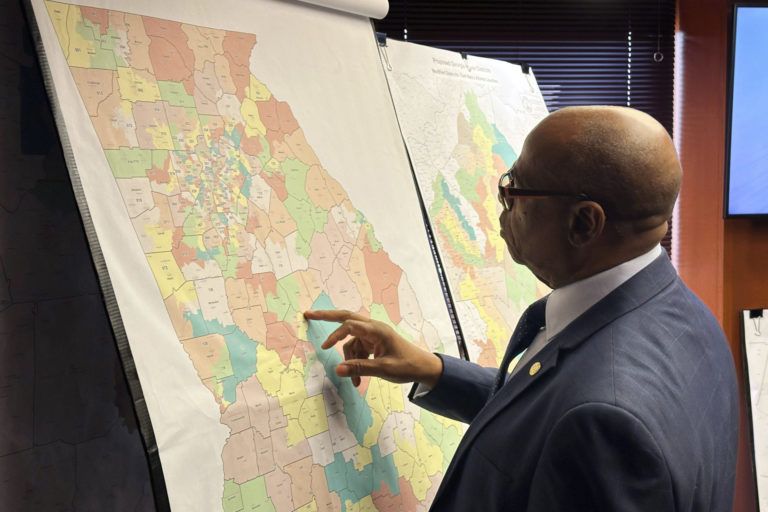
(Headline USA) The far-left activists who successfully sued to overturn Georgia’s congressional and state legislative districts told a federal judge on Wednesday thatRepublican state lawmakers’ newly redrawn map should likewise be rejected because it could potentially cost a firebrand Democrat lawmaker her seat.

The plaintiffs argued before U.S. District Judge Steve Jones in an hourslong hearing in Atlanta that the new maps don’t increase opportunities for black voters to elect their chosen candidates. They also claimed the maps did not remedy vote dilution in the particular areas of suburban Atlanta that a trial earlier this year had focused on.

“The state of Georgia is playing games,” said lawyer Abha Khanna.

“We’re going to make you chase us all over the state from district to district to achieve an equal opportunity for black voters,” he said. “It’s a constant game of whack-a-mole.”

But an attorney for the state argued that lawmakers added the black-majority districts that Jones ordered in October, including one in Congress, two in the state Senate and five in the state House.

The state said that the plaintiffs’ dislike of the legislature’s choices—which would likely preserve GOP majorities—do not let the judge step in and draw his own maps.

“Clearly the state added the additional district,” Bryan Tyson said of the congressional plan. “That’s the cure to the vote dilution injury.”

Jones indicated he would rule quickly, saying he’s been told the state needs the maps by Jan. 16 for the 2024 elections to occur on time. If he refuses to adopt the state’s maps Jones could appoint a special master to draw maps for the court.

Arguments on the congressional map focused, as expected, on whether it’s legal for lawmakers to dissolve Democratic U.S. Rep. Lucy McBath’s current district in the Atlanta suburbs of Gwinnett and Fulton counties—while at the same time they were drawing a new black-majority district west of downtown Atlanta in Fulton, Douglas, Cobb and Fayette counties.

McBath could have to switch districts for the second time in two years after the first district where she won election was made decidedly more Republican.

Khanna insisted that the most important question was whether black voters would have an “additional” district where they could elect their choice of candidate, as Jones ordered.

She said the total number of such districts statewide would stay at five of 14, instead of rising to six. Georgia’s U.S. House delegation is currently split among nine Republicans and five Democrats.

Khanna also claimed that the state was committing a fresh violation of Section 2 of the federal Voting Rights Act, which is supposed to guarantee opportunities for minority voters, by wiping out the current 7th District. That district is majority nonwhite, but not majority black, with substantial shares of Hispanic and Asian voters as well.

But Jones seemed to undercut that argument when he declared that the case had focused on the rights of black voters and that there was no evidence submitted at trial about Asian and Hispanic voter behavior. He also said he was reluctant to rule on the claim of a new violation in such a short time frame.

Tyson, for his part, argued that federal law doesn’t protect coalitions of minority voters, saying it only protects one group, such as black or Hispanic voters, a point Jones questioned. Tyson repeatedly claimed the plaintiffs were mainly trying to elect Democrats

“Now the claim is ‘Oh, no, no, it’s about all minority voters,” Tyson said. “So we have continually shifting theory. At the end of the day, the only thing that’s consistent is protecting Democratic districts.”

One of the sets of challengers to Georgia’s legislative maps had different arguments, telling Jones that the state had failed in its duty because while it drew additional black-majority districts, it avoided drawing them in the parts of Atlanta’s southern and western suburbs where the plaintiffs had proved black voters were being harmed.

“If the remedy isn’t in the area where the vote dilution is identified, it doesn’t help the voters who are harmed,” attorney Ari Savitzky claimed.

He focused particularly on the lack of changes in key areas in the state Senate plan, saying no black voters in Fayette and Spalding counties and only a few thousand voters in Henry and Newton counties had been moved into majority black districts.

Instead, he said, Republican lawmakers added tens of thousands of black voters from areas farther north in Cobb, Fulton and DeKalb counties in creating two new black majority districts.

“This isn’t a new opportunity for Black voters in south metro Atlanta,” Savitzky said. “It’s a shell game.”

Adapted from reporting by the Associated Press

Blue States’ New Woke Money-Waster: Translating Street Signs into Indian

(Headline USA) A few years back, Sage Brook Carbone was attending a powwow at the Mashantucket Western Pequot reservation in Connecticut when she noticed signs in the Pequot language.

Carbone, a citizen of the Northern Narragansett Indian Tribe of Rhode Island, thought back to Cambridge, Massachusetts, where she has lived for much of her life. She never saw any street signs honoring Native Americans, nor any featuring indigenous languages.

She submitted to city officials the idea of adding Native American translations to city street signs. Residents approved her plan and will install about 70 signs featuring the language of the Massachusett Tribe, which English settlers encountered upon their arrival.

“What a great, universal way of teaching language,” she said of the project done in consultation with a a member of the Massachusett Tribe and other Native Americans.

“We see multiple languages written almost everywhere, but not on municipal signage,” she said. “Living on a numbered street, I thought this is a great opportunity to include Native language with these basic terms that we’re all familiar with around the city.”

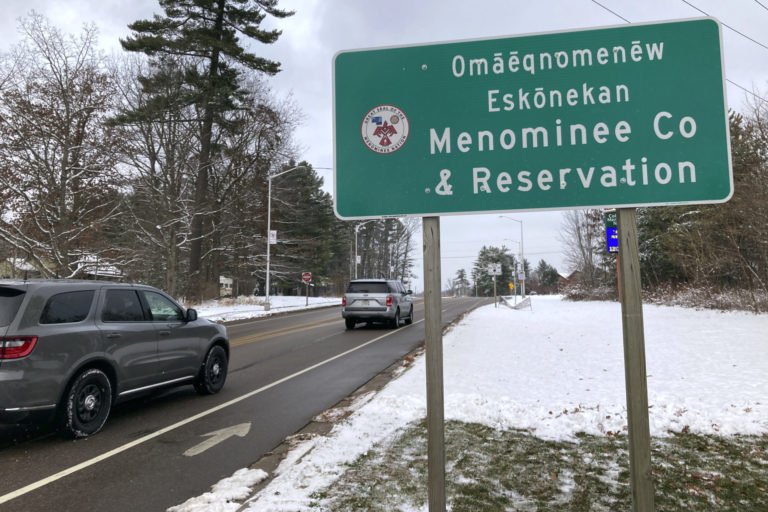
Carbone has joined a growing push around the country to use indigenous translations on signs to raise awareness about Native American communities.

On one hand, the signs may offer some cultural benefit and may even serve as useful tourist attractions in places where Indian heritage plays some notable role in the region’s overall history and development.

Yet, critics contend that the updated signage, which serves little practical purpose, is largely a waste of money and another example of squandering tax dollars for the sake of woke virtue-signaling and political correctness.

Activists also are hoping to use it as part of a broader effort to ramp up Native Americans’ presence in the taxonomy of left-wing identity politics, where they have long played second-fiddle to other minorities, such as blacks, Muslims and Hispanics.

They see the signs as an opportunity to highlight a tribe’s sovereignty, as well as open the door for wider debates on land rights, discrimination and indigenous representation in the political process.

“We have a moment where there is a search for some reconciliation and justice around indigenous issues,” said Darren Ranco, chair of Native American Programs at the University of Maine and a citizen of the Penobscot Nation.

“The signs represent that, but by no means is that the end point around these issues,” Ranco added. “My concern is that people will think that putting up signs solves the problem, when in fact, it’s the beginning point to addressing deeper histories.”

At least six states have followed suit, including Iowa, New York, Minnesota and Wisconsin.

Signs along U.S. Highway 30 in Iowa include the Meskwaki Nation’s own spelling of the tribe, Meskwakiinaki, near its settlement. In upstate New York, bilingual highway signs in the languages of the Seneca, Onondaga and Tuscarora tribes border highways and their reservations.

In Wisconsin, six of the 11 federally recognized tribes in the state have installed dual language signs. Wisconsin is derived from the Menominee word Wēskōhsaeh, meaning “a good place” and the word Meskousing, which means “where it lies red” in Algonquian.

“Our partnerships with Wisconsin’s Native Nations are deeper than putting up highway signs,” WisDOT Secretary Craig Thompson said in a statement. “We are proud of the longstanding commitment to foster meaningful partnerships focused on our future by providing great care and consideration to our past.”

Minnesota has put up signs in English and the Dakota or Ojibwe languages on roads and highways that traverse tribal lands, while the southeast Alaska community of Haines this summer erected stop, yield, ‘Children at Play’ and street name signs in both English and Tlingit.

Douglas Olerud, the mayor at the time, told the Juneau Empire it was healing for him after hearing for years from Tlingit elders that they were not allowed to use their language when sent to boarding schools.

“This is a great way to honor some of those people that have been working really hard to keep their traditions and keep the language alive, and hopefully they can have some small amount of healing from when they were robbed of the culture,” he said.

In New Mexico, the state transportation department has been working with tribes for years to include traditional names and artwork along highway overpasses. Travelers heading north from Santa Fe pass under multiple bridges with references to Pojoaque Pueblo in the community’s native language of Tewa.

There have also been local efforts in places like Bemidji, Minnesota, where Michael Meuers, a non-Indian resident, started the Bemidji Ojibwe Language Project.

Since 2009, more than 300 signs in English and Ojibwe have been put up across northern Minnesota, mostly on buildings, including schools.

The signs can also be found in hospitals and businesses and are used broadly to spell out names of places and animals, identify things such as elevators, hospital departments, bear crossings—“MAKWA XING”—and food within a grocery store, and include translations for welcome, thank you and other phrases.

“Maybe it’s going to open up conversations so that we understand that we are all one people,” said Meuers, who worked for the Red Lake Nation for 29 years and started the project after seeing signs in Hawaiian on a visit to the state.

The University of Maine put up dual language signs around its main campus. The Native American Programs, in partnership with the Penobscot Nation, also launched a website where visitors can hear the words spoken by language master Gabe Paul, a Penobscot pronunciation guide.

“For me, and for many of our tribal citizens and descendants, it is a daily reminder that we are in our homeland and we should be ‘at home’ at the university, even though it has felt for generations like it can be an unwelcome place,” Ranco said.

But not all efforts to provide dual language signs have gone well.

In New Zealand, the election of a conservative government in October has thrown into doubt efforts by transportation officials to start using road signs written in both English and the indigenous Māori language.

Waka Kotahi, the New Zealand Transport Agency, earlier this year proposed making 94 road signs bilingual to promote the revitalization of the language.

But many conservatives balked at the increased use of Māori words by government agencies. Thousands wrote form submissions opposing the road sign plan, saying it could confuse or distract drivers.

The effort in Cambridge has been welcomed as part of what is called the participatory budgeting process, which allows residents to propose ideas on spending part of the budget. Carbone proposed the sign project and, together with a plan to make improvements to the African American Heritage Trail, it was approved by residents.

“I am so excited to see the final products and the initial run of these signs,” Carbone said. “When people traveling around Cambridge see them, they will feel the same way. It will be just different enough to be noticeable but not different enough that it would cause a stir.”

Carbone and others also hope the signs open a broader discussion of Native American concerns in the city, including representation in the city government, funding for Native American programs as well as efforts to ensure historical markers offer an accurate portrayal of idigenous people.

When she first heard about the proposal, Sarah Burks, preservation planner at the Cambridge Historical Commission, acknowledged there were questions. Which signs would get the translations? How would translation be handled? Would this involve extensive research?

The translation on streets signs will be relatively easy for people to understand, she said, and inspire residents to “stop and think” about the Massachusett Tribe and to “recognize the diversity of people in our community.”

“It will be attention-grabbing in a good way,” she said of the signs, which are expected to go up early next year.

Adapted from reporting by the Associated Press

House Judiciary Seeks Records on the Trump/Twitter Warrant Exposed by Headline USA

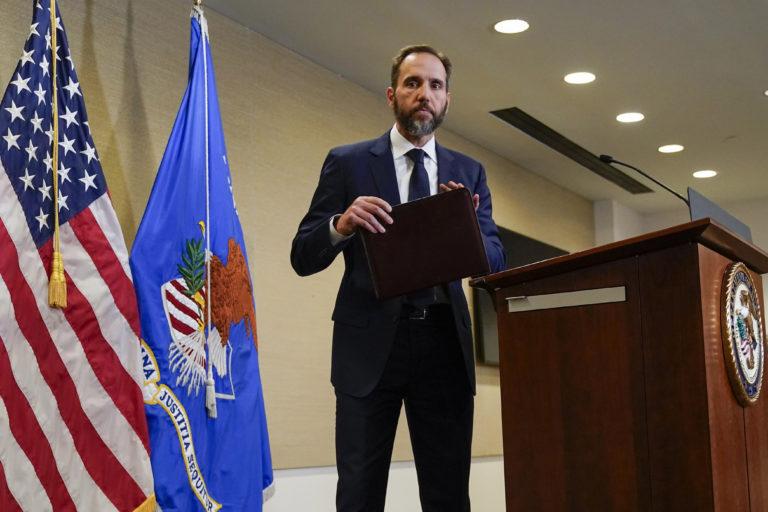
(Ken Silva, Headline USA) The House Judiciary Committee wrote a letter to Special Counsel Jack Smith on Thursday, demanding internal records related to his controversial search warrant that sought info on every Twitter account to like, follow or retweet former President Donald Trump—a sweeping act of domestic surveillance first exposed by Headline USA.

“We recently learned that you had compelled from Twitter voluminous amounts of private information—including core political speech—of millions of Americans, without an apparent specialized nexus to criminal activity,” House Judiciary Chair Jim Jordan, R-Ohio, and Rep. Andy Biggs, R-Ariz., said in their letter to Smith.

Jordan and Biggs were referencing facts exposed by Headline USA on Nov. 27, the same day the Justice Department’s warrant for Trump’s Twitter account was filed in a case titled “IN RE PRESS APPLICATION FOR ACCESS TO JUDICIAL RECORDS IN CASE NO. 23-SC-31, IN THE MATTER OF THE SEARCH OF INFORMATION THAT IS STORED AT PREMISES CONTROLLED BY TWITTER, INC.”

That warrant revealed that the DOJ took from Twitter “all lists of Twitter users who have favorited or retweeted tweets posted by [Trump], as well as all tweets that include the username associated with the account (i.e., mentions or replies)”—as well as other information.

Because the warrant was filed in a relatively obscure case—as opposed to any of the dockets of Trump’s criminal cases—Headline USA believes the warrant may have remained unpublicized if not for this publication’s reporting.

In any event, the revelation that the DOJ demanded such a vast trove of data on Trump’s Twitter fans became a GOP talking point immediately after Headline USA reported those facts.

Numerous outlets picked up the story, politicians discussed the issue and presidential hopeful Vivek Ramaswamy even used the information as a talking point during a recent debate.

And now, the House Judiciary is investigating the overzealous warrant.

“Please provide the following information … All documents and communications referring or relating to the ‘Warrant by Telephone or Other Reliable Electronic Means,’” Jordan and Biggs asked Smith in their letter.

Jordan and Biggs also demanded records related to Smith’s appointment as Special Counsel. Their letter comes on the heels of former Attorney General Ed Meese and several other constitutional experts filing a Supreme Court brief that argues Smith was illegally appointed to his position.

Smith and Biggs gave Smith until Jan. 4 to respond to their demands for info. Noting that Smith has ignored previous requests, the legislators threatened compulsion.

“Please provide this material, as well as the material requested in our June 1, June 6, and September 7, 2023, letters—attached and incorporated herein— as soon as possible but no later than 5:00 p.m. on January 4, 2024,” they said. “If you do not produce documents responsive to these requests, the Committee may resort to compulsory process.”

Ken Silva is a staff writer at Headline USA. Follow him at twitter.com/jd_cashless.

Health Officials Push to Get Schoolchildren Vaxxed as More Parents Opt Out

(Headline USA) When Idaho had a rare measles outbreak a few months ago, health officials scrambled to keep it from spreading. In the end, 10 people, all in one family, were infected, all unvaccinated.

This time, the state was lucky, said the region’s medical director Dr. Perry Jansen. The family quickly quarantined and the children were already taught at home. The outbreak could have been worse if the kids were in public school, given the state’s low vaccination rates, he said.

In Idaho last year, parents opted out of state-required vaccines for 12% of kids entering kindergarten, the highest rate in the nation.

“We tend to forget that diseases like measles and polio used to kill people,” said Jansen, medical director of the Southwest District Health Department, which handled the outbreak in September.

All states require children to have certain routine vaccines to go to public school, and often private school and day care, to prevent outbreaks of once-common childhood diseases like measles, mumps, whooping cough, chickenpox and polio.

All provide exemptions for children who have a medical reason for avoiding the shots. Most also offer waivers for religious beliefs. Fifteen allow a waiver for any personal belief.

Last school year, vaccination waivers among kindergartners hit an all-time high: 3% in total, according to a recent Centers for Disease Control and Prevention report.

In some cases, the Biden administration’s open-border policies may be contributing to the problem. Illegal aliens are generally exempt from any vaccination requirements until they become Lawful Permanent Residents. But with a backlogged system that currently includes some 3 million asylum claims, that process may take years.

As a result, some areas, such as New York and Chicago recently issued public health alerts for communicable diseases including tuberculosis, chickenpox and monkeypox.

However, sanctuary cities and border communities with exploding immigrant populations are not the only ones seeing an uptick in illnesses once considered to be effectively contained.

Fallout from the government overreach during the COVID-19 scandal also appears to have had negative consequences that the CDC and other health institutions now must reckon with, after having squandered their credibility by withholding information and, in some cases, abjectly lying to the public during the pandemic.

A growing number of people now question the safety of vaccines in general, worried that whatever the elusive motivation was for the government in its mass vaccination push with the controversial mRNA vaccines for COVID-19. Those ultimately proved largely ineffective and unnecessary for large swaths of the population, despite the unconstitutional measures that were taken to foist them onto people.

With the CDC running ads that tell people to bundle their flu shots and COVID vaccines into one visit, and several accounts of people accidentally being given the COVID vaccine instead of another shot, it is difficult to trust pharmacies and other health institutions to respect individuals’ medical choices on this highly sensitive and novel issue.

Waivers for religious or personal beliefs have been on the rise, driven by some states loosening laws during the COVID-19 pandemic.

In Idaho, “a parent only has to provide a signed statement,” to get a waiver, the state’s health department said. A change in state law before the 2018-19 school year made it easier to get waivers. The state’s exemption rate that year was 7.7%.

September’s measles outbreak started when a resident of Nampa, the state’s third largest city, returned home from a trip abroad. Measles is usually brought into the U.S. through travel since widespread vaccination has all but eliminated local spread of the disease.

It takes a very high level of vaccination—around 95%—to protect against the spread of measles and other diseases, experts say. During the pandemic, the national rate for vaccinations among kindergartners dropped to 93%.

Health experts say interventions on every level are needed to get more kids immunized: doctors talking to parents, social media campaigns, easier access to vaccines in some areas, enforcement by schools in others.

Last year, most states had an increase in waivers. Hawaii, which allows medical and religious waivers, saw rates double from the previous school year. Nearly 6.5% of kindergartners have an exemption for at least one required vaccine.

It’s impossible to know the reasons behind a waiver, said Ronald Balajadia, immunization program manager for Hawaii State Department of Health. But distrust about COVID-19 vaccines “has bled through to routine vaccines” that people wouldn’t normally question, Balajadia said.

While some states have made it easier to opt out, others have clamped down. Connecticut eliminated its longstanding religious waiver for vaccinations in 2021, joining California, West Virginia, New York and Maine in allowing only medical exemptions.

The change drew protests and lawsuits. With only a medical waiver now, the kindergartner vaccination rate reached 97% or above last year; waiver rates dropped to less than 1%.

The state is still working to get more parents on board by answering their questions “and not just dismiss them. It’s our best shot at trying to bring people along,” said Dr. Manisha Juthani, commissioner of the Connecticut Department of Public Health.

Georgia had the second largest drop in vaccine waivers last year—from 4.7% to 3.8%. State health officials cited a steady post-pandemic return to partnerships between schools, public health and pediatricians as possible reasons for the improvement.

Dr. Angela Highbaugh-Battle has cared for kids in rural Georgia for 17 years, now in the small coastal community of St. Mary’s. She said she spends more time now talking to parents wary about routine childhood vaccines.

Every connection, every conversation, is a chance to educate, she said.

“It’s not about winning or losing,” she said.

Adapted from reporting by the Associated Press

Sound Money Movement Strikes Gold in 2023

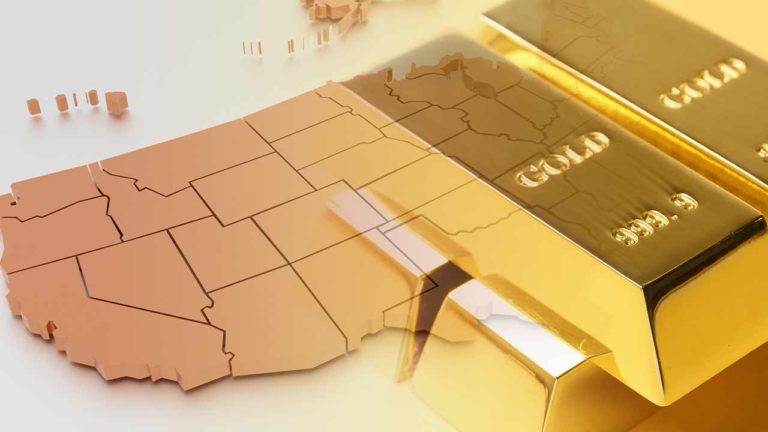
Against the backdrop of high inflation rates and geopolitical uncertainty, states are increasingly enacting measures that encourage saving in precious metals and even using gold and silver as money.

With five bills signed into law in 2023, sound money reforms are gaining momentum across the United States.

Money Metals’ Sound Money Defense League project has emerged as an influential force, actively engaging in legislative battles by prompting intense grassroots support, drafting legislation, recruiting bill sponsors, and providing expert testimony directly to lawmakers.

Twenty-five states considered 50 pieces of legislation this year aimed at ending taxes on the monetary metals, strengthening state finances by investing reserve funds in physical gold, establishing in-state depositories, and more.

The 2024 Sound Money index, published by Money Metals Exchange, provides a full rundown on how each state stacks up in this important policy area.

Ending Sales Tax on Gold and Silver Is a Winning Issue

The vast majority of states have now eliminated taxes on the purchase of precious metals.

In 2023, Mississippi became the 43rd state to do so, following the recent examples set by Ohio and Arkansas in 2021 and Tennessee in 2022.

That leaves just seven sales tax states: New Mexico, Hawaii, Wisconsin, Kentucky, Maine, New Jersey, and Vermont.

Of these seven states, five considered legislation in 2023 to end the tax.

New Jersey hopes to become the 44th sales-tax-exempt state. Assembly Bill 5294 passed unanimously through the State Assembly by a vote of 74-0, and a Senate committee unanimously passed the bill this week.

Meanwhile, Money Metals leaders collaborated with legislators in Wisconsin to introduce Assembly Bill 29 and Senate Bill 33. These measures have garnered support from 24 cosponsors representing both sides of the aisle, with a hearing expected soon.

The Alaska State House passed HB 3, the bill seeking the end to borough and city sales taxes on sound money. The measure will be considered by the Senate when the legislature reconvenes in early 2024.

In Kentucky, Rep. Steven Doan sponsored House Bill 213 as a single-issue bill, but Republican leaders insisted on incorporating the language that would end sales taxes on precious metals into a broader bill covering multiple topics.

Despite broad support in the House, Senate leaders specifically removed the sound money provision, thwarting the effort in 2023.

The most contentious sound money battles of 2023 unfolded in Augusta, Maine, when Sen. Eric Brakey introduced Legislative Draft 1051 to end sales taxes on gold and silver purchases.

The bill passed 17-15 out of the Maine Senate. On the House side, it received two favorable votes. However, Democrat majority leadership pressured its members, ultimately flipping enough votes to defeat the bill 71-72 during the final vote.

And finally, Vermont lawmakers introduced House Bill 295 to end the sales tax on sound money… as did lawmakers in Minnesota. But neither received a hearing.

The Next Step: Ending Capital Gains Tax on Precious Metals

While states can’t do anything about the federal capital gains tax on gold and silver sales (a confiscatory 28% tax rate!), a few states have sought to remove their own income taxes on sound money.

In 2023, Arkansas passed House Bill 1718, ending all remaining tax liability on transactions involving the metals, including the state capital gains tax. The popular measure passed overwhelmingly. That leaves 39 states that still tax capital gains on the sale of gold and silver.

A profit on sales of gold and silver may only be nominal in nature – i.e. the “gain” is usually a reflection of the Federal Reserve note’s loss in purchasing power.

Legislators in Iowa, Kansas, Maine, Mississippi, Missouri, South Carolina, and West Virginia all introduced such measures, with committees in Iowa, Kansas, and Missouri giving “Do Pass” recommendations.

Not Just Taxes: States Considering Other Sound Money Bills

In 2023, Missouri, Oklahoma, and Tennessee considered legislation to establish their own in-state depositories to store gold held by the state or by residents.

In North Carolina, the Sound Money Defense League worked with lawmakers in Raleigh on House Bill 721, legislation that directs the state treasurer to study all aspects of acquiring, storing, and insuring physical gold or bitcoin held on behalf of the state.

Idaho considered House Bill 180, a measure that would help protect state reserve funds with an allocation to physical gold. This bill passed through the Idaho House before being halted by the Senate State Affairs committee.

In the Volunteer State, Senate Bill 519 and House Bill 1479 authorized the Tennessee State Treasurer to invest state funds in physical gold and silver. Gov. Bill Lee signed it.

In Oregon, Money Metals Exchange and the Sound Money Defense League fought to end Commercial Activity Tax (CAT) on precious metals dealers. House Bill 2073 was a package of corporate activity tax (CAT) reforms and cleanups, including an exemption of precious metals sales.

This pro-sound money measure was signed into law by Oregon Gov. Tina Kotek in July.

And finally, Governor Ron DeSantis signed H 737 to exclude precious metals dealers in Florida from onerous regulations, including mandates for long holding periods on acquired inventory and requirements to make burdensome, privacy-destroying government filings.

The progress achieved in 2023 gives us reasons to be optimistic. With each legislative victory, we move one step closer toward the goal of restoring sound money in America.

New York to Set Up a Commission to Consider Slave Reparations

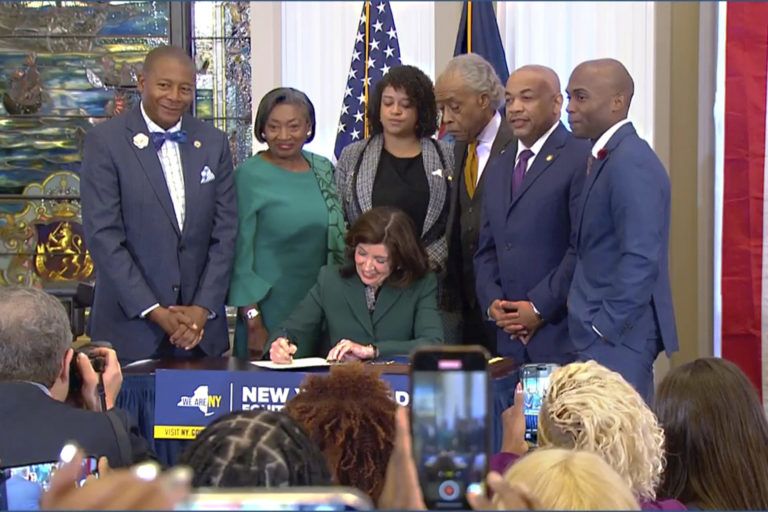
(Headline USA) New York state will create a commission tasked with considering reparations under a bill signed into law by Gov. Kathy Hochul on Tuesday.

It comes at a time when the state continues to reckon with a significant financial crisis brought about largely by the Biden administration’s open-border policies, which have led to a flood of illegal immigrants in New York City and the surrounding regions.

The New York City Council passed a measure in September that likewise set up a reparations task force, following in the footsteps of similar task forces established in California and Illinois.

San Francisco, one of the first municipalities to advance the reparations agenda, recently announced that it was gutting the budget of its newly established Office of Reparations due to a severe financial deficit.

Ironically, slavery was never legal in California, which joined the nation as a free state in 1850 with a constitution that specifically outlawed it.

The legislation establishing the New York commission notes that the first enslaved Africans arrived at the southern tip of Manhattan Island, then a Dutch settlement, around the 1620s and helped build the infrastructure of New York City—“including the wall that gives Wall Street its name.”

The practice was legal in the state until it was ended in 1827 by Republican abolitionists.

That, however, did not stop Hochul, a Democrat, from shamelessly virtue-signaling over the new law, designed to pander to minority voters with “free” government money that will drive up deficits and inflation for all.

“In New York, we like to think we’re on the right side of this,” Hochul claimed at the bill signing ceremony.

“Slavery was a product of the South, the Confederacy,” she added. “What is hard to embrace is the fact that our state also flourished from that slavery. It’s not a beautiful story, but indeed it is the truth.”

The law, which was passed by state lawmakers in June, says the commission will examine the institution of slavery and its ongoing impact on black New Yorkers today.

“The battle for civil rights was not below the Mason–Dixon line,” said black activist Al Sharpton, who spoke at the signing ceremony.

“The largest port of slave trade was in Charleston, South Carolina, and Wall Street, New York,” he continued. “So this, today, starts a process of taking the veil off of northern inequality and saying we must repair the damage and it can be an example for this nation.”

The nine-member commission will be required to deliver a report a year after its first meeting.

Its recommendations could potentially include monetary compensation but would be non-binding. The panel’s findings are intended to spur policy changes, programs and projects that attempt to remedy slavery’s harmful effects.

The idea of using public money to compensate the descendants of enslaved people is almost certain to draw a backlash from some, including some white people who don’t believe they should have to pay for the sins of long-ago ancestors, and other ethnic groups that weren’t involved in the slave trade.

Questions also have been raised elsewhere about who would qualify for any reparations that were administered, since there was rarely any documentation preserved by the slaves themselves about their status and the financial losses they may have incurred from it.

Although the places where the reparations debate has flourished have all been deep-blue states and cities where the idea is more popular in principle than in practice, Sharpton said he expected Hochul to pay a political price for convening the commission.

“I want to give credit to this governor for having the audacity and courage to do what others wouldn’t do. And I know she had to wrestle with it. And I know her political advisors told her it’s too risky,” the famed civil rights activist said. “But she did it because it’s right.”

The commission set up by Gov. Gavin Newsom has become something of a looming liability after it offered up a set of outlandish proposals that had no chance of being enacted, including a repeal of the state’s racial-discrimination ban.

Newsom subsequently refused to endorse the plan, potentially costing him the support of some radical black estremists should he run for higher office, as many suspect he will.

In New York, Hochul and the legislative leaders of the state Assembly and Senate—both of which have heavy Democratic majorities—will each appoint three members to the commission. They have 90 days to make their picks.

“This is not just about who we’re going to write a check to, and what the amount is,” said Democratic Assembly Speaker Carl Heastie, who is black. “It begins the conversation with one recognizing the issues that affected black people and descendants of slaves in this state.”

State Senate Republican Leader Rob Ortt said in a statement that he believes New York’s recommendations will come at an “astronomical cost” to all New Yorkers.

“The reparations of slavery were paid with the blood and lives of hundreds of thousands of Americans who fought to end slavery during the Civil War,” he said. He added that it’s unrealistic for states to meet the potentially expensive price tag that could come with cash reparations.

New York City Mayor Eric Adams on Tuesday expressed support for the measure, noting that some venerable institutions in New York, as elsewhere, are tied to wealth that derived from exploiting the labor of enslaved people.

“We have to reckon with that,” Adams, who is black, said during a City Hall news conference.

Adapted from reporting by the Associated Press

Reagan’s AG Files SCOTUS Brief Arguing that Jack Smith’s Appointment Is Unconstitutional

(Molly Bruns, Headline USA) Former Attorney General Ed Meese and several experts on the Constitution argued that Jack Smith’s appointment as special counsel to investigate former President Donald Trump is unconstitutional.

A recently published amicus brief argued that Smith lacked authority to petition the Supreme Court, Congress did not approve or create the position and its creation violated the “Appointments Clause” of the Constitution, according to Breitbart. The brief was filed in the case where Smith seeks SCOTUS to review the question of whether Trump is protected by presidential immunity.

Meese filed the brief against Smith along with Steven Calabresi, the co-chairman of the Federalist Society, and Gary Lawson, a constitutional law professor. They asserted that U.S. Attorney General Merrick Garland appointed Smith to a nonexistent office without having proper authority to do so.

The Constitution created the presidential and vice presidential offices, but did not grant them the power to create additional offices. Only Congressional representatives have the authority to create offices under the law.

Garland, who is not an elected member of Congress, created the independent counsel position despite not having the authority to do so.

“Even if one somehow thinks that existing statutes authorize appointment of stand-alone special counsels with the full power of a U.S. Attorney, Smith was not properly appointed to such an ‘office,’” the amicus brief explained.

The authors also argued that Smith’s position granted him a surprising amount of power despite his extra-congressional position.

In order for the appointment to be proper, President Joe Biden would have to nominate Smith and a majority of the Senate would confirm him.

“Improperly appointed, he has no more authority to represent the United States in this Court than Bryce Harper, Taylor Swift, or Jeff Bezos,” the authors wrote.

The brief’s main focus was convincing the Supreme Court to refuse Smith’s petition for the court to take the case, which would require lower courts to dismiss his prosecutions, including his pending charges against Trump.

Meese was Attorney General for former President Ronald Reagan.