Gold Price Outlook 2026: Safe-Haven Demand and Financial Risks

(Money Metals News Service) In a detailed interview on the Money Metals Podcast, host Mike Maharrey spoke with Rhona O’Connell, Head of Market Analysis at StoneX, about the forces driving gold and silver markets in 2026.

Drawing on more than 40 years of experience in precious metals, O’Connell explained why gold continues to function as a critical safe-haven asset during periods of inflation, geopolitical instability, and financial market stress.

O’Connell began by describing StoneX, the global financial services company originally founded in 1923 by F.C. Stone, a former door-to-door egg salesman in Chicago. Formerly known as INTL FCStone, the company operates across commodities, precious metals, agriculture, equities, energy, and global payments markets. O’Connell referred to StoneX as “the largest company you’ve never heard of,” highlighting the firm’s broad institutional presence despite relatively low public recognition.

She also shared details about her own career, which began in 1981 at Consolidated Gold Fields, then the world’s second-largest gold mining company behind Anglo American. Early in her career, she worked on long-term silver and platinum group metals feasibility studies during the volatile aftermath of the 1980 precious metals boom. That experience inside the mining industry, she said, gave her a practical understanding of markets that many analysts never acquire.

(Interview Starts Around 6:38 Mark) 

Why Gold Is Still a Powerful Safe-Haven Asset

A major theme throughout the interview was gold’s evolving role in investment portfolios. O’Connell explained that while gold was once viewed primarily as an inflation hedge, professional investors now increasingly see it as a “mitigator of risk.”

She noted that gold’s famous intraday peak of $850 per ounce in January 1980 would equal roughly $3,590 in today’s dollars when adjusted using the U.S. Consumer Price Index. According to O’Connell, gold surpassed that inflation-adjusted level in April 2025, reaching new highs in real purchasing-power terms.

Still, she cautioned that gold should not be viewed as a perfect inflation hedge. Treasury Inflation-Protected Securities, or TIPS, often provide more direct protection against inflation itself. Gold’s greater value, she argued, lies in its ability to improve overall portfolio stability during periods of uncertainty and market volatility.

O’Connell explained that adding even a small amount of gold to a traditional stock-and-bond portfolio can improve what portfolio managers call the “efficient frontier.” In practical terms, investors may achieve better returns for the same level of risk or reduce risk without sacrificing performance.

Why Gold Prices Sometimes Fall During Market Crashes

Maharrey also asked about a common source of confusion among investors: why gold prices sometimes decline during financial crises even though gold is considered a safe-haven asset.

O’Connell explained that during periods of market panic, investors frequently sell gold temporarily to raise cash and meet margin calls. Because gold is one of the world’s deepest and most liquid markets, investors can reliably find buyers even when stock markets are collapsing.

She noted that gold’s daily trading volume ranks second only to the S&P 500 and can even exceed trading activity in U.S. Treasuries. As a result, gold often functions like an insurance policy. Investors may liquidate some holdings during moments of extreme stress, but they typically buy back into the market once conditions stabilize.

O’Connell pointed to the COVID-19 market crash as a clear example. Gold fell approximately 7% during the initial selloff but recovered all of its losses within roughly six weeks. Industrial metals experienced much steeper declines and took months to recover, while the S&P 500 required even more time to fully rebound.

How Geopolitical Uncertainty Is Driving Gold and Silver Prices

The interview then turned toward current geopolitical risks, including the Iran conflict and broader global instability.

According to O’Connell, geopolitical uncertainty has been one of the primary drivers of gold investment demand over the past 18 months, particularly since Donald Trump reentered the political spotlight. Investors today face an environment dominated by wars, tariffs, inflation concerns, recession fears, and rapidly changing political developments.

She explained that traders across nearly every asset class have become reluctant to commit capital aggressively because markets can reverse direction almost instantly based on headlines. In her words, the market is now heavily “headline-driven,” with investors reacting constantly to geopolitical developments and central bank signals.

During recent weeks, gold traded within a relatively narrow 5% range while silver moved within a broader 12% range because of silver’s traditionally higher volatility. Investors have been closely monitoring Treasury yields, the VIX volatility index, and the MOVE index for bond volatility while waiting for greater clarity on Middle East tensions and global economic conditions.

Federal Reserve Policy, Inflation, and Rising Debt Concerns

Maharrey and O’Connell also discussed the increasingly difficult position facing the Federal Reserve and other central banks.

O’Connell agreed that policymakers are trapped between persistent inflation pressures and unsustainable debt burdens. She pointed out that U.S. debt-to-GDP levels now sit near 110%, while Europe faces similarly limited fiscal flexibility. Meanwhile, inflation remains above central bank targets, with U.S. Personal Consumption Expenditures inflation running near 3.4%.

Although many investors expect eventual interest rate cuts, O’Connell suggested that another rate hike cannot be ruled out if inflation pressures intensify further, particularly if geopolitical conflict drives energy prices higher. She also questioned whether the Federal Reserve’s long-standing 2% inflation target is realistically achievable under current economic conditions.

Throughout the conversation, O’Connell emphasized that uncertainty itself has become one of the market’s biggest concerns. Investors are struggling to forecast future monetary policy, inflation trends, and geopolitical outcomes with any degree of confidence.

Hidden Financial Risks Supporting Long-Term Gold Demand

One of the most important sections of the interview focused on risks O’Connell believes markets may be underestimating.

The first involved the ongoing Supreme Court case surrounding Federal Reserve Governor Lisa Cook. O’Connell warned that if political pressure were perceived to undermine Federal Reserve independence, confidence in U.S. monetary policy could weaken substantially. Even the perception of political interference, she argued, could destabilize Treasury markets and damage confidence in the U.S. dollar globally.

She also expressed concern about the rapid expansion of shadow banking and private credit markets. O’Connell cited estimates placing the size of the private credit sector in the United States and Europe somewhere between $2 trillion and $10 trillion. Because much of the sector remains lightly regulated, she warned that liquidity problems and systemic vulnerabilities could emerge during periods of financial stress.

O’Connell compared the situation to the overlooked warning signs that preceded the 2007 subprime mortgage crisis. She noted that Federal Reserve Chair Jerome Powell himself has acknowledged concerns surrounding private credit risks during Senate testimony.

In her view, these growing systemic vulnerabilities continue to strengthen the long-term case for gold ownership.

Favorite Gold Coins and Silver Coins From Around the World

Toward the end of the interview, Maharrey asked O’Connell about her favorite precious metals coins.

Rather than choosing based on investment value alone, O’Connell selected coins based on artistic design. She praised the Pamp Suisse Cornucopia coin and the Austrian Vienna Philharmonic coin for their beauty, while also mentioning the Chinese Panda and Australian Koala coins as particularly appealing collectible designs.

Maharrey responded that the South African Krugerrand remains his personal favorite because it was his grandfather’s preferred gold coin and originally sparked his own interest in precious metals investing.

O’Connell then shared the historical origins of the famous slogan “Gold is money you can trust,” connecting it to the creation of the Krugerrand and the later formation of the World Gold Council during the apartheid era in South Africa.

Why Gold Remains Important in 2026

By the end of the conversation, both Maharrey and O’Connell returned to the interview’s central theme: gold continues to serve as a uniquely trusted monetary asset during periods of economic instability, inflation, geopolitical conflict, and financial stress.

For O’Connell, gold’s long-term importance extends far beyond short-term price movements. In a world increasingly shaped by debt expansion, political uncertainty, and fragile financial systems, gold remains one of the few globally recognized assets that exists outside the direct control of governments and central banks. As she summarized near the close of the interview, gold remains “money you can trust.”
Judge Rejects Request to Ban Cameras in Court from Man Charged with Killing Charlie Kirk

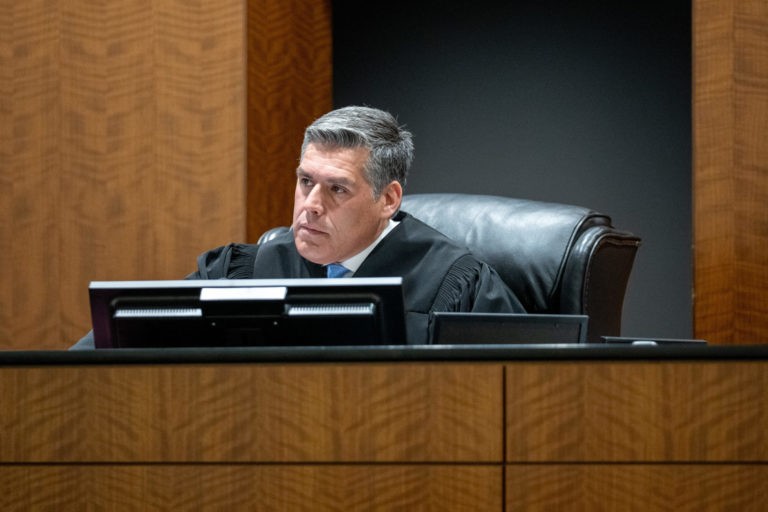
murder case of the man charged with killing Charlie Kirk, a Utah judge ruled Friday, saying coverage requests from news stations would continue to be evaluated on a case-by-case basis.

Tyler Robinson’s attorneys argued potential jurors could be biased by slanted news reports and online comments that depict the defendant as unremorseful based on how he looks and acts in court. They said live broadcasts were fueling those stories and interfering with Robinson’s right to fair proceedings.

State District Judge Tony Graf said some news outlets have used courtroom footage as “a springboard to discuss out-of-court commentary” by public officials, opine on the existence of evidence that has not been presented in court and “generally vilify the defendant,” but he declined to ban cameras.

“Electronic media coverage provides a means to facilitate the public’s right of access to court proceedings for those who cannot physically occupy the limited space available in a courtroom,” Graf said. “Livestreaming in particular allows as many people as are interested to observe the justice system at work and hold our branches of government accountable.”

Media organizations, prosecutors and Kirk’s widow, Erika Kirk, had urged the judge to allow cameras. They said transparency is the best way to guard against conspiracy theories that have circulated since Kirk’s assassination on Sept. 10, when the 31-year-old conservative activist was shot in the neck while speaking at Utah Valley University in Orem.

The defense and prosecution did not immediately respond to requests for comment after Graf read the ruling via video call.

Graf has said repeatedly that he cannot control the spread of misinformation outside court, but he has taken steps to protect Robinson’s rights during hearings. He tightened rules for cameras after members of a media pool violated a courtroom order by showing Robinson’s shackles and capturing close-ups of him talking to his attorneys. Graf relocated cameras to the rear of the courtroom, behind Robinson, making it harder to get images of him.

The judge also approved a defense motion to push back Robinson’s preliminary hearing, which was scheduled for mid-May. Prosecutors during that hearing, now set for July 6-10, must show they have enough evidence to proceed to trial. Graf said he set a time frame that balances Robinson’s rights with those of Erika Kirk, who is entitled to a speedy resolution.

Prosecutors intend to seek the death penalty if Robinson, 23, is convicted. He is charged with crimes including aggravated murder and has not yet entered a plea.

Prior to his death, Kirk and the conservative youth movement he founded, Turning Point USA, emerged as a major force in U.S. politics that was considered instrumental in getting President Donald Trump elected to a second term.

Authorities have said DNA consistent with Robinson’s was found on the trigger of the rifle, the fired cartridge casing, two unfired cartridges and a towel used to wrap the rifle. Robinson’s attorneys have argued his preliminary hearing should not take place until federal law enforcement agencies turn over more details about their DNA analysis.

Prosecutors say they have sufficient proof beyond DNA, including surveillance video and a handwritten note Robinson allegedly left for his romantic partner confessing to the crime.

Accusations that Robinson targeted Kirk over his political views have amplified interest in the case, which in turn has stoked the long-running dispute over cameras inside major cases.

Photos and videos have exposed the inner workings of some of America’s most spectacular criminal cases, from the Lindbergh baby kidnapping trial to O.J. Simpson’s double murder trial. They’ve also created tensions between advocates for transparency and defense attorneys eager to shield clients from bad publicity.

The stakes are especially high in death penalty cases such as Robinson’s, where a jury can consider the defendant’s character as part of its determination. Footage of Robinson apparently smirking while talking to his attorneys during a December hearing elicited comments on Fox News that he treated Kirk “like a trophy.”

The Constitution gives greater weight to a defendant’s rights to a fair trial than the public’s right to know what’s happening in a case. Nevertheless, cameras have become much more common in state courts in recent years.

They are generally barred in federal criminal trials. Under a New York state law, Trump’s trial and 2024 conviction in a hush money case was famously closed to cameras while court was in session. Media organizations used sketch artists to capture the scene.

Judges typically retain broad discretion over which parts of a case can be broadcast and who can be filmed or photographed. 

Adapted from reporting by the Associated Press

Brian Glenn, Mr. MTG, Bids Farewell to DC Too

(Luis CornelioHeadline USA) Conservative journalist Brian Glenn is calling it quits.

Glenn, a White House correspondent for Real America’s Voice, is set to resign from his job Friday as he prepares to marry former Rep. Marjorie Taylor Greene, R-Ga., in the Peach State.

Glenn confirmed his resignation in a heartfelt post on X Thursday, temporarily pausing a 37-year career in television and journalism.

Most recently, however, Glenn gained national attention through his relationship and subsequent engagement to Greene, the former MAGA firebrand whose public fallout with President Donald Trump dominated conservative political circles.

“If someone would’ve told me back in 1989 when I accepted my first job in television that one day I would be standing in the Oval Office at the White House, I wouldn’t have believed you,” Glenn wrote on social media.

He added that he will “always support America First policies and look forward to the future with the love of my life, MTG.”

Alongside his post was a picture of Glenn standing near what appeared to be the aftermath in Butler, Pa., where Trump narrowly escaped an assassination attempt.

In an interview with the Daily Mail, Glenn said he told Greene this week that he would abruptly quit his job.

“I woke up on a Sunday morning, early, I got in my recliner, got my coffee and I was just looking out the window. I have a lot of clarity early in the morning,” he said.

Greene reportedly joined him that morning and asked what he was doing.

“I said, ‘Well, I’m just thinking.’ And she’s like, ‘Thinking about what?’ I’m like, ‘I’m gonna resign.’ And she was like, ‘From work?’ I’m like, ‘Yep,’” Glenn continued.

Asked when, Glenn replied: “Today.”

Meanwhile, Greene welcomed the move, announcing her support on X.

“I’m so proud of Brian and truly don’t have enough words to say how grateful I am for him. What an incredible journey and career!!” she wrote. “There is no one like Brian Glenn. I’m so looking forward to the next chapter of our lives and a future together.”

His departure was also met with dozens of well wishes from voices across conservative media and Washington, D.C.

Deadly Bear Attack in Glacier National Park is the First in Decades at the Iconic Park

(Headline USA) The body of a missing hiker has been found in Glacier National Park in what authorities say appears to be the first deadly bear attack at the iconic Montana park since 1998.

“His injuries are consistent with those sustained by a bear encounter,” the National Park Service said in a written statement Thursday. “Wildlife and law enforcement personnel are currently assessing the area for bear activity and any ongoing public safety concerns.”

The hiker’s body was discovered Wednesday in a densely wooded area about 50 feet (15 meters) off the Mt. Brown Trail. No other details were immediately released, but authorities had been searching for Anthony Pollio, 33, of Fort Lauderdale, Florida, after he disappeared Sunday.

Designated trails leading from Lake McDonald Lodge were temporarily closed while authorities investigate what happened.

Glacier National Park is home to grizzly bears and black bears. A bear last August swatted a 34-year-old hiker, injuring her shoulder and arm. The park service said the bear, accompanied by two cubs, was probably surprised and acted defensively.

Adapted from reporting by the Associated Press

US Employers Defy Economic Shock from Iran War and Add a Surprisingly Strong 115,000 Jobs in April

(Headline USA) America’s employers delivered a surprising 115,000 new jobs last month despite an economic shock from the Iran war.

Hiring beat the 65,000 jobs forecasters had expected, though it decelerated from the 185,000 jobs created in March. The unemployment rate remained at a low 4.3%, the Labor Department reported Friday.

The Iran war has caused the biggest disruption of global oil supplies in history and sent average U.S. gasoline prices surging past $4.50 a gallon this week. But the conflict hasn’t done much damage to the American job market so far. And the import taxes — tariffs — that President Donald Trump imposed last year haven’t turned out to be as high and as damaging as originally feared.

“The labor market is not booming, but it is proving harder to break than` many feared,’’ said economist Olu Sonola of Fitch Ratings.

Healthcare added 37,000 jobs last month and transportation and warehousing companies 30,000. However, manufacturers cut 2,000 jobs in April and have shed 66,000 jobs over the past year despite Trump’s protectionist policies aimed at creating factory jobs.

“Businesses to some extent are viewing the conflict in Iran as temporary,” said Gus Faucher, chief economist at the financial firm PNC. ”We’re seeing strong business investment, particularly around tech and AI. The economy continues to expand. We’ve weathered some shocks. The worst of the tariff impact is likely over.”

Still, Faucher cautioned that “the longer conflict in Iran lasts, the higher energy prices go, the longer they stay elevated the greater the drag on the economy.”

Among those worrying is Michael Cramer, co-founder and CEO of online retailer Adagio Teas. He expects to freeze hiring this year. He typically adds anywhere from five to six workers per year to help pack up online tea orders at the company’s warehouse in East Rutherford, New Jersey. Adagio Teas, which has about 50 workers, has seen a slight drop in sales after the Iran war drove up gasoline prices and squeezed shoppers, particularly those in lower-income brackets. Cramer is worried that shoppers are opting for less expensive supermarket tea to cut costs.

“You only hire when you have more orders that you can fill,” he said.“I don’t envision us being in that position for the remainder of the year. I think the remainder of this year is going to be fairly bumpy.”

Labor Department revisions shaved 16,000 jobs from February and March payrolls.

Average hourly earnings rose 0.2% from March and 3.6% from April 2025, consistent with the Federal Reserve’s 2% inflation target.

The number of people in the U.S. labor force dropped last month, and the share of those working or looking for work — the so-called labor force participation rate — dropped to 61.8%, lowest since October 2021.

After the U.S. and Israel launched their attacks Feb. 28, Iran shut down the Strait of Hormuz, through which about a fifth of the world’s oil and liquefied natural gas passes. The disruption has caused a painful increase in the price of energy and led many economists to downgrade their estimates for global and U.S. economic growth.

But the job market keeps chugging along this year.

The economy is getting a boost from big tax refund checks this spring, arising from Trump’s tax cut legislation last year; the refunds allow consumers to spend more freely, giving companies an incentive to add workers in response to rising sales.

The job market is showing intermittent signs of recovery after a bleak 2025. Employers last year created just 9,700 jobs a month, fewest outside a recession year since 2002. High interest rates and uncertainty over Trump’s economic policies held back hiring.

The March and April hiring figures marked the first consecutive months of job growth above 100,000 since the end of 2024.

The recent uptick in hiring raises hopes that the job market will break out of a recent rut – in which Americans who have jobs are relatively secure from layoffs but jobseekers struggle to find work.

Angela Paniccia, 33, of Queens in New York City was laid off by an educational travel company in December. The job search can be frustrating. “You’ll never hear back or you’ll get just a generic ‘We’re moving on with someone else’ without feedback,’’ she said.

Many of the openings at colleges and other employers in her field simply don’t pay enough to support someone living in one of the country’s most expensive cities. To help with the rent, she’s been working part-time for a caterer. “I’ve always had a full-time job,’’ she said. “Admittedly, I’m struggling with the loss of daily routine.’’

U.S. hiring has been dominated by one industry: Healthcare companies, catering to an aging American population, have added 456,000 jobs over the past year; other employers have combined to cut 205,000 over the 12 months that ended in April.

Still, Heather Long, chief economist at Navy Federal Credit Union, noted that last month’s job gains extended beyond healthcare. Retailers, for example, added 22,000 jobs and construction companies 9,000. “America’s hiring recession appears to be over,” she wrote. “Average job gains in 2025 were an anemic 10,000 a month. So far in 2026, the average is 76,000.”

Simbe Robotics Inc., which deploys five-foot tall robots that scan shelves for out-of-stock items in more than 1,000 stores worldwide, is eager to hire. Co-founder Brad Bogolea started the company with a handful of workers and now has 100, many of them software and artificial intelligence engineers. Simbe has its pick of candidates. Applications more than doubled over the past year, partly because of layoffs elsewhere in the technology industry. Applications for robotics software engineer jobs are up 127% over that time period, Bogolea said.

The Labor Department’s monthly jobs report consists of two parts.

For the so-called household survey, the government collects data from 60,000 households to calculate the unemployment rate and the share of people who are working or looking for work, among other things.

For the so-called establishment survey, the government gathers information from about 119,000 businesses and government agencies, representing 622,000 worksites, to calculate the number of jobs in the economy, how many hours Americans work and the hourly wages they receive.

The establishment survey is subject to revisions — sometimes big ones — because some employers submit their responses late or have to correct what they already sent in. The Labor Department — like government statistical agencies in other countries — has also been contending with a drop in the share of employers that respond to the survey, especially since the COVID-19 pandemic.

Despite the revisions and problems collecting the data, most economists, businesses and investors consider the monthly jobs report to be a reliable gauge of how the labor market is doing.

Friday’s jobs data will likely keep the Fed on the sidelines, as it holds its key rate unchanged while evaluating the economic impact of the Iran war. Fed officials are increasingly focused on inflation, which has risen quickly since the war, driven higher by spikes in gasoline prices.

Inflation jumped to 3.3% in March, a two-year high and far above the Fed’s target. The Fed typically keeps its rate unchanged — or even raises it — to combat inflation, while it cuts rates to spur more growth and hiring. Early this year many Fed policymakers were worried the job market was stalling and leaned toward rate cuts. But in more recent months hiring has stabilized, undermining the case for cuts.

Friday’s jobs report, PNC’s Faucher said, “actually makes it less likely that we see a rate cut anytime soon because the Fed can say, ‘The job market is solid. Let’s get inflation back down to 2%. This is not the time to cut rates.’”

Adapted from reporting by the Associated Press

Hegseth Calls Inflating the Pentagon Budget by 50% to $1.5 Trillion a ‘Fiscally Responsible Investment’

(Dave DeCamp, Antiwar.com) Secretary of War Pete Hegseth said in a post on X on Thursday that inflating the Pentagon budget by nearly 50% to $1.5 trillion for 2027 was a “fiscally responsible investment” as the Trump administration attempts to justify its record-shattering military budget request.

“Thanks to President Trump’s $1.5 trillion defense budget, this War Department has moved from bureaucracy to business,” Hegseth wrote. “This is a FISCALLY RESPONSIBLE INVESTMENT in our Arsenal of Freedom—ensuring our military remains the most lethal fighting force in the world.”

The post included an animated video featuring Hegseth, where he claimed that the Trump administration was “putting the American taxpayer first” and taking action against bureaucracy.

Hegseth said that the administration insisted that when weapons makers expand their factories to sell more equipment to the US military, they pay the expenses, rather than have them funded by US taxpayers. The video didn’t explain why something that would seemingly reduce US military spending would necessitate increasing the budget by $500 billion.

“In exchange, we’re giving these companies steady, long-term orders for exactly what our warriors need. And defense companies are making things in higher volumes, much more quickly, while keeping their prices flat. Should these companies fail to deliver, we will hold them accountable and bring in new companies who will,” the US war chief said.

Winslow Wheeler, a veteran defense analyst, has found that based on the $1.5 trillion military budget for 2027, the true cost of US national security spending will exceed $2.5 trillion, an estimate that factors in military spending from other US government agencies, the interest accrued on the debt, among other factors.

This article originally appeared at Antiwar.com. 

Georgia Prosecutor Won’t Reveal What Her Pursuit of Trump Cost Taxpayers

(Johnny Edwards, The Center Square) The Georgia district attorney who took on Donald Trump, only to be removed from the case over a romance with her lead co-counsel, likely spent millions of dollars of taxpayers’ money on the years-long racketeering prosecution. And taxpayers might be on the hook for millions more.

But DA Fani Willis and the Fulton County government that sets her budget have not provided an exact total despite repeated requests by The Center Square.

What’s certain is that taxpayers of the state’s most populous county shelled out huge amounts in the ill-fated case. The indictment accused then-former President Trump and 18 other people of conspiring to overturn the 2020 election.

Online county records show $1.2 million in payments have gone to law firms of the three outside attorneys hired to assist Willis in the case – though how much of that was exclusively for work on the election interference case isn’t clear. Because of a recent change in state law concerning disqualified prosecutors, taxpayers could also be stuck paying nearly $17 million in defendants’ legal fees, including President Trump’s, though the county’s lawyers are fighting that.

Also unclear is how much the case launched in 2021 has cost the county internally. Those costs would include work hours for prosecutors, investigators and other staff; travel expenses; working meals; security; media management; and the cost of empaneling a special grand jury, among other things. The DA’s office has not provided any records describing those costs despite an open records request The Center Square filed, instead pushing off the timeline to respond by months.

“There is somebody in some department in Fulton County that could figure out the DA’s cost for that prosecution,” Danny Porter, the former district attorney for neighboring Gwinnett County told The Center Square. “Whether there’s anybody sitting around in that office with that figure in their head is another matter.”

The case ultimately produced four guilty pleas, but no jail time. Sentences included probation, fines, restitution, community service, letters of apology and cooperation agreements. Then the case ground to a crawl after another defendant accused Willis of a romantic entanglement with outside counsel Nathan Wade, who was being paid hundreds of thousands of dollars by the county at the time.

The case went further into limbo when Trump won reelection. It fizzled completely late last year when a new prosecutor dismissed all the charges, clearing the highest-profile defendants including Trump, former New York City Mayor Rudy Giuliani and former White House Chief of Staff Mark Meadows.

Among his reasons for dismissal, Pete Skandalakis, executive director of the Prosecuting Attorneys’ Council of Georgia, cited weaknesses in the charges and the practical impossibility of prosecuting a sitting president.

Neither DA Willis nor her on-staff spokesman, Jeff DiSantis, responded to interview requests or requests for information from The Center Square for this story. Nor did attorney Wade.

“It would be very embarrassing for the DA’s office to disclose how much time, resources and effort were spent on this case that amounted to essentially nothing,” said defense attorney Manny Arora, whose client Kenneth Chesebro pleaded guilty to one felony count of conspiracy to commit filing false documents. “The taxpayers have a right to know.”

But Fulton County Commissioner Marvin Arrington Jr., who Willis has endorsed in his current bid for the Commission Chairman’s seat, described the case as anything but a waste, leading to multiple convictions. Some extra costs included added security after the DA started getting death threats, he said.

“Our job as commissioners is to give her a budget,” Arrington told The Center Square. “And how she manages that budget is up to her.”

Willis’ office opened its criminal investigation in 2021, about a month after a recorded call where Trump told Georgia Secretary of State Brad Raffensperger, “I just want to find 11,780 votes.”

Since that year, the District Attorney’s Office annual budget has grown from $26.3 million to $39.4 million in 2026, according to Fulton County budget records.

Two of the seven elected commissioners – both Republicans – say they’ve made attempts to find out how much of that money went into prosecuting Trump and his co-defendants. Commissioner Bob Ellis tried in vain to calculate it himself, but couldn’t reach a reliable estimate, according to his chief of staff. The other commissioner, Bridget Thorne, said she asked Willis directly.

“Taxpayers certainly didn’t get anything back from it,” Thorne told The Center Square. “If anything, they got things taken away from it. Courts that weren’t moving, cases that weren’t being indicted, people that were in jail too long, overcrowding the jail, people dying in our jail, filing lawsuits.”

Thorne said her last attempt to get an answer was in late 2023 – well before the Georgia Court of Appeals removed Willis from prosecuting the case due to an “appearance of impropriety.” The state Supreme Court declined to hear Willis’ appeal.

Thorne, who represents a suburban area north of Atlanta, said she spoke to the DA about the cost of the case in a Zoom meeting, at a time when Willis was seeking millions of dollars extra added to her budget.

“The response was that Lady Justice has no price,” she told The Center Square.

Thorne said when she asked Willis specifically about payments to Wade, Willis accused her of only caring because Wade is black. Thorne said she didn’t know Wade’s race at the time.

After discussing another outside attorney who is white, Willis abruptly ended the Zoom call, Thorne said.

Weeks later, Willis called out the commissioner by name during a speech at Big Bethel AME church’s annual Dr. Martin Luther King Jr. memorial service, saying, “Why does Commissioner Thorne and so many others question my decision in a special counsel?” Recordings of the speech remain up on YouTube.

“That kind of put me in a bad position, because she was insinuating that I was racist in my conversations,” the commissioner told The Center Square.

This year, The Center Square has been asking the same question, only to be repeatedly rebuffed.

In January, the newswire filed a request with the District Attorney’s Office under the Georgia Open Records Act, seeking any records showing a tally of total expenses in the racketeering case titled State of Georgia v. Donald J. Trump, et al. The Center Square also asked for a full accounting of costs connected to the three special prosecutors Willis hired to assist in the case.

Georgia law says government agencies must turn over public records within three business days, or if the agency needs more time, to provide a timetable for when the records will be available.

The DA’s office has instead pushed off the request three times, saying it’s “experiencing high volume.” Twice the office asked for an extra month to respond, then last month it asked for up to six weeks more.

“Additional time is needed to fulfill your open records request,” said the last message delaying the request, sent on April 20. “We anticipate an update or response will be forwarded to you within 30 business days or no later than 5:00 p.m. on June 2, 2026. We appreciate your continued patience.”

The Center Square also tried to obtain a tally from the county government itself, requesting from the Finance Department records of all invoices the DA’s office submitted for payment that were connected to the Trump prosecution. The county responded that it has no such records because Finance doesn’t track which invoices go with which cases being handled by the DA’s office.

Porter, the former Gwinnett County prosecutor, said without the Fulton DA’s cooperation deciphering the total cost of the election interference case would be a Herculean effort involving multiple open records requests for invoices and line-item analysis of several years of DA’s office budgets. It could be done, he said, but “may take a forensic accountant.”

Some costs, though, are laid out in Fulton County’s Open Checkbook.

According to the online database, payments to the Law Offices of Nathan J. Wade from 2022 to 2024 total $770,381. Wade did not respond to a message seeking to confirm how much of that sum was for the Trump case.

In the same years, payments to two law firms of another special prosecutor, Anna Cross, total $132,378. She also did not respond to an inquiry about the total sum associated with the racketeering prosecution.

Payments to Bondurant, Mixson & Elmore, the law firm of outside attorney John Floyd, total $291,447 from 2022 to 2025. However, most of that may be for other cases.

Floyd told The Center Square he advised and assisted the Fulton County DA’s office on several racketeering prosecutions over that timespan, and the bills in Open Checkbook aren’t separated by cases. He said he couldn’t venture a guess as to how much of the total sum was for the election interference case alone.

Potentially driving the total price tag even higher, a new law signed by Georgia Gov. Brian Kemp last year allows criminal defendants to recoup “reasonable costs” if their case is dismissed due to prosecutorial misconduct. Fourteen former defendants in the case requested that taxpayers reimburse a total $16.85 million in legal fees. Trump’s claims account for $6.2 million of that.

With that legal battle at the Court of Appeals, the county commission could formally ask Willis to come up with a total cost of the election interference case. Thorne said that won’t happen because of the seven commission seats, four are held by Democrats, two by Republicans, and one is vacant.

Among the Democrats, Commissioner Arrington said he’s not asking for the total cost of the Trump case, partly because commissioners haven’t asked for the total cost of any other prosecutions.

“I can’t second guess what someone else does,” Arrington said. “That’s her shop. I can’t tell her how to run her shop.”

Arrington, an attorney, said he does not believe Fulton County will be left on the hook for defendants’ legal fees.

“I think the law is unconstitutional,” he said. “Laws don’t apply retroactively, they apply going forward.”

Virginia Supreme Court Strikes Down Redistricting Amendment Vote

(Shirleen Guerra, The Center Square) The Supreme Court of Virginia on Friday struck down the state’s redistricting amendment 4-3 on Friday.

Virginia’s congressional maps are to remain in place for the 2026 election cycle. The decision wipes out the results of the April 21 statewide referendum, which voters had approved by roughly 51.7%-48.3%.

In a majority opinion written by Justice Arthur Kelsey, the court ruled the General Assembly violated Article XII, Section 1 of the Virginia Constitution requiring a constitutional amendment to pass through two legislative sessions with an intervening general election between them.

The court found lawmakers approved the amendment on Oct. 31, 2025, after more than 1.3 million Virginians had already cast ballots during early voting in the general election.

“This violation irreparably undermines the integrity of the resulting referendum vote and renders it null and void,” Kelsey wrote in the opinion.

The decision affirms a lower court ruling from Tazewell County Circuit Court that blocked certification of the referendum results while the case moved through the appeals process.

Unofficial results from the April referendum showed 1,604,276 Virginians voted in favor of the amendment and 1,499,393 voted against it, a margin of about 3.38%.

The ruling means congressional maps drawn by the Virginia Supreme Court in 2021 will remain in effect for the upcoming 2026 midterm elections.

Those maps and voters’ choices produce a 6-5 split, majority Democrats, in Virginia’s congressional delegation. Maps previously approved by the General Assembly were widely expected to give Democrats an advantage in 10 of Virginia’s 11 congressional districts.

Chief Justice Cleo Powell, joined by Justices Mann and Fulton, dissented, saying the Oct. 31 legislative vote occurred before Election Day on Nov. 4 and therefore satisfied the constitutional requirement.

Republicans quickly celebrated the decision Friday.

Former Gov. Glenn Youngkin said on social media that “justice has been served” and that “the constitution prevailed.”

The National Republican Congressional Committee also claimed victory, calling the amendment effort an “illegal Virginia Democrat gerrymander.”

Jason Snead, executive director of Honest Elections Project Action, praised the ruling and called it “an enormous victory” for the rule of law.

Democratic Attorney General Jay Jones said the decision “silences the voices of the millions of Virginians who cast their ballots in every corner of the commonwealth” and accused the court of putting “politics over the rule of law.”

Jones said his office is reviewing possible next legal steps.

The legal fight over the amendment became one of the country’s most closely watched redistricting battles ahead of the 2026 elections.

Some FBI Records about Thomas Crooks are Still Sealed

(Ken Silva, Headline USA) The FBI released another batch of records on Thursday about alleged would-be Trump assassin Thomas Crooks. The disclosure is in response to a Freedom of Information Act lawsuit filed by transparency group Judicial Watch.

The 52 pages of new documents offer little new information about Crooks, the alleged gunman who shot Trump’s ear at his July 13, 2024, campaign rally in Butler, Pennsylvania.

Arguably more interesting than what the FBI released is what it withheld, and why. Some records are being withheld because they’re still sealed by a court, while others cited FOIA section b7D—an exemption that allows the FBI to keep records secret to protect the identities of informants.

The sealed records may be related to the DOJ’s grand jury investigation, which was intended to find out Crooks’s motive and whether he had help. As part of that investigation, the DOJ subpoenaed Crooks’s internet and financial records. No witnesses were called to the grand jury.

In December, a judge issued an order that allowed the DOJ to provide those records to Congress. But it’s not clear whether the same records would be subject to FOIA disclosure.

As for the FBI informants, one FBI source overseas told the bureau that Iran was involved—an unsubstantiated allegation. But other than that, it’s unclear if there were other informants involved in the investigation.

Of the records that the FBI did release, perhaps the most interesting one detailed a purported TikTok video of Crooks ranting against Trump and other Republicans.

The person who provided the video to the FBI speculated that Crooks may have posted it the day of the shooting. But it’s unclear whether the video, which has been deleted from TikTok, actually showed Crooks in the first place.

The rest of the record include information that’s already been public. That includes info about the bombs reportedly found in Crooks’s vehicle after the assassination attempt.

Thursday’s release marks the fourth batch of documents about Thomas Crooks that the FBI has released in response to Judicial Watch’s lawsuit. According to a status report filed in the lawsuit in January, the FBI holds about 45,000 records related to Crooks and the assassination attempt. However, the FBI has only released about 50 records per month since then—so at this pace, it may take decades before all the documents are made public.

Ken Silva is the editor of Headline USA. Follow him at x.com/jd_cashless.

Former Gov Roy Cooper Exposed for Releasing Thousands of Criminals

(José Niño, Headline USA) A new public data tool reveals that more than half of the 4,234 criminals granted early release by former North Carolina Gov. Roy Cooper in 2021 have been convicted of additional crimes or post release violations, according to a press release published by watchdog organization Cooper Released Him.

The database, now live at cooperreleasedhim.com, provides searchable access to offenders by name, county, and convictions. At least 2,412 of those released have reoffended, representing a 56.97 percent recidivism rate.

The Cooper Released Him Twitter profile describes the project as “exposing the 4,234 criminals released early by North Carolina’s Democrat Gov. Roy Cooper in 2021 at the behest of left-wing activist organizations.”

The data reveals disturbing figures about pre-release convictions among those granted early freedom. The database documents 53 inmates serving life sentences, one of whom has re-offended. It includes 70 individuals convicted of murder, with 9 reoffenders. The data shows 99 people convicted of rape or sexual offense, with 45 reoffenders. Most troubling, 203 individuals convicted of taking indecent liberties with a child were released, and 119 of them have reoffended.

The press release notes that the true reoffense rate is actually higher than the figures indicate. The NC Department of Adult Corrections data omits crimes where charges were never filed, where charges were dropped, or where prosecution is ongoing and has not yet resulted in a conviction.

The release cites DeCarlos Brown Jr. as perhaps the most notorious example. Brown allegedly committed a racially motivated murder of Iryna Zarutska in Charlotte last August, as Headline USA previously reported. However, none of Brown’s post-release arrests appear in the data because the Mecklenburg District Attorney declined to prosecute charges related to multiple arrests after his early release in February 2021. The charges for the fatal stabbing remain pending in court.

“You shouldn’t have to be a tech guru to access facts about the rapists, murderers, and child molesters that were granted early release into our communities,” said Stephen Horn, founding editor of the Triangle Trumpet and the independent journalist behind the project.

Horn welcomes collaboration with journalists and citizens interested in investigating the data further. The project maintains a presence on Twitter, Instagram, and TikTok, with contact available through [email protected].

The releases occurred under a 2021 settlement during Cooper’s tenure as governor. Cooper, a Democrat, served as North Carolina’s governor from 2017 to 2025. The data tool now allows the public to examine the consequences of those early release decisions in granular detail.

José Niño is the deputy editor of Headline USA. Follow him at x.com/JoseAlNino