Defense Sec. Austin Grilled by House over Medical Cover-Up, Lack of Accountability

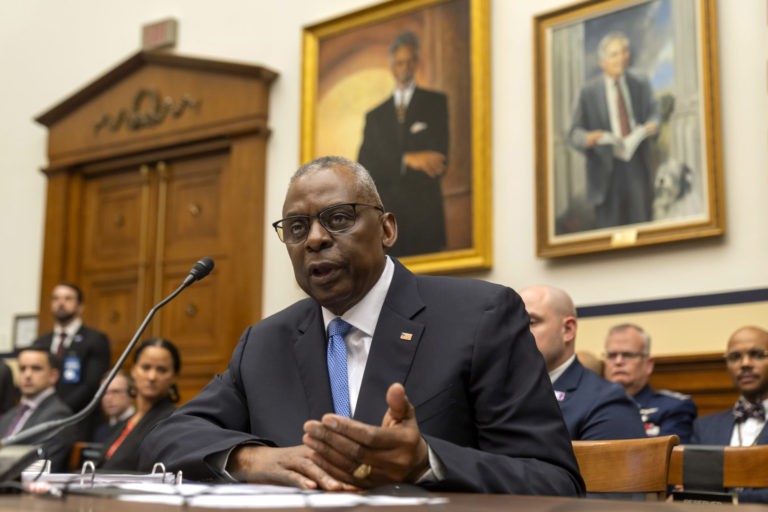
(Headline USA) Defense Secretary Lloyd Austin faced pointed bipartisan criticism at a congressional hearing Thursday for his failure to promptly notify President Joe Biden and other U.S. leaders about his hospital stay last month.

Republicans demanded to know why no one had been held accountable for the apparent cover-up, which created a potential national-security vulnerability at a particularly sensitive time for U.S. interests in the Middle East, Ukraine and elsewhere.

It also came amid growing outrage over the Biden administration’s impunity on a range of issues, including the policy failures impacting the U.S. economy and border security.

Members of the House Armed Services Committee condemned Austin’s scandal as an embarrassment and a failure of his leadership. They said the fact that Biden was kept in the dark about Austin not being in command for days could have meant confusion or delays in military action.

During part of Austin’s leave of absence in late December and early January, decision-making authorities were transferred to the deputy defense secretary, who was herself on vacation at the time.

Austin insisted there were no gaps in control of the department or the nation’s security because “at all times, either I or the deputy secretary was in a position to conduct the duties of my office.”

Nonetheless, he claimed the department had implemented changes in its notification process, suggesting that it was the fault of the prior policies rather than a deliberate effort on his and his surrogates’ part to suppress information about his health concerns.

Evidence suggests otherwise, including the 911 call in which a dispatcher is asked to tell emergency medical technicians to turn off the ambulance siren before arriving at Austin’s Virginia home, so as not to attract attention.

Many Democrats also expressed concerns about Austin’s lack of transparency concerning his hospitalization for complications from prostate cancer surgery. But some also used the hearing to criticize House Republicans, who hold a slim majority, for not passing a budget or addressing critical national security needs.

Rep. Elissa Slotkin, D-Mich., denounced the “outrage and drama” from committee members as she said Austin had admitted making an error, apologized and taken action to prevent a repeat. She implored her colleagues to “focus in on the things that are actually important to national security,” such as threats from Russia and China.

Nonetheless, there was general agreement that Austin and his staff bungled notifications about his hospital stay in early January.

“It’s totally unacceptable that it took three days to inform the president of the United States that the secretary of Defense was in the hospital and not in control of the Pentagon,” said Rep. Mike Rogers, R-Ala., the committee chairman.

Rogers noted that wars were raging in Ukraine and Israel at the time. “The chain of command doesn’t work when the commander in chief doesn’t know who to call.”

Lawmakers pointed out that, with the Biden administration being a key exception, any employee—from truck drivers and bartenders, to a subordinate military servicemember—who failed to notify a superior about an absence would typically face punishment.

Austin struggled at times when pressed on who was to blame. He said he took full responsibility, but also said he did not tell his staff to keep it a secret. At times he appeared to blame his staff.

“I was the patient, and so my expectation is that the organization informed the right agencies,” Austin said, when asked why it took four days to inform the White House that he was hospitalized.

The Cabinet member said his public-affairs staff knew he was hospitalized, but said he did not know why they did not tell anyone or if they made a decision not to inform the public.

The incident led to concerns about lapses in the command and control of the Armed Forces, including the country’s nuclear arsenal.

The Pentagon has said Austin’s staff notified Deputy Defense Secretary Kathleen Hicks when Austin went into intensive care in early January. But that only raised questions about why Austin did not do that himself and whether that suggested there was a gap in control.

Austin told lawmakers that “at no time during my treatment or recovery were there any gaps in authorities.”

He offered a mea culpa that mirrored remarks early this month at a news briefing, claiming he took full responsibility and had apologized to Biden.

“I should have promptly informed the president, my team, Congress, and the American people about my cancer diagnosis and subsequent treatment,” Austin said. “Again: We did not handle this right. And I did not handle it right.

Austin was diagnosed with prostate cancer in early December. He went to Walter Reed National Military Medical Center for surgery on Dec. 22.

On Jan. 1, he was taken back to Walter Reed by ambulance after experiencing significant pain. He was moved to the intensive care unit the next day.

Pentagon officials have acknowledged that public affairs and defense aides were told on Jan. 2 that Austin had been hospitalized but did not make it public and did not tell the military service leaders or the White House National Security Council until Jan. 4. Only then did Biden find out.

It took four more days before the reason for Austin’s hospitalization was disclosed.

A newly released internal review—conducted by Austin’s subordinates—largely absolved anyone of wrongdoing for the secrecy. Echoing an earlier report on the catastrophic failures of the military’s 2021 withdrawal from Afghanistan, the review concluded there was “no indication of ill intent or an attempt to obfuscate.”

It blamed communications failures on privacy restrictions and staff hesitancy to seek or communicate timely information about Austin’s health and condition.

Austin spent several days in intensive care and transferred decision-making authorities to Hicks during that time and when he had the initial surgery in December. He did not tell her why.

In his news briefing Feb. 1, Austin said the cancer diagnosis “was a gut punch. And, frankly, my first instinct was to keep it private.”

The internal review said procedures must be improved and information shared better when the defense secretary must transfer decision-making authorities to the deputy. The Defense Department’s inspector general is also conducting a review.

Adapted from reporting by the Associated Press
Another Activist Judge Tries to Boot Trump from Statewide Primary Ballot

(An activist Cook County judge decided former President Donald Trump’s name should be removed from the Illinois primary ballot, but put a hold on the order expecting an appeal. Trump’s campaign said it will “quickly appeal.”

In a 38-page ruling on Wednesday, Circuit Court Judge Tracie Porter unilaterally overturned the unanimous decision by the Illinois State Board of Elections to keep Trump on the ballot.

Leftist groups whose primary purpose was waging lawfare attacks against the Republican leader to prevent his re-election challenged Trump’s access to the March 19 Illinois primary ballot, alleging that the former president instigated an insurrection at the U.S. Capitol on Jan. 6, 2021.

After the state elections board last month rejected Free Speech for People’s argument as to why Trump was ineligible to be president, the group appealed to the state circuit court in Cook County, which includes the deep-blue city of Chicago.

In her ruling, Porter pointed to the Colorado Supreme Court’s action to remove Trump from that state’s ballot based on the 14th Amendment’s insurrection clause, saying it was “persuasive law” and that the court could consider it as precedent, despite the current hold on the decision as it awaits a decision by the Supreme Court.

“Until the U.S. Supreme Court renders a decision in the Anderson v. Griswold case, now pending before it, reviewing courts are still under a constitutional obligation to apply and interpret the law, and especially, continue the momentum of the electoral process in light of the March general primary elections,” Porter claimed.

Trump’s objectors “have met their burden by preponderance of the evidence,” she added.

Her ruling also said that the state elections board “was clearly erroneous in denying” the objection, that the board was in error “finding that the Respondent-Candidate’s Nominations Papers, including his Statement of Candidacy was valid” and the board’s decision to keep Trump on the ballot “is reversed.”

The judge ordered the Illinois State Board of Elections to remove Trump from the March 19 ballot, but put a hold on her order until March 1, “in anticipation of an appeal.”

Trump’s campaign promised to appeal, saying political groups were attempting to interfere with the election.

“Today, an activist Democrat judge in Illinois summarily overruled the state’s board of elections and contradicted earlier decisions from dozens of other state and federal jurisdictions,” said Trump spokesman Steven Cheung.

“This is an unconstitutional ruling that we will quickly appeal,” he added. “In the meantime, President Trump remains on the Illinois ballot, is dominating the polls, and will Make America Great Again!”

Trump has already dominated Republican primaries and caucuses in several other states and is on track to become the Republican party’s presumptive nominee after the March 5 “Super Tuesday” elections.

Judge Denies Trump’s Bid to Delay $454M Verdict, Putting N.Y. Assets at Risk of Seizure

(Former President Donald Trump needs to fork over $454 million to comply with the verdict in his civil fraud trial, a New York appeals court judge ruled Wednesday.

The ruling by Associate Justice Anil Singh of the state Appellate Division denied Trump’s request to postpone his obligation to post bond for the $454 million until a five-member appellate panel hears his motion to stay enforcement of that judgment.

Along with separate judgment against him in the sexual-assault and defamation trials of serial rape-accuser E. Jean Carroll, the presumptive GOP presidential nominee is currently obliged to pay nearly half a billion dollars to the deep-blue state, which has repeatedly contorted its legal standards—setting a dangerous precedent—in order to wage a barrage of lawfare attacks against Trump.

The ruling came in response to a motion by New York State Attorney General Letitia James, who opposed Trump’s request and asked for the former president to be required to post the entire judgment to ensure the state gets the money if he loses his appeal. Carroll on Friday filed a similar opposition in the defamation case, involving a $38 million judgment, which Trump also intends to appeal.

James, who campaigned in 2018 and 2022 on a “Get Trump” platform, has threatened to seize Trump’s New York real-estate holdings if he is unable to cover the full amount.

Trump’s attorneys had offered to post a $100 million bond, about one-fourth of what is owed, to go toward the massive judgment imposed last week by far-left Judge Arthur Engoron, saying they couldn’t access the capital market to raise money because of the ban on obtaining loans.

Trump is required pay $355 million in penalties, which, with interest, has grown to nearly $454 million. That fine will increase by nearly $112,000 daily until he pays.

“The judgment orders unprecedented and punitive disgorgement of nearly $460 million and overbroad permanent injunctive relief against Appellants in the absence of legal authority or factual support,” Trump’s attorneys wrote in court documents.

Critics have noted that the excessive fine is likely a violation of the U.S. Constitution’s 8th Amendment protections, broadly defined as “cruel and unusual punishments.”

Constitutional scholars further pointed to a majority opinion written by the late Justice Ruth Bader Ginsberg in Timbs v. Indiana stating that the “excessive fines” clause also applied to states.

But James argued that Trump was unlikely to prevail in his formal appeal and that a full bond was required because Trump lacked the cash to pay the judgment.

“There is no merit to defendants’ contention that a full bond or deposit is unnecessary because they are willing to post a partial undertaking of less than a quarter of the judgment amount,” James wrote in a court filing.

“Defendants all but concede that Mr. Trump has insufficient liquid assets to satisfy the judgment; defendants would need ‘to raise capital’ to do so,” she added.

In his ruling on Wednesday, Singh lifted a court-ordered ban on Trump’s ability to obtain loans from New York financial institutions to help raise the $454 million. The ruling also allows Donald Trump Jr. and Eric Trump to continue to run the family company, but ordered them to post more than $4 million to cover the cost of their appeals.

Trump formally filed his appeal in the case this week, accusing Engoron of “errors of law and/or fact, abused its discretion, and/or acted in excess of its jurisdiction.”

The civil case is one of Trump’s many legal challenges as he continues his march to the GOP presidential nomination to challenge incumbent Democratic President Joe Biden in November.

Trump has denied any wrongdoing, claiming the indictments are part of a politically motivated “witch hunt” to keep him off the ballot.

Headline USA’s Ben Sellers contributed to this report.

FTC Sounds Alarm over Proposed Kroger-Albertsons Grocery Store Mega-Merger

(Headline USA) Kroger and Albertsons—two of the biggest grocery chains in the United States—had hoped to complete the largest supermarket merger in the country’s history this year.

But their plan to compete with big-box retailers by combining forces faces legal challenges that make it look far less likely, at least any time soon.

On Monday, the U.S. Federal Trade Commission filed an administrative complaint against Kroger’s $24.6 billion deal to acquire Albertsons and a federal lawsuit that asked a judge to block the merger for now. Attorneys general from eight states and the District of Columbia joined the lawsuit lodged in Oregon.

Kroger, based in Cincinnati, Ohio, operates 2,750 stores in 35 states. The company’s 19 brands include Ralphs, Smith’s, King Soopers, Fred Meyer, Food 4 Less, Mariano’s, Pick ’n Save and Harris Teeter.

Albertsons, based in Boise, Idaho, operates 2,273 stores in 34 states. Its 15 brands include Safeway, Jewel Osco, Vons, Acme and Shaw’s.

Together, Kroger and Albertsons employ around 700,000 people.

Cities where Kroger-owned and Albertsons-owned stores now vie for customers include Los Angeles, Seattle, Portland, Denver, Phoenix, Dallas, Chicago and Washington, D.C.

Some labor unions and consumer advocacy groups predict the merger would result in store closures, leaving communities with fewer grocery options and giving Kroger–Albertsons fewer incentives to keep prices down.

“A merger of Kroger and Albertsons would dramatically decrease competition within an already consolidated food retail market, which would result in fewer grocery stores and higher food prices, with predictable adverse consequences for food and nutrition security for consumers across the country,” Peter Lurie, president of the Center for Science in the Public Interest, said in a statement applauding the FTC’s action.

Kroger said no stores would close as a result of the merger. It also promised to invest $1.3 billion to update Albertsons’ existing outlets. In some places, however, stores would get sold to a new owner.

To stave off monopoly concerns from federal regulators, Kroger and Albertsons agreed to sell 413 stores and eight distribution centers in locations where their operations overlap.

The buyer would be C&S Wholesale Grocers, a grocery supplier that also owns the Piggly Wiggly brand. But the FTC said the divestiture deal was “inadequate” and the proposal didn’t contain enough stores or other resources to replicate the competition that currently exists between Albertsons and Kroger.

Kroger and Albertsons agreed to merge in October 2022. The companies said a merger would help them better compete with big retailers like Walmart, Costco and Amazon, which owns Whole Foods, because they would have more power to negotiate prices and could save on distribution and administrative costs.

Together, they would control around 13% of the U.S. grocery market; Walmart now controls 22%, while Costco controls 6%, according to J.P. Morgan analyst Ken Goldman.

The FTC disagreed, insisting that the deal would eliminate the competition that now exists between Kroger and Albertsons—and that, without competition, buyers would see higher prices, lower quality and fewer shopping choices.

In a separate lawsuit filed earlier this month, Colorado’s attorney general gave a specific example. The city of Gunnison, Colorado, has two groceries: Kroger-owned City Market and Albertsons-owned Safeway. The merger would make Kroger the only chain operating in this area, and a Gunnison resident would have to drive 65 miles to a non-Kroger store.

Consumers also would see fewer deals if the stores merged since Kroger and Albertsons currently use promotions to lure shoppers away from the competition, according to the FTC.

The agency also said it foresaw less incentive for stores to add or improve services. When Albertsons executives saw unstaffed deli counters at Kroger’s Fred Meyer stores, for example, they added counter staff at their stores. In the same way, Kroger improved its grocery pickup services in some markets to compete with Albertsons.

The FTC said competition at supermarket pharmacy counters also benefitted consumers. When Kroger went out-of-network with a major pharmacy benefits administrator last year, for example, Albertsons offered consumers a $75 grocery coupon to transfer their prescriptions.

Kroger said it would invest $500 million to lower prices across its stores once the deal went into effect. GlobalData, a market research firm, said discount chains like Aldi and cost-conscious competitors like Walmart would help keep prices in check even if Kroger and Albertsons combined.

But the FTC wasn’t convinced. In a 2012 study, FTC economists found that prices increased more than 2% when grocers merged in places where they had little competition. Prices only decreased or stayed the same in markets where grocers had more competitors.

Kroger further promised to boost wages and benefits by $1 billion if the deal went through. C&S Wholesale Grocers said it would honor all collective-bargaining agreements with Kroger and Albertsons workers if it took over QFC, Mariano’s, Carrs and other stores.

The United Food and Commercial Workers Union, which represents most workers at both companies, voted last year to oppose the merger, saying the companies hadn’t been transparent about how it would impact workers.

Not all workers were opposed to the deal, however. UFCW Local 555, which represents grocery workers in Oregon and Idaho, said earlier this month that it supported the Kroger and Albertsons merger because it trusts C&S to operate the stores in its area.

The attorneys general of Arizona, California, Illinois, Maryland, Nevada, New Mexico, Oregon, Wyoming and the District of Columbia filed the federal lawsuit along with the FTC. The attorneys general of Colorado and Washington previously filed their own lawsuits seeking to block the merger.

Kroger and Albertsons can file a response to the FTC’s administrative complaint within 14 days. A hearing has been set for July 31.

While the case winds its way through the agency’s legal process, the FTC said it wants a federal judge to issue a temporary injunction barring the merger. Kroger and Albertsons have said they would appeal any adverse rulings.

Adapted from reporting by the Associated Press
Fed’s Preferred Inflation Gauge Belies Biden’s Messaging on Economic Recovery

(Headline USA) An inflation gauge favored by the Federal Reserve increased in January—the latest sign that consumer price increases have yet to get the memo from the Biden administration and its media allies that the U.S. economy is healthy and flourishing despite three years of post-pandemic mismanagement.

The government reported Thursday that prices rose 0.3% from December to January, up from 0.1% in the previous month.

Prices were up 2.4% from a year earlier, down from a 2.6% annual pace in December and the smallest such increase in nearly three years.

Still, inflation remains above the central bank’s 2% annual target. The rate when President Joe Biden took office in January 2021 was 1.4%, according to the Bureau of Labor Statistics.

Some Fed officials said they were optimistic that inflation will continue to fall back toward the Fed’s target level, with some downplaying the recent pickup in prices as a one-time jump.

“The path will continue to be bumpy, and we should not overreact to individual data readings,” Susan Collins, president of the Federal Reserve Bank of Boston, said Wednesday. “I remain what I call a ‘realistic optimist’ in thinking that the economy is on a path to 2% inflation on a sustained basis while maintaining a healthy labor market.”

Other officials sounded less certain. Jeffrey Schmid, the new president of the Federal Reserve Bank of Kansas City, said this week that “when it comes to too-high inflation, I believe we are not out of the woods yet.”

The year-over-year cooldown in inflation is sure to be spun as a positive indicator by the White House as Biden seeks re-election, but consumers have grown increasingly skeptical about the administration’s gaslighting on the economy and other issues in which the official narrative appears misaligned with the empirical reality.

Many Americans remain frustrated that overall prices are still well above where they were before inflation erupted three years ago, not long after he took office.

Inflation, as measured by the Fed’s preferred gauge, fell steadily last year after having peaked at 7.1% in the summer of 2022, with other measures putting it at closer to 9% or even into the double-digits.

Consumer prices on many items have risen well beyond the rate of increase, often costing at least 25% more than what they did under the administration of former President Donald Trump.

Supply chain snarls have eased, reducing costs of parts and raw materials, and a steady flow of job seekers has made it easier for employers to limit wage increases, one of the drivers of inflation.

Excluding volatile food and energy costs, prices rose 0.4% from December to January, up from 0.1% in the previous month. And compared with a year earlier, such so-called “core” prices rose 2.8%, down from 2.9% in December. Economists consider core prices a better gauge of the likely path of future inflation.

The costs of hospital and doctors’ services are also rising to offset the sizable pay raises commanded by nurses and other in-demand health care workers. That trend could help keep inflation elevated in the coming months.

Yet, some are hopeful that retail chains and other major companies will align, as they did in 2020, to artificially lower their costs and create a false sense of economic health in order to drag Biden across the finish line in the November election.

January’s uptick in inflation helps explain the concern expressed by many Fed officials, including Chair Jerome Powell, about potentially cutting interest rates too soon this year.

One influential official, Christopher Waller of the Fed’s Board of Governors, said this month that he would want to see two more months of inflation data after January’s to determine whether prices were cooling sustainably toward the Fed’s target level.

Beginning in March 2022, the Fed raised its benchmark rate 11 times to attack the worst bout of inflation in 40 years. Those rate hikes have helped cool inflation drastically. But they have also made borrowing much more expensive for consumers and businesses.

In particular, high loan rates have throttled sales in the economy’s crucial homebuying sector—an area that already was suffering from overvaluation due to the recent trend of investors snatching up real estate and pricing out potential homebuyers.

Thursday’s inflation data mirrored figures released earlier this month that showed that the government’s more widely followed consumer price index also rose faster in January than it had in previous months.

The Fed prefers the measure reported Thursday, in part because it accounts for changes in how people shop when inflation jumps—when, for example, consumers shift away from pricey national brands in favor of cheaper store brands.

Outside the Fed, most economists envision a steady, if fitful, slowdown of inflation in the coming months. Economists at Goldman Sachs project that core inflation, as measured by the Fed’s preferred gauge, will drop rapidly to just 2.2% by May—low enough for the Fed to initiate rate cuts in June.

Adapted from reporting by the Associated Press
Rep. Gaetz: Hunter Claimed Burisma Hired Him to ‘Counter Russian Aggression’

(Ken Silva, Headline USA) Hunter Biden participated in his much-anticipated closed-door deposition Wednesday on Capitol Hill, where he was reportedly “defiant”—blasting a Republican impeachment inquiry into his father and the family’s business affairs as a “house of cards” built on “lies” as he faced a battery of probing questions from lawmakers.

But the President’s son was also reportedly caught making contradictory statements. And according to Rep. Matt Gaetz, R-Fla., his stated rationale for why he was hired to work for a Ukrainian energy firm caught lawmakers off guard.

“There were a number of interesting moments, but perhaps none more so than when Hunter Biden told us that he joined Burisma to counter Russian aggression,” Gaetz told reporters following the deposition. “I hadn’t heard that one before. Thank goodness we had Hunter on the Burisma board because that was central to his strategy to counter Vladimir Putin.”

After reviewing Hunter’s opening statement—which was obtained by Punchbowl News—Just the News reported numerous contradictions.

“Hunter Biden told investigators that he did not involve his father in his business deals. Yet, his assertion directly conflicts with publicly available evidence, Hunter Biden’s own statements, and documentation and witness testimony secured by the committee,” Just the News reported Wednesday, listing some of the documented instances where Hunter Biden involved his father, Joe Biden, in his business deals with foreign partners.

According to Rep. Marjorie Taylor Greene, R-Ga., however, Hunter did acknowledge for the first time that his father was the individual being referenced in an email from his abandoned laptop that allocated 10% in a Chinese partnership to “the big guy,” the New York Post reported.

“At one point, we asked Hunter about the 10%,” Greene told Breitbart. “…We showed him the email … And he said, ‘Oh, that was after my father left office.’”

Although Joe Biden had openly campaigned in the 2016 race, dropping out in October 2015 to be with family after the death of his other son, Beau, the prior May—while also trailing behind eventual nominee Hillary Clinton and failing to get an endorsement from former President Barack Obama—Hunter said he assumed at the time of the May 2017 email that his father was completely finished with politics.

“What’s wrong with having a pie-in-the-sky idea?” he reportedly asked.

GOP lawmakers remained undeterred by Hunter’s and his counsel’s repudiation of their investigation. Rep. James Comer, R-Ky., one of the GOP chairmen leading the inquiry, emerged from the hearing late Wednesday to declare that it was a “great deposition,” and said it helped back several pieces of evidence they’ve gathered thus far.

“But there are also some contradictory statements that I think need further review,” the Kentucky Republican said, adding that the next forum for that will be a public hearing with Hunter Biden at a future date.

The deposition of President Joe Biden’s son marked a decisive point for the 14-month Republican investigation into the Biden family. The probe has centered on Hunter Biden and his overseas work for clients in Ukraine, China, Romania and other countries.

Republicans have long questioned whether those business dealings involved corruption and influence peddling by President Biden, particularly when he was vice president.

The Associated Press contributed to this report.

Ken Silva is a staff writer at Headline USA. Follow him at twitter.com/jd_cashless.

The Questions CFTC and Fed Won’t Answer Point to a Gold Price Suppression Policy

(Chris Powell, Gold Anti-Trust Action Committee, Money Metals News Service) If mainstream financial news organizations ever work up the courage to report honestly about monetary gold, the commanding heights of the issue will have been mapped out for them by U.S. Rep. Alex X. Mooney, R-West Virginia.

After all, where can investigative journalism start better than with questions that have already been shown to be too politically sensitive for the highest government officials to answer, even when a member of Congress is asking?

Thanks to Mooney, in 2020 the U.S. Commodity Futures Trading Commission was shown refusing to answer whether it has jurisdiction over manipulative trading in the commodity futures markets when such trading is undertaken by or at the behest of the U.S. government.

And now, also thanks to Mooney, Federal Reserve Chairman Jerome Powell has been shown refusing to answer questions about the repatriation of gold vaulted by other nations at the Federal Reserve Bank of New York, repatriation being something that would signify foreign loss of faith in the Fed, the U.S. government, and the dollar.

In December Mooney wrote to Powell to ask:

“Has the Federal Reserve or the Federal Reserve Bank of New York repatriated any gold to foreign nations this year? If so, to which countries and how much?

And:

“How much gold is the Federal Reserve vaulting for foreign nations now and how does this compare to the amount vaulted at the end of 2022?”

Powell replied to Mooney last week without even acknowledging the congressman’s questions:

“Thank you for your letter of December 14, 2023, regarding the gold market. The Federal Reserve Bank of New York provides gold custody on behalf of certain official-sector account holders, which include the U.S. government, foreign governments, other central banks, and official international organizations. The Federal Reserve Bank of New York does not own any of the gold it holds as custodian, and no other part of the Federal Reserve System owns gold.”

The Fed chairman’s reply to Mooney is here.

In not even acknowledging Mooney’s questions, Powell was arrogant and insolent, especially insofar as the Federal Reserve in previous years has disclosed the tonnage of custodial gold vaulted at the New York Fed and the number of countries vaulting gold there. Indeed, even now the New York Fed’s internet site claims that it is vaulting 6,331 tonnes of gold for foreign nations:

Is that data no longer accurate? The Fed chairman’s refusal to acknowledge the congressman’s questions suggests as much.

But Powell’s refusal to acknowledge Mooney’s questions also demonstrated absolute confidence that his arrogance and insolence would never be noted and challenged by mainstream financial news organizations, which seem to understand the Fed’s position that gold price suppression is crucial to maintenance of the dollar as the world reserve currency, that it is the foremost weapon of U.S. imperialism and economic exploitation of the rest of the world, and thus is “the elephant in the room” – something that must never be discussed.

In turn the cowardice or collaboration of mainstream financial news organizations, their refusal to press critical questions to central banks, is central banking’s greatest advantage – an advantage greater even than central banking’s power to create and allocate infinite money.

Mooney’s latest exposure of the Federal Reserve’s unaccountability has been added to GATA’s extensive file of documentation of gold price suppression policy – whose history is summarized (if at length) here.


Chris Powell is a political columnist and former managing editor at the Journal Inquirer, a daily newspaper in Manchester, Connecticut, USA, where he has worked since graduating from high school in 1967. His column is published in newspapers throughout Connecticut. He is also secretary/treasurer of the Gold Anti-Trust Action Committee Inc., (GATA) which he co-founded in 1999 to expose and oppose the rigging of the gold market by Western central banks and their investment bank agents.

Could Weaponization of the Dollar Accelerate De-Dollarization?

(Mike Maharrey, Money Metals News Service) You can effectively use a stick to keep people in line. But you might find yourself in trouble if they pick up a bigger stick.

The United States could be in danger of finding this out the hard way.

The U.S. government uses the dollar’s status as the global reserve currency as a foreign policy tool. Could this hasten the dollar’s demise?

The U.S. and other Western countries aggressively sanctioned Russia in the wake of its invasion of Ukraine. America and her allies locked Russia out of the SWIFT financial system and froze around $300 billion in Russian central bank assets.

Now there is talk of escalating economic warfare against the Russians. Treasury Secretary Janet Yellen recently floated the idea of liquidating frozen Russian assets and using them to rebuild Ukraine.

It is necessary and urgent for our coalition to find a way to unlock the value of these immobilized assets to support Ukraine’s continued resistance and long-term reconstruction. I believe there is a strong international law, economic, and moral case for moving forward. This would be a decisive response to Russia’s unprecedented threat to global stability.

Even if you believe this would be a justifiable and effective policy, it’s important to understand that the U.S. is playing with fire.

And the rest of the world is watching.

An AP report on Yellen’s comments conceded that the strategy doesn’t come without risk.

There are tradeoffs since the weaponization of global finance could harm the U.S. dollar’s standing as the world’s dominant currency.

The Dollar as a Weapon

The United States projects power around the world with its powerful military, but that’s not America’s only source of strength. It also uses the dollar to achieve foreign policy goals.

The U.S. government utilizes a “carrot-stick” approach. It showers billions of dollars of foreign aid on its friends. But enemies can have access to their own dollars cut off, as Russia learned.

The dollar’s status as the global reserve currency along with the SWIFT system provides the U.S. significant leverage over other nations.

The Society for Worldwide Interbank Financial Telecommunication (SWIFT) system serves as the global economy’s superhighway. In effect, it operates as a global financial messaging service, facilitating cross-border payments. As the SWIFT website puts it, “SWIFT is the way the world moves value.”

Since the dollar serves as the world reserve currency, SWIFT effectively facilitates an international dollar system.

After the invasion of Ukraine, the U.S. and its allies quickly imposed economic sanctions on Russia, and they escalated quickly. Officials initially indicated Russia would not be locked out of SWIFT, but a few days later, the United States, the European Union, the UK, and Canada issued a joint statement announcing SWIFT would disconnect “selected” Russian banks from the global payment system.

This wasn’t the first time the U.S. used SWIFT and the dollar as a stick to advance its foreign policy goals.

In 2014, the Obama administration locked several Russian financial institutions out of SWIFT as relations between the two countries deteriorated over Ukraine and Crimea.

A few years later, the Trump administration threatened China in an attempt to force that country to join in sanctioning North Korea.

“If China doesn’t follow these sanctions, we will put additional sanctions on them and prevent them from accessing the U.S. and international dollar system, and that’s quite meaningful,” U.S. Treasury Secretary Steven Mnuchin said at the time.

Economic sanctions can certainly advance foreign policy goals. But there is a big potential downside when the U.S. uses its economic privilege to bend other countries to its will.

Trading Dollars for Gold

Using dollars as weapons may seem like an effective way to keep the “bad guys” in line, but it comes with risk.

Consider this – if you recognize something makes you vulnerable, what do you do?

If you’re smart, you take steps to eliminate or at least minimize that vulnerability.

So, if you’re worried that the U.S. and its allies might cut off your access to dollars, what would you do?

Minimize your dependence on dollars.

In other words, if you are concerned that the U.S. could pull the “dollar rug” out from under you, why not pull out from the dollar system first?

This is already happening.

And if enough countries diversify away from the dollar, it could ultimately undermine the greenback’s role as the world reserve currency.

During an interview with Kitco News, Aberdeen Standard Investments Director of Investment Strategy Bob Minter said he believes we are seeing a strategic pivot away from the U.S. dollar amid geopolitical tensions. He pointed out that many emerging market countries are diversifying their reserves to minimize their dependence on dollars – and ostensibly minimize U.S. control over their foreign policy.

“All four presidents have used the dollar’s reserve status as a means or an arm of U.S. foreign policy,” Minter said, referring to Bush, Obama, Trump, and Biden.

If I were in charge of an emerging market country’s foreign currency reserves, I would want to diversify away from the dollar. … You harden your currency with gold…

This is almost certainly one of the underlying reasons so many central banks, including China, are buying gold.

When Poland’s central bank president Adam Glapiński announced an expansion of Polish gold reserves, he pointed out that it would increase the country’s security and financial independence.

Gold will retain its value even when someone cuts off the power to the global financial system, destroying traditional assets based on electronic accounting records. Of course, we do not assume that this will happen. But as the saying goes – forewarned is always insured.

Central bank net gold purchases totaled 1,037 tons in 2023. That fell just 45 tons short of 2022’s multi-decade record, continuing a multi-year trend of strong central bank gold buying.

China was the biggest buyer in 2023. The People’s Bank of China officially reported a 225-ton increase in its gold reserves.

Central bank gold buying is expected to remain hot for at least the next several years.

There are also indications that many countries are bringing their gold home, removing the possibility of foreign banks in the U.S., England, and other countries seizing it.

According to a 2023 Invesco survey, a “substantial percentage” of central banks expressed concern about how the U.S. and its allies froze nearly half of Russia’s $650 billion gold and forex reserves.

The same survey revealed that around 68 percent of central banks plan to keep their gold reserves within their borders. That’s up from 50 percent just four years ago.

Interestingly, Federal Reserve Chairman Jerome Powell dodged questions from Rep. Alex Mooney, (R-W.Va.) about transfers of gold out of Fed vaults.

There have also been moves to create alternatives to the SWIFT system and to use currencies other than the dollar in transactions.

The Russians developed their own payment system several years before invading Ukraine. Last year, Indian Oil Corp. bought a million barrels of oil from Abu Dhabi National Oil Company in a dollar-free transaction. And Saudi Arabia has indicated it is open to discussing trade in currencies other than the U.S. dollar.

After Russia launched its war with Ukraine, IMF Managing Director Gita Gopinath warned that aggressively sanctioning Russia could erode dollar dominance by encouraging smaller trading blocs using other currencies. It seems her warning was prophetic.

American allies are even wary of the U.S. using the dollar as a club. After the Trump administration pulled the plug on the Iran nuclear deal, the EU announced the creation of a special payment channel to circumvent U.S. sanctions and allow trade with Iran to continue.

De-dollarization would be a disaster for the United States.

The dollar’s status as the reserve currency indirectly supports the U.S. government’s ability to borrow and spend. Demand for dollars props up the greenback’s value and somewhat shields Americans from the impact of its inflationary monetary policy.

A de-dollarization of the world economy would cause the value of the U.S. currency to crash and likely spark a currency crisis. This would further erode the purchasing power of the dollar and drive prices even higher. It could even lead to hyperinflation.

We can debate the efficacy of economic sanctions, but it’s always wise to be careful when you start swinging a billy club. You never know when people might start to swing back.


Mike Maharrey is a journalist and market analyst for MoneyMetals.com with over a decade of experience in precious metals. He holds a BS in accounting from the University of Kentucky and a BA in journalism from the University of South Florida.


Buy Gold and Silver to Hedge Against Counterparty Risk

(Mike Maharrey, Money Metals News Service) Owning silver and gold is a good way to hedge against counterparty risk.

What exactly is counterparty risk?

In simple terms, it is the possibility that the party on the other side of a transaction might not fulfill its obligation.

For instance, if I loan you $200, there is always a chance that you won’t pay me back. That possibility represents the counterparty risk that I’m taking on.

Most transactions and investments involve some level of counterparty risk. If I invest in a stock, there is the possibility the company will go belly-up. If I buy a government bond, there is a chance that the issuing country could be overthrown. If I rent out my house, the tenant might stop paying.

And while you might not realize it, putting money in the bank comes with counterparty risk. The bank could freeze my account for any number of reasons, making it impossible for me to withdraw cash. This is why we have the FDIC. Of course, there is counterparty risk there as well. Nothing guarantees that this quasi-government entity will make you whole.

Even stuffing dollars under my mattress exposes me to counterparty risk. After all, there is another entity issuing the dollar – the Federal Reserve. If it creates too many dollars, the value will fall, and I will be victimized by price inflation.

Physical silver and gold impose no counterparty risk. If you own physical metal and store it in a safe at home, there isn’t another party involved. Nobody can default on gold or silver. Its value will never go to zero. Gold and silver remain liquid under virtually any market conditions. Gold and silver would likely increase in value if there was a significant economic collapse because they are real money.

That’s not to say owning gold and silver comes with no risk. But that risk is not based on the reliability of any other party.

It’s also important to remember that while physical gold and silver held in your hands creates virtually no counterparty risk, gold and silver ETFs and other “paper gold” products do. A fund traded on the market claiming to hold physical metal may or may not have it on hand.

You also take on counterparty risk when you store your gold and silver in a third-party facility. You could lose your metal through theft, fraud, or an act of God. Of course, you could lose silver and gold stored in your home the same ways (except fraud), so you have to weigh the risk of using third-party storage and keeping large amounts of silver and gold at home.

If you opt for third-party vaulting, it is important to choose a trusted company.

Money Metals offers secure precious metals storage in its own state-of-the-art facility. Here are just a few advantages of storing with Money Metals.

  • Money Metals Depository contents are fully insured by Lloyd’s of London. 
  • Metals stored in your account are segregated and never commingled or rehypothecated — and cannot be used as collateral for a loan by anyone but you. 
  • Depository holdings are totally independent and removed from any bank, Wall Street, and Washington, D.C.


Mike Maharrey is a journalist and market analyst for MoneyMetals.com with over a decade of experience in precious metals. He holds a BS in accounting from the University of Kentucky and a BA in journalism from the University of South Florida.


San Francisco Apologizes to Black Residents for Decades of Racist Policies

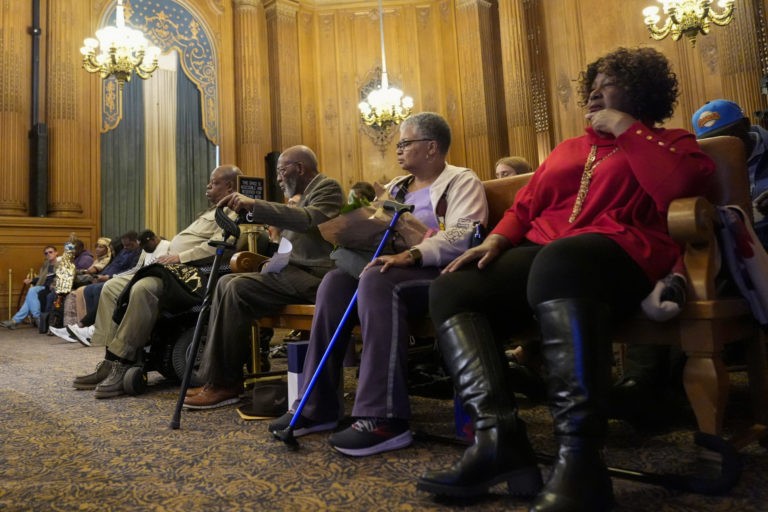
(Headline USA) Supervisors in San Francisco formally apologized Tuesday to African Americans and their descendants for the city’s role in perpetuating racism and discrimination, with several claiming that it was just the start of reparations for black residents and not the end.

However, despite the virtue-signaling, the city, which has been hit hard by its recent policy failures, was forced to cut funding in December for its once-touted Office of Reparations  due to a budget shortfall.

Moreover, after the ludicrous proposals of a task force last year designed to consider the appropriate measures for the far-left city—in a state where slavery was never legally practiced—polls revealed that a majority of Californians opposed the idea of reparations altogether.

Indeed, Tuesday’s resolution appeared to be more of a face-saving measure to show that the earlier overtures were not entirely disingenuous, despite the lack of financial restitution for circumstances that the city’s current black residents likely never experienced firsthand.

The resolution listed several perceived grievances the city had committed against blacks, such as property redlining, the razing of the historically black Fillmore neighborhood in the name of urban renewal, and intentional policies and practices by the city that robbed black residents of opportunities to build generational wealth.

Black people, for example, make up 38% of San Francisco’s homeless population despite being less than 6% of the general population, according to a 2022 federal count. There are about 46,000 black residents in San Francisco.

The vote was unanimous, with all 11 board members signed on as sponsors.

“This historic resolution apologizes on behalf of San Francisco to the African–American community and their descendants for decades of systemic and structural discrimination, targeted acts of violence, atrocities,” said Supervisor Shamann Walton, “as well as committing to the rectification and redress of past policies and misdeeds.”

Supervisor Dean Preston, who represents the Fillmore neighborhood, said that some of the leaders backing the apology still wanted to build “unaffordable housing for mostly wealthy, white people” on public land.

San Francisco joined another far-left U.S. city, Boston, in issuing an apology. Nine states have formally apologized for slavery, according to the resolution.

“We have much more work to do but this apology most certainly is an important step,” said Walton, the only black member of the board and chief proponent of the resolution.

It was the first reparations recommendation of more than 100 proposals made by a city committee to win approval. The African American Reparations Advisory Committee also proposed that every eligible black adult receive a $5 million lump-sum cash payment and a guaranteed income of nearly $100,000 a year to remedy San Francisco’s deep racial wealth gap.

But there has been no action on those and other proposals, and some supervisors Tuesday took a dig at public-safety measures on next Tuesday’s city ballot that they bizarrely claimed would harm black residents, insinuating that the black community at large—not individual bad actors—was responsible for the wave of violent crime that has caused residents, businesses and tourists to flee en masse.

Preston referenced two measures backed by Mayor London Breed, who is black, including one to screen welfare recipients for drug addiction and another to give more powers to the police department.

“People want an apology,” he said. “But they also want a commitment not to repeat harms.”

The mayor has said she believes reparations should be handled at the national level, and facing a budget crunch, her administration eliminated $4 million for the proposed reparations office in cuts this year.

In 2020, California became the first state in the nation to create a task force on reparations. The state committee, which dissolved in 2023, also offered numerous policy recommendations, including methodologies to calculate cash payments to descendants of enslaved people.

But reparations bills introduced by the California Legislative Black Caucus this year also left out financial redress—with one key exception being proposals to compensate people whose land the government seized through eminent domain.

Reparations advocates urged San Francisco to move faster in adopting changes made by the city reparations committee, including policies to improve education, employment and housing options for black people.

Cheryl Thornton, a city employee who is black, said that an apology alone did little to address current problems, such as shorter lifespans for black people.

“That’s why reparations is important in health care,” she said. “And it’s just because of the lack of healthy food, the lack of access to medical care and the lack of access to quality education.”

Adapted from reporting by the Associated Press