Pro-Hamas Rioters Show Up Again Like a Bad Penny, in Major Swing States

(Headline USA) While many radical jihadists in the Middle Easts mourned the loss of Iranian President Ebrahim Raisi, fondly remembered by his fundamentalist fans as the “Butcher of Tehran,” activists on college campuses in the United States had little time to catch up on world events due to a busy weekend of protests subsidized by the likes of George Soros and communist China. 

Questions remained as to the end objective of the movement, considering many videos have shown that participants themselves don’t have a strong grasp of what they are protesting and what the specific demands are.

But the strategic location of some of the remaining encampments—in key battleground states such as Pennsylvania and Georgia—may provide a clue as to how they will evolve over the course of the summer months.

The riots hearkened back to the 2020 “summer of love” in deep-blue cities like Seattle and Portland, during which Antifa-affiliated insurrectionists regularly attacked federal buildings and even occupied public territory, as would an invading army, for weeks on end.

Rioters set up a new encampment at Drexel University in Philadelphia over the weekend, prompting a lockdown of school buildings, a day after authorities thwarted an attempted occupation of a school building at the neighboring University of Pennsylvania campus.

Up to 60 protesters were at the encampment on the campus’s Korman Quad Sunday, Drexel President John Fry said in a statement, adding that the university was speaking with rioters—most of whom he said were not affiliated with the school—in an effort to end the standoff.

“This demonstration already has proved intolerably disruptive to normal University operations and has raised serious concerns about the conduct of some participants, including distressing reports and images of protesters subjecting passersby to anti-Semitic speech, signs and chants,” Fry said, declaring that “this encampment must end.”

He said the school was communicating with local officials and Philadelphia police to ensure campus safety “and the continued operations of our academic and research endeavors.”

The encampment at Drexel, which has about 22,000 students, was set up after several hundred rioters marched from Philadelphia’s City Hall to west Philadelphia on Saturday. About a dozen tents remained Sunday, blocked off by barricades and monitored by police officers. No arrests were reported. University buildings were open only to those with clearance from security officers.

On Friday night, members of Penn Students Against the Occupation of Palestine had announced an action at the University of Pennsylvania’s Fisher–Bennett Hall, urging supporters to bring “flags, pots, pans, noise-makers, megaphones” and other items.

The university said campus police, supported by city police, removed the activists Friday night, arresting 19 people, including six University of Pennsylvania students. The university’s division of public safety said officials found “lock-picking tools and homemade metal shields,” and exit doors secured with zip ties and barbed wire, windows covered with newspaper and cardboard and entrances blocked.

Authorities said seven people arrested would face felony charges, including one accused of having assaulted an officer, while a dozen were issued citations for failing to disperse and follow police commands.

The attempted occupation of the building came a week after city and campus police broke up a two-week encampment on the campus, arresting 33 people, nine of whom were students and two dozen of whom had “no Penn affiliation,” according to university officials.

On Sunday, dozens of George Washington University graduates walked out of commencement ceremonies, disrupting university President Ellen Granberg’s speech, in protest over the ongoing siege of Gaza and last week’s clearing of an on-campus protest encampment that involved police use of pepper spray and dozens of arrests.

The ceremony, at the base of the Washington Monument, started peacefully with fewer than 100 protesters demonstrating across the street in front of the Museum of African American History and Culture.

But as Granberg began speaking, at least 70 students among the graduates started chanting and raising signs and Palestinian flags. The students then noisily walked out as Granberg spoke, crossing the street to a rapturous response from the protesters.

Students and others have set up tent encampments on campuses around the country to protest the Israel–Hamas war, pressing colleges to cut financial ties with Israel. Tensions over the war have been high on campuses since the fall, but demonstrations spread quickly following an April 18 police crackdown on an encampment at Columbia University.

The escalation is likely part of a coordinated operation to increase pressure as Israel winds down its warfare, with the activists transitioning from a protest over the Middle East to one that focuses on fomenting discord and anarchy in America leading up to the November election.

That may mean the organizers use another catalyzing “crisis” event to reignite tensions, as happened in 2020 with the death of George Floyd over the Memorial Day weekend.

Nearly 3,000 people have been arrested on U.S. campuses over the past month. As summer break approaches, there have been fewer new arrests and campuses have been calmer. Still, colleges have been vigilant for disruptions to commencement ceremonies.

President Joe Biden told the graduating class at Morehouse College on Sunday—which included some students wearing keffiyeh scarves around their shoulders on top of their black graduation robes—that he heard their voices of protest and that scenes from the conflict in Gaza have been heartbreaking.

He said given what he called a “humanitarian crisis” there, he had called for “an immediate cease-fire” and return of hostages taken by Hamas.

Many of the graduating students, however, turned their backs on the president and dismissed his used of their graduation ceremony for political pandering.

Adapted from reporting by the Associated Press
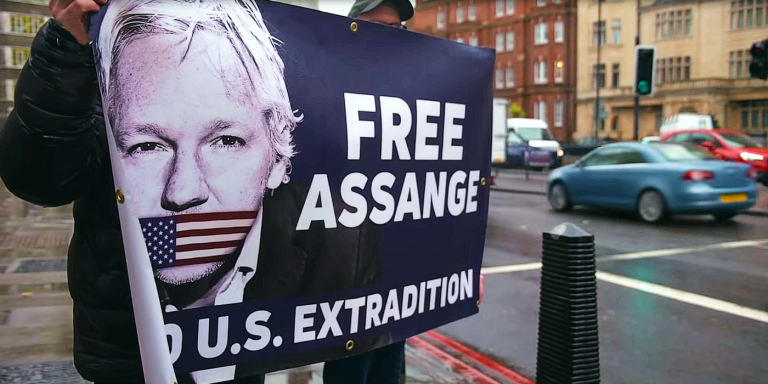
WikiLeaks’s Assange Wins Right to Appeal against US Extradition

(Headline USA)  WikiLeaks founder Julian Assange can appeal an extradition order to the United States on espionage charges, a London court ruled Monday — a decision likely to further drag out an already long legal saga.

High Court judges Victoria Sharp and Jeremy Johnson ruled for Assange after his lawyers argued that the U.S. government provided “blatantly inadequate” assurances that he would have the same free speech protections as an American citizen if extradited from Britain.

Assange, 52, has been indicted on 17 espionage charges and one charge of computer misuse over his website’s publication of a trove of classified U.S. documents almost 15 years ago.

Hundreds of supporters cheered and applauded outside court as news of the ruling reached them from inside the Royal Courts of Justice.

Assange’s wife, Stella, said the U.S. had tried to put “lipstick on a pig — but the judges did not buy it.” She said the U.S. should “read the situation” and drop the case.

“As a family we are relieved but how long can this go on?” she said. “This case is shameful and it is taking an enormous toll on Julian.”

The Australian computer expert has spent the last five years in a British high-security prison after taking refuge in the Ecuadorian Embassy in London for seven years. Assange was not in court to hear the ruling because of health reasons, his lawyer said.

American prosecutors allege that Assange encouraged and helped U.S. Army intelligence analyst Chelsea Manning to steal diplomatic cables and military files that WikiLeaks published.

Assange’s lawyers have argued he was a journalist who exposed U.S. military wrongdoing in Iraq and Afghanistan. Sending him to the U.S., they said, would expose him to a politically motivated prosecution and risk a “flagrant denial of justice.”

The U.S. government says Assange’s actions went way beyond those of a journalist gathering information, amounting to an attempt to solicit, steal and indiscriminately publish classified government documents.

The brief ruling from the bench followed arguments over Assange’s claim that by releasing the confidential documents he was essentially a publisher and due the free press protections guaranteed by the First Amendment of the U.S. Constitution.

The hearing was a follow-up to a provisional ruling in March that said he could take his case to the Court of Appeal unless the U.S. guaranteed he would not face the death penalty if extradited and would have the same free speech protections as a U.S. citizen.

The U.S. provided those assurances but Assange’s lawyers only accepted that he would not face the prospect of capital punishment.

They said the assurance that Assange could “raise and seek to rely upon” the First Amendment fell short of the protections he deserved. Further, they argued that the prosecutor refused to say he would not challenge Assange’s right to use such a defense.

“The real issue is whether an adequate assurance has been provided to remove the real risk identified by the court,” Fitzgerald said. “It is submitted that no adequate assurance has been made.”

Attorney James Lewis, representing the U.S., said Assange would be “entitled to the full panoply of due process trial rights” but said some of his conduct was “simply unprotected” by the First Amendment.

“No one, neither U.S. citizens nor foreign citizens, are entitled to rely on the First Amendment in relation to publication of illegally obtained national defense information giving the names of innocent sources, to their grave and imminent risk of harm,” Lewis said.

The court ruled that Assange could appeal on two grounds, both of which were related to the free press issue.

The judges said if he was deprived of a First Amendment defense then his extradition could be incompatible with the European Convention on Human Rights, which also provides free speech and media protections. Secondly, if he can’t rely on the First Amendment because he’s not a U.S. citizen then he could be treated unfairly because of his nationality.

Assange’s lawyers say he could face up to 175 years in prison if convicted, though American authorities have said any sentence would likely be much shorter.

Assange’s family and supporters say his physical and mental health have suffered during more than a decade of legal battles, which includes seven years spent inside the Ecuadorian Embassy in London from 2012 until 2019. He has spent the past five years in a British high-security prison.

Commuters emerging from a Tube stop near the courthouse couldn’t miss a large sign bearing Assange’s photo and the words, “Publishing is not a crime. War crimes are.”

Scores of supporters gathered outside the neo-Gothic Royal Courts of Justice chanting “Free Julian Assange” and “Press freedom, Assange freedom.” Some held white flags aimed at President Joe Biden, exhorting: “Let him go Joe.”

Biden said last month that he was considering a request from Australia to drop the case and let Assange return to his home country.

Officials provided no other details but Assange’s wife said it was “a good sign” and Australian Prime Minister Anthony Albanese said the comment was encouraging.

Assange’s U.S. lawyer, Barry Pollack, said the ruling was “a significant milestone” in the long-running case.

“I hope that the United States will take a hard look at this decision and maybe reconsider whether they should be pursing this fundamentally flawed prosecution,” he said.

Adapted from reporting by the Associated Press
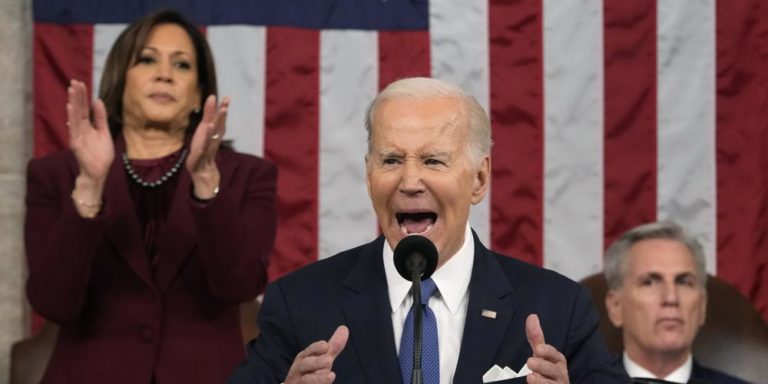
Biden Faces Pressure for Drug Test Prior to Debating Trump

(Luis Cornelio, Headline USA) Will President Joe Biden use any performance-enhancing substances to prepare for the CNN presidential debates on June 27? Many Republicans are demanding answers. 

On Sunday, Reps. Anna Paulina Luna, R-Fla., and Byron Donalds, R-Fla., called for Biden to be drug-tested before debating Donald Trump, echoing calls from the former president himself. 

The calls stem from the arguments that Biden was drugged to speak eloquently during the State of the Union address. 

In an interview with Fox News host Maria Bartiromo, Donalds said he “absolutely” agreed with Rep. Greg Murphy’s, R-N.C., claim that Biden was “jacked up” during the State of the Union address.

“You could tell that when Joe Biden comes in, he’s jacked up, and as the hour goes by, he slowly winds down,” Donalds added. 

He stressed the importance of drug testing before the debates.  

“The American people need to understand if they’re giving him some injection, so that he can actually look like coherent and he’s with us,” he said. “The American people need to understand what is the true mental capacity of Joe Biden.” 

Luna concurred with Donalds’ comments and added, “We’re talking about someone who has the ability to launch nukes.” 

The Florida lawmaker also emphasized Rep. Jeff Van Drew’s, R-N.J., remarks about the need to obtain audio recordings of Special Counsel Robert Hur’s interview with Biden to verify Hur’s decision to avoid pressing charges. 

“The reason we’re fighting so hard to hear these audio recordings of the president during his interview is we need to insure that this individual is essentially capable of not just leading this country, but he can make those tough decisions,” Luna said. “And, frankly, I’m not trying to be funny here, we don’t necessarily trust he can do that right now.”

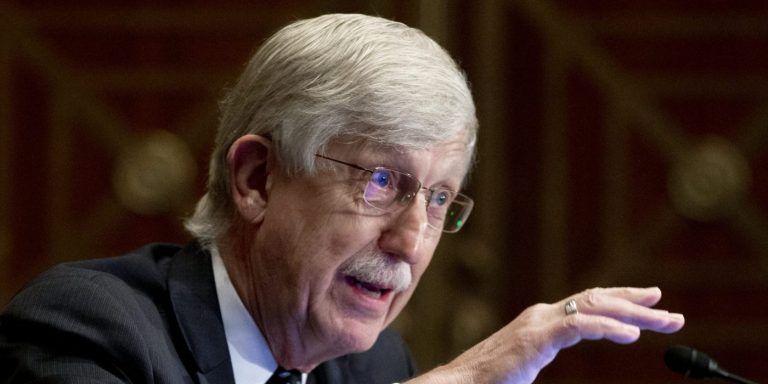
Former NIH Director Admits No Science Behind Social Distancing

(Matthew Doarnberger, Headline USA) A transcript released last week by the Select Subcommittee on the Coronavirus Pandemic revealed that scientific evidence was not behind the 6 feet of “social distancing” guideline that was issued by the National Institutes of Health during the COVID-19 pandemic.

Subcommittee chairman Brad Wenstrup, R-Ohio, released the transcript from the testimony of former NIH Director Francis Collins in which GOP lawmakers grilled him over whether there was a scientific basis to support the policy, which forced many businesses and other public facilities to make major accommodations in order to remain open.

Majority Counsel: “Do you recall science or evidence that supported the six-feet distance?”

Dr. Collins: “I do not.”

Majority Counsel: “Is that I do not recall or I do not see any evidence supporting six feet?”

Dr. Collins: “I did not see evidence, but I’m not sure I would have been shown evidence at that point.”

Majority Counsel: “Since then, it has been an awfully large topic. Have you seen any evidence since then supporting six feet?”

Dr. Collins: “No.”

Collins was the boss of former COVID czar Anthony Fauci while he was the director of the National Institute of Allergy and Infectious Diseases. Fauci came to a similar conclusion when he admitted back in January that the 6 feet of social distancing “just sort of appeared.”

The subcommittee then released a memo highlighting the seriousness of the social distancing fallout.

“The six feet of separation recommendation had real life consequences,” it said.

“This guideline made it nearly impossible for schools nationwide to re-open due to the pressure from teachers unions to follow this guideline,” it continued. “In addition, businesses had to adapt at great cost or risk complete closure.”

The consequences of these mandatory enforcements included increased suicide rates, academic struggles, business closures and travel restrictions.

Collins helped lead the U.S. response at the onset of the COVID pandemic as the director of the NIH until his resignation in late 2021. His former deputy, Lawrence Tabak, is expected to testify before the committee on Thursday.

House Judiciary Probing the Abuse of a Jan. 6 Inmate

(Ken Silva, Headline USA) Reps. Jim Jordan, R-Ohio, and Troy Nehls, R-Texas, are seeking answers about the abuse of a Jan. 6 inmate that allegedly took place at the Washington DC Department of Corrections in September 2022.

The alleged incident involved Jan. 6 inmate Ronald Colton McAbee, who’s serving a 70-month prison sentence for allegedly assaulting Capitol Police officers. McAbee admitted to one count of assault last September and pled not guilty to five others—but was convicted by a DC jury anyway last October.

While in pretrial detention, DOC employee Crystal Lancaster allegedly pepper sprayed him for removing his face mask to take medication.

Rep. Nehls began probing the matter in Jan. 2023, when he sent records requests to the DOC, U.S. Marshals, and Metropolitan Police Department for the body camera footage of Lancaster’s encounter with McAbee.

According to Nehls, the government has been stonewalling him.

For instance, the DOC initially told him in February 2023 that it would release the footage “in the consideration of public interest.” However, the DOC later retracted that promise, claiming there had been a “miscommunication” and that the footage would not be disclosed.

Rep. Nehls raised the matter again in February with U.S. Marshals Director Ronald Davis, who said at the time that he’d “commit my team to working with yours to see how we can be responsive to your request.”

However, the Marshals never followed through with that commitment, Nehls and Jordan said Monday in a letter to DOC Director Thomas Faust.

“It has been over 15 months since Rep. Nehls attempted to obtain the relevant footage, and the Committee has serious concerns about the DOC’s continued lack of transparency, obstruction, and unwillingness to work to provide the requested information,” Nehls and Jordan said in their letter.

“The DOC’s repeated attempts to prevent a Member of Congress from obtaining the body camera footage hinders Congress’s ability to conduct oversight and to adequately assess whether the DOC has failed to hold officers accountable for their alleged misconduct,” they said.

Jordan and Nehls demanded the Sept. 5, 2022, body camera footage of Lancaster from the hours of 10:00 a.m. to 1:00 p.m. in the C2B pod. They also demanded all documents and communications from that incident.

Jordan and Nehls asked for that information by May 27, saying they’d “resort to compulsory process if these requests remain outstanding.”

Meanwhile, as McAbee serves out his sentence for assaulting Capitol Police, reporter Julie Kelly revealed Monday that a pro-Palestine demonstrator who punched a female Capitol Police officer in the face was sentenced to a mere 48 hours of community service.

Ken Silva is a staff writer at Headline USA. Follow him at twitter.com/jd_cashless.

End the Fed… and Replace It with What?

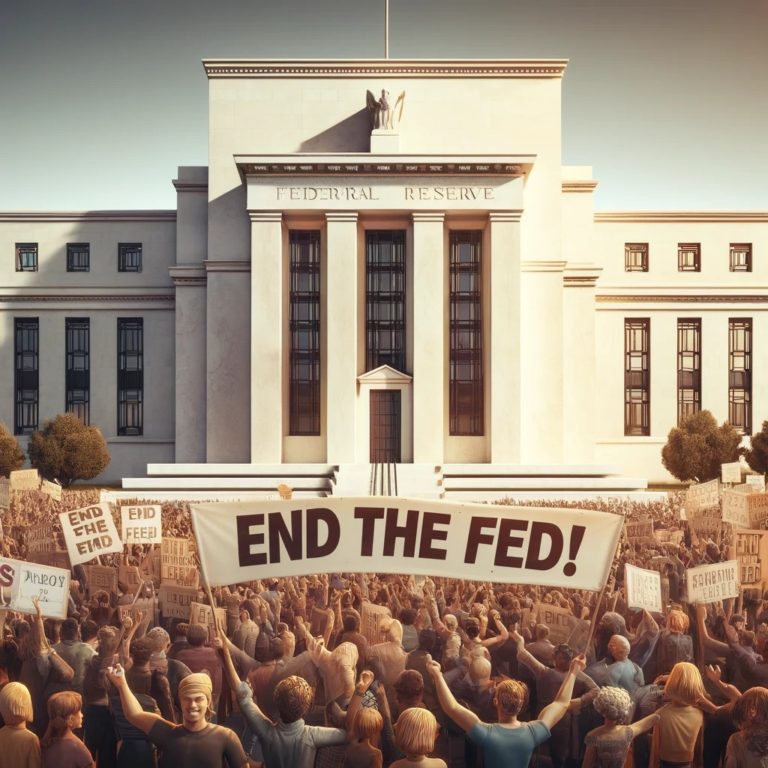
(Stefan Gleason, Money Metals News Service) Last week, Rep. Thomas Massie, R-Ky., introduced the Federal Reserve Board Abolition Act (HR 8421). The bill would do exactly as its title suggests: abolish the Fed.

“Americans would be better off if the Federal Reserve did not exist,” Massie said. “The Fed devalues our currency by monetizing the debt, causing inflation.”

Massie’s bill directs the Fed to transfer its assets to the U.S. Treasury Department and thereafter cease operations.

Left unstated in the legislation is how (or whether) the Treasury Department would assume the role of managing the nation’s currency.

That’s a big issue.

Some far-left members of Congress also want to transfer control over monetary policy away from the Federal Reserve. They want to control it directly themselves.

Proponents of so-called Modern Monetary Theory want the government to be able to create limitless quantities of U.S. dollars out of thin air in order to pay for any and all spending Congress authorizes – thus bypassing the need to issue bonds and sell them to the Fed.

Handing Congress the power to inflate the currency supply at will is an obvious recipe for disaster, given the legislative body’s propensity to spend recklessly and rack up intractable budget deficits in the process.

Sound money advocates believe that if the government is going to be in charge of issuing a legal tender national currency, then that currency should be backed by – or better yet, actually comprised of – something with real value.

Our nation’s Founders provided a blueprint for sound money by defining dollars in terms of a specific quantity of gold and silver.

Ending the Fed is a necessary step toward restoring sound money. But any monetary system based on unbacked, irredeemable fiat currency – whether controlled by bankers or by politicians – is inherently unsound.


Stefan Gleason is CEO of Money Metals Exchange, the company recently named “Best Overall Online Precious Metals Dealer” by Investopedia. A graduate of the University of Florida, Gleason is a seasoned business leader, investor, political strategist, and grassroots activist. Gleason has frequently appeared on national television networks such as CNN, FoxNews, and CNBC and in hundreds of publications such as the Wall Street Journal, TheStreet, and Seeking Alpha.

No Prison for Leftist Who Punched Female Capitol Police Officer

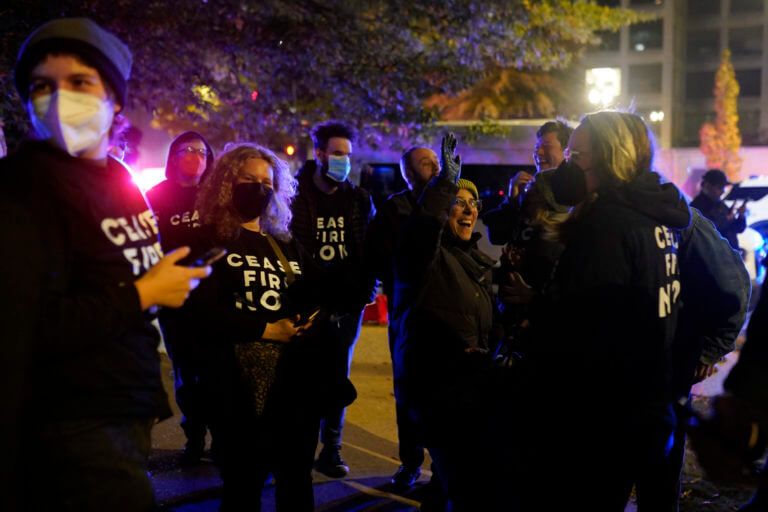
(Ken Silva, Headline USA) Last November, some 200 Palestine supporters gathered in front of the Democratic National Committee headquarters to protest the party’s support for Israel.

What ensued was not peaceful.

According to Capitol Police, the group moved dumpsters in front of the exits, pepper sprayed officers and attempted to pick up a bike rack. During the chaos, 24-year-old Ruben Arthur Camacho of Woodridge, NY, allegedly slammed a female officer into a garage door and then punched her in the face.

Camacho initially claimed self-defense, but later pled guilty.

Hundreds of protestors from the Jan. 6, 2021, Capitol Hill uprising have been sent to prison for non-violent crimes. But Camacho was given a mere 48 hours of community service in a deferred sentencing agreement in December, as revealed by reporter Julie Kelly on Monday.

“Camacho was not charged in federal court. He was charged in DC (local) Superior Court by DC US Attorney Matthew Graves, the same Biden appointed prosecutor continuing to arrest and charge J6ers with assault on federal officers. Camacho did not have to face Judge Beryl Howell or Judge Tim Kelly or Judge Royce Lamberth in the DC federal courthouse,” Kelly wrote on Twitter.

“Camacho was not denied release from jail pending trial or plea; he was not condemned as an ‘insurrectionist’ or ‘domestic terrorist’ by federal prosecutors. No, because Camacho participated in a protest sanctioned and funded by Democrats, he got a slap on the wrist.”

Kelly said the treatment of Camacho demonstrates what Graves’s office told her a few weeks ago: the Justice Department will treat pro-Palestine protests with kid gloves.

“No harsh coverage at NBC News or WashPo or CNN about how a Democratic Party activist punched a female cop in the face. Ryan Samsel did far less than that to Ofc,” she added.

“Caroline Edwards but he was incarcerated for 3 years denied release awaiting his trial. Nope, Camacho only has to perform 48 hours of community service in DC then his case goes bye bye.”

Ken Silva is a staff writer at Headline USA. Follow him at twitter.com/jd_cashless.

SIGNED INTO LAW: Alabama Abolishes Income Taxes on Gold and Silver

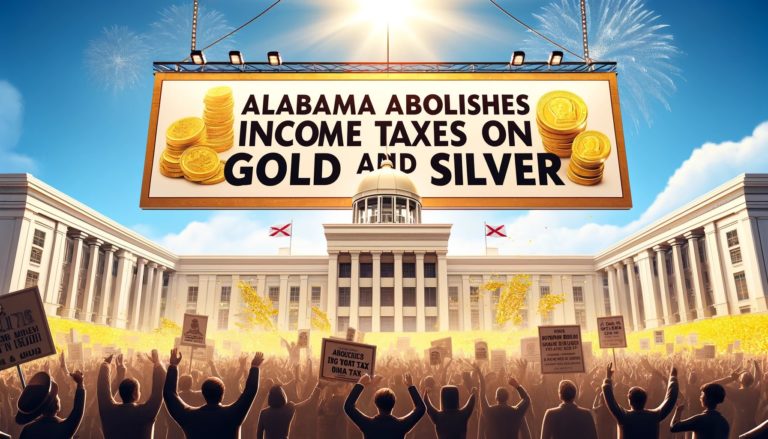
(Money Metals News Service) On May 14, 2024, Alabama Governor Kay Ivey signed a bill that removes all income taxes on capital gains from the sale of gold and silver, enabling the state to take an important step forward in reinforcing sound money principles.

With this move, Alabama joins a growing number of states prioritizing the protection of citizens against the deleterious effects of inflation, currency debasement, and mounting federal debt.

Enactment of Senate Bill 297 makes Alabama the 13th state in the nation that does not impose capital gains taxes on sales of gold and silver.

Under the new law’s provisions, any profits or losses arising from the sale of precious metals, as reported on federal tax returns, will be excluded from the calculation of an Alabama taxpayer’s adjusted gross income (AGI). This measure effectively shields individuals from punitive taxation on transactions involving constitutional forms of currency.

Championed by Senator Tim Melson and Representative Jamie Kiel and backed by the Sound Money Defense League and Money Metals Exchange, SB 297 received bipartisan backing in the Alabama Legislature, reflecting widespread recognition of the importance of sound money principles at a time of blistering inflation.

Presenting before the Senate Finance and Taxation Education Committee, Sen. Melson emphasized the historical significance of gold and silver as constitutionally recognized forms of currency.

Melson stated, “Gold and silver have served as pillars of economic stability throughout history and are even mentioned by name in the U.S. Constitution. By eliminating taxes on transactions involving these precious metals, we affirm our commitment to upholding the principles of sound money and protecting the savings of our constituents.”

It is widely known that “gains” realized from sales of precious metals don’t reflect genuine value appreciation, but rather reflect the continual depreciation of the U.S. Dollar. Despite this reality, the Internal Revenue Service takes the position that federal income taxes should be paid on such transactions. And most states find themselves taking this position by default.

Jp Cortez, executive director of the Sound Money Defense League, stressed the importance of Alabama’s proactive stance in the face of inflationary pressures. He remarked, “Inflation erodes the purchasing power of individuals’ savings and undermines economic and social stability. Alabama’s decision to opt-out of this taxation scheme makes it the 13th state in the country to end this tax, with increasingly more states to follow.”

Nebraska passed their own version of this bill earlier this year. Arizona, Arkansas, and Utah approved similar measures in recent years. And Iowa, Georgia, Oklahoma, Missouri, and Kansas also considered income tax exemptions in 2024, with several approving the bill across multiple committees and chambers. 

Alabama joins Utah, Wisconsin, Nebraska, and Kentucky as states to have enacted pro-sound money legislation into law so far in 2024.

Additionally, U.S. Congressman Alex Mooney (R-WV) re-introduced the Monetary Metals Tax Neutrality Act last week to eliminate the federal capital gains tax on all gold and silver coins and bullion.

Alabama’s current ranking of 28th in the 2024 Sound Money Index is expected to rise, having passed other sound money bills in the last several years.

Sullivan Met w/ Saudi Aradia for ‘Semi-Final’ Security Deal as Iran Mourns President

(Headline USA) The shocking loss of Iranian President Ebrahim Raisi sent ripples through the Middle East after his helicopter crash-landed in heavy fog, killing the leader, whose body was finally retrieved Monday after a lengthy overnight search.

Speculation quickly turned to whether the attack may have been provoked, following recent tensions between Iran and Israel.

The latter recently used its Iron Dome technology to fend off a barrage of Iranian missile attacks, for which it warned there may be future retaliation.

While there was no direct evidence linking Israel’s Mossad intelligence forces to the helicopter crash, there was sure to be a growing amount of speculation about the possibility of it as the picture comes into clearer focus.

Headline USA cannot verify the authenticity of the tweet below, claiming to show the Iranian president’s helicopter being shot out of the sky, but is sharing it as an example of what already has begun to surface online.

The fiery rubble of the copter meant that many of the bodies of those aboard could not even be identified.

Meanwhile, it happened as one of the top American foreign policy officials was in the Middle East for talks with the country considered most often to be on the other end of the spectrum in Muslim politics.

While Iran has the greatest distribution of Shia Muslims, Saudi Arabia is the leading Sunni power, meaning that it is likely to play a key role in any power vacuum that will emerge.

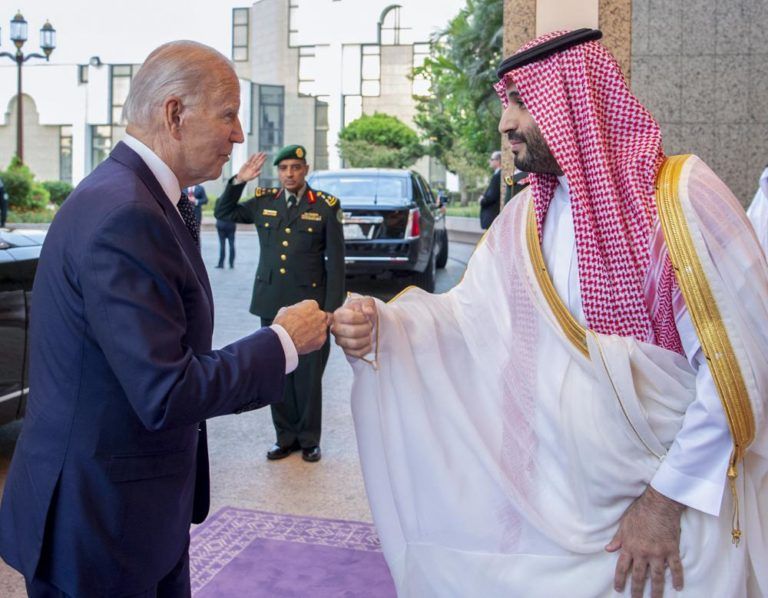
National security adviser Jake Sullivan met early Sunday with Saudi Arabia’s Crown Prince Mohammed bin Salman to discuss what the kingdom described as the “semi-final” version of a wide-ranging security agreement between the countries.

While the Trump administration had succeeded in making a similar deal that gave Saudi Arabia heavier influence in the region, even resulting in numerous peace accords with Israel, President Joe Biden quickly alienated the Saudi crown prince by suggesting that he should be held accountable for the shocking death of journalist Jamal Khashoggi.

Relations since then have been tense, at best, and the Saudis have signaled an openness recently with the China- and Russia-aligned BRICS alliance, despite Iran’s presence in it.

The announcement by the state-run Saudi Press Agency comes as the strategic deal had been upended after Hamas’s Oct. 7 attack on Israel that killed 1,200 people and saw 250 others taken hostage back to the Gaza Strip.

In the time since, a punishing Israeli airstrike campaign and ground offensive there has killed over 35,000 Palestinians, endangering the security deal that had included Saudi Arabia diplomatically recognizing Israel for the first time since its founding in 1948.

Saudi state media released no images of Sullivan and Prince Mohammed meeting in Dhahran, a city in the kingdom’s far east that’s home to its state-run oil giant, the Saudi Arabian Oil Co. known as Saudi Aramco.

“The semi-final version of the draft strategic agreements between the kingdom and the United States of America, which are almost being finalized—and what is being worked on between the two sides in the Palestinian issue to find a credible path — were discussed,” the statement released after the talks said.

That included “a two-state solution that meets the aspirations and legitimate rights of the Palestinian people” and “the situation in Gaza and the need to stop the war there and facilitate the entry of humanitarian aid,” the statement added.

Saudi Arabia has long called for an independent Palestinian state to be created along Israel’s 1967 borders, with east Jerusalem as its capital.

However, that likely may be untenable for Israeli Prime Minister Benjamin Netanyahu, with Israel having resolved after the shocking Oct. 7 attack that it could not peacefully coexist with any sort of government overseen by Hamas.

The White House issued a statement early Monday after Sullivan traveled to Israel and met with Netanyahu, saying the Saudi talks “focused on a comprehensive vision for an integrated Middle East region.”

The statement did not elaborate, other than to call the talks “constructive.”

Saudi Arabia has long relied—like other Gulf Arab nations—on the U.S. to be the security guarantor for the wider Middle East as tensions over Iran’s nuclear program in recent years have spilled over into a series of attacks.

The proposal now being discussed likely would deepen that, and also reportedly includes access to advanced weapons and possibly trade deals as well.

Saudi Arabia has also pushed for nuclear cooperation in the deal that includes America allowing it to enrich uranium in the kingdom—something that worries nonproliferation experts, as spinning centrifuges opens the door to a possible weapons program.

Prince Mohammed has said the kingdom would pursue a nuclear weapon if Iran had one. Iran in recent weeks has increasingly threatened it could do so.

Iran’s mission to the United Nations in New York meanwhile confirmed that Tehran held indirect talks with U.S. officials in Oman last week. Iran’s state-run IRNA news agency quoted the mission as describing the talks as “an ongoing process.”

“The negotiations have not been the first and will not be the last of their kind,” the mission said, according to IRNA.

Oman, a sultanate on the eastern edge of the Arabian Peninsula, has been the site of U.S.–Iran talks in the past, including under Biden despite the tensions between the two nations.

Adapted from reporting by the Associated Press
Brien Lundin Unpacks Gold and Silver Trends Amid Inflation Concerns

(Money Metals News Service) On the latest episode of the Money Metals Exchange podcast, host Mike Maharrey sat down with Brien Lundin, the editor of Gold Newsletter and CEO of the New Orleans Investment Conference. The discussion was timely, recorded on the day the April Consumer Price Index (CPI) data was released, showing a slight decrease in inflation. Here are the key takeaways from their conversation.

(Interview Begins Around 4:18 Mark)

Inflation and Federal Reserve Actions

The interview opened with a discussion on the latest CPI data, which showed a 0.1% cooler month-to-month inflation than expected. Despite the positive news, Lundin expressed skepticism about the Federal Reserve’s ability to achieve its 2% inflation target. He believes inflation will settle between 3% and 4%, making it difficult for the Fed to declare victory over inflation.

Lundin highlighted the alarming cost of servicing the federal debt, which has surpassed $1 trillion annually, second only to Social Security in the federal budget. This cost is expected to rise further as Treasury debt resets at higher interest rates. Even if the Fed were to cut rates significantly, the federal debt costs would continue to increase due to the current high interest rates.

“The Fed is searching for an excuse to cut rates, and I think they got one today,” Lundin said, pointing out that the markets were celebrating, with gold prices rising by about $30 an ounce.

Gold Market Dynamics

Lundin delved into the factors driving the recent gold price rally, which saw prices fluctuating between $2,300 and $2,400 an ounce. He attributed the rally primarily to central bank buying, notably by the People’s Bank of China, and increased domestic demand in China due to a struggling real estate market and stock market.

Speculative demand on the COMEX and Shanghai Futures Exchange also contributed to the rally, while the GLD gold ETF saw decreased demand. Lundin emphasized an undercurrent of buying driven by concerns over debt loads and interest rates, suggesting that large portfolios are shifting towards safe havens like gold.

Interest Rates and Economic Outlook

The conversation then shifted to the broader economic outlook. Lundin compared the current high-interest rate environment to the prelude of the 2008 financial crisis, suggesting that something significant is likely to break under the pressure of elevated rates.

He noted that the Fed’s historical pattern of rescuing the economy with rate cuts and easier money is likely to continue, leading to much higher gold prices when the Fed eventually pivots to rate cuts.

Silver Market Insights

Lundin’s views on silver were particularly insightful. Unlike many analysts, he downplayed the importance of industrial demand, focusing instead on silver’s monetary history. He argued that silver has consistently outperformed gold during bull markets and expects this trend to continue.

“Silver is the poor man’s gold,” Lundin explained, noting that it offers leverage and is more accessible for the average investor. He also mentioned that junior silver stocks provide additional leverage opportunities.

Mining Stocks Performance

Addressing the performance of mining stocks, Lundin noted that while gold mining stocks have technically outperformed gold, they haven’t met investor expectations. He attributed this to the dramatic and sudden price rise in gold, which left investors cautious and waiting for a more favorable entry point.

Lundin observed that the recent stabilization in gold prices has attracted generalist investors, leading to significant gains in stocks like Newmont Mining.

New Orleans Investment Conference

Looking ahead, Lundin provided a preview of the upcoming New Orleans Investment Conference, which will be held from November 20-23, 2024. Celebrating its 50th anniversary, the conference promises to be a landmark event with a stellar lineup of speakers, including James Grant, Doug Casey, Brent Johnson, Danielle DiMartino Booth, and many others.

“We’re in the process of building what we think is going to be the most value-packed speaker roster that we’ve ever had,” Lundin said, emphasizing the unique opportunities for attendees to engage with top experts and explore investment prospects in the mining sector.

Key Questions and Answers:

Do you think the Fed has actually slayed the inflation dragon?

Brien Lundin does not believe the Fed has conquered inflation. He predicts it will settle between 3% and 4%, making it difficult to reach the 2% target. Lundin highlights the rising cost of servicing federal debt, which is over $1 trillion annually, second only to Social Security in the federal budget. Even with significant rate cuts, federal debt costs are expected to increase. He suggests the Fed is looking for an excuse to cut rates, with the recent CPI data potentially supporting that move.

What drove the recent gold price rally?

Lundin attributes the recent gold price rally to central bank buying, particularly by the People’s Bank of China, and increased domestic demand in China due to a struggling real estate market and stock market. Speculative demand on the COMEX and Shanghai Futures Exchange also contributed, while the GLD gold ETF saw decreased demand. He emphasizes an undercurrent of buying driven by concerns over debt loads and interest rates.

Do you think something breaking in the economy is inevitable with current interest rates?

Lundin believes that the high interest rates will eventually cause significant economic disruptions. He compares the current situation to the prelude of the 2008 financial crisis, suggesting that something significant is likely to break under the pressure of elevated rates. He expects the Fed to continue its pattern of rescuing the economy with rate cuts and easier money, leading to much higher gold prices when the Fed eventually pivots to rate cuts.

What is your fundamental case for silver?

Lundin focuses on silver’s monetary history rather than industrial demand. He argues that silver has consistently outperformed gold during bull markets and expects this trend to continue. Silver is seen as the “poor man’s gold” and offers leverage, making it more accessible for the average investor. Junior silver stocks provide additional leverage opportunities.

Why have gold mining stocks lagged despite the rally in gold prices?

Lundin explains that while gold mining stocks have technically outperformed gold, they haven’t met expectations due to the dramatic and sudden price rise in gold, which left investors cautious and waiting for a more favorable entry point. Recent stabilization in gold prices has attracted generalist investors, leading to significant gains in stocks like Newmont Mining.

What can we expect from the upcoming New Orleans Investment Conference?

The New Orleans Investment Conference, celebrating its 50th anniversary from November 20-23, 2024, will feature a stellar lineup of speakers, including James Grant, Doug Casey, Brent Johnson, Danielle DiMartino Booth, and many others. The conference promises unique opportunities for attendees to engage with top experts and explore investment prospects in the mining sector.

Conclusion

The interview concluded with Maharrey expressing appreciation for Lundin’s insights and contributions to Money Metals. Lundin’s analysis of the current economic landscape, coupled with his expertise in the precious metals market, provided listeners with valuable perspectives on navigating the complex financial environment.

For more information on Brien Lundin’s work, listeners can visit Gold Newsletter and New Orleans Investment Conference. Follow Brien Lundin on X (Twitter) at @Brien_Lundin for more updates and insights.