“Anything going on today?” she said with a smile while she was at the podium at the Vital Voices Global Leadership Awards in Washington DC, shortly after the jury reached its verdict in Trump’s porn actress trial, the Daily Mailreported.
As expected, the far-left audience immediately responded with applause and laughter.
“Well, I have to tell you, there’s nowhere I’d rather be than right here,” Clinton added.
Additionally, Clinton made fun of Trump in one of her latest posts on Instagram, in which she shared a picture of some merch with the slogan “turns out she was right about everything.” One of the examples of that merchandise was a white mug that depicted a cartoon of Clinton sipping some beverage.
“We recently had some new merch made based on a phrase I hear a lot. The design happened to be finalized today,” Clinton wrote in the post.
The $22 ceramic cup was advertised by Clinton as “a pretty great mug to sip tea from,” adding that proceeds from its sale would go towards “defending democracy” through her non-profit organization Onward Together which she founded after losing the 2016 election to Trump.
Trump has also been pushing his merch, with fundraising efforts going into overdrive after his guilty verdict was delivered yesterday.
Additionally, it was revealed by Trump’s aides after the verdict came through that an immediate rush of contributions was so intense that WinRed, the platform the campaign uses for fundraising, crashed.
The Trump campaign also began selling black “Make America Great Again” caps to reflect a “dark day in history.”
“I’m a very innocent man and it’s okay. I’m fighting for our country. I’m fighting for our Constitution. Our whole country is being rigged right now. This was done by the Biden administration in order to wound or hurt an opponent, a political opponent. I think it’s just a disgrace. We’ll keep fighting, we’ll fight to the end and we’ll win,” Trump said yesterday outside of the courthouse after the verdict was delivered.
(Headline USA) The Venezuelan national accused of killing a nursing student whose body was found on the University of Georgia campus pleaded not guilty Friday to murder and other charges in her death.
A grand jury in early May returned an indictment charging Jose Ibarra, 26, with murder, aggravated assault, kidnapping and other crimes in the February killing of Laken Hope Riley.
The 10-count indictment accuses Ibarra of hitting the 22-year-old Augusta University College of Nursing student in the head, asphyxiating her and pulling up her clothing with the intent to rape her.
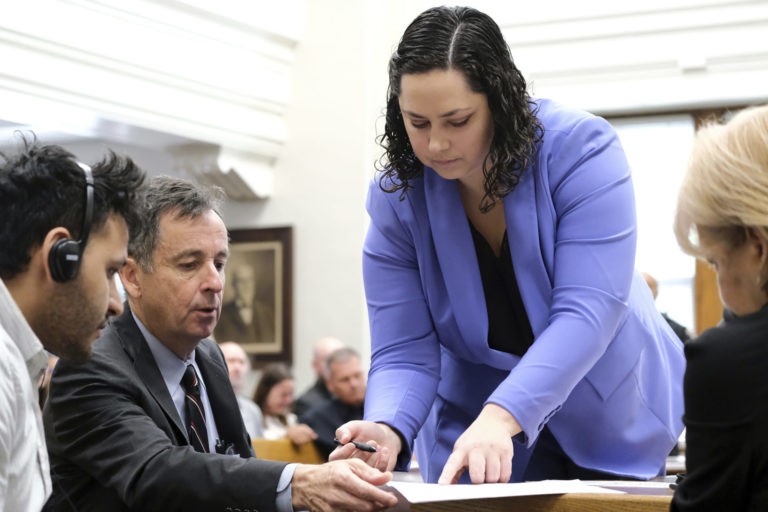
Ibarra, dressed in a button-front shirt and dark slacks, was shackled and wearing a translation headset as he appeared in court alongside his lawyers, public defenders John Donnelly and Kaitlyn Beck. Several of Riley’s family members were present for the hearing.
Athens–Clarke County Superior Court Judge H. Patrick Haggard said he hoped to hold a trial in the fall. That would likely put the case at the forefront of debate at the same time as voters are going to the polls in the November presidential election.
Outrage and alarm over the brutal murder, and over President Joe Biden’s open borders policy in general, have played well for presumptive GOP nominee Donald Trump.
Meanwhile, Biden’s son Hunter will also go to trial in the fall on charges of tax fraud, leading to a potential double-whammy for the president, who ironically had counted on a series of lawfare attacks derailing his Republican rival.
The killing immediately became a flashpoint in the national debate over immigration because Ibarra entered the U.S. illegally in 2022 and was allowed to stay to pursue his immigration case. He previously was released from detention while living in New York City.
Riley’s death gave traction to a Georgia bill requiring jailers to check the immigration status of people in their custody and to apply to help enforce federal immigration laws.
When he signed the bill, Georgia Gov. Brian Kemp, a Republican, said it “became one of our top priorities following the senseless death of Laken Riley at the hands of someone in this country illegally who had already been arrested even after crossing the border.”
Riley’s body was found Feb. 22 near running trails after a friend told police she had not returned from a morning run, and police have said her killing appeared to be a random attack. Ibarra was arrested the next day and has been held in the Athens–Clarke County Jail without bond since then.
The indictment charges Ibarra with one count of malice murder, three counts of felony murder and one count each of kidnapping, aggravated assault, aggravated battery, hindering an emergency telephone call, tampering with evidence and peeping Tom.
The indictment says Ibarra concealed a jacket and gloves, leading to the evidence tampering charge. It also says that on the day of Riley’s killing, Ibarra had peered into the window of an apartment in a university housing building, invading the privacy of a person whose name was redacted, which is the basis for the peeping Tom charge.
(Ken Silva, Headline USA) Not even “boobs” could outpace “donate to Trump” after the 2024 presidential frontrunner was convicted on highly politicized fraud charges Thursday, according to a Google Analytics screenshot shared online.
“Donate to Trump” reached an all-time high in interest after a New York jury announced its verdict against Trump on Thursday—convicting him on all 34 counts after deliberating for 9.5 hours, following a roughly four-week trial marred in controversy.
Donations to Trump were felt through more than internet searches. According to CNBC, Trump’s campaign said it raised $34.8 million from small-dollar donors in less than seven hours.
Shares of Trump Media & Technology Group also reacted wildly to the news of the guilty verdict.
After rising more than 2% at the opening of trading Friday, the shares ended the day down 5.3%.
The stock has tripled this year, in the process frequently making double-digit percentage moves either higher or lower on a single day. It peaked at nearly $80 in intraday trading on March 26. For context, the S&P 500 is up almost 10% year to date.
Trump was charged with 34 counts of falsifying business records at his company in connection with an alleged scheme to hide potentially embarrassing stories about him during his 2016 Republican presidential election campaign.
The trial featured more than four weeks of occasionally riveting testimony. Trump himself did not testify, but jurors heard his voice through a secret recording of a conversation with his former lawyer, the disgraced Michael Cohen, in which they discussed a $150,000 payment involving Playboy model Stormy Daniels.
Cohen, the star prosecution witness who pleaded guilty in 2018 to federal charges related to the payments, also testified—committing perjury in the process, according to his own former attorney, Robert Costello.
Costello accused Cohen of perjury at a congressional hearing the day after his former client testified.
However, Manhattan District Attorney Alvin Bragg’s reliance on a witness with such a checkered past — he was disbarred, went to prison and separately pleaded guilty to lying about a Moscow real estate project on Trump’s behalf — apparently didn’t hurt them with the jury, which found Trump guilty on all counts.
“This is far from over,” Trump said outside the courthouse following the guilty verdict.
(Ken Silva, Headline USA) Over the last three-plus years, the public has been used to getting updates from J6 inmates via their social media accounts.
Infowars host Owen Shroyer was once such example of a J6 inmate getting out urgent updates to the public via social media. When he was sent to solitary confinement and the public lost touch with him, for example, his family updated the public on his status by Twitter.
UPDATE: Owen will remain in solitary confinement until 11/28 at the earliest. At that time his normal privileges will be reinstated. For now he is only able to communicate via mail. Despite 23 hours a day of lockdown, he remains in good spirits.
Countless other inmates, including political prisoners, also get messages from the inside to the public via their families posting on social media.
But the Bureau of Prisons is looking to put a stop to that.
In a proposed rule published on Feb. 2, the BOP proposed a series of changes to “inmate discipline regulations”—including one that would ban “accessing, using, or maintaining social media, or directing others to establish or maintain social media accounts on the inmate’s behalf.”
If enacted, violating the new federal code would be considered a “High Severity Level” incident, which could punish inmates with solitary confinement, damage to parole eligibility, or fines.
House Republicans have been silent on the proposal, which would affect some of their most loyal and rabid constituents—the inmates from the Jan. 6, 2021, Capitol Hill uprising. But civil liberties groups have voiced disagreement.
“Of course, the technology of social media is new, but the importance of allowing those behind bars to participate in public discourse is not,” said a letter authored by civil liberties attorneys, as reported by The Appeal.
“Dr. Martin Luther King Jr. authored his famous ‘Letter from Birmingham Jail’ on scraps of paper while imprisoned and gave those scraps to his attorneys to compile and circulate on the outside.”
Award-winning writer Christopher Blackwell, who’s serving a 45-year prison sentence for taking another human’s life during a drug robbery, reportedly said the proposal sounded “extremely far-reaching”.
“The First Amendment right (doesn’t) come with strings, and it’s one of the only rights prisoners still retain when they become incarcerated,” Blackwell told Context.News.
“So any attack on stripping down or boxing off how those rights are used and protected – we can’t allow that as Americans.”
According to The Appeal, the open comment period for the BOP’s proposed rule change ended some two months ago. Now, the agency will likely now proceed with developing a final rule and submitting it to the federal register, The Appeal reported.
(Headline USA) Monogrammed towels. A toothbrush holder for four, rather than three. Shared bedding.
For people putting a life back together after divorce, mundane household objects can be painful marital reminders.
Also difficult can be the absence of items that departed with the ex-spouse.
That’s one reason why the latest cottage industry to emerge centers around divorce registries.
Specialty sites like Fresh Starts are becoming part of a growing trend toward breaking the stigma of broken marriages, along with divorce parties and formal divorce announcements akin to wedding and marriage news.
The fad comes courtesty of the AWFULs—affluent, white feminist urban liberals (or some variation thereof)—the same electorate that was largely responsible for Joe Biden’s 2020 election and other recent election cycles that have given Democrats a devastating political winning streak on the strength of single-issue and low-information voters who value intuition over logic and fact.
This is a powerfully charged exchange regarding the terror that a red hat brings forth. pic.twitter.com/QSzhI85VF4
Where divorce was once a rare and private occurrence, the mondern neo-feminist movement now has convinced many women to pursue their independence and seek their escape from oppressive marriages, much the way it has pushed abortion as the “choice” for liberated liberals who view labels like “wife,”“mother” and “homemaker” with the same sheepish stigma once reserved for “divorcée.”
Today’s exes are not only celebrating the sometimes acrimonious uncoupling, but finding novel ways to inflict it on family and friends in their extended social circles. No longer is it simply a matter of emotional support, but an occasion for gift-giving.
With millennials and latter generations often criticized for fostering an overnurtured sense of entitlement and self-worth, undoubtedly fueled and exacerbated by the presence of social-media platforms on which they grew up broadcasting the minutiae of their lives, some may call it the latest inevitable sign of the times.
Still, the shifting paradigm may lead to some uncomfortable intergenerational clashes when it comes to differing views of etiquette.
FROM SEPARATION TO INSPIRATION
Jenny Dreizen, left, and Olivia Dreizen Howell / PHOTO: Terrie Howard via AP
Olivia Howell knows all too well how it felt, going through her own divorce in 2019 after eight years of marriage and two kids. Her husband decamped with his stuff and she donated other items that triggered unwelcome emotions to a thrift shop.
“What was left in the house was almost nothing,” she said.
Howell then got busy replenishing, and trying to make the experience better for others through Fresh Starts.
The gift registry, specifically for rebuilding after divorce, is also packed with vetted experts if needed and other resources.
Howell built Fresh Starts from the ground up with her sister, Jenny Dreizen, who found herself in a similar situation after the end of a long-term relationship.
Nearly three years after launch, it remains a rare support resource offering divorce-specific registries for those starting over, and for loved ones who may struggle to find the right words and ways to reach out.
“I thought, you know, I had a baby registry and I had a wedding registry. This is when I actually need things to restock my life. I need the community support. I need new towels. I need new sheets, I need new utensils,” the 39-year-old Howell said.
Today, Fresh Starts has between 50,000 and 70,000 monthly visitors. The sisters also host a podcast, “A Fresh Story,” featuring guests discussing how they began again after divorce or navigated other huge life changes.
TURNING PITY INTO A PARTY
Erin Eloise Tulberg, a yoga teacher, actor and dancer in Brooklyn, has not yet finalized her divorce as she works out custody arrangements for her 9-year-old son. She started using Fresh Starts last summer at the suggestion of a friend.
“There was an immediate need for me to get my own apartment. I was moving into a place with absolutely nothing. I had no furniture. I had no kitchenware. I had my clothes and my books,” said Tulberg, 37.
The situation, she said, was “kind of scary.” Originally from Washington state, her closest family and friends are scattered around the country.
“It was a great way to have my friends rally behind me,” Tulberg said of her registry.
Flowers, bottles of wine, and a pile of “I’m sorrys” or “congratulations,” depending, are often how divorce news plays out. Those looking to support their friends or relatives don’t often think about the need for a lamp or new sheets, Howell said.
They may also not understand the emotional impact that simple objects can take on. New household goods at a time of rupture and despair can draw community closer and become totems, a rebirth of sorts, said Leslie Jamison, a Brooklyn novelist and essayist whose latest book, “Splinters,” is a personal exploration of her own divorce.
“Part of it is a kind of faith and hope and trust that a new version of one’s life, household, family not only is possible but can be filled with beauty,” she said.
Howell, among the first of her friends to get divorced, had loved ones who checked in daily to make sure she was eating and sleeping. They sent Mother’s Day gifts after her separation just ahead of the holiday. And they reassured her with standing offers to assist in any way.
But there was a lot they didn’t immediately understand.
“Every time I would go into the bathroom, I would feel horrible because I would see a toothbrush holder for a life that I thought I was going to have. It made me feel so much shame and guilt, and all of those other feelings that come with divorce,” Howell said.
One day, her sister showed up with a new one just for three.
“I still get emotional talking about it because it was really like, OK, this is happening. I’m going to be OK,” Howell said.
For Tulberg, it was matching beds for her and her son. They share a studio apartment.
“Suddenly, I had things from all of my friends that are real and tangible and not ephemeral,” she said. “I look at my plates and I know exactly who they’re from. My friends say it feels good to be able to give something solid and real to us.”
SUPPORT WITHOUT JUDGMENT?
Many retail registries can be set up for a multitude of purposes, including divorce.
Fresh Starts uses Amazon. It suggests bundles of items ranging from $99 to $500. Among the bedroom, kitchen, home office and bathroom essentials are a shower curtain, a can opener, a bedside clock, a humidifier.
The site also groups bundles by room, including child-size hangers and a night light that projects the stars for a young one’s space.
Recipients can go the bundle route when choosing what to list, or they can pluck specific items from them. They can also select anything else on Amazon.
Getting to the emotional place that allows someone newly separated to reach out for this kind of tangible help isn’t always easy.
“It’s about meeting people where they are,” Howell said.
Divorce talk can be awkward. Fresh Starts offers text prompts covering how to introduce a registry to loved ones, along with suggestions for what friends and relatives can say.
Howell doesn’t describe divorce registries as “gift registries” but rather “support registries.” Some of her users create registries for other reasons, too.
Not everyone is on board with the idea. Howell hears from a lot of haters.
“There are some people that are very against it because they feel like divorce shouldn’t be celebrated. We’re saying that divorce is a brave decision and that you should be honored for that brave decision and supported,” she said.
Angela Ashurst–McGee, 52, finalized her divorce in March after six kids and 32 years of marriage. She and her husband took turns choosing what they wanted in their 3,000-square-foot house about an hour south of Salt Lake City. She, too, heard about registries from a friend.
“So it was like, I want the sofa in the living room, I want the sofa in the sunroom, I want the hedge trimmer. I want the drill, you know, down to the waffle maker,” she said. “Just on a practical level, I needed to replace various things. And also, I felt like this is a big life event that I think we should kind of rally around and celebrate.”
One of her sisters set up her registry on Amazon, without using Fresh Starts. Ashurst–McGee chose a few just-for-fun things among her essentials, including twinkle lights for her backyard patio.
“Everybody who reached out said, I think this is a great idea, or I’ve suggested this to some other people I know. It’s hard to know what to do for somebody who’s getting divorced other than saying, you know, bummer. So it was kind of something concrete that people could do,” she said.
Concrete, she said, and positive.
“I think one fear people have is in regards to taking sides,” she said. “And this is something you can do without taking sides. It’s forward-looking. It’s not denigrating the other person. It’s not blaming anyone. It’s just practical support.”
(Money Metals News Service) In a recent episode of the Money Metals Exchange podcast, host Mike Maharrey interviewed economist Dr. Peter St. Onge.
The two discuss St. Onge’s early success and subsequent financial loss during the dot-com boom, the recurring nature of economic cycles, and the pervasive impact of Federal Reserve policies on inflation and income inequality.
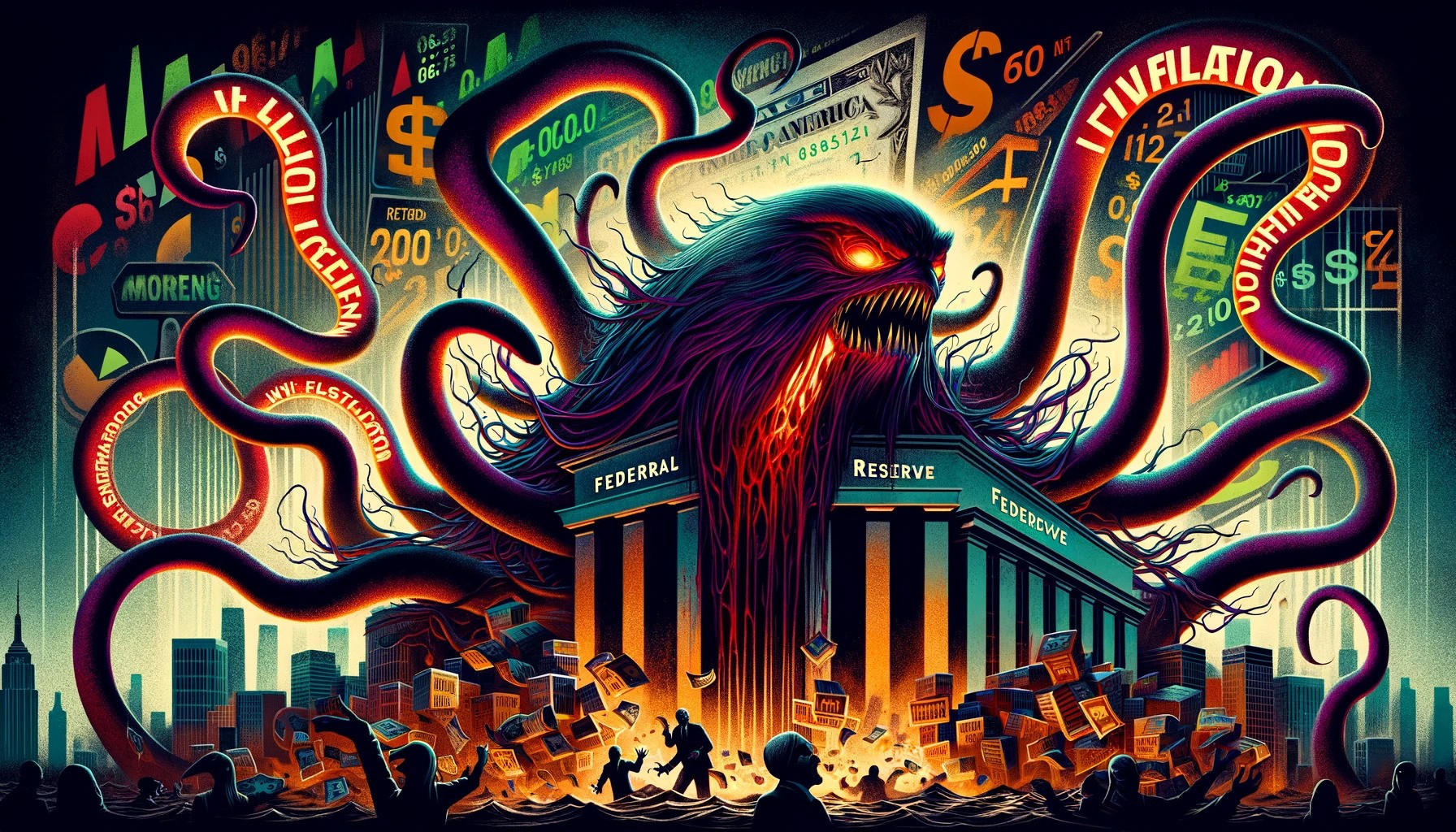
Dr. St. Onge criticized the Fed’s role as an “inflation factory” and highlighted the Cantillon effects that benefit the wealthy and government at the expense of the middle class and fixed-income earners. He emphasized the importance of free speech in economic discourse and expressed concern over the weakening US dollar due to recent geopolitical actions.
Despite these challenges, Dr. St. Onge remains optimistic about America’s economic resilience, citing the entrepreneurial spirit and potential for rapid recovery if government interference is reduced.
Dr. St. Onge shared an intriguing story of how he retired at 25 during the dot-com boom of the 1990s. Inspired by an interview with Paul Krugman, he invested all his money in internet stocks, despite initial skepticism from others. His investments eventually paid off, making him a millionaire by the age of 25. He spent the next two years traveling the world, but when the dot-com bubble burst, he lost much of his wealth. This experience led him back to academia, where he later earned his PhD.
Historical Economic Cycles
Drawing parallels between the dot-com boom and other historical economic cycles, Dr. St. Onge noted that similar patterns have repeated throughout history. He cited examples such as the 1830s railroad boom in Britain and compared the internet’s impact to that of Gutenberg’s Press. He emphasized that while economic booms and busts are common, the long-term effects often lead to significant societal changes.
Inflation and the Federal Reserve
The conversation shifted to current economic issues, particularly inflation. Dr. St. Onge criticized the Federal Reserve, describing it as an “inflation factory.” He pointed out that from 1800 to 1900, prices in the US fell by 50%, but since the establishment of the Federal Reserve, the dollar has lost 97% of its value. He argued that the Fed’s 2% inflation target is a marketing strategy rather than an economically justified figure, allowing the Fed to take as much as it can without drawing too much public attention.
During the COVID-19 pandemic, the Fed printed $7 trillion, increasing the money supply by about 50%. This led to a significant rise in inflation, which Dr. St. Onge likened to the 1970s inflation crisis. He warned that inflation is making a comeback, potentially leading to a prolonged period of economic hardship similar to the 1970s.
Economic Disparities and Cantillon Effects
Dr. St. Onge discussed the Cantillon effects, where the first recipients of newly created money benefit the most while those at the end of the chain suffer. He highlighted that the Federal Reserve’s policies primarily benefit the wealthy and the government, exacerbating income inequality. He criticized the misconception that inflation is harmless because wages also rise, pointing out that the benefits are unevenly distributed.
Free Speech and Economic Freedom
Emphasizing the importance of free speech, Dr. St. Onge argued that it is crucial for addressing economic issues. He warned that censorship, particularly in academia, undermines the credibility of scientific research. He mentioned examples of scientists being ostracized for challenging mainstream views on climate change and other topics. Without open debate, he argued, true scientific progress is impossible.
The Future of the US Dollar
Dr. St. Onge expressed concern about the future of the US dollar. He noted that the US government’s decision to seize Russia’s central bank assets during the Ukraine conflict has made other countries wary of holding dollars. This has led to a diversification away from the dollar, with the dollar’s share of global reserves falling from 58% to 49% in a few years. He argued that this trend, coupled with the US government’s spending and regulatory policies, could weaken the dollar’s dominance.
Optimism for the Future
Despite these challenges, Dr. St. Onge remains optimistic about the future. He believes that the American people’s entrepreneurial spirit and resilience will prevail. He cited the rapid economic growth during the early years of the Trump administration as evidence that the US economy can rebound quickly when government interference is reduced. He concluded that while the path may be difficult, the US has the potential to overcome its current challenges and thrive.
Conclusion
Dr. Peter St. Onge’s insights provide a thought-provoking analysis of historical and current economic trends. His perspectives on inflation, the Federal Reserve, and the future of the US dollar highlight the complexities of the global economy. Despite the challenges, his optimism for America’s future offers a hopeful outlook in an uncertain world.
For more of Dr. St. Onge’s work, you can follow him on Twitter @profstonge or visit his website atwww.ProfStOnge.com.
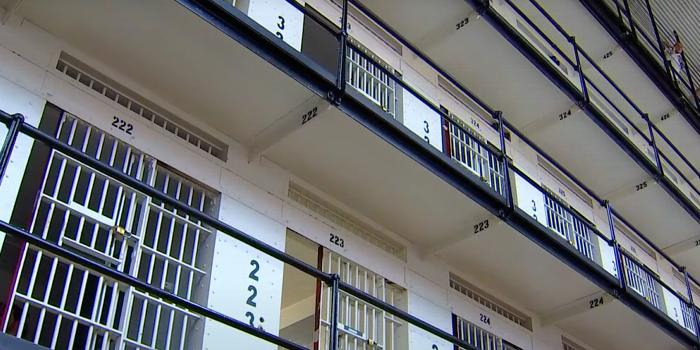
And while the criminals may be doing the hard time, it is the guards enduring the cruel and unusual punishment after being required by prison policy to strip search individuals who have transitioned from men to women, according to a report from the National Review.
“Incarcerated individuals who are transgender, non-binary, or intersex must be searched according to the gender designation of the institution where they are housed or based on the individual’s search preference,” says the California Institution for Men policy adopted in 2021.
Previously, female prison officers were not allowed to strip-search naked male inmates except in emergency circumstances. Under the policy, individuals at men’s prisons who have transitioned to women can request that they only be strip-searched by women.
In the report, the National Review interviewed two female prison guards, one who was traumatized from being required to search the genitals of a transgender inmate, and another who was disciplined before the 2021 policy for searching a male inmate suspected by her colleague of having contraband.
Paula James, a recently retired corrections officer who served for 22 years, cried over the phone as she shared her traumatization at being forced to conduct an intimate search, saying, “I didn’t feel comfortable about it, but I had to do my job … I had been taught all that time that I wasn’t supposed to do that.”
Another female officer, who spoke anonymously for fear of retribution, recalled “highest possible level of disciplinary action from her superiors” for searching a male inmate.
“Back in 2017, it was two male inmates, but now here we are seven years later, and they want me, if I’m given a direct order, I must strip out that trans inmate,” the officer said. “What’s the difference from when I stripped out that male inmate to now? It’s still a man.”
Under Senate Bill 132 by notorious state Sen. Scott Wiener, D-San Francisco, prisons must use prisoner’s requested pronouns, house prisoners in gendered facilities based on prisoners’ requests, and search prisoners with officers of the gender requested by prisoners. Gov. Gavin Newsom signed the bill into law in late 2020.
California has been required to provide transgender inmates with gender surgeries since 2015, when a court ordered the state’s correctional system to provide “adequate medical care, including sex reassignment surgery … as promptly as possible.”
(Ken Silva, Headline USA) The Government Accountability Office released a report Thursday on the roughly $176 billion the U.S. has provided to Ukraine since Russia’s invasion, revealing that about $23 billion has gone towards funding Ukraine’s civilian government, including its border security.
Along with the rockets, tanks, bombs, guns, ammo and other equipment, the Biden administration has given billions to fund its teachers, first responders, healthcare workers and bureaucrats—as well as “border security agencies,” according to the GAO.
GAO released a report on Ukraine spending yesterday, revealing that the aid has funded the country's border patrol agencies pic.twitter.com/KJUiLqBXSx
“About $22.9 billion was dedicated for direct budget support for the government of Ukraine … the Ukrainian government and citizens are the ultimate beneficiaries of this assistance,” the report said.
“Agency documents report that these funds have been used to reimburse the Ukrainian government for authorized expenses with the goal of benefiting teachers and first responders, vulnerable and displaced individuals, helping Ukrainians survive the winter, and more.”
Adding insult to injury for those who’d rather see the Ukraine aid spent on U.S. border security, some $3.1 billion has been obligated to helping Ukrainian refugees settling in the U.S., the GAO report also revealed. That $3.1 billion apparently helped provide up to 12 months of cash and medical assistance for up to 100,000 Ukrainian nationals, according to the GAO, which explained that many of the refugees have “settled in high cost of living areas.”
Some of the Ukraine funds even went to assisting humanitarian responses in other parts of the world, including in Africa and the Middle East, the report said.
Additionally, the State Department reportedly allocated $80 million in Ukraine aid to enhance Taiwan’s maritime domain awareness.
If all that weren’t enough, some of the aid is funding propaganda to convince Americans to spend more on Ukraine.
According to the GAO, $14 million went to U.S.-sponsored media outlets such as Voice of America and Radio Free Europe/Radio Liberty.
“Radio Free Europe/Radio Liberty developed new journalism programs for internally displaced people and Ukrainian refugee populations,” the report said.
“Some of the VOA and Radio Free Europe/Radio Liberty activities are designed to provide an alternative to the Russian narrative on the situation in Ukraine.”
The report only covers the money spent through Dec. 31, and thus doesn’t include the most recent round of $65 billion in aid pushed through by House Speaker Mike Johnson and his cronies.
(Jacob Bruns, Headline USA) Colorado announced that it would begin using drones for law enforcement in many cases rather than police officers, the Denver Postreported.
Sgt. Jeremiah Gates, who oversees the drone unit at the Arapahoe County Sheriff’s Office, said police officers who resisted drone usage would find themselves on the wrong side of history.
“This really is the future of law enforcement at some point, whether we like it or not,” he said.
Gates also suggested that drones would help municipalities around the state save money and time. Giving the example of inspecting a car parked in an illegal parking spot, he said that a drone could simply be sent to investigate.
“I could fly the drone over and say, ‘Hey, that vehicle is not out of place,’ and I never had to send an officer over to bother them and I can clear it with that,” he said. “It’s saving resources.”
But not everybody is in support of drone usage.
Laura Moraff, a staff attorney with the American Civil Liberties Union of Colorado, signaled that the leftist legal group may step in to try to stop the usage of drones because such technologies might interfere with their protests and activism.
“We’re worried about what it would mean if drones were really just all over the skies in Colorado,” Moraff noted.
“We are worried about what that would mean for First Amendment activities, for speech and organizing and protesting—because being surveilled by law enforcement, including by drones, can change the way people speak and protest.”
Moraff also suggested that the drones might be racist.
“We know there is a problem with people reporting black people doing normal everyday things as if there is something suspicious going on,” she said, adding that the newfound efficiency that the technology afforded to local law enforcement would likely lead to “over-policing of communities of color.”
Leaving Moraff’s concerns about racism aside, there is some reason to believe that the addition of drones will aid the surveillance state.
Phil Gonshak, director of the department’s Strategic Initiatives Bureau disturbingly boasted that drones may also eventually take the place of first responders altogether.
“The long-term scope of what we are trying to do is drones as first responders,” he said. “Basically, having stations on top of each one of our districts so we can respond with drones to critical needs or emergencies that arise throughout the city.”
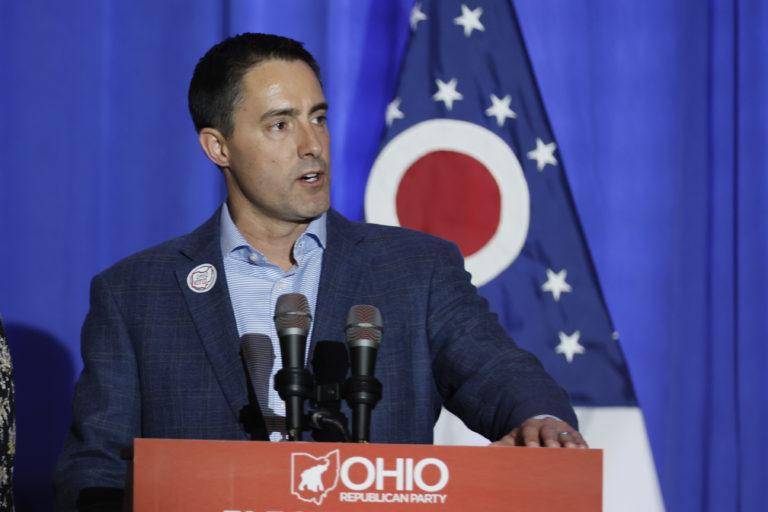
(J.D. Davidson, The Center Square) Six Ohio counties will get a unique look at issues flagged with registered voters, which Secretary of State Frank LaRose hopes will increase the accuracy of state voting records.
Election boards in Clermont, Franklin, Gallia, Lake, Lucas, and Warren counties will get access to a special digital dashboard that is expected to help officials identify discrepancies in voter rolls that need further review.
“We have a duty under the law to maintain accurate voter rolls, and that requires constant vigilance,” LaRose said.
“Hundreds of times every day, a registered voter dies, moves, changes a name or cancels a registration,” he continued. “We also have records that for many years have been manually entered into the system from a hand-written form. That process can sometimes lead to human error, and this program will help our county elections officials more effectively clear up these issues.”
LaRose spokesman Ben Kindel told the Center Square the dashboard is another tool local officials will use during regular list maintenance processes, which happen daily and weekly. Before the dashboard was created, local boards managed their systems.
Kindel also said most voter registration errors come when officials mistakenly hit the wrong keyboard stroke when updating forms or improper transcriptions from hand-filled registration forms.
“These errors accumulate over time, and many aren’t resolved until they are caught up in Ohio’s six-year supplemental process,” Kindel said.
The pilot program gives the six counties access to dashboards that show the number of registration records flagged for potential errors, such as illegal characters in name fields, placeholder birth dates, unreasonably high ages and improper birth/registration date combinations.
Counties will also see a clear summary of the number of resolved records and the average resolution time.
“You must have accurate voter rolls to conduct elections,” said Brian Sleeth, past president of the Ohio Association of Election Officials and director of the Warren County Board of Elections. “We support Secretary LaRose’s effort to help the counties do this important voter list maintenance work, and we look forward to making the pilot program a success that can be rolled out statewide.”