Report: Patriot Front Provided Info to FBI about Leftist Infiltrator

(Ken Silva, Headline USA) The New Yorker published an exposé on the white nationalist group Patriot Front on Sunday, rehashing the group’s history, as well as that of the larger American radical right-wing movement.

Much of the New Yorker’s story has already been reported by Headline USA and other outlets. But along with revealing that a Patriot Front member was involved in the harassment of a North Carolina journalist, the news outlet also reported new information about the group’s relationship with the FBI.

According to the New Yorker, the Patriot Front may have provided information to the FBI about a left-wing Antifa member who infiltrated and doxxed members of the group. That Antifa member posed as a Patriot Front recruit code-named Vincent Washington, but his real name, at least at birth, was David Alan Capito, Jr.

“The exposed Patriot Front members were furious at Vincent [after he doxed the group]. To strike back, they appear to have enlisted an unlikely ally: the F.B.I.,” the New Yorker reported.

“A former friend of his told me about receiving a phone call, in the spring of 2023, from an agent investigating whether Vincent was a dangerous left-wing extremist with access to ghost guns.”

An FBI agent apparently calling about Vincent/Capito was the only information the New Yorker reported about the matter. Lawyers Glen Allen and Jason Lee Van Dyke—who both have represented Patriot Front members in court—didn’t immediately respond to messages seeking comment.

Cooperating with the FBI against Antifa has long been a divisive subject in the radical right.

In 2017, for example, neo-Nazi Andrew “weev” Auernheimer released private messages between him and Chris Cantwell, in which Cantwell admitted to talking to law enforcement.

Cantwell, who was booted from the Free State Project in New Hampshire for calling for violence against federal agents, insisted that he was only talking to law enforcement about Antifa. Nevertheless, Auernheimer deemed Cantwell’s actions “shitty scumbag behavior,” and his fellow Nazis began to attack Cantwell for talking to the feds.

Auernheimer’s disclosures prompted Cantwell to publish a March 24, 2018, article titled, I Am a Federal Informant, where he attempted to explain himself.

Tensions between Cantwell and other neo-Nazis ratcheted from there, and Cantwell was eventually charged with threatening to rape one of the neo-Nazi’s wives.

It turned out, the neo-Nazis were right to be suspicious of Cantwell talking to the feds. Another Nazi in prison accused Cantwell of being an informant, alleging in court documents that Cantwell approached him with an offer on behalf of the U.S. government: Get out of jail early in exchange for becoming an FBI informant-provocateur.

While admitting to informing on Antifa, Cantwell has denied the allegations that he’s snitched on his fellow Nazis. Those allegations are detailed here.

Meanwhile, Patriot Front members are suing Vincent/Capito for doxing them. According to the New Yorker, Capito has since changed his name yet again to Ryan Smith.

Ken Silva is a staff writer at Headline USA. Follow him at twitter.com/jd_cashless.

U.S. Colleges Revise Rules on Free Speech in Hopes of Discouraging Anti-Israel Dissent

(Headline USA) As students return to colleges across the United States, administrators are bracing for a resurgence in activism in support of Hamas, and some schools are adopting rules to limit the kind of protests that swept campuses last spring.

While the summer break provided a respite in student demonstrations against Israel’s War in Gaza, it also gave both student protesters and higher education officials a chance to regroup and strategize for the fall semester.

The stakes remain high. At Columbia University, President Nemat Shafik resigned Wednesday after coming under heavy scrutiny for her handling of the demonstrations at the campus in New York City, where students rioted and vandalized the campus for months.

Some of the new rules imposed by universities include banning encampments, limiting the duration of demonstrations, allowing protests only in designated spaces and restricting campus access to those with university identification. Critics say some of the measures will curtail free speech.

The American Association of University Professors issued a statement Wednesday condemning “overly restrictive policies” that could discourage free expression. Many of the new policies require protesters to register well in advance and strictly limit the locations where gatherings can be held, as well as setting new limits on the use of amplified sound and signage.

“Our colleges and universities should encourage, not suppress, open and vigorous dialogue and debate even on the most deeply held beliefs,” said the statement, adding that many policies were imposed without faculty input.

The University of Pennsylvania has outlined new “temporary guidelines” for student protests that include bans on encampments, overnight demonstrations, and the use of bullhorns and speakers until after 5 p.m. on class days. Penn also requires that posters and banners be removed within two weeks of going up. The university says it remains committed to freedom of speech and lawful assembly.

At Indiana University, protests after 11 p.m. are forbidden under a new “expressive activities policy” that took effect Aug 1. The policy says “camping” and erecting any type of shelter are prohibited on campus, and signs cannot be displayed on university property without prior approval.

The University of South Florida now requires approval for tents, canopies, banners, signs and amplifiers. The school’s “speech, expression and assembly” rules stipulate that no “activity,” including protests or demonstrations, is allowed after 5 p.m. on weekdays or during weekends and not allowed at all during the last two weeks of a semester.

A draft document obtained over the summer by the student newspaper at Harvard University showed the college was considering prohibitions on overnight camping, chalk messages and unapproved signs.

“I think right now we are seeing a resurgence of repression on campuses that we haven’t seen since the late 1960s,” said Risa Lieberwitz, a Cornell University professor of labor and employment law who serves as general counsel for the AAUP.

Universities say they encourage free speech as long as it doesn’t interfere with learning, and they insist they are simply updating existing rules for demonstrations to protect campus safety.

Tensions have run high on college campuses since Oct. 7, when Hamas militants assaulted southern Israel and killed 1,200 people, most of them civilians, and took about 250 hostages.

Many student protesters in the U.S. vow to continue their activism, which has been fueled by Gaza’s rising death toll, which surpassed 40,000 on Thursday, according to the territory’s Health Ministry.

About 50 Columbia students still face discipline over last spring’s demonstrations after a mediation process that began earlier in the summer stalled, according to Mahmoud Khalil, a lead negotiator working on behalf of Columbia student protesters. He blamed the impasse on Columbia administrators.

“The university loves to appear that they’re in dialogue with the students. But these are all fake steps meant to assure the donor community and their political class,” said Khalil, a graduate student at Columbia’s School of International and Public Affairs.

The university did not immediately respond to a request for comment Thursday.

The Ivy League school in upper Manhattan was roiled earlier this year by student demonstrations, culminating in scenes of police officers with zip ties and riot shields storming a building occupied by pro-Hamas rioters.

Similar protests swept college campuses nationwide, with many leading to violent clashes with police and more than 3,000 arrests. Many of the students who were arrested during police crackdowns have had their charges dismissed, but some are still waiting to learn what prosecutors decide. Many have faced fallout in their academic careers, including suspensions, withheld diplomas and other forms of discipline.

Shafik was among the university leaders who were called for questioning before Congress. She was heavily criticized by Republicans who accused her of not doing enough to combat concerns about antisemitism on the Columbia campus.

She announced her resignation in an emailed letter to the university community just weeks before the start of classes on Sept. 3. The university on Monday began restricting campus access to people with Columbia IDs and registered guests, saying it wanted to curb “potential disruptions” as the new semester draws near.

“This period has taken a considerable toll on my family, as it has for others in the community,” Shafik wrote in her letter. “Over the summer, I have been able to reflect and have decided that my moving on at this point would best enable Columbia to traverse the challenges ahead.”

Pro-Palestinian protesters first set up tent encampments on Columbia’s campus during Shafik’s congressional testimony in mid-April, when she denounced antisemitism but faced criticism for how she responded to faculty and students accused of bias.

The school sent in police to clear the tents the following day, only for the students to return and inspire a wave of similar protests at campuses across the country as students called for schools to cut financial ties with Israel and companies supporting the war.

The campus was mostly quiet this summer, but a conservative news outlet in June published images of what it said were text messages exchanged by administrators while attending a May 31 panel discussion titled “Jewish Life on Campus: Past, Present and Future.”

The officials were removed from their posts, with Shafik saying in a July 8 letter to the school community that the messages were unprofessional and “disturbingly touched on ancient antisemitic tropes.”

Other prominent Ivy League leaders have stepped down in recent months, in large part due to their response to the volatile protests on campus.

University of Pennsylvania President Liz Magill resigned in December after less than two years on the job. She faced pressure from donors and criticism over testimony at a congressional hearing where she was unable to say under repeated questioning that calls on campus for the genocide of Jews would violate the school’s conduct policy.

And in January, Harvard University President Claudine Gay resigned amid plagiarism accusations and similar criticism over her testimony before Congress.

Adapted from reporting by the Associated Press

Leftist Talkshow Icon Phil Donahue Dead at 88

(Headline USA) Phil Donahue, whose pioneering daytime talk show launched an indelible television genre that brought success to Oprah Winfrey, Montel Williams, Ellen DeGeneres and many others, has died. He was 88.

NBC’s Today show, citing family members, said Donahue died Sunday after a long illness.

Dubbed “the king of daytime talk,” Donahue was the first to incorporate audience participation in a talk show, typically during a full hour with a single guest.

“Just one guest per show? No band?” he remembered being routinely asked in his 1979 memoir, Donahue, My Own Story.

The format set the Phil Donahue Show apart from other interview shows of the 1960s and made it a trendsetter in daytime television, where it was particularly popular with female audiences.

Later renamed Donahue, the program launched in Dayton, Ohio, in 1967. Donahue’s willingness to explore the hot-button social issues of the day emerged immediately, when he featured atheist Madalyn Murray O’Hair as his first guest. He would later air shows on feminism, homosexuality, consumer protection and civil rights, among hundreds of other topics.

Donahue’s topic selection was not the only place in which his left-wing biases surfaced. In an era when many in the news media put up the pretense of trying to conceal their views, even if those biases came through in their coverage, Donahue was one of the first to openly express his opinions, once again leaving a significant mark on the industry, for better or worse.

Before MSNBC—then owned by General Electric— took a hard leftward turn, “Our producers were instructed to feature two conservatives on for every liberal,” Donahue famously told Bill Moyers in a 2003 interview. “… I was counted as two liberals.”

In May, President Joe Biden awarded a Presidential Medal of Freedom to Donahue, who was cited as a pioneer of the daytime talk show.

Donahue was syndicated in 1970 and ran on national television for the next 26 years, racking up 20 Emmy Awards for the show and for Donahue as host, as well as a Peabody for Donahue in 1980.

The show included radio-style call-ins, which Donahue greeted with his signature, “Is the caller there?”

The show’s last episode aired in 1996 in New York, where Donahue was living with his wife, actress Marlo Thomas. He met Thomas, the That Girl star of the 1960s who was a household name at the time and would later become a regular on Friends, when she appeared on his show in 1977.

He later said it was love at first sight, and they did a poor job of hiding it on the air.

“You are really fascinating,” Donahue told Thomas, grasping her hand. “You are wonderful,” Thomas said back. “You are loving and generous, and you like women and it’s a pleasure, and whoever the woman in your life is, is very lucky.”

The two had been married since 1980. Donahue had five children, four sons and a daughter, from a previous marriage.

Donahue returned briefly to television in 2002, hosting another “Donahue” show on MSNBC. The station canceled it after six months, citing low ratings.

However, Donahue claimed that GE, a major defense contractor, disapproved of having pundits with outspoken anti-war views in the wake of the 9/11 terrorist attacks.

Ironically, many conservatives might now share Donahue’s view on the Bush-era wars in  Iraq and Afghanistan, and on the U.S. role in foreign wars more generally.

However, the radical leftist also had disparaging remarks for former President Donald Trump, calling the populist GOP leader’s election America’s “darkest political moment” during a 2017 appearance with MSNBC’s Joy Reid.

He also spoke out about his view of Trump supporters prior to the 2016 election in an interview with Cleveland.com.

“They’re angry people that we should know more about,” he said.

“I think they feel that they’ve been ignored by the ‘elites’ that they don’t like. And when he comes out and swears and drops the F-bomb and does all these terrible, nonpolitical things, they just think that’s fabulous,” Donahue continued. “I do not believe there are enough of those people—there are a lot of those people who feel that way, but I don’t think they would gamble with their country’s future by electing him president.”

He was born Phillip John Donahue on Dec. 21, 1935, part of a middle-class Irish Catholic family in Cleveland.

Donahue was in the first graduating class of St. Edward High School, a Catholic all-boys preparatory school in the Cleveland suburb of Lakewood, in 1953. He graduated from the University of Notre Dame with a degree in business administration in 1957. He later rebelled against, and left, the church, though he poignantly recalled in his book that “a little piece” of his faith would always be with him.

After a series of early jobs in radio and TV, Donahue was invited to move an earlier radio talk show to Dayton’s WLWD television station in 1967. It moved in 1974 to Chicago, where it stayed for years, then ended its run in New York.

The show featured discussions with spiritual leaders, doctors, homemakers, activists and entertainers or politicians who might be passing through town. A frequent guest was his neighbor, Erma Bombeck, the humorist and syndicated columnist.

He said striking upon the show’s winning formula was a happy accident.

“It may have been a full three years before any of us began to understand that our program was something special,” Donahue wrote. “The show’s style had developed not by genius but by necessity. The familiar talk-show heads were not available to us in Dayton, Ohio. … The result was improvisation.”

That lent a freedom to the show that persisted as it grew to No. 1 status in its class.

With an amiable style and a head of salt-and-pepper hair, Donahue boxed with Muhammed Ali. He played football with Alice Cooper. His guests gave cooking lessons, taught break dancing and, more controversially, described “mansharing,” being a mistress, lesbian motherhood or—with the help of gathered video that got shows banned in certain cities—how natural childbirth, abortion or reverse vasectomies worked.

A stop on Donahue became a must for important politicians, activists, athletes, business leaders and entertainers, from Hubert Humphrey to Ronald Reagan, Gloria Steinem to Anita Bryant, Lee Iacocca to Ray Kroc, John Wayne to Farrah Fawcett.

Outside of his famous talk show, Donahue pursued several other projects.

He partnered with Soviet journalist Vladimir Posner for a groundbreaking television discussion series during the Cold War in the 1980s. The U.S.–Soviet Bridge featured simultaneous broadcasts from the United States and the Soviet Union, where studio audiences could ask questions of one another. Donahue and Posner also co-hosted a weekly issues roundtable, Posner/Donahue, on CNBC in the 1990s.

Donahue also co-directed the 2006 documentary Body of War, which was nominated for an Oscar.

Adapted from reporting by the Associated Press

‘Childless Cat Ladies’ Explained: Vance’s Crusade Against The War on Family

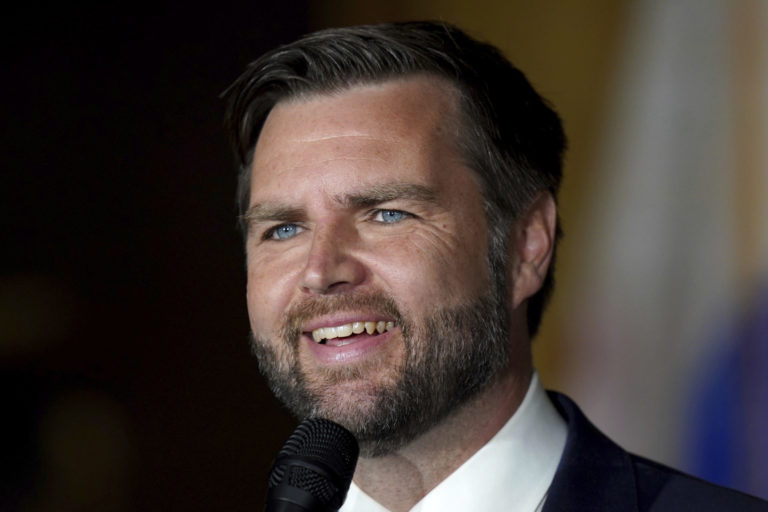
(Headline USA) Five summers ago, Donald Trump’s running mate JD Vance—then a 34-year-old memoirist and father of a 2-year-old boy—took the stage at a conservative conference and tackled an issue that would become a core part of his political brand: the United States’ declining fertility rate.

“Our people aren’t having enough children to replace themselves. That should bother us,” Vance told the gathering in Washington. He outlined the obvious concern that Social Security depends on younger workers’ contributions and then said, “We want babies not just because they are economically useful. We want more babies because children are good. And we believe children are good, because we are not sociopaths.”

Vance repeatedly expressed alarm about declining birth rates as he launched his political career in 2021 with a bid for the U.S. Senate in Ohio. His criticism then of Vice President Kamala Harris, now the Democratic presidential nominee, and other high-profile Democrats as “childless cat ladies” who didn’t have a “direct stake” in the country have drawn particular outrage among that demographic.

The rhetoric could threaten the Republican ticket’s standing with women who could help decide the November election. But it’s delighted those in the pro-natalist movement.

“There’s no question the discussion around family life, childbearing and pronatalism has gotten a lot more popular and gotten media attention because of JD Vance,” said Brad Wilcox, the director of the National Marriage Project at the University of Virginia and author of Get Married. Vance once referred to Wilcox as “one of my favorite researchers.”

An aspiring politician’s fight against the war on family

Vance, who wrote a bestseller about his working-class upbringing, has been clear about making family formation a policy priority. He has suggested ideas such as allowing parents to vote on behalf of their children or following the example of Hungary’s Viktor Orbán of giving low-interest loans to married couples with children and tax exemptions to women with four or more children.

In a May 2021 interview with The Federalist’s podcast in which he said he was exploring a Senate run, Vance described a society without babies and kids as “pretty icky and pretty gross.”

“We owe something to our country. We owe something to our future. The best way to invest in it is to ensure the next generation actually exists,” he said. “I think we have to go to war against the anti-child ideology that exists in our country.”

Vance has suggested that people with children should pay less taxes than those without children. That’s the spirit of the existing child tax credit at $2,000 per qualifying child, which Vance has said he’d love to see raised to $5,000. He has also mentioned in interviews he wants to ban pornography for minors, citing it as one of the causes for why people are marrying less and having fewer children.

His pro-life views, he has said, are separate from his concerns on birth rates, arguing the procedure is not really driving the decline in fertility.

In several interviews, he’s argued policymakers should make it easier for two-parent households to be able to live on a single wage so that one of the parents can stay home with their children.

“The ruling class is obsessed with their jobs. Even though they hate a lot of their jobs, they are obsessed with their credentials and they want strangers to raise their kids,” he told then-Fox News host Tucker Carlson in 2021. “But middle-class Americans, whatever their station in life, they want more time with their children.”

Vance had a chaotic childhood raised mainly by his grandparents in southwestern Ohio and a mother who battled substance abuse, and her “revolving door of father figures” as he described in his book. He is now married to a trial lawyer he met at Yale Law School. The couple has three young children, who he has said attend preschool.

Declining births in an aging America

The U.S. was one of only a few developed countries with a fertility rate that ensured each generation had enough children to replace itself — about 2.1 kids per woman. But the number has been sliding since 2008 and in 2023 dropped to about 1.6, the lowest rate on record.

Earlier this year, Vance cited fertility rates in arguing against American support for Ukraine.

“Not a single country—even the U.S.—within the NATO alliance has birth rates at replacement level. We don’t have enough families and children to continue as a nation, and yet we’re talking about problems 6,000 miles away,” he said.

Vance as well as researchers and experts on the pro-natalist movement also argue that immigrants can’t provide a long-term fix to the decline in birth rates. He has separately blamed immigrants for crime and creating “inter-ethnic conflict.”

Demographers and other experts for years had predicted declining fertility rates would pose challenges for the Social Security system as fewer workers are supporting a growing aging population.

Tech executives such as Tesla CEO Elon Musk and venture capitalist Peter Thiel, who donated millions for Vance’s primary race, have also been vocal about the decline in birth rates.

“We as a nation, as a society, policymakers can’t be neutral on the question of family,” said Oren Cass, who founded a conservative think tank, American Compass, that is closely aligned with the senator.

Cass, a former policy adviser for U.S. Sen. Mitt Romney, said he has known Vance for a decade and partnered on several events but said he was not speaking on behalf of the vice presidential nominee. He criticized how progressives have celebrated what he described as a culture of “you do you” and “all choices are equally valid,” when he considered the work of forming a family and raising children an “indispensable foundation” for the country.

“That’s not to say, obviously, that you mandate or criminalize the alternative, but it is to say that we shouldn’t be neutral about it,” he said.

Vance on the defense

Vance’s views on birth rates have opened him to attacks from the left as Trump’s running mate. Democrats went from labeling Trump and his Republican allies as a collective “threat to democracy” to calling both men “weird,” a strategy that coincided with Vance’s comments coming to light.

Trump has come to his defense, accusing Democrats of spinning things and expressing empathy for people who don’t get married or have children and are “every bit as good.”

“He likes family. I think a lot of people like family. And sometimes it doesn’t work out,” Trump said in one interview. “But you’re just as good, in many cases a lot better than a person that’s in a family situation.”

Vance’s wife has also tried to do some damage control, saying Vance was not referring to those who struggle with fertility or can’t get pregnant for medical reasons, though the ideas he proposes don’t make that distinction.

“The reality is he made a quip in service of making a point he wanted to make that was substantive,” Usha Vance told an interviewer on “Fox and Friends.”

Can Vance advance this?

Wilcox, the author of “Get Married,” said JD Vance now needs to focus on convincing a broader audience that his ideas are worth pursuing.

“The challenge for JD Vance is taking that attention and translating it into more of a concrete policy agenda that would be compelling to ordinary Americans and articulating a clear and positive agenda around making family formation both more affordable and more appealing,” Wilcox said.

Supporters at a recent Trump rally in Harrisburg, Pennsylvania, shrugged off Vance’s assertion that parents should have more of a vote than childless adults and expressed complicated feelings about his views.

Kenneth “Nemo” Niemann, 70, said Vance might be speaking figuratively about giving parents more votes. His wife, Carol, 65, disagreed, saying Vance has been crystal clear that that is exactly what he means.

The Niemanns had children later in life—their twins are 16—and they spent far more of their adult lives as childless adults. And while they talked about how adults with children can have more to say when it comes to policies affecting children or they can have a different worldview about the future than childless adults, they still disagreed with Vance.

Adapted from reporting by the Associated Press

Import Quotas Could Portend New Surge in Chinese Gold Demand

(Mike Maharrey, Money Metals News Service) New gold import quotas for Chinese banks could foreshadow another surge in Chinese demand. 

Demand for gold was white-hot in China last spring, helping drive global prices to record highs. Chinese demand slowed in recent months due to high prices, but there are signs another Chinese gold buying spree could be on the horizon.

The People’s Bank of China has given several commercial banks new gold import quotas in anticipation of revived demand despite high prices.

Sources told Reuters that the Chinese central bank granted the new quotas this month after a two-month pause due to slower physical demand caused by record-high prices. 

The gold price in yuan has surged by over 17 percent year-to-date, outperforming most assets globally.

The People’s Bank of China imposes import quotas to control the amount of bullion entering the country. It remains to be seen if the quotas will be used.

“Actual gold imports have been limited due to subdued demand. This suggests that the Chinese market is currently well-supplied with physical gold. The PBOC’s continued pause on gold purchases reinforces the notion of ample domestic supply,” an analyst told Reuters.

But the granting of new quotas indicates officials expect gold demand to ramp up again.

China ranks as the world’s biggest consumer of gold. 

Reuters called gold demand in China a “key factor” in the yellow metal’s March-April rally that pushed the price to record levels. Analysts told Reuters, “If demand picks up again, it could further boost prices.”

Analysts say jewelry demand continues to be weak in China due to the high prices, but investment demand was described as “healthy.”

Asian gold demand more generally was hot through the first half of 2024. Vietnamese and Thai investors flocked to gold despite long lines and high prices.  Gold flew off convenience store shelves in Korea. And gold demand in India surged during an important festival.

This is indicative of the shift of gold from the West to the East.

Asian buyers tend to be price sensitive, so it was surprising that gold remained robust even as the price surged to record levels last strong. Buying slowed somewhat in late June and July, but the new Chinese quotas indicate we could see another surge in demand as we move into the fall. 


Mike Maharrey is a journalist and market analyst for MoneyMetals.com with over a decade of experience in precious metals. He holds a BS in accounting from the University of Kentucky and a BA in journalism from the University of South Florida.

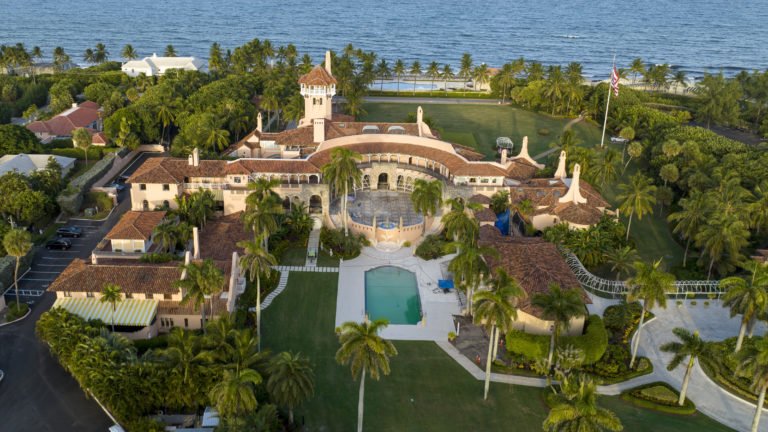
Report: Mar-a-Lago Only Received 10% of Security Resources Sought from Secret Service

(Ken Silva, Headline USA) In the wake of the July 13 assassination attempt against Donald Trump, the Secret Service admitted that it denied the former President’s requests for enhanced security over the last several years.

The Washington Post provided more details on those cuts Monday, reporting that the Secret Service provided just 10% of what Trump sought to secure Mar-a-Lago, where multiple breaches have occurred.

“Trump’s Secret Service detail put together an ‘Intrusion Detection Plan’ they believed would make the club a safer place for Trump. But when they asked for the funds—several million dollars, according to people with knowledge of the request—they were mostly denied by the Secret Service. They received about 10 percent of what they requested,” the Post reported.

The Secret Service has reportedly spent about $4 million on protecting Mar-a-Lago in the years since Trump left office. That spending rate will presumably skyrocket in the wake of the assassination attempt. In fact, now that he’s no longer a candidate for 2024, the Secret Service is reportedly diverting security from President Joe Biden to both Trump and Kamala Harris.

Mar-a-Lago has had several notable security breaches over the last several years, including one that happened after the assassination attempt.

in March 2019, for instance, an apparent Chinese national almost gained access to Trump. That time, the security failure was made by Mar-a-Lago staff.

According to Secret Service records, Mar-a-Lago staff thought the woman was a relative of one of the club’s members, and that she was attending a conference. Once they realized their error, they notified Secret Service, which detained the woman.

In another Mar-a-Lago breach in 2018, it was the Secret Service at fault. In that case, an 18-year-old college student arrived at Mar-a-Lago while Trump was visiting.

According to Secret Service records, the teenager was screened at a checkpoint by Secret Service and allowed through. During his brief visit, he entered a secure area and uploaded videos of his escapades to Snapchat—including one titled, “Sneaking into Trump club is like taking candy from a baby.”

The most recent breach occurred late last month, when a mentally unstable man drove near a Mar-a-Lago checkpoint on July 22, July 30 and again on July 31.

On the last trip, the man allegedly “passed all USSS checkpoints and barricades, and attempted to enter through the south gate at Mar-a-Lago before being stopped by Mar-a-Lago security,” according to law enforcement.

After private security stopped the man, law enforcement issued a “BOLO”—be on the lookout—and arrested him later that day.

Ken Silva is a staff writer at Headline USA. Follow him at twitter.com/jd_cashless.
Dollar Reserves Have Dropped By 14 Percent Since 2002

(Mike Maharrey, Money Metals News Service) Dollar dominance is slowly ebbing as the world looks to diversify away from the greenback.

The share of dollars making up global reserves has dropped by 14 percent since the turn of the century, according to data compiled by the Atlantic Council. 

As of 2002, dollars accounted for 72 percent of global reserves. Today, dollars make up about 58 percent of reserves.

This doesn’t mean the dollar is about to collapse, but it does reveal a slow drift away from dollar dominance as other countries seek to minimize their dependence on the greenback and cut the monetary strings the United States often pulls on to advance its foreign policy goals.

De-dollarization has sped up since the U.S. and other Western nations imposed heavy sanctions on Russia in the wake of its invasion of Ukraine.

“In recent years, and especially since Russia’s invasion of Ukraine and the Group of Seven (G7)’s subsequent escalation in the use of financial sanctions, some countries have been signaling their intention to diversify away from dollars,” the Atlantic Council report said.

The U.S. and its allies not only froze Russian assets but also locked the country out of the SWIFT financial system.

The Society for Worldwide Interbank Financial Telecommunication (SWIFT) system serves as the global economy’s superhighway. In effect, it operates as a global financial messaging service, facilitating cross-border payments. Since the dollar serves as the world reserve currency, SWIFT effectively facilitates an international dollar system.

This gives the U.S. a great deal of leverage, as the Russians discovered. 

This wasn’t the first time the U.S. used SWIFT and the dollar as a stick to advance its foreign policy goals. In 2014, the Obama administration locked several Russian financial institutions out of SWIFT as relations between the two countries deteriorated over Ukraine and Crimea. 

A few years later, the Trump administration threatened China in an attempt to force that country to join in sanctioning North Korea. 

Whether you think the sanctions were justified or not, it’s important to remember that other countries are watching. They realize that dependence on dollars makes them vulnerable to U.S. manipulation and this is one of the reasons many countries are trying to diversify away from USD.

Think about it — if you are concerned that the U.S. could pull the “dollar rug” out from under you, why not pull out from the dollar system first?

This appears to be what is slowly happening.

According to a 2023 Invesco survey, a “substantial percentage” of central banks expressed concern about how the U.S. and its allies froze nearly half of Russia’s $650 billion gold and forex reserves.

The Rise of BRICS 

The Atlantic Council also identifies the rise of BRICS as a threat to long-term dollar dominance.

“The project identifies the BRICS as a potential challenge to the dollar’s status due to the individual members’ signal of intent to trade more in national currencies and the BRICS’ growing share of global GDP.” 

BRICS is an economic cooperation bloc originally made up of Brazil, Russia, India, China, and South Africa. As of Jan. 1, 2024, the bloc expanded to include Saudi Arabia, Egypt, the UAE, Iran, and Ethiopia.

More than 40 other nations have expressed interest in BRICS membership.

The expanded BRICS has a combined population of about 3.5 billion people. The economies of the BRICS nations are worth over $28.5 trillion and make up roughly 28 percent of the global economy. BRICS nations also account for about 42 percent of global crude oil output.

The Atlantic Council notes that the BRICS nations “have been actively promoting the use of national currencies in trade and transactions.”

“During this same time, China has been expanding its alternative payment system to its trading partners and seeking to increase international usage of the renminbi.”

The BRICS countries have publicly expressed a desire to move away from dependence on the dollar. During last year’s BRICS summit, Brazil President Luiz Inacio Lula da Silva called on the bloc to create a common currency for mutual trade and investment. He said a BRICS currency would “increase our payment options and reduce our vulnerabilities.”

BRICS nations have already made moves to move away from the dollar. Last April, China and Brazil announced a trade deal in their own currencies, completely bypassing the dollar. Under the deal, Brazil and China will carry out trade directly exchanging yuan for reais and vice versa instead of first converting to dollars. 

Last summer, India and the United Arab Emirates also settled an oil trade without converting local currencies to dollars for the first time, as India’s top refiner made a payment for oil in rupees.

China is also developing an alternative to SWIFT. According to the Atlantic Council, between June 2023 and May 2024, the Cross-Border Interbank Payment System (CIPS) added 62 direct participants. It now includes 142 direct participants and 1,394 indirect participants.

While SWIFT is still by far the dominant player, with more than 11,000 connected banks, the infrastructure is now in place to mount a serious challenge to its monopoly on global transactions.

Many Countries Turning to Gold 

There is also a global movement to replace fiat currencies including the dollar with gold.

Central banks globally added a net 483 tons of gold through the first six months of this year, 5 percent above the record of 460 tons in H1 2023. 

Last year, central bank gold buying fell a mere 45 tons short of 2022’s multi-decade record.

Last year, central banks’ net gold purchases totaled 1,037 tons. It was the second straight year central banks added more than 1,000 tons to their total reserves.

Central bank gold buying in 2023 built on the prior record year. Total central bank gold buying in 2022 came in at 1,136 tons. It was the highest level of net purchases on record dating back to 1950, including since the suspension of dollar convertibility into gold in 1971. 

A recent article by Nikkei Asia called gold “a stateless currency.” In other words, gold isn’t controlled by any government. That means countries holding gold maintain a higher level of independence than those holding dollars or other government fiat currencies. 

De-dollarization would be a disaster for the United States.

The dollar’s status as the reserve currency indirectly supports the U.S. government’s ability to borrow and spend. Demand for dollars props up the greenback’s value and somewhat shields Americans from the impact of its inflationary monetary policy.

 A de-dollarization of the world economy would cause the value of the U.S. currency to crash and likely spark a currency crisis.

This would further erode the purchasing power of the dollar and drive prices even higher. It could even lead to hyperinflation.

Even a modest decrease in the use of the dollar could begin to undermine the strength of the currency. This could lead to a downward spiral with dollar weakness further undermining confidence in the greenback. 

While the dollar isn’t in danger of immediate collapse, this is undeniably a troubling trend.


Mike Maharrey is a journalist and market analyst for MoneyMetals.com with over a decade of experience in precious metals. He holds a BS in accounting from the University of Kentucky and a BA in journalism from the University of South Florida.

Did Mark Twain Anticipate the Trillion Dollar Coin?

(Chris Powell, Money Metals News Service) Responding to the recent commentary about the idea to spectacularly increase the U.S. money supply via the minting and depositing at the Federal Reserve of one or two platinum coins of trillion-dollar denominations, a friend asks: What would a trillion-dollar platinum coin do to the price of U.S. platinum Eagles?

For whatever it’s worth, I don’t think that the U.S. government’s resort to the platinum coin gimmick would have any more effect on the price of regular platinum coins than its general inflationary effect on all prices.

But like every other institution, the U.S. Mint occasionally makes mistakes, and there’s a laugh in the possibility that the mint might let a trillion-dollar coin escape into public circulation, with a lucky possessor someday walking into a bank to present it and ask for change.

Did Mark Twain Anticipate the Trillion Dollar Coin?

Back in 1893, Mark Twain had fun with a short story based on the concept underlying the platinum coin, i.e. high utility of infinite credit:

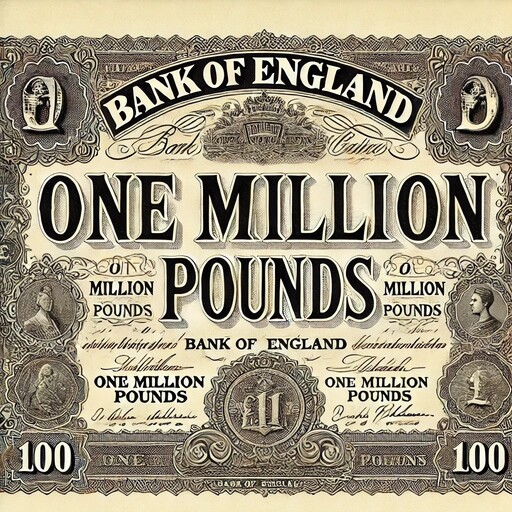
“The Million Pound Bank Note” by Mark Twain is a satirical short story about Henry Adams, a penniless American who ends up in London. Two wealthy brothers give him a one million pound bank note as part of a bet to see if he can survive for a month without spending it. Henry’s mere possession of the note brings him unexpected fame and fortune, allowing him to live comfortably on credit — and without ever having to cash or redeem the banknote.

In any event, it’s more likely that the U.S. Mint would make any trillion-dollar coin a lot larger than regular coins and the Federal Reserve would lock it in a special display case for exhibiting to school children so they might be misled as to where money comes from and why their country’s financial system is so modern and “ingenious,” at least while the world is so easily snookered.


Chris Powell is a political columnist and former managing editor at the Journal Inquirer, a daily newspaper in Manchester, Connecticut, USA, where he has worked since graduating from high school in 1967. His column is published in newspapers throughout Connecticut. He is also secretary/treasurer of the Gold Anti-Trust Action Committee Inc., (GATA) which he co-founded in 1999 to expose and oppose the rigging of the gold market by Western central banks and their investment bank agents.

House GOP Releases Report on Biden Crimes; Will Impeachment Proceed against Lame Duck?

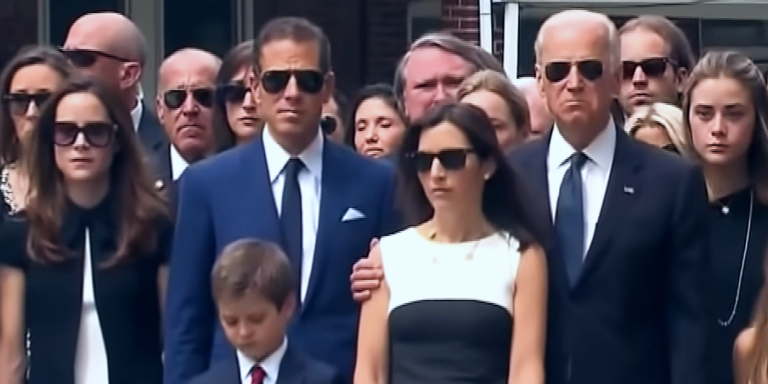
(Headline USA) House Republicans have released their initial impeachment inquiry report on President Joe Biden, alleging an abuse of power and obstruction of justice in the financial dealings of his son Hunter Biden and family associates.

The almost 300-page report out Monday, the opening day of the Democratic National Convention, covers familiar ground, asserting the Biden family traded on its “brand” in business ventures in corrupt ways that rise to the Constitution’s high bar for impeachment.

With Biden no longer running for reelection, next steps are highly uncertain. House Republicans have not had support from their own ranks to actually impeach the president, and removal by the Senate is even further afield. Many Republicans prefer to focus attention on the Democratic Party’s presumptive presidential nominee Vice President Kamala Harris, with some probes getting underway.

The White House has dismissed the House impeachment inquiry as a “stunt” and encouraged House Republicans to “move on.”

“The totality of the corrupt conduct uncovered by the Committees is egregious,” wrote the House Oversight and Accountability, Judiciary and Ways & Means panels leading the inquiry.

The report said the Constitution’s “remedy for a President’s flagrant abuse of office is clear: impeachment by the House of Representatives and removal by the Senate.”

Republicans have spent the better part of their time in the House majority with a hyper focus on Biden and his family’s businesses.

The impeachment inquiry has been a cornerstone of the House GOP’s effort, launched by former Speaker Kevin McCarthy shortly before he was booted from leadership, and formalized in December under new Speaker Mike Johnson. Republicans are investigating many aspects of Biden family finances going back to 2009 when he was vice president to Barack Obama.

Through bank records, interviews from some 30 witnesses, whistleblower accounts and millions of documents, House Republicans allege a years-long practice by Hunter Biden and his associates to solicit foreign business deals using the family’s proximity to power in Washington.

In a separate but related matter, Hunter Biden was convicted in June of felony gun charges and is set to stand trial next month on federal tax charges.

Former Hunter Biden associate Devon Archer, who was sentenced to a year in prison in 2022 in another matter, told the committee, “At the end of the day, part of what was delivered is the brand.”

To tie the elder Biden to his son’s actions, the Republicans rely on a series of phone calls and pop-by dinner meeting visits Joe Biden made while Hunter was conducting business. At times, Hunter would put his dad on speakerphone for his guests as the father and son exchanged pleasantries.

In his closed-door deposition to House investigators, Hunter Biden insisted he did not involve his father in his business.

All told, the House Republicans allege the Biden family and its associates received some $27 million in business payments from partners or clients in Russia, China and other countries. They allege an additional $8 million in loans, including some from Hunter Biden benefactor Kevin Morris, a Hollywood attorney, and question the purchases of the son’s artwork.

The report said it is “inconceivable” that President Biden did not understand what was going on.

“President Biden participated in a conspiracy to monetize his office of public trust to enrich his family,” the report found.

Biden himself declined a request to testify before the House.

Touchbacks to Trump’s impeachments at the hands of Democrats run throughout the report’s pages as Republicans work to contrast his grounds for removal to Biden family’s dealings and “grift.”

The report also accuses Biden of obstructing justice in the probe, revisiting previously aired complaints about the Justice Department’s handling of the investigation into Hunter Biden. Attorney General Merrick Garland has forcefully denied those accusations, defending the department against claims of political influence.

The report focuses heavily on what Republicans have long alleged was a pattern of “slow-walking” investigative steps and delaying enforcement actions to the benefit of the president’s son.

Beyond Hunter Biden, the report includes details of the involvement of Joe Biden’s brother, James, in the various family businesses.

Republicans have pointed to a series of payments that they claim show the president benefited from his brother’s work. They point to a $200,000 personal check from James Biden to Joe Biden on the same day in 2018 that James Biden received an equal amount from Americore, a healthcare company.

House Democrats have defended the transaction, pointing to bank records they say indicate James Biden was repaying a loan provided by his brother, who had wire transferred $200,000 to him about six weeks earlier. The money changed hands while Joe Biden was a private citizen.

Short of impeaching Biden, the House Republicans have issued criminal referrals recommending the Justice Department prosecute Hunter Biden and James Biden, accusing them of making false statements to Congress as part of the GOP investigation. Attorneys for those men have argued those claims are baseless or a distraction.

Until recently, the president had been a focal point for Republicans in Congress, but his decision last month to drop out of the presidential race and Harris’ ascent to the top of the ticket have forced GOP leaders to reevaluate their marquee investigation.

A year ago, GOP lawmakers had hoped the Biden inquiry would build a strong enough case for impeachment’s “high crimes and misdemeanors.” But the longer the inquiry dragged, the more concerns grew from moderate Republicans wary of a vote on the matter.

The report released Monday makes more than 20 mentions of the “Biden-Harris administration,” while previous releases from the committees investigating Biden typically only made direct references to him.

And while Harris is not mentioned on her own in the report, the same committees leading the inquiry have begun to open new probes into her and her vice presidential pick, Tim Walz.

Adapted from reporting by the Associated Press

Kamala Comes Out w/ Gibberish, Head-Scratching Moments in Pa.

(Luis Cornelio, Headline USA) Vice President Kamala Harris offered unscripted remarks on Sunday after avoiding exchanges with the friendly legacy media since being named the presumptive Democratic nominee for president.

Her speeches, delivered while campaigning in western Pennsylvania, were marked by her infamous word salads and incoherent rambling.

In Rochester, Pennsylvania, Harris baffled her supporters with a convoluted take on the duality of democracy. “As a democracy, we know there’s a duality to the nature of democracy,” she began.

The vice president then expanded (or at least tried to) her point.

“On the one hand, incredible strength when it is intact. What it does for its people, to protect and defend their rights. Incredibly strong and incredibly fragile. It is only as strong as our willingness to fight for it. And that’s what this campaign is about,” Harris continued. 

Hours later, Harris addressed the Aliquippa High School football team with a nine-minute speech that was noticeably short on pauses.  

“You will be undefeated even if you don’t win every game,” Harris stated, seemingly trying to emphasize the importance of resilience for young athletes.

In Moon Township, Harris grew defensive when a reporter questioned her on how she planned to pay for her vague economic policies. 

“I think it’s a mistake for any people who talks about public policy to not critically evaluate how you measure the return on investment,” Harris insisted.  

Defending her position, she added, “When you’re strengthening neighbors, strengthening communities and in particularly economy of those communities, and in investing in a broad-based economy, everybody benefits, and it pays for itself.” 

Harris’s statements dismiss concerns about the mounting debt and its negative effects on the economy overall. 

According to Heritage Foundation economist EJ Antoni, the Department of Treasury paid $140 billion in interest on the debt in June alone, which amounts to over 75% of personal income taxes collected that month.

“Taxpayers are now shelling out an annualized $1.6 trillion just to finance this burgeoning debt,” Antoni wrote on Aug. 5. “Harris has helped oversee the worst deterioration of federal finances since at least World War II.” 

He concluded, “Harris is an arsonist playing firefighter, simultaneously pushing for more government spending and taxes on the middle class while claiming conservatives are the ones to blame for her failures. People would be wise to remember who set the inflationary fire that burned their finances to ash.”